Impediments Facing Elderly Persons in Accessing Cash
Transfer Programs in Kiambu Sub County, Kiambu
County, Kenya
Joan Thuo1, Dr. Headmound Okari2, Mr. Michael T. Okuku3
1
Masters of Arts in Project Planning and Management, Catholic University of Eastern Africa, Kenya
2,3
Supervisor, Faculty of Arts and Social Sciences, Department of Development Studies, Catholic University of Eastern Africa, Kenya
Abstract- This study sought to explore the impediments facing elderly persons in accessing cash transfer programs in Kiambu Sub County, Kenya. The study used descriptive research design with a target population of 977 elderly persons in Kiambu Sub County. A sample size of elderly respondents which represents 10% of the total target population from each of the 6 regions was selected from the target population. The study used both questionnaires and interview guides to get information from elderly persons with the help of research assistants. Quantitative data was analyzed descriptively while qualitative data was analyzed by use of content analysis. The study also used Pearson Correlation Moment method for advanced analysis. The study found that the adoption of mobile money systems, provision of cheques by banks and the payment of cash over the counter has enhanced the accessibility of the CTP by the beneficiaries in Kiambu Sub County. The study further revealed that service locations are distantly situated which has made many beneficiaries to incur transport cost in order to reach the pay point, which in many instances they do not have. It was also established that lack of sufficient information concerning delay of funds, unpredictable means of transport to pay location and their nature of vulnerability to illness due to elderly age impede the accessibility of funds from various service locations in the Sub County. Presence of unclear registration procedures, complexity in nature of mandatory requirements to qualify for the cash transfer, a lack of effective flow of information from providers, lack of clear identification procedures and inadequate community sensitization by various stakeholders were all found to result in the exclusion of many potential beneficiaries from the programs. The study recommends that the government should increase the funding of elderly persons, a comprehensive and practical participatory framework should be developed to provide communities with platform for participating in the program, national and county governments should review the targeting and coordination guidelines of the current cash transfer programs, that both the national and county governments should put structures and mechanism in place to ensure smooth continuation of cash transfer programs in Kiambu Sub County and that various stakeholders should ensure that the stipend is usually regular so that beneficiaries are able to predict and hence plan to expend.
Index Terms- Mode of payment, enrollment procedure, cash transfer programs, service location
I. INTRODUCTION
ash transfer programming is a popular instrument in the social protection toolbox for livelihood intervention support among the elderly (Jaspars & Harvey, 2013). In the past decade, cash transfers have gained in popularity as a preferred strategy for livelihood intervention support among the elderly persons in different parts of the world. Some have even argued that it can become the solution to the problem of poverty among the older generation.
Some analysts have described cash transfers programs as not only the most necessary, obvious and imperative strategy for poverty alleviation but even suggested that these should replace a great deal of other government activity in order to enhance livelihood intervention support among the elderly in the society (Leonie, Jeffrey & Richard, 2014).
In Mexico, the country started Progresa (Progress) program which was the first cash transfer program experience in the country (Hidrobo, Hoddinott, Peterman, Margolies & Moreira, 2012). Progresa had two primary goals: to improve elderly people education and healthcare and to transfer resources to the country’s poor. Suffice to say, the cash transfer program in the country has also been delved with challenges that emanates from poor planning, improper coordination, frauds, slow dissemination of funds to the elderly as well as distance that are covered by the recipients of the programs (World Bank, 2011).
In Colombia the program was known as the Familias en Acción (Families in Action) program which shares Progresa’s goals of human capital development and poverty alleviation (Turner, Breneman, Milam, Levin, Kohl, Gansneder & Pusser, 2010). Nevertheless, the program has also faced myriad of challenges such as tough guidelines to be a beneficiary, unclear registration procedures and misappropriations of funds by various stakeholders as well as lack of adequate fund to cover for the ever increasing elderly persons (American Institutes for Research, 2016).
In United Kingdom, the use of cash transfers went a level higher after its inception (Aber & Rawlings, 2011). Fajth and Vinay (2010) observed that after the program was extended to elderly persons and also the vulnerable in the society such as those infected with HIV and other diseases that proved expensive to eradicate. As noted by de la Brière and Rawling (2016) the program yields fruits with a couple of years. However, despite its enormous benefits, the program has also experienced barriers that emanated from lack of sufficient servicing channels or
distribution centers in the interior part of the country (Harvey, 2015).
In Lesotho, the Old Age Pension scheme, benefitting persons aged 70 years and above has had ripple effects in the immediate community through job creation (Lund, 2013) and also led to a reduction in the rates of dependency as well as a high improvement with respect to livelihood among the elderly persons (Waterhouse & Lauriciano, 2015). In 2011, Zambia’s Ministry of Community Development, Women and Child Health (MCDMCH) began implementing the Multiple Categorical cash transfer program (MCP) in two districts (Holmes & Jones, 2013). According to the Monterey County Department of Social Services (MCDSS), the goal of the MCP is to reduce extreme poverty and the intergenerational transfer of poverty especially among the old persons in the community (Davies & Davey, 2015).
In Kenya, the government has in the past two decades placed several measures to protect the rights, social image, livelihoods, vulnerability to poverty and self-development of the most vulnerable populations in the country (Government of Kenya, 2013). The most prominent and successful framework is the social protection where cash transfer program is an integral component (Pearson and Alviar, 2014; Armando, 2016). To strengthen Kenya’s social protection implementation, the National Social Protection Policy was drafted in 2011 and ratified by the Cabinet in May 2012 (World Bank, 2012). In Kiambu Sub County, the cash program has also gained inroads. The senior citizens of over 70 years old in the county have hailed the government for initiating the social-economic programs among them Inua Jamii which would cushion them against poverty and enable them to take care of basic needs in their homes (Republic of Kenya, 2014). However, the adoption of cash transfer and social protection assistance programs are mostly criticized by politicians and economists on the basis of placing a strain on the economy and also whether such programs are financeable and or sustainable (Gondi, 2009; Ikiara, 2012). In spite of the benefits, the political goodwill, and despite nearly a decade of cash transfer programs in Kenya especially with specific attention to Kiambu Sub County, the program is still limited in scale and coverage across much of the country remain heavily dependent on donor funding (Mathiu & Mathiu, 2012). More sadly is the fact that since the inception of cash transfer to date many elderly persons mostly in the rural areas have no access to this noble program due to various impediments emanating from mode of payments, location of services, health of the beneficiaries, age of the recipients, enrollment procedures as well as distant to be covered by the beneficiaries.
Again, a close interaction by the researcher with those who are potential beneficiaries reported that many elderly persons have been registered or enrolled into the program but had not received a penny four years down the line. Some also reported to have received less than the required amount. Coupled with the fact that a good number of beneficiaries have in the recent past also complained of lack of consistency in the provision of the funds in the Sub county, the aforementioned loop holes has therefore urged the researcher to carry out a study of this magnitude. This study therefore attempts to fill the aforementioned research gap by explicitly assessing the impediments facing elderly persons in accessing cash transfer
programs in Kiambu Sub County and provide recommendations thereof that can be borrowed to enhance its impact on the livelihood of the elderly.
The general objective of the study was to explore the impediments facing elderly persons in accessing Cash Transfer programs in Kiambu Sub County, Kenya. The specific objectives were: to establish how mode of payment impede accessibility of cash transfer programs by elderly persons’ in Kiambu County, to determine how service location impede accessibility of cash transfer programs by elderly persons’ cash in Kiambu County and to assess how enrollment procedure impede on the accessibility of cash transfer programs by elderly persons in Kiambu County.
II. LITERATURE REVIEW
2.1 Critical Review of Relevant Theories 2.1.1 Disengagement Theory
The challenges of old age can also be understood in the context of disengagement theory. The theory, which was developed by Cumming and Henry in late 1950’s, postulates that aging is an inevitable mutual withdrawal or disengagement resulting in decreased interaction between the aging person and others in the social system he/she belongs (Cumming et al., 1961). Under this theory, as people age, they tend to grow more fragile and their social circles shrink as they start to pull away and be less actively involved. Being less active and with decreased ability of the aging person to engage in social relationships or engage in physical activities makes the elderly person susceptible to vulnerability and old age poverty thus the need to subject them to cash transfer programs.
The provision of cash transfers reactivates older persons by making them able to engage in income generating activities, establish or enhance social relationships perhaps through merry go rounds and the like. It makes it possible for them to contribute to meeting household needs of food, shelter and clothing among others. This concurs with Harvighust Activity Theory of 1960's which supports the maintenance of regular activities, roles and social pursuits (Fay, 2014).
prevent the majority of older people from enjoying a variety of opportunities or advantages.
2.1.2 Erik Erikson’s Psychosocial Development Theory
Erikson (1963) gives eight stages of human development which every human person undergoes. The stages include Trust versus Mistrust which occurs in infants within the first year of birth, autonomy versus shame and doubt is the second stage. This stage occurs between year 1 and year 3, the third stage is Initiative versus Guilt which takes place at between 3 to 5 years of age, Industry versus Inferiority which occurs between 6 years of age to puberty is the fourth stage, the fifth stage is known as Ego Identity versus Role Identity Confusion which occurs when one is between 10 to 20 years of age, the sixth stage is Intimacy versus Isolation which occurs at between 20 and 30 years of age, the seventh developmental stage is Generativity versus Stagnation. This happens at the age of 40 and 50 years. The eighth and final stage is Integrity versus Despair. This stage occurs at 65 years and above.
However, the current study focused on the eighth stage which is the integrity and despair that occurs above 65 years. The most important event at this stage is coming to accept one's whole life and reflecting on that life in a positive manner. According to Erikson, old-aged adults in this stage deal with reflecting back on their lives. This is the stage when individuals would ask, “What was the point of life?” During this period, the old persons’ experiences a sense of integrity when he/she feels proud of achievements and satisfied with the hand that he/she was dealt with.
With the experience of integrity, the individual has few regrets or recriminations. This, however, is truly possible only if the elderly person has successfully resolved the other seven psychosocial crises. With successful resolution of earlier crises, old- aged people are likely to reflect on their lives positively and attain wisdom even in the face of imminent death. Transitions between previous stages of Erikson’s theory become clearer and feeling at peace with the world and the self becomes more apparent.
On the other hand, people who are unsuccessful in this stage experience despair or disgust. Old-aged individuals feel that they have wasted their lives and experience many regrets. They feel bitterness towards what they were not able to do in their lives, and wishfully hope that they would be able to turn back the hands of time for second chances. It is at this stage that most of the elderly feel disillusioned and not worthy to provide for the family due to their inaction in to actively engage in income generating activities.
According to Kibera and Kimokoti (2015), Erik Erikson’s Psychosocial Theory of Development has a weakness in the sense that it pays more attention to infancy, childhood and adulthood than elderly persons. The stages are meant for the entire lifespan of a human being but Erik does not concentrate much on elderly persons’ life hence it would be important if the theory encompasses in details on the whole human life cycle.
2.2 Review of Empirical Studies 2.2.1 Mode of Payment
Mode of payment can be defined as the means by which a payment is made, such as cash, cheques, or credit card. Harvey
(2015) also asserts that mode of payment whereby cash or e-money is delivered could include but not limited to direct delivery whereby cash can be given in envelopes; delivery through banking systems either over the counter, from ATMs or other mobile banking technologies; and delivery using smart cards, debit cards, prepaid cards and point of sale devices and/or mobile phone technologies. Different delivery methods and delivery agents have often been used in combination.
Hanlon and Hulme (2010) states that despite the inception of the cash transfer programs and the technological advancement that exists to enhance the transfer of funds, beneficiaries have always complained that the transfers of funds have never been consistent and that they have never been informed of changes in the bi-monthly payment schedules. Beneficiaries complained of delays in payment ranging between 1 month and 4 months from the expected payment date (Morgan & Kunkel, 2015). The deviation from the schedule mode of payment provided for in the guidelines has multiple negative effects among the needy elderly populations.
In the review of experience in Niger, the mode of payment is by directly delivering cash in envelopes using its own staff of the cash transfer programs remained a common mechanism. This was used also, for instance, by Save the Children in Southern Sudan and by Concern in DRC. In several contexts, agencies had partnered with local traders to assist in the direct delivery of cash. Unsurprisingly, regardless of the delivery option chosen, it is more difficult and more expensive to get cash to people in insecure and remote environments such as Somalia, and DRC Save the Children, 2009).
In Kenya, cash is delivered using a smart card system. Recipients have their fingerprints scanned and receive a smart card that they take to a local agent to get their cash. The local agent uses a point of sale device to verify recipients’ identities (Pearson & Alviar, 2014). People are also able to get their cash from a branch of Equity Bank. In urban slum areas of Kenya, CONCERN and OXFAM in conjunction with the government of Kenya are using mobile phones to transfer cash to the elderly (Momanyi, 2012). Recipients are provided with a SIM card and sometimes a mobile phone, if they do not have one, and they can retrieve the cash at any M-PESA or Airtel money agents (Ahmed, 2015).
According to Croucher, Karanja, Orina, Dokata, Wako and Dima (2016), it is always prudent that various stakeholders within any government should adhere to suitable mode of payment that cannot hamper the delivery of funds to the intended recipients, the elderly. The authors noted that use of cash transfer mechanisms such as adoption of mobile money systems, provision of Automated Teller Machine (ATM) cards, disbursement of funds by cheques and provision of liquid funds by means of envelopes are some of the convenient mode of payment that a government can adopt depending on the location of the recipients.
receive funds in cash rather than the traditional electronic payment systems. The recipients are then requested to countersign against their names as an indication that the funds are received.
According to Croucher et al. (2016), resorting to manual transaction is always attributed to the fact that service providers never at any time want the recipients to fail to get their funds on timely basis. Though some researchers have questioned the credibility of the manual cash transfer programs to the elderly in spite of the fact it is meant to avail funds on time. Mwiti and Kukrety (2014) argues that in some instances, some beneficiaries reported ever receiving bulk cash to a maximum of over Kshs 20,000 an equivalent to one year backlog payment. Given that all beneficiaries are poor, planning for such huge amounts is difficult and reduces the value and importance of the bi-monthly transfer scheme. Some beneficiaries end up spending the money on non-priority items with the hope that in the next two months a similar transfer would happen.
Again as Mathiu and Mathiu (2012) states, some caregivers took advantage of the situation and diverted the funds to other uses which then exposed the elderly to malnutrition as a result of lack of proper diet or failure to get food on daily basis. It is therefore prudent that the mode of payment adopted to enhance the access of funds should be reliable and consistent to reduce the chances of the elderly being subjected to life threatening calamities.
2.2.2 Service Location
The location of services is very significant in the quest by the elderly persons to access funds on timely basis. This also goes in tandem with the availability of the facilities or pay points that provide them with funds. According to Glaeser (2012), the available pay points as stated above are sometime distantly located which has in most cases affected the accessibility of the funds. Glaeser argues that beneficiaries have no choice but to travel to cash collection points despite their age or condition, this is worsened by the fact that most post offices and banks are located in urban areas and market centers which therefore make the accessibility of cash transfer funds a challenge.
Additionally, Lor-Mehdiabadi and Adams (2009) says that some beneficiaries have pointed out that the payment centers are located far from the residence of the older persons. For example, in counties where transport infrastructure is less developed, and the terrain is difficult the beneficiaries reported incurring high transport costs estimated in some areas at Kshs 3000, a figure higher than the monthly allowance. In such cases, the beneficiaries feel discriminated through physical location of services and hidden costs. Such factors thus diminish the overall value and benefit of the program consequently exposing older persons to life related challenges.
Leonie et al. (2014) also asserts that beneficiaries and mainly the older persons have always complained of lack of information concerning the arrival of funds at various payment points and sometimes they could travel long distance just to return home empty handed. The authors says that Posta pay, the most common means of payment which normally provides 10 days period for the collection of the funds in some cases lacks funds even within the stipulated grace period of collection. All these cost summed together portrays the programs as more costly
to the older persons consequently the need for more pay point to be initiated in strategic positions in order to hasten and enhance the access of the cash transfer programs.
In support, Duyne (2016) reasons that some beneficiaries living far from the collection points and who do not get the correct information on the arrival of fund sometimes missed the funds upon expiry of grace period allocated while others wasted transport fee to travel to the service points in vain. Duyne (2016) note that another challenge associated with the delay is that information was not provided to beneficiaries as to when the funds would be received at the point where services are located. The lack of information therefore made it difficult for beneficiaries to plan, budget or negotiate for services that are accessed in far places which in most cases involves costs such as transportations and to some extent food related expenses. The study at hand therefore tends to find out the factual effect of service location on the accessibility of cash transfer funds among the older persons.
In Senegal, the location of pay points has made it harder for those in remote areas to access funding programs. Due to the ageing characteristics of the older persons, they are more susceptible to helpers or guardians who more often than not remit to the beneficiaries less cash upon being delegated duty of collecting the funds on behalf of the elderly as a result of far distantly located pay points. Due to this, the use of cash transfer was suspended in 2011 after the beneficiaries were noted to be falling prey to unscrupulous business and middlemen as well as helpers while some money were misappropriated by some of the aid and Government authorities. It is for this reason that the government considered initiating more service points mostly in rural areas whereby the beneficiaries will be able to access the funds (Drèze, 2010).
According to Momanyi (2012), the accessible the facilities, the more accommodative and reliable the fund transfer programs and vice versa. As indicated by Blank (2012) majority of the older persons more often than not are unable to access funds on time as a result of long distance that they have to cover as and when go for payment. To a large extent some have to cater for transportation cost and the fact that they are aging and vulnerable to diseases has also negatively made their movements to the pay point a tall order.
According to Creti and Jaspars (2015), in vast rural counties where post office and banks are concentrated in the urban areas, the care givers and beneficiaries incurred transport costs to obtain the money. In support, Government of Kenya (2010) audit results show that a majority of the beneficiaries obtained the fund from the Postal Corporation of Kenya and Equity bank payment service providers.
2.2.3 Enrollment Procedure
remains in the dark in terms of enrollment procedures (Coady, 2014).
According to World Bank report (2012), most of the beneficiaries and caregivers admitted that they first heard about the program through a word of mouth from chief ‘barazas’ through community social meetings. Only a small fraction reported ever being contacted in person by a designated program agent officer such as a member of the local committee or their equivalent.
Lofvall (2012) opines that there is however some incidences particularly in the vast hardship sub-counties where the beneficiaries and care givers had little or incorrect information about the enrollment and who relied heavily on their friends and relatives to obtain information about the cash transfer programs. As a matter of fact, without proper and well-coordinated promotional education for the community about the program by various stakeholders, most potential beneficiaries and caregivers in the community are likely to hold inaccurate information about the procedures, objects and value for the cash transfer programs thus minimizes their chances of becoming recipients.
On the other hand, Ressler (2015) points out at the need for clear minimum criteria used for the identification of the beneficiaries. He argues that lack of clarity about the identification, recruitment and enrolment of beneficiaries may be an outcome of inadequate levels of engagement of the beneficiaries in the implementation of the program or lack of adequate community sensitization about the entire programs. He suggest that developing countries could also borrow a leaf from developed countries who have properly bank rolled the cash transfer by employing qualified and adequate staff who conducts door to door seminars and campaigns to create awareness among the community members. The stakeholders are normally equipped with government led materials which clearly stipulates the enrollment procedures for the beneficiaries as well as the role played by any care giver to the older persons. All these mechanisms thereby should be put in place to enhance the accessibility of cash transfer funds among the older persons in the society.
In order to enhance, enrollment programs, Schubert (2015) as well states that beneficiaries who qualify for the cash transfer programs should be provided with a beneficiary’s identification card (BIC) showing their names, place of residence and type of Cash Transfer Programs (CTP) program they are enrolled in. According to him, the personal identification card is a necessary tool for self-identification of beneficiaries at the pay service points, for ease of monitoring of the program beneficiaries (number, distribution, coverage), and can be used by the beneficiaries or caregivers to obtain necessary approved waivers in other developmental programs.
As opined by Blair (2012), the stakeholders in the cash transfer program in any country should also ensure that all enrolled beneficiaries are provided with Beneficiaries Identification Card (BIC) as provided for in the guidelines to remove any perceptions of inequities among the beneficiaries. The BIC will also increase the level of ownership of the program among the beneficiaries and increase confidence that all persons enrolled in the program will remain in the government register and payroll as long as they continue to adhere to the conditions
set. In a nutshell, adoption of beneficiaries’ enrolment programs as well as procedures will enhance the accessibility of cash transfer programs and thereby improve the livelihood of the elderly in the society.
In southern Africa alone, with specific attention to Lesotho, there are noncontributory social pension schemes designed to provide cash transfers to elderly members of the society (Deveraux, 2012). In all these cases, the attention has been focused to the role of cash transfers in promoting development among the poor citizens (Ellis, Mvula & Devereux, 2009). It is therefore worth noting that there are various forms of social protection transfer, notably cash transfer, voucher transfer, and the transfer of good and materials. However, the difficulties faced by many of the beneficiaries are the fact that the various governments have tedious enrolment and registration procedures which has sadly excluded many potential beneficiaries from the cash transfer programs.
Ellis, Mvula and Devereux (2009) argue that lack of clarity on the identification and enrolment of beneficiaries may be an outcome of inadequate levels of engagement of the beneficiaries in the implementation of the program or lack of adequate community sensitization about the entire programs. Another reason for low enrollment is attributable to lack of adequate officers who could enlighten the public or organize door to door campaigns to create awareness.
In Kenya, a study conducted by Amando (2016) agrees with the foretasted position and show that only a few of the older persons were aware of existence of other program agents such as members of the local ward committee but shockingly lacked full awareness on the requirements to be a beneficiary. The author also noted that the lack of information flow from the providers to the potential recipients has hindered the registration of many beneficiaries in the country. Many beneficiaries’ have therefore remained in the dark in terms of enrollment and rules of engagement into the cash transfer program procedures. There is enough evidence therefore to commend the program for utilization of the local machinery to enroll needful populations as well as enlightening the community on the procedures and processes of the cash transfer programs.
Again, in Kenya most of the beneficiaries and caregivers have reported that they learned about the components of the programs through community social meetings particularly the chiefs’ barazas. There are however some incidences particularly in the vast hardship sub-counties where the beneficiaries and care givers had little or incorrect information about the intervention and who relied heavily on their friends and relatives to obtain information about the CT.
However, without proper and well-coordinated promotional education for the community about the program, most potential beneficiaries and caregivers in the community are likely to hold inaccurate information about the objects and value for the cash transfer programs. There is enough evidence therefore to commend the program for utilization of the local machinery to enroll needful populations.
2.3 Summary and Research Gaps
that the level of participation of the communities and beneficiaries in the cash transfer program is significantly low. This is attributed to the fact that many beneficiaries are not aware of the formal structures of engagement with the components of the program.
Studies show that beneficiaries’ faces some challenges during the implementation of the cash transfer. Some cited lack of correct and adequate information on the processes of enrolling into the program; not being supplied with beneficiary identification card that facilitates recipients to obtain the transfer and enjoy other social protection services; delay and unpredictable transfers of the funds leading to poor planning inconveniences, increased vulnerability; unforeseen expenditures associated with payments such as transport costs due to distantly located pay points, the mode of payment that are available which sometimes delays the reimbursement of funds on time and also diminishing value of the funds due to high cost of living and diverted use of these resource by the care givers.
The mentioned difficulties impact negatively on the quality, efficiency and effectiveness of the cash transfer programs among the older persons. The study at hand is therefore significant as it investigated the impediments elderly persons’ faces in the accessibility of cash transfer programs in Kiambu Sub County. From the above review of global, regional and national literature level studies, several research gaps have been identified. Most of the studies reviewed in this chapter are from developed countries whose strategic approach and financial footing on cash transfer programs is different from that of Kenya. The dissimilarity in strategic approach is also driven by the fact that the geographical set up as well as administrative aspects of the cash programs of the reviewed countries varies from Kenyan situation thus a need for a study of this magnitude that is hinged on the country set up.
It was also noted by the researcher that none of the reviewed studies specifically focused on Kiambu Sub County which is among the regions in the country that has immensely benefited from the cash program as indicated by the presence of beneficiaries in the region. Again none of the studies carried in other regions used variables incorporated in this study such as; service location, mode of payment and enrollment procedures and government policies. As indicated above, there is therefore a literature gap that has prompted the researcher to carry out a study based on the impediments facing elderly persons in the accessibility of cash transfer program in Kiambu Sub County and provide recommendations thereof that could bridge the existing study gaps.
III. METHODOLOGY
Lewis (2015) describes a research design as an arrangement of conditions for collection and analysis of data in a manner that aims to combine relevance with the research purpose. It specifies the methods and procedures for the collection, measurement, and analysis of data. The study used mixed research approach which consisted of both quantitative and qualitative data. The approach was preferred because it was able to expand the findings of the study by deeply gathering information with the help of both questionnaires and interview guide in a way that a single approach can’t. Therefore, its process of offering a statistical
analysis, along with thematic approach made the approach more comprehensive and useful for the success of the current study. The current study also used descriptive survey research design. The design was also preferred because it was able to provide a high level of general capability in representing a large population. Due to the usual huge number of people who answers survey, the data being gathered possess a better description of the relative characteristics of the general population involved in the study. As compared to other methods of data gathering, descriptive survey was able to extract data that are near to the exact attributes of the larger population thus its significance to the current study.
Kiambu Sub County is part of Kiambu County which is one of the 47 Counties in the Republic of Kenya. It is located in the central region and covers a total area of 543.5 Km2 with 176.3 Km2 under forest cover. Kiambu Sub County borders Nairobi and Kajiado Counties to the South, Machakos to the East, Muranga to the North and North East, Nyandarua to the North West, and Nakuru to the West. The Sub County lies between latitudes 00 25’ and 10 20’ South of the Equator and Longitude 360 31’ and 370 15’ East. Kiambu Sub County has a population of 188,112 (KNBS, 2016).
Lazar, Feng and Hochheiser (2017) defines target population as the population to which a researcher wants to generalize the results of the study. Basically it is the universal set of the study of all members of real or hypothetical set of people, events or objects to which an investigation wishes to generalize the results. The study population therefore was all the 977 elderly persons in Kiambu Sub County.
A sample can be defined as manageable version of a larger group or populace selected for data collection to yield estimates on behalf of the whole population (MacCallum, 2016). Sampling is necessary in research because a researcher usually cannot gather data from the entire population, therefore by taking a sample that is representative of the population saves the researcher resources in terms of time and money. The sampling started by selecting randomly an element from the list and then every kth element in the frame was selected, where k is the sampling interval. This was calculated as k=N/n where n was the sample size and N was the population size (Cooper & Schindler, 2013).
Table 3.1: Sampling Frame
Regions Target population Sampling method Sample size % sample size Tinganga 163 Stratified random sampling 16 10%
Ndumberi 378 Stratified random sampling 38 10% Riabai 222 Stratified random sampling 22 10% Township 61 Stratified random sampling 6 10% Kamiti 86 Stratified random sampling 9 10% Waguthu 67 Stratified random sampling 7 10%
Total 977 98 10.03%
The study used drop and pick methods for quantitative data while the qualitative data in the form of interview guide was based on one on one interview with the selected respondents. Data collection is gathering empirical evidence in order to gain new insights about a situation and answer questions that prompt undertaking of the research (Cresswel, 2013).
The study utilized primary data. Primary data is the data observed or collected directly from first-hand experience. The primary data was used because it presents original conclusions based on the research of others, or the fact that an author's original perspective more helpful and effective for research needs. It was also advantageous because it allowed the researcher to interpret the information rather than relying on the interpretations of others. Primary data was therefore collected using constructed questionnaires and interview guide.
The questionnaires were divided into four parts that helped the researcher meet the objectives. The first part contained personal information from the respondents. Part two sought information on how mode of payment affects elderly persons’ accessibility of cash transfer programs. Part three sought information on how service location to pay point affects elderly persons’ accessibility of cash transfer programs in Kiambu County. Lastly, section four was based on enrollment procedures for the elderly persons in accessing of cash transfer programs in Kiambu County.
In order to incorporate more responses from the elderly persons, the study utilized the interview guide. According to Doody and Noonan (2013), interview guides combine questioning, cross-examination and probing. Coakes and Steed (2011) further defines cross examination as interrogating participants by means of questions, asking questions from different angles in order to elicit the truth of the testimony and of the matter being considered. Owens also defines probing as means of digging deeper into the questions to get more details about the problem.
In this study, cross examination and probing was employed to elicit information from the respondents. The unstructured one-on-one interviews were conducted through visiting the sampled
respondents. The researcher used interview guide because it provided highest cooperation of the respondents and since the respondents had to be present, the method was suitable because it provided an opportunity for clarification.
Validity is the degree to which results obtained from the analysis of the data actually represent the variables of the study (Spangler, Liu & Hill, 2012). The researcher validated the questionnaire by asking research experts, in this case, the university supervisors were able to read and advise the researcher to readjust the instruments appropriately in order to enhance the representation of the variables in the set questions. The feedback by experts was used by the researcher to modify the instruments to ensure validity during the main data collection process.
A pre-test of the research instrument using a few constructed instruments was conducted in other area, Thika Sub County for various reasons: It helped to clarify the wording and grammar of the instrument so as to remove any ambiguity, detected biased questions and picked out in advance any problems in the methods of research before embarking on main data collection exercises.
Reliability is about demonstrating that operations within the study, such as data collecting procedures, can be repeated with the same results being obtained by another researcher. The goal of reliability is to minimize errors and biases in the case study. Yin (2013) notes that one way to deal with the issue of reliability is to document the procedures followed in the case. Reliability in quantitative research is based on trustworthiness.
With regard to reliability of questionnaire, Cronbach’s Alpha reliability coefficient method was calculated using Statistical Packages for Social Sciences (SPSS) version 21. George and Mallerly (2013) argue that if the statistical Alpha is equal or greater than 0.5 the questionnaire scale is considered reliable hence can be used for the analytical procedures. The reliability results presented in table 3.2 shows that a Cronbach’s Apha of 0.671 was obtained which therefore an indication that the scale was reliable for data analysis processes.
Table 3.2: Reliability Statistics
Cronbach's Alpha N of Items
.671 22
The collected data was edited and cleaned for completeness in preparation for coding. Once coded, the data was entered into Statistical Package for Social Sciences (SPSS) version 21. The quantitative data was then analyzed descriptively. The data was
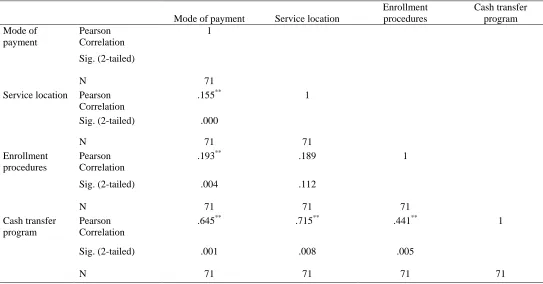
The study also used inferential statistics known as Pearson Correlation Moment method for advanced analysis to compare the relationship between mode of payment, service location, enrolment procedures and government policies, health and age and the dependent variable (Accessibility of Cash Transfer). Correlation was preferred because it helped to describe variables in measures of central tendency and dispersion hence provided results required to meet the objectives of the study. It also helped to ascertain the significant relationship between two variables under study.
Correlation was denoted as r, and it took a range of values from -1 to +1. A value of 0 denotes that there is no positive relationship between the two variables. A value greater than +1 indicated a positive association, that is, as the value of one variables increases so does the value of the other variables. A value of -1 indicated a negative association, that is, as the value of one variable increases the value of the other variable decreases (Kumar, 2015; Counsell, 2013).
According to Kothari (2014), ethics deals with one’s conduct and serves as guideline to one’s behavior. The researcher ensured that ethical concerns were put into consideration during the time of the study. Confidentially of the respondents was assured by making sure that none of them wrote or gave his/her name in the questionnaire or the interview schedule and the interviewer was never disclosed to them. This helped the respondents to give honest information. The researcher also applied for data collection permit from the National Commission for Science, Technology and Innovation (NACOSTI). This permit also enhanced the participation of respondents since they were able to determine the need for the research study.
The researcher endeavored to acquire informed consent by explaining to the respondents the purpose of the research study. The respondents were informed that they had free choice to participate or not. They were not coerced or forced to participate in the study for whatever reasons. They were free to answer or not to answer any question in the questionnaire and interview guide. This was done to ensure that the respondents were not subjected to any physical or psychological harm in the process of giving information for the study.
The findings were reported as outlined by the respondents without changing or falsifying the information. Threatening and embarrassing questions or statements were avoided by the researcher. Academic freedom was assured so that respondents were able to openly express their ideas and freely discuss them with the researcher. Finally, the researcher acknowledged all the work of others which have been cited to avoid plagiarism.
IV. SUMMARY OF FINDINGS,CONCLUSIONS, RECOMMENDATIONS AND AREAS FOR FURTHER STUDIES
4.1 Summary of Findings
The study was limited to three specific research objectives. These were; effect of mode of payment on elder persons’ accessibility of cash transfer programs, effect of service location on elderly persons’ accessibility of cash transfer programs and effect of enrollment procedures on elder persons’ accessibility of cash transfer programs in Kiambu Sub County. These are summarized in the subsequent sections.
4.1.1 Mode of Payment
Regarding the effect of mode of payment on elder persons’ accessibility of cash transfer programs, the study found that respondents had a disagreement level of 70% disagreed and strongly disagreed respectively that the mode of payments that are available to enhance cash transfer programs can be termed as effective. The study also found that the adoption of mobile money systems by providers of cash transfers has enhanced the accessibility of funds as supported by 68% agreement level. The study found that respondents had been provided with ATM cards to enable access of funds on timely basis as reported by an agreement level of 62%. Further, the study found that respondents have sometimes received funds by means of cheque from the banks as revealed by a respondents’ agreement level of 84%. The study also found that most respondents had ever been provided with liquid cash in an envelope direct from pay point as supported by 86% agreement level by respondents.
Again, the study found that respondents have ever been paid over the counter from bank or Posta pay as indicated by an agreement level of 56% by respondents. The data finally found that there was an agreement level of 78% that beneficiaries have ever failed to get funds upon visiting pay point which has led to disbursement of funds in lamp sum as and when funds are available.
4.1.2 Service Location
Regarding the effect of service location on elder persons’ accessibility of cash transfer programs,the study established that the location of respondents’ place of residence to the pay point is very far as reported by an agreement level of 69%. Again the study found that beneficiaries always incurred transport cost in order to reach the pay point as reported by 70% respondents’ agreement level.
The study further found that many beneficiaries have ever failed to access funds because of lack of transport fee to the pay point as supported by agreement level of 75%. Further the study found that lack of information concerning delay of funds sometimes leads to incurrence of transport cost just to miss funds at the pay point as represented by an agreement level of 71%. It was also found that unpredictable means of transport from place of stay has always made access to funds challenging as reported by respondents agreement level of 84%. It was also found that respondents sometimes failed to access cash as a result of vulnerability to illness due to old age as supported by an agreement level of 87%.
4.1.3 Enrollment Procedures
Regarding the effect of enrollment procedures on elder persons’ accessibility of cash transfer programs, the study found that presence of unclear registration procedures has been a challenge to many potential beneficiaries of CTP as reported by an agreement level of 83% of the beneficiaries. The study found that mandatory requirements to qualify for the cash transfer programs are always complex as supported by an agreement level of 67% by respondents.
sensitization has left many possible beneficiaries out of the program as reported by 69% agreement level by the beneficiaries. The study finally found out that Government has provided elderly persons with beneficiaries’ identification cards (BIC) to enhance access of funds as indicated by an agreement level of 85%.
4.2 Conclusions
The findings as presented in the previous chapter evidently indicates that the various indicators under each of the three objectives if not fully adopted and implemented may jeopardize the accessibility of cash transfer programs in Kiambu Sub County which therefore could expose the elderly persons to a feeling of lack of belonging, self esteem in the society and worse scenario the inaccessibility of cash transfer funds could create room for exposure to abject poverty among the elderly persons. Based on the findings in the previous chapter, the study arrives at the following conclusions;
4.2.1 Mode of Payment
The study concludes that the adoption of mobile money systems, the provision of cheques by banks, payment of cash over the counter has enhanced the accessibility of the CTP by the beneficiaries in Kiambu Sub County. However, a good number of respondents termed the utilized mode of payment as challenging due to their educational background as well as the fact that some beneficiaries complained of failures to get funds as scheduled due to delay.
4.2.2 Service Location
The study concludes that the service locations are distantly situated which has made many beneficiaries to incur transport cost in order to reach the pay point, which in many instances they do not have. It was also established that lack of sufficient information concerning delay of funds, unpredictable means of transport to pay location and their nature of vulnerability to illness due to elderly age impede the accessibility of funds from various service locations in the Sub County.
4.2.3 Enrollment Procedures
The study concludes that presence of unclear registration procedures, complexity in nature of mandatory requirements to qualify for the cash transfer, a lack of effective flow of information from providers, lack of clear identification procedures and inadequate community sensitization by various stakeholders has led to the exclusion of many potential beneficiaries from the programs. However, the outstanding issue was that the Government has provided elderly persons with beneficiaries’ identification cards (BIC) to enhance access of funds in Kiambu Sub County.
4.3 Recommendations
The study recommends that the government should increase the funding of elderly persons’ cash transfer programs to avoid delays in the programs. The study also recommends that institutions should engage in training of staff to increase competency and ensure there is administrative capacity to carry out targeting and paying of the older persons’ cash transfer programs.
The study recommends that a comprehensive, practical participatory framework should be developed to provide communities with platform for participating in the program. This should include mechanism and structures for public engagement in the design through campaigns, recruitment and vetting of the administrators and beneficiaries, conduct of fiscal audits, and benefit evaluation of the intervention.
The study further recommends that the implementing agencies should roll out an intensive well-coordinated public education program to sensitize the communities, administrators and all other stakeholders of the objects, value and process of implementation of cash transfer programs. Public education need to be regular and with consistent messages.
It is also recommended the national and the county governments should have an opportunity to review the targeting, coordination and implementation guidelines of the current cash transfer programs. These reviews should consider principles of devolution and provisions of legislations frameworks such as the Social Assistance Act of 2013 to inform the scale up phase and establishment of a comprehensive, affordable and sustainable social safety network program in national and county levels. It is again recommended that both the national and county governments should put structures and mechanism in place to ensure smooth continuation of cash transfer programs in Kiambu Sub County. This includes putting enough human resources and facilities at national and county level to ensure seamless delivery of services.
The study also found that the stipend is not always regularized as the guideline stipulates, though it is backdated to the previous payment in the event that the cash is delayed. A recommendation is made to various stakeholders to ensure that the stipend is usually regular so that beneficiaries are able to predict and hence plan to expend.
4.4 Areas of Further study
The study focused on the impediments facing elderly persons in accessing Cash Transfer programs in Kiambu Sub County, Kenya. The researcher therefore proposes that another study should be carried out to determine the factors influencing management of elderly person’s cash transfer programs in Kiambu Sub County. The fact that this study focused only in Kiambu Sub County, the researcher proposes that a similar study can be carried out in Kenya to come up with conclusive national recommendations in order to promote accessibility of the cash transfer programs.
REFERENCES
[1] Aber, L. & Rawlings, L. (2011). North South Knowledge Sharing on Incentive Based Conditional Cash Transfer Programs, Economic Development Journal, 7(11), 78-117
[2] Ahmed, S. (2015). Delivery Mechanisms of Cash Transfer Programs to the Poor in Bangladesh. World Bank, Social Protection Discussion Paper No. 0520.
[3] Armando, B. (2016). “Cash Transfers for Older People Reduce Poverty and Inequality”. Manchester: University of Manchester
[4] American Institutes for Research (2016). Baseline Survey Instrument for Quantitative Evaluation Household Survey (Background Note Submitted to UNICEF and MCDSS, Lusaka, July 2010): Washington, DC: Author. [5] Blank, R. (2012). “Evaluating Welfare Reform in the United States”.
[6] Blair, B. (2012). Conditionality in Public Cash Transfers Targeted on the Poor. Princeton: Princeton University Press
[7] Coakes, J., & Steed, L. (2011).SPSS: Analysis Without Anguish Using SPSS version 14.0 for Windows. John Wiley & Sons, Inc.
[8] Cooper, D. & Schindler, S. (2013). Business Research Methods (8th edi.) McGraw Hill: New York
[9] Counsell, C. (2013). Formulating Questions and Locating Primary Studies for Inclusion in Systematic Reviews.Annals of Internal Medicine,127(5), 380-387.
[10] Creswell, J. (2013).Research Design: Qualitative, Quantitative, and Mixed Methods Approaches. Sage publications
[11] Creti, P. & Jaspars, S. (2015). Cash-Transfer Programming in Emergencies, International Policy for Sustainability, 10(7), 45-78
[12] Croucher, M., Karanja, V., Orina, R., Dokata, A., Wako, R., & Dima, J. (2016). Re-building Livelihoods: Cash-Transfer for Restocking Program, Kenya. Save the Children Canada.
[13] Coady, D. (2014). Targeting of Transfers in Developing Countries, Review of Lessons and Experiences. Washington DC, World Bank
[14] Cumming, E., Henry, W., & Damianopoulos, E. (1961). A Formal Statement of Disengagement Theory.Growing old: The Process of Disengagement. New York: Basic Books, 210-218.
[15] De la Brière, C., & Rawling, L. ( 2016). Examining Conditional Cash Transfer Programs: A Role for Increased Social Inclusion? Retrieved on 19
July 2011 from http://site
resources.worldbank.org/SOCIALPROTECTION/Resources/SP-Discussion- papers/Safety-Nets-DP/0603.pdf
[16] Devereux, S. (2012). Innovations in the Design and Delivery of Social Transfers: Lessons from Malawi. Institute of Development Studies, Sussex [17] Doody, O., & Noonan, M. (2013). Preparing and Conducting Interviews to
Collect Data.Nurse Researcher,20(5), 28-32.
[18] Duyne, B. (2016). Housing Reconstruction in Post Earthquake Gujarat, Network Paper 54. London: Overseas Development Institute
[19] Ellis, F., Mvula, P., & Devereux, S. (2009). “We Are All Poor Here”: Economic Difference, Social Divisiveness. Paper Presented at the Conference on Social Protection in Africa. Cheltenham: Cheltenham. [20] Fajth, G. & Vinay, C. (2010). Conditional Cash Transfers: A Global
Perspective. Retrieved on 9 February, 2012 from http://mdgpolicynet.undg.org/ext/MDG_Insight/MDG_Insig hts_Feb_2010.pdf
[21] Gartner, W. (2015). A Conceptual Framework for Describing the Phenomenon in Research. Academy of Management Review, 10(4), 696-706.
[22] George, D., & Mallery, P. (2013). SPSS for Windows Step by Step: A Simple Guide and Reference, 4th edition, Boston: Allyn & Bacon
[23] Glaeser, E. (2012). Cash Is Better Than Food Stamps in Helping Poor.” Bloomberg: www.bloomberg.com/news/2012-02-28/cash-better-than-food-stamps-in-helping-poor commentary-by-edward-glaeser.html
[24] Gondi, H. (2009). A Report on Status of Implementation of National Policy on Ageing in Kenya, Prepared for United Nations Department of Economic and Social Affairs (UNDESA). Nairobi
[25] Government of Kenya (2010). The Constitution of Kenya. Nairobi: Government Printers.
[26] Hanlon, B, & Hulme, D. (2010). Just Give Money to the Poor: The Development Revolution from the Global South. Sterling. US: Kumarian Press
[27] Harvey, P. (2015). Cash and Vouchers in Emergencies. ODI, HPG Discussion Paper, London.
[28] HelpAge. (2011). More Money Allocated to Old Peoples Cash Transfer in Kenya. Retrieved March 19, 2013, from HelpAge: http://www.helpage.org/newsroom/latest-news/more-money allocated-to-old-peoples-cash-transfer-in-kenya
[29] Hidrobo, M., Hoddinott, J., Peterman, A., Margolies, A., & Moreira, V. (2012). Cash, Food, or Vouchers? Evidence From a Randomized Experiment in Northern Ecuador. Washington D.C.: IFPRI Discussion Paper 01234.
[30] Holmes, R., & Jones, N. (2013). Child Sensitive Social Protection in West and Central Africa: Opportunities and Challenges. New York: UNICEF [31] Ikiara, G. (2014). The Political Economy of Cash Transfers in Kenya. A
Report Prepared for ODI. Nairobi: University of Nairobi.
[32] Jaspars, S., & Harvey, P. (2013). A review of UNICEF'S Role in Cash Transfers to Emergency Affected Populations. EMOPS Working Paper [33] Kibera L. & Kimokoti P. (2015). Pedagogical Injustices of Private and
Public Schooling in Kenya. General Education Journal, 4(2).
[34] Kothari, C. (2014).Research Methodology: Methods and Techniques. New Age International.
[35] Kumar, P. (2015).Stochastic Systems: Estimation, Identification, and Adaptive Control. Society for Industrial and Applied Mathematics
[36] Lazar, J., Feng, H., & Hochheiser, H. (2017).Research Methods In Human-Computer Interaction. Morgan Kaufmann.
[37] Lemon, W., Bengtson, L., & Peterson, J. (1972). An Exploration of the Activity Theory of Aging: Activity Types and Life Satisfaction Among In-Movers to A Retirement Community.Journal of Gerontology,27(4), 511-523.
[38] Leonie, H., Jeffrey, M., & Richard, C. (2014). Compassionate Politics: Support for Old-Age Programs Among the Non-Elderly. Political Psychology, 22(3), 443-450.
[39] Lewis, S. (2015). Qualitative Inquiry and Research Design: Choosing Among Five Approaches.Health promotion practice, 15(2)48-91.
[40] Lofvall, M. (2012). WFP and Cash/Voucher Transfers: Challenges and Opportunities in Eastern, Central and Southern Africa. WFP internal document, 21(2), 213-246
[41] Lor-Mehdiabadi, W. & Adams, L. (2009). Evaluation and Review of the Use of Cash and Vouchers in Humanitarian Crises – Part 2: Review Report (for DG ECHO). Prolog Consult.
[42] Lund, F. (2013). "State Social Benefits in South Africa". International Social Security Review, 46 (1), 5 25
[43] MacCallum, R. (2016). Power Analysis and Determination of Sample Size for Covariance Structure Modeling. Psychological Methods, 1(2), 130 [44] Mathiu, P., & Mathiu, K. (2012). Social Protection for the Elderly as a
Development Strategy: A Case Study of Kenya’s Old Persons Cash Transfer Program Conference Paper nº 32.
[45] Momanyi, B. (2012). Is Gender Ministry Robbing the Elderly? Retrieved March 21, 2013, From Capital News : http://www.capitalfm.co.ke/news/2012/05/is-murugis-ministry-robbing-the elderly
[46] Mwiti, C. & Kukrety, N. (2014). Piloting Methodologies for Delivery of Social Protection Programs in Kenya: Early Documentation of Oxfam’s Experience in the Hunger Safety Net Program, Oxfam GB, Kenya, August. [47] Neher, A. (1991). Maslow's Theory of Motivation: A Critique. Journal of
Humanistic Psychology, 31(3), 89-112.
[48] O’Donnell, M. (2013). Cash-Based Emergency Livelihood Recovery Program, May to November 2006, Isiolo, Kenya, Project Evaluation of a Project Implemented by Save the Children Canada, July
[49] Pearson, R., & Alviar, C. (2014). The Government of Kenya’s Cash Transfer Program for Vulnerable Children: Political Choice, Policy Choice, Capacity to Implement and Targeting, From Conception to Adolescence. pp. 2002-2009
[50] Ravallion, M. (2012). Poverty Comparisons, A Guide to Concepts and Methods. New York: World Bank
[51] Republic of Kenya (2014). Office of the Prime Minister, Ministry of State for Planning, National Development and Vision 2030. Makueni District Development Plan 2008-2012. The government Printer, Nairobi
[52] Ressler, P. (2015). “Social Impact of Cash Transfer: A Study of Cash Transfer on Social Networks of Kenyan Households Participating In Cash Transfer Programs; Renewal Working Paper. Washington DC, IFRI [53] Schubert, B. (2015). A Capital Based Income Generation Scheme for
Tsunami Affected Households in Trincomalee District, Sri Lanka. An ODI/HPG Feasibility Study for Save the Children, London/Colombo [54] Spangler, T., Liu, J., & Hill, E. (2012). Consensual Qualitative Research for
Simple Qualitative Data: An Introduction to CQR-M.Consensual Qualitative Research: A Practical Resource for Investigating Social Science Phenomena, 269-283.
[55] Turner, E., Breneman, W., Milam, H., Levin, S., Kohl, K., Gansneder, M., & Pusser, B. (2010). Old Age Security and Social Pensions. World Bank: Human Development (Social Protection), 12(7), 34-99
[57] World Bank (2012). “Managing Risk, Promoting Growth: Developing Systems for Social Protection in Africa: The World bank’s Africa Social Protection Strategy 2012-2022. Washington DC, World Bank.
[58] World Bank (2011). Social Protection. Retrieved March 19, 2013, from
World Bank:
http://www.worldbank.org/Website/External/Topics/Extsocialprotection/Ex ts Afetynet and transfers
[59] Yin, R. (2013).Qualitative Research From Start to Finish. Guilford Publication
AUTHORS
First Author – Joan Thuo, Masters of Arts in Project Planning
and Management, Catholic University of Eastern Africa, Kenya
Second Author – Dr. Headmound Okari, Supervisor, Faculty of
Arts and Social Sciences, Department of Development Studies, Catholic University of Eastern Africa, Kenya
Third Author – Mr. Michael T. Okuku, Supervisor, Faculty of
Arts and Social Sciences, Department of Development Studies, Catholic University of Eastern Africa, Kenya
[image:11.612.118.492.247.340.2]APPENDIX I: REFERENCE TABLES AND FIGURES ON RESEARCH FINDINGS
Figure 4.1: Distribution of Respondents by Gender
Figure 4.2: Distribution of Respondents by Duration as CTP Beneficiaries
Male
44%
Female
56%
Gender
0
20
40
Less than
1 year
1 to 3
Years
4-6 Years Above 7
years
15
25
36
24
D
is
tr
ib
u
tio
n
o
f
re
spo
nde
nt
s by
(%)
[image:11.612.105.506.421.542.2]www.ijsrp.org
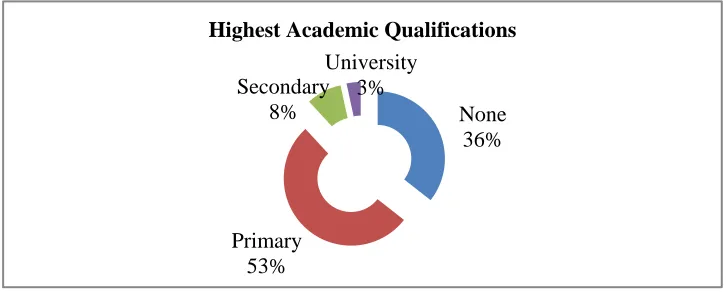
[image:12.612.85.602.284.405.2]Figure 4.3: Distribution of Respondents by Highest Level of Education
Table 4.1: Mode of Payment on Elder Persons’ Accessibility of Cash Transfer Programs
Strongly disagree (%) Disagree (
The mode of payments that are available to enhance cash transfer programs can be termed as effective 17 53 The adoption of mobile money systems by providers of cash transfers has enhance the acquisition of funds 8 15 I have been provided with ATM cards to enable me access funds on timely basis 14 17 I have sometimes received funds by means of cheque from the bank 5 8 I have ever been provided with liquid cash in an envelope direct from pay point 3 7 I have ever been given paid my funds over the counter from bank or Posta pay 12 19 I have ever failed to get funds upon visiting pay point which has led to disbursement of funds in lump sum 5 10
Table 4.2: Service Location on Elder Persons’ Accessibility of Cash Transfer Programs
Strongly disagre
The location of my place of residence to the pay point is very far 10 I always incur transport cost in order to reach the pay point 10 I have ever failed to access funds because of lack of transport fee to the pay point 8 Lack of information concerning delay of funds sometimes leads to incurrence of transport cost just to miss funds at pay point 10 Unpredictable means of transport from place of stay has always made access to funds challenging 5 I sometimes fail to access my pay as a result of vulnerability to diseases due to old age 2
Table 4.3: Enrollment Procedures on Elder Persons’ Accessibility of Cash Transfer Programs
Strongly disagree (%) Disagr
Presence of unclear registration procedures has been a challenge to many potential beneficiaries of CTP 3 7 The mandatory requirements to qualify for the cash transfer programs are always complex 10 2 Lack of effective flow of information from providers has left many potential beneficiaries out of the program 3 5 Lack of clarity on identification procedures has led to inadequate enrolment of older persons
3 7
Lack of community sensitization has left many possible beneficiaries out of the program 5 1 Government has provided old persons with beneficiaries identification cards (BIC) to enhance access of funds 5 5
None 36%
Primary 53% Secondary
8%
University 3%
www.ijsrp.org
Table 4.4: Pearson Product Moment Coefficients
Mode of payment Service location
Enrollment procedures
Cash transfer program Mode of
payment
Pearson Correlation
1
Sig. (2-tailed)
N 71
Service location Pearson Correlation
.155** 1 Sig. (2-tailed) .000
N 71 71
Enrollment procedures
Pearson Correlation
.193** .189 1
Sig. (2-tailed) .004 .112
N 71 71 71
Cash transfer program
Pearson Correlation
.645** .715** .441** 1
Sig. (2-tailed) .001 .008 .005
N 71 71 71 71