Technology (IJRASET)
©IJRASET 2013: All Rights are Reserved
528
Next Generation Cruise
Neeraj Kumar Agarwal1, Sumit Kumar Thakur2, Rupojyoti Kar3, Arun Kumar Singh4
1,2,3,4
Electronics and Communication Engineering, Sikkim Manipal Institute of Technology, Sikkim
Abstract—When it comes to vehicular security be it accident or theft or traffic jams, unfortunately India lies among those countries where accidents share almost 32.6% of the entire death toll share. This paper is about Collision Avoidance and Warning Access System (CAWAS) using RADAR technology which uses Ultrasonic Sensor to estimate distance, control vehicles and protect them from colliding. This paper also discusses about the added features of communications, V2I and I2V.
Keywords— CAWAS, RFID ,VIN , RADAR, ACC, DSRC
I. INTRODUCTION
Communication has evolved and taken various forms. It has not only reduced the probability of occurrence of an error but has also increased security. Today almost no work can be done without communication. In the current RFID Technology Applied in Highway Traffic Management the only possible mode of communication is Simplex. While our aim is to provide traffic control station a precise data regarding the location of vehicle, full duplex mode of communication within vehicles/infrastructure and also allow remote access of vehicle regardless of its position.
Fig.1: Lab Prototype Vehicle being guided by Ultrasonic RADAR Technology
In this paper we use a technology and name it Vehicle Identification Number (VIN). The model will use a system on chip which will carry vehicle’s necessary information (possibly the number plate, but not necessarily the same). Issue of an identification number will mean that we can segregate them based on their priority i.e. Low Priority, High Priority. The high priority and low priority vehicles will be segregated based on signal encoding. Every time a vehicle reaches the range of an infrastructure nearby, it automatically send vehicle information to the system installed at the infrastructure .The implementation of this concept will increase the safety of people and vehicles.
II. WORKING
A. Collision Detection And Avoiding
©IJRASET 2013: All Rights are Reserved
529
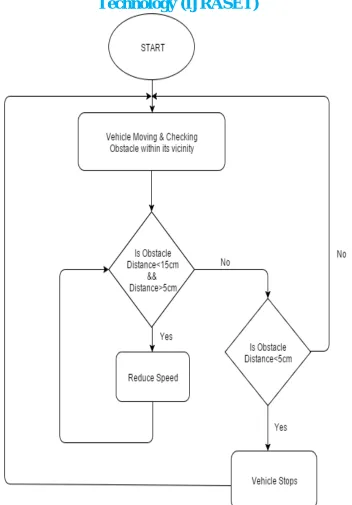
Fig. 2 Flowchart describing the working of Vehicle Collision Avoidance System
The above flowchart describes the basic working of the prototype using the ultrasonic sensor. If the distance between the vehicles isn’t harmful, it’ll keep on checking the distance. If the distance is very less, the vehicle stops and yet the sensor keeps on checking for the distance and the cycle continues. The sensor is always on and active. This way collision will be avoided.
B. Vehicle Priority Segregation
Technology (IJRASET)
[image:4.612.147.480.78.451.2]©IJRASET 2013: All Rights are Reserved
530
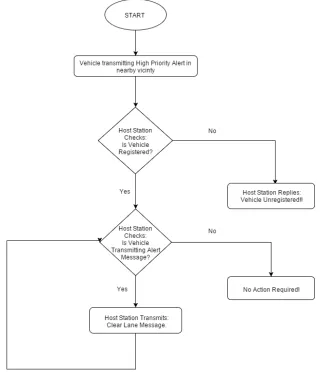
Fig. 3 Flowchart describing the working of V2I & I2V Communication
Each vehicles will have a communication module installed, while the establishment of communication between the vehicle and infrastructure the signal sent by the vehicle will be comprising of a Unique Vehicle Identification Number(V.I.N) along with the location and lane number information.
Segregation of vehicle identification numbers will be based on different constraints. Here we discuss only about the most basic one, Priority. Base on priority, vehicles will be divided into two types. High priority and Low Priority. When this is successful, the information sent to the infrastructure will be compared with the database. However the former will have an option to activate their priority signals so that not every time an ambulance passes by a traffic signal it will be given way. Once the priority is set and decided by the infrastructure, it will communicate with the vehicles nearby to give them a way.
The above flowchart describes the basic working of the prototype using the X Bee /NRF communication module. Vehicles at time of higher priority will be transmitting alert messages in the vicinity. The Base station will receive this message and it will compare from its database whether the vehicle is registered or not. For Registered Vehicle Alert message will be broadcasted to the vehicles to clear the lane. For Unregistered Vehicle the request will not be entertained.
C. Vehicular Theft Detection
©IJRASET 2013: All Rights are Reserved
531
III.CONCLUSIONS
The basic objective throughout the project has been to take precautionary measures regarding safety of vehicles. To obtain it, we must avoid vehicles from colliding. With bringing in V2I and I2V communication modes, traffic management becomes smarter. Its limits can be further explored to V2V communication to ease the commute. Traffic jams can be minimized to great extent. Also, by identifying vehicles digitally, chances of them being misused or stolen is minimal.
IV.ACKNOWLEDGMENT
We would like to extend a special thank to SMIT, Sikkim for providing us means to carry out our research work in precious way.
REFERENCES
[1] Ramakrishnan, B.; Rajesh, R.S (Dr.); Shaji, R.S.; “An Efficient Vehicular Communication outside the City Environments”; International Journal of Next-Generation Networks (IJNGN) Vol.2, No.4, December 2010.
[2] Kumar, R; Pathak, R; “Adaptive Cruise Control -Towards a Safer Driving Experience”; International Journal of Scientific and Engineering Research Volume 3, Issue 8, August 2012.
[3] Arvind Raj R , F. A..; Sandhiya Kumar, S. B.; Karthik S, T. C.; ”Cruise Control Operation from Zero to Preset Speed-Simulation and Implementation“; International Journal of Information and Education Technology, Vol. 1, No. 1, April 2011.
[4] Harding, J., Powell, G., R., Yoon, R., Fikentscher, J., Doyle, C., Sade, D., Lukuc, M., Simons, J., & Wang, J;”Vehicle-to-vehicle communications: Readiness of V2V technology for application”; Washington, DC: National Highway Traffic Safety Administration; Report No. DOT HS 812 014; August 2014.
[5] Milton Joe, M.; Shaji, R.S.; Ashok Kumar, K.; “Establishing Inter Vehicle Wireless Communication in Vanet and Preventing It from Hackers”; I. J. Computer Network and Information Security, 8, 55-61;June 2013.
[6] V Sivaji , V.; Sailaja , M.; “Adaptive Cruise Control Systems for Vehicle Modeling Using Stop and Go Manoeuvres”; International Journal of Engineering Research and Applications (IJERA); Vol. 3, Issue 4, Jul-Aug 2013.