Contaminated Soil Containing Lead Treatment by
Stabilization/Solidification Technique
Mohamed Nur Shafiq Mohamed Hanif
1,a*,
Saiful Azhar Ahmad Tajudin
2,b,
Aeslina Abdul Kadir
3,b, Aziman Madun
4,b,
Mohamad Azim Mohammad Azmi
5,aand Nurul Syakeera Nordin
6,a 1,2,3,4,5,6Faculty of Civil and Environmental Engineering, University Tun Hussein Onn Malaysia, Malaysia
a[email protected]*, b[email protected], c[email protected], d[email protected], e[email protected], f[email protected]
Keywords: Stabilization/Solidification; Lead; Cockle Shell Powders; Toxicity Characteristics Leaching Procedure; Contaminated Soil
Abstract. Contaminated soils are often the blight of soil industrial activities in highly developed and industrialized countries. Contaminated soils have been subject of concern in most developed countries that are experiencing scarcity of uncontaminated soil for development such Malaysia. The objective of the study is to investigate the performance of the available technique for soil remediation contaminated with lead (Pb) through Stabilization/Solidification (S/S) technique. In this study, cockle shell powders at different percentages (2.5%, 5% and 7.5%) were added as a partial replacement of cement. Toxicity Leaching Characteristics Procedure (TCLP) was conducted to determine the effectiveness of the S/S technique to treat the contaminated soil. The results obtained show that 99% reduction Pb after the contaminated clay soil was treated with S/S technique. The combination of cement and cockle shell powders is very effective to use for remediation of lead contaminated soil and reduced the amount of cement for sustainability approach.
Introduction. The rapid growths of development somehow lead to the increasing of contamination
in Malaysia. According to Azzahra [1], the rise of the contamination rate, especially the soil contamination, has affected the equivalence between human and ecosystem on the earth. Due to increasingly serious hazardous cause by soil pollution, especially the problem arising from heavy metals that act as contaminants, soil pollution remediation has recently attracted more attention.
Heavy metals are widespread in urban/rural and industrial areas due to the industrial and agricultural activities such as smelting, metal mining, gasoline processing, as well as the application of fertilizers and agricultural chemical [2]. Heavy metals residue in soils can penetrate into the groundwater and get into the food chain through various activities. Inhalation and ingestion of heavy metal contaminated soils have been identified as a serious threat to human health, especially to children’s health [3].
Azmi et al. [4] stated that there are several techniques on how to remediate the contaminated soils such as phytoremediation, phyrokinetics and others. Even so, stabilization/solidification (S/S) technique is normally employed because of its simplicity to use and cost effective. Furthermore, S/S is a widely employed remediation technique characterized by a broad range of applications, a short process cycle and been systematically studied in developing nations [5].
Contaminated soil with heavy metal pollution poses a risk to the environment and to human health due to biomagnifications [6]. More or less of these factors can be indispensable for living organisms while some others are non-substantive. In these countries, contaminated soil is specially designation assigned to a domain site where ground pollution has been found. It also potentially to contaminate the ground water and surface water supplies through the leachate that produce from the heavy metal contaminated site.
possibility of uptakes by plants, animals, and humans and eventual accumulation in the food chain and also to prevent them from contaminating surface and groundwater by dissolution or dispersion [7]. Due to this problem, S/S technique was used to remediate the contaminated land. Previous research had studied on various additives such as cement, lime, monmorillonite, diatomite, sepiolite and fly ash [8].
In this study, cockle shell was used as an additive to reduce the contaminant volume in soil. Yao et al. [9] studied that bivalve shells are available in abundance, have no eminent use and are commonly regarded as a waste. Their improper disposal has a substantial degree of environmental care and also results in a dissipation of natural resources. Bivalve shell is potential to be used as the raw material because it is formed by biomineralization and consists mainly of CaCO₃ with a small amount of the organic matrix. Recycling shell waste could potentially reduce the disposal problem, and also turn an otherwise useless waste into highly value-added products [9]. Therefore the performance of cockle shell in replacing cement by using S/S technique was investigated.
Materials and Methods
Experimental work and lab materials were used in this study to obtain comprehensive data to achieve the objectives. The characteristics of the soil before and after contaminated also were determined throughout the output data from XRF. Lab testing were carried out to obtain the leachate characteristics data through the TCLP test. Leaching was extracted and leachate concentration data were obtained and was examined to know their leaching characteristics. Effectiveness of S/S technique was found via the leaching assessed by comparing the information obtained from the concentration of leachate extract from the samples which are mixed with clay soil, cement, contaminants and additive.
Sample Preparation. All the materials (clay soil + PbO + cement + cockle shell powders) were prepared. The varieties were mixed uniformly as possible and then the mixtures were compacted to achieve a predetermined maximum density in a cylindrical mold having a stature of 100 millimeter and a diameter of 50 millimeter. After the compaction cylindrical sample was removed from the molds and the sample was wrapped with a food wrapper. Then, the sample was placed in 95% humidity room for 7, 14 and 28 days curing time. The mix was well prepared [10]. The volume of the mold should consist of 40% of waste which is brought up to the contaminated clay soils added with 35% of cement and 25% of water. Table 1 shows the sample mix preparation.
Table 1: Showed the combination of cement with cockle shell powders.
Samples Percentages of Binders (%)
clay soil (contaminated) + cement
5% cement 10% cement 15% cement
clay soil (contaminated) + cement + cockle shell powders
2.5% cement + 2.5% cockle shell powders 5% cement + 5% cockle shell powders 7.5% cement + 7.5% cockle shell powders
X-ray Fluorescence Testing (XRF). XRF method was conducted to obtain compositional
information from the artificial contaminated clay soil and pure clay soil. The amount of the Pb used to contaminate the clay soil was determined from the data obtain. Confirmation can be made whether the soil was mixed properly with a correct amount of Pb stock solution or none.
solid. The final extraction was analyzed using atomic absorption spectroscopy (AAS) for lead concentration. TCLP test was commonly used in comparing the effectiveness of one S/S process with another, and was, therefore, employed in this study to quantify the relative effectiveness of stabilizing lead contaminants by using cockle shell powders and cement binder.
Result and Discussion
X-ray Fluorescence Analysis (XRF). Comparison was made between both results obtained from Table 2, the contaminated clay soil did show the presence of Pb element. Nevertheless, data collected from pure clay soil did not indicate any presence of Pb element. Concentration of Pb element (0. 25%) lives in the contaminated clay soil, which is equivalent to 2500 ppm. The mixture
was prepared and the concentration of contaminant obtained was the same. Thus, the
[image:3.595.122.473.311.513.2]characteristic after and before the soil was contaminated by using the XRF method shown the contamination of Pb into the soil procedure was successful.
Table 2: XRF data obtained from the pure clay soil and contaminated clay soil
Clay soil Contaminated clay soil Formula Concentration Formula Concentration
orig-g 9 orig-g 9
added-g 3 added-g 3
CO2 0.1 CO2 0.1
SiO2 47. 20% SiO2 43. 40%
Al2O3 17. 20% Al2O3 15. 70%
Fe2O3 4.87% Fe2O3 5.09%
SO3 3.12% SO3 3.48%
K2O 2.04% K2O 1.99%
MgO 0.93% MgO 0.84%
TiO2 0.81% TiO2 0.82%
Na2O 0. 28% Na2O 0. 28%
CaO 0. 25% CaO 0. 83%
Pb 0. 25%
Leachability of Lead Concentration. From Table 3 below shown the value of Pb concentration for
[image:3.595.70.522.618.786.2]both sample (contaminated soil with cement and contaminated with combination of cement and cockle shell powders) were decreased. The samples were cured for 7 days, 14 days and 28 days. There are 3 samples for each different type. The mean concentration was calculated and was chosen as a main concentration result that used for the psychoanalysis.
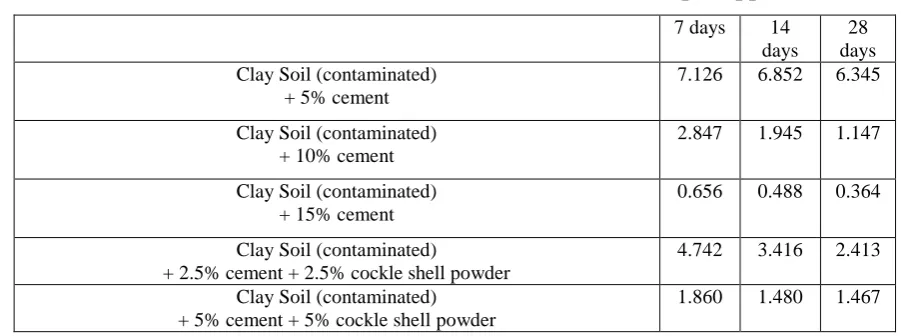
Table 3: The value of Pb concentration for both samples (ppm)
7 days 14 days
28 days Clay Soil (contaminated)
+ 5% cement
7.126 6.852 6.345
Clay Soil (contaminated) + 10% cement
2.847 1.945 1.147
Clay Soil (contaminated) + 15% cement
0.656 0.488 0.364
Clay Soil (contaminated)
+ 2.5% cement + 2.5% cockle shell powder
4.742 3.416 2.413
Clay Soil (contaminated) + 5% cement + 5% cockle shell powder
Clay Soil (contaminated)
+ 7.5% cement + 7.5% cockle shell powder
[image:4.595.77.537.137.386.2]0.381 0.051 0.047
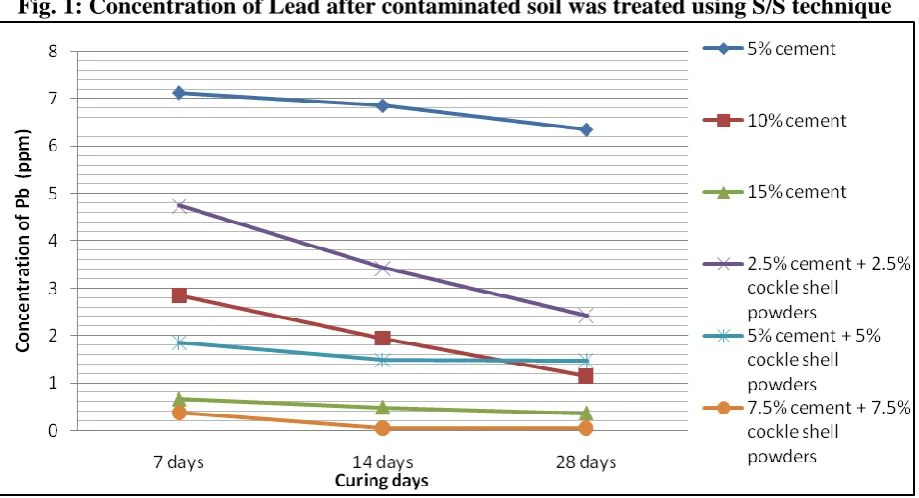
Fig. 1: Concentration of Lead after contaminated soil was treated using S/S technique
Cement (15%) was used as a binder to treat contaminated soil. Some adjustment was created by replacing half of the amount of cement used by cockle shell powders by a combination of 7.5% cement with 7.5% cockle shell powders. The results obtained show a decreasing in concentration of Pb for both samples from 0.488 ppm to 0.051 ppm with the percentage of reduction of 99% for 14 hydration days.
Different percentages of cement (5% and 10%) have also been used as a binder for the treatment. The concentrations of Pb obtained were 6.852 ppm and 1.945 ppm. The same change was made by substituting half of the quantity of cement used with cockle shell powders given a 99% of Pb concentration reduction in 14 days.
From the past studied conducting by Azmi et al. [4], the percentage of reduction in 14 hydration days with 15% cement is 98.96%, while the combination of cement and cockle shell powders (7.5%) that used in this study is 99.9% more efficient.
Previous research on the solidification/stabilization (S/S) of lead contaminated soil using Ordinary Portland Cement and rice hush ash (RHA) was conducted show a reducing in the leachability of lead from the treated sample [11]. Lead concentrations were reduced from 0.66 ppm to 0.08 ppm and gave a percentage of 87.9 % in the reduction of Pb concentration after the treatment process was done. Still, the combination of cement and cockle shell powder also show a decrease in the concentration of Pb by 99.9% and it is more efficient than the combination of cement and RHA. The usage of combination of cement with cockle shell powders to treat contaminated soil is suitable and effective. This can be proven from the Jung et al. [12] studied where result obtained indicate that waste oyster shell amendments improved soil quality and stabilized Pb and Cd in contaminated soil.
Conclusion
contaminated by using XRF method shown the contamination of Pb into the soil procedure was successful.
As a conclusion, cockle shell powders could be an alternative low cost material in S/S technique. The suitability of the additive (cockles shell powders) used for the combination with cement are very effective. It gave tremendous result in a reduction of 99% referring to the decreasing of Pb concentration in the contaminated clay soil. By providing an inventory of some waste products that potentially can be used as cement for the S/S technique in developing country is a good way for a better nation towards sustainability.
References
[1] Azzahra, A. & Ab. Malik, Y. Wawasan 2020. Petaling Jaya; Penerbit Setiamas 1995
[2] Jia, X. P. 2007. The source of heavy metal in polluted soil and the improvement measure. Modern Argicultural Sciences and Technology 9. 197-199
[3] Guo, G. L., Zhou, Q. X., and Li, X. Y. 2005. Advances in research on in situ chemo-immobilization of heavy metal in contaminated soil. Chinese Journal of Applied Ecology 16, 1990-1996.
[4] Azmi, S. A. A. Tajudin, and A. A. Kadir. 2013. Remediation of zinc contaminated soil by
stabilization/solidification technique. International Journal of Zero Waste Management 2.
[5] Chen, Q. y., Tyrer, M., Hills, C. D., Yang, X. M., and Carey, P. 2009. Immobilization of heavy metal in cement-based solidification/stabilization: A review. Waste Management. 29, 390-403.
[6] Roy, M. and McDonald, L.M.: Metal uptake in plants and health risk assessment in
metal-contaminated smelter soils, Land Degrad. Dev., doi:10.1002/ldr.2237 , in press, 2014
[7] Yong, R., N. Geoenvironmental Engineering: Contaminated Soil, Pollutant Fate, and Mitigation: CRC Press. 2000
[8] Xi, Wu X., Xiong H. 2014. Solidification/Stabilization of Pb-contaminated Soils with Cement and other Additives. Soil and Sediment Contamination: An International Journal.
[9] Yao, M. X., H. L., T. C., Y. Y., and H. Z. 2013. Bivalve shell: not an abundant useless waste but a functional and versatile biomaterial. Critical review: Environmental Science and Technology. [10] Chang. J,. Lin. T. ko. M,. and Liaw, d. (1999). ‘Stabilization/Solidification of sludge containing heavy metal by using cement and waste pozoolans. J. Environ. Sci. Health, Part A: toxic/hazard Substances Environment
[11] Yin, H. M., and M. G. S. 2006. Stabilization/Solidification of lead contaminated soil using cement and rice husk ash. Journal of Hazardous Materials, 1758-1764.