NURUL ASHIKIN BINTI SAMAT
AN IMPROVED IMPUTATION METHOD BASED ON FUZZY C-MEANS AND PARTICLE SWARM OPTIMIZATION
FOR MISSING DATA
NURUL ASHIKIN BINTI SAMAT
A thesis submitted in
fulfillment of the requirement for the award of the Degree of Master of Information Technology
Faculty of Computer Science and Information Technology Universiti Tun Hussein Onn Malaysia
To Mak, Ayah,
&
ACKNOWLEDGEMENT
Alhamdullilah, all praises to Allah. I would like to express my thanks to those who helped me with various aspects in conducting research and the writing of this thesis. First and foremost, to my supervisor, Assoc. Prof. Dr. Mohd Najib Mohd Salleh who sparked my interest in my research area, encouraged and guided me to complete this journey with his immense knowledge. His advice, patience, support and motivation helped me to make it through the ups and downs of this process.
I would like to express sincere gratitude to Malaysian Higher Education (MOHE) for providing sponsorship for study fees under the MyBrain15 program. I also would like to sincerely acknowledge the Universiti Tun Hussein Onn Malaysia (UTHM) for providing financial assistance under Postgraduate Incentive Research Grant (GIPS). Both financial supports motivate me to complete my study. I would like to gratefully thank to the Centre for Graduate Studies (CGS) and the Research, Innovation, Commercialization, and Consultancy Office (ORICC) for their hospitality during my study. I also wish to say thank to Faculty of Computer Science and Information Technology Postgraduate friends and staff who had supported my research work in one way or another.
ABSTRACT
Data mining techniques are used in various industries, including database marketing, web analysis, information retrieval and bioinformatics to gain a better knowledge extraction. However, if data mining techniques are applied on real datasets, a problem that often comes up is that missing values occur in the datasets. Since the missing values may confuse the data mining process and causing the knowledge extracted unreliable, there is a need to handle the missing values. Therefore, researchers are coming out with imputation methods in the preprocessing stage. Although there are many imputation methods such as Mean, k-Nearest Neighbor (k -NN) and Fuzzy C-Means are implemented by other researchers, accuracy for the replace values is still in infancy. In this study, an imputation based on FCM and Particle Swarm Optimization (PSO) has been developed to get better imputation values. FCM has ability to cluster the data into two or more subsets with the different membership values and gives better coverage to find the correlation between the dataset. While, PSO is a swarm optimization algorithm that effectively find the optimum imputation values with less parameters to adjust. Then, FCMPSO was trained with seven artificial missing ratios from 1% to 30% for Cleveland Heart Disease dataset and real missing values in Framingham Heart Disease dataset to get the complete dataset. Then, the complete dataset was trained with Decision Tree algorithm to observe the performance in terms of accuracy. The FCMPSO results gives a better RMSE value for 30% missing ratios with 0.0237 compared to Mean,
ABSTRAK
TABLE OF CONTENTS
DECLARATION ii
DEDICATION iii
ACKNOWLEDGEMENT iv
ABSTRACT v
ABSTRAK vi
TABLE OF CONTENTS vii
LIST OF TABLES xi
LIST OF FIGURES xii
LIST OF ALGORITHMS xiii
LIST OF SYMBOLS AND ABBREVIATIONS xiv
LIST OF APPENDICES xv
LIST OF PUBLICATIONS xvi
1.3 Aim of Study 4
1.4 Objectives of the Study 4
1.5 Scope of Study 5
1.6 Significance of Study 5
1.7 Thesis Outline 5
CHAPTER 2 LITERATURE REVIEW 7
2.1 Introduction 7
2.2 An Overview of Data Mining 8
2.3 Concept of Missing Data 9
2.4 Treatments for Handling Missing Data 13
2.4.1 Filter-based Method 14
2.4.2 Imputation Method 15
2.5 An Overview of Fuzzy Theory 18
2.6 Fuzzy Clustering 20
2.6.1 Fuzzy C-Means Clustering 21
2.7 Particle Swarm Optimization 23
2.8 An Overview of Decision Tree 26
2.9 Research Gap Discussion 29
3.2.1 Cleveland Heart Disease Dataset 35 3.2.2 Framingham Heart Data Study 37 3.3 The Proposed Method: The FCMPSO Imputation 38
3.4 Data Partitioning 42
3.5 Applying Decision Tree Classifier 43
3.6 The Performance Measurement 43
3.6.1 Performance Measure for Imputation 43 3.6.2 Performance Measure for Classification 44
3.7 Chapter Summary 45
CHAPTER 4 RESULTS AND ANALYSIS 46
4.1 Introduction 46
4.2 Experiment 1 46
4.3 The Effects of FCMPSO with Different
Missing Ratios on RMSE 47
4.4 The Effects of FCMPSO with Different
Missing Ratios towards Classification Algorithm 48
4.4.1 Accuracy 49
4.4.2 Precision 52
4.5 Performance Evaluation Analysis 53
4.5.1 Accuracy 53
4.5.2 Precision 54
5.3 Recommendation for Future Works 58
5.4 Concluding Remarks 58
REFERENCE 59
APPENDIX 69
LIST OF TABLES
2.1 Example of training set 10
2.2 Example of testing set 10
2.3 Example of missing attributes in testing data 11
2.4 Example of Listwise deletion 15
2.5 Example of Pairwise deletion 15
2.6 Example of Mean Imputation 16
2.7 The summary of Imputation Techniques 31
3.1 Summary of Heart Disease dataset 35
3.2 Missing Percentage for dataset 36
3.3 Framingham Heart Disease dataset 37
3.4 Sample of Heart Disease dataset 41
3.5 Sample of complete data from Heart
Disease dataset 41
3.6 Sample of Incomplete Data from Heart
Disease dataset 41
3.7 Centroid of two clusters 42
3.8 Membership Function of complete data
from Heart Disease dataset 42
4.1 Accuracy between 0% and 30% Missing
Ratios 47
4.2 RMSE results for imputation methods 47 4.3 Summary of Decision Tree Parameters
in WEKA 49
4.4 Comparison of Decision Tree Accuracy under
different missing ratios and imputation methods. 50
LIST OF FIGURES
2.1 Stages involved in the KDD Process by
Fayyad et al. (1996) 8
2.2 Categories of Missing Data (Rubin, 1976) 12
2.3 Treatments of Missing Data 14
2.4 Example on Traditional Logic 19
2.5 Example on Fuzzy Logic 19
2.6 Decision Tree for Play Tennis 27
2.7 Confusion Matrix 44
3.1 Research Methodology 34
3.2 FCMPSO Design 38
4.1 Graph comparison of FCMPSO with Mean Imputation, k-NN and FCM on Heart
Disease dataset 48
4.2 Accuracy graph for Decision Tree algorithm on Heart Disease dataset for 1% until
30% missing ratios 50
4.3 Precision graph for Decision Tree algorithm on Heart Disease dataset for 1% until
30% missing ratios 52
4.4 Decision Tree’s Accuracy 53
LIST OF ALGORITHMS
2.1 FCM Algorithm 21
2.2 PSO Algorithm 25
LIST OF SYMBOLS AND ABBREVIATIONS
WHO - World Health Organization
FCM - Fuzzy C-Means
PSO - Particle Swarm Optimization
FCMPSO - Fuzzy C-Means Particle Swarm Optimization RMSE - Root Mean Square Error
UCIMLR - University California Irvine Machine Learning Repository WEKA - Waikato Environment Knowledge Analysis
KDD - Knowledge Discovery in Database MCAR - Missing completely at random
MAR - Missing at random
NMAR - Not missing at random
k-NN - k-Nearest Neighbor WDS - World Data Strategy PDS - Partial Distance Strategy OCS - Optimal Completion Strategy NPS - Nearest Prototype Strategy
SI - Swarm Intelligence
ACO - Ant Colony Optimization BCO - Bee Colony Optimization SVM - Support Vector Regression
GA - Genetic Algorithm
MSE - Mean Squared Error
AAELM - Auto Associative Extreme Machine Learning
LIST OF APPENDICES
APPENDIX TITLE PAGE
LIST OF PUBLICATIONS
Conference:
(i) Nurul Ashikin Samat, Mohd Najib Mohd Salleh. (2016). “Improve Decision Tree Classifier with FCMPSO for Detecting Heart Disease.”
Second International Conference on Soft Computing and Data Mining (SCDM-2016)
(ii) Mohd Najib Mohd Salleh, Nurul Ashikin Samat. (2017). “FCMPSO: An Imputation for Missing Data Features in Heart Disease Classification.” International Research and Innovation Summit (IRIS17)
(iii) Nurul Ashikin Samat, Mohd Najib Mohd Salleh. (2017). “An Imputation for Missing Data Features based on Fuzzy Swarm Approach in Heart Disease Classification.” The Eighth International
LIST OF AWARD
(i) 2nd Place in Three Minute Thesis Competition [3MT 2016]:
1CHAPTER 1
INTRODUCTION
1.1 Introduction
In recent decades, information technology areas have been thriving worldwide. In addition, fast development of powerful data collection and storage tools contribute to the growth of available data volume. These data come from various areas and industries such as business, engineering, telecommunication, medical and health industry. Business industry generates data sets from sales transaction, stock trading, performances and customer feedbacks. While, in medical and health industry data was generated from medical records, patient monitoring and medical imaging. These databased were collected but raw data do not give any specific and important knowledge to experts. Therefore, strong and powerful tools are needed to extract and uncover the valuable knowledge from the data. This condition has demanded to the needs of data mining.
Data mining is a tool that has ability for turning the huge data into useful knowledge and information. Therefore, it has gained a lot of attention from various industries and areas in recent years. Knowledge and information extracted from the data mining gives benefits to respected industries as it can provide the sufficient evidence, indication and support for an organization to make any decisions further. There are variety of data mining tools such as classification, clustering, regression and association. Moreover, data mining implementation possesses capabilities to facilitate quality support, improved data management, and enhanced communication and production field.
Network (Khemphila & Boonjing, 2011) have been used before in their studies. Classification design consists of two phases: (1) Training and (2) Testing (Yoo et al., 2012). However, each technique gives different accuracy respectively.
In general, Decision Tree classifier becomes a popular and competent classification technique among the researchers (Mohamed et al., 2012; Tomar & Agarwal, 2013; Tsang et al., 2011). Decision Tree has been applied to predict new data into the respectively class presented in tree structure. Decision Tree algorithms such as ID3, C4.5, and C5.0 have also been used widely. The algorithms use divide and conquer technique which starts with the root and moves through the branch until the node is reached. Basically, Decision Tree is practical, easy to implement and the rules extraction are easy to understand. However, the Decision Tree tends to grow a large tree with complex rules of extraction. Thus, pruning method is needed to overcome this drawback. Other than that, Decision Tree also needs certain data for classification as uncertain data can affect the accuracy of Decision Tree.
Nevertheless, the real-world data stored in a database, generally may contain noise, incomplete data, and inconsistent. These conditions may confuse the data mining process, causing the knowledge extracted unreliable. Thus, the accuracy of uncovered knowledge can be poor. As an example, in health industry, uncertain data can appear from the data collection process such as irrelevant input features, no value or missing values of input and impossible or unlikely values of input. These problems can cause the accuracy of data mining as it cannot perform well due to the incomplete features. Although data mining algorithm such as Decision Tree has its own mechanism to handle missing value as probabilistic approach, but it still does not give the best treatment to the missing data (Song et al., 2008).
help decision maker in making an effective decision (Tsang et al., 2011). The clear visualization of tree gives advantages to the user to identify the most important class. However, Decision Tree works with precise and known data to give better results (Sutton-Charani et al., 2013). Thus, there are problems in decision making when there are imprecise data. Imprecise data need to be taken seriously as these data can affect the quality of decisions. Imprecise data include noise or uncertain data from no value input features and missing values recorded (Kotsiantis et al., 2007). It may exist from the data collection process.
Thus, to overcome this problem, preprocessing stage is considered crucial before training the data into the classifier. Choosing the right and suitable preprocessing method can improve the dataset quality. By using poor quality data, it leads to poor quality information and knowledge. For example, given missing data in customer relation service system, customers may receive many calls due to wrong grouping, plus leading to missed sales opportunity and unhappy customers.
Hence, the preprocessing stage can eventually maximize the accuracy and efficiency of machine learning techniques. The decisions made from the data is reliable and trustworthy. Therefore, most of researchers introduced imputation methods to overcome the missing dataset problems in a preprocessing stage. Imputation shows a good and competent technique in preprocessing stage. In the meantime, fuzzy concept and fuzzy theory have many advantages in dealing with data containing uncertainty, therefore fuzzy approaches have been taken into consideration to find the imputation values.
imputation results by applying an optimization algorithm, Particle Swarm Optimization (PSO) to optimize the imputation values. PSO is mainly based on mathematical foundation and application research to prove its convergence and robustness. It had no overlapping and mutation calculation. PSO also adopts real number and gives solution directly. It was chosen due to the simple algorithm, practical to implement and give promising results. The benefits of PSO implementation is to enhance the candidates for imputation and to choose the best suits value for replacement. Apart from that, this research proves that after FCMPSO has been applied in preprocessing stage, it leads to better imputation accuracy and significantly improve the accuracy of classification algorithm.
1.3 Aim of Study
The aim of this study is to improve on the accuracy of Decision Tree classification results between incomplete and complete dataset. Therefore, this study focused on imputation method using FCM in the preprocessing stage by optimally selecting the impute data using PSO.
1.4 Objectives of the Study
In order to achieve the research aim, three research objectives are set as follows. (i) To propose an improved imputation technique based on Fuzzy C-Means and
Particle Swarm Optimization (FCMPSO).
(ii) To apply (i) for missing dataset problem in preprocessing stage to get complete dataset.
PSO in preprocessing stage called FCMPSO. The performance of proposed method will be compared with mean imputation, k-NN imputation, and FCM on the Root Mean Square Error (RMSE). In addition, this research also focuses on improvement of classification results by applying Decision Tree algorithm with the complete dataset. The experiment has been trained with Decision Tree algorithm in Waikato Environment Knowledge Analysis (WEKA) version 3.6.11. The performance of classification is measured in terms of accuracy and precision.
Heart Disease dataset from University California Irvine Machine Learning Repository (UCIMLR) (Frank & Asuncion, 2010) and Framingham Heart dataset from National Institutes of Health (NIH) (Framingham Heart Study, 2016) has been chosen as samples for the training process.
1.6 Significance of Study
In order, to understand the importance of the preprocessing towards machine learning techniques, this study investigates on the effects of imputation method in preprocessing stage which focuses on FCMPSO imputation towards Decision Tree. The findings of this study will demonstrate the vital needs for data mining to have a complete dataset to get accurate knowledge. Therefore, after the preprocessing stage is carried out, the dataset will be trained on Decision Tree and the classification rules will be extracted leads to help expert to make decisions. Thus, it will enable to produce more accurate and comprehensible decisions for organization to use.
1.7 Thesis Outline
increases the accuracy of Decision Tree algorithm.
This thesis consists of five chapters, including this Introduction chapter. The remaining part of this thesis is segmented into following order: Chapter 2: Literature Review. This chapter includes an overview of data mining classification in the healthcare industry. In this chapter, concept of missing data and the imputation methods are reviewed. Furthermore, the optimization algorithm, PSO will also be reviewed in this chapter. Then, this chapter introduces a new method in improving the imputation method by proposing an algorithm. Chapter 3: Research Methodology. This chapter discusses the steps used to systematically put the study into action. Design, formulation, and implementation of dataset to optimize imputation are discussed in detail. Chapter 4: Results and Discussion. The evaluation of optimized imputation method and Decision Tree was developed in Chapter 3. The performances of the proposed method were tested for comparison.
2CHAPTER 2
LITERATURE REVIEW
2.1 Introduction
Decision Tree is widely known due to its capabilities to classify and produce rules from the dataset. The rules that have been produced are easy and practical to be used by human experts. Nevertheless, to produce robust and reliable trees for new records prediction, Decision Tree needs a complete dataset. Hence, the existence of missing data in the dataset is somewhat unavoidable. Missing data are unfavorable to researchers and experts because it may lead errors and confusion in interpreting the data. Therefore, dealing with missing data is an important issue in data mining. The literature review regarding type of missing data and type of imputation methods used to substitute the missing value is discussed. This study focuses on the imputation of missing data in preprocessing stage by clustering the features selected based on Fuzzy C-Means clustering method. Despite the ability of FCM to find the imputation value, there is weakness that can be improved in order to find the most accurate value for imputation. An overview of Decision Tree is also discussed as it has been used to validate the performance of imputation.
2.2 An Overview of Data Mining
[image:25.595.143.499.295.497.2]Over the years, information technology areas have been thriving worldwide. Data collection comes from various kinds of databases. These databases were collected from various industries such as automotive and healthcare industry. The raw data do not give any specific and important knowledge to experts, thus, data mining helps to extract the information from the data.
Figure 2.1: Stages involved in the KDD Process by Fayyad et al. (1996) According to Fayyad et al. (1996), the Knowledge Discovery in Databases (KDD) needs data mining as it is an important stage for KDD to perform well. Figure 2.1 shows the five stages involved in KDD which include (1) Selection, (2) Preprocessing, (3) Transformation, (4) Data Mining, and (5) Evaluation.
have achieved great success, they also encountered difficulties in meeting challenges posed by the datasets. For an example, healthcare industry has unpredictable medical data where it is hard to collect accurate, precise, and complete medical data (Bratu et al., 2008; Tomar & Agarwal, 2013; Wang et al., 2016).
Therefore, after the selection process of desired target data in the first stage of KDD, preprocessing is an essential and important step. The dataset is filtered and cleaned before it can be trained in the data mining stage (Sridevi et al., 2011). Therefore, failure to preprocess the data might affect the accuracy of data mining algorithms and affect the results of data mining analysis. This is consistent with the study by Fayyad et al. (1996), which mentioned that it is necessary to preprocess the data because any low quality data source such as missing value may give less optimum results to the analysis. Thus, in this research, to address missing data problems, imputation method in preprocessing stage has been selected. Meanwhile, missing data definition will be further explained in next subtopic 2.3.
2.3 Concept of Missing Data
class. Table 2.1, Table 2.2 and Table 2.3 will help to clarify briefly about classification process.
Table 2.1: Example of training set
Age Gender Chest Pain Type Blood Pressure Heart Disease
40 Male Atypical angina 140 No
49 Female Non- angina pain 160 Yes
37 Male Asymptomatic 150 Yes
Table 2.1 shows the example of training set for Heart Disease patients. The table contains a set of attributes which includes age, gender, chest pain type, and blood pressure. Meanwhile, the class or goal of attribute in the training set is the presence of Heart Disease. In the first step of the classification process, the attributes in the training set are analyzed by classification algorithm and the relationship knowledge between the attributes and class is identified. The classifier model is then shown in rule or pattern form. The rule generated might be expressed like this;
IF (age > 35 & blood pressure < 150) THEN (Heart Disease = No).
[image:27.595.109.532.581.643.2]IF (chest pain type = asymptomatic & blood pressure > 150), THEN (Heart Disease = Yes).
Table 2.2: Example of testing set
Age Gender Chest Pain Type Blood Pressure Heart Disease
48 Male Asymptomatic 138 ?
54 Female Non- angina pain 150 ?
39 Male Non- angina pain 120 ?
Age Gender Chest Pain Type Blood Pressure Heart Disease
43 - Asymptomatic - ?
54 Female - 150 ?
- Male Non-angina pain 145 ?
Table 2.3 shows an example of several missing attribute values or incomplete data in the database. These uncertain data are inherited from real-life data. Missing values in training or testing data can be disadvantageous to knowledge extraction process. Uncertain environments might arise from several factors such as parallax error, human error or equipment error (Zhang et al., 2010). As an example, healthcare industry always has unpredictable medical data. It is hard to collect accurate, precise, and complete medical data (Tomar & Agarwal, 2013). Medical data records come from various materials such as medical reports, laboratory report, X-ray report, and report reviewed by experts from each appointment with patients. Although there are some ways to avoid from getting missing data such as repeating the experiment and lab test, it is not always possible to avoid missing data and this will increase the medical expenses to the patients.
There are several ways to deal with missing values in data sets. Deleting or ignoring the missing data are the simplest approaches. Nevertheless, to ignore the whole row of data which contains missing data might be an ineffective move, as other complete data can give the information in certain features or groups. For an example, in Table 2.3, for row number one, the “Blood Pressure” and “Gender” data
are missing, but that row still has the complete data on “Age” and “Chest Pain Type”.
Thus, for features “Age” and “Chest Pain Type”, they still need to be counted for
analysis, as they may contain important information such as, “In which certain age range that has a high risk of Heart Disease problem”.
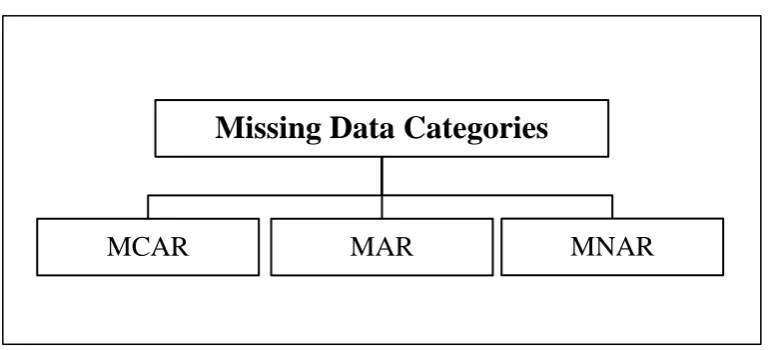
[image:28.595.108.534.155.217.2]Figure 2.2: Categories of Missing Data (Rubin, 1976)
Figure 2.2 shows that according to Rubin (1976) missing data can be categorized into three which are Missing completely at random (MCAR), Missing at random (MAR), and Not missing at random (NMAR) (Rubin, 1976). Missing data is a situation in which some components of the dataset are not available for all feature variables, or may not even be defined within the problem domain. The following parts will explain briefly about each missing mechanism.
(i) Missing completely at random (MCAR)
Missing completely at random happens in a situation where the missing data in the dataset for an attribute has no relationship or dependency towards another set of attributes. An example of MCAR situation is where the expert needs to record the patient’s latest blood pressure, but he did not show up for the follow-up medical
check-up due to family problems or being involved in an accident. Thus, the missing data for “blood pressure readings” attribute is absolutely not related to other
attributes such as gender and age.
(ii) Missing at random (MAR)
Missing at random is the missing data in the dataset for an attribute that depends on other attributes or variables within the dataset. The probability of the missing values can be obtained by estimating other complete attributes or variables. MAR is the most general condition considered by researcher to perform an analysis of the missing value (Aydilek & Arslan, 2013).
depends on the same attribute only (Leke et al., 2015). It makes the missing value not random and be estimated from other attributes within the dataset.
Missing problems is a common problem in real world industries and areas such as Semiconductor industry (Azarkhail & Woytowitz, 2013), patients medical records (Rahman et al., 2014), Data preprocessing (Zhang et al., 2006), and Microarray experiments (Bose et al., 2012). The above literature is consistent with this study where missing data may have problems in the extraction of information. Nevertheless, with the precise ways to treat the problem, it can be an advantage. Thus, in the next subchapter, the treatment methods available for treating the missing data will be further discussed and explained.
2.4 Treatments for Handling Missing Data
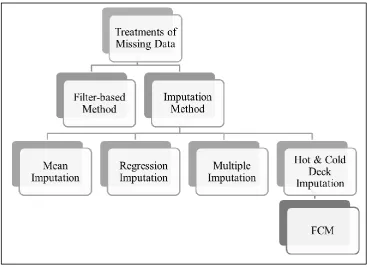
Figure 2.3: Treatments of Missing Data
There are several methods applied by the researchers as shown in Figure 2.3 to treat the missing data in the preprocessing stage. This is important as the best technique will maximize the knowledge extracted from the dataset and improved the performance of data mining algorithm. The following subsection will discuss briefly about each treatment.
2.4.1 Filter-based Method
Filter-based treatment means that the missing value is ignored or deleted. It means that no imputation value substitutes to the missing data. Before this, Rubin (1976) introduced that general way to treat the missing data which is to ignore the missing data or using deletion methods such as Listwise deletion and Pairwise deletion (Karadog et al., 2011).
ID Attribute 1 Attribute 2
A1 23 154
A2 34 ?
A3 60 89
A4 45 112
[image:32.595.105.533.135.220.2]A5 ? 164
Table 2.5: Example of Pairwise deletion
ID Attribute 1 Attribute 2
A1 23 154
A2 34 ?
A3 60 89
A4 45 112
A5 ? 164
On the other hand, Table 2.5 shows that pairwise deletion only deletes the missing data without deleting the whole record. Nevertheless, the analysis part will have problems as the number of each sample is different in the dataset.
Thus, both ways are acceptable and suitable if the missing data is in a small number. Even though this method is more stable (Karadog et al., 2011), a bigger number will affect the quality of the dataset and it may result to biased data (Aydilek & Arslan, 2013; Dhevi, 2014; Thirukumaran & Sumathi, 2012). Apart from that, deletion methods will also give lower precision values over the increasing missing values in the dataset (Twala et al., 2005). Furthermore, the real world database will has a relatively a large number of data, and thus filter-based method is not a practical method to implement (Farhangfar et al., 2007).
2.4.2 Imputation Method
[image:32.595.109.529.275.358.2]information. Thus, by implementing imputation method, the information extraction can be carried out better. As for medical field, Zhang et al. (2012) applied imputation method to help the classifier to overcome the missing problem in clinical heart failure data.
Although, researchers give good reviews about imputation in each their case study in making the data mining work better. However, getting the best imputation values to replace the missing data is still very challenging. The following subsection will discuss each imputation method briefly.
(i) Mean imputation
[image:33.595.108.534.508.590.2]First imputation is Mean imputation which is the earliest method of imputation (Ravi & Krishna, 2014). The missing value is replaced with the mean value for the attribute or variables. Although it is easy to use, it will affect the relationship between attributes or variables, and weakens the covariance and correlation in estimation as each missing value is imputed with the same imputed value (Enders, 2010). Example of Mean imputation is as follow;
Table 2.6: Example of Mean Imputation
ID Attribute 1 Attribute 2
A1 23 154
A2 34 ?
A3 60 89
A4 45 112
A5 ? 164
From Table 2.6, ID A2 and A5 have a missing value in Attribute 2 and Attribute 1 respectively. Thus, for Mean imputation, the value is replaced by 129.75 for A2 and 40.5 for A5. Below is the calculation for Mean imputation.
Mean value for ID A2;Attribute 2 = (154 + 89 + 112 + 164) ÷ 4 = 129.75
Mean value for ID A5;Attribute 1 = (23 + 34 + 60 + 45) ÷ 4
the idea to find the imputation value from the results of regression complete values as they might have relation between the attributes (Enders, 2010). Apart from that, regression model has also been used together with prediction model such as Neural Network to improve the estimation data (Lingras et al., 2008). Although regression can impute better than mean imputation, the variability of the imputation range is too small. Thus, it can lead to wrong inferences from the dataset. Apart from that, regression is also tangled with biased problem estimation (Shao & Wang, 2002).
(iii) Multiple imputation
Third imputation is multiple imputation where the basic idea of this imputation is to generate a small copy of the dataset, n (example: 5-10 subsets) which contains the missing data. The estimate value for missing data in each small copy is imputed into the missing data and result in complete full data. This activity is performed multiple times according to the n values. Each imputed dataset will be analyzed accordingly and then, all the results are combined to produce overall analysis (Royston, 2004). Maximum likelihood algorithm such as Expectation maximization algorithm is always used in multiple imputation (Enders, 2001). However, this type of imputation needs a lot of costs and is not easy to implement as they are embedded into costly software (Myers, 2011).
(iv) Hot deck and cold deck imputation
dataset values to substitute, grouping or clustering the data with same similarity features or data will increase the accuracy of imputation values. Two examples of hot deck imputation based on clustering methods are K-Means clustering and Fuzzy C-Means clustering (Aydilek & Arslan, 2013).
In the past years, researchers had use and utilize either the regression idea or the clustering idea to identify the best imputation values by discovering the suitable range for replacement. Therefore, the focus of this study is to handle the missing data using a hot deck imputation method through clustering method. However, the missing data contained uncertainty and imprecise information. Thus, fuzzy capabilities are introduced in the next subchapter to solve the problems.
2.5 An Overview of Fuzzy Theory
Over the last few decades, fuzzy logic has been shown as a great approach for dealing with imprecision and nonlinearity efficiently. Applications can be found in a wide perspective ranging from medication to economics, supply chain management to user products, and air conditioning control to traffic control (Akhoondi & Hosseini, 2016; Al-Awadhi et al., 2015; Ayağ et al., 2013; Jianzhong & Jundan, 2015; Kaur & Kaur, 2012; Zhang et al., 2013).
The concept of fuzzy logic was introduced by Zadeh (1965). Fuzzy logic is an approach to computing based on “degree of truth” rather than the usual “true or false” (1 or 0). The concept of information is inherently associated with the concept
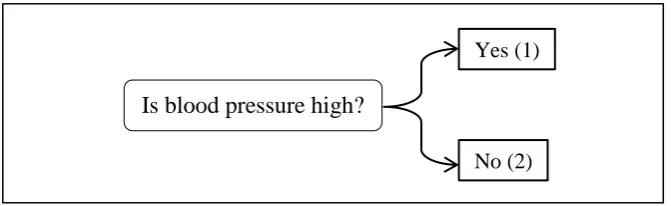
Figure 2.4: Example on Traditional Logic
[image:36.595.151.493.365.482.2]Figure 2.4 shows traditional or binary logic answer towards blood pressure where there are only two answers which are “Yes” and “No”. Therefore, the binary answer is referred to as “Yes” to represent the value of “1” and “No” to represent the value of “0”. Most traditional tools for modelling, reasoning and computing are crisp, deterministic, and precise in character. In conventional dual logic for instance, a statement can be true or false, and nothing in between.
Figure 2.5: Example on Fuzzy Logic
On the other hand, Figure 2.5 shows multiple answers towards blood pressure question which implement the concept of fuzzy logic. “Extremely High” represents the value of 1.0, “Very High” represents the value of 0.8, “Not Very High” represents the value of 0.4 and “Not High” represents the value of 0.0. This is degree of truth and the value ranges from 0 to 1. It is called as membership function values. Since its appearance, the theory of fuzzy has advanced in a variety of ways and in many disciplines. This trend is still ongoing as fuzzy is the best tools for modelling uncertain problem solving. In this study, fuzzy theory is used to accommodate fuzziness in human judgement, evaluation and decision. It is important to develop better understanding for machine intelligence to mimic human decision-making. Thus, non-expert also can use the knowledge to make decisions.
No (2)
Extremely High (1.0)
Very High (0.8)
Not Very High (0.4)
would not fit the structures that exist in reality. Fuzzy set theory seems to offer good opportunities to improve existing concepts.
2.6 Fuzzy Clustering
Clustering is one of the methods in data mining. The purpose of clustering is to group the dataset into subsets based on their similarity. Since the imputation value is substituted with the actual range of the feature respectively, clustering is a suitable approach to find the group of useful features by having the similarity measure. In order to find the plausible value for missing data, clustering uses a local modelling technique which is grouping the data and attributes that have connection with the missing data first and then, the imputed value is calculated from the subset group. It is applicable to real life problem as well, for example, Heart Disease patient data in the hospital database. The database can contain attributes such as age, gender, blood pressure, chest pain type and etc. Based on these attributes, it is possible to find the connection of patients into several clusters where they have similar features.
Means clustering (FCM) algorithm. In this study, FCM was chosen as clustering algorithm to find the new value for missing data. FCM has a high reputation as a clustering algorithm and has various implementations and variations. FCM was developed by Dunn in 1972 and improved by Bezdek in 1981 (Cannon et al., 1986). The fuzzy clustering algorithm allows one data to belong to two or more clusters (Jiawei et al., 2005). The standard clustering algorithm partitions data in “either-or” type of division, in which the membership function of the data is either 0 or 1 only. Thus FCM extends the membership function for the data so that it can have a value from 0 to 1 which can improve the clustering results (Niu & Huang, 2011).
FCM is different in terms of its implementation of fuzzy model. It does not include a fuzzifier, fuzzy rules, fuzzy inference engine, and defuzzifier steps, and does not produce IF – THEN rules. It is an iterative algorithm that minimizes the objective function to cluster data with better grouping. The algorithm is iterative and can be stated as follows:
Algorithm 2.1: FCM Algorithm
Start
Step 1: Set the number of cluster and fuzzy index 𝑚 (𝑚 > 1), initializes
the matrix of membership function values 𝜇𝑖𝑗, set maximum
iterations w.
Step 2: Compute the cluster centres, 𝑟𝑗, 𝑗 = 1, 2, … , 𝑐 according to
Equation 2.5
Step 3: Compute Euclidean distance and Update the membership function 𝜇𝑖𝑗 according to:
c k m ik ij ij d d 1 1 2 1
(2.1)
Step 4: If not converged, repeat step 2 until the completion of maximum number of iterations.
columns in which n is number of dataset and c is the number of clusters. Meanwhile, µ𝑖𝑗 is the element in 𝑖𝑡ℎ row and 𝑗𝑡ℎ column in µ, showing the
membership function of the 𝑖𝑡ℎ dataset with the 𝑗𝑡ℎ cluster. µ is defined as follows,
i n j c
ij 0,1 1,2,. ; 1,2,,
(2.2)
c jij i n
1 , , 2 , 1 , 1
(2.3)
The objective function of FCM algorithm to minimize iteratively,
c j n i j r i x d m ij m J 1 1 , 2 (2.4)
In which 𝑚(𝑚 > 1) is a scalar term for the weighting exponent that controls
the fuzziness of the resulting clusters and d2
xi,rj stands for the Euclidean distancefrom dataset 𝑥𝑖 to the cluster center 𝑟𝑗. The centroid 𝑟𝑗 of the 𝑗𝑡ℎ cluster is obtained
using,
n i m ij i n i m ij j x r 1 1 (2.5)However, when implementing fuzzy algorithm, it is important to choose an appropriate value for parameters such as the fuzziness exponent m especially, in fuzzy models as the minimization criterion for the objective function depends on m.
The m parameter determines the vagueness of the resulting partitioning. According to Berget et al. (2008) a value of m2 is commonly used and an increased value of m
increases the detection of disease in the early stage and decreases the loss vision risk for patients. Ferreira et al. (2015) proposed that FCM is a better clustering algorithm for identifying variant and invariant medical features for Intensive Care Unit (ICU) cases. Menon and Ramakrishnan (2015) demonstrated that FCM helps to identify brain tumor using MRI Brain Image segmentation.
In 2001, Hathaway and Bezdek listed four ways to utilize the FCM algorithm for missing data problems. The simple strategy is whole data strategy (WDS) that removes all sample data that include missing values from the dataset and apply FCM to the remaining complete data, but the strategy is not desirable because the elimination leads to the loss of information. Another method that uses the partial distance strategy (PDS) calculates partial distances using all available attribute values. The third which is the optimal completion strategy (OCS) views the missing values as an optimization problem and imputes missing data in each iteration to find better estimates. The nearest prototype strategy (NPS) replaces missing values with the corresponding attributes of the nearest prototype.
Thus, in this study, the proposed approach will utilize PDS strategy in FCM algorithm and optimize the approach using Particle Swarm Optimization (PSO). Apart from that, when using FCM, even for non-fuzzy data that do not have the fuzziness and the membership value, can be set between 0 and 1 where value 1 is for the cluster and 0 is for other clusters (Rahman & Islam, 2015). Hence, next subchapter will explain more details regarding the usage of Particle Swarm Optimization to optimize the imputed value based on FCM algorithm as mentioned in Chapter 1.
2.7 Particle Swarm Optimization
(BCO) (Karaboga & Basturk, 2007), and Cuckoo Search (Yang & Deb, 2009) have been applied to handle various optimization problems.
The optimization is important as these algorithms help to find the best values for the problems under special and specified conditions (Civicioglu & Besdok, 2013). Due to the simplicity of the framework of PSO, the algorithms can find the optimization solution directly within acceptable computation time (Rana et al., 2011; Rasip et al., 2015) . Thus, with this ability, PSO has been widely implemented in many different areas.
Particle Swarm Optimization was developed and introduced by Kennedy and Eberhart in 1995 based on the natural behavior of bird flocking or fish schooling to find food (Eberhart & Kennedy, 1995). The ability of natural behavior to work as a group to find the desired point has triggered the idea to implement it for solving many problems. A flock of bird flying in a group follows the member that has the closest distance to the destination. They are travelling in a group without ever colliding with one another. Each of the members can adjust its position and velocity using the information from the group.
PSO is a heuristic search algorithm that optimizes the search space to find good solutions. In traditional PSO, population is called the swarm and the candidate of solutions in swarm is called particles. Each element of the particle contains parameter; own position, velocity, and historical information. Each particle is given random position in search space and random velocity for the particles to fly within the search space.
The particles are moved around according to few simple update algorithms. The algorithm then updates the particle in swarm by updating the velocity and position in each particle. The movements of the particles have been guided by the particle’s own best position (pbest) and the swarm best position (gbest).
REFERENCES
Abobaker, R. A., Ayob, M., & Hadwan, M. (2011). Greedy constructive heuristic and local search algorithm for solving Nurse Rostering Problems.
Proceedings of the Data Mining and Optimization (DMO), 2011 3rd Conference on. pp. 194-198.
Akhoondi, R., & Hosseini, R. (2016). A Fuzzy Expert System for Prognosis of the Risk of Development of Heart Disease. Journal of Advances in Computer Research, 7 (2), pp. 101-114.
Al-Awadhi, F., Yousef, M. A., & Alkandari, A. (2015). Dynamic Fuzzy Logic Traffic Light Integrated System with Accident Detection System Using iTraffic Simulation. Proceedings of the 2015 4th International Conference on Advanced Computer Science Applications and Technologies (ACSAT). IEEE. pp. 140-145.
Amiri, M., & Jensen, R. (2016). Missing data imputation using fuzzy-rough methods.
Neurocomputing, 205 pp. 152-164.
Ayağ, Z., Samanlioglu, F., & Büyüközkan, G. (2013). A fuzzy QFD approach to
determine supply chain management strategies in the dairy industry. Journal of Intelligent Manufacturing, 24 (6), pp. 1111-1122.
Aydilek, I. B., & Arslan, A. (2013). A hybrid method for imputation of missing values using optimized fuzzy c-means with support vector regression and a genetic algorithm. Information Sciences, 233 (0), pp. 25-35.
Azarkhail, M., & Woytowitz, P. (2013). Uncertainty management in model-based imputation for missing data. Proceedings of the Reliability and Maintainability Symposium (RAMS), 2013 Proceedings - Annual. pp. 1-7. Batista, G. E., & Monard, M. C. (2002). A Study of K-Nearest Neighbour as an
Bezdek, J. C., Ehrlich, R., & Full, W. (1984). FCM: The fuzzy c-means clustering algorithm. Computers & Geosciences, 10 (2), pp. 191-203.
Bose, S., Das, C., Dutta, S., & Chattopadhyay, S. (2012). A novel interpolation based missing value estimation method to predict missing values in microarray gene expression data. Proceedings of the Communications, Devices and Intelligent Systems (CODIS), 2012 International Conference on. pp. 318-321.
Bratu, C. V., Muresan, T., & Potolea, R. (2008). Improving classification performance on real data through imputation. Proceedings of the Automation, Quality and Testing, Robotics, 2008. AQTR 2008. IEEE International Conference on. pp. 464-469.
Cannon, R. L., Dave, J. V., & Bezdek, J. C. (1986). Efficient implementation of the fuzzy c-means clustering algorithms. Pattern Analysis and Machine Intelligence, IEEE Transactions on, (2), pp. 248-255.
Chen, L., Bi, L., Si, H., Zhang, J., & Ren, Y. (2015). Research on prediction method for pivotal indicator of hospital medical quality using decision tree.
Proceedings of the Software Engineering and Service Science (ICSESS), 2015 6th IEEE International Conference on. pp. 247-250.
Chen, M. C., Liao, H. C., & Huang, C. L. (2006). Predicting Breast Tumor via Mining DNA Viruses with Decision Tree. Proceedings of the Systems, Man and Cybernetics, 2006. SMC '06. IEEE International Conference on. pp. 3585-3589.
Chien-Lung, C., Cheng-Yang, L., Nan-Ping, Y., & Sheng-Yuan, S. (2011). Classification Method Incorporating Decision Tree with Particle Swarm Optimization. Proceedings of the Genetic and Evolutionary Computing (ICGEC), 2011 Fifth International Conference on. pp. 216-219.
Civicioglu, P., & Besdok, E. (2013). A conceptual comparison of the Cuckoo-search, particle swarm optimization, differential evolution and artificial bee colony algorithms. Artificial Intelligence Review, 39 (4), pp. 315-346.
Interpolation for time series data. Proceedings of the 2014 Sixth International Conference on Advanced Computing (ICoAC). pp. 255-259.
Di Nuovo, A. G. (2011). Missing data analysis with fuzzy C-Means: A study of its application in a psychological scenario. Expert Systems with Applications, 38 (6), pp. 6793-6797.
Dorigo, M., Birattari, M., & Stützle, T. (2006). Ant colony optimization.
Computational Intelligence Magazine, IEEE, 1 (4), pp. 28-39.
Eberhart, R. C., & Kennedy, J. (1995). A new optimizer using particle swarm theory.
Proceedings of the Proceedings of the sixth international symposium on micro machine and human science. New York, NY. pp. 39-43.
Enders, C. K. (2001). A primer on maximum likelihood algorithms available for use with missing data. Structural Equation Modeling, 8 (1), pp. 128-141.
Enders, C. K. (2010). Applied missing data analysis. New York,NY: The Guilford Press.
Farhangfar, A., Kurgan, L. A., & Pedrycz, W. (2007). A novel framework for imputation of missing values in databases. Systems, Man and Cybernetics, Part A: Systems and Humans, IEEE Transactions on, 37 (5), pp. 692-709. Fayyad, U., Piatetsky-Shapiro, G., & Smyth, P. (1996). From data mining to
knowledge discovery in databases. AI magazine, 17 (3), pp. 37.
Ferreira, M. C., Salgado, C. M., Viegas, J. L., Sch, H., x00E, fer et al. (2015). Fuzzy modeling based on Mixed Fuzzy Clustering for health care applications.
Proceedings of the Fuzzy Systems (FUZZ-IEEE), 2015 IEEE International Conference on. pp. 1-5.
Frank, A., & Asuncion, A. (2010). UCI machine learning repository. pp.
Gautam, C., & Ravi, V. (2015). Data imputation via evolutionary computation, clustering and a neural network. Neurocomputing, 156 pp. 134-142.
Conference on. pp. 322-328.
Jianzhong, Y., & Jundan, P. (2015). A Research on the Financing Efficiency of Small and Medium-Sized Enterprises by Fuzzy Evaluation Method.
Proceedings of the 2015 8th International Conference on Intelligent Computation Technology and Automation (ICICTA). pp. 89-93.
Jiawei, L., TaoYang, & YanWang (2005). Missing value estimation for microarray data based on fuzzy C-means clustering. Proceedings of the High-Performance Computing in Asia-Pacific Region, 2005. Proceedings. Eighth International Conference on. pp. 6 pp.-616.
Jönsson, P., & Wohlin, C. (2004). An evaluation of k-nearest neighbour imputation using likert data. Proceedings of the Software Metrics, 2004. Proceedings. 10th International Symposium on. IEEE. pp. 108-118.
Karaboga, D., & Basturk, B. (2007). A powerful and efficient algorithm for numerical function optimization: artificial bee colony (ABC) algorithm.
Journal of global optimization, 39 (3), pp. 459-471.
Karadog, S. G., x, an, Marchegiani, L., Hansen, L. K., & Larsen, J. (2011). How efficient is estimation with missing data? Proceedings of the 2011 IEEE International Conference on Acoustics, Speech and Signal Processing (ICASSP). pp. 2260-2263.
Kaur, A., & Kaur, A. (2012). Comparison of fuzzy logic and neuro-fuzzy algorithms for air conditioning system. International journal of soft computing and engineering, 2 (1), pp. 417-420.
Khare, A., & Rangnekar, S. (2013). A review of particle swarm optimization and its applications in Solar Photovoltaic system. Applied Soft Computing, 13 (5), pp. 2997-3006.
Khemphila, A., & Boonjing, V. (2011). Heart Disease Classification Using Neural Network and Feature Selection. Proceedings of the Systems Engineering (ICSEng), 2011 21st International Conference on. pp. 406-409.
IEEE. pp. 1-6.
Leke, C., Marwala, T., & Paul, S. (2015). Proposition of a Theoretical Model for Missing Data Imputation using Deep Learning and Evolutionary Algorithms.
arXiv preprint arXiv:1512.01362, pp.
Li, D., Gu, H., & Zhang, L. (2010). A fuzzy c-means clustering algorithm based on nearest-neighbor intervals for incomplete data. Expert Systems with Applications, 37 (10), pp. 6942-6947.
Lingras, P., Zhong, M., & Sharma, S. (2008). Evolutionary regression and neural imputations of missing values. in (Eds.). Soft Computing Applications in Industry. Springer. pp. 151-163.
Liu, Y. Q., Wang, C., & Zhang, L. (2009). Decision Tree Based Predictive Models for Breast Cancer Survivability on Imbalanced Data. Proceedings of the Bioinformatics and Biomedical Engineering , 2009. ICBBE 2009. 3rd International Conference on. pp. 1-4.
Mahmood, A. M., & Kuppa, M. R. (2010). Early Detection of Clinical Parameters in Heart Disease by Improved Decision Tree Algorithm. Proceedings of the Information Technology for Real World Problems (VCON), 2010 Second Vaagdevi International Conference on. pp. 24-29.
Menon, N., & Ramakrishnan, R. (2015). Brain Tumor Segmentation in MRI images using unsupervised Artificial Bee Colony algorithm and FCM clustering.
Proceedings of the Communications and Signal Processing (ICCSP), 2015 International Conference on. pp. 0006-0009.
Mingers, J. (1989). An empirical comparison of pruning methods for decision tree induction. Machine learning, 4 (2), pp. 227-243.
Mohamed, W. N. H. W., Salleh, M. N. M., & Omar, A. H. (2012). A comparative study of Reduced Error Pruning method in decision tree algorithms.
Proceedings of the Control System, Computing and Engineering (ICCSCE), 2012 IEEE International Conference on. pp. 392-397.
Myers, T. A. (2011). Goodbye, listwise deletion: Presenting hot deck imputation as an easy and effective tool for handling missing data. Communication Methods and Measures, 5 (4), pp. 297-310.
Nishanth, K. J., Ravi, V., Ankaiah, N., & Bose, I. (2012). Soft computing based imputation and hybrid data and text mining: The case of predicting the severity of phishing alerts. Expert Systems with Applications, 39 (12), pp. 10583-10589.
Niu, Q., & Huang, X. (2011). An improved fuzzy C-means clustering algorithm based on PSO. Journal of Software, 6 (5), pp. 873-879.
Nugroho, F. X. S. D., Adji, T. B., & Fauziati, S. (2014). Decision support system for stock trading using multiple indicators decision tree. Proceedings of the Information Technology, Computer and Electrical Engineering (ICITACEE), 2014 1st International Conference on. pp. 291-296.
Poonkuzhali, S., Kumar, R. K., & Viswanathan, C. (2015). Law Reckoner for Indian Judiciary: An Android Application for Retrieving Law Information Using Data Mining Methods. in (Eds.). Advanced Computer and Communication Engineering Technology. Springer. pp. 585-593.
Purushottam, Saxena, K., & Sharma, R. (2015). Efficient heart disease prediction system using decision tree. Proceedings of the Computing, Communication & Automation (ICCCA), 2015 International Conference on. pp. 72-77.
Quinlan, J. R. (1986). Induction of decision trees. Machine learning, 1 (1), pp. 81-106.
Rahman, M. G., & Islam, M. Z. (2015). Missing value imputation using a fuzzy clustering-based EM approach. Knowledge and Information Systems, pp. 1-34.
Rahman, S. A., Huang, Y., Claassen, J., & Kleinberg, S. (2014). Imputation of Missing Values in Time Series with Lagged Correlations. Proceedings of the Data Mining Workshop (ICDMW), 2014 IEEE International Conference on. pp. 753-762.
Rana, S., Jasola, S., & Kumar, R. (2011). A review on particle swarm optimization algorithms and their applications to data clustering. Artificial Intelligence Review, 35 (3), pp. 211-222.
Rasip, N. M., Basari, A., Ibrahim, N. K., & Hussin, B. (2015). Enhancement of Nurse Scheduling Steps Using Particle Swarm Optimization. in (Eds.).
Advanced Computer and Communication Engineering Technology. Springer. pp. 459-469.
Ravi, V., & Krishna, M. (2014). A new online data imputation method based on general regression auto associative neural network. Neurocomputing, 138 pp. 106-113.
Röhler, A., & Chen, S. (2011). An analysis of sub-swarms in multi-swarm systems.
AI 2011: Advances in Artificial Intelligence, pp. 271-280.
Roth, P. L. (1994). Missing data: A conceptual review for applied psychologists.
Personnel psychology, 47 (3), pp. 537-560.
Royston, P. (2004). Multiple imputation of missing values. Stata Journal, 4 (3), pp. 227-241.
Rubin, D. B. (1976). Inference and missing data. Biometrika, 63 (3), pp. 581-592. Salleh, M. N. M. (2013). Implementing fuzzy modeling of decision support for crop
planting management. Proceedings of the Fuzzy Theory and Its Applications (iFUZZY), 2013 International Conference on. pp. 161-166.
Shao, J., & Wang, H. (2002). Sample correlation coefficients based on survey data under regression imputation. Journal of the American Statistical Association, 97 (458), pp. 544-552.
Soman, K. P., Shyam, D. M., & Madhavdas, P. (2003). Efficient classification and analysis of ischemic heart disease using proximal support vector machines based decision trees. Proceedings of the TENCON 2003. Conference on Convergent Technologies for the Asia-Pacific Region. pp. 214-217 Vol.211. Song, Q., Shepperd, M., Chen, X., & Liu, J. (2008). Can k-NN imputation improve
2011 International Conference on. pp. 1158-1163.
Srinivas, K., Rao, G. R., & Govardhan, A. (2010). Analysis of coronary heart disease and prediction of heart attack in coal mining regions using data mining techniques. Proceedings of the Computer Science and Education (ICCSE), 2010 5th International Conference on. pp. 1344-1349.
Sutton-Charani, N., Destercke, S., & Denoeux, T. (2013). Learning Decision Trees from Uncertain Data with an Evidential EM Approach. Proceedings of the Machine Learning and Applications (ICMLA), 2013 12th International Conference on. pp. 111-116.
Tanasa, D., & Trousse, B. (2004). Advanced data preprocessing for intersites web usage mining. Intelligent Systems, IEEE, 19 (2), pp. 59-65.
Tang, J., Zhang, G., Wang, Y., Wang, H., & Liu, F. (2015). A hybrid approach to integrate fuzzy C-means based imputation method with genetic algorithm for missing traffic volume data estimation. Transportation Research Part C: Emerging Technologies, 51 (0), pp. 29-40.
Tao, H., Zain, J. M., Ahmed, M. M., Abdalla, A. N., & Jing, W. (2012). A wavelet-based particle swarm optimization algorithm for digital image watermarking.
Integrated Computer-Aided Engineering, 19 (1), pp. 81-91.
Thirukumaran, S., & Sumathi, A. (2012). Missing value imputation techniques depth survey and an imputation Algorithm to improve the efficiency of imputation.
Proceedings of the 2012 Fourth International Conference on Advanced Computing (ICoAC). pp. 1-5.
Tomar, D., & Agarwal, S. (2013). A survey on Data Mining approaches for Healthcare. International Journal of Bio-Science and Bio-Technology, 5 (5), pp. 241-266.
Tsang, S., Ben, K., Yip, K. Y., Wai-Shing, H., & Sau Dan, L. (2011). Decision Trees for Uncertain Data. Knowledge and Data Engineering, IEEE Transactions on, 23 (1), pp. 64-78.
wrist pulse analysis. Biomedical Signal Processing and Control, 23 pp. 62-75.
Wang, W., Gao, W., Wang, C., & Li, J. (2013). An Improved Algorithm for CART Based on the Rough Set Theory. Proceedings of the Intelligent Systems (GCIS), 2013 Fourth Global Congress on. pp. 11-15.
Yang, X.-S., & Deb, S. (2009). Cuckoo search via Lévy flights. Proceedings of the Nature & Biologically Inspired Computing, 2009. NaBIC 2009. World Congress on. IEEE. pp. 210-214.
Yeh, W.-C., Chang, W.-W., & Chung, Y. Y. (2009). A new hybrid approach for mining breast cancer pattern using discrete particle swarm optimization and statistical method. Expert Systems with Applications, 36 (4), pp. 8204-8211. Yoo, I., Alafaireet, P., Marinov, M., Pena-Hernandez, K., Gopidi, R., Chang, J.-F. et
al. (2012). Data mining in healthcare and biomedicine: a survey of the literature. Journal of medical systems, 36 (4), pp. 2431-2448.
Yotsawat, W., & Srivihok, A. (2015). Rules Mining Based on Clustering of Inbound Tourists in Thailand. in (Eds.). Advanced Computer and Communication Engineering Technology. Springer. pp. 693-705.
Yusoff, M. N., & Jantan, A. (2011). Optimizing decision tree in malware classification system by using genetic algorithm. International Journal of New Computer Architectures and their Applications (IJNCAA), 1 (3), pp. 694-713.
Zadeh, L. A. (1965). Fuzzy sets. Information and Control, 8 (3), pp. 338-353.
Zhang, C., Qin, Y., Zhu, X., Zhang, J., & Zhang, S. (2006). Clustering-based Missing Value Imputation for Data Preprocessing. Proceedings of the Industrial Informatics, 2006 IEEE International Conference on. pp. 1081-1086.
Zhang, S., Xindong, W., & Manlong, Z. (2010). Efficient missing data imputation for supervised learning. Proceedings of the Cognitive Informatics (ICCI), 2010 9th IEEE International Conference on. pp. 672-679.
Zhang, Z., Lin, H., Liu, K., Wu, D., Zhang, G., & Lu, J. (2013). A hybrid fuzzy-based personalized recommender system for telecom products/services.
Information Sciences, 235 pp. 117-129.
Zhao, H., Guo, S., Chen, J., Shi, Q., Wang, J., Zheng, C. et al. (2010). Characteristic Pattern Study of Coronary Heart Disease with Blood Stasis Syndrome Based on Decision Tree. Proceedings of the Bioinformatics and Biomedical Engineering (iCBBE), 2010 4th International Conference on. pp. 1-3.