User Expertise Modelling
Using Social Network Data
A thesis submitted to the
University of Dublin, Trinity College in fulfilment of the requirements of the degree of
Doctor of Philosophy
Yu Xu
Knowledge and Data Engineering Group (KDEG) School of Computer Science and Statistics
Trinity College, Dublin Ireland
Supervised by Prof. Séamus Lawless
ii
Declaration
I, the undersigned, declare that this work has not been previously submitted as an exercise for a degree at this or any other University, and that, unless otherwise stated, it is entirely my own work.
iii
Permission to lend or copy
I, the undersigned, agree that the Trinity College Library may lend or copy this thesis upon request.
iv
Acknowledgements
I would like to express my appreciation to numerous people who have helped me in ways large and small to complete my work over the last number of years.
Firstly, I would like to express my sincere gratitude to my advisor Professor Séamus Lawless for all his support and guidance personally and professionally throughout this Ph.D. I could not have done it without him.
I would like to thank all my colleagues in KDEG and ADAPT at Trinity College Dublin for their help both personally and academically, including all the Irish language and culture lessons! They truly made me feel like I am part of the Irish society.
I would also like to thank my family for all their support, patience, constant encouragement all along the way.
v
Abstract
The ability to understand the expertise of online users is a key component for delivering effective information services such as talent seeking and user recommendation. However, users are often unwilling to make the effort to explicitly provide this information. Data extracted from social networking sites can be a valuable resource for inferring this expertise. But research on user expertise modelling in social networking sites is still immature and faces a number of critical challenges:
1) Modelling the expertise of cold start users;
2) The effective utilisation of a variety of user data for user expertise modelling; 3) The effective application of the modelled user expertise information.
vi
Table of Contents
Declaration ... ii
Permission to lend or copy ... iii
Acknowledgements ... iv
Abstract ... v
Table of Contents ... vi
List of Figures ... x
List of Tables ... xii
Abbreviations ... xiii
1. Introduction... 1
1.1. Motivation ... 1
1.2. Research Question and Challenges ... 2
1.3. Research Objectives ... 5
1.4. Thesis Contribution ... 6
1.5. Thesis Overview ... 10
2. State of the Art ... 12
2.1. User Expertise Modelling in Social Networking Sites... 12
2.1.1.User Expertise Modelling on Twitter ... 12
2.1.1.1.User Influence Modelling ... 12
2.1.1.2.User Expertise Modelling on Latent Topics ... 15
2.1.1.3.User Expertise Modelling on Specific Topics ... 17
2.1.2.User Expertise Modelling in Other SNSs ... 21
2.1.3.Section Summary ... 23
2.2. Expertise Modelling Methods ... 24
2.2.1.Generative Models ... 24
2.2.1.1.Candidate Generation Models ... 25
2.2.1.2.Topic Generation Models ... 27
2.2.2.Discriminative Models ... 28
2.2.2.1.A General Discriminative Learning Framework ... 29
vii
2.2.2.3.Other models ... 31
2.2.3.Section Summary ... 32
2.3. Answerer Finding in CQA Sites ... 33
2.3.1.Problem Background ... 33
2.3.2.Answerer Finding Approaches ... 34
2.3.2.1.Language Model-based Approaches ... 34
2.3.2.2.Topic Model-based Approaches ... 35
2.3.2.3.Classification-based Approaches ... 37
2.3.2.4.Other Approaches ... 38
2.3.3.Section Summary ... 39
2.4. Other Related Work ... 40
2.4.1.User Language Information Inference ... 40
2.4.2.Tweet Sentiment Analysis ... 40
2.5. Chapter Summary ... 42
3. Language Information Inference Using Social Profiles ... 44
3.1. Introduction ... 44
3.2. Problem Description ... 46
3.2.1.Background ... 47
3.2.2.Challenges and Solutions ... 47
3.2.3.Problem Definition ... 50
3.3. Language and Social Relation-based Factor Graph Model ... 50
3.3.1.Model Definition ... 50
3.3.2.Model Learning and Prediction ... 54
3.4. Experiment and Results ... 55
3.4.1.Dataset Construction and Location Information Enhancement ... 55
3.4.2.Baseline Methods ... 56
3.4.3.Evaluation Metrics ... 57
viii
3.4.5.Factor Contribution Analysis ... 60
3.5. Chapter Summary ... 60
4. Topical Expertise Inference on Twitter: Integrating Sentiment and Topic Relatedness ... 62
4.1. Introduction ... 62
4.2. Sentiment-Weighted and Topic Relation-Regularized Learning for User Expertise Inference ... 64
4.2.1.Problem Definition ... 64
4.2.2.Feature Weighting with Tweet Sentiment Analysis ... 65
4.2.3.Expertise Inference with Topic Relation Regularization ... 66
4.2.4.Model Learning and Prediction ... 68
4.2.5.Construction of Topic Relation Structure ... 70
4.3. Dataset Construction ... 70
4.4. Experiment and Results ... 72
4.4.1.Baseline Methods and Evaluation Metrics ... 72
4.4.2.Parameter Configuration ... 73
4.4.3.Performance Comparison and Analysis ... 75
4.5. Chapter Summary ... 78
5. Topical Expertise Inference on Twitter: Combining Multiple Types of User Activity ... 80
5.1. Introduction ... 80
5.2. User Expertise Inference Using Multiple Types of Data on Twitter ... 82
5.2.1.Problem Definition ... 82
5.2.2.Model Definition ... 83
5.3. Dataset Construction and Experiment Preparation ... 86
5.4. Experiments and Results ... 89
5.4.1.Evaluation Metrics ... 89
5.4.2.Performance of Different Types of User Data ... 89
ix
5.5. Chapter Summary ... 97
6. A Case Study: Finding Right Answerers in CQA Sites ... 98
6.1. Introduction ... 98
6.2. Answerer Finding on CQA Sites ... 100
6.2.1.User Answering History Based Approach ... 100
6.2.2.User Expertise Topic Based Approach ... 101
6.3. Dataset Construction ... 102
6.4. Evaluation Method ... 106
6.4.1.Ground Truth Answerers Construction ... 106
6.4.2.Evaluation Metric and Comparative Methods ... 108
6.5. Experiments and Results ... 110
6.5.1.Performance of the User Answering History Based Approach ... 115
6.5.2.Effectiveness of the Specified User Expertise Topics ... 116
6.5.3.Effectiveness of the Inferred User Expertise Topics ... 116
6.6. Chapter Summary ... 117
7. Conclusion ... 119
7.1. Research Objectives vs Research Achievements ... 119
7.1.1.Research Objectives Recap ... 119
7.1.2.Evaluation of Research Achievement ... 120
7.1.2.1.Objective 1: Expertise Inference of Cold Start Users ... 120
7.1.2.2.Objective 2: Expertise Inference of Active Users ... 121
7.1.2.3.Objective 3: Application of the Inferred Expertise Information... 123
7.2. Contributions ... 124
7.3. Further Work ... 126
7.3.1.Short-Term Future Work... 126
7.3.2.Long-Term Future Work ... 128
7.4. Final Remarks ... 129
x
List of Figures
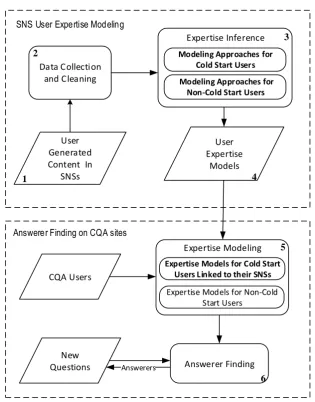
Figure 1-1: A Framework of Expertise Discovery in SNSs and Its Application in CQA
sites ... 7
Figure 3-1: Graphic representation of the LSR-FGM ... 51
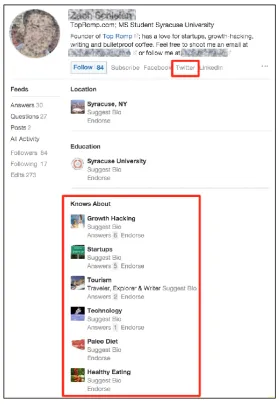
Figure 4-1: An example of a Quora Profile ... 71
Figure 4-2: F1 performance of SVM-Sen and SVM with the different sentiment_ threshold ... 74
Figure 4-3: Accuracy performance of SVM-Sen and SVM with the different sentiment_ threshold ... 74
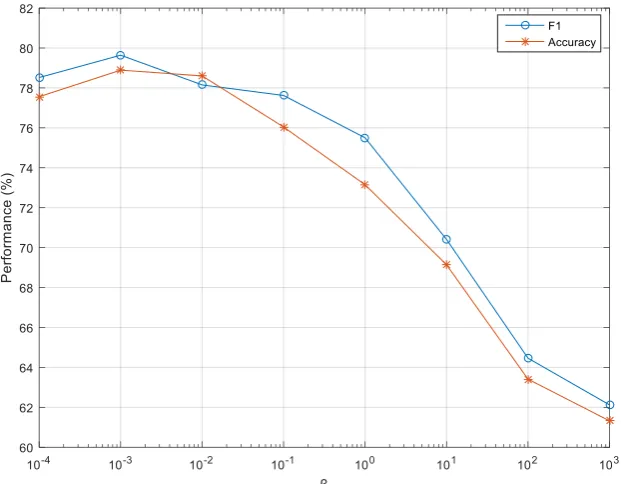
Figure 4-4: Performance of SeTRL-Co with different α ... 75
Figure 4-5: Performance of SeTRL-Co with different β ... 75
Figure 4-6: F1 performance of different methods on topics with different sizes of training data ... 77
Figure 4-7: F1 performance of different methods on the topics "Mobile Marketing", "Public Relations", "Machine Learning" ... 78
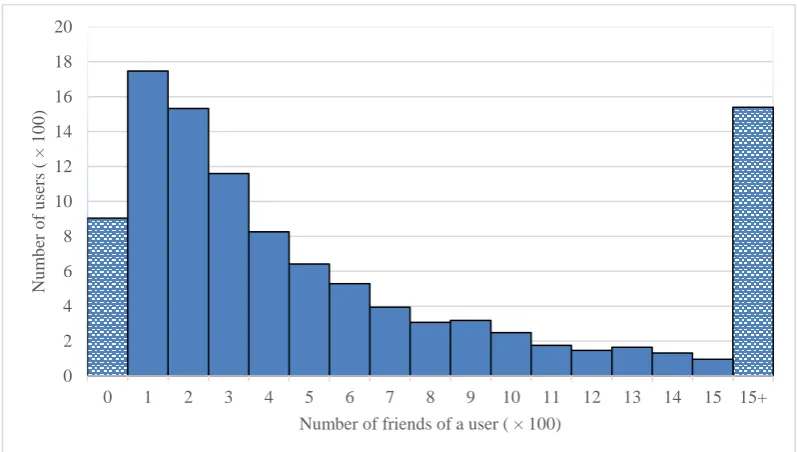
Figure 5-1: Distribution of the friend numbers of Twitter users in the dataset ... 87
Figure 5-2: Distribution of the follower numbers of Twitter users in the dataset ... 87
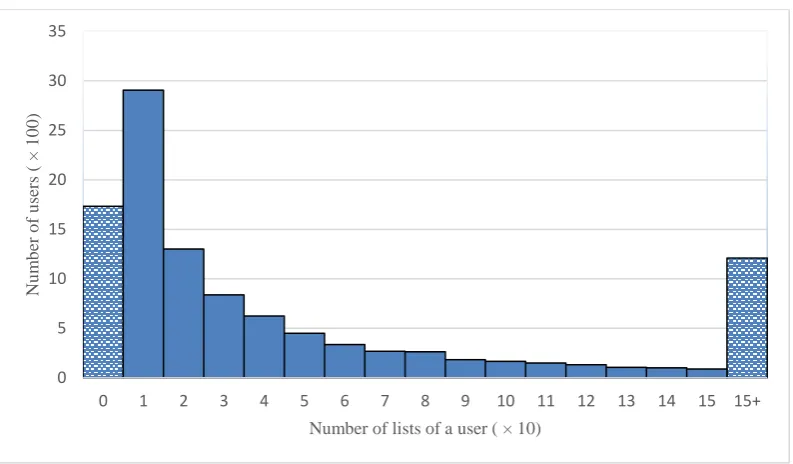
Figure 5-3: Distribution of the list numbers of Twitter users in the dataset ... 88
Figure 5-4: Performance of SVM with tweet data and latent topic features ... 93
Figure 5-5: Performance of SVM with friend data and latent topic features ... 93
Figure 5-6: Performance of SVM with follower data and latent topic features ... 94
Figure 5-7: Performance of SVM with list data and latent topic features ... 94
Figure 6-1: An example of a Quora user’s answer page ... 103
Figure 6-2: An example of the page of the full answer to a question ... 103
Figure 6-3: An example of a question page with knowledge topics ... 105
Figure 6-4: Ranking accuracy of different answerer finding approaches for the topic “sales” ... 110
Figure 6-5: Ranking accuracy of different answerer finding approaches for the topic “machine learning” ... 111
Figure 6-6: Ranking accuracy of different answerer finding approaches for the topic “video games” ... 111
Figure 6-7: Ranking accuracy of different answerer finding approaches for the topic “music” ... 112
Figure 6-8: Ranking accuracy of different answerer finding approaches for the topic “recruiting” ... 112
Figure 6-9: Ranking accuracy of different answerer finding approaches for the topic “photography” ... 113
Figure 6-10: Ranking accuracy of different answerer finding approaches for the topic “philosophy” ... 113
Figure 6-11: Ranking accuracy of different answerer finding approaches for the topic “islam” ... 114
xi
xii
List of Tables
Table 3-1: Definition of Notations ... 49
Table 3-2: The distribution of languages in the collected social profiles ... 55
Table 3-3: An example of the confusion matrix for the prediction of user expertise on language l ... 57
Table 3-4 Performance of language inference with different methods on different languages (%) ... 58
Table 3-5: Overall performance of LSR-RGM with different factors (%) ... 60
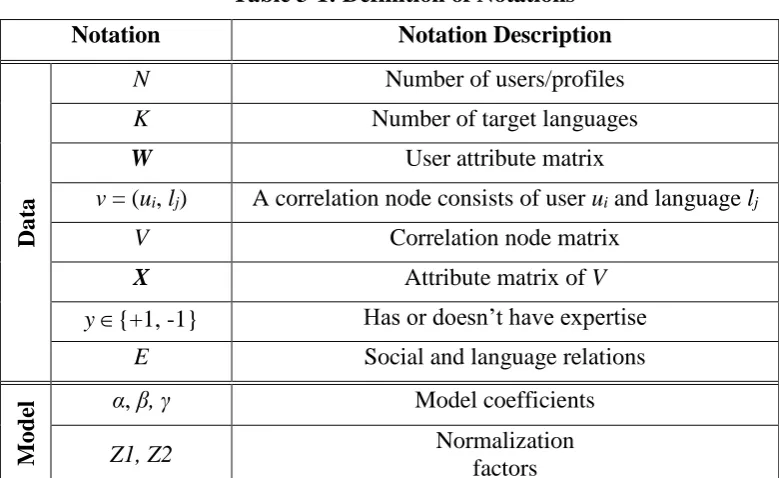
Table 4-1: Definition of Notations ... 65
Table 4-2: Statistics of the dataset ... 72
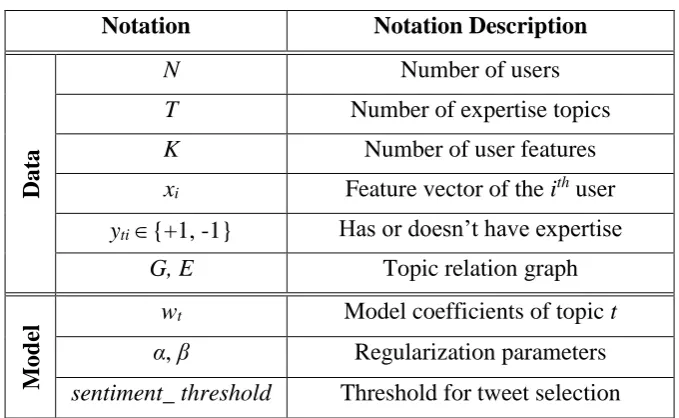
Table 4-3: Overall performance of expertise inference with different methods (%) . 76 Table 5-1: Definition of Notations ... 83
Table 5-2: Performance of SVM method with each type of user data for user expertise inference (%) ... 91
Table 5-3: Performance of TRL method with each type of user data and unigram features (%) ... 92
Table 5-4: Performance of TRL method with each type of user data and user latent topic features (%) ... 95
Table 5-5: Performance of different methods with the combination of the four types of user data (%) ... 96
Table 5-6: Performance of DnTCom with various combinations of different types of user data (%) ... 96
Table 6-1: Distribution of the number of questions collected per user ... 104
xiii
Abbreviations
SNS Social Networking Site
CQA Community Question Answering IR Information Retrieval
EF Expert Finding AF Answerer Finding L2R Learning to rank
1
1.
Introduction
1.1.
Motivation
Finding individuals with a required set of expertise is a common task, such as when searching for a solution to a problem, attempting to perform a given task, or seeking a product recommendation. Situations which involve this task are commonplace. For example:
• In online employee recruitment, such as in LinkedIn, the professional skills of potential employees are an essential aspect for personnel resource managers to examine;
• Knowledge of what languages an online user comprehends is the key to enabling search engines to deliver multilingual search services, machine translation tools to identify optional target translation languages, and advertisers to serve targeted international advertisements;
• Knowing what topics an online user has knowledge of eases the matching between questions and answerers in a question-answering scenario.
Thus, the core challenge tackled by this research is to design user modelling approaches which can accurately infer a user’s expertise, such as the languages they speak, their professional skills, or even general topics of expertise.
2
In recent years, Social Networking Sites (SNSs) such as Facebook and Twitter have been integrated into people's daily lives. People share experiences, catch up on the activities of their friends or directly communicate with them. Such platforms greatly facilitate communication and information exchange between people, and offer a new way of making and maintaining friendships. However, as the prevalence of SNSs increases, the SNS is not only playing the role of a simple communication tool, but also becoming a comprehensive platform that integrates with various services and functionalities for facilitating different aspects of people's lives [Ki11], such as information search [Ho10a, Ef11], job hunting [El07, Su13] and product recommendation [Ch11, Ta13]. For some information services, discovering the expertise of SNS users is an important component. For instance, it is reported that 29% of companies match their employees to tasks using social media tools [Bu11]; SNS users often follow others in order to obtain professional knowledge [Ra10]; it is also common that people turn to their social networks when they have questions [Mo10, Ni12]. To enable services which can satisfy such information needs, obtaining expertise information for SNS users is key.
Expertise information is typically not explicitly provided by SNS users, so existing methods aimed at expertise discovery in SNSs primarily focus on implicit inference. The rich activities which users conduct on SNSs lead to the creation of an enormous amount of user-generated content and diverse associations among users and content, which provide valuable sources of information for user expertise inference. SNSs also have other unique advantages in expertise discovery. Firstly, the content and associations in SNSs are usually publicly available, such as most Twitter data and LinkedIn profiles, while personal documents within an organization, such as emails and local files are usually inaccessible or involve more complex privacy issues. Secondly, data in SNSs is dynamic in nature. Thus, the change or expansion of users' expertise can be captured over time. Finally, the worldwide popularity of SNSs has produced a huge living knowledge repository which is easily accessible to many people.
1.2.
Research Question and Challenges
The question which this research aims to answer is:
To what extent can a user’s content, actions and connections on social networking sites
3
To assess whether the user expertise inferred by the proposed approaches is of benefit to information services, a further question will be addressed:
Can the inferred user expertise be used to facilitate services such as answerer finding on
a community question answering site?
A number of attempts [Pa11, Wa12, Gu13, Po13, Li15] have been made in recent years to try to answer these, or similar questions, however such techniques for inferring a user's expertise information on social networking sites still face a number of critical challenges: (1) Cold Start Users
Prior research has focused on the use of abundant user-generated data on SNSs for expertise inference, for example, messages authored or republished by a user, biographical information of a user, information about a user's friends, etc. [Pa11]. However, recent studies [Ba15] revealed that over 50% of content in popular SNSs, like Facebook and Twitter is produced by less than 10% of users, which indicates that a large proportion of users are relatively inactive and publish very little content. The ability to infer expertise information for such cold start users with limited information has received little attention, for example, a user with a static profile which they filled in when registering, but with no additional posts or tweets. As a result, it is a significant challenge to investigate what types of expertise information can be inferred in this scenario. (2) Expertise Inference of Non-Cold Start Users
In the literature, there are two primary groups of approaches that try to model online user’s expertise information by exploiting their various activities on SNSs. The first group of approaches seeks to learn latent factors that could be descriptive of the user. In general, topic modelling approaches [Ra10, Wa12, Ho10b] are employed on a user’s social media content, e.g. tweets, to reveal the user’s expertise on different latent topics. In this case, user expertise is often represented as a probability distribution over latent topics which are also distributions over features in a lower dimensional space. The essential challenge of this group of approaches is that the latent topics are difficult to interpret, i.e. not directly understandable to humans.
The second group of approaches focuses on inferring the user’s expertise on specific expertise topics, e.g. “machine learning”, by utilising their various social activities. In
4
of inferring the user’s specific expertise topics. The first thread of methods simplifies it as an Information Retrieval (IR) problem [We16, Ch14], i.e. given an expertise topic (query terms) and a list of users (documents built from the content, connections and actions related to each user), the objective is to compute the degree of relevance between the expertise need and each user. This thread of methods can obtain a user ranking with respect to an expertise need, with the expectation being that more knowledgeable people on a certain topic are ranked highest. However, this thread of methods suffers from the problem of clearly discriminating experts from other users. Besides, in social media environments, users can publish content on any topic, so the frequent mentions of a topic in a user's authored content does not necessarily indicate that this user has a good level of knowledge of that topic. More factors should be considered in the process of evaluating the level of expertise of a user, such as comments from other users on the current user-authored content and how many/what people republished the content. The second thread of approaches is Supervised Machine Learning (SML) based algorithms. This thread of methods often suffers from a shortage of labeled data, because most SNSs do not have an expertise attribute in user profiles and SNS users also typically do not want to go to the effort of authoring and maintaining this information. The existing studies that apply this method mainly rely on manual labeling for obtaining training data [Po13], which is always expensive and time-consuming. Another challenge facing this thread of methods is the effective selection and utilisation of features from available user data. Social content is noisy. To effectively identify discriminative features for each expertise topic is always challenging. In addition, previous research [Wa12] studied the usefulness of different types of user-generated data for inferring topical expertise of Twitter users and revealed that different types of user data differ in their ability to help expertise inference. These findings suggest that discriminatively utilising different types of user data will play an important role in inferring a user's expertise information.
(3) Applications of User Expertise Information
5
A CQA site allows users to answer questions asked by other users, e.g. Quora1 and
Yahoo! Answers2. To offer a better CQA service and attract more users to these sites, one of the most critical factors is to help the question askers solve their questions efficiently. In other words, it is required to efficiently find the users who are capable of answering the asked questions. The most commonly used way of addressing this problem is to build the user’s expertise model by exploiting their answering history in CQA sites, and then match them with new questions [Zh09, Li10a, Li10b]. However, as revealed in a previous study [Sr15] the answering rate of new questions on CQA sites is still very low, i.e. only about 20% of questions were answered within two days on Yahoo! Answers. One of the important reasons for this, is that on CQA sites a large proportion of users have answered very few, or never answered any, questions, i.e. are cold start users. Therefore, the expertise of these users cannot be modelled and potential answerers of questions are likely being ignored.
On the other hand, a user’s expertise can also be inferred from their social activities as discussed above. Also, there are mechanisms that allow us to connect the same user’s CQA account to their SNS accounts, for example, users can provide their Twitter and Facebook accounts on their Quora profiles; many users directly use their SNS accounts (e.g. Twitter account) to sign into a CQA site (i.e. social login3) to avoid the hassle of
filling in registration forms and keeping additional login information. Based on these facts, it naturally brings us the idea of modelling the expertise of cold start users on CQA sites from their social content and enabling them to be considered in answerer finding. By doing so, it could help to expand the search scope in answerer finding and increase the chance of finding more potential answerers to a question. However, the feasibility of applying the inferred user expertise information from SNSs to answerer finding on CQA sites remains untested. This calls for studies to investigate the usefulness of the inferred expertise information in the application scenario of answerer finding on CAQ sites.
1.3.
Research Objectives
To overcome the three main challenges described above, and to answer the proposed research questions, the following objectives will be addressed:
1 https://www.quora.com 2 https://answers.yahoo.com/
6
(1) A large proportion of the population of SNSs are cold-start users. In order to make the best use of the enormous social resources available, it is essential to investigate the possibility of discovering expertise from limited user-generated content, connections and actions. If this is possible, algorithms should be devised and evaluated for effective user expertise inference.
(2) There is a diversity of expertise topics a user can have knowledge of on the Web, so it is unrealistic to human-label training data for each of the topics. This demands schemes of automatically constructing large-scale user-topic training data by exploiting available Web resources. Social content is noisy and diverse, and different types of user data contribute to the expertise inference discriminately. Thus, advanced user modelling approaches that can effectively exploit various users’ social data to infer their expertise information need to be developed and evaluated.
(3) This PhD research takes answerer finding on CQA sites as the target application scenario. To offer a better question answering service, it is important to understand the expertise background of users on CQA sites and efficiently locate answerers to the newly asked questions. In social networking sites, the proposed user expertise modelling approaches make it possible to infer the user’s expertise information from their various social activities. In this context, new experimental methods need to be designed to investigate the usefulness of the inferred user expertise in the application scenario of answerer finding on CQA sites and this usefulness determined through evaluation.
1.4.
Thesis Contribution
This PhD research includes a major contribution and a minor contribution.
Major contribution: the design of three user modelling approaches that infer a user’s expertise by exploiting their various social content on SNSs: (1) a Language and Social Relation-based Factor Graph Model (LSR-FGM) that aims to exploit the user’s static social profiles to infer information about the languages they speak; (2) a Sentiment-weighted and Topic Relation-regularized Learning (SeTRL) model that aims to exploit the user’s posted social content to infer their topical expertise and (3) a multi-Data and Topic relatedness Combined (DnTCom) learning model that aims to discriminately
exploit multiple types of user data on SNSs to better infer the user’s topical expertise.
7
Fig.1-1 illustrates the two aspects of the research: user expertise modelling approaches and the application of user expertise in answerer finding on CQA sites. Step 3 is the focus of the PhD research, i.e. the design of the three user expertise modelling approaches; Step 4 is the generated user expertise models using the proposed approaches; user expertise models are passed on to Step 5 to represent the expertise of cold start users in a CQA site if they are linked to their SNSs.
Expertise Inference
User Generated Content In
SNSs
Modeling Approaches for Cold Start Users
Data Collection
and Cleaning Modeling Approaches for
Non-Cold Start Users
User Expertise
Models
Answerer Finding on CQA sites SNS User Expertise Modeling
Expertise Modeling
CQA Users
New Questions
Expertise Models for Cold Start Users Linked to their SNSs
Expertise Models for Non-Cold Start Users
Answerer Finding
Answerers
1 2
3
4
5
[image:21.595.168.484.184.587.2]6
Figure 1-1: A Framework of Expertise Discovery in SNSs and Its Application in CQA sites
The major contribution of this PhD research considers two scenarios for user expertise modelling in SNSs: cold start users and non-cold start users.
8
and work experience when registering. These static profiles provide first-hand information about a new user to the SNS and connected applications. Intuitively, there is a chance that this information may implicitly suggest some expertise information about a user, e.g. what languages they speak, what professional skills they may have, etc. Thus, this research studies the use of static profiles for inferring certain types of expertise information about the user, with a focus on language expertise. An advanced modelling approach, called Language and Social Relation-based Factor Graph Model (LSR-FGM), is proposed to address the problem. It explores external resources to bring in more evidential signals, and exploits the dependency relations between languages as well as social relations between profiles in modelling the problem. Experiments are conducted on a large-scale dataset. The results demonstrate the success of the proposed modelling approach in language inference and show that it outperforms several alternative methods. For non-cold start users, this PhD research focuses on the effective use of various social activities in user expertise modelling, with the aim of inferring the user’s topical expertise. Firstly, to address the challenge of the lack of labelled data in this field, this research proposes an approach to automatically annotate the expertise topics of SNS users through the popular CQA site Quora. This is because a large proportion of Quora users explicitly provide both their expertise topics and SNS accounts, e.g. Twitter and Facebook, on their profiles. This inspires us first to harvest a large volume of Quora profiles, from which we can obtain both expertise topics and SNS accounts for each individual. Twitter is the most commonly targeted SNS for research, due to the public availability of its user data. This research builds a dataset with over 10,000 Twitter users who have expertise in 149 different topics.
9
Although shown to be effective in inferring a user’s expertise information by exploiting certain types of user data on SNSs (e.g. the user’s posted content, friends of the user, etc.), a fact that is often ignored is that many users of SNSs do not have common types of data. For example, on Twitter it is reported that about 44% of all registered users have never posted a tweet4. To overcome this issue in user expertise inference, this research proposes a multi-Data and Topic relatedness Combined (DnTCom) learning model that infers a user’s topical expertise by utilising multiple types of user data on a SNS. The DnTCom
takes multiple types of user-related data from a SNS as input and considers their inference consistency in the process of learning. It aims to deliver accurate and effective inference results, even in cases where some types of data are missing for a user, e.g. the user has yet to post any tweets. Experiments conducted on the generated Twitter dataset show that the proposed DnTCom learning model outperforms several baseline approaches and outperforms approaches which use only a single type of user data for inference.
A minor contribution of this PhD research is to study the usefulness of the proposed user expertise modelling approaches in a real-world application scenario. This research focuses on the application scenario of answerer finding on CQA sites.
As introduced earlier, many Quora users provide their SNS accounts on their profiles, which enables us to access the Quora user’s social content, e.g. public LinkedIn profiles and social activities conducted on Twitter. However, a large proportion of users on Quora have little question answering history, which makes it difficult to model their expertise information. Therefore, this research proposes to infer the cold start Quora user’s expertise from their social content by employing our proposed modelling approaches, and match them with new questions they are capable of answering. Experiments are conducted on a Quora dataset with 591,654 answered questions and 24,285 Quora users and results show that the inferred expertise information about the users can help to find desired answerers of new questions by only relying on their social activities from Twitter. Experiments also compared the performance of the answerer finding approach using the inferred expertise information with that of the user answering history based approach, and results show that the former achieves performance close to that of the latter.
The following four papers were published in relation to research described in this PhD thesis.
10
1. Yu Xu, M. Rami Ghorab, Zhongqing Wang, Dong Zhou, and Séamus Lawless. "Do Your Social Profiles Reveal What Languages You Speak? Language Inference from Social Media Profiles". In the Proceedings of the 38th European Conference on Information Retrieval, ECIR 2016, pp.561-574. Springer, 2016.
This paper defines the problem of user language inference using social profiles, and describes the proposed LSR-FGM as well as corresponding experimental results. 2. Yu Xu, Dong Zhou, and Séamus Lawless. "Inferring Your Expertise from Twitter:
Integrating Sentiment and Topic Relatedness." In the Proceedings of the 2016 IEEE/WIC/ACM International Conference on Web Intelligence, WI 2016, pp.121-128, IEEE, 2016. (Best Student Paper)
This paper describes the construction of dataset of Twitter users versus expertise topics, the proposed SeTRL model and related experimental results.
3. Yu Xu, Dong Zhou, and Séamus Lawless. “User Expertise Inference on Twitter: Learning from Multiple Types of User Data”. In the Proceedings of 25th International Conference on User Modelling, Adaptation, and Personalization, UMAP 2017, pp.395-396, ACM, 2017.
4. Yu Xu, Dong Zhou, and Séamus Lawless. "Inferring Your Expertise from Twitter: Combining Multiple Types of User Activity". In the proceedings of the 2017 IEEE/WIC/ACM International Conference on Web Intelligence, WI 2017, pp.589-598, ACM, 2017.
These two papers investigate the use of different types of user data on Twitter in user expertise inference and describe in detail the proposed DnTCom learning model that infers the user’s topical expertise by combining multiple types of user data.
1.5.
Thesis Overview
The remainder of this PhD thesis is structured as follows:
11
Chapter 3 formally defines the problem of language information inference from the user’s static social profiles. It then describes in detail the construction of the language and social relation-based factor graph model to address the problem. In addition, a method is also introduced that tries to import more location information about the SNS users by exploiting external Web resources and aims to further improve user language inference. Finally, this chapter describes the construction of a dataset by using the LinkedIn profiles and analyses experimental results.
Chapter 4 formally defines the problem of inferring a user’s topical expertise by exploiting the user’s posted social content, with a focus on Twitter. It then describes in detail the sentiment-weighted and topic relation-regularized learning model to address this problem. After that, it describes the construction of a benchmark dataset of Twitter users versus expertise topics by using Quora profiles. Finally, this chapter analyses and discusses the related experimental results.
Chapter 5 describes in detail the construction of a learning model that infers a user’s topical expertise by exploiting the user’s multiple types of data on a SNS. Again, focusing on Twitter, it then presents the performance of user expertise inference approaches relying on only a single type of user data on Twitter (e.g. tweets, friends, followers or lists) on the dataset from Chapter 4. Finally, this chapter analyses and discusses the experimental results of the proposed model versus other baseline approaches that exploit multiple types of user data on the same dataset.
Chapter 6 presents an approach that matches potential answerers to new questions on a CQA site based on the topical expertise inferred from their social content. It also describes the construction of a dataset by exploiting answering data of Quora users, which is used to simulate the answerer finding scenario on a CQA site. Then, the proposed approach and a conventional approach for answerer finding (i.e. user answering history based) are experimented with on the dataset. The performance of the two approaches are compared and analysed at the end of this chapter.
12
2.
State of the Art
This chapter presents the state of the art in user expertise modelling and introduces some other techniques applied in this PhD research. It first reviews existing studies on user expertise modelling, specifically in a SNS setting. However, most studies in the literature are targeted at modelling the expertise of employees in enterprise settings, or expertise of users in question answering communities. They are related to this research in terms of the commonly used modelling methodologies, i.e. the mathematical models used to model a user's expertise. Therefore, this section then reviews the general expertise modelling methods regardless of the scenario in which the user's expertise is modelled. Finally, related work in the area of answerer finding on CQA sites and some other techniques applied in this research are reviewed.
2.1.
User Expertise Modelling in Social Networking Sites
Owing to the public availability of user data on Twitter, most existing studies in the field of user expertise modelling in SNSs adopt Twitter as their target research platform. Similarly, experiments conducted in this PhD research are primarily based on the Twitter platform (specifically in Chapters 4, 5 and 6). While the proposed models are general approaches which can be easily adapted to other SNSs, the validation of this is outside the scope of this thesis. Therefore, this section first places emphasis on reviewing the related work of user expertise modelling on Twitter and then other related research targeting other SNSs.
2.1.1.
User Expertise Modelling on Twitter
There are three main groups of studies on Twitter that are related to this research: user influence modelling, user expertise modelling on latent topics, and user expertise modelling on specific topics.
2.1.1.1. User Influence Modelling
13
In an early study [Kw10], the authors directly applied the PageRank algorithm [Pa99] to the “following” network on Twitter, where a user corresponds to a node and the following relationships between users correspond to directed edges. The top ranked users are considered as the most influential users. It was found that influential users identified by PageRank are similar to that identified by the number of followers of the user. M. Cha et al. [Ch10] compared the use of three Twitter metrics: indegree, retweets and mentions in measuring user influence on Twitter. They discovered that the number of retweets and mentions serve as better metrics than the number of followers in user influence measurement. There are a number of works [Ha11, Hu13, Ya10, Ja12, Pu12] that extended the PageRank algorithm and incorporated various metrics defined from Twitter to study user influence on Twitter. For example, in work [Ha11], the authors proposed a metric called Magnitude of Influence (MOI) to estimate an initial influence value of each user, which is measured by the size of feedback received from the user’s followers to his/her posted tweets, such as the number of retweets, mentions and favourites. Based on the PageRank algorithm, the MOI values of all the users are propagated recursively along the following network to form the final influence of each user. Huang et al. [Hu13] posed an assumption that the more diverse the people a user can influence are, the more influence the user would gain on the network. They proposed two schemes to evaluate the social diversity of users, which are based on the network structure and the pattern of influence spread separately. By considering the transition probability of social diversity of users over the following and retweeting network, the PageRank algorithm was extended to identify the diversity-dependent influencers on Twitter.
14
The works on user influence analysis on Twitter which are reviewed above, focus on modelling the general influence of users in the social network regardless of topic. There is also a group of studies that try to model the influence of users on different topics. In these cases, the content of the user’s tweets usually needs to be analysed in order to correlate the user with specific topics. To model the problem, the Topic-sensitive PageRank (TSPR) [Ha02] algorithm is one of the most straightforward solutions [We10, Ca14, Li14a]. Weng et al. [We10] identified the existence of homophily in the user following relationship on Twitter, i.e. users tend to “follow back” followers who share an interest in common topics. So they proposed a TSPR-like algorithm named TwitterRank to model the influence of users on latent topics. TwitterRank first employed a Latent Dirichlet Allocation (LDA) model [Bl03] to identify the topics the users are interested in, which are then used to construct a topic-specific relationship network between users. Finally, the influence of a user on a topic is measured by a variant of the PageRank algorithm which considers both the topical similarity between users and link structure over the following network. Cano et al. [Ca14] applied existing entity extraction and topic detection services to correlate a tweet to its corresponding entities and topics, which are then used to generate semantic profiles of Twitter users. Based on the TSPR algorithm, the authors proposed an approach called Topic-Entity PageRank that estimates the user’s topical or entity influence by using the sematic profiles of users on the retweeting network.
15
the sentiment change when a user diffuses sentimental content to her/his followers to measure user influence. Supervised learning was applied in work [Ra15] to select characteristic attributes that can distinguish influential users from others on a specific topic. It was concluded that the following relationships are the most useful property for influencer identification rather than the interaction relationships. In this work, topics were related to users by the hashtags contained in their posted tweets.
2.1.1.2. User Expertise Modelling on Latent Topics
There is a group of studies that seeks to learn latent factors that could be descriptive of the user from Twitter. Those works that aim to identify users who can produce relevant and high-quality content are particularly considered as related to this PhD research. This is because the learned latent factors of users can be seen as a kind of representation of user expertise. It is also noted that this latent representation of users may also contain other information about the user, such as user preference or interests, based on the different application scenarios. But in reviewing related works, emphasis will be placed on how the user expertise information is modelled from their historical behaviours. Applying the topic modelling approach to the social content of users, e.g. tweets, is a commonly used way to learn a user’s latent factors [Ra10, Wa12, Ho10b]. For example, authors in work [Wa12] run LDA over several different types of user-related data on Twitter, e.g. tweets, retweets and lists, to learn the latent factors of users, which are represented as probability distributions over latent topics and are taken as a representation of the user’s expertise. They are then used to compare with the user’s actual expertise topics, aiming to explore the usefulness of each type of user data on Twitter for inferring the expertise of users. Since these latent representations of users are not directly understandable to a human, they are mostly utilised to serve the application of personalised recommendation.
16
factors of followees can be seen as a representation of a user’s ability to produce a certain level or quality of content on particular topics. In comparison, the latent factors of a target recommendation user (i.e. the user to whom the followees are recommended) represents the user’s level of preference for particular topics. Therefore, these learned latent factors can be used to predict who would be most likely to produce relevant and high-quality content for the target users, i.e. identify potential followees. To better learn the latent factors of potential followees, previous works [Ch12a, Yu14, Gu17, Ch12b, Ma14] consider various information about the target users, the followees and their interactions in the process of factorization. Chen et al. [Ch12a] incorporated the category information of users, such as age, gender or taxonomy, in MF and argued that users who belong to the same class tend to have close latent factors, i.e. similar topics. In [Yu14], the structure of the social network was exploited to constrain the MF model through regularization. Structural characteristics of social networks, such as transitivity (i.e. users tend to follow followees of their followees) and similar sources (followees of the same user tend to have similar features), have been shown to be effective in improving followee recommendation. Recently, Feltoni Gurini et al. [Gu17] proposed to take the temporal alteration of the user’s attitude (represented by three dimensions: sentiment, volume and objectivity) into consideration in the MF model. It was assumed that users who discussed a topic during the same time frame were more similar than users who discussed the same topic during different time frames.
17
consideration more contextual factors, e.g. topical and social preferences of users, for personalised expert recommendation. It should be noted that both works introduced here considered the scenario of personalised expert identification from expert candidates on a specific topic, where the specific expertise topics of expert candidates are provided beforehand.
2.1.1.3. User Expertise Modelling on Specific Topics
The focus of this PhD research is to learn the user’s expertise on specific topics by exploiting their various social behaviors. In the literature, there are a number of works that focus on a particular area/topic and try to find experts in that area or topic.
Bar-Haim et al. [Ba11b] attempted to locate stock experts by exploiting stock-related tweets and assist investors in making trading decisions. In their proposed approach, stock experts were identified based on the consistency between the user’s prediction of stock prices in her/his tweets and the actual change of the stock prices. Specifically, they first obtained the bullish tweets5 of a user by using a classifier which predicted the rise of certain stocks. Then the prediction of each bullish tweet from the user was compared with the price change of the stock in the next day.
Abbas et al. [Ab15] proposed a method to identify health experts for a given disease from Twitter. Firstly, the keywords related to a disease were extracted from the WordNet database [Mi95] and the HITS algorithm was employed to select the initial expert candidates based on the usage of these keywords in the user’s tweets. Then, a metric defined from multiple criteria, such as the total health related tweets and sentiment of the users in replies to the tweets of expert candidates, was used to find the final experts for the given disease. Also, a cloud infrastructure was utilised to host the huge tweet repositories and deliver the proposed service, which has been shown to greatly improve its scalability. It was noted that the proposed approach focuses more on the modelling of the influence of identified users, instead of deep relation mining between Twitter users and a given disease. This is because the proposed approach was based on the HITS algorithm and the relationship between a disease and an expert mainly relies on word matching schemes.
18
In [Pa11], the authors adopted a manual method to predefine several target expertise topics (three topics: iPhone, oil spill and world cup, are used in this work), and the candidate Twitter users associated with a topic were selected through substring matching between the user's tweets and the topic name. They also defined a number of features that may account for a user's topical information by using the user’s posted tweets and her/his one-hop following network (i.e. the user’s direct followers and followees), such as the similarity of two successive tweets of the user and the number of hashtags used in the user’s tweets. A probabilistic clustering approach was at last proposed over the feature space to generate a final list of the top authoritative users for a given topic. Because there was no ground truth harvestable, the authors conducted a user study to evaluate the proposed model.
In [Ho16], the authors assumed that experts on Twitter will behave differently from non-expert users. They intended to identify the discriminative behaviours of non-expert users and hoped to use them for expertise location on Twitter. To achieve this goal, three groups of features from the tweets or retweets posted by users were defined: behavioral features (e.g. the number of followers and the number of hashtags per tweet), linguistic features (e.g. the user’s lexical coherence and frequency of least common word used in the tweets) and stylistic features (e.g. the number of question marks used and the number of sentiment terms used). Then they harvested expert users on four specific topics, Science,
Technology, Health & Fitness and Business, by manually selecting related webpages in which expert Twitter users are recommended on certain topics. Finally, logistic regression was employed to distinguish expert users on the four topics by using the three different groups of features. Through analyzing the experimental results, a number of important findings on expertise discovery in the Twitter network were summarized at the end of the work, such as, experts tend to be older Twitter users than other users, experts use significantly more specialized language, and experts tend to retweet posts with more complex sentences. However, the authors did not convert those findings into effective expertise identification approaches and only gave the conclusions based on some statistical results. Their usefulness in the construction of advanced approaches and application in other topics remains unclear.
19
Wagner et al. [Wa12] was the first to propose to utilise the information from a third-party platform (i.e. Wefollow6) to obtain expertise information of Twitter users. In Wefollow, a Twitter user can register a maximum of 3 topics as her/his familiar areas, and for each topic, the registered users are ranked based on the number of followers in the same area. This offers an effective way of building the correlation between a Twitter user's social activities and her/his expertise topics. This study conducted a series of experiments to explore the ability of different types of user data (i.e. tweets, retweets, biography and list data) to predict the user's expertise in certain topics, which include a user study, topic modelling [Bl03] and classification algorithms [Fo05] to learn expertise topics. The experimental results consistently showed that the approaches based on the user's list data perform the best. Although this work contributes to demonstrating the variance of different user data in their ability to predict a user's expertise, they did not explore effective approaches to improve the prediction accuracy based on their findings. It was noticed that the employed classification algorithms obtained a prediction accuracy of below 50% on some topics. Besides, it can be easily spotted that most of the top ranked users on Wefollow are either public figures or accounts of public organizations and companies. It is significant to investigate effective methods of inferring expertise information of general Twitter users.
In [Gh12], the authors proposed exploiting the list information of Twitter users to infer their topical expertise. They observed that Twitter users create lists to include other users who are considered as experts in a certain topic, and the list metadata (i.e. list name and list description) provide valuable semantic information regarding the topical expertise of the users included in the list. Thus, this work first used a number of text processing techniques to analyse list metadata, and then took unigrams and bigrams of the refined texts as the topics of expertise of the users in the list. Comparative experiments showed that the proposed approach achieved relatively high performance utilising the list metadata alone. Obviously, this approach has a significant drawback, i.e. its inference relies upon the creation of sufficient lists which include the target user, and on the judgement of the list creators regarding the expertise of the users in the lists. However, a large proportion of Twitter users are not included in many, or any, lists in the first place, which results in a direct failure of the proposed approach.
20
In [We16], the problem of expert finding on specific topics in Twitter was taken as a search problem, in which each term in the query is treated as an expertise topic. The authors proposed to look at two aspects of users to estimate their level of expertise on a given topic: global authority and local relevance. To model the global authority of a user on a topic, the authors proposed a semi-supervised graph-based probabilistic method (named SSGR) that exploits three different relations (i.e. user-follower, user-list and list-list relations) on Twitter to obtain the global expertise scores of users on the topic. To be more specific, the three relations were taken into consideration in SSGR by employing a normalized Laplacian regularization term, which is subject to the supervised information derived from Twitter crowds, i.e. the loss term to ensure the global authority of users. It should be noted that the global authority scores of users were calculated offline. The local relevance of users on a topic was estimated by a Gaussian-based method, where a user’s posted tweets, bio and the meta-data of lists which include the user are concatenated to form a document of the user. Finally, given a topic query, the candidates were ranked based on the global authority scores and local relevance scores of query terms. In the experiments, 28 sample queries, e.g. “travelling” and “Boston Marathon bombings” were
selected to evaluate the proposed approach, where ground truth experts of these queries were obtained through manual labelling. There are two main deficiencies of the proposed approach. Firstly, the assumption that taking every query term as an expertise topic is not reasonably sound. Secondly, the proposed IR-based approach heavily relies on term-matching to find expert candidates for a given query topic. However, it has been shown from our experimental analysis (see Chapters 4 and 5) that frequent use of topic terms does not necessarily indicate that the user has a good level of knowledge about that topic. In [Ch14], the authors also modelled the problem of expert finding as a search task, but with the aim of finding expert candidates who not only have expertise in a topic but also are well recognized by the local community (called local experts). An expertise framework named LocalRank was proposed to estimate a Twitter user’s local expertise in a query topic based on two aspects of information about the candidate: the user’s
21
different types of connections with the candidate, i.e. user friendships, list-labelling relationships and list-peer relationships. It should be noted that expertise of each Twitter user is initially represented as a vector of terms, in which the terms are extracted from the meta-data of lists that include the user. In the experiments, 56 topic-location queries, such as “technology” in Chicago and “barbecue” in New York, were selected to evaluate the
proposed framework, whose ground truth experts were derived from a crowdsourcing strategy.
Li et al. [Li14b] investigated the problem of expertise modelling in terms of a user’s knowledge on a place or a class of places, usually called points of interest (POIs), e.g. a restaurant or a book shop, instead of general expertise topics. They wanted to locate users who have good knowledge of POIs by exploiting the user’s location tracks revealed from their geo-tagged tweets. Three properties of users were used to estimate the user’s expertise on a POI: within-topic activity (interactions the user had with the target POI),
within-topic diversity (interactions the user had with other POIs in the category of the target POI), and recency (recent interactions the user had with the target POI). A user survey conducted by the authors also indicated that the selected three properties are considered as the top criteria when assessing a user’s expertise on a POI. Due to the difficulty in collecting ground truth results, the approach was only evaluated with limited testing samples through user trial and no learning based approach was built based on the corresponding findings.
As mentioned in the Section 2.1.1.2, there are several works [Lu15, Ge16] that tried to recommend experts in specific topics on Twitter to online users. However, they focus on personalised recommendation and assume that the expertise topics of users are provided in advance. For each topic, the importance of experts in that topic is re-weighted based on the preference of an individual. Conversely, the focus of this PhD research is to build the initial relations between expertise topics and Twitter users by exploiting their various social activities.
2.1.2.
User Expertise Modelling in Other SNSs
22
Duchateau et al. [Du11] underlined the problem of finding the right person to whom one should communicate with given a question, and they observed that a user tends to contact acquaintances in their social networks rather than strangers when they have a question. For each user, they integrated her/his historical activities on multiple social networks (Delicious, Flickr and StumbleUpon) to construct an enhanced user profile of her/him. Given a query (question) issued by a user, a similarity score is obtained between the query and the profile of her/his friends, ranking them in descending order of their ability to answer the query. In this work, terms in the profile were structured by two different strategies: cluster-based and tree-based, which leads to two different approaches to similarity computation. However, in the experiment, the proposed approaches were only tested on a small dataset (320 users), and there was no effective evaluation strategy proposed. Bozzon et al. [Bo13] tried to solve a similar question but targeted the entire population of social networking sites given an expertise need. In the work, a SNS user is associated with a set of resources which include textual information directly related to the user (e.g. tweets a Twitter user posted), or indirectly related to the user (e.g. pages which friends of a Facebook user liked). Then every textual resource is represented as a combination of a set of words and a set of entities after a series of text pre-processing steps, such as named entity recognition and disambiguation. Finally, a weighted strategy was designed to compute a relevance score between an expertise need and every resource based on their word and entity vectors, which results in a ranked list of candidate experts. The authors conducted a user trial on 40 active users of three SNSs (i.e. Facebook, Twitter, LinkedIn) and the experimental results suggested three main findings: 1) Resources indirectly related to the user can help to enhance the ranking precision; 2) Twitter appears to be the most effective SNS for expert finding; 3) Different SNSs appear to perform differently in different domains. However, this work also suffers from two problems: 1) It requires a manual process of parameter configuration in order to achieve satisfactory performance; 2) The proposed approach mostly relies on direct word/entity matching in expert finding but ignores the semantic meaning of the expertise need and resources, and the serious noise in social content.
Popescu et al. [Po13] attempted to mine the potential domain expertise of Pinterest7 users. They first defined a set of features that can reflect a user's expertise based on their historical pinning activities and those features were then used to identify potential experts
23
for four popular Pinterest topics through two common models: a generalized additive model and a generic model. Experiments conducted on a manually labeled dataset showed that the prediction accuracy of these models could reach as high as 70% on some topics. The critical challenge that faced the work was the shortage of labeled data. It is almost impossible to manually label training samples for tens of thousands of expertise topics.
2.1.3.
Section Summary
The research on user influence modelling, described in this section, is related to this PhD research as both areas of research are trying to model a relationship between the user and different topics or areas from the users’ social activities (referring to the topic-sensitive influence modelling). However, the former places emphasis on modelling to what extent a user’s actions could influence/affect the actions of other users in the network. Thus, these existing works majorly rely on graph-based approaches. In comparison, this PhD research focuses on modelling to what extent a user’s expertise is reflected by their various social activities. This connection between a user and her/his expertise is more related to activities directly conducted by the user themselves, rather than the activities of other users. Thus, in contrast to studies on user influence modelling, a deeper understanding of the content of the target user is expected for user expertise modelling. Although latent topics offer an alternative way to represent the expertise of users in SNSs, this PhD research concentrates on the modelling of user expertise in human-interpretable specific topics. In contrast to previous works that rely on rich activities of users for expertise modelling, this PhD research first looks at the use of limited information about cold-start users to attempt to model their expertise. Specifically, this PhD research proposes to exploit the static profiles of users to learn what languages they speak (Chapter 3).
24
research mainly relies on manual labelling to obtain training/testing samples of a certain expertise topic, which restricts research in this area to small sets of expertise topics. To overcome these challenges, this PhD research proposes an approach to automatically discover expertise topics and annotate the expertise topics of SNS users by exploiting available Web resources (described in Chapter 4).
In addition to the underlying textual information related to the user, this research explores several important hidden factors in SNSs that could help user expertise inference, such as the sentiment intensity of the user’s posted content, the semantic relatedness between expertise topics and the connections between different types of data associated with the user. Based on supervised learning, this research proposes novel learning models that incorporate these factors in the process of user expertise inference, with the aim of improving the inference accuracy.
2.2.
Expertise Modelling Methods
This section reviews general expertise modelling methods that have been proposed by researchers where expert finding in an enterprise or CQA site setting is the area of focus. For clearness of presentation, the proposed models are classified into two main categories: Generative Probabilistic Models (GPM) and Discriminative Probabilistic Models (DPM) based on the fundamental methods applied. Before getting into a detailed introduction of the models, the notations that will be used in the below subsections are explained.
tT, w: t is an expertise topic which could be predefined by the system or specified by an expertise seeker at the time of having an expertise need. A topic t could be described by multiple terms w = w1, w2, ..., wn. T is the set of all expertise topics.
u U, d D: u is a user in a system who has expertise in a number of topics, and U is the set of all users. d is a document that is associated with a user u. D is the set of all documents in the system.
2.2.1.
Generative Models
25
P(u|t), the likelihood of user u having expertise on topic t. There are two primary ways of estimating the probability, which leads to two categories of models: Candidate Generation Models (CGMs) and Topic Generation Models (TGMs) [Fa07].
2.2.1.1. Candidate Generation Models
Candidate Generation Models assume that an expert candidate is generated by a probabilistic model based on an expertise topic t. Thus it directly computes the probability of obtaining the expert candidate u from the model through the topic t, P(u|t), which is usually factored as follows [Ca05]:
𝑃(𝑢|𝑡) = ∑ 𝑃(𝑢, 𝑑|𝑡)
𝑑
= ∑ 𝑃(𝑢|𝑑, 𝑡) 𝑃(𝑑|𝑡)
𝑑
(2.1)
where P(u|d,t) denotes the extent to which a user is associated with a document given an expertise topic. In the estimation of this probability, it is usually assumed that expertise topic t and user u are conditionally independent given d, irrespective of the information from the topic t. It means the condition probability P(u|d,t) can be simplified to P(u|d), i.e. the extent to which a user is associated with a document [Fa07]. P(d|t) denotes the probability that document d is relevant to topic t. This probability is usually estimated using the general language modelling method. By using Bayes' Theorem, it can be refactored as follows.
𝑃(𝑑|𝑡) =𝑃(𝑡|𝑑)𝑃(𝑑)
𝑃(𝑡) ∝ 𝑃(𝑡|𝑑)𝑃(𝑑) (2.2)
where P(t) is the probability of a topic. As an expertise topic is given, P(t) is a constant which can be ignored. Because a topic could consist of multiple terms, the above equation can be further factored as follows:
𝑃(𝑡|𝑑)𝑃(𝑑) = ∏ 𝑃(𝑤|𝑑)𝑛(𝑤,𝑡)𝑃(𝑑)
𝑤∈𝑡
(2.3)
where n(w,t) is the number of times that the term w appeared in t; P(d) is regarded as a prior on document d in practice which can be exploited to favor some types of documents, e.g. email. But mostly, P(d) is considered as uniform, which leads to:
𝑃(𝑢|𝑡) = ∑ 𝑃(𝑢|𝑑)
𝑑
∏ 𝑃(𝑤|𝑑)𝑛(𝑤,𝑡) 𝑤∈𝑡
26
Thus, the key to estimating the probability P(u|t) is obtaining the association information between a user and a document, i.e. the estimation of P(u|d), which is also the key component in the other expertise discovery models where user-document associations are required. Below, we give some detailed discussion on how previous studies estimate this probability in different application scenarios. In general, it includes two steps: 1) Identify the existence of the association between users and documents; 2) Estimate the strength of these identified associations.
In different application scenarios, users may have different ways of creating and interacting with documents, which leads to various strategies of identifying which users are associated with which documents. There are common cases where this association information is explicitly specified in the document, e.g. authors of academic publications [Fa08], senders and recipients of emails [Ba06b], members of projects [Pe08], posted tweets of Twitter users [Pa11]. Thus, the user-document associations can be directly extracted which suggests a user has knowledge on the expertise topics contained in documents associated with them. There are also cases where this explicit association information is not available. For example, the CSIRO Enterprise Research Collection (CERC)8 at the Enterprise Track of the TREC 2007 and 2008 provides no explicit user
information but only a unified format of email addresses [Ba07]. In these cases, approaches are needed to recognize users from documents based on their identifiers (e.g. email address, person name), which is usually considered as a named entity recognition problem. A simple but practical approach that has been commonly used in previous studies is to model this as a general information retrieval problem, where the user's identifier is modified and taken as the query terms, and all the documents are built as the search corpus. The retrieved documents are then considered to be associated with the user corresponding to the identifier [Pe07, Pe08]. Another common way of discovering the hidden user-document associations is rule-based approaches [Ba06a]. The user identifier is modified and generated to various variants (e.g. possible abbreviations of a person name [Zh06]), which are then used to match against documents using different algorithms e.g. the Aho-Corasick algorithm [Ah75].
The second step is to estimate the strength of the identified user-document associations. The simplest approach for doing this is taking them as binary associations, but this obviously will result in the loss of evidence for expertise discovery (e.g. occurrence