Biology Theses Department of Biology
Fall 12-15-2010
Differential Gene Expression in Bugula Neritina
during Symbiotic Association with "Candidatus
Endobugula Sertula"
Meril Mathew
Follow this and additional works at:https://scholarworks.gsu.edu/biology_theses
Part of theBiology Commons
This Thesis is brought to you for free and open access by the Department of Biology at ScholarWorks @ Georgia State University. It has been accepted for inclusion in Biology Theses by an authorized administrator of ScholarWorks @ Georgia State University. For more information, please contact
Recommended Citation
Mathew, Meril, "Differential Gene Expression in Bugula Neritina during Symbiotic Association with "Candidatus Endobugula Sertula"." Thesis, Georgia State University, 2010.
by
MERIL MATHEW
Under the Direction of Dr. Nicole B. Lopanik
ABSTRACT
The colonial marine bryozoan, Bugula neritina, harbors an uncultured endosymbiont,
“Candidatus Endobugula sertula” throughout its life stages. The bacterial symbiont has been
proposed to be a source of complex polyketide metabolites, the bryostatins, that chemically
defend B. neritina larvae from predation. Within a bryozoan colony, significantly higher
amounts of bryostatins are found in ovicell-bearing zooids where the developing larvae are
brooded, as compared to ovicell-free zooids. It is hypothesized that signaling between B. neritina
and “Ca. Endobugula sertula” may be involved in the regulation of bryostatin production in
different zooids, as well as in maintenance of the symbiosis. In this study, suppression
subtractive hybridization (SSH) was used to identify differentially expressed host genes during
this association. The identified genes suggest that the host plays a role in the distribution and
localization of bacterial symbionts in different host zooids, possibly to regulate levels of
bryostatin production in the zooids.
by
MERIL MATHEW
A Thesis Submitted in Partial Fulfillment of the Requirements for the Degree of
Master of Science
in the College of Arts and Sciences
Georgia State University
Copyright by Meril Mathew
by
MERIL MATHEW
Committee Chair: Dr. Nicole B. Lopanik
Committee: Dr. Eric S. Gilbert
Dr. Kuk-Jeong Chin
Electronic Version Approved:
Office of Graduate Studies
College of Arts and Sciences
Georgia State University
ACKOWLEDGEMENTS
I would like to take this opportunity to express my gratitude to my mentor, Dr. Nicole B.
Lopanik for her guidance and encouragement at every stage of my thesis research. I am grateful
to my committee members, Dr. Eric S. Gilbert and Dr. Kuk-Jeong Chin for their support and
suggestions through the process. I would also like to thank Dr. Niels Lindquist for allowing me
generous use of both wet and dry lab facilities at the Institute of Marine Sciences – UNC-CH
during field work. I extremely appreciate my lab mates, especially Jonathan Linneman for their
assistance in the lab. Finally, a very special thanks to my family for their continued love and
TABLE OF CONTENTS
ACKOWLEDGEMENTS ... iv
LIST OF TABLES ... vii
LIST OF FIGURES ... viii
1 INTRODUCTION ... 1
1.1 Purpose of the Study ... 4
2 MATERIALS AND METHODS ... 6
2.1 Collection of B. neritina larvae and creation of aposymbiotic larvae ... 6
2.2 Nucleic acid extraction from B. neritina tissues ... 7
2.3 Symbiont quantification in antibiotic-treated colonies ... 7
2.4 Enrichment of differentially expressed genes ... 9
2.5 Preparation of subtracted cDNA library ... 11
2.6 Screening of differentially expressed genes ... 11
2.7 Confirmation of differential expressed genes ... 12
3 RESULTS ... 13
3.1 Symbiont quantification in antibiotic-treated colonies ... 13
3.2 Enrichment of differentially expressed genes ... 15
3.3 Screening of differentially expressed genes ... 17
4 DISCUSSION ... 24
5 CONCLUSION ... 31
LIST OF TABLES
Table 1: Symbiont quantification in B. neritina colonies... 15
Table 2: Primers used for reverse transcription PCR analysis... 18
Table 3: Conserved domains present in the identified differentially expressed gene
transcripts. ... 19
Table 4: Proteins encoded by the differentially expressed genes as identified by BLASTx
LIST OF FIGURES
Figure 1: Adult B. neritina zooids. ... 8
Figure 2: Confirmation of symbionts in B. neritina colonies. ... 14
Figure 3: Suppression subtractive hybridization. ... 16
Figure 4: Screening of differentially expressed genes. ... 17
Figure 5: Reverse transcription PCR analysis. ... 22
1 INTRODUCTION
The marine bryozoan, Bugula neritina, is a common member of fouling communities on
boat docks, boat hulls, and submerged rocks (Gordon and Mawatari, 1992; Carlton and Hodder,
1995; Stevens et al., 1996). B. neritina colonies have been reported in tropical and temperate
regions on the east and west coasts of the United States (Davidson and Haygood, 1999;
McGovern and Hellberg, 2003), throughout the Australian coastline, Hong Kong, Hawaii,
Curacao, and England (Mackie et al., 2006). Adult colonies are sessile and protected by a
chitinous cuticle (Ryland, 1970). Larvae are brooded on the parent colony and released during
the day (Lindquist and Hay, 1996); the non-feeding larvae are ciliated and remain in the water
column from 2 to 12 hours before settling on a substrate (Keough, 1989). During this stage,
larvae are vulnerable to predation because they are large, conspicuous, nutrient-rich, soft bodied,
and swim slowly (Lindquist and Hay, 1996; Wendt, 2000). An uncultured symbiotic
γ-proteobacterium, “Ca. Endobugula sertula,” is associated with B. neritina throughout its life
stages (Woollacott and Zimmer, 1975; Woollacott, 1981; Haygood and Davidson, 1997). In the
larvae, the symbiotic bacterium is located within a surface invagination called the pallial sinus
situated on the top of the larvae (Woollacott, 1981; Haygood and Davidson, 1997). The symbiont
was not detected in seawater surrounding B. neritina colonies (Haygood et al., 1999) and,
therefore, is thought to be vertically transmitted through the generations of the bryozoan. “Ca.
Endobugula sertula” has also been reported to be the source of metabolites called bryostatins
(Davidson et al., 2001; Lopanik et al., 2004). These metabolites make the larvae unpalatable to
1996; Lindquist, 1996; Lopanik et al., 2004). By producing deterrent compounds, the microbial
symbiont significantly contributes to survival of the host.
Research on bryostatins increased after bryostatin 1 was reported to show activity against
a variety of cancer cells (Pettit et al., 1970) by modulating the activity of the protein kinase C
(PKC) signal transduction pathway (DeVries et al., 1988; Wender et al., 1988). Bryostatin 1
alone or in combination with other chemotherapeutic agents has been found to be effective in
phase I and II clinical trials for the treatment of various type of cancers, although some studies
have revealed issues of toxicity that remain to be addressed (Mutter and Wills, 2000; El-Rayes et
al., 2006; Hayun et al., 2007; Ku et al., 2008; Barr et al., 2009; Lam et al., 2010). However,
bryostatin 1 recently was demonstrated to increase memory in animal models, and therefore, is
considered to be a candidate for the treatment of Alzheimer’s disease (Sun and Alkon, 2005,
2006; Kuzirian et al., 2006). It has also been found to be a promising therapeutic agent for the
repair of neural damage caused by cerebral ischemia and hypoxia in a mouse model (Sun et al.,
2008, 2009). Due to its great potential for the treatment of various types of cancer, Alzheimer’s
disease, and neurological disorders, research on bryostatin production by “Ca. Endobugula
sertula” in the bryozoan host has gained interest.
To date, 20 bryostatins have been characterized from different populations of B. neritina
(Pettit, 1996; Davidson and Haygood, 1999; Lopanik et al., 2004). Mitochondrial cytochrome c
oxidase subunit I (COI) sequence data have shown three sibling species of B. neritina:
deep-water (found on the West coast of United States), shallow-deep-water (found on both West and East
coasts) and Northern Atlantic (found on northern East coast) (Davidson and Haygood, 1999;
of B. neritina harbor different strains of “Ca. Endobugula sertula”, and possess different
bryostatins (Davidson and Haygood, 1999). However, neither any endosymbiont or bryostatin
production was found in the Northern Atlantic sibling species (McGovern and Hellberg, 2003;
Lopanik et al., 2004). It has been hypothesized that the symbiotic association between the
bryozoan and the bacteria is dependent on geographical differences (McGovern and Hellberg,
2003). Since the host sibling species in varying habitats harbor different strains of the symbiont,
the association appears to have co-evolved in their respective environments. Further, the
production of different bryostatins in these regions indicates a potential correlation between the
type of bryostatins synthesized and the predators found in the surrounding habitat. The symbiotic
association appears to be a tritrophic interaction between bacterial symbiont, bryozoan, and the
predators in the habitat.
Studies of bryostatin distribution within B. neritina colonies have shown higher levels in
larvae (~10 times), as well as in ovicell-bearing zooids (~3 times) where the larvae are brooded
and then released (Lopanik et al., 2004; Lopanik et al., 2006). During the life cycle of B.
neritina, bryostatin levels were also found to be higher after the settlement of released larvae
onto a surface and metamorphosis into juveniles, which are also vulnerable to predation due to
lack of structural material such as chitin (Lopanik et al., 2006; Sharp et al., 2007). Recently, the
putative bryostatin biosynthetic gene cluster was sequenced from shallow-water (North Carolina)
and deep-water (California) populations of B. neritina- “Ca. Endobugula sertula” (Sudek et al.,
2007). It consists of five large modular polyketide synthase (PKS) coding genes, bryA-D and X
and a discrete four-gene cassette (bryP-S) that encodes for two acyltransferase domains on a
methyltransferase. Since “Ca. Endobugula sertula” is, to date, uncultured, demonstration of the
functionality of the proposed gene cluster by traditional gene knockout and complementation
methods has not been performed. However, β-ketoacyl synthase (KS) gene fragments in larvae
and symbiotic adult individuals are expressed, suggesting that a portion of the gene cluster is
transcribed (Davidson et al., 2001). Similarly, transcription of the entire bryA open reading
frame was demonstrated by reverse transcription PCR on adult B. neritina total RNA
(Hildebrand et al., 2004). In vitro studies have also revealed the function of bryP for trans
-acylation of PKS modules during elongation of the bryostatin chain (Lopanik et al., 2008),
suggesting that portions of the putative bry cluster perform biochemically as expected.
1.1 Purpose of the Study
Molecular signaling between partners has been shown to be necessary for initiation,
establishment and maintenance of various mutualistic interactions. Differential gene expression
using suppression subtractive hybridization (SSH) has been utilized in several symbiotic systems
to identify signals and genes that are specifically expressed during the association. SSH is a
powerful molecular technique to enrich differentially expressed mRNAs (Diatchenko et al.,
1996). In this technique, the mRNA containing the differentially expressed transcripts is the
tester, while the one without the transcript (reference) is the driver. Tester cDNA molecules are
divided into two portions and each portion is ligated with different adaptor oligonucleotide
molecules. Following a series of hybridizations between adaptor-ligated-tester cDNA molecules
and driver cDNA molecules, the hybridized cDNA molecules are amplified using primers
complementary to the adaptor sequences. Only differentially expressed cDNA molecules with
cloned into a suitable vector to create a cDNA library of differentially expressed genes. Steindler
and coworkers (2007) screened differentially expressed genes in the symbiotic association
between the marine sponge, Petrosia ficiformi and cyanobacteria compared to the non-symbiotic
form using SSH. The study identified a novel gene, PfSym2, which was proposed to be either
involved in recognition of the symbiont or facilitate adhesion of the symbiont to the sponge cells.
Similarly, Yuyama and coworkers (2005), reported higher expression of AtSym-02 in symbiotic
populations of the coral, Acropora tenuis, thought to be involved in recognition of the
dinoflagellate symbionts, Symbiodinium spp. In another example, SSH revealed host proteins
that are specifically involved in metabolite exchanges occurring in the brachial plume tissue and
trophosome between the symbiotic partners, the hydrothermal vent tube worm, Riftia pachyptila
and chemolithotrophic sulfide-oxidizing bacteria (Sanchez et al., 2007).
The biosynthesis of bryostatin is reported to be extremely low in B. neritina colonies
without “Ca. Endobugula sertula” (Davidson et al., 2001; Lopanik et al., 2004). Aposymbiotic B.
neritina were obtained by treating B. neritina larvae with gentamicin for 4 - 10 days to cure the
host of symbionts. Previous studies have also identified significantly higher bryostatin
production in the ovicell-bearing zooids where the larvae are brooded before being released
(Lopanik et al., 2006). Sharp and coworkers (2007) studied localization of the symbionts and
bryostatins during the bryozoan life cycle using fluorescence in situ hybridization (FISH) and a
PKC-based detection method, respectively. Strong bryostatin signals, as well as higher symbiont
density, were detected inside the ovicell-bearing zooids in and around the funicular cords, which
transport nutrients to the developing larvae. This difference in bryostatin concentrations in
“Ca. Endobugula sertula”, found in all life stages, is most likely responsible for producing the
bryostatins. In this study, it is hypothesized that host signals result in the upregulation of the
production and distribution of bryostatins in ovicell-bearing zooids. It is also hypothesized that
B. neritina genes may also be differentially expressed in the symbiotic state of the host for
maintenance of the symbiosis by recognizing the symbiont as non-pathogenic, suppressing its
immune response against the symbiont, and allowing distribution and localization of symbionts
in its tissues. The goal of this study is to identify host genes involved in these processes by
examining differentially expressed B. neritina mRNAs in the symbiotic and aposymbiotic
ovicell-bearing (with larvae) and ovicell-free zooids.
2 MATERIALS AND METHODS
2.1 Collection of B. neritina larvae and creation of aposymbiotic larvae
B. neritina colonies attached to floating docks in Beaufort and Morehead City, NC were
collected by hand during November 2009 and housed in wet lab facilities at the UNC-CH
Institute of Marine Sciences in Morehead City. The colonies were maintained in flowing
seawater tables in the dark overnight (~16 hours), and the next morning (~9 AM), were
transferred to large glass jars filled with seawater. The colonies were exposed to sunlight to
stimulate release of larvae. The released larvae were collected with a wide tip glass pipette and
divided into two groups. Each group of larvae was allowed to settle and metamorphose onto
six-well polystyrene plates (N = 6 replicate plates per group). One group of newly metamorphosed
juveniles was treated daily for 10 hours with the antibiotic gentamicin (75µg/mL; MP
symbiont bacteria. Following the 10 hour antibiotic treatment on each day, the developing
juveniles were placed in an indoor artificial environment supplied with unfiltered sea water from
Bogue Sound, Morehead City, NC. The second group of larvae and juveniles were handled in a
similar manner as the antibiotic-treated group, except they were not treated with the antibiotic
and served as a control. After four days the antibiotic-treated (aposymbiotic) and control
(symbiotic) group of juveniles were permanently placed in the indoor artificial environment and
allowed to mature.
2.2 Nucleic acid extraction from B. neritina tissues
The mature symbiotic and aposymbiotic B. neritina colonies were collected in April
2010. Colonies from the different replicate plates for each group (antibiotic-treated and control)
were processed separately. The colonies were randomly picked from the wells of the plate and
the ovicell-bearing and ovicell-free zooids were dissected (Figure 1). The ovicell-bearing and
ovicell-free zooids were homogenized separately and stored in RNA lysis buffer containing
β-mercaptoethanol (Pure Yield RNA Midiprep System, Promega, Madison, WI). Some of the
dissected ovicell- bearing and ovicell-free zooids from each plate were pooled together for DNA
extraction (ZR Fungal/ Bacterial DNA MiniPrep, Zymo Research, Orange, CA) to determine the
levels of bacterial symbiont, “Ca. Endobugula sertula,” in the antibiotic-treated and control B.
neritina colonies.
2.3 Symbiont quantification in antibiotic-treated colonies
The DNA extracted from B. neritina colonies from each replicate plate of
Figure 1: Adult B. neritina zooids. A: ovicell-bearing zooids. B: mostly ovicell-free zooids with a few ovicell-bearing zooids (white brackets).
symbiont-specific 16S rDNA primers (EBn16S_254F: 5’-TAC TCG TTA ACT GTG ACG TTA
CTC-3’ and EBn16S_643R: 5’-ACG CCA CTA AAT CCT CAA GGA AC-3’) and B. neritina
cytochrome c oxidase I (COI) primers (BnCOIF: 5’-TTG ATA CTG GGG GCT CCT GAT
ATG-3’ and BnCOIR: 5’-AAG CCC GAT GAT AAG GGA GGG TA-3’). Each Q-PCR reaction
was performed in triplicate and each experiment was repeated three times. A hot start version of
modified Tbr DNA polymerase alongwith SYBR Green I fluorescent dye, and ROX passive
reference dye (DyNAmo HS SYBR Green qPCR kit, Finnzymes, Espoo, Finland) was used for
the Q-PCR reactions. The threshold cycle (CT) value was determined for each reaction for each
of the six replicate plates of each group. The mean CT value of each reaction was used to
calculate the ratio of mean CT value for symbiont 16S rDNA gene to the mean CT value for host
COI gene for each replicate. The aposymbiotic B. neritina colonies possessing a higher ratio of
symbiont 16S rDNA to host COI genes (indicating a lower amount of 16S rDNA) were used for
RNA extraction. Because of low total RNA yields of some plates, the RNA from each replicate
of antibiotic-treated and control ovicell-bearing and ovicell-free zooids RNA were pooled. The
[image:18.612.121.496.88.253.2]Purist (Ambion, Austin, TX). The oligo(dT) cellulose was hybridized to poly(A) sequences
found on the bryozoan mRNA and separated from ribosomal RNA and other RNAs by spin
column chromatography. The purified poly(A) mRNA was eluted in the RNA storage solution
provided in the kit.
2.4 Enrichment of differentially expressed genes
The purified mRNA from ovicell-bearing and ovicell-free zooids of antibiotic-treated and
control B. neritina colonies was used for cDNA synthesis using SMARTer PCR cDNA synthesis
kit (Clontech Laboratories, Inc., Mountain View, CA) according to the manufacturers protocol.
cDNA was generated from mRNA using poly-dT primers and SMARTScribe Reverse
Transcriptase. The cDNA template was amplified using Advantage 2 PCR kit (Clontech
Laboratories, Inc., Mountain View, CA) and purified using CHROMA SPIN-1000+DEPC-H2O
columns (Clontech Laboratories, Inc., Mountain View, CA). The purified cDNA was digested
with the restriction enzyme RsaI to generate shorter, blunt-ended cDNA fragments for adaptor
ligation. Differentially expressed genes in different zooids were enriched using PCR-Select
cDNA Subtraction kit (Clontech Laboratories, Inc., Mountain View, CA).
The cDNA subtraction was performed in forward and reverse directions for each type of
zooid. The cDNA sample used as tester in forward subtraction was used as driver in the reverse
subtraction, while the driver cDNA sample in forward subtraction was used as tester in reverse
subtraction. For each type of zooid, the forward subtraction was performed to enrich genes that
are differentially expressed in the symbiotic zooid, while the reverse subtraction was done to
identify differentially expressed gene in the aposymbiotic zooid. Following five cDNA
(1) Ovicell-bearing forward subtraction (OB-FS)
Control ovicell-bearing cDNA (Tester) and antibiotic-treated ovicell-bearing
cDNA (Driver)
(2) Ovicell-bearing reverse subtraction (OB-RS)
Antibiotic-treated ovicell-bearing cDNA (Tester) and Control ovicell-bearing
cDNA (Driver)
(3) Ovicell-free forward subtraction (OF-FS)
Control ovicell-free cDNA (Tester) and antibiotic-treated ovicell-free cDNA
(Driver)
(4) Ovicell-free reverse subtraction (OF-RS)
Antibiotic-treated ovicell-free cDNA (Tester) and Control ovicell-free cDNA
(Driver)
(5) Control subtraction
Mixture of human placental control cDNA and HaeIII-digested λX174 DNA
(Tester), and human placental control cDNA (Driver)
The tester sample in each of the subtraction reaction was split into two portions: One
portion was ligated to Adaptor 1, while the second was ligated to Adaptor 2 oligonucleotide
molecule. In a separate reaction tube, unsubtracted tester control was prepared by mixing equal
portions of adaptor 1-ligated-tester cDNA with adaptor 2-ligated-tester cDNA. Following the
ligation reactions, the first hybridization reaction was performed. Adaptor 1-ligated-tester cDNA
and adaptor 2-ligated-tester cDNA were hybridized with excess of driver cDNA in separate
from the first hybridization were hybridized together in presence of fresh denatured driver
cDNA. A primary PCR reaction using primers complementary to the adaptor sequences was
performed on the subtracted cDNA and unsubtracted tester cDNA template to selectively
amplify differentially expressed cDNAs. A secondary PCR using an aliquot of primary PCR
product was performed with nested primers complementary to the adaptor sequences to further
enrich the amount of subtracted cDNA in the sample.
2.5 Preparation of subtracted cDNA library
The amplified subtracted cDNAs from forward and reverse subtraction reactions (OB-FS,
OB-RS, OF-FS, and OF-RS) were separately ligated into pGEM-T vector (Promega, Madison,
WI) and transformed into electrocompetent 10-β E. coli (New England BioLabs, Ipswich, MA).
The transformed cells containing subtracted cDNA inserts were screened on LB agar plates
supplemented with carbenicillin (Cellgro, Mediatech, Inc., Manassas, VA), IPTG (Promega,
Madison, WI) and X-gal (Promega, Madison, WI). In total, 1995 clones (475 clones each from
OF-FS, OF-RS, and OB-RS and 570 clones from OB-FS reactions) were randomly selected and
subjected to colony PCR using M13 forward and reverse primers to confirm the presence
subtracted cDNA inserts. The selected clones were grown in 96-well plates containing LB broth
and carbenicillin. Glycerol stocks of the selected clones were prepared and stored at -80°C.
2.6 Screening of differentially expressed genes
The subtracted cDNA library created for ovicell-bearing and ovicell-free forward and
reverse subtractions were screened for differentially expressed genes using the PCR-Select
Differential Screening kit (Clontech Laboratories, Inc., Mountain View, CA). The subtracted
(GE Healthcare, Buckinghamshire, UK). The hybridization probes were biotinylated using the
NEBlot Phototope kit (New England BioLabs, Ipswich, MA). The cDNA blots were hybridized
with an excess of forward-subtracted cDNA, reverse-subtracted cDNA, unsubtracted tester
(primary PCR product of unsubtracted tester control from the forward subtraction), and
unsubtracted driver (primary PCR product of unsubtracted tester control from the reverse
subtraction) probes in separate hybridization reactions. The biotinylated probes hybridized to the
target gene sequences were detected by chemiluminescence using the Phototope-Star Detection
kit (New England BioLabs, Ipswich, MA). The target genes (putatively differentially expressed
genes) which displayed approximately twice the level of hybridization with the probes were
sequenced (3100 Genetic Analyzer, Applied Biosystems). The sequences were compared to
those in the GenBank database (National Center for Biotechnology Information) using
nucleotide and protein BLAST programs to identify possible functions of the genes. The gene
sequences were also investigated for known conserved domains using the conserved domain
search tool (http://www.ncbi.nlm.nih.gov/Structure/cdd/wrpsb.cgi). The sequence similarity was
considered significant for e-values less than 1.0 × 10⁻⁵. PCR primers for the gene of interest were
designed using Primer 3 software (http://frodo.wi.mit.edu/primer3) for the confirmation of
differential expression by reverse transcription PCR analysis using initial total RNA from
ovicell-bearing and ovicell-free zooids as the template.
2.7 Confirmation of differential expressed genes
Differences in transcript levels of the identified genes were confirmed by reverse
transcription PCR analysis. Single stranded cDNA was synthesized from equal amounts of total
Carlsbad, CA) and random hexamer primers. The cDNA generated from each type of zooids was
quantified and three dilutions of cDNA were prepared (1X, 0.1X, and 0.01X). Equal quantities of
cDNA from each dilution were used as template for PCR analysis using primer sets synthesized
(Integrated DNA Technologies, Coralville, IA) for each of the putative differentially expressed
genes. Genomic DNA from symbiotic B. neritina was used as template for positive control PCR
reactions. The PCR products obtained from the cDNA of different types of zooids for each of the
putative differentially expressed gene fragment were electrophoresed on 1% agarose gel. The
expression level of the target gene in different zooids was analyzed by visual comparison and
agarose gel densitometric analysis (FluorChem 8800 Imaging System, Alpha Innotech
Corporation) of PCR product obtained for each dilution of the cDNA template.
3 RESULTS
3.1 Symbiont quantification in antibiotic-treated colonies
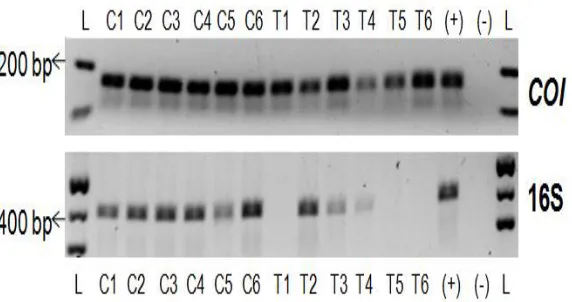
Total DNA extracted from B. neritina colonies from each replicate plate of
antibiotic-treated and control group was subjected to PCR (Figure 2) and Q-PCR using symbiont-specific
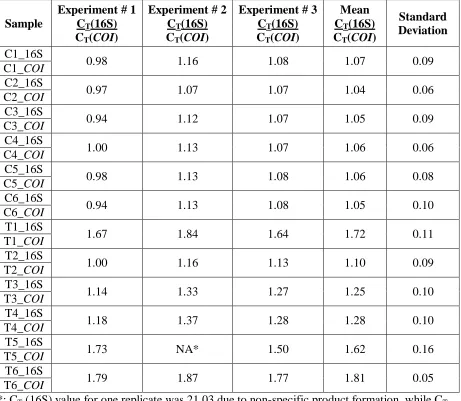
16S rDNA and B. neritinaCOI gene primers. The amount of symbiont DNA normalized to host
DNA was calculated using CT values of 16S rDNA and COI in each replicate as a proxy. The
aposymbiotic B. neritina colonies demonstrating higher ratio of symbiont 16S rDNA to host COI
CT values (indicating less symbiont DNA per unit of host DNA) were used for RNA extraction.
The comparison of mean CT values obtained for symbiont-specific 16S rDNA primed reactions
among different antibiotic-treated B. neritina colonies indicate greater than 64-fold less symbiont
therefore RNA was extracted from colonies in these plates for SSH analysis. The ratio of
symbiont 16S rDNA to host COI CT values in the symbiotic B. neritina colonies in all the control
plates was equal (~1.06). RNA was extracted from control B. neritina colonies on plates 3, 4,
and 5. The differences in the ratios for 3 different Q-PCR experiments could be due to the use of
different machines for the first experiment and experiments 2 and 3. However, the pattern of
ratios in all the experiments was similar. The ratios obtained for all the plates containing
symbiont colonies were similar, while the ratios for colonies in plate T1, T5, and T6 were higher
than those obtained for colonies in plate T2, T3, and T4. Dissociation curves generated for each
Q-PCR reaction were used to determine if there was formation of non-specific products, which
could result in a false CT value. The melting temperatures of COI and 16S rDNA Q-PCR product
were 77.5°C and 84°C respectively. One of the replicates of T5_16S reaction in experiment# 2
had lower CT value due to formation of a non-specific product at 73°C, while the CT values for
other replicates were undetermined (Table 1).
Figure 2: Confirmation of symbionts in B. neritina colonies. PCR using COI and 16S rDNA primers on B. neritina colonies from the control (C) and antibiotic-treated (T) plate replicates. Symbiont-specific 16S rDNA was not amplified in aposymbiotic colonies from plates T1, T5, and T6.
[image:24.612.183.469.450.601.2]Table 1: Symbiont quantification in B. neritina colonies. Quantitative real time PCR on symbiotic and aposymbiotic B. neritina DNA samples using symbiont-specific 16S rDNA primers and B. neritina cytochrome c oxidase (COI) primers. C= Control (symbiotic), T= Antibiotic-treated (aposymbiotic), and CT= Threshold cycle.
Sample
Experiment # 1 CT(16S)
CT(COI)
Experiment # 2 CT(16S)
CT(COI)
Experiment # 3 CT(16S)
CT(COI)
Mean CT(16S)
CT(COI)
Standard Deviation
C1_16S
0.98 1.16 1.08 1.07 0.09
C1_COI
C2_16S
0.97 1.07 1.07 1.04 0.06
C2_COI
C3_16S
0.94 1.12 1.07 1.05 0.09
C3_COI
C4_16S
1.00 1.13 1.07 1.06 0.06
C4_COI
C5_16S
0.98 1.13 1.08 1.06 0.08
C5_COI
C6_16S
0.94 1.13 1.08 1.05 0.10
C6_COI
T1_16S
1.67 1.84 1.64 1.72 0.11
T1_COI
T2_16S
1.00 1.16 1.13 1.10 0.09
T2_COI
T3_16S
1.14 1.33 1.27 1.25 0.10
T3_COI
T4_16S
1.18 1.37 1.28 1.28 0.10
T4_COI
T5_16S
1.73 NA* 1.50 1.62 0.16
T5_COI
T6_16S
1.79 1.87 1.77 1.81 0.05
T6_COI
*: CT (16S) value for one replicate was 21.03 due to non-specific product formation, while CT values for other two replicates were undetermined.
3.2 Enrichment of differentially expressed genes
Differentially expressed genes in ovicell-bearing and ovicell-free zooids were enriched
using the PCR-Select cDNA Subtraction kit (Clontech Laboratories, Inc., Mountain View, CA).
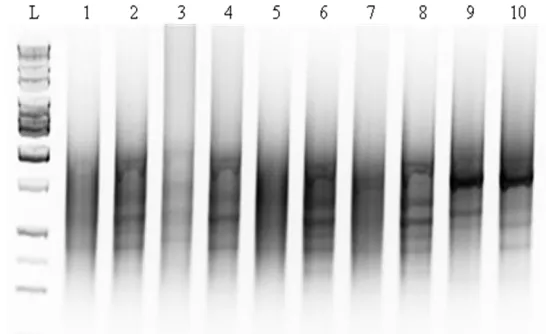
Following the primary and secondary PCR reactions, the control subtracted cDNA in the SSH
[image:25.612.75.536.143.544.2]control tester sample (Figure 3). In contrast, the control unsubtracted tester cDNA should have
both the HaeIII-digested λX174 DNA and human placental control cDNA. Similarly, in the
experimental SSH experiments (OB-FS, OB-RS, OF-FS, and OF-RS), the subtracted cDNA
should contain the cDNAs which are only present in the tester sample but not in the driver. The
subtracted cDNAs showed fewer distinct bands or just a smear (potential differentially expressed
cDNAs) than the corresponding unsubtracted tester cDNAs. Although the results from the
controls suggested that the reaction was not optimal, the presence of fewer cDNA bands or just a
smear in the subtracted samples indicates successful subtraction of cDNAs. Since the subtraction
of cDNA by SSH was suboptimal, the presence of differentially expressed genes in the
subtracted cDNAs was confirmed by further screening procedures.
[image:26.612.167.440.367.534.2]3.3 Screening of differentially expressed genes
The subtracted cDNA library was screened for differentially expressed genes using
PCR-Select Differential Screening kit (Clontech Laboratories, Inc., Mountain View, CA). The
screening procedure resulted in identification of sixty putatively subtracted genes, which
displayed more than twice the level of hybridization intensity (Figure 4). Bioinformatic analysis
of these subtracted cDNA sequences revealed significant similarity to known proteins and
conserved domains of interest in 11 subtracted cDNAs. The identified proteins had key functions
and roles such as initiation and maintenance of symbiosis, bacterial pathogenesis and localization
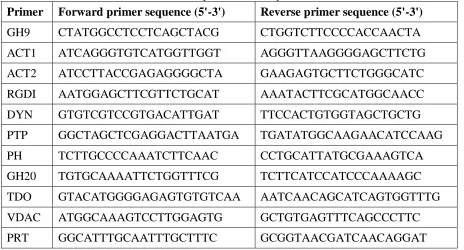
within the host, and signal transduction. Primer sets for these eleven genes of interest were
designed (Table 2) to confirm differential expression of the subtracted genes by reverse
transcription PCR analysis.
[image:27.612.118.494.392.620.2]Table 2: Primers used for reverse transcription PCR analysis.
Primer Forward primer sequence (5'-3') Reverse primer sequence (5'-3')
GH9 CTATGGCCTCCTCAGCTACG CTGGTCTTCCCCACCAACTA
ACT1 ATCAGGGTGTCATGGTTGGT AGGGTTAAGGGGAGCTTCTG
ACT2 ATCCTTACCGAGAGGGGCTA GAAGAGTGCTTCTGGGCATC
RGDI AATGGAGCTTCGTTCTGCAT AAATACTTCGCATGGCAACC
DYN GTGTCGTCCGTGACATTGAT TTCCACTGTGGTAGCTGCTG
PTP GGCTAGCTCGAGGACTTAATGA TGATATGGCAAGAACATCCAAG
PH TCTTGCCCCAAATCTTCAAC CCTGCATTATGCGAAAGTCA
GH20 TGTGCAAAATTCTGGTTTCG TCTTCATCCATCCCAAAAGC
TDO GTACATGGGGAGAGTGTGTCAA AATCAACAGCATCAGTGGTTTG
VDAC ATGGCAAAGTCCTTGGAGTG GCTGTGAGTTTCAGCCCTTC
PRT GGCATTTGCAATTTGCTTTC GCGGTAACGATCAACAGGAT
3.4 Confirmation of differential expressed genes
Reverse transcription PCR was conducted to verify differences in expression of the nine
putative subtracted genes in different B. neritina zooids. Single stranded cDNA was synthesized
from an equal amount of initial RNA sample from different zooids (32 ng). Three dilutions of
synthesized cDNA were prepared (200 pg/µL, 20 pg/µL, and 2 pg/µL) and 2 µL of each dilution
was used as template for PCR amplification using primers designed for each of the screened
putative differentially expressed gene fragments. Differential expression in ovicell-bearing and
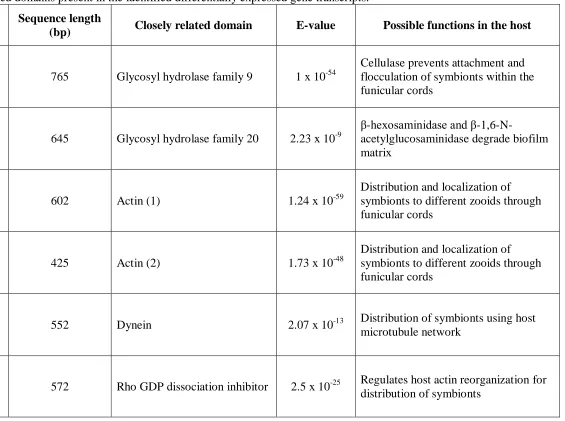
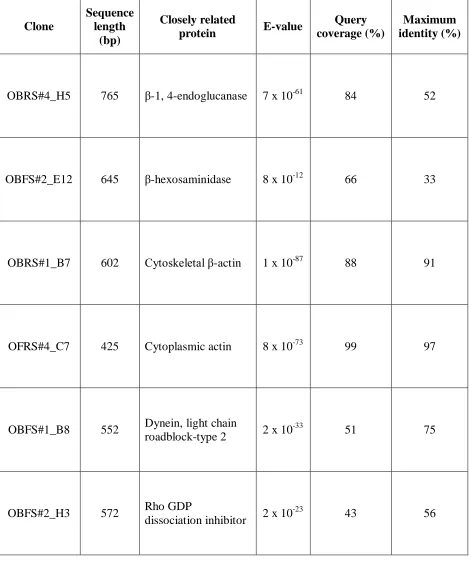
ovicell-free zooids was confirmed for 6 of 11 of the genes identified by SSH (Table 3 and Table
4).was used as template for PCR amplification using primers designed for each of the screened
putative differentially expressed gene fragments. Differential expression in ovicell-bearing and
ovicell-free zooids was confirmed for 6 of 11 of the genes identified by SSH (Table 3 and Table
4). Two out of 6 differentially expressed transcripts encoded actin protein. Alignment of cDNA
Table 3: Conserved domains present in the identified differentially expressed gene transcripts.
Clone Sequence length
(bp) Closely related domain E-value Possible functions in the host
OBRS#4_H5 765 Glycosyl hydrolase family 9 1 x 10-54
Cellulase prevents attachment and flocculation of symbionts within the funicular cords
OBFS#2_E12 645 Glycosyl hydrolase family 20 2.23 x 10⁻⁹
β-hexosaminidase and
β-1,6-N-acetylglucosaminidase degrade biofilm matrix
OBRS#1_B7 602 Actin (1) 1.24 x 10-59
Distribution and localization of symbionts to different zooids through funicular cords
OFRS#4_C7 425 Actin (2) 1.73 x 10-48
Distribution and localization of symbionts to different zooids through funicular cords
OBFS#1_B8 552 Dynein 2.07 x 10⁻¹³ Distribution of symbionts using host
microtubule network
Table 4: Proteins encoded by the differentially expressed genes as identified by BLASTx alignment.
Clone
Sequence length
(bp)
Closely related
protein E-value
Query coverage (%)
Maximum identity (%)
OBRS#4_H5 765 β-1, 4-endoglucanase 7 x 10-61 84 52
OBFS#2_E12 645 β-hexosaminidase 8 x 10-12 66 33
OBRS#1_B7 602 Cytoskeletal β-actin 1 x 10-87 88 91
OFRS#4_C7 425 Cytoplasmic actin 8 x 10-73 99 97
OBFS#1_B8 552 Dynein, light chain
roadblock-type 2 2 x 10 -33
51 75
OBFS#2_H3 572 Rho GDP
dissociation inhibitor 2 x 10 -23
[image:30.612.73.542.117.678.2]similarity and were completely different from each other. It is possible that both the fragments
are two non-overlapping distant portions of a single gene or different genes encoding actin. The
PCR products obtained for each of the six differentially expressed genes was electrophoresed on
1% agarose gel and visualized (Figure 5). The percent density of PCR products in agarose gel
was measured by agarose gel densitometric analysis (Figure 6).
The positive control PCR reactions with symbiotic B. neritina genomic DNA as template,
amplified bigger gene products in glycosyl hydrolase family 9 (GHF9), glycosyl hydrolase
family 20 (GHF20), and dynein primed reactions as compared to the products amplified for
experimental cDNA samples (Lane 13, Figure 5). This could be due to presence of introns in the
DNA copy of these genes, which is later spliced from transcribed mRNA. The gene encoding
GHF9 proteins showed more product formation in both the symbiotic zooids and aposymbiotic
ovicell-free cDNA samples (Figure 5A and 6A). Similar trend was observed for GHF20
transcript in the reactions with template cDNA concentrations of 400 pg and 4 pg (Figure 5B and
6B). The gene expression for one of the two actin transcripts, actin (1), varied in different zooids
at different concentrations of cDNA template (Figure 5C and 6C). However, the expression of
actin (2) appeared to be similar in all types of zooids (Figure 5D), but was highest in symbiotic
ovicell-free zooids at template concentrations of 400 pg and 40 pg (Figure 6D). Differences in
dynein encoding transcript were also noticed in reactions with 40 pg cDNA template (Figure
5E). Dynein expression was highest in symbiotic ovicell-bearing zooids (Figure 6E). Rho GDP
dissociation inhibitor (GDI) expression was found to be varying in different types of zooids, but
it was not consistent for every cDNA template dilution (Figure 5F and 6F). An extremely faint
Figure 6: Agarose gel densitometric analysis of reverse transcription PCR products. PCR products obtained from symbiotic (+) and aposymbiotic (-) ovicell-bearing (OB) and ovicell-free (OF) zooid cDNAs. Solid bars represent percent density of PCR products in 1% agarose gel.
A B
C D
4 DISCUSSION
The defensive symbiosis between B. neritina and “Ca. Endobugula sertula” is thought to
result in production of bryostatins, which provide protection to bryozoan larvae from predation.
Since the bryostatins are complex polyketide compounds and similar to bacterial secondary
metabolites (Pettit, 1991), they are thought to be synthesized by the endosymbiotic bacterium.
This hypothesis has been supported by studies which have reported decreased bryostatin levels in
antibiotic-treated B. neritina colonies (Davidson et al., 2001; Lopanik et al., 2004). Since
attempts to pure culture the bacterial symbionts has not been successful, the true source of
bryostatins is unknown. Furthermore, complete genetic information about both partners in this
symbiotic association is lacking. Therefore, SSH, which does not require a priori knowledge of
genes, was used to identify differentially expressed genes.
The goal of this study was to identify host genes that are differentially expressed during
association with the endosymbiont bacterium. Aposymbiotic juveniles lacking the bacteria were
prepared by treating larvae with gentamicin during the course of larval metamorphosis into
juveniles to cure them of the symbiont. Both control and antibiotic-treated B. neritina colonies
appeared to be healthy and were similar size. However, the aposymbiotic adult colonies appeared
to have less ovicell-bearing zooids as compared to the control adult colonies. This suggests that
the symbiont may influence the onset of embryogenesis in the host. Recent studies of the
symbiotic association between the phytopathogenic fungi, Rhizopus microsporus and the
endobacterium Burkholderia rhizoxinica have demonstrated the reliance of the host on its
extracted from antibiotic-treated colonies confirmed removal of symbionts in colonies from
plates T1, T5, and T6.
The enrichment of differentially expressed genes was successful, although not optimal, in
experimental SSH reactions. This was indicated by presence of fewer distinct bands or just a
smear in subtracted cDNAs as compared to unsubtracted cDNAs. However, the HaeIII-digested
λX174 DNA was not successfully subtracted in the control SSH reaction, which implies
possibility of suboptimal subtraction of cDNAs in all of the SSH reactions. To ensure selection
of differentially expressed clones, screening of subtracted cDNA was performed by hybridization
of subtracted cDNA dot blots with specific biotinylated probes. Sixty clones were selected by
screening and their gene sequence was compared to other sequences in GenBank for potential
functions and conserved domains. Bioinformatic analysis revealed 17 subtracted gene sequences
with significant homology to known proteins and conserved domains, and 11 transcripts were
identified with important roles in interaction between host and symbiont. Reverse transcription
PCR using primers for the 11 transcripts suggested differential gene expression in 6 transcripts
(Table 3).
The six differentially expressed transcripts identified in this study have homology to
conserved domains of proteins involved in the regulation of interactions between symbiotic
organisms, as well as between hosts and pathogens. The results obtained suggest that the
identified host proteins function in distribution and localization of the symbiont bacteria within
the host funicular cords. The contig, OBRS#4_H5, encodes a GHF9 protein. Members of this
protein family are capable of degrading cellulose (Henrisat, 1991) (also:
cellulose fibrils, which allow flocculated growth and formation of bacterial aggregates (Deinema
and Zevenhuizen, 1971). Cellulose fibrils have also been reported to play an important role in
attachment of the plant pathogen, Agrobacterium tumefaciens, to plant tissue (Matthysse et al.,
1981; Matthysse, 1983). Similarly, Rhizobium leguminosarum utilizes cellulose fibrils and Ca2+
-dependent adhesin(s) to attach itself to the root hair tip of pea plants (Smit et al., 1987). In
addition to a GHF9 protein, a protein belonging to the GHF20 family was encoded by contig
OBFS#2_E12. GHF20 includes β-hexosaminidase and β-1,6-N-acetylglucosaminidase
(http://www.cazy.org/GH20.html). Recently, a soluble β-N-acetylglucosaminidase, Dispersin B,
produced by Actinobacillus actinomycetemcomitans was shown to disrupt and detach biofilms
formed by several Gram-negative and Gram-positive species of bacteria (Kaplan et al., 2003;
Kaplan et al., 2004a; Kaplan et al., 2004b; Itoh et al., 2005). The levels of both GHF9 and
GHF20 protein encoding genes were found to be higher in symbiotic B. neritina zooids. In adult
B. neritina colonies, the symbionts are present in the funicular cords (Woollacott and Zimmer,
1975; Woollacott and Zimmer, 1977). The funicular cords serve as a vascular system for the
transport of nutrients and wastes within the colony (Woollacott and Zimmer, 1975; Carle and
Ruppert, 1983). Sharp and coworkers (2007) demonstrated presence of symbionts in the
funicular cords by FISH using symbiont-specific probes and hypothesized the possibility of
symbiont transmission from one zooid to other within the colony via funicular cords. By
upregulating production of proteins capable of degrading cellulose and disintegrating biofilm
matrix, the host may prevent attachment of symbionts that could form large bacterial aggregates
or inhibit the formation of bacterial biofilms within the funicular cords, which could otherwise
Xylella fastidiosa has been discovered to be due to formation of biofilms in the xylem vessels,
which causes vascular occlusion leading to water stress in plants (de Souza et al., 2005). The
accumulation of symbionts in a biofilm in the colony could also result in triggering virulence
factor production by quorum sensing, which could be detrimental to the host.
The contigs OBRS#1_B7 and OFRS#4_C7 encode for actin proteins. These actin
transcripts appeared to be greater in symbiotic zooids of B. neritina as compared to aposymbiotic
zooids. A symbiont-induced change in host actin synthesis has been found to facilitate
winnowing in the establishment of Euprymna scolopes-Vibrio fischeri symbiosis (Kimbell and
McFall-Ngai, 2004). The passage of V. fischeri through the ducts of the host light organs results
in upregulation of actin synthesis. Increase in actin production in the ducts results in constriction
and limits entry of other microorganisms. Modification and reorganization of the host actin
cytoskeleton for the benefit of bacterial pathogenesis and transmission has been reviewed by
Finlay and Cossart (1997) and Barbieri et al. (2002). Similarly, the difference in level of actin
transcripts in symbiotic B. neritina zooids could be symbiont-induced as in the case of
squid-Vibrio symbiosis or completely independent of the symbiont. Rearrangement of the actin
cytoskeleton in the funicular cords could regulate the distribution or movement of symbionts to
different zooids within the colony. The differential expression of actin protein is further
supported by differences in expression of GDI protein. Overexpression of human GDI proteins
has been reported to result in damage of the actin cytoskeleton (Leffers et al., 1993). Disruption
of actin cytoskeleton by bacterial toxins has been found to be regulated by GDI protein (Barbieri
Increased expression of dynein (OBFS#1_B8) in symbiotic zooids also supports the
assumption that B. neritina influences distribution and localization of “Ca. Endobugula sertula.”
Ferree and coworkers (2005) explored interaction between host microtubule cytoskeleton and
Wolbachia. The bacterium was found to associate itself to a host microtubule network via dynein
so that it was localized in the oocytes of Drosophila. Such interaction is believed to facilitate
bacterial motility and maternal transmission to offspring.
The interaction between B. neritina and “Ca. Endobugula sertula” seems to have
co-evolved through strict vertical transmission to sustain the relationship. The phylogenetic analyses
of the host (COI) and symbiont (16S rRNA) sequences using neighbor-joining method suggest
that this association is ancient and demonstrated parallel diversification of both the host and
symbiont (McGovern and Hellberg, 2003). In such a specific and co-evolved symbiotic
association, it is expected that the host’s immune response evolves to allow infection of only the
symbiont microorganism, while the symbiont may evolve to combine mutualistic and pathogenic
properties to benefit and invade the host respectively (Moran, 2006). Therefore, changes in
expression of B. neritina immune genes were also expected in the symbiotic and aposymbiotic
state of the organism. The SSH study identified genes potentially involved in regulation of
distribution and localization of the symbiont by the host, but did not reveal any host genes of
known immune function those might be differentially expressed during the association with the
symbiont. Similar SSH study on bacterial-challenged Acyrthosiphon pisum detected very few
insect genes involved in immune response (Altincicek et al., 2008). Furthermore, the genome of
A. pisum has been reported to be missing immune genes, suggesting that aphids have a reduced
immune defense in aphids was symbiont-mediated host protection, in which the host relies on the
symbiont for its defense against pathogenic microorganisms. A. pisum has been found to be
defended by its secondary symbionts, Regiella insecticola and Hamiltonella defensa, against
fungal pathogens and parasitoid wasp Aphidius ervi respectively (Scarborough et al., 2005;
Oliver et al., 2005). Similarly, B. neritina may have evolved to maintain the symbiosis with “Ca.
Endobugula sertula” by reducing or altering its immune responses, while the symbiont in turn
may have coevolved to safeguard the host against pathogens. However, discovery of genes
encoding anti-attachment and anti-biofilm forming proteins by SSH suggest that the host does
possess some defensive strategies to protect itself from being harmed by the symbiont.
As discussed above, the interaction between B. neritina and “Ca. Endobugula sertula”
seems to have co-evolved and co-diversified in the deep and shallow/Southern sibling species of
bryozoan. However, it is interesting that no such association is found in the Northern Atlantic
species of bryozoan. The neighbor-joining phylogenetic studies suggest that both the symbiotic
forms of B. neritina are monophyletic and that the association with the symbiont may have
started after the divergence of the Southern and Northern Atlantic forms (McGovern and
Hellberg, 2003). A general higher amount of predation in southern habitats is also thought to act
as a major selective pressure on the southern bryozoan populations to establish and maintain
association with the symbiont, which benefits the host larvae with chemical defense against
predation (McGovern and Hellberg, 2003). This suggests a role of predators in the evolution of
this association.
The association between bryozoan and “Ca. Endobugula sertula” is similar to the
partners have co-evolved, as well as demonstrate parallel diversification to establish and
maintain the association. However, the aphid-Buchnera relationship appears to have co-evolved
more because both the partners have evolved to be completely dependent on each other (Brinza
et al., 2009). The insect host has evolved to provide nutrition and accommodation to the
symbionts in specialized cells (bacteriocytes) within the host (Sabeter Muñoz et al., 2001), while
the symbiont has evolved to synthesize essential amino acids for the host (Febvay et al., 1999).
Since the bacterial symbiont of B. neritina was not found free-living in the environment
(Haygood et al., 1999), nor has it been cultured in laboratory, the symbiont may have evolved to
form an obligate association. However, the relationship may not be obligate for bryozoan host at
least in case of Northern Atlantic forms, which lack the symbionts. In the case of horizontally
transmitted symbiotic associations such as that of squid-Vibrio, the interaction among the
partners has evolved together for a successful symbiosis. However, both the lineages do not
show strong evidence of co-diversification (Moran, 2006). Since the juvenile squid acquires the
symbionts from the surrounding water, the host utilizes a variety of developmental, biochemical,
and immunogenic mechanisms to prevent colonization of the light organ by other environmental
microorganisms except V. fischeri, which has evolved to utilize its pathogenic mechanisms to
avoid these host strategies to successfully establish the association (Moran, 2006). These
evolutionary trends among the partners in symbiotic associations suggest that such relationships
potentially play a critical role in determining the evolutionary and ecological processes of
5 CONCLUSION
The goal of this study was to identify host genes that are differentially expressed among
symbiotic and aposymbiotic B. neritina ovicell-bearing and ovicell-free zooids which may be
involved in the establishment and maintenance of the association between B. neritina and “Ca.
Endobugula sertula.” Using SSH, host genes were identified that may regulate the distribution
and localization of the endosymbiont in the host. The results of this study suggest that B. neritina
regulates distribution and localization of the symbiont within its funicular cords by actin
cytoskeleton rearrangement and upregulates production of proteins to prevent attachment or
biofilm formation by symbionts within the funicular cords. Using these mechanisms, the host is
potentially capable of transporting more symbionts to ovicell-bearing zooids, where higher levels
of bryostatin production are needed to impart the developing larvae with its chemical defense
before it is released. This study extends our understanding about interaction between the host and
the symbiont in the bryozoan-bacteria symbiosis and also serves as a model for the study of other
6 REFERENCES
Altincicek B, Gross J and Vilcinskas A. (2008). Wounding-mediated gene expression and accelerated viviparous reproduction of the pea aphid Acyrthosiphon pisum. Insect Mol. Biol. 17:711–716.
Barbieri JT, Riese MJ and Aktories K. (2002). Bacterial toxins that modify the actin cytoskeleton. Annu. Rev. Cell Dev. Biol. 18:315–344.
Barr PM, Lazarus HM, Cooper BW, Schluchter MD, Panneerselvam A, Jacobberger JW, Hsu JW, Janakiraman N, Simic A, Dowlati A and Remick SC. (2009). Phase II study of bryostatin 1 and vincristine for aggressive non-Hodgkin lymphoma relapsing after an autologous stem cell transplant. Am. J. Hematol. 84:484–487.
Brinza L, Viñuelas J, Cottret L, Calevro F, Rahbé Y, Febvay G, Duport G, Colella S, Rabatel A, Gautier C, Fayard JM, Sagot MF and Charles H. (2009). Systemic analysis of the symbiotic function of Buchnera aphidicola, the primary endosymbiont of the pea aphid Acyrthosiphon pisum. C. R. Biol. 332:1034–1049.
Carlton JT and Hodder J. (1995). Biogeography and dispersal of coastal marine organisms: experimental studies on a replica of a 16th century sailing vessel. Mar. Biol. 121:721–730.
Carle KJ and Ruppert EE. (1983). Comparative ultrastructure of the bryozoan funiculus: A blood vessel homologue. J. Zool. Syst. Evol. Res. 21:181–193.
Davidson SK and Haygood MG. (1999). Identification of sibling species of the bryozoans
Bugula neritina that produce different anticancer bryostatins and harbor distinct strains of bacterial symbiont “Canditatus Endobugula sertula”. Biol. Bull. 196:273–280.
Davidson SK, Allen SW, Lim GE, Anderson CM and Haygood MG. (2001). Evidence of the biosynthesis of the bryostatins by the bacterial symbiont “Canditatus Endobugula sertula” of the bryozoans Bugula neritina. Appl. Environ. Microbiol. 67:4531–4537.
de Souza AA, Takita MA, Pereira EO, Coletta-Filho HD and Machado MA. (2005). Expression of pathogenicity-related genes of Xylella fastidiosa in vitro and in planta. Curr. Microbiol. 50:223–228.
Deinema MH, and Zevenhuizen LP. (1971). Formation of cellulose fibrils by gram-negative bacteria and their role in bacterial flocculation. Arch. Microbiol. 78:42–51.
DeVries DJ, Herald CL, Pettit GR, Blumberg PM. (1988). Demonstration of sub-nanomolar affinity of bryostatin 1 for the phorbol ester receptor in rat brain. Biochem. Pharmacol. 37:4068– 4073.
El-Rayes BF, Gadgeel S, Shields AF, Manza S, Lorusso P and Philip PA. (2006). Phase I study of bryostatin 1 and gemcitabine. Clin. Cancer Res. 12:7059–7062.
Febvay G, Rahbé Y, Rynkiewicz M, Guillaud J and Bonnot G. (1999). Fate of dietary sucrose and neosynthesis of amino acids in the pea aphid, Acyrthosiphon pisum, reared on different diets, J. Exp. Biol. 202:2639–2652.
Ferree PM, Frydman HM, Li JM, Cao J, Wieschaus E and Sullivan W. (2005). Wolbachia
utilizes host microtubules and Dynein for anterior localization in the Drosophila oocyte. PLoS Pathog. 1:e14.
Finlay BB and Cossart P. (1997). Exploitation of mammalian host cell functions by bacterial pathogens. Science. 276:718–725.
Gerardo NM, Altincicek B, Anselme C, Atamian H, Barribeau SM, de Vos M, Duncan EJ, Evans JD, Gabaldón T, Ghanim M, Heddi A, Kaloshian I, Latorre A, Moya A, Nakabachi A, Parker BJ, Pérez-Brocal V, Pignatelli M, Rahbé Y, Ramsey JS, Spragg CJ, Tamames J, Tamarit D, Tamborindeguy C, Vincent-Monegat C and Vilcinskas A. (2010). Immunity and other defenses in pea aphids, Acyrthosiphon pisum. Genome Biol. 11:R21.
Gordon DP and Mawatari SH. (1992). Atlas of marine-fouling bryozoa of New Zealand ports and harbours. Misc. Publ. NZ Oceanogr. Inst. 107:1–52.
Haygood MG and Davidson SK. (1997). Small-subunit rRNA genes and in situ hybridization with oligonucleotides specific for the bacterial symbionts in the larvae of the bryozoans Bugula neritina and proposal of “Canditatus Endobugula sertula”. Appl. Environ. Microbiol. 63:4612– 4616.
Haygood MG, Schmidt EW, Davidson SK and Faulkner DJ. (1999). Microbial symbionts of marine invertebrates: Opportunities for microbial biotechnology. J. Mol. Microbiol. Biotechnol. 1:33–43.
Hayun M, Okun E, Hyun R, Gafter U, Albeck M, Longo DL and Sredni B. (2007). Synergistic effect of AS101 and Bryostatin-1 on myeloid leukemia cell differentiation in vitro and in an animal model. Leukemia 21:1504–1513.
Henrissat B. (1991). A classification of glycosyl hydrolases based on amino acid sequence similarities. Biochem. J. 280:309–316.
Hildebrand M, Waggoner LE, Liu H, Sudek S, Allen S, Anderson C, Sherman DH and Haygood M. (2004). bryA: an unusual modular polyketide synthase gene from the uncultivated bacterial symbiont of the marine bryozoan Bugula neritina. Chem. Biol. 11:1543–1552.
Itoh Y, Wang X, Hinnebusch BJ, Preston JF III and Romeo T. (2005). Depolymerization of beta-1,6-N-acetyl-D-glucosamine disrupts the integrity of diverse bacterial biofilms. J. Bacteriol. 187:382–387.
Kaplan JB, Ragunath C, Velliyagounder K, Fine DH and Ramasubbu N. (2004a). Enzymatic detachment of Staphylococcus epidermidis biofilms. Antimicrob. Agents Chemother. 48:2633– 2636.
Kaplan JB, Velliyagounder K, Ragunath C, Rohde H, Mack D, Knobloch JK and Ramasubbu N. (2004b). Genes involved in the synthesis and degradation of matrix polysaccharide in
Actinobacillus actinomycetemcomitans and Actinobacillus pleuropneumoniae biofilms. J. Bacteriol. 186:8213–8220.
Kimbell JR and McFall-Ngai MJ. (2004). Symbiont-induced changes in host actin during the onset of a beneficial animal-bacterial association. Appl. Environ. Microbiol. 70:1434–1441.
Keough MJ. (1989). Dispersal of bryozoan Bugula neritina and effects of adults on newly metamorphosed juveniles. Mar. Ecol. Prog. Ser. 57:163–171.
Ku GY, Ilson DH, Schwartz LH, Capanu M, O'Reilly E, Shah MA, Kelsen DP and Schwartz GK. (2008). Phase II trial of sequential paclitaxel and 1 h infusion of bryostatin-1 in patients with advanced esophageal cancer. Cancer Chemother. Pharmacol. 62:875–880.
Kuzirian AM, Epstein HT, Gagliardi CJ, Nelson TJ, Sakakibara M and Taylor C. (2006). Bryostatin enhancement of memory in Hermissenda. Biol. Bull. 210:201–214.
Lackner G, Moebius N and Hertweck C. (2010). Endofungal bacterium controls its host by an
hrp type III secretion system. Int. Soc. Microb. Ecol. J.: 1–10.
Lam AP, Sparano JA, Vinciguerra V, Ocean AJ, Christos P, Hochster H, Camacho F, Goel S, Mani S and Kaubisch A. (2010). Phase II study of paclitaxel plus the protein kinase C inhibitor bryostatin-1 in advanced pancreatic carcinoma. Am. J. Clin. Oncol. 33:121–124.
Leffers H, Nielsen MS, Andersen AH, Honoré B, Madsen P, Vandekerckhove J and Celis JE. (1993). Identification of two human Rho GDP dissociation inhibitor proteins whose overexpression leads to disruption of the actin cytoskeleton. Exp. Cell Res. 209:165–174.
Lindquist N. (1996). Palatability of invertebrate larvae to corals and sea anemones. Mar. Biol. 126:745–755.
Lindquist N and Hay ME. (1996). Palatability and chemical defense of marine invertebrate larvae. Ecol. Monogr. 66:431–450.
Lopanik NB, Lindquist N and Targett N. (2004). Potent cytotoxins produced by a microbial symbiont protect host larvae from predation. Oecologia 139:131–139.
Lopanik NB, Targett NM and Lindquist N. (2006). Ontogeny of a symbiont-produced chemical defense in Bugula neritina (Bryozoa). Mar. Ecol. Prog. Ser. 327:183–191.
Mackie JA, Keough MJ and Christidis L. (2006). Invasion patterns inferred from cytochrome oxidase I sequences in three bryozoans, Bugula neritina, Watersipora subtorquata, and
Watersipora arcuata. Mar. Biol. 149:285–295.
Matthysse AG, Holmes KV, and Gurlitz RH. (1981). Elaboration of cellulose fibrils by
Agrobacterium tumefaciens during attachment to carrot cells. J. Bacteriol. 14:583–595.
Matthysse AG. (1983). Role of bacterial cellulose fibrils in Agrobacterium tumefaciens infection. J. Bacteriol. 154:906–915.
McGovern TM and Hellberg ME. (2003). Cryptic species, cryptic endosymbionts, and geographical variations in chemical defences in the bryozoan Bugula neritina. Mol. Ecol. 12:1207–1215.
Moran NA. (2006). Symbiosis. Curr. Biol. 16:R866–R871.
Mutter R and Wills M. (2000). Chemistry and clinical biology of the bryostatins. Bioorg. Med. Chem. 8:1841–1860.
Oliver KM, Moran NA and Hunter MS. (2005). Variation in resistance to parasitism in aphids is due to symbionts not host genotype. Proc. Natl. Acad. Sci. USA 102:12795–12800.
Pettit GR, Day JF, Hartwell JL and Wood HB. (1970). Antineoplastic components of marine animals. Nature 227:962–963.
Pettit GR. (1991). The bryostatins. Prog. Chem. Org. Nat. Prod. 57:153–195.
Pettit GR. (1996). Progress in the discovery of biosynthetic anticancer drugs. J. Nat. Prod. 59:812–821.
Ryland JS. (1970). Bryozoans. Hutchinson University Library, London. Chapter 3, Pg. 58.
Sabeter Muñoz B, van Ham RCHJ, Martínez Torres D, Silva Moreno F, Latorre Castillo A and Moya Simarro A. (2001). Molecular-evolution of aphids and their primary (Buchnera sp.) and secondary endosymbionts: implications for the role of symbiosis in insect evolution. Interciencia 26:508–512.
Sanchez S, Hourdez S and Lallier FH. (2007). Identification of proteins involved in the functioning of Riftia pachyptila symbiosis by Subtractive Suppression Hybridization. BioMed Central Genomics. 8:337.
Scarborough CL, Ferrari J and Godfray HCJ. (2005). Aphid protected from pathogen by endosymbiont. Science 310:1781.
Sharp KH, Davidson SK and Haygood MG. (2007). Localization of “Canditatus Endobugula sertula” and the bryostatins throughout the life-cycle of the bryozoan Bugula neritina. Int. Soc. Microb. Ecol. J. 1:693–702.