ScholarWorks @ Georgia State University
ScholarWorks @ Georgia State University
Chemistry Dissertations Department of Chemistry
Summer 8-18-2010
Design and Synthesis of Novel Serotonin Receptor Ligands
Design and Synthesis of Novel Serotonin Receptor Ligands
Jeffrey D. Klenc Georgia State University
Follow this and additional works at: https://scholarworks.gsu.edu/chemistry_diss
Part of the Chemistry Commons
Recommended Citation Recommended Citation
Klenc, Jeffrey D., "Design and Synthesis of Novel Serotonin Receptor Ligands." Dissertation, Georgia State University, 2010.
https://scholarworks.gsu.edu/chemistry_diss/50
This Dissertation is brought to you for free and open access by the Department of Chemistry at ScholarWorks @ Georgia State University. It has been accepted for inclusion in Chemistry Dissertations by an authorized
DESIGN AND SYNTHESIS OF NOVEL SEROTONIN RECEPTOR LIGANDS
by
JEFFREY D. KLENC
Under the Direction of Dr. Lucjan Strekowski
ABSTRACT
Novel and potent ligands to the serotonin7 (5-HT7) receptor have been synthesized. The
synthesized compounds include a set of substituted pyrimidines which show high affinity to the 5-HT7
receptor, synthesized by previously described methods [1,2] in high yield. Comparing the affinities of
substituted pyrimidines to previously calculated models [3,4] yielded new hypotheses about the nature
of interaction between the pyrimidine ligands and the 5-HT7 binding site. Several new series of
compounds were synthesized by various methods to validate these hypotheses, including a conjugate
addition to vinylpyrimidines [5]. These compounds include benzofurans, oximes, hydrazones, as well as
which exceeds that of currently available ligands.
The synthesized compounds were evaluated quantitatively by calculating a three-dimensional
quantitative structure-affinity relationship (3D-QSAR) for the 5-HT7 receptor. Evaluation of the
calculated model validated qualitative assumptions about the data set as well as described regions of
interaction in greater detail than previously available. These observations give further insight on the
nature of ligand-binding site interactions with highly potent ligands such as 4-(3-furyl)-2-(N
-methylpiperazino)pyrimidine which will lead to more potent 5-HT7 receptor ligands. Additionally, a
model was calculated for affinity to the 5-HT2a receptor. Comparing this model to that calculated for
affinity to the 5-HT7 receptor identified two regions which may be exploited in future sets of ligands to
increase selectivity to the 5HT7 receptor.
INDEX WORDS: Serotonin, 5-HT, Depression, Schizophrenia, Pyrimidine, 1-4 Addition, 3D-QSAR,
by
JEFFREY D. KLENC
A Dissertation Submitted in Partial Fulfillment of the Requirements for the Degree of
Doctor of Philosophy
in the College of Arts and Sciences
Georgia State University
Copyright by
Jeffrey David Klenc
by
JEFFREY D. KLENC
Committee Chair: Dr. Lucjan Strekowski
Committee: Dr. Alfons Baumstark
Dr. Markus Germann
Electronic Version Approved:
Office of Graduate Studies
College of Arts and Sciences
Georgia State University
DEDICATION
ACKNOWLEDGEMENTS
I would like to sincerely thank Dr. Lucjan Strekowski for the opportunity to explore several different
projects while working under his direction. The opportunity to work independently in his lab has led me
to learn on my own. Straightforward criticism and succinct, accurate advice on the direction projects
should take has shown me how to pursue scientific problems efficiently. This unique environment has
provided an opportunity for me to develop into an efficient chemist and an effective project leader, for
which I am sincerely grateful.
I would also like to thank my parents for their support in every endeavor for which I have expressed an
interest in since I was old enough to remember. It is truly a testament to their patience and dedication
that I have been able to complete this work. Without their encouragement at a very young age to learn
math, music, and science, I would have undoubtedly lacked the skills to work in such a demanding and
rewarding field. Without their patience and quiet guidance during my adolescence, I would have
undoubtedly wasted those gifts they have given me.
I must also thank the efforts of those I have worked with under Dr. Strekowski. Particularly, I am
thankful for Ava’s efforts as an undergraduate and graduate student which have helped me become a
better teacher and to understand my role as a leader more clearly. I thank Beth for providing invaluable
insight into the industrial lab setting, bringing not only her experience from outside academia, but also
her contagious work ethic and passion for synthesis. I also thank Adam, Reid, Nilmi, Jamie, and Shirish
for their curiousity about chemistry which was essential to my education during this program.
At last, I must thank Amy for her love and friendship. Above all others she has been near day in and day
out to comfort, console, encourage and empathize with me during all my hardships and successes
ACKNOWLEDGEMENTS ... v
LIST OF TABLES ... viii
LIST OF FIGURES ... ix
1 INTRODUCTION ... 1
1.1 The characterization of serotonin ... 1
1.2 The serotonergic system ... 2
1.3 Therapeutic relevance ... 5
1.4 The need for more selective serotonin receptor ligands ... 7
2 LITERATURE REVIEW ... 9
2.1 Serotonin receptor subtypes and other related G-protein coupled receptors (GPCR) ... 9
2.2 The 5-HT7 receptor ... 10
2.2.1 Biological expression and functions of 5-HT7 receptors ... 12
2.2.2 Mechanism of signal transduction ... 13
2.2.3 Conformational changes upon binding ... 14
2.2.4 Pharmacophores of 5-HT1a, 5-HT2a, and 5- HT7 receptors ... 17
2.3 Current 5-HT7 receptor ligands ... 22
3 SYNTHESIS ... 27
3.1 Synthesis of substituted pyrimidines as a diverse set of 5-HT receptor ligands ... 27
3.2 Synthesis of substituted pyrimidines by 1,4 addition to vinyl-substituted pyrimidines ... 30
3.3 Synthesis and facile modification of 2-chloro-4-(acetyl)pyrimidine ... 32
3.4 Synthesis of 5-HT7 receptor ligands with piperazine extensions ... 34
3.5 Synthesis of fused ring 5-HT7 receptor ligands ... 36
3.6 Synthesis of bivalent 5-HT7 receptor ligands ... 40
4 MODELING ... 43
4.1 Calculation of models for 5-HT7 and 5-HT2a receptors ... 43
4.1.1 Validation of QSAR methods ... 44
4.1.2 Statistical parameters ... 45
4.1.3 Ligands used to calculate the models ... 46
4.1.4 Binding mode conformation ... 55
4.1.5 Alignment of structures ... 59
4.2 Presentation of QSAR models ... 60
4.2.2 The model for affinity to the 5-HT7 receptor ... 65
4.2.3 Calculation of a model for affinity to the 5-HT2a receptor ... 69
4.3 Analysis of each set of compounds according to the calculated models ... 74
4.3.1 Steric interactions ... 76
4.3.2 Electrostatic Interactions ... 77
4.3.3 Hydrophobic interactions ... 79
4.3.4 Hydrogen bond donor interactions... 80
5 CONCLUSIONS ... 82
6 EXPERIMENTAL ... 84
REFERENCES ... 106
APPENDICES ... 119
A. List of abbreviations ... 119
B. Glossary ... 120
LIST OF TABLES
Table 1-1. A summary of conditions in which a serotonergic effect is proposed ... 7
Table 2-1. Compounds showing high affinity and selectivity to 5-HT7 ... 22
Table 2-2. Currently available 5-HT7 receptor ligands ... 24
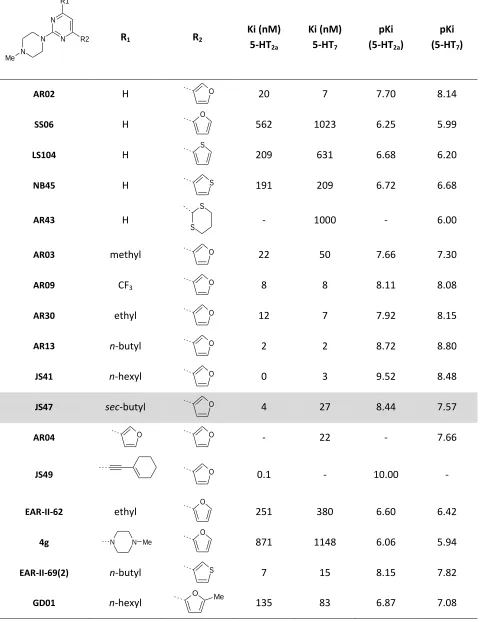
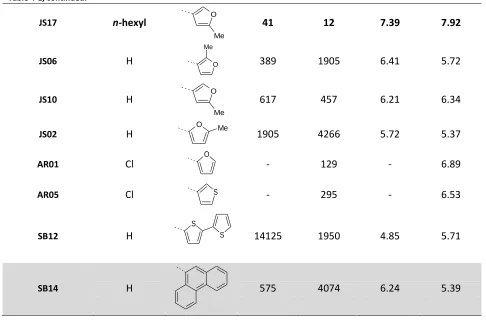
Table 4-1. Disubstituted pyrimidines used to calculate the 3D-QSAR models ... 49
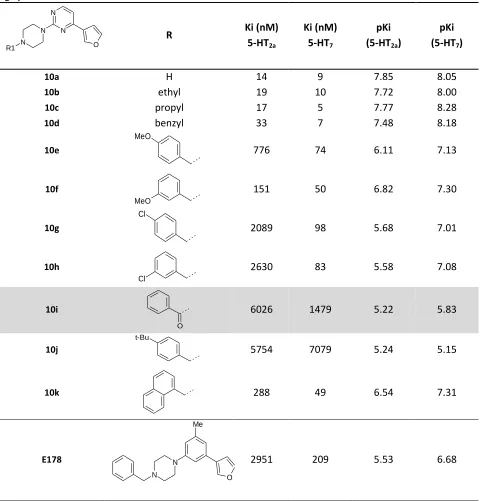
Table 4-2. N-substituted piperazino compounds used to calculate the 3D-QSAR models ... 51
Table 4-3. Alternatively substituted pyrimidines at the 2-position used to calculate the 3D-QSAR models ... 52
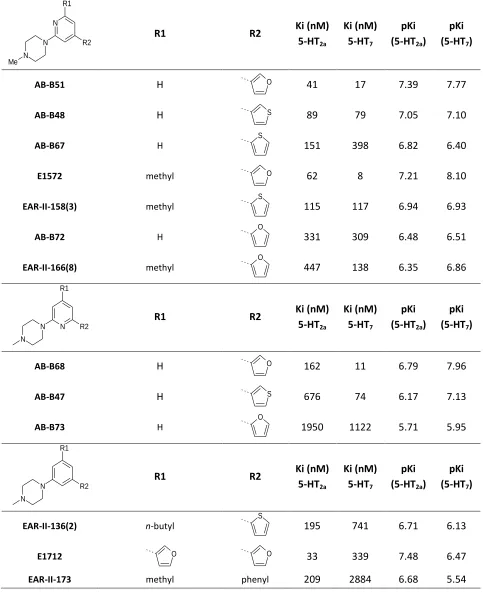
Table 4-4. Benzenes and pyridines used to calculate the 3D-QSAR models ... 53
Table 4-5. Benzofurans used to calculate the 3D-QSAR models ... 54
Table 4-6. Compounds with substituents to the central aromatic ring in the para-position to N -methylpiperazine used to calculate the 3D-QSAR models ... 55
Table 4-7. Compounds used for pharmacophore calculation ... 61
Table 4-8. Calculated distances between pharmacophore regions... 64
Table 4-9. Predicted pKi and experimental pKi to the 5-HT7 receptor ... 68
Table 4-10. Predictivity statistics of the 5-HT7 model for affinity ... 69
Table 4-11. Predicted pKi and experimental pKi to the 5-HT2a receptor ... 73
LIST OF FIGURES
Figure 1-1. Biosynthetic and metabolic pathway of serotonin ... 2
Figure 2-1. Homology model of the 5-HT2a receptor ... 15
Figure 2-2. A calculated model for affinity to the 5HT7 receptor ... 18
Figure 2-3. Comparisons between recent pharmacophores for agonism and antagonism of the 5-HT7 receptor ... 19
Figure 2-4. Most recent calculated pharmacophore for antagonism of the 5-HT7 receptor ... 21
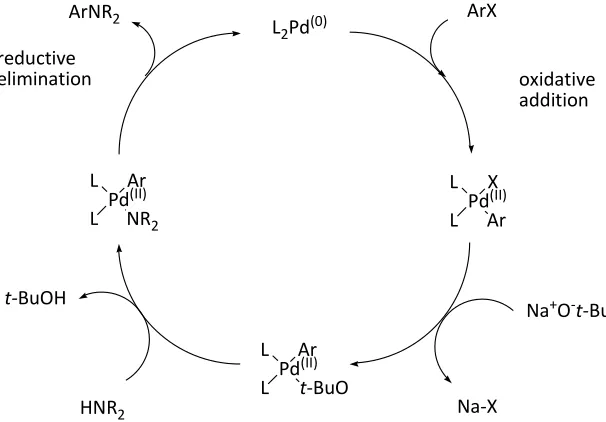
Figure 3-1. The catalytic palladium cycle. ... 38
Figure 4-1. Conformational analysis of furylpyrimidines ... 57
Figure 4-2. Conformation of substituents (AR13). ... 58
Figure 4-3. Alignment of all structures. ... 59
Figure 4-4. Pharmacophore models for antagonism of the 5-HT7 receptor. ... 64
Figure 4-5. Dendrogram calculated from 5-HT7 ligand database of structures. ... 66
Figure 4-6. Predicted pKi vs. experimental pKi for 5-HT7 ligand structures. ... 67
Figure 4-7. Dendrogram calculated from 5-HT2a ligand database of structures. ... 70
Figure 4-8. Predicted pKi vs. experimental pKi for 5-HT2a ligand structures. ... 72
Figure 4-9. 3D-QSAR models for affinity to the 5-HT2a and 5-HT7 receptors. ... 75
Figure 4-10. Field contours for steric regions calculated for 5-HT2a and 5-HT7 receptors ... 76
Figure 4-11. Field contours for steric regions calculated for 5-HT2a and 5-HT7 receptors ... 78
Figure 4-12. Field contours for steric regions calculated for 5-HT2a and 5-HT7 receptors ... 79
1 INTRODUCTION
1.1 The characterization of serotonin
Research on serotonin began with its discovery [6] which is credited to Erspamer [7] whose work
with smooth muscle contraction led him to observe an amine in cells of the gut. Erspamer observed
that this compound was responsible for muscle contraction seen in his experiments and named it
enteramine (enteric1 amine) without full characterization [8]. In separate
research, serotonin was isolated from blood [9] and named such for its
properties as a vasoconstrictor2. Rapport succeeded in the
crystallization and characterization of serotonin, defining the structure as
5-hydroxytryptamine and identical to the enteramine described by Erspamer [10,11]. Two years later,
serotonin was synthesized and made commercially available, and research on serotonin grew rapidly.
Several reports followed which described serotonin prevalent throughout the periphery. The presence
of serotonin in the central nervous system3 (CNS) [12] quickly led to its identification as a
neurotransmitter [13]. These studies are the foundation for the current understanding of the
serotonergic system. This understanding has been advanced significantly, but there remains much to be
desired. This research aims to further the knowledge of the serotonergic system by synthesizing novel
ligands to be used in physiological4 studies. Research using these compounds promises to extend the
knowledge of the serotonergic system and help to identify therapeutic uses, such as antidepressants.
1 enteric – pertaining to the intestines 2
vasoconstrictor – a compound which causes the blood vessels to contract
3
central nervous system – a broad characterization of the structures which allow for communication with the periphery and the environment and includes all of the brain and spinal cord
4
1.2 The serotonergic system
The prevalence of serotonin within the central
nervous system (CNS) provides a biological
pathway for controlling a diverse set of
physiological functions. Understanding the
biological means for the release and reuptake of
serotonin illuminates the reasoning for current
drug strategies. Serotonin is a neurotransmitter
and takes action upon serotonin receptors within
the CNS. The concentration of serotonin at the
receptor site is governed by a complex network of
cells and proteins. It is the control over this
concentration which is desired and the biological
routes for doing so are described. It is prudent to note that the whole of serotonin producing and
binding cells is often called the serotonergic system. This is somewhat misleading however, as
serotonergic neurons in the body do not act cohesively, but act largely independent of one another [14].
This flexibility allows for serotonergic pathways to simultaneously illicit a multitude of distinct
physiological responses.
Each serotonergic neuron is linked to another neuron capable of detecting serotonin through
receptors on its surface. The release of serotonin is controlled by the firing rate of the neuron. The
the receptor and results in signal transduction5. Controlling this binding event is a major step toward
gaining control over the end result of 5-HT receptors.
Serotonin is synthesized biologically by a short pathway beginning with the amino acid L-tryptophan,
shown in Figure 1-1. Two enzymes6 carry out this biosynthesis and it is the first of these two,
tryptophan hydroxylase (TPH) which is the rate limiting step [15]. Therefore, the second enzyme
involved in the biosynthesis, 5-HT decarboxylase, is a less attractive therapeutic target. The level of
research on the inhibition of this enzyme reflects this observation. TPH introduces a hydroxyl group on
the aromatic region of the amino acid and exists in two different isoforms, TPH1 and TPH2. These
different forms exist almost exclusively in isolation from each other with TPH1 acting in the periphery
while TPH2 acts in neuronal7 cells. Inhibition of TPH1 has the potential to allow control of serotonin
levels in the blood and gastrointestinal8 tract. This may prove to be therapeutically useful in
hypertension [16] and gastrointestinal disorders such as irritable bowel syndrome [17]. Inhibition of
TPH2 has been shown to reduce brain serotonin levels [18]. However, therapeutic use for TPH2
inhibitors9 is limited, due to the global nature of the serotonin depression throughout the CNS. This
decreased level of serotonin likely causes many unwanted side effects. Most therapeutic targets in the
CNS are aimed to increase synaptic serotonin levels. Inhibiting TPH2 would have the opposite effect,
making even the targeted effect opposite of that desired. Thus, the selective inhibition of TPH1 to alter
serotonin levels in the blood and gastrointestinal tract is likely the only viable therapeutic strategy for
these biological pathways [19].
5
signal transduction – the process of relaying an extracellular signal, such as increased concentration of a neurotransmitter, into intracellular changes
6 enzyme – a protein which catalyzes a chemical reaction 7
neuronal – pertaining to the cells (neurons) which regulate the release and reuptake of neurotransmitters for the purpose of signal transmission between nerve cells
8 gastrointestinal – pertaining to the entire system which is used to extract nutrients from ingested food, beginning
at the oral cavity and ending at the anus
9
Serotonergic drugs have been focused on artificially increasing serotonin levels in vivo. This has
been accomplished most successfully by blocking the clearance of serotonin. This clearance occurs by
two different routes, reuptake into a neuronal cell or metabolism. Inhibiting the enzymes responsible
for serotonin clearance has resulted in several commercially successful drugs. The main protein
responsible for the reuptake of serotonin is the serotonin transporter (SERT). Inhibition of this
transporter has led to the most commercially successful products of serotonin research [20]. By
blocking the reuptake into the neuronal cells, serotonin levels are artificially raised. This has led to use
as anti-depressants [21] and for other mood related conditions. Marketed as serotonin specific
reuptake inhibitors (SSRIs), these compounds amplify the amount of serotonin throughout the CNS.
This results in many side effects due to poorly defined physiological profiles. There is evidence to
support an additional transporter that plays a significant part in serotonin reuptake, the plasma
membrane monoamine transporter (PMAT). This protein does not transport serotonin as efficiently as
SERT, but does so with a much greater capacity. It is therefore possible that PMAT plays a significant
role in serotonin reuptake [22]. The efficiency of current SSRIs may be improved by analyzing their
effect on PMAT and optimizing the ligands for dual inhibition to these transporters.
Much like blocking the reuptake of serotonin, inhibiting monoamine oxidase (MAO) effectively
raises global serotonin levels by blocking its metabolism [23]. Drugs targeting MAO represent another
commercially successful class of compounds. As with the TPH enzyme, MAO enzymes also exist in two
forms, MAO-A and MAO-B, both of which are present in the CNS. MAO-A preferentially metabolizes
serotonin into 5-hydroxyindoleacetic acid along with other monoamines. Since the end result of MAOIs
is much the same as SSRIs, they are susceptible to the same faults such as multiple side effects due to
poor physiological profiling. MAOIs have the added difficulty of increasing the concentration of other
A seemingly more advantageous approach to controlling the serotonin signal is to design selective
ligands for the receptor subtype responsible for mediating a specific function [24]. The ability to discern
between different types of serotonin receptors adds another level of selectivity10 to the SSRI class of
compounds. This may ultimately allow for the serotonin signal to be more discretely directed toward
the functions of a particular serotonin receptor, as opposed to universally altering the level of
post-synaptic serotonin, as is the case with SSRIs and MAOIs. Ideally, the administration of serotonin
receptor ligands selectively activates or inhibits the functions specific to that receptor. The
development of such selective ligands offers an improvement over current drug treatments, although
the functions regulated by each subtype are not singular and may still produce unwanted side effects.
Existing serotonin ligands and their therapeutic uses and relevance is discussed in detail.‡
1.3 Therapeutic relevance
Manipulation of the serotonergic system has been established as a valid method for regulating
biological functions. The prevalence of serotonin throughout the brain and body has been well
documented [25]. It has been shown that serotonin plays a major role in several vital functions which
implicate the neurotransmitter in many biological processes. Each of these biological processes
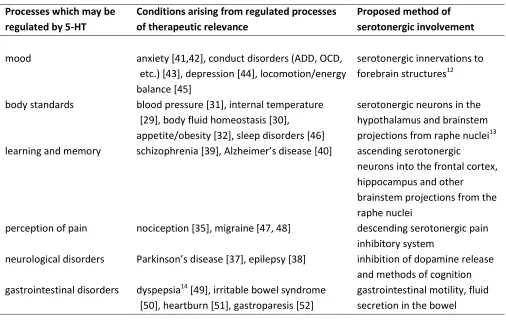
represents an opportunity for therapeutic use. Table 1-1 below shows the most accepted processes
which serotonin is thought to regulate to some degree. The regulation of visceral motor response is
most noted in the gut, where serotonin is responsible for initiating the migrating contractions of the
bowel [26]. The electrical impulses of serotonergic neurons have also been shown to be in step with the
10
circadian pacemaker11, which regulates sleep-wake cycle among other things. It has also been shown
that differing levels of serotonergic activity in a developing brain can significantly affect the function of
the adult. This also includes conditions related to sexual behavior [27], mood [28], regulation of the
body standards (temperature [29], blood pH [30], blood pressure [31], appetite[32]), learning and
memory [33], gastrointestinal disorders [34], perception of pain [35], and neurological disorders [36-40].
The involvement of serotonin in regulation of behavioral aspects is more difficult to describe, largely due
to the lack of precision in the definition of these disorders. Altered serotonin levels and expression of
serotonin receptors, transporters, and neurons in the brain have been associated with abnormal
behaviors. The regulation of behavior has been the most successful area of serotonin research, yielding
many commercially successful drugs aimed at depression and schizophrenia. However, the action of
these drugs is not sufficiently understood. The synthesis of ligands in order to better understand these
processes is a major focus of this research.
11
Table 1-1. Serotonergic pathways have been implicated in the regulation of the listed conditions.
1.4 The need for more selective serotonin receptor ligands
A common theme present in many physiological studies on 5-HT receptors used to produce the
functional theories is the incomplete nature of the studies due to lack of sufficiently potent and selective
ligands [27, 34, 43, 53]. The need for selective ligands comes from the diversity of serotonin receptor
subtypes. There are fourteen subtypes of 5-HT receptors characterized to date, all binding the same
ligand. The selective interaction of ligands with individual subtypes allows for research on their distinct
12
forebrain structures – refers to structures implicated in higher order thought processes
13 raphe nuclei – portion of the brain which houses an overwhelming majority of serotonergic neurons; near the
brainstem
14
dyspepsia – a loosely defined stomach ailment similar to an upset stomach or indigestion Processes which may be
regulated by 5-HT
Conditions arising from regulated processes of therapeutic relevance
Proposed method of serotonergic involvement
mood anxiety [41,42], conduct disorders (ADD, OCD, etc.) [43], depression [44], locomotion/energy balance [45]
serotonergic innervations to forebrain structures12
body standards blood pressure [31], internal temperature [29], body fluid homeostasis [30],
appetite/obesity [32], sleep disorders [46]
serotonergic neurons in the hypothalamus and brainstem projections from raphe nuclei13 learning and memory schizophrenia [39], Alzheimer’s disease [40] ascending serotonergic
neurons into the frontal cortex, hippocampus and other
brainstem projections from the raphe nuclei
perception of pain nociception [35], migraine [47, 48] descending serotonergic pain inhibitory system
neurological disorders Parkinson’s disease [37], epilepsy [38] inhibition of dopamine release and methods of cognition gastrointestinal disorders dyspepsia14 [49], irritable bowel syndrome
[50], heartburn [51], gastroparesis [52]
physiological properties. While the challenge to synthesize the ligands which are selective to each
subtype has been daunting, the aim is to achieve a greater level of control over the broad spectrum of
functions. Complicating the issue further is the need for selectivity not just over other serotonin
receptor subtypes, but other similar neurotransmitter receptors, such as noradrenergic, cholinergic, and
dopaminergic receptors [3]. This research has produced effective ligands for some of the receptor
subtypes [34], which has led to important discoveries regarding those subtypes. There are several
receptor subtypes for which improvements on the currently available ligands are needed. Ongoing
efforts to this end have produced many novel classes of ligands [54] and several binding studies to
elucidate the requirements for the desired selectivity and potency [3]. The evolution of these ligands
has helped clarify the physiological profile for serotonergic receptors and the therapeutic value of 5-HT
2 LITERATURE REVIEW
2.1 Serotonin receptor subtypes and other related G-protein coupled receptors (GPCR)
As mentioned, synthesizing ligands which interact at the serotonin receptors allows the greatest
control over serotonergic function. This is due to the diversity of serotonin receptor subtypes which are
expressed throughout the CNS. Each of the fourteen 5-HT receptor subtypes exhibits a unique
pharmacology and expression in the body. These include 7 groups of receptor subtypes: 5-HT1 (5-HT1a,
5-HT1B, 5-HT1D, 5-HT1E, 5-HT1F) 5-HT2 (5-HT2a, 5-HT2B, 5-HT2C), 5-HT3, 5-HT4, 5-HT5A (5-HT5B found in rats),
5-HT6, and 5-HT7. All 5-HT receptors (except for the 5-HT3 receptor, which is a ligand gated ion channel)
belong to a large family of receptors known as G-protein15 coupled receptors (GPCRs). Therefore,
affinity to a single 5-HT receptor subtype must be evaluated against all other subtypes as well as other
monoaminergic receptors, in order to determine its selectivity. These receptors are characterized by a
seven transmembrane, alpha-helical structure which enables their function as membrane bound
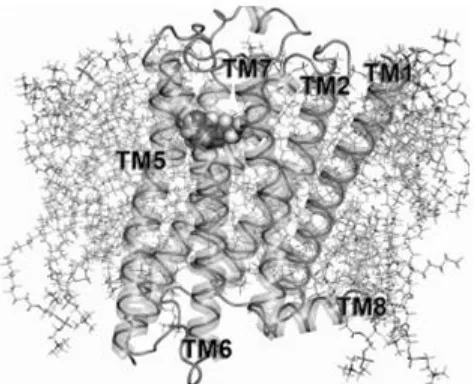
receptors. This general structure is shown by the model in Figure 2-1 (page 11). When a receptor ligand
binds to the extracellular region of the receptor, a conformational shift within the receptor takes place.
This conformational change in the receptor has been proposed to be very similar for all GPCRs and
especially among 5-HT receptors [55]. It is this shift that activates the intracellular region of the
receptor and results in the signaling event. The three-dimensional structure of these proteins has been
difficult to obtain experimentally due to many factors including difficulties with crystallizing the
membrane protein [56]. The crystallization of the GPCR bovine rhodopsin [57], allowed for structural
comparisons to other GPCRs. Much of the information about the binding site of 5-HT receptors and the
conformational changes that take place upon binding is inferred from this crystal structure.
15
Comparisons between this receptor and others must take some liberties in their assumptions, but draw
from the fact that while most 5-HT receptors share a sequence homology16 of about 35%, there are
conserved regions which are practically identical. These regions are thought to be involved in the
binding event of most GPCRs, including the thirteen 5-HT receptor subtypes [58].
In addition to the complexity contained within the serotonergic family of receptors, other receptors
and ion channels can bind 5-HT receptor ligands. Adrenergic receptors are a class of monoamine
receptors which exhibit similarities in their physiological profile to some 5-HT receptors. In fact, some
ligands that were thought to be selective for certain 5-HT receptor subtypes have shown high affinity to
the adrenergic α2 receptor [59]. Similarly, dopaminergic receptors are often conflated with serotonergic
receptors in their functions. Selectivity for dopaminergic receptors with respect to 5-HT receptors has
been shown to be a significant concern addressed in recent research [60]. It is therefore necessary to be
mindful of this relationship when designing new selective 5-HT receptor ligands. Other receptors which
have shown some similarity to 5-HT receptor ligands include ion channels, monoamine (GABA,
norepinephrine, etc.) receptors and transporters [61]. This apparent complexity is somewhat simplified
in practice by focusing on achieving selectivity over the most similar receptor subtypes and
subsequently testing the affinity for a wide range of receptors. This approach has been shown to be
reasonable, resulting in the synthesis of increasingly selective 5-HT receptor ligands in recent years.
2.2 The 5-HT7 receptor
Being the most recently discovered 5-HT receptor subtype [62], the 5-HT7 receptor has become
increasingly distinguished from other 5-HT receptor subtypes according to its locations, mechanism of
signal transduction, primary sequence17 and higher order structure18. The 5-HT7 receptor was initially
16
sequence homology – a measure of the similarity between the sequence of residues in two related proteins
17
characterized as a 5-HT1 receptor subtype based on its affinity to certain ligands thought to be selective
for 5-HT1 receptors. Although later studies on its signal transduction method revealed that this receptor
was significantly different [63], the similarity between these subtypes was an early indicator that
selectivity with regard to these subtypes would be problematic. This finding also somewhat invalidated
previous research on the functions of existing subtypes which used ligands shown not to be selective.
As a result, the newly discovered 5-HT7 receptor was implicated in several conditions thought to be
regulated by 5-HT1 receptor subtypes. Its full potential as a therapeutic target remains unclear due to
the inability to separate its functions from those of other similar receptor subtypes.
In addition to comparisons with other receptors, comparisons with splice variants19 of the 5-HT7
receptor have been made [64]. There are four splice variants of the mammalian 5-HT7 receptor, only
three of which have been found in humans. These variants of the receptor are thought to differ only
near the intracellular carboxy terminal, meaning that selectively binding these isoforms is not practical
[65]. These differences may affect the overall action of the receptor, but likely only modify the signal
transduction mechanism after the binding event concerning the coupling of the intracellular G-protein.
Therefore, the effects of differences between these variants go largely overlooked in the attempt to
produce selective binding agents to the receptor. The validity of this approach is established as more
becomes known about the structure of the 5-HT7 receptor and its splice variants.
18
higher order (protein) structure – the complex three-dimensional folding patterns of proteins which form common structures, such as alpha helices
19 splice variants – refers to the proteins which are encoded from the same DNA sequence, yet have different
primary sequences; in the case of the 5-HT7 receptor, splice variants exist in which the protein sequence is
2.2.1 Biological expression and functions of 5-HT7 receptors
While there is not a perfect correlation between location and function, observing the primary
locations of the 5-HT7 receptor gives some insight to the receptor’s role and possible therapeutic
relevance. Expression of the 5-HT7 receptor in several different species has been thoroughly examined
and reviewed [66]. Although the locations and concentration of the 5-HT7 receptor vary largely from
species to species and according to the methods used in each study, there is still enough evidence in the
current literature to make some meaningful assumptions about the presence of this receptor in certain
organs. These assumptions lead to theories and research about the specific physiology of the 5-HT7
receptor.
The precursor for the 5-HT7 protein, 5-HT7 mRNA, has been studied through molecular biology
approaches [66]. These methods have found that mRNA for the 5-HT7 receptor is mainly found in the
CNS; more specifically in the hypothalamus, thalamus and hippocampus [66]. This supports the idea
that the 5-HT7 receptor is most concentrated in these brain structures. It may also be noted that this
assumption falls in accord with the long-standing implication of 5-HT7 receptors in processes believed to
be regulated by these structures, such as cognition and higher-order brain function. In additional
studies on the distribution of the receptor, the correlation between mRNA and receptor concentration is
supported. The methods of determination are more direct as they measure the concentration of the
receptor directly, but also have innate flaws relating to the binding selectivity of ligands to the 5-HT7
receptor. Several studies [67] have shown the distribution of the receptor to be consistent with that of
the mRNA. It is also worth mentioning that while the highest concentration of 5-HT7 receptors is found
within the CNS, this receptor is also involved in functions throughout the periphery. This involvement is
included in the possible treatment of conditions related to the relaxation of blood vessels such as
migraine [68] and irritable bowel syndrome [69].
As more research is conducted on the functions of the 5-HT7 receptor, it has become reasonable to
assume that these receptors have a significant and unique role in many essential brain functions.
However, as this receptor becomes increasingly implicated in brain function, it may be important to
note the correlation with ligand availability and this observed increase. There are several processes
which are now believed to be mediated specifically by 5-HT1a and 5-HT7 receptors. It is possible that this
correlation is observed due to availability of ligands which selectively bind only these receptors. In
reality, these functions may be mediated by a much more complex response from several serotonin
receptor subtypes. Research with novel selective ligands will help to advance this research.
2.2.2 Mechanism of signal transduction
The mechanism of action of the 5-HT7 receptor follows that of the general mechanism of the
superfamily of receptors to which it belongs (see review [67] and references therein), known as
G-protein coupled receptors (GPCR). These receptors transmit their signal through an association with an
intracellular protein (G-protein). This association initializes a signal cascade when the receptor is bound
with an agonist20. In summary, activation of the 5-HT7 receptor causes an increase in intracellular cyclic
AMP (cAMP) [70]. This increase can then influence several different signaling cascades depending on
the particular cell type in which the receptor is expressed. These signaling pathways provide more clues
to the function and importance of the 5-HT7 receptors. Observing the end results of these pathways
allows insight into what the end result of receptor activation may affect. As an example, it has been
20
reported that the 5-HT7 receptor can activate a kinase21 (ERK) in hippocampal neurons [71], further
supporting the receptor’s role in mood regulation [67].
It may also be the case that the 5-HT7 receptor does not operate on the strict axis of activation and
inactivation put forward by the ternary complex model22. Recent research shows that many GPCRs,
including the 5-HT2a receptor, may operate according to the agonist-trafficking theory [72]. This theory
postulates that different agonists may cause different structural changes in the receptor, and thus,
affect different signaling cascades [73]. This has been proposed to be the mechanism by which
hallucinogens such as LSD have a profoundly differing effect when bound to the 5-HT2a receptor than
other agonists [74]. If this is indeed the case for the 5-HT7 receptor, the physiological profile of this
receptor is only made more complex. Further studies on the structure of agonist bound receptors are
needed to make conclusions on how this information modifies the attractiveness of GPCRs as a
therapeutic target.
2.2.3 Conformational changes upon binding
Research has recently provided detailed pharmacophores23 of the binding site from X-ray
crystallography and molecular modeling methods. Due to the fact that GPCRs are transmembrane
proteins, they have proven difficult to crystallize [56]. While some GPCRs have been crystallized in their
activated and inactivated states, structural data from X-ray crystallographic techniques is limited.
However, this information about similar GPCRs along with molecular modeling research [75,76] has
produced a reasonable understanding for structural changes which take place after the ligand binds to
21
kinase – an enzyme which modulates the transfer of a phosphate group between two structures
22 ternary complex model – a model for ligand binding which assumes a direct relationship between the
dissociation constants of two ligands with respect to a receptor; used to determine the affinity of novel compounds to a receptor
23 pharmacophore – a map of regions which describe the necessary characteristics for binding a receptor; a
GPCRs. As before, these observations are likely
common to all GPCRs, including the 5-HT7
receptor and other serotonin receptor
subtypes. More information about how these
proteins realign their structures upon binding
gives further insight into the design of novel
5-HT receptor agents. The difficulties in
selectively binding 5-HT receptors due to their
high similarity have been discussed. Modeling
calculations take advantage of these similarities
to estimate a binding site structure. Because the GPCR family is highly conserved in certain areas,
including the binding site, the overall structural changes that take place during binding an agonist are
assumed to be similar for all 5-HT receptors. While the resolution resulting from these methods may
not be sufficient for describing precise spatial differences between 5-HT receptor subtypes, it is assumed
to be adequate for studying the binding mechanism. Researchers have taken advantage of this using
several different structures and calculated models to make comparisons. This information has been
reviewed in detail [55] and is summarized below.
The transmembrane region of the 5-HT7 receptor consists of seven alpha-helical domains (TM 1-7,
Figure 2-1) which serve as the core structural element of all GPCRs. These alpha helices alter their
alignment with each other after binding an agonist. This conformational shift greatly alters the overall
structure of the protein. This realignment causes the G-protein to exist in an activated state and is the
basis of the signal transduction ability of the protein. As labeled by Nichols[8] [3], TM 1-4 serve as the
rigid core of the receptor, while TM 5-7 are thought to be responsible for inducing structural changes in
[image:27.612.77.314.72.264.2]couple to the G-protein, and therefore, changes in the position of these loops affect receptor activation.
The specific cascade of conformational changes which takes places is largely hypothetical and extremely
complex, but there are a few steps in this process which are generally accepted mechanisms of GPCRs.
The mechanism is thought to involve the movement of TM 3, 6 and 7. These regions are set into motion
as serotonin binds to the conserved Asp 3.32 residue (nomenclature as in [55], Res 3.50 is the most
conserved residue of TM 3). As the protonated amine of serotonin forms a salt bridge with Asp 3.32, the
ligand is further positioned by interactions between the hydroxyl group and Ser 5.43. This positioning
step has been proposed to be where binding selectivity is conferred. After these groups become
associated with each other, several interactions which serve to stabilize the receptor in its inactive state
are disrupted by concerted movements within the core of the receptor. These interactions have been
summarized in great detail [55] and are discussed in the following section as they correspond with
pharmacophoric regions proposed by several different groups. The combined effect of these
destabilizing interactions causes TM 6 to move away from TM 3, causing a key interaction between Glu
6.30 and Arg 3.50 to dissociate. These residues are stabilized when dissociated from each other,
minimizing the strain on the activated receptor caused by the separation of these oppositely charged
residues. This triggers movement of TM 5, disrupting interactions with IL 3 that keep it closely tethered
to the receptor while inactive. Once IL 3 is allowed to move away from the receptor, the G-protein takes
its activated heterotrimeric form and the signal transduction circuit is completed.
The actions of the binding mechanism can be related to pharmacophore hypotheses projecting the
need for certain functional groups in specific regions in the binding site. These vital binding site
requirements all seem to actively participate in receptor activation. In the proposed pharmacophore
hypothesis there are five possible ligand interactions with the binding site. These include a protonated
amine (PA), hydrogen bond acceptors (HBA), and hydrophobic/aromatic regions (HYD/AR). These
by a recent pharmacophore model by Kolczkowski [77]. These studies were performed on calculated
models of the receptor, so they are not useful for high resolution considerations. They do, however,
serve the purpose of illustrating possible interactions within the binding site. The next section details
how interactions between these residues may be advantageous for design of novel selective ligands of
the 5-HT7 receptor.
2.2.4 Pharmacophores of 5-HT1a, 5-HT2a, and 5- HT7 receptors
The necessary binding site interactions between ligands and 5-HT receptors were mentioned in the
previous section. It is prudent to discuss calculated pharmacophores which describe these interactions
visually, and in greater detail. These models have been calculated from several groups of high affinity
ligands, with differing degrees of selectivity to the 5-HT7 receptor. It is a major goal of this research to
improve on the selectivity and affinity of ligands to serotonin receptor subtypes, namely the 5-HT7
receptor. In order to derive more detailed information about the differences between the receptor
subtypes and how to exploit those differences, it is useful to calculate a pharmacophore. These studies
compare high affinity ligands and use their structural similarities to make quantitative observations
about the binding interactions between the ligand and the receptor. Although these methods have
drawbacks, this research has continually improved upon pharmacophores for selectively binding to the
5-HT7 receptor. Calculation of pharmacophores and subsequent optimization of ligands has resulted in
thousands of novel 5-HT7 receptor ligands. A summary of the evolution of the pharmacophore for the
5-HT7 receptor follows.
The development of a pharmacophore hypothesis for the 5-HT7 receptor began with simple
observations about the database of 5-HT7 receptor ligands and their affinity. It was initially assumed
from analysis of a small set of benzindoles that a central aromatic group must be present for affinity
of the 5-HT7 receptor
pharmacophore. As the
database of ligands grows, the
pharmacophore calculations
become more detailed. The
first significant pharmacophore
hypothesis to include a
quantitative projection of
ligand functional groups was published by Lopez-Rodriguez, et al [79]. Their proposed pharmacophore
(similar to Figure 2-3) predicted antagonism of the 5-HT7 receptor by analyzing 30 previously synthesized
compounds. These calculations described the initial scaffold for antagonists24 of the 5-HT7 receptor. As
more ligands have been synthesized, the optimal spatial arrangement of these interactions has become
more precise.
A subsequent study on the 5-HT7 receptor [80] yielded information about similarities between 5-HT7
and 5-HT1a receptors (Figure 2-2). In doing so, a pharmacophore was calculated for selectivity to 5-HT7
relative to 5-HT1a receptors. Increased detail in the field contours and regions show that the
hydrophobic group adjacent to the positively charged amine may play a crucial role in receptor
selectivity. There is evidence of a hydrophobic interaction (large green contour) as well as a region
corresponding to a protonated amine. Also present are electrostatic favored and disfavored regions
within the large green contour. This presence of these regions foreshadows a possible hydrogen
bonding interaction which is shown more clearly in the following models.
24
A pharmacophore for agonism [81] is shown in Figure 2-3. This study details a median distance of
6.2 angstroms between the required protonated amine and a hydrogen bond acceptor, which disagrees
with the 7.1-8.1 angstroms proposed by the previous study [79]. This paper goes further to suggest that
the hydrogen bond acceptor group is not crucial to agonism, as was suggested for antagonism. It was
also suggested that compounds showing high affinity for the receptor could overcome the lack of a
hydrogen bond acceptor with an aromatic ring 4-4.3 angstroms from the central aromatic ring. This
hints at ligand interactions with either Ser 5.42 or Phe 6.51 and Phe 6.52. These residues are all in the
same region of the binding site, as is shown by later studies, and could accommodate either a HBA or
HYD/AR interaction. These findings hint at the possibility that the hydrogen bond acceptor regions
described by these two models do not result from the same binding site interaction. It is possible that
after forming the salt bridge in the PA region, an HBA interaction may be possible in two different
conformations. These calculations provide support for multiple possible binding modes for ligands.
Lopez-Rodriguez et al. [4] amended their initial research with a revised model (Figure 2-3) for
antagonism which includes five regions, all deemed necessary for the antagonists to bind to the 5-HT7
in Wilcox’s model in Figure 2-2 [80]. However, this model only describes one HBA interaction and it is
away from the region of the binding site containing Ser 5.42, unlike that proposed by Vermeulen in
Figure 2-3 [81]. This model did also not include the region which noted favorable steric bulk, but this
feature is present several of the ligands used in the calculation. [4]
A subsequent study proposed which agrees with the evidence for two possible HBA interactions in
the binding site suggests that there are two binding pockets of the receptor [5]. Docking studies
confirmed the binding mode of the ligands used in the calculation. They are conformed in a similar
manner as previous research [4] as shown by the overlaid structure in Figure 2-4. This recent
pharmacophore describes in detail two different HBA interactions as described separately in previous
research. Shown near the right side of Figure 2-4 is the HBA interaction proposed to affect agonism of
the 5-HT7 receptor. Few ligands have been synthesized previously which explore this region for affinity
and selectivity advantages. Of these ligands include arylpiperazines, which is a common moiety in the
library of ligands synthesized for the current study. It was a goal of this research to synthesize ligands
which exploit the interactions described at this secondary HBA region based on these projections. A
region corresponding with the hydrophobic interactions seen in the model in Figure 2-2 is also present,
shown as a HYD/AR region on the left side of the presented model in Figure 2-4. The central protonated
amine region is also present.
Many ligands exhibiting high affinity to the 5-HT7 receptor have been synthesized based on the
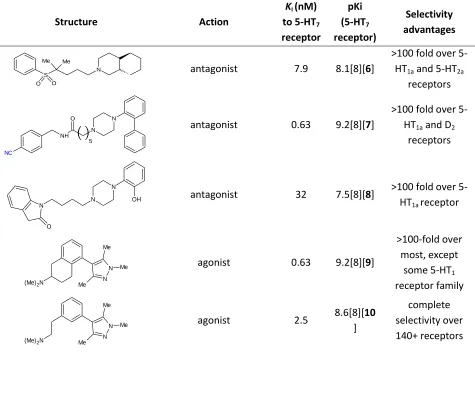
predictions of these models. Table 2-1 shows a few compounds whose affinity can be described by these
pharmacophores. The compounds listed show features of many previous 5-HT7 receptor ligand classes.
These efforts are continued, as detailed in the next chapter, with the synthesis of a series of compounds
which combines the most advantageous groups from each of the previously published ligand classes, as
Table 2-1. A few compounds with high affinity and selectivity to 5-HT7 are listed. This affinity is due to optimized interactions
between the ligands and the binding site, as described by the above pharmacophore models.
Structure Action
Ki (nM) to 5-HT7 receptor pKi (5-HT7 receptor) Selectivity advantages S Me Me O O
N antagonist 7.9 8.1[8][6]
>100 fold over 5-HT1a and 5-HT2a
receptors NC NH O N N 5
antagonist 0.63 9.2[8][7]
>100 fold over 5-HT1a and D2
receptors
N
N OH
N
O
antagonist 32 7.5[8][8] >100 fold over 5-HT1a receptor
(Me)2N
N N Me
Me
Me agonist 0.63 9.2[8][9]
>100-fold over most, except
some 5-HT1 receptor family
(Me)2N
N N Me
Me
Me agonist 2.5
8.6[8][10 ]
complete selectivity over 140+ receptors
2.3 Current 5-HT7 receptor ligands
Using the models and projections described in the previous section, as well as other methods,
several thousands of 5-HT7 receptor ligands have been designed and synthesized. These compounds
represent many different classes of 5-HT7 receptor ligands. These ligands are the result of decades of
research, which has been reviewed by Leopoldo [66]. This review contains a detailed account of how
modifications to ligands as they developed. These strategies are summarized, including only the most
successful strategies and methods used to develop these ligands.
When the 5-HT7 receptor was characterized, the only known ligand was its natural ligand, serotonin.
This led several investigators to use serotonin as a scaffold for further modifications. These studies
attempted to explore the binding site of the 5-HT7 receptor by expanding the natural ligand to test the
spatial limits of the binding site. These studies relied on the 5-HT structure as a scaffold for
modifications which would relay information about the nearby binding site structure. While compounds
designed by this method had very limited success in physiological studies, they exhibited some affinity
to the 5-HT7 receptor. These ligands always showed higher affinity to other receptor subtypes making
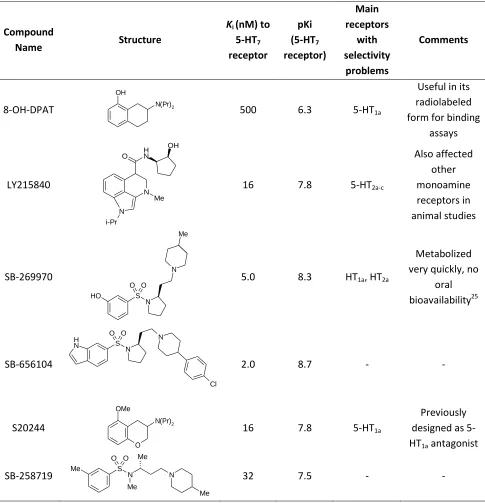
Table 2-2. Previously synthesized 5-HT7 receptor ligands. These compounds were important in the evolution of
pharmacophores and the understanding of the 5-HT7 receptor binding site. There is still room for improvement of these ligands, as noted in the far right.
Another strategy utilized in the early stages of 5-HT7 receptor ligand development involves testing
ligands for other receptor subtypes for affinity to the 5-HT7 receptor. These studies showed that
25
bioavailability – a measure of the percentage of a dosage which enters systemic circulation. Considerations relating to bioavailability include metabolism and absorption into the bloodstream
Compound
Name Structure
Ki (nM) to 5-HT7 receptor pKi (5-HT7 receptor) Main receptors with selectivity problems Comments
8-OH-DPAT N(Pr)2
OH
500 6.3 5-HT1a
Useful in its radiolabeled form for binding
assays LY215840 OH N H N N i-Pr O Me
16 7.8 5-HT2a-c
Also affected other monoamine receptors in animal studies SB-269970 O H S N N O O Me
5.0 8.3 HT1a, HT2a
Metabolized very quickly, no
oral bioavailability25 SB-656104 S N O O N H N Cl
2.0 8.7 - -
S20244
O N(Pr)2 OMe
16 7.8 5-HT1a
Previously designed as 5-HT1a antagonist
SB-258719 Me S N
O O
Me
N
Me Me
compounds thought to be selective to other receptor subtypes, such as 8-OH-DPAT, also showed affinity
to the 5-HT7 receptor [87]. This affected years of research on the 5-HT1a receptor, and immediately
implicated the 5-HT7 receptor in many processes previously thought to be mediated specifically by the
5-HT1a receptor [88-89]. Later studies would repeat this strategy by using existing ligands to other
receptors as leads for new 5-HT7 receptor ligands. In this manner, ergolines were used to explore the
5-HT7 receptor binding site. Optimization of these compounds led to LY-215840, as well as many others
which showed high affinity to the 5-HT7 receptor [90]. Guillamet also used ligands to other 5-HT
receptors as leads, such as S20244, which were modified to yield compounds showing high affinity to
the 5-HT7 receptor [91]. These studies expanded the pool of high affinity 5-HT7 receptor ligands.
However, the major drawback of this approach is the difficulty in achieving selectivity over the receptor
for which the lead compound showed affinity. Indeed all compounds derived from 5-HT1 and 5-HT2
receptor ligands showed lower affinity to the 5-HT7 receptor than the original receptor.
The first studies on binding site structure were used in research such as that resulting in a patent
published by SmithKline Beecham [92]. The authors used high-throughput screening (HTS) methods to
identify a lead for the first novel class of 5-HT7 receptor antagonists, sulfonamides. This study optimized
a series of sulfonamides yielding SB-258719 which exhibited modest affinity and selectivity to the 5-HT7
receptor. The sulfonamides were optimized further, resulting in SB-269970, which has been widely used
for in vitro research. Although this compound was a significant breakthrough, SB-269970 showed no
oral bioavailability and was shown to be metabolized almost immediately in vivo. Resulting metabolism
research indicated this may be due to the nature of the cyclic amine (instead of the phenolic group, as
initially thought). This prompted modifications to the cyclic amine and resulted in the introduction of an
arylpiperazine to the sulfonamide class of compounds. The arylpiperazine moiety has since been seen
throughout several ligand classes due to its affinity to the receptor. Arylpiperazine analogs, namely
higher affinity and selectivity than its predecessors, with only selectivity to 5-HT1 and 5-HT2 receptor
subtypes remaining problematic. A large library of arylpiperazine 5-HT7 receptor ligands have been
synthesized in order to optimize the selectivity over these receptors and are discussed in the following
sections.
After a decade of research developing new ligands and analyzing their binding profiles, the binding
site of the 5-HT7 receptor has become more precisely defined. Pharmacophore studies mentioned
previously are testament to this and the general structure is thought to include aromatic/hydrophobic
regions, hydrogen bond acceptors, a hydrophobic linker region and an interaction with a protonated
amine. With a significant amount of information about the 5-HT7 receptor, it is now possible to rely less
on information gleaned from other receptors. Research has become focused on optimizing the
pharmacophore for antagonism and agonism, as is reflected by recent publications at this time.
Additional computational methods are now available, including homology modeling of the receptor site
due to available crystal structures of rhodopsin and α2 adrenergic receptors. In this manner,
investigators focused on analyzing each region of the pharmacophores to present novel leads through
HTS, classes through lead optimization, and selective ligands through pharmacophore optimization.
The optimization of several classes of compounds has yielded several novel selective antagonists and at
least one selective agonist. Currently, many successful ligands to the 5-HT7 receptor have been
developed from leads representing many different classes of compounds. These are summarized in
Table 2-2. Each of these compounds has drawbacks and advantages but to date there is no universal
5-HT7 receptor ligand which possesses all advantageous properties necessary for complete physiological
profiling. The available binding requirements are used to design ligands with better pharmacological26
attributes, affinity and selectivity over other subtypes.
26
3 SYNTHESIS
3.1 Synthesis of substituted pyrimidines as a diverse set of 5-HT receptor ligands
Initial studies on pyrimidine ligands demonstrated that pyrimidines exhibit high affinity to 5-HT
receptors [93]. Pyrimidines are an optimal moiety for synthesizing a diverse set of substituted
arylpiperazine compounds, as shown in Scheme 1. This synthetic pathway has demonstrated to be
effective in synthesis of substituted pyrimidines [1,2]. The commercially available pyrimidines 1a-c were
used as starting materials in the synthesis of a novel library of 5-HT receptor ligands. Pyrimidines
undergo a nucleophilic attack at the partially positive 2-, 4-, and 6- positions when treated with carbon
nucleophiles, which makes these compounds an attractive scaffold for introducing variable substituents
to the aryl ring. Additionally, the use of 2-chloropyrimidines 1a-c allow for the substitution to proceed
exclusively at the 4/6-position. This is accomplished by performing the nucleophilic addition to the
aromatic ring at low temperatures. These conditions ensure the reaction proceeds through addition at
the 4/6-position as opposed to the substitution of chlorine at the 2-position of pyrimidine, due to the
size of the 2-chloro substituent. The substitution product was not observed as a product of any
reaction. A diverse library of 4- and 4,6- substituted 2-chloropyrimidines 3a-f were synthesized by
nucleophilic addition of nucleophiles at low temperatures. The nucleophiles were either commercially
available or generated in situ . This was achieved either by the abstraction of an acidic hydrogen or a
lithium-halide exchange using a lithiated base, most commonly n-butyllithium. During the dropwise
addition of the appropriate chloropyrimidine dissolved in dry THF, the temperature was kept at -78: C.
The temperature was then slowly raised until no starting material was detected by TLC. After
completion, the mixture was slowly quenched with a water/THF solution. The resulting dihydro
basic workup using 1M sodium hydroxide in order to remove excess DDQ followed which allowed for
the extraction of substituted pyrimidines 3a-f into an ethereal solution. Compounds 3a-f were then
isolated by preparative chromatography using a chromatotron and a mobile phase of
hexanes/dichloromethane (typically 4:1) The substitution product was not observed as a product of any
reaction. The substitution product was not observed as a product of any reaction.. Addition to
substituted pyrimidines is also possible, such as shown in the synthesis of 4f. Yields of the addition were
in the range of 44-59% which is typically lower than previously reported for alkyl substitutions. In the
previous paper which details aryl substitutions to pyrimidine [2], the yields were comparable to those
found here.
A subsequent nucleophilic aromatic substitution of the chlorine provides facile entry to compounds
4a-g. This aromatic nucleophilic substitution has typically been carried out in ethanol, although the
compounds reported showed higher yields when carried out in toluene. In cases where toluene was
dried using sodium metal prior to the reaction, yields were often significantly higher. This substitution
was effected by treating the appropriate chloropyrimidine 3a-f with an excess of N-methylpiperazine.
The mixture was heated under reflux in toluene until the starting material was no longer detected by
TLC. The products were then separated into ether and purified on the chromatotron yielding
compounds 4a-g. The conditions of this reaction were not optimized further and resulted in yields of
N N Cl R1 R2 N N H Cl R1 R2 R3 N N Cl R1 R2 R3 N N N R1 R2 R3 N Me 2
1a-c 3a-f 4a-g
1. R3-Li
2. H2O
DDQ N-methylpiperazine
Scheme 1.
Compound R1 R2 R3 Starting
material
Yield (%)
1a H H - - -
1b H n-propyl - - -
1c Cl H - - -
3a H H t-butyl 1a 44
3b [2] H H O 1a 57
3c H H
OEt 1a 40
3d [94] H H 1a 59
3e H H 1a 58
3f H n-propyl O 1b (17)
4a H H sec-butyl 1a 32
4b H H t-butyl 1a 52
4c H H O 1a 53
4d H n-propyl H 1b 82
4e H n-propyl O 1b 44
4f n-butyl n-propyl O 3f 73
4g N N Me H
O
3.2 Synthesis of substituted pyrimidines by 1,4 addition to vinyl-substituted pyrimidines
To further examine affinity increases seen by compounds with a hydrogen bond acceptor in a
position analogous to that of the oxygen in 4-(3-furyl)-2-(piperazino)pyrimidine, the series of substituted
pyrimidines was further explored. The addition of a nucleophile to vinyl substituents, such as found in
3d and 3e was achieved both before and after the substitution of chlorine. In the case of compounds
containing a vinyl moiety such as 3d and 3e, it was observed treatment with an excess of a nucleophilic
species resulted in both substitution of the chlorine and conjugate addition to the vinyl moiety. The
conjugate addition of nucleophiles to pyrimidines has only been reported recently [5] despite the great
potential for synthetic applications. The competing substitution reaction allowed for us to observe the
relative reactivity of the vinyl groups during conjugate addition. When Grignard reagents were
employed in the presence of copper(I) iodide, the substitution product was not observed. In all other
cases, some amount of the substitution product was observed, though typically the 1,4-conjugate
addition was the major product. Only in the case of nucleophiles sodium methoxide and sodium
ethylthiolate was there no major product. In the case of sodium methoxide addition, the substitution
product, the conjugate addition product, and the diaddition product were observed in 19-22% yields.
Reaction with sodium ethylthiolate only produced significant yields of the diaddition product when
treated in excess, otherwise, low yields and many product resulted. Treatment of the pyrimidines with
the nucleophiles typically occurred in refluxing toluene with the exception of Grignard reagents, which
were used at low temperatures. Although first attempted with a catalytic amount of copper (I) iodide,
the optimal ratio of Grignard reagent to copper iodide was determined to be 2:1. The appropriate
pyrimidine was then added and the mixture was stirred. These reactions were quenched after the
presence of starting material was no longer detected by TLC. The products of these reactions were
products were analyzed for nucleophilic aromatic substitution and diaddition products. Similar
treatment of compounds with electron donating groups did not undergo the analogous conjugate
addition and resulted only in the substitution product. This is exemplified by compounds 3c and 4c.
Resulting arylpiperazine compounds are summarized by Scheme 2 and listed in the table below. This
synthetic pathway is especially helpful in the optimization of 5-HT7 receptor ligands as it addresses the
necessity of a hydrogen bond acceptor in compounds such as 6i. Modifications of this group have
supported current hypotheses about the nature of this interaction. Further study may reveal additional
information unique to the 5-HT7 receptor resulting in a ligand with increased selectivity..
N N Cl R N N Cl R Nu N N R Nu N N Me
Nu- or NuH N-methylpiperazine
toluene Scheme 2.
3d, 3e 5a (25%): R = Ph, Nu = OMe
5b (61%): R = Ph, Nu = Ph 6a-n
Synthesized under the direction of Dr. Lucjan Strekowski by Elizabeth Rauxa or Ava Blake.b
3.3 Synthesis and facile modification of 2-chloro-4-(acetyl)pyrimidine
Although compound 3c did not undergo conjugate addition, as with other pyrimidines with a vinyl
moiety, further modifications to this substituent were available. The resulting analogs are summarized
in Scheme 3. As shown, 3c can be hydrolyzed to 4-acetylpyrimidines in high yields, such as 7. This was
Compound Nucleophile R Yield (%)
6a HN N Me H 22
6b NH2
Ph 57
6c EtS-Na+ Ph 37
6da Me2NH H 55
6eb n-BuNH2 H
6fb t-BuNH2 H
6ga NH2
H 62
6hb HN N H
6ia MeO-Na+ H 55
6ja EtS-Na+ H 25
6kb
S-Na+
H
6l MeMgBr Ph 39
6ma MeMgBr H 56
achieved by treatment of either 3c or the substitution product 2-(N
-methylpiperazino)-4-(1-ethoxyvinyl)pyrimidine with 10% methanolic HCl. The acidic mixture was stirred at room temperature
until the presence of starting material was no longer detected. The hydrolysis of 3c was performed prior
to the substitution with N-methylpiperazine in order to avoid forming salts of the products during the
reaction. For all products 5 and 6a-c, compound 3c was hydrolyzed before the nucleophilic aromatic
substitution of chlorine as before. This gave the acetyl compound 8 which is highly functionalizable and
gives access to a diverse set of ligands such as compounds 9a-c in yields comparable to those previously
reported. As with compounds 6a-6c, this synthesis allows for a heteroatom to be inserted into the
analogous position of previous high affinity 5-HT7 ligands. Examining the affinity of these compounds
will give further information on the nature of binding site interactions with currently available ligands.
This information will lead to further optimizations.
Compounds 9a-c were synthesized by treatment of 8 with the appropriate hydroxylamine or hydrazine
compounds. This reaction was carried out in refluxing methanol with potassium carbonate. After no
starting material remained, the products were extracted into ether and purified on a chromatotron. The
aim was to synthesize both E and Z stereoisomers of compounds 9a-c by varying the size of the base
used in the reaction, but this was not the case [95]. Compound 9a was synthesized using both sodium
hydroxide and sodium acetate as the base. The 1H NMR spectra for both products were identical,
indicating that only one isomer was synthesized. In order to determine which isomer was synthesized,
the structure of compound 9a was analyzed by NOESY. No crosspeaks between the hydroxyl group and
the aromatic proton or methylene protons of the piperazine were observed. Crosspeaks in the spectra
are seen between the protons of adjacent methylene protons of the piperazine. While the absence of
expected crosspeaks correlating to the Z-isomer structure may be due to proton exchange with the
solvent, compounds 9a-9c are assumed to exist exclusively as E-isomers. This is in accordance with their
N N Cl OEt N N Cl Ac N N N Ac N Me N N N N Me N
Me X R
H+ N-methylpiperazine
toluene Scheme 3.
N-X-R
K2CO3
3c 7 8 9a-c
59% 70%
Compound X R Yield (%)
9a O H 76
9b N H 76
9c O Et 29
3.4 Synthesis of 5-HT7 receptor ligands with piperazine extensions
In addition to synthesizing analogs with substitutions at positions around pyrimidine, it is prudent to
further explore the binding site of the 5-HT receptors by extending the piperazine substituents.
Previous studies have shown that extending these ligands result in active compounds. Indeed, some of
the most active and selective compounds belong to the class of long chain aminopiperazines, as
classified by Kolaczkowski [77]. It is also hypothesized that by increasing the size of the ligands, the
interactions with the binding site can be maximized. This should have the effect of increasing selectivity
as well as affinity. These compounds were synthesized by treating the highly active 2-chloropyrimidine
3b with several commercially available N-substituted piperazines. This substitution yielded compounds