Citation:
Bywater, T and Berry, V and Blower, S and Cohen, J and Gridley, N and Kiernan, K and Mandefield, L and Mason-Jones, A and McGilloway, S and McKendrick, K and Pickett, K and Richardson, G and Teare, D and Tracey, L and Walker, S and Whittaker, K and Wright, J (2018) Enhancing Social-Emotional Health and Wellbeing in the Early Years (E-SEE): A Study Protocol of a Community-based Randomised Controlled Trial with Process and Economic Evaluations of the Incredible Years Infant and Toddler Parenting Programmes, delivered in a Proportionate Universal Model. BMJ Open. ISSN 2044-6055 DOI: https://doi.org/10.1136/bmjopen-2018-026906
Link to Leeds Beckett Repository record: http://eprints.leedsbeckett.ac.uk/5486/
Document Version: Article
Creative Commons: Attribution-Noncommercial 4.0
The aim of the Leeds Beckett Repository is to provide open access to our research, as required by funder policies and permitted by publishers and copyright law.
The Leeds Beckett repository holds a wide range of publications, each of which has been checked for copyright and the relevant embargo period has been applied by the Research Services team.
We operate on a standard take-down policy. If you are the author or publisher of an output and you would like it removed from the repository, please contact us and we will investigate on a case-by-case basis.
Enhancing Social-Emotional Health and Wellbeing in the Early Years (E-SEE):
A Study Protocol of a Community-based Randomised Controlled Trial with Process and Economic Evaluations of the Incredible Years Infant and Toddler Parenting Programmes, delivered in a Proportionate Universal Model
Corresponding Author: Professor Tracey Bywater Department of Health Sciences University of York
York
[email protected] tel: 01904 328105
Co-Authors:
Vashti Berry, University of Exeter Medical School, Exeter, UK
Sarah Blower, Department of Health Sciences, University of York, York, UK Judith Cohen, Hull Health Trials Unit, University of Hull, Hull, UK
Nicole Gridley, Carnegie School of Education, Leeds Beckett University, York, UK
Kathleen Kiernan, Department of Social Policy and Social Work, University of York, York, UK Laura Mandefield, Clinical Trials Research Unit (CTRU), University of Sheffield, UK
Amanda Mason-Jones, Department of Health Sciences, University of York, York, UK
Sinéad McGilloway, Centre for Mental Health and Community Research, National University of Ireland, Maynooth, Ireland
Kirsty McKendrick, Clinical Trials Research Unit (CTRU), University of Sheffield, UK Kate Pickett, Department of Health Sciences, University of York, York, UK
Gerry Richardson, Centre for Health Economics, University of York, York, UK
Dawn Teare, School of Health and Related Research (ScHARR), University of Sheffield, UK Louise Tracey, Department of Education, University of York, York, UK
Simon Walker, Centre for Health Economics, University of York, York, UK Karen Whittaker, School of Nursing, University of Central Lancashire, UK Jessica Wright, Clinical Trials Research Unit (CTRU), University of Sheffield, UK
Keywords:
Parent programmes, social emotional wellbeing, randomised controlled trial, proportionate universalism, infant/toddler, Incredible Years
ABSTRACT Introduction:
Behavioural and mental disorders have become a public health crisis and by 2020 may surpass physical illness as a major cause of disability. Early prevention is key. Two Incredible Years parent programmes that aim to enhance child wellbeing and development, IY-Infant and IY-Toddler, will be delivered and evaluated in a proportionate universal intervention model called E-SEE Steps. The main research question is: Does E-SEE Steps enhance child social emotional wellbeing at 20 months when compared to services as usual?
Methods and analysis:
E-SEE Steps will be delivered in community settings by Early Years Children’s Services and/or Public Health staff across local authorities. Parents of children aged 8 weeks or less, identified by health visitors, children’s centre staff, or self-referral, are eligible for participation in the trial. The randomisation allocation ratio is 5:1 (intervention to control). All intervention parents will receive an Incredible Years Infant book (universal level), and may be offered the Infant and/or Toddler group-based programme/s - group-based on parent depression scores on the Patient Health Questionnaire (PHQ-9) or child social emotional wellbeing scores on the Ages and Stages Questionnaire – Social Emotional (ASQ:SE-2). Control group parents will receive services as usual. A process and economic evaluation are included. The primary outcome for the study is social emotional wellbeing, assessed at 20 months, using the ASQ:SE-2. Intention-to-treat and per protocol analyses will be conducted. Clustering and hierarchical effects will be accounted for using linear mixed models.
Ethics and dissemination:
ARTICLE SUMMARY
Strengths and Limitations of this study
• Very few studies apply a proportionate universalism approach reflecting real world provision of services for families of very young children; within the E-SEE intervention arm there are three levels of intervention, and four possible ‘doses’ of intervention according to need.
• The study includes an economic and process evaluation, alongside the effectiveness evaluation.
• The design and implementation of this trial was informed by a large randomised pilot study involving two research sites, over 200 families, and involving parent advisory committees.
• The study is inclusive of parents (typically fathers) and will provide insights into the role of co-parents in shaping children’s social and emotional development.
INTRODUCTION
Behavioural and mental disorders have become a public health crisis and by 2020 may surpass physical illness as a major cause of disability. Early intervention and prevention of mental health and behavioural issues is more effective, and less costly, than late interventions.[1] Child mental health issues are associated with significant costs to the individual and society and are associated with both short- and long-term negative outcomes (e.g. failure to thrive, school difficulties, drug/alcohol problems, juvenile delinquency, aggressive behaviour, adult mental health issues, ineffective relationship building, criminal activity), as well as becoming a young parent with the possibility of intergenerational transmission.[2-4] There are clear benefits to parents, children and their families of reducing the potential for such difficulties to emerge, by improving the home environment, parenting skills, positive parent-child interactions, and understanding of child development and safety issues.[1, 5]
Recent UK policy and guidance highlight the importance of improving health and wellbeing in children, with an emphasis on a whole family approach including fathers and grandparents in an integrated proportionate approach.[6-8] NICE (National Institute for Health and Care Excellence) guidance further suggests that the social and emotional wellbeing of vulnerable young children should be tackled through home visiting, early education and childcare.[9] Several Cochrane reviews have highlighted the effectiveness of group-based parent programmes to promote child and parent wellbeing (3yrs+),[5] and a review of programmes for 0-3 year-olds calls for more research with younger age groups.[10] Investment in evidence-based, early years intervention has the potential for long-term effects which will benefit wider society with attendant long-term cost benefits.[1]
Although there is significant policy interest and increasing research in this area, the evidence gap identified by NICE still exists. For example, the recent ‘Building Blocks’ Trial in England investigated a nurse-led intensive home-visitation programme - called the Family Nurse Partnership (FNP)[11] - to evaluate the impact on infant and maternal outcomes up to 24 months after birth. The results showed that the FNP provided no additional short-term benefits with respect to the primary outcomes assessed in the trial.
The Incredible Years (IY) parent programmes (www.incredibleyears.com) are manualised parent education and training interventions which include group-based components and parent and facilitator books and materials. IY is informed primarily by social learning theory and designed to enhance the social and emotional wellbeing of children aged 0-12 years. There is growing evidence of the cost effectiveness of the IY parent programmes,[12-14] as well as concomitant reductions in health, social and education service utilisation.[15, 16] The IY Infant (IY-I) and Toddler (IY-T) versions, for 0-1 and 1-3 year olds respectively, build on decades of development and research evidence of the IY (3-years+) programmes, but have not yet been rigorously evaluated in a UK, targeted, community-based trial. IY has the capacity to be delivered in a proportionate universalism model of varying doses according to need, and this study will be the first to evaluate such an approach in the form of our ESEE Steps model.
Aims and objectives
The study comprises two phases including: (1)a pilot trial; and (2) a definitive randomised controlled trial (RCT).
The main, definitive, RCT is designed to: (a) establish the effectiveness of the IY programmes on clinical outcomes; (b) assess cost-effectiveness; and (c) evaluate the processes around service delivery. Therefore, the main objectives and key questions of the trial are as follows:
Does E-SEE Steps enhance child social emotional wellbeing at 20 months of age when compared to services as usual?
Is IY, and the proposed delivery model, cost-effective in enhancing child social emotional wellbeing at 20 months when compared to services as usual?
Can IY can be delivered as a proportionate universalism model, and what are the organisational, or systems-level, barriers and facilitators to delivering in this way, with fidelity? METHODS AND ANALYSIS
Design
A pragmatic two-arm RCT and economic appraisal, with an embedded process evaluation to examine the outcomes, implementation and cost-effectiveness of the intervention, as well as uptake by parents.
Setting
Participating trial sites (Local Authorities) will not be offering IY-I or IY-T as part of usual services and should have sufficient live birth rates to support recruitment targets.
Intervention
The E-SEE Steps model includes two IY programmes - IY-I and IY-T for parents of children aged 0-1 and 1-3 years of age respectively. Both programmes are delivered in a universal proportionate framework, to match varying parent-infant needs at different time points. All intervention parents will receive an IY-I book (universal level). Intervention parents may then be offered the IY-I (10-weeks, 2 hours/week) and/or IY-T (12 weeks, 2 hours/week) group-based programme - based on a pre-defined threshold on the PHQ-9 and/or the ASQ:SE-2. Figure 1 depicts the proportionate universal approach of E-SEE Steps. Figure 1: E-SEE Steps
(insert Figure 1 here)
Delivery of IY-I and IY-T will take place in local community settings such as children’s centres, with group sizes of up to 10 parents for IY-I and 14 parents for IY-T. Sessions will be delivered by two co-facilitators - a health professional (e.g. health visitor, infant mental health practitioner, speech and language therapist) and/or early years children’s services’ (or LA commissioned) staff (e.g. children centre worker or family support worker). Staff will be trained by accredited IY trainers. All intervention participants will have access to services as usual.
Controls
Control group parents will receive services as usual. Participants
supplementary files 1 and 2 for the information sheet and consent form). Consenting parents can invite a co-parent who shares parenting responsibilities into the trial, so that we can explore the impact of co-parents on child wellbeing. The flow of participants through the trial is detailed in Figure 2.
Figure 2: Participant Flow (insert Figure 2 here)
Inclusion and exclusion criteria for E-SEE Trial
Inclusion criteria: Parents will be included if they consent to participate, have a child aged 8 weeks or under, be willing to be randomised and, if allocated to intervention, be able to receive the IY services offered.
Exclusion criteria: Child has obvious, or diagnosed, organic developmental difficulties. Parent is enrolled on another group parent programme at sign-up.
Randomisation and Allocation
Randomisation will be performed using a web-based randomisation system. Parents will be randomly allocated to intervention or control arms on a 5:1 ratio stratified according to level of need at baseline based on parent PHQ-9 or child ASQ:SE-2 score, gender of child and parent, and recruitment site. The co-parent will automatically receive the same allocation as the randomised parent.
Methods to reduce bias
Participants, IY facilitators, and some of the study team, will not be blind to allocation. Data collectors will be blind to participant allocation (parents will be asked not to share their allocation status) – as will participant referrers, the Chief Investigator, the team statistician (until final analysis), the Trial Steering Committee (TSC) and Trial Management Group (TMG).
Families will receive shopping vouchers of a modest amount (increasing at each data collection point to retain participants) as a token of thanks for completing measures.
Primary analysis will be intention to treat (ITT); once randomised, participants will remain within their allocated group for analytical purposes even if they cross-over to the other study arm, or drop out. Sample size calculations
Sample size is calculated on the child primary outcome of social emotional wellbeing - the Ages and Stages Questionnaire: Social and Emotional 2nd Edition (ASQ:SE-2).[17] We define the clinically important difference at follow-up 3 (18 months post baseline) to be 5 units of the ASQ:SE-2 in the IY group when compared to Services as Usual (SAU). Assuming a SD value of 18 on the ASQ:SE-2 at follow-up 3, the correlation between baseline and follow-up 3 is 0.26 and between pairs of measurements after baseline is 0.40, the design effect of 1.25 for the IY arm, two sided 5% significance level and 90% power we would require to have retained at follow-up 3 441 in IY and 92 in SAU. Allowing for 12% overall attrition, 606 should be randomised with an allocation ratio of 5:1 – to ensure sufficient parents (an expected total of 48) are eligible and able to attend IY groups.
Outcome Measures
Table 1: Overview of measures
Outcomes & timepoints Measures Description BL Fu1 Fu2 Fu3 Social & emotional well-being ASQ:SE-2 Parent self-report √ √ √ √ Parent or co-parent depression PHQ-9 Parent/co-parent self-report √ √ √ √
Attachment CARE Index Parent Observation √ √ √ √
Service use CSRI** Data collector administered √ √ √ √ Parenting skill PSOC Parent/co-parent self-report √ √ √ √ Parent or co-parent health EQ5D-5L Parent/co-parent self-report √ √ √ √ Demographics Bespoke form Data collector administered √
Short demographics Bespoke form Data collector administered √ √ √ Child health (& quality of life) PEDSQL Parent/co-parent self-report
Attachment MPAS/PPAS* Parent/co-parent self-report √
Child behaviour SDQ Parent/co-parent self-report √
*PPAS to be used if father is the parent or co-parent
** The CSRI description presented on p. 42 is taken from the original CSRI paper – for the E-SEE trial we are using a revised, much shorter version, hence the variability in timings.
Average times to complete based on previous research carried out with similar populations by members of the research team
Child primary outcome
Social and emotional wellbeing: The parent-completed ASQ:SE-2[17] can be used for children aged 1-72 months (with age-appropriate versions), and covers 6 key social and emotional development areas: self-regulation, compliance, adaptive functioning, autonomy, affect, social-communication, and interaction with people. The measure is psychometrically sound with: a test-retest reliability of 89%; internal consistency of 84%; sensitivity is of 81%; ,and specificity of 84%. The ASQ:SE-2 takes 5-10 minutes to complete and will be used here, along with the PHQ-9 (see below), to assess eligibility for? both the IY-I and IY-T groups
Child secondary outcomes
Attachment/Interaction: Independent observation of parent-child interaction will be undertaken using the CARE Index Infant/Toddler,[18] which is suitable for children aged 1-48 months. Three-to-five minutes of play is video recorded and later coded using an interaction classification scheme to assess global synchrony (i.e. ‘At Risk’; ‘Intervention’; ‘Adequate’ and ‘Sensitive’), parent attachment and child attachment over seven subscales. Inter-rater reliability is 0.75 for four of the seven subscales.
Cognitive development and Health (quality of life): The parent-completed PEDsQL Infant is a 45-item questionnaire for parents with infants aged 13-24 months.[19] The measure has demonstrated internal consistency reliability for total scores (0.92) and is able to distinguish between healthy infants and those with acute and chronic illnesses.[20] It takes 10 minutes to complete.
Child Behaviour: The Strengths and Difficulties Questionnaire 2-4 version (SDQ)[21] is a 25-item widely used questionnaire designed for parents of children aged 2 to 4 years old. Research has shown good internal consistency for each of the five subscales and the overall ‘Total Difficulties’ score with this age group.[22] This measure takes 10 minutes to complete.
Parent primary outcome
The PHQ-9 has established good diagnostic validity evidencing 88% sensitivity and specificity for major depression.[23] Cronbach alphas of 0.86 to 0.89 demonstrate good internal reliability, with a test re-test reliability at 0.84.[24] The PHQ-9 takes 5 minutes to complete and will be used to assess eligibility to both IY-I and IY-T groups, along with the ASQ:SE-2.
Parent secondary outcomes
Maternal/paternal-child attachment/interaction: The Maternal Postnatal Attachment Scale (MPAS),[24] and the Paternal Attachment Scale (PPAS)[25] contain 19 self-complete items developed to assess parent attachment to their infant. The MPAS has evidenced good internal consistency (0.78 to 0.79), high test-retest reliability (0.086) and good stability over time.[24] For PPAS internal consistency alpha levels are 0.62 to 0.81, with correlation coefficients 0.65 to 0.70, and exemplary convergent validity. M/PPAS takes 10 minutes to complete.
Parenting skill: The Parenting Sense of Competence questionnaire (PSoC) has 17 self-complete items to assess parenting self-esteem.[26] The measure has two subscales, related to parent satisfaction and parent self-efficacy. Internal consistency for the PSoC shows Cronbach’s alpha coefficients 0.70.[26] The PSoC takes 5-10 minutes to complete.
Health (quality of life:) The EQ5D5L[27] a 5-item, self-complete measure that provides an index relating to quality of life over five domains; mobility, ability to self-care, ability to undertake usual activities, pain and discomfort, anxiety and depression, plus a visual analogue scale. The EQ5D5L has been validated in several countries, including the UK.[28] The EQ5D5L takes 5-10 minutes to complete. Other Outcomes
Demographic information will be captured via a bespoke structured interview form, including; age, ethnicity, religion, income, marital status, parent/co-parent education, housing and family composition.
Further economic evaluation outcomes: Resource use and costs based on access to health, social and educational services by parents and children as self-reported by parents using a modified Client Service Receipt Inventory (CSRI)[29]. Costs of intervention delivery will be gathered via implementation staff and existing data sources.
Process evaluation: The embedded process evaluation will involve the completion of: weekly facilitator logs to record parental receipt of the IY-I book, and IY-I/IY-T attendance and contact rates; weekly self-rated IY checklists to assess adherence to core components; a researcher-rated Parent Programme Implementation Checklist (PPIC) exploring adherence, quality of delivery and participant responsiveness;[30] and IY Parent Satisfaction Questionnaires (modified for UK audience in collaboration with the IY developer) completed after each session, and at the end of each programme. Statistical Analysis
Statistical analyses will be conducted using validated statistical software packages. ITT and per protocol analyses will be conducted.
Treatment effectiveness
occurs in the control arm. We will adhere to the most recent publication guidelines on the analysis of cluster-randomised trials.[31] Baseline outcome measures will also be included as covariates. Missing data will be reported and multiple imputation will be used to impute missing values in the primary outcome.
Subgroup analyses will allow us to consider issues of inequalities and will include, for example, socioeconomic status, ethnicity, sex of primary caregiver, birth order of included child, and co-parent outcomes to establish for whom the intervention works best, using mediator and moderator analyses. Process Evaluation/ Treatment processes
Service design support will facilitate the implementation of E-SEE Steps in each site, including evidenced-based strategies for engagement, retention and multi-agency working.[32] A service design manual for E-SEE Steps will be produced outlining programme theory, core components and intervention delivery.
A multi-method approach will assess fidelity of delivery, explore parents’, facilitators’ and service managers’ experiences of E-SEE Steps as well as the organisational, team and individual factors that facilitate or hinder its implementation. Quantitative monitoring data (see outcome section for details) will be collected for all IY-I and IY-T groups.
Additionally, facilitators will complete online questionnaires before attending training in IY and again after completing delivery of the programme/s. The pre-training questionnaire will assess facilitators’ qualifications existing experience of parenting groups and working with families, as well as perceived competence to deliver the programme and perceived organisational support. The post-delivery questionnaire will supplement the qualitative data on facilitators’ experiences of delivering IY-I/IY-T. All quantitative data will be reported descriptively.
Qualitative data will be gathered by means of 12 focus groups – half with intervention parents/co-parents and half with IY group facilitators - as well as 12 semi-structured interviews with public health and children’s services managers. The focus groups and interviews will be undertaken on completion of intervention delivery in each site to avoid potentially influencing the impact of the intervention. All interviews and focus groups will be audio recorded (with consent) and transcribed. Thematic analysis will be used to analyse qualitative data. Reporting of qualitative findings will adhere to the consolidated criteria for reporting qualitative research (COREQ).[33]
Economic evaluation
Cost-effectiveness analyses and cost-consequence analyses will be conducted. The latter technique is useful in the evaluation of interventions with multi-dimensional outcomes. Costs in both trial arms will be estimated from alternative perspectives,[34] including a NHS and PSS perspective (consistent with that used by NICE), [35] a wider public sector perspective and a societal perspective, which includes costs to participants.[36, 37]
appropriate finance departments of the resource provider. Costs and effects will be discounted at 3.5% per annum in line with national guidance.[35, 36]
The initial analysis will present incremental results for the primary outcome measures for both children (ASQ:SE-2) and adults separately (PHQ-9). These will be compared with the incremental costs measured from the alternative perspectives as above. Secondary outcomes in terms of Quality adjusted life years (based on PEDsQL for children and EQ-5D5L for adults) will also be considered. Alternative methods for combining different primary and secondary outcomes across children and adults and across outcomes will be explored to allow for a full assessment of the benefits, which can then be compared with costs. Links between trial outcome measures and longer-term outcomes (e.g. across health and education sectors) will be explored.
Probabilistic sensitivity analyses will be conducted to reflect the uncertainty around the adoption decision (depicted using cost-effectiveness acceptability curves).[36] Sensitivity analyses will be performed to determine the robustness of the results to altering certain assumptions; for example, changes in the assumed discount rate could influence the results.[36, 40]
Patient and Public Involvement (PPI)
During the preparation of the application for funding, three discussion groups were held, two with parents who had attended, or were currently attending, a parent programme, and one with parents who had not attended a programme. Their input was invaluable to the design of the study.[41] Four topics were discussed: recruitment to the study / engagement; retention of participants to parenting programmes; retention to study and data collection; and public involvement in research.
Parent peers were suggested as a means to engage and retain intervention participants to the programme/study. This was seen as particularly important to overcome barriers when engaging with fathers. Regarding data collection methods attendees suggested giving a choice to parents but should be face-to-face. The design has incorporated home-based or community-based (eg at a children centre) data collection visits. The setting up of a parent committee was recommended.
A parent committee will be set up to:
1. Assist parent engagement by holding pre-intervention sessions in community venues to discuss parent programmes - expectations, and potential benefits. Service users believed peer support important for engagement due to; mistrust of some professionals; anxiety in attending a programme/discussing feelings.
2. Input to the development of information/consent forms and other literature to enhance inclusivity through ease of understanding, particularly for parents with low literacy
3. Assist measure selection based on user-friendliness 4. Attend project steering group
5. Assist in training researchers in interview/data collection methods through role play activities 6. Organize a dissemination event for families to share results and encourage future programme
participation Ancillary sub-studies
Four sub-studies are planned to explore:
ETHICS AND DISSEMINATION
Ethics and Governance
Participants will be informed that their personal data will be peusdo-anonymised and related forms and questionnaires will be identified using a participant study number only. All hard copy data will be stored in a locked filing cabinet in accordance with data protection requirements for the retention of research data and study team institutional data management policies. Confidentiality would only be broken if required for safeguarding a vulnerable child or adult, with any action in accordance with the study site policies and procedures.
The ethical implications of obtaining data that may identify a participant as depressed, having suicidal thoughts, subject to domestic violence or potential child protection issues, require appropriate safeguarding procedures to prevent any potential harm. Research site policies also require the reporting of potential child protection issues. Thus, we will implement the following safeguards: 1. Debriefing procedures
2. Providing information about sources of treatment
3. Special provisions for participants reporting severe depression, suicidal thoughts or domestic violence, and potential child protection issues
4. Procedures for notifying adverse events.
The trial will follow appropriate Sheffield CTRU Standard Operating Procedures (SOPs), and also project-specific SOPs developed collaboratively with participating sites, the research team, and the PAC. A Data Management Plan details data storage and security standards and procedures.
Patient and public involvement is expected at all stages of the study. We will have a Parent Advisory Committee (PAC) in each study site, comprising parents with similar demographics to the intended participants. The PAC will advise and support both the study team and oversight committees about outcome tools, standard operating procedures (SOPs) recruitment, retention and dissemination of results.
The Trial Steering Committee (TSC) (including a lay member), Data Monitoring and Ethics Committee (DMEC) and a Trial Management Group (TMG) have oversight of the trial. The Data Monitoring and Ethics Committee is independent and comprises an expert in the parenting field, statistician and health economist. Procedures are in place to notify the trial team about any adverse events identified during the course of the study, which will be reported to the oversight committees and regulatory/funding bodies as required. Sheffield Clinical Trials Unit (CTRU) conduct monitoring of trial conduct in line with a standard operating procedure.
Data statement
Requests for participant level quantitative data and statistical codes should be made to the corresponding author and will be considered by members of the original TMG, including the chief investigator and members of Sheffield CTRU, who will release data on a case-by-case basis. Data will be shared in line with the principles for sharing patient level data as described by Smith et al.[42] The data will not contain any direct identifiers and we will minimise indirect identifiers and remove free text data to minimise the risk of identification.
Dissemination
national and international conferences, seminars and workshops; peer-reviewed publications; and other articles of professional interest. Knowledge exchange/translation events will be tailored to parents/major stakeholder groups including: policy makers, commissioners, service planners and managers, practitioners, researchers/academics.
Trial status
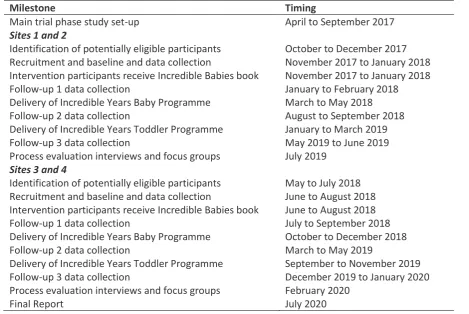
Table 2: Brief summary of study timeline
Milestone Timing
Main trial phase study set-up April to September 2017
Sites 1 and 2
Identification of potentially eligible participants October to December 2017 Recruitment and baseline and data collection November 2017 to January 2018 Intervention participants receive Incredible Babies book November 2017 to January 2018 Follow-up 1 data collection January to February 2018 Delivery of Incredible Years Baby Programme March to May 2018 Follow-up 2 data collection August to September 2018 Delivery of Incredible Years Toddler Programme January to March 2019
Follow-up 3 data collection May 2019 to June 2019
Process evaluation interviews and focus groups July 2019
Sites 3 and 4
Identification of potentially eligible participants May to July 2018 Recruitment and baseline and data collection June to August 2018 Intervention participants receive Incredible Babies book June to August 2018 Follow-up 1 data collection July to September 2018 Delivery of Incredible Years Baby Programme October to December 2018
Follow-up 2 data collection March to May 2019
Delivery of Incredible Years Toddler Programme September to November 2019 Follow-up 3 data collection December 2019 to January 2020 Process evaluation interviews and focus groups February 2020
Final Report July 2020
AUTHORS' CONTRIBUTIONS
All authors (TB,VB,SB,JC,NG,KK,LM,AMJ,SM,KM,KP, GR,DT,LT,SW,KW,JW); substantially contributed to the conception or design of the work, and/or the acquisition, analysis, or interpretation of data for the work, in addition to drafting the work or revising it critically for important intellectual content. All authors (TB,VB,SB, JC,NG,KK,LM,AMJ,SM,KM,KP,GR,DT,LT,SW,KW,JW) gave final approval of this version to be published and agree to be accountable for all aspects of the work in ensuring that questions related to the accuracy or integrity of any part of the work are appropriately investigated and resolved.
FUNDING STATEMENT
The E-SEE trial is funded by the National Institute for Health Research's Public Health Research Programme (NIHR 13/93/10).
The views expressed are those of the author(s) and not necessarily those of the NHS, the NIHR or the Department of Health and Social Care.
ACKNOWLEDGEMENTS
We would like to express our sincere thanks to all of the families who have participated in our PPI activities during the preparation of the application and to those involved in our study Parent Advisory Committee. Their input has been invaluable.
COMPETING INTERESTS STATEMENT
All authors, with the exception of Professor Tracey Bywater, declare no competing interests.
REFERENCES
1. Allen G. Early intervention: smart investment, massive savings, the second independent report to Her Majesty's government. London: The Stationery Office 2011:1-147.
2. Marmot M, Allen J, Goldblatt P, et al. Fair society, healthy lives (The Marmot Review final report). London: University College London 2010:1-242.
http://www.instituteofhealthequity.org/resources-reports/fair-society-healthy-lives-the-marmot-review/fair-society-healthy-lives-full-report-pdf.pdf (accessed 21 Aug 2018).
3. Marmot M, Bell R. Improving health: social determinants & personal choice. American Journal of Preventive Medicine, 2011;40(1):73-77.
4. Loeber R, Farrington DP. Young children who commit crime: Epidemiology, developmental origins, risk factors, early interventions, and policy implications. Dev Psychopathol
2000;12(4):737-62.
5. Furlong M, McGilloway S, Bywater T, et al. Behavioural/cognitive-behavioural group-based parenting interventions for children age 3-12 with early onset conduct problems. The Cochrane Library 2010:1-14.
https://www.cochranelibrary.com/cdsr/doi/10.1002/14651858.CD008225.pub2/abstract (accessed 21 Aug 2018).
6. Department of Health. Healthy Child Programme: Pregnancy & the First 5 years of Life. Department of Health 2009:1-77.
https://assets.publishing.service.gov.uk/government/uploads/system/uploads/attachment_ data/file/167998/Health_Child_Programme.pdf (accessed 21 Aug 2018).
7. Allen G. Early intervention: The next steps. London: Cabinet office 2011:1-179
8. Leadsom A, Field F, Burstow P, et al. The Importance of the Conception to Age Two Period: The 1001 Critical Days. A Cross-Party Manifesto. Wave Trust 2013:1-12.
https://www.1001criticaldays.co.uk/sites/default/files/1001%20days_oct16_1st.pdf (accessed 21 Aug 2018).
9. National Institute for Health and Care Excellence (NICE). Social and emotional wellbeing: early years public health guidance [PH40].
https://www.nice.org.uk/guidance/ph40 (accessed 21 Aug 2018).
10. Barlow J, Smailagic N, Ferriter M, et al. Group-based parent-training programmes for improving emotional and behavioural adjustment in children from birth to three years old. The Cochrane database of systematic reviews 2010(3) CD003680:1-95.
https://www.cochranelibrary.com/cdsr/doi/10.1002/14651858.CD003680.pub2/epdf/full (accessed 21 Aug 2020).
11. Robling M, Bekkers MJ, Bell K, et al. Effectiveness of a nurse-led intensive home-visitation programme for first-time teenage mothers (Building Blocks): a pragmatic randomised controlled trial. The Lancet 2016 Jan 9;387(10014):146-55.
12. Charles JM, Bywater T, Edwards RT. Parenting interventions: a systematic review of the economic evidence. Child Care Health Dev 2011;37(4):462-74.
13. Edwards RT, Céilleachair A, Bywater T, et al. Parenting programme for parents of children at risk of developing conduct disorder: cost effectiveness analysis. BMJ 2007 29;334(7595):1-6. doi:10.1136/bmj.39126.699421.55
14. Charles J, Edwards R, Bywater TJ, Hutchings J. Micro-costing in public health economics: steps towards a standardised framework, using the Incredible Years Toddler Parenting Programme as a worked example. Prev Sci 2013;14(4):377-389.
15. Bywater T, Hutchings J, Daley D, et al. Long-term effectiveness of a parenting intervention for children at risk of developing conduct disorder. Br J Psychiatry 2009;195(4):318-24.
17. Squires J, Bricker D, Twombly E. ASQ-SE-2 User's Guide. 2nd ed. Baltimore: Paul Brookes Publishing Company, 2015.
18. Crittenden, P.M. CARE-Index infancy: Coding manual. Unpublished manuscript. Miami, FL: The Family Relations Institute 2010.
19. Varni J, Seid M, Rode C. The PedsQL: measurement model for the pediatric quality of life inventory. Med Care 1999;37(2):126-39.
20. Varni JW, Limbers CA, Neighbors K, et al. The PedsQL™ Infant Scales: feasibility, internal consistency reliability, and validity in healthy and ill infants. Qual Life Res 2011;20(1):45-55. 21. Goodman R. The Strengths and Difficulties Questionnaire: a research note. J Child Psychol
Psychiatry 1997;38(5):581-6.
22. D’Souza S, Waldie KE, Peterson ER, et al. Psychometric properties and normative data for the preschool strengths and difficulties questionnaire in two-year-old children. J Abnorm Child Psychol 2017;45(2):345-57.
23. Kroenke K, Spitzer RL, Williams JB. The PHQ‐9: validity of a brief depression severity measure. J Gen Intern Med 2001;16(9):606-13.
24. Condon JT, Corkindale CJ. The assessment of parent-to-infant attachment: Development of a self-report questionnaire instrument. J Reprod Infant Psychol 1998;16(1):57-76.
25. Condon JT, Corkindale CJ, Boyce P. Assessment of postnatal paternal–infant attachment: development of a questionnaire instrument. J Reprod Infant Psychol 2008;26(3):195-210. 26. Johnston C, Mash EJ. A measure of parenting satisfaction and efficacy. J Clin Child Psychol
1989;18(2):167-75.
27. van Reenen M, Janssen B. 5L User Guide: Basic information on how to use the EQ-5D-5L instrument. Rotterdam, The Netherlands: EuroQoL Group 2015:1-25.
https://euroqol.org/wp-content/uploads/2016/09/EQ-5D-5L_UserGuide_2015.pdf (accessed 20 Aug 2018).
28. Essink-Bot ML, Krabbe PF, Bonsel GJ, et al. An empirical comparison of four generic health status measures: the Nottingham Health Profile, the Medical Outcomes Study 36-item Short-Form Health Survey, the COOP/WONCA charts, and the EuroQol instrument. Med care 1997 May 1: 522-37.
29. Beecham J, Knapp M. Costing psychiatric interventions. In: Thornicroft G, Brewin C, Wing, J, eds. Measuring mental health needs. London, England: Gaskell/Royal College of Psychiatrists 1992:200-224.
30. Bywater T, Gridley N, Berry V, et al. The parent programme implementation checklist (PPIC): the development and testing of an objective measure of skills and fidelity for the delivery of parent programmes. Child Care Pract 2018 Jan 31:1-29.
31. Campbell MK, Elbourne DR, Altman DG. CONSORT statement: extension to cluster randomised trials. BMJ 2004;328(7441):702-8.
32. Axford N, Berry V, Blower S, et al. Design & Refine Developing effective interventions for children and young people. Dartington Social Research Unit 2013: 1-36 ,
https://dartington.org.uk/inc/uploads/Design-and-Refine-guide.pdf (accessed 20 Aug 2018). 33. Tong A, Sainsbury P, Craig J. Consolidated criteria for reporting qualitative research (COREQ):
a 32-item checklist for interviews and focus groups. Int J Qual Health Care 2007 Dec 1;19(6):349-57.
34. Claxton K, Walker S, Palmer S, et al. Appropriate perspectives for health care decisions: CHE Research Paper 54. York: The University of York Centre for Health Economics 2010
https://ideas.repec.org/p/chy/respap/54cherp.html (accessed 21 Aug 2018). 35. NICE. Guide to the methods of technology appraisal [PMG9]. London: NICE 2013
https://www.nice.org.uk/process/pmg9/chapter/foreword (accessed 21 Aug 2018).
36. Drummond MF, Sculpher MJ, Claxton K, et al. Methods for the economic evaluation of health care programmes. Oxford: Oxford university press 2015:1-437.
38. Department of Health. NHS reference costs 2012-2013. London: Department of Health 2013. 39. Curtis L, Burns A. PSSRU Unit Costs of Health & Social Care 2013. Canterbury: University of
Kent (United Kingdom) 2013.
40. Briggs A, Sculpher M, Claxton K. Decision modelling for health economic evaluation. Oxford: Oxford University Press 2006.
41. Tracey L, Bywater TJ, Blower SL, et al. Public Involvement in Research: Social and Emotional Well-being in Early Years: Social Emotional Well-being in Early Years. York: Institute for Effective Education, 2014. 24 p