A Framework for implementing Social Computing in
Higher Education in the Gulf States
Khaled A.
Hussein
A Framework for implementing Social
Computing in Higher Education in the Gulf
States
Khaled A. Hussein
School of the Built Environment
University of Salford, Manchester, UK
i
Table of Contents
List of tables ... viii
List of Figures ... ix
Acknowledgements ... xii
Dedication ... xiii
Declaration of Originality ... xv
Acronyms ... xvi
Abstract ... xviii
Chapter1 Introduction ... 1
1.1 Introduction ... 2
1.2 Higher Education (HE) in the Gulf States ... 2
1.3 Social Computing ... 3
1.4 Theories and Models of Technology Acceptance ... 4
1.5 Rationale for the Research ... 5
1.6 Justification of the research problem towards setting the aim ... 7
1.7 Research Questions ... 9
1.8 Aim and Objectives ... 9
1.9 Research Methodology ... 10
1.9.1 Research Philosophy ...10
1.9.2 Research Approach ...11
1.9.3 Research Strategy...12
1.9.4 Research Data ...13
1.9.5 Research Processes ...17
1.10 Scope of Research ... 17
1.11 Synopsis of Research Impact ... 17
1.12 Research Structure / Guide to Thesis ... 18
1.12.1 Chapter 1: Introduction. ...18
1.12.2 Chapter 2: HE in the Gulf States...19
1.12.3 Chapter 3: SC in HE ...19
ii
1.12.5 Chapter 5: Research methodology ...19
1.12.6 Chapter 6: Data analysis ...19
1.12.7 Chapter 7: Online course prototype ...20
1.12.8 Chapter 8: Testing and validation ...20
1.12.9 Chapter 9: Conclusion, recommendations and future work ...20
1.13 Summary of the Chapter ... 20
Chapter2 Higher Education in the Gulf States ... 22
2.1 Introduction ... 23
2.2 Historical Perspective ... 23
2.3 Establishment of the Gulf Universities ... 24
2.4 Problems facing HE in the Gulf States ... 26
2.4.1 Soaring Demand...26
2.4.2 Origins of educational structures. ...28
2.4.3 Rapid Expansion of Education in One Generation ...29
2.4.4 Low Professionalization of Instructors ...30
2.4.5 University Educational Curricula Are Mostly Theoretical ...31
2.4.6 The Need for Quality Assurance Framework ...32
2.4.7 Make the Quality Assurance Mechanisms Coherent ...33
2.4.8 Little or No Academic Freedom ...34
2.4.9 Low-quality Research with Unclear Goals ...35
2.4.10 Distance Education and Technology Are not Well-employed. ...36
2.4.11 Weak Social Role of Higher Education ...37
2.4.12 Segmented Higher Education Sector ...38
2.4.13 Need for Further Expansion ...39
2.4.14 Weak Link between HE and the Development of Manpower ...40
2.4.15 Insufficient Funding ...41
2.4.16 Investments in HE Are not Fully Realized ...42
2.5 Summary of the Chapter ... 43
Chapter3 Social Computing in Higher Education: Best Practices. ... 45
3.1 Introduction ... 46
iii
3.3 Social Computing tools for learning ... 47
3.3.1 Blogs ...47
3.3.2 Wikis ...48
3.3.3 Social Networking Services ...49
3.3.4 Tagging, Social Bookmarking, and Folksonomies ...50
3.3.5 Syndication and Notification Technologies ...52
3.3.6 Podcasts and Vodcasts ...52
3.3.7 Media-sharing Services ...54
3.3.8 Online Office Applications ...55
3.3.9 Virtual Worlds and Immersive Environments ...56
3.3.10 Web 2.0 Tools Designed for Learning Purposes ...57
3.4 Benefits and opportunities of applying SC in HE ... 58
3.5 SC Strategies for Pedagogical Innovation in HE ... 60
3.5.1 Learning and Achieving (LA) ...61
3.6 SC practices for innovation in the educational organisation ... 70
3.6.1 Networking (N) ...71
3.6.2 Embracing Diversity (D)...72
3.6.3 Opening up to Society (S) ...73
3.7 Social Computing and Culture ... 74
3.7.1 Impact of Cultural differences on using SC ...76
3.8 Summary of the chapter ... 77
Chapter 4 Theories and Models of Technology Acceptance ... 79
4.1 Introduction ... 80
4.2 The Theory of Reasoned Action (TRA) ... 81
4.2.1 TRA core assumptions and statements ...81
4.2.2 Limitations of the theory of reasoned action ...84
4.3 The Theory of Planned Behaviour (TPB) ... 84
4.3.1 Limitations of the TPB...86
4.4 The Decomposed Theory of Planned Behaviour (DTPB) ... 87
4.4.1 Taylor & Todd’s work on DTPB ...87
iv
4.5.1 Limitations of TAM ...93
4.6 An Extension of the Technology Acceptance Model (TAM2) ... 94
4.7 The Diffusion of Innovation Theory (DOI) ... 95
4.7.1 Description of the DOI theory ...96
4.7.2 Innovation decision process ...96
4.7.3 Research applying DOI theory...98
4.8 Social Cognitive Theory (SCT)... 99
4.8.1 Conceptual components of SCT ...99
4.8.2 Self-efficacy and computing ...100
4.9 The Motivational Model (MM) ... 103
4.9.1 The motivational model and technology acceptance ...107
4.10 The Model of PC Utilisation (MPCU) ... 109
4.11 The Unified Theory of Acceptance and Use of Technology (UTAUT) ... 112
4.11.1 Research applying the UTAUT model ...115
4.12 Summary of the Technology Acceptance Models ... 119
Chapter 5 Research Methodology ... 122
5.1 Introduction ... 123
5.2 Research Methodology ... 125
5.3 Research Philosophy ... 126
5.4 Research Approach ... 128
5.5 Research Strategy ... 131
5.5.1 Selection of the Case Study ...134
5.5.2 Research Data ...135
5.6 Translation of the used research tools into Arabic Language ... 147
5.7 Data Collection Strategy ... 148
5.8 Methods for Data Analysis ... 149
5.9 Research Processes ... 150
5.9.1 Stage 1: Critical Review of HE in the Gulf States ...152
5.9.2 Stage 2, part 1: Social Computing—tool review ...152
5.9.3 Stage 2, Part Two: Review of the Technology Acceptance Theories ...153
v
5.9.5 Stage 4: Skills audit of SC websites and its use-factors ...153
5.9.6 Stage 5: Framework Development...154
5.9.7 Stage 6: Prototype development of the Online Course System (OCS) ...156
5.9.8 Stage 7: Infrastructure and requirements for implementing OCS ...159
5.9.9 Stage 8: Pedagogic audit and validation ...159
5.9.10 Stage 9: Conclusion ...160
5.10 Reliability and validity testing ... 160
5.10.1 Construct Validity ...161
5.10.2 Internal Validity ...162
5.10.3 External Validity ...162
5.10.4 Reliability ...163
5.11 Ethical Issues ... 163
5.12 Summary of the Chapter ... 164
Chapter 6 Data Analysis and interpretation ... 166
6.1. Introduction ... 167
6.2. Data collection Part 1: Usage of SC in educational context ... 168
6.2.1. Descriptive analysis of the collected data (Quantitative data part) ...168
6.2.2. Analysis of observation sessions ...180
6.2.3. Interview analysis ...181
6.3. Data collection Part 2: The key factors of acceptance for using SC in HE... 182
6.4. Research Hypotheses... 185
6.5. Data analysis part 2: the collected data on the technology use-factors ... 192
6.5.1 Results from the second questionnaire ...192
6.5.2 Interview analysis ...203
6.6. Findings from the data analysis of the second data part ... 205
6.7. Summary of the chapter ... 217
Chapter 7 The Online Course System Prototype ... 219
7.1 Introduction ... 220
7.2 From Framework to Prototype ... 221
7.3 Prototyping the SC Platform ... 223
vi
7.4 Rationale for collaborative SC platforms ... 225
7.5 Impacts of the prototype on the use of SC in HE ... 226
7.6 User Analysis ... 227
7.6.1 User Description and Profile ...227
7.6.2 User Categories ...228
7.6.3 User needs ...230
7.7 Task Analysis ... 232
7.8 Functional Analysis ... 235
7.9 Conceptual Design ... 237
7.10 Paper Prototype ... 239
7.11 Heuristic Evaluation of the Initial Version of the Prototype ... 240
7.12 Prototype development process ... 242
7.13 Final Design Iteration of the Prototype ... 246
7.14 Analysis of the Final Version’s Content and Features ... 248
7.15 Infrastructure and Requirements to Implement the Prototype System ... 250
7.16 Validation of the Prototype ... 252
7.17 Summary of the chapter ... 253
Chapter 8 Framework Validation... 255
8.1 Introduction ... 256
8.2 Validation of the System Prototype ... 257
8.2.1 Measurement of System Success ...260
8.2.2 Validation of the prototype with Heuristic Evaluation ...264
8.2.3 Heuristic evaluation of the prototype ...266
8.2.4 Usability Testing ...267
8.2.5 Discussion about Findings from Focus Groups ...274
8.2.6 Pedagogical Audit ...276
8.3 Summary of the Chapter ... 279
Chapter 9 Conclusion and Recommendations ... 281
9.1 Introduction ... 282
9.2 Achievement of the research aim and objectives ... 282
vii
9.4 Contribution to the Knowledge Body ... 286
9.5 Limitations of the Research... 287
9.6 Research Implications to Individuals ... 288
9.7 Future Work ... 288
9.8 Summary and Recommendations ... 290
Appendices ... 292
Appendix 1: Case Study Profile ... 292
Appendix 2: List of associated publications ... 293
Appendix 3: The deployed survey questionnaires ... 294
Appendix 4: Data Collection tools: Focus Groups... 309
Appendix 5: OCS prototype and other SW tools ... 321
Appendix 6: OCS prototype: User interface documentation ... 322
viii
List of tables
Chapter4
Table 4-1: Summary of selected studies related to TAM 92
Table 4-2: Determinants of Behaviour in technology acceptance models 119
Chapter5
Table 5-1: research artifacts 124
Table 5-2: Differences between positivist and interpretive research approaches 127 Table 5-3: The associated concepts to the quantitative and qualitative strategies 133 Table 5-4: FG_TEMPLATE: Template used for conducting focus groups 142
Table 5-5: Activity Checklist 143
Table 5-6: Focus Group activities 1 143
Table 5-7: Focus Group activities 2 144
Table 5-8: The research process 151
Table 5-9: The common validity tests with their relevant tactics 161
Chapter6
Table 6-1: the top three engaging topics 173
Table 6-2: Benefits from using Social Computing services 174 Table 6-3: Drawbacks from using Social Computing services 175
Table 6-4: Impacts of using Social Computing services 176
Table 6-5: Values considered when using Social Computing services 176 Table 6-6: The mostly used functionalities of Social Computing services 178
Table 6-7: Hypothesized Factors – Related Questions 193
Table 6-8: Survey measures 193
Table 6-9: Factor Analysis – Rotated Matrix 195
Table 6-10: Cronbach‟s Alpha coefficient 196
Table 6-10A: Cronbach‟s Alpha if item deleted 196
Table 6-11: Correlation testing results 197
Table 6-12: The whole dimensions based on the survey measures 199
Table 6-13: Factor survey analysis-part1 202
Table 6-14: Factors survey analysis-part2 216
Chapter 7
Table 7-1: Review of the existing VLEs 224
Table 7-2: Prototype functionality changes over time 244
Chapter8
Table 8-1: summery of the users' feedback bout success measures of OCS 262
Table 8-2: rating of the system functionalities 272
Table 8-3: The testing comments recorded on usability 274
ix
List of Figures
Chapter1
Figure 1-1: Research Plan 18
Chapter2
Figure 2-1: Coherent mechanisms for Educational Quality Assurance 33
Chapter 3
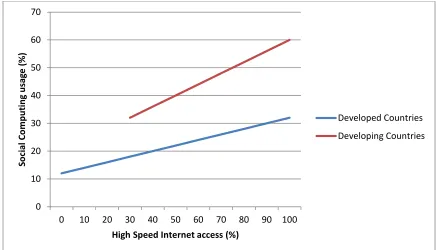
Figure 3-1: Social Computing usage against high speed internet in developing and
developed countries 75
Chapter4
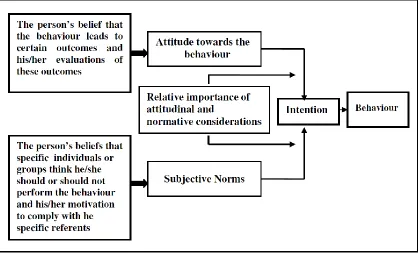
Figure 4-1: Factors determining a person’s Behaviour 82
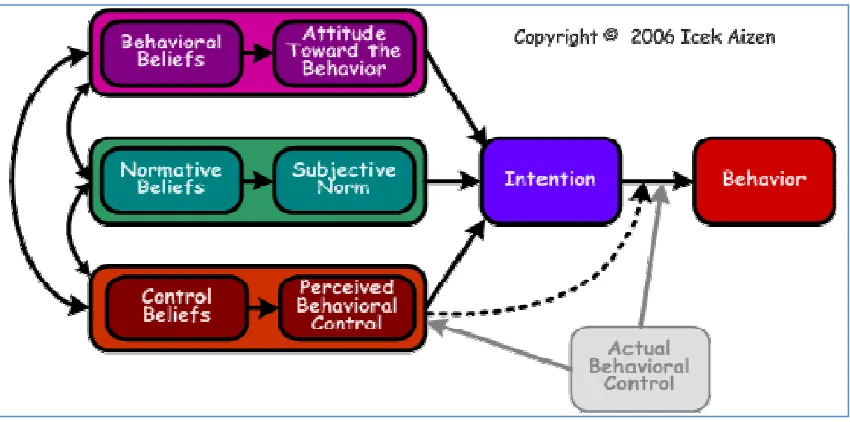
Figure 4-2: Theory of Planned Behaviour 85
Figure 4-3: Theory of Planned Behaviour with beliefs decomposed 87
Figure 4-4: Theory of Planned Behaviour decomposed 89
Figure 4-5: Technology Acceptance Model (TAM) Based on Davis et al (1989) 90 Figure 4-6: TAM2 - Extension of the Technology Acceptance Model 94 Figure 4-7: The seven scales in Moore & Benbasat‟s study (1991) 98 Figure 4-8: A hypothesized relationship between PIIT and other technology
acceptance constructs 99
Figure 4-9: SCT Modeling Behaviour 101
Figure 4-10: The proposed Model (derived from Marakas et al 1998) 102
Figure 4-11: Research model of Agarwal et al study 103
Figure 4-12: Deci & Ryan‟s Self-Determination Continuum 105 Figure 4-13: TheHierarchical Model of Internisic and Extrinsic Motivation 106 Figure 4-14: The Motivational Model of Microcomputer Usage 108 Figure 4-15: The proposed integrated model of technology acceptance and
motivational model 109
Figure 4-16: Triandis‟ theoretical framework 110
Figure 4-17: Factors Influencing the Utilization of Personal Computers 111
Figure 4-18: Triandis‟ Extended Model of Choice 112
Figure 4-19: The Unified Theory of Acceptance and Use of Technology 114
Chapter5
Figure 5-1: The overall research process 126
Figure 5-2: Research philosophies and approaches 131
x
Chapter6
Figure 6-1: Respondents by Gender 170
Figure 6-2: Respondents by Nationality 171
Figure 6-3: Top Online activities used by the respondents 172
Figure 6-4: the top engaging topics 173
Figure 6-5: Benefits from using Social Computing services 174 Figure 6-6: Drawbacks from using Social Computing services 175 Figure 6-7: Impacts of using Social Computing services 176
Figure 6-8: Values considered when using SC services 178
Figure 6-9: The mostly used functionalities of Social Computing services 179 Figure 6-10: UTAUT after eliminating the age and experience modifiers 184 Figure 6-11: The whole dimensions based on the factor questions 200 Figure 6-12: The whole dimensions grouped by factor 201
Figure 6-13: Reputation factor 206
Figure 6-14: Expected Relationships factor 207
Figure 6-15: Communication benefits factor 208
Figure 6-16: “Signal-to-Noise Ratio‟ factor 210
Figure 6-17: Codification effort factor 211
Figure 6-18: Privacy Concerns factor 212
Figure 6-19: Collaborative Norms factor 214
Figure 6-20: Facilitating Conditions factor 215
Figure 6-21 Conceptual Framework for implementing SC in HE in the Gulf States 217
Chapter7
Figure 7-1: the Prototyping process 221
Figure 7-2: Layered approach and user access types 230
Figure 7-3: UCD (Use Case Diagram) of the user needs 231
Figure 7-4a: Activity diagram for tasks of the online course system per user role 234 Figure 7-4b: Activity diagram for the defined tasks of the online course system 235
Figure 7-5: UML diagram of the functional analysis 237
Figure 7-6: the conceptual design of the course system prototype 238 Figure 7-7: the initial paper prototype of the suggested online course system 240 Figure 7-8: the evolutionary approach in developing the system functionalities 242
Figure 7-9: the paper prototype design, version 20 246
Figure 7-10: the paper prototype design, version 30 247
Figure 7-11: the paper prototype design: expected screenshot 248 Figure 7-12: system architecture for the online course system (OCS) 252
Figure 7-13: the validation procedure 253
Chapter8
xi
Figure 8-2: IS success model by Delone and Mcleans (1992) 258 Figure 8-3: the variables of measuring the success of IS 259 Figure 8-4: summarized picture of the system prototype success 262
Figure 8-5: the Framework validation process 265
Figure 8-6: Findings from Focus group discussions 276
Figure 8-7: Bloom’s Taxonomy 277
Appendices
Figure A4-1: OCS Notifications 322
Figure A4-2: Institution Home Page 323
Figure A4-3: Library website 323
Figure A4-4: Student Portal 324
Figure A4-5: OCS User Profile 325
Figure A4-6: OCS Edit Personal Information 325
Figure A4-7: OCS, On Facebook 326
Figure A4-8: OCS, Course Blogs 327
Figure A4-9: OCS, On Flickr 328
Figure A4-10: OCS, Course Wikis 329
Figure A4-11: OCS, Course Journals 330
Figure A4-12: OCS, Google Docs 331
Figure A4-13: OCS, Course Assignments 331
Figure A4-14: OCS, Learning Modules 332
Figure A4-15: OCS, Learning Modules 2 333
Figure A4-16: OCS, Course Web Folder 333
Figure A4-17: OCS, Course Materials 334
Figure A4-18: OCS, Course Calendar 335
Figure A4-19: OCS, Office Hours 336
Figure A4-20: OCS, RSS feeds 336
Figure A4-21: OCS, Site Map 337
Figure A4-22: OCS, Institution News 337
Figure A4-23: OCS, Peer to Peer Help 338
Figure A4-23: OCS measuring success, Data Entry 339
Figure A4-24: OCS measuring success, Reporting1 340
xii
Acknowledgements
I take this opportunity to acknowledge the support and encouragement provided
to me throughout this PhD journey. The research conducted and this thesis would not have been possible without the support of my supervisors at the University of Salford, United Kingdom and Saudi Electronic University, Riyadh, KSA. First of all, I would like to convey my appreciation towards my supervisors, Professor Yusuf Arayici and Professor Shafiz A. Mohd Yusof for their immense guidance which I am grateful for. At various difficult situations, Professor Arayici, and Professor Shafiz provided timely advice, the necessary research focus, valuable experiences and the strength to accomplish this journey. At times the support they provided me lifted such barriers of disturbance and hardship which ensured the progress of continuation. Secondly, without attaining an appropriate Case study to conduct this research my work would not have been possible, and the support provided by Dr. Emad Maswadi in the data analysis stage, Dr. Ghassam Qumairi in attaining the usability testing and benefiting from his usability expertise, and Dr. Shanableh who translated the offered survey to Arabic and supported in facilitating the survey deployments in different classes. Thirdly, I would like to thank everyone who provided their knowledge and experiences through the case study organisation and all those who assisted me during the investigation, data collection and analysis phases. My
deepest admiration and gratitude goes to Dr. Norhayati Zakaria who helped me to clearly understand the research methodology elements. Last but not least, without support from
xiii
Dedication
xiv
xv
Declaration of Originality by Postgraduate Candidate
This is to certify that the copy of my thesis, which I have presented for consideration for my postgraduate degree: -
1. Embodies the results of my own course of study and research
2. Has been composed by myself
xvi
Acronyms
BI Behaviour Intention
BNT Basic Needs Theory
CET Cognitive Evaluation Theory CFA Confirmatory Factor Analysis COT Causality Orientation Theory CPU Central Processing Unit
CRM Customer Relationship Management
CSE Computing Self-Efficacy
ED Embracing Diversity
DOI Diffusion Of Innovations
DTPB The Decomposed Theory Of Planned Behaviour EIS Executive Information System
FC Facilitating Conditions
GCSE General Computing Self-Efficacy
HE Higher Education
ICT Information and Communication Technology
IM Instant Messaging
IM, EM Internal Motivation, External Motivation and
IT Information Technology
LA Learning and Achieving
MM The Motivational Model
MPCU Model of PC Utilization MPCU The Model of PC Utilization
NMC New Media Consortium
OCS Online Course System
OIT Organismic Integration Theory
OLAP On-line Analytical Processing Technology OSSW Open Source Software Watch
PBC Perceived Behavioural Control
PC Personal Computer
PEOU Performance; and Perceived Ease of Use
PIIT Personal Innovation in Information Technology
PU Perceived Usefulness
RAM Random Access Memory
SC Social Computing
SCT The social Cognitive Theory
SE Self-Efficacy
SEM Structural Equation Modelling SLT The Social Learning Theory
SN Subjective Norms
SSE Software-Specific-Self-Efficacy
SW Software
xvii
Acronyms (Cont’d)
TRA Theory of Reasoned Action
UAE United Arab Emirates
UAEs User Acceptance Enablers UAEU United Arab Emirates University
UTAUT the Unified Theory of Acceptance and Use of Technology VLE Virtual Learning Environment
xviii
Abstract
his study sets out to develop a framework for implementing social computing (SC) tools in higher education (HE) to enhance both the teaching and learning processes, with a particular focus on HE institutions in the Gulf States. Among other things, it reviews and addresses the known problems of HE in the Gulf States, discusses available SC platforms, and identifies the most appropriate of these based on the extant literature about user acceptance of technology.
SC platforms are quickly emerging as important new technologies that can support a variety of businesses. Many publications on SC discuss its definition and its associated tools, but while studies of this kind are an important part of the development of any new trend or technology, additional research is also necessary to determine the proper use of these phenomena in particular contexts, and as yet, no clear study exists that discusses the proper use of SC tools in HE.
The research in this study contributes to the fields of technology acceptance and SC research. It also demonstrates that the unified model of technology acceptance (UTAUT) can serve as theoretical basis for implementing SC in HE.
It employs a multi-methodological approach at all of its stages, including data
collection and analysis. Questionnaires, interviews, observations, focus groups, and evaluations were all conducted in order to obtain the data on which the study was based. The final analysis of this data was used to develop a new conceptual framework for implementing SC in HE. The research findings are validated through the development and implementation of a new system prototype for using SC in HE.
This study recommends that stakeholders of HE in the Gulf States deploy SC technologies in HE to enhance generated outcomes by modernizing, supporting, and simplifying the teaching process while keeping students more engaged with customisable content. Online collaboration is also highlighted for its potential to enhance student learning and to transform education into a more user-centred process. In its summation, this study also includes a model for ensuring that research objectives are achieved and that defined knowledge gaps are covered.
1
Chapter1
2
1.1
Introduction
Many academic institutes these days are making experimental efforts to adapt to Social Computing (SC) in order to harness the new dimensions of benefits it can provide for students and instructors. These benefits largely consist of ways to facilitate
communication and collaboration both between students and instructors on one side, and between individual students and their peers on the other. In this context, the term ‘communication’ means the exchange of thoughts, messages, or information between
participants. Enhancing communication has innumerable benefits, including the expansion of knowledge, the generation of competitive advantage, and the creation of a network of participants that is based on loyalty and trust.
In this digital age, the internet has radically changed the way that we communicate, and technologies like e-mail and Instant Messaging (IM) are now used to set benchmarks for efficiency and effectiveness. These technologies have become the fundamental means of communication for most SC platforms. SC, therefore, has the potential to support Higher Education (HE) by facilitating communication among its stakeholders and by simplifying and expanding the ways that they can communicate, exchange knowledge, and interact with other communities.
Some organisations are already deploying SC tools but are not receiving the expected value from it (Cachia, 2008). This can be attributed to factors such as loss of control over the usage of these tools and gross misunderstandings of the real impact that
SC can have on business.
This study contributes to the field of technology acceptance and SC research. It
demonstrates that SC can play an important role in enhancing HE outcomes. It also demonstrates that the Unified Theory of Acceptance and Use of Technology (UTAUT) can serve as theoretical basis for implementing SC in HE successfully.
1.2
Higher Education (HE) in the Gulf States
3
characteristic of all systems of HE in the Gulf States is that they are all built around quite newly established institutions.
Since 2001, several universities from countries outside the region have opened branches or satellite schools in Gulf cities like Dubai in the United Arab Emirates and Doha in Qatar. These universities have given many Gulf locals the chance to obtain advanced degrees, and they have been instrumental in expanding opportunities for female students, who are frequently prohibited by conservative norms from studying at local institutions. Some of these foreign institutions have circumvented gender restrictions by
providing separate classrooms for male and female students, while others have even gone so far as to provide geographically distinct, gender-segregated campuses.
As they rapidly grow, the Gulf States are increasingly focused on establishing higher institutions to provide their people with the skills needed to support that growth. In these institutions, however, local research is still in need of further development (Shaw, 1997).
1.3
Social Computing
In the last two years, the phrase ‘Web 2.0’ has become as popular as the word ‘internet’ itself. It was coined as a shorthand way of expressing the way that the sharing
of information on common platforms like blogs, wikis, social bookmarking sites, microblogs, and social networking sites has changed the experience of the internet. All of these technologies are a part of SC. SC is the process of user collaboration and the development of online communities (Sarner, 2008), and the tools of SC are the range of applications that assist users in these acts of communication, collaboration, and content-sharing (Owen, 2006). In the business world, SC has restructured the consumer-producer dynamic by putting the consumer or end-user at the centre of communication, while producers simply respond to the demands and preferences of the consumer by providing
4
1.4
Theories and Models of Technology Acceptance
Research on technology acceptance has been in a state of continuous development over the past few years. Three major disciplines have contributed to the development of models and theories that address technology acceptance, adoption, and
usage. Psychology and sociology have both focused on behaviours of technology acceptance, while information systems has focused on the characteristics of specific systems in relation to it.
A significant body of the extant research on this topic has its foundations in the Technology Acceptance Model (TAM) that was originally conceived by Fred Davis in 1986. TAM is an intention-based model that was derived from the Theory of Reasoned Action (TRA) but tailored to meet the broad needs of information technology research (Davis et al, 1989). Since its introduction, TAM has enjoyed wide acceptance and has proven to be a reasonably accurate predictor of both users’ intentions with respect to
information technology and their actual system usage. TAM has evolved over years, and many researchers have tested the addition of new variables to the model in an attempt to increase its explanatory power. Venkatesh, Davis, and other researchers (2003) integrated TAM with seven other dominant models in the field of technology acceptance to create the Unified Theory of Acceptance and Use of Technology (UTAUT). According to its authors, this aggregated model is in an attempt to find a unified model that combines different perspectives in the field of technology acceptance research. They state that an
end to usage intentionality determinants research might have been reached with the models’ three intentional beliefs: performance expectancy, effort expectancy, and social
influence. Nevertheless, the ability to examine external variables’ impact on technology usage behaviour can also be examined through a fourth determinant: facilitating conditions.
5
development of a new model of user acceptance that is built on the UTAUT constructs and findings. This new framework can be considered as an extension of the UTAUT model based on its testing in the case-study institutions.
1.5
Rationale for the Research
The concept of SC will remain an important topic for a very long time, and organisations will continue to need to take risks in identifying the best methods for implementing its technologies in order to remain competitive (Pascu, 2008).
Parameswaran and Whinston (2007) suggest that there is a very urgent need for research in the field of SC. They argue that research on SC and its impact on organisations and businesses is in its infancy and that it requires expansion in scope. More theories can and should be applied to explain SC’s impact. This is a requirement if we are to understand the diverse nature of connections that are created by a social environment. Rigid frameworks may need to be deemphasised in Information Systems, as the technologies of Web 2.0 require a more fluid and flexible framework to be successful.
Many publications on SC discuss its definition and its associated tools, but while studies of this kind are an important part of the development of any new trend or technology, additional research is also necessary to determine the proper use of these phenomena in particular contexts, and as yet, no clear study exists that discusses the proper use of SC tools in HE. As it is one of the most critical industries of any country, HE should be enhanced with any tools that will help to maximise its generated value. In the Gulf States in particular, there are many challenges that confront teachers and students at the university level and act as a barrier to the achievement of higher learning and teaching goals. A survey of each of these challenges and the respective SC tools that could provide their solutions appears below:
1. Hall & Hall (2001) refer to the Gulf States as high context culture societies. The
educational systems reflect one of the complexities of these cultures by
segregating male students from female ones. Male fanatical sometimes urge female students to cover their bodies more thoroughly, and sharp quarrels can
6
communication between male and female students, which consequently reduces
the opportunity for knowledge-sharing and scholarly discussion between the
genders. SC platforms could serve as shared areas to facilitate collaboration and
discussion between these otherwise disconnected populations. Even for women
who dislike being known to men—in accordance with culture norms in the Gulf
region that discourage such interactions—the anonymity that SC tools can provide
could create a collaboration platform that circumvents gendered issues.
2. For the last two decades, research in the HE institutions of the Gulf States has
focused on the growth rather than on the development of these societies (Shaw,
1997). Consequently, there is a great need for these institutions to shift their
emphasis away from economic and technical growth and towards social and
cultural development. SC platforms provide an excellent environment for
socialization, and they could play a major role in promoting modern subjects and
majors that focus on socialization and culture.
3. Today’s students are from Generation Y, or the NetGen, and they prefer to work
in teams that involve peer-to-peer communication. They also like to be engaged in
their learning, and they are more visually and kinaesthetically inclined (Conrad,
2004). Many of the HE institutions in the Gulf States still use old teaching styles
that bore modern students and consequently make them less engaged. Linda
Herrera (2006) denounces the inadequacy of the current state of HE in the Arab
world, saying that it does not fulfil its students’ social needs. Teaching in Gulf HE
institutions could be improved from this state by exploring new learning
techniques, fashions, and research. SC platforms offer modern learning
environments. They make it easy for students to join virtual classes; contribute to
blogs, wikis, and social websites; and explore a lot of student-created learning
materials. This level of involvement makes for a more engaged student body.
4. Poor research and redundancy in the most attractive disciplines are the two
principle structural problems of HE in the Gulf States (Romani, 2009). Research
in the Gulf States almost always focuses on oil and strategic matters, while there
remains a serious need for contributions in the area of social development. Online
7
and explore new ideas, activities which could in turn increase innovation and
research in these underexplored areas.
5. In most of the Gulf universities, English is the instructional language for the
technical disciplines (Shaw, 1997). Shaw observed that, though English is widely
spoken in all the Gulf States, however, formal writing in these areas of
specialization needs strengthening. SC tools like wikis and blogs are, at their core,
simply writing platforms, and they have great potential to increase foreign
language skills. Blogs in particular have often been celebrated for their success at
both enhancing language skills and promoting creativity (Ducate, 2008).
1.6
Justification of the research problem towards setting the aim
Because SC is a relatively new and popular topic, many papers on the subject
have focused their efforts on delineating its terminology and exploring its business
applications. Parameswaran and Whinston (2007) and Charron (2006) have explored
most of the known SC platforms and explained how these technologies threaten existing
business models. They have also supplied recommendations as to how companies can
best adapt to these technologies to anticipate new opportunities. Other studies have
highlighted the possible benefits of using SC in business. Microsoft Dynamics (2009) investigated the use of SC tools in business to enhance the CRM and marketing systems
in organisations and allow businesses to engage their customers socially. Gleave, Welser,
and Lento (2009) have introduced conceptual and operational definitions of social roles
in online communities and discussed the movement of social life to the data-sphere.
Eastwood (2009) recommended that organisations should ensure that at least 24%
of their employees have accounts on social networking sites to collaborate amongst
themselves. He claims that the question is no longer whether or not organisations should
implement social software, as the affirmative answer to that question is already a given.
The real question, he argues, is how much organisations will be able to benefit from this
implementation (Eastwood, 2009).
Sarner et al (2008), and Huijboom, Broek, and Frissen (2009) in their Gartner
8
outlined the specific impacts of SC on marketing and generation Y, the CIO, company
governance, HR data, identity management, data exposure in the workplace, licensing and IP ownership, mobile communities, enterprise feedback management, government,
television, and media companies (Gartner, 2008).
Another study by Parameswaran and Whinston (2007) highlighted research issues
in SC. These issues included organisational form, governance structure, intellectual
property rights, and the efficiency and stability of online networks. They argue that all of
these issues have become incredibly important as the locus of control of content creation
and configuration has shifted to the grassroots population (Parameswaran & Whinston,
2007).
Heid, Fischer, and Kugemann (2009) developed several good practices for
implementing Learning 2.0 approaches in education by studying eight Learning 2.0 cases
and explaining how this model generates new learning innovations with SC tools.
Redecker (2008) discusses some particular SC tools and their educational uses.
He analyses social networking services, syndication and notification technologies, blogs,
wikis, tagging, social bookmarking and folksonomies, media-sharing services, podcasts,
and vodcasts. Redecker expresses interesting ideas about how these tools could be used in
education as well as in the other industries, but he conducts no deep research on exactly
how they can be implemented to enhance educational outcomes.
Ala-Mutka (2008) and Zengyan, Yinping, and Lim (2009) studied SC’s
mechanisms for the creation of new knowledge, content, and value through user
participation. The works of Broek, Huijboom, and Frissen (2010) and Ala-Mutka (2008)
summarise the economic and social impacts of using SC tools in business in any capacity.
Though these publications establish a lexicon of SC terminology, discuss its
existing tools, introduce valuable thoughts on SC’s potential to enhance lifelong learning,
and highlight the social and economic impacts of SC’s implementation in the business
world, there is still a clear research gap regarding how these tools can be adopted to
9
1.7
Research Questions
This study targets and answers the following questions:
1. What are the main problems that HE faces in the Gulf States?
2. What are the main features of SC platforms that could be used to increase
collaboration and content-sharing between students in an educational context?
3. How can the behaviour of individuals using SC technologies be analysed, and
what are the factors that affect the acceptance of such technologies?
4. How effectively can SC tools be implemented in HE institutions in the Gulf
States to enhance the teaching and learning processes?
1.8
Aim and Objectives
This study aims to develop a framework for the effective implementation of SC
tools in HE institutions in the Gulf States in order to enhance teaching and learning
processes.
Its main objectives are:
1. To diagnose the current state of HE in the Gulf States by exploring its problems. This will include a critical review of the known issues and barriers that negatively affect student learning. Understanding these issues will assist
in the development of a proper conceptualization of how SC tools can be used to enrich teaching styles with modern and supportive models and to increase the rate of student learning.
2. To explore SC tools that facilitate collaboration and content-sharing, and to investigate the potential role of SC platforms in developing student learning. 3. To explore user acceptance of SC tools in educational contexts. This includes
10
4. To specify a new conceptual framework for the effective implementation of SC in HE in the Gulf States.
5. To instantiate that conceptual framework by creating a prototypical online course system. This new system will involve the use of SC tools that support student learning and enhance the teaching process.
6. To refine and validate this framework by testing and piloting the new prototype with end-users who will be subsequently interviewed, and to recommend this validated framework of effective implementation of SC in
HE.
1.9
Research Methodology
The research methodology is that part of science which studies how research can be done in scientific and systematic various steps. It defines the research activity including how data will be collected and analysed, how research will proceed and how to measure success (Pérez, 2010) . This study aims to define the moderator factors that affect user acceptance of using SC in learning activities in order to develop a new framework for implementing SC in HE. It targets to answerthe previously mentioned questions in order to achieve the research aim and objectives. Set of quantitative and qualitative data collection tools are utilized with clear orientation toward a qualitative epistemological position which recognizes the importance of locating the research within a particular social, cultural, and historical context.
1.9.1 Research Philosophy
A research philosophy embodies the researcher‘s beliefs about the phenomenon
under investigation (Galliers, 1991). To define the research philosophy, there are two prevalent philosophical branches, namely ontology and epistemology. Logically, epistemology comes after ontology.
The data-gathering approaches and the way the researcher applies existing
11
the epistemological position for the researcher throughout the study is positivism, as the research depends mainly on the approved theories of technology acceptance plus the successful implementation and best practices for using SC in HE. The researcher applies existing knowledge about SC and its use in education to support HE institutions in the Gulf States by employing new teaching and learning methods that are expected to enhance these processes.
1.9.2 Research Approach
Two methodological research approaches were highlighted by Yin (1994), the inductive and the deductive approaches. The inductive approach is defined as an inquiry undertaken to understand a human issue or explore a social problem from various perspectives. It starts with an investigation of an untheorized area in order to develop a corresponding theory. However, the deductive approach starts with an already existing theory and extends to its empirical investigation (Yin, 1994).
The deductive researcher composes one or more hypotheses based on the existing knowledge body, and then conducts data collection and analysis to test the hypotheses; however, the inductive researcher collects and analyses data to come up with new theories and explanations using the existent knowledge body and from them develops new findings. Because of its reliance on the current body of knowledge in composing a hypothesis, deductive research aligns with the objectivist and positivist philosophical positions.
12
implementation of SC through offering a new conceptual framework for implementing SC in HE in the Gulf States. The research starts with set of hypotheses that being studied in two case study institutions in the Gulf States. Merriam (1988) argues that the nature of such case studies mostly utilizes an inductive approach due to new concepts, understandings, and relationships arising from studying the collected data.
So, this research study develops a new framework for implementing SC in HE in the Gulf States as a new theoretical reference for enhancing the teaching and learning
practices in this region of the world. This concept is new and represents an addition to the knowledge body. It also comes through qualitative research approach in which the collected user knowledge about SC was interpreted. This means an inductive approach is being conducted. The research also analyses the use of UTAUT theory, and extends it through developing new constructs and relationships, which confirms that an inductive research approach is used.
To sum up the philosophies and research approaches used in this research, it can be said that this research adopts the objectivist and positivist philosophical stances and employs a combination of inductive and deductive research approaches.
1.9.3 Research Strategy
Among many research strategies, the qualitative and quantitative strategies are highlighted by Casebeer and Verhoef (1997) as the main research strategies available for primary data research. Quantitative research strategies, known by as “scientific methods,”
study the relationships between facts through gathering factual data about them (Fellows and Liu, 1997). The analysis of the quantitative data generates quantitative results that are derived in light of the studied theory and literature.
A research strategy may include archival analysis, survey, experiment, and observation (Yin, 1994). In this research, case study, observation, interviews, and survey questionnaires are used as research strategies. As pointed out by Yin (1994), when focusing on contemporary phenomena, the case study method will emerge as the most
13
been recommended by many researchers as an ideal instrument for understanding many context phenomena. Furthermore, the most important aspect of any credible research strategy is that the investigator should adopt a stance of neutrality with regard to the phenomenon under study (Patton, 1990). United Arab Emirates University (UAEU) in the United Arab Emirates (UAE) and Aspire Academy for Sports Excellence in Qatar have been defined the case study institutions in this research study. Both of them are two governmental educational institutions that have the large share of their students coming from local students. The students are expected to reflect their own country culture in their
behaviours. Also, in these institutions, male and female students are segregated among campuses spread over a wide geographic area. So, most of the issues in the academic institutions in the Gulf region will be easily highlighted and challenging in these two institutions. Thus, the rational for selecting this case study was to study the current situation in these institutions within particular class groups or communities and to highlight the clear issues of the student learning.
1.9.4 Research Data
Two types of research data could be collected and analysed: quantitative and qualitative data types. Quantitative data requires quantitative research methods, while qualitative data requires qualitative methods. Fellows and Liu (1997) mentioned that the analysis of quantitative data yields quantified results that are extracted from the
14 a) Data collection methods
In the research studies that adopt the case study strategy, there are many collections methods that could be used. These methods include questionnaires, observation, interviews, focus groups, and gathering of documentation and artefacts (Gillham, 2000).
Determining the appropriate data collection method for a study requires deep understanding of the task requirements to ensure that the appropriate measures are considered. The following points should be considered before selecting a certain research
method/tool:
When analysing gathered data using the method, any special requirements or
difficulties in conducting the data analysis must be noted.
In prototyping and user design evaluations, some human-factor issues might be
raised and should be taken into account.
Deep understanding of the task requirements results from selecting the
appropriate measure.
The cost of each method (in terms of time, effort, mental load, etc.) should be
considered carefully. Each method has its cost, and usually researchers use more than one method together. For example, questionnaires might be used with observation. Observation itself might be used in combination with interviews to analyse user understanding and workload. So, considering the research goals and constraints helps the researcher to ensure the selection of the appropriate research methods and tools.
Any advantages or disadvantages of the research method should also be
considered.
15
survey is administered to a broad spectrum of user to help in defining the user
background and subsequently spread the second survey questionnaire to a purposeful sample which is being identified to participate in the second round of data
collection. This sub-sample includes those who are familiar with SC websites and
technologies. The second survey questionnaire targeted collecting data about the factors that can affect the user acceptance when using SC in education.
To support the collected data from the first questionnaire with more accurate findings, observation sessions were conducted to observe students when use SC in their learning or free times.
A structured interview protocol is developed to aid in field note collection during the semi-structured interviews. Multiple interviews are planned with targeted group of instructors and students in order to provide more in-depth data collection and understanding of the effective use-factors that can affect the user acceptance of using SC in HE. The goal is to interview approximately 10 users who come from different colleges and majors in the case study institutions. This number might be modified according to the saturation of data.
Focus groups are also utilized in this research to exercise collaboration in real case and give accurate feedback and opinions about the factors that might affect socialization and using SC in an educational context. Four focus groups are conducted in the case study organizations with groups of instructors from both institutions.
Two workshops were conducted with students and instructors from the case study institutions to do hands-on training on using SC in educational setting. Instructors were asked to upload some SC content items (including wikis and blogs) that discuss some learning topics, and then the students were asked to contribute in that learning activity by adding threads and discussing these points all together. These workshops were planned to half-times, one for using the SC items and the second to evaluate each factor of the proposed use-factors that affect the user acceptance when using SC tools.
16
prototype for an e-learning system which harnesses SC tools in HE. The prototype was evaluated by usability experts in heuristic evaluation step before conducting pedagogic audit with three instructors from the interviewed sample.
b) Methods for Data Analysis
The following steps were introduced by Leedy and Ormrod (2001) as guidance
for researchers to analyse the collected data in the case study research:
i. Categorization of data: data should be categorized and classified into meaningful
groups.
ii. Interpretation of single instances: specific documents, responses, and other data elements should be considered and examined for specific meaning in relation to the case study.
iii. Identification of patterns: the data and their interpretations are scrutinized for underlying themes and other patterns.
iv. Synthesis and generalizations: an overall portrait of the cases. Conclusions are drawn that may have implications beyond the specific case study that has been studied.
Beside these steps, which were considered and adopted in the analysis of the data in this research to analyse the qualitative portion of data collected from the interviews, focus groups, and observation, the data analysis stage included usage of the statistical package software SPSS version 20.0 to analyse the quantitative portion of the data collected from the two surveys. The analysis of the quantitative data included:
a) Organizing, classifying, and interpreting the collected data
b) Representing the collected data in a graphic way for clear understanding of the data classification
17
1.9.5 Research Processes
Table 5.8 in chapter 5 of this thesis summarizes the stages of the research process and highlights the research methods used in each stage.
1.10
Scope of Research
This study will focus on HE institutes in the Gulf States, where SC may help to
resolve many cultural issues. It will include an examination of the potential value of SC
as a tool to enhance relationships between academic institutions and their stakeholders in
order to generate greater value for all involved parties.
It will include the proposal of a model for e-Learning courses to help
organisations recognise the potential benefits of SC tools. This model will mirror many
aspects of traditional course structures in order to render its acceptance more probable.
The prototype will be tested with users from the Gulf States. These users will all be from
similar cultures, and they will share similar desires to collaborate with others.
1.11
Synopsis of Research Impact
This study hopes to close the research gap with regards to the use of SC in HE to
enhance teaching and learning practices in the Gulf States. It will help HE stakeholders in
the Gulf region to make effective improvements to the outcomes of HE institutions. It will also align HE in the Gulf States with the applied educational styles of other countries
that have advanced HE systems.
This study will include the development of a conceptual framework guiding for
SC implementation in HE in the Gulf States and its prototypical system to harness SC
tools that will be based on the proposed framework to enhance Virtual Learning
Environments (VLEs) and e-Learning systems. If this prototype is implemented, this
study will positively affect the generated value of HE in the Gulf States, at least on the
level of enhancing the educational outcomes. It will lead to the development of a new
18
1.12
Research Structure / Guide to Thesis
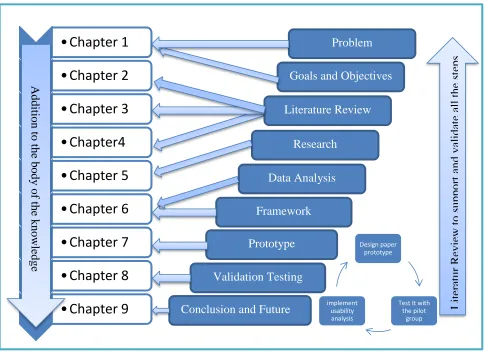
Figure 1-1 illustrates the whole structure of this research study. The following
[image:38.612.73.559.161.513.2]sections provide brief descriptions of each chapter of this thesis.
Fig. 1.1: Research Plan
1.12.1 Chapter 1: Introduction.
This chapter begins with a brief description of the focus areas of this study: the
current status of HE in the Gulf States, the implementation of SC into businesses and
other organisations, and theories of technology acceptance. This introduction helps to
explain the rationale behind the study. It also defines the problems, aims, objectives,
expected impacts, scope, and limitations of the research. This chapter includes summary
of the adopted research methodology with highlight on the implemented research
methods and approach. And it ends with a summary of the contents of the other chapters.
Addition
• Chapter 1
To
• Chapter 2
the
• Chapter 3
body
• Chapter4
of
• Chapter 5
knowledge
• Chapter 6
...
• Chapter 7
...
• Chapter 8
..
• Chapter 9
Problem Identification Goals and Objectives
Literature Review Research Methodology Data Analysis Framework Development Prototype Development Validation Testing
Conclusion and Future Work
Liter
atur Revie
w to supp
or
t and va
li da te a ll the st eps Additi
on to t
he body of the know ledge Design paper prototype
Test It with the pilot
group implement
19
1.12.2 Chapter 2: HE in the Gulf States
Chapter two explores the extant literature about the HE problems in the Gulf
States. It starts with a historical background about HE in the Gulf States and then
summarises fifteen of the greatest HE problems that the Gulf States face today.
1.12.3 Chapter 3: SC in HE
Chapter three begins with a review of the extant literature on SC, its tools and
technologies. It focuses on the tools that have the most potential utility in education,
providing a brief description of each of these tools and the mechanisms by which they
could support the learning process. Next, it summarises some known strategies for the
use of SC for pedagogical innovation in education. After this, it introduces some SC
practices for innovation in the educational organisation. The chapter closes with a
discussion of the culture of the Gulf States and how it affects socialization activities.
1.12.4 Chapter 4: Technology acceptance theories
This chapter introduces nine of the established models of technology acceptance.
It discusses ensuring the acceptance of SC tools by users in the field of HE. The end of
this chapter summarises the differences between these models in order to clarify the
investigative thrust towards the acceptance of technology.
1.12.5 Chapter 5: Research methodology
Chapter five introduces the research methodology in detail. It presents the study’s
philosophy, approach, strategy, and design, as well as the tools and methods used to
address its aims and objectives. It includes a definition of the data collection and analysis
methods that are used by this study. It ends by explaining the reliability and validity
testing of the research and summarising the considered ethical issues.
1.12.6 Chapter 6: Data analysis
This chapter presents the collected data and uses it to analyse the characteristics
20
user acceptance of SC in HE are highlighted. The chapter then presents a deep analysis of
each surveyed factor and ends by developing a new framework or theoretical foundation
for implementing SC in HE in the Gulf States.
1.12.7 Chapter 7: Online course prototype
In this Chapter, a prototype of a new online course system is developed in order to
pragmatically validate the conceptual framework produced in chapter six. This prototype
is based on the use of SC tools to enrich the virtual learning environment with
collaboration and socialization activities. The data previously collected from students and
instructors is used in the development of this prototype.
1.12.8 Chapter 8: Testing and validation
This chapter focuses on validating the research findings. It tests the previously
generated framework by validating the prototype. The validation process involves testing
the success of the proposed online course system (OCS) in terms of user acceptance, user
satisfaction, and expert evaluation.
1.12.9 Chapter 9: Conclusion, recommendations and future work
The final chapter presents the conclusions derived from the study and makes
recommendations for future research. It discusses the research findings and links them to
the original research questions to ensure that the knowledge gaps highlighted earlier in
the study have been filled.
1.13
Summary of the Chapter
This chapter introduced the core concepts of the research study and explained its
motivations. This study hopes to bridge the knowledge gap in the area of solving HE
problems in the Gulf States with SC by applying the Unified Theory of Acceptance and
Use of Technology (UTAUT) to HE. It aims to develop and propose a framework for the
21
teaching and learning processes. The problem, objectives, expected impacts, scope, and
limitations of the research have all been stated. This chapter concluded with a summary
22
Chapter2
23
2.1
Introduction
In this chapter, the literature on higher education (HE) in the Gulf States will be explored with a focus on highlighting the most known and clear issues. This review covers the problems of HE in the Gulf since its inception, to the present day. There are some issues that were treated in the recent years by using certain tools or technologies;
these issues will not be summarized here. The main focus here is on problems that are still binding and in need of effective solutions. This review helps define some possible gaps in the research on HE in the Gulf region. The next step in this research extends to exploring SC tools and characteristics to see if SC can work as solution for the problems defined in this chapter. Considerations like the cultural norms in the Gulf States will be included herein, to help decide whether SC (or any other tool or method) can provide real solutions for these problems.
2.2
Historical Perspective
The history of HE in Gulf began in the other Arab countries during the time of the Islamic renaissance, in the eighth and ninth centuries (Aswad, 2003). These centuries witnessed the rise of the Abbasi caliphs during the period from 750 to 850, when the caliphs established libraries, translation institutes, hospitals, and observatories (Guruz, 2008). Baghdad, the capital of Iraq, was one of the most important cosmopolitan and
intellectual centres at that time, on a scale with Athens and Alexandria. It attracted students and scholars from everywhere in the Gulf States and even from central Asia
(Cowley, 1991).
For centuries, the education in all the Gulf states took a single form, called
24
and go on to become scholars, known as Ulama, and ultimately to teach the younger students (Bahgat, 1999).
This form of education survived until 1893, when the Turks gradually introduced their education system in all of the Arab countries by establishing some elementary and secondary schools called Madrassehs and Rushdiahs (Roucek, 2009). By 1860, these schools were wide-spread everywhere in the Gulf States. Between 1870 and 1920, seventy-eight Turkish schools for the different levels of education were established in Saudi Arabia (El-Sanabary, 2004).
2.3
Establishment of the Gulf Universities
The re-emergence of the Gulf States started in the early decades of the twentieth century. This era witnessed the establishment of some universities, following into some Arab countries like Egypt, where Cairo University was founded in 1908, and Syria, which established its first university, Damascus University, in 1923 (Landau, 1997). The universities in the Gulf States started as public interest of the governments, which perceived them as playing a vital role in national development during those times (Kettani, 1974). Starting with Saudi Arabia, which established the King Saud University in 1957, the Gulf States worked on expanding HE with the introduction of large universities like Kuwait University in Kuwait (1966), Qatar University in Qatar (1977), United Arab Emirates University (1977) in the United Arab Emirates, Sultan Qaboos University in Oman (1986), and the University of Bahrain in Bahrain (1986) (El-Sanabary, 2004).
The governments in the Gulf States saw these universities as the best places to massively develop the expertise required in all fields to allow the society to replace
colonial manpower, even if this was at the expense of the educational quality itself (Landau, 1997).
25
education, and the second for post-secondary education, typically called the ministry of HE in all the Gulf States (Rugh, 2009).
Bahrain had the oldest public school system in the Gulf States. It opened the first public primary school for boys in 1919 and another one for girls in 1930. These two were the first public schools in the Arabian Peninsula. Saudi Arabia did the same by 1930 and 1960 (for boys and girls, respectively); however, Qatar opened both school types (for boys and girls) in 1952. With respect to HE, Iraq started the first college in the region in 1908, and then expanded its institutions after independence in 1932,
ultimately building 315 schools and several colleges. By 1988, the total enrolment in HE institutions in Iraq reached 209,818 spread out across many colleges and two-year technical institutes. Oman was the last country in the region to provide public and HE for its citizens; its first school opened in 1970 (altbach, 2009).
Today, many foreign and well-known universities have opened branches in the Gulf area in the form of private institutes owned by investors or operated as foundations. These private institutes make up 30% of the HE enrolments in the states that host them (Guruz, 2008). Some of these institutions are for-profit and others are non-profit. They may be eligible to function under the governmental system or operate completely outside of the local regulations (Altbach, 2009).
Most of the Gulf nations depend on the state to provide and finance education at all. Recently, Oman announced that private providers, including foreign ones, would be eligible to enter the education market (Ibid, 2010). All of the Gulf nations saw the expansion and authorization of the private HE sector as a key solution to the educational problems in their countries (Iqbal, 2003). So, they provided strong public support for the first private institution that opened in each state. Qatar, the United Arab Emirates (UAE), Saudi Arabia, Oman, and Bahrain have witnessed revolutions in the sector of private HE during the last 4 years, something that continues to be praised by
their governments. This is especially true of Qatar and the United Arab Emirates, which have hosted many foreign universities, in the Knowledge Village (in UAE) and
26
High-Prestige Education Cities, meant to attract the big universities worldwide and to announce the countries as home to world-class HE. This also helps them to achieve the bigger goal of becoming regional hubs of education (Iqbal, 2003).
Finally, in terms of statistics that reflect the rapid expansion of establishing HE institutions in the Gulf, Saudi Arabia had 8 universities in 2003; by 2010, the country had added 100 new colleges and universities. Also, the defined budget for HE in Saudi Arabia exceeded $15 billion in 2010, significant for a country that has only 23 million of inhabitants (Romani, 2009).
2.4
Problems facing HE in the Gulf States
There is no doubt that more research and re-examination are desirable for the improvement of HE and scientific research in the Gulf States, in terms of HE quality and work meeting the real needs of the society. As a cornerstone of such improvement, there is a need to focus on real problems that help diagnose the state of HE in the Gulf States.
The following problems are highlighted as challenges for HE in the Gulf States.
2.4.1 Soaring Demand
The youth population doubled between 1980 and 1990 (Shaw, 1997). This rapid growth consequently led to greater numbers of HE students. Al Rashdan (2008) mentioned that “the number of students in HE was doubled twice during the last two
decades of the twentieth century”. This explosion of students created a critical situation for most of the universities in the Gulf, as they were not able to absorb all of the students produced by this rapid growth. Along with this growth, the social value was
affected as well.