REQUIREMENTS
ENGINEERING FOR
ii
TABLE OF CONTENTS
TABLE OF CONTENTS ... II
PREFACE ... VI
LIST OF ABBREVIATIONS ... XI
ACKNOWLEDGMENTS ... XIII
FOREWORD ... XIV
CHAPTER 1: INTRODUCTION ... 16
1.1.DEFINITIONS ...17
1.1.1. Computer Integrated Environments ... 17
1.1.2. Requirements Engineering ... 20
1.2.WHYREQUIREMENTSENGINEERINGISNEEDEDFORTHECIEDEVELOPMENT ...23
1.3.HOWTHEREQUIREMENTSENGINEERINGAPPROACHISFORMULISED ...26
CHAPTER 2: REQUIREMENTS ENGINEERING IN SOFTWARE DEVELOPMENT ... ERROR! BOOKMARK NOT DEFINED.
2.1.INTRODUCTION ...ERROR!BOOKMARK NOT DEFINED.
2.2.REQUIREMENTSENGINEERING(RE) ...ERROR!BOOKMARK NOT DEFINED.
2.3.REQUIREMENTSFUNDAMENTALSANDPRINCIPLES ...ERROR!BOOKMARK NOT DEFINED.
2.3.1. Purposefulness ... Error! Bookmark not defined. 2.3.2. Appropriateness ... Error! Bookmark not defined. 2.3.3. Truthfulness ... Error! Bookmark not defined.
2.4.REQUIREMENTSENGINEERINGPROCESS ...ERROR!BOOKMARK NOT DEFINED.
2.4.1. Contextual Design Approach ... Error! Bookmark not defined. 2.4.1.1. Vision Development ... Error! Bookmark not defined. 2.4.1.2. Storyboard ... Error! Bookmark not defined. 2.4.1.3. User Environment Design ... Error! Bookmark not defined. 2.4.1.4. Use Cases and Object-Oriented Design ... Error! Bookmark not defined.
2.4.2. Use Case Driven Requirements Analysis... Error! Bookmark not defined.
2.4.3. Agile Requirements Engineering Processes ... Error! Bookmark not defined.
2.4.3.1. User Involvement ... Error! Bookmark not defined. 2.4.3.2. Analysis (Verification and Validation) ... Error! Bookmark not defined. 2.4.3.3. Non- functional Requirements ... Error! Bookmark not defined. 2.4.3.4. User Stories ... Error! Bookmark not defined. 2.4.3.5. Managing Change ... Error! Bookmark not defined. 2.4.3.6. Incremental Development ... Error! Bookmark not defined. 2.4.3.7. The Path to Short Delivery Times ... Error! Bookmark not defined. 2.4.3.8. Black-box tests ... Error! Bookmark not defined. CHAPTER 3: COMPUTER INTEGRATED ENVIRONMENTS ... ERROR! BOOKMARK NOT DEFINED.
3.1.INTRODUCTION ...ERROR!BOOKMARK NOT DEFINED.
3.2.THECONSTRUCTIONINDUSTRY AND ITSFEATURES ...ERROR!BOOKMARK NOT DEFINED.
3.2.1. Benefits of CIE to the Construction Industry ... Error! Bookmark not defined.
3.3.THESCOPEANDROLESOFCIEINCONSTRUCTION ...ERROR!BOOKMARK NOT DEFINED.
3.3.1. Building Information Modelling (BIM) ... Error! Bookmark not defined.
3.4.IMPLEMENTATIONOFCIEINTHECONSTRUCTIONINDUSTRY ... ERROR!BOOKMARK NOT DEFINED.
3.5.THECIECASESTUDYPROJECT1 ...ERROR!BOOKMARK NOT DEFINED.
3.5.1. The CIE System in Case Study 1 ... Error! Bookmark not defined.
3.5.1.1. The System Architecture ... Error! Bookmark not defined. 3.5.1.2. The AutoCAD Application ... Error! Bookmark not defined. 3.5.1.3. The VRML Application ... Error! Bookmark not defined. 3.5.1.4. Applications Linked To the AutoCAD Application ... Error! Bookmark not defined.
3.6.THECIECASESTUDYPROJECT2 ...ERROR!BOOKMARK NOT DEFINED.
3.6.1. The CIE System in Case Study 2 ... Error! Bookmark not defined.
3.6.1.1 Integration in the CIE System in Case Study 2 ... Error! Bookmark not defined. 3.6.1.2. Architecture of the System in Case Study 2 ... Error! Bookmark not defined.
3.7.THECIECASESTUDY3 ...ERROR!BOOKMARK NOT DEFINED.
3.7.1. The CIE System in Case Study 3 ... Error! Bookmark not defined.
3.7.1.1. The CIE System Architecture in Case Study 3 ... Error! Bookmark not defined.
3.8.THECIECASESTUDY4 ...ERROR!BOOKMARK NOT DEFINED.
3.8.1. The CIE System in Case Study 4 ... Error! Bookmark not defined.
3.8.1.1. The CIE System Architecture... Error! Bookmark not defined. CHAPTER 4: REQUIREMENTS ENGINEERING IN CIE DEVELOPMENT FOR THE
CONSTRUCTION INDUSTRY ... ERROR! BOOKMARK NOT DEFINED.
4.1.INTRODUCTION ...ERROR!BOOKMARK NOT DEFINED.
4.2.THECIESYSTEMSFROMTECHNOLOGICALPERSPECTIVE ... ERROR!BOOKMARK NOT
DEFINED.
4.3.REQUIREMENTSENGINEERINGINTHECIECOMMUNITY ... ERROR!BOOKMARK NOT
DEFINED.
4.3.1. The ATLAS System ... Error! Bookmark not defined. 4.3.2. The OSCON System ... Error! Bookmark not defined. 4.3.3. The SPACE System ... Error! Bookmark not defined. 4.3.4. The WISPER System ... Error! Bookmark not defined.
4.3.5 The GALLICON System ... Error! Bookmark not defined.
4.3.6. The DIVERCITY System ... Error! Bookmark not defined.
4.3.7. The nD Modelling System ... Error! Bookmark not defined.
4.4.INTERVIEWSINTHECONSTRUCTIONCIECOMMUNITY ... ERROR!BOOKMARK NOT
DEFINED.
4.4.1. Importance of Requirements Engineering in the CIC Development ... Error! Bookmark not
defined.
4.4.2. Influence of Requirements Engineering upon Implementation .. Error! Bookmark not defined.
4.4.3. Lack of Requirements Engineering in the CIE Developments .. Error! Bookmark not defined.
4.4.4. The Increasing Awareness about Requirements Engineering in the CIE Community ... Error!
Bookmark not defined.
4.4.5. The Main Criteria for Requirements Engineering Activities ... Error! Bookmark not defined.
4.4.6. Evaluation of the Requirements Engineering Approaches ... Error! Bookmark not defined.
CHAPTER 5: EVALUATION OF REQURIEMENTS ENGINEERING PROCESSES ... ERROR! BOOKMARK NOT DEFINED.
5.1.INTRODUCTION ...ERROR!BOOKMARK NOT DEFINED.
5.2.IMPROVINGTHEREQUIREMENTSENGINEERINGPROCESS ... ERROR!BOOKMARK NOT
DEFINED.
5.2.1. Traceability through Product and Process Modelling ... Error! Bookmark not defined.
5.2.2. Goal-oriented Requirements Engineering ... Error! Bookmark not defined.
5.2.3. Essential and Incidental Complexity in Requirements Models .. Error! Bookmark not defined.
5.2.4. The Measurability of Quality Requirements ... Error! Bookmark not defined.
5.2.5. The Requirement Fundamentals ... Error! Bookmark not defined.
5.2.6. Identifying and Involving the Stakeholders ... Error! Bookmark not defined.
iv
5.3.MEASURINGTHESUCCESSOFREQUIREMENTSENGINEERINGPROCESS ... ERROR!
BOOKMARK NOT DEFINED.
5.4.COMPERATIVEANALYSISANDEVALUATION ...ERROR!BOOKMARK NOT DEFINED.
CHAPTER 6: REQUIREMENTS ENGINEERING APPROACH IN THE CASE STUDY
PROJECTS ... ERROR! BOOKMARK NOT DEFINED.
6.1.INTRODUCTION ...ERROR!BOOKMARK NOT DEFINED.
6.2.THENEEDFORTHECIESYSTEMASABIMTOOL ...ERROR!BOOKMARK NOT DEFINED.
6.3.THEREQUIREMENTSENGINEERINGPROCESS ...ERROR!BOOKMARK NOT DEFINED.
6.4.1. Use Case Modelling ... Error! Bookmark not defined. 6.4.2. Contextual Design Technique ... Error! Bookmark not defined.
6.4.3 Storyboarding for Acquiring Tacit Knowledge... Error! Bookmark not defined.
6.4.4 Incremental Prototyping with the User Tests ... Error! Bookmark not defined.
6.4.4.1. Plan Test ... Error! Bookmark not defined. 6.4.4.2 Design Test ... Error! Bookmark not defined. 6.4.4.3 Implement Test (Alpha Phase) ... Error! Bookmark not defined. 6.4.4.4. Execute Test in the Integration Test Stage (Beta Phase) ... Error! Bookmark not defined. 6.4.4.5. Execute Test in System Test Stage (Final Phase) ... Error! Bookmark not defined.
6.5.THEREQUIREMENTSDELIVERABLESFROMUSECASEMODELLING ERROR!BOOKMARK
NOT DEFINED.
6.5.1. The Vision Statement ... Error! Bookmark not defined. 6.5.2. Stakeholders Perspective ... Error! Bookmark not defined. 6.5.3. Use Case Modelling ... Error! Bookmark not defined.
6.5.4. Systems requirements: High-level Technical Requirements ... Error! Bookmark not defined.
6.6.THEREQUIREMENTSDELIVERABLESFROMCONTEXTUALDESIGNTECHNIQUE
...ERROR!BOOKMARK NOT DEFINED.
6.7.THEREQUIREMENTSDELIVERABLESFROMTHEINCREMENTALPROTOTYPINGWITH
THEUSERTESTS ...ERROR!BOOKMARK NOT DEFINED.
6.7.1. The Testing Methodology in Case Study 3 and 4 ... Error! Bookmark not defined.
6.7.2. Use cases and the Storyboard in the User Tests ... Error! Bookmark not defined.
6.7.3. Testing Results ... Error! Bookmark not defined.
6.8.CRITICALANALYSISANDREFLECTIONSOFTHEREQUIREMENTSENGINEERINGIN
DIVERCITY ...ERROR!BOOKMARK NOT DEFINED.
CHAPTER 7: EVALUATION OF THE REQUIREMENTS ENGINEERING PRACTICES IN CASE STUDY 3 ... ERROR! BOOKMARK NOT DEFINED.
7.1.INTRODUCTION ...ERROR!BOOKMARK NOT DEFINED.
7.2.COVERAGEOFTHEEVALUATIONANDASSESSMENTMODEL .... ERROR!BOOKMARK NOT
DEFINED.
7.2.1. Fit of the CIE Systems with the Construction Organisations ... Error! Bookmark not defined.
7.2.2. User Satisfaction and Commitment ... Error! Bookmark not defined.
7.2.3. Cost Benefits Analysis ... Error! Bookmark not defined.
7.2.4. The Quality of Architecture of the CIE Systems ... Error! Bookmark not defined.
7.2.5. Cost Effectiveness of the Requirements Engineering Process ... Error! Bookmark not defined.
7.3THEEVALUATIONANDASSESSMENTINCASESTUDY3 ERROR!BOOKMARK NOT DEFINED.
7.3.1. Plotting the Survey Data ... Error! Bookmark not defined.
7.4.SURVEYRESULTSANDEVALUATION ...ERROR!BOOKMARK NOT DEFINED.
7.4.1. Comparing the Views of the Technical and User Respondents . Error! Bookmark not defined.
7.4.2. Fit of the CIE System in Case Study 3 with the Construction Industry .... Error! Bookmark not
defined.
7.4.3. User Satisfaction and Commitment ... Error! Bookmark not defined.
7.4.4. Quality of Cost/Benefit Analysis ... Error! Bookmark not defined.
7.4.5. The Quality of the Architecture of the CIE System ... Error! Bookmark not defined.
7.4.6. Cost Effectiveness of the Requirements Engineering Process ... Error! Bookmark not defined.
CHAPTER 8: MASTERING THE REQUIREMENTS ENGINEERING PRACTICES ... ERROR! BOOKMARK NOT DEFINED.
8.1.INTRODUCTION ...ERROR!BOOKMARK NOT DEFINED.
8.2.PROJECTSTART-OFF ...ERROR!BOOKMARK NOT DEFINED.
8.2.1. Setting the Scope ... Error! Bookmark not defined.
8.2.2. First Version of the Requirements Specification Deliverable .... Error! Bookmark not defined.
8.3.REQUIREMENTSELICITATION ...ERROR!BOOKMARK NOT DEFINED.
8.3.1. Interview the Users ... Error! Bookmark not defined. 8.3.2. Workshops ... Error! Bookmark not defined. 8.3.3. Brainstorming ... Error! Bookmark not defined. 8.3.4. Work Modelling ... Error! Bookmark not defined.
8.3.5. Second Version of the Requirements Specification Deliverable Error! Bookmark not defined.
8.4.BUILDINGASHAREDUNDERSTANDING ...ERROR!BOOKMARK NOT DEFINED.
8.4.1. Interpretation Sessions ... Error! Bookmark not defined. 8.4.2. Consolidation ... Error! Bookmark not defined.
8.4.3. Communicating to the Stakeholders ... Error! Bookmark not defined.
8.4.4. Third Version of the Requirements Specification Deliverable .. Error! Bookmark not defined.
8.5.VISIONINGANDPROCESSMODELLING(STORYBOARDING) ... ERROR!BOOKMARK NOT
DEFINED.
8.5.1. Walking Through the Data ... Error! Bookmark not defined.
8.5.2. Vision Development for Business Process Redesign ... Error! Bookmark not defined.
8.5.3. Evaluation and Integration for Shared Vision and Process model ... Error! Bookmark not
defined.
8.5.4. Technical Action for Technological Possibilities ... Error! Bookmark not defined.
8.5.5. Fourth Version of the Requirements Specification Deliverable . Error! Bookmark not defined.
8.6.SYSTEMDESIGN ...ERROR!BOOKMARK NOT DEFINED.
8.6.1. User Environment Design Walkthroughs and Inspections ... Error! Bookmark not defined.
8.6.2. Fifth Version of the Requirement Specification Deliverable ... Error! Bookmark not defined.
8.7.USECASEANDOBJECTMODELLINGWITHUML ...ERROR!BOOKMARK NOT DEFINED.
8.7.1. Implementation of the System Design ... Error! Bookmark not defined.
8.7.2. Sixth Version of the Requirements Specification Deliverable ... Error! Bookmark not defined.
8.8.INCREMENTALPROTOTYPINGWITHTHEENDUSERTESTSASANAGILEPROCESS
...ERROR!BOOKMARK NOT DEFINED. 8.8.1. Test Plan and Design... Error! Bookmark not defined. 8.8.2. Alpha Phase Testing (Unit Test) ... Error! Bookmark not defined. 8.8.3. Beta Phase Testing ... Error! Bookmark not defined. 8.8.4. Final Phase Testing ... Error! Bookmark not defined.
8.9.SUMMARYOFMASTERINGTHEREQURIEMENTSENGINEERINGPROCESS ... ERROR!
BOOKMARK NOT DEFINED.
CHAPTER 9: EVALUATION OF THE PROPOSED REQURIEMENTS ENGINEERING
FRAMEWORK ... ERROR! BOOKMARK NOT DEFINED.
9.1.INTRODUCTION ...ERROR!BOOKMARK NOT DEFINED.
9.2.INTERNAL(DEPENDENT)EVALUATION ...ERROR!BOOKMARK NOT DEFINED.
9.3.THEEXTERNAL(INDEPENDENT)EVALUATION ...ERROR!BOOKMARK NOT DEFINED.
CHAPTER 10: SUMMARY AND CONCLUSION ... ERROR! BOOKMARK NOT DEFINED.
10.1.INTRODUCTION ...ERROR!BOOKMARK NOT DEFINED.
10.2.CONTRIBUTIONTOKNOWLEDGESOCIETY ...ERROR!BOOKMARK NOT DEFINED.
10.3.MAINCONCLUSIONS ...ERROR!BOOKMARK NOT DEFINED.
vi
PREFACE
A Computer Integrated Environment (CIE) is the type of innovative integrated information system that helps to reduce fragmentation and enables the stakeholders to collaborate together in business. Researchers have observed that the concept of CIE has been the subject of research for many years but the uptake of this technology has been very limited because of the development of the technology and its effective implementation. Although CIE is very much valued by both industrialists and academics, the answers to the question of how to develop and how to implement it are still not clear.
The industrialists and researchers conveyed that networking, collaboration, information sharing and communication will become popular and critical issues in the future, which can be managed through CIE systems. In order for successful development of the technology, successful delivery, and effective implementation of user and industry-oriented CIE systems, requirements engineering seems a key parameter. Therefore, through experiences and lessons learnt in various case studies of CIE systems developments, this book explains the development of a requirements engineering framework specific to the CIE system.
i) techniques for requirements development, which includes the requirement elicitation, requirements analysis/modelling and requirements validation, ii) requirements documentation and iii) facilitating the requirements management. It focuses on system development methodologies for the human driven ICT solutions that provide communication, collaboration, information sharing and exchange through computer integrated environments for professionals situated in discrete locations but working in a multidisciplinary and interdisciplinary environment. The overview for each chapter of the book is as follows;
Chapter 1 provides an overview by setting the scene and presents the issues involved in requirements engineering and CIE (Computer Integrated Environments). Furthermore, it makes an introduction to the necessity for requirements engineering for CIE system development, experiences and lessons learnt cumulatively from CIE systems developments that the authors have been involved in, and the process of the development of an ideal requirements engineering framework for CIE systems development, based on the experiences and lessons learnt from the multi-case studies.
viii
After building contextual knowledge and understanding about requirements engineering in chapter 2, chapter 3 attempts to identify a scope and contextual knowledge and understanding about computer integrated environments and Building Information Modelling (BIM). In doing so, previous experiences of the authors about systems developments for computer integrated environments are explained in detail as the CIE/BIM case studies.
In the light of contextual knowledge gained about requirements engineering in chapter 2, in order to realize the critical necessity of requirements engineering to combine technology, process and people issues in the right balance, chapter 4 will critically evaluate the requirements engineering activities of CIE systems developments that are explained in chapter 3. Furthermore, to support the necessity of requirements engineering for human centred CIE systems development, the findings from semi-structured interviews are shown in a concept map that is also explained in this chapter.
of evaluation criteria is introduced. Finally, the key issues and the criteria are comparatively analyzed and evaluated in order to match each other and confirm the validity of the criteria for the evaluation and assessment of the requirements engineering implementation in the CIE case study projects in chapter 7 and the key issues will be used in chapter 9 to support the CMM (Capability Maturity Model) for acceptance and wider implications of the requirements engineering framework to be proposed in chapter 8.
Chapter 6 explains and particularly focuses on how the requirements engineering activities in the case study projects were handled by highlighting strengths and weaknesses. This will also include the experiences and lessons learnt from these system development practices. The findings from these developments will also be utilized to support the justification of the necessity of a requirements engineering framework for the CIE systems developments. In particular, the following are addressed.
• common and shared understanding in requirements engineering efforts,
• continuous improvement,
• outputs of requirement engineering
• reflections and the critical analysis of the requirements engineering approaches in
these practices.
x
rate of the requirements engineering techniques after their implementation in the various system development projects. This set of criteria has already been introduced in chapter 5. This critical assessment includes conducting a questionnaire based survey and descriptive statistical analysis.
In chapter 8, the requirements engineering techniques tested in the CIE case study developments are composed and compiled into a requirements engineering process in the light of the strengths and the weaknesses identified in the previous chapter through benchmarking with a Capability Maturity Model (CMM) to ensure that it has the required level of maturity for implementation in the CIE systems developments. As a result of this chapter, a framework for a generic requirements engineering process for CIE systems development will be proposed.
In chapter 9, the authors will discuss the acceptance and the wider implications of the proposed framework of requirements engineering process using the CMM from chapter 8 and the key issues from chapter 5.
LIST OF ABBREVIATIONS
AEC Architecture, Engineering, Construction
ATLAS Architecture, Methodology and Tools for Computer-Integrated Large Scale engineering
BIM Building Information Modelling CAD Computer Aided Design
CBSP Component-Bus-System-Property CIC Computer Integrated Construction CIE Computer Integrated Environments CIM Computer Integrated Manufacturing CMM Capability Maturity Model
CORBA Common Object Request Broker Architecture COTS Commercial Off the Shelf
DIVERCITY Distributed Virtual Workspace for enhancing Communication within the Construction Industry
GenCOM General Construction Object Model GQM Goal\Question\Metric
IAI International Alliance for Interoperability ICON Information/Integration for Construction IDEF0 Integration Definition for Function Modelling IFC Industry Foundation Classes
xii
OPIS Object Model-Based Project Information System OSCON Open Systems for Construction
R&D Research & Development RD Requirements Documentation RE Requirements Engineering
REAIMS The Requirements Engineering Adaptation and Improvement for Safety and dependability
ROI Return-On-Investment RUP Rational Unified Process
SME Small and Medium size Enterprises SOAP Simple Object Access Protocol
SPACE Simultaneous Prototyping for an Integrated Construction Environment STEP Standard for the Exchange of Product Model Data
TTM Time To Market
UCDA Use Case Driven Analysis UED User Environment Design UML Unified Modelling Language VE Virtual Enterprises
VR Virtual Reality
VRML Virtual Reality Modelling Language
WISPER Web-based IFC Shared Project EnviRonment XML Exchange Mark-up Language
ACKNOWLEDGMENTS
This book has been prepared from the experience and lessons learnt and research outcomes in various CIE developments in Salford such as nD Modelling and DIVERCITY. In every development, soft issues became more and more important. In other words, there has been a transition from testing and demonstrating the concepts such integrated computer environments, building information modeling towards the need of the stakeholders in construction and practicality and scalability of those CIE developments.
As a result, this book is produced from the PhD study by Dr Yusuf Arayici under the supervision of Prof. Ghassan Aouad by looking into requirements engineering practices and experiences in a number of the CIE developments such OSCON, GALLICON, DIVERCITY and nD Modelling to specifically identify a requirements engineering process for the integrated, collaborated, distributed virtual reality (VR) based system and BIM implementations so that this study can contribute for the future CIE systems developments and BIM implementations projects to ensure successful deployments. Therefore, I would like to express our special thanks to the OSCON, GALLICON, DIVERCITY and nD Modelling consortia.
xiv
FOREWORD
Collaborative working using innovative integrated ICT systems in construction has become a reality as many activities are performed in a distributed manner with the construction stakeholders situated in discrete geographical locations. Computer Integrated Environments (CIE) or contemporarily so-called BIM (Building Information Modelling) is the type of innovative integrated information system that helps to reduce the fragmentation and enables the construction stakeholders to collaborate together in the construction projects. Researchers have raised that the concept of CIE/BIM has been the subject of research for many years but the uptake of this technology has been very limited because of the development of the technology and its effective implementation. Furthermore, the industrialist and researchers conveyed that the networking, collaboration, information sharing and communication will be crucial issues in the future, which can be managed through CIE systems. In order for successful development of the technology, successful delivery and effective implementation of the user and industry-oriented CIE and BIM systems, the requirements engineering is a key parameter.
relate to business processes, work redesign, system and software architecture and testing and validation. Therefore, this book is about the development of a requirements engineering process for CIE system development and BIM implementation through case study projects, which presents the mechanism to smoothly and collaboratively conduct the construction projects from early briefing stage to the detailed design stage and even further by the end of the construction phase in construction project lifecycle over an integrated environment.
The Requirements Engineering framework that has been proposed in this book is targeted at the Computer Integrated Environments (CIE) systems. The key features of the requirements engineering framework are the following: (1) ready-to-use, (2) simple, (3) domain specific, (4) adaptable and (5) systematic, (6) integrated with the legacy systems. The method has three key constructs: i) techniques for requirements development, which includes the requirement elicitation, requirements analysis/modelling and ii) requirements validation, iii) requirements documentation and facilitating the requirements management.
In short, this book focuses on the user driven CIE system development methodologies and successful BIM implementation and adoption in the construction industry. Thus, I would like to conclude this foreword suggesting this book as an added value for user led CIE/BIM development and implementation.
Chapter 10 Summary and Conclusion
16
CHAPTER 1:
Chapter 10 Summary and Conclusion
1.1. DEFINITIONS
1.1.1. Computer Integrated Environments
A Computer Integrated Environment is to establish an alliance of enterprises that come together to share skills or core competencies and resources in order to better respond to business opportunities, and whose cooperation is supported by computer networks. It is a manifestation of Collaborative Networks and a particular case of Virtual Organization or Virtual Enterprise.
Collaborative working using innovative Computer Integrated Environment (CIE) systems has become a reality as many activities in multi-disciplinary work environments are performed with the stakeholders situated in discrete geographical locations. Such an ICT (Information and Communication Technologies) system helps to reduce fragmentation and enables the scattered professionals to communicate and collaborate virtually together in synchronous or asynchronous manner.
Chapter 10 Summary and Conclusion
18
and effective implementation of user oriented systems, which require a correct balance between technology, process, organization and people aspects, the requirements engineering has become critically important. The specific features of computer integrated environments or virtual enterprises can be summarized as follows:
• boundary crossing
• complementary core competencies • geographical dispersion
• complementary nature of the partners • participant equality
• extensive use of information and communications technology
Chapter 10 Summary and Conclusion
As with all types of enterprises, virtual enterprises present both benefits and challenges. Organizations can benefit from virtual enterprises through more economical connections with suppliers, greater opportunities to create revenue, more efficient operations, and a reduction in administrative costs. The challenges facing virtual enterprises are: inexperienced users, security, expense control, and the level of incorporation required to create a successful virtual enterprise (Sun Microsystems, Inc., 2004).
VE challenges the conventional rule for operating an organization. They do so by accomplishing tasks traditionally meant for an organization much bigger, better resourced, and financially stable. A company having the technical capability, one with the right human skill set, the other with the solution, may come together to create a VE. For example, the current situation within the construction industry is that many projects are one-of-a-kind and involve the coordination of practitioners such as designers, engineers and suppliers. A typical construction project consists of a number of organizations and teams that are brought together for the duration of that particular project to form a so-called "virtual enterprise". This enterprise often contains units that are in different physical locations and use different computer platforms and have a need to work collaboratively and to share the same project data (Faraj et al, 2000). Some of the key benefits include but are not limited to:
• Emphasis on collaborative work for the construction stakeholders. The industry
currently suffers from a considerable degree of fragmentation.
• Proposed new data exchange standards, such as IFC, for information exchange
Chapter 10 Summary and Conclusion
20
• Proposed new construction processes, which eliminate non-value adding activities.
• CIEs commonly provide shared access to project information via integration over a
central database or a communication layer. This prevents information duplication among stakeholders.
• Claims to provide savings in lifecycle project costs and time.
• Not extensively used in industry and there is little experience on their use.
• They provide VR (Virtual Reality) functions and 4D simulations for decision making
processes in order for optimised solutions.
There have been extensive studies in the area of CIE in the last decade such as ATLAS (Greening and Edwards 1995), COMBINE (Augenbroe 1995), RATAS (Björk, 1994), ICON (Aouad et al 1994), COMBI (Scherer 1995), OSCON (Aouad et al 1997), OPIS (Froese and Paulson 1994), SPACE (Alshawi et al, 1996), ToCEE (Amor et al 1997) WISPER (Faraj et al, 2000), GALLICON (Sun et al, 2000), BIDSAVER (www.legal-ist.org), ECOLEAD (Lavrac et al, 2005)
1.1.2. Requirements Engineering
Chapter 10 Summary and Conclusion
Furthermore, it covers all activities related to the acquisition, specification and maintenance of requirements throughout the lifecycle of the software development projects. It also covers how requirements relate to business processes, work redesign, system and software architecture and testing and validation. This process is regarded as one of the most important aspects of building an information system as it is during this process that it is decided what is to be built.
Requirements engineering is also known as systematic requirements analysis (Weigers, 2003). It is sometimes referred to loosely by names such as requirements gathering,
requirements capture, or requirements specification. Requirements engineering is critical
to the success of a development project (March, 2005). Requirements must be actionable, measurable, testable, related to identified business needs or opportunities, and defined to a level of detail sufficient for system design.
Car (2000) defined the requirements as properties, attributes, services, function, and behaviours, which are needed in a product to accomplish the goals and purposes of the system to be developed. Requirements engineering is an iterative process by which the needs and requirements of individuals and groups significant to the product development are researched and identified. Requirements engineering defines (Cooper et al, 1998):
• Customer, user and market requirements
• Design requirements
Chapter 10 Summary and Conclusion
22
Maguire (1996) emphasised that adopting a user centred design process leads to more usable systems and products. It reduces the risk that the resulting system will under-deliver or fail. User centred design implies the following:
• Early focus on users, tasks and environment
• The active involvement of users
• An appropriate allocation of function between user and system
• The incorporation of user-derived feedback into system design
• Iterative design whereby a prototype is designed, tested and modified
Numerous surveys have been conducted which conclude that project failures are caused by a lack of proper attention to requirements processes. A survey, which was undertaken by The Standish and Gartner groups, reports that only 26% of software projects are considered successful and 74% are unsuccessful.
When detailing the causes of success or failure, the most frequent area is the subject of user requirements (Eberlein, and Leite, 2002). The CHAOS development report published in 1995 and 2000 by the Standish group showed that almost half of the projects failed or were cancelled due to the lack of requirements engineering effort. The main reason for project success for a similar percentage of projects was ascribed to good requirements engineering (Eberlein and Leite, 2002).
Chapter 10 Summary and Conclusion
the projects that had a critical time for delivery to the end users. As a result, this survey clearly proves that requirements engineering is crucial in systems development. Understanding the users’ real requirements is absolutely critical to the development of successful information systems.
To achieve a user-oriented and a high level quality of system, it is important that the user requirements must be captured and modelled in the right way. If done correctly, the system to be developed will meet the user needs and lead to better user satisfaction and implementation. On the other hand, if the user requirements activities are done poorly, the software is less likely to meet the user requirements, even if the software conforms to the requirements specifications developed.
1.2. WHY REQUIREMENTS ENGINEERING IS NEEDED FOR THE CIE DEVELOPMENT
Chapter 10 Summary and Conclusion
24
systems effectively in their work environment because of unfamiliarity with such systems; this results in a gap between the developers of CIEs and industrialists.
One route to developing more user-centred systems is the use of appropriate systems development methodologies, which are appropriate to the CIE systems. However, there is currently little debate within the research community as to what the characteristics of a CIE systems development methodology should be.
To date, CIE researchers especially within the construction industry have had little focus on the requirements engineering in systems development, which is actually necessary to develop the user-oriented and more practical CIE systems. Despite the increasing interest by both academia and practitioners in CIE, there is little research to identify the best practices in requirements engineering. On the other hand, according to the Vision reports published by Sarshar (2000 and 2002) and Aouad (et al, 1998), communication, networking, integration and information sharing will be major issues over the next ten years in the construction industry. The increasing trend towards the implementation of BIM (Building Information Modelling), which enables information sharing, collaboration and interoperability, will make the uptake of the CIE systems inevitable for the construction industry.
Chapter 10 Summary and Conclusion
these legal requirements will soon be in place in other countries including the UK for the implementation of BIM based computer integrated environments as a result of moving towards a knowledge economy. Consequently, requirements engineering will be vital for the successful development of the CIE technologies for virtual enterprising such as BIM based computer integrated environments for the construction industry. Employing appropriate requirements techniques will provide the following benefits:
• More practical CIE systems
• Increased usability and ease of use
• Configurable systems
• Flexible and scalable systems
• Contribution towards closing the gap between the practitioners and the researchers
• Contribution towards increasing the uptake of CIEs by the industrialists
• Support for the business processes modelling and the product modelling
Chapter 10 Summary and Conclusion
26
• Ascertain the level of awareness about requirements engineering in the CIE community and justify the need for the identification of a requirements engineering framework.
• Gain a deeper understanding of the requirements engineering concept in system development.
• Evaluation of the requirements engineering approaches explored
• Elaboration of the requirements engineering approaches in the case study developments
• Analysis and evaluation of experimented requirements engineering approaches in the case study projects.
• Mastering a requirement engineering approach for future CIE system development based on the analysis and evaluations
• Validity and implication of the mastered RE framework for future studies and CIE developments.
1.3. HOW THE REQUIREMENTS ENGINEERING APPROACH IS FORMULISED
Once contextual knowledge about requirements engineering and computer integrated environments is built in the book, it is then followed with the identification of the assessment criteria for the requirements engineering approaches. In order to extract the key issues of requirements engineering, discrete research studies that approach requirements engineering from different angles are investigated. In order to set up associations between the key issues and the characteristics of a RE process in a CIE development. , the relevance and suitability of these key issues for CIE systems development are also considered and discussed.
Chapter 10 Summary and Conclusion
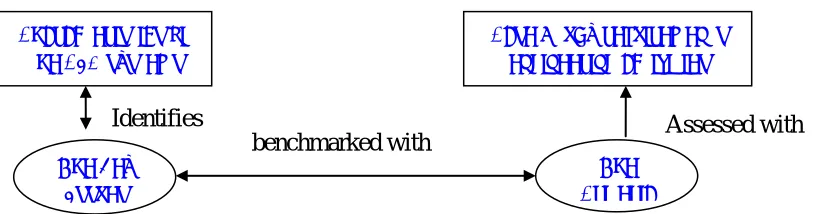
[image:27.612.92.500.208.315.2]leads to analysis of the key issues and criteria through a benchmarking process between the key issues and the criteria. Such analysis enables confirmation of the validation of both the key issues and the criteria by establishing categories, sub-groups, relationships, and possible dependencies (Hammersley and Atkinson, 1983). Figure 1.1 shows the coherent relationships between the groups.
Figure 1.1: Criteria development to assess the requirements engineering experiences
The criteria specified in the book are designed to measure the success of the requirements engineering processes after the implementation of the RE processes in system developments. Therefore, using the criteria for the assessment of the requirements engineering activities in the case studies is more appropriate than the key issues. However, the key issues will be used as part of the validation process of the Proposed RE Process at the end.
After the criteria are benchmarked with the key issues, the requirements engineering carried out in the case study projects is analysed to explore the strengths and the weaknesses according to these criteria. From the analysis of the case studies, strengths and weaknesses, and any problems in the requirements engineering approaches adopted in the case study, projects are clearly identified. The process is then enhanced to cure the
Identifies
The Key Issues
The Criteria Characteristics of
the CIE systems Case Study requirements engineering activities
Chapter 10 Summary and Conclusion
28
requirements engineering process for the future CIE developments. The enhanced requirements engineering framework is validated before proposing it to the CIE community. Because the empirical validation is not possible currently, only theoretical validation is conducted comprehensively. For the empirical validation, the framework should be implemented in a CIE development project. It is done in two steps; internal validation and external validation.
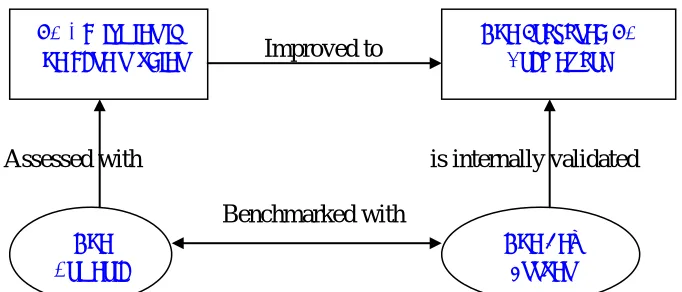
Internal validation is done against the key issues to be explained earlier in chapter5 of the book. The use of the key issues are more appropriate than the criteria for the internal validation because the criteria are designed to measure the success of the requirements engineering process after the implementation while the key issues are actually designed to improve the requirements engineering process before the implementation of the RE process. Lastly, making use of the key issues for internal validation will allow the setting up of a coherent relationship and a good balance between the stages of the research methodology. This is depicted in figure 1.2 below.
Improved to
[image:28.612.121.462.496.642.2]Assessed with is internally validated Benchmarked with
Figure 1.2: interrelations between requirements engineering aspects in the development of the ideal RE framework for CIE systems development
RE Activities in the case studies
The Proposed RE Framework
The Key Issues The
Chapter 10 Summary and Conclusion
The figure denotes the evolution of the development of the proposed RE framework: The association between the key issues and the criteria are established through benchmarking analysis. After the critical analysis and elaboration of the requirements engineering activities in the case studies, the association between the criteria and the case study requirements engineering activities is established in order to evaluate, analyse and measure the success of the requirements engineering processes in the case studies. Based on this evaluation and analysis, a further association is established between the requirements engineering activities in the case studies and the Proposed RE Framework. A final association is established between the key issues and the Proposed RE Framework to enable internal validation.
External validation is conducted through benchmarks against the external assessment models. Two different models are used for the external validation. The REAIMS assessment model (Sommerville and Sawyer, 1997), which is a capability maturity model, and project risk factors determined by Keil (et al 1998), Carr (2000) and CHAOS survey (Standish group, 1995 and 2001).
Chapter 10 Summary and Conclusion
30
REREFENCES
Alshawi M., Putra C W, and Faraj I., (1996), “A Structured Concept For Objects Life Cycle In Integrated environments”, Microcomputers in Civil Engineering, Blackwell, 12, 1997, pp 339-351.
Amor, R.W., Clift, M., Scherer, R., Katranuschkov, P., Turk, Z. and Hannus, M. (1997), “A Framework for Concurrent Engineering – ToCEE”, European Conference on Product Data Technology, PDT Days 1997, CICA, Sophia Antipolis, France, 16 April, pp. 15-22.
Aouad G., Hinks, J., Cooper, R., Sheath M.D, Kagioglou, Sexton, M., (1998), “An IT map for a generic design and construction process protocol”, Journal of Construction Procurement,
Aouad, G., Betts, M., Brandon, P., Brown, F., Child, T., Cooper, G., Ford, S., Kirkham, J., Oxman, R., Sarshar, M. & Young, B., (1994), “ICON (Integration of Construction Information): Integrated Databases for the Design, Procurement and Management of Construction”, Final Report, Department of Surveying & Information Technology Institute, University of Salford.
Chapter 10 Summary and Conclusion
Aouad, G., Lee, A. & Wu, S. (2004), “nD Modelling in Construction: An Integrated Approach”, international journal of Architectural Engineering & Design Management
Arayici, Y., Aouad, G., (2005), “Computer Integrated Construction An Approach to Requirements Engineering”, Journal of Engineering, Construction and Architectural Management Volume 12, Number 2, February 2005, pp194-215,
Augenbroe, G., (1995), “An Overview of the COMBINE Project, Proceedings” ECPPM’94: Product and Process Modelling in the Building Industry, Scherer (ed.), Balkema, pp. 547 - 554.
Björk, BC., (1994), “The RATAS project - an example of co-operation between industry and research toward computer integrated construction”, Journal of Computing in Civil Engineering, ASCE, 8(4), 401-19.
Carr, J. (2000), “Requirements Engineering and Management: the key to designing quality complex systems”, The TQM Magazine, Volume 12, Number 6, pp 400-407, MCB University Press, ISSN 0954-478X
Cardoso, H.L, Oliveira, E. (2005), Virtual Enterprise Normative Framework within Electronic Institutions. Retrieved June 7, 2006 from
Chapter 10 Summary and Conclusion
32
CHAOS Report, (1995), “Software development report”, The Standish Group, published
at
CHAOS Report, (2000), “The Software development report”, The Standish Group,
published at
Chris, C., Hassan, T., Merz, M., White, E., (2001), “The Elegal project: Specifying Legal Terms of Contract in ICT Environment, Journal of ITCON, December 2001,
Cooper, R., Wootton, A., Bruce, M., Morris, B., Roberts, A., (1998), “A Generic Guide to Requirements Capture”, The Research Centre for design and Manufacture, The University of Salford.
Eberlein, A., Leite, J.C., (2002), “Agile Requirements definition: A View from Requirements Engineering”, Time constraint Requirements Engineering workshop, IEEE Joint International Requirements Engineering Conference, Essen, Germany,
Chapter 10 Summary and Conclusion
Froese, T. & Paulson, Jr. B.C., (1994), “OPIS: An Object Model-Based Project Information System”, Microcomputers in Civil Engineering, 9 (1), pp 13-28.
Greening, R. and Edwards, M., (1995), “ATLAS Implementation Scenario, Proceedings” ECPPM’94: Product and Process Modelling in the Building Industry, Scherer (ed.), pp. 467 – 72.
Hammersley, M., Atkinson, P., (1983), “Ethnography, Principles and Practice”, Tavistock, London.
Keil, M., Cule, P.E., Lyytinen, K., Schmidt, R.C., (1998), “A Framework for Identifying the Software Projects Risks”, Communication of the ACM, vol. 41, pp 76-83.
Lavrac, N., Ljubic, P., Jermol M., Papa, G., (2005), “A Decision Support Approach to Modelling Trust in Networked Organisations”, Book Chapter in Innovations in Applied Artificial Intelligence, book series of Lecture Notes in Computer Science by Springer Berlin/ Heidelberg, ISBN 978-3-54026551-1
LEGAL-IST. (2005), “Legal issues for the advancement of the information society technologies—Project website www.legal-ist.org, 2008.
Chapter 10 Summary and Conclusion
34
March (2005)
James W. Moore; editors Pierre Bourque, Robert Dupuis:
Society Press
Marir, F., Aouad, G., Cooper G., (1998), “OSCONCAD: A Model-Based CAD System Integrated With Computer Applications”, Electronic Journal of Construction Information
Technology
McPhee C. and Eberlein A. (2002), “Requirements Engineering for Time-to-Market Projects”, Proceedings of the 9th Annual IEEE International Conference on the Engineering of Computer Based Systems ECBS2002, Lund, Sweden.
Sarshar, M. Betts, M.; Abbott, C.; Aouad, G. (2000), “A Vision for Construction IT 2005-2010”, RICS (Royal Institute of Chartered Surveyors) Research Series, pp1-42.
Sarshar, M., Tanyer, M., Aouad, G., Underwood, J., (2002), “A Vision for Construction IT 2005-2010: Two Case Studies”, Engineering, Construction & Architectural Management, Volume 9, Number 2.
Chapter 10 Summary and Conclusion
Sommerville I., and Sawyer, P., (1997), “Requirements Engineering: A Good Practice Guide”, Chichester, England, John Wiley & Sons.
Sun, M., and Aouad, G., (2000), “Integration Technologies to Support Organisational Changes in the Construction Industry”, 7th ISPE International conference on Concurrent Engineering, Lyon, France, PP. 596-604.
Sun, M., Aouad, G., Bakis, N., Birchall, S., Swan, W., (2000), “GALLICON, A Prototype for the Design of Water Treatment Plants Using an Integrated Project Database” International Journal of Computer Integrated Design and Construction.
Sun Microsystems, Inc. (2004), “Identity Management: Technology Cornerstone of the
Virtual Enterprise”, Retrieved March 7, 2008 from
Wiegers, Karl E. (2003), Software Requirements 2: Practical techniques for gathering and managing requirements throughout the product development cycle, 2nd ed., Redmond: