IJPSR (2016), Vol. 7, Issue 8 (Review Article)
Received on 26 March, 2016; received in revised form, 20 June, 2016; accepted, 30 June, 2016; published 01 August, 2016
STATIN INDUCED MYOTOXICITY AND ITS CONSEQUENCES - AN OVERVIEW
N. Selvasudha * and Kailasam Koumaravelou
PRIST University, Puducherry campus, R.S. No, 24/4, Uruvaiyar road, Abishegapakkam,
Puducherry-605007.Tamilnadu, India.
ABSTRACT: Statins, 3-hydroxymethyl-3-methylglutaryl coenzyme A reductase inhibitors, are considered safe in lowering hyperlipidemia and cardiovascular disease. Statin attempt to reduce cholesterol production in liver in dose dependent manner not only cause the muscle related problem but also leads to other untoward consequence like arthritis, diabetes, neurological disorders which arise as a result of scarcity in cholesterol production. Discontinuation or reduction in the dose of the statin usually leads to resolution of these side effects but the efficacy is questionable. Though the statin had come to market several decades ago, their harmful effects have been well understood very recently only after several randomized trials. The pleiotropic effects of statin have reported many benefits, but lack of randomized clinical trials make it limit to extend its indication beyond lipid lowering effects. There is still a controversy between their benefits and adverse effects of statin. The upcoming research should focus to resolve the above said confliction that could overcome its most adverse events- myopathy. If it so the statin with pleiotropic effect without any myopathic symptoms would be an excellent candidate among all other drugs. In this review, we discussed the myotoxicity, mechanism of myopathy, consequences as a result of statin‟s attempt to reduce cholesterol production, risk factors for myopathy.
INTRODUCTION: Stain, the 3-hydroxy-3-methyl glutaryl coenzyme A reductase (HMG-CO A) inhibitors, are the most prescribed and first choice class of drugs in the treatment and management of hyperlipidemia and related cardiovascular diseases
(CVD).1 These have been long-established in
reducing cardiovascular morbidity and mortality in
low to high risk patients.2 From the introduction of
Lovastatin in 1987 to pitavastatin of late the research has not been ruined in findings of
beneficial to adverse events of statin. 3, 4
QUICK RESPONSE CODE
DOI:
10.13040/IJPSR.0975-8232.7(8).3197-07
Article can be accessed online on: www.ijpsr.com DOI link: http://dx.doi.org/10.13040/IJPSR.0975-8232.7 (8).3197-07
The population reported for statin induced myopathy is significantly less in clinical trials due to restricted criteria followed but it is more in case
of observational studies.5, 6 In large clinical trials 7
the efficacy and safety of statins have been well acknowledged but after long-lasting use of these drugs in unselected population of outpatients
(findings from observational studies), 8 it has been
reported to have unrecognized troublesome adverse effects. 9
Various adverse events had been reported and range from mild to severe. Among these, muscle (ranges from myalgia to rhabdomyolysis) and liver toxicity are major one in which hazard increases due to higher dose, interacting drug and genetic
predisposition leading to death.10, 11 These are not
covered during preclinical testing of statin, but reported during clinical studies and some other
Keywords:
Arthritis, Hyperlipidemia, Pleiotropic Effect, Statin, Myotoxicity,
Correspondence to Author: N. Selvasudha
PRIST University, Puducherry campus, R.S. No, 24/4, Uruvaiyar road, Abishegapakkam, Puducherry-605007. Tamilnadu, India.
statemented only after post marketing surveillance even they succeed FDA approval. One such great example was cerivastatin withdrawal from market
12
and another one was issues about rosuvastatin (wolfe petition recommended to remove it from
market) regarding its muscle and renal toxicity. 13
FDA announced new safety recommendation for high dose of simvastatin which shows increased
risk of myopathy after using 80 mg. 14
However the use of statin has extended
considerably and statin related muscle
complications are becoming wholly characterized. But the precise determination of statin induced myotoxicity in large measure become hard because
of widespread diversity in its clinical
representation. This review gives recent findings in statin muscle toxicity including risk factors,
mechanism of muscle toxicity and its
consequences.
2. Myotoxicity – general:
Myopathy is common term to describe mild
(Myalgia) to severe muscle toxicity
(Rhabdomyolysis) produced by statin use.
Rhabdomyolyis is characterized by release of cellular content into bloodstream especially myoglobin leading to kidney damage and death. Modest compromise exits on how to define
myotoxicity of statin11 which may give the under
diagnosis of this complication. Organizations like American College of Cardiology/American Heart Association/National Heart, Lung and Blood Institute (ACC/AHA/NHLBI), National Lipid Association (NLA) and US Food & Drug administration (USFDA) have standardized the terminology for myopathy yet they all differ in their definition.
According to ACC/AHA/NHLBI clinical advisory board myalgia is muscle pain or weakness with normal creatinine kinase (CK) levels, myositis is
myalgia with increased CK levels and
rhabdomyolysis is muscle symptoms with marked CK elevation (>10×ULN). But as per USFDA rhabdomyolysis is muscle symptoms with marked CK elevation >50×ULN or 10,000 IU/L with renal
compromise.15 The greater part of randomized
controlled trials with statins defined myopathy as an increase in CK (creatinine kinase) > 10 times the
upper limit normal (ULN) with 8 or without muscle
symptoms.16 As a consequence of this difference in
definition of myopathy, the reported incidence of myopathy in different clinical trial differs in their results.8, 16
In randomized controlled trials of statins there was very low risk of myopathy similar to that of placebo. In trials 12,064 subjects were randomized to 20 to 80 mg simvastatin there were 49 cases of definite myopathy in simvastatin 80 mg group and
2 in 20 mg group.17, 18 On the contrary to the low
incidence of myopathy in randomized trials, higher incidence of myopathy has been reported in
observational studies.11, 17 This may be due to
failure to report or document the mild symptoms, application of strict criteria to define myopathy, trials are designed to assess only efficacy but not
mild muscle pain19 or primarily due to exclusion of
patients with risk factors such as older age, female sex, diseases state (renal/ hepatic insufficiency, history of muscle aches, diabetes) etc in large clinical trials.9
All statins can cause muscle toxicity with high doses and also due to drug interactions. But the extent of risk within the therapeutic dose range may fluctuate among statins. This within class variability is due to the statin dosage, the physicochemical properties and pharmacokinetics profile of statin, the concurrent use of agents having drug interaction, genetic factors and other
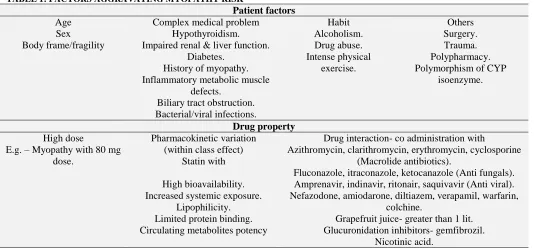
related risk factors (Table 1).10, 20
2.1 Proposed mechanism of statin induced myopathy
Isoprenylated proteins Viz Geranyl phosphate
(GPP) and Farnesyl phosphate (FPP) are
accountable for the generation of a variety of proteins fundamental in an array of cellular
signaling, transportation and transformation
processes that boost cell membrane integrity and
support intracellular signaling. They also
formation of protein and energy exchange
respectively (Fig.1). It has been confirmed after
through study that statin induced myopathy is mainly not due to decline in cholesterol synthesis but due to inhibition of the synthetic pathway of cholesterol production consisting of 25 steps resulting in a cutback synthesis of above said vital
ingredients.21, 22
However, myopathy risk is not related to cholesterol levels alone, there is evidence that increased low density lipoprotein (LDL) receptor sensitivity caused by statins could cause increased
intake of fat or plant sterols into the muscle.23
Recently a theory has projected that vitamin E deficiency as a risk factor for statin induced
myopathy.24
2.2 Consequences of statin induced myotoxicity:
Cholesterol, essential substance of animal cell, act as precursor for Vitamin D3 and sex hormones and helps in preventing cell membranes oxidation and in immune mechanism. But excess cholesterol is
deposited in the artery walls as it travels through the bloodstream and gobble up with special cells in the artery wall, creating a lump in the artery wall which then develops into plaque. By lowering the cholesterol content using statin in unstable plaques will make them more stable and less prone to rupture by reducing heart attack.
But this life saving use of statin (which designed to reduce cholesterol synthesis) unfortunately leads to major consequences. It is believed that the inflammation in artery walls are caused due to low fat diet, since statin attempt to lower further cholesterol level, which contribute itself for heart disease and other health problem. The untoward toxic effects produced as a result of statin attempt to decrease cholesterol synthesis is schematically
represented in Fig. 2.25–38
3. Factors aggravating myotoxicity:
There are various predisposing factors possibly enhancing the risk of statin induced myopathy are
[image:3.612.42.576.390.641.2]summarized in Table 1.11, 23, 39
TABLE 1: FACTORS AGGRAVATING MYOPATHY RISK
Patient factors
Age Sex Body frame/fragility
Complex medical problem Hypothyroidism. Impaired renal & liver function.
Diabetes. History of myopathy. Inflammatory metabolic muscle
defects.
Biliary tract obstruction. Bacterial/viral infections.
Habit Alcoholism. Drug abuse. Intense physical
exercise.
Others Surgery. Trauma. Polypharmacy. Polymorphism of CYP
isoenzyme.
Drug property
High dose
E.g. – Myopathy with 80 mg dose.
Pharmacokinetic variation (within class effect)
Statin with
High bioavailability. Increased systemic exposure.
Lipophilicity. Limited protein binding. Circulating metabolites potency
Drug interaction- co administration with
Azithromycin, clarithromycin, erythromycin, cyclosporine (Macrolide antibiotics).
Fluconazole, itraconazole, ketocanazole (Anti fungals). Amprenavir, indinavir, ritonair, saquivavir (Anti viral). Nefazodone, amiodarone, diltiazem, verapamil, warfarin,
colchine.
Grapefruit juice- greater than 1 lit. Glucuronidation inhibitors- gemfibrozil.
Nicotinic acid.
3.1 Age:
Aging causes alterations in body composition and function embracing reduction in hepatic and renal clearance that alter the pharmacokinetic and pharmacodynamics of drugs. In common the majority data prove that statins lower cholesterol in children just as they perform in adults. Generally
myostitis, myopathy or rhabdomyolysis haven‟t been reported in children on statin in randomized clinical trials, only myalgia was reported. The systematic review (7studies) and meta analysis (4 studies) showed significant LDL lowering but
In adults myopathy occur at a rate of 11 per
100,000 person after chronic treatment, 41 minor
muscle aches and myalgias occur at a equal rate in both statin and placebo control groups reported in
randomized clinical trials (RCT).41, 42 But an
observational study found that 9% of statin users had myopathic events while only 4% of non-statin
users had such events. 43
Older adults have a reduction of cardiovascular disease, stroke and all cause mortality with statin therapy when compared with younger adults. Even though elderly profit from insistent statin therapy to
greater extent than adult,44 they are less likely to
receive a statin prescription.44, 45 The reason may be
concern about adverse event, under representation during early trials, patients with side effects excluded from RCTS, limited life expectancy of older leads to an idea that risk is not worth than benefit. The mechanism of myopathy in elderly is unclear and may be due to age associated factors
like decrease in muscle mass 46 and water holding
capacity, increase in body fat, commorbitities or
taking multiple medications 47 and decrease in
serum protein level which result in higher
concentration of statin leading to higher toxicity.48
3.2Sex:
Feminine have more risk for adverse drug reaction (ADR) compared to males. The basis is difference in body fat content between men and women. Female tend to have high % of body fat, which influence volume of distribution of some drugs,
their half life, including more lipophilic statin. 49
Since women have higher concentration of CYP
3A4, 50 enzyme which metabolize statin, the
toxicity is higher which is evidenced by QResearch
cohort study, 51 which shows two-fold and
three-fold increase for myopathic risk in men and women respectively. Women with type 1 diabetes had a five-fold increased risk of myopathy and this clearly indicate that the female patients are affected by myopathy more than male patients if they have risk factors like hypothyroidism, type 1 diabetes, chronic liver disease and hypertension.
3.3 Comorbidities:
Comorbidities on their own participate a major role in changing the statin metabolism and clearance from the body. Physical condition that could
possibly direct to an accumulation of statins in plasma is considered to be a risk factor for
statin-induced myopathy. 52 Hepatic and renal
insufficiencies, diabetes and metabolic syndrome are examples of conditions that has been reported
to amplify the levels of statins in plasma.53 But
many cardiologists prescribe statins to all patients (people with Type II diabetes also) over a certain age regardless of whether they have metabolic syndrome. This let Food and Drug Administration to warn (new labeling) about the drugs, especially when taken at higher dosage levels.
Management of Hyperlipidemia or cardio
vascular drugs (CVD) with high potency statins chiefly with atorvastatin, rosuvastatin and simvastatin may increase the risk of developing diabetes. Study with 153,840 women without diabetes and with a average age of 63.2 years, after adjusting for other potential variables, including age, race/ethnicity and body mass index found 10,242 new cases of diabetes when adhered to statin use (all statin). This study concluded that diabetes induced by statin is a medication class effect and not related to
potency or to individual statin.54
The several factors is said for increased risk of
new-onset diabetes among patients receiving certain statins including impaired insulin
secretion and inhibited insulin release.55
Coenzyme Q10 depletion caused by statin induce not only muscle fatigue and also the reduced expression of GLUT4 (protein, which is part of the cellular response mechanism, along with insulin, that helps to control blood sugar levels) which in turn contributes to insulin resistance and the onset of type-2 diabetes. The effect were found more with lipophilic statin compared to hydrophilic drug.
56
Thus the patients with history of diabetes will have more risk for myopathy then the patient with new onset of diabetes when treated with statin.
Studies have found the relationship between
myopathy was proposed that this is due to reduction in small guanosine 5‟-triphosphate– binding proteins and reduced cholesterol synthesis causing skeletal myocyte membrane instability. These mechanisms are synergistic when higher dose of statins are prescribed to
hypothyroid patients.57, 58
3.4 Other factors:
One of the most striking metabolic
abnormalities produced by chronic alcohol abuse is the gradual reduction in muscle mass, which appears to be associated with the atrophy of fast twitch (Type II) fibers leading to myopathy. Statin, causing oxidative stress in mitochondria, disturbance in protein synthesis, vitamin D deficiency together synergizes the
myopathy effect when used by alcoholist.53, 59
Augmented physical activity has been
concerned with statin-induced myopathy 60
which is evidenced by study at the Bostan Marathon with increased skeletal muscle injury; CK elevations in statin users compared to non
statin users.61 It is evidenced that statins
possibly will up regulate muscle cell apoptosis (oxidative stress), inflammation and protein catabolism in response to unusual exercise and that statin therapy may negatively influence the firmness of skeletal muscle cell membranes with elevated CK. This is reason for more
distinct muscle damage up regulating
inflammation which consecutively report for the longer recovery time for exercising
patients.62
3.5 Polymorphism:
Since statin induced myopathy is a plasma
concentration dependent adverse reaction,
polymorphism in CYP isoenzyme and drug transporters concerned in disposition of statin
might induce pathopharmacology of statin
especially simvastatin which in turn associated with
myopathy.63, 64 Though statin-induced CK
elevations are dose-dependent, the relationship between plasma levels of statins and the risk for statin-induced myopathy has not been constantly
demonstrated across populations.65 Some
investigators have suggested that a synergistic
interaction between genetic and pharmacological
factor might be reason of statin myopathy. 66 It has
been proposed that statin-induced myopathy is correlated with a single-nucleotide polymorphism
with intron 11 of the SLCO1B1 gene on
chromosome 12. 67 Statins penetrate hepatocytes
through organic anion transport polypeptide (OATP) 1B1, which is coded by the SLCO1B1
gene.68 It was statemented that plasma statin
concentration liable to be higher in people with the above polymorphism, in consequence predisposing
them to adverse effects.67, 69 On the other hand,
modern studies have shown that this polymorphism might be largely associated with
simvastatin-induced myopathy.70
It was identified by SEARCH collaborative group that rs4149056 polymorphism of SLCO1B1 (521C variant) was associated with a 4.5 fold increased risk of myopathy in heterozygotes and 17 fold higher risk in homozygotes when co administered
with simvastatin 80 mg daily. 71 Study of Voora et
al72 found the larger risk of side effects with the
high doses and also pointed out the patients with this polymorphism have 2 fold relative risk. A
retrospective case-control study involving
137 subjects taking simvastatin as a concomitant medication reported that non exercise-induced CK elevation was associated with homozygosity in a genetic variant of the CYP3A enzyme, CYP3A5*3,
which led to a greater degree of muscle damage. 73
The one observational study demonstrated that the SLCO1B1 388A>G and 521T>C polymorphism were associated with a lower risk and higher risk of statin respectively stating role of SLCO1B1
polymorphism in statin tolerability74 and risk is
higher in native American having this
polymorphism.75
One more study identified three genes – COQ2,
ATP2B1, and DMPK – that are accountable for
pathways related to CoQ10 biosynthesis, calcium regulation in the body, and muscular dystonia, respectively, as markers for myalgia in patients
having statin-associated myalgia.76
3.6 High dose/ individual drug effect:
with cerivastatin. This is was due to prospective drug interaction and high dose which led to withdrawal of cerivastatin while there were no fatal cases with fluvastatin. The rate of occurrence of fatal rhabdomyolysis was found with pravastatin and atorvastatin are 0.04, with simvastain 0.12 and
with lovastatin is 0.19.77
The hazard of statin induced muscle toxicity is more liable with higher doses and appears to be more evident with simvastatin dose 80 mg
confirmed by SEARCH TRIAL78 (lead to warning
by FDA in use of high dose of simvastatin). In
PRIMO STUDY6 18.2% of patients on high dose
of simvastatin 40-80 mg experienced muscle toxicity compared with 5.1%- fluvastatin XL 80 mg, While atorvastatin and pravastatin have intermediate effect.
The safety of higher doses of atorvastatin has been assessed in more than 11,000 patients and
insignificant rate of myopathy was observed79 and
reason might be the lack of dose dependency of
muscle adverse effects with atorvastatin.80 In
contrast to above one observational study in unselected population of 7924 patients with hyperlipidemia (France) reported that 14.9% of
patients receiving atorvastatin 40-80 mg
experienced muscle symptoms6 and the prevalence
of muscle related adverse events was considered to increase 4 to 5 fold when dose of atorvastatin was
increased from 40 to 80 mg.80
A meta analysis of 19 randomized statin trials comparing standard doses of all statins except
rosuvastatin accounted that fluvastatin was
associated with the lowest rate of myopathy
compared to other statin.81 The rosuvastatin dose
upto 40 mg have no muscle toxicity but the higher doses appeared to be associated with increased risk
of myopathy.82 The incidence of myopathy might
be increased with higher dose of pravastatin and pitavastatin but there is lack of well assessed
randomized trials.83, 84
There is no conclusive evidence whether there is any difference between various statin in risk of inducing myopathy due to lack of randomized trials. With available data it is understood that an estimate of potential for causing myopathy among
the currently available statins, from least possible to most possible is pravastatin, fluvastatin,
rosuvastatin, atorvastatin, lovastatin and
simvastatin. This variation in incidence of myopathy influenced by dose among same class of drug is attributed to difference in Pharmacokinetic properties of individual drug which discussed in following head.
3.7 Physicochemical, Pharmacokinetic properties/ potency - causes of myopathy:
Statin pharmacological properties that are
associated with statin induced myopathy include high bioavailability and systemic exposure, lipophilicity, limited protein binding, presence of circulating metabolites and drug interactions via
CYP450 isoenzyme or glucoronidation pathways.23,
85
Lovastatin, simvastatin and atorvastatin are metabolized by CYP3A4, rosuvastatin minimally by CYP2C9, fluvastatin by CYP2C9 while pravastatin undergo sulfation. Among statin metabolized by CYP3A4 isoenzyme, Lovastatin and simvastatin are considered as sensitive substrates because their levels increased 5 fold or higher by CPP3A4 inhibitors while atorvastatin
interact lesser extent.86 Simvastatin is likely to be
more sensitive to CYP3A4/5 inhibition than
atorvastatin because extensive first pass
metabolism results in systemic bioavailability less
than 5% (atorvastatin 12%).87 Pitavastatin
minimally metabolized by CPY450 enzyme are expected to have a lower risk of drug- drug
interaction and related adverse effects.88
Pravastatin, fluvastatin and rosuvastatin are hydrophilic and thought to penetrate less likely to myocyte membrane compared to more lipophilic statin viz simvastatin, lovastatin and atorvastatin for which higher incidence of myopathy was
reported due to higher penetration.46, 89 Being
hydrophilic rosuvastatin generally require higher dosing for efficacy but it not so and associated with lower incidence drug interaction and thereby less adverse events. Rosuvastatin is considered to be
most potent with longest half life, 90 so high dose
may lead to more adverse effects. 91 Fluvastatin and
obstruction patients will have increased risk of myopathy as bile is primary route of excretion of statins. Since gemfibrosil affect glucoronidation
pathway of statin it lead to toxic level of statin.92
From pharmacokinetic standpoint, rosuvastatin and fluvastatin have a profile to yield fewer or no adverse events since it have high hepatoselectivity,
low distribution in muscle cell due to
hydrophilicity, highly bound to serum protein, low rates of metabolism via CYP450, little tendency of drug interaction and low or moderate systemic
bioavailability.93 But all this benefits may be
overhidden by other factors such as potency. The potency emerges to be fundamental predictor of adverse effect reporting risk. Fluvastatin having lowest potency was not often prescribed but associated with 74% of adverse effects. So being high potency the rosuvastatin and fluvastatin may lead to higher incidence of myopathy while atorvastatin and simvastatin showed intermediate risk, pravastatin and lovastatin appeared to have
lowest risk.91, 94 Therefore merging both
pharmacological properties and potency it‟s tough to predict the statin with expected safety profile. More head to head randomized control trials are desirable to resolve this issue.
3.8 Drug interactions:
More than half of statin related rhabdomyolysis cases engrosses two important features, one is
interaction with agents that share statin
metabolizing pathway and another is hindrance of transporter system (by the specific drugs) that is responsible for hepatic uptake and excretion of statin.
Co administration of a statin with drugs Viz
Cyclosporine, macrolide antibiotics, anti virals etc (Table 1) metabolized by the same CYP3A4 isoenzyme elevate the statin level and risk of myopathy. The risk is fewer with fenofibrate than gemfibrosil, this may be because gemfibrosil restrains hepatic glucuronidation of statins, there by
interfering with statin elimination.92 Regardless of
the hypothetical benefit of co administration of statin which is not metabolized by CYP3A4 isoenzyme with CYP3A4 inhibitors there still stays a modest risk of myopathy due to other metabolic
and transporter mechanism.95
The organic anion-transporting polypeptide
(OATP) 1B1 (gene name SLCOB1) arbitrates the hepatic uptake of all statins to a inconsistent level and the efflux transporters P-Glycoprotein / the breast cancer resistance protein (BCRP, gene name ABCG2) are engaged in the transport of most of
the statin from the hepatocytes into bile.96, 97
Therefore drugs like cyclosporine, diltiazem that inhibit P-Glycoprotein may increase statin levels
and precipitate toxicity.98 With narrow therapeutic
range drugs such as warfarin and digoxin statin increase anti coagulation effect, the reason expected to be that statin (simvastatin) inhibit
metabolism of warfarin through CYP2C9.87
DISCUSSION: The statin, indicated for lowering LDL-C is considered to be a life saver from 1980s for low and high risk cardiac patients. The cerivastatin withdrawal (due to myotoxicity) made researcher to aware of adverse effects produced by statin and more randomized control trials and observational studies confirmed the life threatening effects of this life saving drug. This focus on the adverse event mechanism fortunately leads to the beneficial effect of statin through its pleiotropic effect which arises as a result of blockage of production of important key products in de novo
synthesis viz isoprenoids.
The endothelial function, enhancing the stability of atherosclerotic plaques, decreasing oxidative stress and inflammation, and inhibiting the thrombogenic response are some of reported pleiotropic effects. Other beneficial effect reported are effects on the
immune system, CNS, bone, in cancer treatment 99
and in acute coronary syndrome 100 etc. These
effects have been well explained in many review and research articles from past few years.
In contrast to studies reporting positive effects on survival, clinical status and cardiac function in
heart failure, two large RCTs101, 102 have not
yielded significant improvements of the primary endpoints in patients treated with rosuvastatin compared with placebo. The article published in natural news explained the negative impact on the pleiotropic effects of statin.
cholesterol level it contributes itself for heart disease and other health problem. In contrast to above statement, studies have reported the anti
inflammatory effect of statin.103 One side it block
the production of important antioxidant
coenzymeQ10 causing oxidative stress, myopathy and death. On the other hand it preserves
endogenous antioxidant superoxide dimutase
improving endothelial function.104 Decrease in
caveoline production by statin tend to produce arrhtymias/ cardiac arrest, in contrary it was reported that less caveoline production by statin cause increased production of NO which in turn
dilate the blood vessels.104 The risk factor for statin
myopathy restricted the use of this drug in renal,
diabetic and elderly patients (Table 1). But now
clinical studies have explored the beneficial use of
statin in patients with above said risk condition.105
The conflicting results of these studies make us to confound whether the pleiotropic effects balance the harmful effects caused by statin which inhibit the cholesterol a vital nutrient for well being. This is the biggest challenge of researcher to clarify the above question through their research findings.
Some alternate approaches have been proposed to reduce the adverse events in treatment of hyperlipidemia. The researchers at Brigham and Women's Hospital have revealed that in patients previously on a statin, the addition of a new drug, called AMG 145, can lessen LDL cholesterol levels by up to 66% after 12 weeks. AMG 145 is a monoclonal antibody, binds to a protein that normally drives LDL cholesterol receptors for destruction. By blocking that protein, AMG 145 guards the receptors from being devastated, thus increasing the number of LDL cholesterol receptors on the surface of the liver that facilitate removable of bad cholesterol from the bloodstream. The highest dose given every two weeks also allowed 93.5% of patients to achieve the most tough cholesterol-lowering goals without serious adverse
events.106
Another finding demonstrated that microRNA-30c (miR-30c), a genetic regulator, interacts with MTP
(Microsomal Triglyceride transfer Protein,
contribute to hyperlipidemia) and induces its degradation, leading to reductions in MTP activity,
the production of lipoproteins, plasma lipids, and atherosclerosis. This molecule also reduces lipid synthesis independently of MTP thereby avoiding complications associated with drug therapies aimed at lowering lipoprotein production. The authors conclude that a medication mimicking miR-30c could potentially be effective in reducing hyperlipidemia in humans without producing any
serious side effects.107
Introduction of new drug entities to a market will take the lifespan of a human. The technologies like nanoformulation encompassing the natural agents having own hyperlipidemic action have benefits like negligible side effects, bypassing first pass metabolism with controlled release of drug, targeted action, reduced dose and increased bioavailabilty might give resolution for this issue. So more research has to be focused in formulating new dosage form of existing statin molecule to bypass the statin induced myopathy ranging from myositis to rhabdomyolysis.
CONCLUSION: Statin, the first line drug for the management of cardiovascular disease, have serious muscle related problem. Though the clinical studies show the insignificant result in myopathic effects, the percentage of population related to this problem is more in case of observational studies. The statin by blocking the mevalonate production leads not only cholesterol reduction also reduce the major key products for cell activities like coenzyme Q10, isoprenoids etc. This leads to untoward effects, sometimes the adverse effects may also be cardiovascular crisis for which statin is prescribed. This problem aggravates if patients exhibit some risk factors like diabetes, alcoholism, genetic mutation, exercise etc.
DECLARATION OF INTEREST: The authors state no conflict of interest and have received no payment in preparation of this manuscript.
ACKNOWLEDGEMENT: Financial support from WOS-B 2011 scheme – Department of science and technology, Government of India (Ref. No. SSD/SS/O26/2011) is acknowledged.
REFERENCES:
1. Stone NJ, Robinson JG, Lichtenstein AH, et al. 2013 ACC/AHA guideline on the treatment of blood cholesterol to reduce atherosclerotic cardiovascular risk in adults: a report of the ACC/AHA task force on practice guidelines. J Am Coll Cardiol. 2014; 63(25 Pt B):2889–934.
2. Fahey T, Smith S. Retraction of statins article is not in the public interest: better characterisation of benefits and risks is crucial. BMJ. 2014; 348:g4028.
3. Sirtori CR. The pharmacology of statins. Pharmacol Res. 2014;88:3–11.
4. Teramato T, Shimano H, Yokote K, Urashima M. New evidence on pitavastatin: efficacy and safety in clinical studies. Expert Opin Pharmacother. 2010;11:817–28. 5. Heart Protection Study Collaborative Group. MRC/BHF heart
protection study of cholesterol lowering with simvastatin in 20,536 high-risk individuals: a randomized placebo-controlled trial. Lancet 2002;360:7–22.
6. Jacobson TA. The NLA task force on statin safety – 2014 update. J Clin Lipidol 2014;8:S1–S4.
7. Ridker PM, Danielson E, Fonseca FAH, et al on behalf of the JUPITER Trial Study Group. Reduction in C-reactive protein and LDL cholesterol and cardiovascular event rates after initiation of rosuvastatin: a prospective study of the JUPITER trial. Lancet. 2009; 373:175–82.
8. Bruckert E, Hayem G, Dejager S, Yau C, Begaud B. Mild to moderate muscular symptoms with high dosage statin therapy in hyperlipidemic patients – the PRIMO study. Cardiovasc Drugs Ther. 2005; 19:403–13.
9. Ganga HV, Slim HB, Thompson PD. A systematic review of statin-induced muscle problems in clinical trials. Am Heart J. 2014;168:6–15.
10. Peters BJ, Klungal OH, Visseren FL, De boer A, Maitland-van der Zee AH. Pharmacogenomic insights into treatment and management of statin induced myopathy. Genome Med. 2009;1:120.
11. Joy TR, Hegele RA. Narrative review: statin-related myopathy. Ann Intern Med. 2009; 150:858–68.
12. FDA Talk Paper T01-34, 8 Aug 2001.URL: http://www.fda.gov. Accessed 17 Sept 2013.
13. Grundy SM. The issue of statin safety: where do we stand? Circulation. 2005; 111:3016–9.
14. http://www.fda.gov/Drugs/DrugSafety/ucm256581.htm. Accessed 17 Sep 2013.
15. Pasternak RC, Smith SC, Bairey-Merz CN, et al. ACC/AHA/NHLBI clinical advisory on the use and safety of statins. Stroke. 2002;33:2337–41.
16. Shepherd J, Cobbe SM, Ford I, et al. Prevention of coronary heart disease with pravastatin in men with hypercholesterolemia. N Eng J Med. 1995;333:1301–7. 17. Abd TT, Jacobson TA. Statin induced myopathy: a review and
update. Expert Opin Drug Saf. 2011;10:373–87.
18. Bowman L, Armitage J, Bulbulia R, Parish S, Collins R. Study of the effectiveness of additional reductions in cholesterol and homocysteine (SEARCH): characteristics of a randomized trial among 12064 myocardial infarction survivors. Am Heart J. 2007;154(5): 815–23, 823.e1–6.
19. Buettner C, Davis RB, Leveille SG, et al. Prevalence of musculoskeletal pain and statin use. J Gen Intern Med. 2008;23:1182–6.
20. Fung EC, Crook MA. Statin myopathy: a lipid clinic experience on the tolerability of statin rechallenge. Cardiovasc Ther. 2011;30(5):212–8.
21. Marcoff L, Thompson PD. The role of coenzyme Q10 in statin associated myopathy: a systemic review. J Am Cardiol. 2007;49:2231–7.
22. Vaklavas C, Chatzizisis YS, Ziakas A, Zamboulis C, Giannoglou GD. Molecular basis of statin associated myopathy. Atherosclerosis. 2009;202:18–28.
23. Venero CV, Thompson PD. Managing statin myopathy. Endocrinol Metab Clin North Am. 2009;38:121–36.
24. Galli F, Iuliano L. Do statin cause myopathy by lowering vitamin E levels? Med Hypotheses. 2010;74:707–9.
25. Hamann P, Cooper R, McHugh N, Chinoy H. Statin-induced necrotizing myositis – a discrete autoimmune entity within the “statin-induced myopathy spectrum”. Autoimmun Rev. 2013; 12(12):1177–81. doi:10.1016/j.autrev.2013.07.001.
26. Taylor BA, Lorson L, White M, Thompson PD. A randomized trial of coenzyme Q10 in patients with confirmed statin myopathy. Atherosclerosis. 2015;238(2):329–35. doi:10.1016/j.atherosclerosis.2014.12.016.
27. Ząber K, Śliwowska B, Jasiński T. Statin-induced autoimmune necrotizing myositis. Reumatologia. 2015;53(6):341–4. doi: 10.5114/reum.2015.57641.
28. Seneff S, Wainwright G, Mascitelli L. Is the metabolic syndrome caused by a high fructose, and relatively low fat, low cholesterol diet? Arch. Med. Sci. 2011;7:8–20.
29. Vila L, Rebollo A, Alsteisson GS, et al. Reduction of liver fructokinase expression and improved hepatic inflammation and metabolism in liquid fructose-fed rats after atorvastatin treatment. Toxicol Appl Pharmacol. 2011;251:32–40. 30. Marcuzzi A, Piscianz E, Zweyer M, Bortul R, Loganes C,
Girardelli M, Baj G, Monasta L, Celeghini C. Geranylgeraniol and neurological impairment: involvement of apoptosis and mitochondrial morphology. Int J Mol Sci. 2016;17:365. doi: 10.3390/ijms17030365.
31. Pastori D, Polimeni L, Baratta F, Pani A, et al. The efficacy and safety for the treatment of non-alcoholic fatty liver disease. Digest Liver Dis. 2015;47:1–4.
32. Goldstein MR, Mascitelli L. Statin-induced diabetes: perhaps, its the tip of the iceberg. QJM, published online, 2010. Accessed 13 Sept 2013.
33. Gibson Wood W, Igbavboa U, Muller WE, Eckert GP. Statins, Bcl-2 and apoptosis: cell death or cell protection? Mol Neurobiol. 2013;48(2): 308–14. doi:10.1007/s12035-013-8496-5.
34. Mallinson JE, Marimuthu K, et al. Statin myalgia is not associated with reduced muscle strength, mass or protein turnover in older male volunteers, but is allied with a slowing of time to peak power output, insulin resistance and differential muscle mRNA expression. J Physiol. 2015;593(5):1239–57.
35. Mansi I, Frei CR, et al. Statins and musculoskeletal conditions, arthropathies, and injuries. JAMA Int Med. 2013;173(14):1–15.
36. Barrientos G, llanos P, et al. Cholesterol renewal from adult skeletal muscle impairs excitation – contraction coupling and aging reduces caveolin-3 and alters the expression of other triadic proteins. Front Physiol 2015;6(105):1–15. doi: 10.389/tphyis201500105.
37. Patel HH, Zhang S, Murray F et al. Increased smooth muscle cell expression of caveolin-1 and caveolae contribute to the pathophysiology of idiopathic pulmonary arterial hypertension. FASEB J. 2007;21:2970–9.
implications for risk assessment, prevention and treatment. Drug Saf. 2010;33:171–87.
39. O‟Gorman CS, Higgins MF, O‟Neill MB. Systematic review and metaanalysis of statins for heterozygous familial hypercholesterolemia in children: evaluation of cholesterol changes and side effects. Pediatr Cardiol. 2009;30(4):482–9. 40. Law M, Rudnicka AR. Statin safety: a systematic review. Am
J Cardiol. 2006;97:52c–60c.
41. Armitage J. The safety of statins in clinical practice. Lancet. 2007;370:1781–90.
42. Nichols GA, Koro CE. Does statin therapy initiation increase the risk of myopathy? An observational study of 32,225. Clin Ther. 2007;29:1761–70.
43. Maroo BP, Lavie CJ, Milani RV. Secondary prevention of coronary heart disease in elderly patients following myocardial infarction: are all HMG-COA reductase inhibitors alike? Drugs Aging. 2008;25:649–64.
44. Pedro-Botet J, Climent E, Chillarón JJ, Toro R, Benaiges D. Statins for primary cardiovascular prevention in the elderly. J Geriatric Cardiol. 2015;12:431−8.
45. Wilmot KA, Khan A, Krishnan S, Eapen DJ, Sperling L. Statin in the elderly A patient-focused approach. Clin Cardiol. 2015;38(1):56–61.
46. Russo G, Pintaudi B, et al. Age- and gender-related differences in LDL – cholesterol manager in outpatients with type 2 diabetes mellitus. Int J Endocrinol.2015; 8, article id 957105. doi: 10.11.55/ 2015/957105.
47. David Spence J, Dresser GK. Overcoming challenges with statin therapy. J Am Heart Assoc. 2016;5:e002497. pp. 1–15. 48. Smiderale L, et al. Evaluation of sexual dimorphism in the
efficacy and safety of simvastatin/atorvastatin therapy in a southern Brazilian cohort. Cardiol. 2014;103(1):3–40. 49. Wolbold R, Klein K, Burk O, et al. Sex is a major determinant
of CPY3A4 expression in human liver. Hepatology. 2003;38:978–88.
50. Hippisley-Cox J, Coupland C. Individualising the risks of statins in men and women in England and Wales: population-based cohort study. Heart. 2010;96:939–47.
51. Young JB, Ghobrial II. Autoimmune statin-induced myopathy: a case report. J Commun Hosp Int Med Persp. 2015; 5:28374 (4 pages). doi: 10.3402/jchimp.v5.28374. 52. Sathasivam S. Statin induced myotoxicity. Eur J Intern Med.
2012; 23:317–24.
53. Culver AL, Ockene LS, Balasubramanian R, Olendzki BC, Sepavich DM, Wactawski-Wende J, Manson JE, Qiao Y, Liu S, Merriam PA, Rahilly-Tierny C, Thomas F, Berger JS, Ockene JK, Curb JD, Ma Y. Statin use and risk of diabetes mellitus in postmenopausal women in the women‟s health initiative. Arch. Int. Med. 2012. doi: 10.1001/archinternmed.2011.625.
54. Bern A, et al. Use of statins and the incidence of type 2 diabetes mellitus. Rev Assoc Med BrAs. 2015;61(4):375–80. 55. Oregon State University. Co-Q10 deficiency may relate to
concern with statin drugs, higher risk of diabetes. Sci Daily. 2013. Retrieved July 21, 2013, from http://www. sciencedaily.com/release/2013/04/130410131458.htm. 56. Bar SL, Holmes DT, Frohlich J. Asymptomatic
hypothyroidism and statin-induced myopathy. Can Fam Physician. 2007;53:428–31.
57. Quari FA. Severe rhabdomyolysis and acute renal failure secondary to use of simvastatin in undiagnosed hypothyroidism. Saudi J Kidney Dis Transpl. 2009;20:127–9. 58. Alcoholism: Clinical & Experimental Research. Vitamin D
deficiency may contribute to alcohol-related muscular weakness. Sci Daily. 2012. Retrieved July 25, 2013, from http://www.sciencedaily.com/release/2012/12/121214190935. htm.
59. Parker BA, Thompson PD. Effect of statins on skeletal muscle: exercise, myopathy, and muscle outcomes. Exerc Sport Sci Rev. 2012; 40:188–94.
60. Parker BA, Augeri AL, Capizzi JA, et al. Effect of statins on creatine kinase levels before and after a marathon run. Am J Cardiol. 2012;109:282–7.
61. Urso ML, Clarkson PM, Hittel D, Hoffman EP, Thompson PD. Changes in ubiquitin proteasome pathway gene expression in skeletal muscle with exercise and statins. Arterioscler Thromb Vasc Biol. 2005;25:2560–6.
62. Hu M, To KK, Mak VM, Tomlinson B. The ABCG2 transporter and its relations with the pharmacokinetics, drug interaction and lipid lowering effects of statins. Expert Opin Drug Metab Toxicol. 2011;7:49–62.
63. Bitzur R, Kamari Y, Cohen H, Harats D. Intolerance to statins: mechanisms and management. Diabetes Care. 2013;36(2):s325–331.
64. Ghatak A, Faheem O, Thompson PD. The genetics of statin-induced myopathy. Atherosclerosis. 2010;210:337–43. 65. Harst P, Brunner EJ, Tybjaerg-Hansen A, et al.
HMG-coenzyme A reductase inhibition, type 2 diabetes, and bodyweight: evidence from genetic analysis and randomised trials. Lancet. 2014. doi: 10.1016/S0140-6736(14)61183-1. 66. Luzum JA, Kitzmiller JP, Heather M, et al. GATM
polymorphism associated with the risk for statin-induced myopathy does not replicate in case-control analysis of 715 dyslipidemic individuals. Cell Metab. 2015;21:622–7.doi: 10.1016/j.cmet.2015.03.003.
67. Wilke RA, Ramsey LB, Johnson SG, et al. The clinical pharmacogenomics implementation consortium: CPIC guideline for SLCO1B1 and simvastatin-induced myopathy. Clin Pharmacol Ther. 2012;92:112–7.
68. Pasanen MK, Fredrikson H, Neuvonen PJ, Niemi M. Different effects of SLCO1B1 polymorphism on the pharmacokinetics of atorvastatin and rosuvastatin. Clin Pharmacol Ther. 2007;82:726–33.
69. Brunham LR, Lansberg PJ, Zhang L, et al. Differential effect of the rs4149056 variant in SLCO1B1 on myopathy associated with simvastatin and atorvastatin. Pharmacogenomics J. 2012;12:233–7.
70. SEARCH Collaborative Group. SLCO1B1 variants and statin-induced myopathy – a genowide study. N Engl J Med. 2008;359:789–99.
71. Voora D, Shah SH, Spasojevic I, et al. The SLCO1B1*5 genetic variant is associated with statin induced side effects. J Am Coll Cardiol. 2009;54:1609–16.
72. Wilke RA, Moore JH, Burmester JK. Relative impact of CYP3A genotype and concomitant medication on the severity of atorvastatin-induced muscle damage. Pharmacogenet Genom. 2005; 15:415–21.
73. Donnelley LA, Doney AS, Tavendale R, Lang CC, Pearson ER, Colhoun HM, et al. Common nonsynonmous substitutions in SLCO1B1 predispose to statin intolerance in routinely treated individuals with type 2 diabetes: a go DARTS study. Clin Pharmacol Ther. 2011; 89:210–6.
74. Santos PC, Soares RA, Nascimento RM, et al. SLCO1B1 rs4149056 polymorphism associated with statin-induced myopathy is differently distributed according to ethnicity in the Brazilian general population: Amerindians as a high risk ethnic group. BMC Med Genet. 2011; 12:136.
75. Ruaño G, Windemuth A, Wu AH, et al. Mechanisms of statin-induced myalgia assessed by physiogenomic associations. Atherosclerosis. 2011; 218:451–6.
76. Staffa JA, Chang J, Green L. Cerivastatin and reports of fatal rhabdomyolysis. N Engl J Med. 2002; 346:539–40.
77. Armitage J, Bowman L, Wallendszus K, Bulbulia R, Ranimi K, Haynes R, et al. Intensive lowering of LDL cholesterol with 80 mg versus 20 mg simvastatin daily in 12,064 survivors of myocardial infaraction: a double blind randomosed trial. Lancet. 2010; 376:1658–69.
79. Athyros VG, Tziomalos K, Karagiannis A, Mikhailidis DP. Atorvastatin: safety and tolerability. Expert Opin Drug Saf. 2010; 9:667–74.
80. Yuet WC, et al. Statin-associated adverse events. Clin Med Insights Therapeut 2015; 7:17–24. doi: 10.4137/CMt.s18865. 81. Toth PP, Dayspring TD. Drug safety evaluation of
rosuvastatin. Expert Opin Drug Saf. 2011; 10:969–86. 82. Alsheikh-Ali AA, Karas RH. Safety of lovastatin/extended
release niacin compared with lovastatin alone, atorvastatin alone, pravastatin alone and simvastatin alone (from the United states Food and Drug Administration adverse event reporting system). Am J Cardiol. 2007;99(3):379–81. 83. Da Silva PM. Are all statin the same? Focus on the efficacy
and tolerability of pitavastatin. Am J Cardiovasc Drugs. 2011;11:93–107.
84. Eckel RH. Approach to the patient who is intolerant of statin therapy. J Clin Endocrinol Metab. 2010; 95:2015–22. 85. Clinically significant statin drug interactions. Pharmacist‟s
letter/Prescriber‟s letter. 2009; 25:250812.C.
86. Neuvonen C, Niemi M, Backman JT. Drug interaction with lipid lowering drugs: mechanism and clinical relevance. Clin Pharmacol Ther. 2006; 80:565–81.
87. Corsini A, Ceska R. Drug-drug interactions with statin: with pitavastatin overcome the statins „Achilles‟ heel? Curr Med Res Opin. 2011; 27:1551–62.
88. McKenney JM, Davidson MH, Jacobson TA, Guyton JR. National lipid association statin safety assessment task force. Final conclusions and recommendations of the National lipid Association statin safety assessment task force. Am J Cardiol. 2006; 97:89C–94C.
89. Jacobson TA. Overcoming „ageism‟ bias in the treatment of hypercholesterolaemia: a review of safety issues with statin in the elderly. Drug Saf. 2006;29(5):421–48.
90. Hoffman KB, Kraus C, Dimbil M, Golomb BA. A survey of the FDA‟s AERS database regarding muscle and tendon adverse events linked to the statin drug class. PLoS One. 2012;7(8):E42866.
91. Jones PH, Davidson MH. Reporting rate of rhabdomyolysis with fenofibrate+statin versus gemfibrosil+any statin. Am J Cardiol. 2005; 95:120–2.
92. Stores ES, Thompson PD, Corsini A, Vladutiu GD, Road FJ, Ray KK. Statin – associated muscle symptoms: impact on statin therapy – European Atherosclerosis Society consensus panel statement on assessment, aetiology and management. Eur Heart J. 2015; 36:1012–22.
93. Cham S, Evans MA, Denenberg JO, Golomb BA. Statin-associated muscle related adverse effects: a case series of 354 patients. Pharmacotherapy. 2010; 30:541–53.
94. Strandell J, Bate A, Hagg S, Edwards IR. Rhabdomyplysis a result of azithromycin and statins: an unrecoganized interaction. Br J Clin Pharmacol. 2009; 68:427–34.
95. Frishman WH, Horn J. Statin-drug interactions: not a class effect. Cardiol Rev. 2008; 16:205–12.
96. Ieiri I, Higuchi S, Sugiyama Y. Genetic polymorphisms of uptake (OATP1B1, 1B3) and efflux (MRP2, BCRP) transporters: implications for inter- individual difference in pharmacokinetics and pharmacodynamics of statin and other clinically relevant drugs. Expert Opin Drug Metab Toxicol. 2009; 5:703–29.
97. Jia Su, Hongyu Xu, Jun Yang, Qinglin Yu, Shujun Yang, Jianjiang Zhang, Qi Yao, Yunyun Zhu, Yuan Luo, Lindan Ji, Yibo Zheng and Jingbo Yu. ABCB1 C3435T polymorphism and the lipid lowering response in hypercholesterolemic patients on statins: a meta-analysis. Lipids Health Dis. 2015;14:122. 1–19.
98. Lopez-Pedrera C, Ruiz-Limon P, Valverde-Estepa A, et al. To cardiovascular disease and beyond: new therapeutic perspectives of statins in autoimmune diseases and cancer. Curr Drug Targets. 2012;13(6):829–41.
99. Sposito AR, Aguiar Filho GB, Aarao AR, et al. Statins in acute coronary syndromes. Arq Bras Cardiol. 2011;97(4):350– 6.
100.Kjekshus J, Apetrei E, Barrios V, et al. Rosuvastatin in older patients with systolic heart failure. N Engl J Med. 2007;357(22):2248–61.
101.Tavazzi L, Maggioni AP, Marchioli R, et al. Effect of rosuvastatin in patients with chronic heart failure (the GISSI-HF trial): a randomised, double-blind, placebo-controlled trial. Lancet. 2008;372(9645):1231–9.
102.Mihos CG, Santana O. Pleiotropic effects of the HMG-CoA reductase inhibitors. Int J Gen Med. 2011;4:261–71.
103.Liao JK, Laufs U. Pleiotropic effects of statin. Pharmacol Toxicol. 2005; 45:89–118.
104.Olafsdottir E, Aspelund T, Sigurdsson G. Effects of statin medication on mortality risk associated with type 2 diabetes in older persons: the population-based ACES-Reykjavik study. BMJ. 2011; 1:E000132.
105.Soh J, Iqbal J, Queiroz J, Hernando CF, Hussain MM. MicroRNA-30c reduces hyperlipidemia and atherosclerosis in mice by decreasing lipid synthesis and lipoprotein secretion. Nat Med. 2013; 19:892–900.
106.Giugliano RP, Desai NR, Kohli P et al. Efficacy, safety, and tolerability of a monoclonal antibody to proprotein convertase subtilisin/kexin type 9 in combination with a statin in patients with hypercholesterolaemia (LAPLACE-TIMI 57): a randomised, placebo-controlled, dose-ranging, phase 2 study. Lancet. 2012; 380(9858):2007–17.
All © 2013 are reserved by International Journal of Pharmaceutical Sciences and Research. This Journal licensed under a Creative Commons Attribution-NonCommercial-ShareAlike 3.0 Unported License.
This article can be downloaded to ANDROID OS based mobile. Scan QR Code using Code/Bar Scanner from your mobile. (Scanners are available on Google Playstore)
How to cite this article: