ORIGINAL RESEARCH ARTICLE
LONG TERM EFFECT OF RADIAL NERVE MOBILIZATION ON RANGE OF MOTION AND
FUNCTION IN COMPUTER USERS WITH LATERAL ELBOW PAIN
1
Dr. Trilok Chand Mahajan,
2Dr. Dhruv Taneja and
3Dr. Manoj Kumar Mathur
1
MPT(Musculoskeletal & Sports), Chief Physiotherapist Spine care and Ortho Care Hospital, Bangalore,
Karnataka, India 560023
2
MPT(Musculoskeletal & Sports), Assist Professor, Department of Physiotherapy, Maharaj Vinayak Global
University, Jaipur, India
3
MPT(Musculoskeletal Disorders). Assist professor, Dept of Physiotherapy, Maharaja Vinayak Global
University, Jaipur Physiotherapy College, Jaipur Rajasthan, India
ARTICLE INFO ABSTRACT
Background: Lateral elbow pain is a frequently reported condition in computer professionals. There is little known about the effect of radial nerve mobilization which is used to treat lateral elbow pain and its effect on the functional activities. The purpose of this study was to investigate the long term effect of radial nerve mobilization on functional activities and ROM in computer users with lateral elbow pain.
Objective: To determine the long term effect of radial nerve mobilization on range of motion and functions in computer professionals with lateral elbow pain.
Method: This study was carried out with 30 subjects, who had lateral elbow pain. Group A (n =15) had received radial nerve mobilization along with conventional therapy. Group B (n =15) was treated with conventional therapy alone. Outcome measures were used Goniometer for ROM and PSFS for functions. All patients received ten treatment sessions initially. After that they were advised to do unsupervised home exercises for six months with a follow up in every two weeks.
Result: In group A the ROM score improved which was statistically significant (p < 0.05). In group B the ROM score improved but it was statistically not significant (p > 0.05). In group A and group B the PSFS score improved which was statistically significant (p < 0.05). But while comparing the scores in between groups there was no significant difference (p > 0.05).
Conclusion: There was no significant difference in between the groups in improvement in ROM and PSFS score. Hence according to this study radial nerve mobilization and conventional therapy both are having similar effects on ROM and PSFS score in management of lateral elbow pain in computer professionals.
Copyright ©2018, Trilok Chand Mahajan et al.This is an open access article distributed under the Creative Commons Attribution License, which permits unrestricted use, distribution, and reproduction in any medium, provided the original work is properly cited.
INTRODUCTION
Computers have become an indispensible part of modern life, being used in every aspect of life. Technological advancement has ushered in a new genre of occupational health problem, The occupational health problems is slowly awakening to this group of modern occupational diseases, which are slowly taking its roots among the information technology (IT) professionals.
*Corresponding author: Dr. Trilok Chand Mahajan,
MPT(Musculoskeletal & Sports), Chief Physiotherapist Spine care and Ortho Care Hospital, Bangalore, Karnataka, India 560023
These problems if ignored can prove debilitating and can cause crippling injuries. It can also influence the performance of a student and hence in all the society also has to bear the cost. Upper limb pain and dysfunction are frequent complaints associated with computer work. Physical findings in computer operators suggest3 that at specific anatomic locations with narrow passages nerve trunks may be compressed, tethered or fixed by surrounding structures. Accordingly, a rational preventive approach would aim to maintain nerve-mobility at these locations. This may be accomplished by influencing gradients of tissue pressure in order to improve capillary blood
ISSN: 2230-9926
International Journal of Development Research
Vol. 08, Issue, 01, pp.18448-18455, January,2018
Article History:
Received 25th October, 2017
Received in revised form 06th November, 2017
Accepted 20th December, 2017
Published online 31st January, 2018
Key Words:
Radial Nerve Mobilization, Lateral Elbow Pain, Conventional Therapy, Computer Professional.
Citation: Dr. Trilok Chand Mahajan, Dr. Dhruv Taneja and Dr. Manoj Kumar Mathur. 2018. “Long term effect of radial nerve mobilization on range of motion and function in computer users with lateral elbow pain”, International Journal of Development Research, 08, (01), 18448-18455.
flow and venous return in nerves4,5 and by re-establishing muscle balance. Lateral elbow pain is one of the most common musculoskeletal problems reported by computer professionals and has been attributed to several causes8-13. For example, in a detailed examination of injured workers who were predominantly computer users, 33% were identified as having lateral epicondylosis7. The patho-anatomic mechanisms behind symptoms of lateral elbow pain are unknown, but local vascular abnormalities14, thermographic changes15 and minor nerve entrapment16-18 have been investigated. Nerves move in relation to their surrounding connective tissues19-20. Entrapment of a nerve can restrict nerve movement and can cause ischemia, pain, inflammation, axonal degeneration, vascular compromise, leading abnormal tension in the nerve called “adverse mechanical tension”21-23. Injured or inflamed peripheral nerves usually have increased sensitivity to mechanical loading24 Peripheral nerves are susceptible to mechanical compression, friction, and repeated tension25. If sufficient mechanical stimuli are exerted upon the nerve to cause damage; the damaged cells will release number of chemical agents, including bradykinin, histamine and prostaglandins. These chemical agents are capable of directly stimulating the nociceptors found within the connective tissue layers of the nerve26. Compression can also result in structural damage, blockage of axoplasmic flow, and impairment of blood flow resulting in ischemia, all of which will result in altered function of the nerve27-31. In addition, chemicals released from non-neural tissues are capable of mediating an inflammatory response, stimulating nociceptors within the connective tissue of nerves28.
Lateral elbow pain in some cases is related to compression of the radial nerve at the radial tunnel32-33. Nerve tension testing, which causes mechanical tension on a nerve is expected to increase pain from the nerve34. There is support for this concept immediately following neural tension, positioning in people without any pathology there is an increase in the threshold of sensory reception touch; and decreased threshold for pain35. David Butler described nerve tension testing positions and mobilization techniques for the nerves of the upper extremity36. Lateral elbow pain is also related to lateral epicondylitis or tennis elbow. The recent studies have demonstrated the presence of neuropeptides, substance P and calcitonin related gene peptide (CRG) in sensory nerve fibers supplying ECRB which could imply the possibility of neurogenic sensitization as an additional source of pain. Injury can also occur in those who carry out repetitive one sided movement in their job eg.- electrician, carpenters, knitting, gardening, needle work etc. Any activity that requires repetitive wrist movement, excessive constant gripping or squeezing can cause lateral elbow pain. Lateral epicondylitis is largely self limiting and symptoms seem to resolve between 6 and 24 months in most of the patients. The treatment outcomes for most lateral epicondylitis cases is favourable and numerous authorities have indicated that lateral epicondylitis will normally respond to conservative treatment modalities. Techniques that restore the mobility of a nerve that has restricted longitudinal movement are often called “neural mobilization techniques”22-23. When neural mobilization is used for treatment of adverse neural tension, the primary theoretical objective is to restore the dynamic balance between the relative movement of neural tissues and surrounding tissue interfaces. This will in turn reduce intrinsic pressure on neural tissues and promote optimum physiologic function37. Based on this premise for this intervention one might expect
improved mobility of the nerve and visceral structures following neural mobilization.
MATERIALS AND METHODS
This experimental study was conducted on total of 30 subjects who were having lateral elbow pain from bangalore based on the inclusion and exclusion criteria and they were divided into 2 group randomly by chit method after informed consent was obtained. GROUP A – Experimental group (n=15), GROUP B – Control group (n= 15). Experimental group (Group A) was treated by radial nerve mobilization along with conventional therapy (elbow brace, stretching and ROM exercises). Treatment was continued for up to 10 days. Reassessment of outcome measure was done after the treatment session and a comparison was made. Subjects were advised to do active radial nerve mobilization in between the working hours at least once. After finishing the 10 days session of treatment, follow up examinations were taken every 2 weeks interval for up to 6 months. Mobilization technique- The participants were positioned in a supine lying position. The physiotherapist assumed a standing position. The shoulder girdle was depressed, elbow extended, arm internally rotated, wrist, thumb and fingers were flexed. These movements stressed the radial nerve, and then shoulder depression was maintained with elbow flexion and wrist extension. The wrist and fingers were fixed prior to the elbow extension test that was performed gently, extending the elbow for approximately 2 seconds just into the range where the participant felt only the tension but no pain and then flexing the elbow. Three sets of 6 to 8 oscillations were performed for a single session. ROM was re-assessed to ascertain change.
Control Group (Group B) was treated by conventional therapy alone (elbow brace, stretching and ROM exercises). Treatment was continued for up to 10 days. Reassessment of outcome measure was done after the treatment session and a comparison was made. Subjects were advised to do simple stretching exercises. After finishing the 10 days session of treatment, follow up examinations were taken every 2 weeks interval for up to 6 months. Outcome measures were used Goniometer for ROM and PSFS(Patient specific functional scale) for functions. All patients received ten treatment sessions initially. After that they were advised to do unsupervised home exercises for six months with a follow up in every two weeks.
Data Analysis
Data analysis performed by SPSS (version 17) for windows. α value will be set as 0.05.
Descriptive statistics performed to find out mean, range, standard deviation for demographic variable and outcome variable.
Chi-square test performed to find out the gender difference among both groups.Unpaired t-test used to find out the significant difference among demographic variables such as age.
Mann Whitney U test used to find out significant differences in between groups and to compare for PSFS.
Wilcoxon test used to find out significant difference within groups for PSFS.
Paired t-test is used to find out significant difference within groups for ROM.
RESULTS
The table shows the proportion of computer professionals with lateral elbow pain according to gender. In group -A, the computer users administered with radial nerve mobilization and conventional therapy 8 (53.3%) of them were males and 7 (46.7%) of them were females. In group-B, the computer users administered with conventional therapy, 9 (60.0%) were males and 6 (40.0%) were females. There is no variation in between the groups according to gender and it was not significant
(χ2=0.136, df=1) at 5% level ie., p > 0.05. It evidenced the baseline characteristic of gender is homogeneous in both the groups.
The table 2 presents the outcomes of age in years of the computer users with lateral elbow pain in both the groups. In group-A the subjects were ranging within the age of 24-44 with mean 32.60 and SD of 6.76. In group-B the subjects were ranging within the age of 28-43with mean 34.13 and SD of 5.12. The unpaired t-test was carried to compare the means, which was found to be not significant at 5% level (ie., p>0.05). It revealed that the baselinecharacteristic of age was similar in both the groups.
The above table-3 shows the outcomes of ROM and patient specific functional scale (PSFS) among the computer users with lateral elbow pain in group-A. In pre test, the restricted elbow extension ROM was ranging within 0 – 15 with mean 4.00 with SD 4.71. But in post test, the restricted elbow extension ROM was ranging within 0-10 degrees with mean 1.00 with SD 2.80. The parametric test for comparison of dependent outcomes, the paired t-test was carried out and it was found to be significant at p=0.023 (p<0.05). Regarding the outcome measure of patient specific functional scale (PSFS) was ranging within 2.4 -7.2 with mean 4.87 with SD 1.36 in pre test. But, in post test it was ranged within 4.5 – 9.4 with mean 7.13 with SD 1.60.
[image:3.595.78.520.236.480.2]The non -parametric test for comparison of dependent outcomes, the Wilcoxon test was carried out and it was found to be significant at p=0.004 (p<0.05). It evidenced the significant improvement in extension ROM and patient specific functional scale scores and hence the radial nerve mobilization with conventional therapy was effective in improving the range of motion and functions of computer professionals with lateral elbow pain.
Table 1. Distribution of computer professionals with lateral elbow pain according to gender in both groups
Sno Gender Group
Group-A Experimental Group-B Control
1 Male 8 (53.3%) 9 (60.0 %)
2 Female 7 (46.7%) 6 (40.0%)
Chi-Square value=0.136, df=1, p=0.713,NS NS-Not significant. ie.,p>0.05.
In Group ‘A’. In Group ‘B’.
Graph 1. Gender Distribution
Table 2. Range, mean and SD of age among computer users with lateral elbow pain in both the groups
Sno Variable Experimental Control Unpaired t-test Range Mean ± SD Range Mean ± SD
[image:3.595.50.546.614.677.2]1 Age in years 24-44 32.60±6.76 28-43 34.13±5.12 t=1.04, p=0.307, NS NS-Not significant. ie.,p>0.05.
Table 3. Range, mean and SD of elbow ROM(extension) and patient specific functional scale(PSFS) in group-A
Sno Outcome measures Radial nerve mobilization with conventional therapy Test value p-value
Pre test Post test
Range Mean ±SD Range Mean ±SD
1 Extension ROM 0-15 (15) 4.00 ± 4.71 0-10 (10) 1.00 ± 2.80 Paired t-test=2.55* P=0.023 2 Patient specific
functional scale
2.4-7.2 (4.8) 4.87±1.36 4.5 – 9.4 (4.9) 7.13±1.60 Wilcoxon Test Z = -2.86* p=0.004*
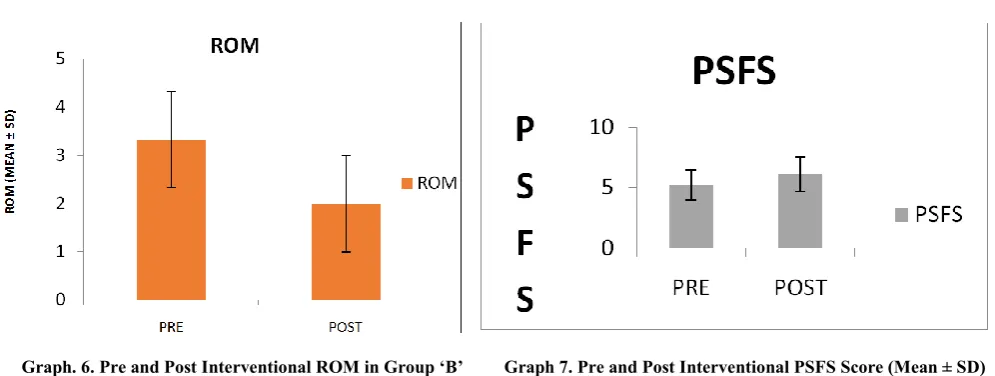
The above table-3 shows the outcomes of improvement in elbow extension ROM and patient specific functional scale (PSFS) among the computer users with lateral elbow pain in group-B. In pre test, the restricted elbow extension ROM was ranging within 0 – 10 degrees with mean 3.33 with SD 4.08. But in post test, the extension ROM was also ranging within 0 – 10 with mean 2.00 with SD 3.16. The parametric test for comparison of dependent outcomes, the paired t-test was carried out and it was not found to be significant at p=0.104 (p>0.05). Regarding the outcome measure of patient specific functional scale (PSFS) was ranging within 3.8 – 7.1 with mean 5.24 with SD 1.20 in pre test. But, in post test it was ranged within 49 with mean 6.13 with SD 1.44. The non -parametric test for comparison of dependent outcomes, the Wilcoxon test was carried out and it was found to be significant at p=0.038 (p<0.05). It evidenced that there was no significant improvement in elbow extension ROM but there was significant improvement in patient specific functional scale scores and hence the conventional therapy was effective in improving functions in computer users with lateral elbow pain but conventional therapy was ineffective to improve ROM in computer users with lateral elbow pain.
The above table-3 shows the outcomes of improvement in elbow extension ROM and patient specific functional scale (PSFS) among the computer users with lateral elbow pain in group-B. In pre test, the restricted elbow extension ROM was ranging within 0 – 10 degrees with mean 3.33 with SD 4.08. But in post test, the extension ROM was also ranging within 0 – 10 with mean 2.00 with SD 3.16. The parametric test for comparison of dependent outcomes, the paired t-test was carried out and it was not found to be significant at p=0.104 (p>0.05). Regarding the outcome measure of patient specific functional scale (PSFS) was ranging within 3.8 – 7.1 with mean 5.24 with SD 1.20 in pre test. But, in post test it was ranged within 49 with mean 6.13 with SD 1.44. The non -parametric test for comparison of dependent outcomes, the Wilcoxon test was carried out and it was found to be significant at p=0.038 (p<0.05). It evidenced that there was no significant improvement in elbow extension ROM but there was significant improvement in patient specific functional scale scores and hence the conventional therapy was effective in improving functions in computer users with lateral elbow pain but conventional therapy was ineffective to improve ROM in computer users with lateral elbow pain.
Graph 3. Age Distribution in Group ‘A’ and Group ‘B’ Graph-4 – Pre and Post Interventional ROM in Group ‘A’.
[image:4.595.79.528.731.793.2]Graph – 5 – Pre and Post Interventional PSFS Score (Mean ± SD) In Group ‘A’.
Table 4. Range, mean and SD of elbow ROM (extension) and patient specific functional scale (PSFS) in group-B
Sno Outcome measures Conventional therapy Test value p-value
Pre test Post test
Range Mean ±SD Range Mean ±SD
1 Extension ROM 0-10 (10) 3.33 ± 4.08 0-10 (10) 2.00 ± 3.16 Paired t-test=1.739 p= 0.104 2 Patient specific
functional scale
3.8 – 7.1 (3.3)
5.24 ±1.20 4 – 9 (5) 6.13 ± 1.44 Wilcoxon Test Z = -2.07
p = 0.038*
Note; * denotes –Significant (p<0.05).
The above table-5 presents the outcomes of between group comparison of improved elbow extension ROM and PSFS among the computer user with lateral elbow pain in between the two groups. The pre test scores of extension ROM was 4.00 ± 4.70 in group-A and 3.33 ± 4.08 in group-B were more or less same and it was not significant at p = 0.6799 (p>0.05) . Similarly the PSFS 4.87 ± 1.36 in group-A and 5.24 ±1.20 in group B were not statistically significant (p>0.05). It evidenced that initially before the intervention the computer user with lateral elbow pain in both the groups were similar range of motion and function. While comparison of post test scores of improved extension ROM 1.00 ± 2.80 in group-A is also more or less similar to improved extension ROM 2.00 ± 3.16 in group-B and it was also statistically not significant. Similarly, while comparison of post test PSFS 7.13±1.60 in A, more or less same to the PSFS 6.13 ± 1.44 in group-B and it was statistically not significant.
It evidenced that there was no significant difference in outcomes of both the treatment strategies in improving the ROM and functions in computer users with lateral elbow pain.
Interpretation of Result
In group A the mean ROM score improved significantly (p < 0.05). In group B the mean ROM score improved but it was statistically not significant (p > 0.05). In group A and B the mean PSFS score improved significantly (p < 0.05). But while comparison between the groups the difference in improvement in ROM and PSFS score was not significant (p > 0.05). although, radial nerve mobilization and conventional therapy are having more or less same effects in improvement in ROM and functional outcomes in computer professionals with lateral elbow pain but radial nerve mobilization is more effective for improving ROM and functional status of patients and can be
[image:5.595.55.553.51.239.2]
Graph. 6. Pre and Post Interventional ROM in Group ‘B’ Graph 7. Pre and Post Interventional PSFS Score (Mean ± SD) in Group ‘B’.
Table 5. Comparison of pre and post test extension ROM and PSFS among the computer users with elbow pain in between the two groups
Sno Outcome measures Pre test Post test
Group-A Group-B Group-A Group-B
Mean ±SD Mean ±SD Mean ±SD Mean ±SD
1 Extension ROM 4.00 ± 4.70 3.33 ± 4.08 1.00± 2.80 2.00 ± 3.16
2 PSFS 4.87±1.36 5.24 ±1.20 7.13±1.60 6.13 ± 1.44
Between group comparison ROM: t=0.4169, p=0.6799, NS
PSFS :z= -0.539 p=0.5892, NS
ROM: t=0.917, p=0.367, NS
PSFS z=1.617, p=0.105, NS
S-denotes significant (p<0.05); t-unpaired t-test, z-Mann-Whitney U test , NS – not significant (p>0.05)
used in management of lateral elbow pain in computer professionals.
DISCUSSION
Computer users may be at risk of lateral elbow pain. It is theorized that adverse mechanical tension can arise in the radial nerve with sustained keyboarding due to sustained static work of the elbow extensor muscles. Neural mobilization has been suggested as a potential treatment. Objective of this study was to find out the long term effect of radial nerve mobilization on elbow ROM and functions in computer professionals with lateral elbow pain. The baseline demographic variables were homogeneous in nature in both the groups. In group A there were 8 male subjects and 7 female subjects. Similarly, in group B there were 9 male subjects and 6 female subjects. The mean age in group A, was 32.60 with SD of 6.76 and in group B the mean age was 34.13 with SD of 5.12. All the patients in both the groups were able to complete the study. According to result of study, in group A the mean ROM improved significantly (p <0.05). Possible explanation for the improved ROM for the subject in group A could be because of longitudinal elongation of the nerve bed55. According to another study done by Sharma. S, Balthillaya.G, Rao.R, Mani.R, neural slider and tensioners are both effective in increasing hamstring flexibility as an adjunct to static hamstring stretching when compared to static stretching alone by decreasing neural mechanosensitivity due to neural mobilization56. Neural mobilization also improve muscle flexibility by “Sensory theory” proposed by Weppler and Magnusson suggested that muscle flexibility and its response to sudden stretch have more to do with perceptions of stretch and pain than the biomechanical effects of muscle tissue itself57.Thus improving the ROM. This proposal was supported in a study by Aparicio and colleagues which demonstrated that a suboccipital muscle inhibition technique altered hamstring flexibility when compared to a placebo intervention.
The fact that such a distant technique (suboccipital region) could have an immediate effect on the flexibility in the hamstrings may tend support to the “Sensory theory” limiting flexibility of the posterior thigh structures. It seems reasonable to attribute the observed increase in hamstring tissue flexibility following the suboccipital muscle inhibition technique to changes in the subject‟s perception of stretch or pain58. In group A, the mean PSFS score have showed significant improvement. This is accordance to the study by Jason M. Beneciuk, Mark D. Bishop, Steven Z.Goerge neural mobilization (tensioning technique) had an immediate hypoalgesic effect on C-fiber mediated pain perception (temporal summation). Enhanced temporal summation of C fiber mediated pain has been identified in patients with painful conditions. Therefore, inhibition of temporal summation is believed to have therapeutic value. Inhibition of temporal summation with neural mobilization, suggesting a hypoalgesic mechanism for neuromobilization tensioning techniques which is associated with improvement in functional status of subjects59. According to Cleland, Hunt and Palmer, if the etiology of symptoms originates from the intra-neural edema, the changes in intra-neural pressure that accompany the neural mobilization may be sufficient to disperse the edema, thus alleviating the hypoxia and reducing the associated symptoms.. In addition, there is the hypothesis that nerve movement within pain-free variations can help to reduce nerve compression, friction and tension, therefore decreasing its
mechano-sensitivity.60 In the group B the mean pre ROM improved but it was not statistically significant (p >0.05). Improvement in ROM was because of the analgesic effect of stretching exercises. Muscle stretching increases the pain threshold.61 Increased ROM following stretching may be due to analgesic effects. In a study, subjects stretched until they reached their pain threshold.62 On a second stretch, more force was needed to reach the pain threshold and there was increased pain-free ROM.But the result was not statistically significant , because, however the physiological effects of stretches may contribute to reducing discomfort and pain but , if other measures are not in place to remediate their causes, stretches may suppress awareness of risks, resulting in more debilitating injuries. If inadequately performed, stretches may also cause or aggravate injuries. Careful analysis and stretching program design are required before implementing stretches.63 Similarly in group B the mean PSFS score increased which was statistically significant (p < 0.05 ). This is because of elbow orthosis produces a counter force effect to reduce the load on common extensor tendon and thereby reducing pain. According to another study done by Stonecipher and Catlin, the armband (tenis elbow brace) disperses stresses generated by muscle contraction, thereby reducing painful inhibition and allowing the subject to contract more forcefully. The arm band may also facilitate muscle contraction by sensory skin stimulation and/or muscle belly pressure.64This would explain improvement in functional status of subjects with lateral elbow pain.While comparing the both the groups there was no statistically significant difference in ROM and PSFS score (p > 0.05). Both groups were showing improvement in ROM by different mechanism. In the group A mean ROM was 1.00 ± 2.80 and group B mean ROM was 2.00 ± 3.16, which was not statistically significant (p > 0.05). Improvement in ROM in group A was because of decreased neural mechanosensitivity60 and elongation of nerve bed55. In group B improvement in ROM is because of increased pain threshold61,62. However improvement in ROM with radial nerve mobilization was noted better than conventional therapy alone. Similarly, in group A mean PSFS score was 7.13 ± 1.60 and in group B mean PSFS was 6.13 ± 1.44, which were not statistically significant (p > 0.05). This was showing that both the groups were having improvement in functional status because radial nerve mobilization and stretching exercises with elbow brace both were producing analgesic effects59,,60,64 which results in better functional outcomes.
Conclusion
This study is aimed to find out the long term effects of radial nerve mobilization on ROM and functional outcomes in computer users with lateral elbow pain. Group A showed improvement in both ROM and functional status of patients (PSFS) However Group B showed improvement in functional status of patients (PSFS) and not much difference in ROM. There is no significant difference in between the groups in ROM and PSFS scores.
REFERENCE
Amit V. Nagrale, Christopher R. Herd, Shyam Ganvir, Gopichand Ramteke. Cyriax physiotherapy versus phonophoresis with supervised exercises in subjects with lateral epicondylalgia: A randomized clinical trial. The journal of manual & manipulative therapy 2009, volume 17:3.
Ana I. De-la-Llave-Rincon et al. Response of pain intensity to soft tissue mobilization and neurodynamic technique: a series of 18 patients with chronic carpal tunnel syndrome; Journal of Manipulative and Physiological Therapeutics, 2012; 35(6),
Annalie Basson, Benita Olivier, Richard Ellis, Michel Coppieters, Aimee Stewart, Witness Mudzi. The effectiveness of neural mobilizations in the treatment of musculoskeletal conditions: a systematic review protocol,2015;13(1).
Bruno R. da Costa, Edgar Ramos Vieira. Stretching to reduce work-related musculoskeletal disorders: a systematic review. J Rehabil Med 2008; 40: 321–328.
Butler D, Gifford L. The concept of adverse mechanical tension in the nervous system part 1: Testing for ‘dural tension. Physiotherapy 19890; 75(11): 622-9.
Butler D: Adverse mechanical tension in the nervous system: A model for assessment and treatment. Austr J Physiother
1989, 35:227-238.
Butler DS, Ed. Mobilisation of the nervous system. New York: Churchill Livingstone Inc 1991.
Butler DS. Advance mechanical tension in the nervous system : A model for assessment and treatment. Aus J Physiother 1989; 36(4): 227-38.
Butler DS. The sensitive nervous system. Australia: Niogroup Publications 2000.
Butler DS: Mobilisation of the nervous system Melbourne, Churchill Livingstone; 1992.
C.H.Weppler and S.P.Magnusson. “Increasing muscle extensibility: a matter of increasing length or modifying sensation?” Physical Therapy. 2010; 90(3): 438–449. Chard MD, Cawston TE, Riley GP, Gresham GA, Hazleman
BL. Rotator cuff degeneration and lateral epicondylitis: A comparative histological study. Ann Rheum Dis 1994; 53(1): 30-4.
Cheryl Hefford , J. Haxby abbott, Richard arnold. The patient specific functional scale : Validity, Reliability and Responsiveness in patients with upper extremity musculoskeletal problems. Journal of orthopaedic and sports physical therapy,2012.
Cheryl hefford, j. Haxby abbott, Richard arnold, g. David baxter, The Patient-Specific Functional Scale: Validity, Reliability, and Responsiveness in Patients With Upper Extremity Musculoskeletal Problems,journal of orthopaedic & sports physical therapy;2012;42(2).
Choudhary SB, Sapur S, Deb PS. Awkward posture and Development of RSI (Repetitive Strain Injury) in Computer Professionals. Indian J Occup Environ Med 2002, no. 6 (2002): 10-12.
Cleland J, Hunt GC, Palmer J. Effectiveness of neural mobilization in the treatment of a patient with lower extremity neurogenic pain: a single-case design. J Man Manip Ther. 2004;12(3):143-52.
Coonrad RW, Hooper WR. Tennis elbow: Its course, natural history, conservative and surgical management. J Bone Joint Surg Am 1973; 55(6): 1177-82.
Costantini M, Tunks K, Wyatt C, Zettel H, MacDermid JC. Age and upper limb tension testing affects current perception thresholds. J Hand Ther 2006; 19(3): 307,16; quiz 317.
D Starinopoulos, K Starinopoulos, M. Johnson. An exercise programme for the management of lateral elbow tendinopathy. Br. J. Sport Med.2005.December.
Da Costa BR, Sanley S, Azevedo D. Short-term effect of stretching on the palpation pain threshold of the superior
trapezius muscle: a double-blind study]. Proceedings of the XVI COBRAF , 2005.
Dahlin LB, Sjostrand J, McLean WG. Graded inhibition of retrograde axonal transport by compression of rabbit vagus nerve. J Neurol Sci 1986; 76(2-3): 221-30.
E. Q. Aparicio, L. B. Quirante, C. R. Blanco, and F. A. Send. Immediate effects of the suboccipital muscle inhibition technique in subjects with short hamstring syndrome: Journal of Manipulative and Physiological Therapeutics. 2009; 32(4); 262–269.
Ebbetts J. Autonomic pain in the upper limb. Physiotherapy. 1971; 57(6): 270-9.
Ekstrom RA, Holden K. Examination of and intervention for a patient with chronic lateral elbow pain with signs of nerve entrapment. Phys Ther 200; 82(11): 1077-86.
Ellis RF, Hing WA. Neural mobilization: A systematic review of randomized controlled trials with an analysis of therapeutic efficacy. J Man Manip Ther 2008; 16(1): 8-22. Elvey RL. Treatment of arm pain associated with abnormal
brachial plexus tension. Aus J Physiother 1986(32): 225-50.
Greening J, Smart S, Leary R, Hall-Craggs M, O'Higgins P, Lynn B. Reduced movement of median nerve in carpal tunnel during wrist flexion in patients with non-specific arm pain. Lancet 1999; 354(9174): 217-8.
Gunn CC, Milbrandt WE. Tennis elbow and the cervicla spine. Can Med Assoc J 1976; 114(9): 803-9.
Jafarian FS, Demneh ES, Tyson SF .The immediate effect of orthotic management on grip strengthof patients with lateral epicondylosis. J ortho sports phys ther.2009, June;39(6):484-9.
Janson M Beneciuk, Mark D. Bishop, Steven Z. George. Effects of Upper Extremity Neural Mobilization on Thermal Pain Sensitivity: A Sham-Controlled Study in Asymptomatic Participants, journal of ortopedic and sports physical therapy,2009.
Jean-Louis croisier, Marguerite Foidart-Dessalle, France Tinant, Jean Michel Crielaard and Benediete Forthomme. An isometric eccentric program for the management of chronic lateral epicondylar tendinopathy. Br.J sports medicine 2007,41:269-275.
Jensen BR, Pilegaard M, Momsen A. Vibrotactile sense and mechanical functional state of the arm and hand among computer users compared with a control group. Int Arch Occup Environ Health 2002; 75(5): 332-40.
Jepsen JR, Thomsen G: A cross-sectional study of the relation between symptoms and physical findings in computer operators. BMC Neurology 2006, 6:40.
Johnston J, Plancher KD, Hawkins RJ. Elbow injuries to the throwing athlete. Clin Sports Med 1996; 15(2): 307-29. Jorge H. Villafañe, Guillermo B. Silva, Mark D. Bishop, Josue
Fernandez-Carnero. Radial Nerve Mobilization Decreases Pain Sensitivity and Improves Motor Performance in Patients With Thumb Carpometacarpal Osteoarthritis: A Randomized Controlled Trial, Arch Phys Med Rehabil 2012;93:396-403.
Julioa, Martinez-silvestrini, Keren.I, Newcomer, Raiph.E.gay Chronic lateral epicondylitis : comparative effectiveness of a home exercise program including stretching alone versus stretching supplemented with eccentric or concentric exercise.journal of hand therapy,volume 18,issue-4 october-december,2005,page411-420.
Lutz FR. Radial tunnel syndrome: An etiology of chronic lateral elbow pain. J Orthop Sports Phys Ther 1991; 14(1): 14-7.
Magnus Peterson, Stephen Butler, Margaretha Erikson and Kart Svardsudd. A randomized controlled trial of exercises versus wait list in chronic tennis elbow(lateral epicondylosis). Upsala Journal Of Medical Sciences. 2011,116 269-279.
Magnusson SP, Simonsen EB, Aagaard P, Dyhre-Poulsen P, McHugh MP, Kjaer M. Mechanical and physical responses to stretching with and without preisometric contraction in human skeletal muscle. Arch Phys Med Rehabil 1996; 77: 373–378.
Mark T. WalshNerve Mobilization and Nerve Gliding 1512-1528.e3.
McLellan DL SM. Longitudinal sliding of the median nerve during movements of the upper limb. J Neurol Neurosurg Psychiat 1976; 39(6): 566-70.
Michel W. Coppieters, David S. Butler. Do ‘sliders’ slide and ‘tensioners’ tension? An analysis of neurodynamic techniques and considerations regarding their application. Manual Therapy 2008;13: 213–221.
Nee RJ, Butler D. Management of peripheral neuropathic pain : Integrating neurobiology, neurodynamics and clinical evidence. Phys Ther Sport 2006; 6: 36-49.
Novak CB, Mackinnon SE: Multilevel nerve compression and muscle imbalance in work-related neuromuscular disorders. Am J Ind Med 2002, 41:343-352.
Olmarker K, Rydevik B, Holm S. Edema formation in spinal nerve roots induced by experimental, graded compression. An experimental study on the pig cauda equina with special reference to differences in effects between rapid and slow onset of compression. Spine (Phila Pa 1976)1989; 14(6): 569-73.
Oznur Oken et al.the short-term efficacy of laser, brace, and ultrasound treatment in lateral epicondylitis: a prospective, randomized, controlled trial, J HAND THER. 2008;21:63– 8.
Powell HC, Myers RR. Pathology of experimental nerve compression. Lab Invest 1986; 55(1): 91-100.
Pritchard MH, Pugh N, Wright I, Brownlee M. A vascular basis for repetitive strain injury. Rheumatology (Oxford) 1999; 38(7): 636-9.
Rao KC, Chandu K, Vedachalam V. Hardships of Soft People- A Clinical Study of Ocular and Visual Discomfort in Video Display Terminal (VDT) Users. Indian J Occup Environ Med, 1999: 14-6.
Richard A Ekstrom, Kari Holden. Examination of and intervention for a patient with chronic lateral elbow pain with signs of nerve entrapment, Physical Therapy,2002; 82(11).
Richard F. Ellis, B. Phty, Post Grad Dip Wayne A.
Hing.Neural mobilization: a systematic review of
randomized controlled trials with an analysis of therapeutic efficacy, The Journal of Manual & Manipulative Therapy,2008;16(1):8-22.
Rydevik B, Brown MD, Lundborg G. Pathoanatomy and pathophysiology of nerve root compression. Spine (Phila Pa 1976) 1984; 9(1): 7-15.
Rydevik B, Lundborg G, Bagge U. Effects of graded compression on intraneural blood blow. an in vivo study on rabbit tibial nerve. J Hand Surg Am 1981; 6(1): 3-12. Samuel Turek. Orthopaedic principle and their application. 6th
Ed. Philadelphia: Lippincott Williams and Wilkins;2005.p.412-13.
Schmid AB, Brunner F, Luomajoki H, et al. Reliability of clinical tests to evaluate nerve function and mechanosensitivity of the upper limb peripheral nervous system. BMC Musculoskelet Disord 2009; 10: 11,2474-10-11.
Shacklock M. Clinical neurodynamics: A new system of musculoskeletal treatment. Adelaide, Australia: Butterworth- Heinnemann 2005.
Sharma SD, Smith EM, Hazleman BL, Jenner JR. Thermographic changes in keyboard operators with chronic forearm pain. BMJ 1997; 314(7074): 118.
Sharma,S., Balthillaya,G,. Rao,R., Mani,R. Short term effectiveness of neural sliders and neural tensioners a an adjunct to static stretching of hamstring on knee extension angle in healthy individuals: A randomized controlled trial,
Physical therapy in
sports.2015,doi:10.1016/j.ptsp.2015.03.003.
Stonec~pherD R. Catl~nP A: The effect of a forearm strap on wrist extenslon strength. J Orthop Sports Phys Ther 6(3):184-189.1984.
Stratford P, Spadoni G. The reliability, consistency and clinical application of a numeric pain rating scale. Physiother Canada 2001; 53(2): 88-91.
Vanitha Arumugam, Senthil Selvam and Joy C. MacDermid.Radial nerve mobilization reduces lateral elbow pain and provides short-term relief in computer users,the open orthopaedics journal, 2014, 8, 368-371. Verhaar J, Spaans F. Radial tunnel syndrome. an investigation
of compression neuropathy as a possible cause. J Bone Joint Surg 1991; 73(4): 539-44.
Wilgis EF, Murphy R. The significance of longitudinal excursion in peripheral nerves. Hand Clin 1986; 2(4): 761-6.