RESEARCH REPORT
Blackwell Science, LtdOxford, UKADDAddiction0965-21402002 Society for the Study of Addiction to Alcohol and Other Drugs97Original ArticleEcstasy use and memoryNeil G. Simon & Richard P. Mattick
Correspondence to: Richard P. Mattick
National Drug and Alcohol Research Centre School of Community Medicine,
Faculty of Medicine University of New South Wales Sydney 2052
Australia
Submitted 4 May 2001;
initial review completed 19 July 2001; final version accepted 27 February 2002
The impact of regular ecstasy use on memory function
Neil G. Simon & Richard P. Mattick
National Drug and Alcohol Research Centre, School of Community Medicine, Faculty of Medicine, University of New South Wales, Sydney, Australia
ABSTRACT
Aim To assess memory impairment in a group of regular users of ecstasy
com-pared with a group of regular users of cannabis, after accounting for possible confounding factors such as other drug use, premorbid intelligence and psychopathology.
Method Comparative and regression analysis was used to determine the pres-ence or abspres-ence of a differpres-ence in memory function between 40 regular ecstasy users and 37 regular users of cannabis, who were interviewed at the National Drug and Alcohol Research Centre in Sydney, Australia. Regression analysis was used to find associations between life-time exposure to ecstasy use and memory performance. Memory function was assessed using an age-standardized memory test. Other scales were used to assess premorbid intelligence, physical and psychological health, drug withdrawal and other drug use.
Results Initial comparative analysis showed a trend towards a significantly poorer performance by the regular ecstasy-using group on the ‘auditory imme-diate memory’ and ‘auditory delayed memory’ indices. When regression anal-ysis was performed an estimate of verbal intelligence was found to be the most predictive of most memory indices including ‘auditory immediate memory’ and ‘auditory delayed memory’. Life-time exposure to ecstasy was not predictive of the memory indices. The current frequency of cannabis use was found to have some predictive effect for immediate and delayed visual memory.
Conclusion This study does not show memory impairment in a group of
ecstasy users relative to cannabis using controls. The previously reported asso-ciation of life-time exposure to ecstasy and memory was not found. The findings may indicate a confounding role of cannabis use, as has been recently reported.
KEYWORDS 3,4-methylenedioxymethamphetamine, cognitive
functioning, ecstasy, MDMA, memory.
INTRODUCTION
Although the link between 3,4-methylenedioxymetham-phetamine (MDMA) (ecstasy) and serotonergic neurotox-icity is quite clear in animal models, there is less evidence for neurotoxic reactions in humans. A recent paper in the
Lancet expressed concern about the risk of neurotoxicity
associated with ecstasy use (Boot, McGregor & Hall 2000). Dose-dependent morphological changes found in cultured human serotonergic JAR cells treated with MDMA (Simantov & Tauber 1997) indicate that MDMA has neurotoxic potential in humans. However,
discrepan-cies between dosing regimes in animals and typical pat-terns of drug use by recreational human users of ecstasy
create uncertainties about the effects of MDMA in vivo.
Studies of the effects of ecstasy use in humans have focused on three areas. First, indirect measures of sero-tonergic function in humans, such as decreased CSF lev-els of 5-hydroxyindoleacetic acid, in recreational ecstasy users compared with ‘ecstasy-naive controls (Peroutka
1987; Ricaurte et al. 1990; McCann et al. 1994; Bolla,
McCann & Ricaurte 1998; McCann et al. 1999) have
been used to suggest that MDMA-induced serotonergic neurotoxicity may occur in humans. The indirect nature
1524 Neil G. Simon & Richard P. Mattick
of these studies limits the conclusions that can be drawn from their findings, but the data are consistent with a serotonergic deficit.
More recently, researchers have used brain imaging to
assess the effect of long-term ecstasy use (McCann et al.
1998; Chang et al. 1999; Obrocki et al. 1999; Semple et
al. 1999; Chang et al. 2000). Only one of the brain
imag-ing studies suggested that ecstasy use causes
neurotoxic-ity (McCann et al. 1998). The method used by this study,
directly assessing serotonergic function using radioli-gands selective for serotonin transport molecules, was used by another research group which drew a different
conclusion (McCann et al. 1998; Semple et al. 1999).
Their suggestion of a reversible change in the serotoner-gic neurones or a downregulation of their action has been
supported by other studies (Chang et al. 1999; Chang et
al. 2000).
Finally, researchers have sought to characterize the effects that putative serotonergic dysfunction has on the functioning of the individual. A particular focus for this research is to assess the cognitive functioning of abstinent ecstasy users. Compared to users of other drugs and drug-naive controls, ecstasy users have displayed a varied pat-tern of deficits. These studies are outlined below.
A recent paper has commented on the possible con-founding effects of cannabis use in previous research of
this nature. Croft et al. (2001) studied drug-naive
sub-jects, using subjects and ecstasy- and cannabis-using subjects on a battery of neuropsychological tests. There was no difference between the three groups on an estimate of verbal intelligence; however, the combined group of drug users performed more poorly than the con-trol group on measures of visual recognition, non-spatial associative learning, working memory, verbal memory and manual dexterity. The cannabis-using group and the ecstasy and cannabis group did not differ on any of the tests. In covariate analysis, all deficits apart from speed of processing were shown to be more closely related to cannabis use than ecstasy consumption. Although intel-ligence was not adjusted for in covariate analysis, these results suggest cannabis as a possible confound.
A study by Bhattachary (2001) assessed 26 regular users of ecstasy, 18 novice users, 16 abstinent users and 20 ecstasy-naive subjects. The researcher found that all of the ecstasy-exposed groups scored significantly lower scores than the drug-naive controls on a test of immedi-ate verbal memory, while the regular ecstasy users and abstinent group differed significantly from the controls on a measure of delayed verbal memory. Regular users and abstinent users also performed significantly worse on a measure of verbal fluency. Life-time consumption of ecstasy and days since last ecstasy use were significant predictors of immediate verbal memory in a regression including cannabis use and IQ. Life-time consumption of
ecstasy was also significantly correlated with scores of delayed verbal memory and verbal fluency. Although attempts were made to assess the effect of cannabis use on the results, differing drug use among the groups may confound the analysis.
Gouzoulis-Mayfrank et al. (2000) assessed 28 regular
ecstasy users, 28 drug-naive controls and 28 subjects matched for cannabis use with the ecstasy-using group. The ecstasy users performed significantly more poorly on measures of verbal learning and immediate visual mem-ory. The ecstasy users had significantly worse attention scores than the cannabis group, which may have inter-fered with their performance on the memory assessment. Morgan (1999) found a significant impairment of verbal memory in 25 ecstasy users compared with 22 polydrug using controls, but failed to find significant differences in working memory (Morgan 1998).
Verkes et al. (2001) studied men who were moderate
(Parrott et al. 1998) and heavy (Parrott et al. 1998) users
of ecstasy and ecstasy-naive (Wareing, Fisk & Murphy 2000). They found that the ecstasy users scored signifi-cantly more poorly on tests of reaction time, memory span, word recognition and figure recognition. However, intelligence was not assessed and there was no attempt to account for differences in drug use history. Rodgers (2000) also failed to account for intelligence when find-ing a significant impairment in delayed memory between a group of regular ecstasy users and a group of regular cannabis users.
Wareing et al. (2000) found various impairments of
central executive functioning and information processing
speed when controls (Chang et al. 1999) were compared
with current (Chang et al. 1999) and abstinent (Chang et
al. 1999) users of ecstasy. Intelligence and other drug use
were not accounted for in the analyses, and differences in anxiety and arousal were found to diminish group differ-ences in one of the subtests. Assessment of verbal fluency and visual memory did not yield group differences.
McCann et al. (1999) similarly found impairments in
working memory tasks when 22 ecstasy users were compared with 23 ecstasy-naive controls. There was inadequate assessment of other drug use and scores for memory tests were not adjusted for intelligence.
Similarly, Parrott et al. (1998) did not note other drug use
or intelligence of a small group of regular (Chang et al.
1999) and novice (Chang et al. 1999) ecstasy users and
10 drug-naive controls. Thus it is difficult to interpret the findings.
Bolla et al. (1998) found impaired immediate verbal
memory and delayed visual memory after controlling for verbal intelligence in a group of ecstasy users, but again failed to adequately account for other drug use.
In previously published research on the cognitive functioning of abstinent ecstasy users, other factors that
Ecstasy use and memory 1525
may influence the subjects’ performance have often been overlooked. A failure to control adequately for factors such as polydrug use and premorbid intellectual ability make it difficult to interpret the findings of some of these studies. This study was designed to assess the memory of regular ecstasy users, while accounting for factors other than ecstasy use, particularly the concomitant use of cannabis and intelligence.
METHOD Study design
An observational study of subjects exposed to ecstasy and to other drugs, using regression analysis, was employed to address the relationship between exposure to ecstasy and memory function.
Participants
Eighty-eight subjects participated in the study. Three sub-jects did not complete the testing, thus their results have not been included. One subject gave a drug history in the interview that differed from the one given during the ini-tial screening, and as a result of this new information the subject was not suitable for inclusion. The fully tested sample of ecstasy users consisted of 47 subjects, all with a history of regular use over 6 months or longer with a minimum frequency of once a month. Subjects were recruited in Sydney through advertisements in local music magazines, as well as flyers posted at the University of New South Wales. The comparison group consisted of 37 regular cannabis users with no history of regular ecstasy use. Cannabis users were considered the best comparison group, because a majority of subjects in the ecstasy-using group were regular users of cannabis around the time of testing (see Table 1), and all subjects in the ecstasy-using group were regularly using some other illicit drug in the months preceding the test. A small amount of ecstasy use was allowed in the comparison group (life-time exposure of up to five tablets), as a greater range of total use of ecstasy would give the best possible sample for regression analysis. It was also considered that robust group differences in memory function would not be masked by a small amount of ecstasy consump-tion, particularly if the effects on memory were due to neurotoxicity.
All participants were screened in a telephone inter-view. Exclusion criteria were: (a) reported regular use of any drug other than alcohol or cannabis, which was more frequent than their ecstasy use; (b) use of prescribed psychotropic medication at the time of testing; (c) current or previous diagnosis of an organic brain disorder; (d) a
history of head trauma, unconsciousness, fits, convul-sions, epileptic seizures or attention deficit hyperactivity disorder; (e) a hearing or visual impairment that pre-vented completion of the tests; (f) past or current diagno-sis with or treatment for a psychiatric illness (except depression) and/or drug or alcohol abuse; (g) current diagnosis with depression or receipt of treatment for depression; or (h) a first language other than English.
Procedure
Individuals who met the criteria for participation in the ecstasy-using group or the comparison group were required to abstain from drugs and alcohol for at least 24 hours prior to testing. Those who agreed to this require-ment then attended the National Drug and Alcohol Research Centre for testing. All participants signed informed consent forms prior to participation in the study. Testing lasted approximately 2 hours.
A battery of neuropsychological tests, consisting of the Wechsler Memory Scale–III (WMS-III) (Wechsler 1997a), the ‘Vocabulary’ subtest of the Wechsler Adult
Table 1Means (standard deviations) for self-reported drug consumption. Ecstasy n= 40 Control n= 37 Alcohol
Current regular used 39 35
Average per month (units) 71.4 (91.0) 74.9 (87.7)
Cannabis
Current regular used 25 37
Average per month (joints) 67.9 (285.6) 62.6 (119.2)
Amphetamine
Current regular used 21 0
Average per month (g) 0.5 (1.1) a –
Cocaine
Current regular used 7 0
Average per month (g) 0.2 (0.5) b –
Heroin
Current regular used 3 0
Average per month (‘hits’) 0.3 (1.2) –
LSD
Current regular used 4 0
Average per month (‘tabs’) 0.2 (0.6) –
Benzodiazepines
Current regular used 3 0
Average per month (tablets) 0.1 (0.4) –
Inhalantsc
Current regular used 5 0
Average per month (‘hits’) 5.9 (22.4) –
aIndicates significant difference at the 0.001 probability level; bindicates
signifi-cant difference at the 0.05 probability level; conly amyl nitrate and nitrous oxide used by subjects; dindicates number of subjects.
1526 Neil G. Simon & Richard P. Mattick
Intelligence Scale–III (WAIS-III) (Wechsler 1997a) and the Kaufman Brief Intelligence Test (K-BIT) (Kaufman & Kaufman 1990) was administered to the subjects. Scores on the WMS-III are calculated to produce eight memory indices: (1) ‘auditory immediate memory’; (2) ‘visual immediate memory’; (3) ‘immediate memory’, a com-posite of (1) and (2); (4) ‘auditory delayed memory’, which assesses delayed recall of information presented in (1); (5) ‘visual delayed memory’, which assesses delayed recall of information presented in (2); (6) ‘auditory rec-ognition delayed memory’, which assesses the ability of the subject to recognize pairs of words read aloud by the examiner, which constituted part of (1) and (4); (7) ‘general memory’, a composite of (4), (5) and (6); and (8) ‘working memory’.
Other measures were given. The Symptom Check List 90–Revised (SCL-90-R) (Derogatis 1994) was used as a self-report measure of general psychopathology and emo-tional distress. The physical and psychological health and wellbeing of the subjects was assessed using the SF-36 questionnaire (Ware & Sherbourne 1992).
A thorough drug history was taken from all partici-pants. Life-time history of ecstasy, amphetamine, can-nabis and alcohol use was obtained if they had been used regularly. Regular use was defined as at least once a month for a period of 6 months. Patterns of drug and alcohol use were noted using a modified version of Skinner's Life-time Drinking History (Skinner 1979). Use of cocaine, opiates, benzodiazepines, barbiturates,
hallu-cinogens (LSD and Psilocybin mushrooms) and inhalants
was also assessed, taking into account current and heavi-est regular use.
Current drug dependence was assessed using the
Severity of Dependence Scale (SDS) (Gossop et al. 1995)
for amphetamine, cannabis, alcohol, ecstasy and cocaine. Participants were also required to complete a self-report questionnaire, which assessed physical and psychological symptoms of withdrawal. This questionnaire was based upon a report on amphetamine dependence (Topp, Mattick & Lovibond 1995) as well as the DSM-IV description of withdrawal from amphetamine or similarly acting sympathomimetic drugs (American Psychiatric Association 1994). Subjects were asked to rate how much they were suffering from a particular symptom at the time of testing using a linear scale numbered 0–4.
During the interview, subjects were required to pro-vide a urine sample that was later analysed for the pres-ence of psychoactive drugs. Urine samples were screened for psychoactive medications as well as illicit psychoactive drugs including amphetamine, MDMA, cocaine and its metabolites, cannabis metabolites and opioids. A positive screen for any substance excluding cannabis, or the self-report of cannabis or alcohol use within 24 hours of the test, were exclusion criteria.
Statistical analysis
Statistical analyses were performed using SPSS for Windows (release 9.0). Group differences in demo-graphic variables, drug use measures, cognitive perfor-mance indices and other variables were assessed using
independent-sample t-tests. Each of the eight WMS-III
memory indices was then included as the dependent vari-able in eight separate, fully planned multiple linear regression analyses. Age, gender, vocabulary subtest scores, the transformed variable of life-time exposure to ecstasy, the SDS for amphetamines, and the current frequencies of cannabis and cocaine use were the inde-pendent variables used.
The regression analyses were used to assess the relationship between life-time exposure to ecstasy and memory. Life-time exposure to ecstasy was the selected ecstasy use parameter for two reasons. First, there was a range of consumption from very low to very high consumption. Secondly, neurotoxic substances such as solvents have been shown to affect the central nervous
system in a dose-related fashion (Bleeker et al. 1991).
Thus, life-time exposure to ecstasy and cognitive func-tion was of most interest. Severity of dependence on amphetamine is related to cognitive function, while other measures of amphetamine use are not (McKetin & Mattick 1997), thus this measure was used for the regression models. The current frequency of regular use of cannabis and cocaine were thought to indicate most effectively the extent of the pattern of use, with higher frequencies of use more likely to impart a negative influ-ence on memory function. The current frequency of use relates to the frequency of use in the month prior to testing.
RESULTS
Seven subjects in the ecstasy using group were excluded after the urine screen. Six subjects tested positive for psychoactive substances other than cannabis metabo-lites. One subject failed to give a urine sample and was thus excluded. The final group consisted of 77 subjects; 40 subjects were in the ecstasy-using group and 37 were in the comparison group. Subjects in the two groups were not significantly different in terms of their age, education level and gender ratio. The ecstasy-using group did perform significantly worse on the WAIS-III
‘vocabulary’ subtest (P= 0.001), although there was
no difference between the two groups in intellectual ability as measured by the K-BIT. The means and stan-dard deviations for these variables are presented in Table 2.
Ecstasy use and memory 1527
Patterns of drug use in the sample
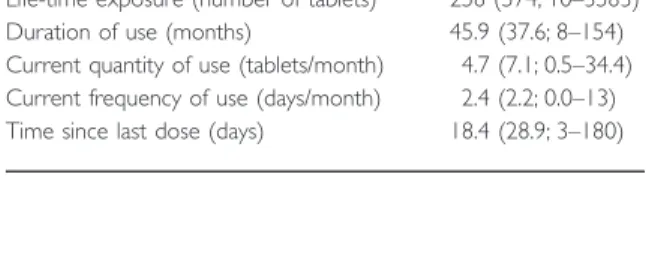
Patterns of ecstasy use are shown in Table 3. All partici-pants in the ecstasy group had a history of regular ecstasy use as described in the method section. Partici-pants in the ecstasy group reported having taken an aver-age of 258 ecstasy tablets; however, it must be noted that one individual reported a life-time consumption of 3583 tablets. Without this case, the average was 89 ecstasy tab-lets. The mean duration of use of ecstasy in the sample was 46 months. The average number of ecstasy tablets taken by the comparison group was 1.6.
The members of the ecstasy group were more likely to use other drugs than those in the comparison group. Current regular use of alcohol, cannabis, amphetamine, cocaine, heroin, lysergic acid diethylamide (LSD),
benzo-diazepines and inhalants are presented in Table 1.
Psilo-cybin mushrooms and barbiturates were not used
regularly by any subjects. Comparison subjects reported only current regular cannabis and alcohol consumption, with other drugs not being used regularly, if at all. Apart from cocaine and amphetamine use, other drugs were not used by sufficient numbers of participants to generate a group difference.
Physical and psychological wellbeing of subjects The two groups were similar in terms of scores for psy-chological distress as determined by the Global Severity Index of the SCL-90-R and also the psychological and
social subsets of the SF-36, namely ‘vitality’, ‘social func-tioning’, ‘emotional role’ and ‘mental health’. There were differences however, in the physical subtests of the SF-36, with ecstasy users giving significantly worse accounts
of their ‘physical functioning’ (P< 0.05), ‘physical role’
(P< 0.01), ‘bodily pain’ (P< 0.01) and ‘general health’
(P< 0.05). Table 2 gives means and standard deviations
for these scales. Scores for the withdrawal symptoms questionnaire were not significantly different.
Analysis of cognitive functioning
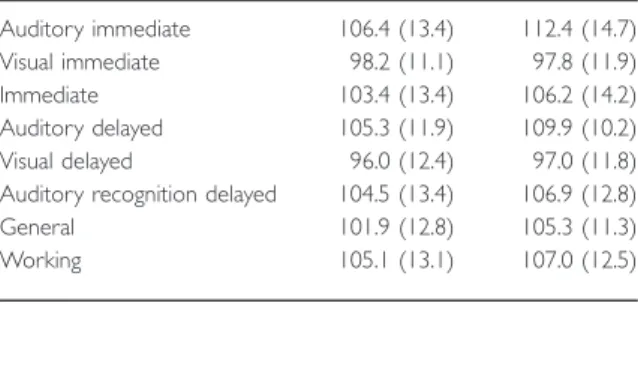
Scores for all of the WMS-III indices were not significantly different between the groups (see Table 4). There was however, a trend towards a significant difference in the
‘auditory immediate memory’ index (P< 0.07) and in the
‘auditory delayed memory’ index (P< 0.08), but the
dif-ference in verbal ability may explain these results (see later).
Twenty-four of the subjects kept for analysis had a positive screen for cannabis metabolites in their urine. The presence of THC in urine could be considered a pos-sible confounding factor in the analysis of memory to follow. Both the regular ecstasy-using group and the comparison group had 12 subjects each who tested pos-itive to cannabis metabolites, and the performance on the memory tests of those with positive urine screens com-pared with those with clean urine screens were not sig-nificantly different. The influence of these positive tests thus appears minimal.
For the linear regressions, the life-time exposure to ecstasy variable was transformed using the equation log[x + 1] to reduce skewness. This transformed variable was not found to have any significant effect in any of the regression models. The regression model including ‘audi-tory immediate memory’ as the dependent variable
(adjusted R2= 0.243, F
7,69= 4.481, P< 0.001) showed
that ‘vocabulary’ was the only significant predictor
(t= 8.860, P< 0.001, β= 0.724). The model using
‘visual immediate memory’ as the dependent variable
(adjusted R2= 0.075, F
7,69= 1.883, P= 0.086) was not
significant; however, it did show a role of the current
fre-Table 2 Means (standard deviations) for demographics.
ecstasy (n= 40) Comparison (n= 37) Age 25.3 (6.5) 23.2 (5.9) Gendera 45% 51% Educationb 3.5 (1.0) 3.5 (1.0) K-BIT 105.6 (9.4) 107.6 (8.7) Vocabulary 11.33 (2.7)c 13.19 (2.1) SCL-90-R 54.4 (11.1) 54.0 (11.2) SF36 Physical function 90.0 (13.0)d 93.6 (7.6) Physical role 78.9 (33.0)e 89.2 (23.2) Bodily pain 72.0 (19.1)e 83.2 (16.0) General health 59.8 (22.6)d 72.0 (18.6) Vitality 60.1 (19.6) 59.4 (18.1) Social function 76.9 (23.1) 82.8 (21.3) Emotional role 70.8 (32.2) 77.5 (32.4) Mental health 70.6 (13.8) 71.2 (17.9)
aProportion of the sample that is male; b0 = < 10 years, 1 = 10 years,
2 = 11 years, 3 = 12 years, 4 = current or completed tertiary study; csignificant difference between groups at 0.001 level; dsignificant difference between groups at 0.05 level; esignificant difference between groups at 0.01 level.
Table 3Characteristics of ecstasy use in regular ecstasy using group.
Characteristic Mean (SD; range)
Life-time exposure (number of tablets) 258 (574; 10–3583)
Duration of use (months) 45.9 (37.6; 8–154)
Current quantity of use (tablets/month) 4.7 (7.1; 0.5–34.4)
Current frequency of use (days/month) 2.4 (2.2; 0.0–13)
1528 Neil G. Simon & Richard P. Mattick
quency of cannabis use in predicting scores on the
memory index (t=−2.031, P< 0.05, β=−0.276). The
immediate memory model was significant (adjusted
R2= 0.223, F
7,69= 4.109, P= 0.001) and showed
‘vocabulary’ to be a significant predictor (t= 4.003,
P< 0.001, β= 0.651) while the current frequency of
cannabis use showed a trend towards significance
(t=−1.869, P< 0.07, β = −0.279). ‘Auditory Delayed
memory’ (adjusted R2= 0.274, F
7,69= 5.103, P< 0.001)
was predicted by age (t=−2.399, P< 0.05, β=−0.469)
and ‘Vocabulary’ scores (t = 5.159, P< 0.001,
β= 0.665). The model for ‘visual delayed memory’ was
not significant (adjusted R2= 0.050, F
7,69= 1.576,
P= 0.157) and did not produce any significant
predic-tors. The ‘auditory recognition delayed memory’ index
(adjusted R2= 0.343, F
7,69= 6.673, P< 0.001) was
pre-dicted by gender (t= 2.203, P< 0.05, β= 5.681) with
males performing better, age (t=−2.745, P< 0.01,
β=−0.591) and ‘vocabulary’ (t= 5.205, P< 0.001,
β= 0.740). The model for general memory (adjusted
R2= 0.393, F
7,69= 8.039, P< 0.001) produced
‘vocabu-lary’ as the only significant predictor (t= 6.074,
P< 0.001, β= 0.769). Finally, the ‘working memory’
index (adjusted R2= 0.173, F
7,69= 3.264, P< 0.01) was
predicted by ‘vocabulary’ (t= 2.834, P< 0.01,
β= 0.441) and scores on the SDS for amphetamines
(t=−2.810, P< 0.01, β=−3.038).
DISCUSSION
In this study, planned analyses were aimed to replicate the findings of previously published studies with the addi-tion of important predictor variables (such as ‘vocabu-lary’). Initial trends towards significant group differences were most probably explainable by differences in verbal intelligence. The study failed to replicate the memory deficits seen in previous research, and the effect of life-time exposure to ecstasy on memory function. However, regression analysis showing trends towards significance
for the effect of the current frequency of cannabis use is in
keeping with the findings of Croft et al. (2001) who found
that cannabis use was more instrumental than ecstasy use in generating poorer memory performance. The find-ing that dependence on amphetamines is related to poorer working memory scores is consistent with previ-ously published data (McKetin & Mattick 1997).
Memory deficits reported in other research were not found here. The disparity in the results of this study and other published research may be explained by differences in design and subject characteristics. Differences in the numbers of ecstasy tablets taken between groups could explain some of the variation of results of this and similar studies. Larger doses of ecstasy may be required for defi-cits to develop, and continuing exposure to ecstasy in this sample may generate detectable impairments. Secondly, the choice of comparison group for this study differed from previous studies. The inclusion of novice ecstasy users (having used five doses or less) could have hidden group differences. Only a small number of doses of ecstasy may be required to cause a deficit in memory, and thus the comparison group may be impaired in this way. This argument would not be useful to support an effect of neurotoxicity on memory performance since increasing dose would be expected to cause increasing neurotoxic damage, and thus diminished functional capacity. Robust evidence for memory impairment, if present, should still be seen between the two groups in this study. Finally, the average time since the last use of ecstasy was 18 days, with a range of 3–180 days. Residual effects of the drug may have influenced memory performance. However, it would be expected that more recent ecstasy use would impart a negative influence on memory function, and thus would accentuate group differences. Therefore, it may not be considered to be an important confound in this instance.
In summary, ecstasy use in this study was not associ-ated with detectable memory deficits. Evidence for the possible roles of differences in verbal intelligence and can-nabis use in generating relative memory impairments is provided by this study.
REFERENCES
American Psychiatric Association (1994) Diagnostic and Statistical Manual of Mental Disorders: DSM-IV, 4th edn. Washington, DC: American Psychiatric Association. Bhattachary, S. P. J. H. (2001) Recreational use of
3,4-methyl-enedioxymethamphetamine (MDMA) or ecstasy: evidence for cognitive impairment. Psychological Medicine, 31, 647–658. Bleeker, M. L., Bolla, K. I., Agnew, J., Ford, D. P., Schwartz, B. S.,
Powell, S. (1991) Dose-related subclinical neurobehavioural effects of chronic exposure to low levels of organic solvents.
American Journal of Industrial Medicine, 19, 715–728.
Table 4Means (standard deviations) for memory measures.
Memory subtest ecstasy group
Comparison group Auditory immediate 106.4 (13.4) 112.4 (14.7) Visual immediate 98.2 (11.1) 97.8 (11.9) Immediate 103.4 (13.4) 106.2 (14.2) Auditory delayed 105.3 (11.9) 109.9 (10.2) Visual delayed 96.0 (12.4) 97.0 (11.8)
Auditory recognition delayed 104.5 (13.4) 106.9 (12.8)
General 101.9 (12.8) 105.3 (11.3)
Ecstasy use and memory 1529
Bolla, K. I., McCann, U. D., Ricaurte, G. A. (1998) Memory impairment in abstinent MDMA (ecstasy) users. Neurology,
51, 1532–1537.
Boot, B. P., McGregor, I. S., Hall, W. (2000) MDMA (ecstasy) neurotoxicity: assessing and communicating the risks. Lancet,
355, 1818–1821.
Chang, L., Ernst, T., Grob, C. S., Poland, R. E. (1999) Cerebral (1) H MRS alterations in recreational 3, 4-methylene-dioxymethamphetamine (MDMA, ecstasy) users. Journal of Magnetic Resonance Imaging, 10, 521–526.
Chang, L., Grob, C. S., Ernst, T., Itti, L., Mishkin, F. S., Jose-Melchor, R., Poland, R. E. (2000) Effect of ecstasy [3,4-methylenedioxymethamphetamine (MDMA) ] on cerebral blood flow: a co-registered SPECT and MRI study. Psychiatry Research, 98, 15–28.
Croft, R. J., Mackay, A. J., Mills, A. T., Gruzelier, J. G. (2001) The relative contributions of ecstasy and cannabis to cognitive impairment. Psychopharmacology, 153, 373–379.
Derogatis, L. R. (1994) Symptom Checklist-90-R. Minneapolis, MN: National Computer Systems.
Gossop, M., Darke, S., Griffiths, P., Hando, J., Powis, B., Hall, W., Strang, J. (1995) Psychometric properties of the SDS in English and Australian samples of heroin, cocaine and amphetamine users. Addiction, 90, 607–614.
Gouzoulis-Mayfrank, E., Daumann, J., Tuchtenhagen, F., Pelz, S., Becker, S., Kunert, H. J., Fimm, B., Sass, H. (2000) Impaired cognitive performance in drug free users of recre-ational ecstasy (MDMA). Journal of Neurology, Neurosurgery and Psychiatry, 68, 719–725.
Kaufman, A. S. & Kaufman, N. L. (1990) Kaufman Brief Intelli-gence Test. Circle Pines: American Guidance Service. McCann, U. D., Mertl, M., Eligulashvili, V., Ricaurte, G. A.
(1999) Cognitive performance in (+/-) 3,4-methylene-dioxymethamphetamine (MDMA, ecstasy) users: a controlled study. Psychopharmacology, 143, 417–425.
McCann, U. D., Ridenour, A., Shaham, Y., Ricaurte, G. A. (1994) Serotonin neurotoxicity after (+/-) 3,4-methylene-dioxymethamphetamine (MDMA; ecstasy): a controlled study in humans. Neuropsychopharmacology, 10, 129–138. McCann, U. D., Szabo, Z., Scheffel, U., Dannals, R. F., Ricaurte,
G. A. (1998) Positron emission tomographic evidence of toxic effect of MDMA (ecstasy) on brain serotonin neurons in human beings. Lancet, 352, 1433–1437.
McKetin, R. & Mattick, R. P. (1997) Attention and memory in illicit amphetamine users. Drug and Alcohol Dependence, 48, 235–242.
Morgan, M. J. (1998) Recreational use of ecstasy (MDMA) is associated with elevated impulsivity. Neuropsychopharmacol-ogy, 19, 252–264.
Morgan, M. J. (1999) Memory deficits associated with recre-ational use of ecstasy (MDMA). Psychopharmacology, 141, 30– 36.
Obrocki, J., Buchert, R., Vaterlein, O., Thomasius, R., Beyer, W., Schiemann, T. (1999) ecstasy—long-term effects on the human central nervous system revealed by positron emis-sion tomography. British Journal of Psychiatry, 175, 186– 188.
Parrott, A. C., Lees, A., Garnham, N. J., Jones, M., Wesnes, K. (1998) Cognitive performance in recreational users of MDMA of ecstasy: evidence for memory deficits. Journal of Psychophar-macology, 12, 79–83.
Peroutka, S. J. (1987) Incidence of recreational use of 3,4-methylenedimethoxymethamphetamine (MDMA, ecstasy) on an undergraduate campus. New England Journal of Medicine,
317, 1542–1543.
Ricaurte, G. A., Finnegan, K. T., Irwin, I., Langston, J. W. (1990) Aminergic metabolites in cerebrospinal fluid of humans pre-viously exposed to MDMA: preliminary observations. Annals of the New York Academy of Sciences, 600, 699–708. Rodgers, J. (2000) Cognitive performance amongst recreational
users of ecstasy. Psychopharmacology, 151, 19–24.
Semple, D. M., Ebmeier, K. P., Glabus, M. F., O'Carroll, R. E., Johnstone, E. C. (1999) Reduced in vivo binding to the seroto-nin transporter in the cerebral cortex of MDMA (ecstasy) users. British Journal of Psychiatry, 175, 63–69.
Simantov, R. & Tauber, M. (1997) The abused drug MDMA (ecstasy) induces programmed death of human serotonergic cells. FASEB Journal, 11, 141–146.
Skinner, H. A. (1979) Life-time Drinking History. Adminis-tration and Scoring Guidelines. Toronto: Addiction Research Foundation.
Topp, L., Mattick, R. P., Lovibond, P. F. (1995) The Nature of the Amphetamine Dependence Syndrome: Appetitive or Aversive Motivation? Sydney: National Drug and Alcohol Research Centre.
Verkes, R. J., Gijsman, H. J., Pieters, M. S., Schoemaker, R. C., de Visser, S., Kuijpers, M., Pennings, E. J., de Bruin, D., Van de Wijngaart, G., Van Gerven, J. M., Cohen, A. F. (2001) Cogni-tive performance and serotonergic function in users of ecstasy. Psychopharmacology, 153, 196–202.
Ware, J. E. & Sherbourne, C. D. (1992) The MOS 36-Item Short-Form Health Survey (SF-36), 1: conceptual framework an item selection. Medical Care, 30, 473–483.
Wareing, M., Fisk, J. E., Murphy, P. N. (2000) Working memory deficits in current and previous users of MDMA (ecstasy). Brit-ish Journal of Psychology, 91, 181–188.
Wechsler, D. (1997a) Wechsler Memory Scale III. San Antonio: The Psychological Corporation.