2014
Iowa agricultural educators' current grading
practices and perceptions of standards-based
grading
Jenny Ann Lichty Iowa State University
Follow this and additional works at:https://lib.dr.iastate.edu/etd
Part of theAgriculture Commons,Educational Assessment, Evaluation, and Research Commons, and theOther Education Commons
This Thesis is brought to you for free and open access by the Iowa State University Capstones, Theses and Dissertations at Iowa State University Digital Repository. It has been accepted for inclusion in Graduate Theses and Dissertations by an authorized administrator of Iowa State University Digital Repository. For more information, please [email protected].
Recommended Citation
Lichty, Jenny Ann, "Iowa agricultural educators' current grading practices and perceptions of standards-based grading" (2014).
Graduate Theses and Dissertations. 14034.
Iowa agricultural educators’ current grading practices and perceptions of standards-based grading
by
Jenny Ann Lichty
A thesis submitted to the graduate faculty
in partial fulfillment of the requirements for the degree of MASTER OF SCIENCE
Major: Agricultural Education Program of Study Committee: Michael Retallick, Major Professor
Patricia Carlson W.Wade Miller
Iowa State University Ames, Iowa
2014
TABLE OF CONTENTS Page LIST OF FIGURES ... iv LIST OF TABLES ... v ACKNOWLEDGEMENTS ... vii ABSTRACT………. ... xi CHAPTER 1. INTRODUCTION ... 1
Statement of the Problem ... 4
Purpose and Objectives ... 5
Significance of the Study ... 5
Definition of Terms ... 5
CHAPTER 2. LITERATURE REVIEW ... 7
History of Grading ... 7
Grading in Agricultural Education and CTE ... 10
Purpose of Grading ... 12
Grading Approaches ... 15
Standards-based Grading Practices ... 20
Standards-based Grading Implementation ... 23
Summary ... 25
CHAPTER 3. METHODS ... 26
Research Design ... 26
Subjects... 27
Instrument ... 27
Validity and Reliability ... 32
Survey Administration ... 33
Data Analysis ... 35
CHAPTER 4. FINDINGS ... 36
Demographics ... 36
Agricultural Educator Grading Beliefs ... 42
Agricultural Educator Student Learning Approaches and Grading Practices .... 47
Professional Development ... 57
Standards-based Grading ... 61
Standards-based Grading Implementation ... 66
CHAPTER 5. DISCUSSION ... 71
Current Grading Practices ... 71
Standards-based Grading Driving Force ... 76
Professional Development ... 77
CHAPTER 6. CONCLUSIONS, RECOMMENDATIONS, AND IMPLICATIONS 79 Conclusions… ... 80
Recommendations ... 81
Future Research ... 82
Implications and Educational Significance ... 83
APPENDIX A. SURVEY INSTRUMENT ... 85
APPENDIX B. IRB APPROVAL ... 96
APPENDIX C. IRB APPLICATION ... 97
APPENDIX D. CONTACT LETTERS ... 105
LIST OF FIGURES
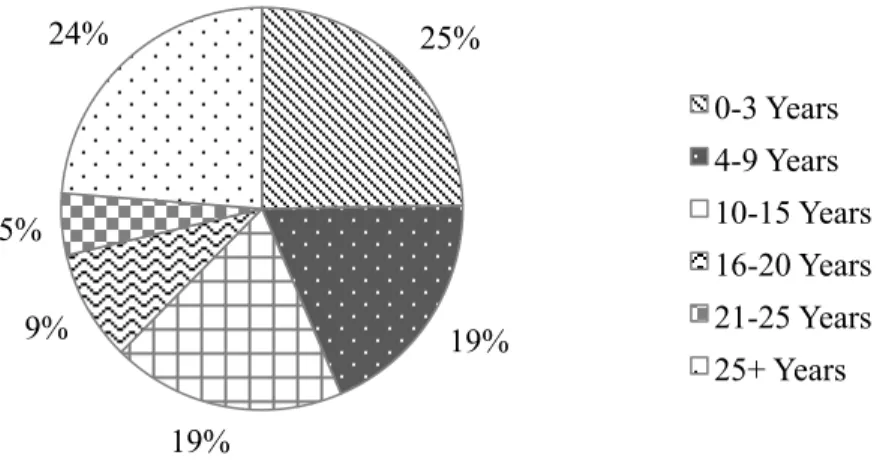
Page Figure 1. Distribution by years of teaching experience of Iowa agricultural
educators responding to a questionnaire on grading ... 37 Figure 2. Distribution by number of students in grades 9-12 at schools of
agricultural educators responding to a questionnaire on grading ... 39 Figure 3. Distribution of extra credit opportunities offered by Iowa agricultural
educators participating in a questionnaire on grading ... 53 Figure 4. Distribution of standards identified for agricultural education courses .... 63 Figure 5. Distribution of standard sets used by agricultural educators participating
in a questionnaire on grading ... 64 Figure 6. Distribution of the number of standards covered in one course during a
LIST OF TABLES
Page Table 1. Frequencies and percentages of CASE certifications held by Iowa
agricultural educators ... 38 Table 2. Frequencies and percentages of teachers in the 9-12 school building with
agricultural educators participating in a questionnaire on grading ... 39 Table 3. Frequencies and percentages of agricultural education class size of
agricultural educators participating in a questionnaire on grading ... 40 Table 4. Frequencies and percentages of courses offered by agricultural educators
participating in a grading questionnaire ... 41 Table 5. Means and standard deviations of class period agricultural educators
teach, supervise or plan ... 42 Table 6. Terms and phrases used to define grades in secondary agricultural
education programs according to Iowa agricultural educators
participating in a questionnaire on grading ... 44 Table 7. Frequencies and percentages of grading components agricultural
educators believe should be included in student grades ... 45 Table 8. Distribution of means and standard deviations of agricultural educator
beliefs on grading criteria in a traditional grading system ... 45 Table 9. Distribution of means and standard deviations of the purpose of grades
according to participating Iowa agricultural educators ... 46 Table 10. Means and standard deviations of agricultural educator beliefs of grade
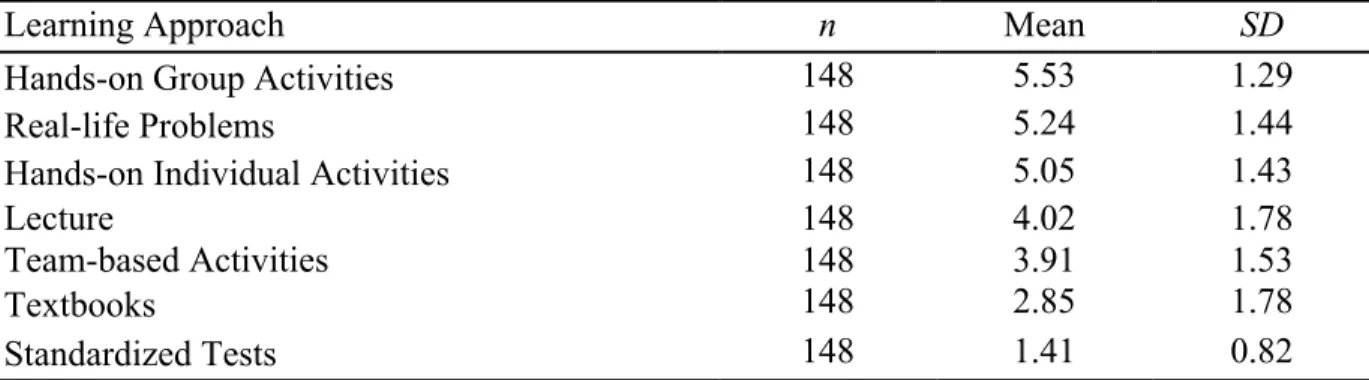
purposes in a traditional grading system ... 47 Table 11. Distribution of means and standard deviations of learning approaches
used by Iowa agricultural educators ... 48 Table 12. Frequencies and percentages of assessments used by agricultural
educators participating in a questionnaire on grading ... 49 Table 13. Means and standard deviations of assessment types use by Iowa
agricultural educators ... 49 Table 14. Terms and phrases used to describe circumstances in which agricultural
Table 15. Terms and phrases used by agricultural educators to describe
circumstances and requirements on accepting late work ... 52 Table 16. Frequencies of extra credit opportunities offered by Iowa agricultural
educators ... 55 Table 17. Frequencies and percentages of grading components agricultural
educators include in student grades ... 55 Table 18. Frequencies of terms used by agricultural educators to explain grading
in their classrooms ... 56 Table 19. Frequencies and percentages of professional development offered by
school districts with agricultural educators participating in a
questionnaire on grading ... 58 Table 20. Frequencies and percentages of time per month school districts spend
on professional development ... 58 Table 21. Terms and phrases of concepts covered during professional
development within school districts of participating agricultural
educators ... 59 Table 22. Frequencies and percentages of agricultural education professional
development opportunities attended by agricultural educators ... 60 Table 23. Frequencies and percentages of professional development opportunities
outside the school district attended by agricultural educators ... 61 Table 24. Distribution of means and standard deviations of agricultural educator
beliefs on grading criteria in a SBG system ... 62 Table 25. Means and standard deviations of agricultural educator beliefs of grade
purposes in a traditional grading system ... 63 Table 26. Frequencies and percentages of non-agricultural education standards
used in agricultural education courses ... 65 Table 27. Frequencies and percentages of communicating standards with students,
parents, and administrators by agricultural educators ... 66 Table 28. Frequencies and percentages of building levels using SBG in schools
districts with agricultural educators participating in a questionnaire on
ACKNOWLEDGEMENTS
In my time at Iowa State University working on my master’s degree, there have been many individuals that have helped me along the way. This experience came with many lessons and I am grateful to the following individuals:
My family – thank you for supporting my crazy and, at times, spontaneous ideas and for never letting me give up on my dreams.
My friends – never did I think our conversations would revolve around grading and grading practices. Thank you for serving as my sounding board and providing insight into your classrooms.
My mentors: Dennis Deppe and Brittany Elmquist – I always value your advice and words of encouragement.
My committee members: Dr. Patricia Carlson and Dr. Wade Miller – thank you for your inspiration and guidance. I had many memories of your classes during undergrad and was excited when you agreed to serve on my committee.
The faculty and staff in the Department of Agricultural Education and Studies – your support, words of encouragement, and assistance along the way were always greatly
appreciated.
My major professor, Dr. Michael Retallick – thank you for everything that could not fit into 140 characters. I would not have been able to accomplish this without your guidance. Thank you for not giving up on me when I had to adjust my goals and timeline. I knew going into our meetings that I would come out with new inspiration and motivation. You were the first person I met at ISU as an undergrad and I cannot thank you enough for all your support.
While the journey to complete my degree has been memorable, it was definitely aided by those who have helped me along the way. Words cannot express my gratitude to each of those mentioned and many who are not.
ABSTRACT
Research on grading reveals that grading practices have not changed much since they were first introduced. However, educators are now learning about a newer grading approach that evaluates student performance based on clearly defined learning standards. Standards-based grading (SBG) looks to more accurately communicate student knowledge by assessing and reporting each student’s mastery based on clearly defined learning standards. While still rather new, research on standards-based grading is limited and very little has been conducted at the secondary level. Even less research has been conducted on SBG and grading practices of career and technical education teachers.
The purpose of this study was to determine the perceptions of high school agricultural educators in Iowa regarding current grading practices and standards-based grading. The accessible population consisted of 225 high school agricultural educators. Findings were based on responses of 157 (69.8%) participants through an online questionnaire.
Results of this study indicated that secondary agricultural educators use a variety of learning approaches and assessment techniques. Results also indicated that agricultural educators align their beliefs with their grading practices. Professional development opportunities were another objective of the study with results showing an inconsistency of topics discussed within school professional development. Results revealed that agricultural educators are unfamiliar with SBG and need more information in order to fully implement within their programs.
The findings within this study serve as a starting point and a building block to help agricultural education develop grades that will accurately portray a student’s knowledge.
This study can also benefit administrators when designing professional development opportunities that provide beneficial learning opportunities on grading and assessment.
CHAPTER 1. INTRODUCTION
Educational practices have taken many different paths with the goal of preparing students for their future. It seems that each day there is a new push in education; recent examples include making classrooms more student-centered, incorporating 21st century skills, or designing differentiated classes. Teachers are asked to be flexible and to
incorporate more into their classroom, all to help prepare students for their futures. From legislation to educational themes and teaching strategies to grading practices, education has been influenced and molded into the system it is today.
From its initial use in one-room schoolhouse and single classrooms, grading has been a regular practice for educators. Education advanced to grouping students by age into grade levels, and grading was still a description of the student’s strengths and areas of weakness and how to improve (Guskey, 2013). At the beginning of the 20th century, a shift occurred which changed grades from narrative to a percentage. This shift evolved as the US Army developed the Alpha Test during World War I (Marzano, 2000). The Alpha Test was a multiple-choice test that helped place recruits based on their overall percentage score of correct questions (Marzano, Pickering, & Pollock, 2001).
Throughout this time, the purpose of grades remained the same: to provide feedback about student learning. When done appropriately, grades enable teachers to evaluate what students know and determine preparedness as well as communicate a clear picture of the student’s knowledge of course content to parents and students (Randall & Engelhard, 2010). Grades should be a clear indicator of student knowledge, but grades today include a variety of scores from exams, homework, daily work, effort, behavior, and attendance (Urich, 2012).
Grades may be used to determine class rank and academic honors in addition to college admission and scholarships (Reeves, 2011). But when determining a school’s success on educating students, grades authenticity present limitations (Urich, 2012). Teachers add up points from various activities, assignments, and behaviors, average them and assign a letter grade (Marzano & Heflebower, 2011). Variances across teachers, schools, and districts present grades that dilute what a student actually knows (Fisher, Frey, &
Pumpian, 2011).
Grades not only are supposed to be a tool to identify what a student knows but they are used to hold schools accountable (Urich, 2012). In 1965, the Elementary and Secondary Education Act was first implemented to make making education accessible to all
(Association for Educational Communications and Technology, 2001). The act has been revised and molded several times. Its most recent revision is known as the No Child Left Behind (NCLB) Act, passed in 2002. This new legislation focuses on quality education with high standards and accountability of schools.
NCLB started a focus of ‘teaching for the test’ where an emphasis on school success is based on student achievement on standardized state exams (Guskey, 2003). Standardized exams determine whether or not a school makes adequate yearly progress toward student proficiency (Reeves, 2011). Educators believe the pressure of what has become a “high-stakes” assessment that their classroom instruction is geared toward passing the state assessments (Daggett, 2005).
NCLB not only placed more emphasis on state-wide standardized exams, but also on content standards within the classroom. These statements that describe what educators want students to learn and be able to do as a result of their school experiences were not a new
concept in education at the release of NCLB (Guskey, 2013). Math educators had already developed learning goals by 1989 (Guskey, 2005). Other educational organizations followed shortly thereafter.
The International Center for Leadership in Education identified the relationship between standards, curriculum, instruction, and assessment as a way to reinforce each other. Daggett (2005) believed education should prepare students for life, not just for a state exam. A new framework was developed as a tool that captured teacher imagination to design a classroom where students are presented with high rigor and relevant material. The Rigor and Relevance framework helped meet the needs of NCLB.
More recently a push toward core curriculum and 21st century skills made its way into classrooms. Passed in 2008 and the last to develop and pass state standards, Iowa unveiled the Iowa Core Curriculum which details core teacher and student competencies in the areas of math, science, and literacy along with life skills (Iowa Core, 2012). Common Core State Standards were added to the Iowa Core legislation in 2010. The Iowa Core provides academic expectations of all K-12 students in Iowa.
The Iowa Core doesn’t outline specific competencies in agricultural education or other Career and Technical Education (CTE) service areas. Other legislation has been developed for these areas. Iowa Code requires all CTE programs to meet state minimum competencies (State of Iowa, 2013). In addition, CTE programs are required to report
students’ skill attainment as part of the Carl D. Perkins CTE Improvement Act of 2006 (State of Iowa, 2013). Replacing the Vocational Education Act of 1963, the Carl D. Perkins
Vocational Education Act, first enacted in 1984, required vocational education programs to meet high standards (Public Law 98-524, 1984).
Agricultural education as part of CTE is not new to requiring and assessing high content standards. National agricultural education standards were released in 2009. The National Agriculture, Food, and Natural Resource standards were developed to “provide state agricultural education leaders and teachers with a forward-thinking guide for what students should know and be able to do through the study of agriculture” (National Council for Agricultural Education, 2009). These standards are a resource for state and local educators and advisory councils to help develop a quality agricultural education program.
With new standards and legislation in place, standards-based grading (SBG) makes its entrance into the education system. Schools have begun experimenting and implementing this criterion-referenced, evidenced-based classroom assessment and reporting approach. SBG attempts to provide a grading system that is accurate and fair with more focus on the performance of students and less focus on subjective factors such as behavior (Reeves, 2011; Wormeli, 2014). Agricultural education is familiar with new educational reforms including student-centered classrooms and technical skills; however, the ways in which agricultural educators assess affects the accuracy of grades.
Statement of the Problem
Grading continues to be a discussion of educators and administrators. As educational reform continues and new standards are developed, little research has been conducted on grading in secondary agricultural education classes. More information about agricultural educators’ current grading practices and understanding is needed including a focus on understanding teachers’ perceptions of standards-based grading.
Purpose and Objectives
educators in Iowa regarding current grading practices and standards-based grading. The objectives of this study were to:
1. Explore agricultural educators’ current grading practices 2. Explain what agricultural educators know about SBG 3. Define the local driving force of the SBG movement 4. Determine agricultural educators’ attitudes towards SBG
5. Identify current grades-based professional development activities and opportunities for future professional development activities.
Significance of the Study
With new legislation, agricultural educators in Iowa are required to report technical skill attainment each year (Iowa Department of Education, 2013). While technical skills are determined at a local level, it has not been reported how technical skills are developed or their origin. To increase consistency, reliability, and validity of technical skills reporting and accuracy of what students know, this study can help determine the direction for future
grading and assessment in agricultural education.
Definition of Terms
The following terms were defined for use in this study:
Assessment – tools used to evaluate student proficiency levels; a planned activity that provide information about student’s understanding and skill in a specific measurement topic (Marzano, 2006)
Competency-Based Education – education system that tracks student knowledge based on performance tasks through multiple contexts; students advance to next level based on mastery rather than age or classroom time (Townsley, 2013)
Feedback – meaningful communication provided to a student in regards to their individual performance (Urich, 2012); no evaluative component (Wormeli, 2006)
Formative Assessment – frequent and ongoing assessment; designed to provide direction for improvement and/or instruction; used to provide feedback on student learning; most often not graded (Wormeli, 2006; O’Connor, 2009)
Grade – a number or letter reported as a summary of student learning and knowledge (O’Connor, 2009)
Standard – statement that describes what and/or how well students are expected to understand and perform (O’Connor, 2009); standards may also be referred to as learning objectives
Standards-based grading – a grading system that measures student proficiency levels using well-defined course objectives or standards (Tomlinson & McTighe, 2006)
Summative Assessment – assessments designed to provide information about a student’s learning at the end of an instruction period (O’Connor, 2009)
CHAPTER 2. LITERATURE REVIEW
This chapter discusses the literature related to grading practices and presents a rationale for this study. This chapter can be divided into six sections: history of grading, grading in agricultural education and career and technical education (CTE), purpose of grading, grading approaches, and standards-based grading implementation.
The first part of this chapter looks at the history of grading. The various influences on grading practices and how grading came to include scales and letter grades is discussed. Following this section, a discussion of research on grading practices in agricultural education and CTE is presented. The next section defines the purpose of grading before research on grading approaches are presented. In this section, three different grading approaches are presented: traditional grading, competency-based education, and standards-based grading (SBG). Within the SBG section, various SBG practices are discussed. Finally, this chapter looks at two K-12 Iowa schools and their implementation of SBG.
History of Grading
American education can be dated back to the mid-1600s when Massachusetts enacted the first education law requiring parents to make sure their children could read and
understand the principles of religion and laws of the Commonwealth (Clare Boothe Luce Policy Institute, 2009). However, it took 200 years before education began to look similar to today’s classroom. It wasn’t until the late 1800s that students were grouped into grade levels according to their age (Guskey, 2013). Grading at the time was letter-less with teachers preparing a narrative report addressing the student’s mastery of skills and those that needed more work (Guskey, 2013). The main purpose was to inform students of their skill mastery and to signify when they were ready to move to the next level (Guskey, 2013).
At the beginning of the 20th century, education became more of a priority after the passage of new education laws requiring children to attend schools. At this time, teachers began reporting grades as percentages and other similar markings to show achievement (Kirschenbaum, Simon, & Napier, 1971). It wasn’t long before controversy was raised on grading reliability. In 1912, Daniel Starch and Edward Charles Elliott conducted a study of 147 English teachers. The study identified the variances among teachers’ grading criteria. Changes were made and scales were adjusted to fewer and larger categories to increase consistency (Guskey, 2013). The same study was repeated by Hunter Brime in 2011 finding similar results as the 1912 study (Guskey, 2013).
The grading system continued to advance. During World War I, the US Army developed the Alpha Test, a multiple-choice test where answers could be marked as correct or incorrect (Marzano et al., 2001). This test allowed the Army to determine competencies of hundreds of thousands of recruits quickly to place them into positions. This test was a model for the development of the SATs in the 1940s and furthered the educational grading system (Marzano et al., 2001).
Educators continued to grade students into the mid-1900s using percentages. However, schools began using grades to group slower and brighter students into special classes to help meet student differences in ability and interest (Alpren, 1960). Discussion continued resulting in the suggestion that two grades be given to each student: one for his ability and a second comparing him with his age-mates (Doak, 1962).
The distribution of grades typically followed the bell-shaped normal probability curve through the 1900s. Educators would follow a norm-referenced grading standard by ranking students against their peers before assigning a percentage of top-ranked students the highest
grade and the lowest ranked students the lowest grade while a large majority sat in the middle of what created the bell-shaped curve (Guskey, 2001).
In 1983, grading and the American education system became a focus for the Reagan administration. In April, President Reagan presented A Nation at Risk, which called for reform of public education, claiming schools were straying from the purpose of public
education. The National Commission on Excellence in Education found test scores declining, high teacher turnover, and diluted curriculums being taught in classrooms (Graham, 2013).
A Nation at Risk provided few suggestions to improve the education system (Graham, 2013), but it started the education reform movement. In 1989, the National Council of Teachers of Mathematics (NCTM) developed learning goals ultimately paving the way for other professional organizations to follow (Guskey, 2005). Linda Darling-Hammond used the standards developed by NCTM as an example to explain the standards being clear enough to help direct curriculum development but not as cumbersome to limit teacher inventiveness (Vogel, 2010). The teacher-led efforts of standards development appealed to many states. By 2005, Iowa was the only state not to have established standards for student learning (Guskey, 2005; Marzano, 2006).
While states were leading their efforts in standard development, the national
government was working on a new legislation to update A Nation at Risk. The No Child Left Behind (NCLB) Act in 2002 outlined a system to evaluate schools. States were required as part of NCLB to report progress on ambitious school improvement goals (O’Shea, 2005). The progress made by NCLB has been overshadowed by frustrations with the legislation. Educators have voiced their complaints about NCLB ranging from “forcing schools to teach to the test and constraining curriculum to punishing schools for having students who are
English Language Learners, special education students, and student living in poverty” (Vogel, 2010, p. 8).
In addition to developing learning standards, a push for authentic learning and
assessment were included in educational reform. Learning should be relevant to students and the real world while assessments should provide students with the opportunity to demonstrate what they know (O’Connor, 2009). Teachers are now being asked to develop teaching and learning strategies and assessment strategies that are authentic, and these strategies are considered just as important as developing a grading plan (Brookhart, 2011).
As many as 80 percent of schools require letter grades (Munk & Bursuck, 2004) with a majority utilizing a 100-point scale with 10-point intervals (Reeves, 2011). Today, the grading process has become a game rather than a reflection of learning (Erickson, 2011). When students are presented with extra credit opportunities, grades become inflated
(Wormeli, 2006). Students begin looking at ways to improve their grade without meeting the original benchmarks (Wormeli, 2006).
Grading in Agricultural Education and CTE
There is very little research available for grading in agricultural education or in the overarching career and technical education (CTE) area. Research and literature within CTE has focused on changes in NCLB requirements and Carl D. Perkins Act readministration. Furthermore, CTE has focused on making the adjustment of incorporating STEM and Core Curriculum into CTE curriculum adding more standards that CTE teachers should assess (Pearson, Young, & Richardson, 2013; Ulmer, Velez, Lambert, Thompson, & Burns, 2013; Wooten, Rayfield & Moore, 2013; Haynes, Robinson, Edwards, & Key, 2012; Hyslop, 2010).
Passed in 2002, NCLB looked to improve school accountability. Agricultural educators and other CTE teachers have been familiar with holding students accountable. “There has always been considerable emphasis on performance activities in instructing and assessing students in CTE” (Cutshall, 2001, p. 39). Handbook on Agricultural Education in Public Schools (2008) outlines a variety of authentic and traditional forms of assessment including record books, portfolios, self-reflections, debates, and presentations. Each
assessment, graded with a rubric, becomes a reliable tool to measure student learning (Phipps, Osborne, Dyer, & Ball, 2008). CTE has been using authentic assessments for years while other teachers have more recently begun using them (Cutshall, 2001). In agricultural education and CTE, authentic assessment on practical application of academic knowledge comes naturally (Willhoft, 2013).
In 2006, the Perkins Act was reenacted and CTE instructors were asked to continue to increase accountability by developing a Program of Study (POS). The 2006 Act asked CTE teachers to collaborate between the secondary and post-secondary levels and choose content that aligns with CTE standards (Hyslop, 2012). In previous versions of the Perkins Act, CTE teachers had already developed programs to meet the high standards requirement passed in the initial Perkins Vocational Education Act of 1984 (Public Law 98-524). Putting student attainment on paper, the 2006 Act also required educators to report out “state-established, industry-validated career and technical skills” (Stone, 2009, p. 21). These technical skills can further be defined as objectives and competencies required by a specific occupation (Stone, 2009). Technical skill attainment assesses each CTE student’s knowledge, skills, and abilities to succeed in an occupation (Stone, 2009).
In a span of six years, CTE saw two versions of the Perkins Act and a non-content specific NCLB act. With all the additional reporting of data, CTE teachers can use the data to improve their already effective hands-on, real-world learning strategies (Daggett, 2005). Gary Hoachlander (2000) suggests CTE teachers use the data to help clarify learning goals and help set performance targets. By looking at where students are performing, determining a proficient level, and coming up with a plan on how to get there, CTE programs can begin to use what is reported to reflect on their program for improvement (Hoachlander, 2000).
With Perkins Act requirements, CTE teachers including agricultural educators are familiar with high quality standards and assessing students on those standards. When Iowa Core Curriculum was introduced in 2008, CTE teachers could play a valuable role in helping other teachers incorporate some of common core curriculum requirements like developing activities to meeting standards with real-life application (Willhoft, 2013). However, Willhoft (2013) advises CTE teachers to stay on top of professional development and activities to understand how core curriculum can be connected to their CTE programs.
Purpose of Grading
Many discussions stem from an unclear purpose of grades. Alpren (1960) noticed early that the grade rarely represents true student accomplishment in terms of academic standards. Many times grades may include exams, quizzes, presentations, projects,
homework, attendance, portfolios, participation, attitude, effort, and progress made. Teachers rely on various combinations of these elements to construct an overall grade (Guskey, 2009). These combinations cause an unclear picture about student learning and fail to accurately communicate student achievement with parents (O’Connor, 2011).
The intent of grades is to describe the student’s progress in class (Dockery, 1995). Brookhart (2011) states that grades are about what students learn, not earn. “As soon as grades are introduced in schools, teachers, parents, and students emphasize grades rather than learning” (O’Connor, 2009, p. 17). It is up to the schools and districts to evaluate their teachers, and administration to determine the purpose of grades (Marzano, 2000).
Wrinkle outlined four classifications of grades in 1947. Peter Airasian (1994) updated Wrinkle’s list to five purposes of grades outlined by Marzano in 2000. They include:
-Administrative purposes: student placement, graduation requirements, college admission
-Feedback: student achievement, areas of improvement
-Guidance: provide direction for students, course suggestions, further education
-Instruction planning: offer direction for instruction using student strengths/weaknesses
-Motivation: grades can encourage students to try harder
Of those identified, feedback was identified as a primary purpose of grading. Studies by Austin and McCann (1992) and Marzano (2000) indicate educators and administrators believe feedback about student achievement is the primary purpose of grading.
Communicating student achievement is the primary purpose of grades (O’Connor, 2009). “Parents rely primarily on teacher-assigned grades when ascertaining the achievement of their children” (Randall et al., 2010, p. 1372). Grades can be “clear communication vehicles, if there is a shared understanding of how they are determined and thus, what they mean” (O’Connor, 2009, p. 16).
The most logical reasons to grade students are those that help teachers teach and students learn. Purposes including documenting student and teacher progress, to provide feedback, and to inform instructional decisions accomplish this. Grades that have the purpose to motivate, punish, or sort dilutes grade accuracy, usefulness and manipulates students (Wormeli, 2006).
Motivation as a purpose of grading is one of the most controversial purposes. While motivation can be viewed as a purpose to grades, Guskey and Bailey (2001) report that a student isn’t motivated by a D or 0 in the gradebook. Students distance themselves from learning and extra effort must be made by educators to bring the students back (Wormeli, 2006).
Grades also influence college admissions and future success. While many colleges and universities require achievement test scores and high school grade point average (GPA) as traditional admissions requirements (Mattern, Patterson, & Wyatt, 2014), studies
contradict one another on the correlation of standardized admission exams such as the SAT or ACT and high school GPA. Studies completed by the United State Department of Education showed improvement in GPA between 1999 and 2000. However, The College Board and ACT conducted studies showing that while GPAs were higher, standardized tests scores were lower than in previous years (Taylor, 2007). In a research study, student SAT scores and GPAs in a Georgia high school were analyzed. The findings showed a significant relationship between composite SAT scores and cumulative GPAs (Taylor, 2007).
Assigning a letter or grade to student achievement has been the traditional grading system used, but what that grade means is questionable. The valuable information is the details of the achievement on each learning goal, not the overall score (O’Connor, 2009).
Grading Approaches
Grading in today’s schools varies between classroom and school district (Fisher et al., 2011). “There is a growing emphasis in education on student-performance and performance-based forms of assessment” (Guskey, 1996, p. 1). Grading approaches today are classified using a norm-referenced system or criterion-referenced grading. In a norm-referenced system, educators ‘rank’ students or determine a student’s grade by comparing their
performance to the student’s peers (Guskey, 1996). Criterion-referenced grading takes into account a student’s performance based on established criteria or performance standards (Guskey, 1996). An educator may use one or a combination of these systems in their classroom. This section looks at three different grading approaches: traditional grading, competency-based education, and standards-based grading.
Traditional Grading
Percentage grades are the foundation of many state grading policies (Guskey, 2013; Reeves, 2011), and 80 percent of schools require a single letter grade (Munk et al., 2004). Letter grades are familiar to nearly every person who has attended school (Guskey, 1996). The focus of traditional grading systems has been to sort and select students and justify grades (O’Connor, 2009).
A traditional grading system usually involves averaging of grades for a final single percentage or letter grade. A grade in a traditional system may include exams and quizzes, homework assignments, participation, and extra credit. The final grade becomes a
hodgepodge and is dependent upon the teacher’s grading system and chosen elements of evidence (Urich, 2012). One grade sums up achievement that often includes effort and behavior (Brookhart, 2011; Marzano et al., 2011). The percentage that each element
contributes to a student’s grade varies across teachers, schools, districts, and states (Fisher et al., 2011). Teachers are allowed to design their own assessments and assign points to items awarding different total scores from teacher to teacher because teachers weigh items
differently (Marzano, 2002).
The traditional grading system brings forth discussion on validity, reliability, and limitations. The validity of student grades is unknown due to the variability in criteria used to grade students from teacher to teacher (Allen, 2005). In a study of 342 educators, Randall and Engelhard (2010) found that when grading a student with average ability, low levels of effort and low achievement the student will still receive a passing grade as long as s/he has average or excellent behavior.
Grades then create a limitation for planning academic and futures of students (Allen, 2005). The traditional grading system also presents limitations regarding authentically representing what students know and are able to do (Wrinkle, 1947; Urich, 2012). “A mark, unless its meaning is restricted to one defined value, cannot be interpreted since it is usually a composite index representing the average of a variety of different values” (Wrinkle, 1947, p. 33).
Competency-Based Education
Competency is an indicator of successful performance in life-role activities (Spady, 1977). Competency-based education (CBE) transforms the traditional system (Cornally, 2013). In CBE, students’ knowledge is tracked based on performance tasks and grades are
eliminated (Cornally, 2013; Townsley, 2013). CBE takes learning a step further because students are not just asked to gain knowledge and understanding but analyze, evaluate, and create (Iowa Department of Education, 2013).
Learning is the responsibility of the student in CBE. Students take ownership of learning while teachers provide support (Townsley, 2013). This eliminates any teacher-developed lesson plans as learning takes place both in and outside of the classroom (Cornally, 2013). CBE environments connect learning to student passions and interests allowing higher thinking and deeper learning (Iowa Department of Education, 2013). Through CBE, students are more connected and learn more on their own time about their own passions than they do in schools (Iowa Department of Education, 2013).
A clear set of pre-determined competencies are presented in CBE. Learning outcomes or competencies are explicity stated, agreed upon, and are known beforehand (Spady, 1977). Students move from one level to the next based on their mastery of a competency without regard to seat time, contact days or hours (Townsley, 2013). Student records reflect dates and projects for each proficiency reached (Cornally, 2013). Students are assessed on skills through multiple contexts and in multiple ways (Townsley, 2013).
Assessment comes from a data-based, adaptive, and performance-oriented set of integrated processes that facilitate, measure, record, and certify within the context of flexible time parameters the demonstration of competencies (Spady, 1977).
Standards-Based Grading
While grades should be concise and informative, a single letter grade or a percentage score, such as that in traditional grading, is not a good way to report student achievement (Marzano et al., 2001). Today’s report card looks similar to ones used a century ago with
one letter grade being reported for each course enrolled (Guskey, 2013). In a standards-based grading (SBG) system, a single grade per learning goal or standard is presented for each student with no overall grade (O’Connor, 2009; Townsley, 2013).
SBG is a newer approach to how educators assess and evaluate what they want students to know. This educational reform is based on student achievement of learning goals and performance standards (Townsley, 2013). SBG places more emphasis on learning content rather than points while rewarding the work done to gain proficiency (Cornally, 2013).
Students work more effectively if they have purposes in which they have a real interest (Wrinkle, 1947). With SBG, educators clearly articulate the purpose of learning and clear standards with students (Vogel, 2010). Educators can continue to create instruction and curriculum using standards while still meeting the needs and interests of their students
(Vogel, 2010).
SBG allows for clearer communication with students and parents by having a clear set of course standards identified early in the course. Each student is evaluated on the standards with teacher feedback assessing how well the learner currently understands the course standards (Townsley, 2013). Parents are better able to understand their student’s learning strengths and areas of struggle without non-academic influences like participation, attendance, and effort (Guskey, 2013). Providing students with a single grade or percentage as in traditional grading cannot present the level of detailed feedback necessary for effective learning (Marzano et al., 2001).
SBG eliminates a one-shot approach to grading objectives. The methods of SBG allow for many opportunities to exhibit student success and encourage learning (O’Connor,
2009). Identified standards allow students to achieve a prescribed level of proficiency but allow opportunities to reassess until a student becomes proficient for each standard (Rosales, 2013).
SBG does have its drawbacks. States and educational organizations have developed standards and benchmarks. State-developed standards articulate an inordinate amount of content (Marzano, 2006). Researchers assessed state standard documents and found over 200 standards and 3,903 benchmarks across 14 subject areas (Kendall and Marzano, 2000). Educators don’t have the time to cover all the outlined standards without extending the school days, school year, and graduation requirements (Daggett, 2005).
In many cases, standards are under-developed or not well-written (O’Connor, 2009). Educators and administrators would have to ‘unpack’ each standard and pare it down to fit into the time available for instruction (Marzano, 2006). Marzano suggests identifying 20 measurement topics, where 15 is ideal, per subject per grade level (2006).
Some educators believe that with SBG their curriculum becomes irrelevant. They view SBG as having to adopt a new curriculum, possibly set by a textbook, and limiting supplementary activities (O’Shea, 2005). However, teachers still get to determine classroom activities. Standards only guide the formation of lessons; student outcomes and learning activities are teacher-developed and implemented with the goal of students learning the standard (O’Shea, 2005; O’Connor, 2009). Standards serve as “guideposts for teachers who could then tailor curriculum to build around individual student interests and needs” (Vogel, 2010). Teachers still have a large amount of discretion in their classroom and can use formative assessments to help guide activities (Chappuis & Chappuis, 2008). SBG allows for a clearer intent when constructing lesson plans as well (Cornally, 2013).
Standards-Based Grading Practices
For the last 30 years, educational reforms focused on improving student achievement (Marzano, 2006). While no one reform has been adopted by a majority, there are aspects of SBG grading that have become a recent focus to better the grading system. Feedback and assessment are currently two topics discussed by educators implementing SBG and overlap to a great extent in much of research and theory (Marzano, 2010).
Feedback
Feedback has long been identified for successful learning (Bransford, Brown, & Cocking, 2000). Grades are one form of feedback that receives the most attention (Reeves, 2011). Grades are most effective when a student knows what they are doing well and what they can improve upon. Educators must collect information about how students are doing and effectively share that information with the students and their parents (Kohn, 2012). Sharing of this information is the feedback students need to further their education.
Feedback is the responsibility of the teacher and the student. Learning is most effective when students seek and use feedback (Bransford et al., 2000). Feedback has been shown to guide students to more productive engagement in learning activities (Butler & Winne, 1995).
Timing and content of feedback is important. Feedback is most valuable when
students have the opportunity to use it to revise their thinking as they are working on a unit or project (Bransford et al, 2000). Feedback should be low stakes with no final outcome and given during a unit with time for the student to make changes and further their understanding (O’Shea, 2005). Feedback should include descriptive information about the work relative to learning goals (Chappuis et al., 2008). Descriptive feedback should be about the qualities of
the student’s work with suggestions on improvement (Black & Wiliam, 1998, Chappuis et al., 2008). Feedback needs to address specific features of the student work or performance
relating to the learning standard (O’Shea, 2005). “A 7/10 or 3 (from a rubric) going into the gradebook is high stakes, provides no useful information about the learning targets, and contributes nothing that will improves student learning” (O’Shea, 2005, p. 109).
Descriptive feedback can be helpful when feedback is concise and specific. Students will succeed at a much higher rate when told to focus on specific areas than when they are offered over general and non-specific feedback (O’Connor, 2009). Teachers can provide comments, check-lists, and brief written summaries to help students (Dockery, 1995). After reviewing 7,827 studies on learning and instruction, John Hattie (1992) reported that
providing students with specific information about their standings in terms of particular objectives increased their achievement by 37 percentile points (Marzano et al., 2001).
Feedback also offers long-term effects. Productive feedback can provide information about a domain and information for guiding tactics and strategies to help future learning (Butler et al., 1995).
Assessment
Assessments are another common form of feedback (Marzano, 2006). The effects of assessments can vary greatly based on frequency and type of assessment, but most often research has been positive (Marzano, 2006). Research on classroom assessment has indicated assessments should be formative and conducted frequently (Marzano, 2006).
Assessments can be broken down into two categories: formative assessment and summative assessment. Differentiating between the two is done by determining how the assessment results will be used (Chappuis et al, 2008; O’Connor, 2009). Summative
assessments are an assessment of learning where the results are used to make some sort of judgment such as a final grade and documents how much learning has occurred at a point in time (Chappuis et al., 2008).
Formative assessments, on the other hand, are any activities undertaken by teachers where the evidence is used to adapt the teaching to meet student needs (Black et al., 1998). Formative assessments are assessments for learning (Stiggins, 2006; O’Connor, 2009). These assessments provide students with descriptive feedback to move their learning forward (O’Connor, 2009). Formative assessments deliver information to students and teachers during the instructional process (Chappuis et al., 2008). No final or summative grade is given in a formative assessment but rather helps make a decision about what actions should be taken to further student learning (Chappuis et al., 2008).
Reassessment
SBG also emphasizes reassessment. In Rick Wormeli’s Fair Isn’t Always Equal
(2006), he addresses differentiated instruction as “doing what’s fair for students” (p. 3). Furthermore, he goes on to explain that not every student learns at the same pace as their classmates; learning rates of individuals vary even for adults. Assessments should be ongoing to help students learn and develop (Wormeli, 2006; Guskey, 2003).
Students may learn nothing from success but can begin learning from a mistake (Guskey, 2003). Through reassessment, students are given the time to try another approach, complete a few more examples, and take another day to process the information (Wormeli, 2006). Redoing assessments until students meet high expectations results in far more
but can also help determine the teacher’s effectiveness of corrective instruction (Guskey, 2003).
Reassessing students should be allowed for full credit and at the teacher’s discretion (Wormeli, 2006). Redos and retakes allow students to become prepared for college and careers because they have learned the skills and content (Wormeli, 2011). As an educator, the assessment format can be changed and completed in a given time period. This could be limiting the redo to an oral discussion with the teacher or changing the questions and order on a forced-choice test. Students reflect on their mistakes and understand their efforts will count and can be used to improve their status through reassessment (Wormeli, 2006).
Standards-Based Grading Implementation
Educational reform has led to recent trends including redefining the purpose and what’s in a grade (Allen, 2005) to eliminating grades (Doak, 1962). Schools across the United States have begun implementing SBG. Within Iowa, many schools are still learning about SBG. However, some have begun the implementation process, which may take anywhere from three to 15 years depending on the implementation plan (Vogel, 2010).
Solon Community School District (SCSD) in Eastern Iowa implemented SBG during the 2012-2013 school year, five years after one teacher piloted SBG in his classroom. In the years following the pilot, the school worked with teachers, administrators, and board
members to develop the grading system used today. Students and parents were informed about the new grading policy during the 2011-2012 school year (Townsley, 2012).
Implementation wasn’t easy. SCSD received some parent concerns. A September 2012 article in The Gazette reported parent concerns about homework not counting towards student grades (Carlson, 2012). In a SBG system, homework is used as a vehicle for
feedback and extra practice, not points (Dockery, 1995). Solon teachers grade tests, projects, and activities as measures of the standards that students understand and have mastered (Carlson, 2012).
More recently, Ankeny Community Schools have been in the news about their transition to a SBG system. The Ankeny School District Board of Education began studying SBG during the 2008-2009 school year (Ingebrand, 2014). In a March 14, 2014 phone interview with Jill Urich, Assistant Superintendent of Curriculum and Instruction for Ankeny Schools, she said the Curriculum and Instruction department has been working closely with teachers providing them with professional development and opportunities to learn about SBG. Similar to Solon, the implementation process has brought forth parent concerns. A small group of high school parents formed “Stop Standards-Based Grading in Ankeny” to voice their concerns about homework and lack of overall grades (Erzen, 2014). The school district has invited parents, students, teachers, and administrators to be a part of the Standards-Based Grading and Reporting Committee to help with the implementation process including
bringing forth frustrations and helping to find ways to overcome the issues.
At this point in Ankeny’s implementation, teachers are making a shift towards SBG. Urich also indicated in the March 14, 2014 phone interview that teachers at all levels have begun removing extra credit opportunities for students and have reduced the influence
homework has on student grades. Ankeny has utilized their stakeholder committee as well as professional learning communities to help make the change to SBG.
Summary
Previous research has explored the purposes of grading and grading approaches. Research has indicated that many educational reforms are the cause of some changes in education to hold schools and teachers accountable for student knowledge including most recently the 2002 No Child Left Behind act and the 2006 reenactment of the Perkins Act. While reforms lead to implementation of reporting requirements, researchers indicate an unclear purpose of grades resulting in an unclear picture of student learning (O’Connor, 2011).
Traditional grading systems using percentage grades or a single letter grade are used by a majority of school districts (Munk et al., 2004), but there has been an increasing emphasis on student-performance and performance-based assessments that have brought forth CBE and SBG. There is very little research on the effectiveness of these approaches in classrooms. Research at the secondary school level is even more limited, and no research is available for using SBG in CTE programs. As school districts progress towards more
accurate grading practices including SBG, these concerns warrant the need for more research in SBG at the secondary school level and within CTE programs.
CHAPTER 3. METHODS
The purpose of this study was to determine the perceptions of high school agricultural educators in Iowa regarding current grading practices and standards-based grading (SBG). The objectives of this study were to:
1. Explore agricultural educators’ current grading practices 2. Explain what agricultural educators know about SBG 3. Define the local driving force of the SBG movement 4. Determine agricultural educators’ attitudes towards SBG
5. Identify current grades-based professional development activities and opportunities for future professional development activities.
This chapter outlines the methods and procedures used to collect and analyze the data. First, the research design used in this study is discussed followed by a description of
participants. An explanation of the instrument development and procedures for determining reliability and validity are also included. The last section discusses how the data were collected and analyzed.
Research Design
This study used a descriptive survey research design for the collection and analysis of data. As described in the purpose and objectives, the variables included were not
manipulated or controlled and the objectives sought to explore and describe behaviors. The data were collected using Qualtrics, an online survey software and insight platform (Qualtrics, LCC, 2014). An online survey was deemed appropriate, as the Internet has become more widespread. A cultural shift arose with the growth of the Internet and many prefer
also have the potential to reach a large population while reducing the costs associated with mail surveys (Ary, Jacobs & Roberts, 2010). In addition to reaching more respondents, web-based surveys also allow for quick returns and results tabulation (Dillman et al., 2009).
Subjects
This study’s focus was on the grading practices of high school agricultural educators. The population for this study consisted of all high school agricultural educators in Iowa. A list of current agricultural educators was obtained from the Iowa Agricultural Education Directory on the Iowa FFA Association website. The Directory contains the names and emails for all agricultural educators employed by a K-12 school district within the state of Iowa. The list contained 237 agricultural educators with only one duplicate found making the total population for this survey 236. In addition to checking for duplicates, the list was also checked to ensure a corresponding email address for each educator.
The entire population was contacted allowing the study to be classified as a census survey (Ary et al., 2010). By including all agricultural educators (N=237), an adequate response rate can be obtained. A census is appropriate for this study because the population being studied is well-defined and contact information was available for the entire population (Ary et al., 2010).
Instrument
The literature revealed very few instruments to evaluate teachers’ knowledge and perceptions of SBG, a relatively new grading approach. Marzano (2000) developed an instrument to evaluate teachers’ beliefs on the purpose of grades and their bases for grading. The instrument used nine Likert scale questions and one multiple-choice question that could easily be duplicated and filled out by the staff in a school district that was considering using
SBG. Brookhart (2011) further enhanced the instrument by asking conversation starters. These statements were suggested to use to get teachers to start thinking about the purpose of grades and how they grade student learning. Brookhart (2011) and Marzano (2000) believed identifying the purpose of grades is the first step in making the change to SBG.
Other literature provided insight on the implementation of standards-based grading. In 2002, Robert Schmidt studied how middle school teachers blended standards-based
grading with an integrative curriculum approach while Jill Urich (2012) reported her findings on SBG implementation in a middle school. Schmidt (2002) utilized a teacher survey to collect data while Urich (2012) developed and conducted interviews with teachers.
The instruments developed by Marzano (2000), Schmidt (2002), and Urich (2012), along with the discussion statements by Brookhart (2011), were used as a model for designing an instrument to measure teachers’ current grading practices and perceptions of SBG. The final questionnaire for this study included a variety of question types including Likert-scale questions, multiple-choice questions, multiple-select questions, short answer, order rank, and frequency. The final questionnaire can be found in Appendix A.
The questionnaire sought information from five different areas: current grading practices and beliefs, current professional development, SBG knowledge, and demographics. Questions were grouped by related topics. Using this grouping technique, it is easier for respondents to answer as well as obtain answers that are well-thought (Dillman et al., 2009). Questions were also ordered with the most applicable questions first, or those relating to the majority of the population. These questions include those about current grading practices, beliefs, and professional development.
Current Grading Practices and Beliefs
SBG doesn’t ask teachers to change a small detail in their grading practices; it is a philosophy change (Vogel, 2012). Evaluating beliefs about grading, purposes of grades, and factors that should be included in a grade is an important step when designing an effective grading system (Marzano, 2000). Many questions developed for this survey explore current grading practices of teachers as well as their beliefs about grading and its purposes.
Questions regarding current grading practices were developed using multiple-answer and multiple-choice. In addition, two frequency scales were used asking respondents to identify the frequency they use various learning approaches and learning tools.
Three questions were asked related to extra credit, retesting, and accepting late work. These three questions were general questions and were followed up with a specific question regarding the circumstances when each was used. By asking the general questions first followed by the more subjective question, the general questions help specify and clarify the following subjective question making it easier for participants to respond (Ary et al, 2010).
When asking agricultural educators about their beliefs on grading, respondents were asked to identify using a Likert scale. A Likert scale is one of the most widely used to assess attitudes and beliefs (Ary et al., 2010). The Likert scale used in this questionnaire ranged from 1 (Strongly Disagree) to 4 (Strongly Agree). Eight statements addressing grading beliefs were grouped together using one Likert scale to help with questionnaire readability.
Six questions were also developed addressing the current standards agricultural educators are using. Standards are what teachers evaluate students’ performance on within SBG (Guskey, 2013). Because they play such a large role, the researcher felt it was
are being communicated. In addition, there are no set standards in Iowa for agricultural education. Two questions addressed standards used including one specific to agricultural education and a second question regarding other content standards used. In addition, one question asked about how standards are communicated with administration, students, and parents. The last question developed about standards included a question regarding the average number of standards that are covered in a semester for a single course.
Professional Development
To implement SBG, a great deal of effort needs to go in to educating teachers on this new approach. Collaboration, workshops, and professional learning communities all provide a source of professional development to help with the successful implementation of SBG (Vogel, 2010).
Evaluating current professional development opportunities was included in the instrument. Five questions addressed professional development that participants currently are offered both within their school district, regionally, and nationally. Three questions addressed professional development opportunities on the local level. These included
questions regarding professional development opportunities within the school district as well as concepts covered within these local professional development opportunities. One question was directed at how much time a school district will spend on professional development.
The final two questions regarding professional development asked respondents to identify opportunities outside of their district that they have participated in. These
opportunities include professional organization in-services and conferences along with area education association workshops.
The topics addressing professional development used response, multiple-choice, and short answer questions. Short answer questions allowed respondents to elaborate on a previous question. These open-ended questions were included because the amount of possible answers is too great for the researcher to predict (Ary et al., 2010).
SBG Knowledge and Implementation
To gauge what agricultural educators already knew about SBG, three questions were developed. A set of eight statements was presented asking agricultural educators to identify their agreement with each statement in the context of a traditional grading system using a Likert scale. The Likert scale included the following range: Not at All (1), Somewhat (3), To a Great Extent (5). Participants were then presented with the same questions and asked to select their agreement with each statement in a SBG system.
The third question was left open-ended and asked participants to define SBG. The researcher believed that leaving this as an open-ended question would allow for the best understanding of agricultural educator knowledge of SBG because respondents are not limited to choosing a provided answer (Ary et al., 2010).
Demographics
Using the question order suggestions by Dillman et al (2009), questions that could be viewed as sensitive or potentially objectionable were placed at the end. Those questions addressed demographic information of respondents and were intended to gather some information about the respondents. Questions included courses taught, years of teaching experience, gender, etc. Respondents have fewer objections to providing personal information after completing the questionnaire (Ary et al., 2010).
Validity and Reliability
Questions were compiled and entered into Qualtrics. Before implementing the survey, the researcher examined the validity of the instrument. Validity can be defined as the extent to which an instrument measures what it claims to measure (Ary et al., 2010). Content and face validity were both determined using pretesting guidelines outlined by Dillman et al. (2009).
Dillman et al. (2009) first suggests obtaining feedback from a variety of people who are knowledgeable about one or more areas of the survey content. To do this, the researcher sought individuals in the educational field. Included on this initial feedback panel were two educators familiar with standards-based grading from area high schools implementing SBG, a College of Education graduate assistant in educational research at Iowa State University, and one professor in the Department of Agricultural Education and Studies at Iowa State University. This group looked at question content, order, and technical problems associated with the questionnaire draft. Using their feedback, the researcher made adjustments to question phrasing, answer options, and question order.
After presenting the survey to the panel, the researcher also piloted the survey with out-of-state agricultural educators. A pilot study can help determine whether “the proposed questionnaire and procedures are adequate for the larger study” (Dillman et al., 2009, p. 228). An agricultural educator from each of the following states: Missouri, New Jersey, Tennessee, Wisconsin, and Kentucky, took the survey as a pilot group to further evaluate the validity of the survey. These pilot group participants had no role in helping develop the instrument but all have a background in agricultural education and share similarities to the survey
regarding the questionnaire format, question syntax, and implementation. Changes were made to the instrument based on feedback from the participants in the pilot study.
Cronbach’s alpha was used to determine the reliability of the survey and performed as a post-hoc reliability test. A modest reliability coefficient of 0.60 should be obtained when used for research purposed (Ary et al., 2010). Based on the types of questions asked, the reliability tests for this study were calculated for grading beliefs and SBG knowledge. A coefficient of 0.683 was found for grading beliefs and 0.608 for SBG knowledge which were both acceptable (Ary et al., 2010).
Survey Administration
As part of previous Agricultural Education and Studies courses, the researcher completed training in human subject research through the Iowa State University Office of Research Compliance. Human subject training and an Exempt Study Review Form were submitted to the Iowa State University’s Institutional Review Board (IRB) (Appendix C). The study was deemed to be exempt and upon notification (Appendix B) the instrument was finalized using Qualtrics.
The online survey software, Qualtrics (2014), is a program provided through Iowa State University for professors and students to conduct online surveys. First developed for academia, Qualtrics is designed with the researcher in mind (Smith, 2013). Researchers can develop an instrument using a variety of questions and get reliable results in a short time period.
Using this software, the instrument for this study was created and distributed. The email feature within Qualtrics allowed for distribution to the participants. In addition to the features used to develop the study, Qualtrics also tracks participation of the population.
Email was the chosen method for this study as agricultural educators have access to school email throughout the day. The online survey also allowed participants to respond at a time that was convenient for them.
Contact with participants was made following recommendations by Dillman et al. to achieve high response rates (2009). Dillman et al. (2009) recommended a minimum of five contacts listed below with their distribution dates. All letters can be found in Appendix C.
1. A pre-notice letter – Thursday, February 20, 2014 2. The questionnaire link – Tuesday, February 25, 2014 3. A reminder letter – Thursday, February 27, 2014
4. A second reminder – Monday, March 3, 2014
5. A final contact – Thursday, March 6, 2014
A pre-notice email was sent using Qualtrics on February 20, 2014 notifying the participants of the study’s purpose and the importance of their responses to the study. Moving quickly with a set timeline, the questionnaire was distributed to participants on February 25, 2014. The email included a questionnaire link specific to each participant. Confidentiality was addressed in each contact made with participants. Names and email addresses were used to make the contact with participants. Once their survey was submitted, their name and email address was deleted.
Qualtrics allows a researcher to send out reminder emails to those participants having yet to submit a survey. In addition, Qualtrics tracks participant’s completion. These two features allow reminder emails to be sent only to those not having responded. Using these features, a reminder email was sent to those agricultural educators who had not completed the survey before February 27, 2014. The email contained the link as well as highlighted the