School of Information Systems
Trustworthiness in Social Big Data Incorporating Semantic
Analysis, Machine Learning and Distributed Data Processing
Bilal Ahmad Abdal Rahman Abu Salih
This thesis is presented for the Degree of Doctor of Philosophy
of
Curtin University
Declaration
To the best of my knowledge and belief this thesis contains no material
previously published by any other person except where due acknowledgment has
been made.
This thesis contains no material which has been accepted for the award of any
other degree or diploma in any university.
Bilal Ahmad Abdal Rahman Abu Salih
Abstract
The proliferation of Online Social Networks (OSNs) has opened new
horizons and brought profound changes to various aspects of human, cultural,
intellectual, and social life. These significant Big Data (BD) tributaries have further
transformed the businesses processes by establishing convergent and transparent
dialogues between businesses and their customers. Therefore, analysing the flow of
Social Big Data (SBD) content is necessary in order to enhance business practices, to
increase brand awareness, to develop insights on target markets, to detect and identify
positive and negative customer sentiments, etc., thereby achieving the hoped-for
added value. However, due to the vast amount of information produced by these
platforms, in conjunction with the lack of a gatekeeper for those sites, it is difficult to
verify the credibility of their content and users. Therefore, the OSNs are hijacked,
and their otherwise valuable tools are used to spread chaos and false news. Hence, it
is essential to have an accurate understanding of the contextual content of social
users, in order to establish a ground for measuring their social credibility accordingly.
Further, it is important to classify users and their content into appropriate categories
prior to undertaking further business analytics.
Considerable achievements have been made in SBD analytics motivated by
the need for efficient and effective social data analytics solutions. In particular,
several studies have been carried out in the areas of social trust, semantic analysis,
machine learning and social data classification within the context of SBD. However,
the efforts in these areas have shown shortcomings in terms of: (i) the lack of
domains from the textual content of SBD; and (iii) the lack of domain-based
approaches for dual classification of the textual content of SBD at the user level and
post level.
This thesis presents several state-of-the-art approaches for social data
analytics in order to address the aforementioned research problems. The frameworks
have been constructed for the purpose of studying the trustworthiness of users in
OSNs platforms, deriving concealed knowledge from their textual content, and
classifying and predicting the domain knowledge of users and their content. The
contribution of this thesis is threefold: (i) an effective and an efficient credibility
framework for users of OSNs addressing the key features of BD, and incorporating
semantic analysis and the temporal factor, (ii) a semantic analysis-based approach to
extract knowledge captured from the textual content of SBD at user level and post
level, and (iii) an integrated framework incorporating domain knowledge discovery
tools and machine-learning-based data classification techniques in the quest for
domain-based discovery, classification and prediction. The developed approaches are
refined through proof-of-concept experiments, several benchmark comparisons, and
appropriate and rigorous evaluation metrics to verify and validate their effectiveness
Acknowledgements
First and foremost, I would like to thank God Almighty for giving me the acuity, knowledge and enthusiasm to undertake my PhD degree. Without His blessings, the accomplishment of this work would not have been possible.
I would like to express my genuine and sincere gratitude to my supervisor, Dr Ponnie Clark. Her tremendous insights, guidance, and advice throughout my PhD journey have been priceless. Her constant support and encouragement definitely helped me to grow as a researcher. This is evident through her supervision and
direction in respect of papers accepted in several scholarly research avenues which
has improved my research track record. I would like to express my sincere thanks to my associate-supervisors Dr Kit Yan Chan, Dr Amit Rudra, Dr Dengya Zhu and Dr Amin Beheshti for their encouragement, insightful guidance, technical help and support. Further, I extend my gratitude to Dr Vidyasagar Potdar who generously agreed to supervise me during the final stage of my study. His splendid guidance and generous support have been extremely valuable.
My particular and deepest gratitude goes to my wife, Bushra Bremie, for giving me an immense internal strength, patience and capability to accomplish this thesis. My heartfelt thanks to my gorgeous babies, Razan and Rashid, who have been an endless source of inspiration and love. Words are inadequate to express my gratitude to my fathers, brothers and sisters for their constant caring and encouragement.
I am highly indebted to the University of Jordan for providing me with the financial support to pursue my doctorate studies. Finally, heaps of thanks to my fellow students at Enterprise Unit 4, Technology Park who made my PhD journey an unforgettable and enjoyable experience.
Dedication
To the loving memory of my late mother, Fayzeh Awajan, and to my
Father, Ahmad Abu Salih, who always believed in my ability to succeed
academically.
To my wife Bushra Bremie,
To my babies, Razan and Rashid
To my brothers and sisters, Heba, AbdulRahman, Aman, AbdAllah,
Batool, AbdulAziz, and AbdulFattah
List of Publications
Journal Articles
B. Abu-Salih, P. Wongthongtham, K. Y. Chan. 2018. "Twitter Mining for
Ontology-based Domain Discovery Incorporating Machine Learning", Journal of
Knowledge Management (JKM). Vol. 22 Issue: 5, pp.949-981,
https://doi.org/10.1108/JKM-11-2016-0489, (ABDC- Rank : A).
B. Abu-Salih, P. Wongthongtham, K. Y. Chan, Z. Dengya. 2018. "CredSaT:
Credibility Ranking of Users in Big Social Data incorporating Semantic Analysis and
Temporal Factor", Journal of Information Science (JIS),
https://doi.org/10.1177/0165551518790424 , (ERA2010- Rank: A).
P. Wongthongtham, and B. Abu-Salih, "Ontology-based Approach for
Identifying the Credibility Domain in Social Big Data", Journal of Organizational
Computing and Electronic Commerce (JOCEC), Inpress - Accepted Mar 2018,
(ABDC- Rank: A).
P. Wongthongtham, K. Y. Chan, V. Potdar. 2018. B. Abu-Salih, S. Giakwad,
J. Pratima, “State-of-the-Art Ontology Annotation for Personalised Teaching and
Learning and Prospects for Smart Learning Recommender Based on Multiple
Intelligence and Fuzzy Ontology”. International Journal of Fuzzy Systems (IJFS).
Vol. 20 Issue: 4, pp. 1357-1372, https://doi.org/10.1007/s40815-018-0467-6.
B. Abu-Salih, P. Wongthongtham, Z. Dengya, SH.Alqrainy. 2015. "An
Approach for Time-Aware Domain-Based Analysis of Users’ Trustworthiness in Big
Social Data", Services Transactions on Big Data (STBD), Vol. 2 Issue: 1, pp. 41-56,
Conferences Articles
B. Abu-Salih, P. Wongthongtham, S.-M.-R. Beheshti, and Z. Dengya, "A
Preliminary Approach to Domain-based Evaluation of Users’ Trustworthiness in
Online Social Networks," in IEEE International Congress on Big Data (BigData
Congress-2015), New York, USA, 2015.
B. Abu-Salih, P. Wongthongtham, S.-M.-R. Beheshti, and B. Zajabbari,
"Towards A Methodology for Social Business Intelligence in the era of Big Social
Data incorporating Trust and Semantic Analysis" in Second International Conference
on Advanced Data and Information Engineering (DaEng-2015), ed. Bali, Indonesia:
Springer, 2015.
P. Wongthongtham, B. Abu-Salih, "Ontology and trust-based data
warehouse in new generation of business intelligence: State-of-the-art, challenges,
and opportunities", in IEEE 13th International Conference on Industrial Informatics
(INDIN) 2015: 476-483.
R. Nabipourshiri, B. Abu-Salih, P. Wongthongtham, "Tree-based
Classification to Users’ Trustworthiness in OSNs", in 10th International Conference on Computer and Automation Engineering (ICCAE 2018) 2018, Brisbane, Australia:
ACM, 2018
J. Kaur, P. Wongthongtham, B. Abu-Salih, S. Fathy, “Analysis of Scientific
Production of IoE Big Data Research”, in the 32nd IEEE International Conference
Table of Contents
Declaration ... i Abstract ... ii Acknowledgements ... iv Dedication ... v List of Publications ... viTable of Contents ... viii
List of Figures ... xiii
List of Tables ... xiv
Acronyms ... xvi
Chapter 1 Introduction ... 1
Overview ... 1
Social Big Data (SBD) ... 2
1.1.1.1 Data Overload ... 3
1.1.1.2 More Unstructured Data and Less Structured Data ... 5
Credibility of Data ... 6
Domain of Interest in Social Data ... 7
Social Data Classification ... 8
Motivation of Study ... 10
Poor Quality Data ... 10
Unrelated and Ambiguous Data... 12
A Need for Domain-based Classification ... 13
List of Concerns Need to be addressed by an Approach for SBD Analytics ... 14
Veracity and Value of SBD ... 14
An Accurate Understanding of SBD ... 15
Domain-based Classification of SBD ... 16
Research Objectives ... 17
Thesis Contributions ... 18
The significance of the Research ... 24
Theoretical Significance ... 25
Practical Significance ... 25
Thesis Structure ... 27
Chapter 2 Literature Review ... 33
Introduction ... 33
SBD Incorporating Trust ... 34
Generic-based Trustworthiness Approaches ... 35
Domain-based/Topic-Specific Trustworthiness Approaches ... 42
Assessment of Approaches Incorporating Trust in SBD ... 44
SBD Incorporating Semantic Analysis, and Machine Learning for Data Classification and Topic Distillation... 46
SBD Incorporating Semantic Analysis ... 46
SBD Incorporating Machine Learning for Data Classification and Topic Distillation ... 54
Assessment of Approaches Incorporating Semantic Analysis, Machine Learning for Data Classification and Topic Distillation ... 56
Critical Synthesis Review of the Current Approaches ... 57
Lack of an Advanced Domain-based Trustworthiness Approaches ... 58
Lack of Managing and Extracting High-Level Domains from the Textual Content of SBD ... 60
Lack of Domain-based Techniques for Dual Classification. ... 61
Conclusion ... 63
Chapter 3 Problem Definition ... 65
Introduction ... 65
Preliminary Concepts and Definitions ... 66
Problems Definition ... 71
Problem Statement 1: Lack of Domain-based Credibility Approaches in the Era of SBD ... 71
Problem Statement 2: Ambiguous Understanding of the Textual Content of SBD ... 73
Problem Statement 3: Lack of Domain-Based Approaches for Dual Classification in SBD ... 75
Underlying Research Issues ... 76
Research Issue 1: Elicit Value and Attain Veracity of SBD through Domain-based Credibility Approach ... 76
Research Issue 2: Extracting Knowledge and Defining Domain in SBD ... 78
Research Issue 3: Domain-Based Classification and Prediction of SBD ... 80
Solution Requirements for Domain-based Credibility Approach. ... 90
Solution Requirements for Extracting Knowledge and Defining Domain in SBD ... 92
Solution Requirements for Domain-based Classification of SBD ... 94
Conclusion ... 95
Chapter 4 Domain-Based Analysis of Users’ Trustworthiness in Social Big Data ... 97
Introduction ... 97
CredSaT System Architecture ... 98
Data Generation and Acquisition ... 99
Data Generation ... 99
Data Acquisition ... 100
Pre-processing phase ... 102
4.3.3.1 Data integration and temporary storage ... 102
4.3.3.2 Data Cleansing ... 103
Data Storage ... 104
Domain-based Trustworthiness Analysis ... 104
Domain Extraction and Sentiment analysis ... 105
Time-aware domain-based user’s credibility analysis ... 109
4.4.2.1 Methodology ... 111
4.4.2.2 Distinguishing domain-based OSNs users ... 111
4.4.2.3 Feature-based user ranking ... 120
4.4.2.4 Correlation between the key attributes ... 129
4.4.2.5 Monitoring user’s credibility over time ... 130
4.4.2.6 Scale credibility values ... 133
Experimental Results ... 134
Subsets selection and experiments settings ... 134
Monthly domain-based trustworthy users ... 136
Scale credibility values ... 138
Discovery of domain-based influencers - Baseline Comparison ... 139
Highly domain-based trustworthy users ... 143
Discovery of Anomalous users ... 145
Conclusion ... 147
Chapter 5 Semantic Data Extraction from Social Big Data ... 150
Introduction ... 150
System Architecture ... 152
Pre-processing data (data cleansing) ... 153
Annotation and Enrichment ... 156
Interlinking ... 157
Semantic Repository ... 158
Semantic Analysis Components ... 158
Politics Ontology ... 158
Text Mining Tool ... 160
Politics Twitter data ... 161
Case Studies of Politics Twitter Data... 163
System Evaluation ... 170
Datasets ... 170
Evaluators ... 171
Results and Discussion ... 171
5.5.3.1 Politics dataset ... 171
5.5.3.2 Politics-influenced dataset ... 174
5.5.3.3 Precision, recall, and F-measure ... 175
5.5.3.4 Political domain classification ... 176
Conclusion ... 177
Chapter 6 Ontology-based Domain Discovery Incorporating Machine Learning ... 180
Introduction ... 180
System Architecture ... 182
Data Collection and Acquisition ... 184
Data Generation and Selection ... 184
Pre-processing Data ... 186
Feature Selection and Extraction ... 187
Political domain Knowledge Inference ... 188
6.4.1.1 Politics Ontology and WordNet® ... 188
6.4.1.2 Ontology Interoperability... 189
User Level Features ... 189
Tweet Level Features ... 192
Machine Learning Module for Classification ... 194
Logistic Classifier ... 194
Support Vector Machine ... 195
Decision Tree Classifier ... 196
Domain Detection – Tweet Level ... 215
Conclusion ... 219
Chapter 7 Recapitulation and Future Work ... 223
Research Overview ... 223
Recapitulation of the Thesis ... 224
Future Work ... 228
Future Work on Enhancements to the Proposed Approaches... 229
7.3.1.1 Enhancements to the Domain-based Credibility Approach ... 229
7.3.1.2 Enhancements to the Approach for Semantic Data Extraction from SBD ... 230
7.3.1.3 Enhancements to the Approach for Domain Discovery Incorporating Machine Learning ... 231
Future Work on a Methodology for Social Business Intelligence ... 232
Conclusion ... 235
Bibliography 236 Appendix A. Miscellaneous Experimental Results ... 275
List of Figures
Figure 1-1: Digital Growth ... 4
Figure 2-1: Hadoop ecosystem ... 38
Figure 3-1: Big Data V-features ... 72
Figure 3-2: Design Science Research Methodology Process Model (Peffers et al. 2007) ... 84
Figure 4-1: CredSaT Framework ... 99
Figure 4-2: Number of Tweets collected per year ... 102
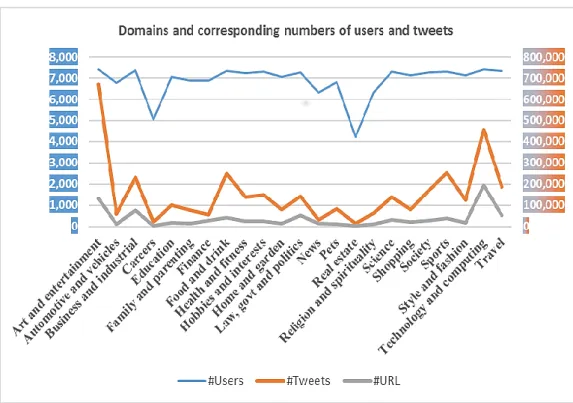
Figure 4-3: Total Numbers of users, tweets and URLs in each taxonomy ... 109
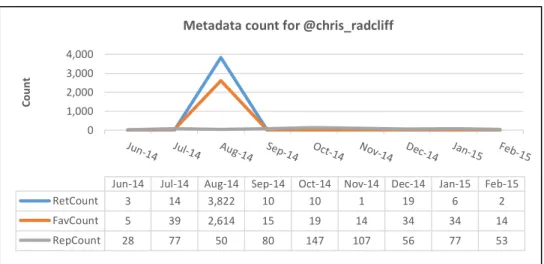
Figure 4-4: Metadata count over time for @chris_radclif ... 123
Figure 4-5: Credibility Window... 132
Figure 4-6: Monthly users’ trustworthiness levels in four selected domains ... 139
Figure 4-7: Highest 𝑻𝑪𝒖, 𝒅 values in four selected domains ... 145
Figure 4-8: Evaluation of Anomalous Retrieval (precesion2) ... 147
Figure 5-1: System Architecture ... 153
Figure 5-2: Domain knowledge inference process during the start-up ... 155
Figure 5-3: Domain knowledge inference process during the learning stage ... 156
Figure 5-4: BBC politics ontology ... 159
Figure 5-5: BBC politics ontology extension ... 160
Figure 5-6 Output from AlchemyAPI for entity extraction, concepts mapping, and taxonomy ... 164
Figure 5-7: Politics Ontology Annotation ... 165
Figure 5-8: Knowledge captured in politics ontology ... 165
Figure 5-9: Enrichment and interlinking of Labor party ... 167
Figure 5-10: Enrichment and interlinking of Politician Daniel Andrews ... 167
Figure 5-11: Output from AlchemyAPI for entity extraction, concepts mapping, and taxonomy classification of a tweet ... 168
Figure 5-12: Results from Alchemy showing some tweets in various domains from the politics dataset ... 169
Figure 5-13: Results from Alchemy associated with politics ontology showing a number of tweets in various domains from the politics dataset ... 169
Figure 5-14: Comparison of politics data and politics influence data on precision, recall, and F-measure ... 176
Figure 6-1: Semantic Analysis – Machine Learning: System Architecture ... 184
List of Tables
Table 2-1: Hadoop Key Components ... 39
Table 2-2: Summary of reviewed papers for semantic analysis, domain-based classification and topic distillation... 52
Table 4-1: An example of incorporating AlchemyAPI for taxonomies inference and sentiment analysis ... 106
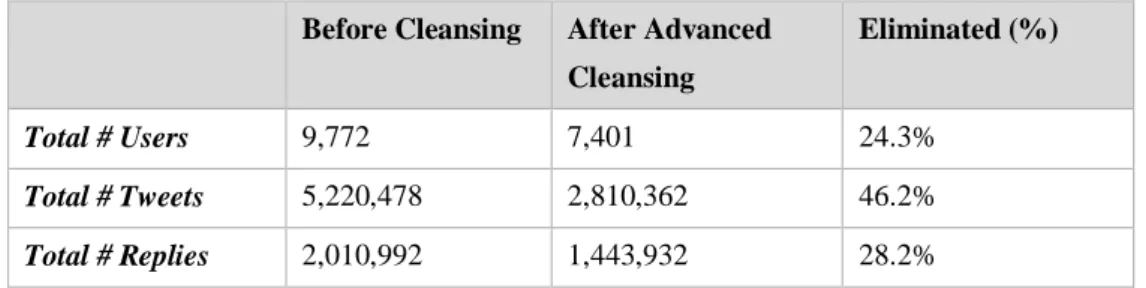
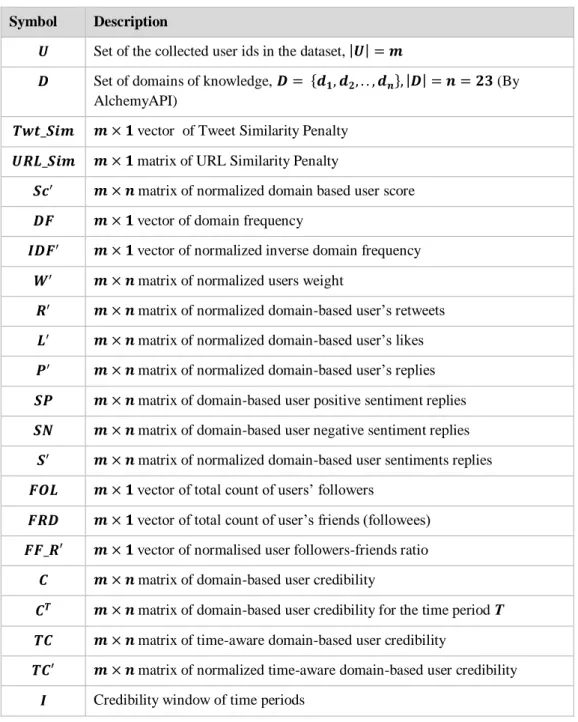
Table 4-2: Total count of users, tweets and replies before and after cleansing phase 108 Table 4-3: Notations ... 110
Table 4-4: Synthetic Tweets to illustrate the use of URL and Tweets’ texts similarities. ... 115
Table 4-5: Domain-Based User Score 𝑺𝒄𝒖, 𝒅 ... 116
Table 4-6: Highest weight values of users in Technology and Computing Domain (𝐖𝐮, 𝐝) ... 119
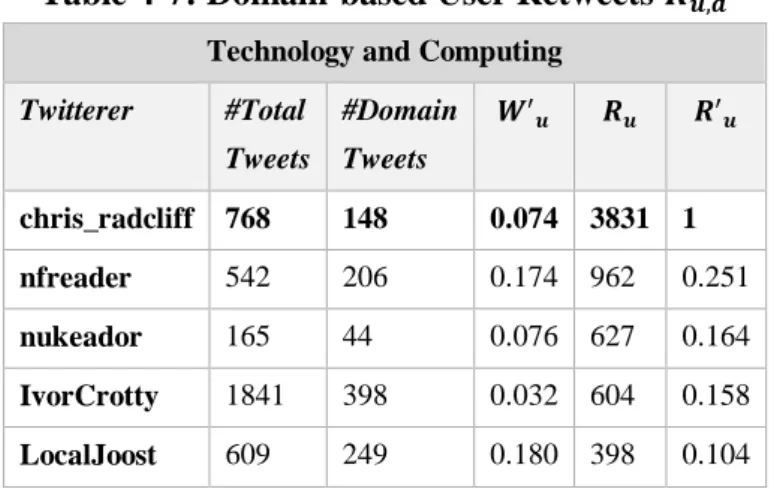
Table 4-7: Domain-based User Retweets 𝑹𝒖, 𝒅 ... 122
Table 4-8: Domain-based User Likes 𝑳𝒖, 𝒅 ... 123
Table 4-9: Domain-based User's Content Replies 𝐏𝐮, 𝐝 ... 124
Table 4-10: Domain-based user sentiments replies 𝐒𝐮, 𝐝 ... 127
Table 4-11: Twitter Followers - Friends Ratio, and #Tweets in Technology and Computing domain ... 129
Table 4-12: Correlation between the ranking lists of all key attributes in the Technology and Computing Domain ... 130
Table 4-13: Seven levels of trustworthiness ... 133
Table 4-14: Total monthly count of users, tweets and replies ... 135
Table 4-15: Monthly top-5 credible users in “Technology and Computing” domain 137 Table 4-16: Evaluation of domain-based Influential Retrieval ... 142
Table 5-1: Details of two datasets ... 162
Table 5-2: Ontology modelling notations ... 166
Table 5-3: Number of correct extracted politics entities ... 172
Table 5-4: Number of incorrect extracted politics entities ... 173
Table 5-5: Politics entity extraction in AlchemyAPI from the politics-influenced dataset ... 174
Table 5-6: Percentage of tweets being classified as politics-related ... 177
Table 6-1: A List of User’s Features ... 190
Table 6-2: A List of Tweet Features ... 193
Table 6-3: Ground Truth - User level... 200
Table 6-4: Ground Truth - Tweets Level ... 201
Table 6-5: Confusion Matrix ... 203
Table 6-7: Classifiers Settings ... 207
Table 6-8: Confusion Table ... 208
Table 6-9: Performance Comparison of Five Classifiers to Detect User Political Interest ... 208
Table 6-10: Highest Positive Coefficients- User Level ... 209
Table 6-11: T-values Between LR and the Other Tested Methods ... 210
Table 6-12: Margins and Predictions of Two Samples ... 212
Table 6-13: Top entities/terms Extracted using LDA, SLA and the Developed Approach For @sarahinthesen8... 213
Table 6-14: Top Entities/terms Extracted Using LDA, SLA and the Developed Approach For @ stephenjonesALP ... 214
Table 6-15: Dataset Statistics – Tweet Level ... 216
Table 6-16: Confusion Table –Tweet Level ... 217
Table 6-17: Performance Comparison of Two Experiments – Tweet Level ... 217
Table 6-18: Highest Positive Coefficients- Tweet Level ... 217
Table 6-19: Features Extracted from Two Tweets Posted by Two Users (Politics and Non-politics) ... 219
Acronyms
AI Artificial Intelligence
BD Big Data
BI Business Intelligence
CredSAT Credibility incorporating Semantic Analysis and Temporal factor
DC Dublin Core
DSRM Design Science Research Methodology
DW Data Warehouse
FLSA Fuzzy Latent Semantic Analysis
FOAF Friend-of-a-Friend
HDFS Hadoop Distributed File System
HITS Hyperlink-Induced Topic Search
GB-DT Gradient Boosting-based Decision Tree
IR Information Retrieval
LDA Latent Dirichlet Allocation
LOD Linked Open Data
LSA Latent Semantic Analysis
LR Logistic Regression
ML Machine Learning
NDGC Normalized Discounted Cumulative Gain
NLP Natural Language Processing
OLAP Online Analytical Processing
OWL Web Ontology Language
RDF Resource Description Framework
RF-DT Random Forest-based Decision Tree
SBD Social Big Data
SIOC Semantically-Interlinked Online Communities
SKOS Simple Knowledge Organization System
SBI Social Business Intelligence
SVM Support Victor Machine
SW Semantic Web
TD-DT Top-Down inducing based Decision Tree
TF-IDF Term Frequency – Inverse Document Frequency
UGC User Generated Content
UMBEL Upper Mapping and Binding Exchange Layer
URI Universal Resource Identifier
VoC Voice of the Customer
VoM Voice of the Market
Chapter 1 Introduction
Overview
Since the mid-1990s, modern technological developments have made a
qualitative leap and effected a real revolution in the world of communication. The
Internet has spread throughout the globe, connecting most parts of this vast world and
paving the way for several societies to converge and to exchange views, ideas and
desires. The Online Social Networks (OSNs), positioned on the throne of cyberspace,
are continuing to spread exponentially by providing social communication services
to their affiliated members. The services offered by these sites have expanded,
providing their consumers with broad possibilities for exchanging information in the
fields of education, health, culture, sports and other domains of knowledge.
In modern enterprises, OSNs are used as part of the infrastructure for a
number of emerging applications such as recommendation and reputation systems. In
such applications, trust is one of the most important factors in decision making. In
this context, social trust analysis is an emerging task and combines disciplines such
as social network analysis, semantic discovery, and big data computing. As the
massive amounts of data are derived from a variety of sources, it is essential to
determine the reputation of these sources and provide flexibility to the analysts, so
that the trust value of each source can be determined. Another important
consideration is the semantics of extracted textual data from which meaningful
information can be derived. This provides a solid foundation for several advanced
analytics such as classification and prediction.
and challenges of the exponentially increasing social data and the significance of
deriving knowledge and measuring the credibility of the content of the online social
platforms are discussed. Second, the motivation for an approach to address the social,
big data problem is particularised by demonstrating the importance of determining
the domains of interest of users and their content which leads to improving the
forecasting of their future interest(s). Third, the list of concerns arising from the
propagation of massive social data and the needs to be addressed in this thesis are
condensed. Fourth, the overall objectives of this research are summarised. Fifth, the
key contributions to the body of knowledge are outlined followed by the practical and
theoretical significance of this research. Last, the general structure of this thesis is
described.
Social Big Data (SBD)
Since the emergence and proliferation of Web 2.0, the role of web browsers
has changed to enable users to send and receive content by means of several online
tools that commenced with e-mail applications, chat, and chat forums that evolved
into more recent and revolutionary electronic platforms such as OSNs. OSNs such as
Facebook®, Twitter®, LiveBoon®, Orkut®, Pinterest®, Vine®, Tumblr®, Google
Plus®, Instagram ® etc, which enable users to share videos, photos, files and instant
conversations. These platforms provide an important means by which communities
can grow and consolidate, allowing individuals or groups to share concepts and
visions with others. Moreover, in addition to playing an active and distinctive role as
effective media of social interaction, these OSNs allow users to become acquainted
OSNs are relevant sources of data for SBD which include shared textual
content, picture, videos, etc. The vast amount of social data has spread to many
different areas in everyday life such as e-commerce (Kaplan and Haenlein 2010), education (Tess 2013), health (Salathé et al. 2013), to name a few. For example, several modern computing applications such as online education, weight loss and
public health, music and entertainment rely on the content generated by OSNs
(Althoff, Jindal, and Leskovec 2017). This is evident in the dramatic increase in the use of these platforms for networking and communication. The Pew Research Center
reported that 70% of American adults in Nov 2016 used OSNs for social interactions
compared to 5% usage by the same user category in 2005 (News 2017). In Australia,
the statistics for OSNs usage in Jan 2017 indicated around 2.8 million Twitter active
users, 14.8 million visits to YouTube, 4.0 million Snapchat active users (News 2017). Such a dramatic connectivity with online social platforms has established a common
ground that brings together people with shared interests, ideas and goals.
Furthermore, the widespread use of OSNs has established several communication
channels between business firms with their current and potential customers; hence,
“many marketing researchers believe that social media analytics presents a unique opportunity for businesses to treat the market as a ‘conversation’ between businesses
and customers” (Chen, Chiang, and Storey 2012).
1.1.1.1
Data Overload
The ability to exploit the ever-growing amounts of business-related data will
allow to comprehend what is emerging in the world. In this context, Big Data (BD)
is one of the current major buzzwords (Dumbill 2012). There is a notable consensus
among the research communities that the traditional tools used for collecting, storing
of generated data (Marz and Warren 2015). Advanced, unconventional and adaptable analytics are required to address the challenges of managing and analysing a wide
variety of BD islands (Emrouznejad 2016) which are expanding exponentially as a
result of the huge amount of data being generated by tracking sensors, social media,
transaction records, and metadata to name just a few of the many sources of data. For
example, every one second there occur 7,630 new Tweets, 41,644 GB usage of
internet traffic, 58,528 Google searches, etc . Furthermore, as depicted in Figure 1-1,
the digital universe data is expected to grow by a factor of 10 by 2020s (Gantz and
Reinsel 2012).
Figure 1-1: Digital Growth1
These massive amounts of generated data have implications for businesses
and how they operate (Hudy 2015, Lammerant and De Hert 2016). In particular, business firms have over-indulged in providing information which stimulates the
decision makers to adapt to the rapid increase in data volume. However, amongst the
percent have proven to be successful (Partners 2017). The information overload2 (a.k.a. infoxication (Chamorro-Premuzic 2014) or infobesity (Rogers, Puryear, and Root 2013)) has made the process of decision making much more difficult. This has led to the need for a close scrutiny of internal business processes, and a review of the
tools used to collect, transfer, store and analyse the flood of data generated by a
company’s internal and external data sources.
1.1.1.2
More Unstructured Data and Less
Structured Data
Data is everywhere, presented in various formats, and is collected from many
heterogeneous resources. Business Intelligence (BI) applications are more focused on
structured data and support decision-makers by providing meaningful information
from extracted data mainly coming from day-to-day operational information systems
and structured external data sources (Chaudhuri, Dayal, and Narasayya 2011a). With
the rapid increase in the amount of unstructured data, traditional data warehouses
cannot be the sole source of data analytics. If 20 percent of data available in an
organisation is mainly structured data (Gantz and Reinsel 2010), the unstructured data accounts for 80 percent of the total data that the organisation encounters. Examples
of unstructured data include free text, emails, images, audio files, streaming videos,
and many other data types (Joa et al. 2012).
The size of large data can range from several terabytes to petabytes and even
exabytes (Tien 2013). Thus, there is an inevitable need to develop platforms that deal with this large scale of data. This has driven many companies to examine their current
information and communication technology infrastructure, to strengthen the expertise
2 The term “Information overload” has been popularized by Alvin Toffler in his book, Future Shock
of their employees, and to prepare them to benefit from the systems of sophisticated
unstructured data analysis correctly and effectively (Kitchin 2014).
Credibility of Data
The changing role of online users from information consumers to information
producers has caused a noticeable variance in the quality of published content. In fact,
quality of content is considered as a key difference between the content generated
before and after the revolution of the Web 2.0 (Agichtein et al. 2008). In this context, OSNs have been extensively used as a powerful tool to promote diffusion of
information in several domains (Stieglitz and Dang-Xuan 2013). Given such an impact, an understanding and comprehension of the content of OSNs has been an
essential interest of various research avenues (Guille et al. 2013). In particular, identifying, reviewing, inferring and interpreting reputable social content consume a
significant amount of time and effort (Chang, Diaz, and Hung 2015), yet have attracted wide interest due to the significance of obtaining and applying high quality
content in many disciplines such as politics (Johnson and Kaye 2014), e-commerce
(Hajli 2014), e-learning (Akbari et al. 2016), and health care (Grajales III et al. 2014).
As discussed previously, data are no longer generated only by
transactional/structured and limited external sources; the global environment is now
producing data in the form of news, economic factors etc., and from Voice of the
Market (VoM) (Johne 1994) and Voice of Customer (VoC) (Griffin and Hauser
1993) through social networks, web blogs, etc. However, all external data sources
company’s operations and the decision making (Immonen, Paakkonen, and Ovaska 2015).
The quality of the data, which depends on whether it is collected from a
reputable or an untrustworthy source, affects the quality of the perceived knowledge.
For instance, in dramatic natural disasters such as the earthquake in Haiti and the
tsunami in Japan, people used OSNs to report injury, share urgent and vital
information, report damage, and provide firsthand observations (Castillo, Mendoza,
and Poblete 2011b, Abbasi et al. 2012, Alexander 2014, Ghahremanlou, Sherchan, and Thom 2014, Yin et al. 2012). However, while OSNs provide platforms for legitimate and genuine users, they also enable spammers and other untrustworthy
users to publish and spread their content, taking advantage of the open environment
and fewer restrictions which these platforms facilitate. This might lead some users to
abuse OSNs platforms and hijack events such as emergency situations by spreading
rumours, and false and misleading information (Kumar and Geethakumari 2014). Hence, studying users’ behaviour in OSNs will lead to a better understanding of their published content. The users’ behaviour comprises several social activities such as establishing new friendships, posting new content or replying to another user’s
content, messaging, browsing and discovery (Jin et al. 2013). Furthermore, an analysis of the users’ behaviour helps to determine and understand users’ main topic(s) of interest (Bhattacharya et al. 2014), to mine their sentiments (Colace et al.
2015), and to know their needs and demands.
Domain of Interest in Social Data
Many individuals use OSNs to seek and connect with like-minded people.
behaviours, interests, feelings, etc.(McPherson, Smith-Lovin, and Cook 2001). In particular, OSNs provide a medium for content makers to express and share their
thoughts, beliefs, and domains of interest. This gives individuals access to a wider
audience which positively affects their social status and would assist them to obtain,
for instance, political support (Rainie and Wellman 2012). Therefore, the cornerstone of the users’ online social profiles is an accurate understanding of their domains of
interest.
The domain of knowledge is a particular area of people’s work, expertise, or
specialisation within the scope of subject-matter knowledge (e.g. Sports, Politics,
Information Technology, Education, Art and Entertainments, etc.). (Hjørland and Albrechtsen 1995a). In OSNs, the domains of interest can be determined at the user level and at the post level. In other words, the overall published content of the user is
analysed, and the domain(s) of interest is inferred. Likewise, the user’s posts can be
analysed separately to extract the domain(s) of each post. The factual grasp of the
users’ domain(s) of interest facilitates understanding the domain(s) conveyed from a short text message such as a tweet.
Social Data Classification
The rapid growth of enterprise needs correlated with such an increase in the
volume of modern data repositories on the one hand, and the nature of the data that
can be stored on the other hand, have made traditional statistical methods inadequate
to meet all data analysis requirements. This has necessitated the development of
techniques. One of the professional sectors that has started to benefit from this notion
is healthcare (Koh and Tan 2011, Obenshain 2004). With the increase in electronic
health records, health care providers and researchers can mine the immense stores of
data to detect previously unknown cognitive patterns and then use this information to
build predictive models to improve diagnosis and health care outcomes.
In this context, companies incorporate advanced social data analytics to build
effective marketing strategies by leveraging the interactivity enabled by OSNs. Thus,
to create the required interaction with their customers, companies use many modern
means of communication to attract customers and visitors to their online social
platforms. Consequently, it is necessary for companies to analyse the customers’ social content and classify the customers into appropriate categories, then deliver the
right message to the right category. Segmentation (Wu and Lin 2005) is the first step towards effective marketing, and is intended to classify customers according to their
interests, needs, geographical locations, purchasing habits, lifestyle, financial status
and level of brand interaction. If companies succeed in building effective clusters of
customers and determining the basic criteria for each cluster in making their buying
decisions, companies will be able to establish goals and take appropriate actions to
achieve them. For example, companies can identify the most optimal
products/services captured for each segment of customers. This fine-grained analysis
can maximise customer satisfaction as companies can then design and manufacture
not only one standard product, but several segment-oriented products.
Deep insights into SBD create a substantial difference, driven by the
significance of extracting useful knowledge to benefit multiple applications.
Motivation of Study
Since the emergence of OSNs, the propagation of social data has encouraged
researchers to develop state-of-the-art techniques for social data analytics. Given the
unstructured and uncertain nature of massive social data, understanding the
customers’ needs and responding to their enquiries, comments, feedback or
complaints is a major purpose of any business firm. However, it is not easy to
accomplish all these customer-centric tasks. Hence, this research is motivated by the
need to address the following BD-related issues that have emerged.
Poor Quality Data
The dissemination of information via the World Wide Web is no longer a
monopoly; anyone can be a producer and a publisher of information. Given the
abundance of data, it is hard for those who receive such quantities of information to
distinguish the accurate from the inaccurate, the good from the poor. With the
development of OSNs, and the huge amount of social data that is generated, the
quality of social data has not improved; rather, all types of false information have
permeated these platforms. Rumours, for instance, are an example of bad quality data
(Castillo, Mendoza, and Poblete 2011a). Rumours are a negative social phenomenon that is prevalent in societies. It is also one of the most serious psychological and moral
wars that are raging in an atmosphere charged with various economic, political and
social factors (Resnick et al. 2014). Spam is another category of low-quality content.
(Lee, Caverlee, and Webb 2010).
Data credibility varies according to the reputation of the data producer. For
example, in OSNs, all users’ posts do not have the same level of reputation; a tweet
from a verified user who has established a broad audience of followers has more
impact than a tweet from a new user or a user with a small number of followers.
Producers of bad quality social data provide their content via text, sound, image, and
video which allow them to proliferate, especially since they can do so with anonymity
and impunity. Due to the huge amount of information flowing to its recipients, in
conjunction with the lack of a gatekeeper for those sites, it is difficult to verify the
content, thereby making it easier for others to perform the task of disinformation
(Hermida et al. 2012). Thus, OSNs are hijacked, and their otherwise useful tools are misused to create chaos and spread false news, and to undermine intellectual
convictions, ideological constants, and moral and social factors that could cause
confusion within the community. This has become a threat to social security and
social harmony as a result of the absolute freedom guaranteed by those sites
(Mendoza, Poblete, and Castillo 2010);(Papadopoulos et al. 2016, Zhao et al. 2016,
Ito et al. 2015).
On the other hand, the good quality content obtained from SBD has several
significant impacts (Agichtein et al. 2008). The use of social media is an empowering force in the hands of the public and private sectors and can have a positive influence
on a community’s development. It is an important tool to spread (public health)
awareness, ensure security, and improve social and economic practices. OSNs
consolidate and strengthen relationships between the users by sharing factual
considerable experience in many domains, in addition to enabling them to acquire
knowledge and skills. Furthermore, the extraction and examination of quality content
can benefit several vital sectors. For example, high-quality social data leads to a better
understanding of customer behaviour and keeps a company’s audience updated with
the latest developments which improve customers’ experience and increases revenues
(Shenoy and Prabhu 2016). Last but not least, the quality of data influences the
decision-making process of business operators (Chengalur-Smith, Ballou, and Pazer
1999, Janssen, van der Voort, and Wahyudi 2017).
Unrelated and Ambiguous Data
The results of the MIT survey (Lavalle et al. 2011) demonstrated the importance of data analytics as a means of elevating a company’s position.
Respondents indicated that they use data analytics to drive future strategies and
day-to-day operations. However, some companies may be under the misconception that
because there is data, this in itself gives them fruitful results. In fact, the secret lies
not in data collection, as decision makers may be swamped with more data, but in the
acquisition of data that is relevant and meaningful (Schmidt, Galar, and Wang 2016).
In particular, a company must first decide which information in the collected data is
essential in terms of, for example, its strategic objectives. Then, data analysis makes
the difference and achieves the anticipated outcomes. These endeavours are fortified
by collecting and utilizing the massive amount of data generated by OSNs.
However, a major issue needs to be addressed to enhance the understanding
Although unstructured data is accessible and easily understood by a human, an
adequate understanding of its contextual content using a machine is an arduous task
due to its rapid propagation, heterogeneity, and ambiguity (Poria et al. 2015). As in linguistics, a single term can have different meanings in different contexts. Hence, it
is essential that the textual content of social data be interpreted accurately in order to
establish a clear and transparent interaction between the organisation and its
customers through the means provided by the OSNs.
A Need for Domain-based
Classification
As stated previously, users of OSNs are keen to establish strong relationships
with others; they search for and connect with relevant content or users. Hence, to
open dialogues between like-minded people so as to share opinions, and life
experiences, the first step is to understand the users’ domains of interest
automatically. This is achieved through the analysis of users’ content and determining
all the domains that have been discussed among users. This allows the segmenting
and searching of users according to their domains of interest (Michelson and Macskassy 2010), and this is motivated by its significance in a broad range of applications such as personalized recommendation systems (Silva et al. 2013), opinion analysis (Liu and Zhang 2012), expertise retrieval (Balog et al. 2012), and
computational advertising (Yin et al. 2015). However, there are two main issues that
have motivated the efforts to create domain-based classifications; first, it is not an
easy task to analyse textual content due to the diversity of linguistics which makes it
difficult to understand users’ domains of knowledge; second, what is/are the
appropriate technique(s) that should be incorporated to perform the classification
List of Concerns Need to be
addressed by an Approach for SBD
Analytics
This research is carried out to address several concerns that have emerged
with the proliferation of SBD. An approach for SBD analytics is designed to address
the following specific concerns:
Veracity and Value of SBD which is discussed in Section 1.4.1
An accurate Understanding of SBD which is discussed in Section
1.4.2
Domain-based Classification of SBD which is discussed in Section
1.4.3
The following sub-sections address the above concerns in detail.
Veracity and Value of SBD
SBD analytics provides advanced technical capabilities to the process of
analysing massive and extensive social data to achieve in-depth insights in an
efficient and scalable manner. With the enormous increase in the volume and
diversity of data that businesses are dealing with today, they find themselves at a
crossroads, having to decide whether to ignore these data, or gradually start to adapt,
day-to-day transactional information systems) and indirectly (i.e. social data
collected from OSN platforms). The data collected from OSNs should be examined
to determine the high-quality content and to eliminate the poor-quality data from
further data analysis. To obtain this objective, organisations should understand how
to handle the propagation and the heterogeneity of BD. Thus, they should address the
following two main concerns: (i) BD are huge in volume, of great variety, and spread
rapidly; (ii) extracting valuable and accurate data is a key challenge. Hence, there is
a need for an approach that can produce data analytics capable of handling BD features and effective in filtering out unsolicited data and inferring a value. This
approach should comprise an advanced technical solution able to capture huge
amounts of generated data, scrutinise the collected data to eliminate unwanted data,
measure the quality of the inferred data, and transform the amended data for further
data analysis.
An Accurate Understanding of SBD
It is evident that unstructured data is produced exponentially. This
necessitates further efforts to absorb such datasets and understand their contextual
content. Textual content (a.k.a. natural language text) is considered the largest
amongst all sources of information (Gupta and Lehal 2009). The wealth of free-form
textual, social data has attracted researchers’ attention and prompted them to find
ways to discover knowledge hidden in the textual content. This problem has been
addressed to some extent through the emergence of text mining technology, an
extension of data mining, that is used to detect rules, patterns and trends from textual
data such as tweets, HTML web pages, instant messages and emails (Feldman and
Sanger 2007, He, Zha, and Li 2013). Natural language text is very ambiguous, and this is evident particularly when it comes to the continuous occurrences of the named
entities. Hence, indicating and inferring key entities such as persons’ names and
professions, locations of cities and countries, products, companies, specialized terms
etc. from text can significantly enhance several business processes and techniques
such as knowledge base population, topics distillation, keyword search, and
information integration (Shen, Wang, and Han 2015). Therefore, there is a need to
develop and implement an approach to derive knowledge from SBD. This approach
will improve the overall comprehension of the processed textual datasets, and deliver
knowledge in the form of unambiguous results by providing metadata which helps
relevant data to be accurately interpreted and understood.
Domain-based Classification of SBD
In this fast-paced world, companies that are able to turn data into valuable
opportunities are those that implement best practices and maintain prime competitive
positions, while the ones that deal superficially with data will lag behind (Tole 2013,
Labrinidis and Jagadish 2012, Schubmehl and Vesset 2014). In particular, classification of SBD enables companies to identify and cluster their customers and
set specific values for each category based on its social impact (Orenga-Rogla and
Chalmeta 2016). This, for example, helps companies to launch effective marketing campaigns addressing specific groups and designing programs to maintain
customers’ loyalty by fulfilling their desires and needs (Khobzi and Teimourpour 2015, Helal et al. 2016). In particular, this is achieved by analysing the overall posted content of the user, as well as each individual post, which is the more difficult task.
Thus, it is essential to develop an approach that can perform classification tasks at
strengthen brand loyalty, improve customer service, and increase an organisation’s
awareness of issues that need to be addressed
Research Objectives
The preceding sections introduced the issues facing the efforts intended to
achieve the hoped-for added value from the SBD revolution. The motivations for this
research are listed and explained in terms of three major concerns (i.e. veracity and
value of SBD, an accurate understanding of SBD, and domain-based classification of
SBD), demonstrating the need to develop approaches that can address vital SBD
issues. In response to these concerns, the principal objective of this research is to
develop approaches for social data analytics that can effectively measure the trustworthiness of contributors to SBD, derive domain knowledge and infer value from SBD. This research objective is achieved via the following sub-objectives:
Sub-objective 1: Develop a framework to deduce the value and determine the
veracity and credibility of SBD. It is envisaged that this framework will address the
primary challenging features of the general problem of BD by implementing a
technical solution to address the problem of handling the massive amount of data,
and to facilitate data storage and analysis.
Sub-objective 2: Develop a systematic approach to extract knowledge
captured from the textual content of SBD. This approach enhances the understanding
of users’ domains of interest.
Sub-objective 3: Develop an approach incorporating comprehensively
detection. The proposed framework will be able to perform dual classification tasks
at the user level and the post level.
Sub-objective 4: Develop and refine a prototype implementation of the design
to verify and validate the effectiveness and efficiency of the proposed approaches and
the associated frameworks.
It is anticipated that this thesis will make several contributions to both theory
and practice, as discussed in the next section.
Thesis Contributions
The contributions made by this thesis to the field of SBD analytics and to
application-based research in general are as follows:
Contribution 1 - A comprehensive literature survey of state-of-the-art
approaches.
In consideration of the overall aim and objective of this thesis, in Chapter 2,
a critical review is presented of the current state-of-the-art approaches relevant to the
key areas of the research topic. The comprehensive and intensive review of the
literature provides the necessary theoretical background to the research area and
frames this research by positioning it against past research. Further, it demonstrates
This comprehensive survey of state-of-the-art approaches clusters the
research issues according to three key research SBD areas:
Lack of advanced domain-based trustworthiness approaches: Most of
the current efforts apply generic-based credibility evaluation
approaches for users and their content in OSNs. There is a lack of
domain-based credibility techniques which examine the users’ domains
of interest, study their behaviour over time, incorporate the sentiment
analysis of their posts’ replies, and address the key features of BD.
Lack of approaches to manage and extract high-level domains from the
textual content of SBD: Most of the current topic distillation and
modelling approaches rely on bag-of-words techniques. These
endeavours have several limitations including: (i) inability to consider
the semantic relationships of terms in the user’s textual content; (ii) ineffectiveness in applying topic modelling techniques to short text
messages such as tweets; and (iii) the high-level topics classifications
that use these bag-of-words statistical techniques are inadequate and
inferior.
Lack of domain-based techniques for dual classification: The current efforts undertaken to understand the contextual content of short text
messages, and classify them into appropriate domains of knowledge, are
still immature; hence, extensive research in this area is vital due to
Contribution 2 – An effective credibility framework for users of OSNs that
addresses the main features of BD, and incorporates semantic analysis and the temporal factor.
Chapter 4 discusses in detail the second contribution of this thesis. It presents
CredSaT (Credibility incorporating Semantic analysis and Temporal factor): a
comprehensive SBD framework to measure users’ credibility in domains of
knowledge. The crawled datasets of user data and metadata are divided into several
chunks where each chunk represents a specific period. A metric of key credibility
attributes is incorporated to evaluate the user’s credibility in each particular chunk, thus providing an overall credibility value. The mechanism used to calculate a user’s value in each step takes into account the values of other users, thereby providing a
normalisation approach for establishing a ranking list of credibility in each domain.
CredSaT consists of several related sub-contributions summarised as follows:
A novel discriminating measurement for users in a set of knowledge domains is provided and demonstrated. Domains are extracted from the
user’s content using semantic analysis.
A metric incorporating a number of attributes extracted from
content/user analysis is consolidated and formulated to obtain the level
of trustworthiness. A holistic trustworthiness approach is provided
based on three main dimensions: (i) distinguishing OSNs’ users in the
set of their domains of knowledge; (ii) feature analysis of users and their
CredSaT is benchmarked against well-known baseline techniques over a curated labelled dataset. It outperforms other methods in all evaluation
metrics. Additional experiments are conducted to evaluate CredSaT
which validate the applicability and effectiveness of identifying highly
domain-based trustworthy users. CredSaT further shows the capacity to
capture spammers and other anomalous and untrustworthy users.
Contribution 3 – A systematic approach to extract knowledge captured from
the textual content of SBD.
Another key contribution of this thesis is the development of a consolidated
approach aimed to resolve the data ambiguity problem in the context of SBD.
Through five integrated steps, the proposed approach has proven successful in
enhancing semantic information extraction and enrichment of the textual data,
thereby providing an adequate interpretation of the textual content of social data.
Domain ontology and semantic web tools facilitate the building of conceptual
hierarchies and the process of populating the domain ontology with instances
extracted from user tweets. Hence, an ontology-based approach as a means of
extracting the semantics of textual data is integrated with different vocabularies and
semantic repositories to enrich the semantic description of resources using an
annotation component. In addition to ontology and vocabulary reuse, interlinking that
includes the semantic relationship between similar entities stored in other datasets
has been implemented in the developed framework.
Domain knowledge has been captured in ontologies which are then used to
entities. The reuse of ontology and the interlinking of classes, entities and concepts
with relevant entities from other repositories facilitates the interoperability of
information. Therefore, the existing ontologies have been incorporated and reused.
The proposed approach is tested and evaluated with public datasets collected
from Twitter and within the political domain. The results of experiments
demonstrated that the developed approach outperforms another well-known
semantic-based tool regarding quantity and accuracy of identified semantic entities
and concepts. The findings indicate that by combining the proposed approach with
other semantic repositories and APIs, the accuracy of concept identification is
improved significantly. The resultant semantic data are processed and expressed as
linked data and stored in RDF triples in the semantic-based repository database. The
data are semantically represented under well-controlled vocabularies, useful
taxonomical relationships, and with ontologies for inference of domain knowledge.
Contribution 4 – An integrated framework incorporating domain knowledge
discovery and machine-learning-based data classification techniques as a means of domain-based discovery, classification and prediction.
The fourth contribution in this thesis fills a gap in the existing literature by
presenting a consolidated framework for Twitter mining that aims to address the
shortcomings of the current state-of-the-art approaches to topic distillation and
domain discovery. As explained in Chapter 5, the proposed approach comprises two
interests, taking the temporal factor into consideration. In the second phase, the
outcome of the previous analysis is used as a primary input to forecast the domain of
future tweet content. Well-known machine learning classifiers are used for user
classification. A comparison is conducted to benchmark the performance of the
incorporated machine learning modules.
The main sub-contributions of Chapter 6 are as follows:
A time-aware framework incorporating comprehensive knowledge
discovery tools and well-known machine learning algorithms is
proposed for domain-based discovery, which applies to the
Twittersphere platform and is customisable to other OSNs.
The proposed framework can perform classification tasks at the user
level and tweet level.
Unlike current statistical-based topic distillation techniques which retrieve search results without considering the temporal dimension, the
proposed approach is better able to address the temporal factor; users’
knowledge evolves, and their interests might be diverted elsewhere
depending on their experience, work, study, or other factors.
Unlike current unsupervised statistical approaches, the proposed
approach incorporates supervised machine learning techniques to
perform domain-based classification task for the already
semantically-enriched temporally-segmented textual content.
The conducted experiments using the Twitter platform as one of the
dominant OSNs verify the effectiveness and applicability of our model
metrics.
The overall contribution of Chapter 6 provides the essential groundwork for
a better understanding of user interest in several domains of knowledge. This is
achieved by incorporating domain-based ontologies and semantic web analysis
fortified with state-of-the-art machine learning techniques to achieve better
familiarity with user interests. This facilitates the process of measuring user
credibility in each domain of knowledge.
The significance of the Research
The BD revolution is relentlessly changing every part of society. Its horizon
extends to comprise the digital trace originating every second from
information-sensing Internet of Everything devices, RFID readers, huge metadata (e.g. trust,
security, and privacy), the digitalization of business artifacts (e.g. files, documents,
reports, and receipts), and last but not least, the data generated by social media.
Therefore, understanding and analysing the semantics of BD is a goal of enterprises
today. This provides an unprecedented scope for understanding our society and
improving the way we live and conduct business.
This thesis contributes to the ongoing efforts to achieve the hoped-for added
value from the BD revolution. In particular, due to the prominent role of OSNs in the
lives of individuals and communities, the approaches developed in this research are
Theoretical Significance
This research has theoretically constructed three main artifacts as follows:
The development of a novel domain-based trustworthiness
inference module for SBD contributes to the design theory of trust
inference and evaluation methods. The mechanism followed in the
developed approach incorporates several theoretically proven
elements of Information Retrieval, Sentiment Analysis, Knowledge
Engineering, etc.
The development of an innovative approach for domain-based data
extraction in SBD has proven effective for semantically annotating
and enriching social data, thereby obtaining an accurate
understanding of its textual content. This approach can be used as
a guideline for other enriching textual data approaches to improve
and enhance semantic analysis processes.
The development of a new and advanced well-tested framework for
Twitter mining contributes to the social data analysis design
frameworks, and classification tools and techniques. The developed
approach demonstrates its innovativeness through integrating
semantic-based domain discovery tools and statistical-based
machine learning algorithms to establish an effective groundwork
for the related research theories and original technical methods.
Practical Significance
business-related operations as follows:
The continuous investment in the world of BD is widespread
among several firms with dissimilar sizes, and operating in a variety
of business sectors; 75 percent of the 400 companies surveyed by
Gartner in 2015 reported that their BD investment had either begun
or was anticipated to start in forthcoming years (Gartner 2015). Hence, organisations have had to become more decisive in regard
to coping with the enormous influence of SBD in many aspects of
business practices. This highlights the need to review the tools used
to collect, transfer, store, and analyse such massive amounts of
data.
Another survey carried out by Gartner (Sallam et al. 2017)
indicated that by 2020 business firms will continue to make
significant investments in social and big data analytics, and will
provide platforms for users to access curated and credible data
collected from internal and external data sources. In addition, a
Deloitte survey (Phillipps 2013) emphasized the importance of data
analytics in the business domain; around seventy-five percent of all
respondents believed that the continuous propagation of data will
benefit their business strategies. Ninety-six percent of the
respondents consider data analytics as an added value for their
businesses in the coming three years.
discovery of domain-based influencers, and opinion mining
through tracking and simulation. In particular, the accurate
understanding of the domains of interest extracted at the user level
or post level strengthens the engagement between businesses and
their current and prospective customers. This contributes to an
accurate analysis of indirect customer feedback that comprises
social listening to customer reviews and opinions to improve brand
loyalty, customer service, customer care interactions, etc.
The developed approaches include techniques for inferring
trustworthy social data, semantically enriching textual data, and
domain-based classification and prediction. The practical impact of
these techniques strengthens the ongoing efforts to develop
technical solutions for social data analytics. Hence, organisations
can utilise the proposed techniques and further develop more
sophisticated systems to improve their internal business processes
by incorporating information from a greater range of external data
sources.
Thesis Structure
The structure of this thesis is outlined as follows:
Chapter 1 -- Introduction
This chapter provides an introduction to the issues that have emerged with the
concerns that need to be addressed. Hence, the problems confronting the era of SBD
are identified, followed by the key objectives of this thesis and the methodology
adopted to achieve them.
Chapter 2 -- Literature Review
Chapter 2 provides an in-depth analysis of the current state-of-the-art research
in the areas of social trust, semantic analysis, and domain classification. The
undertaken efforts in each research venue has been discussed. The chapter concludes
with the identified research gaps that have motivated the research activities of this
thesis.
Chapter 3-- Problem Definition
Chapter 3 presents an overview of the research problems addressed in this
thesis, together with the key concepts and their definitions. The research issues are
examined, and indicate the need to develop approaches and a framework for social
data analytics that can measure the trustworthiness of users in SBD, derive domain
knowledge, and infer value from SBD. The DSR methodology implemented in this
thesis is described with the set of key activities undertaken throughout the research.
Finally, the solution requirements to the research issues are explained.
Chapter 4 -- Domain-Based Analysis of Users’ Trustworthiness in Social
Big Data
This chapter presents an advanced domain-based credibility framework