American University in Cairo American University in Cairo
AUC Knowledge Fountain
AUC Knowledge Fountain
Theses and Dissertations6-1-2016
Promoting recycling in the solid waste management system of
Promoting recycling in the solid waste management system of
Cairo
Cairo
Iman Mostafa Kamel Mostafa
Follow this and additional works at: https://fount.aucegypt.edu/etds
Recommended Citation Recommended Citation
APA Citation
Mostafa, I. (2016).Promoting recycling in the solid waste management system of Cairo [Master’s thesis, the American University in Cairo]. AUC Knowledge Fountain.
https://fount.aucegypt.edu/etds/270
MLA Citation
Mostafa, Iman Mostafa Kamel. Promoting recycling in the solid waste management system of Cairo. 2016. American University in Cairo, Master's thesis. AUC Knowledge Fountain.
https://fount.aucegypt.edu/etds/270
This Thesis is brought to you for free and open access by AUC Knowledge Fountain. It has been accepted for inclusion in Theses and Dissertations by an authorized administrator of AUC Knowledge Fountain. For more information, please contact [email protected].
Promoting Recycling in the Solid Waste Management System of Cairo
A Thesis Submitted to
Sustainable Development Program
in partial fulfillment of the requirements for
the degree of Master of Science in Sustainable Development
by Iman Mostafa Kamel Mostafa
Under the supervision of:
Dr. Khaled Abdelhalim
Assistant Professor of Urban Policy Public Policy and Administration Department
Dr. Hani Sewilam
Professor, Mechanical Engineering Department and Director, Center of Sustainable Development, School of Science and Engineering
Abstract
Waste management system in Cairo has been noticeably witnessing deterioration over the last fifteen years, where the entire chain of activities have deficiencies; including collection, transportation, recovery, and disposal systems. Although waste recycling is a vital element of a sustainable waste management system, as it contributes to benefiting the environment through the efficient use of resources, the society through creating job opportunities, and the economy through attracting new investments, in Egypt it is not included in the policy framework, and it is hardly a part of the formal system and is only performed by the informal sector.
This thesis identifies the gaps in the existing legislative, institutional and financial frameworks of the Solid Waste Management (SWM) system in Egypt and specifically in Cairo, that hinder mainstreaming waste recycling in specific in the policy framework. It also finds win-win situations for the parties involved in the SWM sector that would promote the recycling activity. Finally, it proposes new ways for managing the different SWM activities (collection, transportation, recovery and disposal) that would lead to successful recycling practices. The result from this study indicates that the reasons why waste recycling is not promoted in Cairo are the lack of financial autonomy, deficiencies in the legislative and institutional setup, and weaknesses in the governance of the SWM process. Accordingly, policy recommendations are proposed in addition to a SWM initiative for Cairo that clarifies the roles of each stakeholder and reform the whole chain of activities of the SWM system of Cairo, through integrating the informal sector and encouraging the local private sector participation in a way that would promote waste recycling.
Acknowledgments
I would like to express my sincere gratitude to Dr. Khaled Abdelhalim my supervisor, for his continuous support, guidance, valuable comments, and patience from the initial to the final draft of my thesis. Also, I would like to express my gratitude to Dr. Hani Sewilam my co-supervisor for his guidance and inspirational comments that added value to the thesis work and for his support throughout the masters program on Sustainable Development.
In addition, special thanks go to my readers Dr. Salah El Haggar, and Mr. Berti Shaker, who promptly accepted and expressed their willingness to read my thesis. Furthermore, I would like to thank all those who gave me their time and knowledge through the research interviews, among them Dr. Laila Iskandar, the former Minister of Urban Renewal and Informal Settlements. Moreover, I would like to thank Engineer Ahmed Shouman, the Solid Waste Section Head at Chemonics-Egypt and Dr. Ahmed Gaber the Chairman of Chemonics-Egypt for their continuous support with data and their valuable feedback on my work. Also, special thanks to Engineer Mahmoud Mansour the head of the Engineering Department at Cairo Cleaning and Beautification Agency for being very helpful in providing all the requested data. Additionally, I would like to thank my ex-manager at the International Labour Organization, Ms. Amal Mowafy, who motivated me to apply in this masters program and guided me through my work to choose my thesis topic and encouraged me all the way through this.
Finally, I would like to thank my mother Mrs. Soad El Shaboury, my husband Mohamed Al-Sharif and my friend Habiba Ezz for their support and assistance.
Table of Contents
Abstract ... 2 Acknowledgments ... 3 Table of Content ... 4 List of Figures ... 5 List of Tables ... 6 List of Abbreviations ... 7 Chapter I: Introduction ... 8 1. Background ... 8 2. Research Problem ... 12 3. Thesis Objectives ... 14 4. Research Questions ... 14Chapter II: Literature Review ... 15
1. Environmental Policy ... 15
2. Waste Management and Recycling ... 18
Chapter III: Methodology and Conceptual Framework ... 25
1. Methodology ... 25
2. Conceptual Framework ... 26
3. Hypothesis ... 26
4. Thesis Structure ... 30
Chapter IV: SWM Policy Framework in Egypt – Review and Analysis ... 31
1. Regulatory Framework ... 31
2. Institutional Framework ... 35
3. Financial Framework ... 41
4. Government’s Initiatives for Improving SWM system in Egypt ... 43
Chapter V: SWM Chain of Activities in Cairo– Review and Analysis ... 53
1. Collection System ... 53
2. Transportation System ... 54
3. Recovery system and Informal Recycling ... 54
4. Disposal System ... 57
5. Marketing of recycling’s products ... 58
Chapter VI: SWM Stakeholders in Cairo– Review and Analysis ... 60
1. CCBA ... 60
2. Private Sector ... 63
3. Informal Sector ... 68
4. Civil Society ... 72
5. Experts and International Organizations ... 75
Chapter VII: Conclusions and Recommendations ... 78
1. Conclusions ... 78
2. Policy Recommendations ... 80
3. The Proposed SWM System for Cairo ... 83
List of Figures
Figure 1: Waste Management Hierarchy……….………9
Figure 2: Conceptual Framework………...……….26
Figure 3: Stakeholders Mapping………...27
Figure 4: Segregation from the Source Campaign………...………...48
Figure 5: Composting in ECARU………...56
Figure 6: Current SWM System in Cairo………60
Figure 7: Plastic Bottles to be Exported to China………...71
Figure 8: Plastic Pellets………...71
Figure 9: Plastic Bottles Segregated by Color………71
Figure 10: Recycling School by Spirit of Youth NGO………...72
Figure 11: APE NGO’s Exhibition……….73
Figure 12: The Proposed SWM System in Cairo………..…..87
List of Tables
Table 1: Case #1 Brazil………...33
Table 2: Case #2 South Africa…………...……….47
Table 3: Case #3 Brazil……….………..…………51
Table 4: Case #4 India……...….……….66
Table 5: Case #5 India……….…67
Table 6: Case #6 India………...………..…76
List of Abbreviations
AMANA APE CCBA CMU EEAA EPR GE GIZ ISWMS MOLD MSWM NSWMP RDF SWM WMRAGeneral Secretariat for Localities, MOLD
Association for the Protection of the Environment Cairo Cleaning and Beautification Agency
The Contract Monitoring Unit
The Egyptian Environmental Affairs Agency Extended Producer Responsibility
Green Economy
The German Federal Enterprise for International Cooperation Integrated Solid Waste Management System
Ministry of Local Development Municipal Solid Waste Management
National Solid Waste Management Programme Refuse Derived Fuel
Solid Waste Management
Chapter I: Introduction
1. Background
On the global scale, the last five years have been witnessing the emergence of the concept of “Green Economy” (GE) especially in the mainstream of policy discourse, and environmental economics. GE is defined as the economy that is resource efficient, low carbon and socially inclusive. Also, it is the economy that leads to social equity, improved human well being, while considerably decreasing environmental risks and ecological scarcities (UNEP 2011). GE is becoming commonly related to the finance ministries, and is regarded as a mean to achieve the global goal of sustainable development and poverty eradication.
Sustainable Development is commonly defined as “the development that meets the needs of the present without compromising the ability of future generations to meet their own needs” (UN, 2016). It was agreed among the UN agencies worldwide that GE is a driver to sustainable development and that “to achieve sustainable development and a higher quality of life for all people, countries should reduce and eliminate unsustainable patterns of production and consumption and promote appropriate demographic policies.” Rio Declaration, Principal 8 (UN 1992) (UNEP 2011). Therefore the two concepts of GE and Sustainable Development are closely related to the concept of Resource Efficiency, which can be defined as using the limited resources that exist on the planet in a sustainable manner while minimizing negative effects on the environment. Resource Efficiency supports the concept of delivering the maximum value with the least input (Europa, 2015).
In this context, waste recycling is one of the activities that plays an integral role in the transition toward a GE, since it is closely related to resource efficiency, and it is aiming at using the raw materials more than once, thus maximizing the value with less input (UNEP). Waste recycling falls under the umbrella of Solid Waste Management (SWM). There are three main ways of waste management; first way is the easiest, least economic and least environmental friendly, which is the dumping or landfilling, second way is the reuse or recycling, and third way of waste management is the WTE (Waste to Energy) processes.
Waste recycling has several economic benefits; it substantially saves resources and generates jobs. For instance, composting leads to the development of organic
agriculture, which benefits the rural ecosystem and the small farmers. In fact, the waste-recycling sector employs around 12 million people in China, Brazil, and United States. Sorting and recycling activities alone provide ten times more jobs that garbage incineration and landfilling on a per tone of waste basis (Stefanie and Shaker, 2015). Having a greener waste sector that mainstreams recycling, as a core activity would eliminate the traditional waste disposal and treatment techniques such as the incineration and landfilling which harmfully affect the environment and waste the resources. It would rather direct the waste management practices towards the 3Rs strategy (Reduce, Reuse, Recycle) based on the approach of Integrated Solid Waste Management (ISWM) recognized internationally, that prioritizes waste treatment activity as per the below figure (Stefanie and Shaker, 2015)
According to Gershman, the president and co-founder of GBB Solid Waste Management Consultants, eight countries in Europe have achieved a record in waste management (Austria, Belgium, Denmark, Germany, Netherlands, Norway, Switzerland and Sweden), where an average of only two percent of waste goes to landfilling, while more than 50 percent are recycled or turned to compost and more than 40 percent goes to Waste To Energy processes on average. “This is almost zero waste to landfill. This is incredible,” said Gershman. (“Wastecon 2014: Zero Waste to Landfill Takes More than Recycling”, 2014).
It is an irrefutable fact that policy makers are always the main drivers for any GE activity. Similarly, promoting waste recycling definitely needs a reform in policies that would encourage it, facilitate it, coordinate among all relevant
stakeholders, and create the enabling environment for it. Effective waste recycling policies are crucial to maximize the efficient SWM and reuse of waste (Mostafa, 2014). Below are some examples of how policy making promoted waste recycling in different countries.
Switzerland has made noticeable efforts in the recycling sector, with a special focus on glass and paper, where policy makers introduced several mechanisms that promoted recycling of paper and glass. For instance, every town in Switzerland has a free collection once a month for paper that includes old newspapers, food packets, telephone bills and any other paper/carton product. As for the glass, there are separated bins in all supermarkets in Switzerland for clear, green and brown glass. Further, there is a green waste recycling i.e. any waste related to households’ gardens, where waste can be neatly bundled out of the household in the street to be collected. In addition, batteries, used cooking oil, or any other chemical products can be deposited in a special place in the supermarkets and they are transferred then to recycling plants (“Recycling around the World”, 2005).
Moreover, 80% of the plastic bottles, which are commonly used for drinking products in Switzerland, are recycled, while the European average is only 20 to 40%. Switzerland recycling strategy is not actually driven by the trend of environmental protection, but by a strong financial incentive, as recycling is free and waste disposal costs money, where each rubbish bag has to have a sticker on it which costs at least one euro. Hence, Switzerland is one of the model countries that are adopting recycling as a core strategy for its economy, while at the same time it is by default benefitting the society and environment (“Recycling around the World”, 2005).
Another example of including waste recycling, in the country’s policies, is Denmark, which is regarded as one of Europe’s “greenest” countries. It has been decades, since the Danish environmental policy has been looking at waste as a valuable resource. The fast push toward a greener economy, has given Denmark a proud record, where in 2003, 31% of households’ waste was recycled. Since the amount of waste is not that big for Denmark to build recycling plants, particularly plastic waste, electronic waste, metal are exported for recycling. Moreover, the government promotes limiting the amount of waste by urging industries to promote eco-labeling and the products that leave a minimum amount of waste after use (“Recycling around the World”, 2005).
Looking at the less developed countries, recycling in India is a growing market in the informal sector; almost 10-15% of urban wastes are recovered and through which millions of job opportunities are offered, mostly informally. Yet, recently, recycling has gained legitimacy through Public Interest Litigation, and due to the recommendations of a Supreme Court Committee on Urban Solid Waste Management, new laws for waste management were set, which should gradually uplift recycling technologies. In addition, a completely voluntary trend promoting Eco-labeling in 14 significant industries in India have emerged. Also, new legislation might soon be set to promote stewardship of products, social responsibility of producer and waste minimization (Patel, 2010).
Although the above-mentioned examples of Switzerland and Denmark cannot be really compared to Egypt, as there are obvious differences in government structure, urban management and community awareness and attitude towards the environment. However these examples just show how recycling can benefit the economy of a country on all levels, and how effective policies are the key for a greener economy. Egypt has a long path ahead to reach a status that is close to Switzerland or Denmark. In Egypt, it is unfortunate that only 60 percent of the waste generated in Cairo is collected, where less than 15 percent is appropriately reused or recycled (GIZ 2014). According to GIZ, the German Federal Enterprise for International Cooperation, contracted by the Egyptian government to assist in waste management, a large percentage of the waste produced is released without any treatments into rivers, canals, streets or open areas, which pollutes soil, air and water, as well as negatively affecting the tourism and economy. Based on the World Bank 2011 report, Egypt loses between 0.4 to 0.6 percent of its annual GDP due to the inefficiencies of solid waste management policies. Furthermore, this report stated that 13-15 percent of Egypt’s yearly waste is recycled through the informal sector (Mostafa 2014). With the growing unemployment rate, pollution, and energy shortage in Egypt, waste recycling is an opportunity that should be grasped, as it can open the door for jobs creation, less polluted environment, and energy saving. Effective waste management and recycling system can be the entry point for Egypt toward a greener economy, since the physical resource (waste) and human resources are available, just investment and sound administration of these resources are needed. This will only happen through setting waste recycling policies that are currently absent.
critical disorder that hinders the effectiveness of the system and negatively impacts the environment, the natural resources, and the public health, and thus obstructs any attempts to improve waste recycling practices (NSWMP, 2011). These deficiencies need to be addressed holistically, in order to achieve a sustainable system that would ensure improvements in the economic, environmental and social aspects of this sector, through mainstreaming waste recycling in the policy framework as a core activity of the SWM system, and without compromising the rights of any of the relevant stakeholders.
2. Research Problem:
Waste recycling cannot be formally promoted if the Integrated SWM System (ISWMS) is defected. Egypt is suffering from severe deterioration in the SWM system, which results in lost opportunities considering the waste recycling activities. First, the collection system has severe deficiencies in the service coverage, which is about 60% from the total waste generated in Cairo. These shortfalls in the service coverage are mostly resulted from the lack of financial resources, which are reflected in the poor conditions of vehicles, low workers efficiency, and lack of equipment. On the other hand, the generation of municipal solid waste in Egypt has dramatically increased, with no adequate progress achieved in the collection system to respond to this increase in the waste quantity (NSWMP, 2011).
As for the waste treatment, there are two types in Cairo, composting and recycling. There are 63 composting factories; where 3 to 4 of them are functional among them ECARU, which is the most successful model (Iskandar, 2016). The total composting factories in Egypt recover less than 10% from the total waste generated, considering that organic waste constitutes more than 60% from the total waste generated in Egypt. This gap of 50% goes to either landfilling or garbage burning. Regarding waste recycling, it is mainly managed by the informal sector, and it is not considered in the formal SWM system. There is no any structural mechanism that aims at leveraging investment in the waste-recycling sector, while there is a significant opportunity and an existing value chain to build on, that would lead to the growth of the recycling business, and the creation of formal jobs (NSWMP, 2014)
Furthermore, the current disposal system is represented in the dumpsites, landfills, and garbage burning with considerable negative impacts on the environment through the solid, liquid and gaseous emissions. The 2000 strategy, which sets a target of 90% waste disposal in sanitary landfills, has failed considerably, since only two
sanitary landfills were established in Cairo, while the disposal continues to happen irresponsibly in the dumpsites. Even the closure and aftercare of dumpsites is not happening due to the financial deficiencies (NSWMP, 2011). The above-mentioned defects need to be tackled holistically considering the roles of all the relevant stakeholders in order to create the enabling environment that would trigger waste recycling as an integral part of the formal SWM system. Below are the identified problems that led to the above-mentioned results in the SWM system.
In light of examining the current policy, legislative, institutional and financial framework of the Solid Waste Management (SWM) sector in Egypt, it was found that there are neither policies nor programs that promote waste recycling; there is no one single law that promotes the waste recycling activity, there is not even a law for SWM. Actually, there is a proposal for a SWM law that is finalized but it is not yet officially endorsed. Also, SWM responsibilities are scattered among several institutions, and due to the weak coordination, the result is that there is no accountability, which made SWM at the end of the priority list on the national level and consequently on the governorate level as well. However, there is a ministerial decree announcing the formation of the Waste Management Regulatory Agency (WMRA), which supposedly will solve the problem on the institutional level. Moreover, there is no specific budget that is allocated solely to the SWM in the governorates, which again makes SWM not prioritized. Therefore, these deficiencies in the legislative, institutional and financial frameworks of the sector should be resolved in order to mainstream waste recycling as an activity of the SWM system supported by the policies.
In addition, after investigating the roles of the different stakeholders in the SWM sector in Egypt, it was concluded that the policy makers neglect the active stakeholders in the SWM system including the informal sector, civil society and the private sector. After examining each activity by its own (collection, transportation, recovery, and disposal), it was found that substantial changes are needed to facilitate the recycling activity.
Therefore, the research problems can be summarized as below:
1. The ineffective role of government; both the central government for policy making and the local government for SWM system operations
2. The entire chain of SWM activities has inefficiencies including the missed opportunity of recycling
3. The role of the active stakeholders in recycling is neglected and not supported
3. Thesis Objectives:
This thesis aims at identifying the gaps in the existing legislative, institutional and financial frameworks of the SWM system in Egypt and specifically in Cairo that hinder mainstreaming waste recycling in specific in the policy framework. It also aims at finding win-win situations for the parties involved in the SWM sector that would promote the recycling activity. Finally, it aims at proposing new ways for managing the different SWM activities (collection, transportation, recovery and disposal) that would lead to successful recycling practices.
Cairo was selected because it is the capital and the city with the highest population and highest waste generation of Egypt. Another reason of selecting Cairo is the availability of data on the amounts of wastes, the collection, transportation, recovery and disposal systems, as well as having access to the stakeholders working in the SWM sector in Cairo.
4. Research Questions:
In order to achieve the thesis objectives, the main research question that should be answered is “which policies, legislative, institutional and financial framework of the Solid Waste Management will encourage and promote waste recycling in the most suitable way to Cairo context?” To answer this question, other questions will need answers as well:
• What are the existing policies that serve waste recycling in Egypt?
• What is the enabling legislative, institutional and financial environment that should be present to facilitate the waste recycling activity?
• Who are the main stakeholders that should be involved in making waste recycling policies and what would be their roles? How is the SWM chain of activities (collection, transportation, recovery and disposal) being managed in Cairo? • How can the SWM chain of activities be improved in a way that serves promoting
Chapter II: Literature Review
In order to set an effective policy that would directly affects waste recycling, it is crucial to understand first the dimensions of making an environmental policy in general, as waste management and recycling policies lie under its umbrella. For this reason, this chapter will discuss and analyze the meaning of an environmental policy, the challenges in making it, how to define an environmental problem, and the types of policy instruments. Furthermore, the chapter will delve deeper in the waste recycling policies, the common terminologies used in setting such policies, waste recycling policies in the international literature, and waste recycling practices in the developing countries.
1. Environmental Policies:
An environmental policy is defined as the country or organization’s statement about its overall direction, intentions, values and performance toward environmental issues (MEnvMan, 2015). The key factor in setting an environmental policy is setting priorities wisely, and since the agenda will not give attention to all the problems in the country, those problems should be narrowed down based on their priority level to be addressed by the government. The trick here is that how setting a policy agenda should address the environmental problems without compromising the social and economic benefits? Also, it is worth noting that setting environmental policy agenda significantly relies on events and/or accidents that would prioritize certain issues over others in certain periods of time. For instance, accidents that cause pollution or nuclear energy release, economic trends, changes in demographics, and other events definitely change the priorities on the policy agenda. Therefore, setting priorities on the policy agenda is the key starting point and the key challenge that is faced when addressing environmental policy (Fiorino, 1995).
• Challenges in Making Environmental Policy:
According to Fiorino (1995), there are several challenges in making an environmental policy; first, as mentioned above, determining priorities while setting the policy agenda, where the government needs to be active and clear in defining the problems and setting the objectives. Second challenge is maintaining the democratic values; going against the trend that the technological experts take the lead in decision making, while the people with less access to information will not participate. Third
challenge is the need to use resources wisely and efficiently, bearing in mind that using a resource is exclusive to achieve one specific objective. Therefore, resource utilization is a decision that should be taken wisely (Fiorino, 1995).
Fourth, it is challenging to create institutions that need to be flexible to deal with environmental problems and which are strong in coordination with each other. Three types of adaptations are crucial for the institutions. First, policy makers should include the environmental policies among other policy sectors more meritoriously. Second, the capacity for recognizing global problems has to be enhanced. Third, the public and private institutions should be well coordinated and related with each other. Finally, the fifth challenge is maintaining a reliable monitoring and evaluation system, where policy makers need to set indicators and criteria for acceptable measures of performance. The challenge here is that in environmental problems, it is difficult to link the environmental results to the performance measures, and it is tricky to link cause and effect problem in an environmental issue, which might be affected by different causes internal or/and external (Fiorino, 1995). Other scholars added another challenge in setting an environmental policy which is the challenge to design an integrated policy, where social and economic criteria need to be addressed as well and not only environmental criteria, and this is the same as making a sustainable development policy which considers the three main pillars of economy, society and environment, aiming at benefiting those three pillars and not compromising the needs of any of them (Mysiak et al, 2002)
• Defining Environmental Problems:
Albert Einstein once said, “If I were given one hour to save the planet, I would spend 59 minutes defining the problem and one minute resolving it”. This might sound exaggerated. However, it emphasizes the significance of defining problems, and it implies that a well-defined problem would probably include the solution within it, and that solution is always straightforward and clear. Clearly defining a problem, will make it solved easier and will save money, resources and time (Cooper, 2014).
When making environmental policy, it is vital to start the policy making process by defining the environmental problem and fully understanding it. Marion and Fiorino agreed on identifying several approaches in defining environmental problems; activities based, contaminants based, medium or pathway exposure based, receptors based, or long-term effects based First, the “Activities” approach is basically defining the problem based on the activities that lead to the environmental
pressure. For instance, transportation is an activity that is a cause for an environmental stress, which is air pollution. Defining the problem based on activities enable policy makers to set integrated strategies that focus on the whole industries or sectors. “Contaminants” approach is defining the problem based on the contaminants that lead to such an environmental disorder, such as ozone, lead, and radon that are frequently found in the environment. Policy makers who use this approach focus on the whole lifecycle of these contaminants and set strategies to combat them (Fiorino, 1995) (Marion, 2011).
As for “Medium or Pathway Exposure” approach, it is concerned with defining the problem based on how ecosystems and humans are exposed to the contaminants. For example, drinking water and eating food with pesticides residues are common media of exposure. The “Receptors” approach is mainly defining the problem according to the resources, ecosystems or organisms that are affected by the environmental illness e.g. problems related to groundwater or ecological resources are mostly defined by this approach. Finally, the “Long term effects” approach defines the problem based on the long-term effects of an environmental pressure. For instance, climate change is a result of long-term effects of several human activities including fossil fuels use, industrial activities and others (Fiorino, 1995) (Marion, 2011).
• Policy Instruments:
After clearly defining the environmental problem, it is the time to select the suitable policy instrument or a mix of different instruments that would respond to that problem. There are three main types of policy instruments that respond to the environmental problems. The most traditional instrument is the “Direct Regulation” which is mainly using laws, restrictions, or bans to enforce a specific behavior of individuals or institutions. For instance, setting emissions standards and fines for those who do not comply with the restrictions is a direct regulation policy instrument. Second, “Information” is another instrument that started to be commonly adopted; it aims at informing people and raising their awareness about a given problem, so that they are capable to assess risks and take the proper actions. Examples of information policy instrument include awareness campaigns, media programs and even labels on products e.g. the labels on cigarette packages informing the customers with risks of smoking (Fiorino, 1995).
Third instrument is “Economic Incentives”, which emerged when policy makers became less interested in direct regulations that were not effective in responding to some problems. Such incentives motivate the company to respond in the way that is desired by the policy makers. Economic incentives include the polluter pay principle, deposit-refund systems, where the product is returned to the producer for disposal or recycling, market barriers for the activities leading to undesired effects, and market facilitations or subsidies for the activities leading to desired effects (Fiorino, 1995).
Cairney agreed with Fiorino on the classification of policy instruments; he argues that policy instruments are tools used by the government to achieve a desired result. Those instruments are classified into three main types, regulations, economic incentives, and public education (or information). Yet, he believes that policy makers in general should use a collection of different instruments to form an integrated strategy. For instance, incentives may be used in combination with regulations and public education to promote source segregation of waste (Cairney, 2015)
Stavins (1997) made a different classification of policy instruments, where there are two categories, domestic versus international policy instruments. In other words, helping individual nations to achieve their own goals versus setting standards for a group of nations. He claims that domestic policy instruments are more reasonable, effective and successful than the international ones, since they will be tailored to each nation’s circumstances and will be more focusing on achieving the very specific goals of each nation. Furthermore, he claims that the most important criterion when selecting a policy instrument; is that there should be adequate knowledge of the instrument’s ability to maximize the net benefits and this requires a full awareness of the costs and benefits resulted from using such an instrument (Stavins, 1997).
2. Waste Management and Recycling:
• Most Common concepts in the Waste Management and Recycling Policy:
Since, this study aims at finding solutions for effective policy making in the waste recycling sector that lies under the umbrella of environmental policy, it is vital to examine the different literatures, where scholars have agreed over the general concepts that are being commonly adopted globally in the waste management and recycling sector and defining them as below.
• The polluter pay principle: it is an environmental policy concept that entails that the
• Extended Produce Responsibility (EPR): it is an application of the polluter pay principle, where the producers have a significant responsibility in the disposal or treatment of the post-consumer products (OECD, 2014).
• The 3Rs (Reduce, Reuse, Recycle) OR the waste hierarchy: it is a concept that
encourages prioritizing waste reduction over reuse and recycling, and working on making it economically feasible (OECD, 2014).
• Circular Economy: the aim of this approach is to extend the lifecycle of certain
materials through using it for a longer time and encouraging the second hand use of raw materials (OECD, 2014)
• Deposit Refund System: it is a system where the consumer gets a discount when the
post-consumer product or its packaging is returned for recycling (Walls, 2011)
• Landfill tax or levy: it is a system that imposes fees on the disposal of each unit of volume or weight of waste in the landfill (Fullerton et al, 2008)
• Introduction on Waste Recycling
o Waste Recycling as a driver to Green Economy:
Green Economy is commonly defined as the economy that contributes to “improved human well-being and social equity, while significantly reducing environmental risks and ecological scarcities”. In other words, it can be regarded as an economy that is resource efficient, socially inclusive and low carbon (UNEP, UNECE). Since green economy’s objective is to balance economic goals with social needs, while maintaining environmental systems, recycling is one of the key contributors to a greener economy, because recycling fosters economic goals, through providing business opportunities, and supplying products, it promotes social inclusion through generating job opportunities, and it reduces environmental impacts, through maximizing the use of resources and minimizing waste, and thus contributing to a low carbon economy that would be partially leading to sustainable development (“International Labour Organization Department of Statistics”).
o Why Waste Recycling is an activity that should be encouraged?
There are numerous benefits of recycling to a country’s economy; recycling is closely connected to the use of nonrenewable resources especially metal, helping decoupling the use of materials. Also, the growing recycling market helps in generating green jobs. UNEP et al 2008 defines a green job as “any decent job that contributes to preserving or restoring the quality of the environment whether it is in
agriculture, industry, services or administration” (International Labour Office Department of Statistics, 2011 p. 2) Furthermore, recycling triggers eco-innovation and the development of technologies in the recycling sector, potentially creating markets for new products and services. Also, recycling promotes a circular economy, rather than linear economy that is characterized by waste and resource depletion. In addition, recycling helps businesses and investments to reduce the costs of landfilling and incinerating waste in terms of financial cost or environmental impact (EEA, 2011).
As a promising eco-market, recycling is becoming increasingly important in the European economy, positively affecting the total economic output (GDP), and Europe’s overseas and internal trade. Accordingly, recycling has been restated in a wide range of EU documents recently. For instance, the European Commission's Action Plan on Sustainable Production and Consumption and Sustainable Industry declared the need to decrease reliance on virgin materials and promoted optimal use of resources and recycling, highlighting its role of recycling in enhancing sustainable supply of raw materials (EEA, 2011). In addition, the European council has lately emphasized on the need to focus on “steering the market towards recycling and waste reduction and recycling certificates”. As a result, many European countries have positioned recycling at the heart of their policies in order to maximize resource efficiency (EEA, 2011).
• Waste Recycling Policies in the International Literature:
Scholars differed on finding out the effective policy instrument that would mainstream recycling, as a main activity in a country’s economy. So, is it the direct regulations instrument, or the information instrument or the economic instrument or a mix of two or all of them? Some argue that mandatory policies (direct regulations) are the key for promoting recycling, while others argue that behavioral change (information) is the trigger that would induce recycling. Also, others debate that financial incentives (economic instruments) are the key driver for promoting the recycling activity.
Scott and Thomas (1994) claimed that socio-economic attributes can neutralize the policy influence and clearly identified factors that are beyond the control of the public officials. Among these factors is the level of income and education that characterize the residents of each area, in addition to housing age and value, population and other demographic characteristics. Scott and Thomas suggest
that such demographic or economic factors can influence recycling activities more than policies. Therefore, the authors suggest that policy makers have to be fully aware of economic and demographic variables, in order to formulate the most suitable recycling program and tailor the initiatives to better accommodate and respond to the constituents (Scott and Thomas 1994, 411-423)
On the other hand, Professor Carlson (2001) argues that behavioral change (information) is not likely an effective method to induce a collective action toward recycling, and he claimed that policy makers are more successful when they promote activities like recycling through providing financial incentives (economic) which reduce the amount of effort required, rather than engaging the communities and wasting time in trying to change their behavior (Carlson 2001, 1300).
Another compromising point of view suggests that mandatory recycling systems (direct regulations) are the most effective method that would promote recycling and increases the compliance rate. Yet, some behavioral factors can maximize compliance. Understanding such factors would assist policy makers in formulating the most efficient recycling programs. For instance, based on psychological research, recycling increases by increasing awareness through educating the public on the urgency and significance of waste stream reduction (information). Ward and Gleiber agreed with Scott and Thomas that income and education level are directly related to the recycling activity. Finally, Ward and Gleiber concluded that awareness on the solid waste problem and the urgency of recycling would increase compliance. However, mandatory laws are still essential, where public participation is somehow mainstreamed in the early stages of the policy reforms (Ward and Gleiber 1993, 241-253)
Some examples of a mix of mandatory laws and economic instruments regarding plastic recycling were set in four states in the USA, where an advanced disposal fee of one cent per container of plastic bottles was effective in Florida, and this law was implemented as a result of the fact that plastic was not recovered at a 50% rate as mandated by the law. As a result, a packaging company would be exempted from the fee, if it removes an amount from the post-consumer plastic waste that is equivalent to the amount produced by the company. Also, California and Oregon have passed a law called “rate and date” that sets mandatory recycling rate for plastic containers, and they require from plastic companies regular recordings demonstrating how requirements were met (Achterman 1994, 13-15)
Therefore, the three policy instruments (direct regulations, information, and economic instruments) are complementary and cannot alternate each other. They are used differently depending on the stage of the waste cycle and depending on the target group as well. For instance, information would encourage households to support recycling through changing their behavior, while economic incentives and regulations can work better while targeting recycling businesses.
• Waste Recycling Practices in the Developing Countries:
Unlike research on waste recycling practices in the developed countries, studies that are conducted on waste recycling practices in the developing countries is not giving adequate attention to the indirect causes that would motivate people toward the recycling activity, but rather on the direct factors affecting the stakeholders and institutions that are related to the Municipal Solid Waste Management (MSWM) system such as recognizing waste problems and the causes behind them, assessing waste management operations and quantifying waste components.
However, some studies that dig deeper in analyzing the motives behind recycling activity were conducted in Mexico and Wuhan, China. Yet, it is worth noting that the cause of having these studies in place is that China and Mexico are witnessing a social and economic growth and are transitioning into developed countries, which is not the case with a developing country like Egypt. Based on studying recycling and reuse behavior in Mexico, it was concluded by Corral-Verdugo (1997) (as cited in Troschinetz and Mihelcic, 2008) that beliefs are the most valid indicators of desired behavior. In other words, people are more likely to recycle waste when they have full knowledge and understanding of its know-how and its benefits As for the study that was conducted in Wuhan, the fifth largest city of China, it was found by Li (2003) (as cited in Troschinetz and Mihelcic, 2008) that demographic characteristics including age, gender, and income were the most important indicators affecting the recycling activity, which means that for instance the elderly women who are responsible for the household activities will more likely tend to engage in recycling activities.
On the other hand, Troschinetz and Mihelcic noticed this lack in research and conducted an extensive research on twenty-three developing countries to assess the municipal solid waste management system and specifically the barriers and incentives of the recycling activity. The countries selected included turkey, Lebanon, Brazil, and others. The study concluded that there are twelve main factors that can act as barriers
to recycling in the developing countries. The four most common barriers to waste recycling in the developing countries are government policy, waste collection and segregation operations, education level of the personnel, and government financing. In contrast, household income level is one of the smallest barriers, which reflects that the socio-economic level of people is not really the obstacle to the recycling activity. Also, household education, waste characterization, MSWM administration, MSWM plan, local-recycled material market, technology and human resources, and land availability are others factors that can act as barriers to the recycling activity in the developing countries (Troschinetz and Mihelcic, 2008)
Furthermore, the study concluded that there are essential aspects that should exist to improve MSWM systems including recycling. Those aspects are strategic SWM plans, a proper collection and transportation system, resource recovery and disposal systems, effective hazardous waste management, a regulatory framework, institutional capacity, public participation and environmental education, cost recovery, pricing, financing, and land acquisition. Further, the study recognized the significance of stakeholder involvement in the waste recycling activity across all factors and aspects that are mentioned earlier (Troschinetz and Mihelcic, 2008).
Therefore, there is no adequate research on the recycling policies and practices in the developing countries. However, it is concluded that waste recycling practices in the developing countries are affected by different factors whether it is the demographic characteristics or the psychographic characteristics. Studies agreed on the general factors that act as barriers to the recycling activity as well as the aspects that should exist to improve the MSWM systems in the developing countries.
• Waste Recycling Practices in Egypt:
Narrowing the literature down to Egypt, in general waste-recycling status in Egypt can be captured in the form of entrepreneurs’ initiatives, or the informal sector’s efforts, while there is no defined policy or law in Egypt that promotes or enforces recycling behavior. Actually, Egypt does not have a Solid Waste Management (SWM) law. SWM responsibilities are divided between the Ministry of Environment , Ministry of Local Development, Ministry of Housing, Utilities & Urban Development, Ministry of Water Resources and Irrigation, and more legal departments. The authority responsible for the clearing of waste in Cairo governorate which is the Cairo Cleaning and Beautification Agency (CCBA) is also responsible for applying system operations through various international companies or local
private institutions, while NGOs’ roles have limitations, where their efforts go towards upping the lives of the informal sector, increasing civil morale, and sorting and recycling waste products. They also direct projects to clean in rural neighborhoods (SWEEPNET, 2014).
However, this was before November 2015, where a prime ministerial decree has announced the official establishment of WMRA on 22 November 2015, which will be an independent agency under the umbrella of the Ministry of Environment. This agency supposedly will be the responsible entity for coordinating and supervising SWM practices. As for the budgeting, the central government does not provide financial aid for the Municipal Solid Waste Management, it is the decision of the individual governorates to supply the essential budget. Even with the governorates backing their financial needs, their resources are limited and their facilities unreliable (SWEEPNET, 2014).
The stakeholders that perform waste recycling in Cairo are the private sector and the informal sector. The private sector performs composting of the food wastes, and they are supposed to compost 20% of the wastes they collect. All the private companies in Egypt recover less than 10% of the total waste generated (Iskandar, 2016). As for the informal sector, it recycles around 85% of the wastes it collect. More information on the waste recycling policies and practices in Egypt will be discussed in details later in the thesis.
Chapter III: Research Methodology and Conceptual Framework
1. Methodology
The study undertaken in this thesis is qualitative, where data were collected from several sources as below:
1. National policy documents e.g. laws, ministerial decrees, the National Solid Waste Management Programme (NSWMP) documents such as the National Strategic Directives
Rationale: The reason of using these resources is to study the current legislative, institutional and financial frameworks and the proposed solutions, in addition to understanding the different stakeholders involved and their current roles.
2. Cases of success and failure of policy, laws, and initiatives supporting waste recycling that were implemented in other countries. Seven cases of governmental policies, legislations, programs, and private sector’s initiatives in the recycling field from different parts of the world were examined.
Rationale: Although each country has its own culture, special circumstances, and way
of administration, exploring experiences from different countries have always been useful to get inspirations, or lessons learnt. International experiences can give some hints and insights through the challenges they faced or the success they achieved. This chapter explores seven cases of governmental policies, legislations, programs, and private sector’s initiatives in the recycling field from different parts of the world. The cases are taken from India, Brazil, and South Africa. These three countries are selected because, the three of them are not very far from the Egyptian context, so if they witness success stories, then it is feasible that Egypt witnesses too; the three countries share some common attributes with Egypt; they have large populations, and they suffer from a high rate of poverty and slum areas.
3. In depth semi structured interviews were conducted with the stakeholders in the SWM field who were carefully selected to serve the thesis objectives. “In-depth
interviewing is a qualitative research technique that involves conducting intensive
individual interviews with a small number of respondents to explore their
perspectives on a particular idea, program, or situation.” (Boyce and Neale, 2006).
Rationale: Interviews were conducted with representatives of the stakeholders’
therefore ensure objectivity of the result, and thus get a holistic approach that would serve in proposing realistic recommendations.
2. Conceptual Framework
The research methodology aims at analyzing the data collected and reaching the findings and recommendations based on the following conceptual framework
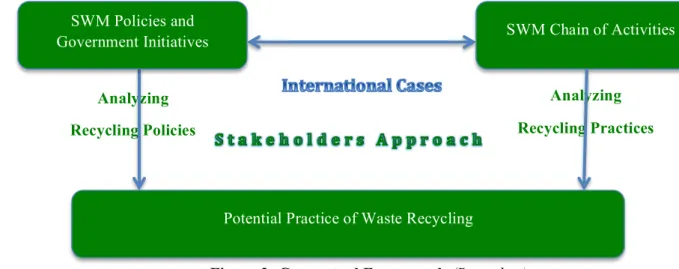
A “Stakeholder Approach” was used to organize the data through conducting in-depth interviews with the stakeholders who work in the SWM sector, both in policy making and within the SWM value chain. The objective of these interviews was to understand the main pillars of the conceptual framework illustrated above, through analyzing and interpreting the current SWM policies and specifically the recycling policies, and the SWM chain of activities and more specifically the recycling practices. In addition to analyzing the role of each stakeholder, which would give a wider perspective and a comprehensive knowledge of the sector, the conceptual framework investigates the potential practice of waste recycling in Cairo that would maximize the benefit of it to the country, without ignoring the interests of any of the stakeholders, and this is the reason why the stakeholders approach is adopted. Finally, seven international case studies were integrated on a cross sectional basis to support the analysis.
3. Hypothesis
The conceptual framework supports the hypothesis that waste recycling activity will be promoted if the mentioned stakeholders are provided with the guidance, support and the enabling environment that would result in clear task assignment and win-win situations for all parties, and if the SWM system is properly
Figure 2: Conceptual Framework (By author)
Analyzing Recycling Policies SWM Chain of Activities SWM Policies and Government Initiatives Analyzing Recycling Practices
Potential Practice of Waste Recycling
managed, as effective collection and transportation systems are vital to increase the benefits of the recycling activity, and the key to achieve all of this will be through effective policy making.
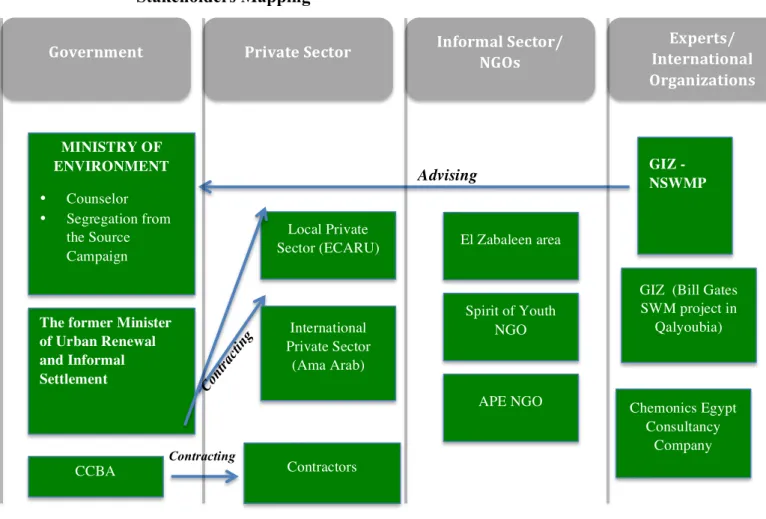
• Stakeholders Mapping
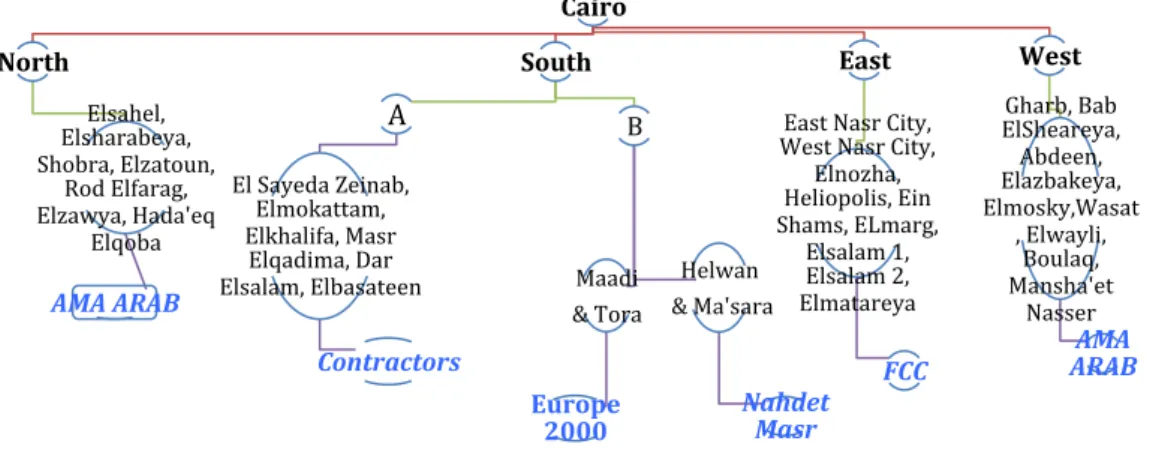
o 10 stakeholders and key players in the SWM sector participated in the research (Ministry of Environment, the former Ministry of Urban Renewal and Informal Settlements, CCBA, International Private sector, Local Private Sector, Contractors, Informal Sector, NGOs, Experts, and International Organizations)
o 22 persons participated in the research
The stakeholders and interviewees were classified into four main groups that are representing the sector: the government, the private sector, the informal sector/NGOs and the experts/ International Organizations.
Ø Government
o The Ministry of Environment
Advising MINISTRY OF ENVIRONMENT • Counselor • Segregation from the Source Campaign GIZ - NSWMP CCBA Contractors Local Private Sector (ECARU) International Private Sector (Ama Arab) APE NGO Spirit of Youth NGO El Zabaleen area Chemonics Egypt Consultancy Company GIZ (Bill Gates SWM project in
Qalyoubia)
The former Minister of Urban Renewal and Informal Settlement Contracting Cont ract ing
Government Private Sector Informal Sector/ NGOs International Experts/ Organizations
§ Mr. Magdy Zein El Deen, a legal counselor in the Central Administration for Inspection and Environmental Compliance in the Egyptian Environmental Affairs Agency (EEAA)
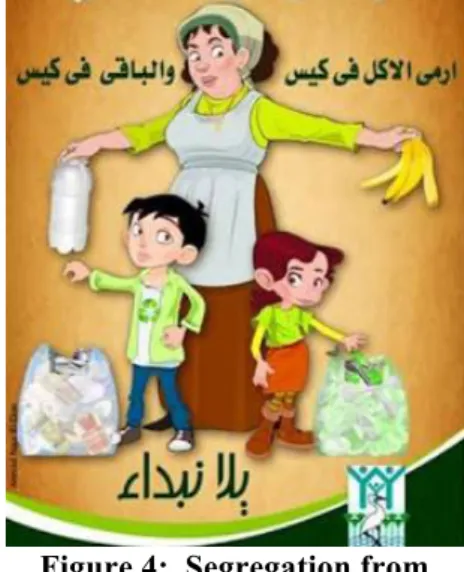
§ Mr. Mahmoud Abdelhakim, the deputy of the former minister of Urban Renewal and Informal Settlements (who used to work in the segregation from the source campaign. He is currently transferred to work in the Ministry of Environment)
Rationale: Ministry of Environment is the governing body that is setting the
guidelines for all environmental policies and practices including the SWM system in Egypt. Although SWM responsibilities are scattered among several ministries, Ministry of Environment is still the main responsible entity for the SWM portfolio in Egypt. Interviewing a legal counselor was useful to get details on legislative framework of SWM as well as the future plan of the ministry. Also, interviewing the “Segregation from the Source” campaign representative was vital to get insights about what are the factors of success and failure of such initiative in the Egyptian society. o Dr. Laila Iskandar, The Former Minister of State for Urban Renewal and Informal
Settlements
Rationale: Before being a Minister of State for Urban Renewal and Informal
Settlements, She was a Minister of State for Environmental Affairs; and she has been pioneering the SWM portfolio in Egypt for years and has a wealth of knowledge about all the details and complications of the issue. In addition, she established the Spirit of Youth NGO in 2004, which is one of the most prominent NGOs aiming at formalizing the informal sector and upping the living standard of its people. Further, she is the one who initiated the “Segregation from the Source” campaign, in addition to other initiatives in the SWM field. Therefore, interviewing her gave valuable data and weight to this thesis.
o Engineer Mahmoud Mansour, Head of the Engineering Department at CCBA
Rationale: CCBA is the agency that is managing the SWM chain of activities in
Cairo, and the one that contracts private companies and contractors. Interviewing one of the management at CCBA was crucial to get data about collection, transportation, recovery and disposal systems in Cairo.
Ø Private Sector:
o Engineer Ahmed Hassan – Projects Manager at AMA ARAB o Engineer Fayez Mikhaeil – Projects Manager at ECARU o A group of six contractors
Rationale: private sector has an integral role in the SWM system in Egypt, and based on the literature review and case studies, private sector companies all over the world are the ones that initiate waste recycling projects. Therefore, it is significant to interview representatives from the three main forms of private sector in Egypt, to understand their work and the challenges they face.
Ø Informal Sector and NGOs
o Mr. Shehata El Me’adess, an opinion leader at El Zabaleen area, Manshiet Nasser o Mr. Ezzat Naeim, founder of the Spirit of Youth NGO
o Mr. Bekhit Nan, Public Relations Manager at Association for the Protection of the Environment (APE) NGO
Rationale: the informal sector in Cairo has a very active role in the SWM system and
especially the recycling. The most famous area, which is considered the center of all the informal sector areas in Greater Cairo, is El Zabaleen area in Mokkatam district. Interviewing an opinion leader in this area provided valuable data about their work, the challenges they face and their aspirations. Further, there are two active NGOs that are located in El Zabaleen area, Sprit of Youth NGO that aims at formalizing the sector, and APE NGO that aims at educating young women through recycling projects. Interviewing representatives from these two NGOs was of benefit for the research as they represent how the civil society can play a role in the SWM system in general and recycling by the informal sector in specific.
Ø Experts and International Organizations
o GIZ – the National Solid Waste Management Programme (NSWMP) § Mr. Joachim Stretz, Programme Coordinator
§ Mr. Berti Shaker, Programme Adviser § Engineer Ahmed Saeid, Technical Manager
o GIZ – Bill Gates Foundation SWM project in Qalyubia Governorate
§ Ms. Heba El Behairy, Head of Component, Participatory Development Programme in Urban Areas
o Chemonics Egypt Consultancy Firm
§ Dr. Ahmed Gaber, Chairman and Senior Environmental Expert § Engineer Ahmed Shouman, Solid Waste Section Head
Rationale: Egypt has a wide array of technical experts in the SWM sector.
International Organizations in Egypt act as the technical source of support and assistance for the developmental projects in general. It was vital to interview the ones
who made the effort to organize and improve the SWM sector through the NSWMP, understand the challenges they believe exist in the sector and the details of the program and its proposals, in addition they have valuable data about the structure of WMRA and its management. Second, GIZ has a noticeable role in the SWM sector in Egypt, through the NSWMP in addition to many pilot projects. Among these projects is the Bill Gates funded SWM project that was implemented by GIZ in Qalyubia governorate and achieved successful results. Interviewing representative from this project was beneficial to get insights from this success story. Finally, Chemonics-Egypt Consultancy Firm provides consultancy services to private companies, international organizations, and governmental institutions. For instance it was the consultancy company of “Start your Waste Recycling Business” Training Program that was implemented by the International Labour Organization in Port Said, Minya and Red Sea governorates in 2014-2015. Interviewing such experts would help comprehending the complications and details of the SWM sector and would certainly add value to the research.
4. Thesis Structure
The next three chapters will review and analyze the data collected from the in-depth interviews, national documents, governmental reports, and international cases, in order to form a comprehensive idea from the situation in Cairo and get insights from the international cases that would enable proposing a model that would promote waste recycling in Cairo. The analysis will be based on the conceptual framework mentioned earlier in this chapter. First, the SWM policy framework including regulatory, institutional and financial frameworks will be reviewed and analyzed and the position of waste recycling activities in those frameworks will be identified. In addition, the government’s initiatives that aimed at promoting recycling will be investigated. Second, the SWM chain of activities including collection, transportation, recovery, disposal and marketing activities with a focus on waste recycling will be discussed and analyzed. Third, the roles of the stakeholders that were mapped in the research will be studied. Finally, the last chapter will present the recommendations and propose a model aiming at enhancing the waste recycling activity in Cairo.
Chapter IV: SWM Policy Framework – Review and Analysis
This chapter aims at reviewing and analysing the current status of SWM sector in Egypt in terms of the regulatory, institutional, financial frameworks. Also, The government of Egypt has initiated several piloting models to improve SWM system in a way that would serve waste recycling. Among those initiatives, two are studied in this chapter; the “National Strategic Directives of Waste Management in Egypt” by NSWMP and the segregation from the source campaign.The National Strategic Directives of Waste Management in Egypt was selected because it is the latest report published by the NSWMP, which is proposing an integrated SWM system that sets a framework for all its activities and that puts the waste recycling into consideration. GIZ, the organization managing the NSWMP acts as an advisor for the Ministry of Environment in the SWM sector. Ministry of Environment has already approved some of the directives’ proposals (e.g. the formation of WMRA). Therefore, it is crucial to examine and analyze these directives, which has a high potential to be the guideline for the SWM policy framework. The segregation from the source campaign was selected to be studied in the research, since it is the most initiative that aimed at improving waste recycling specifically through reforming the SWM system from its very beginning. This campaign was initiated by the former ministry of Urban Renewal and Informal Settlements. Thus, it is vital to study this campaign, and identify whether it had a potential for Cairo or not.
All the data in this chapter are collected from national and government documents including laws, ministerial decrees, EEAA reports, Sweepnet reports, in addition to previous theses, and the in-depth interviews conducted.
1. Regulatory Framework
This section includes a brief of the most significant laws in the Egyptian legislation covering the waste management sector.
• Law 38/1967 and its amendment by Law 10/2005 and Law 106/2012 on General Public Cleanliness
This law and its amendments address the aesthetic element and prohibits littering in all its forms in roads, beaches, bridges or canals, and that the waste whether municipal waste, animal waste, or wastewater should be disposed of in the specified settings that are indicated by the local council. Also, waste collection, transfer, and disposal
methods should be followed as per the implementing regulations of this law. Furthermore, this law clearly defines the responsibility of the citizens, contractors, and shop owners regarding waste collection, transportation and disposal. In addition, this law entails that any citizen or institution that undertakes activities that contribute to protecting the environment will be supported by the government through granting land or equipment. Law 10/2005 amended some provisions of Law 38/1967 regarding the public cleanness. Law 10 replaced article 8 and 9 of Law 38 with two new articles where monthly waste collection fees were set, according to the income level and the residence area. Also, law 106/2012 amended article 9 of law 38 to impose a financial penalty on littering in public roads, squares, tunnels and other spaces that are not specified for waste disposal (EEAA).
• Law 48/1982 for the Protection of the Nile River and its Waterways from Pollution
This law is concerned with the cleanliness of the freshwater in Egypt specifically Nile River and protecting it from pollution. The law prohibits any handling, sorting, disposal or recycling of waste near or along the waterways, except through a special license from the Ministry of Irrigation. Tourist or residential boats on the Nile River are solely responsible for the waste they generate. This law strictly bans waste disposal into the river (Bakry, 2015).
• Law 4/1994 and its amended Law 9/2009 on the Environment’s Protection
This law is the most recent environmental law. It was originally set to compensate the deficiencies in the previous environmental laws, through indicating environmental criteria and indicators specifically aiming at limiting pollution in air, soil and water. The law highlights the fact that waste treatment must take place in the only designated areas that must be far from industrial, agricultural and residential areas. It also specifies the requirements and locations’ criteria of the waste incinerators. Further, the law clarifies the responsibility of waste collectors and the specifications of the collection tools and process. In addition, the law addresses the demolition and construction waste through claiming that responsibility of disposal is completely on the company or citizen that performs the work and the local authority is not responsible. The law sets rules for waste transport, disposal and storage. Law 9/2009 was introduced to amend this law by banning garbage burning of wastes in open spaces; it also regulates waste collection, disposal and treatment of hazardous