University of Arkansas, Fayetteville
ScholarWorks@UARK
Theses and Dissertations
7-2015
Effects of Intervention on Self-Regulated Learning
for Second Language Learners
Lu Yu
University of Arkansas, Fayetteville
Follow this and additional works at:http://scholarworks.uark.edu/etd
Part of theBilingual, Multilingual, and Multicultural Education Commons,Curriculum and Instruction Commons, and theEducational Psychology Commons
This Dissertation is brought to you for free and open access by ScholarWorks@UARK. It has been accepted for inclusion in Theses and Dissertations by an authorized administrator of ScholarWorks@UARK. For more information, please [email protected], [email protected].
Recommended Citation
Yu, Lu, "Effects of Intervention on Self-Regulated Learning for Second Language Learners" (2015).Theses and Dissertations. 1229.
Effects of Intervention on Self-Regulated Learning for Second Language Learners
A dissertation submitted in partial fulfillment of the requirements for the degree of
Doctor of Philosophy in Curriculum and Instruction
by
Lu Yu
Tianjin Foreign Studies University Bachelor of Arts in English, 1995
Tianjin Normal University
Master of Arts in English Education, 2002
July 2015 University of Arkansas
This dissertation is approved for recommendation to the Graduate Council.
______________________________________ Dr. Felicia Lincoln
Dissertation Director
______________________________________ ____________________________________
Dr. Michael K. Daugherty Dr. Michael J. Wavering
Dissertation Committee Dissertation Committee
______________________________________ Dr. Wen-Juo Lo
ABSTRACT
The purposes of the study were to investigate the process of self-regulated learning and the effects of an intervention program on self-regulated learning designed for second language (L2) learners. 120 participants who were sophomores majoring in English education at a university in an Asian country were randomly assigned to either the experimental group or control group. The self-regulated learning intervention was composed of six weekly two-hour training sessions that focus on five main variables of regulatory process: goal setting, self-efficacy, time and study environment management, language learning strategies, and attribution. The operation of self-regulated learning processes in the context of L2 learning, and the
effectiveness of the self-regulated learning intervention program for L2 learners were investigated and analyzed.
Results of a path analysis reflected Zimmerman’s process model of self-regulation (2000, 2004) and suggested that there are causal influences of self-regulated learning variables across three phases (forethought, performance, and reflection phase) in the context of L2 learning. Furthermore, student self-regulation influences their L2 proficiency via the enhancement of motivational variables. Self-efficacy, time and study environment management skills, and students' learning time affected their L2 proficiencies directly. Intrinsic goal orientation influenced L2 proficiency indirectly through its impact on time and study environment
management skills. Attribution affected L2 proficiency indirectly through its impact on learning time. The evaluation of the effectiveness of the intervention included multiple outcome variables, which were grouped into three categories: students' motivational beliefs, students' strategy use, and students' academic performance. The results of the immediate training effects on goal setting, self-efficacy, attribution, time and study environment management, memory strategy,
compensation strategy, metacognitive strategy and L2 proficiency confirmed that academic self-regulation is a trainable student characteristic and self-self-regulation training can be used effectively in a L2 classroom setting. The feature of the current study design allows for systematically examining and evaluating both motivational variables and learning strategies in the context of L2 learning. From a pedagogic point of view, this finding has implications for the design of
strategy-based instruction intended to foster students’ self-regulated learning in the L2 classroom.
©2015 by Lu Yu All Rights Reserved
ACKNOWLEDGEMENTS
Over the past four years I have received support and encouragement from a great number of individuals. I would like to express my deep appreciation and gratitude to my advisor, Dr. Felicia Lincoln, for the patient guidance and mentorship she provided to me, all the way from when I was first considering applying to the PhD program in the Curriculum and Instruction, through to completion of this degree. I am truly fortunate to have had the opportunity to work with her.
I would also like to thank my committee members, Dr. Michael Daugherty, Dr. Michael Wavering and Dr. Wen-Juo Lo for their friendly guidance and thought provoking suggestions over the past two years as I moved from an idea to a completed study.
I take this opportunity to express my gratitude to faculty, staff and colleagues in the department of Curriculum and Instruction for their help and support. I am grateful to all my friends who shared their memories and experiences on this journey.
I give deep thanks to Professor Gang Gu, for helping me gain access to the participants in the study. I must acknowledge as well the teachers and students who took part in this study for generously sharing their time and ideas.
Finally, a special thanks to my family. Words cannot express how grateful I am to my parents, my husband, my sister and my son for all of the sacrifices that they’ve made on my behalf.
TABLE OF CONTENTS
Chapter 1: Introduction ... 1
Statement of the Problem and Purpose of the Study ... 2
Significance of the Study ... 4
Research Questions and Related Hypotheses ... 4
Brief Overview of the Proposed Method ... 5
Chapter 2: Literature Review ... 7
Reciprocal Interaction ... 7
Models of Self-Regulated Learning ... 9
Constructs of Self-Regulated Learning ... 13
Self-Regulation in L2 Learning ... 21
Summary ... 31
Chapter 3: Methodology ... 34
Participants ... 35
Instrument ... 35
Design and Procedure ... 41
Statistical Analyses ... 44
Chapter 4: Results ... 48
Relationship among the Variables of Self-Regulation Model ... 48
Effectiveness of the Intervention ... 51
Chapter 5: Discussion ... 69
Summary of Findings ... 69
Theoretical and Research Implications ... 76
Limitations of the Present Study ... 78
References ... 80 Appendices ... 91 Appendix A ... 91 Appendix B ... 93 Appendix C ... 95 Appendix D ... 97 Appendix E ... 99
LIST OF TABLES
Table Page
1 Overview of Instruments with Subscales……….. 37
2 Weekly Topics and Outline of Intervention……….. 44
3 Means and Standard Deviations of Measured Variables……….. 49
4 Correlations among Measured Variables………... 50
5 Means and Standard Deviations of Motivational Beliefs………. 52
6 Means and Standard Deviations of Time and Study Environment Management Skills……….... 57
7 Means and Standard Deviations of Overall Language Learning Strategy………… 59
8 Means and Standard Deviations of Six Categories of Language Learning Strategy………. 61
LIST OF FIGURES
Figure Page
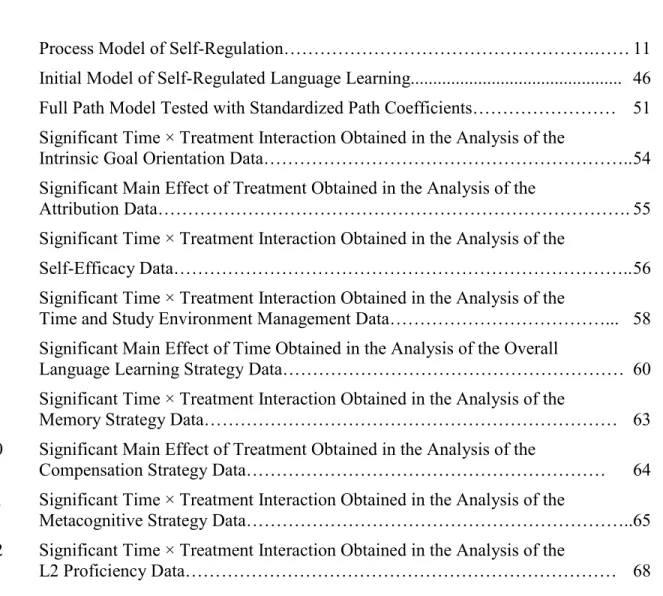
1 Process Model of Self-Regulation……….…… 11
2 Initial Model of Self-Regulated Language Learning... 46
3 Full Path Model Tested with Standardized Path Coefficients……… 51
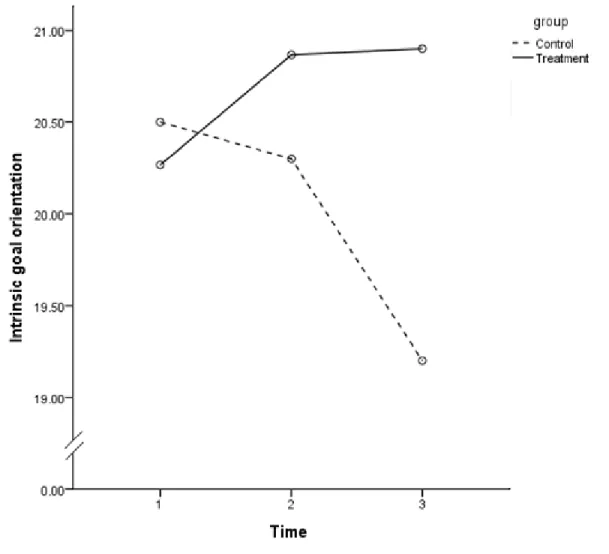
4 Significant Time × Treatment Interaction Obtained in the Analysis of the
Intrinsic Goal Orientation Data……….. 54
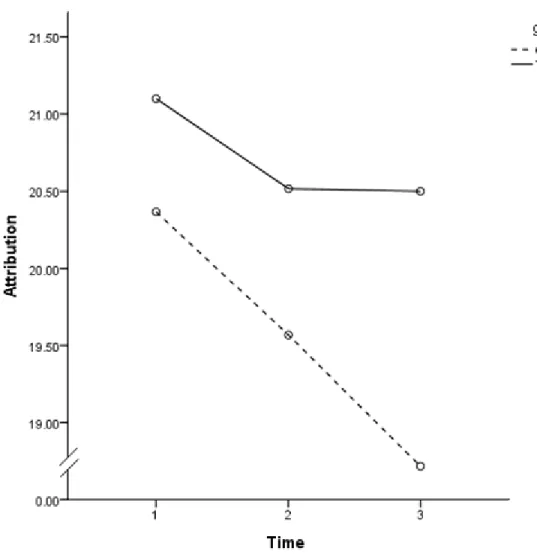
5 Significant Main Effect of Treatment Obtained in the Analysis of the
Attribution Data………. 55
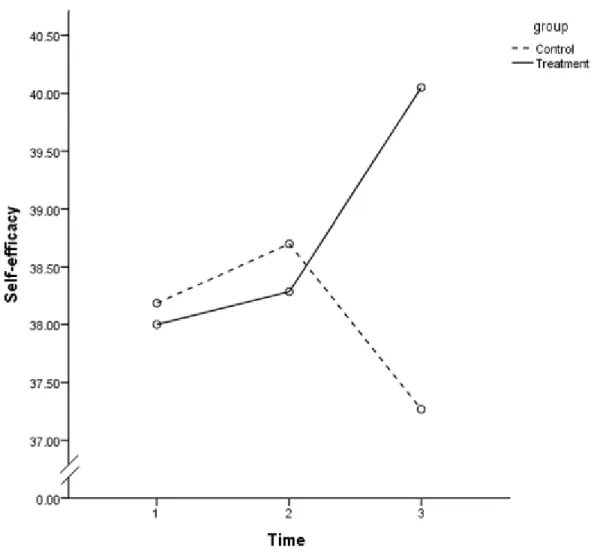
6 Significant Time × Treatment Interaction Obtained in the Analysis of the
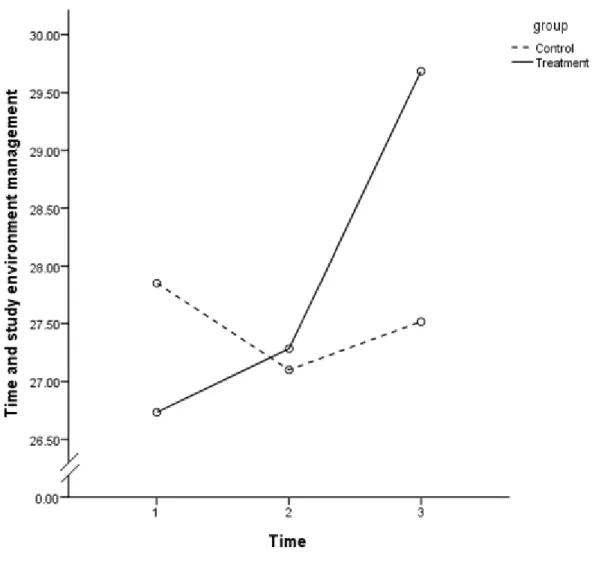
Self-Efficacy Data……….. 56 7 Significant Time × Treatment Interaction Obtained in the Analysis of the
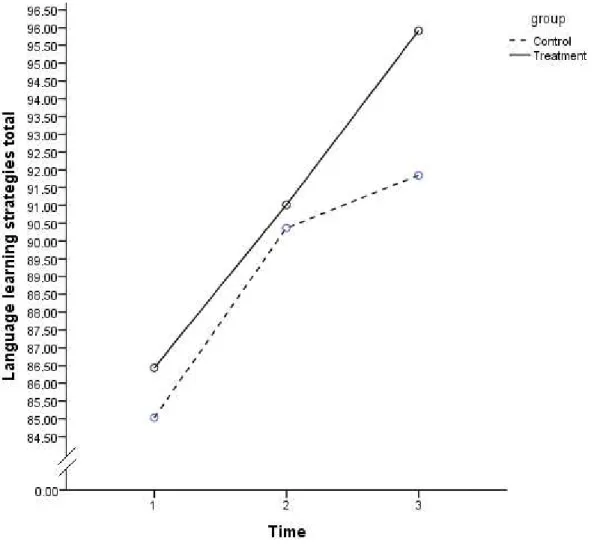
Time and Study Environment Management Data………... 58 8 Significant Main Effect of Time Obtained in the Analysis of the Overall
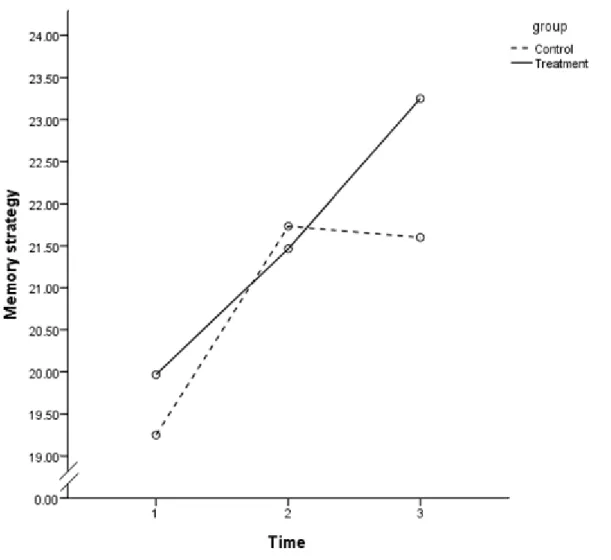
Language Learning Strategy Data……… 60 9 Significant Time × Treatment Interaction Obtained in the Analysis of the
Memory Strategy Data……… 63 10 Significant Main Effect of Treatment Obtained in the Analysis of the
Compensation Strategy Data……… 64
11 Significant Time × Treatment Interaction Obtained in the Analysis of the
Metacognitive Strategy Data………..65
12 Significant Time × Treatment Interaction Obtained in the Analysis of the L2 Proficiency Data……… 68
1
CHAPTER 1 Introduction
The shift from behaviorism to cognitivism in educational psychology produced a major change in views of human learning, motivation, and achievement. Recognizing that behavioral theories, which concentrated on human behavior in nonsocial situations, did not offer a complete explanation of human behavior, theorists of psychology began to pay attention to the influence of the social environment on motivation. Rotter (1954) formulated social learning theory that integrates learning and personality theories and offers important insights into the influences on motivation. Based on the earlier theorists’ research, Bandura (1976, 1986) developed and expanded social cognitive theory by including self-efficacy and self-regulatory processes. Later researchers continued to contribute to the self-efficacy and self-regulation components of Bandura's social cognitive theory. Schunk (l989, 1995) presented a model of motivated learning that emphasizes the role of self-efficacy, which refers to personal beliefs about one's capabilities to learn or perform actions at designated levels. Zimmerman (1989, 2000) developed a triadic social cognitive model of self-regulated learning in which personal, environmental, and
behavioral components influence each other through triadic feedback loops in a cyclical manner. The theoretical background of the study is based on Zimmerman's (2000) cyclical model of self-regulated learning involving three sequential phases: forethought phase, performance phase, and self-reflection phase.
The history of studies on self-regulated learning in education involves three periods: theoretical development, intervention, and operation (Schunk, 2013). During the period of theoretical development (1980s - 1990s), researchers formulated definitions and frameworks, identified key self-regulatory processes, investigated the relationships between self-regulated
2
learning and achievement outcome, and developed research methodologies. The period of intervention (1990s - 2000s) was characterized by research investigating methods for teaching self-regulatory processes to students and assessing the strategy training effect. The dominant research model of the period of operation (1990s – today) has addressed the operation of self-regulated learning processes and the reciprocal relationship between self-self-regulated learning and achievement outcomes.
Statement of the Problem and Purpose of the Study
According to the context-specific nature of the self-regulated learning process supported by the triadic interaction view, Schunk (2005) suggests that researchers should investigate whether specific course characteristics may moderate the relationships between self-regulation and academic performance, especially the influence of the motivational and affective variables on self-regulated learning of academic skills. Training in self-regulation for students shows significant effects on students’ achievement in various academic disciplines and learning contexts, such as reading (Souvignier & Mokhlesgerami, 2006), writing (Glaser & Brunstein, 2007), mathematics (Perels, Dignath, & Schmitz, 2009), science (Lee, Lim & Grabowski, 2010), special education (Sawyer, Graham, & Harris, 1992), information technology (Chen, 2002), distance education (Matuga, 2009), and computer-based learning environments (Winters, Greene & Costich, 2008). Recently, the importance of studying self-regulation as a process has attracted the attention of many researchers (Cleary & Zimmerman, 2004; Schunk & Ertmer, 2000).
In the field of second language (L2) learning, researchers and educators seem to regard learning strategies as a component of self-regulated learning, as do psychologists. However, most of them focus on learning strategies, rather than the domain of self-regulation, as psychologists have done (McDonough, 2001). Therefore, in the field of L2 learning,
self-3
regulation is a fairly new concept and an exciting development, even though the importance of self-regulated learning was first emphasized in the field of educational psychology more than two decades ago (e.g., Schunk & Zimmerman, 1998). As the study on learning strategies paved the way toward research on promoting academic achievement and motivation of language learners (Chamot, 2004), language researchers needed to shift the focus from the product (learning strategies) to the process (self-regulatory process) (Dörnyei, 2005) and take language learners’ motivational orientations into consideration.
Today students are required to learn in a self-regulated way during and after schooling as well as through their entire working life. College students are especially expected to engage in more independent learning activities outside the classroom. However, college students who struggle in L2 learning might not have the necessary self-regulatory strategies to meet the expectation of independence and autonomy. Some of them may have the issues of low school attendance, decreases in academic motivation, a lack of concentration on learning activities and even academic failure. This fact led to my interest in educational research on improving college-level L2 students' self-regulated learning. This study was an intervention program aimed at promoting self-regulated learning in L2 classroom. The training sessions of this study focused on self-regulatory processes such as setting goals; time and study environment management;
planning, monitoring and evaluating learning activities; and developing positive self-efficacy and academic attributions (a person’s beliefs about causes of academic outcomes). The operation of regulated learning processes in the context of L2 learning, and the effectiveness of the self-regulation intervention program for L2 learners were investigated and analyzed.
4
Significance of the Study
Consistent with a contextualist viewpoint, researchers must investigate whether the various motivational variables in self-regulated learning processes operate differently across classroom contexts. This study contributes to the existing literature by examining relationships among self-regulation variables in the context of L2 learning. The new perspective on self-self-regulation has offered language educators a far broader perspective than previous focuses on learning strategies. By understanding the process of self-regulated learning for L2 learners, language educators may be more familiar with the factors that influence a learner’s self-regulation and the strategies they can use to promote self-regulated learning in their classrooms. The significant effects of the intervention program in self-regulated learning for L2 learners show that training language learners to regulate themselves in academic settings can improve their L2 proficiency. Therefore, the instructional implication of the study is that by teaching L2 learners to be more
self-regulatory, teachers can expect to be more successful in developing responsible, autonomous, and lifelong language learners.
Research Questions and Related Hypotheses
The research questions for this study were as follows:
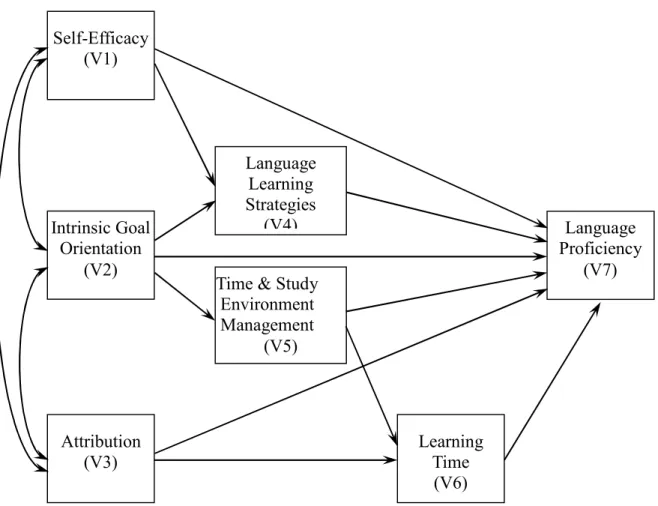
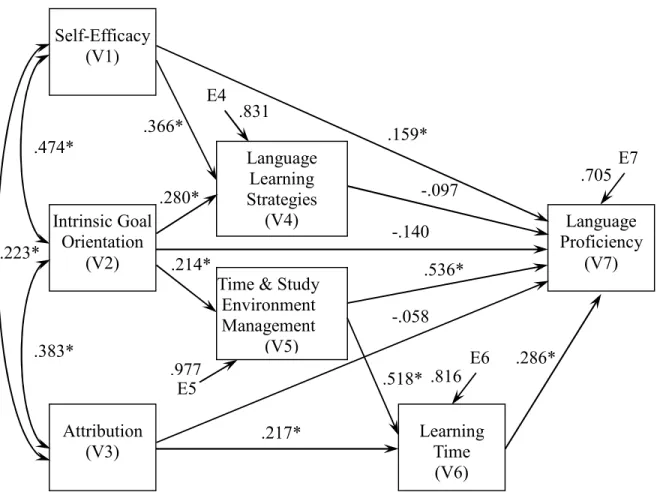
1. What is the relationship among self-efficacy, intrinsic goal orientation, language learning strategies, time and study environment management, causal attribution and learning time, and how these self-regulation components are related to college students’ L2 proficiency? 2. What is the treatment effect of the self-regulation intervention program for L2 learners? The first research question concerns the relationship among various self-regulation variables: self-efficacy, intrinsic goal orientation, language learning strategy, time and study environment management, causal attribution, learning time, and L2 proficiency of college students. Based on
5
the literature, it was hypothesized that there are potentially causal influences of self-regulated learning variables across the phases of forethought, performance, and self-reflection. The feedback from the prior phase impacts the adjustments regarding current and subsequent efforts in a cyclical self-regulatory process. Furthermore, student self-regulation influences academic success via the enhancement of motivational variables.
The second research question was to investigate the treatment effect of self-regulated
learning training for L2 learners. Previous studies (e.g., Cleary & Zimmerman, 2004; Schmitz & Wiese, 2006; Stoeger & Zigler, 2008) reported that variables of regulation such as self-efficacy, goal orientation, learning strategies, time and study environment management, and causal attributions of the students as well as students’ achievements in various academic
disciplines and learning contexts increased as a consequence of the self-regulation training. For the second research question, it was hypothesized that this study would find the same significant effect of the intervention program in self-regulated learning for L2 learners.
Brief Overview of the Proposed Method
Participants. The participants in this study were undergraduate students at a university in an Asian country. All of the participants were sophomores majoring in English education. At the time of this study, all participants were enrolled in a required intensive English course. Participation was voluntary. One hundred and twenty students (7 males, 5.51%; 113 females, 94.49%) were recruited and randomly assigned to either the experimental group or control group. Participants ranged in age from 18 to 20 years.
Instrument. The battery of instruments included one student background information form, the Motivational Scale of the Motivated Strategies for Learning Questionnaire (MSLQ, Pintrich, Smith, Garcia & McKeachie, 1991, see Appendix A; MSLQ Chinese Version, Wu & Cheng,
6
1992, see Appendix B), SILL ELL Student Form, Ardasheva & Tretter, 2013, see Appendix C, SILL Chinese version, Yang, 1992, see Appendix D), standardized English proficiency tests, and structured self-regulation diaries.
Design and procedure. All participants completed three questionnaires and three English language proficiency tests before, during, and after the self-regulation instruction respectively. The experimental group received a self-regulation intervention integrated into a regular intensive English course. The control group used the regular curriculum of the intensive English course. The self-regulation intervention designed for the experimental groups was composed of six weekly two-hour training sessions that focused on the main self-regulatory processes, such as goal setting, self-efficacy, time and study environment management, language learning strategies, and causal attribution. Following each training session, the students in the experimental group received weekly checklists on which they completed two take-home tasks daily: voluntary reading assignments and self-regulation diaries. Therefore, they completed the diaries for a total of six weeks, which was expected to promote their metacognition and knowledge transfer. The questions in the structured self-regulation diaries were directly related to the respective training sessions. The main format of the structured self-regulation diaries was Likert-type scales.
In this study, a quasi-experimental pre-post control design was implemented. The statistical analyses performed in the study include path analysis and repeated measures of ANOVA. To examine the relationship among the variables of self-regulation in the process of L2 learning, path analysis was used to develop a structural model by analyzing the path coefficients among constructs. Repeated measures of ANOVA were used to examine the impact of the intervention on students’ self-regulation and L2 proficiency.
7
CHAPTER 2 Literature Review
What follows is a brief overview of Bandura's social cognitive theory. The introduction of definitions and basic components of self-regulated learning follows this review. The social cognitive model of self-regulated learning developed by Zimmerman is emphasized. Second, key variables in three phases of the self-regulated learning process are discussed, and potential interactions among these variables of self-regulated learning are analyzed. Third, the studies of self-regulated learning in the field of L2 learning are highlighted. Finally, the author summarizes and evaluates the important aspects of the existing body of literature and provides a rationale for this study.
Reciprocal Interaction
Social cognitive theory stemmed from social learning theory. Bandura led the efforts on social learning theory development beginning in the 1960s. By the mid-1980s, Bandura's research had developed into a comprehensive overview of human cognition in the context of social learning. In 1986, Bandura relabeled his social learning theory as social cognitive theory. His theory focuses on how individuals operate cognitively through their social experiences and how these cognitions then influence behavior and development. The foundation of Bandura's social cognitive theory is reciprocal interaction. In 1976, Bandura developed triadic reciprocal determinism, in which the person, the behavior, and the environment all mutually influence one another in the learning process.
According to his model, motivational factors and self-regulatory mechanisms, rather than just environmental factors, contribute to a person's behavior. Moreover, Bandura (1986) points out that humans have the capacity to proactively control and manage these triadic interactions
8
through three classes of sub processes: self-observation, self-judgment, and self-reaction, which play a critical role on students' academic performance.
The concept of self-regulation is a multifaceted construct, as reflected in the numerous theories or frameworks put forth to describe it. Although theories of self-regulation have been extended and applied in a series of contexts (e.g. social relationships, clinical psychology), this literature review focuses on studies of self-regulation as they relate to learning. Therefore, theories and empirical studies of self-regulation included in this paper seek to examine how students become masters of their own learning processes (Zimmerman, 2008).
An inclusive definition of self-regulated learning comes from Zimmerman (1989), who defines students who engage in self-regulated learning as metacognitively, motivationally, and behaviorally active participants in their learning. The definition reflects three main dimensions of self-regulated learning: the metacognitive component is related to planning, setting goals,
monitoring, and evaluating, i.e. understanding how to self-regulate; motivation involves taking responsibility for one’s successes and failures, which results in increased effort and persistence; and the cognitive element refers to possessing the skills necessary to make appropriate
modifications in self-regulation processes. Moreover, Alexander, Graham, and Harris (1998) state that self-regulation involves not only the learner’s regulation of cognition but also
management of affective states and the social environment, which added the fourth dimension of self-regulated learning: the social-affective element.
Based on the above mentioned constructs, a number of self-report instruments, such as
questionnaires or interviews, were developed to measure self-regulated learning during the 1990s. Commonly-used examples are the Learning and Study Strategies Inventory (LASSI; Weinstein, Schulte & Palmer, 1987), the Motivated Strategies for Learning Questionnaire (MSLQ; Pintrich,
9
Smith, Garcia & McKeachie, 1991, 1993), and the Inventory for Recording Learning Strategies in Academic Studies (LIST; Wild & Schiefele, 1994). The initial attempts of these interview and questionnaire measures of students’ self-regulatory strategies were successful in demonstrating significant predictions of students’ course performance (Zimmerman & Martinez-Pons, 1988).
Models of Self-Regulated Learning
Besides providing definitions and components of self-regulation, researchers have adapted the concept of self-regulation to the field of learning and developed a number of theories and models of self-regulated learning. Among these theories and models, perhaps the most influential research is Zimmerman’s (1989, 2000) social cognitive models of self-regulated learning.
A triadic view of self-regulated learning. In accordance with Bandura's (1986) triadic formulation, Zimmerman (1989) proposed the triadic interaction among three components: the person, his or her behavior, and the environment. The personal component involves the
observation and adjustment of cognitive and affective states (e.g., beliefs about success), the behavioral component is about the observation and adjustment of performance (e.g., engaging in a task), and the environmental component involves the observation and adjustment of
environmental conditions (e.g. feedback from a teacher). The implication of the triadic interaction for researchers is that the impact of variations in context and personal experience should be considered when understanding students' self-regulated learning.
Although research provides evidence on the importance of students’ use of self-regulation strategies, in teaching practice, it also indicated that few teachers effectively prepared students to self-regulate their own learning processes (Zimmerman, Bonner, & Kovach, 1996). Recognizing that students' self-regulated learning processes are trainable through specific experience,
10
influencing students' achievement outcomes by teaching students self-regulated learning strategies. Training in self-regulation for students shows significant effects on students’
achievements in various academic disciplines and learning contexts, such as reading (Souvignier & Mokhlesgerami, 2006), writing (Glaser & Brunstein, 2007), mathematics (Perels, Dignath, & Schmitz, 2009), science (Lee, Lim & Grabowski, 2010), special education (Sawyer, Graham, & Harris, 1992), information technology (Chen, 2002), distance education (Matuga, 2009), and computer-based learning environments (Winters, Greene & Costich, 2008). Besides fostering self-regulated learning at school, researchers also addressed adult groups, such as college students (Schmitz, 2001) and pre-service teachers (Kramarski & Michalsky, 2009).
A process-oriented perspective of self-regulated learning. Since the last decade, researchers have begun to investigate the dynamic nature of self-regulated learning and the reciprocal relation between self-regulated learning and achievement outcomes. Zimmerman (2000) proposed a process definition of self-regulated learning which depicts self-regulation as “self-generated thoughts, feelings, and actions that are planned and cyclically adapted to attainment of personal goals” (p. 14). The basic components of the definition of self-regulated learning, such as goal setting, planning, and self-reflection, reflect a process-oriented perspective of regulation. By expanding Bandura’s (1986) three regulatory sub-processes,
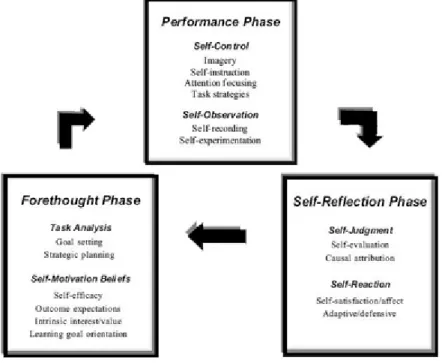
self-observation, self-judgments, and self-reactions, Zimmerman (2000, 2004) developed a process model of self-regulation (see figure 1) involving three cyclical phases: forethought phase processes (task analysis and self-motivation beliefs), performance phase processes (self-control and self-observation), and self-reflection phase processes (self-judgment and self-reaction). The forethought includes processes that precede learning or performance. The performance phase refers to processes that occur during learning efforts or performance. The self-reflection phase
11
consists of processes occurring after efforts to learn or perform (Zimmerman, 2000). This process model of self-regulation reveals the structure of self-regulation processes and their relation to important academic motivational beliefs. First, it assumes significant correlations among variables within a particular self-regulated phase. For instance, in the forethought phase, task analysis variables, such as goal setting, are assumed to be significantly related with self-motivation beliefs, such as self-efficacy. Moreover, because of the dynamic and fluid nature of these components during the learning process, there are potentially causal influences of self-regulated learning processes across phases. The feedback from the prior phase impacts the adjustments regarding current and subsequent efforts in a cyclical self-regulatory process. For example, the self-reflection phase variables, such as self-judgment, can influence forethought phase processes regarding future learning attempts, indicating a cycle of self-regulation.
Figure 1: Process model of self-regulation (Zimmerman, 2000, 2004).
The importance of studying self-regulation as a process has been recognized by many researchers (Cleary & Zimmerman, 2004; Schunk & Ertmer, 2000). Representative studies of
12
measuring self-regulated learning as a process include intervention sessions for adult students designed by Schmitz and Wiese (2006), as well as the training program for elementary students carried out by Stoeger and Zigler (2008). Both were designed on the basis of a process-oriented model of self-regulated learning involving three cyclical phases: forethought phase, performance phase, and self-reflection phase (Zimmerman, 2000). Schmitz and Wiese (2006) conducted four weekly two-hour training sessions of self-regulated learning with a sample of civil engineering students at a German university. The study results indicate that besides improved time
management skills, as well as planning and concentration, variables of motivation such as self-efficacy, positive affect, personal understanding, and satisfaction also increased in the students as a consequence of the training. Stoeger and Zigler (2008) studied 219 fourth grade pupils
attending German public schools who received classroom-based training of self-regulated learning over a five-week period. Consistent with Schmitz and Wiese’s research (2006), the intervention study revealed significant improvement in the following forms of self-regulation and motivation: time management, self-efficacy, interest, willingness to exert effort, and learning goal orientation.
As these studies focus on time course analysis of self-regulation training effects, new methodologies (e.g. think aloud measures, microanalytic measures and diary measures) were implemented along with traditional self-report instruments to capture the dynamic and cyclical nature of self-regulated learning. Schunk (2013) suggests that besides employing those time-intensive measures to assess the operation of self-regulated learning, researchers should also collect achievement outcomes concurrently with those self-regulated learning processes to track the reciprocal relation between self-regulated learning and achievement outcomes.
13
Constructs of Self-Regulated Learning
Regulation of motivation has been identified as a core facet of being a self-regulated learner. Recent efforts have revealed a close relationship between the main self-regulated processes and many sources of motivation during three sequential phases of learning. Given this relationship, how does motivational regulation operate with different phases of self-regulated learning? To support an increased understanding of the process of self-regulation, the next part of the chapter focuses on key variables in self-regulated learning, and this is followed by a discussion of potential interactions among these variables of self-regulated learning. Based on the theoretical model of self-regulated learning developed by Zimmerman (2000), the discussion of the role of variables is organized by three cyclical phases: forethought, performance, and reflection. Three general types of motivational beliefs (self-efficacy, goal orientation, and causal attribution) and learning strategies are highlighted based on their prominence in the literature on self-regulation. More specifically, in the forethought phase, self-efficacy and goal orientation will be discussed. In the performance phase, the various learning strategies, including metacognition, cognition engagement and time management will be discussed. In the reflection phase, causal attribution for performance will be discussed.
Forethought phase. There are two categories of forethought: task analysis and
self-motivational beliefs. Self-efficacy and goal orientation are two key self-self-motivational beliefs that are active throughout the model.
Self-efficacy. Bandura (1986) defines self-efficacy as "people’s judgments of their capabilities to organize and execute courses of action required to attain designated types of performances" (p. 391). In a school context, academic self-efficacy refers to students' confidence in their abilities to bring about positive academic outcomes. Self-efficacy perceptions have
14
important implications for students’ self-regulation during the forethought phase, such as goal setting, students’ choices of activities, efforts and task persistence (Schunk, 1995; Zimmerman & Cleary, 2009; Zimmerman & Kitsantas, 1997). Students holding low self-efficacy for
accomplishing a particular task may avoid it; those who believe they are capable are likely to be cognitively engaged. The more confident students are in their abilities, the more likely they are to try harder to persist in the face of difficulties than those with doubts.
According to Bandura's triadic reciprocal causation model, the person, the behavior, and the environment all reciprocally interact to create learning in an individual. This model can be exemplified using the concept of self-efficacy. The personal factor (self-efficacy) influences such achievement behaviors as choice of tasks, persistence, and effort. In turn, student behaviors modify self-efficacy. At the same time, environmental factors, such as teacher feedback and parenting, contribute to a person's achievement behavior and further influence the personal factor (self-efficacy). Compared with other expectancy constructs, such as self-concept, self-efficacy is more situation or task specific and more dynamic and changeable. In other words, a student's self-efficacy for a specific task might fluctuate due to the individual's preparation, physical and affective state, and external conditions, such as the nature of the task and teacher feedback. In general, it is most effective to have self-efficacy that slightly exceeds actual skills at any given time (Bandura, 1977). Schunk (1995) has found that important factors for teachers to consider when fostering their students’ self-efficacy include modeling solving problems with specific strategies or skills, providing informative feedback, and helping learners achieve academic success by setting challenging, yet manageable, goals.
Goal orientation. Goal-orientation theory is concerned with why individuals want to learn for the goals and how they approach and engage in their tasks. Elliott and Dweck (1988) defined
15
an achievement goal as involving a program of cognitive processes that have “cognitive, affective, and behavioral consequences” (p. 11). Researchers have defined and studied two contrasting achievement goal orientations: mastery goal orientation and performance goal orientation (Ames & Archer, 1988). The purpose of a mastery approach goal is to learn and master the knowledge or new skills to achieve improvement based on self-referenced standards, and a mastery avoid goal involves avoiding misunderstanding and perfectionism. In contrast, a performance approach goal presents a focus on achieving normatively defined success and how ability will be judged relative to others, and a performance avoidance goal is concerned with not appearing incompetent relative to others (Maehr & Zusho, 2009; Pintrich, 2000). Research evidence suggests that goal orientation is associated with a wide range of motivational beliefs that are important mediators of self-regulated learning. Generally, a mastery goal orientation is related to a positive pattern of attributions, active attitudes toward learning, and higher
performance, whereas a performance goal orientation is linked to a maladaptive pattern of attributions and lower motivation and performance (Ames & Archer, 1988; Pintrich & Schunk, 1996; Weiner, 1979). When focusing on the forethought phase, goal orientation influences goal setting, choice of activities (Ames & Archer, 1988; Elliott & Dweck, 1988), and self-efficacy (Jagacinski & Nicholls, 1987). For example, mastery approach-oriented students are more likely to choose tasks that will improve their skills and to focus on the strategies they will employ to assure their self-efficacy. In turn, the self-efficacy based on their improvement will reduce their focus on social comparison and help them set more mastery goals in their future learning process. On the other hand, to avoid showing low performance levels, students with a performance goal seek to set easier goals, avoid potential challenging learning experiences, and use escape strategies (Dweck, 1986; Pintrich & De Groot, 1990).
16
Performance phase. As discussed above, three main components of self-regulated learning are important to classroom performance: (1) metacognitive strategies for planning, monitoring, and modifying cognition; (2) cognitive strategies for fostering active cognitive engagement in learning; and (3) motivational beliefs about learning (Zimmerman, 1989). This section focuses on metacognitive strategies and cognitive strategies used during the performance phase and their interactions with two forethought phase motivational beliefs, self-efficacy and goal orientation.
Learning strategies. Weinstein et al (2000) defined learning strategies as “any thoughts, behaviors, beliefs, or emotions that facilitate the acquisition, understanding, or later transfer of new knowledge and skills” (p. 727). Metacognitive strategies have received a great deal of attention in the self-regulation literatures(Flavell, 1979; Schraw et al., 2006; Schraw &
Moshman, 1995). Metacognition is first defined simply as “thinking about thinking” by Flavell (1979, p. 906). Metacognition consists of two components: metacognitive knowledge and metacognitive regulation. Metacognitive knowledge includes knowledge about oneself as a learner, knowledge about tasks, and knowledge about strategies. Metacognitive regulation involves using metacognitive strategies to regulate and supervise learning, to plan and monitor cognitive activities, and to evaluate the efficacy of those activities. For example, when a learner’s cognitive goal is to understand reading material, the learner may use the following metacognitive strategies to ensure that he can achieve the cognitive goal. He may plan the task by budgeting time and selecting appropriate strategies. He may monitor his comprehension of the reading material by asking himself some questions and associating new content with previously learned knowledge, and he may evaluate the product of his learning by seeking feedback from other resources and adjusting his goals in time.
17
Evidence from empirical studies (Eisenberg, 2010; Graham & Harris, 2000; Schraw et al., 2006; Whitebread et al., 2009) tends to support the link between learning strategies, motivation, and academic achievement. Furthermore this evidence suggests that students who are able to engage in self-regulated learning by planning, setting goals, monitoring, and evaluating cognitive activities as well as affective states and the social environment, and who use appropriate learning strategies tend to have higher motivations in learning and therefore are shown to have better academic achievement. For instance, Pintrich and De Groot (1990) studied seventh and eighth graders in science and English classes and found a positive relationship between levels of self-regulated skills and academic performance.
Training students in learning strategies, especially metacognitive strategies, shows significant effects on students’ achievements in various academic disciplines and learning
contexts (Cleary & Zimmerman, 2004; Guthrie and Wigfield, 2000; Perry and Vandekamp, 2000; Schunk and Zimmerman, 1998). In the aspect of science education, Kramarski and Mevarech (2003) examined the effects of metacognitive training on the mathematical reasoning and metacognitive skills of 384 eighth-grade students. The results show that students involved in metacognitive instruction performed better than students in the control group in the ability to interpret graphs, fluency and flexibility of correct mathematical explanations, use of logical arguments to support math reasoning, and performance on transfer tasks. In a literacy instruction study, Houtveen and Grift (2007) used empirical research to examine the effects of
metacognitive strategy instruction on ten-year-old students’ reading comprehension. The
students in the experimental group performed significantly better on reading comprehension than the students in the control group.
18
Interactions between learning strategies and motivational beliefs. Schraw et al. (2006) defined motivation as “beliefs and attitudes that affect the use and development of cognitive and metacognitive skills” (p. 112). This definition emphasizes the role of cognitive and
metacognitive strategies in improving persistence, and effort regulation in the face of challenging tasks. Martinez (2006) argues that the effect of self-regulation on academic success is mediated by motivation.
Much research has demonstrated that motivational components in the forethought phase are significantly related to students’ cognitive engagement during the performance phase (Bandura, 1997; Pintrich & Zusho, 2002; Wigfield et al., 2008). The following examples focus on the interactions between two forethought variables discussed above (i.e. self-efficacy and goal orientation) and learning strategy use. First, research evidence shows that students' self-efficacy beliefs are closely linked to cognitive strategy use and time management in varied school subjects (Britton & Tesser, 1991; Schunk & Swartz, 1993; Zimmerman, Bandura, & Martinez-Pons, 1992). For example, self-efficacious students were more likely to report use of cognitive strategies and metacognitive strategies and to persist more often at difficult or uninteresting academic tasks than self-doubters (Pajares, 2008). In turn, students’ motivation and self-efficacy are enhanced when they acquire self-regulatory strategies and realize they are performing skillfully or becoming more competent (Schunk, 1995). Second, mastery goal orientation causally influences use of cognitive strategies, self-regulation, and task persistence (Pintrich & De Groot, 1990). Grant and Dweck (2003) further indicated that performance goals predicted strategy use for surface processing of course material and mastery goals predicted more deep processing strategies.
19
Reflection phase. Based on the cyclical view of self-regulation (Zimmerman, 2000), students’ self-reflection is not only linked to strategic processes and learning outcomes during the previous performance phase, but also impacts how they think about upcoming tasks in the next forethought phase (Zimmerman & Kitsantas, 1997; Zimmerman & Kitsantas, 1999; Schunk, 1995).
Causal attribution. Causal attribution, which occurs after performance efforts, is particularly important in the reflection phase of the self-regulated learning process. Attribution is a cognitive theory that is concerned with a person’s beliefs about causes of outcomes and how those beliefs influence expectations of the person's behavior. The attributions that people use to explain outcomes can be analyzed in terms of three perspectives: internal and external, stable and
unstable, and controllable and uncontrollable (Weiner, 1992). An internal attribution refers to the location of a cause within a person. For example, ability, intelligence, and effort are regarded as personal causes. On the other hand, an external attribution explains causality to an outside agent, such as luck, task difficulty, and instructor. Causal stability indicates whether the causes are temporal or constant. For example, luck is temporal, while ability is constant. Finally,
controllability refers to the extent a cause is controlled by a person. For example, one can control some causes such as effort, but not other causes, such as intelligence or luck. Some researchers (Weiner, Russell, & Lerman, 1979) found emotions elicited in academic achievement contexts are linked with causal beliefs. For example, internal causes of academic success, such as ability and effort, cause pride and confidence. Internal controllable causes of failure (e.g., lack of effort) cause guilt and regret. Internal uncontrollable causes of failure (e.g., low aptitude) lead to shame. Generally, students who attribute causation to internal, changeable, and controllable methods of learning should be more motivated to continue to self-regulate their efforts on future learning.
20
Attribution theory has two important implications for academic motivation during the performance phase and forethought phase, respectively. First, self-regulated strategy use during the performance phase influences the types of attributions that students make during the
reflection phase (Anderson & Jennings, 1980; Clifford, 1986). Zimmerman and Kitsantas (1997) found that people who use a specific learning strategy during the performance phase are more likely to attribute negative performance outcomes to strategic sources rather than low ability; this type of attribution is effective in sustaining motivation. As we discussed above, poor strategy choices are external, changeable, and controllable causes; therefore, strategy attributions preserve self-efficacy beliefs much longer than ability or effort attributions. Second, learners' current self-perceptions on the causes of their academic success or failure will strongly influence forethought processes cyclically, such as self-efficacy beliefs and learning goal orientations (Schunk, 1996). When discussing the factors that influence an individual's self-efficacy, Bandura (1986) proposed the reciprocal relationship between self-efficacy and attribution. A student's self-efficacy can be influenced by how he or she explains the academic success or failure. At the same time, a student's attributions for an outcome can also be affected by the level of
self-efficacy on a particular task. Some researchers (Chase, 2001; Hsieh & Schallert, 2008) examined the reciprocal connection between one's self-efficacy and attributions. The whole picture of the relationship between self-efficacy and attribution is that students with high self-efficacy are more likely to make internal and controllable attributions than are students with low self-efficacy. For example, high-efficacy students are more likely to attribute their failure to lack of effort, while low-efficacy students are more likely to attribute their failure to lack of ability. Thus, educators can help students with low self-efficacy make more internal and controllable attribution towards their success and failure and so influence their expectation for future academic success.
21
Self-Regulation in L2 Learning
Learning strategies in L2 studies. Ever since Naiman et al. (1976) noted that "good" language learners appear to use a larger number and range of strategies than "poor" language learners, the implications of understanding strategy use have become increasingly important. The enthusiasm in learning strategies in educational psychology in the 1980s also inspired L2
researchers to embrace the unique significance of learning strategies in promoting academic achievement and motivation of language learners (Dörnyei, 2005). The main research findings in studies of language learning strategies involve defining and classifying language learning
strategies, the factors that influence learners’ choice of strategies, studies that try to identify correlations between strategy use and L2 achievement, and the attempts of strategy training.
Defining and classifying language learning strategies. For the purpose of defining and classifying language learning strategies, considerable progress has been made in developing definition and taxonomies (Chamot, 1987; O’Malley, 1987; Oxford, 1990; Rubin 1981; Wenden, 1982). The work of Rubin (1981) contributes to the understanding of language learning by identifying a range of cognitive strategies that contribute directly to learning. Wenden (1982) adds an important new dimension to Rubin’s understanding of learner strategies – the importance of metacognitive knowledge in L2 learning. Based on Flavell’s (1979) framework of
metacognition, Wenden examines how learners regulate their learning by planning, monitoring, and evaluating their learning activities and identifies three categories of self-directing strategies: knowing about language, planning, and regulating. O’Malley (1987) provides an expanded list of metacognitive planning strategies used by L2 learners: advanced organizers, directed attention, selective attention, self-management, advance preparation, and delayed production. O'Malley et al. (1985) also clarify the differences between cognitive learnings strategies and metacognitive
22
strategies: “Metacognitive strategies involve thinking about the learning process, planning for learning, monitoring for comprehension or production while it is taking place, and self-
evaluation of learning after the language activity is completed. Cognitive strategies by contrast are more directly related to individual learning tasks and entail direct manipulation or
transformation of the learning materials” (1985, p. 506). This line of research suggests that transfer of strategy training to new tasks can be maximized by pairing cognitive strategies with appropriate metacognitive strategies.
According to Oxford (1990), “learning strategies are specific actions taken by the learner to make learning easier, faster, more enjoyable, more self-directed, more effective, and more transferable to new situations” (p. 8). Besides cognitive strategies and metacognitive strategies, Oxford’s taxonomy (1990) includes four other categories of learning strategies: memory
strategies, compensation strategies, social strategies, and affective strategies. Memory strategies help students store and retrieve information. Compensation strategies help students to use the language despite large gaps in knowledge. These strategies are intended to make up for a lack of knowledge in the areas of grammar and vocabulary. Social strategies help students learn through social interaction, such as asking questions or cooperating with others. Affective strategies help to regulate emotions, motivations, and attitudes, such as lowering one's anxiety or encouraging oneself. The taxonomy of O’Malley and Chamot (1990), which includes three main classes of strategies (cognitive, metacognitive, social/affective strategies), is basically similar to Oxford’s taxonomy.
At the initial stage in the history of language learning strategy research, there was no complete agreement on exactly what strategies are, how many strategies exist, and how they should be defined. Despite inconsistencies and discrepancies among various taxonomies,
23
considerable progress has been made in classifying strategies. The taxonomies developed by O’Malley and Chamot (1990) and Oxford (1990) provide a basis for studying which strategies or combination of strategies are effective in promoting learning.
Based on Oxford’s strategy taxonomy, Oxford (1990) developed the Strategy Inventory for Language Learning (SILL). SILL is most often employed as an instrument for assessing
language learning strategy use, especially for foreign language learners (see Cohen, Weaver & Li, 1996; Oxford, 1990; Wharton, 2000). It has also been used in studies that correlate strategy use with factors such as learning styles, age, gender, proficiency level, and motivation (Bedell & Oxford, 1996; Ehrman, 1990; Green & Oxford, 1995; Oxford & Nyikos, 1989; Wharton, 2000). Although diaries, think-aloud activities and interviews were reported as data collection
instruments, in the field of L2 studies, the assessment of learning strategies has been typically relied on self-report questionnaires (Dörnyei, 2005).
Factors affecting language learning strategies. Learning strategies are affected by many factors rather than operating by themselves. These factors then influence two aspects of learning: the rate of acquisition and ultimate level of achievement. The learners’ success and their level of L2 proficiency can also affect their choice of strategies. These factors could be divided into two main groups: learner factors and situational factors. Learner factors include: age, sex,
nationality/ethnicity, aptitude, cognitive style (such as field dependence/independence), learners’ beliefs, affective variables (such as attitude and motivation), and previous learning experience. Situational factors include: language learning context (second versus foreign), language learning task, teaching methodology, and teacher expectations.
Numerous studies have been carried out to examine why and how these factors impact language learning and strategy use. Age eventually emerges as a clear factor affecting the way
24
strategies are used. Oxford (1989) reported that older learners use a different range of strategies than younger learners. Some studies (e.g. Ehrman & Oxford, 1990) indicate that males and females use very different language learning strategies, and females may use a wider range of strategies than males. Nationality or ethnicity influences strategy use; for example, Hispanics seem to use social strategies more than some other ethnic groups. Learners who are more
advanced seem to use better strategies (Chamot, 1987; O’Malley et al., 1985). Language aptitude affects the nature and frequency of strategy use (Skehan, 1989). General learning style is a strong factor on the language learners’ choices of learning strategies (Oxford, 1989). More highly motivated learners use a significantly greater range of appropriate strategies than do less
motivated learners (Oxford & Nyikos, 1989). A systematic assessment of learners’ beliefs would greatly facilitate learning in ESL classrooms (Bialystock, 1981). Task requirement and teachers' expectations, expressed through classroom instructional and testing methods, strongly shape learners’ strategies (O’Malley et al., 1985; Chamot, 1987). For instance, classroom emphases of grammar learning and of error correction encourage development of learning strategies like analysis, monitoring, and reasoning rather than learning strategies for developing communicative competence. The cultural values of the learner’s society also have a strong influence on choice and acceptability of language learning strategies (Chamot, 2004). For example, in order to be successful in finishing competitive tasks, language learners in a culture that focus individual competition may prefer strategies that allow them to work alone rather than using social strategies such as collaboration with others.
To sum up, there is evidence to suggest that a number of learner factors and situational factors are related to strategy use of L2 learners. The educational implication of understanding the factors that influence strategy use is very important. To facilitate students’ learning strategy
25
use and L2 proficiency, language teachers and researchers should collect on a more routine basis some information on learner factors and learning environment factors.
Correlations between strategies use and L2 proficiency. As researchers in cognitive psychology, applied linguists tried to understand self-regulated learning by linking learning strategies with L2 proficiency and academic motivation (Randi & Corno, 2000). The overall research result in the field of L2 learning is consistent with previous research literature in other academic fields. Successful learners appear to use learning strategies more frequently and in qualitatively different ways than learners who are less successful; different kinds of learning strategies may contribute to different aspects of L2 proficiency; learners need to employ strategies flexibly by selecting those strategies that are appropriate for performing a particular learning task (Cohen & Macaro, 2007; Ellis, 1994; Green & Oxford, 1995). Metacognitive learning strategies are vital for language learning because they develop into necessary skills for self-directed learning (Oxford, 1990). English as Second Language (ESL) learners with better metacognitive self-regulation of their cognitive activities use more appropriate learning strategies to promote effective language learning. Moreover, self-regulation of social-affective factors makes ESL learners experience more positive social relationships at school, which in turn increases their level of engagement and academic motivation and therefore produces better academic achievement (Oxford and Ehrman, 1993; Schmidt et al. 1996). Since the mid-1990s, researchers (e.g., MacIntyre, 1994; Schmidt & Kassabgy, 1996) in the field of L2 learning have been interested in the relationship between language learning strategy use and academic
motivation. For example, Schmidt and Watanabe (2001) investigated around 2,000 American college students and found that motivation affects strategy use across various strategy types. Motivation affects cognitive and metacognitive strategy use most and affects social strategy use
26
least. Additional support is from Feng (2010), who investigated the relationship between language learning motivation and the choice of language learning strategies among Chinese college students. The students’ motivation was found to significantly correlate with their learning strategy use. That means the more motivated the learners are to learn English, the more
frequently they report using strategies.
Attempts at strategy training. In the late 1990s, there was a shift from simply identifying, describing, and classifying useful language learning strategies to interventionist studies aimed at training learners to be better at the learning and use of language. McDonough (1995) divides the research on language learning strategies into descriptive studies and interventionist studies. He then further divides the interventionist studies into general ones aimed at teaching strategies for overcoming a number of learning problems encountered in several aspects of language learning and specific ones attempting to teach particular strategies, for instance, reading comprehension or listening comprehension. Most interventionist studies support the concept that strategy training is helpful in L2 learning, and a fair number of learners receiving strategy training have shown greater improvement in language performance than those who were not trained in strategy use (Chamot, 2005; Oxford et al. 1990). For instance, through relating the learners’ improvement on certain language tasks to the strategy training they received, O’Malley and Chamot (1990) claim that strategy training is effective for listening and speaking. The study uses natural classroom instruction so that the instruction procedures could be generally applied by most teachers. The implication of these findings is that learning strategies are trainable and important language strategies can be taught in ESL classrooms to promote language proficiency.
Models of strategy-based instruction. The goal of strategy training is to explicitly teach students how, when, and why strategies can be used to facilitate their efforts at learning a foreign
27
language. Teaching strategies does not mean that teachers have to design a particular workshop or training session to teach a series of strategies lessons. In fact, there are numerous approaches available for strategy training, such as general study skills courses, peer tutoring, research-oriented training, videotaped mini-courses, awareness training, and integration of strategies into second or foreign language instruction (Cohen, Weaver, & Li, 1996). Most researchers agree that learning strategy instruction should be integrated directly into the instructional plan. Strategy-based instruction is an approach that incorporates strategy instruction into the regular curriculum and includes strategy training as a natural part of ESL class activities. This approach has two major components: (1) develop a strategy list, and teach students explicitly how, when, and why these strategies can be used to facilitate their language proficiency; (2) integrate strategies into everyday class materials, and explicitly or implicitly embed strategy training into the language tasks. In this way, the teachers set learning objectives on both the language skills and the learning strategies in their ESL classrooms. Although it may seem that in-class strategy training takes valuable time away from teaching the language content, teachers who have used this approach have reported that their students become more efficient in completing classroom language tasks, take more responsibility for self-directing their learning out of class, and gain more confidence in their ability to learn and use the target language, so this should compensate for the outlay of time in training them.
Strategy-based instruction follows an organized sequence of steps that scaffold students to acquire learning strategies and move on to apply learning strategies in language tasks
independently. A variety of strategy-based instruction models have been developed (Anderson, 2002; Chamot & O’Malley, 1994; Cohen, 1998; Cohen &Weaver, 2005; Oxford, 2011).The following are some examples of strategy-based instruction models used in ESL classrooms.
28
Chamot and O'Malley (1994) developed a comprehensive and highly explicit strategy-based instructional model, Cognitive Academic Language Learning Approach (CALLA), for L2 learners. The goals of CALLA are for students to learn essential academic content and language and to become independent and self-regulated learners through their increasing command over a variety of strategies for learning in school. The CALLA model extends the strategy-based instruction by connecting it to content area studies. Therefore, there are three components in the CALLA model: integrating the instruction into topics from the major content subjects,
developing academic language skills, and explicit training in using learning strategies for academic tasks. It has been used not only in ESL classrooms but also in bilingual and mainstream education classrooms. A typical lesson plan based on the CALLA instructional model includes three objectives: content, academic language, and learning strategies. The instructional sequence suggested by CALLA is a five-phase recursive cycle, which includes preparation, presentation, practice, self-evaluation, and expansion. Through the fives phases, teachers’ roles in teaching, modeling, and scaffolding strategies gradually fades so that students can take on more responsibility in choosing, practicing, evaluating, and transferring their learning strategy use.
Anderson (2002) emphasizes the importance of metacognition and provides a model for the use of metacognitive strategies in strategy instruction. He summarizes that teachers should model strategies for learners to follow in five areas of metacognition: preparing and planning for
learning; selecting and using learning strategies; monitoring strategy use; orchestrating various strategies; and evaluating strategy use. He also points out, “rather than focus students' attention solely on learning the language, L2 teachers can help students learn to think about what happens
29
during the language learning process, which will lead to the development of stronger learning skills” (p3).
Based on the previous study (Cohen, 1998) on the models of strategy-based instruction, Cohen and Weaver (2005) developed a styles- and strategies-based approach that takes students’ learning-style preferences into consideration. They identify five steps as the core components of the styles- and strategy-based instruction model: (1) strategy preparation (identifying students' prior knowledge and the strategies they have already developed); (2) strategy awareness-raising (helping students to realize the strategies they might never have thought about or may have thought about but never used); (3) strategy instruction (explicitly describing, modeling, and illustrating potentially useful strategies); (4) strategy practice (providing students ample
opportunities to reinforce the strategies they have learned); and (5) personalization of strategies (by encouraging students to evaluate their strategy use and to transfer the use of these strategies to other contexts).
Despite differences that distinguish one instruction model from another, these models share a number of features, such as emphasis on developing metacognitive strategies, explicit
integration of strategy training into regular classroom activities, and promotion of learner autonomy. Cohen (1998) claims that strategy-based instruction is considered by a growing number of experts to be the most natural, most functional, in some ways least intrusive, and potentially most supportive means of getting the message to learners that they mobilize their own strategy repertoire. In teaching practice, strategy-based instruction has already been widely advocated in many contexts to help students become more successful in their efforts to learn and communicate in second or foreign languages. For example, Mendelsohn (1994) conducts
30
and Li (1996) investigate the benefits of providing L2 learners with formal training in the applications of strategies for speaking. Gu (2007) uses Chamot et al.’s (1999) CALLA
framework to integrate strategy training into a writing curriculum in Singapore. Zhang (2008) designed an experiment study to use strategy-based instruction to improve English as Foreign Language (EFL) students’ academic reading proficiency. Numerous empirical studies have examined the effects of strategy-based instruction on improvements in student academic performance (Anderson, 2005; Gu, 2007; Mendelsohn, 1998; Thompson & Rubin, 1996). Generally speaking, strategy-based instruction that focuses on metacognitive strategies shows positive impact on student performance (Graham & Macaro, 2008). Higher proficiency learners seem to benefit more from strategy-based instruction than lower proficiency students ( Plonsky, 2011). Strategy-based instruction facilitates the development of both language ability and learner autonomy (Nguyen and Gu, 2013). Overall, strategy-based instruction seems to be a plausible route both in developing metacognition and autonomy and in improving language learning performance.
Learning strategy and self-regulation. Although numerous learning strategy instruction programs have been undertaken to help learners to achieve autonomy, few training programs in the field of L2 teaching and learning have studied self-regulation as a process (Victori & Lockhart, 1995). Therefore, in the field of L2 learning, self-regulation is a fairly new concept even though the importance of self-regulated learning was first emphasized in the field of educational psychology more than two decades ago (e.g., Schunk & Zimmerman, 1998). There are different terms for the models of learner self-regulation applied to L2 learning, such as “learner self-direction” (Dickinson, 1987), “self-regulated or autonomous L2 learning” (Oxford, 1999), and “learner self-management” (Rubin, 2001). Cohen (1990) defined self-regulated
31
learning as an approach in which “learners make decisions, alone or with the help of others, about what they need or want to know, how they will set objectives for learning, what resources and strategies they will use, and how they will assess their progress” (p. 10).
As the study on learning strategy paved the way toward research on promoting academic achievement and motivation of language learners (Chamot, 2004), researchers increasingly recognized the existence of self-regulatory process and the specific capacities underlying it. For example, Chamot and Rubin (1994) indicate that “the good language learner cannot be described in terms of a single set of learning strategies but rather through their ability to understand and develop a personal set of effective strategies” ( p. 372). Thus some researchers began shifting the focus from the product (learning strategies) to the process (self-regulatory process) (Dörnyei, 2005). Some strategy instruction programs have taken learners’ motivational temperature into consideration (Cohen and Weaver, 2005). Although language educators seem to regard learning strategies as a component of self-regulated learning as psychologists do, most of them focus on learning strategies rather than on the domain of self-regulation as psychologists have done (McDonough, 2001).
Summary
As stated throughout the literature review, empirical research supports that student self-regulation influences academic success via the enhancement of motivation. However,
assessment of self-regulation is challenging because it is a dynamic capability that varies across specific contexts. Despite the large amount of information that is currently available on how students regulate their learning in the classroom, the literature, especially in the field of L2 learning is by no means comprehensive.