CHARACTERIZATION AND COMPUTER SIMULATION OF CORN
STOVER / COAL BLENDS FOR CO-GASIFICATION IN A
DOWNDRAFT GASIFIER
A dissertation submitted in fulfilment of the requirements for the degree of
Master of Science in Physics
By
MABIZELA POLYCARP SBUSISO
In the Faculty of Science and Agriculture at the University of Fort Hare
Department of Physics, Fort Hare Institute of Technology
Faculty of Science and Agriculture
University of Fort Hare
Supervisor: Prof E. Meyer Co-supervisor: Dr N. S. Mamphweli
i
DEDICATIONS
ii
ACKNOWLEDGEMENTS
It has been possible to produce this dissertation due to significant contributions many people have made. Notwithstanding the fact that it is not possible to list here the names of all those I am indebted to in this regard, I want them to know that I really deeply appreciate their contributions. In particular the following:
My supervisor, Professor E. L. Meyer for his excellent motivation and guidance throughout the project.
Co-supervisor, Dr N.S. Mamphweli for his tireless and selfless contribution in making this project a success. Without him, I doubt I was going to succeed.
I would especially like to thank my colleague in the Biomass Gasification Research Group, Mr Anthony Anukam whose support was tremendous throughout the course of this project.
I also wish to thank the South African National Energy Research Institute (SANERI), the Centre for Renewable and Sustainable Energy Studies (CRSES) at Stellenbosch University for their support.
The Govan Mbeki Research and Development Centre (GMRDC) at University of Fort Hare.
All members of the Fort Hare Institute of Technology (FHIT) for their assistance with administrative aspects of the project, constructive criticism during seminar presentations and encouragements
Mr Albert Borotsi (Late) and Mr Mandla Mboyi (Late) both from the University of Fort Hare science workshop for their technical assistance.
Special thanks to my wife – Primrose Nosicelo Njingana-Mabizela, my mother and siblings who constantly encouraged me throughout the project
iii
DECLARATION
I declare that this dissertation is not one for which a degree has been or will be conferred by any other university or institution. It is not one for which a degree has already been conferred by this University. The work for this dissertation is my own work and, all non-original material have been duly acknowledged.
iv
SUMMARY
The need for sustainable alternative energy technology is becoming more urgent as the demand for clean energy environment increases. For centuries, electricity in South Africa has been derived mostly from coal with results growing in multifold annually due to concerns about the impact of fossil fuel utilization related to emission of greenhouse gasses. It is practically impossible at the moment to replace coal with biomass resources because of the low energy value of biomass. However, the conversion of coal has experienced some challenges especially during its gasification which includes, but are not limited to a high reaction temperature exceeding 900°C which most gasifiers cannot achieve, and if achieved in most cases, combustion of the resulting syngas usually occur, leading to low conversion efficiency and the risk of reaching extremely high temperatures that may result in pressure build up and explosion may also occur. Therefore, this study sought to investigate the possibility of co-gasifying corn stover with coal with the ultimate aim establishing the best mixing ratio that would result in optimum co-gasification efficiency after computer simulation. Proximate and ultimate analysis, including energy values of corn stover and coal as well as their blends were undertaken and results showed significant differences between the two feedstocks and narrow range composition betwee their blends in terms of properties and energy value. Corn stover showed a higher fraction of volatile matter and lower ash content than coal, whereas those of their blends vary considerably in terms of physical properties. Differences in chemical composition also showed higher fraction of hydrogen and oxygen, and less carbon than coal while those of their blends vary according to the ratio of corn stover to coal and vice versa in the blends. The thermal stability of corn stover and coal as well as their blends were also established and the maximum temperature reached for thermal degradation of their blends was 900°C as depicted by TGA analysis. The SEM
v
results revealed no changes in morphology of the pure samples of corn stover and coal which was due to the fact that a pre-treatment of the samples were not undertaken, whereas the blends showed significant changes in morphology as a result of blending. However, luminous and non-luminous features were noticed in both SEM images of the blends with the 10% coal/90% corn stover blend having higher percentages of luminosity as a result of higher quantities of coal in the blend. The energy density of the samples were also measured and found to be 16.1 MJ/kg and 22.8 MJ/kg for corn stover and coal respectively. Those of their blends varied from 16.9 to approximately 23.5 MJ/kg. These results were used to conduct computer simulation of the co-gasification process in order to establish the best blend that would result in maximum co-gasification efficiency. The blend 90% corn stover/10% coal was found to be the most suitable blend for co-gasification resulting in an efficiency of approximately 58% because its conversion was efficiently achieved at a temperature that is intermediate to that of coal and biomass independently. The simulation results were, however, compared with experimental data found in the literature and results showed only slight variation between them.
vi
DEFINITION OF TERMS
Biomass – It is defined as any organic matter which is available on a renewable basis (agricultural crops, agricultural wastes, municipal wastes and animal waste) [Tumuluru et al., 2011].
Coal - It is defined as a combustible black or dark brown rock consisting chiefly of carbonized plant matter found mainly in underground seams [Tumuluru et al., 2011].
Co-gasification – It involves blending of coal and biomass, which results in reduction of gasification temperature and decreasing the environmental impact because biomass is carbon neutral [Tumuluru et al., 2011].
Thermogravimetric analysis (TG) – It is defined as a method of thermal analysis in which changes in physical and chemical properties of materials are measured as a function of temperature (f (T)) or as a function of time (f (t)) [Wikipedia, 2014].
Differential thermogravimetric analysis (DTG) – It is defined as a rate of thermal degradation (weight loss) as a the temperature changes with time [Wikipedia, 2014].
Greenhouse gas – It is defined as a gas that absorbs infrared radiation (IR) and radiates heat in all directions [Wikipedia, 2014].
Efficiency – It is defined as the ratio of output power generated divided by input power [Mamphweli and Meyer, 2009].
vii
1
NOMENCLATURE
CR & W Combustible renewable and waste
HHV Highest heating value
CS Corn Stover
RRDB Renewable Resource Database
CO Carbon Monoxide CO2 Carbon Dioxide H2 Hydrogen CH4 Methane N2 Nitrogen SOx Sulfur oxides SO2 Sulfur Dioxide SCN Thiocyanide H2SO3 Sulfurous acid NH3 Ammonia H2CO Synthetic gas
GHG Green House Gas
GHGI Green House Gas Index SNG Synthetic Natural Gas
viii
2
TABLE OF CONTENTS
DEDICATIONS ... i ACKNOWLEDGEMENTS ... ii DECLARATION... iii SUMMARY ... iv DEFINITION OF TERMS... vi NOMENCLATURE ... viiTABLE OF CONTENTS ... viii
LIST OF FIGURES ... xiii
LIST OF TABLES ... xiv
LIST OF SYMBOLS AND UNITS ... xv
CHAPTER ONE: INTRODUCTION ... 1
1.1 BACKGROUND ... 1
1.2 THE SOUTH AFRICAN CONTEXT OF RENEWABLE ENERGY ... 4
1.3 OVERVIEW OF THE GASIFICATION PROCESS ... 5
ix
1.5 RESEARCH OBJECTIVES ... 7
1.6 DELINEATION AND LIMITATIONS ... 8
1.7 RESEARCH QUESTIONS ... 8
1.8 RATIONALE OF THE STUDY ... 8
1.9 DISSERTATION OUTLINE ... 9
CHAPTER TWO: LITERATURE REVIEW ... 11
2.1 INTRODUCTION ... 11 2.2 BIOMASS ... 11 2.2.1 BIOMASS CHARACTERISATION... 11 2.2.1.1 CELLULOSE ... 11 2.2.1.2 HEMICELLULOSE ... 12 2.2.1.3 LIGNIN ... 13
2.2.2 THE PROPERTIES OF BIOMASS ... 16
2.2.2.1 PROXIMATE ANALYSIS ... 17 2.2.2.1.1 MOISTURE CONTENT ... 17 2.2.2.1.2 VOLATILE MATTER ... 18 2.2.2.1.3 ASH CONTENT ... 19 2.2.2.1.4 FIXED CARBON ... 19 2.2.2.1.5 EXTRACTABLES ... 20 2.2.2.1.6 BULK DENSITY... 20 2.2.2.2 ULTIMATE ANALYSIS ... 21 2.3 ENERGY CONTENT ... 21
x
2.5 AVAILABILITY AND USE OF BIOMASS RESOURCE ... 25
2.6 TYPES AND SOURCES OF BIOMASS ... 27
2.7 THERMAL DEGRADATION OF BIOMASS COMPONENTS ... 28
2.8 ADVANTAGES AND DISADVANTAGES OF BIOMASS AS A FUEL SOURCE ... 29
2.8.1 ADVANTAGES OF BIOMASS AS A FUEL ... 30
2.8.2 DISADVANTAGES OF BIOMASS AS A FUEL ... 31
2.9 THEORY OF BIOMASS GASIFICATION ... 31
2.10 COAL ... 35
2.10.1 THE PROPERTIES OF COAL ... 36
2.10.1.1 LIGNITE ... 36
2.10.1.2 SUB-BITUMINOUS ... 37
2.10.1.3 BITUMINOUS ... 38
2.10.1.4 ANTHRACITE ... 38
2.11 AVAILABILITY AND USE OF COAL IN SOUTH AFRICA ... 39
2.12 ADVANTAGES AND DISADVANTAGES OF USING COAL AS A FUEL ... 40
2.13 COAL GASIFICATION ... 40
2.14 GASIFICATION OF BIOMASS AND COAL ... 42
2.15. CO-GASIFICATION OF COAL AND BIOMASS ... 42
2.16THE FACTORS GOVERNING THE CO-GASIFICATION OF BIOMASS AND COAL . 45 2.17TYPES OF GASIFIERS / REACTORS ... 46
2.17.1 FIXED BED GASIFIER ... 46
2.17.1.1 UPDRAFT / COUNTER CURRENT MOVING BED GASIFIER ... 46
xi
2.17.1.3 CROSS-DRAFT GASIFIER ... 48
2.18 ENVIRONMENTAL BENEFITS OF CO-GASIFICATION ... 50
CHAPTER THREE: RESEARCH METHODOLOGY ... 52
3.1 INTRODUCTION ... 52
3.2 SAMPLE PREPARATION ... 52
3.3 MATERIAL CHARACTERIZATION ... 53
3.3.1 PROXIMATE ANALYSIS OF VARIOUS BIOMASS AND COAL ... 53
3.3.2 ULTIMATE ANALYSIS OF VARIOUS BIOMASS AND COAL ... 54
3.3.3 SEM ANALYSIS... 54
3.3.4 CALORIFIC VALUE OF VARIOUS BIOMASS AND COAL ... 55
3.3.5 MATERIAL CHOICE ... 56
3.3.6 THERMOGRAVIMETRIC ANALYSIS ... 56
3.3.6.1 DERIVATIVE THERMOGRAVIMETRIC ANALYSIS ... 57
3.3.7 COMPUTER SIMULATION OF THE CO-GASIFICATION PROCESS OF VARIOUS BLENDS OF CORN STOVER/COAL ... 58
3.3.7.1 Flaming pyrolysis zone sub-model: ... 59
3.3.7.2 Sub-model of gasification zone: ... 62
CHAPTER FOUR: RESULTS AND DISCUSSION ... 63
4.1 INTRODUCTION ... 63
4.2 PROXIMATE ANALYSIS OF PURE AND BLENDED SAMPLES OF CORN STOVER AND COAL ... 63
4.3 ULTIMATE ANALYSIS OF PURE AND BLENDED SAMPLES OF CORN STOVER AND COAL ... 67
xii
4.4 CALORIMETRIC VALUE OF PURE AND BLENDED SAMPLES OF CORN STOVER
AND COAL ... 71
4.5 MORPHOLOGICAL CHARACTERIZATION OF CORN STOVER/COAL AND THEIR BLENDS ... 73
4.6 THERMAL INVESTIGATION OF COAL/CORN STOVER BLENDS ... 75
4.6.1 DTG EVALUATION OF COAL/CORN STOVER BLENDS ... 77
4.7 COMPUTER SIMULATION OF THE CO-GASIFICATION PROCESS OF VARIOUS BLENDS OF CORN STOVER AND COAL ... 80
4.8 COMPARISON WITH EXPERIMENTAL DATA ... 82
CHAPTER FIVE: SUMMARY, CONCLUSIONS AND RECOMMENDATIONS ... 85
5.1 SUMMARY OF RESEARCH FINDINGS... 85
5.2 SUMMARY OF CONTRIBUTIONS ... 88
5.3 CONCLUSIONS ... 88
5.4 RECOMMENDATION FOR FUTURE RESEARCH ... 90
REFERENCES ... 91
APPENDIX A: RESEARCH OUTPUTS ASSOCIATED WITH THIS STUDY ... 103
A1: JOURNAL PUBLICATION ... 103
A2: CONFERENCE PROCEEDINGS ... 103
xiii
3
LIST OF FIGURES
Figure 1-1: Figure 1-1: Different routes of biomass conversion ... 2
Figure 1-2: Pie graph showing various energy sources in South Africa... 5
Figure 1-3: Overview of the gasification process ... 6
Figure 2-1: Molecular structure of cellulose. ... 12
Figure 2-2: Molecular structure of hemicellulose ... 13
Figure 2-3: Molecular structure of lignin... 14
Figure 2-4: Total biomass energy potential for South Africa ... 26
Figure 2-5: The gasification process flow chart ... 34
Figure 2-6: Basic schematic for coal gasification. ... 41
Figure 2-7: Basic step wise processing for the co-gasification of coal and biomass………...44
Figure 2-8: Updraft/counter current gasifier………46
Figure 2.9: Downdraft / co – current gasifier………..47
Figure 2-10: Crossdraft gasifier………...49
Figure 3-1: Oxygen bomb calorimeter ... 55
Figure 3-2: Schematic diagram of a thermo gravimetric analyzer………...57
Figure 4-1: SEM images of pure samples of corn stover and coal………..……….73
Figure 4-2: SEM images of blends of corn stover and coal ... 75
Figure 4-3: TGA curves of pure corn stover and coal as well as their blends. ... .. 76
Figure 4-4: Derivative thermogravimetric curves of pure corn stover and coal as well as their blends ... 78
Figure 4-5: Simulated efficiency of the co-gasification process of blends of corn stover/coal ... 81
xiv
LIST OF TABLES
Table 2-1: Biomass composition and chemical properties derived from ultimate analysis... 15
Table 2-2: The properties of corn stover………..24
Table 2-3: Advantages and disadvantages of fixed bed gasifier……….. 47
Table 3-1: Normal operating parameters of a downdarft gasifier………...58
Table 4-1: Proximate analysis of pure and blended materials………..64
Table 4-2: Ultimate analysis of pure and blended materials………68
Table 4-3: Calorific values of pure and blended materials……….. 72
Table 4-4: A comparison of the simulated results from this study with experimental data from the literature………..83
xv
4
LIST OF SYMBOLS AND UNITS
cm3 cubic centimeter
g grams
GWh Gigawatt hours
o
C Degree Celsius
MJ/kg Mega joules per kilogram
KPa kilopascal
MJ/Nm3 Megajoule per Newton cubic meter kJ/m3 kilojoules per cubic meter
Kg/s kilograms per second m3/s cubic meter per second
kJ/kg oK kilojoules per kilogram per Kelvin
o
1
5
CHAPTER ONE: INTRODUCTION
1.1 BACKGROUND
Gasification of biomass has been reported to have attracted enormous interest for the past several years within thermochemical conversion technologies as it has been shown to offer higher efficiency in relation to combustion. Fuels obtained from biomass are considered to be a remedy to greenhouse gas emission. Biomass gasification is defined as the conversion of unprocessed raw biomass materials into gaseous energy carriers known as producer or synthetic gas (syngas).
The producer gas is a mixture of various gases such as carbon monoxide (CO), hydrogen (H2), methane (CH4), carbon dioxide (CO2), nitrogen (N2) and steam (H2O). The producer gas
is used for heating, electricity generation and fine chemicals production. Biomass is a renewable energy source which is not only has a potential to meet the energy demands of both developed and developing countries throughout the world on unprocessed and processed biomass materials, but also mitigate proliferation of carbon dioxide (CO2) reduction [Anon,
1997]. Biomass fuel can be converted to energy through thermochemical processes (combustion, pyrolysis, and gasification) and biological means (enzyme/fermentation) [Maniatias, 1999].
2
Biomass materials can either be thermochemically converted or biochemically converted or by extraction. Each route discussed have sub-routes until final products are produced. Figure 1.1 shows a schematic summary of possible different biomass conversion routes.
Figure 1-1: Different routes of biomass conversion [Devi, 2005]
The path followed in this research was from biomass characterization, then thermochemical conversion rate, gasification, syngas production through computer simulation. In as much as there are numerous advantages associated with biomass, a number of disadvantages have also been noted to exist. Reported biomass disadvantages are bi-production of alkali-chloride, seasonal and scattered (transportation costs, drying, milling, storage, and hazard). The latter problem makes direct utilization prohibitive and expensive. The use of waste fuels may represent an alternative to waste disposal and a consequent valid exploitation as an energy source [Robinson et al., 1998]. Biomass Thermochemical conversion Combustion flue gas Heat Gasification syn gas Electricity Pyrolysis Bio-oil Bio-fuel
3
Coal is classified as follows: anthracite (highest rank), bituminous, sub-bituminous and lignite (lowest rank). The chemical composition of coal has a strong influence on its combustibility. The properties of coal are broadly classified as chmical and physical . Lignite has been widely used for electricity generation and heat, besides producing various refined chemicals. Structural characterization of lignite coal was reported to present major challenges because of the extreme complexity and heterogeneity (different phases) of low ranked coal. Morphological analysis of lignite is complex and complicated. Thermogravimetric analysis (TGA) is one of the techniques used for different coal analysis. In coal gasification process for production of synthetic gas, coal is converted into gases that can be converted into quality gas having a higher heating value and with the greatest efficiency [Meuzelaar et al, 1996].
The biomass–coal co–combustion is the most promising short term option for renewable fuels. The existing coal – fuelled power plants may be generally used with very little modification. The technical challenges associated with co – combustion have been explored [Baxter, 2005]. Spliethoff et al reported that in the gas phase, the biomass nitrogen preferable form ammonia (NH3) in contrast to the second (SCN) formed during co –
gasification. The highly volatile matter yield of biomass fuels is an important aspect of the co – gasification, another process for utilization of residual fuels [Spliethoff et al., 2000].
Biomass is a renewable energy source with a potential to meet the energy needs have developed and developing countries throughout the world [Anon, 1997]. The unprocessed biomass material is plant matter, namely wood, twigs, straw, animal dung / waste, vegetable matter and agricultural waste. Processed biomass materials include charcoal, methane, sawdust and alcohol produced from fermentation (enzyme catalysis) process [Hall et al.,
4
1991]. Biomass fuel can be converted to energy through thermochemical (chemical reaction rate kinetics) and biological (enzyme catalyses kinetics) processes [Maniatis, 1999].
Biomass gasification has also been defined as the conversion of wood charcoal, sawdust and other biomass into gaseous energy carriers known as producer gas [Hoss et al., 1987]. Producer gas (syngas) is defined as a mixture of carbon monoxide (CO), hydrogen (H2),
methane (CH4), carbon dioxide (CO2), nitrogen (N2) and steam (H2O). The producer gas is
used for heating and electricity generation.
1.2 THE SOUTH AFRICAN CONTEXT OF RENEWABLE ENERGY
The bulk of South African energy is derived from coal. Coal is the largest source of electrical energy in South Africa and about 92% of coal consumed on the African continent is produced in South Africa [International Energy Outlook, 2009]. There are other sources of energy such as nuclear, wind power, hydropower, tidal power, hydrothermal, biomass. Biomass contribute 10.2 %. Actually; it is the second largest energy source. The pie graph in Figure 1.2 clearly depicts this fact.
5
Figure 1-2: Pie graph showing various energy sources in South Africa [International Energy Agency, 2007]
The white paper on energy policy for South Africa is largely driven by a 10 000 GWh target of energy derived from renewables which will contribute to final consumption by 2013 and sets up a target of 40% electricity genetion from renewable energy by the year 2030 [Edkins
et al., 2010]. Small scale gasification has been active in the Republic of South Africa (RSA) for the past number of years [DME, 1998].
1.3 OVERVIEW OF THE GASIFICATION PROCESS
Figure 1-3 shows an overview of the gasification process together with its products and by-products. Coal/Peat, 72.1% 10.2 % CR&W* Gas, 2.8 % Nuclear, 2.2 % Oil, 12.6 % Hydro, 0.1 %
6
Figure 1-3: Overview of the gasification process [Mamphweli and Meyer, 2009]
Various thermochemical processes take place in a limited supply of oxidizer (air or oxygen) in a specially designed reactor commonly known as biomass gasifier. The biomass particles undergo drying, pyrolysis, oxidation and char reduction to generate a gaseous mixture of combustibles such as carbon monoxide (CO), hydrogen (H2), methane (CH4) and diluents
[Sharma, 2008].
In the drying zone, biomass materials are dried at temperature above 100 oC, carbonization takes place above the heath zone at a temperature between 600 – 800 oC converting biomass materials into charcoal while giving off nitrogen (N2), methane (CH4) and some tar. In the
oxidation/heath zone, the combustion of biomass takes place resulting in the release of carbon dioxide (CO2) and water vapour (H2O) [Mamphweli and Meyer 2009]. Various high
temperature chemical reactions take place in the reduction zone below the oxidation zone. The carbon dioxide from combustion reacts with carbon and gets reduced to carbon monoxide and water vapour. The hydrogen also reacts with carbon to form methane. It is the zone where a large proportion of producer gas is formed [Beall and Eickner, 1970].
Drying Carbonization Oxidation Reduction
H2O Char, N2, Tar, CH4 CO2, H2O CO, H2 CH4
7
1.4 PROBLEM STATEMENT
All biomass materials including coal are well established feedstocks with potential as fuel for energy production. However, there are various technical issues related to analysis of the biomass materials for blending with coal for the purpose of co-gasification. The ratio of biomass or coal in the co-gasification process is one of these issues. The type and ratio of fuel in the mixture of both feedstock influences some factors such as the conversion efficiency of the co-gasification process, the syngas and tar yield, as well as the yield of impurities. Another practical issue with regard to the analysis of corn stover and coal for co-gasification purposes is that of the particle size of both feedstocks. The particle size of the biomass and coal must be uniform for optimum co-gasification efficiency.
1.5 RESEARCH OBJECTIVES
The aim of this research was to investigate the physical and chemical properties of corn stover blended with coal to establish the best mixing ratio that results in enhanced conversion efficiency during gasification. The following aspects were investigated to accomplish this aim:
i. Preparation of various blends of corn stover and coal
ii. Characterization of corn stover and coal and their blends in terms of proximate and ultimate analysis as well as energy values
iii. Conduct computer simulation of the co-gasification process of the various blends of corn stover and coal in order to determine the best blend that would result in optimum efficiency under normal gasifier operating conditions/parameters.
8
1.6 DELINEATION AND LIMITATIONS
The biomass material that has been chosen for this study is corn stover, because of its availability within the Eastern Cape Province. The coal used was a sub-bituminous one, which was also readily available than other types of coal. This study sought to investigate corn stover and coal blends with the aim of selecting a blend for co- gasification in a downdraft biomass gasifier system. Determination of the physical and chemical properties as well as energy values of corn stover and coal including their blends were undertaken so as to guide in the proper selection of the particular blend for the purpose of co-gasification. The actual co-gasification of the materials was not conducted, instead, the study relied on computer simulation of the co-gasification process.
1.7 RESEARCH QUESTIONS
i. What are the properties of corn stover and coal as well as the properties of their blends?
ii. What is the best corn stover/coal blend that results in enhanced conversion efficiency during gasification in a downdraft gasifier?
1.8 RATIONALE OF THE STUDY
Many co-conversion studies related to co-gasification of biomass and coal have focused on parametric studies of the gasifier and the feasibility in feedstock availability and supply, omitting the mechanisms by which mixtures of biomass and coal interact including how they
9
thermally degrade during co-conversion. This interaction is an issue yet to be solved. The interaction occurring between biomass and coal during thermal conversion have not been sufficiently investigated. This require further evaluation to clarify the mechanism and conditions by which the two fuels interact when blended and co-gasified.
1.9 DISSERTATION OUTLINE
This dissertation provided an elucidation on the characterization of various biomass and coal with the aim of selecting a particular biomass material for co-gasification with coal employing computer simulation. It has been arranged into the following chapters:
Chapter 1 - This chapter provides an overview of the basic theory behind this work. The chapter covers the background of the study, the problem statement and rationale of the study as well as research objectives including delineation and limitation of the study. Research questions and definition of terms were also covered in this chapter.
Chapter 2 – This chapter provides a synthesis of literature that is relevant to the study. Here,
we looked at published information by various researchers on similar studies.
Chapter 3 – This chapter describes the research methodologies and techniques adopted in carrying out this research, and justification for the choice and use of the techniques, providing guidance to achieve the objectives of the research.
Chapter 4 - Presents the results, data analysis, including discussion of findings. The results were presented and discussed in relation to existing theories and literature.
10
Chapter 5 – This chapter outlines the summary and conclusion drawn from the foregoing as well as the summary of the drawbacks and limitations, ending with some recommendations for future work that was beyond the scope of this study.
Appendix A – This provides the research outputs associated with this project in form of submitted papers for review in peer reviewed journals and conference proceedings.
11
6
CHAPTER TWO: LITERATURE REVIEW
2.1 INTRODUCTION
This chapter contains a synthesis of literature on biomass (corn stover, eucalyptus, cow dung, chicken litter and pinewood) and coal (coal properties, availability in South Africa as well as gasification of the two materials separately) and in (c) combination (co – gasification).
2.2 BIOMASS
Properties of biomass and coal relevant to co-gasification are briefly reviewed. It is important to understand the fuel properties of biomass in order to be able to estimate its energy output or performance in conversion systems [Anukam et al., 2014].
2.2.1 BIOMASS CHARACTERISATION
Characterization of biomass involves obtaining sufficient information about a specific fuel to be used before gasification processes. Biomass contains various amounts of lignocellulose (cellulose, hemicelluloses, and lignin) and a small amount of other extracts.
2.2.1.1 CELLULOSE
Cellulose is generally the largest fraction of the secondary cell wall in wood, representing about 40–50 weight percentage of the biomass and hemicelluloses portion represents 20–40
12
weight % of the material. Cellulose is defined as a glucose (C6H12O6) polymer (many
monomer units), consisting of linear long chain of (1,4) – D – glucopyranose unit in which the units are linked 1– 4 β – configuration, with an average molecular weight of approximately 100 000. A simplified structure of cellulose is given in Figure 2.1:
O HO OH O OH O HO OH OH O O OH HO OH glucose glucose glucose
O Beta-1,4 bond
O
Figure 2-1: Molecular structure of cellulose [Bossel, 1980 and Jenkins et al., 1998]
It has been reported that cellulose has a net calorific value of approximately 17.52 MJ/kg [Bossel, 1980].
2.2.1.2 HEMICELLULOSE
Hemicellulose is a mixture of polysaccharides, composed almost entirely of sugars such as glucose, manose, xylose, methylglucurunic and galaturonic acids, with an average molecular weight of not less than 30 000. Hemicellulose is heterogeneous branched polysaccharides that
13
bind tightly, but non-covalently, to the surface of each cellulose microfibril. The molecular structure of hemicelluloses is presented in Figure 2-2 below.
O O H HO H H H O OH HO OH O O O OH HO O O HO OH O O OH O O O OH OH OH HO glucose arabinose
xylose xylose xylose
Beta-1,4 bond
Figure 2-2: Molecular structure of hemicelluloses [Fengel and Wegener, 1984]
2.2.1.3 LIGNIN
Lignin can be classified as a group of amorphous, high molecular – weight, chemically related compounds. The building blocks of lignin are three - carbon atoms, called phenyl propanes. These may have zero, one or two methoxyl groups attached to the ring. Lignin is the second largest structural component of biomass after cellulose. Lignin is the adhesive and aromatic component of wood, which is insolvent [White and Plaskett, 1981] . It has been reported by White and Plaskell (1981) that lignin has an energy content of 25.5 MJ/kg, which is higher than cellulose. Molecular structure of lignin is presented in Figure 2.3 represents the lignin structure of softwood.
14 O OH OH HO O HO O CH3 lignin lignin O O O H3C O CH3 HO O CH3 O OH HO O CH3 O HO OH O OH O CH3
Figure 2-3: Molecular structure of lignin [Safriti, 2005]
It is mainly the properties of the biomass source that determines the choice of the conversion route and any subsequent processing difficulties that may arise. Each type of biomass source has specific properties that determine its performance as a fuel in gasification or combustion devices. These properties include moisture content, volatile matter content, and elemental composition, heating value, bulk density, nitrogen content, sulfur and chlorine content. Biomass properties dictate the form of energy conversion route [Safriti, 2005].
15
Table 2-1: Biomass composition and chemical properties derived from ultimate analysis [Stretcher, 1984] Fuel VM (%) CV (MJ/kg) Ash C O H N CD 15.68 67.50 26.84 3.96 1.70 Ch-L 12.68 43.78 50.34 5.89 0.07 CS 15.81 39.61 52.79 6.74 0.90 CL 15.68 67.50 26.85 3.96 1.70 PI 17.69 45.22 48.02 6.65 0.11 EU 17.28 48.05 - 6.38 0.06 Charcoal 23.00 30.10 0.70 71.00 11.00 3.00 0.10
VM = Volatile matter, CV = Calorific value, C = Carbon, O = Oxygen, H = Hydrogen, N = Nitrogen.
It was reported that wood has the lowest ash content of various biomass types, but compared to other carbon-based fuels, it also has low energy content. The chemical composition of biomass, especially the carbon content, determines the energy and ash content. Biomass feedstocks have different combustion characteristics that are basically depending on their moisture content and chemical characteristics. It is necessary to dry the biomass either in a kiln or in the air, in order to increase its energy content. Rain protected and well aerated systems should be used to store biomass [Stretcher, 1984].
Biomass fuels have large differences with respect to physical (moisture content and bulk density), chemical (volatile content and ash content) and morphology (size and size distribution) characteristics. These fuel characteristics affect the choice of conversion technology. Easy fuels such as charcoal or wood block can be made to work in a large variety
16
of equipments. Difficult fuels such as rice husks or sugar cane bagasse require very specific and expensive equipments or in fuel preparation facilities. Biomass materials contain very few components that can cause environmental problems. Sulfur and chlorine may be present in small amounts, and contribute to the formation of acid rain (H2SO3) when they are
converted into SO2 and HCl during combustion. For nitrogen content determination, nitrogen
oxides (NO and NO2, collectively referred to as NOx) also contribute to the formation of acid
rain. Two types of NOx formation takes place during combustion namely
A thermally NOx formation which takes place at temperatures above 950 oC from the nitrogen contained in the combustion air.
A fuel NOx formation which occurs at lower temperatures from the nitrogen contained in the fuel [Quaack et al., 1999].
2.2.2 THE PROPERTIES OF BIOMASS
Τhe use of any biomass for conversion to energy will be affected by the values of its physicochemical properties. These values will not only determine the conversion process but in general the investment evaluation, as a whole. The dependence of those properties on the different biomass resources which they come from is great and the in-depth understanding of them is essential before the thermochemical conversion process can be considered [Anukam
et al., 2014].
In general, the biomass properties that are of the greatest importance in energy processes are moisture content, ash content, volatile matter content and heating value as well as bulk density and alkali metal content. These properties are usually described in terms of proximate
17
and ultimate analysis. The following sub-sections attempts to describe these concepts in detail.
2.2.2.1 PROXIMATE ANALYSIS
Proximate analysis indicates the percentage by weight of the fixed carbon, volatiles, ash, and moisture content in biomass or coal. The amounts of fixed carbon and volatile combustible matter directly contribute to the heating value of coal [Anukam et al., 2014]. The following sub-sections describes the composition of biomass and/or coal in terms of proximate analysis.
2.2.2.1.1 MOISTURE CONTENT
The moisture content (MC) of the biomass is defined as the quantity of water in the material. It is expressed as a percentage of the material’s weight. The weight can be referred to on wet basis, on dry basis, and on a dry and ash free basis. (Quaack, Peter; Harrie and Stassen, Hubert., 1999). Biomass have high moisture content. The moisture is nomarly evaluated on dry basis according to the following mathematical expression:
%𝑴𝑪𝒅𝒃 = ( 𝑾𝒘𝒂𝒕𝒆𝒓 𝒗𝒂𝒑𝒐𝒖𝒓 𝒘𝒃𝒊𝒐𝒎𝒂𝒔𝒔−𝒅𝒃 ) 𝑿 𝟏𝟎𝟎% [2.1] Where: %𝑀𝐶𝑑𝑏 = 𝑃𝑒𝑟𝑐𝑒𝑛𝑡𝑎𝑔𝑒 𝑜𝑓𝑀𝑜𝑖𝑠𝑡𝑢𝑟𝑒 𝐶𝑜𝑛𝑡𝑒𝑛𝑡 𝑖𝑛 𝑑𝑟𝑦 𝑏𝑎𝑠𝑒𝑠 𝑊𝑤𝑎𝑡𝑒𝑟 𝑣𝑎𝑝𝑜𝑢𝑟= 𝑊𝑒𝑖𝑔ℎ𝑡 𝑜𝑓 𝑤𝑎𝑡𝑒𝑟 𝑣𝑎𝑝𝑜𝑢𝑟(𝑔) 𝑊𝑏𝑖𝑜𝑚𝑎𝑠𝑠 = 𝑊𝑒𝑖𝑔ℎ𝑡 𝑜𝑓 𝑏𝑖𝑜𝑚𝑎𝑠𝑠 𝑚𝑎𝑡𝑒𝑟𝑖𝑎𝑙 𝑜𝑛 𝑑𝑟𝑦 𝑏𝑎𝑠𝑒𝑠(𝑔)
The above equation allows determination of moisture content on dry basis. It has been reported that the moisture content of pure corn stover is within the range 12.7 – 17.15 %
18
[Rene et al., 2013] on an air dried basis. That of eucalyptus was reported as between 9 – 11 %, cow dung between 10 – 15 % and chicken litter 18.68 – 51.8% [de Olivier et al., 2013] all also on an air dried basis. Lynch et al., 2013 reported moisture content of pinewood to be beween 0.1 – 2 % on a dry basis.
2.2.2.1.2 VOLATILE MATTER
Volatile matter (VM) refers to the part of the biomass that is released when biomass is heated (up to 400 oC to 500 oC. During the heating process, the biomass decompose into volatile gases and solid char [Mamphweli, 2009]. Biomass material has a high volatile matter content (up to 80%), whereas, coal has a low volatile matter (less than 20%). It comprises of all liquid and tarry residues not fully driven off in the carbonization process [Chen and Azeredo, 2005]. VM can be mathematically determined by the following expression [Mamphweli, 2009]:
%𝑽𝑴𝒅𝒃 = ( 𝑾𝒕𝒐 − 𝑾𝒕𝒙 𝑾𝒕𝒙 ) 𝑿 𝟏𝟎𝟎% [2.2] Where: %𝑉𝑀𝑑𝑏 = 𝑃𝑒𝑟𝑐𝑒𝑛𝑡𝑎𝑔𝑒 𝑜𝑓𝑉𝑜𝑙𝑎𝑡𝑖𝑙𝑒 𝑚𝑎𝑡𝑡𝑒𝑟 𝑖𝑛 𝑑𝑟𝑦 𝑏𝑎𝑠𝑒𝑠 𝑊𝑡𝑜 = 𝑊𝑒𝑖𝑔ℎ𝑡 𝑜𝑓 𝑖𝑛𝑖𝑡𝑖𝑎𝑙 𝑚𝑎𝑠𝑠 𝑜𝑓 𝑐𝑢𝑡 − 𝑜𝑓𝑓 𝑠𝑎𝑚𝑝𝑙𝑒 (𝑔) 𝑊𝑡𝑥 = 𝑊𝑒𝑖𝑔ℎ𝑡 𝑜𝑓 𝑐𝑢𝑡 − 𝑜𝑓𝑓 𝑠𝑎𝑚𝑝𝑙𝑒 𝑎𝑡 𝑎 𝑝𝑎𝑟𝑡𝑖𝑐𝑢𝑙𝑎𝑟 𝑡𝑒𝑚𝑝𝑒𝑟𝑎𝑡𝑢𝑟𝑒(𝑔)
19
2.2.2.1.3 ASH CONTENT
Ash is typically the inorganic component of the biomass. Ash content on dry bases is usually determined using the gravimetric method or the microwave digestion method. It can also be determined using the expression:
%𝑨𝑪𝒃𝒊𝒐𝒎𝒂𝒔𝒔 = ( 𝒘𝒂𝒔𝒉
𝒘𝒃𝒊𝒐𝒎𝒂𝒔𝒔 ) 𝑿 𝟏𝟎𝟎% [2.3]
Where:
%AC = percentage ash content of biomass Wash = Mass of the ash(g)
Wbiomass = Mass of the biomass material before burning(g).
The total ash content in the biomass and the chemical composition of the ash affects its behavior under high temperatures of gasification. For example, melted ash may cause problems in both combustion and gasification reactors. These problems may vary from clogged ash – removal caused by slagging ash to severe operating problems when fluidized – bed systems are used. Similarly, it can also be experimentally obtained through TGA at Temperature beyond 600 oC.
2.2.2.1.4 FIXED CARBON
It is defined as the solid combustible material that remains after all the moisture is removed (loss) after complete combustion.
20
Where
FC = Fixed Carbon M C= Moisture Content VM = Volatile Matter
AC = Remainder of burnt mixture (Ash content)
2.2.2.1.5 EXTRACTABLES
Extractables are the non-structural materials present in the biomass that can be easily extracted.
2.2.2.1.6 BULK DENSITY
Biomass feedstocks exhibit a wide range of physical and chemical properties. Bulk density is defined as the weight per unit volume of a material, expressed in kilograms per cubic metre (kg/m3) or pounds per cubic foot (lb/ft3) [Clarke and Preto, 2011]. For biomass, the bulk density is commonly expressed on an oven-dry-weight basis (moisture content = 0%) or as-received basis, with a corresponding indication of moisture content (MCw). Most biomass
feedstocks generally exhibit low bulk densities and also show extreme variation from lows of 150 to 200 kg/m3 for cereal grain straws and shavings to highs of 600 to 900 kg/m3 for solid wood [Nordin, 1994]. Together, the heating value and bulk density of biomass determine its energy density which are approximately one-tenth that of fossil fuels such as coal [Biomass Energy Technologies, 1987]. The bulk density of a biomass material can be calculated by the following equation [Zhang et al., 2012]:
21 Where:
Рb = The bulk density of the biomass material (g/cm3)
W2 = The weight of the container and biomass material (g)
W1 = The weight of the container (g)
V = the volume of the container (cm3)
2.2.2.2 ULTIMATE ANALYSIS
The ultimate analysis indicates the various elemental constituents such as carbon, hydrogen, oxygen, nitrogen, sulfur, etc. It is useful in determining the quantity of air required for combustion and the volume and composition of the combustion gases as well as the heating performance of the fuel.
2.3 ENERGY CONTENT
The energy content of a fuel is the amount of energy stored per unit volume or mass. Only the useful or extractable energy is measured, which means that chemically inaccessible energy such as rest mass energy of the fuel is ignored [Aigner et al., 2011]. This is somewhat different for the heating value (HV), which is an indication of the energy chemically bound in the fuel with reference to a standardized environment. The standardization involves temperature, state of water (vapour or liquid), and combustion products (CO2, H2O, etc.).
These standard conditions are widely available in the literature on the measurement of heating values. The energy chemically bound in the fuel is given by the heating value of the fuel in energy per amount of matter (J Kg-1). This energy cannot be measured directly, but only with respect to a reference state. Reference states may differ, so a number of different
22
heating values exist. The best known are the lower heating value (LHV) and higher heating value (HHV). For the LHV, the reference state water is its gaseous state. For the HHV, the reference state of water is its liquid state.
Bulk density refers to the weight of material per unit volume. For biomass, this is commonly expressed on an oven-dry-weight basis (moisture content (MC = 0%), or an as –is basis with corresponding indication of moisture contents (MCw). The heating value and bulk density, together, determine the energy density (potential energy available per unit volume of the biomass). In general, biomass energy densities are approximately one-tenth that of fossil fuels such as petroleum or high quality coal [Quaack, 1999]. The energy is determined from calorific value measurements. The energy content of biomass is dictated by the amount of carbon and hydrogen present. Biomass fuels contain more oxygen and less carbon, which leads to lower calorific values per unit of biomass [Unger, 1994] The energy content of fully dried biomass is between 15 – 20 MJ/kg. The energy content decreases with increasing moisture content [Malatji, 2009].
2.4 PROPERTIES OF CORN STOVER
Corn stover is a broad term which describes all of the above ground biomass from the corn crop except the grain. It is composed of structural components including stalks, leaves, tassel, husk, and cob, and classified as lignocellulosic biomass with cellulose, hemicellulose and lignin as its main constituents [Barten, 2013]. It is one crop residue with potential as alternative fuel source as it could simply be burned or transformed into higher energy intermediates through gasification. Early settlers often burned corn stover as a heat fuel source. More recently, this practice has been tried and proven to be a viable practice. A
23
project was undertaken by Pordesimo et al. (2005) to evaluate the combustion energy of different stover fractions. Another was undertaken by Deere & Co., ADM, and Monsanto Co. which showed corn stover burned in lieu of coal as 10% of the burner fuel on a dry basis was feasible in operation of a power plant employing the fluidized bed boiler. The process varied greatly with the quality of corn stover, particularly with the concentration of moisture in the stover.
Corn stover has differing botanical fractions with each having its compositional characteristics. The stalk fraction accounts for more than half of the total stover fraction. This is followed by leaves, cobs, and husk. Most of the stalk tissue is concentrated in the rind, a mixture of densely packed vascular bundles embedded in the outer periphery of the internodes. This tissue accounts for less than 20% of the cross sectional area of the stalk, but more than 80% of the stalks dried mass [Dhugga, 2007]. Table 2-2 shows the properties of corn stover.
24
Table 2-2: The properties of corn stover [Morey et al., 2009]
Proximate analysis As received Moisture content (%) 6.15 Ash (%) 6.31 Calorific value (MJ/kg) 16.83 Moisture free Calorific value (MJ/kg) 17.93 Volatile matter content (%) 66.58
Fixed carbon (%) 26.65 Ash (%) 6.73 Ultimate analysis Carbon (%) 45.48 Hydrogen (%) 5.52 Nitrogen (%) 0.69 Oxygen (%) 41.52 Sulfur (%) 0.04
The calorific value of corn stover on a moisture free basis was recorded as 17.9 MJ/kg which falls in the range of 17.7 to 18.5 MJ/kg as reported by Hoskinson et al., 2007. The ash content and ultimate analysis of corn stover as evident from Table 2-2 are consistent with the values reported by other researchers. The ultimate analyses will provide useful input for modeling of combustion and gasification of corn stover [Morey et al., 2009].
25
2.5 AVAILABILITY AND USE OF BIOMASS RESOURCE
In Africa, most of the biomass used is harvested informally and only a small part is commercialized. Wood is the largest energy source of biomass. Contributors include timber industry, agricultural crop and raw materials from the forest. Waste energy is the second largest source of biomass energy. The main contributors are municipal solid waste and manufacturing waste. Alcohol fuels are largely contributor and are mainly derived from corn. Any source can be used to fuel biomass energy production. Rubbish, manure, animal waste, wood chips, seaweed, corn stalk and other waste, livestock manure, human waste (faeces). Traditional technologies predominate.
In many parts of Asia and Latin America, on the other hand, modern and commercial bio energy options are readily available and significant. The Brazilian ethanol programme, based largely on sugar cane, is well established and provides alternative fuel to the transportation sector at highly competitive prices. In addition to wood fuels, other biomass fuels such as forest and crop residues, as well as animal waste, are a common source of bio-energy. Many countries still have land available for energy plantations. Integrating biomass harvesting for energy purpose with forestry and agricultural activities is another option. In most regions, the use of biomass still needs to be sustainable, this being true both where traditional and modern technologies are applied [Siveria and Foster, 2008].
In South Africa, renewable energy has been reported to account approximately 9% (1999) of total energy consumption whereby most of this energy is generated from fuel wood and dung and not modern renewable energy technologies [DME, 2003]. Figure 2.4 shows the South African Renewable Energy Resource Database (RRDB) and was based on the analysis of a
26
comprehensive data set, which covered the whole of South Africa [DME, Eskom and CSIR, 2001].
.
Figure 2-4: Total biomass energy potential for South Africa [DME, Eskom and CSIR, 2001]
The total potential biomass energy in South Africa is represented as modelled by Renewable Resource Database (RRDB). High Energy densities are found around sugar, wood and pulp mills. It is at these mills where the potential lies for Independent Power Producers (IPP) [DME, Eskom and CSIR, 2001].
27
2.6 TYPES AND SOURCES OF BIOMASS
The main source of biomass is fuel wood in the rural domestic sector, bagasse in the sugar industry, energy crops such as maize (corn stover), sunflower and Jatropha tree for bio-fuel production, and pulp and paper waste in the commercial forestry industry for in-house heat and electricity generation. Wood is one of the most important biomass. Trees collected from forest can be logged or cut into appropriate size for direct use as fuel. Woodworking industries are able to make trees by processing them into construction materials. Debris of wood from construction is also used as fuel. Residues such as bark, sawdust and odd sized pieces are economically used as fuel. Many agricultural residues can be used as fuel. These include straws from grain, husks from rice, coconut or coffee, stalks from maize or cotton, bagasse from sugar cane. Energy cropping from cultivated biomass (poplar, willow, sugar cane, sweet sorghum) is also used as fuel. Electricity generated from bagasse contributes some 60% of Mauritius electricity needs during the 9-month harvesting season [DME and DANCED, 2001].
Fuel wood is the main source of energy for most rural households. Demand exceeds supply in many rural areas of South Africa, resulting in environmental degradation caused by unsustainable harvesting practice and past clearance of land for residential and agricultural purpose. Targeted intervention in these areas to manage woodlands for the benefit of rural household is recognized in the White Paper on Energy Policy. The Department of Water Affairs and Forestry (DWAF) is responsible for community forestry and as such, is currently preparing a strategy for managing wood supply in the rural areas. According to DWAF, the key biomass resources in terms of renewable energy are invasive aliens (e.g. exotic acacia species like black wattle and Port Jackson), commercial plantation and the wood industry,
28
woodlots, trees in the urban environment, woodland and indigenous and trees cultivated as a fuel crop [DWAF, 2003]. The potential exists to utilize the manure and litter from livestock to generate methane gas through anaerobic fermentation in biogas plants for electricity generation. Cattle farms in South Africa are free range and the poultry and pigs have large amount of manure available on site [DME, Eskom and CSIR, 1999].
2.7 THERMAL DEGRADATION OF BIOMASS COMPONENTS
When biomass are subjected to high temperatures, changes occur in its chemical structure and the major components are degraded. These changes are heavily dependent on the form of the material, as well as process parameters, such as heating rate. When biomass such as wood is progressively heated to a higher temperature, various degradation products are produced. Loss of water and volatile components takes place in temperature below 140 oC, the production of CO2 and CO can be detected [Hill, 2006]. Hemicelluloses are known as the
most thermally unstable biomass components. The degradation of hemicelluloses increases with temperature and heat residence time and happens between 100 oC and 200 oC [Bourgeois et al., 1989]. Cellulose degradation, on the other hand, occurs at significantly higher temperature, because of crystalline structure of cellulose. It degrades in a temperature range of 300 – 340 oC [Kim et al, 2001].
Lignin is accepted as the most thermally stable, although lignin degradation stretches over a wide temperature range starting at 180 oC [Hill, 2006]. Generally, all volatile matter is released at temperature above 450–500 oC. The remaining material is char [Beall and Eickner, 1970].
29
2.8 ADVANTAGES AND DISADVANTAGES OF BIOMASS AS A
FUEL SOURCE
Climate change, global warming conditions and changes in the atmospheric concentration of sulfur and carbon compounds are leading to an expanding interest towards alternatives to fossil fuels. Fossil fuel stocks are limited and have a detrimental effect of the environmental conditions due to pollution caused by emission of greenhouse gases because they cause the following problems:
i. Increased extremes in climatic conditions ii. Increase in global temperature
iii. Loss of biodiversity iv. Increased desertification
v. Changes in sea water level
In the latter mentioned context, biomass could be used as an alternative energy resource, because it is composed of environmental friendly, renewable compounds [Bezzon and Cortez, 1999; Strehler, 1998]. The biomass definition encompasses numerous materials that may be converted into efficient fuels. These materials can be divided into the following:
i. Woody biomass (wood, branches, leaves and waste) ii. Agricultural biomass and residues
iii. Industrial processing residues iv. Dedicated energy crops
30
In this context, biomass is defined as all renewable organic material, whether in the form of plant materials, animal manure, food processing, forest material or urban waste [Scane, 1993; Kitani and Hall, 1989].
2.8.1 ADVANTAGES OF BIOMASS AS A FUEL
Biomass materials have many benefits as a fuel. The advantages associated with the use of biomass as a fuel include the following:
i. Clean combustion
ii. Compact burning equipment iii. High thermal efficiency iv. A good degree of control
v. Provides energy security
vi. Generates local employment in the rural sector
In locations where biomass were already available at reasonable low prices (e.g. rice mill) or in industries using fuel wood, gasifier system offers definite economic advantages. Biomass gasification technology is also environment-friendly, because of the firewood savings and reduction in CO2 emissions.
31
2.8.2 DISADVANTAGES OF BIOMASS AS A FUEL
The disadvantages associated with biomass as a fuel according to White and Paskell (1981) includes:
i. Its low calorific value compared to fossils
ii. The high moisture content, which inhibits the immediate combustion, because of dehydration requirements
iii. The low density
iv. Heterogeneous size, weight and shape
2.9 THEORY OF BIOMASS GASIFICATION
Biomass gasification was intensively used to operate the farm and transportation systems during the World War 2. It can be described as a process that involves the incomplete combustion of biomass to produce combustible gases, which include carbon monoxide, hydrogen, methane and tar, this blend is called producer gas, which can be utilized to run internal combustion engines, to substitute furnace oil in direct heat applications or to produce methanol for industrial or heat engines [Rajvanshi, 1986]. Historically, gasification was conducted at low temperatures whereby biomass was partially combusted or oxidized. Partial oxidation yields low energy content gas compared to gasification. The quality of gas derived was usually poor, as it contained impurities, and too much fuel was required to power any system. Over the decades, gasification has been improved and is now a high efficient thermochemical technology of converting biomass into energy. If conducted according to system specifications, the technology is capable of performing at more than 70% cold gas
32
efficiency. The producer gas retains 70 – 80% of the original biomass energy [Demirbas, 2004].
Walker (2006) reported that the process of gasification occurs by heating biomass to high temperature (1200 – 1400 oC) by combustion in an oxygen deprived environment, therefore limiting combustion. The combustion gases are then reduced by being passed through an incandescent bed of charcoal. The chemical processes occurring in four stages/ zones can be distinguished namely drying zone, pyrolysis (devolatization) / carbonization zone, reduction zone and hearth zone. The first phase of heating and drying (drying zone) is unproductive in terms of energy output, as the energy is used to evaporate remaining moisture content of biomass. In the second stage (pyrolysis zone), volatile components of the biomass are removed. The temperature range at this stage is 450 – 600 oC. Volatile materials that are pyrolysed comprised of water, carbon monoxide, hydrogen, methane, volatile tars and carbon monoxide. The remaining biomass is a carbonized solid fuel – charcoal with 10 – 25% of original fuel mass. The final stage at temperature between 700 - 1200oC involves the conversion of char into producer gas that constitutes about 16% CO, 20% H2, 50%N2, 12%
CO2 and 2% CH4 and products such as ash and powder slag [Malatji, 2009].
The gasifier is divided into four zones according to chemical reactions taking place. Combustion occurs in the oxidation zone. Introduced air in the oxidation zone contains inert gases such as nitrogen and argon (besides oxygen and water vapor). These inert gases are non-reactive to fuel constituents. The oxidation takes place at the temperature of 700 – 2000
o
C. Heterogeneous (different phases) reaction takes place between oxygen in the air and solid carbonized fuel (charcoal), producing carbon monoxide. Hydrogen in the fuel reacts with
33
oxygen in the air blast, producing steam. Combustion is described by the following chemical formulas [Kumar et al., 2009]:
CHxOyNzSs + Air (79 N2 and 21% O2) + H2O(steam) → CH4 + CO + H2 + H2O (unreacted
steam) + C (Char) + Ash + Tar [2.6]
C + O2 → CO2 `∆H = +401.9 kJ/mol [2.7]
H2 + O2 → H2O = +241,1 kJ/mol [2.8]
The most important reaction takes place in the reduction zone of a gasifier between the different solid reactants is given by the following endothermic chemical equations. The gas forming reaction that takes place in the reduction zone of the gasifier is as follows:
Boudouard reaction:
C + CO2 → 2CO ∆H= +164,9 kJ/mol [2.9]
Water-gas reaction:
H2O (steam) + C → CO + H2O ∆H = +122,6 kJ/mol [2.10]
Water shift reaction (“water-gas equilibrium” Kwe):
CO2 + H2 → CO + H2O ∆H = -42,9 kJ/mol [2.11]
Methane production reaction:
C + 2H2 → CH4 ∆H = +75 kJ/mol [2.12]
34
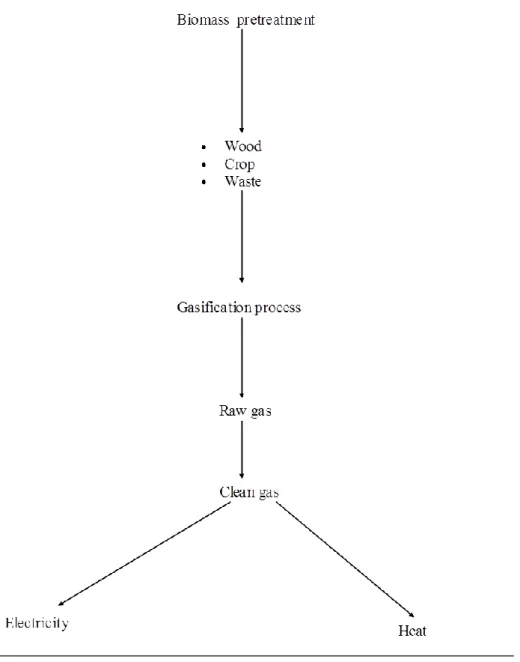
Figure 2.5 presents a flow chat of the gasification process from the pre-treatment stage of the biomass to the generation of electricity and heat from the process.
35
2.10 COAL
Coal is mainly formed as the result of slow metamorphosis of biomass over a long period of time. The degree of that metamorphosis is among the criteria used to determine coal rank. It is also classified according to the ratio of volatile to fixed carbon and the its heating value as well as the relative content of elemental carbon [Jayah et al., 2011]. South African coals are classified and ranges from high to low grade coal. High grade coal is washed and exported while low grade coal is screened and used locally for electricity generation and fine chemical production including oil. It has been reported that coal extraction implies non-renewable energy reserves depletion [Mangena and Brent, 2006].
Coals are organic sedimentary rocks derived from plant remains. The properties of coal reflect the nature of original plant materials (species and relative proportions of wood, buck and leaves). Coalification process: peat, lignite, sub-bituminous, bituminous and anthracite. The rate of coalification is influenced by the combined effects of increased temperature and pressure over an extended period. The organic components of plant material are principally cellulose and lignin. Coal is actually derived from lignin. Cellulose biochemically degrades to CO2 and H2O during accumulation. Petrographically, coal contains microscopically
identifiable components (macros). Lithotypes are classified into three macerals groups namely vitrinite (from wood), exinite (from pollen and plant waxes) and inertinite. Vitrinite is present in all coal, hence used as a measure of coal ranking e.g. reflectance measurements which increases with coal ranking from 0.3 % Peat (brown coal) to 2.5% in anthracite. For petrographic analysis of reflectance in coal is according to order:
36
2.10.1 THE PROPERTIES OF COAL
Coal is a naturally occurring combustible material consisting primarily of the element carbon, but with low percentage of solid, liquid and gaseous hydrocarbon and other materials such as nitrogen and sulfur. Coal is usually classified into the sub-groups known as anthracite (highest rank), bituminous, sub-bituminous, lignite (lowest rank) and peat. The physical, chemical and other properties vary considerable from sample to sample. Lignite has been widely used as electricity generation and heat, besides producing various refined chemicals. Structural characterization of lignite coal presented major challenges because of extreme complexity and heterogeneity of low rank coal [Meuzelaar et al., 1996]. The properties of coals as they occur today, reflects the nature and the original plant materials (species and relative proportion of wood, bark, leaves) and the conditions prevailing during, and subsequent to, accumulation period. The coalification process is believed to progress through the sequence: peat, lignite (brown coal), sub-bituminous, bituminous, to anthracite. The rate of coalification or increase in rank is influenced by the combined effects of increased temperature and pressures over an extended period, and build-up of overlying, low conductivity and mineral (organic) sediments. Cellulose and lignin are organic components of plant material [Durie, 1982]. A description of the different types of coal are provided in the following sub-sections.
2.10.1.1 LIGNITE
Lignite is the first product of coalification and is intermediate between peat and subbituminous coal according to the coal classification used in the United States and Canada. In many countries lignite is considered to be a brown coal. Lignite contains about 60 to 70 percent carbon (on a dry, ash-free basis) and has a calorific value near 17 megajoules per
37
kilogram (7,000 British thermal units per pound). It has been estimated that nearly half of the world’s total proven coal reserves are made up of lignite and subbituminous coal, but lignite has not been exploited to any great extent, because it is inferior to higher-rank coals (e.g., bituminous coal) in calorific value, ease of handling, and storage stability. In areas where other fuels are scarce, the production of brown coal far exceeds that of bituminous coal [Britannica Inc., 2014]. It has been reported that lignite coal (lowest rank) as much as it is used for electricity generation, it is also providing a variable target for CO2 sequestration and
potential for methane production from it is questionable [Botnen et al., 2009]. Lignite was reported to release proportionately more CO2 emission than other fossil energy carriers, and
coal will meet the requirements for sustainable climate protection [Thielemann et al., 2007].
2.10.1.2 SUB-BITUMINOUS
Sub-bituminous coal is a type of coal whose properties range from those of lignite to those of bituminous coal and are used primarily as fuel for steam-electric power generation. It may be dull, dark brown to black, soft and crumbly at the lower end of the range, to bright jet-black, hard, and relatively strong at the upper end. They contain 15-30% inherent moisture by weight and are non-coking (undergo little swelling upon heating) [Babcock & Wilcox Company, 2014]. Sub-bituminous coals may be dull, dark brown to black, soft and crumbly at the lower end of the range, to bright jet-black, hard, and relatively strong at the upper end. They contain 15-30% inherent moisture by weight and are non-coking (undergo little swelling upon heating) and . have heat content that range from 8300 to 11,500 BTu/lb or 19,306 to 26,749 kJ/kg [Babcock & Wilcox Company, 2014]. Their relatively low density and high water content renders some types of sub-bituminous coals susceptible to spontaneous combustion if not packed densely during storage in order to exclude free air flow. The heat content of sub-bituminous coals range from 8300 to 11,500 BTu/lb or 19,306
38
to 26,749 kJ/kg. Their relatively low density and high water content renders some types of sub-bituminous coals susceptible to spontaneous combustion if not packed densely during storage in order to exclude free air flow.
2.10.1.3 BITUMINOUS
Bituminous coal is a relatively soft coal containing a tarlike substance called bitumen. It is of higher quality than lignite coal but of poorer quality than anthracite coal. Bituminous coal is an organic sedimentary rock formed by diagenetic and submetamorphic compression of peat bog material. Bituminous coal has been compressed and heated so that its primary constituents are macerals vitrinite, exinite, and so on. The carbon content of bituminous coal is around 60-80%; the rest is composed of water, air, hydrogen, and sulfur, which have not been driven off from the macerals and its heat content of ranges from 24 to 35 MJ/kg on a moist,mineral-matter-freebasis [Princeton, 2014].
Bituminous coal is usually black, sometimes dark brown, often with well-defined bands of bright and dull material. Bituminous coal seams are stratigraphically identified by the distinctive sequence of bright and dark bands and are classified accordingly as either "dull, bright-banded" or "bright, dull-banded" and so on. The four most abundant minerals found in bituminous coals are quartz, kaolinite, illite and pyrite. Size and textural are important considerations as to whether coal cleaning can remove most sensitive trace elements [Palmer and Lyons, 1996].
2.10.1.4 ANTHRACITE
Anthracite is a hard natural coal of high luster differing from bituminous coal in containing less volatile matter and in burning very cleanly (called also hard coal). It contains higher
![Figure 1-1: Different routes of biomass conversion [Devi, 2005]](https://thumb-us.123doks.com/thumbv2/123dok_us/11084954.2995272/18.892.258.617.268.664/figure-different-routes-biomass-conversion-devi.webp)
![Figure 1-2: Pie graph showing various energy sources in South Africa [International Energy Agency, 2007]](https://thumb-us.123doks.com/thumbv2/123dok_us/11084954.2995272/21.892.168.728.102.459/figure-showing-various-sources-africa-international-energy-agency.webp)
![Figure 1-3: Overview of the gasification process [Mamphweli and Meyer, 2009]](https://thumb-us.123doks.com/thumbv2/123dok_us/11084954.2995272/22.892.112.794.101.303/figure-overview-gasification-process-mamphweli-meyer.webp)
![Figure 2-1: Molecular structure of cellulose [Bossel, 1980 and Jenkins et al., 1998]](https://thumb-us.123doks.com/thumbv2/123dok_us/11084954.2995272/28.892.129.765.119.619/figure-molecular-structure-cellulose-bossel-jenkins-et-al.webp)
![Figure 2-2: Molecular structure of hemicelluloses [Fengel and Wegener, 1984]](https://thumb-us.123doks.com/thumbv2/123dok_us/11084954.2995272/29.892.128.768.233.728/figure-molecular-structure-of-hemicelluloses-fengel-wegener.webp)
![Figure 2-3: Molecular structure of lignin [Safriti, 2005]](https://thumb-us.123doks.com/thumbv2/123dok_us/11084954.2995272/30.892.167.754.135.610/figure-molecular-structure-of-lignin-safriti.webp)
![Table 2-1: Biomass composition and chemical properties derived from ultimate analysis [Stretcher, 1984] Fuel VM (%) CV (MJ/kg) Ash C O H N CD 15.68 67.50 26.84 3.96 1.70 Ch-L 12.68 43.78 50.34 5.89 0.07 CS 15.81 39.61 52.79 6.74](https://thumb-us.123doks.com/thumbv2/123dok_us/11084954.2995272/31.892.99.796.186.567/biomass-composition-chemical-properties-derived-ultimate-analysis-stretcher.webp)
![Table 2-2: The properties of corn stover [Morey et al., 2009]](https://thumb-us.123doks.com/thumbv2/123dok_us/11084954.2995272/40.892.109.788.147.850/table-properties-corn-stover-morey-et-al.webp)
![Figure 2-4: Total biomass energy potential for South Africa [DME, Eskom and CSIR, 2001]](https://thumb-us.123doks.com/thumbv2/123dok_us/11084954.2995272/42.892.197.703.230.635/figure-total-biomass-energy-potential-south-africa-eskom.webp)