Multimodal Object Recognition
using Random Clustering Trees
M. Villamizar, A. Garrell, A. Sanfeliu and F. Moreno-Noguer{mvillami,agarrell,sanfeliu,fmoreno}@iri.upc.edu Institut de Robotica i informatica industrial CSIC-UPC
Barcelona - Spain
Abstract. In this paper, we present an object recognition approach that in addition allows to discover intra-class modalities exhibiting high-correlated visual information. Unlike to more conventional approaches based on computing multiple specialized classiers, the proposed ap-proach combines a single classier, Boosted Random Ferns (BRFs), with probabilistic Latent Semantic Analysis (pLSA) in order to recognize an object class and to nd automatically the most prominent intra-class appearance modalities (clusters) through tree-structured visual words. The proposed approach has been validated in synthetic and real experi-ments where we show that the method is able to recognize objects with multiple appearances.
Keywords: object recognition, random trees, clustering, boosting
1 Introduction
Computer vision is nowadays a very active research eld where it has made great strides in recent years, especially in the recognition of objects in images and videos. Currently, there exist methods that can detect and identify objects with outstanding results despite the large diculties present in this problem such as intra-class variations, 3D rotations, scaling, illumination changes [2,4,8,14].
However, most of these methods are based on complex algorithms that de-pend of a rigorous training and large object databases. Usually, these methods compute object detectors using a supervised and oine learning where time constraints and computational cost are not a big issue.
In order to compute ecient and robust object detectors, approaches based on randomized trees have been proposed in the past with outstanding results, especially in terms of eciency and reliability [9,7]. Particularly, these methods have been focused mainly on the fast matching of binary descriptors. Subse-quently, a robust and ecient classier for the detection of object classes was proposed in [16]. This method, called Boosted Random Ferns (BRFs), combines multiple extremely randomized trees (e.g Random Ferns [9]) using AdaBoost so as to select automatically the most relevant trees in one single classier.
Although this classier has shown remarkable results to detect objects with multiple intra-class modalities (e.g multiple object's views), this method is un-able to distinguish these modes automatically. For this purpose, methods based
II BRFs Image Sequence Online Classifier (a) (b) (d) T ra c k in g C lu s ter in g Clusters (f) C1 C2 C3 C la ss ifi er Classifier pLSA (e) Clustering Object Samples(c)
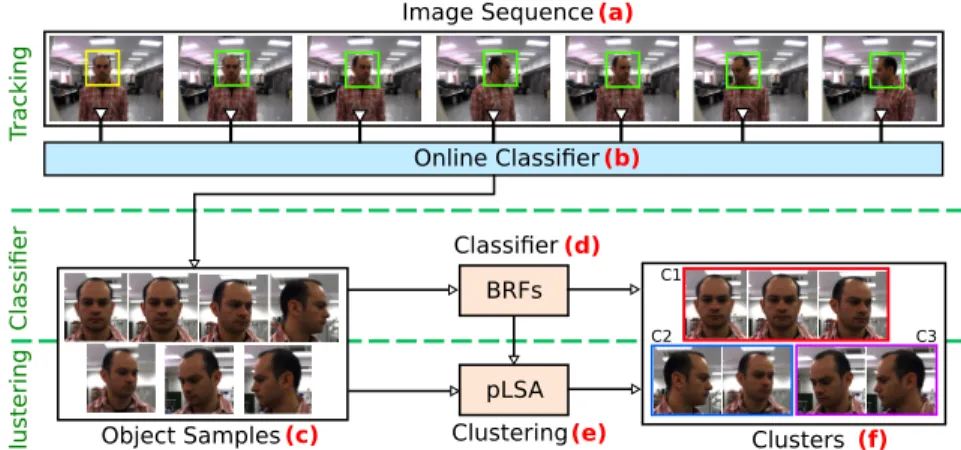
Fig. 1. Overall scheme of the proposed approach to compute object classiers using weakly supervised learning. In this approach only the rst frame is annotated manually. For clarity, this gure does not include background (negative) samples.
on the computation of multiple specialized classiers have been proposed, where each one is devoted to a particular appearance cluster [6,13]. However, these methods increase the complexity and computational cost of the detector since various classiers are considered during run time. Additionally, computing these classiers in a supervised learning require annotating all training samples with their corresponding appearance cluster. This task is cumbersome and tedious since it is usually carried out manually.
In this work, we present a more straightforward approach to recognize object appearance clusters (i.e, intra-class modalities) using weakly human supervision during the training phase. More precisely, the proposed method consists of three main stages, observe Fig.1. In the initial stage (object tracking), an online clas-sier is computed in order to detect and track the object through a sequence of images (Fig.1-a,b). This process is automatic and requires only the assignment of the object in the rst frame using a bounding box (yellow box). The result of this step is a set of training samples (images) of the object with dierent appearance (Fig.1-c). In the second stage (classier), a more robust classier (BRFs) is computed using the training samples (Fig. 1-d). Finally, in the third step (clustering), the training samples are clustered using probabilistic Latent Semantic Analysis (pLSA) [1,5,11] and the responses of the BRFs classier on the samples (Fig. 1-e). Fig. 1-f shows as example three clusters of training samples grouped according their visual similarity.
The method we present is a further step of the approach proposed in [3,12] for learning and detecting objects using human-robot interactions. Actually, this method corresponds to the tracking stage in Fig.1. In this work, we combine this method with BRFs and pLSA in order to detect and distinguish multiple object appearances. This is particular useful for robotics applications where knowing a specic object view allows to take actions. For example, for human-robot inter-action is important to determine whether people look at the robot (see Fig.1).
III xi xi xi F1 Fn ... xi xi xi xi F1 Fn ... xi 1 2 3 0 0 1 0 ...1 0 0 0 xi xi xi F1 Fn ... Vi = xi F1(xi)=2 0 0 1 2 3 F2(xi)=0 C p(F1(xi)=2) p(F2(xi)=0) B C B f1,1 f1,2 f1,2 fn,1 fn,2 fn,2
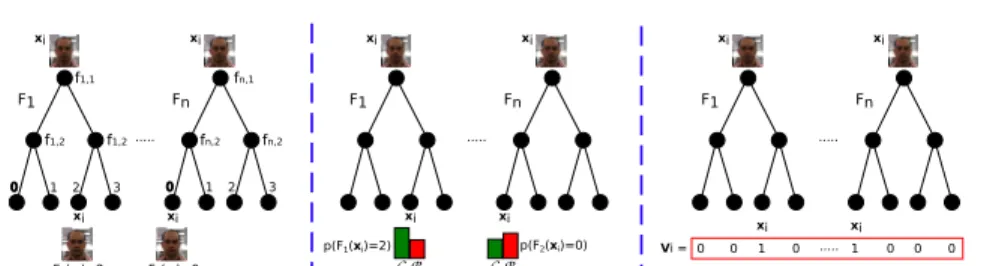
Fig. 2. Online classier used to detect and track the object trough an image sequence.
2 Proposed Approach
2.1 Object Tracking
The rst stage of the proposed method corresponds to perform object detection and tracking over an input image sequence, observe Fig. 1. The goal of this stage is to extract automatically a set of training samples which are used later to compute the object classier.
To track the object in every frame, we compute an online classier based on extremely randomized trees [9,12]. This classier is initialized using an ob-ject annotation provided by the user in the rst frame (Fig.1-a). Subsequently, the classier is computed and updated incrementally using their own detection hypotheses on new input images. This self-learning approach allows computing and adapting an object detector while discovers object instances in images.
More formally, the classier is comprised of a series ofN random ferns where
each fernFk computes a set ofM signed comparisons between pairs of intensity pixel values {fk,m}Mm=1, known commonly as binary features. Fig. 2-left shows for example the output of two fern instances over an input samplexi. We observe that the fern outputFk(xi)depends of the responses of the binary features. The co-occurrence of these features determines the tree leaf where the sample falls.
Once the response of each fernk is computed Fk(xi), the classier updates its class-conditional probabilities in each tree,p(Fk(xi)|C)andp(Fk(xi)|B), ac-cording whether the sample xi belongs to either the object C or background
B class. This is illustrated in Fig. 2-middle, where the input sample is used to
update the fern distributions. For further information about this online classier and its computation see [12,15].
2.2 The Object Classier
The object classier is computed using Boosted Random Ferns (BRFs) since they have demonstrated to be an ecient and robust classier for object recog-nition [16]. Further in detail, the object classier H(x)is built using a boosting
combination of weak classiershtwhere each is a random fernFtcomputed to particular object location(ut, vt). The classier is computed in order to nd the ferns and locations that most discriminate the object (positive) class from the background (negative) one. The computation of the classier is done using real AdaBoost, that iteratively assembles weak classiers and adapts their weighting values to focus all its eort on the misclassied samples from previous weak classiers [10].
IV Visual Words Training Samples 100 200 300 400 500 600 100 200 300 400 500 600 700 800 900 1000 0 0.1 0.2 0.3 0.4 0.5 0.6 0.7 0.8 0.9 1 0 0.2 0.4 0.6 0.8 1 0 0.1 0.2 0.3 0.4 0.5 0.6 0.7 0.8 0.9 1 x1 x2 1 2 3 4 5 0 0.2 0.4 0.6 0.8 1 0 0.1 0.2 0.3 0.4 0.5 0.6 0.7 0.8 0.9 1 x1 x2
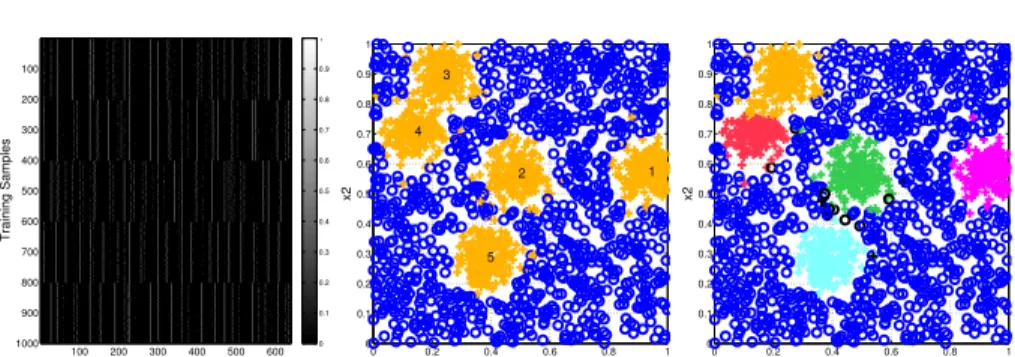
Fig. 3. Computation of object class clusters using pLSA. Left: table including the co-occurrence between training samples and visual words. Middle: two-class classication problem in 2D feature space. The positive class (crosses) has ve intra-class modalities. Right: output of the clustering stage to nd latent topics (sample clusters).
The object classier withT weak classiers is then dened as:
H(x) =
T
X
t=1
ht(x)> β , (1)
where xis a test sample,β is the classier threshold and ht is a weak classier computed by ht(x) = 1 2log p(Ft(x) =r|C) + p(Ft(x) =r|B) + , (2)
whereris the output of the fernFton the samplex,is a smoothing parameter, andBandCare the background and object class labels, respectively. In order to
extract the most discriminative weak classier at each iteration, the AdaBoost al-gorithm seeks for the fern that minimizes the distance between class-conditional probabilities,p(Ft(x)|C)and p(Ft(x)|B). For more information refer to [16]. 2.3 Clustering
With the aim of nding important internal structures of the object class without human supervision, we propose to use pLSA to discretize the overall appearance of the object in multiple clusters of samples with a strong feature similarity. More specically, pLSA is a generative model from the statistical text literature that allows discovering latent variables (topics) from a corpus containing co-occurrences between documents and words [1,5,11].
In this work, we use image samples and tree-structured visual words instead of text documents and words in order to nd the most relevant clusters of the object appearance (topics). The pLSA algorithm is suitable for this problem because it provides a statistical model that allows represent an object samplexi as a mixture ofK topics, p(wj|xi) = K X k=1 p(zk|xi)p(wj|zk), (3)
wherep(zk|xi)is the probability of topiczk occurring in the samplexi whereas
V
Classication Results Precision-Recall Plot Score Distributions
0 0.1 0.2 0.3 0.4 0.5 0.6 0.7 0.8 0.9 1 0 0.1 0.2 0.3 0.4 0.5 0.6 0.7 0.8 0.9 1 x1 x2 0.5 0.55 0.6 0.65 0.7 0.75 0.8 0.85 0.9 0.95 1 0.5 0.55 0.6 0.65 0.7 0.75 0.8 0.85 0.9 0.95 1 Recall Precision EER: 0.972 −1 −0.8 −0.6 −0.4 −0.2 0 0.2 0.4 0.6 0.8 0 0.005 0.01 0.015 0.02 0.025 Score Probability Positive Negative
Fig. 4. Left: 2D classication results provided by the BRFs classier. Crosses are posi-tive samples while circles indicate negaposi-tive ones. Black samples correspond to misclas-sied samples. Middle: classication plots using recall-precision curves and equal error rate (EER). Right: class score distributions for the positive and negative classes.
The pLSA computation is done using the EM algorithm and an input table containing the co-occurrence of training samples and the bag of visual words. Fig.3-left shows this table where the object samples have been ordered by cluster in order to distinguish visually the strong patterns in the corpus. For our case, we use the object samples extracted by the online classier, and dene that each fern leafjcorresponds to a particular visual wordwjsince it represents a specic conguration of binary features. This is shown in Fig. 2-right. For this simple example, the activated visual words (i.e, ones) co-occur with the input samplexi since this sample falls in the corresponding fern leaves.
Finally, in Fig.3-right we show the output of the clustering stage over a set of training samples using a 2D feature space with complex and multimodal class distributions (see Fig. 3-middle). In this gure, crosses are object or positive samples whereas circles make reference to background or negative samples. As a result, we can see that the positive samples are clustered inK=5 dierent
clus-ters, indicated through dierent colors, and that each one keeps strong feature correlation in the 2D space.
3 Experiments
3.1 Synthetic Experiments - 2D Classication Problem
The proposed approach has been evaluated in synthetic experiments in order to observe more clearly the performance of the method. Fig. 4 shows, for exam-ple, the output of the proposed method on a scenario generated at random in which two class distributions (positive and negative) with high complexity are considered. For this experiment, the method was computed usingK= 5clusters.
We see in Fig.4-left that the proposed approach achieves correctly classify most samples while discovers multiple intra-class modalities (indicated through clusters with dierent colors). The method only produces a small number of mis-classied samples (black ones). This result is also shown in the precision-recall curve (Fig.4-middle) where the method obtains a high equal error rate (EER). Moreover, the approach also increases the separability between classes and re-duces the risk of misclassication.This is observed in Fig.4-right where the class score distributions are shown.
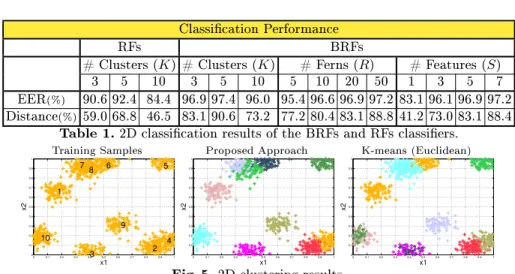
The table1shows the average classication results of the BRFs classier over
VI
Classication Performance
RFs BRFs
# Clusters (K) # Clusters (K) # Ferns (R) # Features (S)
3 5 10 3 5 10 5 10 20 50 1 3 5 7
EER(%) 90.6 92.4 84.4 96.9 97.4 96.0 95.4 96.6 96.9 97.2 83.1 96.1 96.9 97.2
Distance(%)59.0 68.8 46.5 83.1 90.6 73.2 77.2 80.4 83.1 88.8 41.2 73.0 83.1 88.4
Table 1. 2D classication results of the BRFs and RFs classiers.
Training Samples Proposed Approach K-means (Euclidean)
0 0.1 0.2 0.3 0.4 0.5 0.6 0.7 0.8 0.9 1 0 0.1 0.2 0.3 0.4 0.5 0.6 0.7 0.8 0.9 1 x1 x2 1 2 3 4 5 6 7 8 9 10 0 0.1 0.2 0.3 0.4 0.5 0.6 0.7 0.8 0.9 1 0 0.1 0.2 0.3 0.4 0.5 0.6 0.7 0.8 0.9 1 x1 x2 0 0.1 0.2 0.3 0.4 0.5 0.6 0.7 0.8 0.9 1 0 0.1 0.2 0.3 0.4 0.5 0.6 0.7 0.8 0.9 1 x1 x2
Fig. 5. 2D clustering results.
Each scenario is generated at random with multiple sample clusters (K). We see
that BRFs obtain high classication rates (EER) and large distances between classes when the amount of features (F) and ferns (R) gets larger. Here, we use
the Hellinger distance to measure the separability between Gaussian distribu-tions. The default parameters for this experiment areK= 5,R= 20andS= 5.
The table also shows a comparison, in terms of the number of clusters, of BRFs against its counterpart without using boosting (RFs). Observe that the BRFs classier attains the best performance rates.
Fig.5 shows the clustering results of the presented approach in comparison with the K-means algorithm. The left gure corresponds to the positive train-ing samples belongtrain-ing to 20-dimensional feature space. In this gure, we only plot the rst two feature dimensions (x1,x2). Fig.5-middle plots the clustering
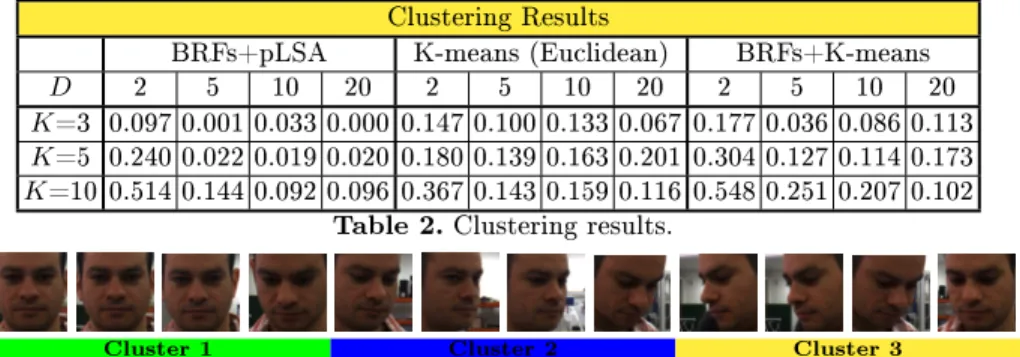
output of the proposed approach (BRFs+pLSA), whereas the right gure shows the results of K-means using Euclidean distance in the sample feature space. We can see that our approach yields good clustering results, in contrast to the K-means algorithm which produces some incorrect clustering labels (observed through the confusion of colors in clusters). Finally, table 2 shows the average confusion values in the clustering labels for varying numbers of clusters and fea-ture space dimensions (D). Here, we use as measure of confusion the entropy
function over the confusion matrix (using ground truth labels). The table also includes a BRFs+K-means approach using the Hamming distance. As a result, we observe that the proposed approach (BRFs+pLSA) produces low confusion values, especially for large feature spaces.
3.2 Real Experiments - Multi-view Face and Object Detection The proposed approach has also been tested to detect faces under multiple views, see Fig.7. This corresponds to a classication problem involving multiple intra-classes where each one is associated to a particular view. For this experiment, we have used two face sequences of the dataset proposed in [12], where each sequence contains more than 200 images. For training, we have used the rst
VII Clustering Results
BRFs+pLSA K-means (Euclidean) BRFs+K-means
D 2 5 10 20 2 5 10 20 2 5 10 20
K=3 0.097 0.001 0.033 0.000 0.147 0.100 0.133 0.067 0.177 0.036 0.086 0.113
K=5 0.240 0.022 0.019 0.020 0.180 0.139 0.163 0.201 0.304 0.127 0.114 0.173
K=10 0.514 0.144 0.092 0.096 0.367 0.143 0.159 0.116 0.548 0.251 0.207 0.102
Table 2. Clustering results.
Cluster 1 Cluster 2 Cluster 3
Fig. 6. Sample images showing three dierent face appearance clusters. Observe that samples belonging to the same cluster share visual similarities.
Fig.6 shows some samples images corresponding to K = 3 dierent
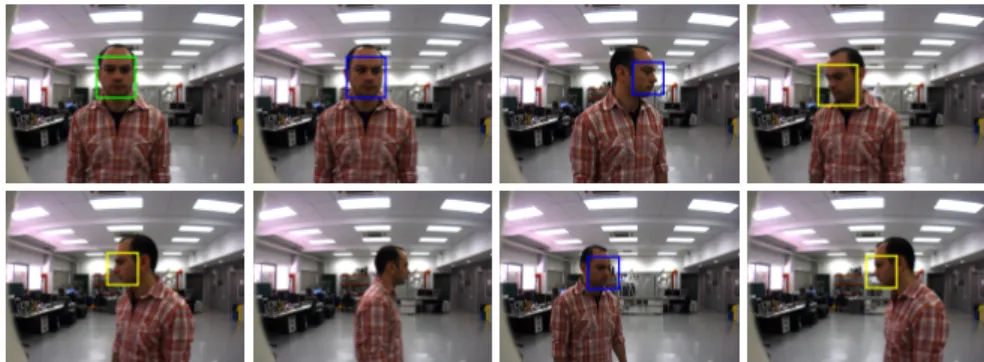
intra-class appearances modalities found by the proposed method during the training phase. We see that these samples share similar visual features and that the proposed method is able to cluster these samples using the output of a tree-structured classier. In Fig. 7 are shown some detection results on the test images. Note that the method is capable of detecting most faces at the same time that it can estimate the face pose. This is indicated in the images through colored boxes. This experiment reveals that the proposed method using a single classier can be used for pose estimation using the co-occurrence of visual words. Similar to the previous experiment, our method has been tested for object recognition. In this case, for detecting a toy car from multiple viewpoints us-ing K = 5 appearance clusters. Fig. 8 shows some example images where the
response of the classier is indicated by the bounding boxes and the color rep-resents the object cluster. We can see that the proposed method is able to dis-cretize automatically the overall object appearance in diverse modalities, each one corresponding to a particular object view.
4 Conclusions
In this paper, a weakly supervised learning approach has been proposed in or-der to compute an object classier that is able to identify multiple intra-class modalities. The proposed approach combines a tree-structured classier with a text document analysis algorithm so as to cluster the output of the classier. The approach has been validated in synthetic and real experiments.
Acknowledgments Work partially supported by the Spanish Ministry of Sci-ence and Innovation under project DPI2013-42458-P, ERA-Net Chistera project ViSen PCIN-2013-047, and by the EU project ARCAS FP7-ICT-2011-28761.
References
1. A. Bosch, A. Zisserman, and X. Muñoz. Scene classication via plsa. In ECCV. 2006.
2. P.F. Felzenszwalb, R.B. Girshick, D. McAllester, and D. Ramanan. Object de-tection with discriminatively trained part-based models. PAMI, 32(9):16271645, 2010.
VIII
Fig. 7. Face detection results provided by the proposed approach. The output of the classier is indicated by boxes whereas the face pose is shown through dierent colors.
Fig. 8. Object recognition results.
3. A. Garrell, M. Villamizar, F. Moreno-Noguer, and A. Sanfeliu. Proactive behavior of an autonomous mobile robot for human-assisted learning. In RO-MAN, 2013. 4. S. Hinterstoisser, V. Lepetit, P. Fua, and N. Navab. Dominant orientation
tem-plates for real-time detection of texture-less objects. In CVPR, 2010.
5. T. Hofmann. Unsupervised learning by probabilistic latent semantic analysis. Ma-chine learning, 42(1-2):177196, 2001.
6. T. K. Kim and R. Cipolla. Mcboost: Multiple classier boosting for perceptual co-clustering of images and visual features. In NIPS, pages 841848, 2009. 7. V. Lepetit and P. Fua. Keypoint recognition using randomized trees. PAMI,
28(9):14651479, 2006.
8. D.G. Lowe. Distinctive image features from scale-invariant keypoints. IJCV, 60(2):91110, 2004.
9. M. Ozuysal, M. Calonder, V. Lepetit, and P. Fua. Fast keypoint recognition using random ferns. PAMI, 32(3):448461, 2010.
10. Robert E Schapire and Yoram Singer. Improved boosting algorithms using condence-rated predictions. Machine learning, 37(3):297336, 1999.
11. J. Sivic, B. Russell, A. Efros, A. Zisserman, and W.T. Freeman. Discovering objects and their location in images. In ICCV, 2005.
12. M. Villamizar, A. Garrell, A. Sanfeliu, and F. Moreno-Noguer. Online human-assisted learning using random ferns. In ICPR, 2012.
13. M. Villamizar, H. Grabner, J. Andrade-Cetto, A. Sanfeliu, L. Van Gool, and F. Moreno-Noguer. Ecient 3D object detection using multiple pose-specic clas-siers. In BMVC, 2011.
14. M. Villamizar, A. Sanfeliu, and J. Andrade-Cetto. Orientation invariant features for multiclass object recognition. In CIARP, 2006.
15. M. Villamizar, A. Sanfeliu, and F. Moreno-Noguer. Fast online learning and de-tection of natural landmarks for autonomous aerial robots. In ICRA, 2014. 16. Michael Villamizar, Juan Andrade-Cetto, Alberto Sanfeliu, and Francesc
Moreno-Noguer. Bootstrapping boosted random ferns for discriminative and ecient object classication. Pattern Recognition, 45(9):31413153, 2012.