ScholarWorks @ UTRGV
ScholarWorks @ UTRGV
Information Systems Faculty Publications and
Presentations Robert C. Vackar College of Business & Entrepreneurship
10-2020
Decision Framework for Engaging Cloud-Based Big Data Analytics
Decision Framework for Engaging Cloud-Based Big Data Analytics
Vendors
Vendors
Emmanuel Wusuhon Yanibo Ayaburi The University of Texas Rio Grande Valley Michele Maasberg
Jaeung Lee
Follow this and additional works at: https://scholarworks.utrgv.edu/is_fac
Part of the Business Commons
Recommended Citation Recommended Citation
Ayaburi, Emmanuel Wusuhon Yanibo, Michele Maasberg, and Jaeung Lee. 2020. “Decision Framework for Engaging Cloud-Based Big Data Analytics Vendors.” Journal of Cases on Information Technology (JCIT) 22 (4): 60–74. https://doi.org/10.4018/JCIT.2020100104.
This Article is brought to you for free and open access by the Robert C. Vackar College of Business &
Entrepreneurship at ScholarWorks @ UTRGV. It has been accepted for inclusion in Information Systems Faculty Publications and Presentations by an authorized administrator of ScholarWorks @ UTRGV. For more information, please contact [email protected], [email protected].
DOI: 10.4018/JCIT.2020100104
Copyright©2020,IGIGlobal.CopyingordistributinginprintorelectronicformswithoutwrittenpermissionofIGIGlobalisprohibited.
Decision Framework for Engaging
Cloud-Based Big Data Analytics Vendors
Emmanuel Wusuhon Yanibo Ayaburi, University of Texas Rio Grande Valley, USA Michele Maasberg, Louisiana Tech University, USA
https://orcid.org/0000-0003-4306-0559 Jaeung Lee, Louisiana Tech University, USA
ABSTRACT Organizationsfacebothopportunitiesandriskswithbigdataanalyticsvendors,andtherisksarenow profound,asdatahasbeenlikenedtotheoilofthedigitalera.Thegrowingbodyofresearchatthe nexusofbigdataanalyticsandcloudcomputingisexaminedfromtheeconomicperspective,based onagencytheory(AT).Aconceptualframeworkisdevelopedforanalyzingtheseopportunitiesand challengesregardingtheuseofbigdataanalyticsandcloudcomputingine-businessenvironments. Thisframeworkallowsorganizationstoengageincontractsthattargetcompetitiveparitywiththeir service-orienteddecisionsupportsystem(SODSS)toachieveacompetitiveadvantagerelatedto theircorebusinessmodel.Auniquecontributionofthispaperisitsperspectiveonhowtoengagea vendorcontractuallytoachievethiscompetitiveadvantage.Theframeworkprovidesinsightsfora managerinselectingavendorforcloud-basedbigdataservices. KEywoRDS
Agency Theory, Big Data Analytics, Cloud Computing, Competitive Advantage, Competitive Parity, E-Business
INTRoDUCTIoN
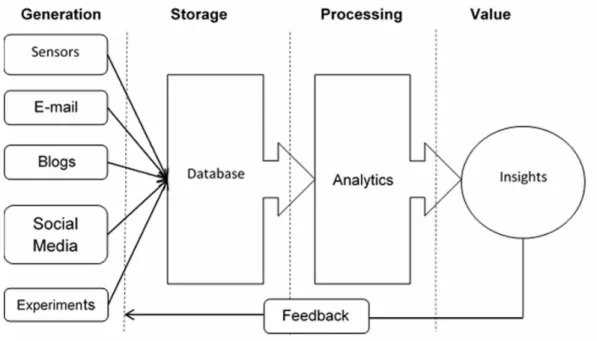
Theproliferationofmobiledevicesandtheabilityofalmostanyelectronicdevicetoconnecttothe Internethavesignificantlyincreasedtheamountofdatageneratedbybusinessesdaily.Thisincrease inthemagnitudeofdataiscalledbig data(Hashemetal.,2015);itisdifficulttostore,process,and analyzeusingtraditionaltools,suchasrelationaldatabases.Bigdataisdistinguishedfromtraditional databyvolume,velocity,variety,veracity,andvalue(Marr,2015).Thesecharacteristicshelpbusiness managerstomakeimportantdecisionsinrealtime(Höchtl,Parycek,&Schöllhammer,2016).The natureandoriginofthesecharacteristicscanbeexplainedbythedatalifecyclewhereabusiness collects,stores,processes,andmakesmeaningoutofthedataattheirdisposalfromgenerationto insight.Figure1illustratesatypicaldatalifecyclewhereabusinessusestheinsightsobtainedfrom theprocesseddatatogathermoredata.Thedatalifecycleprocessleadstochallengesthattypical
businessesdonotfaceintheirdailyoperationsindealingwithbigdata,oftenprohibitinginsightsif thebusinessisunpreparedtohandlethem. Manyorganizationsareunabletomanagetheirexistingsmallerdata,andbigdataaddsalayer ofcomplexity,ascapabilitiesarenecessarywithanalyticsandstorage(Troester,2012).Thus,despite thepervasivenessofbigdatatechnologies,manye-businessfirmsareunabletoachievetheelusive statusofsuccess(Gupta&George,2016). Thisstudypositsthatoneexplanationfororganizationsmissingoutonthesuccessofbigdata relatestothenatureandeffectofthecontractbetweenvendorsprovidingcloud-baseddataanalytic servicesandclientsreceivingthoseservices.Amongtheopportunitiesforbigdataandanalyticsin thecloudisanecosystemconceptuallyreferredtoasaService-Oriented Decision Support System (SODSS).DemirkanandDelen(2013)suggestthatvaluecanbecreatedthroughtheimplementation ofaccruedknowledgefromtheinteractionsofservicesystemsthatinvolvepeople,technology, organizations,andsharedinformation.Therearechallengesasvendors,usuallythirdparties,are requiredtomanagetheseprocessesunlessthecorecompetencyoftheorganizationistechnology, particularlyrelatedtobigdata,analytics,andthecloud.Thisstudycomplementspriorstudiessuch asPakath(2015)andYu(2016)thatprovideinsightsforbusinessestocreatevaluefrombigdata analytics.Thisstudyseekstoenhanceunderstandingofeconomicbenefitsofanalyticsliteratureby investigatingthefollowingresearchquestions: Question 1:Whatchallengesdoe-businessorganizationsfaceinusingcloud-basedbigdataanalytics? Question 2:Whatdecisionfactorsshoulde-businessorganizationsconsiderintheircontractswith agentsregardingcloud-basedbigdataanalyticstoachievecompetitiveparity? Question 3:Howshoulde-businessorganizationsmanagetheircontractswithcloud-basedbigdata analyticsvendors? Inresponsetothesequestions,thisstudydevelopsatheoreticalframeworktounderstandthe opportunitiesandchallengesofbigdataanalyticsincloudcomputingfore-businesses(Amit&Zott, Figure 1. Data life cycle
2001)fromaneconomicperspectivetomaximizecompetitiveparity(Mata,Fuerst,&Barney,1995). Thefindingsprovideinsightstoe-businessfirmsintohowtheycanmakethemostfromthepotential dataavailabletothemandunderstandthechallengesintheprocess,particularlytheirdecision-making regardingthetypeofvendorforbigdata.Therateofadoptionofdataanalyticstoolssuggeststhatmost firmswouldcontinuetousetheservicesofthird-partyvendors.Anexaminationofclientdecisions andissuesincontractingvendorsreducesuncertaintiesinadoptinganalytics.
BACKGRoUND: CLoUD-BASED DATA ANALyTICS CHALLENGES Data Scalability and Availability
Theriseofbigdata,fromtheproliferationofsensorsandtheabilitytomeasurethingsatminutelevels, hasledtotheproductionofpetabytesofdatainalmostallkindsofelectronicbusiness.Muchofthis dataisoflittleinterestandshouldbefiltered.Cloudprovidersstilllackround-the-clockserviceasthey experienceoutages,notableamongtheseisthefamousAmazonWebServices(AWS)2012outage (Williams,2012).Thisplacesextraresponsibilityone-businessfirmstomonitortheirservices.Some businessesuseinternalorthird-partytoolstosuperviseusage,ServiceLevelAgreements(SLAs), performance,robustness,andbusinessdependency. Data Integrity Thedatagatheredinelectronictransactionsdonotalwayscomeinaformthatcanbeeffectively analyzed.However,collectingdataattheoriginalsourcesandaggregatingthemcanbeatechnical challengeformoste-businessfirms.Therefore,generatedbigdatamightnotalwaysbegivingaccurate information.Forexample,reviewerssometimesmisinformotherreviewers,andcustomerservice personnelmaynotprocesscustomercomplaintstheydeemdetrimentaltotheirjobs.Thispresents challengesregardingthevalidityofgathereddata. Data Quality Bigdatacanbehighlynoisy,dynamic,untrustworthy,inter-related,andheterogeneous(XindongWu, XingquanZhu,Gong-QingWu,&WeiDing,2014).Nonetheless,bigdataisstillvaluablebecause informationobtainedfromtheanalysisofdataorwebminingusuallyempowersindividuals,leading tothediscoveryofhiddenpatternsandknowledge.Informationredundancycanhelpcompensatefor missingdataandenhancetheefficiencyoftheseanalyses.Thevalueofbigdataanalysisine-business isenhancedifanalysiscanbedonerobustlyunderdifficultconditionssuchaslimiteddata.The qualityoftheneededinformationdependsontheabilitytocoordinatedisparatedatabasesystems. Despiteadvancesincloud-basedanalytics,gatheringhigh-qualitydatafrome-businesssitesisstill achallenge(XindongWuetal.,2014). Loss of Control Someconcernsofe-businessfirms’transitioningtocloud-basedbigdataanalyticsincludesecurity andprivacyofcustomerdata(Chen,Chiang,&Storey,2012).Thisisbecausedatathatresides outsidethecorporatefirewallpresentsdataowners’challengesintheexerciseofcontroland oversightindataprotection.Cloudinfrastructurehackingcanaffectmultipleclients.E-business firmswouldhavetoincurextracosttopurchaseadditionalsecurityapplicationsandencryptfiles acrossseveralservers(Chenetal.,2012). Lock-In SLAofsomecloud-basedbigdataanalyticsprovidersmaybeinadequatetoguaranteeavailability, scalability,andeaseofdatamobility(Subashini&Kavitha,2011).Thus,somee-businessfirmsmay havejustifiedconcernswhenthingsthatarenotundertheircontrolgowrong.Thelossofcontrol
overdatatothecloudproviderisavalidconcernwhentheaccountabilityforthesafety,security, andproperuseofitsbusinessdataarepoorlynegotiatedincloud-basedbigdataanalyticscontracts (Subashini&Kavitha,2011).Onekeyrecommendationforselectingtheserviceproviderisforan e-businessfirmtohaveanalternativeforclouddisasterrecovery,incasethedisasterisabankrupt serviceprovider(Behrendetal.,2011).Thisreducestheirexposuretobeinglockedintooneprovider.
THEoRy AND DECISIoN FRAMEwoRK FoR ECoNoMIC ANALySIS Agency Theory in Cloud-Based Big Data Analytics for E-Business
Agency Theory (AT)dealswithissuesthatarisewhentwoormorepartiesareengagedinatransaction inwhichadecisionmadebyonepartyaffectstheotherpartiesinthetransactions.Actionsanddecisions byvendorsofbigdataanalyticsaffecttherelationshipwithe-businessfirms.AThighlightsissuesof goalincongruencebetweenanagent(cloudbigdataanalyticsvendorsandbrokers)andaprincipal (e-businessuserfirms).Somehaveapplieditinotherareas,suchasunderstandingoutsourcing relationships(Tiwana&Bush,2007).ATsuggeststhatinformationasymmetryistheunderlyingkey tounderstandingprincipal-agentproblems,astheagentisassumedtopossessprivateinformation aboutthetypeandnatureofcloud-basedbigdataanalyticsservicesthattheprincipalisnotprivyto, orcanonlybeabletoacquirewithaddedcostandeffort.Institutingbehavioralandoutcomecontrols incontractsassuggestedbyATtoprotecte-businessclientswillonlybesuccessfuliftheprincipal (clientfirm)canconfidentlyspecifycurrentandfuturerequirementsfortheprivacyandsecurityof itsdatagenerationandanalyticactivities.Extrademandsfromprincipalswillnotalwaysbeinthe agent’s(serviceproviders)interestsasitrequireschargingtheclientextraforanythingthatisnotin thecontract.Thatwillultimatelyaffecttheprovider’sprofitability(Gottschalk&Solli‐Sæther,2005). Withtheinabilitytonegotiateacontractthatcoverseverypossiblesituation(Bakos&Brynjolfsson, 1993),somecloud-basedanalyticsproviderscouldhidebehindtheirinefficienciestofullydeliver theirsubstandardservices,suchasinsecurevirtualization.Providersmayblameanynon-favorable outcomestooutsideforces. Agents Cloud Vendors Clientfirmsusingcloud-basedservicessuchasInfrastructureasaService(IaaS)canpayforexactly theamountofserviceused,similartoelectricity,water,andstorageservices.Thisabilitytopayas neededenablesfirmstostoremoredatageneratedduringtheiroperationwithouthavingtoworry aboutlimitationstotheirphysicaldevices.Asaresult,datacanbegeneratedinlargevolumesandat afasterratethanbefore.Thus,thebigdataphenomenonislargelydrivenbytheabilityoffirmsto generateandstoredatawithlittleornoconstraints.SomeexamplesofIaaSprovidersincludeAWS, whichofferscomputationandstorageservices,WindowsAzure,whichisbelievedtobeanaturalfit forclientsworkingonMicrosoftplatforms,GoogleCloudStorage,GoogleBigQeury,andGoogle CloudSQL.Additionally,GoogleComputeEngineisalsotoutedtobebestsuitedforbigdata, datawarehousing,high-performancecomputing,andotheranalytics-focusedapplicationssuchas RackspaceOpenCloud,IBMSmartCloudEnterprise,andHPEnterpriseConvergedInfrastructure. Cloud Brokers/Integrators CloudServiceBrokerage(CSB)functionsasintermediariesbetweenclientfirmsandcloudservice providers.Theintermediaryservicesprovidedbythesebrokeragesincludeaggregatingmultiplecloud servicesandintegratingcloudserviceswithin-houseapps.Insomeinstances,thesebrokeragesprovide customizablecloudservicestomeettheneedsofclients.ThethreerolesforCSBsareaggregation, integration,andcustomization.ACSB-as-aggregatorpullstogethermultiplecloudservicesand providesthemtotheendcustomer,essentiallyactingasareseller.Theintegrationrole,meanwhile,
callsforthebrokertolinkcloudservicesandon-premisessystemswhilecustomizationinvolvesthe tweakingofcloudservicestomeetthecustomer’sneedsorthecreationofapplicationstoruninthe cloudsetting.SomeexamplesofbrokersincludeAWSMarketplace,DellBoomi,RackspaceCloud ToolsMarketplace,SoftChoiceCloud,andSaaSMax.AnnualITspendingontheseCSBservicesis forecastedtoreachapproximately$160billionby2018(Gartner,2015).
Cloud-Based Big Data Analytics Contract Challenges
Agent Underperformance E-businessfirmsexpectthecontinuousprovisionofcloudservicesyear-roundtodeliverflawless servicestotheirclients.ThesegoalswillbehamperedseverelyiftheirITinfrastructureisunavailable sincetheirentireoperationisonline.ContractsintheformofSLAsofmostcloudproviderssuchas AWSpromise99%availabilityandwithapromisetopayforanydowntime(AmazonWebServices, 2013).However,thesecomewithcaveatssuchasestablishingthecauseofdowntimetobereasonably withintheserviceprovider’scontrol,promptingsomeindustryexpertssuchasGartnerresearchers todescribesuchcloudSLAsashavinglittleusefulness.Itis,therefore,verypossibleforservice providerstoblameunderperformance,fromserviceoutagestothecaveatsintheirSLAs,tominimize theirlosses.AcaseinpointisthefamousoutageofAWSfor23hoursaffectingservicetoNetflixand otheronlinebusinessesaroundChristmasEvein2012whenmediaserviceproviderssuchasNetflix areinpeakdemand.AWSattributedthischallengetofailuresinitsloadbalancersandofferedits standardapologiestomakeupforit(Mann,2013).Therefore,itischallengingfore-businessfirms tograciouslyhandovertheirmission-criticalservicestothird-partycloud-basedbigdataanalytics vendorsforfearitmightgodownforalmostawholedaywithimmeasurablenegativeconsequences andnocompensation.Firms’inabilitytoassessvendors’capabilitiesandSLAcaveatsproperly createsasymmetriesininformation,whichleadstoheightenedchancesofmoralhazards(Pallas, 2014).E-businessfirmsbearmoreriskthanserviceprovidersinthesetransactions.Priorstudies, suchasMao,Lee,&Deng,(2008)suggestthatclientfirms’trustinorcontroloverthevendorcould improvetheperformanceofthevendor. Agent Shirking Cloud-basedbigdataanalyticsoperateunderthepremisethatintegratedresourcesarebetterused thandisparateonesbecauseusershavevaryingdemandsforcomputingresourcesatdifferent times.Aggregatingthesecomputingandanalyticdemands,serviceproviderscanmeettheneedsof manye-businessfirmswithlimitedresourcescomparedtoeachfirmhavingtheirowncomputing resources.Thisisnominortaskforserviceproviders,astheyneedtoaccuratelypredictuser requirementsandinvestinanalytic,server,spare,andbackupcapacitiesinanoptimalmanner.Excess investmentsintheseareasmeansincreasedcostsforvendors,whichultimatelygettransferredto thee-businessfirmsrequiringtheirservices.Thus,cloudvendorsareinaconstantdilemmaabout theirinvestmentsincapacity,sincetheirgoalistomaximizethebenefitsfortheirshareholders andnottheirclients.Thiscreatesinformationasymmetriesabouthowtoguaranteeservicesfrom adequateservercapacity/backupsandmaximizingvendorprofits.Clientsunawareofthesecapacities couldencouragevendorstoshirkingtheirresponsibilitytoprovidebackupsforclients,asstated inmostSLAs.Vendorsexpectclientstoattributepoorservicestoaspikeindemandforservices frommultipleclients.Forinstance,Nirvanix,acloudstorageserviceheadquarteredinSanDiego, inpursuitoftheirsingulargoalofmaximizingvalueforitscreditors,shirkedtheirresponsibility toprovidecontinuousstorageservicestotheirclientsasstatedintheirSLAanddecidedtoclose theirservicesbyfilingchapter11bankruptcyprotections(Lowe,2013).Althoughalternativeplans weremadetotransferitscustomerstoIBM,mostoftheirclientswereunawareofprioractions oftheirprovidersuntiltheyreceivedtheirtwoweeks’notice.Littlethoughtwasgiventohowthe changeofserviceproviderswouldimpacttheirclients’business.
Data Poaching and IP Theft Asthesee-businessfirmssharethesameresources,vendorsmustprovideanotherlayerofsecurity suchthatrivalfirmsdonothaveaccesstodataofacompetitor.Increaseddatafederationand protectionoffirmdataincreasetheoperationalcostofvendorsasthereistheneedtomonitordata centersconstantlyforbreaches.However,userfirms,suchase-businessfirmslocatedinEurope,are requiredbytheEuropeanUnion(EU)regulationstostoretheirdatawithintheEU.Forinstance,as ofOctober2015,itisillegalforstorageproviderstotransferdataoutcomesfromtheEUtotheUS, evenifthatisaneconomicallyviableoptionleadinggiantcloudvendorssuchasAWSandFacebook tostartbuildingfull-scaledatacentersinEurope(Drozdiak&Schechner,2015).Forexample,Box. com,anonlinefilesharingandpersonalcloudcontentmanagementserviceforbusinesseshandeda user’sentireaccountovertoastranger,whoremovedtheclient’saccount(Tynan,2013).Although Box.comwasabletofindthecauseandimplementnewprocedurestopreventfutureoccurrence,this humanerrorheightenstheconcernofmoralhazardsfore-businessfirmswantingtoadoptcloud-basedbigdataanalytictools.Forexample,rivalfirmsinEuropecouldenduphavingtheirdatastored nexttoeachotherinthesamedatacenter,andifthedatacentersuffersfrom“Box.comsyndrome,” theconsequencecouldbefarmoredisastrous.Thus,thefearofIPtheftisrealfore-businessfirms. Vendors’motivationtoprovidethisadditionallayerofprotectioninadditiontobuildingdatacenters containedwithinageographicallocationremainsanopenquestion.Consideringthechallenges discussedhere,thisstudyproposesthat: Proposition 1:E-businessfirmswillbemorelikelytousecloud-basedbigdataanalyticsservices whenbrokersandvendorsshowcompetenceinhandlingcontractualchallenges. Transaction Challenges Transaction Costs Transactioncostsarisebecauseitisimpossibletowriteacomprehensivecontracttocoverall possiblesituations,givingrisetosubsequentrenegotiationswhenthebalanceofpowerbetweenthe transactingpartiesshifts(Williamson,1979).Iftransactioncostsoffsetproductioncostadvantages oftheexternalsupplier,thefirmsubsumestheactivity.UsingTransactionCostEconomics(TCE) astheirtheoreticalbasisforargument,Ang&Straub(1998)concludedthatthesourcingdecisionis oftenseenasarationaldecisionmadebyfirmsthathaveconsideredtransaction-relatedfactorssuch asassetspecificity,environmentaluncertainty,andothertypesoftransactioncosts.Wheneveran activityisconductedunderconditionsofhighuncertainty,orwheneveranactivityrequiresspecific assets,transactioncosts,thecostsofwriting,monitoring,andenforcingcontractsarelikelytobe high.Whentransactioncostsarehigh,outsourcingisdeemedtoberelativelyinefficientcompared withinternal,hierarchicaladministration(Gottschalk&Solli‐Sæther,2005).Increasedlegislation aboutthestoragelocationofclouddatahasbeenaglobalissue.Therefore,thedirectandindirect expenses(TCE)ofnegotiating,monitoring,andenforcingexplicitandimplicitcontractsbetweena clientfirmandcloudbigdataanalyticvendorswillguidetheinitialdecisiontousecloud-baseddata analyticservices(Tiwana&Bush,2007). Network Externalities Anexternality,orspillovereffect,isacostorbenefitthatisincurredbysomeonewhoisnotinvolved inthetrade.Positivenetworkexternalitiesareaformofbenefitarisingfromanetworkwhenthevalue ofaddinganextranodeoredgeisfeltbyeveryotherpartofthenetwork(Liu,Gal-Or,Kemerer,& Smith,2011).Technologicalchangesthatallowustoconnectandsharedatamoreeasilyaredisrupting establishedbusinessmodels.Networkexternalitiesoccurinthecaseofdatabecausedataisonly informativewhenitisinterpreted.Thevalueofeachdatumincreaseswiththevolumeofotherdata
thatitmaybeconnectedwithasthecontextandrangeofanalysisthatispossibleincreases(Gower, 2012).Thishaspromptedsometoadvocateforopendata.Thisisbecausedataistypicallynon-excludable,implyingthatprohibitingthesharingofdatainmanycasesispracticallyunenforceable. Switching Costs Gottschalk&Solli‐Sæther,(2005)concludedintheirstudyofcriticalsuccessfactorsofIToutsourcing thatorganizationscanminimizetransactioncostsbyrelyinglessonspecificITassets,increasing transactionfrequency,andreducingcomplexityanduncertaintyinITtasks.However,softwarestacks incloudcomputinghaveimprovedinteroperabilityamongplatforms,butwithlittlestandardization, mostofthestorageAPIsforcloudcomputingarestillproprietaryoratleasthavenotbeenthesubject ofactivestandardization(Armbrustetal.,2010).Thus,clientfirmswhousecloud-basedbigdata analyticscannoteasilyextracttheirdataandprogramsfromonesitetorunonanotheroreasilyswitch betweenserviceproviders.Concernaboutdata-lock-inispreventingsomeorganizationsfromadopting cloudcomputing.Althoughlock-inisdesirabletoserviceproviders,clientfirmsaresusceptible topriceincreasesandreliabilityproblemsbecauseofincreasedswitchingcosts.Forinstance,on August8,2008,onlinestorageserviceprovider,TheLinkup,formerlyknownasMediaMax,could notaccountfor45%ofcustomerdataafteritshutdownduetofailureintheirattempttomovefiles ofover20,000customerstoadifferentplatform(Brodkin,2008).
Adverse Selection and Incomplete Contracts
Adverseselection,arelatedagencyproblem,couldoccurwhentheanalyticsserviceproviderhas relevantprivateinformationunknowntoitsclients.Theasymmetryofinformationmayleadan e-businessfirmtomakebaddecisions,suchasdoingmorebusinesswithlessprofitableorriskier cloudproviders.Usually,theshorterthetimeframeoftheservicearrangement,thelesstimeeachparty willinvestinwritingacontract.Fortheuncertaintyofthefuture,ifathirdpartyservicearrangement isforalongtime,partieswillinvestmoretimedesigningcontractsthatwillprotecttheirfuture bargainingpowers(Holdup)subsequentlyresultinginthewritingofanextensivecontract(Susarla, Subramanyam,&Karhade,2010).Thus,theSLAbetweenclientfirmsandserviceprovidersmight notcoveraspectsoftheusageofcloud-basedbigdataanalyticsleadingtoanincompletecontract (Bakos&Brynjolfsson,1993).Thepotentialadverseselectiononthepartofe-businessfirmsor issuesarisingfromtheincompletenatureofthecontract(SLA)couldleadtohigherswitchingcosts ortransactioncostsforclientfirms(Tuttle,Harrell,&Harrison,1997).Thissuggeststhat: Proposition 2:Thehigherthelevelofnetworkeffectsgeneratedusingcloud-basedanalytics,the lesslikelythee-businessorganizationwillbeconcernedabouttransactionuncertaintysuchas possibleswitchingcostoradversevendorselection. Countermeasures Monitoring ATgenerallyfocusesonproblemsofprovidingincentivesinavarietyofsettings(McAfee&McMillan, 1986,1987).Tomitigatethemoralhazardproblemscausedbyagents,principalsimplementincentive-basedcontractsthatcompensateagentsbasedonobservableoutcomes.Incentivemechanismsand monitoringofanycontractresultinthereductionofuncertainty,especiallywheninformationis constantlyupdatedoverthecourseofthecontract.Benchmark,asaformofmonitoringagentactions, canhelpreduceuncertaintyaboutthecapabilitiesofvendorsandtheconsequencesoftheiractions. Althoughcloudvendorshaveinformationaboutthequalityoftheircloud-baseddataanalytictools indatageneration,integration,securitycontrols,andstatusofthestandardsoftheirtechnologies, userclientfirmsmightlacktheappropriatecapabilitytoassessthesecapabilities.Industryexperts suchasGartner,IDC,Forrester,andTalkinCloudarebetterpositionedtoevaluatethecapabilities
andbehaviorsofvendorsthanuserfirms.Theseindustryexpertsannuallyevaluatevendorsandrank vendorsinreportssuchastheGartnermagicquadrantandtheTalkin’Cloud100Report(e.g.,Gartner magicquadrant2014and2015andTalkin’Cloud100Report2014and2015).Astheaudiencesof thesereportsincludebigclientfirms,vendorswillimplementsystemsthatproducequalityinformation touserfirms,ratherthanperuseopportunisticbehaviortothedetrimentoftheiruserclientfirms. Vendorswilltrytomaintaingoodratingsinthesereportstoattractbusiness,gainthetrustofpotential clients,andavoidthenegativeeffectlowrankingwillhaveontheirstocks.Also,thevendorfirm leadershipgetsextracompensationforachievingormaintaininggoodrankings.
Screening and Signaling
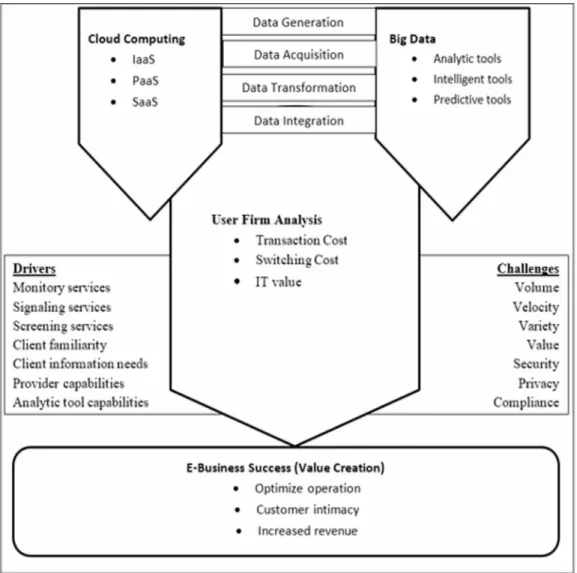
Thirdpartycloud-baseddataanalyticsisaformofoutsourcing.Likefirmsengagedinoutsourcing contracts,e-businessfirmsusingcloud-basedanalyticsarealsoconfrontedwiththeissueof incompletecontractsinguidingthebehaviorofpartiesinvolvedinthetransaction.Vendorsaiming atmaximizingtheirrevenuemightoverselltheircapabilities,orclientsmightnotbeabletofully documenttheiranalyticsneedsasthesemaychangeovertime.Informationasymmetryorincomplete contractscouldgiverisetoagencyproblems.ATsuggeststhataprincipalcouldreduceitschances ofsufferingopportunisticbehaviorproblemsbyhavinganappropriatecontractthatreducesthe informationasymmetrybetweenthemandtheirvendors(Eisenhardt,1989).Itisinthecraftingof thesecontractsandtheactualimplementationofthesecontractsthattheexpertiseofBrokersand Integratorsofcloud-basedbigdataanalyticsarenecessary. Basedontheinformationandservicesprovidedbybrokersandintegrators,userfirmscanpick upsignalsaboutthepotentialofvendorsandscreenoutvendorsthatwilllikelydeliverunsatisfactory results.Effectivesignalsallowbrokersandvendorswhodeliverqualityservicetodifferentiatefrom thosewhodeliversubstandardservice(Pavlou,Liang,&Xue,2007).Therefore: Proposition 3:Themoreefficientthecountermeasures(i.e.,monitoring,signaling,andscreening) areintheindustry,thelesslikelye-businessfirmwillbeconcernedaboutcontractswithvendors andtheanalyticsservicessourcedinthecloud. Figure2displaysaproposedtheoreticalframeworktoassistfirmsinmakingthebestdecision intheuseofcloud-baseddataanalyticscomplementedbypropositions1–3thatresultsinincreased efficiencyinoperation,betterrelationshipwithcustomers,andincreasedrevenueinthedecision-makingprocess. FRAMEwoRK EVALUATIoN
Vendor Denologix and Clients MANULIFE, AVIVA, and BMo Bank Group
Althoughtherearemanydifferentbigdataanalyticsvendors,thevendorsthatsuccessfullymanage contractualrelationshipswiththeirclientswilldominatethemarket.Forexample,Denologixclients haveenjoyedsuccesswiththeirbigdataandbusinessintelligenceservices.DenologixisaCanadian ITfirmthatoffersinformationmanagementplanning,development,integration,andsupportservices fortransactionalandbusinessintelligencesystemstoitsclients.ContractsbetweenDenologixand mostofitsclientsarenotpublic.Thefollowinganalyzesthepropositionsadvancedinthisstudy baseduponpubliclyavailableinformationaboutDenologixanditsclients.
Contractual Challenges (Proposition 1)
Afirm’suncertaintyisreducedwheninvolvedinthedesignoftheservicesdeliveredorwhengiven controlovervendorperformance.Thisalleviatesconcernsaboutunderperformanceandincreases trustinthebigdatavendor.Denologix,initsrelationshipwithManulifeFinancialCorporation,
aCanadianbasedinsuranceandfinancialservicesprovidercompany,hasearnedthetrustofthe insurancecompanytomanageitsmostprizedasset-customerdata.AtestimonyofDenologix’s reputationoftrustworthinessisfromadirectorofMANULIFE:“IhaveworkedwithDenologixfor overadecadenow...Thisvendorisamazing.I’mhappyIchoseDenologixandwoulddoitagain” (DenologixInformationManagement,2019).Whenavendorplacestheinterestofclientsatthe behestoftheshareholder,thevendortreatsthetrustofthee-businessfirmwithcare.Suchavendor willnotshirkitsresponsibilitytoabusinessfirm(Pavlouetal.,2007).Denologishasattemptedto reduceconcernsaboutpotentialshirkingofitsresponsibilitytoitsclient.Thisisconfirmedbya seniormanageratAVIVA,anotherclient:
Their team is very honest. Their leaders are very transparent and open. Partnerships like this, you don’t find anywhere. I met very few vendors that I could say that I trusted. This vendor is amazing. I am happy I chose Denologix and would do it again. (Denologix Information Management, 2019)
Transaction Challenges (Proposition 2) E-businessessometimesexperiencestorageneedsoranalyticalcapabilitydemandburstsduetoexternal events,buttheywastecapacityiftheyoverestimatethespike(Armbrustetal.,2010).Thiscreates transactionchallenges,includingtransactioncosts,switchingcosts,andnetworkexternalitiesbetween bigdatavendorsandtheirclients.Thesechallengeswillplayabigroleincreatingvalueforclients. Themoreclientsthatareusingavendor’sbigdataanalytics,themoreotherconsumerswillbewilling tousethevendors.Thiscanonlyhappen,however,ifthevendorconsistentlyadherestostandards. Manyclientsexpectservicelevelagreementuptimesanddataaccuracyof99.99%orhigher(Marston, Li,Bandyopadhyay,Zhang,&Ghalsasi,2011).Thisisahugetaskformostvendors.Denologixhas developedtheDataAccuracyIndex(dxINDEX)abenchmarktohelpcompaniesunderstandifthe datatheyareworkingwithisperformingatoptimumlevels.Denologixhasworkedwithsomeofits clientstoimprovethequalityandintegrationoftheirdata.Forinstance,thedirectoroftheCanadian ImperialBankofCommerce(CIBC)hadthistosayabouttheirrelationshipwithDenologix:
Their ability to understand customer needs is quite special. Denologix was very good at listening to us and coming up with solutions, which they were able to sell to our own internal clients easily. They know how to maintain the highest standard of professionalism and accountability. (Denologix Information Management, 2019) Countermeasures (Proposition 3) Theprovisionofinformationthataidsuserfirmstoscreenservicesofvendorsiscriticalto realizingthevalueofcloud-basedbigdataanalytics.Clutch,aglobalmarketinsightprovider, makesinformationavailabletoguideuserfirmsintheirdecisionstoselectagoodcloud-based bigdataanalyticsvendor.Onitsleaderboard,ClutchrecognizedDenologixasaClutchGlobal Leader.Thisleaderboardincludesover475companiesfromaroundtheworld.Clutchhasranked Denologixasoneofthetop10BigDataAnalyticsCompaniesin2018(Patrick,2018).Thishas thepotentialtoreduceuncertaintyfromanyclientofDenologix,includingCIBC,mayhave. TheVicePresidentofSAShadthistosayaboutDenologix:“Ihavenothingbutgoodthingsto sayaboutthem”(DenologixInformationManagement,2019).Thisisanimportantmonitoring andsignalingserviceprovidedbyClutch.Thisleaderboardreportsontheservicesofover200 analyticsvendorsaroundtheworld.Clutchusestheservicesofexpertise,aswellasverifiedcases foritsrankingofvendors.AccordingtoClutch,someofthetopbigdatabrokersincludeAltoros, CBIGConsulting,KPIPartners,LatentViewAnalytics,BeyondtheArc,AnthemMarketing Solutions,VISUALBISOLUTIONS,InDataLabs,cBEYONData(FormerlyDCSConsulting), Denologix,PinnacleSolutions,DataRootLabs,PragmaticWorks,SoftwareMill,andAltar.io. Denologix’srankingdemonstratesthevalueithascreatedforitsclients.Forexample,Bankof Montreal,operatingasBMOFinancialGroup,investedinanadvancedIFRS9solutionwiththe aidofDenologix,allowingBMOtoexceeditscreditriskmonitoringandanalysistarget.Thus, thescreeningandsignalingservicesprovidedbyClutchisabigsteptowardsminimizingthe chancesoftransactionfailure. IMPLICATIoNS Thisstudy,inadditiontodiscussingcloud-basedbigdataanalyticstechnologies,presentsa modelthatenablesfirmstocreatecompetitiveparitybyfocusingonissuesthatthreatentheir contractswithvendors.Theproposedframeworksystematicallyachievescompetitiveparitywith dataanalyticsbydesigningcontractsthatprotecttheobjectivesofe-businessfirms.Cloud-based bigdataclientscanreduceuncertaintyintheircontractswithvendorsandthusimprovethe
probabilityofsuccessusingdataanalytics.Theproposedtheoreticalframeworkisadecision-makingtoolfore-businessesandsuggeststhataddressingtransactionchallengessuchasshirking, underperformance,moralhazards,anddatatheftarefundamentaltovaluecreationinsteadof beingmerelyimplicitpremises.Clients’effortstomaintainflexibleandadaptablecontractswith vendorswillhavetoavoidsomeofthesechallengesandprovideguaranteesthathelptheprocess ofvaluecreationneededforcompetitiveparity.Thisstudyenrichesvaluecreationresearchfrom anagencyperspective.Fromatheoreticalstandpoint,ATandtransactioncosttheoryprovide insightsintothegovernanceoftheprovisionofcloud-baseddataanalyticsservicesbestsuited forthirdpartiesvendors,therisksassociatedwithprovidingservices,andhowtomitigatethe riskeffectively.Thestudyrevealstheessentialelements,links,andpath-to-valuechainsforan understandingofcloud-basedbigdataanalyticenabledvaluecreation.AsindicatedbyGupta andGeorge(2016),creatingvaluewithbigdataanalyticsisacomplexprocessrequiringhuman skillsandintangibleresources.Thediscussioninthisstudyenrichesthetheoreticalperspective andcomplementspriorstudiessuchasXie,Wu,Xiao,andHu(2016)onhowbigdataresources couldbecomecooperativeassets. MANAGERIAL INSIGHTS
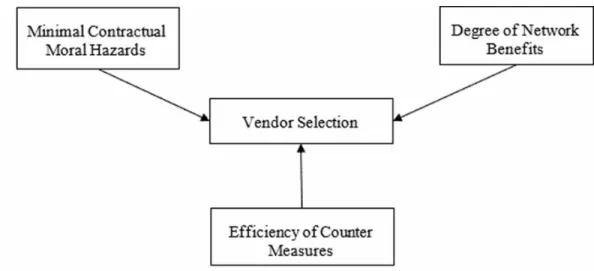
Most IT managers must make the decision to use cloud-based analytic tools. However, managersareoverloadedwithdifferentpromisesandcapabilitiesbydifferentvendors.This studyhighlightskeyfactorstobeconsideredwhenchoosingandcontractingasmanymanagers arestillintheearlyphaseoftechnologyadoption.Theframeworkdevelopedinthisstudy providesaguideinthedecision-makingprocesstousecloud-basedbigdataanalytics.The studydetailshowtheinterestofvendorsandclients’firmsmightbemisalignedandprovides anewwayofthinkingforunderstandingthevalueofbigdataanalytics.Organizationsshould carefullyconsider,understand,andreducetheriskofengagingtheservicesofcloud-based dataanalyticsandcreatecompetitiveparitytoenjoythebenefitsofcloudcomputingasa strategicasset(Pakath,2015).Additionally,anorganizationshouldanalyzetheirpreparedness byevaluatingtheirorganizations’managementsupportandthecomplexityofintegratingthe cloud-basedanalyticswiththeirlocaltechnology(Oliveiraetal.,2014;Lowetal.,2011). Whenselectingavendor,ITmanagersshouldeliminateanyvendorwhoposescontractual challengestominimizerisks. Furthermore,ITmanagerswillhavetojustifytheselectionofavendorbyevaluatingboth the direct and indirect way cloud-based analytics enhances their innovativeness (Oliveira et al.,2014).Whenthelevelofnetworkeffectsgeneratedusingcloud-basedanalyticsishigh,IT managerswillhavetobeconcernedabouttransactionuncertainty,suchaspossibleswitching costsoradversevendorselection.Thelevelofcompetitivepressureintheindustryinfluences theadoptionandselectionofcloud-basedanalyticstools,buttheiruseshouldyieldnetwork benefits(Alshamailaetal.,2013). Additionally,ITmanagersmustconsidersecurity,privacy,andethicalityinselectingacloud-basedanalyticsvendortooptimizetheirreturns(Sunetal.,2018).EvenwhenITmanagersmakethe bestvendorselection,theinstitutepracticalmeasuressuchasmonitoring,signaling,andscreening tomitigateanyunforeseenchallenges.Themoreefficientthecountermeasuresareintheindustry, thelessconcernedITmanagerswillbeaboutcontractswithvendors.Inadditiontothepreceding, ITcapabilityorcompetenceinmaintainingdata(Hsuetal.,2014;Kwonetal.,2014)andcarefully analyzinguncertaintiesabouttheinvolvedcostsinprioritizingthevendorsshouldbeconsidered (Raguseo,2018).Figure3summarizesthekeyfactorsthatinfluenceITmanagers’cloud-based analyticsvendorselection.
CoNCLUSIoN Theframeworkproposedhereopensnewareasofresearchforexaminingtheroleofenablersand situationsthatwouldleadtodeliveringeconomicvaluetobigdataclientsandvendors.Thisisbecause thereislittleinformationonSLAcontractsandrisktransferdesignsthatprovideanoptimalsetof guidelinesforclientsconsideringtheadoptionofcloud-basedbigdataanalytics.Theframework suggeststhatuniquemoralhazards,agentshirking,datatheft,andswitchingcostissuesshouldbe includedintimatelyinSLAdesignconsiderations.
REFERENCES
Alshamaila,Y.,Savvas,P.,&Feng,L.(2013).CloudcomputingadoptionbySMEsinthenortheastofEngland.
Journal of Enterprise Information Management,26(3),250–275.doi:10.1108/17410391311325225
AmazonWebServices.(2013,June1).Amazon Compute Service Level Agreement.https://aws.amazon.com/ ec2/sla/
Amit,R.,&Zott,C.(2001).Valuecreationine-business.Strategic Management Journal,22(6–7),493–520. doi:10.1002/smj.187
Ang,S.,&Straub,D.W.(1998).ProductionandtransactioneconomiesandISoutsourcing:AstudyoftheUS bankingindustry.Management Information Systems Quarterly,22(4),535–552.doi:10.2307/249554
Armbrust,M.,Fox,A.,Griffith,R.,Joseph,A.D.,Katz,R.,Konwinski,A.,Lee,G.,Patterson,D.,Rabkin, A.,Stoica,I.,&Zaharia,M.(2010).Aviewofcloudcomputing.Communications of the ACM,53(4),50–58. doi:10.1145/1721654.1721672
Bakos,J.Y.,&Brynjolfsson,E.(1993).Informationtechnology,incentives,andtheoptimalnumberofsuppliers.
Journal of Management Information Systems,10(2),37–53.doi:10.1080/07421222.1993.11517999
Behrend,T.S.,Weibe,E.N.,London,J.E.,&Johnson,E.C.(2011).Cloudcomputingadoptionandusagein communitycolleges.Behaviour & Information Technology,30(2),231–240.doi:10.1080/0144929X.2010.489118 Brodkin,J.(2008,August11).Lossofcustomerdataspursclosureofonlinestorageservice“TheLinkup.”
Network World .https://www.networkworld.com/article/2274737/data-center/loss-of-customer-data-spurs-closure-of-online-storage-service--the-linkup-.html
Chen,H.,Chiang,R.H.,&Storey,V.C.(2012).Businessintelligenceandanalytics:Frombigdatatobigimpact.
Management Information Systems Quarterly,36(4),1165–1188.doi:10.2307/41703503
Demirkan,H.,&Delen,D.(2013).Leveragingthecapabilitiesofservice-orienteddecisionsupportsystems: Puttinganalyticsandbigdataincloud.Decision Support Systems,55(1),412–421.doi:10.1016/j.dss.2012.05.048 DenologixInformationManagement.(2019).Testimonials: Reviewed & Approved.https://www.denologix. com/company/
Drozdiak,N.,&Schechner,S.(2015,October6).EUcourtsaysdata-transferpactwithU.S.violatesprivacy.
The Wall Street Journal .https://www.wsj.com/articles/eu-court-strikes-down-trans-atlantic-safe-harbor-data-transfer-pact-1444121361
Eisenhardt,K.M.(1989).Agencytheory:Anassessmentandreview.Academy of Management Review,14(1), 57–74.doi:10.5465/amr.1989.4279003
Gartner.(2015,February13).Forecast: Public cloud service brokerage, 4Q14.https://www.gartner.com/ doc/2985118/forecast-public-cloud-service-brokerage
Gottschalk,P.,&Solli‐Sæther,H.(2005).CriticalsuccessfactorsfromIToutsourcingtheories:Anempirical study.Industrial Management & Data Systems,105(6),685–702.doi:10.1108/02635570510606941
Gower, R. (2012). The economics of open data.Infonomics Limited. http://www.infonomics.ltd.uk/ blog/2012/10/25/the-economics-of-open-data/
Gupta,M.,&George,J.F.(2016).Towardthedevelopmentofabigdataanalyticscapability.Information & Management,53(8),1049–1064.doi:10.1016/j.im.2016.07.004
Hashem,I.A.T.,Yaqoob,I.,Anuar,N.B.,Mokhtar,S.,Gani,A.,&UllahKhan,S.(2015).Theriseof“big data”oncloudcomputing:Reviewandopenresearchissues.Information Systems,47,98–115.doi:10.1016/j. is.2014.07.006
Höchtl,J.,Parycek,P.,&Schöllhammer,R.(2016).Bigdatainthepolicycycle:Policydecisionmakinginthe digitalera.Journal of Organizational Computing and Electronic Commerce,26(1–2),147–169.doi:10.1080/ 10919392.2015.1125187
Hsu,P.,Soumya,R.,&Yu-Yu,L.(2014).Examiningcloudcomputingadoptionintention,pricingmechanism, anddeploymentmodel.International Journal of Information Management,34(4),474–488.doi:10.1016/j. ijinfomgt.2014.04.006
Kwon,O.,Namyeon,L.,&Bongsik,S.(2014).Dataqualitymanagement,datausageexperienceandacquisition intentionofbigdataanalytics.International Journal of Information Management,34(3),387–394.doi:10.1016/j. ijinfomgt.2014.02.002
Liu,C.Z.,Gal-Or,E.,Kemerer,C.F.,&Smith,M.D.(2011).Compatibilityandproprietarystandards:The impactofconversiontechnologiesinITmarketswithnetworkeffects.Information Systems Research,22(1), 188–207.doi:10.1287/isre.1090.0255
Low,C.,Yahsueh,C.,&Mingchang,W.(2011).Understandingthedeterminantsofcloudcomputingadoption.
Industrial Management & Data Systems,111(7),1006–1023.doi:10.1108/02635571111161262
Lowe,S.(2013,October28).The cloud does not protect you from mistakes and failures.http://wikibon.org/ wiki/v/The_Cloud_Does_Not_Protect_You_From_Mistakes_and_Failures
Mann,A.(2013,January7).Timetostopforgivingcloudprovidersforrepeatedfailures.Andi Mann–Ubergeek. http://pleasediscuss.com/andimann/20130107/time-to-stop-forgiving-cloud-providers-for-repeated-failures/ Mao,J.-Y.,Lee,J.-N.,&Deng,C.-P.(2008).Vendors’perspectivesontrustandcontrolinoffshoreinformation systemsoutsourcing.Information & Management,45(7),482–492.doi:10.1016/j.im.2008.07.003
Marr,B.(2015).Big data: Using SMART big data, analytics and metrics to make better decisions and improve performance.Wiley.
Marston,S.,Li,Z.,Bandyopadhyay,S.,Zhang,J.,&Ghalsasi,A.(2011).Cloudcomputing—Thebusiness perspective.Decision Support Systems,51(1),176–189.doi:10.1016/j.dss.2010.12.006
Mata,F.J.,Fuerst,W.L.,&Barney,J.B.(1995).Informationtechnologyandsustainedcompetitiveadvantage: Aresource-basedanalysis.Management Information Systems Quarterly,19(4),487–505.doi:10.2307/249630 McAfee,R.P.,&McMillan,J.(1986).Biddingforcontracts:Aprincipal-agentanalysis.The RAND Journal of Economics,17(3),326.doi:10.2307/2555714
McAfee,R.P.,&McMillan,J.(1987).CompetitionforAgencyContracts.The RAND Journal of Economics,
18(2),296.doi:10.2307/2555554
Oliveira,T.,Manoj,T.,&Mariana,E.(2014).Assessingthedeterminantsofcloudcomputingadoption:An analysisofthemanufacturingandservicessectors.Information & Management,51(5),497–510.doi:10.1016/j. im.2014.03.006
Pakath,R.(2015).Competingonthecloud:Areviewandsynthesisofpotentialbenefitsandpossiblepitfalls.
Journal of Organizational Computing and Electronic Commerce,25(1),1–27.doi:10.1080/10919392.2015.9 90771
Pallas,F.(2014).Anagencyperspectivetocloudcomputing.InInternational Conference on Grid Economics and Business Models(pp.36–51).Springer.https://link.springer.com/chapter/10.1007/978-3-319-14609-6_3 Patrick,S.(2018).Bestbigdataanalyticscompanies.Clutch.https://clutch.co/it-services/analytics
Pavlou,P.A.,Liang,H.,&Xue,Y.(2007).Understandingandmitigatinguncertaintyinonlineexchange relationships:Aprincipal-agentperspective.Management Information Systems Quarterly,31(1),105–136. doi:10.2307/25148783
Raguseo, E. (2018). Big data technologies: An empirical investigation on their adoption, benefits and risksforcompanies.International Journal of Information Management,38(1),187–195.doi:10.1016/j. ijinfomgt.2017.07.008
Subashini,S.,&Kavitha,V.(2011).Asurveyonsecurityissuesinservicedeliverymodelsofcloudcomputing.
Journal of Network and Computer Applications,34(1),1–11.doi:10.1016/j.jnca.2010.07.006
Susarla,A.,Subramanyam,R.,&Karhade,P.(2010).Contractualprovisionstomitigateholdup:Evidencefrom informationtechnologyoutsourcing.Information Systems Research,21(1),37–55.doi:10.1287/isre.1080.0204
Emmanuel W. Ayaburi is an Assistant Professor in department of Information Systems in the Robert C. Vackar College of Business & Entrepreneurship at The University of Texas Rio Grande Valley. He received his Ph.D. in Business Administration with a concentration in Information Systems from The University of Texas at San Antonio and his Master’s in Business Administration from the Colorado Heights University. He holds a Bachelor of Science in Electrical Engineering KNUST in Ghana. Ayaburi’s research interests include knowledge sharing, secure software design, information systems security and economics of information systems. His work has been publication in Information Systems Frontiers, Computers in Human Behavior, International Journal of Information Management and International Journal of Innovation and Technology Management. He has also published in a number of conference proceedings including International Conference on Information Systems (ICIS) and Americas Conferences in Information Systems (AMCIS).
Michele Maasberg is an Assistant Professor of Computer Science at Louisiana Tech University. She received her Ph.D. in Information Technology from the University of Texas at San Antonio, an M.S. in IT-Information Assurance from the University of Texas at San Antonio, and a B.S. from the U.S. Naval Academy. She has over a decade of experience in the cyber security field including information assurance management. She has been a Certified Information Systems Security Professional since 2013. Dr. Maasberg’s research interests relate to cybersecurity, insider threats, and malware threat metrics, with applications to incident response & IoT and control systems security. She has published approximately 25 peer-reviewed articles in high impact journals and conference proceedings and her work has been funded by federal agencies. She is involved in numerous collaborative research projects with the National Science Foundation (NSF), Department of Defense (DoD), and industry.
Jaeung (Jake) Lee is an Assistant Professor (Clifford Ray King Endowed Professor) of Information Systems at the Louisiana Tech University. He received his Ph.D. in Information Systems from the Department of Management Science and Systems at the State University of New York at Buffalo. His primary areas of research interests include information security, emergency response management systems, and requirements management. His research has appeared in Decision Support Systems (DSS), Information Systems Frontiers (ISF) and conference proceedings such as ICIS, AMCIS, HICSS, DRW, WMSC, and IRM.
Tiwana,A.,&Bush,A.(2007).Acomparisonoftransactioncost,agency,andknowledge-basedpredictorsof IToutsourcingdecisions:AU.S.–Japancross-culturalfieldstudy.Journal of Management Information Systems,
24(1),259–300.doi:10.2753/MIS0742-1222240108
Troester,M.(2012).Big data meets big data analytics: Three key technologies for extracting real-time business value from the big data, that threatens to overwhelm traditional computing architectures[WhitePaper].SAS InstituteInc.
Tuttle,B.,Harrell,A.,&Harrison,P.(1997).Moralhazard,ethicalconsiderations,andthedecisiontoimplement aninformationsystem.Journal of Management Information Systems,13(4),7–27.doi:10.1080/07421222.19 97.11518140
Tynan,D.(2013,October23).HowBox.comallowedacompletestrangertodeleteallmyfiles.ITworld.https:// www.itworld.com/article/2833267/how-box-com-allowed-a-complete-stranger-to-delete-all-my-files.html Williams,A.(2012,October27).AmazonWebServicesoutagecausedbymemoryleakandfailureinmonitoring alarm.TechCrunch .https://techcrunch.com/2012/10/27/amazon-web-services-outage-caused-by-memory-leak-and-failure-in-monitoring-alarm/
Williamson,O.E.(1979).Transaction-costeconomics:Thegovernanceofcontractualrelations.The Journal of Law & Economics,22(2),233–261.doi:10.1086/466942
Wu,X.,Zhu,X.,Wu,G.Q.,&Ding,W.(2014).Dataminingwithbigdata.IEEE Transactions on Knowledge and Data Engineering,26(1),97–107.doi:10.1109/TKDE.2013.109
Xie,K.,Wu,Y.,Xiao,J.,&Hu,Q.(2016).Valueco-creationbetweenfirmsandcustomers:Theroleofbig data-basedcooperativeassets.Information & Management,53(8),1034–1048.doi:10.1016/j.im.2016.06.003 Yu,C.-C.(2016).Avalue-centricbusinessmodelframeworkformanagingopendataapplications.Journal of Organizational Computing and Electronic Commerce,26(1–2),80–115.doi:10.1080/10919392.2015.1125175