Using Information Technology Techniques to Investigate
and Develop Computing Teaching in Higher Education
System (HE) in Libya.
Alzain Meftah Alzain
A thesis submitted in partial fulfilment of the requirements of Nottingham
Trent University for the degree of Doctor of Philosophy
College of Science and Technology
Nottingham Trent University
I
Abstract
This study investigated the development of the use of technology and pedagogy in computing education in the Libyan Higher Education System (LHES). A number of objectives guided this research: first, it explored teacher perceptions and understanding of using technology and pedagogy in the teaching process. Secondly, a new technological-pedagogical framework (Five-arrows framework) was developed. Further, the study investigated the effect of using different forms of information (visual - active information) in constructing the learning style instruments on the accuracy of measuring preferred learning styles. This study also developed the first Arabic Learning Style Instrument (ALSI). The instrument was used to develop an adaptive education system, which was used as an assisting system to support teachers in considering learner differences among students. The system was tested on three different courses.
In this research, 319 students, teachers and experts were involved, and mixed methods approach (quantitative and qualitative) was used. Learning style instruments, questionnaires, open-ended questions, documentary review and semi-structured interview methods were used to collect research data. Statistical data was analysed using the Statistical Package for the Social Sciences (SPSS). Pearson’s Correlation, Chi-square and Paired T-Test were conducted to explore the association, dependency and difference of variables. In addition, Cronbach’s Alpha, Content Validity Index (CVI), Classical Item Analysis (CIA), Test-Retest Reliability and Principal Component Analysis (PCA) were used to test the reliability and validity of instruments.
The statistical analysis revealed that the ALSI seems to be a suitable psychometric instrument to detect the learning style of Arab learners and cultures. The findings also revealed that the instrument content type has a significant effect on the accuracy of measuring preferred learning styles. No significant differences were found between males and females in terms of preferred learning styles. There was a significant positive correlation between the visual style and years of computer use. The results also showed that the dominant learning style of computer students in Libya is active/visual. The results also show that the performance of students who learnt using the adaptive system is significantly better than the achievement of other students who learnt the same educational content but without using the system. Thus, the study includes developing a new pedagogical framework (the Five-arrows framework), a learning style model and the first valid and reliable ALSI.
The study recommends conducting professional training sessions about use of technology and pedagogy in a teaching process in order to improve teacher understanding and attitudes towards using technology. There is also a need to consider the individual differences among the students and improve student awareness about their preferred learning style.
II
Copyright Statement
This work is the intellectual property of the author. You may copy up to 5% of this work for private study, or personal, non-commercial research. Any re-use of the information contained within this document should be fully referenced, quoting the author, title, university, degree level and pagination. Queries or requests for any other use, or if a more substantial copy is required, should be directed to the owner of the Intellectual Property Rights.
III
Acknowledgements
After sincerely thanking Allah for all blessings and bounties.
I would like to express my deepest gratitude to my supervisors: Dr. Steve Clark, Prof. Gren Ireson, and Prof Paul Evans, for whom any words are not enough to thank them.
A big “thank you” to my mother for her endless love, support and encouragement.
I would especially like to thank my wife and children for their support, encouragement, patience, love and standing by me during this journey.
Special thanks to all my family for their immeasurable support.
I would like to extend my deep thanks and gratitude to all of my colleagues and friends who support me during the journey of knowledge.
Alzain Meftah Alzain
IV
Table of Contents
Abstract ... I Copyright Statement ... II Acknowledgements ... III List of Figures ... XII List of Tables... XIV Abbreviations ... XVII Publications ... XIX
1. Chapter One: Introduction ... 1
1.1. Introduction ... 1
1.2. Scope of the Study ... 1
1.3. Pedagogical Research: Concept, Need, and Aspects ... 1
1.4. Information and Communication Technology (ICT) and Education ... 2
1.5. Teaching and Learning Frameworks ... 4
1.6. Motivation of Study ... 4
1.6.1. Adaptive Hypermedia Systems (AHS) ... 4
1.6.2. Learning Styles... 5
1.7. Learning Style and Adaptive Educational Systems: A Need for Research ... 7
1.8. A Need for Pedagogical Research in the Libyan Higher Education System (LHES) ... 7
1.9. A Need for ICT and AES in the Libyan Higher Education System (LHES) ... 8
1.10. Research Aims and Objectives ... 9
1.11. Research Questions ... 10
1.12. Research Hypotheses ... 10
V
1.12.2. Hypotheses of Investigating the Impact of Using Visual and Active Forms of Information for Building the Instruments of Learning Styles, and Impact of that on the
Accuracy of Measurement ... 12
1.12.3. Hypotheses of Investigating the Preferred Learning Style of Computing Students in LHES Compared with the Results of Similar Studies around the World .. 13
1.12.4. Hypotheses of Applying the New Technological Pedagogical Framework Using the Adaptive System... 14
1.13. Definitions of Concepts ... 15
1.14. Research Methodology ... 15
1.15. Research Summary ... 17
1.16. Structure of the Thesis ... 18
2. Chapter Two: Literature Review ... 19
2.1. Introduction ... 19
2.2. Libyan Context ... 19
2.2.1. Using Technology in the Education Process in LHES ... 20
2.2.2. Staff Training in LHES ... 21
2.2.3. LHES and Relationship with other Sectors ... 21
2.2.4. Challenges of Libyan Higher Education System ... 21
2.2.5. Learning Style and Education Process in LHES ... 22
2.3. Technological/Pedagogical Frameworks... 22
2.3.1. The Technological Pedagogical and Content Knowledge (TPACK) ... 22
2.3.2. The Technology Integration Matrix (TIM) Framework ... 23
2.4. Learning Styles ... 24
2.4.1. Previous Learning Style Models ... 24
2.4.2. Summary of Learning Style Comparisons ... 33
2.4.3. Misuse of Learning Styles ... 34
2.4.4. Learning Style and Researcher Disagreements ... 35
VI
2.4.6. Incorporating Learning Styles in the Education Process: Challenges and
Criticism... 36
2.5. Adaptive Hypermedia Systems (AHS) and Student Modelling ... 37
2.5.1. Adaptive Educational Hypermedia Systems (AEHS) ... 39
2.5.2. Methods and Techniques of Adaptation ... 40
2.6. Incorporating Learning Styles in Adaptive Educational Systems ... 42
2.7. Adaptive Education Systems: Previous Studies ... 43
2.7.1. CS383 System ... 43 2.7.2. INSPIRE System ... 44 2.7.3. Arthur System ... 44 2.7.4. EDUEC System ... 45 2.7.5. ILASH System ... 46 2.7.6. 3DE System ... 47 2.7.7. iWeaver System ... 47 2.7.8. AHA! System ... 48 2.7.9. TANGOW System ... 49
2.8. Summary of Similar Research Studies ... 49
2.9. Arab Studies in Adaptive Educational Systems ... 51
2.10. Research Gaps Investigated by this Research ... 52
2.11. Summary ... 52
3. Chapter Three: Methodology ... 54
3.1. Introduction ... 54
3.2. The Evolution of Research Enquiries ... 54
3.3. Research Approaches ... 55
3.4. Worldview (Research Paradigm) ... 56
3.4.1. Constructivism ... 56
VII
3.5. Non-Empirical Research ... 58
3.6. Empirical Research ... 58
3.6.1. Quantitative Research ... 58
3.6.2. Qualitative Research ... 59
3.6.3. Mixed Method Approach ... 60
3.7. Justification of the Selected Approach ... 61
3.8. Validity and Reliability ... 62
3.8.1. Data and Triangulation ... 62
3.8.2. Content Validity ... 63
3.8.3. Reliability Test ... 63
3.8.4. Ethical Issues ... 63
3.9. Research Design ... 64
3.9.1. Literature Review Stage ... 66
3.9.2. Stage of Investigating the Current Situation of LHES ... 67
3.9.3. Stage of Designing a New Technological Pedagogical Framework ... 67
3.9.4. Stage of Developing a New Learning Style Instrument... 67
3.9.5. Investigating the Impact of Using Different Formats of Information to Construct the Instruments of Learning Styles... 68
3.9.6. Stage of Developing a New Adaptive Education System ... 69
3.9.7. Stage of Implementing the Pedagogical Framework Using the Adaptive Education System ... 70
3.9.8. Evaluation and Recommendation Stage ... 71
3.10. Experiment Design ... 72
3.10.1. Sample Size ... 72
3.10.2. Investigating the Libyan Higher Education System ... 74
3.10.3. Investigating the Validity and Reliability of the New Instrument ... 74 3.10.4. Investigating the Effect of Instrument Content on the Measuring of Learning Styles 75
VIII
3.10.5. Implementation of the New Framework Using the Adaptive System ... 76
3.11. Summary ... 77
4. Chapter Four: Initial Development ... 78
4.1. Introduction ... 78
4.2. A New Technological Pedagogical Framework ... 78
4.3. Developing the New Learning Style Model ... 79
4.4. Developing the First Arabic Learning Style Instrument (ALSI) ... 81
4.4.1. Suggested Plan to Design the New Instrument ... 82
4.4.2. The Developed Instrument (ALSI) ... 82
4.5. A New Adaptive Education System Design ... 84
4.5.1. Content Model (CM) ... 86
4.5.2. Student Model (SM) ... 88
4.5.3. Teaching Strategies Model (TSM) ... 89
4.5.4. Pedagogical Model ... 89
4.5.5. Classification of Students and Adaptation Rules ... 91
4.5.6. The Adaptation Process of the System... 92
4.5.7. Determine the Student Preferences ... 93
4.5.8. Methods of Presentation in LAES System ... 93
4.5.9. Adaptation of Teaching Strategies and Electronic Content ... 95
4.6. Summary ... 96
5. Chapter Five: Results and Discussion ... 97
5.1. Introduction ... 97
5.2. Investigating the Current Situation of the Libyan Higher Education System (LHES) ... 98
5.2.1. Introduction ... 98
5.2.2. Data Collection... 98
IX
5.2.4. Teacher Beliefs Regarding Using ICT in the Education Process ... 101
5.2.5. Teaching Approaches ... 103
5.2.6. Graduates and Job Market Needs ... 104
5.2.7. Correlation Measuring ... 105
5.2.8. Discussion and Conclusion of Investigating the Current Situation of LHES 106 5.3. The Reliability and Validity of ALSI Instrument... 110
5.3.1. A Study of the Reliability and Validity of the Arabic Version of the ALSI 112 5.3.2. A Study of the Reliability and Validity of the English Version of the ALSI Instrument ... 121
5.3.3. Validating the ALSI Instrument: Discussion of Results ... 129
5.4. Exploring the Preferred Learning Styles of Computing Students in Misurata University - Libya ... 131
5.4.1. Comparison of Learning Style Scores between Misurata University and Nottingham Trent University ... 131
5.4.2. Comparison of Learning Styles Scores between Misurata University and Arab Universities ... 133
5.4.3. Relevant Studies and Dominant Learning Styles ... 134
5.5. Learning Style Instruments: Implications of Content ... 137
5.5.1. Introduction ... 137
5.5.2. Investigating the Effect of Content on the Efficiency of Learning Style Instruments: Discussion of Results ... 149
5.5.3. Conclusion of the Experiment of Investigating the Effect of Content on the Efficiency of Learning Style Instruments ... 150
5.6. Implementation of Five-Arrows Framework Using LAES System ... 151
5.6.1. Introduction ... 151
5.6.2. Hypothesis under Investigation ... 152
X
5.6.4. Experiment II ... 156
5.6.5. Experiment III ... 159
5.6.6. Implementation of Five-Arrows Framework Using LAES System - Quantitative Study: Discussion of Results... 162
5.6.7. Implementation of Five-Arrows Framework: Qualitative Study ... 165
5.6.8. Implementation of Five-Arrows Framework - Qualitative Study: Discussion of Results ... 171
5.6.9. Impact on Future Work ... 173
5.7. Summary ... 173
6. Chapter Six: Conclusion ... 175
6.1. Introduction ... 175
6.2. Summary of Findings and Research Questions Re-visited ... 175
6.2.1. The Current Situation and Practices in Computing Teaching in the Libyan Higher Education System ... 176
6.2.2. Developing and Validating the First Arabic Learning Style Instrument ... 177
6.2.3. Preferred Learning Style of Libyan Students ... 178
6.2.4. Efficiency and Effectivity of Previous Learning Style Instruments ... 180
6.2.5. Implementation of Five-arrows Framework Using LAES System and Impact of that on the Performance of Students ... 183
6.3. Contribution of this Research to Knowledge ... 186
6.4. Limitations of the Work ... 187
6.5. Recommendations ... 188
6.5.1. General Recommendations ... 188
6.5.2. Recommendations for Future Work ... 189
6.6. Final Conclusion ... 191
References ... 193
Appendix A: Learning Style Instrument ... 206
XI
XII
List of Figures
Figure 1: Structure of the Education System in Libya. ... 20
Figure 2: TPACK Framework (amended based on Archambault and Barnett, 2010). ... 23
Figure 3: VARK Model (amended based on Fleming, 2006). ... 25
Figure 4: Felder – Silverman Model (amended based on Hawk, 2007). ... 26
Figure 5: Kolb Experiential Learning Model (adapted from Kolb, 2014). ... 28
Figure 6: Gregorc Learning Model (amended from Hawk, 2007). ... 29
Figure 7: Dunn and Dunn Learning Model (adapted from Hawk, 2007). ... 31
Figure 8: Brusilovsky Adaptation Taxonomy. ... 40
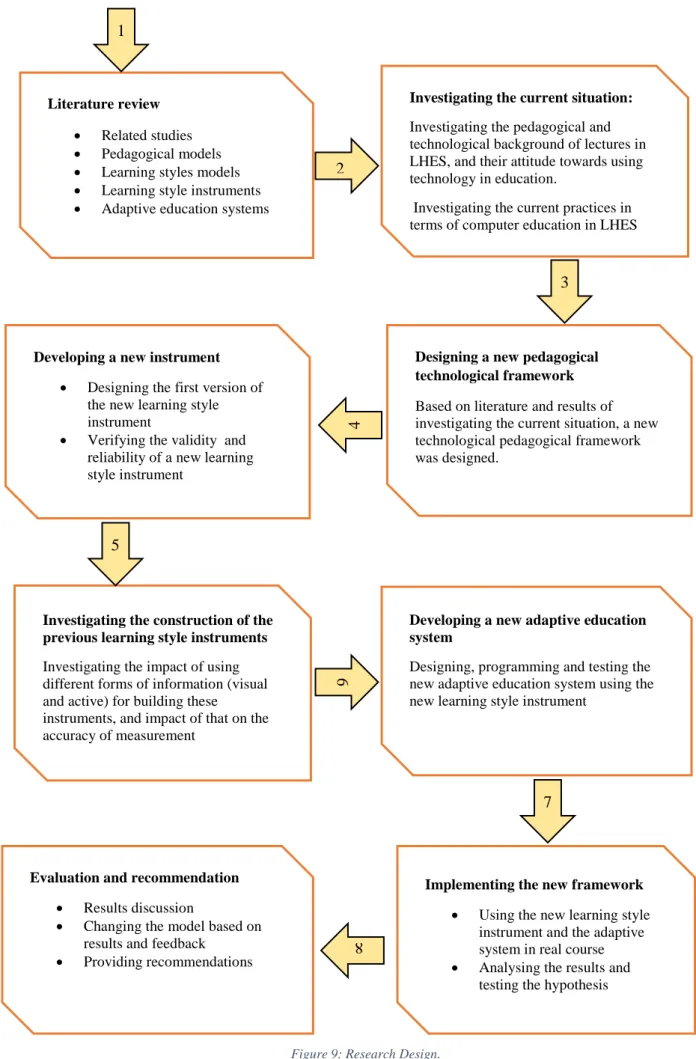
Figure 9: Research Design. ... 65
Figure 10: Literature Review Stages. ... 66
Figure 11: The Methodology of Developing the Adaptive System. ... 70
Figure 12: Five-Arrows Framework. ... 79
Figure 13: Alzain Learning Style Model. ... 80
Figure 14: LAES System Architecture. ... 85
Figure 15: Content Model - LAES System ... 86
Figure 16: Component Display Theory (CDT). ... 87
Figure 17: Student Model (SD) - LAES System. ... 88
Figure 18: Teaching Strategies Model (TSM) - LAES System. ... 89
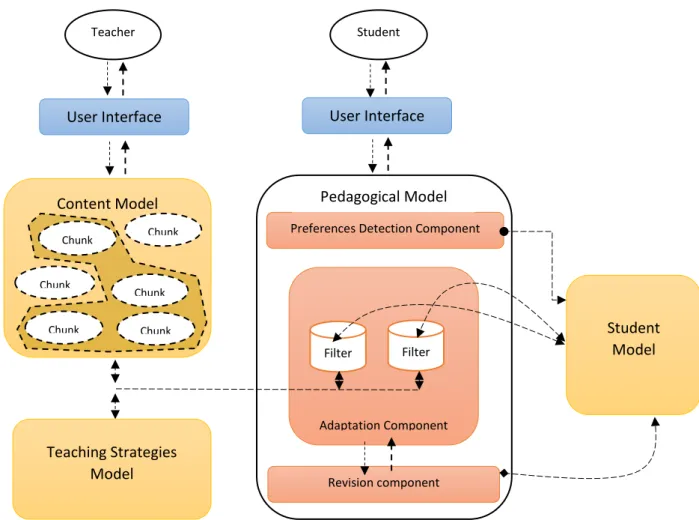
Figure 19: Pedagogical Model (PM) - LAES System . ... 90
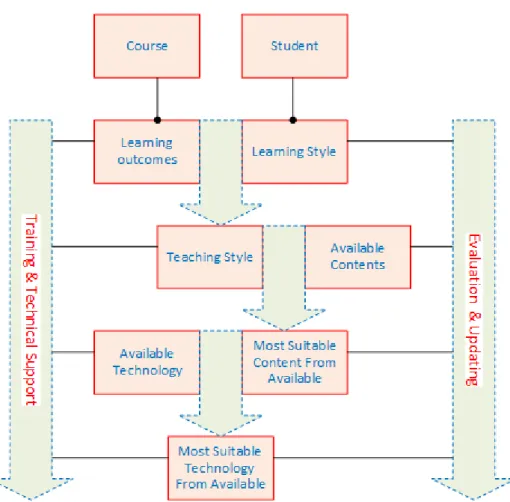
Figure 20: Learning Style, Teaching Style and Content Relationship - LAES System. ... 91
Figure 21: Adaptation Process - LAES System. ... 92
Figure 22: Percentage of Participants who Needed to be Involved in Professional Training Courses of Content Design and Presentation. ... 100
Figure 23: Percentage of Participants who Needed to be Involved in Professional Training Courses in Technological Practices in Education. ... 100
Figure 24: Percentage of Participants who Needed to be Involved in Professional Training Courses in Pedagogical Practices in Education. ... 101
Figure 25: Percentage of Participants who Think that Using Technology in Education has Positive Impact on Performance of Students. ... 102
Figure 26: Participants’ Opinion about the Suitability of LHES Graduates to Job Market Needs. ... 104
XIII
Figure 27: Participant Distribution Based on Scales - the Experiment of Validating the Arabic Version of the ALSI Instrument. ... 113 Figure 28: Scree Plot - Factor Analysis Test - the Arabic Version of the ALSI Instrument. ... 119 Figure 29: Participant Distribution Based on Scales - the Experiment of Validating the English Version of the ALSI Instrument. ... 122 Figure 30: Scree Plot - Factor Analysis Test of the English Version of the ALSI
Instrument. ... 127 Figure 31: Comparison of Learning Styles Scores - Misurata University and Nottingham Trent University. ... 132 Figure 32: Comparison of Learning Styles Scores - Misurata University and some Arab Universities. ... 134 Figure 33: Visual Presentation of Participant Distribution Based on Learning Styles - Experiment of Investigating the Effect of Content on the Efficiency of Learning Style Instruments. ... 139 Figure 34: The Preferred Learning Styles of Participants Using the (VARK, ALSI)
Instrument - Experiment of Investigating the Effect of Content on the Efficiency of
Learning Style Instruments - Qualitative Part ... 143 Figure 35: the Five-Arrows Framework Implementation Using the LAES System,
Experiment I - Participants Distribution Based on the Learning Styles. ... 153 Figure 36: the Five-Arrows Framework Implementation Using the LAES System,
Experiment II - Participants Distribution Based on the Learning Styles. ... 156 Figure 37: the Five-Arrows Framework Implementation Using the LAES System,
XIV
List of Tables
Table 1: Summary of Research. ... 17
Table 2: Differences and Similarities of Learning Styles. ... 33
Table 3: Summary of Previous Adaptive Education Systems. ... 50
Table 4: Qualitative and Quantitative Research Approaches. ... 61
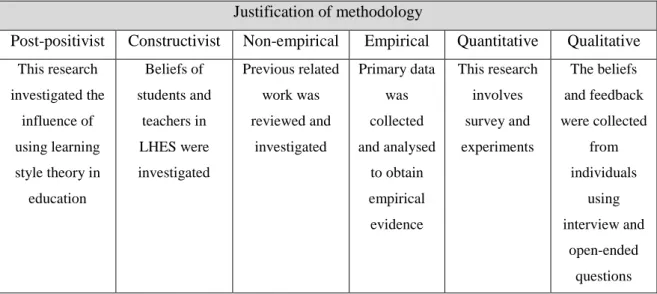
Table 5: Justification of Research Methodology. ... 62
Table 6: Dimensions of Alzain Learning Style Model. ... 81
Table 7: Combination of Learning Styles Based on Alzain Learning Style Model... 91
Table 8: Alzain Learning Style Model Dimensions. ... 95
Table 9: Teaching Strategies and Learning Styles. ... 96
Table 10: Demographic Description of the Participants - Experiment of Investigating the Current Situation in LHES. ... 99
Table 11:Percentage of participants who think that student-centred teaching approach is better than the teacher-centred approach, and participants who depend on student-centred teaching approach in their teaching... 103
Table 12: Correlation Coefficient between the participant age, experience and using technology and pedagogy in teaching. ... 105
Table 13: Sample Description of Participants in the Experiment of Validating the Arabic Version of the ALSI Instrument. ... 112
Table 14: Descriptive Statistics of Participants in the Experiment of Validating the Arabic Version of the ALSI Instrument. ... 112
Table 15: Participants Classification – the Experiment of Validating the Arabic Version of the ALSI Instrument. ... 113
Table 16: ALSI Instrument (Arabic Version) –Cronbach’s Alpha Coefficient. ... 114
Table 17: ALSI Instrument (Arabic Version) - Output of Classical Item Analysis Test. .. 115
Table 18: Cronbach’s Alpha of Arabic Version of the ALSI Instrument if the Weakest Item in each Scale is Deleted... 116
Table 19: Results of Reliability Test - the Arabic Version of the ALSI Instrument. ... 117
Table 20: ALSI Instrument (Arabic Version) - Rating on a 16 - Items Scale by Six Experts. ... 118
Table 21 : the ALSI Instrument (Arabic Version) - Factors in the Ten Factor Solution. . 120
Table 22 : Sample Description - the Experiment of Validating the English Version of the ALSI Instrument. ... 121
XV
Table 23 : Descriptive Statistics of Participants in the Experiment of Validating the English
Version of the ALSI Instrument. ... 121
Table 24: Participant Classification - Experiment of Validating the English Version of the ALSI Instrument. ... 122
Table 25: the ALSI Instrument ( English Version ) –Cronbach’s Alpha Coefficient. ... 123
Table 26: the ALSI Instrument ( English Version ) - Output of Classical Item Analysis Test. ... 124
Table 27: Cronbach’s Alpha of English Version of the ALSI Instrument if the Weakest Item in Each Scale is Deleted ... 125
Table 28: the Results of Reliability Test - English Version of the ALSI. ... 125
Table 29: the ALSI English Version - Rating on a 16-Items Scale by Six Experts. ... 126
Table 30: the ALSI English Version - Factors in the Ten Factor Solution. ... 128
Table 31: Comparison of Learning Style Scores - Misurata University and Nottingham Trent University. ... 131
Table 32: Differences of Learning Style Scores - Misurata University and Nottingham Trent University. ... 132
Table 33: Comparison of Learning Styles Scores - Misurata University and some Arab Universities. ... 133
Table 34: Learning Style Preferences around the World. ... 135
Table 35: Descriptive Statistics of Participants - Experiment of Investigating the Effect of Content on the Efficiency of Learning Style Instruments. ... 138
Table 37: Paired t-test Results - Experiment of Investigating the Effect of Content on the Efficiency of Learning Style Instruments. ... 140
Table 38: Participant Details - Experiment of Investigating the Effect of Content on the Efficiency of Learning Style Instruments - Qualitative Part. ... 141
Table 39: Results of Measuring of Participants Preferred Learning Style Using the (VARK, ALSI) Instruments - Experiment of Investigating the Effect of Content on the Efficiency of Learning Style Instruments - Qualitative Part. ... 142
Table 40: Paired t-test - Experiment of Investigating the Effect of Content on the Efficiency of Learning Style Instruments ... 144
Table 41: Independence Between Learning Styles and Gender - Experiment of Investigating the Effect of Content on the Efficiency of Learning Style Instruments (N = 50). ... 147
XVI
Table 42: Correlation Between Dimensions of Learning Style and Years of Computer Use - Experiment of Investigating the Effect of Content on the Efficiency of Learning Style Instruments (N = 50). ... 148 Table 43: the Five-Arrows Framework Implementation Using the LAES System,
Experiment I - Paired Samples Statistics ( N = 10). ... 154 Table 44: the Five-Arrows Framework Implementation Using the LAES System,
Experiment I - Results of Paired Samples Test (N = 10). ... 154 Table 45: the Five-Arrows Framework Implementation Using the LAES System,
Experiment I – Results of Pearson Correlation Test (N = 10). ... 155 Table 46: the Five-Arrows Framework Implementation Using the LAES System,
Experiment II - Paired Samples Statistics (N = 16). ... 157 Table 47: the Five-Arrows Framework Implementation Using the LAES System,
Experiment II - Results of Paired Samples Test (N = 16). ... 157 Table 48: the Five-Arrows Framework Implementation Using the LAES System,
Experiment II – Results of Pearson Correlation Test (N = 16). ... 158 Table 49: the Five-Arrows Framework Implementation Using the LAES System,
Experiment III - Paired Samples Statistics (N = 14). ... 160 Table 50: the Five-Arrows Framework Implementation Using the LAES System,
Experiment III – Results of Paired Samples Test (N = 14). ... 160 Table 51: the Five-Arrows Framework Implementation Using the LAES System,
Experiment III – Results of Pearson Correlation Test (N = 14 ). ... 161 Table 52: the Five-Arrows Framework implementation, Qualitative Study - Characteristics of the Participants. ... 165 Table 53: the Five-Arrows Framework implementation, Qualitative Study _ Objectives and Questions of Interview ... 165
XVII
Abbreviations
AEHS Adaptive Educational Hypermedia Systems
AH Adaptive Hypermedia
AHS Adaptive Hypermedia Systems
ALE Adaptive Learning Environment
ALSI Arabic learning style instrument
CDT Component Display Theory
CK Content Knowledge
CM Content Model
CVI Content Validity Index
ET Elaboration Theory
FCIT Florida Centre for Instructional Technology
GSD Gregorc Style Delineator
HE Higher Education
ICT Information and Communications Technologies
I-CVI Item Content Validity Index
ILS Index of Learning Style
IT Information Technology
LAES Libyan Adaptive Education System LAMS Learning Activity Management System
LHES Libyan Higher Education System
LS Learning Style
LSI Learning Style Inventory
LSIs Learning Style Instruments
MI The theory of Multiple Intelligences
NTU Nottingham Trent University
PCK Pedagogical Content Knowledge PEPS Productivity Environmental Preference Survey
PK Pedagogical Knowledge
XVIII
S-CVI Scale Content Validity Index SPSS Statistical Package for the Social Sciences
SST School of Science and Technology TCK Technological Content Knowledge
TIM Technology Integration Matrix
TK Technological Knowledge
TPACK Technological Pedagogical Content Knowledge TPK Technological Pedagogical Knowledge
TSM Teaching Strategies Model
UM User Model
PCA Principal Component Analysis
MIDAS Multiple Intelligence Developmental Assessment Scales MISEI-R Multiple Intelligences Self-Efficacy Inventory
XIX
Publications
The papers which resulted from this research and published in international conferences are listed below:
Published Papers:
• Alzain, A.M., Clark, S. & Ireson, G, “Libyan Higher Education system, challenges and achievements”, 6th International Conference on Engineering Education,
ICEED-2014, Kuala Lumpur, Malaysia.
• Alzain, A.M., Clark, S., Ireson, G. & Jwaid, A., “A Study of the Reliability and Validity of the First Arabic Learning Styles Instrument (ALSI)”, World Congress on Sustainable Technologies, WCST-2016, London, United Kingdom.
• Alzain, A.M., Ireson, G., Clark, S & Jwaid, A., “Learning Style Instruments and Impact of Content: A Qualitative Study”, World Congress on Sustainable
Technologies, WCST-2016, London, United Kingdom.
• Alzain, A.M., Clark, S., Ireson, G. & Jwaid, A., “LAES: An Adaptive Education System Based on Learners’ Learning Styles”, The 2nd International Conference on Knowledge Engineering and Applications, ICKEA 2017 , London, United
Kingdom.
Under review
• Alzain, A.M., Clark, S., Ireson, G & Jwaid, A., “Adaptive education based on learning styles: are learning style instruments precise enough?”, International Journal of Information and Learning Technology.
XX
• Alzain, A.M., Ireson, G., Clark, S & Jwaid, A., “Learning style instruments: implications of content”, International Journal of Sustainable Energy Development (IJSED).
In preparation
• Jwaid, A.E., Clark, S., Ireson, G & Alzain, A.M., A Study of the TPACK framework in Higher Education in a School of Science and Technology.
• Jwaid A.E., Clark S., Ireson G & Alzain, A.M., “Novel framework for Teach Process Control Engineering by using The Concept of TPACK”.
1
1.
Chapter One: Introduction
1.1.
Introduction
This chapter provides an overview of the basic information about the research and my motivation for the study including the learning style, adaptive education systems and the urgent need for more pedagogic research in technical subject areas. It will also present the significance of the study, and in turn, address the aims and objectives of the study, the research questions, the research hypotheses; and finally, explain in brief the research methodology and the structure of the PhD thesis.
1.2.
Scope of the Study
This study was focused on exploring the situation of computing education in the Libyan Higher Education System (LHES) and more specifically, the technology and pedagogy in the teaching process, including teacher perceptions of using ICT in pedagogy, as explained in chapter 45.2. In particular, the study will seek to understand teacher attitudes towards using ICT in the teaching process, as well as the impact of age and teaching experience on the attitudes, perceptions and understanding of those teachers. This research is also focused on learning styles and how this can be incorporated into the learning environment in order to take into account the individual differences among learners. In addition, the study is also focused on adaptive education systems and how they can be employed to make learning easier for students, as well as improve the performance and engagement of students, and increasing the efficiency of learning.
1.3.
Pedagogical Research: Concept, Need, and Aspects
“Pedagogy” is a term used to refer to the science of teaching (Simon, Moon 1994). More broadly, pedagogy refers to the study of learning, teaching, and assessment in an
educational process, in different cultures and contexts (G. Brown, Edmunds 2011).
Although much pedagogical research has been carried out, especially in the developed countries, many researchers still think there is more work to be done in this field,
especially in developing countries (Alzain, Clark et al. 2014). As a historical example, in 1981, Brian Simon published a paper entitled ‘Why no pedagogy in England?’ (Simon, Moon 1994). He claimed that education in England lacked a coherent and principled
2
pedagogy. In 2004, Robin Alexander revisited Brian Simon’s 1981 judgment. Alexander stated that pedagogical research has progressed considerably since then (Alexander 2004). However, more research in pedagogy is continually needed for two main reasons: First, what is considered a good curriculum last year may not necessarily be a good curriculum this year. For instance, in the same context, the technology (used in education) that counted as a useful tool last year may not necessarily be worthwhile tool this year. What is
classified as a successful course in one institution may be counted as an unsuccessful course in another institution where resources and qualifications are limited. Second, plenty of previous pedagogical research, whether ‘old’ or ‘new’, has not really incorporated into actual practice (G. Brown, Edmunds 2011).
Research in pedagogy could be conducted in different areas such as:
• Investigating existing practices of teaching and learning and developing new ones; • Exploring existing methods of assessment and developing new ones;
• Applying existing techniques to a new practice;
• Conducting empirical studies that can enhance the practices of teaching and learning.
Such research is often performed using technology to achieve its aims, which are
investigating and developing more effective methods of learning and teaching. This leads us to the following topic, which discusses the role of Information and Communication Technology (ICT), in education.
1.4.
Information and Communication Technology (ICT) and
Education
In recent years, ICT has been extensively used in processes of education. To date, many researchers have investigated the impact of ICT, including computers, internet, mobiles and tablets on student performance and engagement. Results of several studies report that integration of ICT into the educational process has made a significant contribution, and played an important role in enhancing the quality of education, particularly owing to ICT abilities to motivate the students and support the teachers (Zhang, Ordóñez de Pablos et al. 2012, Drigas, Ioannidou et al. 2014, Özyurt, Özyurt 2015, Sung, Chang et al. 2016, Gikas,
3
Grant 2013, Jalil, Beer et al. 2015, Crowther 2007, Crowther 2006). ICT could do that in several ways such as:
• Facilitating resource accessibility; • Developing basic skills;
• Providing good training; • Enhancing student interaction; • Supporting teacher collaboration; • Saving teaching time.
Haddad and Draxler list five different levels where the technology can be used in the process of education (Haddad, Draxler 2002):
• Presentation; • Demonstration; • Drill and practice; • Interaction;
• Collaboration.
Many researchers mentioned that although technology generally has positive effects on education, it is arguable that it may also sometimes cause problems due to misuse. Therefore, many researchers state that using new technologies in teaching requires comprehensive knowledge (Jwaid 2016, Schacter 1999, Sahin 2011). Thus, education policies should consider training issues to ensure the correct use of technology. In this context, Meenakshi (2013) explains that the effectiveness of using ICT techniques in education completely relies on the purpose of using these techniques, and how the people are going to use it. He also explained that the reason behind that is “one technique does not fit everybody and everywhere” (Meenakshi 2013). Therefore, to overcome these problems, a novel pedagogical technological framework and adaptive educational system are
developed in this thesis. Adaptive education systems have significant advantages and benefits not only for students but also for teachers and institutions. They improve the accessibility to the instructional resources, which corresponding students need and, they provide the teachers with a sound understanding about their students, and how they prefer to learn. Adaptive education systems also can help institutions and governments to solve problems that might arise from the increased number of students and shortage of qualified teachers as well as the lack of resources (Weller 2007).
4
1.5.
Teaching and Learning Frameworks
Effective teaching requires the use of different types of knowledge including technological and pedagogical knowledge (Jwaid 2016). In order to get a clear insight into the available teaching and learning frameworks that can be used to improve computing education, in the literature, a number of teaching frameworks of integrated technology and pedagogy are discussed (see section 2.3).
Based on the literature review as well as investigating the current situation and practices in terms of computer education in LHES, a novel framework (the Five-arrows Framework) is developed to provide teachers and students with the most suitable content and technology that could be used to enhance student performance (see section 4.2).
1.6.
Motivation of Study
This research brings together a number of different topics from two disciplines, which are computer science and pedagogy. Whilst adaptive hypermedia systems are considered one of the research topics in computer science, the learning style is considered one of the key research topics in pedagogy. In order to set the pace for the discussion, the researcher will begin with adaptive hypermedia systems, and then move to the second topic, which is learning styles.
1.6.1. Adaptive Hypermedia Systems (AHS)
Adaptive Hypermedia (AH) is a research field with a relatively short history beginning in the early 1990s (Brusilovsky 2001). Generally, the concept of AHS is centred on two main topics, which are adaptation and hypermedia. Hypermedia can be presented as a developed version of hypertext, which is defined as non-sequential chunks of text that are connected by links. Hypermedia extends the concept of hypertext by using not only text format but also other formats of media such as graphics, pictures, audio and video (N. Stash 2007). Therefore, hypermedia can be seen as non-sequential chunks of different formats of text and media, which are connected by links. Using these links, the users can move from one chunk to another in a controllable way. Therefore, this strategy can be harnessed to determine the system behaviour and represent the information in a suitable manner for each single user. This procedure is often called personalisation and it aims to overcome the problems that arise from the individual differences among users. These differences in
5
previous knowledge and preferences might make the same task easier for some users and more difficult for others. Therefore, to consider these differences, adaptive hypermedia systems have brought together hypermedia and user modelling (N. Stash 2007,
Brusilovsky 2001, Brusilovsky 1998); this strategy allowed these systems to achieve the adaptation process.
In computer sciences, any system can be considered as an adaptive system if the system can adapt or change its behaviour including the content and activities for each individual type of user. Therefore, to achieve the adaptation process, the adaptive systems depend on some of the user aspects that are built up and are stored in a User Model (UM).
The educational generation of adaptive hypermedia systems is called Adaptive Educational Hypermedia System (AEHS). This generation was designed with the purpose of
considering the individual differences among the learners, and how they prefer to receive and interact with the new information.This leads to the notion of learning styles.
1.6.2. Learning Styles
Research on education has indicated that students have different abilities and needs, and learn in different ways. For example, the students with visual preferences tend to gain more knowledge from the materials that depend on the visual forms of information, whereas the same material will be more useful for the learners with verbal preferences if these materials are represented using text and audio. Moreover, some students tend to learn more through ‘doing’, whereas others prefer to ‘think and reflect’ about these things. These preferences are called learning styles (Franzoni, Assar et al. 2008, Alshammari 2016, Alzain, Clark et al. 2016).
Although various definitions of learning style are provided by a number of researchers, there is no specific universal definition that has been determined. These various definitions are generally tackling the preferences of learners in terms of receiving new information and interacting with it (Truong 2016, Hawk, Shah 2007). See Chapter 2, section 2.4 for more detail on the concept of learning style.
Although it is arguable that the matching of teaching style with the student preferred learning style will improve the learning outcomes (Alzain et al. 2014, Felder, Spurlin 2005, Franzoni-Velázquez, Cervantes-Pérez et al. 2012, Franzoni et al. 2008, Miller 2005,
6
Thomas, Ratcliffe et al. 2002); it is quite clear that many researchers believe that students should know more details about their preferred learning styles because that will help them to be more attracted, engaged and motivated in educational sessions (Akasah, Alias 2010, Felder, Spurlin 2005, N. Fleming, Baume 2006, N. Othman, Amiruddin 2010, Truong 2016, Herod 2004, Alshammari 2016).
The learning style models and instruments have been extensively used in the adaptive education system in order to know how learners prefer to learn (Alzain, Ireson et al. 2016, Özyurt, Özyurt 2015, Truong 2016).
Integrating Learning Style into an Adaptive Education Systems The concept of learning styles has been harnessed in most AEHS for the purpose of building up a knowledge about the students and how they prefer to learn (Truong 2016, Özyurt, Özyurt 2015, Graf, Liu et al. 2009, Liegle, Janicki 2006). This knowledge is usually collected throughout psychometric questionnaires called learning style instruments, and then used to adapt the content based on it (N. Stash 2007). Results of several studies reveal that integration of learning styles into the educational environment has had a positive effect on student performance (Özyurt, Özyurt et al. 2014, Shaw 2012, Truong 2016). However, in this research, the literature review reveals that the field of learning styles and adaptive education systems still needs further research and investigation; for example, in a recent study, Truong (2016) reviewed 51 related studies, which were published from 2004 to 2014, and reported that “Nevertheless, even though there are several predictors that have been taken into account, none of the papers found in this review manages to compare the power of different attributes in predicting learning styles. The finding of such comparisons can play an important role in improving the performance and efficiency of different prediction and classification models” (Truong 2016).
The literature review also revealed that none of the existing Learning Style Instruments, LSIs, were constructed using different forms of information. In other words, all of the existing LSIs were constructed using only one form of information, which is the “textual form”, and this might be leading to a bias for a specific style of learners, as the textual form of information is more suitable, motivating and accessible to the students who have verbal preferences (Alzain et al. 2016). This situation encouraged the researcher to investigate the effect of using different formats of information (figures, charts, equations)
7
in constructing the instruments of learning styles, and investigating the effect of that on the accuracy, efficiency and effectiveness of these instruments. As a result, a new LSI was developed, using different forms of information with the purpose of solving problems that might arise from using only the textual form to build such instruments. For more details see subsection 4.4.2 and 5.3.
The literature review also reveals that very few studies have been conducted in the Arab region, and also revealed that there is no learning style instrument that has been written in the Arabic language, to be applied for Arab culture (Al-Jojo 2012, Abdelsalam 2013, Özyurt, Özyurt 2015, Alzain et al. 2016). This encouraged the researcher to design and develop the first reported Arabic Learning Style Instrument, ALSI, which will be
integrated into the new adaptive educational system. The new system will be used, as an educational tool to assist the teachers and students by providing the instructional material and activities that match the needs of students, as covered in section 4.5.
1.7.
Learning Style and Adaptive Educational Systems: A Need for
Research
Although learning style was defined more than half a century ago, and a number of studies have been conducted during this period, many key issues are still under discussion (Graf 2007), some of these issues are explained in detail in subsections 2.4.3 and 2.4.4.
Furthermore, integrating learning styles in adaptive educational systems to achieve the adaptation process is a ‘hot’ research area, which still requires more research (Truong 2016).
In terms of the Arab samples, the research on learning styles, and integrating it into adaptive education systems is not sufficient. See section 2.9 for more details. Moreover, there is no research concentrated specifically on designing and producing a new learning style instrument for Arab communities and culture (Alzain et al. 2016).
1.8.
A Need for Pedagogical Research in the Libyan Higher Education
System (LHES)
Higher Education (HE) systems in many developed countries have seen a significant amount of pedagogic research in technical subject areas (Granić, Mifsud et al. 2009), but in
8
Libya as well as many other Arabcountries, this work is still in its infancy. A recent study conducted by Alzain, Clark and Ireson has indicated that there are many gaps in the knowledge base (Alzain et al. 2014), for example, the use of technology in teaching and learning as well as the training of academic staff (Tamtam, Gallagher et al. 2011, Rhema, Miliszewska et al. 2013).
As explained above in section 1.7, the learning style is one key pedagogical research area that still requires more research (Özyurt, Özyurt 2015, Truong 2016).In Libya as well as in most other Arab countries this work is also still in its infancy (Abdelsalam 2013, Al-Jojo 2012, Essaid El Bachari, El Hassan Abelwahed, El Adnani 2011). This situation
encouraged the researcher to explore the impact of harnessing the learning style as well as adaptive education systems on student performance and engagement in LHES. Therefore, this research brings together two different topics from computer science and pedagogy disciplines, namely the adaptive education systems from the research topic of computer science, and learning styles which is one of the main research topics in pedagogy.
1.9.
A Need for ICT and AES in the Libyan Higher Education System
(LHES)
Like other states in the North of Africa and the Arab region, people in Libya consider ICT an integral part of their lifestyle (Elkaseh, Wong et al. 2016, Kenan, Pislaru et al. 2013, Swesi 2012). For example, in Libya, the number of internet users rapidly increased to 2.8 million (42.8 % of the population) by June 2016 from 954,275 in 2012 (Miniwatts ). Therefore, this rapid increase in the use and importance of ICT encouraged officials to harness it in the education field, including discovering new ways of knowledge creation, presentation, delivery and management. Although these efforts started in the mid 1990s, this work is still in early stages because it has been conducted without proportionate changes in academic work practices as well as with a limited connection to skilled specialists in ICT (A. E. Elzawi 2015).
In recent research conducted in Libya, Rhema and Miliszewska stated that ICT can play a significant role in reconstructing the education system and improving its quality as well as developing student skills and performance (Rhema, Miliszewska 2012), especially as the students and teachers have a strong positive behavioural intention to use ICT in their teaching and learning (Swesi 2012).
9
More recently, Elzawi (2015) demonstrated that Libyan universities and institutes needed to improve the use of ICT in learning and teaching (A. E. Elzawi 2015). Many reasons have hastened the need for using ICT in LHES; these include the international standards and global technological changes, lack of resources and educational materials as well as the increasing numbers of students who enrol against a decreased number of qualified tutors.
1.10.
Research Aims and Objectives
This research has two main aims, which are respectively: (1) investigating how to improve the learning process outcomes in terms of computer education in the Libyan Higher
Education System; (2) investigating how to improve the efficiency and effectiveness of learning style instruments, and to produce the first learning style instrument for Arab communities. The sequence of theoretical and practical lessons of computing teaching and the pedagogical approaches may be processed to produce an efficient framework using the following objectives:
• Investigating the current literature in terms of best practice in computing teaching;
• Investigating the current literature in terms of learning style models and learning style instruments as well as adaptive education systems;
• Investigating the current practices in terms of computing teaching in LHES as well as teacher attitudes towards using technology in education;
• Designing a new technological pedagogical framework, based on the above; • Designing a new learning style model and instrument, based on the above; • Validating the new instrument;
• Investigating the preferred learning styles of computing students in LHES; • Designing and programing a new adaptive education system based on the new
instrument;
• Testing the new framework in case studies using the new adaptive system; • Adapting the framework based on feedback;
10
1.11.
Research Questions
This research addresses the following questions:
1. What are teacher needs in terms of using technology and pedagogy in the teaching process?
2. What is the teacher perception about using technology in the education process?
3. What are the current practices in computing teaching in the LHES?
4. Is there any association between teacher age, experience and using technology and pedagogy in the education process?
5. How can we develop the first Arabic Learning Style Instrument, ALSI?
6. How can we validate the new ALSI?
7. What are the preferred learning styles of Libyan students?
8. Is there any difference between the preferred learning styles of Libyan students and the other students around the world?
9. To what extent are the existing learning style instruments precise in measuring the preferred learning styles of students?
10.To what extent are the use of visual and active content in instruments affecting measurement of the learning styles?
11.What is the impact of using the Libyan Adaptive Education System (LAES) on the performance of students?
1.12.
Research Hypotheses
This research aims to improve the outcomes of computer education in LHES by investigating the current situation, and harnessing the technological pedagogical
frameworks as well as ICT techniques. As a result of this, a new pedagogical framework, a new learning style model and a new adaptive education system are developed. However, the question remains as to whether the outcomes of this research positively affect the performance of the student. In order to get some insights into the outcomes of this
11
research, empirical experiments were conducted. Mainly, these experiments investigated the following:
1. The current situation of computing education in LHES including teaching strategies, pedagogical approaches as well as using technology in teaching processes;
2. The efficiency of existing LSIs: impact of using different forms of information (visual and active) for building these instruments, and impact of that on the accuracy of measurements;
3. Investigating the dominant learning styles of computing students in LHES compared with the results of similar studies around the world;
4. Impact of using the adaptive educational environment on the performance and engagement of students.
1.12.1. Hypotheses of Investigating the Current Situation of LHES
In this experiment, data was collected from 46 computer teaching staff members across 3 faculties from Misurata University and 2 higher education institutes (polytechnics) and an exploratory statistical analysis of this data was conducted in order to find out whether there was any statistical evidence to not rejecting any of the following hypotheses:
• Hypotheses 1:
o (H0): there is no significant correlation between the years of teaching
experience and using technology and pedagogy in education;
o (H1): there is a significant correlation between the years of teaching
experience and using technology and pedagogy in education; • Hypotheses 2:
o (H0): there is no significant correlation between the age of the teacher and
using technology and pedagogy in education;
o (H1): there is a significant correlation between the age of the teacher and
using technology and pedagogy in education; • Hypotheses 3:
o (H0): there is no significant correlation between the years of teaching
12
o (H1): there is a significant correlation between the years of teaching
experience and teaching approach; • Hypotheses 4:
o (H0): there is no significant correlation between the age of the teacher and
teaching approach.
o (H1): there is a significant correlation between the age of the teacher and
teaching approach.
The results of this section will be presented in detail in Chapter 5, in subsections 5.2.3, 5.2.4, 5.2.5, 5.2.6, 5.2.7 and are mainly covered in (Alzain et al. 2014).
1.12.2. Hypotheses of Investigating the Impact of Using Visual and
Active Forms of Information for Building the Instruments of Learning Styles, and Impact of that on the Accuracy of Measurement
In this experiment, data was collected from 50 students currently enrolled in three modules at Nottingham Trent University; out of the 50 students who agreed to engage, 10 were female and 40 male. 6 participants were studying at postgraduate level and the other 44 students were undergraduates. The data was analysed thoroughly to find out whether there was any statistical evidence to not reject any of the following hypotheses:
• Hypotheses 5:
o (H0): constructing the instruments of learning style using the visual and
active content will not impact the measuring of learning preferences;
o (H1): constructing the instruments of learning style using the visual and
active content will impact the measuring of learning preferences; • Hypotheses 6:
o (H0): there is no significant differences in terms of learning style between
males and females;
o (H1): there is significant differences in terms of learning style between
13
• Hypotheses 7:
o (H0): there is no significant correlation between learning styles and years of
computer use;
o (H1): there is a significant correlation between learning styles and years of
computer use; • Hypotheses 8:
o (H0): there is no significant correlation between the dimensions of learning
styles.
o (H1): there is a significant correlation between the dimensions of learning
styles.
The results of this section will be presented in detail in Chapter 5, section 5.5, and partially covered in (Alzain et al. 2016)
1.12.3. Hypotheses of Investigating the Preferred Learning Style of
Computing Students in LHES Compared with the Results of Similar Studies around the World
In this experiment, data was collected from 111 students enrolled at Misurata University in Libya, and out of the 111 students who agreed to engage, 81 were female and 30 male. Data was also collected from 50 students from Nottingham Trent University, and out of the 50 students, 10 were female and 40 male.
The data was analysed thoroughly, and the results were compared with the findings of similar studies to find out whether there was any evidence to not reject any of the following hypotheses:
• Hypotheses 9:
o (H0): there is no significant difference in terms of the preferred learning
styles between the Libyan students and NTU students;
o (H1): there is a significant difference in terms of the preferred learning
styles between the Libyan students and NTU students; • Hypotheses 10:
o (H0): there is no significant difference in terms of the preferred learning
14
o (H1): there is a significant difference in terms of the preferred learning
styles between the Libyan students and Arab students; • Hypotheses 11:
o (H0): there is no significant difference in terms of the preferred learning
styles between the Libyan students and overseas students.
o (H1): there is significant difference in terms of the preferred learning styles
between the Libyan students and overseas students.
The results of this section will be presented in detail in Chapter 5, section 5.4.
1.12.4. Hypotheses of Applying the New Technological Pedagogical
Framework Using the Adaptive System
40 students from the Faculty of Education and the Faculty of Information Technology at Misurata University participated in this study and and three experiments were conducted.
In order to explore whether there was any statistical evidence to not reject any of the following hypotheses, a thorough statistical analysis was conducted.
• Hypotheses 12:
o (H0): there is no significant difference in terms of the knowledge gained
between students who learn using the new adaptive system and students who learn without it;
o (H1): there is a significant difference in terms of the knowledge gained
between students who learn using the new adaptive system and students who learn without it;
• Hypotheses 13:
o (H0): there is no significant correlation between dimensions of learning
style.
o (H1): there is a significant correlation between dimensions of learning style.
The results of this section will be presented in detail in Chapter 5, section 5.6, and partially covered in (Alzain, Clark et al. 2017).
15
1.13.
Definitions of Concepts
Throughout the research, a number of key concepts have been used, and these concepts are defined below in order to help the readers to understand them and how they were used in the context of this research.
Learning Style (LS): The learning style was defined as “The characteristic strengths and preferences in the ways individuals take in and process information” (Hawk, Shah 2007). Information and Communications Technology (ICT): This is defined as various groups of technological resources and materials that allow users to build, store, share, disseminate, store and manage information (Meenakshi 2013).
Adaptive Education Systems (AES): These systems are defined as educational systems that provide the users with the educational materials and activities that are especially adapted to their preferences, goals, experiences or knowledge of the subject (N. Stash 2007, Brusilovsky 2001, Brusilovsky 1998).
Canned Text (CT): Canned text was defined as a “technique by which the designer of the
system identifies keywords and explanations for these keywords at the time the product is being designed and implemented” (Tomic, Horvat et al. 2012).
1.14.
Research Methodology
Although the methodology that was employed in this research will be presented in detail in Chapter 3, in this section we will address this methodology within the context of the research questions and aims. The main stages of the research methodology will be as follows:
Stage 1:
• Exploring the literature and previous related work including technological pedagogical frameworks, learning style models, learning style instruments and adaptive education systems. See Chapter 2.
16
Stage 2:
• Investigating the current situation of the LHES in terms of using technology and pedagogy in education process, teacher attitudes towards using ICT in the
education process and teacher needs and perceptions. For more details see Chapter 5 section 5.2;
• Designing a new pedagogical technological framework based on the above, this framework provides a clear idea regarding using technology in the educational process. See subsection 4.1 in Chapter 4.
Stage 3:
• Developing a new learning style model. See section 4.3 in Chapter 4;
• Developing the first Arabic learning style instrument. See section 4.4 in Chapter 4; • Validating this instrument. See sections 5.3 and 5.3.2 in Chapter 5.
Stage 4:
• Developing a new adaptive education system using the new learning style instrument. See Chapter 4 section 4.5.
Stage 5:
• Applying the new pedagogical framework using the adaptive education system. See Chapter 5 section 5.6.
17
1.15.
Research Summary
Table 1: Summary of Research.
Research phases
Phase 1:
Literature review
Phase 2:
Investigating the current situation of Libyan higher education system
Phase 3:
Developing a new learning style model and instrument
Phase 4:
Developing a new adaptive education system
Phase 5:
Implementing the new framework using the new adaptive education system
Aim
In order to get more insights and details about the research.
In order to get more insights and details about the teacher qualifications and to what extent they are familiar with using technology in the teaching process as well as the problems and challenges that they are facing.
Designing a new learning style model and learning style instrument which fit the needs of the study.
Developing new adaptive education systems, to use it later as an educational tool.
Investigating the results of applying the new
pedagogical framework and impact of that on the performance of students.
Methodology
Exploring literature and previous related work including pedagogical technological frameworks, learning style models, learning style instruments and adaptive education systems and Libyan context
Exploring teacher perceptions and attitudes using questionnaires and conducting some statistical analysis including
descriptive analysis, and variables correlation.
Developing the first Arabic learning style instrument based on the new learning model and investigating its reliability and validity.
Designing and developing new adaptive education system based on the new learning style instrument.
Comparing the learning outcomes and performance of students who learn using the adaptive system with the students who learn without it.
Results
- Acquiring new
knowledge about this kind of research.
- Getting a clear idea about the research environment.
Designing new pedagogical technological framework (based on phase 1 &2).
New learning style model as well as the first valid and reliable Arabic learning style instrument.
Adaptive education system. Experimental evidence about adapting to the learning styles.
18
1.16.
Structure of the Thesis
This thesis comprises of six chapters including this introduction (Chapter 1). The literature review (Chapter 2) attempts to provide a sound understanding regarding several key concepts including technological pedagogical frameworks, learning style models, learning style instruments and adaptive education systems. The methodology (Chapter 3) discusses the used methodology, research approaches and research design, and the chapter also provides a justification for chosen approaches and a description of experiment design. The following chapter (Chapter 4) discusses the initial development of a pedagogical
technological framework, learning style model, learning style instrument and adaptive education system. Chapter 5 presents the results of a number of studies that investigated the current situation of Libyan Higher Education System, the reliability and validation of the first Arabic learning style instrument, investigating the preferred learning styles of Libyan students compared with the others in the Arab region and around the world, investigating the efficiency and effectiveness of the existing learning style instruments, as well as evaluating the impact of using adaptive education systems on the performance of student. The last chapter (Chapter 6) concludes this thesis by summarising the original outcomes and highlighting the implications, contribution and limitations of this research, in addition to discussing the possible avenues for future research.
19
2.
Chapter Two: Literature Review
2.1.
Introduction
The process of learning has been described as a process of acquiring new knowledge and interacting with this knowledge (Alshammari 2016, Jonassen 1991, Felder, Silverman 1988). Traditionally, this knowledge was delivered to the learners by instructors in classrooms. Nowadays, more and more techniques could be used to enhance and support the learning process. Technology has been considered one of the most important tools that can support the education process by offering greater potential and new learning
environments (Zhang et al. 2012, Drigas et al. 2014, Rhema, Miliszewska 2010).
This thesis focuses on integrating a learning style instrument into adaptive education systems, and to harness these systems to assist and support the education process in order to enhance the outcomes of computing teaching, especially in the Libyan Higher Education System. This chapter will discuss these concepts and provide more details about the related literature.
First, an overview of the LHES will be provided including the use of technology and pedagogy in the education process as well as its challenges. Moreover, a number of well-known technological/pedagogical frameworks, learning style models and learning style instruments will be described. The chapter will also provide an idea about the adaptation methods and techniques. Finally, the chapter will conclude with similar studies and adaptive education systems.
2.2.
Libyan Context
Education systems around the world have attracted researcher attention in the last few decades due to the need to improve the level of competence of educators. Yet,
undoubtedly, education systems in most developing countries suffer from a lack of rigorous research, particularly in terms of integrating technology with instruction. For instance, “teachers to be successful in their career, they need to develop themselves in pedagogy, technology, and their content areas, by using information and communication technologies” (Sahin 2011).
20
Although Libya has a high literacy rate (Rhema, Miliszewska 2010), it is quite clear that its higher education system is still encountering many challenges (Tamtam et al. 2011,
Rhema, Miliszewska 2010). Libya is one of the richest North African countries, with huge natural resources, yet Libyan officials have had problems in establishing a satisfactory education system. The Libyans widely agree that the decision makers, in terms of higher education, should adopt a clear policy to improve the level of education across the country (Alzain et al. 2014).
The education system in Libya consists of four levels. Firstly, children from 3 to 5 years may enrol in pre-school, which is an optional stage aimed at preparing children for school. Secondly, there is the basic education stage, which is compulsory and free, and lasts nine years from age 6 to 15. The third level is secondary education, which is three years long and prepares students for the subsequent higher education stage, comprising of university faculties and vocational institutes. The last stage involves advanced studies, and includes Masters and PhD degree courses. (Tamtam et al. 2011, Alzain et al. 2014). See Figure 1.
Figure 1: Structure of the Education System in Libya.
2.2.1. Using Technology in the Education Process in LHES
A well-developed infrastructure could support the process of education. However, according to Rhema and Miliszewska, not only the cultural and linguistic background of students and instructors, but also the undeveloped technological infrastructure, are the most important challenges that confront the use of technology in the teaching process in Libya (Rhema, Miliszewska 2010). However, to avoid the problems that might arise from the
21
misuse of technology in education, the researchers think that the teachers should acquire a comprehensive knowledge about the technology before they can use it in their teaching (Sahin 2011, Schacter 1999, Jwaid 2016). Thus, education policy should consider training issues to ensure the correct use of technology.
2.2.2. Staff Training in LHES
Although the Ministry of Higher Education in Libya has sponsored many academic staff members, sending them abroad to acquire the needed knowledge, it is clear that the academic staff of LHE still suffer from a lack of professional development and training (Tamtam et al. 2011).
According to Tamtam et al, a possible reason for the LHE deteriorating was a lack of training for academic staff (Tamtam et al. 2011). Therefore, professional training courses would be useful to teachers, because it would help them to keep pace with the ever-changing pedagogy and technology.
2.2.3. LHES and Relationship with other Sectors
In general, universities in developed countries have mutually-beneficial cooperation arrangements with many organisations, such as research centres and, private sector companies, and key players in the job market. This relationship could support all of them in achieving their aims. In 2011, Tamtam et al, indicated that the higher education
administrators in Libya have not succeeded in establishing sufficient cooperation with these vital sectors, inside or outside the country (Tamtam et al. 2011).
2.2.4. Challenges of Libyan Higher Education System
Resources used in teaching are one of the most important factors that affect the success of the teaching process. The higher education system in Libya has faced a significant lack of resources, for many reasons, such as the country’s wide geographical area, lack of
qualified academic staff, annually increasing numbers of students (Tamtam et al. 2011), and recently, political instability. Therefore, it is clear that many researchers, including (A. Othman, Pislaru, Kenan, and Impes 2013a), (Rhema, Miliszewska 2010), (Jwaid, Clark et al. 2014), (Tamtam et al. 2011) and (Kenan, Pislaru 2012), have agreed that the LHES is facing the following challenges: