FACTOR MARKETS Working Papers present work being conducted within the FACTOR MARKETS research project, which analyses and compares the functioning of factor markets for agriculture in the member states, candidate countries and the EU as a whole, with a view to stimulating reactions from other experts in the field. See the back cover for more information on the project. Unless otherwise indicated, the views expressed are attributable only to the authors in a personal capacity and not to any institution with which they are associated.
Available for free downloading from the Factor Markets (www.factormarkets.eu) and CEPS (www.ceps.eu) websites
ISBN 978-94-6138-340-2 © Copyright 2013 Jan Fałkowski
FACTOR MARKETS Coordination: Centre for European Policy Studies (CEPS), 1 Place du Congrès, 1000 Brussels, Belgium Tel: +32 (0)2 229 3911 • Fax: +32 (0)2 229 4151 • E-mail: [email protected] • web: www.factormarkets.eu
Does it matter how much land
your neighbour owns?
The functioning of land markets in Poland
from a social comparison perspective
ABSTRACT
While many factors have been studied in relation to the functioning of land markets, the role of land distribution has received relatively little attention. In this paper, we ask to what extent farmers’ propensity to buy land is related to the difference between them and their neighbours in terms of land ownership. To this end, we employ the concept of relative deprivation. Drawing on micro-level data from the transition period in Poland and using both OLS and instrumental variables strategy, we find that interpersonal comparisons with others in one’s reference group may have motivated a farmer’s behaviour in the land market. In particular, the propensity to purchase land is positively associated with experiencing higher relative deprivation. In addition, this relationship waned over time in a predictable manner: late in the transition period it was weaker than at the beginning of the period.
Key words: land purchases, relative deprivation, Poland, period of transition
No. 59, August 2013
1. Introduction ... 1
2. The attitude of Polish farmers towards the land ... 4
3. Data ... 6
4. Econometric strategy ... 7
5. Results ... 9
6. Conclusions ... 16
References ... 17
List of Tables and Figures
Table 1. Descriptive statistics and definitions of the main variables used in the analysis ... 10Table 2. Average relative deprivation in time t0 and land market participation in the period (t0;t0+4) ... 11
Table 3. Logit estimates of land purchases’ determinants ... 13
Table 4. OLS estimates of land purchases’ determinants ... 14
|1
your neighbour owns?
The functioning of land markets in Poland
from a social comparison perspective
Jan Fa
ł
kowski
*Factor Markets Working Paper No. 59/August 2013
1.
Introduction
Debates concerning the functioning of land markets have a long history in agricultural and development economics and a number of issues related to land sales/purchases or land rentals have been studied (for a comprehensive literature review see Deininger and Feder, 2001; and Otsuka, 2007). Some scholars looked at land sales/purchases transactions in the context of welfare or poverty analysis and focused on the impact of land transfers on productivity and/or efficiency of resource allocation (see e.g. Deininger et al., 2009 and citations therein). An interesting part of this research studied transactions on land markets in relation to other markets’ imperfections (credit, insurance or labour; see e.g. Eswaran and Kotwal, 1986; Carter and Olinto, 2003; Yao, 2000; Vranken and Swinnen, 2006). Other papers concentrated on the equity aspects and looked at the effect that land sales/purchases may have on land concentration (see e.g. Binswanger et al., 1995; Banerjee et al., 2002).1 Nevertheless, despite the fact that determinants and consequences of farmers’ behaviour on land sales/purchases markets have been extensively studied, surprisingly little is known to what extent a decision to purchase land could be an effect of social comparisons: i.e. to what extent individuals are motivated to buy more land if others in their reference group have larger land endowments. This is in contrast to the long-established argument by economists that an individual’s behaviour is affected by his or her neighbours’ behaviour (see e.g. Markowitz, 1952; Becker, 1974; Clark and Oswald, 1996 or earlier works by John Stuart Mill or Thorstein Veblen). This is also in contrast to the existing evidence emphasising the role of social groups in affecting farmers' behaviour or subjective well-being (see e.g. Kuehne, 2013 or Van Landeghem et al., 2013). Further, some studies document that farmers often display various symbols (of one's farming ability or recent purchases of agricultural equipment) to influence neighbouring farmers' opinions or behaviours (Seabrook and Higgins, 1988; Egoz et al., 2001; Burton, 2004).2
* Jan Fałkowski, University of Warsaw and CEAPS ([email protected]).
This research has been conducted within the Factor Markets project co-financed by the European Commission and the Polish Ministry of Science and Higher Education. The author would like to thank Bogdan Buks for the data, Natalia Jabłonowska, Paulina Kwaśniewska and Olga Sykut for their assistance with the data and Alfons Balmann, David Bullock, Alan Matthews, Oded Stark, Jo Swinnen and conference/seminar participants in Trento, Kiel and Seville for helpful comments and suggestions. 1 Yet another perspective is offered in papers that study land markets in relation to governments’ regulations and their role in enlarging or limiting the scope of land sales markets (see e.g. Ciaian et al., 2012). Related but distinct strand of the literature studies the capitalisation of subsidies into land values (see e.g. Kilian and Salhofer, 2008; Kirwan, 2009; Ciaian and Kancs, 2012).
This evidence suggests that farmers’ utility does not depend solely on individual achievements but also on how are they perceived within the local community. It also allows to assume that farmers’ behaviour may be influenced by interpersonal comparisons. What we try to argue in this paper is that these comparisons could be of particular importance as regards farmers’ attitude to land and, consequently, as regards farmers’ behaviour on land markets. The rationale for looking at the functioning of land markets from the social comparisons’ perspective is that, except for the widely recognised role of land as a productive resource, its importance often goes beyond its function as a means of production. Land may serve as collateral or perform an essential role as a social safety net. Further, and perhaps more importantly given our focus, land ownership is often a source of political power (Binswanger et al., 1995; Banerjee and Iyer, 2005; Acemoglu et al., 2008; Baland and Robinson, 2008; Baldwin, 2013) and can be indicative of individuals’ socio-economic status and a source of individuals' identity (Platteau, 2000; Burton, 2004; Cheshire et al., 2013; Kuehne, 2013). Therefore, people may want to accumulate land not only because of its economic value but also because it may grant them additional benefits, including the enhancement of their prestige and social status within the community. In that case it is reasonable to assume that they would like to maintain at least the same level of land endowments as what is common in their social group. One could therefore hypothesise that individual’s propensity to purchase land will be stronger if he/she has less land endowments than his/her peers from the reference group. Since in majority of cases these political and social functions are tied to ownership of land, owning rather than renting land could be of special importance.
That said, in this paper we try to have a closer look at whether farmers’ participation in land transactions is driven, at least partly, by concerns about their relative position. In other words, we want to see whether participation in land markets is undertaken to improve an individual's or a household's comparative position with respect to a specific reference group. To do so, we investigate farmers’ behaviour in land markets in Poland, a country where for many reasons the smooth operation of land markets has been widely advocated. Well functioning land markets have often been quoted as a potential remedy to a number of problems undermining growth potential of local rural areas. The role of land transactions in overcoming the problem of huge land fragmentation, or facilitating structural change that would help to solve the problem of agrarian overpopulation could serve here as examples3. Its potential role in improving the efficiency of resource allocation and thus reducing the rural-urban income gape should also be recognised4. For the reasons mentioned above our focus is on land owning and therefore on land purchases rather than land rentals.
More specifically, we analyse household-level data from 74 Polish villages. We look at three waves of the survey conducted in 1992, 1996 and 2000. While our data are not panel observations, we are able, though to a limited extent, to control for dynamic effects at the household level, as each wave provides retrospective information on the events that happened four years earlier. Most importantly, we are able to document some associations between interpersonal comparisons in year t0 and farmers' behaviour in land markets in the next four years (t0; t0+4).
What should also be noted is that the three waves of our survey cover the first decade of the transition process which started in 1989 after the Poles have overthrown communism. What follows, we are able to investigate the functioning of land markets during the first decade after Poland abandoned a centrally planned economy and moved to a market economy. This is important for three main reasons. First, our data cover the period when the land markets have only started to function. Under communist regime land markets were structurally
3 According to Eurostat, in 2007, agricultural holdings smaller than 5 ha accounted in Poland for roughly 68% of the total number of agricultural holdings. For comparison, in Germany, this share was 23%, in France 25% and in the Netherlands 28%.
blocked (Halamska, 2001; Gorlach, 1989). In consequence, only after 1989 farmers gained some freedom to use land markets to optimise their land holdings subject to both economic and non-economic values of land. It is interesting therefore to see whether these latter values mattered or not. Second, our dataset enables us to see whether the relative position considerations, if any, affected farmers’ behaviour in differentiated way over time. As noted by Bryant (1999) or Johnsen (2004), social relations in rural areas have been a subject of a thorough reorganisation related to modernisation and globalisation processes. What follows, with the onset of a market economy, traditional relationships, attitudes and behaviours might have changed over time. In consequence, one could hypothesise that non-economic advantages of owning land might have been the largest at the beginning of the transition period and then, gradually, have been losing their importance with time. Third, whereas we are able to trace dynamic effects at the household level only to a very limited extent (thanks to using the retrospective information), having observations from four points in time we are able to highlight dynamic effects at the village level. More specifically, we are able to control for changes in local land distribution. Given that we are interested in assessing whether farmers’ motivation to participate in land markets are, at least partly, driven by their relative land endowments, this fact presents an important advantage. We use this characteristic in our empirical strategy when we refer to an instrumental variables approach.
While the contemporary literature attempted to investigate a number of various aspects related to the fact that individuals’ behaviour may be a result of social comparison (examples include, for instance, papers on education decisions – Sacerdote, 2000, on retirement savings decisions – Duflo and Saez, 2002; on migration decisions – Stark, 1984; Stark and Taylor, 1991; or on technology adoption – Foster and Rosenzweig, 1995) to best of our knowledge this paper is the first to highlight relative effects in the context of land transactions5. The closest paper to ours is that by Van Landeghem et al. (2013) who study the impact of land distribution on subjective well-being in Moldova. Other paper related to our work is that by Breustadt and Habermann (2011). These authors try to introduce neighbourhood effects in land markets operation by investigating the spatial relationships among rental prices of neighbouring farmers. Nevertheless the focus of these studies is very different from ours as none of them attempted to estimate the impact of social comparison on farms’ propensity to participate in land markets transactions. Moreover, to measure the impact of interpersonal comparisons on farmers' propensity to buy land, we apply a particular index of social dismay, namely the relative deprivation index. This index has been extensively used in studies related to migration (recent works using this measure include, for example, Stark and Fan, 2011; Stark and Hyll, 2011; or Stark et al., 2012). To best of our knowledge, however, it has not been widely used in the agricultural economics literature. We are also not aware of any study that would apply this index to land assets.
Our basic estimates are obtained from a logit model. We test the robustness of these estimates to changing the econometric specification (to a linear probability model) and the estimation sample. Further, to address potential concerns related to the omitted variables bias we also apply an instrumental variables strategy. Subject to some caveats discussed below, our results consistently show that interpersonal comparisons with people from the relevant reference group may indeed motivate farmer's behaviour in land markets. More specifically, we document a positive association between an index of relative deprivation in land assets and one's propensity to purchase land. Secondly, in accordance with expectations, this relationship waned over time and was weaker at the end than at the beginning or in the middle of 1990s.
The reminder of the paper is as follows. Section II presents some background discussion on the attitude of Polish farmers to land. This is to show that non-economic values of land have indeed mattered for local farmers' behaviour and thus to motivate our research question. Section III describes the data. Section IV presents our econometric strategy whereas section V reports and discusses the results. Finally, section VI concludes.
2.
The attitude of Polish farmers towards the land
In this section we provide background information on the attitude of Polish farmers to land with the purpose in mind of providing the rationale for our analysis. We also review some of the relevant literature.
Understanding the current role of land in Poland requires referring to some historical facts. This is because local agrarian relations have been deeply rooted in complex interlinkages between culture, politics and economics. The latter in turn have been evolving over time and taking different forms depending on circumstances. We focus here on the main developments in the 20th century and refer the reader to Kochanowicz (1989) for an excellent survey of the debate concerning earlier times.
One of the key features to note at the very beginning is that before the Second World War, after which Poland came under communist rule, its agrarian system was characterised by a dual structure where small-scale peasantry farms co-existed alongside large estates owned by landed class, 'ziemiaństwo' (Mieszczankowski, 1960). These two groups differed in all respects including the way they perceived the role of their land. For smallholders the land was predominantly means for providing self-employment opportunities and a source of food security. Yet, as argued by Halamska (2001), except for being a matter of survival, land was also a guarantor of a relative autonomy of peasant families. Consequently, its role went beyond a mere production factor. For landed class on the other hand, land, except for providing income, was a symbol of social position. As Kochanowicz (2008, p. 10) argues "[...] landed estates had their non-economic value as well, a remnant of the Old Order, when land ownership was as much a matter of material wealth as of the social status".
These non-economic values of land continued to be important after the Second World War. However, the dual character of the Polish agrarian system and the functions performed by land changed with the onset of the communism.6 Already in the second half of the 1940s, communists introduced a land reform. As a result, the property of larger landowners was expropriated, and the estates were parcelled out and sub-divided into plots that were distributed to smallholders and the landless population. As a consequence, land distribution was shifted towards the left, resulting in a decreased share of land cultivated by larger holdings and an increased share of land farmed by smallholders (Jezierski i Petz, 1988). Further, starting from the late 1940s and early 1950s, the communist authorities started to push through the idea of a Soviet model of collective farming (Dobieszewski, 1993). Notwithstanding the state’s efforts in this field however, Polish farmers resisted and land remained predominantly in private hands.7 This observation is crucial to understand yet another dimension in the attitude of Polish farmers towards the land. As noted by Gorlach (1989, p.23), family farm was “an important battlefield in Polish society’s fight for its independence of the communist system. The private farm has crippled the Communist system in Poland, making it incomplete and weaker than in many other countries where the Communists seized power.” As such, having private land could have been perceived as a
6 In this context, the fact that landed elites, together with the bureaucracy, the intelligentsia, and the upper middle class, became the victims of harsh persecutions pursued on both the territory invaded by the German Nazis and the parts invaded by the Soviet Union should also be acknowledged (Kochanowicz, 2008). The shift of the state’s territory (roughly 300 km to the west) after the Second World War, as decided by the great powers, should also be kept in mind.
symbol of the opposition against the communists. Also Halamska et al. (2003) describe farmers' attitudes towards the land under communism as predominantly political. These authors note also that this attitude went well beyond the traditionally debated deep attachment of farmers to land which could be linked to various cultural aspects, such as family traditions. As argued by Halamska (2001, p. 26), this political character of ownership “was decisive for the social position of owners in the real socialism society the principle of which was that ownership has a collectivist and political character (Staniszkis, 1989)”. To further confirm this view one can quote other studies from the beginning of the transition period which identified land as an important factor determining social prestige in rural areas (Styk, 1993; Drozd-Piasecka, 1991).8 Finally, the studies by Gorlach (1990) or Halamska (2001) could be recalled, both of which note that although the attitude towards the land under communism was evolving it never lost its non-economic components.
When talking about the attitude of farmers to land under communism, there is yet another important characteristic that should be mentioned. This relates to complex relationships between family farms and the state in the period 1945-1989. Gorlach (1989) describes these relationships as ‘repressive tolerance’. As the communists could not break private farmers’ resistance to collectivisation, they had to tolerate them. At the same time, however, they oppressed them hindering their development, regardless of the fact that property was in farmers’ hands. For example, numerous restrictions were introduced to land markets operations. Farmers were also encouraged to transfer land to the state. For instance, “since 1968 farmers could get pensions but only if they turned over the land to the state” (Kochanowicz, 2008, p. 17). This resulted in a situation where the “turnover on the land market was small and the dominating form of taking over the land was inheritance. In a sense, a naturalisation of the attitude towards the land took place maintaining its special patrimonial value and certainly made it difficult to treat the land as just an agricultural factor of production” (Halamska, 2001, p. 27). These accounts additionally point to a deep attachment of farmers to land, a fact that has been extensively debated in a more general literature (see e.g. Gray, 1998; Hildebrand and Hennon, 2005; or Kuehne, 2013).
We now move to briefly describe the changes that have taken place in the attitudes towards land in Poland in the last two decades, i.e. after the overthrow of the communism. To start with, it should be noted that the dual character (with semi-subsistence farms on the one hand and large estates on the other) has been slowly restored. However, two important features should be acknowledged. Firstly, the small-scale farmers lost their exceptional position of private owners that they had under the communism. Secondly, there no longer exists a landed class. One may therefore ask the question whether land can still be perceived as a source of social status or as a means of conveying any other non-economic values.
There is no doubt that during the last two decades economic aspects of land ownership have gained in importance and this does not refer only to the role that land plays as an input to agricultural production. Land has more and more speculative value (as urban demand rises) or serves as a store of wealth (which should also be seen in the context of direct payments introduced in Poland after it joined the EU in May 2004; for a similar argument and evidence from the EU countries see, for instance, Killian and Salhofer, 2008; or Ciaian and Kancs, 2012). These observations seem to indicate that, especially with time, land ownership might have lost an important part of its non-economic functions (see also Kochanowicz, 2008, for a related discussion).
Yet, as argued by many scholars in the New Institutional Economics literature, while social norms and informal institutions evolve, considerable time is needed for them to really change (see e.g. Williamson, 2000). This in turn would suggest that the symbolic role of land, whether social or political, is unlikely to disappear in the near future. This approach seems to
harmonise with the evidence on the attitudes to land by Polish farmers in the transition period. Works from the beginning of the transition period (Fedyszak-Radziejowska, 1992; Gorlach i Seręga, 1995) as well as the more recent studies (Halamska, 2001; Halamska et al., 2003), admit that the attitude towards the land has started to evolve after moving to a market economy. They nevertheless emphasise that farm households and land have maintained their role in facilitating status acquisition. This state of affairs has been strengthened by the problems that some people had with pulling themselves together in the transition process and, in consequence, had to return to rural areas and farming because they did not succeed in other jobs.
Overall therefore, the short historical overview sketched above allows us to argue that over the last century land has certainly had an important non-economic value for Polish farmers. While factors impacting these values have varied, it seems reasonable to assume that the importance of land resulted as much from its role as a production factor as from its role for expressing social or political position. At the same time, however, it could be argued that the rapid modernisation of rural areas that is related to the move to a market economy in 1989 has reorganised the traditional characteristics of agrarian and rural communities. As a result, the role of these non-economic values of land in driving farmers’ behaviour might, at least partly, have weakened with time.
These observations form the basis for two hypotheses that will be verified in the remainder of the text. The first one refers to the fact that farmers may want to maintain land for expressing their social or political position and states that farmers' propensity to purchase land will be positively associated with the fact that they have less land endowments than their peers in the relevant reference group. The second hypothesis argues that the effect of these relative considerations and interpersonal comparisons with respect to land endowments should have been weaker at the end rather than at the beginning or in the middle of 1990s. Below we aim at providing some evidence to document this relationship and check whether the social comparison motive, or its antecedents from the past, was still present in shaping farmers’ decisions to participate in land purchases transactions in Poland during 1990s.
3.
Data
We use household survey data from 74 villages in Poland. The survey was meant to be representative at the country level. As mentioned earlier, we use the information from three waves of this survey conducted subsequently in 1992, 1996 and 2000. Depending on a year, our dataset contains from roughly 3,900 to 4,200 observations. Approximately 10% to 15% of the records had to be dropped due to missing data. Accordingly, in our econometric modelling we use roughly from 3,300 to 3,800 observations, depending on a year and the estimation specification.
Unfortunately these data are not panel observations. However, except for questions related to the situation in the year of conducting the survey, in each wave some questions were asked concerning events dating back four years. This presents a two-fold advantage. Firstly, we are also able to reconstruct data on land endowments in 1988, so the year just before the onset of the transition period and thus just before the land markets started to operate more freely. Secondly, thanks to these retrospective questions, we are able to capture some of the dynamics at the household level. More specifically, we are able to see the change in land endowments over the period t0 and t0+4. As a result, we can investigate to what extent the distaste for relative deprivation as regards land endowments in the year t0 affected a farmer's behaviour in land markets in the period (t0; t0+4).
farmers compare themselves. This presents an important advantage over other studies that often investigate the phenomenon of social comparisons in larger administrative units and thus may suffer from measurement error related to the fact that the reference group is defined over too large entities.
Our dataset contains detailed information on land market transactions. Given our focus, this feature of our dataset presents an important advantage. However, it has also an important disadvantage. The main problem is that, while offering considerable information on land issues, our dataset has a rather limited coverage of other socio-economic characteristics of the surveyed households. We try to minimise this problem by using various econometric techniques (see below). Nevertheless this shortcoming should be kept in mind when interpreting our results.
4.
Econometric strategy
In order to analyse the impact of relative deprivation effects on the propensity to buy land in Poland in the 1990s, we adopt three approaches. First, given the dichotomous nature of our dependent variable, we use a simple logit model. Second, to test the robustness of logit results to the econometric specification and the estimation sample, we use ordinary least squares (OLS) method. Third, to address the potential problem stemming from the omitted variables, we use an instrumental variables strategy. Below, we briefly present and justify these approaches.
Based on the existing theoretical literature, farmers' propensity to participate in land purchases transactions could be thought of as a function:
ൌ ܹሺܺሻ (1)
where p denotes the variable that characterises farmer's behaviour on land market and X are the socio-economic characteristics, both referring to farm i, and village r. W(.) is the reduced-form function that aims at capturing potentially complex interactions between these two. X
includes, for instance, farm's access to credit, number of household members or initial land endowments. Given our focus, it includes also a measure of a potential dismay from having less land resources than other people living in the same village (see further).
The mapping from socioeconomic characteristics into behaviour on land markets induced by (1) can be studied empirically. To do this, consider the following empirical model for the ith
farm in village r of the form:
ൌ ߙ ߚܺ ߝ (2)
where ߙ is a village fixed effects and ߝ is an error term. ߚ is a vector of coefficients to be estimated.
As mentioned earlier, our dataset allows us to trace the changes in land owned over the four-year periods 1988-1992; 1992-1996 and 1996-2000. Therefore, we estimate the model presented in (2) using each of these three datasets. Accordingly, for each wave, we code our dependent variable as a dummy variable equal to one if the household bought land on the market during this four-year time span and equal to zero if no such transactions were recorded.
specific formula to calculate this relative deprivation index of an individual from population
n whose land endowments are li is as follows:
( )
i[1
( )] (
i i|
i)
RD l
= −
F l
E l
−
l l
>
l
(3)where F(li) is the fraction of those in the population whose land endowments are smaller than or equal to li and it is understood that for an individual with the highest land endowments,
RD(ln), is equal to zero. What should be noted is that our measure refers to the initial relative deprivation observed at the beginning of the four-year period that we cover in a given survey. In other words, our dependent variable captures farmers' behaviour in the period (t0;t0+4), whereas our relative deprivation measure is observed at time t0. Therefore, the impact of relative deprivation in land assets on farmers' behaviour on land markets is evaluated by looking at the relative deprivation from the time preceding the decision to purchase land was made. Thanks to this we can assume that what we estimate is the effect of relative deprivation on farmer's behaviour and not vice-versa.
Other explanatory variables included in X aim at capturing other important factors that are likely to affect farmer's propensity to participate in land purchases transactions. The choice of these variables is based on the relevant literature, subject to the data availability. Most importantly, we control for households’ total area (including land rented from others and excluding land rented to others), which we expect to positively affect a farmer's propensity to buy land. This is because in the presence of high land fragmentation, and that is precisely what we observe in Poland, it is reasonable to assume that larger farms may benefit from some economies of scale, which in turn may make them more favourable to further land acquisitions.9 This positive relationship could also be expected on at least two other grounds. Firstly, land concentration is a likely outcome in the presence of speculative purchases. Consequently, if land markets performance is, at least to some extent, driven by speculative motives then farm area should positively affect the incidence of land purchases. Secondly, land concentration is a likely scenario in the presence of credit market imperfections: either because large farms may have better access to external funds needed for farm investments (as they can use their land as collateral), or because small holders have to resort to distress sales having no chances to get credit (Binswanger et al., 1995; Kranton and Swamy, 1999). Therefore, if credit markets are imperfect, then again a positive relationship between land endowments and land purchases could be expected.10
Given the potential role of access to credit for farmer's behaviour on land markets, we also include two direct measures to capture these phenomena. On the one hand, we include a dummy variable distinguishing households that received credit within the four-year periods preceding our surveys. On the other hand, we also include a dummy equal to one for households whose requests to be granted external funding over the similar period were refused. In accordance with the existing empirical evidence indicating that access to credit may be indispensible for financing land purchases, we expect the coefficient on the former (latter) variable to be positive (negative). Further, to proxy for labour assets we control for the number of household members and we expect a positive coefficient on this variable.11 The reason for this is that, especially at the beginning of the transition period, Polish farmers have had only limited opportunities to benefit from non-agricultural activities. Moreover, agrarian overpopulation and a resulting land hunger have been an intrinsic specificity of the Polish rural areas in the 20th century (Kochanowicz, 2008). What follows, in the presence of high number of household members farmers may want to buy additional land in order to
9 The presence or absence of economies of scale in agriculture is a subject of vast and long discussion. For an overview of the debate on the relationship between farm size and productivity in the transition context see e.g. Gorton and Davidova (2004).
10 For the discussion about the performance of credit markets in rural areas in Poland, see Petrick (2004).
solve the problem of diminishing returns to human capital (Feder, 1985). Finally, we control for human capital of the farm manager, as proxied by his age (in years) and education (a dummy equal to one for farmers with agricultural vocational education and equal to zero otherwise). Our baseline specifications always also include a full set of village fixed effects. Given the dichotomous nature of our dependent variable, we estimate the model presented in (2) using a simple logit model. To test the robustness of our results to econometric specification and the estimation sample, we also assess the relationship of interest with the OLS. These models, however, could be inappropriate if there are other important determinants of farmers' propensity to purchase land that we do not observe. In that case the estimates from the logit/OLS model would be biased. As mentioned earlier, our dataset offers only limited access to various socio-economic household characteristics. For example, we do not observe households' total incomes which are likely to determine both the distaste for relative deprivation in land assets as well as the propensity to participate in land purchase transactions. To minimise potential problems that this could cause we resort to an instrumental variables strategy.
More specifically, we try to instrument our relative deprivation index and look for variables that are likely to determine the level of individual's distaste for falling behind other members of the relevant reference group but are unrelated to farmers' propensity to purchase land except through their impact on relative deprivation. As the level of individual's relative deprivation is closely related to land inequality, our instrumental variables strategy draws on the land distribution at the village level. More specifically, we use three variables related to the village land Gini coefficient. In general, one can assume that, on average, individual's relative deprivation will be higher in villages with more unequal land distribution. However, the impact of land distribution on individual's propensity to purchase land will be different for small and large farms. For small farms unequal land distribution will strengthen their relative deprivation. For large farms, on the other hand, the opposite will happen and unequal land distribution should lower their relative deprivation. Accordingly, we use the following three instruments. The first one is the land Gini coefficient at the village level calculated at time t0, i.e. at the beginning of each four year period covered by our survey. The second and the third instruments are two interaction terms between the land Gini and a dummy distinguishing small and large farms, respectively. Small farms are defined as farms with land owned smaller than the 33rd percentile of the land distribution in a given village. Large farms in turn are those with land endowments larger than the 66th percentile of land distribution. Both these 'size dummies' refer to the year t0. Obviously, due to multicollinearity concerns, in these models we do not include village fixed effects.
One additional argument that supports using land Gini coefficient at the village level as an instrument is that, especially at the beginning of transition, it could be regarded as exogenous. This is because of the phenomenon sketched above, namely that land markets operations under the communism were very rare. In consequence, farmers themselves had only limited tools and opportunities to affect the value of land Gini coefficient in their village. To take account of village-specific variance in the error term, all our models are estimated with robust standard errors.
5.
Results
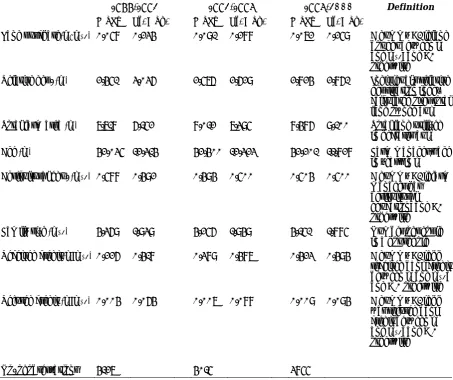
Table 1. Descriptive statistics and definitions of the main variables used in the analysis
1988-1992 1992-1996 1996-2000 Definition
Mean St. Dev. Mean St. Dev. Mean St. Dev.
Land purchase(t0; t0+4) 0.058 0.234 0.091 0.288 0.072 0.259 A dummy =1 if land bought between t0 and t0+4; and =0 otherwise
Relative dep. (t0) 2.451 3.036 2.576 2.629 2.824 2.861 Individual’s relative deprivation index calculated over total land owned at t0 Total farm area (t0) 7.718 6.152 8.012 7.395 8.486 9.100 Total land utilized
in hectares at t0 Age (t0) 42.035 12.314 42.400 12.323 42.201 11.828 Farm manager’s age
in years in t0 Agricultural edu. (t0+4) 0.588 0.492 0.494 0.500 0.504 0.500 A dummy =1 if farm
manager has agricultural education; and =0 otherwise
Family size (t0+4) 4.369 1.939 4.256 1.949 4.151 1.885 Number of people in a household Received credit(t0;t0+4) 0.226 0.418 0.389 0.487 0.423 0.494 A dummy =1 if hh
received bank credit between t0 and t0+4; and = 0 otherwise Refused credit (t0;t0+4) 0.004 0.064 0.007 0.088 0.009 0.094 A dummy =1 if hh was refused bank credit between t0 and t0+4; and = 0 otherwise
No. of observations 4127 4015 3855
Table 1 shows several interesting things. Given our focus, it is important to note that the incidence of land purchases was relatively low and varied from 5.8% to 9.1% depending on a year. Further, the average initial relative deprivation grew over time, which suggests that over the analysed period land distribution became more unequal. This is consistent with the observation mentioned earlier, namely that during the transition period the dual character of agrarian structure has been gradually restored. At the same time a slight increase in the average total farm area, from 7.7 ha in 1988 to 8.5 ha in 1996, could be observed. Table 1 shows also a considerable increase in the incidence of receiving credit. While in the period 1988-1992 it was 22.6%, in the sub-periods covered by later surveys it accounted for 39% and 42% respectively. We also observe an increase in the incidence of farmers being refused credit, although this change is of a much smaller magnitude (from 4% in 1988-1992 to 9% in 1996-2000). The average age of farm managers and the average family size remained more or less stable over time.
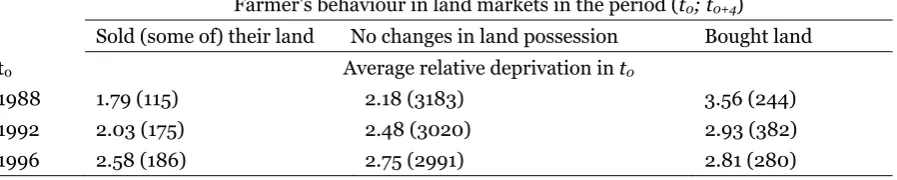
Table 2. Average relative deprivation in time t0 and land market participation in the period (t0;t0+4)
Farmer's behaviour in land markets in the period (t0; t0+4)
Sold (some of) their land No changes in land possession Bought land t0 Average relative deprivation in t0
1988 1.79 (115) 2.18 (3183) 3.56 (244) 1992 2.03 (175) 2.48 (3020) 2.93 (382) 1996 2.58 (186) 2.75 (2991) 2.81 (280)
Note: Number of observations in brackets. Farms that increased or decreased their land holdings through ways other than sales/purchases not included.
As reported, a majority of farmers in our samples were not involved in land markets transactions, regardless of the sub-period that we look at. For example, the share of farms that sold their land varied from roughly 3 to 5%. This is consistent with the official data for the whole country, which estimate the incidence of land sales to be lower than 10 percent. Most importantly however, figures presented in Table 2 indicate that the average initial relative deprivation was the lowest among those who later decided to sell some of their land and the highest among those who later decided for land purchases. This pattern is visible for all three waves of our survey, regardless whether we look at the 1988-1992 period, the 1992-1996 period or the 1992-1996-2000 period. Table 2 also shows that the differences in the average initial relative deprivation between various sub-samples of farms decreased over time. These two observations provide some support for the hypotheses formulated above. The former observation is consistent with the hypothesis that the initial relative deprivation may positively affect farmers’ propensity to buy land. The latter on the other hand lends some support to the hypothesis that this effect of relative deprivation is likely to weaken over time, possibly due to changes in rural and agrarian communities introduced by the ongoing modernisation and globalisation processes. Obviously, these observations are based on simple averages, and as a result, they certainly do not allow for making any definite statements.
Before we show somewhat more sophisticated analysis of the data, it could also be noted that farms that bought land on the market differed from farms not involved in such transactions in several background characteristics.12 To mention but a few, farms that decided to buy land were on average larger than the rest in terms of both the acreage and the number of household members. Further, they more often took advantage of external funds and were less often refused by the bank. Finally, the managers from farms having increased their land endowments were also on average younger and more often held agricultural education. These differences seem to be quite persistent as they could be observed in each period covered by our samples, no matter whether we look at the beginning, the middle or the end of the 1990s. That said, we now move to provide some more systematic evidence on the determinants of land purchases in Poland during the first decade of the transition period. Table 3 below reports the results of our logit estimations. Columns (1), (3) and (5) can serve as our baseline specifications and refer to the consecutive waves of our survey, namely to the wave conducted in 1992 (with some information on 1988), the wave conducted in 1996 (with some information on 1992) and to the wave conducted in 2000 (with some information on 1996) respectively. In columns (2), (4) and (6) we allow for potential non-linearities in the effect of relative deprivation on farmers’ behaviour. The rationale for this is that for really small farms (i.e. those that are likely to have a high relative deprivation) relative deprivation considerations are likely to be replaced by concerns for mere survival (see also Stark and
Taylor, 1991 for a similar argument). In that case, we would expect the influence of the relative deprivation to follow an inverted U-shaped function.
Overall, the results presented in Table 3 are in line with our expectations and provide some support for both hypotheses discussed above. More specifically, in all specifications we find a positive influence of the relative deprivation on farmer’s propensity to purchase land. This pattern however slightly varies over time. At the beginning of the transition period this impact seems to be non-linear and follows the inverted U-shape function (see the coefficients on the relative deprivation variables in columns (1) and (2)). At the later stages in turn, the relationship between the relative deprivation and the incidence of land purchases seems to be linear. This could be illustrated by the positive and statistically significant coefficient on the linear term of the relative deprivation variable and the coefficient on the squared term statistically indistinguishable from zero (see columns (3)-(6)). The results from Table 3 lend also some credence to our second hypothesis. The coefficients on the relative deprivation variables for specifications based on the 1996-2000 sub-sample (columns (5) and (6)) are of smaller magnitude than those reported for 1988-1992 and 1992-1996 sub-samples (columns (1) and (2) and columns (3) and (4) respectively). This in turn suggests that the impact of the relative deprivation considerations has at least partly weakened over time.
As far as the other covariates are concerned, their impact on land purchases is in accordance with earlier expectations. In particular, we find a positive impact of total utilised area. This clearly shows that farmers' behaviour in land markets is driven not only by relative, but also by absolute land endowments.. In fact, the latter effect seems to be much larger in magnitude than the relative effect. The incidence of buying land is also higher among younger farmers and among households having received bank credit. The latter observation is in line with arguments emphasising the role of external financing in stimulating land markets' operation. We also find a positive impact of family size.
Table 3. Logit estimates of land purchases’ determinants
Dep. var: a dummy =1 for households that bought land at some point between t0 and t0+4; and =0 otherwise
(1) (2) (3) (4) (5) (6)
(t0; t0+4) (t0; t0+4) (t0; t0+4)
1988-1992 1992-1996 1996-2000
Land relative deprivation t0 0.101 0.212*** 0.113*** 0.176* 0.0779** 0.0483
(0.069) (0.051) (0.038) (0.100) (0.036) (0.079)
Land relative deprivation squared t0 -0.00259*** -0.00535 0.00209
(0.00080) (0.0076) (0.0037)
Total farm area t0 0.0350 0.0617*** 0.0290*** 0.0323*** 0.0409*** 0.0396***
(0.027) (0.016) (0.011) (0.012) (0.014) (0.014)
Age t0 -0.0190*** -0.0181*** -0.0134** -0.0136** -0.0281*** -0.0280***
(0.0056) (0.0056) (0.0057) (0.0057) (0.0067) (0.0067)
Agricultural education (t0+4) 0.127 0.159 0.232* 0.240* 0.210 0.205
(0.16) (0.16) (0.12) (0.13) (0.14) (0.14)
Family size (t0+4) 0.168*** 0.173*** 0.103*** 0.104*** 0.155*** 0.154***
(0.039) (0.040) (0.022) (0.022) (0.039) (0.039)
Received credit(t0; t0+4) 0.816*** 0.813*** 0.998*** 1.014*** 0.716*** 0.706***
(0.16) (0.16) (0.18) (0.19) (0.18) (0.18)
Refused credit(t0; t0+4) -0.176 -0.177 0.665 0.675
(0.67) (0.68) (0.68) (0.67)
Constant -4.550*** -5.400*** -3.674*** -3.846*** -4.356*** -4.274***
(0.79) (0.57) (0.38) (0.47) (0.48) (0.53)
No. of observations 3757 3757 3659 3659 3308 3308
Pseudo R2 0.150 0.156 0.136 0.136 0.153 0.153
Table 4. OLS estimates of land purchases’ determinants
Dep. var: a dummy =1 for households that bought land at some point between t0 and t0+4; and =0 otherwise
(1) (2) (3) (4) (5) (6)
(t0; t0+4) (t0; t0+4) (t0; t0+4)
1988-1992 1992-1996 1996-2000
Land relative deprivation t0 0.0114*** 0.0200*** 0.0109** 0.0139 0.0101** 0.0102 (0.0039) (0.0056) (0.0046) (0.0088) (0.0039) (0.0070) Land relative deprivation
squared t0 -0.000198* -0.000260 -0.00000864
(0.00012) (0.00065) (0.00037)
Total farm area t0 0.00440** 0.00690*** 0.00323* 0.00341* 0.00577*** 0.00577***
(0.0019) (0.0021) (0.0017) (0.0018) (0.0019) (0.0019)
Age t0 -0.000766*** -0.000733*** -0.000857** -0.000858** -0.00126*** -0.00126***
(0.00026) (0.00025) (0.00036) (0.00036) (0.00035) (0.00035) Agricultural education (t0+4) 0.00955 0.0115 0.0198* 0.0201* 0.0131 0.0132
(0.0083) (0.0082) (0.010) (0.010) (0.0090) (0.0088) Family size (t0+4) 0.00763*** 0.00773*** 0.00697*** 0.00704*** 0.00778*** 0.00778***
(0.0021) (0.0021) (0.0018) (0.0018) (0.0027) (0.0027) Received credit(t0; t0+4) 0.0558*** 0.0554*** 0.0833*** 0.0838*** 0.0401*** 0.0401***
(0.012) (0.012) (0.016) (0.016) (0.011) (0.011)
Refused credit(t0; t0+4) -0.101*** -0.101*** -0.0249 -0.0247 0.0500 0.0500 (0.022) (0.022) (0.053) (0.053) (0.068) (0.068)
Constant -0.0874** -0.151*** -0.0338 -0.0420 -0.0466 -0.0469
(0.040) (0.047) (0.041) (0.047) (0.035) (0.038)
No. of observations 4127 4127 4015 4015 3855 3855
R2 0.09 0.09 0.10 0.10 0.10 0.10
These new results confirm the findings of models presented in Table 3. That is, farmers with higher initial relative deprivation are more likely to purchase land. Moreover, for the first period observed (i.e. 1988-1992) the relationship is non-linear and takes the form of an inverted U-shape. Finally, the effect of the relative deprivation weakens with time.
As a further robustness check, we also estimated a linear probability models on the same restricted sample as the one used in the logit estimates (not reported).13 This was done to check whether our baseline results are not driven by the choice of the econometric specification. The results of this exercise were again consistent with those reported in Table 3.
In a final strategy, we experimented with a two stage least squares approach where we treat the farmer’s relative deprivation in land assets as endogenous. This is done to see whether our results are not driven by some omitted variables. While the Durbin and Wu-Hausman tests cautiously suggest that our main variable of interest is exogenous, note that our data do not allow us to control for the level of households’ incomes. If, in turn, changes in land relative deprivation depend on incomes, which is likely to be the case, then our estimates reported in Tables 3 and 4 need not indicate a causal link between the individual’s relative deprivation and his/her activity on land markets. What follows, we instrument for the relative deprivation using the land Gini coefficient at the village level and its interactions with dummies distinguishing small and large farms (with medium-size farms acting as a reference group). As we show in Table 5 below (see the F-statistics and coefficients on land Gini variables in columns (1), (3) and (5)), our instruments are strongly correlated with the relative deprivation index for all sub-periods covered in this study and have the expected signs. Except for the specification for the period 1996-2000 they also pass the over-identification test (see the p-values for the Sargan-Basman test).
[image:17.595.77.527.515.728.2]As far as the coefficients on the relative deprivation index from the 2SLS estimates are concerned, they are positive and of similar magnitude as the OLS estimates presented in Table 4. Thus they again suggest a positive association between farmers' relative deprivation in land assets and their propensity to purchase land. Not surprisingly however, these estimates are less precise. In fact, now the coefficient by relative deprivation variable is statistically distinguishable from zero only for the first sub-period studied (column 2). Overall though, we conclude that the instrumental variable results confirm our earlier findings and provide some support for the two hypotheses put forward in this study.
Table 5. Instrumental variables estimates of land relative deprivation effect
(1) (2) (3) (4) (5) (6)
(t0; t0+4) (t0; t0+4) (t0; t0+4)
1988-1992 1992-1996 1996-2000
1st stage 2nd stage 1st stage 2nd stage 1st stage 2nd stage Land relative
deprivation t0 0.0169***
0.00726 0.00204
(0.0064) (0.0070) (0.0056)
Total farm area t0 -0.028 0.00382*** -0.0498*** 0.00229 -0.037*** 0.00475***
(0.030) (0.0013) (0.0095) (0.0014) (0.0061) (0.0014) Age t0 -0.022*** -0.000594** -0.0214*** -0.00122*** -0.024*** -0.00157***
(0.004) (0.00029) (0.0048) (0.00039) (0.0063) (0.00039) Agricultural
education (t0+4) -0.260 0.00740 -0.525** 0.0190* -0.436** 0.0112
(0.244) (0.0088) (0.20) (0.011) (0.19) (0.0091)
Family size (t0+4) -0.091*** 0.00756*** -0.135*** 0.00643*** -0.0878** 0.00540**
(0.034) (0.0021) (0.031) (0.0021) (0.035) (0.0026) Received credit(t0;
t0+4) 0.698*** 0.0562*** 0.484** 0.0940*** -0.424** 0.0431***
(0.162) (0.012) (0.19) (0.014) (0.21) (0.011)
Refused credit(t0;
t0+4) 0.905 -0.0557*** -1.004*** -0.0167 0.208 0.0458
(0.772) (0.020) (0.33) (0.048) (0.47) (0.065) Village land gini 7.509*** 11.20*** 9.786***
(1.883) (2.98) (3.68)
Village land gini *
small farms 5.310*** 4.251*** 3.167***
(1.128) (0.77) (0.70)
Village land gini *
large farms -2.612** -1.939*** -0.929
(1.058) (0.56) (0.60)
Constant 1.284 -0.0377 0.662 0.0335 1.261 0.0458
(0.870) (0.033) (1.09) (0.042) (1.19) (0.040)
First stage
F-statistic 13.033 17.284 11.210
Sargan-Basman
test, p-value 0.129 0.889 0.004
No. of observations 4127 4127 4015 4015 3855 3855
R2 0.23 0.03 0.30 0.05 0.24 0.06
Note: Robust standard errors in parentheses; *** p<0.01, ** p<0.05, * p<0.1
6.
Conclusions
Land markets continue to occupy an important place in the agriculture and development economics. While a number of factors have been studied in relation to farmers' propensity to participate in land transactions, relatively little attention has been devoted to the role of land distribution.
This paper tries to fill this gap and aims to contribute to the literature by investigating to what extent farmer's propensity to purchase land is related to his/her relative land endowments and interpersonal comparisons with his/her peers from the relevant reference group. This argument is well grounded in the economic theory that emphasises the fact that human behaviour is affected by comparison with neighbours. There also exists some evidence suggesting that land can be an important determinant of an individual's social and political position. As a result, land possession may be important not only in absolute but also in relative terms. In response to this, using household level data, we study the determinants of land purchases in Poland in the first decade of the transition period with the special focus on the impact of relative land endowments. We measure the dismay from having less land then others in one's own village by the index of relative deprivation.
have been profoundly reorganising agrarian and rural communities. What follows, over time, non-economic values of land might have lost some of its importance.
That said, clearly, a question remains to what extent the relationship that we document reflects causality. As mentioned earlier, our data capture farm's socio-economic characteristics only to a limited extent. In effect, it may be argued that our main variable of interest captures also other unobservable factors. Nevertheless, the correlations that we report are quite robust. In effect, they show that the issues in question should receive some more attention. Thus, we hope that, even if we are not able to ascertain causality, the analysis which we present here can form a basis for further interesting inquiries. Additional robustness tests of findings reported could be one potential line of research. One issue that should be taken into account is to better control for potential effects related to economies of scale and to ensure that they are not captured by the relative deprivation measure. Providing evidence for other countries also seems promising. Finally, investigating the exact mechanisms through which the importance of relative deprivation may change over time is something that can importantly improve our understanding of the issues in question. Looking at the reorganisation of rural areas in response to processes of modernisation and globalisation could be a starting point for such an analysis.
References
Acemoglu, D., Bautista M.A., Querubin, P., Robinson, J.A. (2008), “Economic and Political Inequality in Development: The Case of Cundinamarca in Colombia”, in E. Helpman (ed.), Institutions and Economic Performance, Cambridge, MA: Harvard University Press, pp. 181-245.
Baland, J.-M. and J.A. Robinson (2008), “Land and Power: Theory and Evidence from Chile”, American Economic Review 98 (5), pp. 1737-1765.
Baldwin, K. (2013), “When Political Leaders Cede Control of Resources: Land, Chiefs and Coalition-Building in Africa”, Comparative Politics (forthcoming).
Banerjee, A. and L. Iyer (2005), “History, Institutions, and Economic Performance: The Legacy of Colonial Land Tenure Systems in India”, American Economic Review 95 (4), pp. 1190-1213.
Banerjee, A.V., P.J Gertler and M. Ghatak (2002), “Empowerment and Efficiency: Tenancy Reform in West Bengal”, Journal of Political Economy 110 (2), pp. 239-280.
Becker, G.S. (1974), “A Theory of Social Interactions”, Journal of Political Economy LXXXII, pp. 1063–1093.
Binswanger, H.P., K. Deininger and G. Feder (1995), “Power, Distortions, Revolt and Reform in Agricultural Land Relations” in J. Behrman and T.N. Srinivasan(eds), Handbook of Development Economics, vol. 3, Amsterdam: Elsevier, pp. 2659-2772.
Bryant, L. (1999), “The detraditionalization of occupational identities in farming in South Australia” Sociologia Ruralis 39 (2), pp. 236-261.
Burton, R.J.F. (2004), “Seeing through the 'Good Farmer's' Eyes: Towards Developing an Understanding of the Social Symbolic Value of Productivist Behaviour”, Sociologia Ruralis 44 (2), pp. 195-215.
Carter, M. and P. Olinto (2003), “Getting institutions ‘‘right’’ for whom? Credit constraints and the impact of property rights on the quantity and composition of investment”,
Ciaian, P. and D. Kancs (2012), “The Capitalization of Area Payments into Farmland Rents: Micro Evidence from the New Member States”, Canadian Journal of Agricultural Economics 60 (4), pp. 517-540.
Ciaian, P., D. Kancs, J. Swinnen, K. Van Herck and L. Vranken (2012), “Sales Market Regulations for Agricultural Land in EU Member States and Candidate Countries”, Factor Markets Working Paper No. 14, CEPS, Brussels.
Ciaian, P., Swinnen, J. (2009). Credit Market Imperfections and the Distribution of Policy Rents, American Journal of Agricultural Economics 91 (4), 1124-1139.
Cheshire, L., C. Meurk and M. Woods, (2013), “Decoupling farm, farming and place: Recombinant attachments of globally engaged family farmers”, Journal of Rural Studies 30, pp. 64-74.
Clark, A.E. and A.J. Oswald (1996), “Satisfaction and Comparison Income” Journal of Public Economics 61, pp. 359–81.
Deininger, K. and G. Feder (2001), “Land institutions and land markets”, in B.L. Gardner and G.C. Rausser (eds), Handbook of Agricultural Economics Vol. 1A, Amsterdam: Elsevier, pp. 288-331.
Deininger, K., S. Jin and H.K. Nagarajan (2009), “Determinants and consequences of land sales market participation: Panel evidence from India”, World Development 37 (2), pp. 410-421.
Dobieszewski, A. (1993), Kolektywizacja wsi polskiej 1948 – 1956, Warszawa.
Duflo, E. and E. Saez (2002), “Participation and investment decisions in a retirement plan: The influence of colleagues’ choices”, Journal of Public Economics 85, pp. 121-148. Drozd-Piasecka, M. (1991), Ziemia w społeczności wiejskiej. Studium wsi poł
udniowo-wschodniego Mazowsza (koniec XIX i XX wiek), Warszawa: IHKM PAN.
Easterlin, R.A. (1995), “Will raising the incomes of all increase the happiness of all?”, Journal of Economic Behavior and Organization 27, pp. 35–47.
Egoz, S., J. Bowring and H. Perkins (2001), “Tastes in tension: form, function, and meaning in New Zealand’s farmed landscapes” Landscape and Urban Planning 57, pp. 177-196. Eswaran, M. and A. Kotwal (1986), “Access to Capital and Agrarian Production
Organization”, Economic Journal 96, pp. 482-498.
Feder, G. (1985), “The relation between farm size and farm productivity: the role of family labor, supervision and credit constraints”, Journal of Development Economics, 18, pp. 297–313.
Foster, A.D. and M.R. Rosenzweig (1995), “Learning by doing and learning from others: human capital and technical change in agriculture”, Journal of Political Economy, 103, pp. 1176–1209.
Gorlach, K. (1989), “On repressive tolerance: state and peasant farm in Poland”, Sociologia Ruralis, XXIX, pp. 23-33.
Gorlach, K. (1990), Socjologia polska wobec kwestii chłopskiej, Kraków: Uniwersytet Jagielloński.
Gorton, M. and S. Davidova (2004), “Farm productivity and efficiency in the CEE applicant countries: A synthesis of results”, Agricultural Economics, 30, pp. 1–16.
Gray, J. (1998), “Family farms in the Scottish Borders: a practical definition by hill sheep farmers”, Journal of Rural Studies, 14 (3), pp. 341-356.
Halamska, M., H. Lamarche and M-C Maurel (2003), Rolnictwo rodzinne w transformacji postkomunistycznej. Anatomia zmiany, Warszawa: IRWiR PAN.
Hildenbrand, B. and C. Hennon (2005), “Above all, farming means family farming” Journal of Comparative Family Studies, 36 (3), pp.357-366.
Holloway, G. and M.L. Lapar (2007), “How big is your neighborhood? Spatial implications of market participation by Filipino smallholders”, Journal of Agricultural Economics, 58 (1), pp. 37-60.
Jagiełło-Łysiowa, E. (1969), Zawód rolnika w świadomości społecznej dwóch pokoleń wsi: studium na przykładzie wybranych społeczności lokalnych i pamiętników, Warszawa: Książka i Wiedza.
Jezierski, A. and B. Petz (1988), Historia gospodarcza Polski Ludowej 1944-1985, Warszawa. Johnsen, S. (2004). The redefinition of family farming: agricultural restructuring and farm
adjustment in Waihemo, New Zealand. Journal of Rural Studies 20, pp. 419-432. Karagiannis, G., Tzouvelekas, V. (2012), The damage-control effects of pesticides on total
factor productivity growth, European Review of Agricultural Economics, 39 (3), pp. 417-437.
Kilian, S., Salhofer, K. (2008), Single payments of the CAP. Where do the rents go?
Agricultural Economics Review, 9, pp. 96-106.
Kirwan, B.E. (2009), The incidence of U.S. agricultural subsidies on farmland rental prices,
Journal of Political Economy, 117, pp. 138-164.
Kochanowicz, J. (1989), The Polish Economy and the Evolution of Dependency, in D. Chirot, (ed.), The Origins of Backwardness in Eastern Europe. Economics and Politics from
the Middle Age until the Early Twentieth Century, Berkeley, CA: University of
California Press, pp. 92-130.
Kochanowicz, J. (2008), “The Changing Landscape of Property: Land Ownership and Modernization in Poland in the 19th and 20th centuries”, in Hhannes Siegrist and Dietmar Müller (eds), Property in East Central Europe. The Notion, Institutions and Practices of Property to Land in the 20th Century, mimeo, University of Warsaw. Kranton, R.E. and A.V. Swamy (1999), “The hazards of piecemeal reform: British civil courts
and the credit market in colonial India”, Journal of Development Economics 58, pp. 1– 24.
Kuehne, G. (2013), “My decision to sell the family farm”, Agriculture and Human Values, forthcoming, DOI 10.1007/s10460-012-9393-7
Libby, L.W. and J.S. Sharp (2003), “Land-use compatibility, change, and policy at the rural-urban fringe: Insights from social capital”, American Journal of Agricultural Economics, 85 (5), 1194-1200.
Lindesmith, A., A. Strauss and N. Denzin (1999), Social Psychology, Thousand Oaks, CA: SAGE Publications Inc.
Markowitz, H.M. (1952), “The Utility of Wealth”, Journal of Political Economy, 60, pp. 151– 58.
Mieszczankowski, M. (1960), Struktura agrarna Polski międzywojennej, Warszawa.
Otsuka, K. (2007). Efficiency and equity of land markets, in: R. Evenson and P. Pingali (eds.)
Handbook of Agricultural Economics Vol. 3D, Amsterdam: Elsevier, 2671-2703.
Platteau, J.-P., (2000), Institutions, Social Norms, and Economic Development, Amsterdam: Harwood Academic.
Sacerdote, B. (2001), “Peer Effects with Random Assignment: Results for Dartmouth Roommates”, Quarterly Journal of Economics, 116 (2), pp. 681-704.
Seabrook, M. and C. Higgins (1988), “The role of the farmer’s self concept in determining farmer behaviour”, Agricultural Administration and Extension, 30, pp. 99-108.
Staniszkis, J. (1989), Ontologia socjalizmu. Warszawa: In Plus.
Stark, O. (1984), “Rural-to-urban migration in LDCs: A relative deprivation approach”,
Economic Development and Cultural Change, 32 (3), pp. 475-86.
Stark, O. and S. Yitzhaki (1988), “Labor migration as a response to relative deprivation”,
Journal of Population Economics, 1 (1), pp. 57-70.
Stark, O. and J.E. Taylor (1991), “Migration incentives, migration types: The role of relative deprivation”, The Economic Journal, 101, pp. 1163–1178.
Stark, O. and C.S. Fan (2011), “Migration for degrading work as an escape from humiliation”,
Journal of Economic Behavior and Organization, 77(3), pp. 241-247.
Stark, O. and W. Hyll (2011),”On the economic architecture of the workplace: Repercussions of social comparisons among heterogeneous workers”, Journal of Labor Economics,
29(2), pp. 349-375
Stark, O., W. Hyll and Y. Wang (2012), “Endogenous selection of comparison groups, human capital formation, and tax policy, Economica, 79 (313), pp. 62-75.
Styk, J. (1993), Chłopskie widzenie świata i siebie, Włocławek: Wyd. Duszpasterstwa Rolników.
Van Landeghem, B., J. Swinnen and L. Vranken (2013), “Land Distribution and Subjective Well-Being in Moldova”, Eastern European Economics, 51 (1), 61-85.
Vranken, L. and J. Swinnen (2006), “Land Rental Markets in Transition: Theory and Evidence from Hungary”, World Development 34(3), pp.481-500.
Williamson, O. (2000); “The New Institutional Economics: Taking Stock, Looking Ahead”,
Journal of Economic Literature, 38 (3), pp. 595-613.
The Factor Markets project in a nutshell
Title Comparative Analysis of Factor Markets for Agriculture across the Member States
Funding scheme Collaborative Project (CP) / Small or medium scale focused research project
Coordinator CEPS, Prof. Johan F.M. Swinnen
Duration 01/09/2010 – 31/08/2013 (36 months)
Short description Well functioning factor markets are a crucial condition for the competitiveness and
growth of agriculture and for rural development. At the same time, the functioning of the factor markets themselves are influenced by changes in agriculture and the rural economy, and in EU policies. Member state regulations and institutions affecting land, labour, and capital markets may cause important heterogeneity in the factor markets, which may have important effects on the functioning of the factor markets and on the interactions between factor markets and EU policies.
The general objective of the FACTOR MARKETS project is to analyse the functioning of factor markets for agriculture in the EU-27, including the Candidate Countries. The FACTOR MARKETS project will compare the different markets, their institutional framework and their impact on agricultural development and structural change, as well as their impact on rural economies, for the Member States, Candidate Countries and the EU as a whole. The FACTOR MARKETS project will focus on capital, labour and land markets. The results of this study will contribute to a better understanding of the fundamental economic factors affecting EU agriculture, thus allowing better targeting of policies to improve the competitiveness of the sector.
Contact e-mail [email protected]
Website www.factormarkets.eu
Partners 17 (13 countries)
EU funding 1,979,023 €
EC Scientific officer Dr. Hans-Jörg Lutzeyer