B
2-2.002
rmation
2 - 2 0 0 2 · Ν ° 1 1 1 ISSN 0250-3891
At its annual meeting on 4 June 2002, the Board of
Governors of the European Investment Bank
unanimously
adopted the decision to increase the Bank's subscribed
capital to EUR 150 billion as from 1 January 2003.
Trends in subscribed capital
À
I
375 EUR billion250
200
150
iirønsffii
221■
Loans outstandingΊ Maximum '—' loans
outstanding: 250% of subscribed capital
■ Subscribed ^ capital
sn
1958 71 73 76 79 81 86 91 95 99 01 03
Francis Carpenter
New Chief Executive of the EIF
1
■^¡¡v European
Investment
Fund
Eberhard
Uhlmann
New Secretary
General of the EIB
With
effect from
1 August
2002, the
ElB's Management
Committee has appointed
Mr Eberhard Uhlmann as
Secretary General along
side his current position
of General Counsel of the
Bank's Legal Affairs
Directorate.
This appointment
follows
that of Mr Francis
Carpenter, Secretary
General since July 1996,
as Chief Executive of the
EIF and Advisor to the
Management Committee.
see article p.5
On a proposal from the ElB's
Management Committee, the EIF's Board
of Directors has appointed Mr Francis
Carpenter as Chief Executive of the
European Investment Fund, the EIB
Group's subsidiary specialising in equity
investment and SME guarantees.
This appointment takes effect on 1 August 2002.
Increase in the ElB's capital 2
Senior EIB Group
appointments ¿t
"Innovation 2000 Initiative"
The EIB Group's activity in favour of SMEs in 2001 11
Evaluation of the ElB's financing of-solid waste
management projects X.
New Guide to Procurement for ElB-financed projects 14
Ongoing dialogue
with NGOs 1
Honoris Causa U,
Appointments to the ElB's senior management cadre 17
Royal visits to the EIB 20
Mr Pedro Solbes, European Commissioner
This 50% increase will enable the Bank t o continue under-pinning EU policies t h r o u g h a moderate increase in opera-tions within the present EU but w i t h stronger g r o w t h in the Accession Countries and Mediterranean Partnership Countries.
An essential step
As at 31 December 2001, the Bank had outstanding loansto-talling EUR 221 billion, close t o the notional limit of EUR 250 billion (250% of subscribed capital) which is expected to be reached in 2003.
By raising the statutory ceiling t o EUR 375 billion, this capital increase will give the EIB suf-ficient headroom for its lend-ing operations f o r at least the next five years. In this con-nection, t h e ElB's Corporate Operational Plan plots t h e Bank's operational objectives f o r t h e coming years and frames the priorities which can be supported by this cap-ital increase.
This decision once again illus-trates the firm and unanimous backing of the Bank's share-holders, the Member States of the European Union, f o r its ac-tivities.
The Bank's last capital increase took place in 1999.
Paid-in capital
Paid-in capital has been re-duced f r o m 6% to 5% (EUR 7.5 billion) of subscribed capital and entirely financed by a transfer f r o m the Bank's addi-tional reserves. Consequently, this measure entails no pay-ment by the Member States and no extra burden on tax-payers.
Addressing the Bank's Gover-nors, the EU Finance Ministers, Mr Philippe Maystadt, Presi-dent of the EIB Group, set out the t w o pivotal elements of the strategy underlying the capital increase decision: operational priorities and guiding principles.
Operational
priorities
•
Regional development
Regional development, along w i t h economic and social co-hesion w i t h i n the European Union, remains the Bank's prime objective. At least 70% of individual loans and 50% of global loans will be advanced in the Union's assisted areas, which w i l l be treated on an equal f o o t i n g w i t h the new member countries.
In addition, the Bank will de-velop a more focused ap-proach w i t h a view t o reduc-ing the volume of its lendreduc-ing t o large corporates w i t h direct access t o t h e capital markets, confining itself to operations where EIB financing generates value added in line w i t h the objectives of regional devel-opment and innovation.
•
Research, technology
and innovation
The EIB Group will continue to contribute actively t o the "Lisbon Strategy" (established by the European Council in March 2000) for underpinning t h e emergence of a know-ledge-based, innovation-led economy, especially through the Bank's Innovation 2000 Initiative (i2i), cooperation w i t h the European Commission and SME support furnished by its subsidiary, the EIF.
•
Environmental
protection
Since the Bank's aim is to make available between a quarter and a third of its loans for en-vironmental projects, it strives to promote environmental pro-tection investments furthering the EU's international commit-ments t o sustainable develop-ment and prevention of cli-mate change. W i t h a view to supplementing its range of ref-erence documents, the Bank al-so recently approved a strat-egy in favour of financing pro-jects that focus on renewable energies.
•
Accession Countries
EUROPEAN INVESTMENT BANK
Increase in the ElB's capital
• Partner Countries
The Bank will f oster implementation of Community development aid and cooperation policies under the var-ious lending mandates handed down to the Bank by the Council. Significant progress has been achieved in setting up the Investment Facility under the Cotonou Agreement as well as in creating a new Euro-Mediterranean Investment and Partnership Facility, a task entrusted t o the Bank at the Barcelona European Council (March 2002).
Guiding principles of
EIB activity
In addition to the operational pri-orities mentioned, there are four major principles already guiding the Bank's activity which will be devel-oped in the future:
•
Value added
The first principle is subsidiarity, which means that the EIB will max-imise the value added of its opera-tions by focusing on investment schemes in assisted areas and ¡2i projects w i t h an innovative strategic objective.
on its policies, procedures and ac-tivity to interested parties, i.e. its shareholders, its industrial and f i -nancial partners, EU institutions (European Parliament, Council and Commission in particular), civil soci-ety including NGOs plus the gener-al public. To this end, the ElB's web-site (www.eib.org) plays a vital role as the main vehicle for making avail-able this information.
•
Risk management
As this is an area where complacen-cy is not acceptable and where it is crucial constantly to move forward in line w i t h best practice and regu-latory requirements, the Bank will continue t o improve its risk man-agement systems, controls and pro-cedures.
Juan Manuel Sterlin Balenciaga Information and Communications
Department (+352) 43 79 3126
NB: Mr Maystadt's statement and the Governors' decision - which will be pub-lished in the Official Journal of the European Communities (OJEC) - are avail-able on the ElB's website.
Mr Rodrigo Rato, Covernor for Spain, Mr Philippe Maystadt, EIB President
Mr Francis Mer, Governor for France
Mr Didier Reynders, Governor for Belgium
• Financial self-sustainability
As well as offering investors favourable terms, the Bank must al-so generate a sufficient surplus to build up reserves, thus avoiding hav-ing to call on its shareholders to make further equity contributions for cap-ital increases.
•
Transparency
Acknowledging that citizens have a legitimate interest in its activities, the Bank pursues an information and transparency policy whereby it circulates as much data as possible
Breakdown of the ElB's subscribed capital
(EUR 150 billion as from 1 January 2003)
20»',,
17,7 17,7 17,7 17,7
111111
DE FR IT GB ES BE NL SE DK AT Fl GR PT IE LU
Francis Carpenter ,
new Chief Executive of the EIF
^8w European
Investment
Fund
On a proposal from the ElB's Management
Committee, the EIF's Board of Directors has
appointed Mr Francis Carpenter as Chief
Executive of the European Investment Fund,
the EIB Group's subsidiary specialising in
equity investment and SME guarantees. This
appointment takes effect on
7
August 2002.
Furthermore, w i t h a view t o con t i n u i n g t o b e n e f i t f r o m t h e experi ence acquired d u r i n g his t e r m of o f f i c e as Secretary G e n e r a l , t h e ElB's M a n a g e m e n t C o m m i t t e e has requested Francis Carpenter t o act as its Advisor on EIB Group strategy and negotiations, w i t h t h e rank of Director General. His spe cific remit w i l l be t o foster closer links b e t w e e n t h e Fund and its par e n t i n s t i t u t i o n . He w i l l also help shape f u t u r e d e v e l o p m e n t of t h e Group concept in t a n d e m w i t h t h e creation of specialised instruments f o r p e r f o r m i n g tasks e n t r u s t e d t o t h e Bank f o r t h e Union's bene f i t .
The a p p o i n t m e n t o f Francis Carpenter, Secretary General of t h e EIB f r o m 1996 t o 2002, as Chief Executive of t h e Fund underlines t h e importance t h a t t h e Bank at taches t o t h e role of its specialised subsidiary and t h e s t r e n g t h of its support.
page4 ■ EiB I N F O R M A T I O N 2 - 2 0 0 2
The EIF: a key role in i2i
W i t h some 160 equity participations in venture capital funds established in b o t h t h e EU and the Accession Countries and w i t h a portfolio of al most EUR 3.3 billion in SME guaran tees concluded w i t h 86 banks and f i nancial institutions, the EIF is making a key contribution t o the objectives of the Innovation 2000 Initiative (i2i) launched by the EIB Group in response t o t h e conclusions of the Lisbon European Council (March 2000).
The c o m p l e m e n t a r y nature of t h e activities of t h e Fund and t h e Bank, t h e highly productive synergies de veloped w i t h t h e Commission and t h e close cooperative ties f o r g e d by t h e EIF w i t h its European bank shareholders enable t h e Fund t o o f f e r a dedicated range of p r o d ucts t a i l o r e d t o t h e emergence of innovative, j o b c r e a t i n g firms in a European economy in t h e throes of major technological change.
After j o i n i n g t h e EIB in 1975, in the D e p a r t m e n t f o r Lending Operations in Italy, Francis Carpenter headed t h e Department for Lending Opera t i o n s in Ireland, P o r t u g a l , t h e United Kingdom and t h e North Sea at t h e t i m e w h e n Portugal j o i n e d t h e EU (1987). He was subsequent ly Director of t h e Credit Risk Depart ment, overseeing a p o r t f o l i o in ex cess of ECU 95 billion, before being a p p o i n t e d Secretary General (July 1996). Francis Carpenter began his financial career at Citibank in New York and Geneva before w o r k i n g at Banque Indosuez in Paris, having studied at Oxford and in t h e United States as well as g r a d u a t i n g f r o m the Institut d'Études Politiques ¡n Paris.
EUROPEAN INVESTMENT BANK
Senior EIB Group appointments
Eberhard Uhlmann ,
new Secretary General
of the EIB
With effect from 1 August 2002, the ElB's
Management Committee has appointed
Mr Eberhard Uhlmann as Secretary General
alongside his current position of General
Counsel of the Bank's Legal Affairs Directorate.
This appointment follows that of Mr Francis
Carpenter, Secretary General since July 1996, as
Chief Executive of the EIF and Advisor to the
Management Committee.
European
Investment
Bank
Aged 58, Eberhard Uhlmann joined the Bank in 1979. His early career was spent in the commercial banking sec-tor in Germany and France. Mr Uhlmann, w h o is a graduate of the University of Freiburg-im-Breisgau and gained a foreign student's de-gree from ENA, is a lawyer and has since July 2000 been General Counsel of the Legal Affairs Directorate. Prior to that, he had forged his career at the EIB in the Finance Directorate, firstly dealing with operations in the Treasury Department (1979), then as Head of the Planning and Control Division (1983) and as Director of the Department for Planning and Settlement of Operations (1996).
In light of the major changes to the Bank's tasks and financial products in recent years and building on the structural reforms implemented dur-ing Francis Carpenter's term of office, Mr Uhlmann's appointment coincides with reorganisation of the General Secretariat's services into three main areas of activity.
The "strategic and
institutional pillar"
of the General
Secretariat
A first group is placed under the direct authority of the Secretary General.
Mr Uhlmann is assuming primary re-sponsibility for operational and or-ganisational strategy, w i t h particu-lar emphasis on integrating the added dimension of the Bank's ac-tivity represented by EU enlarge-ment. In addition, the Secretary General will deal directly with mat-ters relating to intra- and inter-insti-tutional relations - especially the Management Committee's relations with the institution's supreme gov-erning bodies and the Bank's rela-tions with its partner EU institurela-tions, principally the Parliament, the Coun-cil and, of course, the Commission.
In his capacity as General Counsel of the Legal Affairs Directorate,
Mr Uhlmann will directly supervise institutional issues relating t o largement and the mandates en-trusted t o the Bank for supporting the Union's aid and cooperation policies vis-à-vis non-member coun-tries. This will particularly involve introduction of the Euro-Mediter-ranean Investment and Partnership Facility decided by the Barcelona European Council (March 2002) and the Investment Facility established under the Cotonou Agreements between the EU and the ACP coun-tries.
The Secretary General will be as-sisted in these duties by the ser-vices of the Legal Affairs Directorate currently responsible f o r institu-t i o n a l issues and legal back-up f o r operations initiated by t h e Finance Directorate and Treasury Department. It goes w i t h o u t saying t h a t these services w i l l operate w i t h the requisite a u t o n o -my for delivering impartial opin-ions.
Mr Konstantin Andreopoulos Mr Rémy Jacob page 6
Deputy Secretary
General
Mr Rémy Jacob, appointed Deputy Secretary General, will be in charge of a group of services comprising in particular the Information and Communications Department and internal resources management. Mr Jacob joined the EIB in 1973 and has been Director of General Administration since 1997. A gradu-ate of the École Supérieure de Commerce in Dijon, he began his ca-reer at the EIB in the Finance Directorate (1973), subsequently overseeing the management of Administrative Services (1976), the Budget(1983)and Human Resources (1987). He was appointed Director of Information Technology in 1993. Mr Jacob is also an alternate mem-ber of the EIF's Board of Directors.
Deputy General Counsel
In his capacity as Deputy General Counsel of the Legal Affairs Directorate, Mr Konstantin Andreopoulos w i l l be responsible for legal monitoring of all EIB lend-ing operations both w i t h i n and out-side the EU. A registered lawyer in Athens and New York and graduate of the Universities of Athens, Freiburg-im-Breisgau and Yale, Mr Andreopoulos joined the Bank's Legal Department in 1981 as Head of the Greece Division. He was ap-pointed head of the ElB's Athens Office when it opened in 1984 and subsequently directed the Division for Lending Operations in Greece
EIB INFORMATION 2 - 2 0 0 2
and Finland (1988) before moving Bank's activities. The EIB has also back to the Legal Affairs Directorate f o r g e d closer ties w i t h the as Director (1995) and Deputy Commission in both the institution-General Counsel (1998). al and operational fields w i t h a view t o increasing synergies between
1 9 9 6 - 2 0 0 2 : S I X y e a r s O f budgetary and lending instruments. This has been illustrated in recent years by the signature of some ten cooperation agreements on such di-verse matters as regional develop-ment, environmental protection and prevention of climate change, preparations for enlargement, re-search and development, t o w n plan-ning and the audiovisual sector.
profound changes
Under the Presidencies of Sir Brian Unwin (1993-1999) and Philippe Maystadt, the Bank carried out major internal changes, coordinated and taken forward by Francis Carpenter in his six years as Secretary General.
In t h e wake of the European Councils of Amsterdam (June 1997) and Lisbon (March 2000) - dedicat-ed t o supporting growth and em-ployment in Europe and investing in a knowledge-based, innovation-led economy - t h e EIB
greatly diversified its range of financial products, strength-ened its risk-taking and risk management structures and creat-ed the EIB Group by integrating the EIF, which since 2000 has become a specialised subsidiary.
Under the
Presidencies of Sir
Brian Unwin
(1993-1999) and
Philippe
Maystadt, the
Bank carried out
major internal
changes,
coordi-nated and taken
forward by
Francis Carpenter
in his six years as
Secretary General.
At the same time, the Bank has de-fined a new transparency policy, based firstly on informing the pub-lic as widely as possible of its strat-egies, operations and procedures,
and secondly on ongoing dialogue with civil soci-ety. Accordingly, each year the EIB organises a number of round table discussions aimed at NGOs interested in its ac-tivities while frequently participating in debates arranged by these or-ganisations.
A t the institutional level, t h e EIB has
raised its profile at Council meetings by making available, whenever nec-essary, its expertise and knowledge of economic realities. As a result, at practically every European Summit, the Heads of State or Government call on the EIB Group to help devel-op new initiatives in support of Europe's economy, the Accession Countries or non-member countries benefiting from EU cooperation.
In addition, the Bank has established fruitful political dialogue with the
European Parliament, as exempli-fied by the annual plenary session debate of Parliament's report on the
Underpinning these changes, the Secretary General has also played an active role in preparing the ground for the Bank's capital increase to EUR 150 billion decided by the Board of Governors in June 2002. Likewise, he has improved the linkage between strategy definition and budgetary and resource-accounting instru-ments, so matching resource alloca-tion to the institualloca-tion's objectives more closely.
Henry Marty-Gauquié Director of the Information and
Communications Department
(+352)43 79 3153
EUROPEAN INVESTMENT BANK
"Innovation 2000 Initiative"
"1&, '
¿¿¿it ι
'M"
r
•
β"1
■
|
"Innovation 2000 Initiative"
Analysis of results since launch
By end2001,
i.e. 18 months after it
was set up, the
European Investment
Bank's "Innovation 2000
Initiative" (¡2i) had
already produced tangi
ble results enabling a
number of preliminary
conclusions to be drawn.
Since its launch by the EIB Group in response t o t h e conclusions of t h e Lisbon European Council (March 2000), ¡2i has helped t o foster a knowledgebased, innovationdriv en economy t h r o u g h investment in t h e f o l l o w i n g areas: the i n f o r m a t i o n society, research and development, innovation, industrial competitive ness and human capital.
W i t h an operational objective o f lending w o r t h EUR 1215billionover a 3year period, t h e economic i m portance of ¡2i was reaffirmed a t t h e European Councils in Santa Maria da Feira (June 2000), Nice (December 2000) and, in particular, Stockholm
(March 2001) where its extension t o t h e Accession Countries was ap proved.
Results matching
objectives
The t o t a l a m o u n t approved d u r i n g t h e period 20002001 stood at EUR 9.1 b i l l i o n f o r 80 projects in 13 EU countries a n d 8 Accession Coun tries, w h i l e t h e overall a m o u n t signed came t o EUR 7.2 billion f o r 70 projects. These figures encom pass a c t i v i t y i n t h e Accession Countries b u t exclude venture cap ital operations in favour o f SMEs, w h i c h are a d m i n i s t e r e d by t h e European Investment Fund (EIF) (see box).
The relative share of each o f t h e five key fields covered by ¡2i has clearly changed over t h e t w o years in question. In 2000, I n f o r m a t i o n and Communications Technologies (ICT) projects t o o k pride o f place. In 2001, this sector's percentage levelled o u t whereas t h a t o f R&D
Overall data 20002001
Trends in breakdown by area
of activity
Approvals
2000
2001
o io
Signatures
Education
60%
10 20 30 40 50 60 70 80%
' Information and Communications Technologies
ventures expanded significantly (from 8% t o 35%). The share of ed-ucation and diffusion of innova-t i o n also grew sinnova-teadily.
Education and
Training
Projects attracting loans in this sec-t o r were locasec-ted in regional development areas, w h e r e they helped t o enhance t h e quality of human capital and employabili-ty of the workforce in a changing economy.
¡2i's ambit in this sector has been b r o a d e n e d t o include on-line teaching objectives w i t h a view t o p r o m o t i n g the use of informa-t i o n and communicainforma-tions informa- tech-nologies such as IT networks, mul-timedia, virtual libraries, distance learning and web-enabled class-rooms.
To date, approvals in the field of education have centred on projects involving the modernisation and computerisation of schools, col-leges and universities in eastern Germany, Austria, Denmark, Greece and the United Kingdom, as well as Poland.
Research and
development
R&D is a decisive factor in renew-ing economic supply and sustain-ing Europe's industrial competi-tiveness. Since the launch of ¡2i, EIB lending in this field has increased substantially, benefiting projects in most European Union countries as well as Hungary. In 2001, in par-ticular, a major series of operations w i t h a pan-European dimension was carried out, involving research into life sciences as well as the es-tablishment and shared manage-ment of 3rd generation telecom-munications networks.
In addition, t h e Joint Memoran-dum on R&D signed between t h e Commission and the EIB in June 2000 sets out a f r a m e w o r k f o r greater cooperation and informa-t i o n flows beinforma-tween informa-the informa-t w o insinforma-ti- insti-tutions. This document prepares the ground f o r increased EU f i -nance for the R&D sector t h r o u g h grants under the new Research Framework Programme (2002-2006) t o be triggered in A u t u m n 2002, as well as t h r o u g h EIB loans plus EIF venture capital and guar-antee instruments.
Diffusion of
innovation
-"Audiovisual ¡2i"
This key area of ¡2i concerns pro-jects relating t o the dissemination of intellectual creation in Europe. A t present, such schemes focus es-pecially on artistic c r e a t i o n , a sphere in which the cultural and f i -nancial stakes are extremely high for Europe's economy.
The Bank's objectives in this sector are t o foster pan-European initia-tives, while deepening the Euro-pean content of audiovisual works. Particular efforts are being made t o underpin technological change in t h e industry, especially the dig-italisation of broadcasting and production.
It should also be stressed t h a t the EIB Group has, via audiovisual ¡2i, entered into o n g o i n g general pol-icy dialogue w i t h the relevant de-partments of the Commission.
Information and
Communications
Technologies
ICT operations financed under ¡2i largely entail projects involving the installation of optical, digital or integrated telecommunications, inter-business data exchange and television networks. The immedi-ate beneficiaries of severa I of these schemes are assisted areas, includ-ing Objective 1 regions.
Furthermore, ICT projects consti-t u consti-t e consti-the area in which ¡2i advanced most rapidly in the Accession Countries during 2001, whether t h r o u g h support for public-sector investment programmes or by i n t e g r a t i n g Accession Countries into pan-European optical fibre networks. A particular example was
EUROPEAN INVESTMENT BANK
«Innovation 2000 Initiative»
financing of the pan-European "Telia" project centring on extension of the broadband network from Scandi-navia, Germany and Austria to the Accession Countries in Central Europe (Baltic States, Poland, Czech Republic, Slovakia and Hungary).
Conclusion
Implementation of ¡2i is already at an advanced stage and progress-ing very satisfactorily in all sectors covered. Nonetheless, new fields such as R&D and the audiovisual sector are still steadily gaining mo-mentum and are set t o assume fur-ther importance t h r o u g h coopera-t i o n w i coopera-t h coopera-t h e Commission.
The results achieved t o date bear witness t o the Bank's efforts t o un-d e r p i n the un-d e v e l o p m e n t of a European economy based on knowledge and innovation, while at the same t i m e presenting it w i t h new challenges.
Juan Manuel Sterlin Balenciaga Information and Communications
Department (+352) 43 79 3126
NB: a full report is available on the ElB's website (www.eib.org) under the heading "Publications".
¡2i-related activities of the EIF
The EIF is the EIB Group's specialist subsidiary for venture capital operationsand counter-guarantees in favour of SMEs. The bulk of its operations rely on EIB and EU resources, notably under the Multiannual Programme
for Enterprise (MAP). Part of the EU budgetary funds devoted to the MAP is thus managed by the EIF under mandate from the European Commission.
Through the Bank's global loans for the medium and long-term financing of smaller businesses and via EIF equity participations and guarantees, the EIB Group is able to offer all the financial instruments needed to develop European SMEs, so contributing t o one of the crucial objectives of the "Lisbon Strategy" decided by the Heads of State or Government in March 2000.
In 2001, EIF venture capital operations involved 57 new funds for an overall amount invested (signed) of EUR 800 million, including EUR 65 million in the Accession Countries. In total, the EIF's outstanding equity partic-ipations currently exceed EUR 2 billion in 153 venture capital funds.
The majority of funds supported focus on high-tech SMEs, while some also direct their activity towards the less developed regions. The EIF has thus acted as a major catalyst and stabilising force on the European ven-ture capital market, particularly against the difficult market backdrop in 2001.
Over the period 2000-2001, the EIF also furnished guarantees in respect of SME portfolios for a total of some EUR 1.5 billion; in many cases, the beneficiaries of these guarantees were innovative SMEs. This EIF activity ties in fully w i t h the objectives of i2i.
The EIB Group continues to play a central role in
strengthening the competitiveness of European
industry by supporting the activities of small and
medium-sized enterprises (SMEs).
The f i n a n c i n g needs o f SMEs can be addressed t h r o u g h t h r e e d i f f e r e n t instruments:
- m e d i u m and l o n g - t e r m EIB global loans - EIF SME p o r t f o l i o guarantees
- EIF venture capital activities.
Overview
The ElB's SME activity continued at a solid pace in 2001, diversifying the range of banking partners, p r o m o t i n g regional development and increasing transparency and best practice in global loans, in line w i t h t h e objectives o f its Corporate Operational Plan. Global loans are broadly lines of credit arranged w i t h partner
pageio I EIB INFORMATION 2-2002
banks t o support mainly t h e activities of their SME customers. A t t h e same t i m e , t h e Bank stepped up GL operations in the Accession Countries, giving priori-ty t o f i n a n c i n g private-sector investment and in particular t o SMEs. A n increasing number of global loans s u p p o r t e d not only SMEs, but also small t o medium-scale local infrastructure works.
W h i l e activity remained stable in the EU (69 global loans for a total of EUR 10.5 billion, as against EUR 10.4 billion in 2000), Accession Countries saw a doubling of sig-natures t o EUR 525 million (11 global loans). Ten operations con-cerned Eastern Europe. There was also one f o r EUR 25 m i l l i o n arranged in Malta. In the Accession Countries, the EIB can now rely up-on a diversified n e t w o r k of 35 in-termediaries. The majority of these are local branches or subsidiaries of EU banks, in most cases estab-lished EIB partners in the Member Countries.
A l t h o u g h EU countries w i t h the highest take-up of global loans were Germany, France, Spain, Italy, t h e UK and Austria, f u n d i n g was spread more uniformly among the main beneficiary countries. Of the t o t a l 10.5 billion made avail-able in t h e EU, almost half bene-f i t e d SME investment. According t o EIB estimates, 5.2 billion will go towards supporting investment being i m p l e m e n t e d by some 24 000 companies.
Diversification of
intermediaries
EUROPEAN I N V E S T M E N T BANK
The EIB Group's activity in favour of SMEs in 2001
Particular a t t e n t i o n was devoted t o identifying regional partners, often involving smaller-scale operations. A n example is t h a t of "Banche Popolari" in Italy, well-represented at a regional level, Spanish local banks ( I n s t i t u t o Valenciano de Finanzas) and t h e Co-operative Bank in t h e UK.
Targeted
global loans
Major efforts were made in 2001 t o target global loans to the policy guidelines adopted. In keeping w i t h the Corporate Operational Plan's guidelines, greater specialisation and focus was achieved t h r o u g h in-creased dedicated lending. The ma-jority of GLs approved in 2001 (57 out of 69) targeted an identified type of beneficiary, SME or local au-thority f o r small-scale infrastructure investment. A b o u t a half of total global loans w e r e approved in favour of SMEs, but w i t h a built-in degree of flexibility. Global loansare not earmarked exclusively for allo-cations to a pre-defined type of ben-eficiary, as allocations may be chan-nelled into projects meeting other EIB objectives (i.e., environment or energy savings).
In 2001 GLs also focused on more specific targets, such as regional d e v e l o p m e n t ( C o m m e r z b a n k , Helaba, Deutsche Kreditbank and 1KB in Germany), i2i (ICO and BCL in Spain, BNL f o r the audiovisual sector in Italy), e n v i r o n m e n t (KfW and DTA in Germany; Barclays and Lombard/RBS in the UK), tourism (OHT in Austria), health and edu-cation (CBC in Belgium).
Securitisation
financing and
new products
In order t o overcome t h e problem of t h e inadequate credit ratings of
small intermediaries or subsidiaries of banking groups, securitisation
provided a way of indirect lending via special-purpose vehicles which command credit ratings acceptable t o t h e EIB. In Italy, this allowed the Bank to advance a loan t o Locat, the leasing subsidiary of UniCredito Italiano b a n k i n g group.
Two i m p o r t a n t agreements were concluded in France w i t h Coficiné and Cofiloisirs focused on invest-ment in the media sector. These op-erations set up i n n o v a t i v e co-financing arrangements w i t h the partner bank, including a share in t h e risks and rewards, f o r alloca-tions of comparable size t o those advanced under GLs.
EIF: Venture capital
and SME guarantee
activities
In 2001, the European Investment Fund, t h e EIB Group's specialist f i -nancial institution f o r venture cap-ital and SME guarantees, conclud-ed 57 operations for a t o t a l of EUR 8 0 0 m i l l i o n i n t h e 15 Member States and in 5 Accession Countries, dis-tinguishing itself in particular in the start-upcapital segment. A t t h e end of 2001, EIF's p o r t f o l i o includ-ed 153 funds corresponding t o 2 billion.
The EIF's investment strategy f o -cused on support f o r European high technology; the development of funds active in Europe's M e d i t e r r a n e a n countries (Spain, Italy, Portugal and Greece) and in the Accession Countries; and t h e expansion of funds o p e r a t i n g at a pan-European level. In 2001, t h e EIF also concluded 39 new SME p o r t f o l i o guarantee operations, in-volving a t o t a l of 958 m i l l i o n . Activity involved credit enhance-ment, reinsurance and
counter-guarantee operations based on a n e t w o r k of 86 financial i n t e r m e d i -aries.
The majority of new operations w e r e concluded under t h e SME Facility financed f r o m EU budgetary resources. Under t h e M u l t i -annual Programme f o r Enterprise 2001/2005, smaller companies in t h e i n f o r m a t i o n technology sector have just extended this Facility t o guaranteeing micro-credit opera-tions, equity participations and in-vestment.
Daniela Sacchi
Information and Communications Department
(+352) 43 79 3130 d. sa cchi@eib. org
In June 2002, the EIB published
an evaluation of the Bank's
financing of solid waste
manage-ment projects, t h e most recent
report of the Operations Evaluation
Department (EV). Solid waste
man-agement merits particular attention
as it is estimated t o be the largest
environmental sector in the
Euro-pean Union in terms of expense. The
solid waste report forms part of a
se-ries of evaluations centred on the
ElB's support for environmental
projects (see also the evaluations of
Bank lending for sewage treatment
in the EU, water projects around the
Mediterranean, and energy projects
both in the Union and in Central and
Eastern Europe - all evaluation
re-ports may be consulted on the ElB's
website: www.eib.org).
pageir I EIB I N F O R M A T I O N 2-2002
The conclusions of the evaluation
are based on the analysis of 28
project dossiers. For 13 of these an
in-depth field evaluation was
car-ried out. The solid waste projects
support European waste policies
and deliver significant
environ-mental benefits. Surprisingly f o r
such a difficult sector, only a
mi-nority of the projects analysed
faced problems. Two out of the 13
projects proved t o be
unsustain-able and t w o others are or have
been at serious risk. Recycling and
composting projects faced most
problems. Typically projects w o u l d
suffer where institutional
arrange-ments were weak, promoters not
sufficiently experienced, and
technologies not yet fully
estab-lished.
The Bank's added
value
The evaluation shows t h a t the
sol-id waste management sector offers
many opportunities for the Bank t o
add significant value, and t h a t its
economists and engineers have a
g o o d knowledge of the sector,
ac-quired w o r k i n g w i t h many
experi-enced promoters in the European
Union. Such knowledge can
use-fully be transferred to other, more
problematic contexts. It is clear t h a t
the Bank can add most value in
weak institutional contexts and
where there is a poorly developed
solid waste infrastructure, as exists
in many countries outside t h e
Union and in some of the Member
EUROPEAN I N V E S T M E N T BANK
Evaluation of waste management projects
in such circumstances is not easy.
Specific lending targets for solid
waste can help t o develop further
the activity in this field. Securing
viable projects w o u l d require
adapted financial products, more
involvement in the project
prepa-ration phase, and a close project
f o l l o w - u p , t h e evaluation
con-cludes.
The ElB's Operations
Evaluations
Department
In accordance w i t h its Terms of
Reference, the Operations
Evalu-ations Department evaluates the
quality, effectiveness and
rele-vance of EIB operations, as well as
the strategies, policies and
proce-dures t h a t relate to t h e m . The
eval-uations carried out by EV are
con-centrated at the end of t h e
pro-ject cycle, which in the EIB
basical-ly consists of project identification,
appraisal, loan approval and
dis-bursement, progress m o n i t o r i n g
EIB financing for solid waste management:
1984-2000 : EUR 2.5 billion
France, 10%
Spain, 5% Denmark, 4 % Belgium, 1 %
Austria, 2 % Other, 3 % Sweden, 1 % United Kingdom, 0.2 %
Germany, 17%
Italy, 32%
Netherlands, 17 %
Portugal, 8%
of project i m p l e m e n t a t i o n and
completion reporting, f o l l o w e d by
in-depth evaluation of a
represen-tative portion (some 15%) of the
loan p o r t f o l i o . Projects must have
been fully operational for a
num-ber of years before they can be
evaluated. The objective of
evalu-ation is to improve the Bank's
op-erational performance by drawing
lessons f r o m the past and applying
these t o future operations.
Cees Post Operations Evaluation
Department
Tel: (+352) 43 79 3475 [email protected]
Urban waste incineration plant in Brescia, Italy
New Guide to Procurement for
ElB-financed projects
In May 2002, the European Investment Bank published a new "Guide to Procurement" for con-tracts financed by the Bank, super-seding and expanding the earlier guide dating from 1995.
As the European Union's financing institution and in keeping w i t h the principle of transparency guiding its activity, the EIB attaches t o p
pri-ority t o providing detailed in-f o r m a t i o n on its procurement
policy t o project promoters and suppliers of goods and
ser-vices, as well as t o the general public.
The new Guide takes account of developments in the
Bank's practices since 1995 and sets out in a single
doc-ument the various rules and recommendations which the Bank asks the promoters of ElB-financed projects t o f o l l o w . These provisions apply t o the procure-ment of all works, goods and ser-vices financed by the Bank.
As a complementary source of f Und-ing, the EIB never finances a pro-ject in f u l l ; certain propro-ject compo-nents are therefore not f u n d e d by the Bank. However, in order t o en-sure the overall feasibility of the project concerned, the Bank insists t h a t the procurement procedures for the project components which it does not finance must not com-promise the technical, economic and financial viability of t h e in-vestment attracting the EIB loan and verifies t h a t the t e n d e r i n g
pageli, I EIB INFORMATION 2-2002
practices for goods and services adopted for these other compo-nents satisfy its cost and quality cri-teria.
The ElB's rules are f o u n d e d on the w i d e l y accepted principle t h a t sound procurement practice - par-ticularly recourse t o broad compe-t i compe-t i o n on a pacompe-tencompe-tly compe-transparencompe-t ba-sis - constitutes a vital element for the success of a project. The Guide addresses essential aspects such as the promoters' obligation t o com-ply w i t h Community legislation for financing operations w i t h i n the EU.
Rules applicable to
projects located
outside the European
Union
A central chapter of the Guide speci-fies the arrangements to be fol-lowed outside the Union where na-tional procurement legislation often varies f r o m country to country. It should be borne in mind that the co-operation agreements and financial protocols concluded between the EU and non-member countries lay d o w n the conditions under which the Bank can mount operations either in the f o r m of loans from its own resources (originating mainly from the Bank's borrowings on cap-ital markets) or f r o m risk capcap-ital or similar financial resources managed by the Bank on behalf of the EU or its Member States. In all cases, the Bank requires that the principles of the EC Directives on procurement be followed, w i t h the necessary proce-dural adaptations.
Provisions on ethical
conduct and
prevention of
irregular practices
Articles dedicated t o "ethical con-duct" and "prohibited practices" have also been included in the new Guide in o r d e r t o address possible ir-regularities in contract award and management - f r o m a preventive angle as well as during a project's implementation phase.
The annexes to the Guide include a glossary of procurement terms used by the Bank, a covenant of integri-ty required from tenderers in all in-ternational bidding relating t o pro-jects outside the EU, a standard form for the procurement notice to be published in the Official Journal of the European Communities and oth-er documents of intoth-erest to pro-moters and suppliers of goods and services.
The new Guide will be updated as deemed necessary by the Bank. It is available in English, French and
German on the ElB's website (www.eib.org) under the heading "Publications/Thematic & Procedures".
Juan Manuel Sterlin Balenciaga Information and Communications
Department (+352) 4379 3126
EUROPEAN INVESTMENT BANK
Ongoing dialogue with NGOs
Acknowledging the legitimacy of public interest in its activities, the EIB is committed t o pursuing a proactive information policy, a significant part of which consists of constructive di-alogue w i t h non-governmental or-ganisations (NGOs). The Bank's first contacts w i t h NGOs go back to the mid-1990s, when it took the initia-tive of organising regular meetings w i t h them.
In keeping w i t h its desire t o estab-lish permanent dialogue w i t h civil society, the EIB has since last year been holding regional theme-based meetings w i t h NGOs, the topics for which are chosen in cooperation w i t h t h e participating organisa-tions.
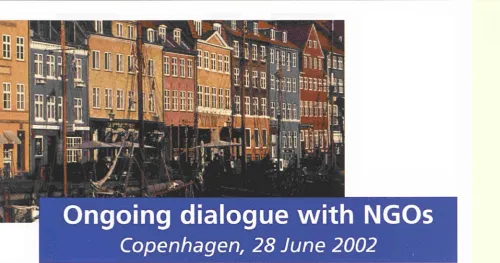
[image:15.595.36.537.79.342.2]A t t h e same time, the EIB has stepped up its participation in round table discussions and conferences organised by NGOs; over the past 18 months, the EIB has been repre-sented at thirteen meetings (held in Stockholm, Rome, Brussels, Parisand Berlin) focusing on its transparency and information policy as wel I as cer-tain of its lending operations.
The EIB invited NGOs to a seminar on 28 June 2002 in Copenhagen on
the topics of "Sustainable develop-ment; Cleaning up the Baltic Sea; and the ElB's information policy". This seminar is the third in the se-ries, the last having been held in London on 23 November 2001 on the theme "The EIB, Development and t h e Environment", preceded on 28 June 2001 by a debate organised in Brussels by the Bank on its infor-mation policy.
Sustainable
develop-ment and pollution in
the Baltic Sea
The programme for 28 J une 2002, fol-lowing on f rom the conclusions of the seminar held in London and drawn up in cooperation with the NGOs that participated on that occasion, fo-cused on the following topics:
• Sustainable development and pre-vention of climate change, in par-ticular the ElB's contribution in the
renewable energy and water sec-tors, envisaged under the
Johan-nesburg process;
• The method of assessing the so-cial impact of projects financed by the EIB, especially in non-EU countries;
• Cleaning up the Baltic Sea and the ElB's contribution to reducing pol-lution, notably through financing urban wastewater management schemes in countries neighbour-ing the Baltic, includneighbour-ing Russia.
A t the request of the NGOs, the agenda also featured developments in the ElB's information and disclo-sure policy, especially publication on the ElB's website of the list of pro-jects currently under appraisal by the Bank even prior t o the Board of Directors' financing decision.
Speakers at the debate, chaired by EIB Vice-President Peter Sedgwick, included Lars Tybjerg, Director a t t h e Danish Economics and Industry Ministry and member of the ElB's Board of Directors, and a represen-tative of the Nordic Investment Bank.
On the civil society side, about 15 NGOs, including WWFSweden, Friends of t h e EarthEstonia, Campaign t o Reform the World Bank (Italy), The Danish '92 Group (group ing of 21 Danish NGOs f o l l o w i n g up the 1992 Rio Conference on environ ment and development), Urgewald e.V. (Germany) and Scandinavian NGOs, enlivened the debate w i t h their inputs.
Representatives from the European Parliament and the UK Department for International Development also f o l l o w e d t h e proceedings as ob servers.
All presentations made at the semi nar are available t o the public on the Bank's website under the heading "Information Policy/Events".
Online transparency
In its q u e s i t o maintain permanent di alogue w i t h as broad a range of or
ganisations as possible, the EIB is al ready planning a f o u r t h regional meeting w i t h NGOs. Scheduled for the end of 2002, this will probably be held in a country in southern Europe. In line w i t h now wellestablished pol icy, the EIB will announce this f o r t h coming meeting on its website, call ing on NGOs t o express their interest in attending and proposing t o outline t h e agenda in consultation w i t h t h e m . In addition, as in the past, the EIB will invite members of its Board of Directors t o take part in this semi nar.
The main documents concerning the Bank's environmental policy, namely t h e "Environmental Policy Statement" as well as sectoral docu ments on climate change, sustainable development and promotion of re newable energies can be consulted on the Bank's website. Bank activity in the Accession Countries is presented in the brochure "EIB Financing of Corporate Projects in the Accession
Countries" and the paper "Accession: Strategy". Project appraisal and mon itoring procedures are set out in de tail in the brochure "The Project Cycle at the European Investment Bank". Finally, t h e Bank's Corporate Operational Plan, which defines the operational framework and objec tives for 20022004, is likewise pub lished on the ElB's website.
The new versions of the Brochure on information policy as well as the Rules regarding public accessio documents will also be available before the end of the year.
Y. Berghorst, Senior Information Officer
(+352) 43 79 3154
[email protected] V. Thill, Assistant to the Director
of Communications
(+352) 43 79 3149
Honoris Causa
Prof Alfred STEINHERR, t h e ElB's
Chief Economist since 1995, was ap pointed Doctor Honoris Causa of the University of Nancy (France) d u r i n g a ceremony held on 26 April of this year.
Professor of Economics and w i t h an academic background in Mathemat ics and Philosophy, Alfred Steinherr joined t h e EIB in 1987. He also gained a Doctorate in Economics f r o m Cornell University (New York State), held a chair of Commerce and Inter national Finance at t h e Catholic Univer sity of Louvain (Bel gium) and has been Rector of the Univer sity of Bolzano (Italy) since 1998.
Both in Academia and at t h e Bank, his activities have f o r m ed t h e basis for a number of research programmes and
publications addressing, in particu lar, international macroeconomics, t h e labour market, banking and f i nance, t h e European i n t e g r a t i o n process and economic reform in the Eastern European countries.
During t h e presentation of t h e honorary t i t l e , M r Steinherr deliv ered a speech on t h e t h e m e of globalisation, o u t l i n i n g t h e bene fits and risks and calling for i m proved r e g u l a t i o n and a h e i g h t ened European sense of responsibility in curbing t h e USA's influence. According t o the Univer sity of Nancy, t h e Doctor Honoris Causa t i t l e was conferred on Prof Steinherr in r e c o g n i t i o n of his sci entific w o r k , r e n o w n and teaching expertise, as well as his loyal and in valuable service t o the Nancy 2 Uni versity European Centre w h e r e he has been lecturing since 1989. ■
EUROPEAN I N V E S T M E N T BANK
Appointments to the ElB's senior management cadre
Appointments to the ElB's
senior management cadre
New Director
Mr Christopher HURST was appointed Director of the Infrastructure Department, Projects Directorate, in March 2002. He succeeds Mr Peter Bond, who has retired.
From 1996, Mr Hurst was Head of the Economic and Financial Studies Division. Reporting to the Bank's Chief Economist, he was responsible for research in economics and studies cover-ing a range of longer-term strategy issues. He joined the Bank in 1989 as an economist in the former Research Directorate, where he was involved in the appraisal of infrastructure projects, firstly in the EU and then in Eastern Europe, Asia and Latin America.
Previously, Mr Hurst held academic positions in Economics and Management Science at the Universities of Oxford and London and worked as a consultant. He holds a Doctorate from Harvard University in Operations Research and is also a graduate in Engineering from Imperial College, London.
New Associate Directors
Mr Henk DELSING was appointed Associate Director in the Directorate for Lending Operations-Europe in July 2002.
A financial economist educated at the Universities of Tilburg (NL) and Chicago (USA), Mr Delsing joined the EIB in 1981 following a career at ABN-AMRO in Amsterdam and in
the Corporate Lending Department of Chase Bank in New York and Frankfurt. After an initial assignment in the Ireland-UK-Denmark Division, he participated in 1983 in the cre-ation of the Germany and Benelux Divisions. In 1992, Mr Delsing joined, on behalf of the
Bank, the Treuhandanstalt (the privatisation agency for eastern Germany) and was appointed Head of Division for Germany in 1993. Six years later, he took over the Hungary-Slovakia-Slovenia Division, where his experience with Germany proved a
valu-able asset. Since January 2002, he has been Head of the Benelux Division.
Mr Roderick DUNNETT was appointed Associate Director in the Legal Affairs Directorate in July 2002.
Mr Dunnett joined the EIB in 1984 as Head of the English Legal Division, where he was responsible for the Bank's first project-risk-bearing operations. From 1995 to 1997, he was Head of the Banking and Financial Law Division. In 1998, he was appointed Assistant General Counsel for Operational Policy responsible for legal policy and standards associated with lending operations and for operational institutional questions and from 2000 also for operations in the Western Balkans.
Mr Theoharry GRAMMATIKOS was appointed Associate Director in the General Secretariat in July 2002.
A specialist in Finance and Economics from the University of New York,
Mr Grammatikos joined the Bank in 1990 as a financial economist in the Research Directorate. In 1991, he set up the Bank's Management Information System (MIS). Since 1994, he has been Head of the Planning, Budget and Control Division in the General Secretariat, dealing inter alia with cost coverage methods, COP/budget syn-chronisation, the decentralised budget, the costing/pricing of mandates, the
Corporate Balanced Scorecard and the strategic map, all key elements for the pursuit of EIB strategy and objectives.
Mr Bruno LAGO was appointed Associate Director in the Directorate for Lending Operations in July 2002.
Mr Lago joined the Bank in Luxembourg in 1981, assigned to the United Kingdom Division of the Directorate for Operations in the Community, after 10 years'
profes-sional experience in both Italian and International companies and financial institu-tions such as Exxon, Banco di Roma, Amexco and IMI. He was then transferred to the
Rome Office in positions of increasing responsibility; he was appointed Managerial Adviser in 1993 and Head of Division (Banks and Financial Institutions) in the
follow-ing year. In 1996, he moved back to Luxembourg as Head of Division in the UK/IRL Department; in 2000, he again transferred to the Italy, Greece, Cyprus and Malta
Department as Head of the Infrastructure Division.
Mr Peter MAERTENS, Head of Internal Audit, was appointed Associate Director in April 2002.
A Chartered Accountant, Mr Maertens graduated from the University of Manitoba, Canada, and gained a Masters in Computer Audit from the University of Antwerp, Belgium. Following a career with, inter alia, Ernst & Young, the Government of Canada, the Asian Development Bank and NATO, Mr Maertens joined the EIB in 1997 as Head of Internal Audit. During this period, he has introduced the Internal Control Framework and has taken on responsibility for investigating allegations of fraud. He has also introduced the concept of Agreed Action Plans in order to emphasise the need for close cooperation with the Bank's departments.
Mr Daniel OTTOLENGHI was appointed Associate Director in the Directorate for Lending Operations in July 2002.
page 18
Mr Ottolenghi, an Economist, joined the EIB in 1984 after working in the Economic Affairs Department of the OECD in Paris. From 1989 to 1995, he was Head of the Mediterranean Division of the ElB's Research Directorate. At the time of his
appoint-ment, Mr Ottolenghi was directing the Development Economics Advisory Service as Chief Development Adviser in the Bank's External Lending Directorate.
EIB INFORMATION 2 - 2 0 0 2
EUROPEAN INVESTMENT BANK
Appointments to the ElB's senior management cadre
û
Mateu TURRO CALVET
Mr Mateu TURRÓ CALVET, has been appointed Associate Director in the Projects Directorate, as an expert in the field of infrastructure networks and their contribution to
regional and urban development.
A Doctor of Engineering and Professor holding a Chair in Transport at the Technical University of Catalonia, Mr Turró joined the Bank in 1988. Previously, he was employed as Director at the Catalonian Institute for Transport Development (Generalität de Catalunya), after an academic and professional career in the transport sector in Madrid and Barcelona. From 2001, Mr Turró was Principal Economic Adviser in the Infrastructure Department of the Bank's Projects Directorate, after occupying the post of Principal Economic Adviser and Head of Division responsible for infrastructure in the Member States in the former Research
Directorate.
Mr Jörg-Alexander UEBBING has been appointed Associate Director in the Human Resources Department.
A lawyer and former foreign student at the École Nationale d'Administration, Paris, Mr Uebbing began his career in the General Office for External Relations of the Danone group, with postings in Paris and Brussels. In 1982, he joined the EIB as a lawyer in the Human Resources Department and the following year he was assigned to the Personnel Administration Division. Appointed to the Personnel Policy Division in 1987, he participated in intro-duction of the new appraisal system and was in charge of internal management mobility. In 1990, he was pro-moted to Managerial Adviser, holding responsibility for external recruitment. In 2001, the Recruitment Division
was renamed the Staffing Division, encompassing both external recruitment and internal mobility. Since May
2002, he has also assumed the role of Change Manager in the HR Department.
Daphne VENTURAS
Ms Daphne VENTURAS was appointed Associate Director in the Projects Directorate in July 2002.
A development economics specialist, Ms Venturas joined the EIB in 1983 as Information Officer in the Bank's Information and Communications Department. After holding responsibility for opera-tions in Algeria and Malta as from 1988, she became Head of the Personnel Policy Division in the
| Human Resources Department in 1993. She was appointed Coordinator of the Economics and
Information Directorate in 1996 and, since October 2001, has held the post of Head of the Resources Management Division in the Policy Support Department of the Projects Directorate.
Mr Hugo WOESTMANN was appointed Associate Director in the General Secretariat in July 2002.
An Agro-Economist (University of Bonn) and Economist (College of Europe, Bruges), Mr Woestmann joined the Bank
in 1981, after several years of professional experience in management consulting and industry. After initially working I
in the Organisation and Methods Division, he was appointed Head of the Budget Division in 1987, where he devel- \ oped medium-term planning and budgeting and assisted the EBRD in setting up its administrative and budget
sys-tems. In 1995, he became Head of the Secretariat and Protocol Division in charge of support for the Bank's
Governing Bodies and the ElB's internal and external protocol duties. WOESTMANN Hugo
Mr Zacharias ZACHARIADIS was appointed Associate Director in the Human Resources Department in July 2002.
Mr Zachariadis is a graduate in Management Mathematics. After working at the Economic and Social Committee, he joined the EIB as a translator in 1981. He transferred to the
Human Resources Department in 1988 where he was appointed Head of the Administration Division in 1996. A specialist in personnel administration questions, he is currently responsi-ble, within the HR Department, for the integration of all procedures associated with imple-mentation of the decentralised budget.
EIB-lnformation
is published periodically by the Infor mation and Communications Depart ment of the European Investment Bank .
Royal visits to the EIB
Material which appears in EIB Infor mation may be freely reproduced, an acknowledgement and a clipping of any article published would be appreciated.
European Investment Bank
100, bd Konrad Adenauer L 2950 Luxembourg Tel. (+352) 4379 1 Fax (+352) 43 77 04
www.eib.org [email protected]
Department for Lending Operations in ;
Italy, Greece, Cyprus and Malta
Via Sardegna, 38 I 00187 Rome Tel.(+39) 06 47 19 1 Fax (+39) 06 42 87 34 38
Athens Office
364, Kifissias Ave & 1, Delfon GR 152 33 Halandn/Athens Tel. (+30) (1)682 45 179 Fax (+30) (1)682 45 20
Berlin Office
Lennestrasse, 17 D 10785 Berlin
Tel. (+49 30) 59 00 479 0 Fax (+49 30) 59 00 47 99
Brussels Office
Rue de la Loi, 227 Β 1040 Brussels Tel (+32 2)23 50 070 Fax (+32 2)23 05 827
Lisbon Office
Avenida da Liberdade, 144 156, 8 Dto Ρ 1250 146 Lisbon
Tel (+351)21 34 28 989 Fax (+351)21 34 70 487
Madrid Office
Calle José Ortega y Gasset, 29 E 28006 Madrid
Tel. (+34) 91 43 11 340 Fax (+34) 91 43 11 383
European Investment Fund
43, avenue J F Kennedy L 2968 Luxembourg
Tel (+352) 42 66 88 1 Fax (+352) 42 66 88 200
www.eif.org [email protected]
Lay-out- FIB graphic workshop. Sabine Tissol, Volker Lahr
Photos. FIB Photographit library Irnedia, Getty Images Philips, Sade. Masterfile, EC
Prtnted n I uxcmbo.jrg by Buck f l v V s
on Arctic Silk p.iper Ό ^ ν dwardod the Nordic Swan
OH AA 0? 002 I N C
In the presence of Mr Philippe Maystadt, President, and Messrs Frieden, Minister of the Budget, and Carpenter, EIB Secretary General, Mr Wolfgang Roth,
Vice-President, shows the Grand Duke the location of the future extension to the ElB's headquarters.
On 26 June 2002, His Royal Highness Grand
Duke Henri of Luxem bourg, accompanied by Mr Luc Frieden, Minister of t h e Budget and Justice representing the Luxembourg Govern ment, visited the Euro pean Investment Bank t o brief themselves on EIB activity in support of EU objectives. During the visit, the Grand Duke explored Bank opera tions in detail and fo cused particularly on the project for extending the
institution's headquarters on the Kirchberg Plateau in Luxembourg city. An international architect-designers competition has been launched by the EIB for this project and the jury, chaired by Mr Ricardo Bofill, will name the winner at the end of the year. ■
On 9 July, His Majesty Albert II, King of the Belgians, led a d e l e g a t i o n i n f o r m i n g itself on EIB Group activity. A c c o m p a n i e d by Messrs Louis M i c h e l , Minister of Foreign Affairs and D e p u t y Prime Minister, and Didier Reynders, M i n i s t e r of Finance and EIB Governor, His Majesty d e v o t e d his at
t e n t i o n largely t o t h e Group's " I n n o v a t i o n 2000 I n i t i a t i v e " in s u p p o r t of a k n o w l e d g e b a s e d , i n n o v a t i o n d r i v e n European economy. The King also discussed w i t h members of t h e M a n a g e m e n t C o m m i t t e e EIB activity in t h e Accession Countries paving t h e way f o r e n l a r g e m e n t of t h e EU as w e l l as i n t r o d u c t i o n of t h e E u r o M e d i t e r r a n e a n investment and partnership facility decided by t h e Barcelona Euro
pean Council in March 2002. The royal dele
g a t i o n also i n c l u d e d
representatives of t h e Æ ^ Μ Β * "
Belgian Business Fede r a t i o n a n d t h e Belgian Banking Association.
D u r i n g t h e i r visits, w h i c h underscored t h e scale of Bank activity in serving t h e EU, t h e Sovereigns m e t w i t h EIB s t a f f m e m b e r s
f r o m t h e i r respective countries. ■