0022-538X/94/$04.00+0
Copyright ©) 1994,AmericanSocietyfor Microbiology
Involvement of the Cyclic AMP-Responsive Element Binding
Protein
in
Bovine
Leukemia Virus Expression
In
Vivo
EMMANUELLE ADAM,"12PIERREKERKHOFS,3 MARCMAMMERICKX,3 RICHARD KETFIMANN,2
ARSENEBURNY,"2 LOUIS
DROOGMANS,'
ANDLUCAS WILLEMS2*Departmentof MolecularBiology, Universityof Brussels, B1640
Rhode-St-Genese,'
NationalInstituteforVeterinary
Research,
B1180Brussels,3
andFaculty ofAgronomy,
B5030Gembloux,2
Belgium
Received 22 March 1994/Accepted 10 June 1994
The TAR element (Tax-responsive element; also called TxRE) is a major determinantoftheregulation of bovineleukemia virus (BLV) expression. In order to gain insight into the mechanisms of viral expression, complexes formed betweenproteins and the TAR enhancerDNAwere analyzed by gelretardation assays. We reporthere that nuclearlysates from ex vivo-isolatedBlymphocytes contain proteins that specifically bind to TAR. Anantibody directed toward thecyclic AMP-responsive element binding (CREB) protein supershifted a complex (Cl) present only in BLV-infected B lymphocytes. The CREB protein thus appears to be a major transcription factor involved in BLV expression in vivo.
Bovine leukemia virus (BLV) is a naturally occurring, exog-enous,oncogenic retrovirus associated with persistent lympho-cytosis (PL) and lymphosarcoma in cattle (6, 11, 32). PL is characterized by a marked increase in the percentage of BLV-infectedBlymphocytes in the blood (22). On the basis of studies of well-characterized cattle populations, less than 10% of BLV-infected cattle develop lymphosarcoma and about
30% developPL(13).Thus, a largemajority of BLV-infected cattle are asymptomatic virus carriers. In cattle, BLV is predominantly or exclusively B-cell tropic, and BLV-infectedB lymphocytes partially account for the increased number of peripheral blood mononuclear cells (PBMCs) seen in cattle with PL (12). Infection by BLV is characterized by a long clinical latency period associated with a lack of viral expres-sion.Circulating lymphocytes harbor integratedproviruses but do not produce detectable amounts of virus (26). However, sinceanantiviral immune responsepersists throughout the life span of the infected animals, low-level and/or transient BLV
expression
occurs in vivo.Expression ofBLVisthought to be blocked at the transcrip-tional level (3, 16, 26, 46). However, the synthesis of readily detectable amounts of BLV RNA, viral proteins, and viral
particlescanbe inducedorenhancedbyculturing PBMCs for a few hours (3, 15, 24, 43). It should be noted that BLV expressionismorereadily detected in cultured cells from cattle withPLthan in those fromasymptomatic animals (8). A likely
explanation for this fact is that approximately 30% of the PBMCs in cattle withPL areinfected withBLV(23) compared with less than 5% in hematologically normal BLV-infected cattle (25, 26). Several activators which can up-regulate BLV replication in vitro have been identified. These activators include fetal calf serum, lipopolysaccharides, anti-immuno-globulin M (IgM) antibodies (27), lectin mitogen (PHA) (3, 43), and phorbol esters (19). The molecular mechanism by
which these inducing agents enhanceBLVtranscription isnot clear. Protein kinase C(PKC)appearstomediate the initiation of BLV expression in short-term PBMC cultures and in phorbol 12-myristate 13-acetate (PMA)-stimulated NBC-13
*Corresponding author. Mailing address: Molecular Biology and AnimalPhysiologyUnit,Facultyof Agronomy,13,Avenue Marechal Juin, B5030Gembloux, Belgium. Phone: 61.21.57. Fax: 32-81-61.38.88.
cells(apersistently BLV-infectedB-lymphocyte cell line) (19). On the other hand, the cyclic AMP (cAMP) pathway could also play a role in the regulation ofBLV expression in D17 osteosarcomacells(49). Taken together, thesefindingssuggest thatexpressionofBLVmightoccurwithin the infectedBcell consequently to activation ofone orseveraltransducing signal pathways triggered by different stimuli (interaction with the B-cell membrane receptors, for instance). The fact that an antibody raised against the B-cell surface immunoglobulin M (IgM) can enhance the in vitro expression ofBLV corrobo-rates this hypothesis (27). Consequently, the immune activa-tion of a latently infected cell could initiate viral expression
within the host. Ifso, BLVcoulduse thetranscriptionfactors normally implicated in the regulation of genes whose expres-sion is induced during proliferation and differentiation of activated B cells.
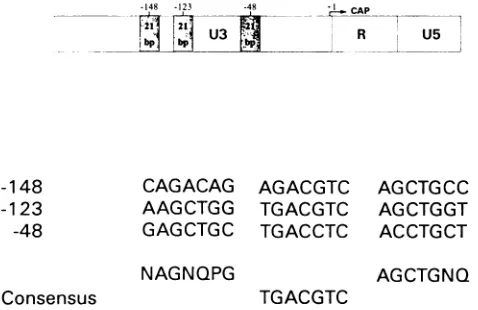
BLVisclosely relatedtothe human retrovirus human T-cell leukemia virus typeI(HTLV-I),which is associated with adult T-cell leukemia/lymphoma (39). These twoviruses share nu-merous homologies in their pathologies and in theirgenomic structures (38). Both viruses contain an X region, which encodesaproteincalledTaxinvolved in the transactivation of long terminal repeat (LTR)-directed gene expression (9,48). Transcriptionalactivation of theBLV LTRbyTaxrequiresthe presenceofa75-bp element in the U3 region (9). Nucleotide sequencedata show that thiscis-actingelement iscomposedof two 21-bp repeats (alsocalledTAR orTxREfor Tax-respon-sive element) centered at about 148 and 123 bp upstream of the RNA startsite.A third related element foundatposition -48upstream of theRNAcap siteisapparently poorlyactive in the absence of upstream sequences. These three repeats are verysimilartoelements foundin theLTRsofHTLV-I and -II with respect totheir nucleotide sequences and spatial arrays. All these elements have a common 8-bp core sequence, TGACGTCA, knownasthecAMP-responsiveelement(CRE) orthebindingsiteofacellulartranscription factor,ATF
(21).
There is no evidence for direct binding of Tax to DNA (9).
This observation suggests that Tax might exert its effect through the cellular proteins that recognize these enhancer elements.Several differentproteins bindingtotheHTLV LTR have been identified: CREB (the cAMP-responsive element binding protein) (4, 52, 53), CREM (the CREB
modulator)
(44), ATFs (the activating transcription factors) (51), HEB1
5845
on November 9, 2019 by guest
http://jvi.asm.org/
and HEB2 (the 21-bp binding proteins) (5), and TREBs (Tax-responsive element-binding proteins) (45). To date, only one cellular protein has been shown to bind the BLV enhancer sequences. A cDNA encoding a 21-bp motif binding protein was cloned and characterized (49). Its nucleotide sequence revealed that this clone corresponds to the bovine CREB2 protein. Moreover, CREB2 transactivates the BLV LTR in D17 osteosarcoma cells and does so significantly when a protein kinase A (PKA)-expressing plasmid is cotransfected with theCREB2-expressing construct. CREB2 is thus a cellu-larfactor able to induce BLVLTR-directed gene expression in the absence of Tax and could be involved in the early stages of viral infection. Nothing is known about the induction of BLV expression in infected B lymphocytes, the natural host cells of this retrovirus.
Consequently, the present study was initiated to identify the cellular transcription factors involved in the activation of the BLV provirus. For this purpose, gel retardation assays were performed with nuclear extracts prepared from BLV-infected lymphocytes.
MATERIALS AND METHODS
Cell isolations and culture conditions. Two BLV-seroposi-tive adult cattle affected with PL (B76 and B163) and one BLV-seronegative cow (B78) were kept at the National Insti-tute for Veterinary Research (Uccle, Belgium). By using EDTA as an anticoagulant, venous blood was collected by
jugularvenipuncture. PBMCs were purified by centrifugation over Histopaque 1077 (Sigma Chemical Co., St. Louis, Mo.). The mononuclear cell layers were harvested, washed three times with phosphate-buffered saline (PBS), and suspended at a concentration of 2 x 10⁶ cells per ml in culture medium (RPMI 1640 with 10% heat-inactivated horse serum [Gibco
BRL],2mM L-glutamine, 100 U of penicillin per ml, and 100 ,ug of streptomycin per ml). All cultures were incubated at 37°C with 5% CO2. Different substances were used for the stimulation of viral expression: phytohemagglutinin (BACTO-PHA-P) (Difco Laboratories) at a final concentration of 1 ,ug/ml, PMA (Sigma Chemical Co.) at 0.1
R,M,
and forskolin(FSK) (SigmaChemical Co.) at 20 ,uM.
B-cell isolation by negative selection. T lymphocytes were depleted from bovine PBMCs by antibody-dependent comple-ment-mediated cytolysis. Briefly, washed PBMCs were sus-pended at aconcentration of 10 x 106 cells per ml in sterile cold PBS and incubated for 30 min on ice with four anti-T cell monoclonal antibodies (1,000-fold-diluted ascites fluid). Two of these anti-T cell monoclonal antibodies were provided by J. Naessens (International Laboratory for Research on Animal Diseases, Nairobi, Kenya), IL-All (which binds Bo-CD4 and is specific for helper T cells) and IL-A105 (which binds Bo-CD8surface molecule and is specific for cytotoxic suppres-sive T lymphocytes). The two other anti-T cell monoclonal antibodies were provided by J.-J. Letesson (Faculte Notre-Dame de la Paix, Namur, Belgium); these were 1H8 (which binds Bo-CD6 and is specific for mature T cells) and 11F5
(which bindsnon-T, non-B null cells). The PBMCs were then centrifuged (300 x g, 10 min), washed once with PBS, resus-pended at 10x
106
cellsper ml in RPMI 1640 (with 100 U of penicillin permland 100,ug ofstreptomycin per ml) contain-ing 10% baby rabbit complement (Sera-Lab), and incubated at 37°C for1hwithgentle shaking. The selected B cells were then isolated by centrifugation, washed three times with sterile PBS, andresuspended at 2 x10⁶
cells per ml in culture medium.Surface Ig-positive cells in the selected B-cell populations werequantitated by direct immunofluorescence using
fluores-cein isothiocyanate-conjugated rabbit anti-bovine IgM (1H4) (supplied by J.-J. Letesson, Faculte Notre-Dame de la Paix, Namur, Belgium) (29). The percentage of T cells remaining in the negatively selected B-cell populations was determined by indirect immunofluorescence using both an anti-bovine CD2 monoclonal antibody (CH128A) (VMRD Inc., Pullman, Wash.) and an anti-bovine CD6 monoclonal antibody (BAQ91A) (VMRD Inc.) and fluorescein isothiocyanate-con-jugated rabbit anti-mouse IgG (Amersham). PBS was used instead of CH128A and BAQ91A as a control.
BLV p24 titration. Cells (2 x10⁶) were centrifuged at 150 x gfor 15min. The pellet was resuspended in 100
[lI
of PBS, and cells were lysed by vigorous agitation in a 1% final concentra-tion of TritonX-100, incubated at 37°C for 1 h with occasional agitation, and left at 4°C for 1 h. The BLV p24 antigen was titrated by an immunoenzymatic capture technique as de-scribed byPortetelle et al. (36). To determine the amounts of BLV p24 in the pellet and in the cell culture supernatant, twofold serial dilutions of a BLV antigen (culture supernatant of FLK cells containing 2 mg of p24 per ml) were assayed in quadruplicate in the BLV p24 antigen capture enzyme-linked immunosorbent assays (ELISAs). A standard curve of relative antigenconcentration versus optical density was developed for BLV p24. Optical density values obtained with the pellet and the culture supernatant were subsequently converted to rela-tive amounts of BLV p24 by using the standard curve line equations.Preparation of nuclear extracts. Nuclear extracts were pre-pared from bovine B cells (or PBMCs) as described previously (35). Briefly, cells were washed in PBS and resuspended in buffer A (10 mMTris-HCl [pH 7.9], 1.5 mM MgCl2, 50 mM NaCl, 1 mM EDTA, 0.5 M sucrose, 10 mM Na2MoO4, 0.5 mM phenylmethylsulfonyl fluoride). Cells were pelleted and resus-pended in 4 volumes of buffer A. Nonidet P-40 was added at a concentration of 0.1%, and the cell suspension was incubated for 10 min at 4°C. Cells were washed once in the same buffer. Nuclear proteins were extracted in a high-salt buffer (20 mM
Tris-HCl [pH 7.9], 1.5 mM MgCl2, 0.2 mM EDTA, 25% glycerol, 0.6 MKCl, 10 mM Na2MoO4, 0.5 mM dithiothreitol [DTT], 0.5 mM phenylmethylsulfonyl fluoride) overnight at 4°C with gentle shaking. The nuclear extracts were then centrifuged at 126,300 xg for 30 min, and the supernatants were dialyzed against a low-salt buffer (50 mM Tris-HCl [pH 7.9], 0.5 mM MgCl2, 1 mM EDTA, 20% glycerol, 0.1 M KCl, 10 mM Na2MoO4, 1 mM DTT, 0.1 mM phenylmethylsulfonyl fluoride) for 5 h. Precipitates were removed bycentrifugation at126,300 xgfor 30min. The supernatants were dispensed in aliquots and stored at -80°C until use.
Oligonucleotides for gel retardation assays (electrophoretic mobility shift assays) andcompetition experiments. The TAR oligonucleotides CRE, 5'-AAGCTGGTGACGTCAGCTG GT-3', TRE, 5'-AAGCTGGTGACTCAGCTGGT-3', A1-2, 5'-AAGCTGGGCTGGT-3', A3-4, 5'-AAGCTGGTGACGT
CA-3', and
A5S-6,
5'-TGACGTCAGCTGGT-3', were previ-ouslydescribed (49).The wild-type TAR oligonucleotide was end labelled with polynucleotide kinase and [-y-32P]ATP(5,000Ci/mmol; Amer-sham) and then purified by Sephadex G-25 chromatography (Pharmacia).
Gel retardation assays. The assays were carried out as previously described (42) with a modified running buffer (25 mMTris, 190 mM glycine, 1 mM EDTA [pH 8.3]). The nuclear extract(1.2 ,ug of total protein) was preincubated with 0.5
pkg
ofpoly(dI-dC) in 20,ulofbinding buffer (10 mMTris-HCl [pH
7.5],50 mM NaCl, 1 mMEDTA, 5%glycerol, 1 mM DTT) at roomtemperature for 30min before addition of the labelled
on November 9, 2019 by guest
http://jvi.asm.org/
probe. The reaction mixture with the probe was further
incubated for 30 min at room temperature and
electropho-resed on a 6% nondenaturing polyacrylamide gel in 25 mM Tris(pH8.3)-190mMglycine-1 mM EDTA(pH 8.3)at 132V
(11
V/cm) for 2 h at room temperature. Complexes wereinhibited by competition with a 100-fold molar excess of
unlabelledoligonucleotides added 15 min prior toaddition of
the probe. Binding reactions using the CREB2 protein
con-tained 2 p.1 of in vitro-translated protein, the radiolabelled oligonucleotide probe (30,000cpm), and0.5,ugofpoly(dI-dC)
in 20
RI
of binding buffer (10 mM Tris-HCl [pH 7.5], 50 mM NaCl, mM EDTA, 5% glycerol, mM DTT). The plasmid pSGCREBcontains the CREB2cDNA cloned downstreamofthe bacteriophage T7 promoter (49). The CREB protein was
obtained after transcription and translation performed by
using the TNT kit (Promega). All gels were dried and
sub-jected to autoradiography with intensifying screens.
Inthesupershiftexperiments, the appropriateantibody (2
p.l
per sample) was added to the reaction mixtures 30 min after addition of the probe to the sample and incubated for anadditional 15min. The polyclonal anti-ATF2 antibody (raised
against a synthetic peptide corresponding to amino acid
resi-dues 487 to 505 mapping at the carboxy terminus of human ATF-2) andthepolyclonal anti-Jun antibody (raised against a
synthetic peptide corresponding toamino acid residues 247 to
263within the C-terminal DNAbindingdomain of the mouse
c-jun-encoded protein) werepurchased from Santa Cruz
Bio-technology, Inc. The polyclonal anti-CREB antibody was
kindly provided by G. Schutz and W. Schmid.
RESULTS
Several nuclear factors bind to the 21-hp TAR motif. To date, the molecular mechanisms of BLV latency and its
reversal upon in vitro cultivation of infected cells are not
established. However, several observations suggest that BLV
transcription must result from the binding of one or more
cellular trans-acting proteins to the retroviral enhancer ele-ments (49). The first aim of this study is to demonstrate the
existence of a cellular protein(s) specifically binding to the
TAR within the BLV LTR. Gel retardation assays were
performed to identify TAR DNA-binding proteins. For this
purpose, an oligonucleotide (5'-AAGCTGGTGACGTCAGC
TGGT-3') corresponding to the 21-bp repeat centered at
about 123 bp upstream of the RNA start site was used as a
probe (Fig. 1). This sequence was selected because an
oligo-nucleotide containingamultimerof the corresponding motifis
sufficient to confer Tax responsiveness to a heterologous
promoter (9, 21). This probe was end labelled and incubated
with nuclear extracts from latently infected B cells derived from two BLV-infected cattle with PL. To prepare these
extracts, T cells were selectively depleted from PBMCs by antibody-dependent complement-mediated T-cell cytolysis (see Materials and Methods). The remaining B-cell-enriched populations were then cultured for 48 h in the presence of
PMA (0.1
,uM)
in combination with PHA,ug/ml)
(I (the mosteffective inducers of BLV expression in our possession). In
D17cells, CREB transactivation of the BLV LTR requires a
PKA expression vector, suggesting that the cAMP pathway
could play a role in the regulation of BLV expression (49).
Consequently, these bovineB cells (infected ornot) were also
treated with FSK, an agentthatincreasesthe concentrationof cAMPby directlybindingtoadenylate cyclase (41). Inorderto
correlate the gel shifts with viral expression, the p24 major core
protein
levels in cell extracts and in cell culture supernatants.148 -123 -48 A
-2. 21
U3 R U
bp bp IbR U
-148 -123 -48
Consensus
CAGACAG AAGCTGG GAGCTGC
NAGNQPG
AGACGTC
TGACGTC
TGACCTC
TGACGTC
AGCTGCC AG CTGGT ACCTGCT
AGCTGNQ
FIG. 1. Locations and sequences of theTAR repeats ofthe BLV LTR.(Upperpart)The three 21-bp TARrepeatsarelocated intheU3 regionoftheBLVLTR(shaded boxes). (Lowerpart) The threeTAR
elements have been aligned around a common 7-bp core sequence.
The position of each repeat within the LTR, shown at the left, correspondstoits locationrelative tothe RNAstart site.Aconsensus
sequence based on these data is shown at the bottom. N, any
nucleotide; P,purine;Q,pyrimidine (10).
were measured by using an immunoenzymatic capture tech-nique (ELISA) (36).
The nuclear proteins extracted from theB cells (infectedor
not) culturedfor 48 h were incubated with a double-stranded
32P-end-labelled 21-bp TARprobe and migrated on a
nonde-naturing gel (electrophoretic mobility shift assay procedure).
Incubation of this probe with nuclear extracts from either BLV-infected B cells or noninfected B cells yielded several
electrophoretically retarded DNA-protein complexes (Fig. 2). When a nuclear extract was prepared from unstimulated B
cells from a noninfected cow, two discrete complexes (desig-nated C4 and CS) appeared (Fig. 2, lane 1). These two complexes were also observed when nuclear extracts derived
fromthesamecellswerecultured in the presenceof FSK (Fig.
2, lane 4) or PMA combined with PHA (Fig. 2, lane 7). In contrast, nuclear extracts made from BLV-infected B cells
from two cattle with PL (B76 [extract
BLV+A]
and B163 [extractBLV+B])
resultedin the formation of three additionalcomplexes, Cl, C2, and C3 (Fig. 2, lanes 2, 3, 5, 6, 8, and 9).
Complex C3 (appearing as a smear) was detected only when
the nuclearextracts derived from infected B cells weretreated
with PMAand PHA (Fig.2,lanes8 and 9). Theamountsofthe
Cl and C2 complexes in gel shifts appeared to parallel the BLVexpression (asmeasured by p24levels), but theintensities of these complexes did not necessarily increase with the p24
level.Thecomplexeswerehardly detectable in uninfectedcells
(Fig. 2, lanes 1, 4, and 7), appeared in BLV-infected cells (stimulated with FSKor not) (Fig. 2, lanes 2,3, 5, and 6), and
increased inthe presence ofan inductorof expression (Fig. 2,
lanes 8 and 9). A similar observation was made with nuclear
extracts prepared from infected PBMCs treated for 48 h with
several otheragents known to induce BLV expression,
includ-ing an anti-IgM antibody (data not shown). In conclusion, thesegelshiftassays allowed the detection of five TAR-specific
complexes. Three of them (Cl, C2, and C3) were specifically
observed ingel shift experiments using BLV-infected cells but
were not observed (orwere only weakly observed) in
experi-ments using normal cells. A positive correlation between the
amounts of these complexes and the level of BLVexpression could exist.
on November 9, 2019 by guest
http://jvi.asm.org/
[image:3.612.320.559.77.232.2]0
1 2 3
FSK
4 5 6
PMA + PHA
7 8 9
0
lh 5h 24h 48h
i.,::.::" O',§..% O * 10"
PMA +PHA
lh 5h 24h 48h
C1_- _
A---C2 0 *
C3 _
G4 0 _
:~~~~~~~~~~~~'iR. ...
.- .mE
F
-BLV- BLV+A BLVB BLV-BLV+A BLV+B BLV A BLV+B
1 2 3 4 5 6 7 8
ELISA p24 ng/mI
0 2129 803 0 1700 890 0 3562 2907
FIG. 2. Nuclear factors from bovine B cells bind the TAR motif. The 32P-end-labelled 21-bp oligonucleotide (TAR probe) was
incu-bated with nuclearextract (1.2 ,ug of total protein) prepared from B lymphocytes ofan uninfected cow (B78 [extract BLV-]) (lanes 1, 4,
and7)ortwoinfected cattle with PL (B76 [extract BLV+A] and B163 [extractBLV+B])(lanes 2, 5, and 8 and 3, 6, and 9, respectively). These B lymphocytes were cultured for 48 h without treatment (lanes 1 through 3), in thepresence of FSK(20 FiM) (lanes 4 through 6), or
with PHA (1 jig/ml) in combination with PMA (0.1 ,uM) (lanes 7 through 9). Complexes were separated on a 6% nondenaturing
polyacrylamide gel. CltoC5arethespecific protein-DNA complexes. F, free probe. The BLV p24 antigenwastitrated in both cell extracts
and cell culture supernatantsbyan immunoenzymaticcapture tech-nique (ELISA).
Kinetics ofinduction ofTAR-specific complexes. To
exam-ine the kexam-inetics of the complex formation, nuclear extracts
were prepared from infected PBMCs (cow B163) after
differ-entcultureperiods (1, 5, 24, and 48 h). Gel retardation assays
using the TAR probewereperformedasdescribedabove(Fig. 3). After1hofculture, four complexeswereobserved, Cl and
C2 assmearycomplexes and C4 and C5 asveryintense ones
(Fig. 3, lane 1). At 5 h, onlytwocomplexes (C4 and C5)were
clearly detected. Subsequent culture induced the formation of the complexes Cl and C2, while C4 and C5 gradually disap-peared (Fig. 3, lanes 3 and 4). Similar profileswereobtainedby using PHA- and PMA-stimulated PBMCs. However, the dif-ferent complexes appeared more intense (Fig. 3, lanes 5
through 8). Moreover, after 24hofculture, the complexes Cl, C2, and C3 were already detected, while the mobility shift
profilewasstillsmearyinthecaseof thenoninduced cells (Fig.
3; compare lanes 7 and 3). After 48 h oftreatmentwith the
expression inducers PHA and PMA, the C3 complex appeared less distinctly, although Cl and C2 were still present. Com-plexes C4 andC5 disappeared after 24 h of culture. Altogether,
these gel shifts revealed a pattern of five specific complexes depending on the culture period. Moreover, two complexes (Cl and C2) seemedtobeassociated with the highest
expres-sion levels(Fig. 3, lanes 4 and 8).
Competition experiment. The TAR repeats can be divided into three imperfectly conserved domains (designated A, B, andC) (Fig. 4B). Domain B(5'-TGACGTCA-3') isabinding
site forthe ATFand CREB transcription factors (17, 33, 50).
Thissequencemotif(named the CRE) ispresentinanumber
ELISA 0 0 330 461
p24ng/ml
0 0 1854 4604
FIG. 3. Kinetics of induction of TAR-specific complexes. The 32P-end-labelled 21-bp oligonucleotide (TAR probe) was incubated
with nuclearextract(1.2 ,ug of total protein) prepared with PBMCs fromaninfectedcowwith PL(B163). These PBMCswerecultured for
various periods (1, 5, 24, and 48 h) withouttreatment(lanes 1 through 4)orinthepresenceof PHA(1 ,ug/ml)incombination with PMA(0.1 ,uM) (lanes 5 through 8). Complexes were separated on a 6%
nondenaturing polyacrylamide gel. Cl toC5are thespecific protein-DNA complexes. F, free probe. The BLV p24 antigenwastitrated in both cell extracts and cell culture supernatants by an
immunoenzy-maticcapturetechnique (ELISA).
of cellular and viral promoters and notably mediates the induction of thepromoteractivity inresponsetocAMP(18, 30, 37). To investigate the contribution of each of the three domains (A, B, and C) in the formation of the five TAR-specific complexes (Cl, C2, C3, C4, and C5), competition experiments with double-stranded oligonucleotides were
per-formed. Aseries ofoligonucleotides usedasunlabelled
com-petitors were synthesized and added to the binding reaction
together with the wild-type 32P-labelled TAR (Fig. 4A). The
oligonucleotidesAl-2,A3-4, andA5-6 correspondtotheTAR
sequences but lack domainsB, C, and A, respectively (figure 4B). The TRE oligonucleotide lacks asingle G nucleotide in
the Bdomain, transforming the CRE site intoa
12-0-tetrade-canoylphorbol-13-acetate-responsive element (5'-TGACTCA-3') which is specifically recognized by the transcription factor AP-1 (1,28) (Fig. 4B).
The competition experiments were performed with three
different nuclear extracts prepared from (i) infected PBMCs (cow B163) cultured for I h without inducer (Fig. 4A, left
panel), (ii) infected PBMCs (cow B163) cultivated for 24 h in
the presence of PMA in combination with PHA (Fig. 4A,
middle panel), and (iii) noninfected B cells treated for 48 h
with FSK (Fig. 4A, right panel). These particular nuclear lysateswerechosenbecause the fivespecific complexes Cl to C5 could be distinctly observed. However, the competition
assays wereconfirmed with otherlysates (datanotshown). The
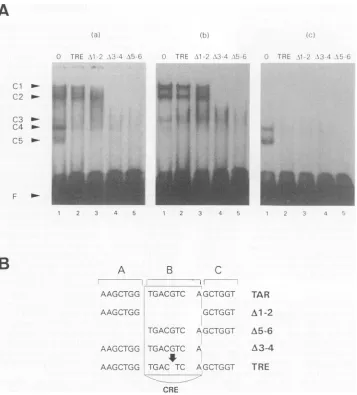
formationofcomplexes Cl and C2 is completely blocked when the competitor oligonucleotide contains an intact CRE
se-quence (oligonucleotides A5-6 and A3-4) (Fig. 4A, left and
middle panels, lanes 4 and 5) but not when this motif is partially or completely deleted (oligonucleotides TRE and
A1-2,respectively) (Fig.4A,left and middle panels,lanes2and
C1 _ C2 _ C3 _ C4 _ C5 _
F
-L"
'Wa.!9
:0
1.iiL
.:..4
:.11.
.ff
:n-b
A 1. -.:.:
.VW
on November 9, 2019 by guest
http://jvi.asm.org/
[image:4.612.329.535.74.275.2] [image:4.612.63.300.75.281.2]A
.l
0 TRE -1- -\b \b 6
Cl1
C2 ~-s .
C3 C4
F
2 3 4 5
C T RE 1-2 X3-3- -; ':2, _I TRE E L \. -A.½ .'
2 3 4 5 1 2 3. 4
A B C
AAGCTGG TGACGTC AGCTGGT AAGCTGG
TAR
GCTGGT Al-2 TGACGTC AGCTGGT
AAGCTGG TGACGTC A
AAGCTGG TGAC TC AGCTGGT CRE
[image:5.612.116.473.70.465.2]A5-6 A3-4 TRE
FIG. 4. Competition experiments with several mutated 21-bpoligonucleotides. (A) Gel shiftassaysof the TARelement. The32P-end-labelled
21-bp oligonucleotide (TAR probe)wasincubated with nuclearextracts(1.2 ,ug of total protein) prepared from(a) infectedPBMCs(froma cow
with PL[B163]) after1hofculture without inducer, (b) infected PBMCs (from thesamecow,B163) after48 hof culture in thepresenceofPHA
(1 ,ug/ml) and PMA (0.1 ,uM), or(c) noninfected B lymphocytes after 48 h of culture in the presence of FSK (20 ,uM). The competitors
(oligonucleotidesTRE[lane2], A1-2 [lane 3], A3-4 [lane 4], and A5-6 [lane 5])wereusedata100-fold molarexcess.Nocompetitorwasadded
inlane 1.Complexeswereseparatedona6%nondenaturing polyacrylamide gel. CltoC5arethespecific protein-DNA complexes.F, free probe. (B) SequencesoftheTARmutantsusedasspecific competitors. The A1-2 oligonucleotidehasadeletion of theCRE motif (domain B), the A5-6 oligonucleotidehasadeletion of the 5'extremity (domain A), the A3-4 oligonucleotide hasadeletion of the 3' extremity (domain C), and theTRE
oligonucleotidehasadeletionofonenucleotide(G), transforming the CRE site intoa12-O-tetradecanoylphorbol-13-acetate-responsive element.
3).These resultsimplythatthe CREsequencewithintheTAR oligonucleotide is essential for Cl and C2complexformation (presentin lanes 1). The C3 complex, however, couldnotbe completelyblockedwithanyoligonucleotide (Fig. 4A,middle panel,lanes 1through 5)exceptthewild-typeTARmotif(data notshown). Complexes C4andC5wereefficiently inhibited by
theoligonucleotides TRE, A1-2, A3-4, andA5-6 (Fig.4A,left andright panels, lanes 1through 5).
Todefine thenucleotidedeterminants for complexesC4 and C5, gel shift assays using oligonucleotides A1-2 (5'-AAGC TGGGCTGGT-3'), A3-4 (5'-AAGCTGGTGACGTCA-3'), and A5-6 (5'-TGACGTCAGCTGGT-3'), which contain the
sequence AGCTGGT/G, were performed. The A5-6 motif
(and toa lesser extent the A3-4 motif) permitted C4and C5 complex formation (data not shown). However, these two
complexes didnotappearwhen theA1-2motifwasusedas a
probe (datanotshown).Fromtheseresults,weconcludethat,
although required, the AGCTGGT/G sequence is not suffi-cient for C4 and C5 complexformation.
Altogether,these results show that the Cl and C2complexes require the CRE motif and that the integrity of C4 and C5 relies onthe flanking sequences andpart of the CRE motif. The C3complexes exhibitan intermediate phenotype.
CREB protein binds to TAR DNA. As suggested by the competitionassays,theCRE motif is essential for formationof complexes Cl and C2. It seems likely that these complexes
contain members of the CREB-ATF family. We have previ-ously shown that the CREB2 protein can bind and
transacti-vate the BLV LTR at a basal expression level in D17
osteo-sarcoma cells (49). Therefore, the mobility shift profile
B
on November 9, 2019 by guest
http://jvi.asm.org/
invitro invivo
1 2 3 4 5 6 7
C1,O.
C1 _
C2 _
F
-4S..
FIG. 5. The CREB protein binds the TAR DNA. The 32P-end-labelled 21-bp oligonucleotide (TAR probe) was incubated with
reticulocytelysatealone(lane1),aCREBcRNA-programmed
reticu-locyte lysate (lanes 2 through 4), or a nuclearextractprepared with infectedPBMCs fromacowwithPL(B163 [extractBLV+])cultivated for 48 hin thepresenceof PHA(1,ug/ml)and PMA(0.1jiM).Before being loaded on the gel, the binding reaction mixtures were either
preincubatedwithapolyclonal antibody directed against CREB(lanes
3 and 6) or with a preimmune serum (lanes 4and 7) or were not
preincubated. Cl' is the supershifted complex. F,free probe.
obtained with in vitro-translated cell-free CREB2 was
com-paredwith those obtained with infected B-cell nuclearextracts.
In acontrol experiment, when the reticulocyte lysatewasnot
primed, two complexes were observed (Fig. 5, lane 1). This
endogenousCREbindingactivitypresentin rabbit reticulocyte lysatehas alreadybeenreported (20, 34). The CREB2 reticu-locyte translation product yielded a complex with a mobility
nearly identical tothatofCl (Fig. 5;compare lanes 2and 5).
Thisresult suggested that Cl couldcontain the cellular
tran-scriptionfactorCREB. A polyclonal antibody directed against CREBwasaddedafterincubationof the TARprobe withthe infected B-cell nuclearextract (Fig. 5, lane 6). This antibody movedthe Cl complex toposition Cl' but did not supershift the C2 complex (Fig. 5; compare lanes5 and6) orthe other
complexes (data not shown). When thesame experimentwas
performedwith invitro-synthesized CREB2,the CREB2
com-plex was also displaced to a position similar to Cl' (Fig. 5;
compare lanes 3and 6). These supershiftswere notobserved
with a preimmune serum (Fig. 5, lanes 4 and 7). Thus, we
conclude that complex Cl (but not C2) contains the CREB protein.
ATF2 is a distinct member of the CREB-ATF family that shows a high degree of sequence similarity to CREB in the bZIP domains. Furthermore, the c-Jun/AP-1 transcription
factorcanalsobindto theCRE sequence (40). To determine
whether these transcription factors were involved in the
for-mation of the five complexes, two additional antibodies di-rected against these proteins were tested in the gel shift
experiments. No complexwas everspecificallyshifted,
suggest-ing that neitherATF2norJun exhibitsTARbinding activityex
vivo (datanotshown).
Taken together, these experiments demonstrated that the CREB protein, present in infected B-cell nuclear extracts,
specificallybindstotheBLV TARenhancer. Furthermore, the amount of CREB-TAR complexes correlates with levels of BLV expression.
DISCUSSION
Transcriptional activation of BLV requires three enhancers (the TAR elements) located in the U3 region of the 5' LTR. These TAR motifs are composed of 21-bp repeats able to respond to the Tax transactivator. In order to gain insight into the regulation of BLV expression, the proteins binding to these enhancer sequences were analyzed by the electrophoretic mobility shift assay. Two complexes (Cl and C2) were specif-ically induced in BLV-infected B lymphocytes. By supershift assays, the Cl complex was shown to contain the CREB protein. The specificity of the anti-CREB antibody was con-firmed by using in vitro-synthesized CREB2 protein. These data demonstrate the incorporation of a CREB protein into a specific complex in BLV-infected PBMCs and extend our observation that the bovine CREB2 protein is able to activate BLV expression in cell culture (49).
Since TAR contains the CRE consensus sequence (TGACGTCA), other members of the CREB-ATF family could possibly belong to the complexes. Furthermore, the
c-Jun/AP1 transcription factor can transactivate CRE elements (40). However, none of the five identified complexes was supershifted when an anti-ATF2 antibody or an anti-Jun antibody was used. Although these antibodies were of broad species specificity, we cannot totally exclude the presence of the ATF2 or the Jun transcription factor in the complexes.
The Cl and C2 complexes appeared to be specific to the BLV TAR but not to the
HTLV-I
TAR. Gel shift assays usingthe
HTLV-I
21-bp element (5'-TAGGCTCTGACGTCTCCCCCC-3'; centered at about 195 bp upstream of the RNA start site
[10])
as an unlabelled competitor were performed (data not shown). As a result, theHTLV-I
21-bp element competed with the five BLV 21-bp complexes(Cl, C2, C3, C4, and C5), but C5 was inhibited to a smaller extent than the others. On the other hand, when thisHTLV-I
21-bp oligonu-cleotide was used as a probe, a new intense intermediate complex appeared. The complex patterns of BLV andHTLV-I
are thus different from each other.
In the HTLV system, sequences (called TRE2) located between the two proximal enhancer sequences appear to bind to a 36-kDa protein (31). This factor bridges the TRE2 motif and the Taxl transactivator. In the BLV system, the homolo-gous sequences located between the two proximal TAR motifs appear to enhance Tax responsiveness (9, 21). Therefore, a probe (called
i21)
corresponding to the sequence between the two 21-bp motifs located at positions -123 and -48 was also used in gel shift assays. This oligonucleotide did not form a specific complex under our experimental conditions (data not shown). It is still possible that weak interactions involving specific proteins do exist. Alternatively, a smaller spectrum of cellular proteins binding to BLV LTR could reflect the lack of basal expression in the absence of the Tax transactivator (49).Our gel shift experiments reveal a complex pattern of proteins binding to the TAR motif. Kinetic data during short-term culture reveal two main groups of complexes. The
Cl and C2 complexes appear and are amplified during the culture period, while the C4 and C5 complexes decrease. Furthermore, Cl and C2 appear to be associated with high expression levels in infected cells. The C4 and
C5
complexes are also present in uninfected lymphocytes. Finally, the targets in the TAR motif are different (theCl
and C2 complexes requiring the CRE motif and the C4 andC5
complexes requiring both flanking domain A or C and part of this CRE motif). Altogether, these data suggest that C4 andC5
are associated with a latent state which evolves into an activation state corresponding to that of theCl and C2 complexes. The-A
wrf::%.4.:
on November 9, 2019 by guest
http://jvi.asm.org/
[image:6.612.99.266.71.252.2]C3 complex appears to be an intermediate stage, since it essentially appears at 24 h, between the latent and activated stages. It should be mentioned here that the Cl and C2 complexes can also be observed in uninfected B lymphocytes when the gel shift reactions are overloaded with proteins (data notshown). This suggests that these complexes contain cellular proteins that are activated by the virus. Alternatively, these proteins could also be induced during the spontaneous cell
proliferation, resulting in activation of virus expression. The kinetic experiments reveal that four complexes (Ci, C2, C3, and C4) are present after 1 h of culture. It thus appears that the preparationof the B lymphocytes allows the formation of the Cl and C2 complexes in infected cells. Alternatively, the infected Blymphocytes contain sufficient protein levels in vivo toform the Ci and C2 complexes. Subsequent culture shows that the initial Cl and C2 complexes disappear (at 5 h). This suggests that the proteins present in these complexes are degraded or modified (by phosphorylation, for instance), lead-ing to a resting stage. De novo synthesis or translational modification should then be required to produce the Cl and C2 complexes again.
The present study is consistent with previous reports con-cerning the stimulation of BLV expression after in vitro cultivation (19, 27). Several agents, including the phorbol esters (e.g., PMA), activate viral protein synthesis probably through the PKC pathway (7, 19). The levels of the Cl and C2 complexes appear to parallel the amounts of viral protein synthesis (as demonstrated by p24 ELISA). This suggests that PKC could activate cellular transcription factors specific for TAR. Since the CREB protein is present in complexCl, PKC could directly phosphorylate this transcription factor and ini-tiate BLVtranscription. Several activators were tested for their ability toenhance BLV expression. These includePMA, PHA, FSK,Ca2+ ionophore (A23187), and anti-IgM antibody (alone orincombination).The gel shift patterns were independent of the activators but correlated to the levels of expression (data not shown). The best activators induced more Cl and C2 complexformation. In vitro, the CREB2 transactivator activity requires cotransfectionof aPKA vector in D17 osteosarcoma cells (49). Ex vivo, however, activation of the PKA pathway by using either FSK or dibutyryl-cAMP did not enhance viral synthesis in B lymphocytes (unpublished data). This suggests that both activation mechanisms coexist but that their relative potentials differ in vitro and in vivo. Since PKC stimulates the dimerformation of CREB protein purified from rat brain cells, we can speculate concerning the existence of a similar mech-anism in the BLV system (50). PKA is required for the transcriptional activity of CREB through the phosphorylation of serine-133 (14). Therefore, we can hypothesize that two limiting steps are required for the initiation of BLV transcrip-tion: formation of CREB dimers by PKC and CREB transcrip-tional activation induced by PKA. The initiation of BLV expression would occur consequently to activation of PKC, wheninfected B lymphocytesundergo antigen-induced activa-tion, for instance. Moreover, Tax protein could also function cooperatively with the CREB protein and the other CRE-binding factors to enhance BLV transcription during B-cell activation.
Efficienttranscriptionalactivation of the BLV LTR requires the action of the Taxprotein through the TAR enhancers (9, 21). Since Tax is unable to bind DNA, the transactivator might indirectly interact with cellular proteins to stimulate transcrip-tion. In our experiments, none of the complexes was super-shifted byusing either a mixture of monoclonal antibodies or a rabbit serum directed towards Tax. This indicates that Tax is notpresent within thecomplexes. On the other hand, it is also
possible that the anti-Tax antibodies dissociate the Tax-cellular protein-TAR complexes. Nuclear extracts from uninfected B cells cultured for 48 h lacked the complexes Cl and C2 observed in infected B cells at equal protein concentrations (1.2
,ug).
However, these two complexes could be observed at higher protein concentrations(fivefold,
i.e., 1.2,ug)
or after stimulation with PMA and PHA (during 48 h of culture). These results indicate that the complexesCl and C2 preexist in uninfected B cells and could be induced by mitogenic stimu-lation. Since the electrophoretic mobility shift assay profiles are similar when the reactions are overloaded with uninfected B-lymphocyte lysates, it seems likely that the interactions between Tax and the cellular transcription factors are dissoci-ated during gel migration.Alternatively,
Tax binding requires a dimer of TAR as reported for the HTLV system (44). In vitro, the HTLVTaxl
transactivator enhances the dimeriza-tion and facilitates the DNA binding activity of several cellular proteins, including CREB and ATF2 (2, 47). Similarly, BLV Tax activation of transcription could be mediated (at least in part) through increased binding of the CREB protein (and other factors yet to be identified) to the TAR elements. The initial rate of BLV transcription would be independent of Tax and could be correlated with the activation of a preexisting CREB protein (and the other components of the complexes). After transcription and translation of the viral genes, the Tax protein couldamplify
gene expression in combination with these new CRE-binding factors. In agreement with this hy-pothesis, the amounts of the Cl and C2 complexes seem to correlate with the magnitude of the BLV expression. This suggests that these CRE-specific complexes mediate the acti-vation of the BLV LTR-directed gene transcription.In conclusion, the CREB transcription factor is present in a specific complex in ex vivo-infected B lymphocytes. In vivo, BLV expression could thus result (at least in part) from the binding of the CREB protein to the TAR element.
ACKNOWLEDGMENTS
We thank G. Schutz and W. Schmid for the anti-CREB polyclonal antibody. We are also grateful to J.-J. Letesson and J. Naessens for providing immunological reagents.
This work was financially supported by the Fonds
Cancerologique
de la CaisseGenerale
d'Epargne et de la Retraite, the Belgian Service de Programmation de la Politique Scientifique (SPPS), and the Belgian Fonds National de la Recherche Scientifique (FNRS). E.A. is a fellow of the Belgian Institut pourl'Encouragement
de la Recherche Scien-tifique dans l'Industrie etl'Agriculture
(IRSIA); L.D. and L.W. are both research associates of the FNRS, and R.K. is research director of the FNRS.REFERENCES
1. Angel, P., M. Imagawa, R Chiu, B. Stein, R. Imbra, H. J. Rhamsdorf, C. Jovat, P. Herrlich, and M. Karin. 1987. Phorbol ester-inducible genes contain a common cis element recognized by a TPA-modulated trans-acting factor. Cell 49:729-739.
2. Armstrong, A. P., A. A. Franklin, M. N. Uittenbogaard, H. A. Giebler, and J. K. Nyborg. 1993. Pleiotropic effect of the human T-cell leukemia virus Tax protein on the DNA binding activity of eukaryotic transcription factors. Proc. Natl. Acad. Sci. USA 90: 7303-7307.
3. Baliga, V., and J. F. Ferrer. 1977. Expression of the bovine leukemia virus and its internal antigen in bloodlymphocytes.Proc. Soc. Exp. Biol. Med. 156:388-391.
4. Beimling, P., and K. Moelling. 1992. Direct interaction of CREB protein with 21 base pair Tax-responsive elements of
HTLV-I
LTR. Oncogene 7:257-262.5. Beraud, C., G. Lombard-Platet, Y. Michal, and P. Jalinot. 1991. Binding of the
HTLV-I
Taxl transactivator to the inducible 21 bpon November 9, 2019 by guest
http://jvi.asm.org/
enhancer is mediated by the cellular factor HEBI. EMBO J. 10:3795-3803.
6. Burny, A., C. Bruck, H.Chantrenne,Y. Cleuter, D. Dekegel, J.
Ghysdael,R.Kettmann,M.Leclerq, J. Leunen,M.Mammerickx, andD. Portetelle.1980. Bovine leukemiavirus: molecularbiology
andepidemiology, p. 231-289. In G. Klein (ed.), Viraloncology.
RavenPress, New York.
7. Castagna, M.,Y.Takai,K.Kaibuchi,K.Sano,U.Kikkawa,andY. Nishizuka. 1982. Direct activation of calcium activated phospho-lipid-dependent-protein kinase by tumorpromoting phorbol
es-ters.J. Biol.Chem. 257:7847-7851.
8. Cockerell,G.L.,andJ.Rovnak.1988. Thecorrelation between the direct and indirect detection of bovine leukemia virusinfectionin cattle. Leuk. Res. 12:465-469.
9. Derse,D. 1987. Bovine leukemia virustranscription is controlled
byavirus-encodedtrans-acting factorandby cis-acting response elements. J. Virol. 61:2462-2471.
10. Derse, D.,A.J. Diniak, J.W.Casey, and P. L.Deininger. 1984. Nucleotide sequence andstructureofintegratedbovine leukemia viruslong terminal repeats.Virology141:162-166.
11. Deschamps, J.,R. Kettmann, and A.Burny. 1981. Experiments
with clonedcompletetumor-derived bovine leukemia virus infor-mation prove thatthe virus istotallyexogenoustoits target animal
species.J.Virol. 40:605-609.
12. Esteban,E.N., R. M.Thorn,andJ. F. Ferrer. 1985. Character-ization of the bloodlymphocyte populationin cattle infected with bovine leukemia virus. Cancer Res. 45:3225-3230.
13. Ferrer, J. F.,R. R. Marshak, D. A.Abt,andS.J. Kenyon. 1979.
Relationshipbetweenlymphosarcomaandpersistent
lymphocyto-sis in cattle. A review. J. Am. Vet. Med. Assoc. 175:705-708. 14. Gonzalez, G., and M. Montminy. 1989. Cyclic AMPstimulates
somatostatin gene transcription by phosphorylationof CREB at serine 133. Cell 59:675-680.
15. Gupta, P.,andJ.F. Ferrer. 1982.Expressionof bovine leukemia virus genome is blocked by a non-immunoglobulin protein in
plasmafrom infected cattle. Science 215:405-407.
16. Gupta, P., S.V. S. Kashmiri, andJ. F. Ferrer. 1984.
Transcrip-tional control of the bovine leukemia virus genome: role and characterization of a nonimmunoglobulin plasma protein from bovine leukemia virus-infected cattle.J. Virol. 50:267-270. 17. Hai, T.,F.Liu,A.Allegretto,M.Karin,and M. R.Green.1988.A
family of immunologically related transcription factors that in-cludesmultipleforms of ATF and AP-1. Genes Dev. 2:1216-1226. 18. Hardy,S., and T. Shenk. 1988.Adenoviral control regions acti-vatedbyEla and cAMP response element bindtothesamefactor. Proc. Natl. Acad.Sci. USA 85:4171-4175.
19. Jensen, W. A., B. J. Wicks-Beard, and G. L. Cockerell. 1992. Inhibition ofprotein kinase Cresults in decreased expression of bovine leukemia virus. J. Virol. 66:4427-4433.
20. Kara,C.J.,H.-C.Liou,L. B.Ivashkiv,andL.H.Glimcher. 1990. A cDNA for a human cyclic AMP response element-binding proteinwhich is distinct from CREB andexpressed preferentially
inbrain. Mol.Cell. Biol. 10:1347-1357.
21. Katoh, I.,Y.Yoshinaka,and Y. Ikawa.1989.Bovine leukemia virus trans-activator p38"ax activates heterologous promoters with a
common sequence known as acAMP-responsive elementorthe binding site of a cellular transcription factor ATF. EMBO J. 8:497-503.
22. Kettmann, R., A. Burny, I. Callebaut, L. Droogmans, M.
Mam-merickx,L.Willems,and D. Portetelle.Bovineleukemia virus.In J. A.Levy(ed.),TheRetroviridae,vol.3,in press. Plenum Press, New York.
23. Kettmann, R.,Y.Cleuter,M. Mammerickx,M.Meunier-Rotival, G. Bernardi, A. Burny, and H. Chantrenne. 1980. Genomic
integrationof bovine leukemiaprovirus:comparison of persistent
lymphocytosis with lymph node tumor form of enzootic bovine leukosis. Proc. Natl. Acad. Sci. USA 77:2577-2581.
24. Kettmann, R., J. Deschamps,Y.Cleuter,D.Couez,A.Burny,and G. Marbaix. 1982. Leukemogenesis by bovine leukemia virus: proviralDNAintegrationand lack ofRNAexpressionof virallong terminal repeat and 3' proximate cellularsequences. Proc. Natl. Acad.Sci. USA 79:2465-2469.
25. Kettmann, R., G. Marbaix, A. Burny, M. Meunier-Rotival, J.
Cortadas, G. Bernardi, and M. Mammerickx. 1980. Genomic integration of bovine leukemia provirus. Cold Spring Harbor Conf. Cell Proliferation 7:927-941.
26. Kettmann, R., G. Marbaix,Y.Cleuter,D. Portetelle, M. Mammer-ickx, andA.Burny.1980.Genomic integration of bovine leukemia provirus and lack of viral RNAexpression in thetargetcellsof cattle with different responses to BLV infection. Leuk. Res. 4:509-519.
27. Lagarias, D. M., and K. Radke. 1989. Transcriptional activationof bovine leukemia virus in bloodcells fromexperimentally infected, asymptomatic sheep with latent infections.J.Virol. 63:2099-2107. 28. Lee, W., P. Mitchell, and R. Tjan. 1987. Purified transcription factor AP-1 interacts with TPA-inducibleenhancer elements. Cell 49:741-752.
29. Letesson, J.-J., N. Lostrie-Trussart, and A. Depelchin. 1985. Production d'anticorps monoclonaux specifiques d'isotypes d'immunoglobulines bovines. Ann. Med. Vet. 129:131-141. 30. Lin, Y.-S., and M. R. Green. 1988. Interaction of a common
cellular transcription factor, ATF, with regulatory elements in both Ela- and cyclic AMP-induciblepromoters.Proc. Natl.Acad. Sci. USA85:3396-3400.
31. Marriott,S.J., P. F. Lindholm, K. M. Brown, S. D. Gitlin, J. F. Duvall, M. F. Radonovich, and J. N. Brady. 1990.A36-kilodalton cellular transcription factor mediates an indirect interaction of human T-cell leukemia/lymphoma virus type I TAX, with a responsive element in the viral long terminalrepeat. Mol. Cell. Biol. 10:4192-4201.
32. Miller,L. D., J. M. Miller, and C. Olson. 1972. Inoculation of calves with particles resembling C-type virus from cultures of bovinelymphosarcoma. J. Natl. CancerInst.48:423-428. 33. Montminy, M. R., and L. M. Bilezikjian. 1987. Binding of a
nuclear protein to the cyclic AMP response element of the somatostatingene.Nature(London)328:175-178.
34. Nakabeppu, Y., K. Ryder, and D.Nathans. 1988. DNA binding activities of three murine Junproteins: stimulation by Fos. Cell 55:907-915.
35. Nakamura, M., M. Niki, K. Ohtani, and K. Sugamura. 1989. Differentialactivation of the 21 bp enhancer element of human T-cell leukemia virus typeI by itsown transactivator and cyclic AMP.Nucleic AcidsRes. 17:5207-5221.
36. Portetelle, D.,M. Mammerickx,and A. Burny. 1989.Useoftwo monoclonal antibodies in an ELISA test for the detection of antibodies to bovine leukemia virus envelope protein gpSl. J. Virol. Methods 23:211-222.
37. Roesler, W. J., G.R.Vandenbark, and R. W. Hanson.1988.Cyclic AMP andthe induction ofeukaryoticgenetranscription. J. Biol. Chem. 263:9063-9066.
38. Sagata, N.,T.Yasunaga,Y.Ogawa, J. Tsuzuku-Kawamura,and Y. Ikawa. 1984. Bovine leukemia virus: unique structural features of its long terminal repeats and its evolutionary relationship to human T-cellleukemia virus. Proc. NatI. Acad. Sci. USA 81:4741-4745.
39. Sagata, N., T. Yasunaga, J. Tsuzuku-Kawamura, K. Ohishi, Y. Ogawa,and Y.Ikawa.1985.Complete nucleotidesequenceof the genomeofbovine leukemia virus: itsevolutionary relationshipto the other retroviruses. Proc. Natl. Acad. Sci. USA 82:677-681. 40. Sassone-Corsi, P.,L.J. Ransone,andI.M. Verma. 1990.
Cross-talk in signal transduction: TPA-inducible factor junIAP-1 acti-vates cAMP-responsive enhancer elements. Oncogene 5:427-431. 41. Seamon,K.B.,andJ.W.Daly. 1986.Forskolin: itsbiological and chemicalproperties. Adv. Cyclic Nucleotide Protein Phosphoryla-tion Res. 20:1-134.
42. Singh, H., J. Lebowitz,A.Baldwin, andP.Sharp. 1988. Molecular
cloningofanenhancerbindingprotein: isolation byscreeningof
an expression librarywith a recognition site DNA. Cell 52:415-423.
43. Stock,N. D.,andJ. F. Ferrer. 1972. Replicating C-type virus in
phytohemagglutinin-treatedbuffycoatcultures of bovine origin. J. Natl.Cancer Inst. 48:985-996.
44. Susuki, T., J.-I. Fujisawa,M. Toita,and M. Yoshida. 1993.The trans-activator Tax of human T-cell leukemia virus type 1 (HTLV-I) interacts withcAMP-responsive element (CRE)
bind-ing and CRE modulator proteins that bind to the 21-base-pair
on November 9, 2019 by guest
http://jvi.asm.org/
enhancer ofHTLV-1.Proc. Natl. Acad. Sci. USA 90:610-614. 45. Tan, T., M. Horiloshi, and R.G. Roeder. 1989. Purification and
characterization of multiple nuclear factors that bind to the Tax-inducible enhancer within the human T-cell leukemia virus
typeIlong terminalrepeat.Mol. Cell. Biol. 9:1733-1745. 46. Van den Broeke, A., Y. Cleuter, G. Chen, D. Portetelle, M.
Mammerickx, D. Zagury, M.Fouchard, L. Coulombel, R.
Kett-mann, and A. Burny. 1988. Even transcriptionally competent
proviruses are silent in bovine leukemia virus-induced sheep
tumorcells. Proc. Natl. Acad. Sci. USA 85:9263-9267.
47. Wagner,S., and M. R. Green. 1993. HTLV-I Tax protein stimu-lation of DNA binding of bZIP proteins by enhancing dimeriza-tion. Science 262:395-399.
48. Willems, L., A. Gegonne, G. Chen, A. Burny, R. Kettmann, and J. Ghysdael. 1987. The bovine leukemia virus p34 isatransactivator
protein. EMBO J. 6:3385-3389.
49. Willems, W.,R.Kettmann, G. Chen, D. Portetelle,A.Burny, and D. Derse. 1992. A cyclic AMP-responsive DNA-binding protein
(CREB2) isacellular transactivator of the bovine leukemia virus
long terminal repeat.J. Virol.66:766-772.
50. Yamamoto, K, G. Gonzalez, W. Biggs, and M. Montminy. 1988. Phosphorylation induced binding and transcriptional efficiency of nuclear factor CREB. Nature(London) 334:494-498.
51. Yoshimura, K., G. Gonzalez, W. Biggs, and M. Montminy. 1990. Multiple cDNA clones encoding nuclear proteins that bindtothe tax-dependent enhancer of HTLV-I:all contain aleucinezipper
structure and basic amino aciddomain. EMBO J. 9:2537-2542. 52. Zhao, L.-J., and C.-Z.Giam. 1991.Interaction of the human T-cell
lymphotropic virustypeI(HTLV-I) transcriptional activatorTax with cellular factors that bind specifically to the 21-base-pair
repeats in the HTLV-I enhancer. Proc. Natl. Acad. Sci. USA 88:11445-11449.
53. Zhao,L.-J., and C.-Z.Giam. 1992. Human T-celllymphotrophic
virus type I (HTLV-I) transcriptional activator Tax enhances CREBbindingtoHTLV-I21-base-pairrepeatsby protein-protein interaction. Proc. Natl. Acad. Sci.USA 89:7070-7074.