DISSERTATION ON
RELATION BETWEEN COPD, SMOKING AND
DEPRESSION AMONG ELDERLY POPULATION
SUBMITTED TO THE TAMIL NADU DR.M.G.R. MEDICAL UNIVERSITY IN PARTIAL FULFILLMENT OF THE REQUIREMENTS
FOR THE AWARD OF DEGREE OF
MD BRANCH XVI
GERIATRIC MEDICINE
DEPARTMENT OF GERIATRIC MEDICINE
MADRAS MEDICAL COLLEGE
CHENNAI
TAMIL NADU DR.M.G.R. MEDICAL UNIVERSITY
CHENNAI, TAMIL NADU.
DECLARATION
I solemnly declare that the dissertation entitled
“
Relation
Between COPD, Smoking And Depression Among Elderly
Population” is done by me at Madras Medical College and Govt.
General Hospital, during 2004-2007 under the guidance and supervision
of Prof.B.Krishnasamy, M.D. This dissertation is submitted to the Tamil
Nadu Dr.M.G.R. Medical University towards the partial fulfillment of
requirements for the award of M.D. Degree in Geriatric Medicine
(Branch - XVI).
Place :
Date : Dr.SENTHIL RAJA PERUMAL.L
CERTIFICATE
This is to certify that this Dissertation entitled
“
Relation
Between COPD, Smoking And Depression Among Elderly
Population
” is a bonafide work done by Dr.SENTHIL RAJAPERUMAL.L M.D. (Geriatric Medicine) postgraduate of Department
Of Geriatric Medicine, Madras Medical College, Chennai, during the
academic year 2004-2007.
Dr. KALAVATHY
PONNIRAIVAN M.D.,
DEAN,
MADRAS MEDICAL COLLEGE, CHENNAI.
Dr. B.KRISHNASAMY M.D., PROFESSOR AND HEAD OF DEPARTMENT,
DEPARTMENT OF GERIATRIC MEDICINE,
ACKNOWLEDGEMENT
I express my sincere thanks to Dr. KALAVATHY PONNIRAIVAN M.D., Dean, Madras Medical College, Chennai, for allowing me to conduct this study using the available facilities.
I express my profound gratitude and sincere thanks to my
Professor & Head of Department Dr. B.KRISHNASAMY, M.D.,
Department Of Geriatric Medicine, Madras Medical College, Chennai
for the constant guidance, immense support and for being a great source
of inspiration throughout the period of study.
I am grateful to Dr.D.RANGANATHAN, M.D., D.T.C.D., Professor of Thoracic medicine, Madras Medical College, Chennai for
his valuable suggestions.
I express my heartfelt thanks to our Assistant Professor
Dr.G.S.SHANTHI MD for her constant encouragement, valuable support and guidance, without which this dissertation would have been
impossible.
I am greatly indebted to our Assistant Professor Dr.S.DEEPA MD for her valuable suggestions and guidance.
Last but not the least I express my sincere thanks to all the
CONTENTS
Sl.No
Title
Page No
1
INTRODUCTION
1
2
REVIEW OF LITERATURE
5
3
AIM
30
4
MATERIALS & METHODOLOGY
31
5
RESULTS
41
6
DISCUSSION
51
7
SUMMARY
65
8
CONCLUSIONS
67
ANNEXURE I
BIBLIOGRAPHY & MASTER CHARTS
ANNEXURE II
PROFORMA, GERIATRIC DEPRESSION SCALE
Introductio
INTRODUCTION
The remarkable success of medicine and public health over the
past century has made it possible for elderly people to live longer than
ever before. At present, people over 65 years account for 13% of World
population, which will swell to about 20% by 2030, as the ‘baby
boomers’ age. Thus most physicians will spend a significant portion of
their professional life dealing with health care of older adults (1).
As per WHO and National Policy for Older Persons, the age used
to define Geriatric persons in India is 60 years. Life expectancy in India
is 62.8 years in males and 64 years in females. (2) In India, the
expectation of life at birth has increased from about 33 years in 1941-51
to over 60 years in 1991-2001. During past 20 years the life expectancy
has increased roughly half a year per annum (3).
The elderly population in India is the second largest in the world,
next only to China. This population which was 77 million according to
2001 census (7.5% of total population) is projected to increase to 137
million in 2021. Their annual growth is higher (3%) when compared to
growth of entire population (1.9%). Trends show that by 2050, the
14 years. Thus in India also, the elderly population is on an increase, as
in other regions of the globe. This population is more likely to present
with chronic diseases and atypical manifestations of diseases. COPD is
one of the chronic diseases found in this population.
COPD is currently the fourth leading cause of death (4, 5, 8).
COPD is a major cause of disability and death in most countries and
contribute significantly to escalating health care costs (6). In a recent
estimate of Disability Adjusted Life Years (DALYs) lost due to a
chronic disease, COPD ranked ninth in the world (7). It is predicted that
in 2020, COPD will be the third leading cause of death in the world and
fifth leading cause of lost DALYs worldwide(8). So, it is necessary to
concentrate more on a disease which is not only prevalent but also
increasing in prevalence year by year.
COPD is caused by smoking in 80-90% of cases(6). The only
known measure found to decrease the incidence of COPD and decrease
its severity is smoking cessation (9).
Tobacco is responsible for half of all cancers in men and 25% of
Quitting smoking by 50% of adults would reduce the mortality amongst
smokers by tobacco to 33% by 2020(11).
It has been found that smoking is related to depression (12, 13).
Studies show that genes for smoking and depression are closely related
and hence cause doubling of depression amongst smokers.
Depression affects 10-12% of elderly attending primary care as
per Current Geriatrics Diagnosis and Treatment, 2004 edition. The
incidence of depression is much higher in Indian population compared
to western data.
The occurrence of depression in COPD patients increases the
morbidity and mortality in the latter. Indeed studies have shown that
depression plays a larger role in determining a patient’s quality of life
than the severity of COPD(4). More alarming is the fact that <30% of
health care providers recognize depression. Depression compounds the
negative symptoms of COPD leading to longer hospital stays and higher
mortality rates. So, diagnosis and treatment of depression is a must in all
COPD patients (4).
Smoking is associated with both depression (12, 13) and COPD.
Paradoxically, studies show that nicotine has anti-depressant effect in
short term but adds to depression in long term. People who quit smoking
are more prone to depression (14) over the next 6 months and so, they
cannot leave smoking. So, a vicious cycle results.
So, this study was undertaken, to find out whether smoking per se
is related to depression and if so whether it adds to depression in people
with COPD.Since patients with COPD are nearly always smokers this
study also tends to find out whether they are much more depressed than
non-smoking controls. This is to stress that all COPD patients require
Review
of
REVIEW OF LITERATURE
CHRONIC OBSTRUCTIVE PULMONARY DISEASE
Definition
COPD is a disease state characterized by airflow limitation that is
not fully reversible. The airflow limitation is usually both progressive
and associated with an abnormal inflammatory response of the lungs to
noxious particles or gases.(15)
A diagnosis of COPD should be considered in any patient who
has symptoms of cough, sputum production, or dyspnea, and/or a history
of exposure to risk factors for the disease. The diagnosis is confirmed by
spirometry. The presence of a post bronchodilator FEV1/FVC <70%
confirms the presence of airflow limitation that is not fully reversible.
Where spirometry is unavailable, the diagnosis of COPD should be
made using all available tools. Clinical symptoms and signs, such as
abnormal shortness of breath and increased forced expiratory time, can
be used to make the diagnosis. A low peak flow is consistent With
COPD, but has poor specificity since it can be caused by other lung
diagnosis of COPD, every effort should be made to provide access to
standardized spirometry. Chronic cough and sputum production often
precede the development of airflow limitation by many years; but not all
individuals with cough and sputum production go on to develop COPD
(15).
Classification of Severity
For educational reasons, a simple classification of disease severity
into four stages is recommended. The management of COPD is largely
symptom driven, and there is only an imperfect relationship between the
degree of airflow limitation and the presence of symptoms. The staging,
therefore, is a pragmatic approach aimed at practical implementation
and should only be regarded as an educational tool, and a very general
indication of the approach to management. All FEV1 values refer to post
bronchodilator FEV1.
Stage 0 : At Risk - Characterized by chronic cough and
sputum production. Lung function, as measured by
spirometry, is still normal.
Stage I : Mild COPD- Characterized by mild airflow
predicted) and usually, but not always, by chronic
cough and sputum production. At this stage, the
individual may not even be aware that his or her lung
function is abnormal.
Stage II : Moderate COPD - Characterized by worsening
airflow limitation (50% < FEV1 <80% predicted)
and usually the progression of symptoms, with
shortness of breath typically developing on exertion.
This is the stage at which patients typically seek
medical attention because of dyspnea or an
exacerbation of their disease.
Stage III : Severe COPD - characterized by further worsening
of airflow limitation (30% < FEV1 <50% predicted),
increased shortness of breath, and repeated
exacerbations which have an impact on patients’
quality of life.
Stage IV : Very Severe COPD - Characterized by severe
stage, quality of life is appreciably impaired and
exacerbations may be life-threatening (15).
Poorly reversible airflow limitation associated with
bronchiectasis, cystic fibrosis, tuberculosis, or asthma is not included
except in so far as these conditions overlap with COPD. In many
developing countries both pulmonary tuberculosis and COPD are
common. Therefore, in all subjects with symptoms of COPD, a possible
diagnosis of tuberculosis should be considered especially in areas where
this disease is known to be prevalent. In countries in which the
prevalence of tuberculosis is greatly diminished, the possible diagnosis
of this disease is sometimes overlooked.
Pathogenesis
COPD is characterized by chronic inflammation throughout the
airways, parenchyma, and pulmonary vasculature. Macrophages, T
lymphocytes (predominately CD8+), and neutrophils are increased in
various parts of the lung (15).
In addition to inflammation, two other processes thought to be
important in the pathogenesis of COPD are an imbalance of proteases
Inflammation of the lungs is caused by exposure to inhaled
noxious particles and gases. Cigarette smoke can induce inflammation
and directly damage the lungs.
Pathology
Pathological changes characteristic of COPD are found in the
central airways, peripheral airways, lung parenchyma, and pulmonary
vasculature.
In the central airways -the trachea, bronchi, and bronchioles
greater than 2-4 mm in internal diameter - inflammatory cells infiltrate
the surface epithelium. Enlarged mucus secreting glands and an increase
in the number of goblet cells are associated with mucus hyper secretion.
In the peripheral airways -small bronchi and bronchioles that have an
internal diameter of less than 2 mm -chronic inflammation leads to
repeated cycles of injury and repair of the airway wall. The repair
process results in a structural remodeling of the airway wall, with
increasing collagen content and scar tissue formation that narrows the
lumen and produces fixed airways obstruction.
Destruction of the lung parenchyma in COPD patients typically
destruction of the respiratory bronchioles. These lesions occur more
frequently in the upper lung regions in milder cases, but in advanced
disease they may appear diffusely throughout the entire lung and also
involve destruction of the pulmonary capillary bed (15).
Pathophysiology
Pathological changes in the lungs lead to corresponding
physiological changes characteristic of the disease, including mucus
hyper secretion, ciliary dysfunction, airflow limitation, pulmonary
hyperinflation, gas exchange abnormalities, pulmonary hypertension,
and cor pulmonale. They usually develop in this order over the course of
the disease.
Mucus hyper secretion and ciliary dysfunction lead to chronic
cough and sputum production. These symptoms can be present for many
years before other symptoms or physiological abnormalities develop.
Expiratory airflow limitation, best measured by spirometry, is the
hallmark physiological change of COPD and the key to the diagnosis of
the disease. It is primarily due to fixed airways obstruction and the
attachments, which inhibits the ability of the small airways to maintain
patency, plays a smaller role (15).
Epidemiology
In the Global Burden of Disease Study conducted under the
auspices of the WHO and the World Bank, the worldwide prevalence of
COPD in 1990 was estimated to be 9.34/1,000 in men and 7.33/1,000 in women.
The limited data that are available indicate that morbidity due to
COPD increases with age and is greater in men than women.
COPD is currently the fourth leading cause of death in the world,
and further increases in the prevalence and mortality of the disease can
be predicted in the coming decades (15).
Risk factors
Risk factors for COPD include both host factors and
environmental exposures, and the disease usually arises from an
interaction between these two types of factors. The host factor that is
Other genes involved in the pathogenesis of COPD have not yet been
identified. The major environmental factors are tobacco smoke; heavy
exposure to occupational dusts and chemicals (vapors, irritants, fumes);
and indoor/outdoor air pollution (15).
The ATS Definition of COPD
Internationally accepted opinion, including the 1995 ATS
statement, has defined COPD as a disease state characterized by chronic
airflow limitation due to chronic bronchitis and emphysema. Chronic
bronchitis has been defined in clinical terms: the presence of chronic
productive cough for at least 3 consecutive months in 2 consecutive
years. Other causes of chronic productive cough must be ruled out.
Emphysema, on the other hand, has been defined by its pathologic
description: an abnormal enlargement of the air spaces distal to the
terminal bronchioles accompanied by destruction of their walls and
without obvious fibrosis. The new ATS/ERS guidelines, like the GOLD
guidelines, have parted from this traditional description of COPD,
Similar to the changes in the definition of asthma by the NHLBI more
than a decade ago, the definition of COPD has undergone major
revision. COPD, like asthma, is now recognized as an inflammatory
science research over the past 2 decades showing that asthma and COPD
have different and distinct cellular and inflammatory mediator profiles.
The new ATS/ERS definition reflects these scientific advances:
“Chronic obstructive pulmonary disease (COPD) is a preventable and
treatable disease characterized by airflow limitation that is not fully
reversible. The airflow limitation is usually progressive and is
associated with an abnormal inflammatory response of the lungs to
noxious particles or gases, primarily caused by cigarette smoking.
Although COPD affects the lungs, it also produces significant systemic
consequences (9).
While the new guidelines do not specifically include chronic
bronchitis and emphysema in the definition of COPD, it is made clear
that they are considered the predominant causes of COPD. Asthma is a
different clinical entity from COPD. The airflow obstruction is
predominantly reversible, and the airways of asthmatics are markedly
hyper responsive to a vast number of specific (aeroallergens) and
nonspecific (methacholine, histamine, cold air) inhaled substances.
slow, progressive and mostly irreversible to present medical treatment
(16)”.
Since the GOLD definition is based on consensus between WHO
& NHLBI which is internationally accepted, in this study the GOLD
criteria was used to select cases of COPD based on spirometry.
As smokers form 90% of those with COPD, in this study COPD
patients only with history of smoking are taken as it is easier to find
COPD in smokers rather than in non-smokers. Since they form the bulk
of cases in community, they represent the COPD cases in community.
Since in this region females rarely smoke, all cases in this study are
males with COPD with habit of smoking. Asthma patients have been
excluded by reversibility of obstruction with bronchodilator (15).
SMOKING AND COPD
Smokers have higher prevalence of COPD, greater annual decline
of FEV1, higher death rates from COPD compared to non-smokers.
Smoking cessation is the single most effective and cost effective way to
The reduction in FEV1 per year, above normal decline in adults
for each pack year of smoking is 9 ml in males and 6 ml in females (17).
However many people with a significant number of pack years can still
have a normal FEV1 (17).
However smoking per se, does not cause COPD. Augesti et al in the journal Thorax state that, not all smokers develop COPD (18).
In susceptible smokers, there is an increased inflammatory
response in lungs whereas in others there is only mild inflammation
caused by smoking. So, some hypothesize that COPD is an autoimmune
disease triggered by smoking (18). ATS - Patient’s section says that
“what determines which patients are susceptible to COPD is not known
(19)’’. A text on airway mucus states that genetic factors may determine
individual susceptibility (20). It has been calculated that 15% of
smokers will end up with symptomatic COPD (17) and a little more
with asymptomatic COPD.
SMOKING
Tobacco is a global problem with 1.1 billion tobacco consumers
in the world today. WHO estimates if current trends continue, then by
increase occurring in developing countries. Four million people die
yearly from tobacco related diseases, one death in every 8 seconds. India
is the third largest producer of tobacco in world next only to China &
USA (10).
In India only 20% of total tobacco consumed is as cigarettes. 40%
is consumed as bidis with the rest as chewing tobaccos, pan masala,
snuff hookah, Hookli and Chumma Dhumti. It is estimated that 65% of
all men use some form of tobacco (35% smoking, 22% smokeless
tobacco, 8% both). Prevalence among women varies widely (15% in
Bhaunagar to 67% in AndraPradesh). However, only 3% of the women
smoke. Use of smokeless tobacco by women is equal to that of men
(10).
The smoke from bidis contains thrice the amount of nicotine and
carbon monoxide and 5 times as much tar as smoke from regular filtered
cigarettes. Due to high Nicotine, bidis are more addictive than normal
cigarettes (21).
Smoking can be variously defined. One definition is continuous
use of bidis, cigarettes or any form of tobacco for more than 6 months
Smoking was divided as per criteria of Rastogi et al. in a study in IJMR as (22)
i) Mild smokers = 1-10 cigarettes or 1-15 bidis per day.
ii) Moderate smokers = 11-20 cigarettes or 16-30 bidis per
day.
iii) Heavy smokers = > 21 cigarettes or > 31 bidis per day.
As most of the patients who attend OPD in Government General
Hospital attached to Madras Medical College smoke only bidis, for
comparison, only patients who smoke bidis were taken as `Smokers’ in
this study. They should have smoked for at least 6 months and all people
labeled as smokers were picked up from Rastogi’s moderate smoker
class for ease for comparison.
People, who have never taken any tobacco products, smoking or
smokeless, were labeled as Non-smokers.
CDC definition of smokers: (23)
Life time smokers = Ever smoked even if just one puff
Frequent user = Smoked 20 or more cigarettes in last 30
days
Established user = Smoked more than 100 cigarettes in
their life time.
All smokers in this study belong to `current users’ and `established
users' as per CDC definition.
None of the controls used in this study had smoked even a puff.
DEPRESSION
The WHO has ranked depression as the fourth in a list of most
urgent health problems world wide (24). Depressive disorders afflict one
out of five women and one out of ten men at sometime during their lives
(24). Despite availability of effective treatments, many patients with
mood disorders are disabled and the rate of suicide is high in young and
especially elder men (24). Although depression is more common in
women, more men rather than women die because of depression causing
suicide (24). Nearly half of all cases of depression go undetected.
Because mood disorders underlie 50-70% of all suicides, effective
elderly depressed people, often with medical co-morbidity, constitute
the highest risk group for suicide, yet escape clinical detection and
treatment is particularly problematic for public health.
Depression can be explained by various models (29) including –
1- Aggression turned inward model of Freud and Karl Abraham 2-
Object loss model of Freud 3- Loss of self esteem and helplessness in
attaining goals of ego ideal model of Edwin Bribing. 4- Cognitive model
with thinking on negative lines model of Aaron Beck 5- Learned
helplessness model of Martin 6- Deregulated nor-adrenergic and
serotonin mediated transmission 7- Neuronal hyper excitability and 8-
Final common pathway which place stress -diathesis interaction finally
converging on midbrain.
In the study In Depression in older people: a point to remember in all specialties, Acharya.A states that, `Depression is a common disorder in older people. It is usually undiagnosed in elder
patients due to atypical symptoms, masked depressive state, mixed with
agitation, psychotic delusions and worsening of physical symptoms
already present or multiple pains in extremities. It is commonly
associated co morbidity in patients of all disciplines--as in post CVA
hysterectomy or in a metabolic medical disorder like diabetes mellitus.
Acharya.A has studied and analyzed 120 patients in different wards of Midnapore Medical College & Hospital and has found high incidence of
depression and a marked improvement of symptoms after a short period
of treatment.’(25).However Kaplan and Sadock state that, Depression is
less common in old age compared to younger ones. A compromise is
achieved by Hazzard Text book of Geriatric medicine whose authors
state that Major Depressive Disorder is less common in old age but
depressive symptoms are much more common in old age compared to
younger people. (26)
The American Psychiatric Association states that, `Major depression and dysthymia may be indicated by presence of depressed
mood, loss of interest or pleasure along with loss or gain of weight,
sleep disturbance, loss of energy, guilt, poor concentration and thoughts
of death (27)’.
Screening for depression can be done by PRIME-MD Scale (as
indicated by Spitzer et al in their study) (27), Beck depression inventory
-II, Hospital Anxiety and depression scale. Zung self rating depression
scale (29), Centre for epidemiological studies depression questionnaire
The Geriatric depression scale is widely used and validated in
many languages. It is a 30-item scale. Its 15 item shortened version is
often used for ease of administration. Sheikh & Yesavage had
recommended use of GDS in Gerontology journal as early as in 1986
(33) (34). This short version is considered positive if score is 5 or more
out of 15. Ada C Mui et al in their study have found that GDS is valid in Indian Population (35). So, in this study, GDS-15 has been used to
screen for depression.
SMOKING AND DEPRESSION
Scientists are still searching for a clear understanding of the link
between depression and smoking. One explanation is ‘Self-medication
Idea’, that Nicotine has a short term benefit effect on Neuro-transmitter
systems involved in depression, so smoking cigarette may provide some
relief from the feelings of depression. This effect of cigarette is short
lasting (36). On the other hand; smoking can cause depression and make
it worse (36). 30% of smokers show some form of depression (37).
Sad patients may turn to nicotine as a way to regulate negative
affect. Depressive symptoms positively correlated with current smoking
smokers are 51% less likely to be diagnosed with major depression than
patients who had ever smoked. G.Scott Acton et al in their study found that `Depression is much more common in contemplation and
preparation stages of quitting smoking than in pre-contemplation or
maintenance stages (38)’.
Jim Rosack et al in their study found `Patients who have recovered from major depression and then stopped smoking have a
greater likelihood of recurrence of depression on quitting tobacco (39)’.
They explained, Tyrosine hydroxylase when increased, lead to
increased nor-epinephrine, which binds to α2 receptors, whose function
is to send signals from locus coeruleus to other parts of brain. In major
depression, α2 receptors and Tyrosine hydroxylase are increased.
Chronic administration of anti-depressants decreases their levels.
Smoking also decreases levels of α2- receptors and tyrosine hydroxylase,
thus having transient anti-depressant effect (39)’.
Janet Audrain et al in one study found that the HLA locus DRD 2A1 is associated with smoking progression and this is potentiated by
A common genetic defect could explain relation between
depression and smoking as per Harvard Medical School (37).
Nicotine acts at Acetyl choline receptor, thus stimulating release
of dopamine, in brain’s reward or motivation center. The brain becomes
adapted to presence of the drug and no longer functions in absence of it.
This will lead to depressive symptoms (37).
A study on 1000 people showed, depressed people were not more
likely than controls to start smoking, but once started a history of daily
smoking doubled the risk of developing major depression later on (37).
A survey of 3000 people in St. Louis area by Josepha Cheong et al for Psych Central found that life time prevalence of depression among smokers was 29% compared to 6.6% among non smokers.
Thus it has been found that smokers are more predisposed to
depression. Depressed smokers are more likely to be unable to quit. So,
use of anti-depressants during quitting doubles the rate of success of
COPD AND DEPRESSION
Burgass et al in the journal of Geriatrics state that, Depression occurs in 42% of patients with COPD. The lung disease may have a
relatively poor long term outlook, leading to feelings of frustration,
hopelessness and helplessness. Depressed mood lowers energy level
further, making the symptoms even less tolerable (4)’.
Stage et al in Acta Psychiatrica Scandinavia found that, Depression in out-patients with COPD appears to be an independent
predictor of mortality (41)’. Amongst COPD patients, severe COPD
patients are at more risk of developing depression say Van Maren et al in journal Thorax(42). In their study they found 25% depression in severe COPD compared to 19.6% in mild COPD and 17.6% in controls.
Adjusting for other factors the risk of depression in COPD was 2.5
times that of controls.
Depression occurs in a higher frequency in any chronic condition
but incidence of depression is found to be much higher in COPD than
with other major chronic conditions. “Depression is more prevalent in
people with COPD than in people with other chronic conditions, such as
National Jewish Medical and Research Center in Denvel (43).
Hypoxia due to COPD may contribute to depression (43). Also as
breathing affects emotions, compromised breathing can be one reason
for the increased prevalence of depression in COPD compared to other
chronic conditions (43).
A study by Florence et al (44) showed that depression contributed to overall variance in functional status in COPD patients.
Surprisingly COPD severity and disease burden did not contribute
significantly to overall variance in functional status.
Among COPD patients, Lin Mie et al found a higher risk for depression among higher educated and higher income groups (45)
Kent Roundy et al in 102 COPD patients found that 50 had depression or anxiety but only 18 were found out in primary care (46).
Amongst 45 COPD patients assessed by R.W.Light et al in their study 42% had depression (47)
`Depression was the predominant emotional disturbance in COPD
Association between COPD and depression was noted in four
controlled studies done by L.Van Ede et al (49).
Mark.E.Kunik et al found 80% of patients with chronic breathing disorders suffer from depression or anxiety but only 30% were
receiving treatment (50).
Though there are many factors contributing to depression in
COPD, the major one is smoking.
COPD, DEPRESSION AND SMOKING
SMOKING
LEADS TO DEPRESSION
WITH CHRONIC USE DEPRESSED SMOKERS CAN NOT QUIT SMOKING AS
NICOTINE ACTS AS
ANTIDEPRESSENT ACUTELY
MORE DEPRESSION
COPD
A study by Edwin.J.Wagena showed that, Smoking people with chronic bronchitis or emphysema were more likely to report suffering
from depressed mood when compared with smokers with no long lasting
disease (Prevalence rate PR: 29.3 and 9.0% respectively . Odds Ratio
(OR) for depressed mood = 4.04; 95% CI = 2.56 - 0.39) and when
compared to smokers with a history of Heart disease, Hypertension or
Myocardial Infarction (PR = 18.1%, OR = 1.99; 95%, CI = 1.07-3.68) or
Rheumatoid arthritis (PR=20.1%, OR = 1.73; 95% CI = 0.96 - 3.11)’
(51). COPD patients thus, have higher level of depression(52), which is
increased by smoking (53).
Edwin.J.Wagena et al in Psychosomatic Medicine journal
report a study where odds ratio for chronic bronchitis patients to have
depression was 4.38 and the odds ratio for chronic bronchitis patients
who smoke to have depression was 7.56(53).
Another study by Edwin.J.Wagena showed that, ` Several mechanisms may be responsible for the relation between smoking,
depression and COPD. The physical illness itself keeps the patient
depressed. Risk for depression increases with increasing severity of
respiratory complaints. In smokers, the risk of depression is higher due
Further more as smoking is related to depression by many ways
(including genetic (55), neurotransmitter mediated (55), shared
environmental factors as shown in a study by Kendler et al)(56), and COPD being a chronic disease can itself cause depression and as COPD
is nearly always associated with smoking, it is not surprising to find that
COPD is much more associated with depression that most other chronic
diseases. So, it becomes mandatory for all of us to screen all COPD
patients for depression and treat it as it will improve their quality of life.
Second and equally important is the fact that, As the single most
important way of affecting outcome in all stages of COPD (57) and the
only evidence based treatment (as confirmed by Lung Health study (58))
for preventing progression of COPD, quitting smoking is important.
Depression is associated with failure to quit smoking and relapse. This
is because although smoking causes depression over time, it has
transient anti-depressant effect on brain and hence induces patients to
relapse. This causes an increase in prevalence of depression by 25% in
the first 6 months of quitting smoking. All these prevent a smoker with
depression from quitting and thus a vicious cycle is established.
thus in long term smoking worsens COPD with its associated depressive
symptoms.
Thus to break this cycle, an anti-depressant like bupropion should
be given as the patient quits smoking. This will prevent relapse of
smoking. This maintenance of quitting decreases COPD and hence
depression also.
Furthermore distinguishing depression from COPD can be
difficult as both are associated with same emotional & physical signs
(59) (60). So, a formal screening for depression is of help to indicate
whether anti-depressants are of use and in this study GDS-15 is used.
Thus COPD, smoking and depression are inter-related and
breaking this chain of relation by using anti-depressants in needed
patients, after a formal screen, can provide much improvement in
AIM OF THE STUDY
• To compare the prevalence of depression between the elderly
smoking COPD patients, healthy elderly smokers and healthy
elderly controls.
• To assess the relationship between the severity of COPD and
Materials
&
MATERIALS AND METHODS
This study was conducted in the Out Patient Clinic of the
Department of Geriatric Medicine in the Government General Hospital
attached to Madras Medical College, Chennai-03.
Collaborating Department
Department Of Thoracic Medicine in the Government General
Hospital attached to Madras Medical College, Chennai-03.
Study Period
Seven months from February 2006 to August 2006.
Type of Study
Cross Sectional study
Ethical Committe Approval
Obtained.
Study Group
Total number of subjects studied was 90.They was divided into
three groups of 30 subjects each.
Group B – Healthy Smokers
Group C – Normal Healthy People
GROUP A
Inclusion criteria :
1) Age > 60 yrs
2) Smoking bidis > 6 months , 15-30 bidis/day
3) Current smokers
4) Established users
5) Takes no other tobacco product (both smokeless and
smoking varieties)
6) FEV1 / FVC <70%. (Post-bronchodilator)
7) No other chronic disorder (Diabetes Mellitus/Ischemic
Heart Disease/Rheumatoid Arthritis/
Seizures/Pulmonary Tuberculosis/Bronchial asthma /
Osteo Arthritis / Low Back Ache/Hypertension/other
chronic disorders)
8) Living with Family in harmony
Exclusion Criteria
1) Age < 60 yrs
2) Non-smokers
3) Takes other smoking (or) smokeless tobacco other
than beedis
4) Females
5) Any other chronic illness
6) Any acute illness (eg) Upper Respiratory Infections
when the patient is having the illness before clinical
cure
7) Living alone
8) People in old age homes
9) Post bronchodilator FEV1/ FVC > 70%.
10) CXR showing finding suggestive of tuberculosis (or)
history of pulmonary tuberculosis.
11) Asthma ( > 12% reversibility of FEV1)
GROUP B
Inclusion criteria
1. Age > 60 yrs
2. Smoking bidis > 6 months , 15-30 bidis/day
3. Current smokers
4. Established users
5. Takes no other tobacco product (both smokeless and smoking varieties)
6. FEV1 / FVC >70%. (Post-bronchodilator)
7. No other chronic disorder.
8. Living with family in harmony.
9. Males
Exclusion Criteria:
1. Age < 60 yrs
2. Non-smokers
3. Takes any other smoking (or) smokeless tobacco other
than beedis.
4. Females
6. Any acute illness (eg) URI when the patient is having
the illness before clinical cure
7. Living alone
8. People in old age homes
9. Post bronchodilator FEV1/ FVC < 70%.
10.CXR showing finding suggestive of tuberculosis (or) H/
O pulmonary tuberculosis
11.Asthma associated. Reversibility of FEV1>12%.
Thus Group B consists only of Smokers who are healthy
otherwise.
GROUP C
Inclusion Criteria :
1. Age ≥ 60 yrs
2. Non-smokers / Not taking any form of tobacco
3. FEV1/FVC > 70%. Post bronchodilator.
4. Living with family in harmony.
Exclusion Criteria :
1. Age < 60 yrs
2. Female
3. Any chronic illness
4. Any acute illness before clinical cure
5. Living alone
6. Tobacco use in any form.
In all three groups, all subjects who were included were derived
from low income house holds (<40,000 rupees per year). Every
one of them belonged to Occupation category-5 (unskilled
laborers) .This was done to bring about equality among all
three groups in socio-economic status and also because they
form the majority of patients attending the OPD.
Healthy Smokers and Non Smokers were selected from those
coming for routine check up in Geriatric Medicine OPD.
Study Method
Informed consent was obtained from all subjects entering study.
History was obtained to rule out any other chronic and acute
rule out tuberculosis and other pulmonary disorders. ECG was
done to rule out primary cardiac disorders. Blood urea, sugar,
creatinine and electrolytes had to be normal for subjects to
enter the study.
History of smoking was obtained and subjects were divided
into two sets based on it.
Set 1 - Smokers
Set 2 - Non Smokers
Among set-1 only those who satisfy following criteria were
selected
1. Beedis only
2. No other smoking (example –cigarette, cigar,
etc)/smokeless tobacco being used
3. current smokers
4. 16-30 beedis per day and so automatically, `established
Others were excluded from set -1.
In set-2 only those who had never had even a puff of smoking
history and having no history of using smokeless tobacco were
included.
Spirometry was done in both sets. If there was a reversibility of
FEV1 of more than 12%, the subjects were excluded. The
remaining subjects were stratified, as per FEV1 /FVC.
• If FEV1 /FVC <70% in set-1= labeled as smokers with
COPD.(GROUP-1)
• If FEV1 /FVC >70% in set-1= labeled as Healthy
smokers. (GROUP-2)
• If FEV1 /FVC >70% in set-2= labeled as Healthy
controls. (GROUP-3)
• If FEV1 /FVC < 70% in set-2= excluded from the study.
Now group - 1 was subdivided into four subgroups as per
Subgroups Post bronchodilator FEV1 %
1 > 80%
2 > 50% - < 80% 3 > 30% - < 50%
4 < 30%
All subjects from three groups were administered Geriatric
depression scale – 15 version which has been validated in the Indian
elderly.
A score of more than or equal to 5 was taken as positive for
depression and a score of less than 5 was taken as negative for
depression.
Results were obtained and analyzed statistically.
Methods used in analysis
1. One way ANOVA F test followed by Bonferroni t –test was
used to compare.
b. FEV1/FVC of all three groups,
c. mean heights of all three groups
d. GDS scores amongst three groups
e. GDS scores amongst four subgroups of group 1.
2. Fischer Exact Test was used to compare GDS Results of all
three groups
3. Chi Square test was used to compare results of GDS amongst
RESULTS
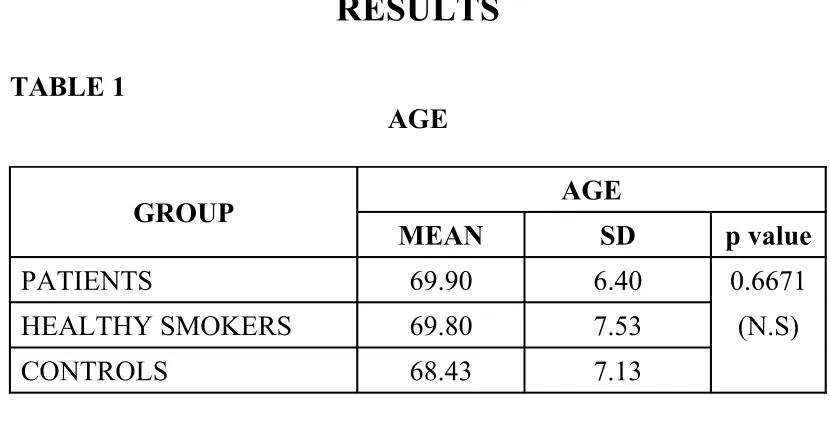
TABLE 1
AGE
GROUP AGE
MEAN SD p value
PATIENTS 69.90 6.40 0.6671
HEALTHY SMOKERS 69.80 7.53 (N.S)
CONTROLS 68.43 7.13
Using One Way ANOVA Age has p = 0.6671 (not significant)
Multiple Range Tests : Modified LSD (Bonferroni) test with significance level .05
Harmonic Mean Cell size = 30.0000
The actual range used is the listed RANGE * 1.2849 with the following value(s) for RANGE: 3.45
No two groups are significantly different at the .050 level
Homogeneous Subsets (highest and lowest means are not significantly different)
Subset 1
Group Group 3 Group 2 Group 1
TABLE 2
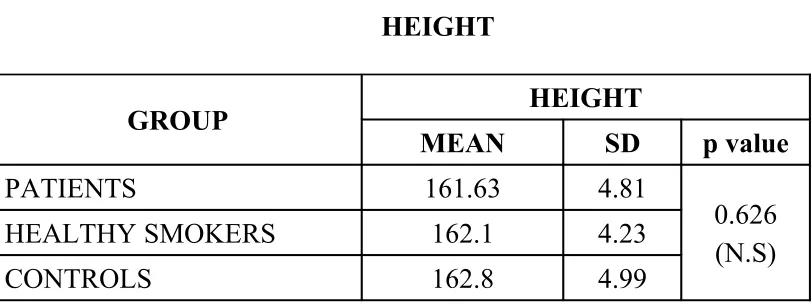
HEIGHT
GROUP HEIGHT
MEAN SD p value
PATIENTS 161.63 4.81
HEALTHY SMOKERS 162.1 4.23
CONTROLS 162.8 4.99
0.626 (N.S)
Using One Way ANOVA Height has p = 0.626 (not significant)
Multiple Range Tests : Modified LSD (Bonferroni) test with significance level .05
Harmonic Mean Cell size = 30.0000
The actual range used is the listed RANGE * .8556 with the following value(s) for RANGE: 3.45
No two groups are significantly different at the .050 level
Homogeneous Subsets (highest and lowest means are not significantly different)
Subset 1
Group Group 1 Group 2 Group 3
TABLE 3
RATIO OF FEV1/FVC
GROUP
FEV1/FVC
MEAN SD p value
PATIENTS 54.3333 7.07
HEALTHY SMOKERS 75.8000 2.47
CONTROLS 78.0667 3.20
< 0.001
Using One Way ANOVA FEV1/FVC has p < 0.001 (significant)
Multiple Range Tests : Modified LSD (Bonferroni) test with Significance level .05
Harmonic Mean Cell size = 30.0000
The actual range used is the listed RANGE * .8584 with the following value(s) for RANGE: 3.45
(*) Indicates significant differences which are shown in the lower triangle
Mean GROUP
54.3333 Group 1
75.8000 Group 2 *
78.0667 Group 3 *
Homogeneous Subsets (highest and lowest means are not significantly different)
Subset 1
Group Group 1 Mean 54.3333
Subset 2
[image:54.595.106.508.489.604.2]Group Group 2 Group 3 Mean 75.8000 78.0667
TABLE 4
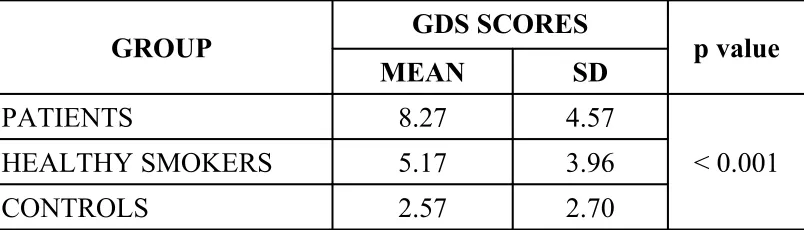
GDS SCORES IN GROUPS
GROUP GDS SCORES
MEAN SD p value
PATIENTS 8.27 4.57
HEALTHY SMOKERS 5.17 3.96
CONTROLS 2.57 2.70
< 0.001
Using One Way ANOVA GDS Scores have p < 0.001 (significant)
Multiple Range Tests : Modified LSD (Bonferroni) test with significance level .05
The actual range used is the listed RANGE * .6979 with the following value(s) for RANGE: 3.45
(*) Indicates significant differences which are shown in the lower triangle
Mean GROUP
2.5667 Group 3
5.1667 Group 2 *
8.2667 Group 1 * *
Homogeneous Subsets (highest and lowest means are not significantly different)
Subset 1
Group Group 3
Mean 2.5667
Subset 2
Group Group 2
Mean 5.1667
Subset 3
Group Group 1
TABLE 5
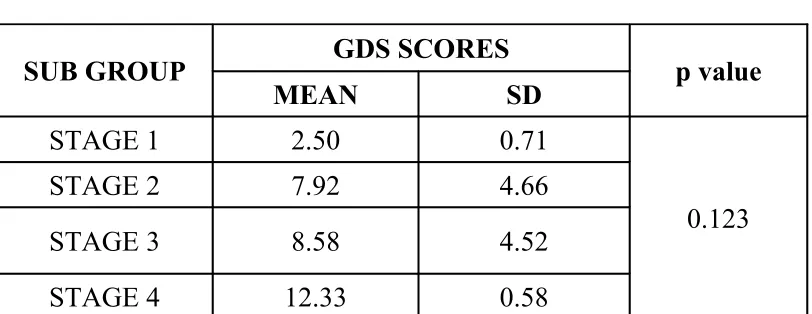
GDS SCORES IN SUB GROUPS
SUB GROUP GDS SCORES
MEAN SD p value
STAGE 1 2.50 0.71
STAGE 2 7.92 4.66
STAGE 3 8.58 4.52
STAGE 4 12.33 0.58
0.123
Using One Way ANOVA GDS SCORES have p =0.123 (not significant)
Multiple Range Tests : Modified LSD (Bonferroni) test with significance level .05
Harmonic Mean Cell size = 4.0258
The actual range used is the listed RANGE * 2.1570 with the following value(s) for RANGE: 4.04
(*) Indicates significant differences which are shown in the lower triangle.
Mean STAGE
2.5000 Stage1
7.9231 Stage 2
8.5833 Stage 3
12.3333 Stage 4 *
Subset 1
Group Sub Group 1 Sub Group 2 Sub Group 3
Mean 2.5000 7.9231 8.5833
Subset 2
Group Sub Group 2 Sub Group 3 Sub Group 4
Mean 7.9231 8.5833 12.3333
TABLE 6
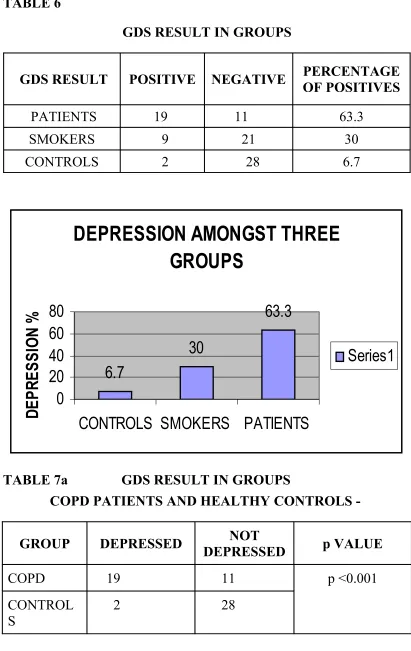
GDS RESULT IN GROUPS
GDS RESULT POSITIVE NEGATIVE PERCENTAGE OF POSITIVES
PATIENTS 19 11 63.3
SMOKERS 9 21 30
CONTROLS 2 28 6.7
DEPRESSION AMONGST THREE
GROUPS
6.7
30
63.3
0
20
40
60
80
CONTROLS SMOKERS PATIENTS
[image:58.595.101.508.119.270.2]D
E
P
R
E
S
S
IO
N
%
Series1
TABLE 7a GDS RESULT IN GROUPS
COPD PATIENTS AND HEALTHY CONTROLS -
GROUP DEPRESSED DEPRESSEDNOT p VALUE
COPD 19 11
CONTROL S
2 28
Fischer’s Exact Test used. p <0.001(very significant)
TABLE 7b
COPD PATIENTS AND HEALTHY SMOKERS
GROUP DEPRESSED NOT DEPRESSED p VALUE
COPD 19 11
HEALTHY SMOKERS
9 21 0.0191
Fischer’s Exact Test used. p = 0.0191 (significant)
TABLE 7c
HEALTHY SMOKERS AND CONTROLS
GROUP DEPRESSED NOT DEPRESSED p VALUE
HEALTHY SMOKERS
9 21
CONTROLS 2 28
0.0419
[image:59.595.101.519.587.727.2]Fischer’s Exact Test used. p = 0.0419 (significant)
TABLE 8
GDS RESULTS IN SUB GROUPS
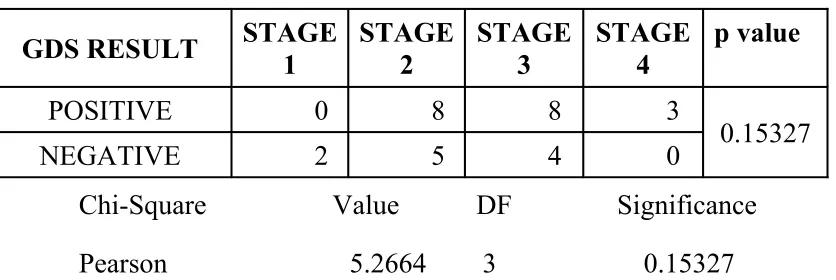
GDS RESULT STAGE 1 STAGE 2 STAGE 3 STAGE 4 p value
POSITIVE 0 8 8 3
NEGATIVE 2 5 4 0 0.15327
Chi-Square Value DF Significance
Pearson 5.2664 3 0.15327
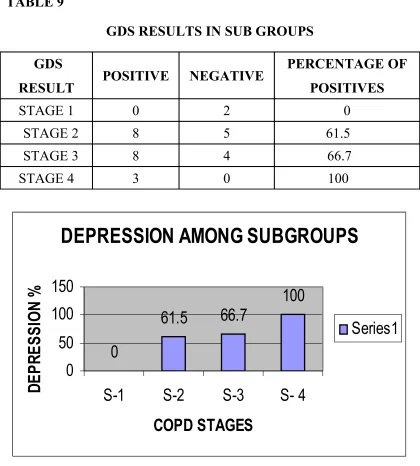
TABLE 9
GDS RESULTS IN SUB GROUPS GDS
RESULT POSITIVE NEGATIVE
PERCENTAGE OF POSITIVES
STAGE 1 0 2 0
STAGE 2 8 5 61.5
STAGE 3 8 4 66.7
STAGE 4 3 0 100
DEPRESSION AMONG SUBGROUPS
0
61.5
66.7
100
0
50
100
150
S-1
S-2
S-3
S- 4
DISCUSSION
This study was done to find out the association between COPD,
depression and smoking in elderly people. Here 90 subjects were
divided into three groups of 30 each.
Group 1 - COPD patients who are also smokers.
Group 2 - Healthy smokers.
Group 3 - Healthy controls
Group 1 was subdivided into four sub groups.
Sub group 1 - FEV1 > 80%
Sub group 2 - FEV1 > 50% to <80%
Sub group 3 - FEV1 > 30% to <50%
Sub group 4 - FEV1 < 30%
In all these volunteers, Spirometry and Geriatric Depression Scale
were administered, along with an enquiry about their smoking patterns.
Statistical analysis was done and results were compared.
AGE
Age affects depression and so, comparison between groups of
To eliminate bias, age was compared in all three groups using one
way ANOVA followed by Modified LSD (Bonferroni) test. p value of
0.6671 was obtained. This is not significant. So, `Age’ as a confounding
factor was ruled out.
HEIGHT
Using one way ANOVA, followed by Modified LSD (Bonferroni)
test, Height was compared in all three groups. p value of 0.626 was
obtained. This is not significant. So, `Height’ as a confounding factor
was ruled out.
FEV1/FVC
FEV1/FVC was used to separate Group 1 from other two groups.
FEV1/FVC < 70% indicates COPD and this is internationally accepted
definition (15). So, it was just enough to prove that FEV1/FVC does not
vary between Groups 2 and 3. By use of Modified LSD (Bonferroni) test
it was found that the means of Groups 2 (75.8000) and Group 3
(78.0667) do not differ significantly. Thus the role of FEV1/FVC as a
GDS SCORES
GDS scores were given to an individual person based on fifteen
questions. A person can have any score between zero to fifteen.
GDS scores were compared between all three groups using one
way ANOVA, followed by Modified LSD (Bonferroni) test. Significant
difference was found between all three groups (p < 0.001) and each
group differed from each other significantly.
GDS scores were compared between all four sub-groups of
Group-1 using one way ANOVA, followed by Modified LSD
(Bonferroni) test. Significant difference was not found between all four
sub-groups (p = 0.123). However two homogenous sub sects occurred
(sub-groups 1,2,3 and sub-groups 2,3,4).This shows that sub-group1
varied from sub-group 4 but other sub- groups did not differ from each
other significantly.
GDS RESULTS
Though GDS scores were compared, comparison of results
Geriatric Depression Scale was specifically developed to find out
depression in elderly, as depression in elderly manifests differently from
that of younger age group. Elderly have more somatic complaints due to
depression compared to young patients. The original version of
Geriatric Depression Scale consists of 30 parameters .Here Normal
score is 5 (plus or minus 4). Patients with mild depression have a score
of 15 (plus or minus 6) and patients with severe depression have a score
of 23 (plus or minus 5). . Ada C Mui et al in their study have found that GDS is valid in Indian Population(35).
A Shorter Version, Geriatric Depression Scale – 15, is often used
for ease of administration. Sheikh & Yesavage had recommended use of
GDS in Gerontology journal as early as in 1986(33). This short version
is considered positive if score is 5 or more out of 15. This short version
is recommended in Current Geriatric Diagnosis and Treatment 2004
edition. Thus as per this there can be only two results – Positive or
Negative.
GDS SCORE DEPRESSION
0 - 4 Positive
5 - 15 Negative
In this study prevalence of depression
• Among smoking COPD patients was 63.3%.
• Among healthy smokers was 30% and
• Among healthy controls was 6.7%.
In the current study, it has been found that the prevalence of depression
• Between elderly COPD patients who smoke and healthy
elderly non smokers was highly statistically significant (p
<0.001).
• Between the elderly COPD patients who smoke and healthy
elderly smokers (p = 0.0191) was statistically significant.
• Between healthy elderly smokers and healthy elderly non
smokers (p = 0.0419) was also statistically significant.
This is a very valid observation considering the fact that most
COPD patients in the community are not screened for depression and
also due to the fact that depression more than adds to the morbidity
This study also observes that the disease `COPD’ per se can cause
depression as indicated by an increased prevalence of depression among
smoking COPD patients compared to healthy smokers.
This study also points out that smoking is associated with one
more problem that is rarely addressed to – that is, Smokers are more
likely to be depressed. This assumes significance considering the fact
that depressed smokers are less likely to quit smoking, compared to non
depressed ones. Since quitting smoking reduces lots and lots of
morbidity and mortality, it becomes a necessity for the Medical
Community to come up with ways that will increase the success of
quitting. Since `depression’ prevents quitting, a formal screen for
depression and treatment with antidepressants will enhance the success
of quitting. This view is supported by the recommendation of the
anti-depressant bupropion for quitting by FDA and its success in this
situation.
The results thus show that COPD per se can cause depression and
when smoking adds to it, the prevalence is much higher than in healthy
non smokers. Since most COPD patients are smokers, the above
observation goes on to stress that – Screening for Depression is a sin qua
In this study prevalence of depression among subgroups of
smoking COPD patients were 0% in stage 1 COPD, 61.5% in stage 2
COPD, 66.7% in stage 3 COPD and 100% in stage 4 COPD. GDS
results were compared applying Chi-Square test and was found to be
insignificant (p =0.15377) amongst all four sub-groups. Even though the
comparison between the stages of COPD and GDS results were not
statistically significant, it has been found that the severe COPD patients
had more prevalence of depression compared to milder groups.
HEALTHY SMOKERS AND CONTROLS
Thus this study observed a significant increase in the prevalence
of depression amongst healthy smokers compared to healthy controls.
This finding correlates with a survey reported in Psychcentral of 3,000
individuals in the St. Louis area which confirmed that lifetime frequency
of major depression was more common among smokers than
nonsmokers (6.6 vs. 2.9 percent).
This also correlates with the findings of a study reported by
started, a history of daily smoking doubled the risk of developing major
depression later on(37).
This also correlates with the findings of a study reported by
Stephen J. Jay MD among persons 65 years of age or older; the smoking rate in that study was reported as 12.9% among women and
21.2% among men. Smoking was a major risk factor for 7 of the 14
leading causes of death among persons 60 years of age and older and
was a complicating factor for 3 others in that study. Thirty percent to
50% of smokers had a history of depression. Thus, that study concluded
that, `smoking is not uncommon in the elderly and is associated with
both depression and numerous adverse health effects, including illness,
death, reduced health care utilization, reduced physical activity, and
altered metabolism of medications (61)’The Present study correlates
closely with this above mentioned study with a depression rate among
smokers coming to 30%.
HEALTHY SMOKERS AND COPD PATIENTS WHO SMOKE
COPD
As already mentioned, this study also observed a significant
increase in the prevalence of depression among COPD patients who
smoke compared to healthy smokers.
This correlates with the study by Edwin.J.Wagena (51) which showed that, Smoking people with chronic bronchitis or emphysema
were more likely to report suffering from depressed mood when
compared with smokers with no long lasting disease (Prevalence rate
PR: 29.3 and 9.0% respectively. Odds Ratio, OR for depressed mood =
4.04; 95% CI = 2.56 - 0.39).
This also correlates with the findings of another study reported by
Edwin.J.Wagena et al in Psychosomatic Medicine journal where odds ratio for chronic bronchitis patients to have depression was 4.38
and the odds ratio for chronic bronchitis patients who smoke to have
depression was 7.56(53).
COPD PATIENTS WHO SMOKE AND HEALTHY CONTROLS
As already mentioned, this study also observed a very significant
difference in the prevalence of depression among COPD patients who
This is in correlation with studies of L.Van Ede et al (49 )who found an increase in depression among COPD patients compared to
controls in three of his studies. Two other studies by of L.Van Ede et al
(49) which did not show a significant difference in prevalence of
depression between COPD patients and controls were excluded by the
Author himself as he found that those studies had defective
methodology. He then showed an increased prevalence of depression
COPD patients in general population in three of six non controlled
studies.
This is also in correlation with the study of ABEBW
M.YOHANNES (62)who compared the prevalence of depressive symptomatology in elderly outpatients with stable COPD with that in
healthy controls and age-matched patients with other disabilities, and
also assessed the relation between degree of disability,quality of life and
depressive symptoms. The subjects were 96 older people with COPD
[56 men; aged 70–93 (mean 78) years], 55 normal controls [23 men;
aged 70–90 (mean 78) years] and 53 disabled controls [27 men; aged
70–92 (mean 78) years]. Exclusion criteria were acute respiratory
exacerbationor use of oral steroids in the last 6 weeks, known previous
that depressive symptoms are common in elderly patientswith COPD;
prevalence and/or severity of depressive symptoms may be greater in
those who are most disabled. In this study also similar results were
obtained with increase in prevalence of depression among COPD
patients with a much higher prevalence in Stage 4 disease.
This study also is in correlation with a study reported by A J McSweeny et al in Archieves of Internal Medicine (48).In that study 203 patients with COPD and 73 controls were selected. Depression was
the predominant emotional disturbance noted in COPD patients.
According to a recent survey by Mark Kunic and others, anxiety
and depressive disorders were found in 60 to 80 percent of military
veterans with COPD. Incidence of smoking and mood disorders is
significantly higher in VA clinic patients (50).Thus the present study
correlates with the study of Mark Kunic et al in that in this study also the prevalence of depression is 63%
This incidence of depression among COPD patients in this study
is however higher than the study by Kent Roundy et al (In 102 COPD patients found that 50 had depression or anxiety) (46). This is also
Inventory in 45 patients and found 42% of them had depression (47).
This may be due to the fact that all patients who entered this study were
of lower socio-economic status and this could have increased the
prevalence of depression equally in all three groups.
DEPRESSION AMONG DIFFERENT STAGES OF COPD -
This study observed an increase in the prevalence of depression
among COPD patients of Stage 4 compared to Stage 1. The prevalence
of depression increases from 0% in Stage 1 to 61.5% in Stage 2 to
66.7% in Stage 3 and becomes 100% in Stage 4. Though there is an
increase in the prevalence of depression with increasing stage of COPD,
statistically significant increase between all stages is not found. This
contrasts with a study by Van Manen et al in journal Thorax (42). In their study they found 25% depression in severe COPD compared to
19.6% in mild COPD and 17.6% in controls. This difference between
the two studies might have been due to the smaller sample size used in
this study. However this study correlates with the study of Van Manen
et al in that prevalence of depression increases with increasing severity
LIMITATIONS OF THIS STUDY
In this study COPD patients without a history of smoking were
not included due to the difficulty in getting such patients. Only a few of
them came to Out Patient Department (as they constitute only a minority
of COPD patients) and nearly every one of them had other
predispositions for depression and so could not enter the study. Had this
study included them, this study would have been of more value. Still, as
most COPD patients in the community are smokers, this study
represents the bulk of COPD patients in the community and their
predisposition for depression.
The stages of COPD were not equally represented in this study.
Most patients were of Stage 2 or 3. This may be due to the fact that most
if not all patients of Stage 1 have no symptoms and so rarely come to
OPD for treatment. Most patients in Stage 4 may be disabled secondary
to their lung disease and many of them may be bed ridden, either
admitted in ward or being treated at home itself and so they also form
only a small percentage of out patients. These problems of this study
could have been solved, had the study been carried out in the
Future studies are needed to find out how many COPD patients
with depression are really being treated for their depression. Also
studies are needed to prove that antidepressants really help COPD