Learning with digital technologies
Peter AlbionIntroduction
Understanding how digital technologies might be used to support learning depends upon first understanding the nature of learning. Ideas about what can be learned, what should be learned, and how people learn are important as foundations for thinking about theories of learning and how they relate to digital technologies. Over the past seventy years digital technologies have seen major increases in storage capacity, computational power, and accessibility. During that same period there have been parallel developments in our understanding of learning. Although newer digital technologies have supplanted the old, newer approaches to learning with digital technologies are better viewed as complementary rather than complete replacements.
Critical questions
• What do we understand by learning?
• What theories of learning are there and how are they related?
• How can theories of learning be applied to learning with digital technologies?
The nature of learning
Before we can consider the relationship between learning and digital technologies we need to clarify what we understand by learning. A simple definition of learning from the perspective of educational psychology would refer to a change in behaviour that results from the interaction of an organism with its environment.
The behavioural change might be manifested immediately, as when even a simple organism responds to something in its environment by moving toward or away from a light source. Such responses can be considered to be learning at its simplest.
More often, the change in behaviour does not happen immediately but is manifested later, sometimes much later. In these cases learning can be seen to produce a change in the organism that creates the potential for different behaviour in appropriate
conditions and is relatively permanent, that is, “neither transitory nor fixed” (Olson & Hergenhahn, 2012, p. 2). One example could be learning to read, which creates potential for behaviour that is used very frequently in modern societies. Another could be gaining knowledge and skills, such as trigonometry or calculus, that are used less frequently by most people but may be recalled and applied when needed. Simple observation
confirms that such learning persists beyond the moment of learning and is not
transitory but neither is it fixed and it may be forgotten if not periodically reinforced by practice.
Hence, for the purposes of this exploration of learning with digital technologies a working definition of learning might be an experience that produces a relatively permanent change in potential for behaviour.
• What can and should be learned or, what knowledge is valuable?
• How can it be learned, and what might be the role of digital technologies in facilitating that learning?
Each of these questions could require an entire book, or more, to answer. Hence, what can be included here will necessarily be incomplete but will provide a basis for
exploring the possible connections between learning and digital technologies.
What can be learned?
The result of learning is generally described as knowing or knowledge. Common daily experience suggests that there are at least two different kinds of knowledge. There is knowing that or propositional knowledge and knowing how or procedural knowledge. Although the words used to discuss these forms of knowledge in education vary, one common formulation speaks of what students know and what they can do with it. Both forms of knowledge are important and the Australian Curriculum recognizes that in the structure of several of its documents. The Technologies curriculum includes two strands, knowledge and understanding and processes and production skills, in each of its two subjects. The History curriculum refers to historical knowledge and understanding and historical skills and the Geography curriculum has the same structure, substituting geographical for historical. Other curriculum areas make similar distinctions between knowledge and skills. Clearly, any consideration of learning with digital technologies should address both knowledge and skills.
Within any subject there is an evident progression from the simplest to the more complex knowledge and skills. That is apparent in everyday life and in the way that curriculum is levelled through twelve or more years of formal education. There are different approaches to delineating this progression of knowledge but probably the best known is the Taxonomy of Educational Objectives, commonly known as Bloom’s
Taxonomy. It has three broad categories of learning – cognitive, affective, and
psychomotor – in which the cognitive and psychomotor domains correspond to what was described above as knowledge and skills. Within each domain there are multiple levels. The cognitive domain is most widely known to and used by educators. Its six levels progress from knowledge (remember or recall) at the simplest, through comprehension (understand) and application to analysis, evaluation and synthesis (create) which in a recent revision have come to be treated as being part of the same level of higher order thinking skills.
Our understanding of learning will also be affected by ideas about where knowledge is located. The objectivist view of the world posits that knowledge can exist independently of an individual person and so can be stored in books and libraries and transmitted from teacher to learner. Constructivism argues that people construct knowledge from experience, typically through social interaction and negotiation. The objectivist view is consistent with what Bereiter (2001) has described as the ‘folk theory’ of mind as a container that can be filled through a transmission and acquisition model of learning. He argued instead for a model in which learning occurs as individuals build knowledge and understanding from their own experience.
of individual disciplines and sub-disciplines. Establishing a curriculum at any level of education requires selection from what might be included.
What knowledge should be included in the curriculum and its interpretation for an individual class is a serious question. An answer will need to attend to ideas about the purpose of education and what knowledge is valuable for achieving that purpose. The extent to which education is viewed as benefitting the individual, through enhanced career prospects or otherwise, or the society, through better preparing citizens and producing value in the economy will be an important consideration. Understanding of what is needed for functioning in society as it is, and as it is anticipated to be in the future, will also affect the answer. It is not possible to provide a definitive answer here but teachers will answer it for themselves as they plan for learning with digital
technologies.
How can it be learned?
The answer to this question clearly depends upon what is to be learned. Consider what must be learned to obtain a drivers licence. There are road rules and other components that are assessed by a written test prior to a practical driving test. Those components require different approaches to learning in preparation for the different types of
assessment. The common element in learning is most likely to be practice, in the form of reading, reciting and retrieving road rules from memory and in hours of driving under supervision in a variety of conditions.
Similarly the role that might be played by digital technologies in supporting learning will vary according to what is being learned. Digital technologies can be used to present content for reading, listening, or viewing and to support practice by simulating the test taking experience. Some licence testing authorities encourage such use by providing practice tests that can be taken online in preparation for the official test of knowledge of the rules. It is possible to use digital technologies to simulate the actual experience of driving with varying degrees of fidelity. Such systems are relatively uncommon for learning to drive a car but are commonly used for more complex activities such as learning to fly an aeroplane.
Theories of learning
The application of digital technologies, or any other approach, to support learning will be guided by some theory of learning. Over time different theories of learning have emerged based on changing understandings of the nature of knowledge, the operation of the human brain, and what should be learned. Over the past 70 years or so they have influenced the development and application of digital technologies for learning.
Cognitivist-Behaviourist
Skinner applied his behaviourist theory of learning to the development of teaching machines which were mechanical devices that presented information incrementally with questions to be answered by the learner. Correct answers were rewarded and incorrect answers led to remedial activity. Such programmed instruction was also presented in books for a variety of subjects up to and including lessons in chess by then world champion, Bobby Fischer. Other applications of behaviourist principles included flash cards and the instructional approaches used by teachers in their classrooms. The first applications of digital technologies for learning in the 1960s were based on the same behaviourist approaches. Large central computers with multiple time-shared terminals were ideal appliances for automating programmed instruction using carefully controlled formats for computer-based instruction. They added the capacity to maintain records centrally and to adapt to the needs of different learners by drawing appropriate programs from a central storage. When microcomputers began to appear in schools in the 1980s the software used was mostly drill and skill programs and there are still numerous examples of such software being used in schools and for training.
As digital technologies developed and the processes involved in programming them became more widely known, researchers began to compare those processes to human cognition. The information processing theory of learning developed in response.
Although it shared the objectivist view of knowledge that underpinned the behaviourist theory, it moved past observable behaviour to consider what might be happening in the brain. This theory has been applied particularly to learning from multimedia. Its key assumptions are that human brains have two separate channels for auditory and visual information (dual-coding), that each channel has a limited capacity, and that learning is an active process of filtering, selecting, organising and integrating information with prior knowledge (Mayer, 2005). Insights based on this theory have been used to guide the development of multimedia instructional materials presented using CD-ROM or websites.
Current instructional software systems based on cognitivist-behaviourist theories often include sophisticated processes for individualising instruction to match the progress of each learner. It was the phenomenon of instructional software based on cognitivist-behaviourist theories of learning that typified the tutor category in Taylor’s (1980) typology of computers in the school as tutor, tool or tutee. Where the need is to present content effectively for learning such software can be effective but there are other ways of viewing knowledge and how it may be learned.
Constructivist
By the 1970s the work of Piaget and Vygotsky was becoming more widely known in education. That brought growing interest in constructivism, which holds that knowers construct reality from their perceptions. Rather than acquiring knowledge through the mechanisms favoured by behaviourists, constructivists seek to engage learners in experiences through which they construct their own knowledge.
For constructivists digital technologies are used as tools or environments to support learners in experiences that mediate learning rather than as conveyors of direct
instruction. The tool category in Taylor’s (1980) typology represented this trend. While schools in the USA were using mostly instructional software for behaviourist learning, Australian schools led the way to using general purpose software such as word
this was probably a consequence of having fewer educational programs available in the much smaller market and reluctance to adopt US software that had not been adapted to Australian language and culture.
Over time the constructivist approaches were widely adopted and the digital
technologies were conceptualised as mindtools (Jonassen, 1996). More emphasis was placed upon the use of digital technologies to support meaningful learning, which is characterized as active, intentional, authentic, cooperative or collaborative, and constructive (Howland, Jonassen, & Marra, 2012). Approaches such as project-based learning (see Chapter 19) are typical of the pedagogies used to support constructivist learning with digital technologies.
(Cultural-Historical) Activity Theory
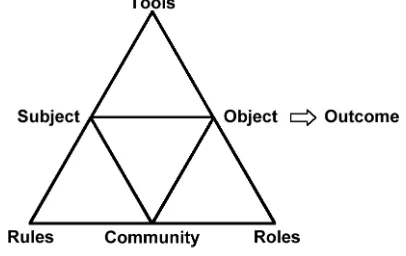
[image:5.595.196.399.497.625.2]One way of conceptualising the use of digital technologies as tools for constructivist learning is through (Cultural-Historical) Activity Theory, most commonly referred to using the shortened form, Activity Theory. It emerged from the work of Vygotsky in Russia but has been popularised in the West through the work of Scandinavian researchers (Engeström, 1987).
Figure 1 is a simple representation of the components in an activity system. The core activity in the system is across the mid-section of the diagram where a subject (learner or teacher) acts upon an object (another human or non-human component of the
system) to produce an outcome. The other elements in the diagram mediate that action. The principal mediation is the tools used by the subject in engaging with the object. In this context the tools will be digital technologies being used to support some activity designed for learning. Other mediating effects come from the rules (what is required and/or permitted), the community (teacher, other learners, and the wider world), and roles (assigned to, or adopted by, participants in the system). In a typical classroom project the learner (subject) might be required (rules) to work with other learners (community) to produce a short video (object) using appropriate hardware and software (tools) with each learner responsible for some aspect of the task (role).
Figure 1: Activity System (Engeström, 1987)
In a study of teachers integrating digital technologies in their classrooms, Lloyd and Albion (2009) described how apparently technophobic teachers acted logically in their own terms but had confused views of the system in which they took the digital
technologies to be the object on which they should focus rather than a tool for
Constructionist
Constructionist thought builds upon constructivism by suggesting that learning is most powerful when it is made visible to others by constructing some artefact that embodies what has been learned. The idea originated with Papert (1980) who had developed his constructivist thinking while working with Piaget.
Papert was disturbed by the prospect of children being taught by computers as envisaged in the tutor mode described by Taylor (1980). He turned that idea around and asked whether children might teach the computer. In doing so he tapped the
common experience that the best way to reinforce knowledge of a topic is often to teach it to others because that process requires clarification of what is known. The Logo programming language was developed as a medium for children to teach the computer by programming it to perform specific tasks. Because the computer requires fine-grained instructions that it follows literally, writing a valid program requires careful analysis of the relevant processes. The most visible focus of Logo programming was on the movements of a mechanical turtle and replication of those patterns by a ‘screen turtle’ but Logo was capable of much more.
Project-based learning and the maker movement (see Chapter 19) can be viewed as expressions of constructionism and there are many ways that digital technologies can be used to support learning through those modalities. Visual programming languages that are growing in popularity as a means of engaging children with programming can be viewed as descendants of Logo and the best known of those, Scratch, has been developed by the MIT Media Lab that Papert founded.
Connectivist
Connectivist thinking about knowledge and learning is a response to the networked digital age in which information has suddenly become both more abundant and more accessible. With so much information changing so rapidly, learning becomes less about remembering and more about being able to find and apply knowledge when it is needed (Siemens, 2005). Downes (2005) discusses social knowledge using as an example the knowledge necessary to fly a person across the Atlantic in a 747. No one person has the knowledge required to build, maintain, fly, and navigate the aeroplane but a connected network of people accomplishes it many times daily.
Evolution or complementarity
Digital computers first appeared during World War 2. In 1943 Thomas Watson, then president of IBM, commented that he thought there might be a world market for five computers. At that time a computer with appreciable computational capability occupied space equivalent to a house and used enough electricity to power a small town. In 1977, as personal computers were beginning to emerge, Ken Olsen, founder of Digital
Equipment Corporation, said that he could see no reason anyone would want a
computer in their home (Strohmeyer, 2008). In the decades since they first appeared, digital computers have evolved and become ubiquitous, not only in our homes, but in our pockets, most commonly as smartphones.
Over the same period theories about the nature of knowledge and related theories of learning have undergone equally dramatic changes. From cognitive-behaviourist, to constructivist and constructionist, and thence to connectivist, there has been a major shift in understanding and practice. When that change is viewed alongside the parallel change that has occurred in digital technologies it is tempting to see both as an
evolutionary progression in which new has repeatedly replaced old.
Anderson and Dron (2011) argue for another view in their discussion of three generations of distance education pedagogy from cognitive-behaviourist through constructivist to connectivist. They note strengths and weaknesses of each, concluding that no single generation provides a complete answer to learning and that each has built on the foundations provided by earlier generations that still have a role to play.
Although Anderson and Dron were discussing distance education, their argument appears to be equally applicable to learning and teaching in other contexts. The successive generations of learning theories do not represent an evolutionary series in which new replaces old. Rather they are complementary. Depending upon what is to be learned a different learning theory may be more appropriate as a guide to using digital technologies. For rote learning of number facts, a cognitive-behaviourist approach using drill and skill software that includes game characteristics to motivate the learner may be an effective solution. For developing critical thinking and creativity it will be more appropriate to use a project-based learning approach informed by a constructionist learning theory with digital technologies providing the tools to support research, planning, development, and presentation of artefacts that demonstrate the learning.
Conclusion
When educators engage in planning for learning with digital technologies their thinking should be informed by more than the dictates of fashion in hardware and software. The learning experiences offered in classrooms and beyond should induce changes that extend future capabilities of learners in worthwhile directions. That requires
• Recognising that older learning theories and digital technologies that use them continue to have value for achieving selected objectives,
• Ensuring that decisions about learning with digital technologies are responsive to learning needs rather than technological fashion,
• Selecting an appropriate learning theory to guide pedagogy for specific learning objectives, and
• Selecting compatible digital technologies for specific learning objectives.
Exploring
• Visit the Learning-Theories.com website (http://www.learning-theories.com), select a learning theory that has not been discussed above and develop an idea for how it could be used to design learning with digital technologies for some aspect of the curriculum you will teach.
• A simple search of Google for a string such as ‘online learning games’ will return a large number of sites offering access to free educational games. Visit one or more such sites, try some of the games, and determine what learning theory is being applied.
• Use the Activity System approach illustrated in Figure 1 to analyse a learning episode with digital technologies that you have observed or that you experienced as either learner or teacher.
• Select a topic from within a relevant curriculum learning area, identify an appropriate learning theory, and develop an outline plan for a learning experience that would make effective use of digital technologies.
Websites
Australian Curriculum http://www.australiancurriculum.edu.au
Teachers need to be familiar with the curriculum documents that specify what is to be taught and learned. The Australian Curriculum website can be searched according to curriculum area, year level, or other criteria and the results can be generated to PDF for download or printing. There are also apps to enable easy access to search the
curriculum from smartphone or tablet.
Education Software & Apps – Aussie Educator
http://www.aussieeducator.org.au/resources/software/educationsoftware=3.html Reviews by other educators can be helpful for learning what software is available and how well it works for particular purposes. This Australian site is a useful starting point in a search for suitable software.
Education World Educator Software Reviews
http://www.educationworld.com/a_tech/archives/edurate.shtml
Reviews from beyond Australia are sometimes less helpful because curriculum and context are different but they do include a wider range of software and may be useful indicators of developing trends.
Kathy Schrock’s Guide to Everything http://www.schrockguide.net
collection of resources that is almost certain to include something of use to every educator.
Learning-Theories.com http://www.learning-theories.com
There are many more learning theories than can be introduced in this chapter though many of them are related to those described above. Depending upon the context and curriculum to be taught one or other of the theories described on this site might be applicable.
Scootle https://www.scootle.edu.au/ec/p/home
Scootle is an Australian site maintained by Education Services Australia on behalf of the Commonwealth and State Ministers of Education. It offers access to online learning objects, software, reviews and other knowledgeable educators.
Reference list
Anderson, T., & Dron, J. (2011). Three generations of distance education pedagogy. The International Review of Research in Open and Distance Learning, 12(3), 80-97. Retrieved from http://www.irrodl.org/index.php/irrodl/article/view/890 Downes, S. (2005). An introduction to connective knowledge. Retrieved October 21,
2006, from http://www.downes.ca/cgi-bin/page.cgi?post=33034
Engeström, Y. (1987). Learning by Expanding: An activity-theoretical approach to developmental research. Helsinki: Orienta-Konsultit.
Howland, J. L., Jonassen, D., & Marra, R. M. (2012). Meaningful Learning with Technology (4th ed.). Boston: Allyn & Bacon.
Jonassen, D. H. (1996). Computers in the Classroom: Mindtools for Critical Thinking. Englewood Cliffs, NJ: Merrill.
Lloyd, M. M., & Albion, P. R. (2009). Altered Geometry: A New Angle on Teacher Technophobia. Journal of Technology and Teacher Education, 17(1), 65-84. Retrieved from http://eprints.usq.edu.au/4992/
Mayer, R. E. (2005). Cognitive theory of multimedia learning. In R. E. Mayer (Ed.), The Cambridge handbook of multimedia learning (pp. 31-48): Cambridge University Press.
Olson, M. H., & Hergenhahn, B. R. (2012). An introduction to theories of learning (9th edition. ed.). Boston: Pearson.
Papert, S. (1980). Mindstorms: Children, computers, and powerful ideas: Basic Books, Inc.
Siemens, G. (2005). Connectivism: a learning theory for the digital age. International Journal of Instructional Technology & Distance Learning, 2(1). Retrieved from http://www.itdl.org/Journal/Jan_05/article01.htm
Strohmeyer, R. (2008). The 7 Worst Tech Predictions of All Time. Retrieved November 13, 2014, from
http://www.techhive.com/article/155984/worst_tech_predictions.html