euratom
review of the european atomic energy community
CONTENTS
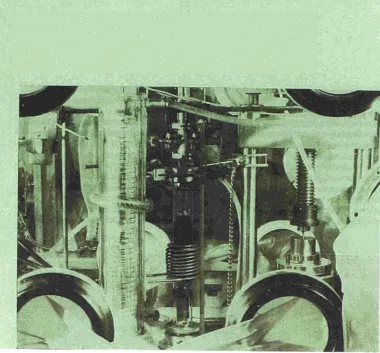
Accelerated plasma beam (CIRCE experiment at Saclay, France)
67 ' RADIOACTIVE CONTAMINATION OF WATER - A NEW
APPROACH NEEDED
The problem of radioactive pollution of surface waters will not be resolved through simplification. It is essential to examine all possible routes by which radioactivity can reach man.
RENE AMA VIS and JAN SMEETS, Directorate for Health and Safety, Directorate-General for Social Affairs, Commission of the European Communities
74 PROTACTINIUM
This rare element, which a few years ago was little more than a curiosity, is now being subjected to systematic investigation on account of the significant part it plays in the thorium cycle.
H A N S - L U D W I G S C H E R F F , Ispra Establishment of the European Communities' Research Centre
82 WOULD YOU LIKE TO HELP US TO IMPROVE EURATOM
REVIEW?
You have assisted us by replying to our questionnaire. We now offer you an analysis of your replies.
Readers' views and comments, collated by MICHEL
GIBB, Editor
87 USING ELECTRONS TO ACCELERATE AND CONFINE IONS
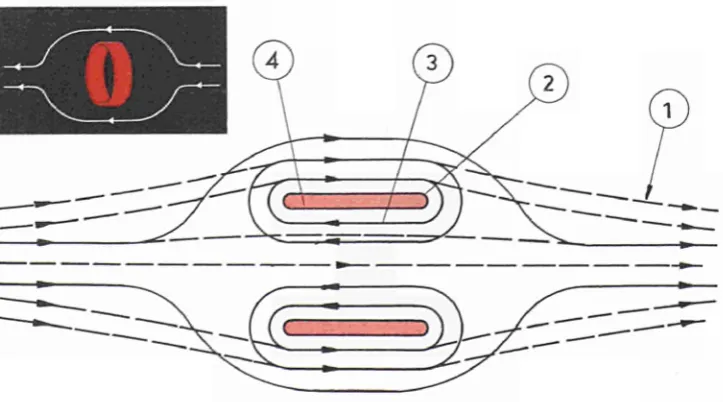
The phenomenon described has been known for several years, but its possibilities have recently been rediscovered.
T E R E N Z I O CONSOLI, CEA (French Atomic Energy Commission), General Ionics Division, Plasma Physics and Controlled Fusion Department
93 NEWS FROM THE EUROPEAN COMMUNITIES : Technological
¿*ς V ;
Quarterly Review of the European Atomic Energy Community (Euratom)
1968-The Community's mission is to create the conditions necessary for the speedy estab lishment and growth of nuclear industries in the Member States and thereby contrib ute to the raising of living standards and the development of exchanges with other countries (Article 1 of the Treaty instituting the European Atomic Energy Community).
"1 July 1968 will go down as a milestone in the history of Europe. On that day, the first stage on the road to economic unification of the European Continent will be complete".
These are the opening sentences in the statement published by the Commission of the European Communities on 1 July 1968. A subsequent passage runs as fol lows:
"Now that the customs union is com plete, work on the achievement of eco nomic union must be continued . . . We must gradually replace the old national policies with Community policies, chang ing the European area into an organised European society . . . Three of these pol icies deserve special mention. In the first place, . . . tax frontiers must be grad ually eliminated . . . In addition, we must make progress towards monetary union . . . Lastly, Europe must be induced to make decisive progress in research and technology, so that it can stand on an equal footing with the other great world economic areas".
W I T H T H E C O N S T A N T L Y spreading use of nuclear energy, the contamination of our water resources by the radioactive substances poured into them raises an evergrowing problem of how to safe guard the health of the general public. Fresh water is considered as a fundamental natural resource, essential to the modern world, but limited as to the quantity avail able. The demand for water increases with technical progress and social changes, the result frequently being a higher rate of pollution.
an extensive growth of facilities that use or study nuclear energy, and ' this will necessarily increase the quantities of radioactive waste and raise ever greater problems as to their disposal and dispersal in the environment.
At present the levels of surface water con tamination by radionuclides from fallout are dropping steadily: the content is now less than 1 pCi/litre2 for Sr5° and 0.5 pCi/ litre for Cs137, which is between about a hundred and ten thousand times lower than the maximum permissible concen
— laboratories, hospitals and industries that use radioelements;
— nuclear power plants;
— irradiatedfuel processing plants. The characteristics of such waste depend on the type of installation but also on the type of process used to decontaminate them.
As a general rule, the effluents discharged by reactors and nuclear research establish ments contain only minimal amounts of fission products or other radioelements. The radioactivity in the waste produced by
Radioactive contamination of water
-a new -appro-ach needed
R E N É AMAVIS and J A N SMEETS, Directorate for Health and Safety, Directorate General for Social Affairs, Commission of the European Communities
As to the sea, it is an immense potential source of substances, and more especially food, useful to man. It is only common sense to assume that radioactive contami nation of its waters will sooner or later constitute a danger.
Where does radioactive contamination come from?
There are two major sources of radioactive contamination of water1 :
— radioactive fallout due to nuclear tests; — the controlled disposal, or escape, of radioactive waste from nuclear installa tions.
Since 1963, nuclear tests in the atmosphere have been restricted. But we must expect
Figure 1: Radioactive pollution of surface waters and the various routes followed by the ■^ radionuclides which may be dangerous to man.
trations for drinking water (see Table 1). Discharges of radioactive substances may occur in two ways, namely as a result of an accident or through deliberate controlled disposal.
— Accidental release: In this case it seems unlikely that uncontrolled contamination of the environment would seriously affect the health of the population as a whole. Contamination will in most cases be limited to the zones in the vicinity of the accident, so it will be possible to take effective action to limit its spread.
— Deliberate controlled disposal: This is disposal effected under the control of the bodies responsible for protecting public health, i.e. in accordance with the official radioprotection standards. Such radio active waste may come from several kinds of installation:
— mines and industrial plants that process uranium and thorium ores;
— fuelelement manufacturing plants; — nuclear research centres;
reactor operation stems essentially from activation of the cooling liquid (and of the impurities or corrosion products contained therein) and the structural materials of the reactor. Depending on the type of reactor, the formation of tritium and radioisotopes of such elements as sodium, cobalt, iron and manganese may occur.
Of the small users, i.e. hospitals, research laboratories, industries that make use of radioelements, it can be said that each individual installation releases only small quantities of radioactive waste, usually containing radionuclides with fairly short halflives. Nevertheless, since there are thousands of these users in the Community and their number is constantly growing, the question arises whether in the long run there may not be a cumulative effect.
1. Though natural radioactivity (K4°, uranium,
thorium, etc.) cannot be disregarded in certain cases, e.g. when low contamination levels have to be measured.
2. A picocurie: 1 0_ , ; curies = quantity of a
Radionuclide MPC //Ci/ml
«Sr î0Sr 137Cs " Z r 11'Ce l10Ba 103Ru
l ü 6R u 65Zn 6°Ce S4Mn »Cr
3H
1 χ IO'3
4 x 10"7
2 x 10"5
6 X 10⁵
10"5
3 x 10"5
8 χ 10_i
10"5
104
5 x 10⁵
10"4
2 x 1 0J
3 x IO"3
Table I: Maximum permissible concentration (MPC) in drinking water for members of the public outside the controlled areas*
The biggest source of radioactive waste is the reactor fuel cycle. This starts at the mines and industrial facilities where the uranium and thorium ores are extracted and processed; next come the fuelelement manufacturing plants. The effluents dis charged by these installations chiefly con tain elements of the actinide series and their decay products.
It is the irradiatedfuel reprocessing plants, however, that produce the largest quanti ties of radioactive residues (99% of all wastes). All these residues go through a series of treatments to convert them into solid (glass, ceramic, concrete) or semi solid (chemical slurry) low level radioactive compounds, which are disposed of with all the necessary precautions. Slightly radioactive liquid wastes only are dis charged into the environment, but in large quantities. This deliberate contamination caused by monitored waste is the most significant.
Behaviour of radionuclides in the hydrosphere
The concentration of radioactive sub stances in the hydrosphere and the distri bution of the radioelements may be altered by various diluting and concentrating processes such as the following: dispersion by currents, diffusion, sedimentation, sorp
* Euratom Basic Standards
tion (by sediments, matter in suspension, organisms), precipitation, ion exchange, isotope exchange, ingestion of contami nated food by animals at the various trophic levels of the food chain.
The importance of these processes varies appreciably according to the nature of the radionuclide, its physicochemical state
(ion, particle, complex), the composition of the aquatic environment and the selec tivity of certain biological or nonbiological fixing agents.
For human beings, the resultant irradia tion hazard is twofold—external irradia tion, which may be due to the water, sediments, fishing gear, etc. and internal
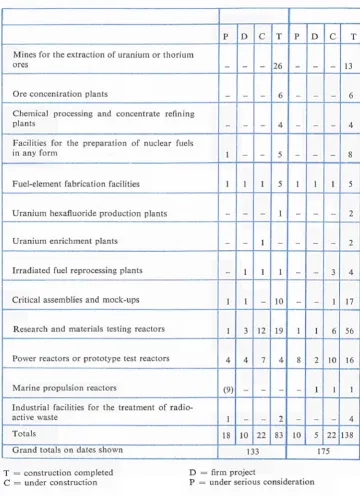
Table II: Statistics on the trend of nuclear installations in the European Community in the period 1961167
Mines for the extraction of uranium or thorium ores
Ore concentration plants
Chemical processing and concentrate refining plants
Facilities for the preparation of nuclear fuels in any form
Fuelelement fabrication facilities
Uranium hexafiuoride production plants
Uranium enrichment plants
Irradiated fuel reprocessing plants
Critical assemblies and mockups
Research and materials testing reactors
Power reactors or prototype test reactors
Marine propulsion reactors
Industrial facilities for the treatment of radio active waste
Totals
Grand totals on dates shown
Ρ _ 1 1 _ _ _ 1 1 4 (9) 1 IS 1) _ _ 1 _ _ 1 1 3 4 10
c
_ _ 1 — 1 1 _ 12 7 _ 22 T 26 6 4 5 5 1 _ 1 10 19 4 _ 2 83 133 Ρ _ _ 1 _ _ _ _ 1 8 _ 10 D _ 1 _ _ _ _ 1 2 1 5c
_ _ 1 _ _ 3 1 6 10 1 22 T 13 6 4 8 5 2 2 4 17 56 16 1 4 138 175T = construction completed C = under construction
D = firm project
[image:6.595.33.206.102.271.2] [image:6.595.218.579.231.728.2]contamination via food, including drinking water.
Protection of public health: present measures and birth of a new philosophy
The safeguarding of public health against the dangers of ionising radiations due to radionuclides is based on standards con-cerning irradiation doses; these standards are drawn up by international bodies
{International Commission on Radiological Protection, OECD, Vienna Agency, Eura-tom etc.) to whose directives the national laws generally refer. The Member States of the Community base their regulations on the Euratom basic standards. These stan-dards vary according to the people or pop-ulation groups concerned—occupationally exposed individuals, members of the public, or the population as a whole. From these basic standards are derived maximum per-missible concentrations (MPC) for each radionuclide in drinking water (Table I). At present, the effluent radioactivity levels are defined by discharge formulas, based essentially on the drinking-water MPCs. Their general expression is as follows:
Si < (MPC);
where Q¡ is the quantity of radioactivity due to the presence of the radionuclide i, discharged during a time t, D is the average throughput of the receiving network during time t, and (MPC)¡ is the maximum per-missible concentration of radioelement i in drinking water.
These discharge formulas have to receive the prior approval of the public health authorities, who likewise effect supervisory monitoring to ensure that they are properly applied.
This type of formula takes account only of the radioactive concentration in water, regarded as drinking water, for the pur-poses of evaluating human irradiation. Yet is has been established that drinking water is not the only route by which radioactivity is transmitted to man (Fig. 1). As was al-ready mentioned, a number of processes alter the concentrations and distribution of radionuclides in the aquatic ecosystems and change the distribution of
radioele-Relative nuisance coefficient (Sr"':l) Decay period
(half-life) in years
Concentration (microcuries
per ml)
Nuisance coefficient (concentration/
MPC)
Before decon-tamination
After decon tamination
[image:7.595.209.570.100.433.2](chem. processing)
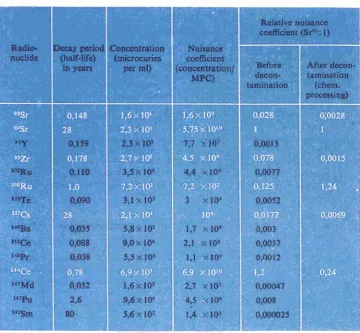
Table III : Concentration of certain radionuclides in the liquid waste at a reprocessing facility, three months after withdrawal of the fuel from the reactor. Figures based on 1 tonne of natural uranium, having reached a burn-up of 2,500 MWd¡t at 5 MW\t, dissolved in 400 litres of solution.
ments. This means that new principles must be adopted in risk evaluation, which must be based on consideration of the routes that carry radioactivity to man, and determination of the rates of transfer of each nuclide via each route.
The most important of these routes are: — the use of water for drinking purposes; — the consumption of fish, crustaceans and molluscs;
— the consumption of foods that have been contaminated as a result of irrigation of the soil on which they were grown with radioactively contaminated water (Fig. 2), or of cultivation on contaminated sediments obtained by dredging or spread by flood water;
— the consumption of foods of animal origin (milk, meat) obtained from live-stock that have ingested contaminated
water or fodder (grass, fishmeal, etc). As for external irradiation, its only real importance is in certain special cases (e.g. irradiation resulting from the handling of fishing tackle).
The selection of radionuclides for study depends on their abundance in the nuclear waste, their physical half-life and their radiotoxicity. Table III lists some of the important radionuclides in residual liquids from a plant where irradiated fuels are reprocessed; they are Ru106, Sr90, Ce144, Cs137, which are all uranium fission products.
This new philosophy is today being actively developed for both water and seawater. It has led to the formulation of the follow-ing basic concepts :
— The concept of the radiological threshold
Figure 2: Crops being watered not far from Koblenz, in Germany. Water is taken directly from the Rhine for watering purposes.
represents the maximum amount of radio-activity that can be allowed in a waterway system without exposing human beings to a level of irradiation higher than the basic standards. For a given waterway system it entails consideration of all discharges, i.e. the cumulative risks and all the routes by which the radioactivity can be trans-mitted to man.
— The concept of critical transfer routes
which expose a "critical population group" to a substantial risk of irradiation by a particular "critical nuclide". It should be remarked that the term "critical" does not necessarily imply the existence of a danger; it simply conveys the notion of criteria for decisions at the health and safety level.
The fight against radioactive contamination. . .
Such, then, are the problems inherent in the discharge of radioactive effluents and radioactive contamination of the environ-ment. How can they best be solved? By way of example, we give an outline of the
steps taken by the European Atomic Energy Community, which are embodied in both research and regulations.
. . . by means of a scientific and technical research programme
In the research field, the Commission of the European Communities is pursuing a number of specific lines:
Purification effluents
and storage of radioactive
For practically all the work connected with this side of the programme, Euratom has signed contracts with Community bodies or enterprises. The work consists mainly in developing new methods of processing, packaging and disposing of effluents (for further details of these activities, see the articles by G. Grison on "Radioactive waste", Euratom Bulletin,
Vol. VI (1967) No. 1, pp. 22-26 and "The problem of radioactive waste storage in the Community", Euratom Bulletin,
Vol. VI (1967) No. 3, pp. 84-88).
Figure 3: Map of the Rhine basin. A systematic study of the radioactive pollution of this basin was launched by the Euratom Commission and continued over nearly four years. The map shows the forty-two points selected for the sampling of ^
Study of the problems raised by radioactive contamination of international rivers
On the initiative of the Euratom Commis-sion, one such study concerning the Rhine basin was launched in 1962 and continued into 1966, with the active cooperation of the Community countries directly con-cerned, namely France, Germany, Luxem-bourg and the Netherlands, but also with the cooperation of Italy and Belgium on certain technical problems. The study con-sisted, first, in developing methods of sampling and measuring different radio-nuclides in an actual river basin, with a view to determining their behaviour in the hydrosphere (e.g. concentration on sedi-ments), and secondly, in drawing up a
real map of present radioactivity in the Rhine basin; the whole with the object of obtaining practical guidance on the control and monitoring of possible radioactive pollution (see Fig. 3).
Decontamination of water that may be used for drinking purposes
In this field the Community has let a number of research contracts, all with the basic aim of developing economic and efficient methods of removing radio-isotopes from water that may be used for drinking purposes. Special attention is paid to certain elements which resist the usual purifying methods by reason of
their physicochemical behaviour (e.g., radioruthenium - see Euratom Bulletin,
Vol. VI (1967) No 1, p. 31). . . . by formulating directives and recommendations
Apart from these research activities, the Commission of the European Communi-ties takes action as follows in questions of health and safety under the powers assigned to it by the Treaty of Rome : — establishment and revision of basic standards, including irradiation doses and permissible radioactivity concentrations in water and air (Articles 30-33);
Figures 4 and 5: For the Rhine Basin radioactivity study (see Fig. 3), various sampling devices had to be developed. Here a team (left) is immersing a rack (shown below) designed to accu-mulate the sediments deposited on the river-bed over a given period.
in the Member States (Article 35);
— access to the data obtained by the
Mem-ber States on the levels of environmental
radioactivity (Article 36);
— delivery of opinion on every plan for
the disposal of radioactive waste in any
of the Member States, after inquiry to
determine whether its implementation
is likely to lead to radioactive
contamina-tion of the water, soil or atmosphere of
another Member State (Article 37).
In addition, within the context of these
activities, numerous groups of experts
meet regularly to discuss the questions of
pollution of the environment, organisation
of control and monitoring of environmental
contamination, and the fixing of practical
standards for discharges of radioactive
matter into the hydrosphere.
Conclusions
Water supplies and their conservation are
one of the most anxious problems facing
the modern world, particularly in densely
populated regions like Western Europe.
Radioactive pollution is only one side of
the problem, of course, but increasing
public awareness of it demands an objective
investigation of all the consequences that
may stem from the discharge of
radio-active substances; the vigorously
ex-panding exploitation of nuclear power
makes this all the more pressing.
There can be no question of simplifying
PROTACTINIUM, the element with the atomic number 91, occupies the place be-tween thorium and uranium in the periodic system. Two of its isotopes, Pa231 and Pa234, occur in nature as members of the radioactive decay series starting with the two main isotopes of uranium. Pa234, which exists in the form of two short-lived isomeric nuclei', " U X 2 " (half-life 1.2 minutes) and " U Z " (half-life 6.6 hours), was the first Pa-isotope to be dis-covered, being shown up radiochemically in 1913 by Fajans and Göhring as a decay product of uranium. The other and only long-lived isotope Pa231 (half-life 32,500 years) and also its position within the radioactive decay series were not discov-ered until five years later (by Hahn and Meitner, and independently by Soddy and Cranston).
Systematic investigations then led to the discovery of a long-lived, alpha-emitting isotope of the element 91 with mass number 231. On account of its position in the actinium decay series as the parent sub-stance of actinium it was called "protacti-nium". Later studies showed that pro-tactinium was not the actual parent sub-stance of this series either, but was itself formed by decay of U23i, which for this reason is sometimes referred to as "actino-uranium".
As can be calculated from its half-life and the known concentration of its parent sub-stance U235 in natural uranium, measurable quantities of the protactinium isotope 231 are contained in natural uranium ores. These quantities, however, are very small (about 0.3 g per 1,000 kg uranium), i.e. about the same as radium.
PROTACTINIUM
At this time the "actinium decay series" was already known as one of three natural radioactive series. The parent substance, however, was not yet known. Possibilities on the basis of the radioactive displacement laws were either a beta-emitting radium isotope or an alpha-emitting isotope of the element 912, of which up to that time only the above-mentioned short-lived Pa234, called for that reason "brevium", was known.
1. Isomeric nuclei are taken to mean isotopes of an element with the same mass number but different nucleonic properties (e.g. half-life, type of emission and energy) due to differing energy contents (different nucleón binding states). This phenomenon was first demonstrated on Pa1" (O.Hahn-1921).
2. The radioactive displacement laws state, for example, that the atomic number of an isotope changes during beta decay by +1 and during alpha decay by —2. Actinium has the atomic number 89.
Therefore, immediately after the discovery of Pa231 attempts were made to isolate small quantities in pure form from uranium ore residues. This proved to be less simple than the isolation of radium at the turn of the century by Madame Curie. Since the chemical behaviour of protactinium is very complex in comparison with radium and was at that time still unknown, it was not possible until ten years later (von Grosse 1928) to obtain a few milligrams of pure protactinium, and until very recently only about 0.5 g were available in pure or highly enriched form for chemical studies in the entire world.
to study the chemistry of this rare radio element on a broader basis. The great importance attached to these studies both for scientific and nuclear reasons was shown inter alia by the fact that two international symposia were specially devoted to pro tactinium chemistry (Gatlinburg 1963 and Paris 1965).
More than just a curiosity
Apart from its curiosity value, what is the importance of this rather and rather inacces sible element? The main scientific interest is in obtaining as accurate a knowledge as possible of its electronic structure, which ultimately determines its chemical proper ties. This is primarily because protactinium
(which is tetravalent) and uranium (which is hexavalent); this originally cast doubts on the existence of an actinide series similar to the rare earths. These contradictions were cleared up only by more thorough physical studies which threw direct light on the electron structure. Of course, this stimulated a desire to include in these studies the element protactinium, which had only recently become available in sufficient quantities.
In addition, however, there is also a con siderable nuclear interest in obtaining exact knowledge of the chemical and physical properties of protactinium— especially in the condensed phase, i.e. in solid compounds—in connection with th&thoriumbreedingcycle,and the following remarks will therefore concentrate on these problems.
H A N S L U D W I G S C H E R F F , Ispra Establishment of the European Communities' Research Centre
is one of the initial members of the actinide series, a group of elements in the periodic system beginning with actinium (atomic number 89) and extending via thorium, uranium, plutonium and the transuranic elements to the heaviest element at present known, lawrencium (atomic number 103). The electronic structure of this group corre sponds to that of the rare earths, elements distinguished by their close chemical re semblance to one another, which makes it very difficult to separate them. All rare earths, for example, are chemically trivalent (this is the most stable valency). The higher transuranic elements, beginning with amer icium, behave similarly. The first members of the actinide series, however, show departures from this rule which are par ticularly marked in the case of thorium
Protactinium as an intermediate stage in the thorium breeder cycle
In the chain reactions which normally occur in a nuclear reactor, all the neutrons liberated by the fission of a fissile nucleus (their number η varies, according to the type of fissile nucleus and the energy of the reactor neutrons, between about 1.5 and 4 per fissioned nucleus) are used to trigger off further nuclear fissions, one fissile neutron per fissioned nucleus being sufficient to maintain the chain reaction. Disregarding unavoidable neutron losses through absorption (e.g. in structural materials, moderator, etc.) and leakage from the reactor core, there remains an excess of fissile neutrons which could be used for other purposes, e.g. for "breeding"
new fissile material. In this way it is theo retically possible in a nuclear reactor of suitable design to produce more fissile material than is consumed to maintain operation. Two nuclear reactions, sketched briefly below, can be used for this breeding process:
Thorium cycle:
ß
ß
Th232 (η, y) Th233 ^ Pa233 _^ U2 3 3
Uraniumplutonium cycle:
ß
ß
U238 (η, γ) U239 [\ Νρ2 3 9 '_> Pu239
Both reactions start with isotopes (Th232 or U238) which are not themselves capable of sustaining a chain reaction. On the other hand they are available in large quantities in nature. According to geo chemical estimates, Th232 is the only isotope of naturallyoccurring thorium whose reserves far exceed those of uranium. As for U238, it accounts for 9 9 . 3 % of natural uranium.
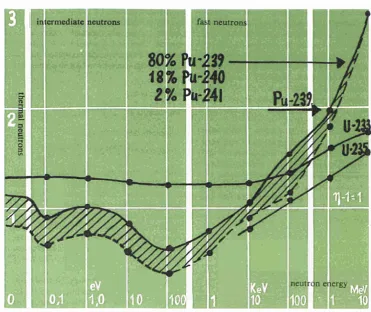
The most important physical quantity for the description of a breeding cycle is the conversion factor K. This factor gives the yields of the above nuclear reactions, i.e. the number of new fissile atoms (U233, Pu239) produced per used atom of the original fissile material. Only when Κ > 1 is there a breeding gain, i.e. more new fissile nuclei are produced than are consumed. The upper theoretical limit of Κ is set by the number of neutrons η liberated per fission (see above).
Since one neutron per fission is required to maintain the chain reaction, the theo retical conversion factor is given by the simple equation:
K, = η\
intermediate neutrons
80% Pu-23?
MoN'240
[image:14.595.27.399.98.410.2]_
.
Figure 1: The theoretical conversion factor ( = η - 1) as a function of neutron energy.
If we now return to the above equation of the nuclear reaction underlying the thorium breeder cycle, it will be seen that a pro
tactinium isotope, Pa233, plays a central
part in it. This isotope differs from those which occur in nature. It is a beta emitter with a half-life of 27 days. In the uranium-plutonium cycle also there is a beta-emitting intermediate product between the starting and the end product, namely a neptunium isotope (Np239). Its half-life,
however, is less than 10% ofthat of Pa233
(2.1 days). There is thus a big difference between the significance of these inter mediate products. Firstly, the concentra tion built up in the fuel element of a breeder reactor during operation is approximately proportional to the. half-life. This means that in the thorium cycle about ten times more protactinium is formed within the thorium matrix than the neptunium formed in the uranium cycle. Secondly, the half-life of the intermediate product also determines how long it is necessary to
wait after the removal of the fuel element from the reactor before the required end product (U233 or Pu239) can be extracted
by chemical reprocessing. While this period of time is only a matter of days in the uranium cycle and therefore raises no problems, with a thorium fuel element it is necessary to wait several months for
all the protactinium to decay into U233.
Long waiting times, however, raise the cost of the fuel cycle.
As was already mentioned, the relatively long half-life of the intermediate product
Pa233 causes higher concentrations of it
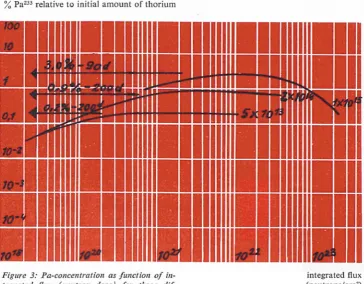
to be formed in the thorium matrix. Under normal reactor conditions these are in the order of magnitude of 0.2-2%, depending on the neutron flux (see also Fig. 3).
This has an unfortunate consequence from
the nuclear physics standpoint. Pa233 is
itself capable of capturing neutrons, leading to the formation of the
non-fissile uranium isotope, U234, via the
short-lived Pa234 (which is identical with
the initially mentioned natural isotope). The neutrons captured through this reac tion are lost to the overall neutron balance, since they serve neither to trigger off new fissions nor to breed fissile material. They thus reduce the conversion factor. Fig. 2 shows all the nuclear reactions and related nuclear physics data within the thorium cycle—including the undesired secondary reactions3.
Protactinium poisoning
Owing to neutron capture in Pa233, a
process which can also be called "pro tactinium poisoning", about 10% of
available neutrons are lost per 1 % Pa233
present in the thorium matrix. This reduces the conversion factor by 0.1, which is a great deal, bearing in mind that the maxi mum value of this factor in a thermal reactor is only 1.3 (see Fig. 1) and that only the fraction in excess of 1 represents the actual breeding gain.
How can protactinium poisoning be combated? It cannot be completely pre vented, since the formation of the desired end product, U233, is possible only by way
of Pa233. The only means of combating
it is to keep the protactinium concentra tion in the thorium as small as possible. There are two methods of doing this, which can easily be deduced from Fig. 3. This shows the protactinium concentra tion in reactor-irradiated thorium as a function of time for various neutron fluxes. A steep increase can clearly be dis cerned at the beginning of the irradiation period until a practically constant con centration is attained—the so-called equili brium concentration.
If the curves for various neutron fluxes are compared, it can be seen that these equilibrium concentrations are also rough ly proportional to the neutron flux. This means that theoretically a limitation of the neutron flux provides a means of limit ing the protactinium concentration too and hence also the extent of the protactinium poisoning. On the other hand, a diminished
3. As can be seen from this, there is also a produc tion, although on a smaller scale, of the long-lived Pa"1, which also turns, through further neutron
capture, into a short-lived isotope of protactinium (Pa131) and finally into a non-fissile uranium
neutron flux leads to a reduction in the reactor power density and hence ulti-mately to a drop in profitability, since a larger reactor will be required to produce a given output.
A radically different method is based on the typical time function of the formation of Pa233. At the beginning of irradiation (t = 0) the Pa233 concentration in the thorium is equal to 0, and then increases with time, at first rapidly and then more slowly. This might suggest the possibility of not leaving the thorium fuel elements too long in the reactor, but of taking them out again after short irradiation times, replacing them by new ones and mean-while chemically processing the old ele-ments (i.e. separating out their protacti-nium and uraprotacti-nium).
Ideally the thorium should be contained in a suitable fluid, which would circulate continuously through the reactor, and an annexed unit for continuous protactinium separation. This would make it possible to keep the protactinium concentration within the reactor core extremely low. The Pa233 accumulating in the separation unit could be stored outside the reactor until it decayed into U233, a fraction of which would be returned into the circuit to maintain the chain reaction. Such a technique would be theoretically feasible in molten salt and suspension (SUSPOP)
reactors4.
Very exotic systems, such as reactors con-taining the fuel and breeder substances dissolved or suspended in molten metal have also been proposed. However, they are still far from large-scale technical realisation, since they raise other problems such as corrosion, homogeneous distribu-tion of fissile and breeder material in the core, etc.
Moreover, owing to inadequate knowledge of protactinium chemistry, the fundamental problem of fast and efficient protactinium separation from such fluid melts or sus-4. Both reactors use a liquid nuclear fuel which circulates between the core and the heat ex-changer. In the first case the fissile material is dissolved in a molten salt consisting of the fluorides of lithium, beryllium and zirconium. A 7.5 MW test reactor of this type has been in operation in the
Oak Ridge National Laboratory for some years; in the second case (SUSPOP) the nuclear fuel is in the form of small oxide particles in aqueous suspension. This project is being developed in the Netherlands (see Euratom Bulletin, Vol. IV (1965) no. 3, p. 71).
pensions on a large scale is still for the Figure 2: The most important nuclear reactions
most part unsolved. Only quite recently
ORNL succeeded in developing a con-tinuous separation method for Pa from molten salts, which works quite well on a laboratory scale. It is based on continuous extraction of Pa into a molten bismuth-thorium alloy.
The compromise solution of a frequent replacement of thorium breeder elements specially developed for this purpose, with subsequent reprocessing and return of the thorium and of the uranium obtained from breeding, is at present impossible owing to the prohibitively high cost of such frequent reprocessing, which would have to be effected at intervals of a few weeks, since during a Pa233 half-life (about one month) 50 % of the maximum equili-brium concentration of Pa is formed, and
in the thorium cycle.
> ( 9 h )
Th 23
i ( 2 5 6 h ) .
P a231
(6,7
h )·
Reactions:
(3 - decay (half-life) Neutron capture (cross-section, in
barns)
(n, 2n) reaction (effec-tive cross-section for reactor neutrons, in barns)
(53
b)
it would therefore not be economic to wait much longer.
Influence of protactinium on the material properties of the thorium nuclear fuel
As we saw above, protactinium concen-trations of about 1 % are to be expected in a thorium fuel element under in-pile irradiation. The nuclear fuel itself usually consists of a suitable thorium compound % Pa233 relative to initial amount of thorium
to which a few percent enriched uranium (U235, U233) are added as fissile material. During operation this initially Pa-free basic material is contaminated by a pro-tactinium "impurity" which is quantita-tively by no means negligible.
Its influence on the material properties depends upon the chemical form in which the nuclear fuel is present, e.g. as metal, oxide, carbide, etc. Metal alloys seem to be particularly promising for water-cooled
! ! ! ! ! !
[image:16.595.34.399.251.535.2]a
II
Figure 3: Pa-concentration as function of in-tegrated flux (neutron dose) for three dif-ferent fluxes.
integrated flux (neutrons/cm2)
thorium reactors owing to their favourable neutron and thermal properties (maximum density and thermal conductivity, giving a high power density). Thorium alloys are superior to uranium alloys owing to better mechanical properties, above all at high temperatures. Thorium does not undergo any phase transformations in the tempera-ture range concerned and has a higher melting point than uranium (1,850 as against 1,130°C). But it is well known that the slightest traces of foreign metals can appreciably affect the mechanical
properties of metal alloys, especially at high temperatures. Particular caution is therefore indicated here as regards pro-tactinium. On the other hand, up to the present, nothing is known of the alloying be-haviour of this element, so that it is not possible to make a definite analysis of the property changes observed during the irradiation of thorium alloys, i.e. to separate the irradiation damage from the effects of the protactinium. The problem is further complicated by the fact that pure protactinium metal, which was produced and studied for the first time only three years ago, has a lattice structure at temperatures below about 1,100°C which differs from that of all other known metals.
Alternatively, the thorium can, of course, also be used in the form of a sufficiently stable chemical compound, e.g. as oxide or carbide, as is already customary with uranium ceramic fuels. In an oxide fuel the influence of the protactinium formed during reactor operations should be negligible, since it has been found that protactinium oxide is soluble in thorium oxide and slight concentrations leave its structure almost unaffected.
Carbides are also considered as ceramic fuels. They occupy approximately an intermediate place between the metals and the oxides, since they combine high thermal conductivity with high temperature stability (high melting point).
Apart from the direct effects of the pro-tactinium on the fuel properties, considera-tion must be given to another important factor independent of the chemical form of the fuel and the design of the element. This is diffusion, to which the atoms of any solid are subject at high tempera-tures. It is due to the fact that the atoms in the lattice of a solid are not rigidly fixed, but vibrate about their position at rest with an intensity which increases with temperature. As a result the atoms may leave their original position, either chang-ing places with adjacent atoms or jumpchang-ing into nearby vacant positions in the lattice and thereby leaving a similar vacancy behind them. Such vacancies are among the so-called lattice defects—deviations from the ideal solid lattice structure, i.e. the spatial arrangement of the atoms among themselves. From the macroscopic standpoint the diffusion process has the following effects :
— at constant temperature it causes an impurity which originally has an inhomo-geneous distribution (e.g. punctiform) in a solid body gradually to assume an even distribution;
— in a temperature gradient, e.g. in a rod whose ends are at different tempera-tures, so-called thermal diffusion can result in an impurity with an originally homogeneous distribution becoming en-riched at one end, thus resulting in an inhomogeneous distribution.
The velocity of these processes is deter-mined by the size of the diffusion constant.
In a given solid this differs for each type of atom and is also temperature-dependent. Temperature gradients are always present in a nuclear fuel element under operating conditions and are the more pronounced the lower the heat conductivity of the fuel. For example, in the simple case of a rod-shaped fuel element, the temperature at the axis of the rod is higher than at its surface, where the heat is continuously removed by the circulating coolant. With poorly conducting oxide fuels this temper-ature gradient is considerably steeper than for example with a metal alloy, and may have values of up to l,000°C/cm. As a result marked thermal diffusion occurs, leading to an inhomogeneous distribution of all fuel components, including the substances produced during the irradiation
by nuclear reactions, among which are the fission products.
What does this signify in the special case of protactinium in a thorium fuel? Since the protactinium is an intermediate prod-uct of the nuclear reaction leading from non-fissile thorium to fissile U233, which latter comes into being with a delay of about one month through decay of Pa233, an inhomogeneous distribution of the protactinium must lead to an inhomo-geneous distribution of the U233 in the fuel element. An alteration in the
distribu-and fission products as a result of diffusion would make the fuel element worthless. If the protactinium were to penetrate through the can in a thorium fuel element, fissile U233 would subsequently be formed inside and outside the can through decay, leading to complete contamination of the coolant circuit by fission products. It follows that it is of great importance to have exact knowledge of the diffusion parameters of protactinium in comparison with uranuima nd thorium in all reactor materials (nuclear fuel and can material),
Figure 4: One-fluid, two-region molten salt breeder reactor (after the paper "The status and potential of molten salt reactors", presented by M. W. Rosenthal to the IAEA pannel on the utilisation of thorium in powers reactors, June 1968).
tion of fissile material in a fuel element during operations is, however, undesirable. It changes the nature of the fuel, e.g. the temperature distribution, and may also affect the reactivity of the core.
The diffusion is naturally not restricted to nuclear fuels, but occurs in every solid, including the can material, the task of which is to seal hermetically the nuclear fuel and the fission products generated within it from contact with the coolant. A penetration of the can by fissile material
since the above effects are particularly strongly marked in the temperature gra-dient if the diffusion coefficients of the individual components differ greatly from one another. In this field, too, very little is as yet known and intensive studies are therefore in progress.
Allowing for protactinium in the reproces-sing of thorium nuclear fuels
Figures 5, 6 and 7: Fabrication of Th-Pa alloys.
Fig. 5 (left) shows the inside of the glove-box (below) with the essential apparatus ( 1. furnace for the Van Arckel bulb: 2. high-frequency heated vacuum furnace for fabri-cation of the carbide mixture: 3. hydraulic pellet press for compacting the raw materials).
Fig. 7 (right) shows a section taken from the
Van Arckel bulb. In the centre can be seen the hot wire with the Th-Pa alloy deposit. The thin wires are used as potential taps. Below left is the opened iodine capsule.
wait until all its contained Pa233 has decayed to U233, the desired end product of the breeder cycle. This entails waiting times of some months. Alternatively reprocessing can, of course, be carried out more quickly, but one must then either separate the protactinium specially (and store it to allow it to decay into uranium) or ensure through a suitable chemical process that all the protactinium is separated together with the uranium, since any protactinium loss is ultimately identical with a loss of U233 obtained from breeding. This again calls for as exact a knowledge as possible of the chemical behaviour of protactinium, in order to allow for it in processing nuclear fuel. This applies especially to recent "dry" reprocessing techniques, which involve chemical separations in molten salts or metals as reaction media (pyrometallurgy), or fluoride volatilisation techniques, which make use of the volatility of uranium fluoride in contrast to most other fluorides, including those of fission products. These techniques, which are at present still being developed, in theory make it possible to process a nuclear fuel im-mediately after removal from the reactor,
since the selected reaction media, in con-trast to the acqueous and organic solutions in the traditional nuclear fuel processing techniques, are not radiation-sensitive. Here again, unfortunately, our knowledge of the chemistry of protactinium is still completely inadequate to allow us to predict its behaviour in these processes. Almost the entire previous basic research on protactinium has been concentrated on its behaviour in aqueous solutions and to a certain extent in organic solvents. Practically nothing is known of its chem-istry in molten salts or metals.
Main lines.of nuclear research into protactinium chemistry
[image:18.595.19.400.18.371.2] [image:18.595.413.594.409.732.2]of the structural parameters together with the most important thermodynamic data affecting the stability of these compounds. In addition, the behaviour of dissolved protactinium in condensed phases is studied, i.e. both in solid solution and in molten systems. Up to the present little has been known in these fields, apart from a few structural studies on pro-tactinium oxides and propro-tactinium metal. This is due to the extreme difficulty of such investigations.
In the first place protactinium, as men-tioned above, is extremely difficult to obtain, since the only long-lived isotope suitable for such studies—Pa231—is as rare as radium. The Pa233 formed in the thorium cycle can scarcely be handled in weighable quantities owing to its short half-life and consequent high specific activity. In addition, Pa231 is an alpha · emitter with a radiotoxicity comparable to plutonium. Hence even milligram quan-tities can only be worked and studied under appropriate safety precautions, e.g. in glove-boxes. The inaccessibility and rarity of protactinium also mean that all the material used during a test, including the waste (even if greatly diluted), must be
reprocessed and recovered in a pure form. This is a very complex process. The tests themselves can only be performed on a very small scale, i.e. with quantities from a few milligrams up to a few tenths of a gram. Measurements must therefore be made on minute samples, using special techniques.
For example, in the tests on the production of Th-Pa alloys at present in progress at Ispra, the total quantities available are only a few tens of milligrams; the total quantity of a 1 % Pa-Th alloy, for instance, which can be fabricated in this way is only a few grams. Since the density of the metal is > 10 g/cm3, the volume of such a sample is < 1 cm3. The main problem in working with such small quantities is to avoid picking up impurities, e.g. by reaction with the material of a crucible, which could seriously falsify the properties to be measured. A metal fabrication tech-nique was therefore chosen which com-pletely eliminates such impurities—the
Van Arckel process—also used for fabricat-ing high-purity metals.
In this technique the iodide of the required metal is decomposed in a high vacuum on a hot wire (e.g. tungsten), and the metal is
deposited on the wire. We use a thin wire of thorium metal, in order to avoid even the slight contamination by a tungsten core in the Th-Pa alloy wire made in this way. The original material is a mixed thorium-protactinium carbide, fabricated previously from a mixture of the oxides through reaction with carbon at 1,500-2,000°C in vacuo. This is placed in an evacuated glass bulb containing the hot wire together with a small quantity of iodine, which reacts with the carbide to form the volatile iodides of Th and Pa. Both metals are then simultaneously deposited on the electrically heated wire in the form of the desired alloy without any foreign impurity. Figs. 5 and 6 show the whole apparatus mounted in a glove-box, which is necessary for performing all the above operations. Fig. 7 shows a Van Arckel bulb with the alloy deposited 'on the hot wire.
For further study of the alloy the bulb must be broken and the wire extracted. The tests performed on the alloy include metallography (i.e. microscopic study of the alloy structure), X-ray structure anal-ysis (Debye-Scherrer method) and micro-probe studies {Castaing method). In the microprobe studies a fine electron beam (diameter a few microns) is focussed on a few selected zones of a ground section of the alloy, thus triggering off the charac-teristic X-ray emissions of the individual elements present in the irradiated zone. From the intensity and the wavelength of this X-ray emission it is possible to deter-mine directly the type and concentration of the elements present. With this method it is also possible to make non-destructive chemical analyses of microzones of only a few square microns in area.
This is however only an example of the large number of investigations which are still necessary before we can arrive at a complete insight into the behaviour of this rare element in the systems which are of interest from the point of view of the thorium cycle.
this rare element in the systems which are of interest from the point of view of the thorium cycle. (EREA-A 7-11)
Readers' views and comments, collated by Michel Gibb,
Editor
SOME 200 READERS replied to the questionnaire we sent last year with issues 3 and 4 of Euratom Bulletin (as it was still called at the time). Our first duty is to thank them for giving us their views, some of which came rather as a shock to us, al-though criticisms were invariably con-structive. A few of our readers found the space available in the questionnaire for general comments insufficient and took the trouble to write us a letter. We are particularly grateful to them.
Our second duty is to present in some detail the results of this opinion poll.
The substance of the replies to questions 1, 2, 3, 5 and 6 is best given in tabular form (see tables I to V; replies to question 4 have not been dealt with as they in most cases merely confirm replies to question 3). It should be noted that the figures do not always add up to the same total; this is just because a number of questionnaires were not filled in completely.
Some of these statistical results call for a
Would you like to help us to improv<
Norway Spain
[image:20.595.154.575.95.469.2]Other countries
Table I: Breakdown according to country of residence (based on replies to question No. 1: " What is your nan and address?).
Belgium Germany France Italy Luxembourg Netherlands United Kingdom United States Switzerland Australia Canada
few comments. Table II confirms that
Euratom Review is read by people from a wide range of professions, which is extremely gratifying, because we have in fact tried hard to keep our journal from slipping into the rut of overspecialisation.
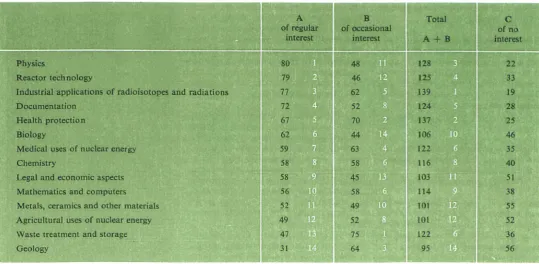
Table HI presents the "scores" obtained by each of the broad subject fields covered by Euratom Review, account being taken firstly of "A"-markings only (A = of regular interest), secondly of "B"-markings (B = of occasional interest), thirdly of " A " and "B"-markings combined and finally of "C"-markings (of no interest). The lesson to be derived from the results of this part of our survey are quite clear. The subjects which attract most interest are physics, reactor technology, industrial applications of radioisotopes, documenta-tion and health protecdocumenta-tion; they take the first five places not only under "A", but
also under "A + B " , although not in the same order. We will of course take account of these preferences in future.
[image:20.595.31.209.496.725.2]This is what four of our readers have to say in this connection :
"Medical, biological and agricultural topics are of interest to everyone if they are pre-sented in an appropriate manner. The same holds good of health protection problems. I think it is desirable that each issue should include, apart from technical articles, a contribution on one of these topics." J. R., biologist, 92 Châtillon-sous-Bagneux, France
"I would like to see more on biology and agriculture but I find Euratom Review a very fine publication as it is."
Y.G., biologist, Oran, Algerian Republic
"The review is heavily oriented towards reactor technology. I would like to see more information and articles on biological and chemical effects of radiation. Comparatively few organisations operate reactors, but
many have radiation sources, and are
con-interest, or b) lacking in detail but none-theless interesting, or c) sufficiently de-tailed?". We are very sensitive to the courtesy of our readers, none of whom ticked the box facing the words "of no interest". We suspect that it may also be courtesy which made so many (a little more than half) of them tick the third rather than the second box.
Table V presents a synopsis of the replies to a slightly different question: "When articles in Euratom Review cover a field with which you are not well acquainted, do you feel they are generally: a) too difficult, or b) of a suitable level, or c) too simple?" The readers' verdict is extremely clear in this case: an overwhelming major-ity of 87 % voted for "of a suitable level" and only about 9 % for "too difficult" and about 4 % for "too simple".
It could be objected here that the result could hardly be different inasmuch as no one would read Euratom Review, let alone
Table II: Replies to question 1
" What is your profes
Engineers
Teaching profession Students
Laboratory technicians and draughtsmen
Publishers and journalists Information officers Physicians
Physicists Chemists Biologists
Members of Parliament Business executives Veterinary surgeons Economists
Diplomats Trade unionists Other professions
24 15 11 7 7
2 2 2 2 11
EURATOM REVIEW?
cerned with industrial or research applica-tions"
C.G.C., chemist, Skärhamn, Sweden
"In my opinion your journal is too technical: out of 20 articles published in 1967, I only find one dealing with a biological subject.
It seems to me that if you published one per issue it would not be too much and your journal would extend its readership." J.J., biologist, Polleur, Belgium
[image:21.595.46.567.369.726.2]All we can say in conclusion is that we are absolutely convinced on this point. We will endeavour, in future, to fulfill these wishes to the best of our ability.
'hysics
Reactor technology
Industrial applications of radioisotopes and radiations Documentation
Health protection Biology
Medical uses of nuclear energy Chemistry
Legal and economic aspects Mathematics and computers
Metals, ceramics and other materials Agricultural uses of nuclear energy Waste treatment and storage
Geology
Β of occasional
interest
Total
A + Β
[image:22.595.39.579.99.363.2]C of no interest
I
[image:22.595.30.579.460.734.2]Table III: Grading of subject fields according to interest. (Replies to question No 3: "Please mark a letter A against those subjects to which you regularly devote attention in E u r a t o m Review, a letter Β against those which occasionally attract your interest and a letter C against those which are of no interest to you). The first three columns each give two figures, the first of which shows the number of "votes" received by a subject and the second (in white) the placing of that subject, respectively according to criteria A, Β and A + B.
Table IV: Replies to question No 5: "When articles in Euratom Review cover afield with which you are acquainted, do you feel they are generally: a) of no interest, or b) lacking in detail but nonetheless interesting, or c) sufficiently detailed?"
Of no interest Lacking in detail but nonetheless interesting
Sufficiently detailed
84 97
Table V: Replies to question No 6: " When articles in Euratom Review cover a field with which you are not very well acquainted, do you feel they are generally: a) too difficult, or b) of a suitable level, or c) too simple?
Too difficult
15
Of a suitable level
150
Too simple
answer a questionnaire about it, unless he considered the material it contained was of a suitable level. The near-unanimity of the poll is in any case only apparent. To prove this, we leave the floor to the readers who took the trouble to justify their replies:
"Some articles are of a suitable level, but others are really too simple. My personal experience is that most of the people who read Euratom Review have a good scientific or technical background, which would justify less popularised articles."
R.L., chemical engineer, Belgium
"The articles would gain appreciably in readability if some of the authors were to state their ideas more briefly and draw a sharper distinction between the main points and the details. In other words: it happens all too often that the obvious is stressed, although I must admit that this is done very elegantly."
J.v.d.H., veterinary surgeon, Wageningen, Netherlands
"There are several theoretical principles which are fundamental to certain measure-ments. Hardly any attention is paid to these principles. For instance the article starting
on page 66 of No 3 Vol. VI (Neutron techni-ques in condensed state physics—Victor Raievski) is very good but too weak on the theoretical side."
CR., physicist, Boechout, Belgium
"I find Euratom Review one of the best journals among those I receive and I con-gratulate the contributors. However, many subscribers would certainly welcome articles constructed on a somewhat more scientific basis."
H.D., student, Geluve Id, Belgium
"I would like to see you going more deeply into a given subject. This article could con-stitute the main item of a given issue of
Euratom Review."
J.A.G.W.V.M., student, Eindhoven, Nether-lands
"Besides general surveys, more concrete and directly useful information should be given."
W.R., Berlin, Germany
"I find the articles of a suitable level but incomplete. For instance no mention is made in the excellent article by J. Bugi ( Vol. VI, No 4, p. 98) of the energy of the neutrons or the energy spectrum on which the cal-culation of radiation doses is based." P.R., engineer, Geneva, Switzerland
All these readers are clearly in favour of more detailed or more theoretical articles. However, another group does not quite share this view:
"I welcome Euratom Review as a general review rather than for detailed technical treatment."
H.T., documentalist, Knutsford, Cheshire, England
"The articles are generally well written and accessible to a wide public."
H.S., biologist, Sne,ek, Netherlands
"1 personally prefer information about general principles in genera! terms, that is not a surfeit of complex mathematical formulae."
E.A., teacher, South Shields, England
"I do not consider this magazine as a source of detailed documentation on specific sub-jects. It opens up horizons for me, it in-dicates the possibilities offered by nuclear energy and the directions in which it is developing."
S.S., Faculty of Medicine, Brussels, Belgium
The following reader is quite categorical:
"Do not make a specialised journal out of
Euratom Review . . ."
P.J.F.v.d.H., Chemist, Deurle, Belgium
A third group of readers has consciously or unconsciously tried to arbitrate be-tween the first two. This is what they write :
"I find the articles in Euratom Review very readable, clear and interesting. Some articles would be more informative if they were more technical or more theoretical. The question is: would they remain as readable as they are?"
M.J.C., science student, Eindhoven, Nether-lands
"I have given to question 5 the answer: 'lacking in detail but nevertheless inter-esting'. I could not have answered 'suffi-ciently detailed' as I would then perhaps have had to say 'too difficult' in reply to question 6."
B. W.S., chemistry student, Amsterdam, Netherlands
"Euratom Review is very suitable for giving an insight into unfamiliar subjects or topics, but in view of the superficiality or popular nature of most of the articles,
little fresh information is conveyed when they happen to deal with one's own special field . . . but this is a fundamental problem
relating to the character and the purpose of Euratom Review."
Several engineers and physicists, Technische Hochschule, Aachen, Germany
in-formation on a wide variety of topics. There are no doubt a large number of specialists among our readers, but it is not humanly possible that they should be thoroughly conversant with all of these topics. What we have therefore tried to do is to interest them in subjects which we have reason to believe are important but in relation to which they are in most cases comparative laymen. One of our readers expresses his agreement with us on this point very explicitly:
This apology, however, does not remove our dilemma. Should we leave Euratom Review at its present level, thereby leaving some readers dissatisfied, or should we try and publish more detailed, more theoret-ical and therefore longer articles, with the result that another group of readers might get bored and that fewer topics could be dealt with (much against the wish of at least one person, who writes : "It seems to me that Euratom Review does not contain enough articles"—L.S., programmer, Italy)?
In this way the review would not be over-loaded with detail."
R.P., draughtsman, 94 Maisons-Alf ort, France
"It would be useful if access were given to more detailed and technical information either through a bibliography or, even better, a more detailed report of, say, 100 pages or so."
G.L., 38 Grenoble, France
"Trying to comply with the wishes of all readers is, as every editor knows only too well, like trying to square the circle. Readers must be "good" and learn to accept articles which lie outside their own field.
Euratom Review is appreciated by my customers in its present form because the articles are not too highly technical and enable them to get acquainted with interest-ing problems."
R.J., chemical engineer, 75 Paris 8, France
Having thus set ourselves up as informa-tion "salesmen", we felt that by publishing detailed and therefore lengthy articles we would merely bore most of our readers and thereby fail to reach our objective. As another reader says :
"The relative brevity of the articles—I would gather an imposed editorial policy—helps, at least in my case, in maintaining interest in the article to its end."
J.G.P., Washington, D.C., U.S.A.
Here again, our readers have been most helpful :
"On the whole the articles are particularly good. In my opinion they are too sketchy from the mathematical point of view, i.e. the whole publication could become more interesting if symbols were explained sepa-rately and if the development of formulae or calculations could be dealt with more fully."
J.A.T., engineer, Nuland, Netherlands
"I find Euratom Review very readable. I should like a little more detail in some cases and feel that this would be answered by the inclusion of a short list of references where possible."
J.F.H., physicist, Paisley, Scotland
"It would be desirable if brochures could be produced giving fuller information than can be given in the review itself on the subjects which are most popular with its readers.
We must confess that the production of detailed brochures is beyond the resources of the Euratom Review staff. However, in the case of most of the topics presented in the review, there exists an adequate specialised literature to which a biblio-graphy could give access.
In all, some 15 readers have urged the in-clusion of bibliographies and it will be noted that the suggestion has already been put into effect. This does not completely resolve our dilemma, but certainly makes it easier for us to live with it.
Another possibility, which we will con-sider, is to produce "two-stream" articles, in which the mathematical support for a particular statement, say, would be pre-sented separately, alongside the main stream of the contribution. However, this system is probably worth considering only in the case of physics and certain engineer-ing subjects.
We are unable, for lack of space, to mention all the individual wishes, suggestions, com-ments, etc. which we received. Let it how-ever be made clear that this does not entail that we will ignore them. Several readers would like the "Euratom News" section, for instance, to be developed (among them A.D., 91 Gif-sur-Yvette, France, W.W., Ispra, Italy, J.G.P., Washington, D.C., U.S.A.), others would appreciate articles on the means of achieving co-ordination and co-operation between public bodies, industry and the scientific community (R.F.G., Toronto, Canada, J.H., Baudour, Belgium), etc.
We will also refrain from quoting at length the letters in which readers expressed their general satisfaction with Euratom Review.