EFFECT OF ORAL MOTOR STIMULATION ON DROOLING
AMONG CHILDREN WITH CEREBRAL PALSY AT
SELECTED CENTRES IN COIMBATORE
REG. NO. 301215054
A Dissertation Submitted to
The Tamilnadu Dr. M.G.R Medical University,
Chennai -32.
In Partial Fulfillment of the Requirement for the
Award of the Degree of
MASTER OF SCIENCE IN NURSING
This is to certify that the dissertation entitled "Effect of Oral
Motor Stimulation on Drooling among Children with Cerebral
Palsy at Selected Centres in Coimbatore" is a bonafide work done
by
Rekha. M.P,
College of Nursing,
Sri Ramakrishna Institute of
Paramedical Sciences in partial fulfillment of the University rules
and regulations for award of M.Sc. Nursing Degree under my
guidance and supervision during the academic year 2014.
Name and Signature of the Guide
: Mrs. Beryl Juliet V.S ...
Name and Signature of the
Head of Department
: Prof. Suganthi. A
...
EFFECT OF ORAL MOTOR STIMULATION ON DROOLING
AMONG CHILDREN WITH CEREBRAL PALSY AT
SELECTED CENTRES IN COIMBATORE
LIST OF GUIDES
Subject Guide
Signature of the Guides
1.
Mrs. Beryl Juliet. V. S., M.Sc (N)., ………
Associate Professor ,
Department of Child Health Nursing,
College of Nursing,
Sri Ramakrishna Institute of Paramedical Sciences,
Coimbatore – 641 044.
Research guide
2.
Mrs. V. Brindha, M.Sc (N).,
...
Associate Professor ,
Community Health Nursing Department,
College of Nursing,
Sri Ramakrishna Institute of Paramedical Sciences,
Coimbatore - 641 044.
Medical Guide
1.
Dr.A.K.Jaleel Ahamed, B.Sc., M.B.B.S., D.C.H., ………...
Chief Pediatrician & Neonatologist,
Certified that this is the Bonafide work of
REKHA. M.P
COLLEGE OF NURSING
Sri Ramakrishna Institute of Paramedical Sciences
Coimbatore
Submitted in Partial Fulfillment of the Requirement for the Award of the Degree of
MASTER OF SCIENCE IN NURSING
The Tamilnadu Dr. M. G. R. Medical University, Chennai –32.
Dr.T.NIRMALA, M.Sc (N)., Ph.D.,
PRINCIPAL
ACKNOWLEDGEMENT
I express my soulful thanks to my Parents and God Almighty for showering their blessings on me throughout my research study.
I express my heartfelt thanks to the honorable Thiru. C. Soundararaj Avl, Managing Trustee, SNR and Sons Charitable Trust for giving me an
opportunity to utilize all the facilities in this esteemed institution.
I am immensely grateful to Prof. Seethalakshmi, B. Sc (N)., R.N,R. M., M. N., M. Phil., (Ph. D)., Former Director (Academics), College of Nursing, Sri
Ramakrishna Institute of Paramedical Sciences, Coimbatore, for her expert guidance and support throughout the study.
My sincere thanks to Dr.T.Nirmala, M.Sc (N)., Ph.D., Principal, College of Nursing, Sri Ramakrishna Institute of Paramedical Sciences, Coimbatore for her continuous moral support throughout the study.
I extend my deep felt sincerity to Prof. S. Girija Kumari, M.Sc.(N)., Vice Principal, College of Nursing, Sri Ramakrishna Institute of Paramedical Sciences, Coimbatore for her moral support throughout the study.
I express my deep sense of gratitude to Prof. Beryl Juliet. V.S., M. Sc.(N)., Department of Child Health Nursing, College of Nursing, Sri Ramakrishna Institute of Paramedical Sciences for her expert guidance, valuable suggestions, constant encouragement and keen interest in conception, planning and execution of the study.
I express my special and sincere thanks to Mrs.V.Brindha, M.Sc (N)., Associate Professor, College of Nursing, Sri Ramakrishna Institute of
Paramedical Sciences, Coimbatore for her expert guidance and support throughout the study.
My deepest sincere thanks to Mrs. Uma Devi, M.Sc (N)., Assistant Professor for her thoughtful guidance and constant encouragement which contributed a great deal to give meaning and enrichment to the study.
I extend my deep felt sincerity to all the Head of the Departments and Research Committee Members for their moral support and valuable suggestions
in conducting this study.
I express my deep sense of gratitude to Prof. J. Kalaichelvi, M.Sc (N)., for her guidance extended towards this study.
I express my deep sense of gratitude to Prof. Suganthi. A, M.Sc (N)., Mrs. Vasumathi. K, M. Sc (N)., Assistant Professor, Mrs.M. Sudha, M.Sc (N).,
Assistant Professor for their moral support and valuable suggestions in completing the study.
I extend my sincere thanks to Aashirwaad School, Women Volunteer Service Special School and Amrit Centre for Special needs, all the Parents
and Teachers who participated in my study, with total cooperation and immense help. Very special thanks to the Children who participated in my study that gave me an opportunity to view their world and help them by this study.
This thesis became possible with the support, love and tolerance of my Classmates who provided timely support, guidance and motivation throughout my research.
CONTENTS
CHAPTER TITLE PAGE NO.
I INTRODUCTION
1.1 Need for the Study 4
1.2 Statement of the Problem 6
1.3 Objectives 6
1.4 Operational Definition 6
1.5 Hypothesis 7
1.6 Conceptual frame Work 7
1.7 Projected Outcome 10
II LITERATURE REVIEW
2.1 Literature Related to drooling among
children with cerebral palsy 11 2.2 Literature Related to oral motor stimulation
on drooling
18
2.3 Literature Related to Effect of oral motor stimulation on drooling among children with cerebral palsy
21
III METHODOLOGY
3.1 Research Approach 23
3.2 Research Design 23
3.3 Setting 23
3.4 Population 24
3.5 Sampling 24
CHAPTER TITLE PAGE NO.
3.8 Tool for data collection 26
3.9 Pilot Study 28
3.10 Procedure for data collection 29 3.11 Techniques of Data Analysis and
Interpretation
29
IV DATA ANALYSIS AND INTERPRETATION
4.1 Presentation of demographic variables 32 4.2 Assessment of drooling quotient before oral
motor stimulation among Children with Cerebral palsy
42
4.3 Effect of oral motor stimulation on drooling among children with cerebral palsy
43
4.4 Association between selected demographic Variables on drooling among children with cerebral palsy
46
V RESULTS AND DISCUSSION
5.1 Demographic variables of children with
cerebral palsy 49
5.2 To assess the level of drooling before oral motor stimulation among Children with Cerebral palsy.
51
5.3 To assess the level of drooling after oral motor stimulation among Children with Cerebral palsy
52
5.4 Effect of oral motor stimulation on drooling among children with cerebral palsy.
52
5.5 Association between selected demographic variable on drooling among children with cerebral palsy
CHAPTER TITLE PAGE NO.
VI SUMMARY AND CONCLUSION
6.1 Major Findings of the Study 54
6.2 Limitations 55
6.3 Recommendations 56
6.4 Nursing implications 56
6.5 Conclusion 58
REFERENCES
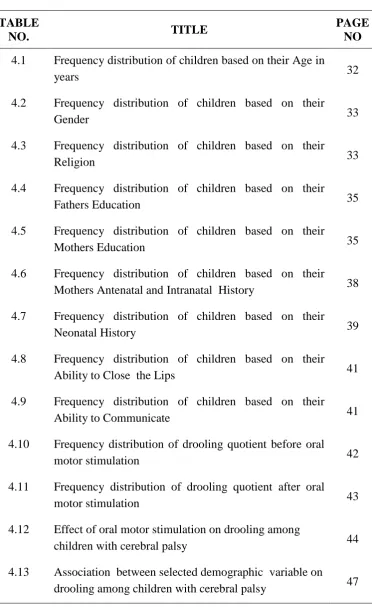
LIST OF TABLES
TABLE
NO. TITLE
PAGE NO
4.1 Frequency distribution of children based on their Age in
years 32
4.2 Frequency distribution of children based on their
Gender 33
4.3 Frequency distribution of children based on their
Religion 33
4.4 Frequency distribution of children based on their
Fathers Education 35
4.5 Frequency distribution of children based on their
Mothers Education 35
4.6 Frequency distribution of children based on their Mothers Antenatal and Intranatal History 38 4.7 Frequency distribution of children based on their
Neonatal History 39
4.8 Frequency distribution of children based on their
Ability to Close the Lips 41
4.9 Frequency distribution of children based on their
Ability to Communicate 41
4.10 Frequency distribution of drooling quotient before oral
motor stimulation 42
4.11 Frequency distribution of drooling quotient after oral
motor stimulation 43
4.12 Effect of oral motor stimulation on drooling among
children with cerebral palsy 44
4.13 Association between selected demographic variable on
[image:11.595.137.510.113.721.2]LIST OF FIGURES
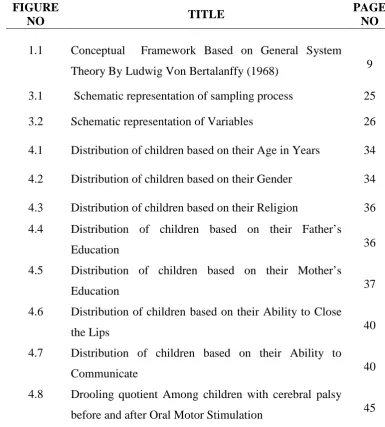
FIGURENO TITLE
PAGE NO
1.1 Conceptual Framework Based on General System Theory By Ludwig Von Bertalanffy (1968) 9 3.1 Schematic representation of sampling process 25 3.2 Schematic representation of Variables 26 4.1 Distribution of children based on their Age in Years 34 4.2 Distribution of children based on their Gender 34 4.3 Distribution of children based on their Religion 36 4.4 Distribution of children based on their Father’s
Education 36
4.5 Distribution of children based on their Mother’s
Education 37
4.6 Distribution of children based on their Ability to Close
the Lips 40
4.7 Distribution of children based on their Ability to
Communicate 40
LIST OF APPENDICES
APPENDICES TITLE
I Permission Letter for Conducting the Study II Letter Requesting to Validate the Research Tool
and Content
Abstract
INTRODUCTION
Childhood is the first stage in our life’s cycle. We start growing from that very point. That is the time where we are true humans with innocent looks and real smile on our face, having no knowledge about the world. But we learn lot from that stage of our life.
Cerebral palsy (CP) is an umbrella term covering a group of non-progressive, but often changing, motor impairment syndromes secondary to lesions or anomalies of the brain arising in the early stages of development (Mutch et al, 1992). Cerebral palsy describes a group of disorders of the development of movement and posture, causing activity limitation that are attributed to non-progressive disturbances that occurred in the developing fetal or infant brain (Bax et al, 2004).
The main causes of cerebral palsy are due to damage occurring to the developing brain. This damage can occur during pregnancy, delivery, the first month of life or less commonly in early childhood. Other causes are prematurity, low birth weight, breathing meconium into the lungs and genetic problems (Yadav, 2011).
Drooling (sialorrhea) is the unintentional loss of saliva from the mouth. It is a normal phenomenon of infancy that subsides usually by 15-18 months as a consequence of physiological maturity of oral motor function. Drooling children frequently have irritated facial skin, foul odour, and in cold weather, the dampness from saliva is chilling. Dehydration experience can be a recurrent problem from chronic fluid loss. They may also damage books, toys, computers, and other communication aids. Other factors contributing to drooling are the child’s emotional state, head position, sitting posture, concentration, decreased oral sensory awareness and ability to breathe through the nose. A number of these factors have been investigated in relation to drooling and in all instances a positive correlation was found with the severity of drooling (Bushan, 2010).
Spasticity is a form of muscular hyper tonicity with increased resistance to stretch. It usually involves the flexors of the arms and extensors of the legs. The hyper tonicity is often associated with weakness, increased deep reflexes, and diminished superficial reflexes. It arises as a result of upper motor neuron lesion (Dharmil, 2007).
Management of drooling can be broadly divided into surgical and non-surgical approach. Surgical technique involves either the transplantation of parotid duct, the removal of salivary gland, sectioning of chorda tympani and tympanic nerve or combination of these procedures. Non-surgical includes pharmacological therapy, radiotherapy, oral motor therapy and behavior therapy. Pharmacological therapy includes anticholinergics, scopolamine, benzotropine and glycopyrolate. Botulinum toxin A injection to salivary gland has been found to reduce drooling (Robert, 2013).
Oral motor therapy facilitates normal oral motor patterns. It uses different ways like brushing, tapping, stroking and vibration which are intended to improve jaw stability, mouth closure, increase in tongue mobility, strength, sensory awareness and decrease in hypersensitivity. The exercises are targeted to decrease drooling or loss of saliva out of oral cavity. Each exercise should be repeated several times using a mirror. Child must exert as much effort as possible to gain the maximum result from these exercises (Becker, 2002).
1.1 Need for Study
Drooling occurs naturally in very young children, but as the child gets older it usually decreases. Daytime drooling stops within the first few years of life, although it is still normal for it to occur in the older child during sleep. Daytime drooling beyond the age of about four years is unusual, unless there is an underlying medical problem, such as CP (Kervin, 2005).
The present total population of children in the world is 7 billion. In India, 31 percent of the population is children (Census, 2012). The incidence of cerebral palsy is 1.2 to 4 cases per 1000 live births in which, 10-13% of children have drooling (CDC, 2013). The motor disorders of cerebral palsy are often accompanied by disturbances of sensation, perception, cognition, communication, behavior, epilepsy and secondary musculoskeletal problems.
Oral motor and oral sensory issues are frequently observed in children with cerebral palsy. Delay in feeding, failure to thrive, management of oral secretions, phonological and articulation development is often impaired. This occurs due to deficits in sensory, neuromuscular systems of oral mechanism and postural control (Becker, 2010).
odour and aspiration pneumonia, problems with eating, speech and ineffective communication. The consequence of drooling may be social isolation, low self-esteem and hampered interpersonal relationship. It basically causes participation restriction in these children (Rottevel, 2009).
Contrary to what many people think, producing an excess amount of saliva does not usually cause drooling. Instead, it has been found that children who drool usually have a tendency to swallow less often than normal. In cerebral palsy, drooling is typically related to deficiencies in swallowing, difficulties moving saliva to the back of the throat, to poor mouth closure, jaw instability and tongue thrusting. Drooling can be made worse by a lack of head control and poor posture, lack of sensation around the mouth, mouth breathing, excitement and impaired concentration (Vandenhoggen, 2009).
The researcher during her visit to special schools has observed children with cerebral palsy. Majority of the children have drooling. Thus the researcher decided to provide an intervention which will reduce drooling. Keeping this need in mind, the researcher reviewed different non-pharmacological interventions for reducing drooling. With the support of the above literature and by understanding the benefits of oral motor stimulation, the researcher was interested to assess the effectiveness of oral motor stimulation on drooling among children with cerebral palsy.
1.2 Statement of the Problem
Effect of Oral Motor Stimulation on Drooling Among Children with Cerebral Palsy at Selected Centres in Coimbatore.
1.3 Objectives
1.3.1 To Assess the Level of Drooling in Children with Cerebral Palsy. 1.3.2 To Assess the Level of Drooling after Oral Motor Stimulation.
1.4 Operational Definition
1.4.1 Effect
It refers to the outcome which is reduction in drooling as a result of oral motor stimulation, measured by the Drooling Quotient scale.
1.4.2 Oral Motor Stimulation
1.4.3 Drooling
It is an involuntary loss of control over saliva which results in saliva dripping out of the mouth as measured by Drooling Quotient.
1.4.4 Children
It refers to children between the age group of 6-12 years, diagnosed to have cerebral palsy with drooling, at Amrit centre for special needs and Women volunteer service (WVS) special schools.
1.4.5 Cerebral palsy
It refers to children who are clinically diagnosed with cerebral Palsy, and having drooling.
1.5 Hypothesis
H1-There is a significant difference in drooling quotient among children with cerebral palsy before and after administering oral motor stimulation
1.6 Conceptual Framework
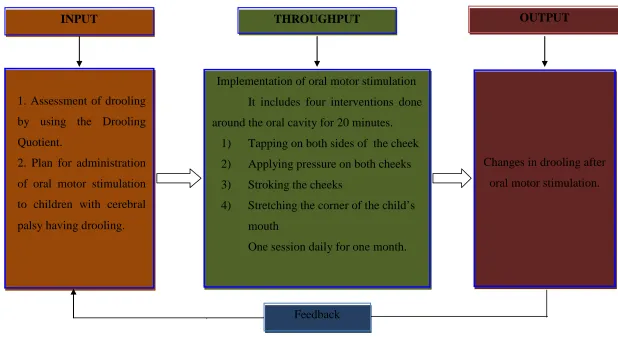
A system is a set of interacting identifiable parts or components and it depends on the quality and quantity of its input, throughput, output and feedback. Input consists of information, material or energy that enters the system. After the input is absorbed by the system, it is processed in a way useful to the system. This information is called throughput. Output from a system is energy, matter or information given out by the system as a result of its processes. Feedback is the mechanism by which some of the output of a system is returned to the system as input. Feedback enables a system to regulate itself by redirecting the output of a system back into the system as input, thus forming a feedback loop. (Kozier & Erb 2008).
1.6.1 Input
In the present study, input begins with establishing a therapeutic relationship among children with cerebral palsy. In this phase, the researcher identifies children with drooling and collects the necessary information regarding demographic data such as age, sex, education status of mother and father, antenatal history, type of delivery, birth weight, physical examination findings, IQ level, and communication ability of the child. The drooling scores of the cerebral palsy children are assessed using Drooling Quotient.
1.6.2 Through put
This phase includes implementing the oral motor stimulation for 20 minutes with four procedures, like tapping, stroking, stretching the corner of mouth and applying pressure for 5 minutes each.
1.6.3 Output
9
Figure 1.1 : Conceptual Framework Based on General System Theory by Ludwig Von Bertalanffy
Source: Kozier & Erb (2008)
THROUGHPUT INPUT
Changes in drooling after oral motor stimulation.
1. Assessment of drooling
by using the Drooling Quotient.
2. Plan for administration of oral motor stimulation to children with cerebral palsy having drooling.
Implementation of oral motor stimulation It includes four interventions done around the oral cavity for 20 minutes.
1) Tapping on both sides of the cheek 2) Applying pressure on both cheeks 3) Stroking the cheeks
4) Stretching the corner of the child’s mouth
One session daily for one month.
Feedback
1.7 Projected Outcome
REVIEW OF LITERATURE
Thorough literature review will assist the researcher with the selection and development of the theoretical and methodological approaches to the problem. The researcher has reviewed various literature and research articles that are presented in this chapter. The literature review is discussed under the following headings.
2.1 Literature related to drooling among children with cerebral palsy 2.2 Literature related to oral motor stimulation
2.3 Literature related to oral motor stimulation on drooling among children with cerebral palsy
2.1 Literature Related To Drooling Among Children with Cerebral Palsy
Aggarwal (2012) conducted a study to investigate the effect of kinesiotape application in children with Cerebral Palsy (CP). The main objective of the study was to estimate the drooling quotient before and after kinesiotape application. The children were selected according to convenience sampling technique. Thirty samples were selected for this study. Drooling was assessed by using drooling quotient before and after kinesiotape application. The result revealed that standard deviation before treatment was greater than the standard deviation after treatment. The study concluded that the intervention helps to reduce drooling.
Carlstedt et al (2001) conducted a study to find out the effect of elastic tape application on four year old patients with cerebral palsy suffering from excessive drooling. The tape was applied to the child’s chin. The parents received the three questionnaires referring to drooling frequency. The first was to be answered before applying the tape, second was to be answered after four weeks of daily tape application and third was to be after 3 months. The drooling frequency had decreased from constant drooling to frequent drooling.
Barikatte (2012) stated that, drooling which is known as ptyalism can be defined as salivary incontinence or involuntary spillage of saliva over the lower lip. Drooling could be caused by excessive production of saliva, inability to retain saliva within the mouth or problem with swallowing. The physical and psychosocial complications include maceration of skin around the mouth, secondary bacterial infections, bad odour, dehydration and social stigmatization. People with drooling problems are also at increased risk of inhaling saliva, food and fluid into the lungs.
Milton (2006) in their article on therapeutic intervention for tone abnormalities in CP stated various interventions that help in reduction of spasticity of muscle. The treatments include:
• Physical and occupational therapy
• Oral medications
• Botulinum toxin injection
• Phenol injections
• Intrathecal baclofen
• Selective dorsal rhizotomy and
Thamassebi and Mejcurson (2003) conducted a study to compare and evaluate the different methods which have been commonly used to reduce drooling. The researcher selected five centers in United Kingdom that carried out some form of treatment to control drooling. Thirty seven cerebral palsy children within 3-18 yrs of age participated in this study. The data was collected using a detailed questionnaire. Results showed that the most common management used in these five centers were surgical and medical management.
Lespargot and Nelson (2004) studied swallowing disturbances associated with drooling in children with cerebral palsy. He concluded that the oral stage of swallowing was affected in these children. The difficulty was due to incomplete lip closure during swallowing, low suction pressure and prolonged delay between the suction and propelling stage. According to him, children who drooled did not have any abnormality in the propulsion of liquid towards the pharynx.
Rapp (1980) observed children with cerebral palsy (CP) who suffered from drooling. They were conditioned to control their oral secretions using electronic devices. He observed these children during two activities of daily living. In his study, “string of dribble” was evaluated at 40 moments. Each session lasted for 10 minutes. Drooling Quotient was used to measure the severity of drooling. There was a significant difference in drooling severity after five months of therapy. Post test was done by using same scale and the result revealed that there was a significant reduction in drooling.
Cryscade (1992) conducted a study to find out the effect of oral appliances on the management of drooling. Oral motor therapy was applied on children over 8yrs of age who had moderate drooling. Pretest and post test was done by using drooling quotient. He concluded that, oral appliances have been used successfully in the management of drooling, chewing and swallowing dysfunction in children with CP.
Brandis et al (1987) conducted the study to check the effectiveness of oro facial regulation therapy on drooling. Seventy cerebral palsy children between 4-14 yrs of age participated in the study. Therapy was given for 15 months. Appliances of therapy showed a reduction of drooling in 40 children who had severe drooling.
as well as to determine the correlation between swallowing frequency and drooling rate. Results showed that, drooling in the pediatric population was caused by both inefficient and infrequent swallowing.
Damayanti and Makati (2002) conducted a study to investigate the effect of behaviour therapy technique for controlling drooling in children with cerebral palsy associated with mild intellectual disability. A total number of 25 children with cerebral palsy associated with mild intellectual disability attending the occupational therapy department of Swami Vivekananda National Institute of Rehabilitation Training and Research (SVNIRTAR), Orissa, India, participated in a single blind randomized pre and post test control group training study. The subjects were randomly allocated to group A (experimental n=12) and group B (control n=13). Two independent raters observed baseline frequency of drooling for 20 minutes for both the groups. After the baseline data collection, subjects in group a received conventional therapy along with behaviour therapy (token economy) and group B received conventional therapy alone.
The result showed that there was a significant decrease in frequency of drooling after application of token economy as a behaviour modification technique in the experimental group (p = 0.001) as compared to the control group (p = .070). The study concluded that, the token economy program was effective in controlling drooling in children with cerebral palsy associated with mild intellectual disability.
Drooling was measured by using drooling quotient. No significant difference between groups (p = 0.74) was found. Researcher concluded that anti reflux medications do not have significant decrease in drooling.
Franklin et al (1987) conducted a study related to the prevalence of malocclusion in children with cerebral palsy. The study aimed at studying the perioral activities of 14 CP patients with intraoral observations. Drooling was associated with poor motor function. Researchers thus far have determined that children who drool have increased difficulty forming a bolus, reduced lip competence, slightly less intraoral suction and more oral residue after swallowing. Significant negative correlations have been found between drooling and sucking ability, drooling and chewing ability, drooling and swallowing. Significant positive correlations have been found between drooling and poor head control, reduced ability to voluntarily control the lips, reduced ability to voluntarily control the tongue, and reduced ability to voluntarily control the jaw. Malocclusions and poor orbicularis muscle coordination was also associated with drooling.
Liselott (2009) conducted a study to investigate the difference in amount of drooling in children with cerebral palsy, in general and in subtype. Saliva was collected from 61 healthy children who drooled. The method of collection was swab saliva collection method. The intensity of drooling was assessed by drooling quotient. No difference was found in flow rates, age, and sex among CP children who drooled. Flow rate of diskinetic cerebral palsy results differed statistically from those of healthy children.
Neverlienmodum (2005) published an article related to treatment of drooling in cerebral palsy. Conservative treatment such as physiotherapy, orofacial regulation therapy, pharmacotherapy and different surgical methods are reviewed and the degree of success discussed. The need for thorough medical and neurological examination and teamwork approach was emphasized. The findings revealed that, after proper medical examination and correction of aggravating factors, conservative treatment should be initiated at the earliest possible age, including the use of oral prosthetic appliances.
2.2 Literature Related To Oral Motor Stimulation
Amjoccupther (1990) conducted a study related to decreasing drooling with oral motor stimulation. Many persons with severe and profound disabilities exhibit chronic and excessive drooling, which can have unfavorable effects on their socialization and health. Few treatments to reduce this behavior, however, have been evaluated systematically. In the present investigation, oral motor stimulation was used on two children who attended a residential educational facility for students who are blind and who have multiple disabilities. The treatment involved the brushing of the hard palate, the upper and lower gums, the tongue, and the inside of both cheeks at one hour intervals during the day time. The drooling was assessed by using Thomas stonel and Greenberg scale. The results showed a reduction of drooling in cerebral palsy children.
Cecilliefmanno (2005) in his article stated that, children with developmental delay often have feeding difficulties resulting from oral motor problems. Based on both clinical experience and review of published studies, oral motor intervention has shown to be effective in improving the oral function of preterm babies and children with neuromotor disorder, such as cerebral palsy.
location and boundaries of the mouth are uncertain to the infant. Movement against resistance is the best way to build strength. Repetition of movement is the best way to refine and develop muscle control. At birth, the infant frantically searches for something, preferably the breast, on which to suck. It is a reflexive pattern to ensure nutritional intake. The mouth is equipped with lots of sensory receptors, ready for and craving stimulation. Since vision is not yet well developed, the mouth is the place for touch, taste, texture, with the added bonus of smell accompanying the oral experience. Anything that can fit into the mouth is accepted for exploration. As the infant matures, discrimination of edible from non-edible items develops.
Hayran (2010) conducted a study to investigate the effects of physiotherapeutic treatment consisting of electrical stimulation, exercises and proprioceptive neuromuscular facilitation (PNF) applied to orofacial area on drooling in children with spastic cerebral palsy. The study consisted of 15 children with spastic cerebral palsy who were identified to have severe drooling. Salivary flow rate was measured in each session using drooling quotient (DQ). Each patient received eight therapy sessions with two sessions per week. There was a statistically significant decrease in the rate of salivary flow rate in post-treatment period when compared with pre-treatment observations (p<0.01).
study. Oral motor exercises may be implemented into the child’s therapy program for various reasons, whether it is to increase muscle tone or strength, stability, movement, or to increase overall awareness for feeding and speech production. Often times, these types of activities are recommended to build the child’s awareness of his mouth and how his tongue, teeth, lips, and jaw work together to produce speech sounds and words. Children can be easily stressed or defensive when a hand or object is presented to their lips or mouth, especially when demands are placed on them to participate in something that is uncomfortable or difficult for them, such as oral motor activities. The drooling was assessed by using Drooling Quotient and therapy was given for six months. Result showed that, there was a statistically significant decrease in the rate of salivary flow in post treatment period when compared with pre treatment observations.
Kerwin (1999) states that oral motor problem in children are easy to recognize when the child coughs and chokes while eating. However the majority of the feeding problem present initially in more subtle ways such as, difficulty in introducing spoon feeding or advancing texture and limitation in the variety of food accepted.
Cisplatrin and Sniffen (2009) in their article stated that, drooling is the overflowing of saliva from the mouth. It is mainly due to neurological disturbance and less frequently due to hyper salivation. Drooling can also lead to functional and clinical consequences for patients, families, and caregivers.
Mugayar (2009) states that, oral motor function disorder such as feeding problem occurs frequently in children with neurological impairments. Common parenteral complaints include, poor sucking, difficulty in drinking liquids, difficulty in biting or chewing solids, coughing and choking. Oral motor therapy may include many home based exercises to reduce drooling and improving feeding skill.
2.3 Literature Related To Oral Motor Stimulation and Drooling Among
Children with Cerebral Palsy
Seraynuralsigan (2013) conducted a study on the effect of oral motor stimulation on drooling among children with cerebral palsy. Oral motor assessment form and Bayle scale of infant development were used to evaluate the oral motor function during the initial examination and six months later. Eighty one children aged 12 to 42 months were included in this study. One hour oral motor therapy was given for children. The duration of the study was six months. Results revealed that, oral motor stimulation helps in reducing drooling.
METHODOLOGY
The present study was designed to evaluate the effect of oral motor stimulation on drooling among children with cerebral palsy. This chapter represents the overall plan of research process and deals with description of the research approach, design, setting, population, criteria for sample selection, sampling technique, development and description of tool, procedure for data collection and plan for data analysis.
3.1 Research Approach
Quantitative experimental research approach was adopted for the present study. In this approach, the researcher manipulates the independent variable, and controls and measures any change in the dependent variable.
3.2 Research Design
The present study was designed to assess the effect of oral motor stimulation on drooling among children with cerebral palsy. In order to achieve the objectives, the researcher adopted pre experimental one group pre test-post test design. It follows the basic experimental design, but fails to include control group and randomization.
3.3 Setting
3.4 Population
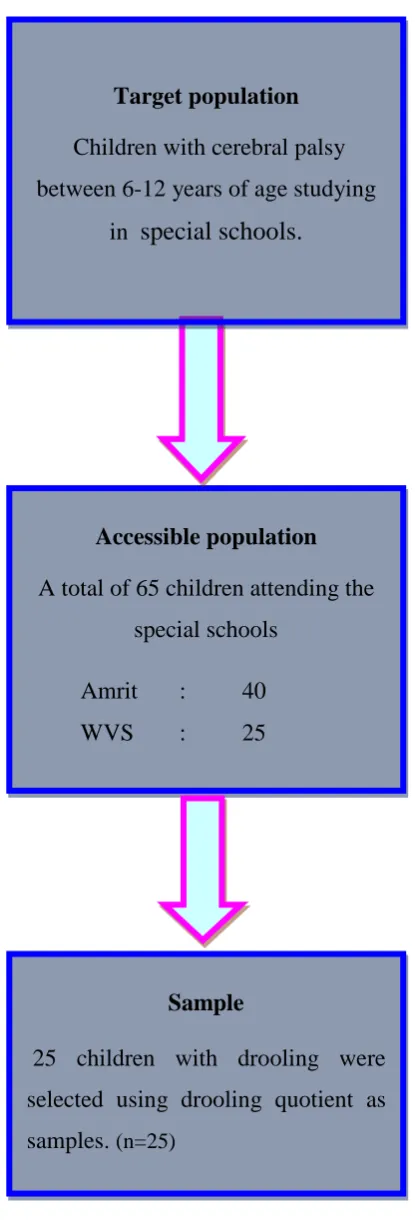
The target population was children with cerebral palsy between the age group of 6-12 yrs. The total number of children in Amrit Center for Special Needs was 40, and the total number of children in WVS was 25. Hence the accessible population was 65 children, attending both Amrit and WVS special school.
3.5 Sampling
The target population was children with cerebral palsy studying in the special centres. In Amrit, there were totally 40 children with cerebral palsy. The investigator assessed the severity of drooling by using Drooling Quotient. It showed that 15 children had drooling. In Women Volunteer Service special school, there were totally 25 children with cerebral palsy. The investigator assessed the severity of drooling by using Drooling Quotient. It showed that 10 children had drooling. Thus, in both the centres 25 children were selected by using purposive sampling method.
3.6 Criteria for Sample Selection
The samples were selected based on the following inclusion and exclusion Criteria.
3.6.1 Inclusion criteria
a. Children with cerebral palsy having drooling.
3.6.2 Exclusion criteria
a. Children who are not able to cooperate.
Figure 3.1: Schematic Representation of Sampling Process
Accessible population
A total of 65 children attending the special schools
Amrit : 40
WVS : 25
Sample
25 children with drooling were selected using drooling quotient as samples. (n=25)
Target population
Children with cerebral palsy between 6-12 years of age studying
3.7 Variables of the Study
[image:40.595.116.490.191.376.2]The Independent Variable in the Present Study was Oral Motor Stimulation and Dependent Variable was Drooling among Children with Cerebral Palsy.
Figure 3.2 : Schematic Representation of Variables
3.8 Tool for Data Collection
The following materials were used for the study.
3.8.1 Interview Schedule to CollectDemographic Profile
This includes age, sex, religion, education status of mother, education status of father, antenatal and intra natal history, neonatal history and physical examination of children with cerebral palsy.
3.8.2 Drooling Quotient
R.T. Sheffer developed this drooling quotient as an objective measurement used to document the degree of improvement by using the Drooling Quotient. Drooling was observed and scored during two periods of 10 minutes separated by a 30 minutes break. The presence or absence of drooling was evaluated at every 15 seconds interval over a 10 minutes period (40 observations).
(DQ) (%) = No. of drooling episodes x 100%
40 observations (in a 10 minute period) Independent
Variable Dependent Variable
Oral motor stimulation
Drooling among children with cerebral
3.8.3 Oral Motor Stimulation
Oral motor stimulation refers to stimulation of muscles of face for strength and coordination. It was first introduced by Beckman in 1986. For chewing and swallowing, children need to have the right amount of strength, range of motion and coordination. In this study, the researcher selected four interventions like applying pressure, tapping the cheeks, stretching the mouth and stroking of the cheeks. Total duration of the procedure was twenty minutes.
Preparation of child
Child was seated on a cerebral palsy chair with cut out lapboard to keep the trunk upright, shoulders and arms should be rested forward on the lap board, the hips and knees are flexed to 90 degree, ankles in 90 degree and feet firmly rested on the foot rest.
Procedure
Pressure
• Initially, deep and firm pressure is to be applied on both cheeks towards
the lip for 10 times.
• Rhythmic downward pressure is to be applied with researcher’s finger in
the middle of the tongue for 10 times.
• Pressure is applied on the lower jaw for 10 times.
Tapping
• Slow rhythmic tapping of both side of the cheeks, outer side of upper and
lower gums is to be done for 5 times.
Stroking
• Deep and firm pressure is applied by researcher, using downward
bilateral strokes on cheeks towards the lip for 5 times.
Stretching
• The corner of the child’s mouth is to be stretched by the researcher
for 5 times.
3.9 Pilot Study
Among these ten children, only five members were able to do candle blowing and whistling. The other children had difficulty in doing these two interventions. Hence, candle blowing and whistling were not included in the interventions during the main study by the researcher after approval by the dissertation committee.
3.10 Procedure for Data Collection
The main study was conducted to meet the objectives. The study was conducted at Amrit centre for special needs and Women Volunteer Service School (WVS), managed by private organizations located at Kavundampalayam, Coimbatore for a period of 30 days. There were twenty five children included in this study. A pre assessment was done by using drooling quotient scale for the children with cerebral palsy having drooling. Oral motor stimulation was administered to the child by the researcher for a duration of 20 minutes once daily for a period of one month. The post test was done using the same tool at the end of the thirtieth day.
3.11 Technique of Data Analysis and Interpretation
The frequency tables were formulated for all significant information. Descriptive and inferential statistical method was used for data analysis. Descriptive statistics was applied for the analysis of demographic variables. The mean and standard deviation were used to describe the characteristics and paired ‘t’ test was used to find out the significance of Oral motor stimulation on drooling among children with cerebral palsy.
3.11.1 Paired ‘t’ test
Paired ‘t’ test was used to find out the significance of oral motor stimulation.
t = n
SD d
d = Mean of difference
SD = Standard deviation
n = Number of samples
3.11.2 Chi-Square test (with Yates correction)
Chi-Square test was used to find out the association between selected demographic variables on drooling among children with cerebral palsy.
χ2
=
∑
[
− −]
E E
O ) 0.52
(
Where,
O = Observed value in each category
31
CHAPTER IV
DATA ANALYSIS AND INTERPRETATION
This chapter deals with the analysis and results of data, collected from 25 children with cerebral palsy. The aim of study was to determine the effectiveness of oral motor stimulation on drooling among children with cerebral palsy. The data gathered were analyzed and interpreted in the light of the objectives and hypothesis of the study. Descriptive and inferential statistics were employed to analyze the data. Frequency and percentage were used to represent the demographic variables and level of drooling was analyzed through mean and standard deviation. Paired ‘t’ test was used to analyze the effect of oral motor stimulation on drooling among children with cerebral palsy. And the data obtained from the children with cerebral palsy are organized, analyzed and presented based on the following details.
SECTION I
Presentation of demographic variables of children with cerebral palsy.
SECTION II
Assessment of drooling quotient before oral motor stimulation among the children with cerebral palsy.
SECTION III
Assessment of drooling quotient after oral motor stimulation among children with cerebral palsy.
Effect of oral motor stimulation on drooling among the children with cerebral palsy.
SECTION IV
32 SECTION I
4.1 Presentation of Demographic Variables
[image:46.595.99.513.388.520.2]This section deals with the distribution of participants according to their demographic characteristics. The obtained data on demographic variables is described under the sub headings, which includes age, gender, religion, parent’s educational status, mother’s antenatal and intra natal history, neonatal history and physical findings of the child. Data was analyzed using descriptive statistics and are summarized in terms of frequency and percentage.
Table 4.1
Frequency Distribution of Children Based On Their Age in Years n=25
S. No Age in Years No. of Participants
Frequency Percentage (%)
1 2 3 6-8yrs 8-10yrs 10-12yrs 14 6 5 56 24 20
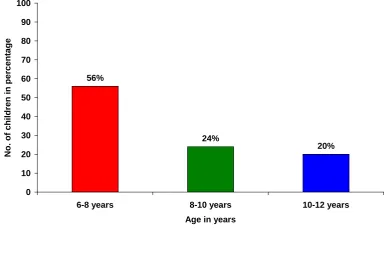
The above table shows the distribution of 25 children based on their age. It
33 Table 4.2
Frequency Distribution of Children Based On Their Gender
n=25
S. No Gender
No. of Participants
Frequency Percentage (%)
1 2 Male Female 13 12 52 48
The above table depicts that 13 (52%) of them were males and 12 (48%) of them were females. (Figure 4.2)
Table 4.3
Frequency Distribution of Children Based on their Religion
n=25
S. No Religion
No. of Participants
Frequency Percentage (%)
1 2 3 Hindus Christians Muslims 19 4 2 76 16 8
[image:47.595.102.514.443.575.2]34 Figure 4.1
Distribution of Children Based on Their Age in Years
56% 24% 20% 0 10 20 30 40 50 60 70 80 90 100
6-8 years 8-10 years 10-12 years
Age in years
N o. of c hi ldr e n i n pe rc e nta ge Figure 4.2
[image:48.595.145.499.351.756.2]35 Table 4.4
Frequency Distribution of Children Based on their Father’s Education n=25
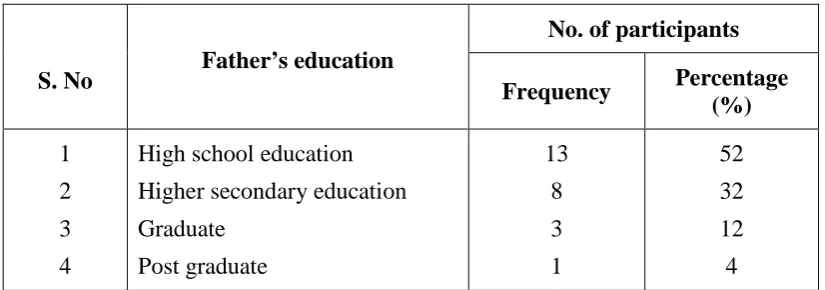
The above table describes the educational status of father. It shows that fathers of 13 (52%) children had high school education, 8 (32%) of them had higher secondary education, 3 (12%) of them were graduates and 1 (4%) was a post graduate. (Figure 4.4)
Table 4.5
Frequency Distribution Of Children Based On Their Mother’s Education n=25
The above table reveals that, 10 (40%) mothers had high school education, 3 (12%) of them had higher secondary education, 8 (32%) of them were graduates and 4 (16%) of them were post graduates. (Figure 4.5)
S. No Father’s education
No. of participants
Frequency Percentage (%) 1 2 3 4
High school education Higher secondary education Graduate Post graduate 13 8 3 1 52 32 12 4
S. No Mother’s education
No. of Participants Frequency Percentage (%)
1 2 3 4
[image:49.595.100.514.488.625.2]36 Figure 4.3
Distribution of Children Based on their Religion
Religion of Children
Figure 4.4
Distribution of Children Based on their Father’s Education
[image:50.595.130.499.475.666.2]37 Figure 4.5
38 Table 4.6
Frequency Distribution Of Children Based On Their Mother’s Antenatal And Intranatal History
n=25
S .No Antenatal and Intra natal history
No. of Participants Frequency Percentage
(%)
1
History of prenatal problem
Present Absent 4 21 16 84 2
History of prolonged second stage
Present Absent 5 20 20 80 3
History of premature rupture of membrane Present Absent 7 18 28 72 4
Mode of delivery
Vaginal Instrumental Caesarian 18 3 4 72 12 16
39 Table: 4.7
Frequency Distribution Of Children Based On Their Neonatal History n=25
S. No Neonatal history
No. of Participants Frequency Percentage
1 Birth weight Below 2.5kgs Above 2.5kgs 21 4 84 16 2
Cried immediately after birth
Yes No 3 22 12 88 3
Other problems in neonatal period Significant Nothing significant 23 2 92 8 4
History of Stay in neonatal ICU
Yes No 5 20 20 80
40
Figure 4.6
Distribution of Children Based on their Ability to Close the Lips
0% 48% 52% 0 10 20 30 40 50 60 70 80 90 100 N o. o f Chi ldr en i n pe rc ent ag e
Ability to close completely Ability to close partially Not able to close lip at all
Ability to close the lips
Figure 4.7
Distribution of Children Based on Their Ability to Communicate
12%
88%
[image:54.595.130.343.473.735.2]41 Table 4.8
Frequency Distribution of Children Based on their Ability to Close the Lips
n=25
S. No Ability to close the lips No. of Participants
Frequency Percentage (%)
1 Ability to close the lips
completely 0 0
2 Ability to close the lips partially 12 48
3 Not able to close lips at all 13 52
The above table reveals that, majority 13 (52%) of them couldn’t close their lips and 12 (48%) children were able to close their lip partially. None of the children could close their lips completely. (Figure 4.6)
Table 4.9
Frequency Distribution of Children Based on their Ability to Communicate
n=25
S. No Ability to communicate
No. of participants
Frequency Percentage (%)
1 2 Verbal Non verbal 22 3 88 12
[image:55.595.103.511.513.601.2]42 SECTION II
4.2 Assessment of Drooling Quotient before Oral Motor Stimulation among Children with Cerebral Palsy
[image:56.595.100.507.383.579.2]This section deals with the analysis and interpretation of pretest drooling score among children with cerebral palsy. The pretest drooling quotient was obtained and tabulated in the master data sheet and the total score obtained by each respondent was organized and analyzed using descriptive and inferential statistics.
Table: 4.10
Frequency Distribution of Drooling Quotient Before Oral Motor Stimulation
n=25
S. No Pre test Drooling Quotient (%)
No of Participants
Frequency Percentage %
1 2 3 4 60-70 70-80 80-90 90-100 1 9 7 8 4 36 28 32
43 SECTION III
4.3 Effect of Oral Motor Stimulation on Drooling among Children with Cerebral Palsy.
This section deals with the analysis and interpretation of posttest drooling score among children with cerebral palsy. The posttest and posttest drooling quotient was obtained and tabulated in the master data sheet and the total score obtained by each respondent was organized and analyzed using descriptive and inferential statistics.
Analyzed data were presented in the following headings:
1. Assessment of drooling quotient after oral motor stimulation.
[image:57.595.101.507.493.637.2]2. Effect of oral motor stimulation on drooling among children with cerebral palsy.
Table: 4.11
Frequency Distribution of Drooling Quotient after Oral Motor Stimulation
n=25
S. No Post test Drooling Quotient (%)
No of Participants
Frequency Percentage %
1 2 3 4 60-70 70-80 80-90 90-100 0 5 20 0 0 20 80 0
44 Table 4.12
Effect of Oral Motor Stimulation on Drooling Among Children with Cerebral Palsy
n=25
Test Mean Mean
difference
Standard Deviation
‘t' Value
Before intervention 83.55
11.57
4.46
7.69***
After intervention 72.05 7.41
***Significant at 0.001 level
45 Figure. 4.8
Drooling Quotient among Children with Cerebral Palsy Before and after Oral Motor Stimulation
46 SECTION IV
4.4 Association Between Selected Demographic Variables on Drooling Among Children with Cerebral Palsy
47 Table 4.13
Association between Selected Demographic Variables on Drooling among Children with Cerebral Palsy
n=25
S.
No Variable Category Frequency
Level of Drooling χ2 value (Yates correction)
df
(c-1) (r-1) Table value Less than
mean
More than mean
1 Age
6-8 years 14 8 6
11.99 2 9.21**
8-10 years 6 4 2
10-12 years 5 3 2
2 Gender Male 13 8 5 0.1 1 3.84
Female 12 8 4
3 Birth weight Below 2.5 kg 21 13 8 0 1 3.84
Above 2.5 kg 4 2 2
4 Other problems in neonatal period
Significant 23 10 13
0.2 1 3.84
Nothing significant 2 0 2
5 Ability to close lips
Ability to close lips
partially 12 6 7
6.02 1 3.84*
Not able to close lips
at all 13 13 0
48
Table 4.13 shows the association between the selected demographic variable and the level of drooling among children with cerebral palsy. It was found that chi square value obtained for age was 11.99 with degree of freedom 2 and table value obtained was 9.21 which was lesser than the calculated value. It is also found that the chi square value obtained for ability to close lips was 6.02 with degree of freedom 1 and table value obtained was 3.84 which was lesser than the calculated value. Hence it was proved that there was a significant association between drooling and age (at 0.01 level of significance) and also ability to close lips (at 0.05 level of significance) among children with cerebral palsy.
49
RESULTS AND DISCUSSION
This chapter deals with the interpretation of the results and discussion of the findings. The study was conducted in Amrit centre for special needs and Women Voluntary School (WVS), managed by private organizations located at Kavundampalayam, Coimbatore for a period of 30 days. The main aim of the study was to assess the effectiveness of oral motor stimulation on drooling among children with cerebral palsy. Pre experimental one group pre test post test design was adopted in this study. There were 25 samples in this study. A pre assessment was done by using drooling quotient scale for the children with cerebral palsy having drooling. Oral motor stimulation was administered by the researcher for a duration of 20 minutes daily for a period of one month to each child. The post test was done using the same tool at the end of intervention. The pretest score and post test scores were compared. The findings are discussed under the following headings.
5.1 Demographic Variables of Children With Cerebral Palsy
50
Gender distribution of children showed that, 52% of children were males and 48% were females. A study on effectiveness of oral motor stimulation as a common protocol on reducing drooling was seen in both male and female children.
Distribution based on religion showed that 76% of children were Hindus, 16% of them were Christians and 8% were Muslims.
Majority 52% of fathers had high school education, 32% of them had higher secondary education, 12% were graduates and 4% of them were post graduates.
It revealed that 40% mothers had school education, 32% of them were graduates, 16% of them were post graduates and 12% of them had higher secondary education.
Data on antenatal and intra natal history of mother revealed that, 16% of them had prenatal problems like gestational diabetes mellitus and pregnancy induced hypertension. Twenty percentage of them had prolonged second stage, 28% of them had the history of premature rupture of membrane present. Type of delivery shows that, majority 72% of children were born normally, 12% of them were delivered by forceps and 16% of children were delivered by cesarean section.
51
Physical examination revealed that, 48% children were able to close their lips completely and majority (52%) were not able to close their lips completely. Assessment on ability to communicate shows that, majority (88%) of children were able to communicate verbally, and remaining 12% of children could not communicate verbally.
5.2 First Objective: To assess the level of Drooling Quotient before administration of oral motor stimulation among children with cerebral palsy
Children with cerebral palsy, having drooling were selected for the study. The level of drooling was measured using drooling quotient. Drooling was observed and scored during two periods of 10 minutes separated by a 30 minutes break. The presence or absence of drooling was evaluated at every 15 seconds interval over a 10 minutes period (40 observations) while the children were awake and sitting erect. An episode of drooling is defined as new saliva leaving the chin. The drooling quotient, expressed as percentage, is calculated as the number of drooling episodes in 10 minutes divided by 40 observations. This study assessed the drooling quotient among children with cerebral palsy. The mean score of pretest drooling quotient was 83.55% with a standard deviation of 4.46.
52
5.3 Second Objective: To assess the level of drooling after administration of oral motor stimulation among children with cerebral palsy
After assessing the level of drooling using the Drooling Quotient, Oral Motor Stimulation was administered to the children. The child was seated on a cerebral palsy chair with cut out lap board to keep the trunk upright, shoulders and arms rested forward rested on the lapboard, hips and knees flexed to 90 degree, ankles in 90 degree and feet firmly rested on the foot rest. Oral motor stimulation consisted of four interventions like applying pressure, stroking, tapping and stretching around the oral cavity. It was given for 20 minutes daily for a period of one month. The mean score of post test drooling quotient was 72.05% with a standard deviation of 7.41.
5.4 Effect of oral motor stimulation on drooling among children with cerebral palsy
53
Henry (2002) conducted a pilot project for children who attended the drooling clinic. The aim was to investigate the effectiveness of the Oral motor training Program in reducing drooling. The study consisted of twelve cerebral palsy children with drooling. Visual analogue scale and Drooling Quotient (DQ) were used to measure the severity of drooling before and after the Oral motor training Program. Improvement occurred in 75% of children after receiving the Oral motor training Program for 3 months.
5.5 Association between Selected Demographic Variables with Drooling Among Children with Cerebral Palsy
Chi square test was used to assess the association between the selected demographic variable and the level of drooling among children with cerebral palsy. It was found that chi square value obtained for age was 11.99 with degree of freedom 2 and table value obtained was 9.21 which was lesser than the calculated value. It is also found that the chi square value obtained for ability to close lips was 6.02 with degree of freedom 1 and table value obtained was 3.84 which was lesser than the calculated value. Hence it was proved that there was a significant association between drooling and age (at 0.01 level of significance) and also ability to close lips (at 0.05 level of significance) among children with cerebral palsy.
54
SUMMARY AND CONCLUSION
This chapter summarizes the major findings, limitations, implications in the field of nursing education, nursing practice, nursing administration, nursing research and recommendations for further research.
The study was conducted to identify the effectiveness of oral motor stimulation on drooling among children with cerebral palsy in, Amrit centre for special needs and Women Volunteer service (WVS) special school. Pre experimental one group pre test post test design was adopted for the study. Purposive sampling technique was used to select the samples for this study. Total number of samples selected for the study was 25. Level of drooling was assessed using drooling quotient before intervention. Oral motor stimulation was given to children for a duration of 20 minutes for one month. After intervention level of drooling was assessed again using the same scale. Paired ‘t’ test was used to find out the effect of oral motor stimulation on drooling among children with cerebral palsy. The findings from the study concluded that, oral motor stimulation was an effective non pharmacologic intervention for reducing drooling in children with cerebral palsy.
6. 1 Major Findings of the Study
6.1.1 Majority (56%) of them were within the age group of 6-8 yrs. 6.1.2 Fifty two percentage of children were males.
6.1.3 Seventy six percentage of them belong to Hindu religion.
55
6.1.5 Antenatal history showed that 16% had prenatal problems like gestational diabetes mellitus or pregnancy induced hypertension. 20% of mothers had prolonged second stage, 28% of mothers had history of premature rupture of membrane present. 12% of them had forceps delivery and 16% had cesarean section.
6.1.6 Physical examination findings showed that, 52% of children were not able to close their lips completely.
6.1.7 The mean pretest drooling score was 83.55% with a standard deviation of 4.46. The mean post test drooling score was 76.05% with a standard deviation of 7.41. The mean difference of pretest and post test scores was 11.57.
6.1.8 The calculated ‘t’ value was 7.69 which was greater than the table value. Hence, there is a significant difference between the pretest & post test scores.
6.19 Chi square test was used to find the association between selected demographic variables on level of drooling among children with cerebral palsy. It was found that there was a significant association between drooling and selected demographic variables like age and ability to close lips among children with cerebral palsy.
6.2 Limitations
56 6.3 Recommendations
6.3.1 Oral motor stimulation can be used as a routine non-pharmacological intervention among cerebral palsy children who have drooling.
6.3.2 Comparative study can be conducted on acupressure and oral motor stimulation on drooling among children with cerebral palsy.
6.4 Nursing Implications
The pediatric nurses have a major role in providing compassionate care to children. They have a great responsibility in helping children for monitoring and managing care especially for those children with disabilities like cerebral palsy. Oral motor stimulation is one of the cost effective method in reducing drooling among children with cerebral palsy. Results of this study have implications in nursing education, nursing practice, nursing administration and nursing research.
6.4.1 Nursing Education
57 6. 4. 2 Nursing Practice
Nursing practice consists of a body of knowledge that is always changing with new innovations. Integration of innovations into nursing practice improves the quality of care provided to the pediatric population. Oral motor stimulation reduces drooling among children with cerebral palsy. The intervention of oral motor stimulation enhances the skill of pediatric nurses. Hence, oral motor stimulation can be adopted as a routine intervention in children with cerebral palsy.
6. 4. 3 Nursing Administration
When non-pharmacological therapy advances, the administrator has the responsibility of providing pediatric nurses with substantial continuing nursing education opportunities and enabling them to update their knowledge with current research findings. The nurse administrators must draw written policies regarding the benefits of oral motor stimulation on drooling among children with cerebral palsy.
6.4.4 Nursing Research
58 6.5 Conclusion
REFERENCES
1. Aggarwal. (2012). A review on current therapy and surgery of cerebral palsy, International journal of pharmaceutical and chemical sciences, 4(5), 21.
2. Amjoccupther. (1990). Decreasing drooling with oral motor stimulation, Journal of pediatric nursing, 8 (1), 64-71.
3. Barikkatte,G. (2012). Management of drooling of saliva, British journal of medical practitioners, 5(1), 507.
4. Bax., Beneur.,and linken. (2004). The causes of cerebral palsy, European journal of pediatrics. 5(1), 37-41.
5. Becker. (2010). Pediatric rehabilitation in children with cerebral palsy - general management, classification of motor disorders, Journal of prosthetics and orthotists, 14(4), 143-149.
6. Beckman. (1998). Cerebral palsy management, Journal of pediatric
nursing, 11(1), 6-7.
7. Becmeur. (2013). Surgical management of cerebral palsy, Journal of the American society for experimental neurotherapeutics, 3, 1-2.
8. Brandis., Bearman., and Tilto. (1987). Effectiveness of orofacial regulation therapy on drooling, International journal of pharmaceutical and chemical sciences, 3(3), 67.
9. Bushan. (2010). Assessment of feeding performance in patients with cerebral palsy, Journal of pediatric nursing, 28 (1), 64-71.
11. Ceciliafmannom. (2005). Early oral motor intervention for pediatric feeding problem, International journal of pharmaceutical and chemical sciences, 2(3), 145.
12. Cisplatrin., and Sniffen. (2009) Neurological problems, , journal of pediatric
nursing, 3(6), 8–43.
13. Cryscade. (1992). Bilateral submandibular duct transposition with sublingual gland excision for cerebral palsy children, Indian journal of pediatrics, 81(6), 623.
14. Damayanti., and Makati, S. (2002). Effect of behaviour therapy technique for controlling drooling in children with cerebral palsy.
15. Dharmil. (2007). Spastic cerebral palsy, Indian journal of pediatrics, 61(6), 23.
16. Domaracki. (1990). Decreasing drooling with oral motor stimulation in children with multiple disabilities, Journal of developmental medicine and child neurology, 44(8), 680-684.
17. Franklin., Luther., and Curzon. (1987) Study related to the prevalence of malocclusion in children with cerebral palsy, Journal of pediatric nursing, 2 (1), 4-7.
18. Gisel. (2011). Oral-motor skills following sensorimotor intervention in the moderately eating-impaired child with cerebral palsy, Journal of pediatric nursing, 28 (1), 64-71.
20. Herne.,Orsmod.,andGore. (1996). Drooling-current Opinion in Otolaryngology & Head and Neck Surgery, Indian journal of pediatrics 14(6), 381–386.
21. Kervin.(2005). Effect of oral motor stimulation on drooling among
cerebral palsy children, Journal of neurosurgery in psychiatry, 11(7), 44. 22. Kerwin. (1999).Oral motor problems in cerebral palsy, European journal
of pediatrics. 5(1), 7-41.
23. Kozier, B. & Erb’s. (2008). Fundamentals of Nursing, (8th Ed.,) Boston; Pearson.
24. Lespargot., and Nelson. (2004). Social interaction and self esteem of children with cerebral palsy after treatment for severe drooling, European journal of pediatrics. 165(1), 37-41.
25. Lisolott. (2009). Study to investigate the difference in amount of drooling in children with cerebral palsy, European journal of pediatrics. 5(1), 7-41. 26. Milton, A. H. (2006). Therapeutic interventions for tone abnormalities in
CP, Journal of the American society for experimental
neurotherapeutics, 3, 217-224.
27. Much., Nelson and Singh. (1992) Cerebral palsy children with drooling, European journal of pediatrics. 6(1), 7-41.
28. Mugayar. 2009).Common parenteral complaints of cerebral palsy,
European journal of pediatrics. 12(1), 27-41.
30. Omrack., and Sniffen .(1990). Efffect of oral motor stimulation on drooling among children with cerebral palsy, Journal of pediatric nursing, 8, 81.
31. Paigemeril. (2012). Effect of oral motor stimulation on drooling among
children with cerebral palsy, 64-71. Retrieved from http:
//www.speechtools.eu/z-vibe-plastic.html.
32. Polit, F. D. & Hungler, P. B. (2008). Nursing Research Principles and methods. (6th Ed.), Philadelphia: Lippincott Publications.
33. Rapp. (1980). Pediatric rehabilitation in children with cerebral palsy - gen