
Reverse logistics optimization a research to the uncertainties in the third party reverse logistics : case of New Zealand Couriers Ltd : a thesis presented in partial fulfillment of the requirements for the degree of Master of Logistics and Supply Chain
221
0
0
Full text
(2) Reverse Logistics Optimization --- A Research to the Uncertainties in the Third Party Reverse Logistics Case of New Zealand Couriers Ltd. A Thesis Presented in Partial Fulfillment of the Requirements for the Degree of Master of Logistics and Supply Chain Management. At Massey University, Auckland, New Zealand. Michael Wang. 2011.
(3) ABSTRACT During the past decade, there has been an increasing emphasis on supply chain management as a vehicle through which firms can achieve competitiveness in markets (Porter, 1998). A large number of example in the 1990s show how companies have made large investments to streamline their supply chains in order to improve customer satisfaction and increase their internal productivity (Christopher, 1998). The core of this research is to explore the uncertainties in 3PLs reverse logistics. The uncertainty is one of the significant factors, which directly influence the performance of supply chain system (Chopra & Meindl, 2004). There are many researches and theories about the uncertainties in traditional forward logistics; however, there has been limited attention to theory-based research in the returns management arena (Jahre, 1995a; Carter and Ellram, 1998; Daugherty et al., 2001). Managing these returns is known as reverse logistics (Louise, 2010). With the development of economics, the 3PLs reverse logistics will play an increasingly important role in the supply chain system; therefore it is necessary to consider how to improve the 3PLs reverse logistics. This research focuses on the case of New Zealand Couriers, which is Freightways' flagship brand, is positioned as the premier provider of network courier services to New Zealand businesses. Since 1964 New Zealand Couriers Limited has been the leading Courier Company. Case study is one of the significant qualitative research methods, tending to provide in depth information and intimate details about the particular case being studied. This research concerns the reverse logistics in third party logistics companies. Outsourcing already became one of the significant trends in today’s logistics and supply chain industry, and the third party logistics company (3PLs) is originally the outcome of the outsourcing logistics function in businesses. Therefore the findings of researching the third party logistics company could have high level of external validity (Cameron & Price, 2009) and the results can be widely applied in many other companies.. Keywords: uncertainty, reverse logistics, supply chain optimization, supply chain management, third-party logistics provider, New Zealand Couriers.. i.
(4) ACKNOWLEGMENTS. First of all, I thank all the people, who were supporting me during the period of research.. I deeply thank my supervisors, Prof. Norman Marr and Alan Win, whose help, advice and supervision was invaluable.. Words alone cannot express the gratitude I owe to my family, for their encouragement and assistance.. Special thanks to my bosses and colleagues, who helped me in many ways.. Finally, I would like to thank the New Zealand Couriers. This research could not be done without supports of the company.. ii.
(5) LIST OF CONTENTS CHAPTER 1 INTRODUCTION. 1. 1.1. Introduction. 1. 1.2. Background. 2. 1.3. Aims and Objectives. 3. 1.4. Format of Thesis. 4. CHAPTER 2 BACKGROUND. 6. 2.1. Introduction. 6. 2.2. Definitions. 6. 2.3 Logistics in the Contemporary World 2.3.1 North America 2.3.2 Western Europe 2.3.3 Japan 2.3.4 China Mainland 2.3.5 Commonwealth of Independent States and Eastern Europe 2.3.6 Some Significant Factors in Logistics Industry. 8 8 9 11 12 13 13. 2.4 Third Party Logistics and Outsourcing in Logistics and Supply Chain Industry 2.4.1 What Is The 3rd Party Logistics? 2.4.2 The Different Types of 3PL Providers 2.4.3 Benefits of Implementing of Third Part Logistics 2.4.4 Risks of Implementing Outsourcing in Logistics. 14 14 15 16 19. 2.5 Courier Company- One Essential 3PL model 2.5.1 History of Couriers Company 2.5.2 The Primary Activities of Companies in Courier Industry 2.5.3 The Characteristics of Courier’s Services 2.5.4 Technological Innovation in Modern Couriers 2.5.5 Enterprise Resource Planning (ERP) system. 20 21 22 24 26 29. CHAPTER 3 LITERATURE REVIEW. 35. 3.1. Introduction. 3.2 Logistics and Supply Chain Management 3.2.1 Supply Chain Management. 35 36 38 iii.
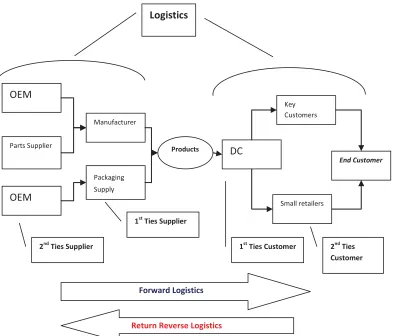
(6) 3.2.2 3.2.3. Logistics Management Differences Between Supply Chain and Logistics. 39 41. 3.3 Reverse Logistics 3.3.1 What is reverse logistics? 3.3.2 Return Percentages in Reverse Logistics 3.3.3 Reverse Logistics Activities. 42 42 47 48. 3.4 Traditional Supply Chain Strategies 3.4.1 The Uncertainties in Traditional Supply Chain 3.4.2 Four Types of Supply Chain 3.4.3 Push Strategy 3.4.4 Pull Strategy 3.4.5 The Key Characteristics and Differences Between “Push” and “Pull” 3.4.6 Hybrid Push-Pull Approach. 52 52 52 56 57 58 59. 3.5 Return/Reverse Logistics Optimization Methods 3.5.1 Theory of constraints (TOC) 3.5.2 Goldratt’s Approach and TOC Financial Measurements 3.5.3 The Process of On-Going Improvement 3.5.4 Procedure and Lead Time Optimization 3.5.5 Implementing Appropriate ERP System 3.5.6 Return/ Reverse Logistic and Forward Logistics Optimization. 62 62 65 69 71 73 76. CHAPTER 4 METHODOLOGY 4.1. Introduction. 77 77. 4.2 Objectives. 78. 4.3. Research Strategy. 79. 4.4. Research Approaches. 81. 4.5. Research Process. 88. CHAPTER 5 ANALYSIS AND DISCUSSION 5.1. Introduction. 5.2 Supply chain optimization 5.2.1 Why does A Company Need to Optimize the Logistics and Supply Chain System? 5.3 Case of New Zealand Couriers 5.3.1 Introduction of Freightways Group 5.3.2 History of New Zealand Couriers. 92 92 93 94 101 101 106 iv.
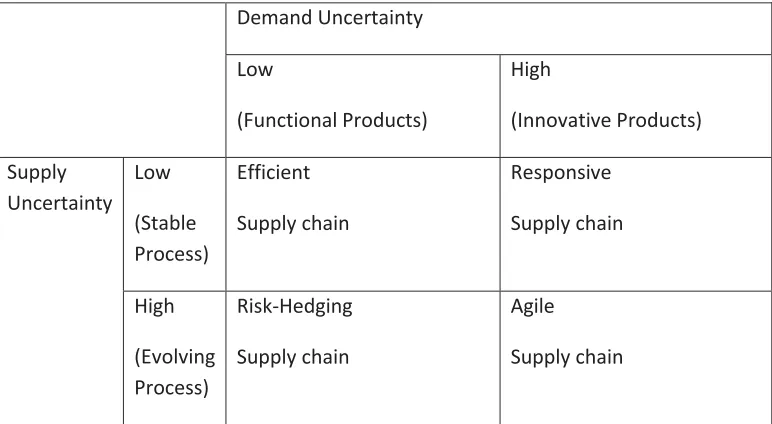
(7) 5.3.3 5.3.4 5.3.5 5.3.6. Operations in New Zealand Couriers Services in New Zealand Couriers Extension of New Zealand Couriers’ Networks Couriers in NZC. 108 112 115 115. 5.4 Analysis Return/Reverse Logistics Services in New Zealand Couriers Ltd 5.4.1 New Zealand Couriers’ Ticketing 5.4.2 Seven Types of Return Models in New Zealand Couriers. 119 119 130. 5.5 Uncertainties in the Return/ Reverse Logistics 5.5.1 Five Types of Uncertainties in the 3PLs Return/ Reverse Logistics. 153 153. 5.6 Key Reverse Logistics Management Elements Have Been Found in 3PLs New Zealand Couriers 5.6.1 Gate Keeping 5.6.2 Compacting Cycle Time 5.6.3 Reverse Logistics Information Systems 5.6.4 Central Return Centers. 173 173 174 174 175. 5.7 Return/Reverse Logistic Strategy 5.7.1 Two Critical Dimensions 5.7.2 Four Types of the Return/ Reverse Logistics. 178 178 179. CHAPTER 6 CONCLUSION. 184. Research Conclusion. 184. 6.2 Objectives 6.2.1 Research Questions 6.2.2 Key Findings in Research. 185 185 187. 6.3. 191. 6.1. Future Research. REFERENCES. 193. APPENDIX. 196. v.
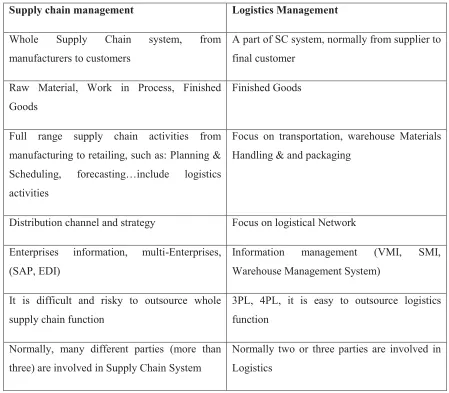
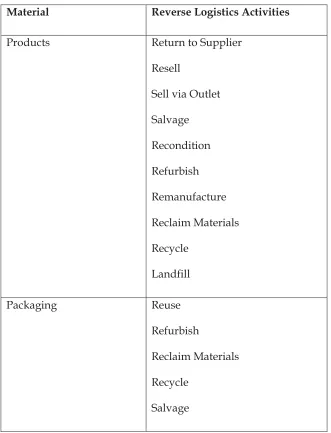
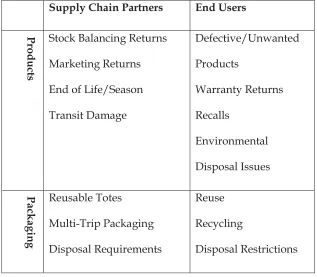
(8) List of Tables. Table 3.1 Differences between Supply Chain Management and Logistics Management (Simchi-Levi, et al., 2008)............................................................................................................. 41 Table 3.2 Sample Return Percentages (Lembke, 1998). ............................................................... 47 Table 3.3 Common Reverse Logistics Activities (Lembke, 1998) ............................................... 49 Table 3.4 Characterization of Items in Reverse Flow (Blumberg, 2005) ...................................... 51 Table 3.5 The Uncertainty in Forward Logistics Framework (Lee, 2002) .................................... 53 Table 3.6 The Key Characteristics and Differences between “Push” and “Pull” (Lambert, et al., 1998b)............................................................................................................................................ 58 Table 3.7 The Formulation In the Throughput World (Goldratt, 1997) ........................................ 67 Table 4.1 Fundamental Differences between Quantitative and Qualitative Research Strategy (Bryman,2007). ............................................................................................................................. 80 Table 5.1 NZC (NZC, 2011) ....................................................................................................... 108 Table 5.2 Hub and Satellite Depots in Auckland Regional Area (NZC, 2011)........................... 113. vi.
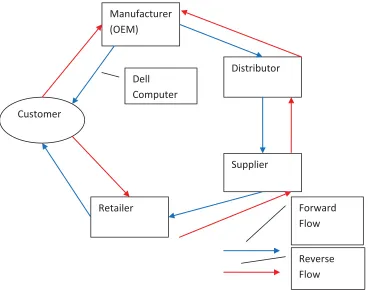
(9) List of Figures Figure 3.1 A comprehensive supply chain system (Blumberg, 2005) ........................................... 36 Figure 3.2 A typical supply chain which includes three stages (Christopher, 1998) .................... 37 Figure 3.3 Comprehensive logistic channel (Simchi-Levi, Kaminsky, & Simchi-Levi, 2008) .... 39 Figure 3.4 Supply chain-aftermarket supply chain product life cycle (Blumberg, 2005) ............. 43 Figure 3.5 Economies of scale (Lean Enterprise Institute., Shimokawa, & Fujimoto, 2009). ...... 56 Figure 3.6 Push-pull boundary (Chopra & Meindl, 2004) ............................................................ 59 Figure 3.7 TOC financial measurements (Goldratt & Cox, 2004) ................................................ 68 Figure 4.1 An outline of the qualitative research in this thesis (Bryman, 2007). .......................... 89 Figure 5.1 Freightways Financial Summary (NZC, 2011) .......................................................... 103 Figure 5.2 Freightways Operating Revenue (NZC, 2011) .......................................................... 103 Figure 5.3 Hub and Spoke system (NZC, 2011) ......................................................................... 110 Figure 5.4 An example of prepaid ticket (NZC, 2011) ............................................................... 120 Figure 5.5 An example of a charge label (NZC, 2011) ............................................................... 122 Figure 5.7 An example of Porpharma delivery ticket (NZC, 2011) ............................................ 125 Figure 5.6 An example of customer printed ticket (NZC, 2011)................................................. 125 Figure 5.8 An example of dedicated return label (NZC, 2011) ................................................... 127 Figure 5.9 An example of return label in transit (NZC, 2011) .................................................... 129 Figure 5.10 An example of John Sands (NZC, 2011) ................................................................. 131 Figure 5.11 An example of John Sands return tickets (NZC, 2011) ........................................... 132 Figure 5.12 An example of CMW ticket (NZC, 2011) ............................................................... 134 Figure 5.13 CENZ pick up form (NZC, 2011) ............................................................................ 138 Figure 5.14 An example of ProPharma ticket (NZC, 2011) ........................................................ 141 Figure 5.15 ProPharma Return Cage (NZC, 2011) ..................................................................... 143 Figure 5.16 TNT international return ticket (NZC, 2011) ........................................................... 150 Figure 5.17 Ucertainties among three parties .............................................................................. 154 Figure 5.18 New relationship among three parties after eliminating uncertainties between return customer and 3PLs ...................................................................................................................... 161 Figure 5.19 Four types of the return/ reverse logistics ................................................................ 180 Figure 6.1 New relationship among three parties in 3PLs .......................................................... 188. vii.
(10) Chapter 1 Introduction. 1.1 Introduction. During the past decade, there has been an increasing emphasis on supply chain management as a vehicle through which firms can achieve competitiveness in markets (Porter, 1998). A large number of example in the 1990s show how companies have made large investments to streamline their supply chains in order to improve customer satisfaction and increase their internal productivity (Christopher, 1998). Nowadays, Return/ reverse logistics became one of the important parts in supply chain management, because the performance of return/ reverse logistics may directly influence the performance of entire supply chain system, and also affect the profitability of businesses. This research focuses on the reverse logistics in third party logistics companies.. Outsourcing already became one of the significant trends in today’s logistics and. supply chain industry, and the third party logistics company (3PLs) is originally the outcome of the outsourcing logistics function in businesses. Therefore the findings of researching the third party logistics company could have high level of external validity (Cameron & Price, 2009) and the results can be widely applied in many other companies.. Case study is one of the important research methods in this thesis. And case study is used to identify the common phenomenon and issues of return/ reverse logistics in this research. The main reason the New Zealand Couriers (NZC) has been selected to be investigated in this thesis is that the Courier Company is one of the ideal 3PLs reverse logistics models for many different industries so far. And the services which were provided by Courier Companies have many advantages in reverse logistics, such as integrated networks, good locations and flexible fleet, etc.. 1.
(11) The world is not perfect; there are too many uncertainties and unexpected events. According to the previous researches(Simchi-Levi, et al., 2008), the uncertainty is one of the important factors, which directly influence the performance of supply chain system and business processes. This research will explore the uncertainties in return/ reverse logistics, so that the uncertainties could be minimized and avoided in practical cases. The return/ reverse logistics is one of important parts of supply chain, therefore there are some existed methods of supply chain optimization would be used in return/ reverse logistics optimization as well, such as TOC, Goldratt’s approach (Goldratt & Cox, 2004), etc.. 1.2 Background. With the development of economy and society, there is a huge change in our world in the past 100 years, for instance, many new technologies which include internet, IT, new transport, etc. are used into the businesses and organizations.. And also a lot of new trends are emerged, such as. the globalization global warming, third party outsourcing and so on. Those factors do not only affect our current world significantly, but also change the business world.. Logistics was. developed sharply since 1980s (Simchi-Levi, et al., 2008), it became more and more important in most of organisations, especially in the large-scale organizations. Today, logistics function is not only psychical movement of resources within distribution network, but also linkage for different business functions such as manufacturing, operations, marketing, customer services, sales, accounting and finance in supply chain system.. A growing number of people start to understand the importance of supply chain in business, especially during the current global economic recession, a growing number of companies found it is important to use effective and efficient way to manage a business rather than just simply to cut down the cost (Goldratt & Cox, 2004). Many companies are focusing on their efficiency of supply chain system to minimize their cost during the economy recession. However, many companies only concern their forward logistics that is from the raw material to final customer rather than their reverse logistics.. Actually reverse logistics play a significant role in business.. Average up to 30% of a company's products might be returned by customers (Louise, 2010), not 2.
(12) just because of faults. For example, a customer (bad customer) unsure what size will fit her best might order two sizes of clothing from a mail order retailer, returning the item she does not want. According to the previous research, there has been limited attention to theory-based research in the returns management arena (Carter and Ellram, 1998; Daugherty et al., 2001).. 1.3 Aims and Objectives. x To study, understand and identify the uncertainties in 3PLs reverse logistics x To find the optimizations solutions/ methods of return/ reverse logistics to reduce these uncertainties. The objectives of the thesis is to study, understand and identify the uncertainties in 3PLs reverse logistics and find the optimizations solutions/ methods of return/ reverse logistics to reduce these uncertainties. The relevant concepts and supply chain optimization methods and strategies would be discussed in this thesis, so that audiences can understand a big picture of logistics and supply chain optimizations. The return/ reverse logistics models in New Zealand Couriers Ltd will be observed and investigated. The findings of research and the solutions/methods of optimizations for the third party reverse logistics would be widely implemented in many different companies and industries. The core of this research is to explore the uncertainties in 3PLs reverse logistics. The uncertainty is one of the significant factors, which directly influence the performance of supply chain system (Simchi-Levi, et al., 2008). As mentioned above, there are many researches and theories about the uncertainties in traditional forward logistics; however, there has been limited attention to theory-based research in the returns management arena (Carter and Ellram, 1998; Daugherty et al., 2001). New Zealand Couriers’ return services will be used to indicate the different return models and return strategies in 3PLs reverse logistics. Managing these returns is known as reverse logistics (Louise, 2010). The 3PLs reverse logistics plays a vital role in supply chain system; actually reverse logistics is not only used in recycle or reuse, also could be used for product recall, update and exchange.. And today, there are many. business activities directly related to 3PLs return/ reverse logistics, because of high costs and 3.
(13) inefficiency, many companies employ the third party logistics services rather than run a own one. Therefore it is necessary to consider the optimizations of 3PLs reverse logistics in order to improve the overall performance. Through the research, the key uncertainties in 3PLs return/ reverse logistics service will be investigated; the relevant strategies and the optimizations solutions/ methods of 3PLs reverse logistics will be discussed. By the end of this research it is expected that the following aspects could be achieved. ¾ To understand the key concepts in logistics and supply chain optimizations ¾ To identify the key uncertainties in 3PLs reverse logistics ¾ To understand the several methods of logistics and supply chain optimization, which could be used in return/ reverse logistics. ¾ To find the solutions of reducing the uncertainties in 3PLs reverse logistics. ¾ To understand the strategies in both traditional logistics & supply chain and return/ reverse logistics. 1.4 Format of Thesis. There are two types of data are used in this thesis. One is the primary data, which is gathered from observation, interview and the other one is secondary data, which is found from Literature review, and New Zealand Couriers’ internal documents. The structure of the thesis will include follow chapters 1. The first chapter is an introduction, which introduces the objectives, research purpose, with format of thesis. 2. The second chapter summarizes the background of current logistics and supply chain, and some relevant key concepts, such as reverse logistics, third party logistics, and the Courier industry.. There are some return/ reverse logistics optimizations methods and. solutions based on the traditional supply chain theories. 3. The third chapter a literature review, reviewing relevant literature and showing how this has informed the research issue. The relevant literatures include logistics and supply. 4.
(14) chain, return/ reverse logistics and supply chain optimization. Then the return/reverse logistics optimization methods/ solutions are described 4. The fourth chapter, methodology chapter introduces the methods used in the research, and the limitations of study.. Case study is an important research method, which. has been used in this research. 5. The fifth chapter is an analysis and discussion chapter.. Outlining the findings of the. research itself, which include the uncertainties in the return/reverse logistics, impacts of these uncertainties, and key elements of return/reverse logistics management based on the case of New Zealand Couriers. According to analyzing and discussing the findings and solutions, the return/reverse logistics strategies are created. Four types of the return/ reverse logistics is a general guide and map for companies to find the positions of their return activities. 6. The sixth chapter is a conclusion based around objectives and findings in this research.. 5.
(15) Chapter 2 Background 2.1. Introduction. This Chapter is background chapter, which is used to introduce the general information about the background of current logistics and supply chain industry in the world. There are five major economies, which include North America, Western Europe, Japan, China Mainland, and Commonwealth of Independent States and Eastern Europe, have been listed and indicated in this chapter. The general information could help audiences to understand a big picture of current logistics and supply chain industry.. And then the third party logistics and outsourcing in. logistics are introduced due to the research focused on the return/ reverse logistics in the third party logistics.. Both the benefits and risks of implementing third part logistics also are. discussed in this chapter. The last part of this chapter focuses on the Courier Company, which is one essential third party logistic model in logistics industry. The case of New Zealand Couriers Ltd is employed in this research. Therefore the background of Courier Company is essential for the audiences to understand the case. The history of Couriers Company, the primary activities of Couriers Companies, Characteristics of Courier’s services and several information technologies are introduced in this part.. 2.2. Definitions. There are a host of definitions of logistics. One of the prevailing ones is defined by The Council of Logistics Management as: The process of planning, implementing, and controlling the efficient, cost effective flow of raw materials, in-process inventory, finished goods and related information from the point of origin to the point of consumption for the purpose of conforming to customer requirements (Simchi-Levi, et al., 2008, P.5) What changes took place in the past 100 years? For instance, substantial new technologies which include internet, IT, new transport, etc. were utilized by the businesses and organizations. And 6.
(16) also a lot of new trends emerged, such as the global warming, third party outsourcing and so on. Those factors impacted our daily life and changed the business world significantly. Logistics was developed sharply since 1980s (Simchi-Levi, et al., 2008).. It became more vital for the majority. of organizations, especially for the large-scale organizations. Nowadays the function of logistics is not only the psychical movement of resources within distribution network, but also the linkage for different business functions such as manufacturing, operations, marketing, customer services, sales, accounting and finance in supply chain system. Logistics is a wide field and it has great potential for development in future.. As per the. definition of logistics management, the logistics management is to manage the way of supplying and/or delivering the right goods. The management involves the right quality and quantity to the right place for the right customer at the right time using the most effective and efficient way. Generally speaking, logistic management is based on the logistic network which involves several different parties including manufacturers, suppliers, warehouses, stores and customers. The network is often linked by the transport system includes air, road, rail, sea and pipeline. (Stock & Lambert, 2001). In the logistics management, one of the most essential aspects is how to choose an effective and efficient way to supply and /or deliver the goods. This includes the raw materials, work in process and finished goods (information). In many logistics cases, there is more than one way to supply and/ or deliver the goods. So it is significant to find the most suitable, effective and efficient way to minimize the total system-wide cost. Besides, in logistics management, the warehouse plays a key role, because the warehouse is not only a place to store the goods, but also a tool that can be used to manage the inventory in logistics system. For example, to achieve the economies of scale, warehouse can store enough volumes of goods to maximize the utilization of transport, and to reduce the transport cost for each unit.. 7.
(17) 2.3. Logistics in the Contemporary World. Today, with the development of business and transport, logistics plays a significant role in the economy. For instance, depending on the research report, in United States logistics contributes approximately 9.9 percent of GDP. Also in many other developed countries such as Japan, Germany, UK, and Canada, the cost of logistics is an indispensable component of those countries’ GDP (Lambert, Stock, & Ellram, 1998a). This is because there is a very close relationship between logistics and most of the economic activities such as imports, exports, circulation of products and so on. At the same time, the logistics can directly affect the price of products in markets, the volume of imports and exports, energy costs arid availability and many other aspects of the economy; therefore logistics activities have been closely associated with human social activities. It is necessary to look at the big picture worldwide in order to understand the current situation of logistics industry as there are a host of differences in logistics industry for different countries. There are three major geographic regions representing the majority of world economic activity and international trade; North America, Western Europe, and the Pacific Rim which includes China and Japan. These three areas produce 80 percent of the world economic output and account for 75 percent of world exports (Long, 2003). The logistics in North America, Western Europe, Japan, China and CIS/Eastern Europe will be investigated in the following.. 2.3.1 North America. North America occupies one of the largest economies in the world. In terms of combined purchasing power parity GDP of its members, as of 2007 the trade bloc is the largest in the world and second largest by nominal GDP comparison. This area has a larger population and domestic economic product than the combined European Union (EU) and the European Free Trade Association (EFTA).Canada and the United States have the most advanced logistics infrastructure and systems in the world. In United States, logistics contributes approximately 9.9 percent of GDP(Lambert, Stock, & Ellram, 1998b), The North American Free Trade Agreement (NAFTA), which connects with the economies of Canada, the United States, and Mexico, is an agreement 8.
(18) signed by the governments of Canada, Mexico, and the United States to create a trilateral trade bloc in North America. The agreement came into force on January 1, 1994 after superseding the Canada – United States Free Trade Agreement between the U.S. and Canada(Carter & Trimble, 1995).. The goal of NAFTA was to eliminate barriers of trade and investment between the US, Canada and Mexico. The implementation of NAFTA on January 1, 1994, brought the immediate elimination of tariffs for more than a half of U.S. imports from Mexico and more than one third of U.S. exports to Mexico(Long, 2003). Within 10 years of the implementation of the agreement, all US-Mexico tariffs were eliminated except for some U.S. agricultural exports to Mexico that had been planned to be phased out in 15 years. Specifically, most US-Canada trade was duty free. NAFTA also sought to eliminate non-tariff trade barriers. One of the important NAFTA's impacts on North America was to accelerate the development of logistics industry in North America. For instance, most tariffs had been eliminated by the year 2004, and carriers’ ability to operate across borders, especially between the United States and Mexico where cross-border movement occur much easily had been enhanced.. 2.3.2 Western Europe. Western Europe where the countries are all developed countries is another essential trade bloc in the world. There are 17 developed countries, and the market of logistics is huge in Western Europe where most of top 500 companies in the world are located. The gross regional product of Western Europe is similar to the United Stated, and the population is 397,475,574 in 2009. (Western Europe, 2010) This is a key factor as in the big market, it is easy to gain the customers, and also in the long run, companies have greater potential to grow in the big market compared with the small market. The transportation deregulation in the Western Europe was described as this “Accompanying the unification of Western Europe on January 1, 1993, was the deregulation of transportation, particularly motor transport, due to the deregulation, the cost of transportation is reduced by 25% to 50%.” (Lambert, et al., 1998, P.7). The lower cost is good for the company, especially a new 9.
(19) company, because lower cost means less investment and lower risk. Another trend in logistics industry in Western Europe is the changes in manufacturing. Traditionally, many firms established plants in each country, but after the Europe economic unification, the customs and transit procedures were eliminated. Consequently, a growing number of Europe companies started to set up larger plants and distribution centers which were used to supply goods to multiple countries. There was no doubt that these changes required logistics activities to support. Piles of products need to be transferred around Europe such that logistics activities were stimulated as well(Christopher, 1998). Some challenges are involved in logistics industry in Western Europe; cost of the distribution channels and logistics network which includes equipments, operation costs and human resources. Human resources are one of the most challengeable factors for companies to perform logistics activities. This is because most European companies treat the whole European market as a single market in order to reduce the inventory level and relevant costs. Therefore, the Europe-wide distribution channel and logistics network is necessary for the logistics companies who want to provide the third part logistics services in Europe; however, the cost of distribution channel and networks is very expensive. Managing the logistics system that multiple countries are involved is a huge and complex project. There are many successful logistics companies and the competition of logistics is fierce. For example, the largest third party logistics company in Europe is “DPWN (Deutsche Post World Net + DHL) Turnover Europe: €13,700 bn (2007), Deutsche Post World Net (DPWN), through its acquisition binge has become the epicenter of far-reaching changes in the European logistics market. Already, a world leading provider of mail, express, logistics and banking services with a turnover of €33.4 billion in 2002, DPWN incorporated DHL and Exel. It had revenues in 2007 of €57,210 bn and its businesses include those formerly owned by such names as Danzas, DHL, AEI, Airborne, ASG, Nedlloyd and Exel.” (Rushton, Walker, 2007, P.15). Like other successful 3PL companies, it had its business network, local experience and customers, and offered various value-add and flexible services.. 10.
(20) 2.3.3 Japan. Japan is one of the most important entities in the world and it was the second largest one in the world in 2009, after the United States in terms of the nominal GDP $5.073 trillion (International Monetary Fund, 2010). According to BBC Business, “China has overtaken Japan as the world's second-biggest economy, Japan's economy was worth $5.474 trillion (£3.414 trillion) at the end of 2010, figures from Tokyo have shown.” Despite decreasing growth rates during the economics recession in Asia-pacific region which is one of the most powerful economic regions in the world, Japan is a significantly economic force. The strong economy supports the logistics industry, because activities such as the circulation of raw materials, products, and freight and the export and import are closely related to the logistics. The logistics market in Japan is huge; this country has an extensive logistics system that forms the basis for its export economy. However, when looking at the detail, it is found that the country’s main manufacturing region lies in a triangle around the cities of Tokyo, Nagoya and Osaka on the island of Honshu. The heart of logistics activities is located here as well. In recent years, Japan’s industry has focused more intensely on manufacturing in international locations (Japan, 2006). The Japanese logistics company focus on certain business area and the location is one of the most significant aspects in Japanese logistics industry. As per the previous research (Chopra & Meindl, 2004). Japanese logistics industry is different from other developed countries because of the regulation. Compared with other industrial countries, Japan’s distribution system is very complex. Most aspects of goods distribution in Japan are tightly regulated by the government. Joint distribution is typical - that is, competitors who make deliveries to the same businesses tend to use joint delivery capacities and trucks (Japan, 2006). The local regulations and requirements restrict the development of logistics, especially for the foreign companies. It is essential to understand the Japanese regulations and transportation requirements of logistics industry. Geography also limits the logistics in Japan. Although Japan consists of more than 5,000 islands, most of the country’s population lives on its four main islands, Hokkaido, Honshu, Kyushu und Shikoku. … Construction land that is on level ground is limited and, consequently, expensive. In response to this shortage, airports and major projects are increasingly being built on artificial 11.
(21) islands in the sea….” (Japan, 2006, P.47). As Japan is island country, the main transport for delivery is road transports and coastal shipping and the most effective rail transport is almost non-existent. What is more, because of the large population, the cost of land is highly expensive.. 2.3.4 China Mainland. China is a developing country, the logistics industry in China mainland is new and emerging; however, in recent years the rapid development of the economy in China directly impacts the global economy. As mentioned above, as per BBC Business “China has overtaken Japan as the world's second-biggest economy, Japan's economy was worth $5.474 trillion (£3.414 trillion) at the end of 2010, figures from Tokyo have shown. The logistics industry is booming industry in China, and China already has the world’s longest high-speed rail (HSR) network with about 8,358 km (5,193 mi) of routes in service as of January 2011 including 2,197 km (1,365 mi) of rail lines with top speeds of 350 km/h (220 mph) The country is undergoing an HSR building boom. With generous funding from the Chinese government's economic stimulus program, 17,000 km (11,000 mi) of high-speed lines are now under construction. The entire HSR network, which could be used for both passengers and freights, will reach 13,073 km (8,123 mi) by the end of 2011 and 25,000 km (16,000 mi) by the end of 2015. China is the first and only country to have commercial train service on conventional rail lines that can reach 350 km/h (217 mph)’’ (Anon, 2011). The Chinese high-speed rail (HSR) network could directly accelerate the development of logistics industry in China. The domestic market is growing rapidly, and compared with other countries, there are huge potential for companies’ further development in the long run. However, there are some challenges in this booming market. The transportation infrastructure is still poor; especially the domestic airfreights in China, there are limited number of airports in China that may influence the performance of services in logistics industry, such as same day delivery or overnight delivery, etc. Fortunately, government already realized this issue; according to the BBC news, China will build another 45 airports over the next five years. The industry regulator said on 12 Feb 2010, raising fresh questions about the potential for overcapacity in the transport sector (Anon. 2011). Lack of formal transportation regulations or laws in logistics industry, some companies may think 12.
(22) this is an advantage for new business; however, with the development of logistics industry this could become an important issue, because logistics industry is similar to other industries and the appropriate regulations and governing are necessary that protect companies and the entire industry in the long run.. 2.3.5 Commonwealth of Independent States and Eastern Europe. The logistics industry in CIS and Eastern Europe is quite different from Western Europe, such as different political, different economic systems, different histories and cultures. And the insufficient infrastructure directly influences the logistics business in CIS. Culture differences between western and eastern lead to a big challenge in logistics industry, for example the concepts of marketing is unknown, due to the different systems. The level of productivity in each country is extremely different. Sophisticated logistics techniques and the usage of computerized order processing and information systems are unreachable in most areas of Eastern Europe (Fujita, 2003); however, with the development of globalization, the logistics in this area is moving on fast (Lambert, et al., 1998a).. 2.3.6 Some Significant Factors in Logistics Industry. The logistics industries in different countries are different; however, the trend of globalization accelerates the development of logistics worldwide. The large logistics enterprises, which play a vital role in the logistics industry, directly drive the progress of logistics internationally and spread the new ideas and advanced strategies all over the world. As an emerging and booming industry, there are many new issues need to be solved. Especially with the development of new technologies and business, this industry needs continuous improvement to keep up with the world’s change. The large international 3PLs firms tend to bring up new solutions and ideas firstly. Whenever the first company brings new things to market, other companies will follow up quickly, for instance in 1978, Fred Smith was famously quoted as, “The information about the package is just as important as the package itself.” (Basch, 2002, P.23). FedEx who is one of the largest logistics company in the world, is the first company to introduce the track and trace 13.
(23) system in the world, and also the first company to offer overnight delivery between the U.S., Europe and Asia (Birla, 2005). After a short period of FedEx having those new services many other logistics companies, TNT, UPS etc, started to provide similar services, and implement similar technologies to market. Therefore, large logistics companies could continuously promote and improve the logistics industry worldwide.. 2.4. Third Party Logistics and Outsourcing in the Logistics and Supply Chain Industry. The third party logistics providers (3PLs) play a vital role in current logistics industry and they have been developing rapidly along with the development of outsourcing strategy. The option of 3PLs allows companies to get logistics services in an easy way. A growing number of logistics companies have started to provide flexible and customized logistics services which include inbound freight, freight consolidation, warehousing, reverse logistics, distribution, order fulfillment and outbound freight. Overall, 3PLs reverse logistics will be focused on in this research.. 2.4.1 What Is The 3rd Party Logistics?. The definition of 3PL, which was found in the Council of Supply Chain Management Professionals, is shown as below. "A firm provides multiple logistics services for use by customers. Preferably, these services are integrated, or "bundled" together, by the provider. Among the services 3PLs provide are transportation, warehousing, cross-docking, inventory management, packaging, and freight forwarding" (Simchi-Levi, et al., 2008, P.15).. The growth of 3PL companies stemmed from 1980s when business started to seek new solutions to maximize their benefits and productivities. Outsourcing logistics which has been adopted in 14.
(24) many large scale companies is one of the prevailing options; therefore those companies could concentrate on their core business. FedEx is one of the most successful and innovative 3PLs in the world. Its overnight delivery service changed the way in which business to business and business to customer transactions operated. This offered businesses the opportunity of using just-in-time techniques, which saved warehousing space and reduced overall costs. The introduction of efficient-consumer-response (ECR) techniques led to smaller and more efficient shipment sizes, which in turn further reduced costs (Black & Hunter, 2003). Once a company gains the benefits of outsourcing logistics from 3PLs, which will be described below, other competitors will follow it to use 3PLs such that the development of third party logistics companies are directly accelerated. Inevitably a growing number of 3PLs lead to increasing competition and greater savings for the companies. As mentioned above, Fedex who is one of the largest logistics company in the world, was the first company to introduce the track and trace system, to provide the overnight delivery service. After Fedex had those new services very shortly, many other logistics companies such as TNT, UPS etc, start to provide similar services. (Birla, 2005). According to the previous research (Rushton, Walker, 2007), one of the most essential trends of 3PLs is the 3PL provider transited from local or regional business to national or international business. In US, the 3PL market has been growing at a compound annual rate of 14.2 percent since 1996 and in 2006, 3PL’s was reported as $89.4 billion in gross revenue (Simchi-Levi, et al., 2008).. 2.4.2 The Different Types of 3PL Providers. There are many different 3PLs providers in current market. According to the Hertz and Alfredsson, there are four categories (Hertz, 2003) as below. z. Standard 3PL provider: this is the most basic form of a 3PL provider. They would perform activities such as pick, pack, warehousing and distribution (business) – the most basic function of logistics. For the majority of these firms, the 3PL function is not their main activity.. 15.
(25) z. Service developer: this type of 3PL provider offer their customers advanced value-added services such as tracking, tracing, cross-docking, specific packaging, or providing a unique security system. A solid IT foundation and focusing on scale and scope of economy enable this type of 3PL provider to perform these tasks.. z. The customer adapter: this type of 3PL provider comes in at the request of the customer and eventually takes control of the company's logistics activities completely. The 3PL provider improves the logistics dramatically, but it does not issue a new service. The customer base for this type of 3PL provider is typically quite small.. z. The customer developer: this is the highest level that a 3PL provider can attain with respect to its processes and activities. This occurs when the 3PL provider integrates itself with the customer and takes over their entire logistics function. These providers tend to have limited customers, but perform extensive and detailed tasks for them.. 2.4.3 Benefits of Implementing of Third Part Logistics. The third party logistics, which is one of the most significant concepts in this research, is an outcome of outsourcing strategy in logistics industry. Throughout the 1990s, strategic outsourcing, outsourcing the transportation and logistics of key components, was utilized as a tool to cut costs rapidly (Branch, 2009), especially during the global recession when a large number of companies tried to minimize their costs in all kinds of ways. According to the relevant research (Institute of Chartered Secretaries and Administrators., 1993), the outsourcing is one of the most effective and successful way to reduce the costs of logistics and there are many successful examples about implementing outsourcing strategy in logistics function. Employing third party and outsourcing logistics bring in lots of benefits; the first is economies of scale, which is a vital concept in logistics and supply chain industry and directly influences the costs of the logistics. Achieving the economies of scale is to reduce the costs of logistics per unit through the aggregation of freights and orders from many different shippers. "Economies of scale" is a long run concept and refers to reductions in unit cost as the size of a facility and the usage levels of other inputs increase (Sullivan, 2003).. 16.
(26) Secondly, risk pooling is a key concept in supply chain management. It suggests that demand uncertainty is reduced if one aggregates demand across locations because if demand is aggregated across different locations, it becomes more likely that high demand from one customer will be offset by low demand from another (Simchi-Levi, et al., 2008). This reduction in uncertainty allows a decrease in safety stock and consequently average inventory in supply chain is reduced. The third party logistics allows shippers to transfer the demand uncertainty to the 3PL providers, for example a shipper could use New Zealand Couriers to ship one item on Monday and the next day the shipper could send a hundred of items by New Zealand Couriers. One advantage of the 3PLs is that they aggregate demand from many shippers and thus reduce uncertainty through the risk-pooling effect. Therefore, the 3PLs can cut the unit cost by achieving economies of scale while maintaining or even increasing service level through risk pooling. Thirdly, reducing capital investment is another essential objective in third party logistics. The outsourcing needs to transfer both demand uncertainty and capital investment to the 3PLs. New technologies and equipments could improve the productivities and the performance of logistics and supply chain; however, the expense of the application of new technologies is costly which includes training, equipments, and maintenance. Especially, in New Zealand, most companies are small businesses. 3PLs allows those small or medium companies to enjoy the advantages of new technologies in an easy way. Reducing capital investment also means saving money, as the cost of logistics is a significant component of the price (Stock, 1998), and it is significant to reduce the logistics cost in companies. Fourthly, focusing on core competency is an advantage of 3PLs; outsourcing logistics allows those non-logistics companies to concentrate on their own core competency. With the development of business and economics, customers have more choices. Consequently, a company has to pay attention to its core strength, that is, the specific talent, skills and knowledge that differentiate it from its competitors and propagate the strength as an advantage from the perspective of customers. For instance Apple focuses on innovation, marketing, products design and sales rather than delivery, therefore the 3PLs is an effective solution for Apple. By the way, the Apple products in online apple store of New Zealand are distributed and delivered by third party logistics companies TNT and New Zealand Couriers. Last but not least, increased flexibility is a great advantage of employing third party and outsourcing logistics; the flexibility could be found from three aspects which are as follows. The first one is the ability to react to changes in market quickly and correctly. As mentioned 17.
(27) previously, the 3PLs allows companies to focus on their own core competency to satisfy customers’ requirements. Companies could utilize minimum resources to maintain and monitor the logistics function via 3PLs; therefore companies would have more resources to face the changes in market and customers’ demand. The second is the ability to implement the 3PLs’ technical knowledge and network to accelerate product development and extend market. Currently, a host of 3PLs provide various flexible and customized logistics services at low price, and they may have better ideas, for instance, FedEx, who is one of the largest logistics company in the world currently, was the first company to introduce many new technologies into this industry, and also the first company to provide the international overnight service.. After FedEx. offered those new services very shortly many other logistics companies, TNT, UPS etc, started to provide similar services. Buy.com, an Internet superstore, utilizes UPS for its product returns ("Operations & fulfillment," 1993). The information sharing and the new technologies in 3PLs directly accelerate the value-add services for the customers because the information could help companies to develop and redesign their products, and 3PLs’ integrated network could assist companies to extend their market such as oversea markets. TNT and Apple are good examples; TNT, an international express and mail delivery services company with headquarters in Hoofddorp, fully owns operations in 65 countries and delivers documents, parcels and pieces of freight to over 200 countries (TNT, 2011). Apple Inc. is an American multinational corporation that designs and markets electronics such as computer software, personal computers and so forth. The company's best-known hardware products include the Macintosh line of computers, the iPod, the iPhone and the iPad (Apple, 2011). Due to the small scale of market in New Zealand, Apple is using TNT’s international network to distribute all the Apple products from Australia Apple warehouse directly to individual customers in New Zealand market, and so is the reverse logistics. In this case the Apple’s New Zealand market is relied on the TNT’s distribution network. As mentioned in Chapter 3, the new technologies could directly increase the productivity and improve the performance of logistics and supply chain, for example 3PLs’ online real-time track and trace technology allows different users to access the shipping information and obtain the real-time information. This real-time online technology totally changes the traditional shipping processing, as all parties include individual customers could access and monitor the movement of freights. It is impossible to set up a real-time track and trace system by a small or medium size company. According to observation, there are only two logistics groups have their own integrated real-time track and trace system from mobile devices to central server in New Zealand; one is New Zealand Post Group which consists of Courier post, NZ post, Contract Logistics and Pace Couriers and the other one is Freightways Group which consists of New Zealand Couriers, Post 18.
(28) Haste, Castle Parcel and Sub60. Apparently, the cost of the integrated system is extremely high. Companies could use 3PLs to get access to new technologies and upgrade their products and services at low cost.. 2.4.4 Risks of Implementing Outsourcing in Logistics. These benefits of outsourcing come along with new and considerable risks (Institute of Chartered Secretaries and Administrators., 1993). Logistics plays a crucial role in business and the flow of either raw materials or products is relied on the logistics. Logistics links many different parties and organizations in the supply chain system; outsourcing logistics could directly influence the performance of supply chain system and the whole business. The influences are as follows. Firstly is loss of control. After outsourcing logistics, the performance of logistics will be relied on the 3PLs. Companies could monitor the 3PLs’ performance; however, they could not actually control the operations and performance in 3PLs. Many companies tend to ignore this issue, but loss of control may impact many other aspects, such as priority, customer services, operations and inventory. Therefore it is significant to associate outsource with the real situation in a specific case. This issue will be discussed later. Secondly conflicting objectives between companies and 3PLs is another risk of outsourcing; companies and 3PLs typically have different and conflicting objectives (Simchi-Levi, et al., 2008). For instance, increasing flexibility is a key goal when companies outsource the logistics. This implies a need to match the actual market by adjusting the volume of delivery in time. Unfortunately, this objective conflicts with the 3PLs’ long-term objective- firm and stable commitment to the companies. Indeed, this is a crucial issue for many 3PLs, as unlike other businesses, the profit margins of logistics and transportation is relatively small. Hence 3PLs have to focus on cost reduction rather than flexibility. Especially after Japanese disaster and during the economic recession, there is a significant decline in demand; those long-term and high volume commitments and contract entail huge financial risks for the companies. Admittedly, there are other risks of outsourcing logistics and implementing 3PLs, such as loss of competitive advantages, compatibility and cultures; however, most of them could be avoided and minimized by the logistics optimization. The solutions will be investigated later.. 19.
(29) 2.5. Courier Company - One Essential 3PL Model. 3PLs are sorted into different types, which include freight forwarders, warehousing, courier companies and other companies that integrate & offer subcontracted logistics and transportation services. Courier Company is one of the most significant 3PLs modules for all types of 3PLs. This research mainly concentrates on the 3PLs reverse logistics in Courier Company, therefore all the different kinds of return items would be involved in the 3PLs reverse logistics in Courier Companies.. Traditionally Courier Companies deliver messages, packages and mail. Couriers are distinguished from ordinary mail services by features such as speed, security, tracking, signature, specialization and individualization of services, and committed delivery time which is optional for most everyday mail services. As a premium service, couriers tend to be more expensive than usual mail services, and their service is typically restricted to packages where one or more of these features are considered important enough to warrant the cost. Different courier services operate on all scales, ranging from specific towns or cities, to regional, national and global services. The world's largest courier companies include FedEx, DHL, TNT and UPS (Birla, 2005).. Today the courier service is different from traditional courier service; a large number of courier companies, especially the large scale courier companies have began to offer various services. A growing number of customized and flexible value-add services directly stimulate the courier services. There are various courier services including inbound freight, freight consolidation, warehousing, reverse logistics, value add customer services, distribution, order fulfillment and outbound freight. As per the research, one of the most significant trends of courier services is the customization that the 3PL service providers/ courier companies could offer the customized services to individual customer for certain purposes. One of the good examples is the return services/ reverse logistics services in Courier Company, which normally is used to collect, manage and deliver the return items from the point of consumption to the point of origin for the purpose of return, recapturing value or proper disposal. As companies have different requirements 20.
(30) and purposes for their returns and the return procedures vary with different customers, the customized services is essential in return and reverse logistics services.. Actually Courier. Company is one of the most effective and efficient models for the returns and reverse logistics, especially the procedures from the individual customers back to suppliers. Reverse logistics is distinguished from forward logistics by a host of factors , for example uncertainties tend to be involved in reverse logistics compared with the traditional forward logistics. As mentioned previously, reverse logistics is extremely new and emerging; many businesses and companies just start to pay attention to this area and there will be huge potential in the future. New Zealand Couriers (NZC) is one of the leading courier companies in New Zealand, this research will concentrate on the reverse logistics service in NZC.. 2.5.1 History of Courier Company. Courier Company is one of the 3PL models in logistics industry. Actually couriers industry has a long history; people had wanted to deliver parcels and messages over long distance. Historical documents show that in early civilization, those who needed messages delivered over a long distance used "runners." These people would literally run miles, transporting messages or packages from one village to another; these runners were presented in ancient civilization such as China, Greece, and some Native American communities. As per historical records, in due time, people began to utilize horses as a major form of transportation, and improve the efficiency of messengers by developing intricate networks of messenger routes. Back to 500 years ago, people already built official horse way for these runners in ancient China (Long, 2003); however, the routes were only used for emperors. At that time, another prevailing form of transporting messages was employing carrier pigeons, which were trained specifically to fly home over long distance. Messages were written on light paper, rolled into a tube, and tied to birds’ legs or necks. Egyptians and Persians used this method as early as 3000 years ago. Meanwhile there are many records show that the carrier pigeon was a very prevailing way of delivering message, which had been widely used in ancient China (Fujita, 2003). 21.
(31) Today airplanes, ships, trains, trucks, and bicycles have been widely used in couriers to transport customers’ messages and parcels. The modern transportations allow parcels to be delivered very quickly over vast distances. These methods are highly efficient and obviously far more reliable than any of the options in the past. The general parcel courier service makes use of technologies to organize, transport, and even track deliveries. With GPS-style tracking options, not only can you get parcels delivered quickly, you can watch their progress all the way. Therefore there are many information technologies which have been involved in the modern couriers, such as online real-time track and trace technology, which enables customers to monitor their freights from the point of pick up to the point of delivery. Parcel delivery systems have come a long time since the days of foot messengers. Now, via the internet, it is also highly convenient to find and book couriers to transport packages, customers can instantly get quoted price and find a cheap courier to deliver packages. There are many parcel courier services available in our modern world, but there were not so many choices before the industrial age. Admittedly, parcel delivery services were still present at that time, although they took different forms. Nowadays we have luxurious motor-powered vehicles and other convenient technologies to transport our packages.. 2.5.2 The Primary Activities of Companies in Courier Industry. According to the observation and previous studies in Courier industry (Gilbert, 2004). The primary activities of companies in courier industry can be summarized as below;. ¾. Providing air, road, railway, shipping or combined courier delivery services. ¾. Transfer and trucking services without storage. ¾. Delivering services of parcels, documents and packages by point-to-point urgent mode via a hub and spoke model. ¾. Providing express messenger and door-to-door delivery services locally, regionally, domestically and internationally. 22.
(32) ¾. Customized and flexible value-add services include inbound freight, freight consolidation, warehousing, reverse logistics, value add customer services, distribution, order fulfilment and outbound freight. ¾. IT support became a significant active in current couriers. ¾. Customer service plays a key role. ¾. Delivery of high value, time sensitive and high value-to-weight ratio products. ¾. Subcontract services such as couriers, long haul and short haul truck services. Many people might have some experiences of confusing the Post/Mail services and Courier services as they are very similar. Specifically, both services are employed to deliver the items from the point of origin to the point of delivery; especially during the last decade Post/Mail service had a huge improvement. However, the courier services have obvious advantages compared with Post/Mail service. Due to the booming of technologies, a growing number of ways of information exchange that replace the traditional Post/Mail service are emerging, such as email, fax, internet, phone, TXT, etc. As per the 3 News, New Zealand Post Group will return less money than forecast to government coffers this year. Its operating net profit after tax (NPAT) is expected to be about $72 million, $5m less on "normalised" NPAT for last year and less than the $80.8m project in its 2009 statement of corporate intent (Judith, 2011). At the same time, according to “Financial Summary in Freightways December 2010 Half Year Report”, the operating revenue has a 7 percent increase compared with the previous year 2009 (See Appendix 1). The trend of delivery is becoming much closer to couriers.. 23.
(33) 2.5.3 The Characteristics of Courier’s Services. According to the observation and previous relative studies (Gilbert, 2004). There are some vital characteristics of courier’s services are summarized as below;. ¾. Speed. As a premium service, couriers tend to be more expensive than usual mail services; however, the delivery time would be much less than Post/Mail service. In other words, couriers deliver in short transit time, for instance, overnight and 2 days economy services that is different from the traditional mail service, courier operations system also is different from traditional postal services system. Transfer and trucking services without storage could minimise the unnecessary delay.. ¾. Security. Courier services deliver the valuable items, and courier companies have responsibility of freights’ safety; therefore, the security is one of the most crucial aspects in couriers’ company. Due to the transfer and trucking services without storage operation strategy, the security has a great improvement, and the various advanced technologies monitor the movement of freights 24/7 in couriers system.. ¾. Tracking. This is one of the essential features in courier companies; however, with the development of technologies, Post/Mail services also could provide tracking service to customers. Note that one of the famous courier companies FedEx introduced the tracking service firstly(Birla, 2005).. 24.
(34) ¾. Committed delivery time. There was no way that customers can get certain ETD (estimate time of delivery) in traditional Post/Mail services. Hundreds and thousands of mails and items needed to be mixed and sorted to different places, and people can do nothing but wait. Nowadays, a host of advanced mobile devices and communication technologies have been implemented to manage and monitor the parcels in system. All parties, who involve in one delivery consignment, could check and see the status of freights during the transit.. ¾. Door-to-Door services and Signature. Courier companies provide delivery service from the point of picking up to the point of delivery. Customers just need to make a phone call or book online and courier staff will go to sender’s address, and pick up the parcels, then deliver them to the destination. Personally, Courier system has huge potential, due to the two ways of “pickup and delivery” system, which can be adopted for different purposes such as returns, recycles in reverse logistics.. ¾. Specialization and individualization of services. Customized service is a key feature in courier companies. As mentioned previously, the flexible two ways of “picked up and delivery” courier system almost can meet all types and scales of individual/ business customers, for instance in New Zealand Couriers ltd, there are different types of couriers such as residential couriers, industrial couriers, point to point couriers, long-haul couriers and large scales company couriers.. The large-scale company courier, who is especially. designed for one or several certain large-scale business customers, may drive van or truck to pick up and delivery regularly.. 25.
(35) 2.5.4 Technological Innovation in Modern Couriers. Technological innovation brought a lot of changes in logistics and supply chain industry, and Courier Company is one of the typical examples of implementing technology to improve the performance and services (Gilbert, 2004). Many technological innovations can be found from Courier Companies. There are several examples are introduced as below. Track & Trace Technology. With the rapid development of economics and society, a growing number of companies start to pay attention to technologies, which could directly benefit their businesses. One of the most significant technologies is Track & Trace technology. This technology concerns a process of determining the current and past locations (and other information) of a unique item or property (Emmett, 2005). Personally speaking, Track & Trace is one typical example of using technology to help businesses to collect, share and analyze information. It is a very useful tool to link the information and business operations.. The track & trace information plays a vital role in the supply chain management, as sometimes the management needs the track information to make a decision, such as delivery time, EDT (estimate delivery time). Note that the inventory planning and production scheduling also need the information to support, and location, status, etc. therefore that could be widely used for shipping, inventory management and distribution management. Besides, the track & trace technology could be used in the warehouse management to manage the location of inventory.. In New Zealand, 80% businesses are small or medium scale companies, and they do not have their own transportations to delivery due to the scale of the business and high cost of transportation (Campbell-Hunt & Corbett, 1996). Therefore they utilize the third part logistics providers to carry their freights and messages; one of the most prevailing deliveries is using 26.
(36) courier companies. The track & trace technology enable these companies to get the status of their delivery 24/7. There are two major courier providers, which are New Zealand Couriers and Courier Post in New Zealand market. Both couriers companies have their own track & trace systems which have several common characteristics;. 9. Firstly, they both use internet, which is a cheap way to exchange information and link their clients and customers. Actually, a growing number of businesses use the internet to process their information rather than the private network or EDI. The main reason is the high cost of the private network, and also the internet become the most popular computer network in the world with which many people can easily access the information at low cost.. 9. Secondly, one of the significant characteristics in Track & Trace system is that it is real-time, 24/7 in other words; all the scan information and status could be used immediately. Due to the limitation of their equipments and system, some courier companies still could not support the real-time information and the status of freights. However, New Zealand Couriers adopted the wireless scanners based on the telecom mobile network to collect all the scan and status from their wireless devices.. 9. Thirdly, Track & Trace technology has to be supported by a complex system and IT personnel. Moreover, the cost of implement track & trace technology is normally high. We can see both New Zealand Couriers and Courier Post have their own IT system to maintain and support the track & trace technology.. 9. Fourthly, both courier companies use barcode to implement traceability as bar-coding is a common and effective method to implement traceability at both the item and case level. And some crucial information could be easily recorded, such as variable data in a barcode or a numeric or alphanumeric code format can be applied to the packaging or label.. Most track & trace technologies have been used in logistics and transportation, and it will be widely used in all aspects of supply chain system, ranging from raw materials to finishing products, from sales orders to inventory status, and from manufacturers to customers. The technology enables the information to be distributed to the right person at the right place at the right time. 27.
(37) Barcode Technology. The barcode and Radio-frequency identification (RFID), which are technologies that uses communication via electromagnetic waves to exchange data between a terminal and an object such as a product, animal, or person for the purpose of identification and tracking (Emmett, 2005) have already been implemented in many businesses. One of the latest barcode technologies is 3D barcode, which is employed to replace the linear and 2D barcodes. From personal experience, currently New Zealand Couriers is using 3D barcodes to record information and details. The same basic principle of 3D barcodes is the same as linear and 2D barcodes; however, 3D barcode can hold more information than linear and 2D barcodes, and it can be much easier scanned and occupy smaller space on the label compared to linear and 2D barcode. In recent years all courier companies have been trying to implement a bar coding system which is similar to the barcodes for purchases, logistics and the retail industry. The 3D barcodes make it impossible to alter or obstruct the barcode's information and results in fewer mistakes and in turn lead to lower operating costs of a transportation process. The code can be part of the delivery process. In Courier Company normally each parcel has one unique barcode for identification in the courier system. All the information that has been digitalized in the real-time system, could be accessed in 24/7 online, for instance each courier and consignment ticket number is the unique identification of the parcel. In the mean time, the key locations in depot such as dispatch area and receiving cage, couriers have their own unique barcodes. Once the consignment/ ticket number matches the location barcode, people can know where the specific parcel or item is in the system. The 3D barcode technology can also be found in integrated logistics system. All the information in delivery system could be digitalized by this technology in an easy way, and the partial information could be integrated by adding different barcodes together. Specifically, in New Zealand Couriers the tracking and tracing information normally combines identification number, parcel ticket/ consignment number barcode and location barcode together. Location barcode could indicate particular position of the item, such as branch detail, freight office, couriers’ cage and so forth. Information barcode carries information which could be described as picked up, wrong address, damaged, delivered, holding in depot; therefore people would know the status of the particular item clearly. The courier service industry keeps growing as companies investing heavily in new technology to make the customers’ experience as smooth and reliable as possible. 28.
(38) There is no indication that where courier services will be in fifty or sixty years; however, what people do know is that the industry will never slow down.. 2.5.5 Enterprise Resource Planning (ERP) system. Today, ERP system plays a significant role in businesses, especially in large-scale corporations. ERP system is essential because it could directly influence the performance of business (Simchi-Levi, et al., 2008). According to the studies (Chorafas, 2001), Enterprise system could improve the productivity and minimize the unnecessary errors in business processes and operations. The explanation of ERP system is “an integrated computer-based application used to manage internal and external resources, including tangible assets, financial resources, materials, and human resources” (Curran & Ladd, 2000, P.32). There are many different ERP systems in the world, but personally they have the similar purpose which is to facilitate the flow of information among all business functions inside the boundaries of the organization and manage the connections to outside stakeholders and business parties, such as finance, customer services, operations, purchase, etc. The ERP systems normally are built on a centralized database utilizing a common computing platform (Chorafas, 2001). Personally, one of the most significant characteristics of the ERP systems is to consolidate all business operations into a uniform and enterprise-wide system environment. This characteristic has totally changed the supply chain management which includes return/reverses logistics, as the systems provide a different angle to monitor and control the supply chain activities. Besides, the ERP systems enable management to see a big picture and collaborate on the different business functions to achieve a common goal. The ERP systems in Courier Company are more like a platform to integrate the IT technologies, such as the tracking and tracing technologies, barcode information storage & search, online services and real-time GPS mobile technologies.. 29.
Figure
+7



Outline
Figure 3.6 Push-pull boundary (Chopra & Meindl, 2004)
Figure 5.2 Freightways Operating Revenue (NZC, 2011)
Figure 5.3 Hub and Spoke system (NZC, 2011)
Exte nsion of New Zealand Couriers’ Networks
Figure 5.12 An example of CMW ticket(NZC, 2011)
Figure 5.13 CENZ pick up form (NZC, 2011)
Figure 5.15 ProPharma Return Cage(NZC, 2011)
Figure 5.18 New relationship among three parties after eliminating uncertainties between return customer and 3PLs
Conclusion
Figure 6.1 New relationship among three parties in 3PLs
Related documents
It revealed the different cultures exist as practice by the indigenous people at the relocation site: religious beliefs, songs, dances, arts, marriage
21 Department of Neurosurgery, Tangdu Hospital, The Second Affiliated hospital of the Fourth Military Medical University, 1 Xinsi Road, Xian, Shanxi Province 710038, People ’ s
It was decided that with the presence of such significant red flag signs that she should undergo advanced imaging, in this case an MRI, that revealed an underlying malignancy, which
Also, both diabetic groups there were a positive immunoreactivity of the photoreceptor inner segment, and this was also seen among control ani- mals treated with a
In this paper three core models are developed to create an overall assessment framework for intermodal transport policies: a multimodal freight model (NODUS), a discrete
19% serve a county. Fourteen per cent of the centers provide service for adjoining states in addition to the states in which they are located; usually these adjoining states have
Assessing the Impact of Biodiversity Conservation in the Management of Maize Stalk Borer (Busseola f
Field experiments were conducted at Ebonyi State University Research Farm during 2009 and 2010 farming seasons to evaluate the effect of intercropping maize with
Study of the distribution of Malassezia species in patients with pityriasis versicolor and healthy individuals in Tehran, Iran. Distribution of Malassezia species
