
Dwelling adaptation for sustainability:Improving interventions for energy efficiency, comfort and equity in Tasmania
361
0
0
Full text
(2) ii.
(3) Declaration of Originality. To the best of my knowledge and belief this thesis is my own original work. I have not previously submitted any part of this work for a degree or diploma at any institution. Any use I have made of others’ work is acknowledged in the text and the thesis does not contain any material that infringes copyright.. ........................................... Phillipa Watson. Statement of Ethical Conduct. The research investigation conducted for this thesis abides by the ethical requirements of the University of Tasmania Human Research Ethics Committee. Ethics approval was gained through applications H9709 and H9880.. ........................................... Phillipa Watson. Authority of Access. This thesis may be made available for loan. Copying and communication of any part of this thesis is prohibited for six months from the date this statement was signed; after that time limited copying and communication is permitted in accordance with the Copyright Act 1968.. ............................................ ....................................... Phillipa Watson. Date. iii.
(4) Scholarship funding sources. This research was conducted with the assistance of a scholarship provided as a living stipend which was funded by the University of Tasmania (50%) and the Tasmanian Government Office of Energy Planning and Conservation (50%).. Related papers. I have co-authored one conference paper and one journal paper that draw on data gathered for this thesis. Analysis for the papers was conducted separate from the analysis conducted for this thesis. The findings and discussions in the papers are not critical to the findings of this thesis but do support points of discussion in this thesis. Stratford, E., A. Davison, P. Watson and C. Elliot (2008). Barriers to renovation for housing sustainability in Tasmania. Sustainable Buildings 2008 (SB08). 21-25 Sept Melbourne. Gabriel, M. and P. Watson (2013). "From Modernist Housing to Sustainable Suburbia: how occupants and their dwellings are adapting to reduce home energy consumption." Housing and Theory. 19 March: 1-19.. iv.
(5) Abstract In Tasmania it is common for householders in disadvantaged circumstances to live in uncomfortable and energy inefficient housing, which creates sustainability and affordability challenges. Adapting dwellings and dwelling practices to improve comfort and energy efficiency can help to create healthier, more affordable and more equitable living conditions. Yet, householders dwelling in disadvantaged circumstances who would benefit most from adaptations tend to be the people with the least adaptive capacity. Interventions encouraging dwelling adaptation for energy efficiency and comfort have had limited impact in Tasmania. I argue that limited effectiveness of interventions is in part due to their generalised designs. This investigation seeks to contribute to the creation of more effective interventions to support households with low adaptive capacity in Tasmania. To this end the study asks in Tasmania, what measures could be taken by housing stakeholders to improve the design of interventions that encourage dwelling adaptation for improved comfort and energy efficiency in households with low adaptive capacity? Influences shaping dwelling adaptation outcomes come from complex ecologies of social and environmental relationships that are multi-faceted, multi-scaled, and interconnected. To engage with such complex considerations, an incremental, emergent, mixed method research approach was used. To respond to the research question and simultaneously acknowledge the complexity of the research problem, understanding was sought of: contextual influences on dwelling comfort and energy efficiency outcomes; current dwelling conditions and dwelling practices of households in relation to comfort and energy efficiency; and, householder experiences of adapting for comfort and energy efficiency. Contextual issues were explored through a literature review, context observation and focus groups of housing stakeholders. Householder experiences were explored through longitudinal, semi-structured interviews and dwelling observations conducted with 17 households. All householders had applied for an energy efficiency rebate and lived in Glenorchy (part of Greater Hobart) in Tasmania. Contextual reviews found that while housing stakeholders recognise the need to improve the energy efficiency and comfort of existing dwellings, business-as-usual practices and historical legacies affect. v.
(6) adaptation opportunities. Reviews of existing intervention approaches found that they required better integration of intervention methods and better understanding of householders’ lived experiences. The lived experiences of householders provided detailed information on dwelling conditions, practices and adaptations related to comfort and energy efficiency. Analysis used mixed methods but with an emphasis on qualitative, thematic analysis. Examination of household dwelling conditions and practices revealed that dwellings were energy inefficient and supplemental heating was required in cold weather, but that householders were resourceful and regularly considered possible adaptations to improve comfort and energy efficiency. Examination of adaptations showed that householders progressed incrementally through identifiable stages of problem solving. Adaptation processes and outcomes were affected by numerous influences related to adaptation goals and strategies; adaptive capacities; background experiences and knowledge; values sets; information flows; householder connections, networks and relationships; occupants; and the general adaptive methods of change households used. The influences identified provided indications of ways that interventions could interact with households and their adaptive processes. Therefore this thesis suggests measures that emphasise understanding contextual variables, key influences, and key relationships, and tailoring to the householder groups being supported. Overall, the findings confirm that there is a need to understand the detail of householder experiences and local contexts before designing interventions encouraging energy efficiency and comfort adaptation. The findings present new knowledge in regards to contextual influences; dwelling conditions and dwelling practices around energy efficiency and comfort in Tasmania; the key influences shaping dwelling adaptations for householders; and the considerations and types of variance that need to be accommodated in the design of interventions. Such understanding will help to design and tailor adaptation interventions, leading to the possibility of interventions that more effectively progress dwelling sustainability for more households in Tasmania.. vi.
(7) Acknowledgements Thank you to my supervisors Elaine Stratford, Aidan Davison, and Michelle Gabriel for academic and strategic guidance. You assistance has helped me to greatly improve my critical processes of observation and assessment and my descriptive writing skills, which has equipped me well for future investigations. As a mother of three children I have needed much more than simple academic support during this doctoral journey; I have appreciated your professionalism and your understanding. For supervision in earlier stages of the thesis thank you also to Rowland Atkinson and Roger Fay. Thank you to the administrative staff and the Graduate Research Coordinators in the school of Geography and Environmental Studies at the University of Tasmania for making all things administrative so much smoother. Thank you Tracy for transcribing such long interviews! Thank you to the Tasmanian Office of Energy Planning and Conservation (OEPC) and Tony van de Vusse for your support. I really appreciated the feedback provided by the OEPC team over the course of the research. Thank you also to the many housing stakeholders in government, commerce and community support organisations who provided guidance and advice. In particular, thank you to all the stakeholders who took part in this inquiry’s focus groups and to Sustainable Living Tasmania staff who provided me with the opportunity to examine householders’ lived experiences. To the householders who participated in this research I extend many, many thanks. I loved visiting you and am very grateful to have met you. Sharing your experiences was a real privilege and provided me with a great education in how to solve things practically. Your home making and adapting efforts inspired me. Thank you to Millie, Natalie, Catherine, Prue, Mahni, Sam, Tony, Jen and Jade, for keeping me academic and emotional company on this ridiculously wild PhD ride. Your academic critiques, your companionship and the sharing of your life strategies often kept me plodding on when I would otherwise have lost momentum. Thank you to my siblings Liz, Sal and Chris and their families for doing without me during hard times so I could get this thing completed. I have missed you. Thank you to my in-laws Jane, Bob, and Pam for all your support. The academic counselling was really helpful Jane! Thank you also to C.A.L.M who always checked on me and cheered me on. Thank you lastly to my family. Sam, Ash, and Lou thank you for graciously and lovingly allowing me to spend time and effort on this PhD that should have been spent on you. Steve thank you for your love, your academic peer reviews, your patience, and your consistent belief that I would get through.. vii.
(8) Dedication This is dedicated to my children Samuel, Ashley and Louis. You inspire me to strive.. viii.
(9) Contents in Brief Chapter 1. The challenge of unsustainable housing in Tasmania ........................... 3 Chapter 2. Methodology ..................................................................................... 23 Chapter 3. Tasmanian dwelling adaptation context ............................................ 57 Chapter 4. Motivations, intervention approaches and adaptation processes ....... 69 Chapter 5. Physical dwelling conditions and practices among participant households ....................................................................................................... 135 Chapter 6. Explorations of change to dwelling practices in participant households ........................................................................................................................ 191 Chapter 7. Explorations of physical dwelling adaptation in participant households ........................................................................................................................ 231 Chapter 8. Measures for interventions and conclusions ..................................... 281 Appendices................................................................................. Separate Volume. ix.
(10) Extended Table of Contents Abstract ......................................................................................................................v Acknowledgements................................................................................................... vii Dedication ............................................................................................................... viii Contents in Brief ........................................................................................................ix Extended Table of Contents .........................................................................................x Figures ........................................................................................................................................ xvi Tables ......................................................................................................................................... xvi. Preface ...................................................................................................................... 1. Chapter 1. The challenge of unsustainable housing in Tasmania ........................... 3 1.1. Thesis aims and research question.................................................................. 3. 1.2. The challenge................................................................................................. 3. 1.3. The research response ................................................................................... 5. 1.4. Situating the research .................................................................................... 7. 1.4.1. Key concepts ................................................................................................................... 7. 1.4.2. The Tasmanian setting .................................................................................................. 13. 1.5. Summary of the thesis structure ....................................................................16. Chapter 2. Methodology..................................................................................... 23. x. 2.1. Introduction..................................................................................................23. 2.2. Research methods overview..........................................................................23. 2.3. Researcher background: Influential experiences ............................................27. 2.4. Methodology ................................................................................................29. 2.5. Research methods.........................................................................................33.
(11) 2.5.1. Investigating background and context ......................................................................... 35. 2.5.2. Investigating dwelling adaptation with participants of the Glenorchy energy rebate. program 42 2.5.3. Analysis ......................................................................................................................... 53. Chapter 3. Tasmanian dwelling adaptation context ............................................ 57 3.1. Introduction ................................................................................................. 57. 3.2. Legacies of dwelling adaptation from colonial to contemporary times ........... 58. 3.3. Current housing stock, renovation activity and conditions influencing dwelling. in Tasmania .............................................................................................................. 62 3.4. Conclusions .................................................................................................. 68. Chapter 4. Motivations, intervention approaches and adaptation processes ....... 69 4.1. Introduction ................................................................................................. 69. 4.2. Motivations of contemporary dwelling adaptation ........................................ 70. 4.2.1. Equity, social capital and disadvantage ........................................................................ 70. 4.2.2. Comfort ......................................................................................................................... 73. 4.2.3. Energy in dwellings ....................................................................................................... 78. 4.3. Interventions to encourage dwelling adaptation ........................................... 84. 4.3.1. Intervention to societal systems and structures .......................................................... 92. 4.3.2. Interventions providing capacity .................................................................................. 99. 4.3.3. Physical interventions for improved efficiencies ........................................................ 102. 4.3.4. Interventions to change behaviour, dwelling practices and decision-making............ 114. 4.4. Review of interventions and discussion: Calls for integration of intervention. approaches ............................................................................................................ 123 4.5. Integrating intervention approaches using a processes lens ......................... 126. 4.6. Adaptation types and processes ................................................................. 130. xi.
(12) 4.7. Conclusions.................................................................................................132. Chapter 5. Physical dwelling conditions and practices among participant households....................................................................................................... 135 5.1. Introduction................................................................................................135. 5.2. Dwelling features overview .........................................................................137. 5.3. Prevailing perceptions and priorities............................................................ 147. 5.4. Accounts of the comfort performance of dwellings ...................................... 148. 5.5. Landscape, neighbour and dwelling features affecting the dwelling. microclimate ...........................................................................................................152 5.6. Dwelling features moderating the indoor thermal environment ................... 153. 5.6.1. Heat-flow resistance of the physical dwelling enclosure ............................................ 154. 5.6.2. Thermal zoning of the dwelling enclosure .................................................................. 158. 5.6.3. Thermal storage .......................................................................................................... 158. 5.7. Input or extraction of heat into spaces (warming and cooling spaces)........... 159. 5.7.1. Indoor solar gain - opportunities and management ................................................... 160. 5.7.2. Space heating systems and practices.......................................................................... 161. 5.7.3. Space cooling (heat extraction) systems and practices .............................................. 167. 5.7.4. Body-scale comfort ..................................................................................................... 168. 5.8. Ventilation and moisture control ................................................................. 170. 5.9. Lighting.......................................................................................................173. 5.10. Water supply and hot water ........................................................................174. 5.11. Food preparation, consumption and clean up .............................................. 178. 5.12. Occupants...................................................................................................179. 5.13. Power supply and management .................................................................. 181. xii.
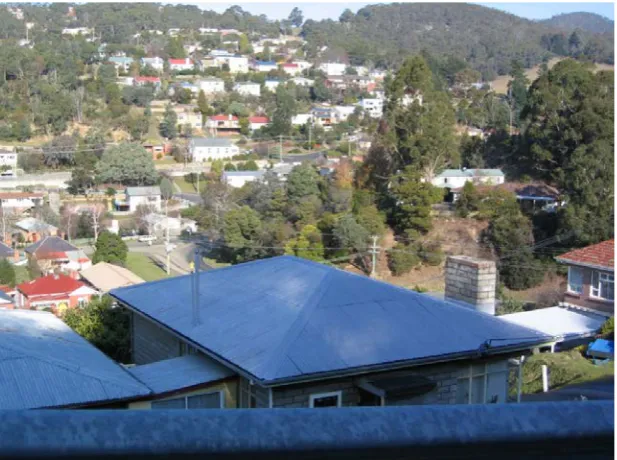
(13) 5.14. Appliance Use ............................................................................................ 185. 5.15. Other influences on energy use................................................................... 185. 5.16. Discussion and conclusion .......................................................................... 186. Chapter 6. Explorations of change to dwelling practices in participant households ........................................................................................................................ 191 6.1. Introduction ............................................................................................... 191. 6.2. Selection and analysis of the stories............................................................ 192. 6.3. Stories of dwelling practice adaptation ....................................................... 194. 6.3.1. Olive’s experience of aspiring to comfort and energy efficiency ............................... 194. 6.3.2. Del and Kirk’s experience of improving comfort passively ......................................... 199. 6.3.3. Mary and Martin’s experience managing seasonal changes ...................................... 200. 6.3.4. Mel’s experience learning new skills .......................................................................... 203. 6.3.5. Del and Kirk’s experience of physical change affecting practices ............................... 204. 6.3.6. Frank’s experience of the importance of emotional influences and life changes ...... 206. 6.3.7. Steve and Gwen’s experience of priorities affecting useful practices ........................ 210. 6.3.8. Trent’s experience of working towards new comfort requirements and technology. management ............................................................................................................................. 211 6.3.9. 6.4. Steve and Gwen’s experience of accommodating a consumptive guest.................... 213. Key findings of adaptation analysis ............................................................. 215. 6.4.1. Problem solving processes.......................................................................................... 216. 6.4.2. Dwelling goals and strategies ..................................................................................... 217. 6.4.3. Capacities and their dependencies ............................................................................. 220. 6.4.4. Information and information flows ............................................................................ 222. 6.4.5. Connections, relationships and networks................................................................... 224. 6.4.6. Sharing the dwelling with others ................................................................................ 225. 6.4.7. Background experiences and knowledge ................................................................... 226. xiii.
(14) 6.4.8. Garden spaces and gardening ..................................................................................... 227. 6.4.9. Place, climate and seasons ......................................................................................... 228. 6.4.10. 6.5. Adaptive methods .................................................................................................. 228. Chapter Conclusions....................................................................................230. Chapter 7. Explorations of physical dwelling adaptation in participant households ........................................................................................................................ 231 7.1. Introduction................................................................................................231. 7.2. Selecting and analysing the stories .............................................................. 232. 7.3. The seven households .................................................................................233. 7.4. Overview of physical dwelling adaptations completed, planned and. contemplated .........................................................................................................235 7.5 7.5.1. Stories of adapting physical dwelling features.............................................. 236 Cara, Edward and Veronica’s experiences moving towards sustainable living bit-by-bit 236. 7.5.2. Susan’s experiences being resourceful ....................................................................... 244. 7.5.3. Henry’s experience being disempowered within the home ....................................... 246. 7.6. xiv. Key findings of adaptation analysis .............................................................. 251. 7.6.1. Problem solving (adaptation) processes ..................................................................... 252. 7.6.2. Dwelling goals and strategies employed .................................................................... 254. 7.6.3. Capacities and their dependencies ............................................................................. 256. 7.6.4. Connections, information, networks and relationships .............................................. 264. 7.6.5. Background experiences ............................................................................................. 271. 7.6.6. Occupant relationships ............................................................................................... 272. 7.6.7. Adaptive methods ....................................................................................................... 273. 7.6.8. Relationships between householders and dwelling space ......................................... 274. 7.6.9. Values.......................................................................................................................... 275.
(15) 7.7. Conclusion ................................................................................................. 280. Chapter 8. Measures for interventions and conclusions ..................................... 281 8.1. Introduction ............................................................................................... 281. 8.2. Review of findings ...................................................................................... 281. 8.3. Discussion of the research approach taken.................................................. 290. 8.4. Measures recommended for interventions.................................................. 291. 8.4.1. Intervention design guidelines ................................................................................... 292. 8.4.2. Priority measures for interventions ............................................................................ 310. 8.5. Further research ......................................................................................... 316. 8.6. Conclusions ................................................................................................ 320. References ............................................................................................................. 322. Appendices...................................................... Separate Volume (disk in printed version). xv.
(16) Figures Figure 1.1: Sun angle at midday on solstices at latitude 42° south (which runs through Tasmania).................................................................................................. 15 Figure 1.2: Sun path diagram at 42° south for solstices and equinoxes................. 15 Figure 1.3: Sun angles for 42° south at midday on solstices and equinoxes in relation to window and wall positions of houses................................................................. 15 Figure 3.1: Overshadowing observed midday in winter. The photo was taken looking from a southern slope towards a northern slope in South Hobart........................... 67. Tables Table 1.1: Chapter summary................................................................................. 19 Table 2.1: Chapter Methods and data used by chapter.......................................... 25 Table 4.1: Intervention approach categories with examples.................................. 87 Table 4.2: Examples of the problem solving lens applied to critiquing intervention approaches ............................................................................................................ 128 Table 5.1: General dwelling features with some supporting socio-economic indicators for each participating household........................................................... 139 Table 8.1: Summary of chapter content and findings............................................ 286. xvi.
(17) Preface This research has come about because a mother gave voice to a challenge: ‘Do I pay for heating or medication?’ With little money and a son who experienced severe asthma, this mother faced a dilemma about whether to heat the house or medicate her son’s condition; she often could not afford both. She was not even sure heating the house helped prevent her son’s asthma because, with her limited income, she couldn’t afford to heat their ‘leaky’ house much anyway. This mother articulated her dilemma to a geographer, Elaine Stratford, who was working in her community. Despite having heard of similar situations before, Stratford left the conversation vexed that situations such as this existed at all. In Tasmania, an island State of Australia where the pair lived, principles of equity and sustainability were included in legislation, and policy goals to address unsustainable housing situations were well established. Simple home improvements could be supported which would improve the comfort of mother and child and reduce their heating costs at the same time. Yet this woman and many others experiencing the same difficulties had never received home improvement assistance. Stratford resolved to better understand the barriers that stood in the way of low income householders being able to make simple home improvements for energy efficiency. The mother’s and child’s predicament was shared by Stratford with me when I first began this research investigation (pers. com. July 2006). This thesis has been produced as part of the response to this predicament and looks to discover the key reasons why householders, especially those living in disadvantage, are unable to adapt their dwellings in Tasmania. The thesis has been supported by the Office of Energy, Planning and Conservation (OEPC) in the Tasmanian Department of Infrastructure, Energy and Resources and the University of Tasmania through funding 50 per cent of the research scholarship each. When the research scholarship was funded, the Tasmanian Government did not have an explicit policy direction or mandate to pursue this topic. Despite this gap the OEPC saw the benefit of a study that would explore the effects of housing quality on social and economic outcomes.. 1.
(18) 2.
(19) Chapter 1. The challenge of unsustainable housing in Tasmania 1.1 Thesis aims and research question This thesis presents findings from an inquiry that aimed to identify key design considerations for interventions encouraging dwelling adaptation to improve comfort and energy efficiency in households with low adaptive capacity in Tasmania. Underlying this aim was an intention to support more effective intervention activity by providing a more sophisticated understanding of dwelling adaptation processes in context. In a practical sense, the inquiry aspires to inform and guide housing stakeholders in government, commerce and social support sectors. The inquiry therefore sought to understand the nature of dwelling adaptation; current intervention approaches; and how this understanding could be applied by relevant stakeholders. The inquiry worked towards its aim by asking in Tasmania, what measures could be taken by housing stakeholders to improve the design of interventions that encourage dwelling adaptation for improved comfort and energy efficiency in households with low adaptive capacity?. 1.2 The challenge Housing and it associated dwelling space is a key medium through which people experience and act in the world. Despite being minimal consumers of resources when compared with their well-off counterparts, low income, disadvantaged householders are often critically affected by poorly performing housing through discomfort and inefficient energy consumption. Providing assistance to improve dwelling comfort and energy efficiency can alleviate housing disadvantage by improving occupant health and housing affordability and can also reduce environmental impacts (Dayaratne et al. 2008; Office of the United Nations High Commissioner for Human Rights 2009), assisting a move towards more sustainable residential dwelling (Vale et al. 1996).. 3.
(20) Relatively minor and inexpensive changes to dwelling features and dwelling behaviours can generate significant energy and comfort improvements for disadvantaged occupants and the environment. However, social disadvantage and low adaptive capacity are recognised throughout the world to cause inertia in dwelling adaptation (for example: Bhatti et al. 1994; Horne et al. 2009; HowdenChapman et al. 2007; Maloney 2008; Rosa et al. 1988; Stratford et al. 2008; Wilson et al. 2007). This inquiry therefore starts from the premise that in situations where households lack important adaptive capacity (especially in situations of recognised disadvantage) supporting householders to make dwelling adaptations to improve energy efficiency and comfort is an important part of advancing sustainability. This premise is backed by scholars, the Australian government and the social support sector (Dalton et al. 2008; Elliott et al. 2009; Harland 1993; Maller et al. 2010; Sustainable Development Commission 2006). In Tasmania, the site of the case studies for this research, it is common for householders to live in cold, uncomfortable and energy inefficient housing. Due to significant and entrenched socio-economic disadvantage in the state, it is also common for householders inhabiting the most uncomfortable, energy hungry houses to have limited capacity to enact adaptations: even making minor adaptations can prove difficult. Attempts to design interventions for householders with low adaptive capacities in Tasmania have been relatively ineffective because the interventions have been small in scale, applied inconsistently or designed without understanding of housing and householder contexts. Further afield in Australia 1 and internationally interventions have been applied at larger scales, but despite this have not always been that successful. Local, Australian and International intervention experiences have shown that more insight is required to ensure interventions are truly effective for householders who most need them.. 1. Australia is a federation comprising a national government – hereafter referred to as the Australian Government; six state governments – Western Australia, South Australia, Victoria, Tasmania, New South Wales and Queensland; two territory governments – Northern Territory and the Australian Capital Territory (seat of the national capital of Canberra); and various external territories and dependencies.. 4.
(21) 1.3 The research response In response to the challenges for dwelling adaptation in Tasmania and for intervention design more generally, this research inquiry sought to understand in detail the nature of dwelling adaptation in situations where adaptive capacity is low or key adaptive capacities are missing; and how this detailed understanding could be applied in interventions by stakeholders in Tasmania. The study worked towards these aims by asking in Tasmania, what measures could be taken by housing stakeholders to improve the design of interventions that encourage dwelling adaptation for improved comfort and energy efficiency in households with low adaptive capacity? To answer the research question an emergent, incremental, mixed method approach was used, that emphasised qualitative methods. This approach allowed the inquiry to engage with a sustainable ontology, sustainability goals, multiple perspectives and relational influences; to develop an evidence base in context from real life experiences; and to embrace the complexity that these explorations generated. An underlying sustainable ontology and sustainability goals meant recognising social mechanisms and relationships that influence dwelling contexts and adaptive opportunities. Working from a (uncommonly used) social-ecological and contextual perspective allowed the inquiry to engage with these considerations and to move away from limited rational and reductive-ist (technical and economic) notions of sustainability. Taking this approach also facilitated exploration of new ways to approach similar sustainability and adaptation problems (Crabtree 2009). Engaging with the Tasmanian dwelling adaptation context supported the socioecological perspective taken in the research; and, critically, helped to develop contextual understanding where, previously, little information had existed. Context reviews provided (otherwise unavailable) information on assorted organisations and stakeholders involved in dwelling adaption activity, and helped to highlight the ways stakeholders related to and affected intervention outcomes.. 5.
(22) Detailed examination was made of householders’ lived experiences to ensure that this inquiry’s findings were relevant to real household situations, as well as to fill gaps in knowledge that exist relating to the effects of real life needs, priorities and adaptive experiences on intervention approaches. Much research about adaption and intervention design work to date has been based on generalised problems, statistics and theories and has given little consideration to real lived experiences of householders and stakeholders (Crosbie et al. 2010). Unless particular attention is paid to tailoring intervention approaches, disadvantage could easily be amplified by generic intervention approaches. More detailed understanding, especially in lowincome situations that are more difficult for governments to support, can provide opportunities for more nuanced support lead to greater success rates for interventions. Studying the sustainability of dwellings in the built environment; examining people’s dwelling and adaptive practices; and approaching the study from a relational ecological and contextual perspective are inherently complex tasks. Too much complexity can cause problems in research. I 2 designed the research approach as best I could to deal with this high level of complexity, but with no guarantee that I would be successful in the end. Therefore, alongside the practical research aims of this inquiry, I also assessed the suitability of the research processes and methods themselves, in particular: the ability of qualitative research processes to accommodate investigation of complex issues of dwelling and sustainability; and, the capacity of the fieldwork and analysis techniques used to relate legitimate participant stories and to engage with social-ecologies. The research response as presented is, of course, challenged with tensions. As Low et al. (2005: 167) state there is ‘no single perfect political mechanism’, or in this case, research approach, ‘that will simultaneously deliver ecological sustainability, social. 2. Throughout the thesis I present discussion and descriptions in first person. I do this because I take responsibility for my own thoughts and discussions and I because want to remind readers of my personal (subjective) influence on this piece of research. The use of I in academic explorations is increasingly used as people ‘realize that the knowledge and evidence we need for our practice is not located only in experimental research but in the experiences of ourselves’ (Fulbrook 2003) and reflects ‘the intimate relationship between the research and the researcher’ (Hes 2005).. 6.
(23) justice and economic success while protecting the rights of the individual. We simply have to try to find the best possible combination’. I therefore designed the research response and conducted this inquiry aware that the end result was likely to be a balance between various benefits and sacrifices; and cognisant of the possibility that truly sustainable performance will likely never be fully attained.. 1.4 Situating the research To broadly situate the research problem and exploration, this chapter explains key concepts and describes broad characteristics of the Tasmanian setting.. 1.4.1 Key concepts This research inquiry used established concepts from the discourses of housing, dwelling, adaptation, capacity, disadvantage, and sustainability and so introduces and defines them here. The key concepts of energy efficiency, comfort and equity that come from these discourses are introduced here, and are expanded upon further in chapter three. Housing takes many and varied forms in many places. In its literal sense housing simply describes a physical case or cover (Little et al. 1992) and, while useful as a concept, the term does not encompass all physical (material) and behavioural aspects of living in a residence needed for this study. Concepts of dwelling more broadly describe the material and behavioural aspects of living in a residence that are attended to in this research. ‘To dwell’ broadly means to ‘abide for a time, in a state, place, or condition’ (Little et al. 1992: 620). As both a noun and a verb ‘dwelling’ creates a space in which material and lived aspects of dwelling and the relationships between them can be recognised. Dwelling can refer to any scale of living or habitation, but in this research it mainly refers to the scale of individual residences. The terms ‘house’ and ‘housing’ are used in the text to refer to the main building enclosure of individual dwelling spaces. In addition, the term ‘home’ is used when participants have identified their dwelling space as their ‘proper abode’ where they. 7.
(24) habitually live, and where they can seek nurture, rest and refuge (Little et al. 1992: 976). Adaptation is used in this thesis to describe the process of change householders make and is therefore is important to define. ‘Adaptation’ is here defined as a process of change that occurs in response to a pressure or an aspiration. To adapt is to ‘undergo modification so as to fit new circumstances’ (Harper 2001-2012) and adaptation is the ‘action of adapting’. Adaptation can describe individual to societal scales of change that lead to more resilient dwelling and ‘allow societies to survive (and, beyond that, flourish)’ (Smit et al. 2006: 283). Building on the concepts of dwelling and adaptation, dwelling adaptation in this study refers to change made to the physical features and to the practices of dwelling as a response to an aspiration, or as a resilient response to a critical pressure. The adaptations focussed on here are those that lead to improved energy efficiency and comfort in dwelling. Individuals, households, communities and systems that can generate change and ‘cope with change quickly and easily are considered to have high ‘‘adaptability’ ... or ... ‘capacity to adapt’’ (Smit et al. 2006: 283). Dwelling adaptation therefore requires adaptive capacity. In this study ‘adaptive capacity’ means the ‘power, ability, or faculty’ a person or household has to make change (Little et al. 1992: 280). Adaptive capacity varies household to household, resulting in different adaptive opportunities being available in different households. Compared to middle and higher income householders, those living with low-incomes, classically described as disadvantaged, are less likely to have the types of capacity needed to adapt their dwelling spaces and practices (Brotherhood of St Laurence 2008; Flanagan, J. 2007). Adaptive capacity can be low for reasons other than income or housing disadvantage and may be caused primarily because one or two key capacities are missing. People may be held back from adapting due to, for example, a low income, a lack of understanding of key technologies, inaccessibility of key supplies, a lack of skills, unsupportive legislation, or prohibitive social norms. Ensuring that the right sorts of adaptive capacity are available to people missing critical adaptive capacities, particularly those recognised to be living in disadvantaged circumstances, is recognised to be. 8.
(25) critical in moves to adapt for sustainability and climate change (Commonwealth of Australia et al. 2008; Engle 2011; Gallopin 2006; Jerneck et al. 2008). Householders who participated in this study ranged from those with significant adaptive disadvantage through to (a couple of) households who had reasonable levels of adaptive capacity. All participants though did have some significant capacities missing that made dwelling adaptation processes challenging in various ways. It is part of the work of this thesis to identify the mix of capacities each participant household had available and also how householders worked around missing capacities. This understanding is used in the final chapter of the thesis to develop recommendations on how best to support sustainable adaptation in households and what measures need to be taken when designing interventions. In Tasmania, Australia and internationally, modern sustainable dwelling adaptation activity, including activity pertaining to energy efficiency and comfort, is driven by environmental, equity and climate change concerns (Baker 2006; Parliament of the Commonwealth of Australia House of Representatives Standing Committee 2006; Partridge 2005). The term sustainability suggests that something or someone has the ability to sustain something or someone (Annandale 1908; Oxford Editorial Team 1942). The concept expresses overarching aims to support and maintain the ecosystem and people within that system; to keep from failing; and to find ways of living that are capable of being sustained indefinitely. In extensive international discussion over a period of more than 30 years the idea of sustainability has been explored as both a stand-alone values-based concept, and as part of sustainable development discourse (Baker 2006; Basiago 1995; Becker et al. 1999; Harris 2000; Leiserowitz et al. 2006). As such, sustainability infers holistically-considered decisions and/or assessments or actions incorporating social, economic and ecological considerations and goals. ‘Sustainable development’ takes the values and goals of environmental, social and economic sustainability and translates them into principles, frameworks, legislation, and governance systems at scales from the international to the municipal (Baker 2006; World Commission on Environment and Development (WCED) 1987). In this sense, sustainable. 9.
(26) development formalises and mandates action on social, economic and environmental conduct in order to advance the values implied in sustainability discourses. Despite the recognised opportunity and the transformative effects that sustainability and sustainable development have, the ideas are contested (Connelly 2007). Sustainability is criticised for being anthropocentric and techno-centric (Healy 2004; Stratford 2010) and sustainable development has been criticised for taking a ‘light green’, development-centred approach that perpetuates business-as-usual (Baker 2006; Redclift 2005). Nevertheless, sustainability and sustainable development are recognised and used within existing government systems, commercial entities and community support organisations; in these systems the concepts authorise and support efforts to improve human health, affordability, equity and limit environmental damage. Sustainability goals are recognised by Australian and international governments by means of declarations, legislation and commitments. 3 Principles of ecological sustainable development (ESD) were established by the Australian government to consider ‘the wider economic, social and environmental implications of our [Australia’s] decisions and actions’ and to ‘take a long-term rather than short-term view’(Australian Government's ESD Steering Committee 1992). Commitment to creating more sustainable settlements has been provided in the National Strategy for Ecologically Sustainable Development 1992 (ibid.); the Building Code of Australia (BCA) 2004 (Ashe et al. 2003; Australian Building Codes Board 2004); the House of Representatives Standing Committee report on ‘Sustainable Cities’ (Parliament of the Commonwealth of Australia 2005); and the Sustainability Charter in 2006 (Parliament of the Commonwealth of Australia House of Representatives Standing Committee 2006). The part that dwelling plays in advancing these goals is well-recognised and has driven efforts made in the BCA, the Sustainability Charter and the report on Sustainable Cities. In this research sustainability is used as a guiding set of values to aspire to and sustainable. 3. For discussion and history of the concept of sustainability and sustainable development see: Baker 2006; Lafferty and Eckerberg 1998; Basiago 1995; and, World Commission on Environment and Development 1987.. 10.
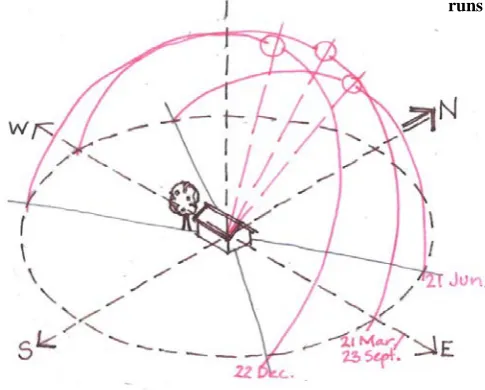
(27) development provides the policy framework within which the findings of the research will be used. Importantly, sustainability discourses have made particular effort to acknowledge and incorporate social goals of human rights and equity. Emma Partridge (2005: 11) sees that sustainability provides ‘currency and clout’ to engage with social issues as a ‘a tool for framing progressive social policies – policies that, in a conservative political climate, may otherwise not be easy to advance’. The social and environmental goals of sustainability support the social and environmental intent of adapting dwellings for thermal comfort and energy efficiency and align with the need to improve social equity in Tasmania. Improving energy efficiency is recognised as a key opportunity to create more equitable housing conditions in Tasmania. Human-induced climate change 4 is currently a focal point for policy aimed at encouraging more sustainable dwelling at a residential scale. Australia has ratified the Kyoto protocol (Australian Government Department of Climate Change and Energy Efficiency 2010) and committed to reducing greenhouse gas emissions to a specified target through emissions reductions and the development of emission sinks (Parliament of Australia 2010). The Tasmanian Government has also committed to reducing greenhouse gas emissions. 5 In 2009, the then Tasmanian Minister for Energy admitted that the emissions reduction target ‘presents a very real and significant challenge’ for Tasmania (Llewellyn 2009: 7). Reducing climate change emissions is a priority for Tasmania and improving residential energy efficiency has been recognised to be a cost effective way of achieving emissions reductions (McLennan Magasanik Associates 2009).. 4. Anthropogenic climate change describes ‘change to the average pattern of weather over a long period’ that are unexplained by natural fluctuations (Australian Academy of Science Working Group 2010: 4). The change to weather patterns developed because Earth’s greenhouse effect was amplified through greenhouse emissions being released into the atmosphere from human activities. Anthropogenic climate change effects include more extreme weather events, sea level rise, and subsequent changes to ecological systems (Australian Academy of Science Working Group 2010). 5 The Tasmanian commitment is to reduce emissions to 60 per cent below 1990 levels by 2050, which ‘represents a target of 4.6 Mt CO2e, or around 49 per cent below Tasmania’s emissions in 2007’ (McLennan Magasanik Associates 2009: 2).. 11.
(28) Energy efficiency is a key strategy being used by governments to achieve reductions in greenhouse gas emissions and to mitigate unsustainable impacts because processed, supplied energy ‘contributes over half the greenhouse gas emissions in Australia’ (Newton et al. 1998: 27). Processed energy also generates environmental and social impacts through particulate and toxicity pollution, resource depletion, loss of habitat and ecosystems services and resource depletion (ibid.). The residential sector is recognised by the Australian Government to contribute around a fifth of Australia’s greenhouse emissions and is seen as a sector where significant emissions reductions can be achieved via energy efficiency (Department of Climate Change and Energy Efficiency 2012). Smit et al (2001: 879) see that mitigating climate change impacts can also foster opportunities to improve social equity because ‘adaptation [for climate change] and equity goals can be jointly pursued by initiatives that promote the welfare of the poorest members of society’. Promoting the welfare of the most disadvantaged people (they suggest) will positively affect the adaptive capacity and therefore the sustainability of whole communities. Dwelling adaptation for energy efficiency then, is recognised as a way to engage with issues of climate change and generate social equity at the same time whilst also addressing more broad concerns of sustainability. Improving the efficiency of energy use in dwellings is strongly influenced by ‘comfort’ as both a notion and a set of practices. In unsustainable housing stock with poor thermal performance, comfort is often supported with processed (often fossil fuel) energy. In Tasmania’s relatively cold climate the reliance on processed (supplied) energy to stay comfortable is problematic. Improving comfort (without increasing energy use) can reduce household contributions to greenhouse emissions, reduce the costs of dwelling and also improve occupant health. Currently, despite the influence comfort practices have on energy use and health, they are not given much attention in Australia as an avenue through which the sustainability of dwelling may be improved. Most efforts by the Australian governments focus on improving efficiency (for example of energy or water use and of waste disposal) and technology to improve sustainability, rather than practices such as comfort (Commonwealth of Australia 2005; Roaf et al. 2005). Tasmanian efforts have maintained this efficiency. 12.
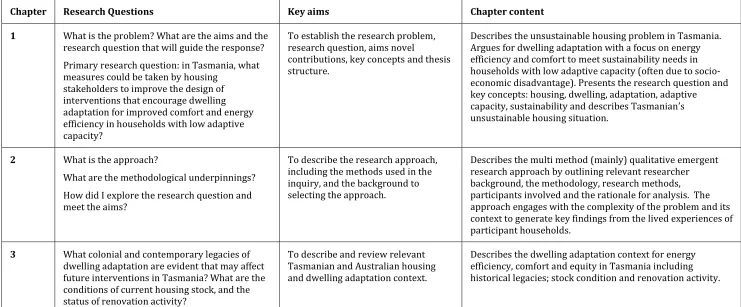
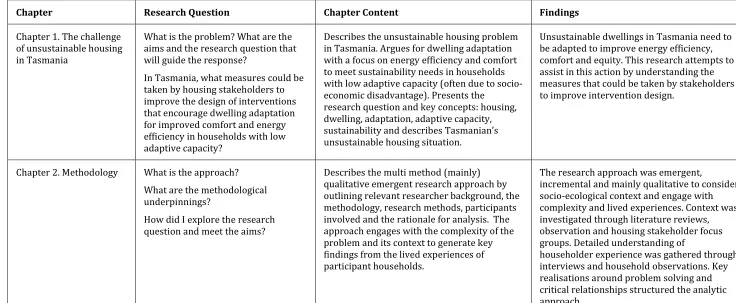
(29) focus with a particular emphasis on energy efficiency (McLennan Magasanik Associates 2009). There is recognition in Australia (as elsewhere around the world) that the home is where impacts from climate change, climate change policies and current economic instability converge, particularly among disadvantaged householders with low adaptive capacity (Australian Conservation Foundation (ACF) et al.; Brotherhood of St Laurence 2008; Lutzenhiser 1993; McLennan Magasanik Associates 2009; Prime Minister's Task Group on Energy Efficiency 2010). There is concern that energy changes made to mitigate climate change could be conducted in a way that actually further disadvantages already troubled households and limits opportunities for adaptation, rather than creates them (Gleeson 2008). In situations where householders have low adaptive capacity, interventions encouraging dwelling adaptations for energy efficiency and comfort can circumvent theses concerns by helping to reduce energy use, improve comfort, support householder health and affordability, effectively generating higher levels of resilience to policy, climate and economic impacts (Howden-Chapman et al. 2007; Weaver 2004; Wilkinson et al. 2009).. 1.4.2 The Tasmanian setting Tasmania has particular challenges in relation to housing and socio-economic wellbeing. It has the highest proportion of socio-economically disadvantaged people of any State in Australia. When compared with Australia as a whole, 6 16 per cent of Tasmanians live in poverty as compared to a 10 per cent Australian average (Tasmanian Council of Social Services 2007: 3). Disadvantage is compounded by the proportion of housing stock that is old and in suboptimal condition (Elliott et al. 2009; Flanagan, J. 2007; Flanagan, K. 2007a). Of all of the states, Tasmania has the highest proportion of housing stock over 50 years. 6. A comparison made using the Organisation for Economic Cooperation and Development (OECD) (international) measure of poverty. OECD defines the poverty line as income less than half the country’s median income (Tasmanian Council of Social Services 2007: 3).. 13.
(30) old, with over two thirds over 20 years old (Australian Bureau of Statistics 2000). Electrical and plumbing infrastructure in the older houses around the State is also aged and a cause for concern for stakeholders involved with housing and housing infrastructure (CEFG October 2007 & May 2008). When considering issues that influence comfortable and energy efficient dwelling, ‘the prime contextual variable is climate’ (Roaf et al. 2005: 117). Tasmania is classified as having a cool-temperate climate, which is cooler than most other areas in Australia. The Island State has distinct seasons with warm summers, cool to cold autumn and spring seasons, and cold winters. Autumn, winter and spring can be wet and windy as well as cold, leading householders to regularly use supplemental indoor heating to stay comfortable. Solar gain is recognised as a vital support to occupant comfort in homes and critically affects dwelling microclimates around the world (Butti et al. 1980; Szokolay 1987; Vale et al. 1996). In Tasmania’s cool climate, solar gain is particularly important if indoor comfort levels are to be maintained energyefficiently. Despite the benefits of sunlight, it is not always available or easily used for indoor comfort and energy efficiency purposes. Winter’s short days and low sun angles often interact to limit solar gain opportunities. 7 In addition, Tasmania’s cold season is wet (and therefore cloudy), which further reduces solar gain opportunities (Australian Bureau of Statistics et al. 1999) and leads to high use of heaters. Tasmania has the lowest winter sun angles in Australia (Figures 1.1-1.3) which can lead to positive solar gain in winter, or to sun being cut off by landscape features and neighbouring buildings. The low angle also means the solar gain is direct and ‘in the eyes’, which makes it difficult to control and use in dwelling spaces through most of the year. Even during summer the angle of the sun is low enough to cause indoor overheating. To increase and better manage solar gain in existing houses in Tasmania often requires that openings and shading are retrofitted and dwelling landscape features are altered, often quite significantly.. 7. In 2008, sunlight hours ranged from a summer maximal mean of 9.3 hours in January to minimal mean of 4.8 hours in May and 4.9 hours in June. Climate data for 2008, the year of the interviews, are included in Appendix K.. 14.
(31) Figure 1.1: Sun angle at midday on solstices at latitude 42° south (which runs through Tasmania).. Figure 1.2: Sun path diagram at 42° south for solstices and equinoxes.. Figure 1.3: Sun angles for 42° south at midday on solstices and equinoxes in relation to window and wall positions of houses.. 15.
(32) Aside from increasing solar gain in a controlled way, supplemental heating can be reduced by improving heat-flow resistance in building shells, incorporating other passive design strategies and using efficient dwelling practices (Ballinger et al. 1992; Bureau of Meteorology 2007; Szokolay 1987). Existing Tasmanian homes typically lack reasonable heat-flow resistance and other passive design features, 8 in part because reasonable heat-flow resistance levels in building shells were not required by the BCA before 2003 9 (Australian Building Codes Board 2008; Australian Building Codes Board et al. 2001). The climate, socio-economic and housing conditions in Tasmania have prompted community and housing support organisations to call for the prioritisation of dwelling adaptation for disadvantaged householders (Brotherhood of St Laurence 2008; Consumer Utilities Advocacy Centre 2008; Flanagan, K. 2007a; Flanagan, K. 2007b; Flanagan et al. 2007; Hernandez et al. 2010). The Australian and Tasmanian governments recognise the need to assist disadvantaged households to improve energy efficiency and have attempted to provide support in various ways (Commonwealth of Australia 2008: Ch 17; Elliott et al. 2009; Prime Minister's Task Group on Energy Efficiency 2010). In the main, however, in Tasmania those advancing particular interventions have not successfully engaged on any large scale with householders with low adaptive capacity.. 1.5 Summary of the thesis structure This thesis describes the design, analysis and key findings of the research and critically evaluates the measures that can be taken in intervention design to encourage more dwelling adaptation in households with low adaptive capacity. Table 1.1 lists each chapter’s research questions and content.. 8. The focus groups from this study support this observation. The BCA is Australia’s main building standards code and is used to describe the minimal standards that buildings can be built to.. 9. 16.
(33) Chapter two describes the methods used in this research inquiry and outlines the underlying methodology that drove the research approach. The research was largely a qualitative study that progressed in an incremental and emergent way, emphasising contextual understanding, socio-ecological relationships and householders’ accounts and experiences. The research responds to calls by scholars to incorporate sustainability and complexity, and to ground research in its socio-technical contexts (Becker et al. 1999; Crabtree 2008; Franklin 2006; Mason 2006; Patton 2002). Chapter three and four, based on literary and contextual reviews, consider various contexts and influences in contexts on dwelling conditions and dwelling adaptation for energy efficiency, comfort and equity. Chapter three explores historical legacies; stock conditions and renovation activity related to Tasmanian housing contexts. Chapter four continues the consideration of context by describing and reviewing concepts of equity, comfort and energy efficiency as drivers of dwelling adaptations; the main interventions approaches used to encourage dwelling adaptations for energy efficiency, comfort and equity; and current understanding of the processes of adaptation. Chapters five, six and seven report the main findings from the investigation into the dwelling conditions and adaptation experiences of 17 participant households. All households were living in the Glenorchy City Council area of Greater Hobart (the capital city of Tasmania) and had applied for an energy efficiency rebate for home improvements. The Glenorchy municipality has high proportions of low-income households, aged householders (many of whom live alone), and one parent families (Australian Bureau of Statistics et al. 2008) and therefore offered a community in which various mixes of household adaptive capacity could be explored. Household participants were consulted three times over the summer, autumn and winter of 2008 about dwelling adaptations; participant dwellings were also examined to identify dwelling energy efficiency and comfort conditions. Chapter five reports household participants’ physical dwelling conditions and dwelling practices that relate to energy efficiency and comfort, as well participant perceptions of comfort in dwellings. The exploration in this chapter is based on the description, review and assessment of content from householder narratives and from. 17.
(34) observations I made of participant houses. This examination provides understanding of the challenges and opportunities affecting dwelling adaptations. This information provides the study with critical understanding of house performance and conditions in which interventions would be applied and, as comprehensive dwelling condition data is not available for Tasmanian houses, fills a gap in knowledge in the state. Chapters six and seven focus on adaptation as experienced by participant households. These chapters, using the narratives householders shared in the longitudinal interviews, present stories of adaptation in detail in order to illuminate key capacities, influences and relationships affecting dwelling adaptation outcomes. Chapter six reports on adaptations participants made to their dwelling practices, while chapter seven reports on adaptations participants made to physical dwelling features. These chapters are included in order to describe, characterize and identify key influences affecting adaptations to dwelling practices and dwelling features (related to energy efficiency and comfort). These chapters explore the dynamics and variations in household experiences to identify the key issues that need to be considered in intervention designs. Using findings from chapters three through seven, chapter eight, the final chapter, identifies measures that can be taken in intervention design to create more effective encouragements for energy efficiency and comfort adaptations in households with low adaptive capacity. As support for householders may come through various forms of intervention by various stakeholders from government, commercial or social support organisations, the findings discuss a broad range of measures that may be considered in various organisations. This chapter responds to the main research question and is intended to inform and guide stakeholders about measures that can be taken to improve intervention design and intervention implementation. The chapter also suggest paths which future research projects could follow and concludes the thesis.. 18.
(35) Table 1.1: Chapter summary Chapter. Research Questions. Key aims. Chapter content. 1. What is the problem? What are the aims and the research question that will guide the response?. To establish the research problem, research question, aims novel contributions, key concepts and thesis structure.. Describes the unsustainable housing problem in Tasmania. Argues for dwelling adaptation with a focus on energy efficiency and comfort to meet sustainability needs in households with low adaptive capacity (often due to socioeconomic disadvantage). Presents the research question and key concepts: housing, dwelling, adaptation, adaptive capacity, sustainability and describes Tasmanian’s unsustainable housing situation.. What is the approach?. To describe the research approach, including the methods used in the inquiry, and the background to selecting the approach.. Describes the multi method (mainly) qualitative emergent research approach by outlining relevant researcher background, the methodology, research methods, participants involved and the rationale for analysis. The approach engages with the complexity of the problem and its context to generate key findings from the lived experiences of participant households.. 2. Primary research question: in Tasmania, what measures could be taken by housing stakeholders to improve the design of interventions that encourage dwelling adaptation for improved comfort and energy efficiency in households with low adaptive capacity? What are the methodological underpinnings? How did I explore the research question and meet the aims?. 3. 19. What colonial and contemporary legacies of dwelling adaptation are evident that may affect future interventions in Tasmania? What are the conditions of current housing stock, and the status of renovation activity?. To describe and review relevant Tasmanian and Australian housing and dwelling adaptation context.. Describes the dwelling adaptation context for energy efficiency, comfort and equity in Tasmania including historical legacies; stock condition and renovation activity..
(36) Chapter. Research Questions. Key aims. Chapter content. 4. How does consideration of equity, comfort and energy efficiency motivate dwelling adaptation efforts? What intervention approaches have been used to date to encourage dwelling adaptation for energy efficiency, comfort and equity and what has been the reaction?. To describe and review context by describing: relevant motivations for dwelling adaptation; current intervention approaches; and approaches that can be used to integrate interventions.. 5. What dwelling conditions are experienced by household participants and how were they attempting to manage comfort and energy efficiency in their dwellings?. To identify, describe and review the dwelling conditions of participants and their dwelling practices related to energy use and comfort.. Describes contextual views and positions taken about equity, comfort and energy efficiency to establish them as motivators for dwelling adaptation. Major types of interventions used around the world are reviewed. Current understanding of the processes of adaptation are presented in order to provides the means with which to approach the complex issues of dwelling adaptation and household lived experiences.. What happens when adaptations to practices are thought about, sought and made, and what can be learnt about how to support residents in improving the sustainability of dwelling practices and dwelling fabric?. To describe, characterize and identify key influences affecting how dwelling practices (related to energy efficiency and comfort) are changed.. 6. 20. To provide information about Tasmanian dwellings where it has previously been missing so that there is a baseline on which to envisage change.. Physical dwellings conditions and dwelling practices relating to energy efficiency and comfort are described for the 17 households participating in the study. Reviews are made of the comfort perceptions of participants, features and practices affecting the dwelling microclimates, heat flow resistance, input and extraction of heat, venting, lighting, water heating, food growing and management, occupants, power supply perceptions and appliances. Stories of adaptation to practices are shared and characterized in detail to identify what processes, relationships, stakeholders, capacities, backgrounds, information and values critically influence the adapting process..
(37) Chapter. Research Questions. Key aims. Chapter content. 7. What happens when adaptations to the physical features of a house are thought about, sought and made, and what can be learnt about how to support residents improving the sustainability of dwelling practice and dwelling fabric?. To describe, characterize and identify key influences affecting how dwelling features (related to energy efficiency and comfort) are changed.. Stories of adaptation to dwelling features are shared and characterized in detail to identify what processes, relationships, stakeholders, capacities, backgrounds, information and values critically influence the adapting process.. 8. 21. In Tasmania, what measures could be taken by housing stakeholders when designing interventions to support increased rates of dwelling adaptation for improved comfort and energy efficiency, in situations where householders have low adaptive capacity?. To respond to the main research question.. To inform and guide stakeholders about measures that can be taken to improve intervention design and intervention implementation.. Using findings from chapter three to seven, suggestions are made as to measures that can be incorporated into intervention design to improve intervention outcomes. These suggestions are intended to guide improved adaptations interventions and are suggestions that target stakeholders of housing organizations and in government. Conclusions to the research are made..
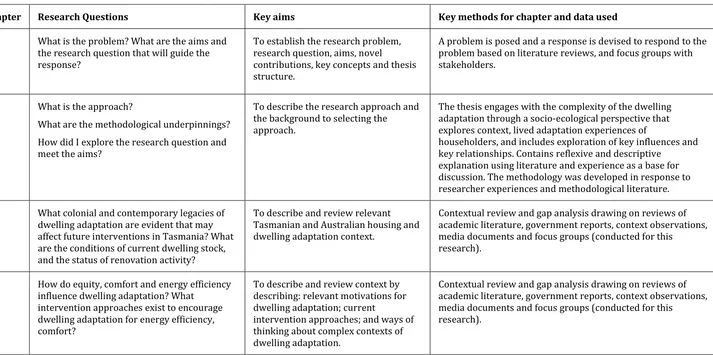
(38) 22.
(39) Chapter 2. Methodology 2.1 Introduction This chapter describes the approach used in this research inquiry by: providing an overview of the research methods used; relating key experiences that influenced the research design; explaining the underlying methodology that informed data collection and processing; describing the research methods in detail; introducing the participants involved in the research; and, presenting a rationale for the analysis that unfolds in later chapters. An overview of the research methods used is presented first to provide a framework around which background experiences, methodology and detailed methods can be described. Personal research experiences are described early in the chapter to support a transparent and reflexive process and to provide background explanation of the research path taken. The methodology is described to provide explanation of the ontological, epistemological and axiological underpinnings for the inquiry and provides some explanation for the choice of mixed (primarily qualitative), incremental methods. An elaboration of methods including analytic heuristics is presented in order to explain how data was collected and used and the pathway that the research took.. 2.2 Research methods overview Engaging with a multifaceted and complex problem, I chose to conduct the research inquiry using an incremental and emergent approach which permitted ‘events to unfold’ (Patton 2002: 44), and enabled analysis to develop gradually and to be adjusted as new data (and new realisations) came to light. Mixed methods were used. I chose methods that provided the most relevant data for the research problem and that would respond to my ontological, epistemological and axiological positions. Methods were chosen step by step as new data and understanding was required to progress the research and were sourced from for previously tested methods found through reviews of scholarly literature; my past experiences; and advice from supervisors (see Appendix A). The majority of the methods used were qualitative which allowed examination of topics. 23.
(40) using a socio-ecological lens; and consideration of dwelling adaptation as embedded, complex and interconnected with context (Crosbie et al. 2010; Franklin 2006; Guy et al. 2000; Rittel et al. 1973).Quantitative approaches were used to assess dwelling thermal performance (temperature, humidity and thermal resistance measurements) and to conduct statistical reviews (Szokolay 1987; Zeisel 2006). To understand various influences on dwelling adaptation for energy efficiency and comfort I reviewed literature, undertook contextual observations, and engaged with housing stakeholders in focus groups. To understand the lived experience of dwelling adaptation, not least to understand what enables and impedes it, I interviewed householders who had applied for a rebate on energy efficient fixtures and fittings in the Glenorchy City municipal area. In semi-structured interviews I asked about the performance of their physical dwelling, their dwelling practices, and their adaptation activity relating to comfort and energy efficiency. I also observed their dwelling spaces and their houses to ascertain thermal performance. This mix of methods provided opportunities to elicit new insights in one particular setting, but in a way that would be relevant in similar contexts like New Zealand, the UK, USA and Canada (Elliott et al. 2009). Methods are described in more detail in a later section of this chapter and the methods used to generate content for each chapter are summarised below in Table 2.1.. 24.
(41) Table 2.1: Methods and data used by chapter Chapter. Research Questions. Key aims. Key methods for chapter and data used. 1. What is the problem? What are the aims and the research question that will guide the response?. A problem is posed and a response is devised to respond to the problem based on literature reviews, and focus groups with stakeholders.. 2. What is the approach?. To establish the research problem, research question, aims, novel contributions, key concepts and thesis structure.. To describe and review relevant Tasmanian and Australian housing and dwelling adaptation context.. Contextual review and gap analysis drawing on reviews of academic literature, government reports, context observations, media documents and focus groups (conducted for this research).. What are the methodological underpinnings? How did I explore the research question and meet the aims? 3. 4. 25. What colonial and contemporary legacies of dwelling adaptation are evident that may affect future interventions in Tasmania? What are the conditions of current dwelling stock, and the status of renovation activity? How do equity, comfort and energy efficiency influence dwelling adaptation? What intervention approaches exist to encourage dwelling adaptation for energy efficiency, comfort?. To describe the research approach and the background to selecting the approach.. To describe and review context by describing: relevant motivations for dwelling adaptation; current intervention approaches; and ways of thinking about complex contexts of dwelling adaptation.. The thesis engages with the complexity of the dwelling adaptation through a socio-ecological perspective that explores context, lived adaptation experiences of householders, and includes exploration of key influences and key relationships. Contains reflexive and descriptive explanation using literature and experience as a base for discussion. The methodology was developed in response to researcher experiences and methodological literature.. Contextual review and gap analysis drawing on reviews of academic literature, government reports, context observations, media documents and focus groups (conducted for this research)..
Figure
+5
Outline
Methodology
Tasmanian dwelling adaptation context
Motivations, intervention approaches and adaptation processes
Accounts of the comfort performance of dwellings
Heat-flow resistance of the physical dwelling enclosure
Space heating systems and practices
Ventilation and moisture control
Water supply and hot water
Related documents
Compresser le ressort de pression (ressort pousseur) jusqu’à ce que son extrémité affleure avec la tige de ressort, puis l’introduire dans le logement de ressort du bloc de
outlook for 2015 6 Strategy update 10 Financial position 12 Fleet development 14 Fleet values 16 Dry Cargo 18 tankers 26 Fuel efficiency 33 organisation 34
report on risks identified in food, feed or food contact materials that are placed on the
Rare earth element mobility in the oceanic lower sheeted dyke complex: evidence from geochemical data and leaching experiments. Scavenging of dissolved yttrium and rare
In Valero , we specifically noted that the party resisting arbitration in that case had to rely on the terms of the agreement containing the arbitration clause to assert
Although formal hunting status is found significant when individually entered, the variation it explains is not significant enough (or unique enough) to be included in the
The Accountable Manager is accountable to all relevant aviation regulatory authorities (including the CAA and EASA) for maintaining safety standards. The post
