Abstract: This research aims to describe the implementation of the technopreneurship scientific learning for produce electronic product prototypes in engineering education. This research method uses a research and development approach. In this research development approach is carried out in 3 stages, namely: Phase I needs analysis and model design, Phase II develops with validity and practicality, and Phase III will implement the model. This research will only focus on phase III, namely the implementation of the model, which involves 40 students taking entrepreneurship subjects in engineering education at Bung Hatta University, Padang, Indonesia. As a result of the activities of technopreneurship scientific learning, students produce prototypes of electronic products that have commercial potential. One of the results of technopreneurship scientific learning is a prototype of an electronic product in the form of a water detector in the bath. The implementation of this tool was tested and analyzed with the Electronics Workbench software version 5.12. The measurement results from the implementation in the field show that electronic products have worked well and after the measurements are made, students make a business plan of the product, which is a water detector. A business plan that has been made has been through consumer needs analysis.
Keywords : Technopreneurship, Electronic, Scientific, Learning, Engineering Education.
I. INTRODUCTION
G
lobalization is a challenge in developing countries and has a profound impact on change. Ultrich [1] states that the key to successfully facing change is human resources.. Understanding the nature of the goals of national education in Indonesia is not just an effort based on awareness and planning to create a learning process and a learning atmosphere where the only gain is a degree and diploma. However, education is more than that, namely as a process needed to get balance and perfection in the development of individuals and society.The problem is human needs and behavior is not a statistic
Revised Manuscript Received on September 06, 2019 * Correspondence Author
Hendra Hidayat*, Faculty of Teaching and Education Science,
Universitas Bung Hatta, Padang, Indonesia. Email:
Boy Yendra Tamin, Faculty of Law, Universitas Bung Hatta, Padang,
Indonesia. Email: [email protected]
Susi Herawati, Faculty of Teaching and Education Science, Universitas
Bung Hatta, Padang, Indonesia. Email: [email protected]
Abna Hidayati, Faculty of Education Science, Universitas Negeri
Padang, Padang, Indonesia. Email: [email protected]
Anggarda Paramita Muji, Faculty of Education Science, Universitas
Negeri Padang, Padang, Indonesia. Email:
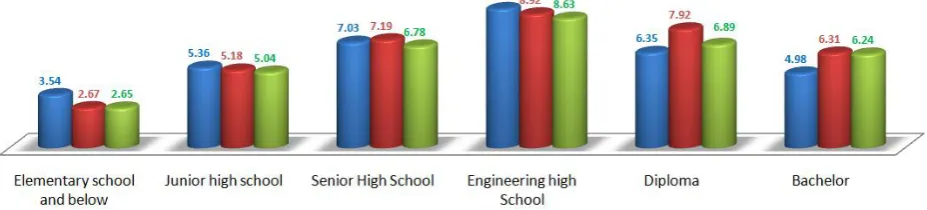
implementation of education must be able to adapt according to the needs and problems that arise in human life. The consequences of rapid fundamental changes in the structure of community life will lead to several things as mentioned by Bush et al [2] namely the lagging behind in the quality of education and management of national education. The end result of our education is only able to create a workforce with low and cheap expertise. This is also supported by BPS data (2017) showing that the level of open unemployment in Indonesia in February 2017 reached 5.33% or 7.01 million of the total 131.55 million workforce, as well as 2018 and 2019 [3]-[5]. The problem of unemployment and competitiveness of human resources is a real challenge for Indonesia. The challenges facing Indonesia are also compounded by the demands of companies and industry. The world of education has changed. The competencies needed by the community are controlled by economic thinking. The meaning of life is determined by economic values that can be enjoyed or obtained by its members. The world of education, according to economic thinking is measured by the extent to which the world of education contributes to the needs of economic development. In other words, the world of education prepares community members who have the competencies required by the economic life of education. So, education will be a supplier of human resources needed by the world of work, as well as for economic development. The development of education in the world cannot be separated from the development of the industrial revolution that occurred in the world because indirectly changes in the economic order also change the educational order in a country.
Fig. 1. Open Unemployment Rate in Indonesia
Consequently, formal educational institutions such as engineering education are required to produce graduates who are ready to work, have the attitude, character and entrepreneurial behavior and skills (life skills) to work in all fields in accordance with the needs of the industrial world. Engineering education develops from time to time following changes in the world of work. However, it does not change its essence as a place for preparing workers that is expected to have a good set of knowledge, skills and personalities to meet the expectations of the world of work and industry. In addition, the graduates of engineering education are expected to fill the available employment opportunities with the provisions they have and get the appropriate compensation [6]. But the current conditions are very different and not as expected. Many engineering education graduates do not find work or are unemployed, even those who have worked are not without problems. Their knowledge and skills are not enough to survive in the work environment. Many factors are suspected as the cause, among others in terms of the teacher, in terms of industry, and also in terms of the graduates themselves. A number of factors have been identified as problems for graduates of engineering education at present, including (1) the information obtained is not sufficient to support employment; (2) the industry in general is looking for experienced workers; (3) complaints from the industry that most graduates do not have the skills expected by the industry, especially the employability to be able to survive in a variety of situations and working conditions. Of the several factors identified as obstacles to the fulfillment of work and industry demands on engineering education graduates, one of them is the mismatch of skills required by workforce. The need for the world of work for the skills possessed by graduates of engineering education has implications for the curriculum in engineering education.
Seeing the phenomena and facts about the condition of education and access to education by the public that is increasingly difficult, comprehensive steps are needed to overcome various problems in education in Indonesia. The world of education must be able to play an active role in preparing educated human resources who are able to face the challenges of life both locally, regionally and internationally. Students not only master the theories, but also want and be able to apply them in social life. One alternative to overcome the problem of education is through education that is oriented to the formation of the spirit of entrepreneurship, namely the spirit of courage and the willingness to face life's problems
and life naturally, the creative soul to find solutions and overcome these problems, an independent soul and not dependent on others. The entrepreneurship program has been included in the engineering education curriculum. Along with advances in knowledge and technology in the current global era, engineering education in the global market competition has not been able to produce competent skilled workers. This is because the additional expertise program is less attractive to most students of engineering education compared to the main expertise program. This lack of attractiveness caused by the delivery of the two learning programs does not encourage students to think creatively, innovatively and build students' skills regarding problem solving. The alternative is through the implementation of technopreneurship scientific learning with the aim of stimulating the entrepreneurial spirit and helping to increase small competencies.
II. LITERATUREREVIEW
A. Engineering Education
Engineering education is designed to prepare students or graduates who are ready to enter the workforce and are able to develop professional attitudes in the engineering field [7]. Graduates of engineering education are expected to be productive individuals who are able to work as middle workers and have readiness to face work competition. The presence of engineering education is now increasingly coveted by the community, especially those who are directly involved in the world of work. With a note, that engineering education graduates do have qualifications as (prospective) workers who have certain engineering skills in accordance with their fields of expertise.
The description of the quality of engineering education graduates, that: "Quality of engineering education applies a double measure, namely quality according to the size of the school or in-school success standards and quality according to the size of the community or out-of school success standards". The first criterion covers the aspects of students' success in meeting curricular demands that have been oriented to the demands of the world of work, while the second criterion, includes the success of students displayed on performance abilities in accordance with national or international competency standards after they
many people to make a profit, this learning process is no exception in engineering education, starting from conducting needs and curriculum analysis [8], planning learning, facilitating learning with modules and other teaching materials [9], thus impacting entrepreneurial competence and student learning outcomes in engineering education. In addition, the entrepreneurship teaching model is also very important especially in engineering education, technopreneurship scientific learning is one of the entrepreneurship teaching models in engineering education [10], that students are trained to actively carry out activities to explore and produce products from the engineering skills possessed [11] - [13]. This process shapes students to be creative, logical and able to solve problems [14].
III. METHODOLOGY
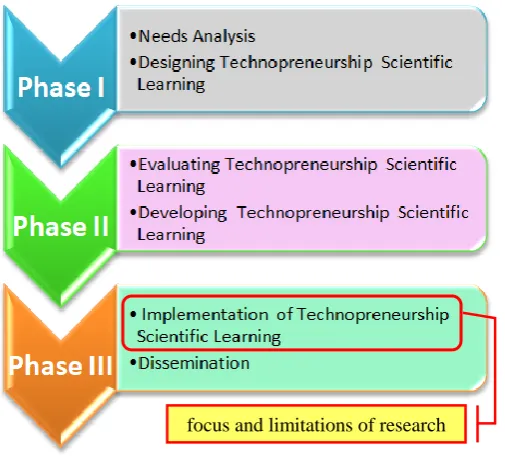
[image:3.595.316.536.285.444.2]This research method uses a research and development approach [15]. In this research development approach is carried out in 3 stages, namely: Phase I needs analysis and model design, Phase II develops with validity and practicality, and Phase III will carry out model implementation.
Fig 1. Focus and Limitation of Research
This research will only focus on phase III, namely the implementation of the model, which involves 40 students taking entrepreneurship subjects in engineering education at the Bung Hatta University, Padang, Indonesia. The results of
[image:3.595.48.301.485.715.2]the steps or phases of technopreneurship scientific learning which are explained as follows: 1) identified problems, needs analysis and learning analysis; 2) scientific technopreneurship cooperative approach; 3) design of the scientific technopreneurship business plan; 4) product (prototype of goods and / or services), and 5) work evaluation [20].
Fig. 2. Explanation of manufacturing equipment and initial test preparation
[image:3.595.316.538.486.675.2]Figure 4. Setting of Electronic Product Oscilloscope testing equipment from a Water Detector
Fig. 5. Testing with Electronic Product Oscilloscopes from a Water Detector
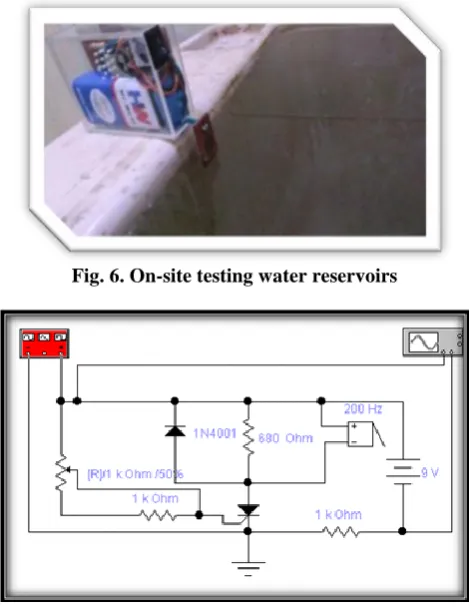
[image:4.595.58.279.257.417.2]Fig. 6. On-site testing water reservoirs
Fig. 7. Analysis with Electronics Workbench software version 5.12
Fig. 8. Sine Signal Output from a simulation with Electronics Workbench software version 5.12 The measurement results from the implementation in the field show that electronic products have worked well and after the measurements are made, students make a business plan of the product, which is a water detector. Business plan that has been made has been through consumer needs analysis.
V. CONCLUSION
Implementation of technopreneurship scientific learning trains students to be serious in the field of engineering science, especially in producing products that are in accordance with the curriculum and industrial needs [16]. In addition, this learning activity also helps students foster entrepreneurial spirit and interest [17]. The challenges of the current era of globalization provide opportunities for students to develop more creatively.
ACKNOWLEDGMENT
The research team would like to thank the Directorate General of Research and Development, Ministry of Research, Technology and Higher Education of the Republic of Indonesia for financial support for this research project, No. 7/E/KPT/2019.
REFERENCES
1. Ahlborg, Helene. "Towards a conceptualization of power in energy transitions." Environmental Innovation and Societal Transitions, 25, 2017, pp. 122-141.
2. Bush, Tony, Les Bell, and David Middlewood, eds. Principles of Educational Leadership & Management. SAGE Publications Limited, 2019.
3. C. B. o. Statistics, "Statistics News: Labor Indonesia in February 2017," vol. Status No. 40/05/ Th.XX, 05 Mei 2017, Ed., ed. Jakarta, 2017. 4. C. B. o. Statistics, "Statistics News: Labor Indonesia in February 2018,"
vol. Status No. 42/05/Th. XXI, 07 Mei 2018, ed. Jakarta, 2018. 5. C. B. o. Statistics, "Statistics News: Labor Indonesia in February 2019,"
vol. Status No. 41/05/Th. XXII, 06 Mei 2019, ed. Jakarta, 2018. 6. Granovetter, Mark. Getting a job: A study of contacts and careers.
University of Chicago press, 2018.
7. Mulder, Martin, ed. Competence-based vocational and professional education. Dordrecht, the Netherlands: Springer, 2017.
8. Ganefri, Hidayat, H., Kusumaningrum, I., & Mardin, A, “Needs Analysis of Entrepreneurship Pedagogy of Technology and Vocational Education with Production Based Learning Approach in Higher Education,” International Journal of Advanced Science, Engineering and Information Technology, vol.7, no.5, pp. 1701-1707, 2017. http://dx.doi.org/10.18517/ijaseit.7.5.1510
[image:4.595.51.286.460.764.2]118-122. 2018. https://doi.org/10.14419/ijet.v7i4.9.20631
13. Hidayat, H, “How to Implement Technology Science for Entrepreneurship by Using the Product-Based Learning Approach and Participatory Action Learning System in Higher Education?” , Advanced Science Letters, 23, pp. 10918-10921, 2017. https://doi.org/10.1166/asl.2017.10186
14. Z. Amrina, Desfitri,R., Zuzano,F., Wahyuni,Y., Hidayat,H., Alfino, J, , "Developing Instruments to Measure Students’ Logical, Critical, and Creative Thinking Competences for Bung Hatta University Students," International Journal of Engineering and Technology (UAE), vol. 7, pp. 128-131, 2018. http://dx.doi.org/10.14419/ijet.v7i4.9.20633
15. Borg. W. R, Gall. M.D, & Gall. J. P. “Educational Research an Introduction. Seventh edition,”. USA. Pearson Education.Inc. 2003. 16. Rath,Devesh., Satpathy, Ipseeta., Patnaik, B. C. M. "Augmented Reality
(Ar) & Virtual Reality (Vr) -A Channel for Digital Transformation in Industrialization Fostering Innovation &Entrepreneurship", International Journal of Innovative Technology and Exploring Engineering (IJITEE), vol. 8, no. 10, pp. 3228-3236, 2019.
17. Melese, Solomon., Das, Debi Prasad., Ghadai, Sanjaya Kumar., Bajpai, Anil. "Entrepreneurial Intentions among Business Students in Ethiopia", International Journal of Innovative Technology and Exploring Engineering (IJITEE), vol. 8, no. 10, pp. 1660-1663, 2019.
AUTHORSPROFILE
Dr. Hendra Hidayat is working as Head of Center for
Information & Communication Technology, Universitas Bung Hatta and member of lecture at Faculty of Teaching and Education Science, Universitas Bung Hatta, Padang, Indonesia. His research areas include Technical Vocational and Education Training. He has published more than 22 research papers in International and National Journal.
Dr. Boy Yendra Tamin is working as Deputy
Chairperson of Bung Hatta Education Foundation, Padang, Indonesia and member of lecture at Faculty of Law, Universitas Bung Hatta, Padang, Indonesia. His research areas include Law, Goverment, Culture. He has published more than 174 research papers in International and National Journal..
Dra. Susi Herawati, M.Pd is working as Deputy Chancellor for Finance, Universitas Bung Hatta, Padang, Indonesia and member of senior lecture at Faculty of Teaching and Education Science, Universitas Bung Hatta, Padang, Indonesia. Her research areas include mathematics education. She has published more than 10 research papers in International and National Journal.