Abstract: Business Process Re-engineering (BPR) is a radical and transformative means to help organizations rethink their existing processes from the fundamentals to completely re-engineer or to transform or to improve them. The aim is to achieve huge cost reductions and a strategically differentiating better customer service. Banking business processes are differentiated into three key elements: Customer inquiries or requests which form the Inputs, the Processing of data through some stages and various necessary internal channels and the delivery result as expected by bank and customer forming the Outputs. BPR principally mediates in the data processing part to alter it to become time and cost effective. Information technology has been regarded as the key enabler for the radical changes as seen after BPR exercises. Majority banks in India, particularly the large private sector lenders – HDFC Bank, ICICI Bank and AXIS Bank are the biggest private sector banks in India by Market Capitalization and proud members of the Big 4 banks of India – the 4th being the State Bank of India (SBI). These banks have adopted technology advancements rapidly enough to be called the Market Leaders of BPR projects in the
Indian banking sector. They have re-imagined and
re-engineered their processes using the latest tech-tools viz. Chat Bots; Artificial Intelligence (AI) led engines and Robotics Software. Even though these may be in their embryonic stages, these technologies would fundamentally modify the banking scenario sooner than anyone expects. Numerous banking experts predict these technologies taking maximum five years to digitize all banking and trade eco-systems but they envision Block chain technology to be having the potential to be the real game changer which may disrupt the complete financial system. Of late, numerous Indian banks are feeling vulnerable and face a dangerous competition from the fresh bank licensees which are undeniably extremely digitally savvy competitors. Digital technology is not proving to be difficult to procure - it is usually delivered to the client (banks) which work in partnership with external tech-based firms. The Software and Apps are being developed rapidly and being installed competently, for example, digital tools like the Mobile App. Technology, by its very character, remains permeable and over a period of time reaches one and all. It is at this point that we appreciate that IT based tools are ‘enablers’ of BPR projects or of Digitization of banks. The ‘strategic differentiators’ are and will be the people - since any such project also affects the banks’
Revised Manuscript Received on May 20, 2019.
Supriya Bhasin, PhD Research Scholar, Amity School of Business, Amity University, Noida, U.P., India
Dr. Pratibha Garg, Assistant Professor, Amity School of Business, Amity University, Noida, U.P., India
culture, behavior, structure and work-processes. Banks are going about digitization by crafting multidisciplinary teams that are jointly responsible end to end - from the design stage to full-scale roll-out of the new process. Since an entirely new set of metrics needs to be measured, employee key result areas (KRAs) are being re-calibrated. The front-end executives dealing with bank customers now have customer-centric KRAs. The performance management systems are being altered. People who have gone through a successful digitization have felt the environment during the project to be as stressful as that during a post-merger integration - in terms of obligation of efforts required and engagement of the bank employees at all levels. Many banks continue to find it extremely challenging to muster this level of vigor and enthusiasm for the on-going digital programs. Hence, it becomes vital to understand the perception and expectations of employees all through these changes.
Despite the astonishing growth and
achievements witnessed by the banking sector in India, most banks are now discovering that they have been pushing themselves to the extremes. There is a kind of saturation sneaking in the banking industry. Difficult consumers, the anxiety to develop more and more business and to amplify profits, hostile rivals and the need of a strong mechanism to detect and prevent banking frauds while delivering growth is making the banks take a re-look of their operations post the technological changes. Organizations are beginning to realize that organization factors and people issues are the core issues – they can either be strategic assets or the real stumbling blocks. It seems, even in the digital world, it is the human angle that makes all the difference. In this context, it becomes important to explore and evaluate whether the Human Resource Division of banks has an important role to play in the BPR programs and in what capacity. A comprehensive review of literature points out that HR’s roles in BPR programs has been largely perfunctory and restricted to being a facilitator of BPR centric training programs. Nevertheless, the literature reviewed emphasizes upon the banks to mull over a more strategic role for the HR to achieve remarkable improvement in the outputs derived from BPR programs. The purpose of this paper is to empirically analyze bank employees’ perception regarding HR’s role in BPR programs and their expectations from the HR division. A questionnaire was designed and mailed to the Operations and Front-line executives of the selected Indian Private Sector banks. Suitable hypotheses were developed to assess and evaluate the perceptions and expectations of bank employees. The data obtained
from the responses was used to perform the empirical analysis. Various parametric,
Role of HR in Business Process
Re-engineering Programs: Changing
Paradigms of Employee Expectations
in the Banking Sector
Role of HR in Business Process Re-engineering Programs: Changing Paradigms of Employee Expectations in the Banking Sector
non-parametric tests and descriptive statistics constituted the extensive empirical analysis. The experimental analysis reveals that even though there is a strong perception of HR playing an important role in BPR programs, the expectations from HR remain very high. This study is subject to the characteristic limitations of a survey research. The research findings can make a very significant contribution to banks and other stakeholders.
Index Terms: Perception, Expectation, Human Resource Personnel, Business Process Reengineering, Operations Executives, Digitization, Private Sector Banks, SPSS.
I. INTRODUCTION
The role and strategic aspects of Human Resource Management [1] are relatively under-explored in the Business Process Re-engineering (BPR) literature and available documents. BPR‟s main focus is on elements such as: the effects of BPR on the organization, the influence and criticality of Information Technology (IT) in BPR, tools and techniques of more effective implementation of BPR etc. At the outset, there is scant of studies on the contribution of people or the HR personnel towards the success of BPR projects. BPR projects typically require organizational restructuring and typically have a high failure rate. Many executives who have dealt with the BPR initiatives in their organizations have also reported that those programs had unintended side effects and ended up creating new problems even though they managed to achieve the intended benefits of BPR exercises – reduction in cost, time and resources of the particular processes which were successfully re-engineered.
In majority of the cases, such problems are caused by almost nil involvement of the Human Resource Management Department and or poor people-management practices which failed to properly address the human beings‟ inherent resistance to change or a widespread fear of change. In an era where technological advancements are widespread and quickly permeate organizations, Information Technology (IT) is not and will not be the critical differentiator between a success and a failure story of BPR projects. The major reason for failure of BPR projects has been and will continue to be the failure of managers to anticipate and address the human aspects and concerns of the employees or the constructive and strategic role played HR function in BPR programs. These human aspects will always be more central and critical than any technology aspects and if the organizations are indeed serious about deriving long term strategic benefits from their BPR initiatives (which usually involve a lot of cost), the human side cannot be left to tend to itself.
As this study was an endeavor to analyze the role of HR function in BPR programs of selected Indian Private Sector banks, there was a need of studying the role played by the HR personnel from other employees‟ point of view since the other employees constitute the internal customers of the HR Department Key Responsibility Areas (KRAs). Any analysis of the role played by HR function which did not cover the feedback of other employees would have been incomplete.
The objectives of the research:
1. To analyze the perception and expectations of other bank employees regarding the role of HR personnel in BPR
programs.
2. To compare the selected banks on the gap between perception and expectations from the role of HR personnel in BPR programs.
To study the objectives, a questionnaire was designed and mailed to the Operations and Front-line executives of the selected Indian Private Sector banks. Suitable hypothesis were developed to assess and evaluate the perceptions and expectations of bank employees. The data obtained from the responses was used to perform the empirical analysis. Various parametric, non-parametric tests and descriptive statistics formed the parts of the extensive analysis. The analysis revealed that even though there is a strong perception of HR playing an important role in BPR programs, the expectations from HR remain very high.
II. LITERATUREREVIEW
The literature available on human resource issues related to BPR can be discussed under the following headings:
A. Role of Managers in BPR Programs
Champy (1995) [2] focused on questions regarding what characteristics a manager should have in a reengineered organization, what sort of training he/she ought to go through in order to be effective. He described the skills necessary to overcome the resistance encountered in the attempt to change workforce culture/mental thought process. He also underlined the importance of a practical and an appropriate training program which ideally should pursue these main objectives: an ability to get the job done, communication and reinforcement of organizational values, ensuring that the vision and mission of the organization is properly imbibed; increasing self-confidence in individual abilities and fostering a climate of aspiration within the organization. Corrigan (1997) [3] suggested that managers in organizations that have been through a BPR project see their role as being gradually changed, especially middle managers. According to him, one of the difficulties for managers remained how to define exactly what they have to do in a wider and a more generalist role, “where they have their own performance measured with respect to how well they run a process rather than how well they run a department'' [4].
Zucchi and Edwards (1999) [5] pointed out that the managers‟ attitudes at the beginning of any BPR Project had been usually positive and that the way the senior management level managed to communicate the purpose of the re-organization was fundamental in ensuring that the project was accepted by the rest of the organization. The reasons behind apprehensions of few managers regarding BPR projects were connected to the modification of their own role. Concepts like use of cross-functional teams, workforce empowerment and increased delegation were regarded as vague by several managers specifically those who had occupied a particular position for a long time – insecurities regarding the changed role and purpose inside the new organization and other
which had been through Total Quality Management (TQM) programs reported experiencing fewer problems in having BPR projects accepted. Most of the managers agreed that their roles changed post implementation of BPR programs. There was more concentration on process-related performance measures and meeting assigned targets with more emphasis on coaching and co-ordination and less direct control. Managers opined that they were more accountable and more visible and had an increased authority and autonomy in carrying out their job. There was also unanimity that the main task for managers post BPR implementation was to assure the meeting of organizational targets and increase process performance. The managers also had more scope for action than before as they had the newer responsibility and authority of embracing an entire process crossing different functions. Wan-Jing et al. (2010) [6] examined the impact of human resource (HR) capabilities on internal customer satisfaction and organizational effectiveness. By drawing on data from HR managers and line managers, their study showed that some HR capabilities appear to be strongly linked to internal customer satisfaction and effectiveness of the organization. The implications for practitioners were to modify and put emphasis on certain HR practices, and to highlight the role of internal customers for enhancing the efficacy of organizations.
B. Employee Perception
Robbins (2004) [7] defined perception as „a process by which individuals organize and interpret their sensory impressions in order to give meaning to their environment‟. It is known that perception is not necessarily based on reality, but is a perspective from a particular individual‟s view of a situation. In dealing with any concept of organization culture or organizational behavior, perception becomes extremely important because people‟s behavior is based on their perception of what reality is and not on the reality itself [8]. The factors which influence an employee‟s perception can be categorized into: the situation, the perceiver and the target. For example, the actual factors in an organizational environment may include: time of work, the tools and techniques required to do the work and the social setting. Whereas the factors in the perceiver may be: attitudes, motives, interests, experiences and expectations [7]. DeVaro et al. (2007) [9] contended that organizations use perception management in daily internal and external interactions as well as prior to major product/strategy introductions and following events of crisis and that perception affects the working relationships in numerous ways related to the factors of organizational behavior, such as: individual, group or structure.
International expert and consultant David Maister offered an extremely practical and accessible guide to every management issue at play in professional firms in his brilliant book titled “Managing Professional Services Firm”. According to him, professional firms (including banks) differ from other business enterprises in two ways: first, they provide highly customized services and thus cannot apply many of the management principles developed for product-based industries. Second, professional services are
highly personalized, involving the skills of individuals [10] Drawing on more than ten years of research and consulting to these unique and creative companies, Maister brought up a fundamental point that while “products are consumed, services are experienced.” The author has emphasized that one may do solid technical work for the client (internal/external), but if the client doesn‟t perceive it to be a quality work, it is bad quality. Or Satisfaction = Perception – Expectation. The author reiterated that “neither perception nor expectation necessarily reflect reality.” (Consultant‟s Mind, 2018) [11].
C. Resistance to Change
According to Al-Mashari and Zairi (2001) [12], BPR fosters change and human being resists change. The authors emphasized that this resistance is the most common barrier of BPR and renders success difficult. Crowe et al. (2009) [13] argued that employees resist changes because of uncertain future initiated by BPR changes including job loss, authority loss, skepticism about outcomes and a feeling of discomfort regarding working in a new environment after BPR programs have been implemented. Inadequate communication among employees and their managers which result in lack of motivation and clarity culminates into resistance to change. Sturdy (2010) [14] argued that fear of changed role of job loss combined with a sense of loss of control and position, particularly within the middle management can result in resistance to change. Moreover the line managers may not be receptive to change due to a lack of determination for radical change, and also because of a lack of cross-functional cooperation.
Regarding the banking sector in general, it was noticed that there is a dearth of research on:
• The impact of the HR personnel‟s role in BPR programs on other employees of the banks – specifically those working in the Operations or the IT Department or the Front Office Executives.
• The perception of the bank employees regarding the role played by the HR function in BPR programs.
• The expectations of the bank employees from the HR team assigned to deal with multiple aspects of BPR programs.
Most of the research on BPR in banks is devoted to the Public Sector Banks of our country and there is a dearth of literature on BPR in Private Banking Sector. These areas of interest were discussed with the senior management and senior executives of the Operations and other departments (leaving HR) of the selected Private Sector Banks. Post discussions, there was a consensus on the importance of analyzing the present satisfaction level or analyzing what employees may believe HR is doing (perception) and what they would like the HR to do (expectations). There was an agreement that it is vital to reduce disconnect between the employees and the HR managers to enhance the output and efficiency derived from the BPR programs across their various phases. Aligning HR
Role of HR in Business Process Re-engineering Programs: Changing Paradigms of Employee Expectations in the Banking Sector
of the hour.
III. RESEARCHMETHODOLOGY
A. Sample
The main objective of the research was to study the impact of the role of HR Managers in BPR programs on other employees of the Indian private sector banks. Since the total number of Indian private sector banks is huge, 3 banks were selected for the study: AXIS Bank Ltd., HDFC Bank Ltd. and ICICI Bank. The reason behind selecting these banks was that they are the largest private sector banks in India by market capitalization and proud members of the Big 4 banks of India – The 4th being the State Bank of India (SBI). Apart from being equivalent to each other in expressions of Net Interest Income, Net Profit and Total Assets, these three banks are at almost similar stages of digital readiness in a bid to meet customer needs in a time when banking is becoming more about clicks and mobile banking than the conventional modes of banking.
The objectives specified were analyzed with the help of a well drafted pre-tested Questionnaire. Interviews were also considered as an excellent tool to gather information from the Executive Managers/Officers. The bank employees – which formed the basis of this objective of study, were selected from amongst employees working in different departments – Operations, Business Development, Front Office and from different levels like the Executive Managers, Assistant Managers, Relationship Managers, Branch Managers, Customer Care Executives/Officers, and Front Desk Executives etc. While interviews were mainly informal in nature, it was requested that the questionnaire be completed by those who had undergone specific training and up-gradation exercises regarding BPR programs, who had been responsible for the planning and execution of the BPR programs, whose role and responsibilities had changed post the implementation of the BPR programs, by top hierarchal managers of the Operations and Business Development/Analytics divisions or by all of them.
B. Hypothesis Formulation
The first objective of the study was to analyze the perception and expectations of other bank employees regarding the role of HR personnel in BPR programs. The authors were unable to come across literature which could explain other bank employees‟ perception of the role of HR in BPR programs or any study which elaborated on what the other bank employees might be expecting from the HR Departments of their banks vis-à-vis BPR programs. The endeavor of this paper was to study the gap between the perception and expectations of the bank employees – whether the difference between perception and expectations is significant or whether the HR function performing its expected role with aplomb. Hence the null and alternative hypotheses developed for the first objective were:
H0a: There is no difference between the perception and expectations of bank employees from the role of HR in BPR programs in banks.
H1a: The difference between the perception and expectations of bank employees from the role of HR in BPR programs in banks is significant.
The second objective of the study was to compare the selected banks on the difference between perception and expectations from the role of HR in BPR programs. To compare the selected banks with each other on the parameter of other employees‟ perception of the role played by their bank‟s HR in BPR programs, there was a need to compare the 3 different banks‟ respondents in terms of their perception and expectations through minute data analysis using descriptive statistics.
These research objectives and hypotheses were kept in consideration before construction of the questionnaire.
C. Construction of the Questionnaire
To construct the most appropriate questionnaire, broad literature review was done. The studies of Zucchi and Edwards (1999) [5] and Al-Mashari et al. (2001) [12] were used to form the primary draft of the questionnaire which was then customized to the banking sector by discussing with experts from academia and the top managers and executives of the selected banks as described in the literature review section of this paper. The questionnaire consisted of 20 statements grouped under: Perception (10 statements) and Expectations (10 statements). These are presented in Table 1.
Table 1: Statements of the Questionnaire grouped under different factors
Statements
Factor – Perception (Response to each on five-point Likert Scale ranging from Strongly Agree (5 for computation purpose) to Strongly Disagree (1 for computation purpose)
HR Department‟s role has been limited to minimizing resistance to change & statutory compliance by the employees.
HR Department is well-integrated with Information Technology Department.
Organization culture has been conducive to BPR related changes.
The BPR programs have resulted in easy communication among the employees and departments.
Employees‟ feedback and suggestions during BPR training exercises have been taken in the right spirit & solutions offered.
Employees have been made to feel empowered hence employee commitment has improved.
Performance levels have increased and there is clarity regarding the new roles and processes.
Performance targets are realistic thus achievable.
Employees display a sense of ownership and are keener on team-work.
Factor – Expectations (Response to each on five-point Likert Scale ranging from Strongly Agree (5 for computation purpose) to Strongly Disagree (1 for computation purpose)
HR Department should play a strategic role and consult employees for opinion before/at BPR programs‟ initiation stage.
HR Department should be more tuned to and work more with Information Technology division.
The management should act more actively, promote a healthy culture and give total support to the BPR processes.
The supervisors should discuss with their juniors about the problem areas of the BPR processes and how to improve them.
Employees‟ concerns about change in their job profiles/nature of work post BPR should be addressed & genuine efforts should be made to make them feel positive. The suggestions from employees should be taken very seriously so that they feel empowered and committed to their job outcomes.
Work should be streamlined to improve productivity and adequate clarity must be given regarding new roles and processes.
There should be clarity regarding new targets and the revised employee performance management plan. The employees of the bank should be periodically re-trained on use of IT and skills related to BPR programs to enable them to contribute more towards BPR success. Employees should be encouraged to give creative solutions and make cross functional teams across different departments to work on projects for the benefit of the whole bank.
The Panel of Experts Method (POE) involving relevant experts from the banking sector was used for the validation of the questionnaire. For reliability check, Cronbach‟s alpha coefficient was used as a measure, which is 0.883 (for statements on perception) and 0.910 (for statements regarding expectations). The data collected was analyzed in details using the SPSS software.
- Reliability:
To test out the internal consistency of the questionnaire, an alpha coefficient needs to be calculated which measures the interrelationship between the items in the questionnaire [15]. Nunally (1978) [16] suggested that a reliability coefficient of 0.70 or higher be deemed acceptable.
The „Perception‟ part of the questionnaire designed had ten statements to measure the perception of other bank employees regarding HR‟s role in BPR programs. Each statement was a 5-point Likert item to be answered as a single response from "strongly disagree" to "strongly agree". The statements were worded in a way so that all through the scale, a high score on each statement indicates a high belief of other bank employees vis-à-vis HR‟s quantum of role in BPR programs or a highly favorable perception. The
„Expectations‟ part of the questionnaire designed had ten statements to measure the expectations of other bank employees from the HR‟s role in BPR programs. Each statement was a 5-point Likert item to be answered as a single response from "strongly disagree" to "strongly agree". The statements were worded in a way so that all through the scale, a high score on each statement indicates a high expectation of other bank employees vis-à-vis HR‟s quantum of role in BPR programs.
To establish whether all these statements in the questionnaire reliably measure the same construct (other employees‟ favorable perception of HR‟s role in BPR programs), we asked 25 participants (executives) from the Operations Division of the two banks – HDFC (10) and AXIS (15) - to provide responses to these 20 statements (10 for perception and 10 for expectations) of the questionnaire, so that Cronbach's alpha could be calculated based on their scores. This formed an integral part of our Pilot Study. After calculations in SPSS, the output obtained is depicted in Table 2 and Table 3.
Table 2: Measurement of Cronbach‟s alpha value (Perception) – reliability parameter
Cronbach‟s Alpha
Cronbach‟s Alpha Based on Standardized Items
N of items
0.883 0.923 10
Table 3: Measurement of Cronbach‟s alpha value (Expectations) – reliability parameter
Cronbach‟s Alpha
Cronbach‟s Alpha Based on Standardized Items
N of items
0.910 0.946 10
Cronbach‟s alpha values established that the questionnaire had an acceptable reliability, α = 0.883 and α = 0.910.
- Validity:
The questionnaire was developed after a wide-ranging literature review and discussions with the senior Operations and IT management of the selected banks. This in itself principally established the content validity of the questionnaire. Additionally, for most advantageous results, the Panel of Experts (POE) Method was used as suggested by the senior managers of the banks themselves. It consisted of two parts.
Part 1: Establishing the reliability of the experts: From the senior Operations and IT management of each of the selected banks, 10 experts were chosen. Each graded the other 9 on a scale of 0-5. The limiting parameter was fixed at <40% or 18 pts. Those who obtained less than 18 points in total were excluded from the final panel. This is illustrated in Table 4. In Table 4, expert A gave scores – 3, 2, 5, 4, 2, 3, 4, 5 and 1 to experts B to J respectively. He did not grade himself. Similarly, expert B gave a score of 5 to A and 4, 4, 5, 3, 3, 2, 2 and 1 to experts C to J. The
Role of HR in Business Process Re-engineering Programs: Changing Paradigms of Employee Expectations in the Banking Sector
were included in the panel. As an example from the table above, G having a total score of 16 was not included. After few rounds of this exercise, a Panel of 9 experts across the selected 3 banks was finalized which included a Senior Operations Officer, a Deputy Bank Manager, a Senior Manager – Operations/Logistics, a Director of Operations, Senior Operations Manager – Business Analyst, GM – Information Technology, Senior Technology Product Manager, Senior IT Specialist and Advanced Business Analyst.
Part 2: Validation of the questions of questionnaire: The core objectives of the study were discussed with the panel of experts. Finally, options were given to the experts to: OK the question (s)/Redefine/Restate/Reword the question (s)/Reject the question (s) or Add any question (s). After this comprehensive exercise, the questionnaire was finalized and administered to the other employees.
Table 4: Panel of Experts method – Establishing the reliability of experts
A
B
C
D
E
F
G H I
J
A
X
3
2
5
4
2
3
4
5
1
B
5
X
4
4
5
3
3
2
2
1
C
… …
X
…
…
…
…
1
…
…
D
…
…
…
X
…
…
…
2
…
…
E
…
…
…
…
X
…
…
1
…
…
F
…
…
…
…
…
X
… 2
…
…
G
…
…
…
…
…
…
X
1
…
…
H
…
…
…
…
…
…
…
X
…
…
I
…
…
…
…
…
…
…
1
X
…
J
…
…
…
…
…
…
…
2
… X
Total
Score
16
IV. DATACOLLECTION
For the purpose of research, 17 branches of each bank – HDFC, ICICI and AXIS - across NCR New Delhi and Chandigarh Tri-city were shortlisted for administering the questionnaire. Thus, a total of 51 bank branches were tapped and the questionnaire was directed to a total of 300 Operations and Front-line personnel. Mid level and senior level managers were requested to present their inputs. Team Leaders/Sr. Managers/Heads and Sr. Executives with a
minimum of 3 years work experience in the bank had been short-listed as the qualifying criteria. The sample of the employees was drawn using Convenience sampling followed by Random sampling. Depending upon inputs from some employees of the bank branches, 40 questionnaires were mailed to their referrals in corresponding positions in other banks branches as well. A total of 175 responses (out of a total of 340) were obtained for the questionnaire within the specified time. 16 responses (invalid response – 9, missing data – 7) were discarded. Thus the sample (159 out of 340) represented 46.8% response rate which was considered satisfactory.
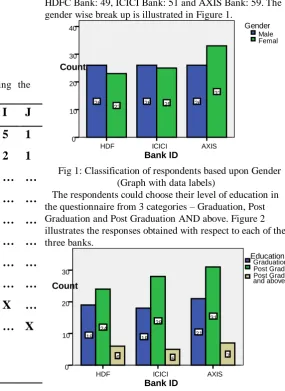
[image:6.595.260.546.252.644.2]A. Demographic profile of the respondents Total number of respondents from the Operations and Front-office divisions of the 3 selected banks were 175: From HDFC Bank: 49, ICICI Bank: 51 and AXIS Bank: 59. The gender wise break up is illustrated in Figure 1.
Fig 1: Classification of respondents based upon Gender (Graph with data labels)
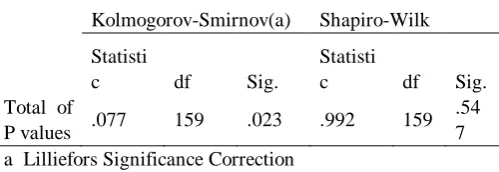
The respondents could choose their level of education in the questionnaire from 3 categories – Graduation, Post Graduation and Post Graduation AND above. Figure 2 illustrates the responses obtained with respect to each of the three banks.
Fig 2: Classification of respondents based upon Educational Qualification (Graph with data labels) The respondents were required to specify their age by ticking the appropriate of any of the following groups: Less than/Equal to 25 years, 26-30 years, 31-35 years, 36-40 years, 41-45 years, 46-50 years, 51-55 years and Greater than/Equal to 56 years. Figure 3 shows the total number of responses obtained (from all the 3 banks).
AXIS ICICI
HDF
Bank ID
30
20
10
0
Count
7 5
6
31 28
24
21 18
19
Post Graduation and above Post Graduation Graduation
Education Level
AXIS ICICI
HDF
Bank ID
40
30
20
10
0
Count
33
25
23 26 26
26
Femal Male
[image:6.595.36.308.355.637.2]Fig 3: Classification of respondents on the basis of Age Group (Pie-chart with data labels)
V. HYPOTHESISTESTINGANDDATAANALYSIS To analyze the perception and expectations of bank employees regarding role played by HR in BPR processes in banks, Likert scale statements were used. The respondents were asked to indicate their response by choosing any one degree out of „Strongly Disagree‟, „Disagree‟, „Neutral‟, „Agree‟ and „Strongly Agree‟ for each of the statements as illustrated in Table 1.
For necessary calculations, the term „Perception Score (P)‟ was used to denote the sum of actual response scores to Likert Scale statements (S.No. 1 to 10) in the questionnaire. The response scores ranged from 1 (Strongly Disagree) to 5 (Strongly Agree). The total perception score of each respondent was obtained by adding the response scores to each of the 10 statements as indicated by the respondent. Likewise, the term “Expectation Score (E)‟ was used to denote the sum of actual response scores to Likert Scale statements (S.No. 11 to 20) in the questionnaire.
The response scores ranged from 1 (Strongly Disagree) to 5 (Strongly Agree). The total expectation score of each respondent was obtained by adding the response scores to each of the 10 statements as indicated by the respondent.
A. Hypotheses Testing for the First Objective of the Study
The first objective was to analyze the perception and expectations of other bank employees regarding the role of HR personnel in BPR programs. The null and alternative hypotheses developed for the first objective were:
H0a: There is no difference between the perception and expectations of bank employees from the role of HR in BPR programs in banks.
H1a: The difference between the perception and expectations of bank employees from the role of HR in BPR programs in banks is significant.
The Hypotheses were tested in Two parts:
• For the combined data obtained from selected banks • For the data of individual bank(s)
Total number of respondents from the Operations and Front-office divisions of the 3 selected banks (175) formed the combined sample size. 49 respondents from HDFC Bank, 51 from ICICI Bank and 59 from AXIS Bank constituted the samples of the individual bank(s).
- Statistical Tests used
Paired Samples t-test: The Paired Samples t-test is used to examine the difference in means of the dependent samples. It is used to compare each respondent with self, at another point in time. Hence, the Paired Samples t-test or the Dependent Samples t-test (as it is also known) was used in our study to compare the Perception and Expectation scores of the bank employees. The assumptions of Paired Samples t-test were thoroughly checked for compliance before administering the test:
• The Dependent variable is measured on ratio or interval scale (the responses to the Likert scale statements satisfied this criteria)
• Respondents are selected randomly (the samples met this criteria as well)
• The Sample mean is normally distributed – to check this; tests of normality available in the SPSS package were run on the samples. Where the distribution of the Perception scores (P values) was found to be normal, the Paired Samples t-test was used. Where it was not found to be normal, Wilcoxon Signed Rank test was used.
2. Wilcoxon Signed Rank Test: It is the non-parametric version of the Paired Samples t-test. It was used when the sampling distribution (Perception scores or P values) was not found to be normally distributed.
- Hypotheses testing for combined data obtained from selected banks
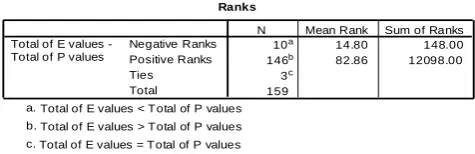
The Explore command available in SPSS was used to examine the normality of data in order to determine the appropriate statistical technique for the purpose of drawing inferences from the sample. The output obtained is given in Table 5.
Table 5: Tests of Normality on Combined Sample obtained from Selected Banks
Kolmogorov-Smirnov(a) Shapiro-Wilk
Statisti
c df Sig.
Statisti
c df Sig.
Total of
P values .077 159 .023 .992 159
.54 7 a Lilliefors Significance Correction
Since the combined sample size was greater than 100, the Kolmogorov-Smirnov statistic was used to examine the normality of data. The null and alternative hypotheses for the purpose were:
H0: The sampling distribution is normal H1: The sampling distribution is not normal.
As the significance level of Kolmogorov-Smirnov test was 0.23 (from the output table) which was less than the set significance level of 0.05, the null hypothesis was rejected and we interpreted that the distribution of the Total of Perception scores (P values) was not normal. Hence, the Wilcoxon Signed Rank Test was used and after running the test on SPSS, the following outputs were obtained. Table 6 gives the Descriptive
Statistics. The maximum value of P/E scores could be 50 (10 statements X 5 points 2
12
20
18
20
27
26 34
>/= 56 years 51-55 years 46-50 years 41-45 years 36-40 years 31-35 years 26-30 years</= 25 years
[image:7.595.303.553.485.571.2]Role of HR in Business Process Re-engineering Programs: Changing Paradigms of Employee Expectations in the Banking Sector
[image:8.595.308.547.58.118.2] [image:8.595.50.289.162.210.2]each for strongly agreeing with all statements). As visible in Table 6, the Mean value of P was 32.94 and for E it was a very high number: 43.16. The Minimum P value obtained from the combined sample was 18 while the maximum was 49. Minimum Expectation score obtained was 33 while the maximum was 50.
Table 6: Descriptive Statistics of Combined Sample obtained from Selected Banks
Descriptive Statistics
159 32.94 5.748 18 49 29.00 33.00 36.00
159 43.16 3.478 33 50 41.00 44.00 46.00
Total of P values Total of E values
N Mean
Std.
Deviation Minimum Maximum 25th 50th (Median) 75th Percentiles
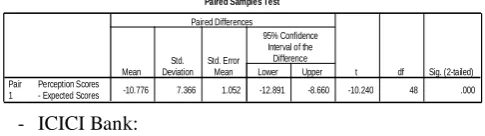
The Negative Ranks in Table 7 were assigned to those cases in which the total expectation score was less than the total perception score. Those cases where the total expectation score was greater than the total perception score were given Positive Ranks while where the total of both P and E scores was the same were Ties.
Table 7: Wilcoxon Signed Ranks of Combined Sample obtained from Selected Banks
Ranks
10a 14.80 148.00
146b 82.86 12098.00
3c
159 Negative Ranks
Positive Ranks Ties Total Total of E values -Total of P values
N Mean Rank Sum of Ranks
Total of E values < Total of P values a.
Total of E values > Total of P values b.
Total of E values = Total of P values c.
In Table 8, the Z-statistic obtained was -10.577 and the associated level of significance was 0.000 (which is less than 0.05). The null hypothesis was thus rejected and we concluded that difference between the perception and expectations of other bank employees from the role of HR in BPR programs in banks is statistically significant. In other words, bank employees who were the respondents of the three banks in question: HDFC, ICICI and AXIS Bank believe that HR should play a more significant role in BPR programs in banks.
Table 8: Wilcoxon Signed Rank Test Statistics of Combined Sample obtained from Selected Banks
Te st Statisticsb
-10.577a
.000 Z
Asymp. Sig. (2-tailed)
To tal o f E values - To tal
of P va lues
Ba sed on negative ranks. a.
Wilcoxon Signed Ranks Test b.
B. Hypotheses Testing for Data of Individual Banks The Explore command available in SPSS was used to examine the normality of data in order to determine the appropriate statistical technique for the purpose of drawing inferences from the sample of each bank. The output obtained is given in Table 9.
Table 9: Tests of Normality (individual bank)
Tests of Normality
.101 49 .200* .963 49 .128
.147 51 .008 .969 51 .209
.116 59 .048 .955 59 .028
Bank ID 1 HDFC 2 ICICI 3 AXIS Total of P values
Statistic df Sig. Statistic df Sig.
Kolmogorov-Smirnova Shapiro-Wilk
This is a lower bound of the true significance. *.
Lilliefors Significance Correction a.
Since the individual bank sample size was less than 100, we used the Shapiro-Wilk‟s test to examine normality. The null and alternative hypotheses for this purpose were: H0: The sampling distribution is normal
H1: The sampling distribution is not normal.
From Table 9, the significance level of Shapiro-Wilk‟s test was 0.128 for HDFC Bank sample which was greater than the set significance level of 0.05, hence the null hypothesis was accepted and we interpreted that the distribution of Perception scores (P values) was normal. The significance level of Shapiro-Wilk‟s test was 0.209 for ICICI Bank sample which was greater than the set significance level of 0.05. Hence the null hypothesis was accepted and we interpreted that the distribution of Perception scores (P values) was normal. For AXIS Bank sample, the significance level of Shapiro-Wilk‟s test was 0.028 which was less than the set significance level of 0.05. Therefore, the null hypothesis was rejected and we interpreted that the distribution of Perception scores (P values) was not normal.
Keeping in mind the results of the Tests of Normality, the Paired Samples t-test was deemed to be appropriate for HDFC Bank and ICICI Bank samples. For AXIS Bank sample, the appropriate tool was Wilcoxon Signed Rank Test. The results obtained are as follows:
- HDFC Bank:
After following the procedure for Paired Samples t-test on the SPSS for the sample of HDFC Bank where the sample size N was equal to 49, the output was displayed in three tables as follows. Paired Samples Statistics Table 10 displayed the Mean of the perception score as 32.78 and the Mean of the expectation score was 43.55.
Table 10: Paired Sample Statistics of HDFC Bank sample
Paired Samples Statistics
32.78 49 7.016 1.002
43.55 49 3.254 .465
Perception Scores Expected Scores Pair
1
Mean N
Std. Deviation
Std. Error Mean
Table 11 was the Paired Samples Correlations table. It provided the Correlation between the Perception and Expectation scores (a positive correlation with a value of 0.121).
Table 11: Paired Samples Correlations of HDFC Bank sample
Paired Samples Correlations
49 .121 .406
Perception Scores & Expected Scores Pair
1
N Correlation Sig.
The Paired Samples Test Table 12 generated the value of t-statistic of -10.240 with associated significance value 0.000, which was less than 0.05 (chosen α value). Therefore, we rejected the null hypothesis and concluded that the difference between the
[image:8.595.50.288.318.395.2] [image:8.595.60.289.557.624.2]BPR programs is statistically significant.
Table 12: Paired Samples t-test of HDFC Bank sample
Paired Samples Test
-10.776 7.366 1.052 -12.891 -8.660 -10.240 48 .000
Perception Scores - Expected Scores Pair 1 Mean Std. Deviation Std. Error
Mean Lower Upper
95% Confidence Interval of the
Difference Paired Differences
t df Sig. (2-tailed)
- ICICI Bank:
[image:9.595.48.291.83.151.2]After following the procedure for Paired Samples t-test on the SPSS for the sample of ICICI Bank where the sample size N was equal to 51, the output was displayed in three tables as follows. Paired Samples Statistics Table 13 displayed the Mean of the perception score as 33.00 and the Mean of the expectation score as 43.25.
Table 13: Paired Sample Statistics of ICICI Bank sample
Paired Samples Statistics
33.00 51 5.831 .816
43.25 51 3.411 .478
Perception Scores Expectation Scores Pair 1 Mean N Std. Deviation Std. Error Mean
Table 14 which was the Paired Samples Correlations table provided the Correlation between the Perception and Expectation scores (a negative correlation with a value of -0.148).
Table 14: Paired Samples Correlations of ICICI Bank sample
Paired Samples Correlations
51 -.148 .301
Perception Scores & Expectation Scores Pair
1
N Correlation Sig.
[image:9.595.307.547.94.173.2]The Paired Samples Test Table 15 generated the value of t-statistic of -10.204 with associated significance value 0.000, which was less than 0.05 (chosen α value). Therefore, we rejected the null hypothesis and concluded that the difference between the perception and expectations of the respondents of ICICI Bank from the role of HR in BPR programs is statistically significant.
Table 15: Paired Samples t-test of ICICI Bank sample
Paired Samples Test
-10.255 7.177 1.005 -12.274 -8.236 -10.204 50 .000 Perception Scores
-Expectation Scores Pair 1 Mean Std. Deviation Std. Error
Mean Lower Upper 95% Confidence
Interval of the Difference Paired Differences
t df Sig. (2-tailed)
- AXIS Bank:
After running the Wilcoxon Signed Rank test for AXIS Bank sample (Sample Size: 59), the following outputs were obtained. Table 16 gives the Descriptive Statistics. The Mean value of P obtained was 33.02 and for E it was 42.76. The minimum score of P was 24 while the maximum was 46. Minimum E score was 34 while the maximum was 50. Table 16: Descriptive Statistics of Wilcoxon Signed Rank Test for AXIS Bank sample
Descriptive Statistics
59 33.02 4.462 24 46 29.00 32.00 35.00
59 42.76 3.725 34 50 40.00 44.00 46.00
Perception Scores Expectation Scores
N Mean
Std.
Deviation Minimum Maximum 25th 50th (Median) 75th Percentiles
The Negative Ranks in Table 17 were assigned to those cases in which the total expectation score was less than the total perception score. Those cases where the total expectation score was greater than the total perception score were given
Positive Ranks while where the total of both P and E scores was the same were Ties.
Table 17: Wilcoxon Signed Ranks of AXIS Bank sample
Ranks
3a 4.67 14.00
55b 30.85 1697.00
1c 59 Negative Ranks Positive Ranks Ties Total Expectation S cores - Perception Scores
N Mean Rank Sum of Ranks
Expectation S cores < Perception Scores a.
Expectation S cores > Perception Scores b.
Expectation S cores = Perception Scores c.
In Table 18, the Z-statistic obtained was -6.519 and the associated level of significance was 0.000 (which is less than 0.05). The null hypothesis was thus rejected and we concluded that difference between the perception and expectations of the respondents of AXIS Bank from the role of HR in BPR programs is statistically significant. In other words, respondents of AXIS Bank believe that HR should play a more significant role in BPR programs in banks. Table 18: Wilcoxon Signed Rank Test Statistics of AXIS Bank sample
Te st Statisticsb
-6.519a
.000 Z
Asymp. Sig. (2-tailed)
Expectation Scores -Pe rception
Scores
Ba sed on negative ranks. a.
Wilcoxon Signed Ranks Test b.
C. Descriptive Analysis of the Second Objective of the Study
The second objective of the study was to compare the selected banks on the difference between perception and expectations from the role of HR in BPR programs. To compare the selected banks with each other on the parameter of other employees‟ perception of the role played by their bank‟s HR in BPR programs, there was a need to compare the 3 different banks‟ respondents in terms of their perception and expectations through minute data analysis using descriptive statistics.
- Perception
The „Perception‟ part of the questionnaire had ten statements to measure the perception of bank employees regarding HR‟s role in BPR programs. The statements were coded as follows:
P1 HR Department’s role has been limited to minimizing resistance to change & statutory compliance by the employees.
P2 HR Department is well-integrated with Information Technology Department.
P3 Organization culture has been conducive to BPR related changes.
[image:9.595.310.543.310.388.2] [image:9.595.49.291.499.580.2] [image:9.595.49.290.687.734.2]Role of HR in Business Process Re-engineering Programs: Changing Paradigms of Employee Expectations in the Banking Sector
P5 Employees‟ feedback and suggestions during BPR training exercises have been taken in the right spirit & solutions offered.
P6 Employees have been made to feel empowered hence employee commitment has improved.
P7 Performance levels have increased and there is clarity regarding the new roles and processes. P8 Performance targets are realistic thus achievable. P9 BPR programs have increased the level of usage of
information technology and it has helped in improving performance.
P10 Employees display a sense of ownership and are keener on team-work.
The total score was obtained by adding the scores given by all the respondents of one bank for each statement. Since the number of respondents of each bank was different, the average score was computed by dividing the total score by the
number of respondents of the respective bank. Table 19 depicts the results. MP1 refers to the Mean Score of the 1st statement and so on till MP10 which refers to the Mean Score of the 10th statement.
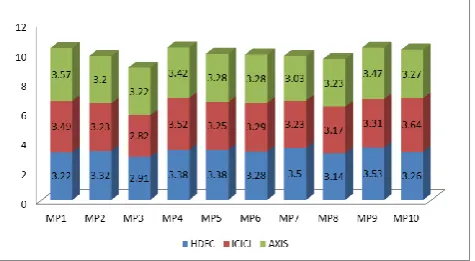
[image:10.595.133.548.289.579.2]The total of mean scores of Statement 4 (BPR programs have resulted in easy communication among the employees and departments) was found to be the highest (10.32) for the combined data of all banks. Respondents of HDFC Bank on an average most strongly agreed with Statement 9 (BPR programs have increased the level of usage of information technology and it has helped in improving performance). ICICI Bank respondents had the strongest perception about Statement 10 (Employees display a sense of ownership and are keener on team-work).
Table 19: Mean Scores of Perception Statements
Bank
MP1
MP2
MP3
MP4
MP5
MP6
MP7
MP8
MP9
MP10
HDFC
3.22
3.32
2.91
3.38
3.38
3.28
3.5
3.14
3.53
3.26
ICICI
3.49
3.23
2.82
3.52
3.25
3.29
3.23
3.17
3.31
3.64
AXIS
3.57
3.2
3.22
3.42
3.28
3.28
3.03
3.23
3.47
3.27
Total
10.28
9.75
8.95
10.32
9.91
9.85
9.76
9.54
10.31
10.17
AXIS Bank respondents most strongly identified with Statement 1 (HR Department‟s role has been limited to minimizing resistance to change & statutory compliance by the employees).
Figure 4 illustrates the comparison of the agreeability of each of the 10 statements. It is noteworthy that the total of mean scores obtained by all the statements was close except for Statement 3 (Organization culture has been conducive to BPR related changes). As visible in Table 19, respondents of all banks have the least favorable perception of this statement. Its total mean is also the lowest (8.95). The Bank wise mean score obtained by each of the 10 statements is depicted in Figure 5. The sums of mean scores of all statements (bank wise) were computed as: AXIS Bank: 32.97; ICICI Bank: 32.95 and HDFC Bank: 32.92. The difference was overall marginal though individual differences across statements were significant as illustrated by Figure 5.
Fig 4: Mean score given to each statement with data labels
Fig 5: Bank wise mean Perception score of each statement with data labels
- Expectation:
The „Expectation‟ part of the questionnaire had ten statements to measure the expectation of bank employees regarding HR‟s role in BPR programs. The statements were coded as follows:
[image:10.595.49.287.610.740.2]E2 HR Department should be more tuned to and work more with Information Technology division.
E3 The management should act more actively, promote a healthy culture and give total support to the BPR processes.
E4 The supervisors should discuss with their juniors about the problem areas of the BPR processes and how to improve them.
E5 Employees‟ concerns about change in their job profiles/nature of work post BPR should be addressed & genuine efforts should be made to make them feel positive.
E6 The suggestions from employees should be taken very seriously so that they feel empowered and committed to their job outcomes.
E7 Work should be streamlined to improve productivity and adequate clarity must be given regarding new roles and processes.
E8 There should be clarity regarding new targets and the revised employee performance management plan.
E9 The employees of the bank should be periodically re-trained on use of IT and skills related to BPR programs to enable them to contribute more towards BPR success.
E10 Employees should be encouraged to give creative solutions and make cross functional teams across different departments to work on projects for the benefit of the whole bank.
[image:11.595.38.558.374.529.2]The total score was obtained by adding the scores given by all the respondents of one bank for each statement. Since the number of respondents of each bank was different, the average score was computed by dividing the total score by the number of respondents of the respective bank. Table 20 depicts the results. ME1 refers to the Mean Score of the 1st statement and so on till ME10 which refers to the Mean Score of the 10th statement.
Table 20: Mean Scores of Expectation Statements
Bank ME1 ME2 ME3 ME4 ME5 ME6 ME7 ME8 ME9 ME10
HDFC 4.38 4 4.36 4.51 4.4 4.42 4.32 4.3 4.24 4.57
ICICI 4.19 4.07 4.27 4.35 4.31 4.45 4.41 4.41 4.37 4.39
AXIS 4.23 4.15 4.25 4.38 4.42 4.27 4.18 4.22 4.18 4.44
Total 12.8 12.22 12.88 13.24 13.13 13.14 12.91 12.93 12.79 13.4
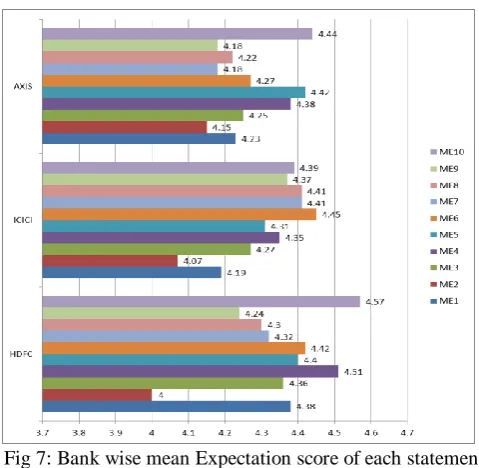
The Total Mean of Statement 10 (Employees should be encouraged to give creative solutions and make cross functional teams across different departments to work on projects for the benefit of the whole bank) was found to be the highest (13.4) for the combined data of all banks. Respondents of HDFC Bank and AXIS Bank, on an average, had strongest expectations vis-à-vis Statement 10 (Employees should be encouraged to give creative solutions and make cross functional teams across different departments to work on projects for the benefit of the whole bank). ICICI Bank respondents had the strongest expectation regarding Statement 6 (The suggestions from employees should be taken very seriously so that they feel empowered and committed to their job outcomes).
Figure 6 illustrates the comparison of the score of each of the 10 statements. It is noteworthy that the total of mean scores obtained by all the statements was close except for Statement 2 (HR Department should be more tuned to and work more with Information Technology division). As visible in Table 20, respondents of all banks have the least expectation from this statement. Its total mean is also the
lowest (12.22). The Bank wise mean scores obtained by the 10 statements are depicted in Figure 7. The sum of mean scores of all statements bank wise were computed as: AXIS Bank: 42.72; ICICI Bank: 43.22 and HDFC Bank: 43.5. The overall difference was marginal though individual differences across statements are significant as illustrated by Figure 7.
Fig 6: Mean score given to each statement with data
[image:11.595.302.548.613.834.2]Role of HR in Business Process Re-engineering Programs: Changing Paradigms of Employee Expectations in the Banking Sector
Fig 7: Bank wise mean Expectation score of each statement with data labels
VI.CONCLUSIONSANDSUGGESTEDAREASFOR
FURTHERRESEARCH
The banking sector is moving more and more towards the customers‟ orientation and almost all banks have started offering a host of services like mobile banking, loans, internet banking, credit/debit card facilities, stock broking, and investment options among the vast pool of other services. The majority banks in India, particularly the large private sector lenders – HDFC Bank, AXIS Bank and ICICI Bank are now at different stages of digital promptness. These banks have adopted technology advancements swiftly enough to be called the Market Leaders of BPR projects in the Indian banking sector.
They have re-imagined and re-engineered their processes using the latest tech-tools viz. Chat Bots; Artificial Intelligence (AI) led engines and Robotics Software. Even though these may be in their embryonic stages, these technologies would fundamentally alter the banking scenario sooner than anyone expects. Of late, several Indian banks are feeling vulnerable and face a dangerous competition from the fresh bank licensees which are indisputably extremely digitally savvy competitors. Digital technology, per se, is not proving to be difficult to either procure - it is usually delivered to the client (banks) which work in partnership with external tech-based firms. Technology, by its very nature, remains permeable and over a period of time reaches one and all. It is at this point that we realize that IT based tools are „enablers‟ of BPR projects or Digitization of banks. The „strategic differentiators‟ are and will be the people - since any such project also affects the banks‟ culture, behavior, structure and work-processes. This paper aimed to empirically analyze the perception of the selected bank employees (mainly from the functional areas of Operations and the Front Office) regarding the role played by HR in BPR programs in banks. The experiential analysis revealed that though the employees have a largely positive and favorable perception of the role being played by HR function
in BPR programs, they also strongly expect the HR‟s role and scope to be enhanced. The paper has statistically concluded that across the selected banks, the difference between the perception and expectations of bank employees from the role of HR in BPR programs in banks is statistically significant. In other words, the respondents believe that HR should play a more significant role in BPR programs in banks. This has been corroborated by the results of appropriate statistical tests conducted on the combined data of all the banks as well as on the individual sample of each selected bank.
AXIS Bank respondents, on an average, had the strongest perception of HR Department‟s role as being limited to minimizing resistance to change & statutory compliance by the employees in context of BPR programs. The statement: “Employees should be encouraged to give creative solutions and make cross functional teams across different departments to work on projects for the benefit of the whole bank” resonated the most in terms of expectations of the combined data of all banks, specifically with the respondents of HDFC Bank and AXIS Bank. ICICI Bank respondents had the strongest expectations regarding the statement: “Suggestions from employees should be taken very seriously so that they feel empowered and committed to their job outcomes”. The overall difference of the score of statements used to analyze perception and expectations (bank-wise) was marginal though individual differences across statements were found to be significant. These differences require a comprehensive analysis and are scope of future studies. The findings of the study can make a major contribution to the banks particularly to their HR department and the top management. Last but not the least, any such analysis done with reference to Public Sector banks can also greatly augment the scale and of the literature available.
REFERENCES
1. T. Bagga, S. Srivastava. (2014). SHRM: alignment of HR function with business strategy. Strategic HR Review. 13(4/5).
2. J. Champy, “Reengineering Management, the Mandate for New Leadership.,” London: HarperCollins, 1995
3. S. Corrigan. (1997). Human and organizational aspects of business process reengineering. Retrieved from http://bprc.warwick.ac.uk/shef-focus.html 4. A. Stein. (1995). Re-engineering the executive: the 4th generation of EIS - a
case study. Inform. Manag. 29. pp. 55-62.
5. F. Zucchi, J. S. Edwards. (1999). Human resource management aspects of business process reengineering: a survey. Bus. Proc. Manag. J. 5(4). pp. 325–344.
6. A. Wan-Jing, T. C. Huang. (2010). The impact of human resource capabilities on internal customer satisfaction and organizational effectiveness. Total. Qual. Manag. Bus. 21(6). pp. 633-648.
7. L. Robbins. (2004). Gender and the relationship between perceived fairness of pay or promotion and job satisfaction. J Appl. Psychol. 77(6). pp. 910–917.
8. M. Selvaraj. (2009). Total quality management in Indian commercial banks: A comparative study. J Market. Comm. 4(3). pp. 59–70. 9. J. DeVaro, R. Li, D. Brookshire. (2007). Analyzing the job characteristics
model: New support from a cross-section of establishments. Int. J. Hum. Res. Manag. 18(6). pp. 986–1003.
10. D. H. Maister, “Managing the Professional Service Firm,” New York: Free Press Paperbacks, 1997.
11. Consultant‟s Mind. (2018). Satisfaction = Perception – Expectation.
https://www.consultantsmind.com/2018/04/29/satisfaction/
12. M. Al-Mashari, Z. Irani, M. Zairi. (2001). Business process reengineering: a survey of international experience. Bus. Process Manag. J. 7(5). pp. 437-55.
13. T. J. Crowe, P. M. Fong, J. L. Zayas-Castro. (2009). Quantitative risk level estimation of business process reengineering efforts. Bus. Process Manag. J. 8(5). pp. 490-511.
14. G. R. Sturdy, “Business Process Reengineering: Strategies for Occupational Health and Safety,” Newcastle, Tyne: Cambridge Scholars Publishing, 2010.
15. J. M. Cortina. (1993). What is coefficient alpha? J. Appl. Psychol. 78. pp. 98-104. http://dx.doi.org/10.1037/0021-9010.78.1.98
16. J. C. Nunally, “Psychometric Theory,” 2nd