S T U D Y P R O T O C O L
Open Access
A text messaging intervention to improve
retention in care and virologic suppression in a U.S.
urban safety-net HIV clinic: study protocol for the
Connect4Care (C4C) randomized controlled trial
Katerina A Christopoulos
1*, Elise D Riley
1, Jacqueline Tulsky
1, Adam W Carrico
2, Judith T Moskowitz
3, Leslie Wilson
4,
Lara S Coffin
1, Veesta Falahati
5, Jordan Akerley
6and Joan F Hilton
7Abstract
Background:Few data exist on the use of text messaging as a tool to promote retention in HIV care and virologic suppression at the clinic level in the United States. We describe the protocol for a study designed to investigate whether a text messaging intervention that supports healthy behaviors, encourages consistent engagement with care, and promotes antiretroviral persistence can improve retention in care and virologic suppression among patients in an urban safety-net HIV clinic in San Francisco.
Methods/Design:Connect4Care (C4C) is a single-site, randomized year-long study of text message appointment
reminders vs. text message appointment reminders plus thrice-weekly supportive, informational, and motivational text messages. Eligible consenting patients are allocated 1:1 to the two arms within strata defined by HIV diagnosis within the past 12 months (i.e.“newly diagnosed”) vs. earlier. Study participants must receive primary care at the San Francisco General Hospital HIV clinic, speak English, possess a cell phone and be willing to send/receive up to 25 text messages per month, a have viral load >200 copies/μL, and be either new to the clinic or have a history of poor retention. The primary efficacy outcome is virologic suppression at 12 months and the key secondary outcome, which will also be examined as a mediator of the primary outcome, is retention in HIV care, as operationalized by kept and missed primary care visits. Process outcomes include text message response rate and percent of time in study without cell phone service. Generalized estimating equation log-binomial models will be used for intent to treat, per protocol, and mediation analyses. An assessment of the cost and cost-effectiveness of the intervention is planned along with a qualitative evaluation of the intervention.
Discussion:Findings from this study will provide valuable information about the use of behavioral-theory based text messaging to promote retention in HIV care and virologic suppression, further elucidate the challenges of using texting technology with marginalized urban populations, and help guide the development of new mobile health strategies to improve HIV care cascade outcomes.
Trial registration:NCT01917994
Keywords:Short message service, SMS, Text messaging, HIV, Retention in HIV care
* Correspondence:[email protected] 1
HIV/AIDS Division, San Francisco General Hospital, University of California San Francisco, 995 Potrero Avenue, 4th Floor, San Francisco, CA 94110, USA Full list of author information is available at the end of the article
Background
Retention in care is a key step in the HIV treatment cas-cade, the aim of which is to ensure that all individuals living with HIV are successfully treated [1]. Missed pri-mary care visits have been associated with longer time to antiretroviral initiation and shorter time to virologic failure and death [2-4]. In addition to the timely man-agement of HIV infection, regular visit attendance allows other important interventions to occur, such as risk reduction counseling, mental health and substance use referrals, and health care maintenance [5,6]. Despite the proven health and prevention benefits of consistent HIV care, only about half of individuals living with HIV in the United States are estimated to be retained in care and only one-quarter are virologically suppressed [7].
Reasons for poor retention in HIV care are diverse and span individual (e.g. depression, stigma), interpersonal (e.g. patient-provider relationship), and structural (e.g. in-surance eligibility) factors [8]. Evidence-based interventions to promote retention in care and virologic suppression include adherence counseling, medical case management, intensive outreach, and peer or paraprofessional patient navigation [9]. In addition, studies have shown that prompts and reminders are effective tools for both anti-retroviral and appointment adherence [10-12]. Moreover, the randomized, multi-site Centers for Disease Control (CDC) Retention in Care project, demonstrated that pa-tients receiving enhanced personal contact in addition to usual clinic practice exhibited a significant improvement in appointment attendance [13].
Short message service (SMS) technology represents a promising new strategy for HIV care. SMS has been de-ployed successfully in support of antiretroviral adherence and virologic suppression in sub-Saharan Africa and is currently being studied in this setting with regard to retention in care [14-16]. In the U.S., studies to date of text messaging in HIV-infected populations have gener-ally focused on sub-groups, such as youth, substance users, and men who have sex with men [17-20]. Few studies to date have examined the impact of SMS on improving retention in care and virologic suppression for broader populations of marginalized persons using safety-net HIV clinics in the U.S. In a feasibility study of 25 patients receiving SMS appointment reminders in a Southeastern U.S. clinic, challenges to receiving SMS included discomfort with cell phone use, patients not opting in to receive messages, and service interruptions [21]. It is currently unknown whether such challenges are surmountable and whether a more comprehensive SMS intervention that supports healthy behaviors, en-courages consistent engagement with health care, and promotes antiretroviral persistence would significantly influence virologic suppression among marginalized pa-tients in the U.S. In addition, examining the cost of such
an intervention is an important consideration for real-world feasibility.
Connect4Care (C4C) is a randomized controlled trial (RCT) examining the efficacy of a SMS intervention to improve virologic suppression and retention in care among patients at a safety-net HIV clinic in San Francisco. The C4C SMS intervention is designed to provide in-formation about resources for healthy living, promote intrinsic motivation for engaging in HIV care, and support enhanced psychological adjustment. This integrative approach is based on: 1) several behavioral models com-monly used to understand barriers and facilitators to engagement in care [22-26], and; 2) a conceptual frame-work designed to integrate the communication functio-nality of SMS with psychosocial factors known to impact health outcomes [27]. C4C builds on the existing evidence base for SMS interventions that have been conducted in resource-limited settings by providing empirical data to examine SMS influences on disadvantaged individuals living in a resource-rich environment. This paper des-cribes the C4C study protocol.
Study objectives
Primary objectiveTo determine whether the C4C inter-vention improves virologic suppression at 12 months when compared to SMS appointment reminders alone.
Key secondary objectives To determine whether the C4C intervention improves retention in clinic care at 12 months, as operationalized by measures of kept and missed primary care visits.
Other secondary objectives 1) To determine the effect of the C4C intervention on psychosocial outcomes, including reduced depressive symptomatology as well as increased positive affect, social support, health-related quality of life, and health care empowerment. 2) To assess the cost of intervention delivery and cost-effectiveness of the C4C intervention. 3) To explore participant expe-riences with the C4C intervention as well as barriers to and facilitators of the use of SMS technology through a qualitative sub-study.
Methods
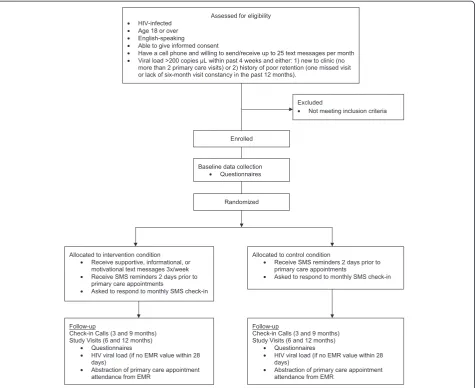
Study design C4C is a single site, parallel arm, open-label RCT of SMS appointment reminders alone vs. SMS appointment reminders plus thrice-weekly SMS messages that deliver information and enhance motiv-ation and psychosocial adjustment. Eligible consenting patients are allocated 1:1 to the two arms within strata defined by HIV diagnosis within the past 12 months (i.e.
Study settings The HIV clinic at San Francisco General Hospital (SFGH), also known as Ward 86, is one of the oldest and largest public HIV clinics in the United States, serving 3,000 low-income patients as part of San Francisco County’s safety-net hospital. Patients at Ward 86 represent multiple urban populations, including the recently incarcerated, substance users, homeless and unstably housed individuals, and those with mental ill-ness. Approximately 12% of clinic patients are women, 25% are African-American and 20% are Hispanic/Latino. Consistent with national guidelines, the clinic standard of care is to offer antiretroviral therapy to all individuals, irrespective of CD4 cell count [28]. The clinic standard of care is also to provide reminder phone calls to pa-tients at least 2 days prior to primary care appointments, however, the consistency of this practice is dependent on staffing levels. Patients are screened for eligibility in the clinic, but baseline, 6, and 12-month study visits take place at a clinical research site in the community. This
separate study site minimizes the likelihood that par-ticipation in the study influences the key secondary out-come of retention in clinic care.
Study participants The study sample consists of HIV-infected individuals age 18 or older who receive primary care at Ward 86, speak English, have a cell phone, can read a text message, and are willing to send or receive anywhere from 1 to 25 text messages per month. In addition, participants must have detectable viral loads (>200 copies/μL) and be either: 1) new to clinic (defined as no more than 2 primary care visits at Ward 86) or 2) have a history of poor retention (defined as one or more missed visits or lack of six-month visit constancy in the past 12 months at Ward 86).
Inclusion criteria
HIV-infected
• • • • • •
•
• •
• •
•
•
•
•
• •
[image:3.595.63.539.89.477.2]• •
Age 18 or older
English-speaking
Able to give informed consent
Have a cell phone, can read a text message, and willing to send/receive up to 25 text messages per month
Viral load >200 copies/μL within past 4 weeks and either: 1) new to clinic (no more than 2 primary care visits at Ward 86) or 2) history of poor retention (one or more missed visits at Ward 86 or lack of six-month visit constancy in the past 12 months).
Exclusion criteria
Under age 18
Non English-speaking
Unable to give informed consent
Viral load <200 copies/μL
No missed visits and achievement of six-month visit constancy in the past 12 months in an individual whose viral load is >200 copiesμL
SMS interactions with participants Information on pending primary care appointments is downloaded from the hospital electronic medical record and transmitted automatically to a text messaging platform that sends SMS reminders two days prior to HIV primary care ap-pointments. All study participants receive reminders stating, “You have an appointment on Tuesday, June 18th, at 11:30 am with your provider at SFGH, Building 80, 6th floor. Please call XXX-XXX-XXXX to cancel or reschedule”. Participants choose morning or afternoon times during business hours to receive appointment re-minders, so that they can call the clinic to reschedule if they are unable to make the appointment.
All participants also receive a monthly text message that reads, “This is your monthly check in from C4C. Thanks for your participation. Please respond C to confirm you received this message”. If participants do not respond to the monthly check-in message, a research assistant calls the participant to ensure that the phone is working and contact information is up to date, unless the participant is in the intervention arm and noted to have responded to an intervention message in the week before or after the check-in message (seeC4C Intervention below). The monthly check-in message was designed to promote study retention among control arm participants and to track their length of follow-up in the study, as some participants may only have primary care appoint-ments scheduled every three to four months.
Participants are counseled on the potential for bugs and glitches in the SMS system and informed that it is not a method for communicating with study staff or
with the clinic. A reply to any study SMS that does not ask for response, including the SMS appointment re-minders, results in the message, “Thanks for the feed-back. If this is an emergency, please call 911”. At the enrollment visit, a research assistant programs the num-ber from which text messages are sent into the partici-pant’s phone as“C4C Study”.
Control condition The control condition includes only the SMS appointment reminders and the monthly check-in messages.
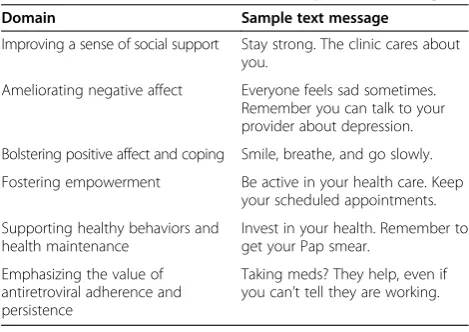
[image:4.595.304.539.570.736.2]C4C intervention The C4C intervention is designed to foster a sense of connectedness to one’s health and health care as a means of promoting virologic suppres-sion and retention in care. In addition to the monthly check-in messages and appointment reminders, it con-sists of motivational, informational, and supportive text messages three times per week over a period of one year, based on studies showing that daily messages are less ef-fective than weekly or less than weekly messages [14,29]. We used a conceptual SMS framework developed by Coomes et al. [27] and drew upon several behavioral models frequently used to understand engagement in HIV care to identify important theoretical constructs [27]. These models included the Behavioral Model for Vulnerable Populations, the Information, Motivation, and Behavior Skills model, the Health Care Empowerment model, and revised Stress and Coping Theory [22-26,30]. As a team of HIV clinicians and behavioral scientists, we created intervention texts in six domains (Table 1) that targeted a sixth-grade reading level. To inform the de-velopment of the intervention messages, we conducted formative research with patients and clinic staff. We con-ducted three focus groups with clinic social workers, link-age team members, and current clinic patients to refine the intervention content.
Table 1 Intervention domains and sample text messages
Domain Sample text message
Improving a sense of social support Stay strong. The clinic cares about you.
Ameliorating negative affect Everyone feels sad sometimes. Remember you can talk to your provider about depression.
Bolstering positive affect and coping Smile, breathe, and go slowly.
Fostering empowerment Be active in your health care. Keep your scheduled appointments.
Supporting healthy behaviors and health maintenance
Invest in your health. Remember to get your Pap smear.
Emphasizing the value of antiretroviral adherence and persistence
Additional formative work included a pilot phase to test technical and administrative aspects of field opera-tions, as well as the acceptability of intervention text messages. We obtained feedback on one month of mes-sages from participants enrolled in an open-phase pilot (n = 10) to further refine intervention content. These pilot participants then entered an extension phase in which main study procedures and instruments were tested with this group, so as to resolve any technical glitches prior to deployment with main study partici-pants. Pilot participant data will not be analyzed with that of randomized study participants.
Intervention messages are divided into three response types. Type 1 is a message that asks for no response (one-way). Type 2 asks participants if they found the message helpful (two-way). Type 3 asks participants if they would like more information on a topic and if they answer yes, they receive a message with additional infor-mation (three-way). Each domain has messages from each response type, and domain-specific messages are randomly ordered over the twelve-month intervention period. Intervention group participants receive at least one Type 2 or 3 message per week because we track re-sponses to estimate the amount of intervention partici-pants receive. Participartici-pants can choose morning, afternoon, or evening times to receive intervention messages.
Efficacy outcomes
Primary outcome The primary outcome is virologic suppression at 12 months, defined as a viral load <200 copies/μL [28].
Key secondary outcomes
A three-level ordinal retention variable that incorpo-rates an assessment ofmissed visitsas well as six-month visit constancy.
○High: Attended all scheduled primary care appointments in both 6-month study periods ○Moderate: Attended at least one scheduled
clinic appointment in both 6-month study periods
○Low: Attended no scheduled clinic
appointments in at least one 6-month study period
Visit adherence rate, defined as the number of primary care appointments kept divided by the number of appointments scheduled, excluding cancelled or rescheduled visits.
Other secondary outcomes
Depression symptom severity [31]
Positive affect [32]
Perceived social support [33]
Health-related quality of life [34]
Health care empowerment [25,35]
The rationale for assessing several measures of reten-tion is that retenreten-tion measures generally fall into two categories, those based on missed or “no-show” visits and those based on kept visits. It is deemed standard by experts in the field to use at least one measure from each category when conducting research on retention in care as these measures are thought to capture different aspects of the retention in care experience [36].
Process outcomes
Response rate to monthly check-in“blast”
Response rate to Type 2 and 3 intervention messages
Percentage of time in study without cell phone service
As is true of many randomized trials, C4C exists on the continuum between efficacy and effectiveness [37]. Effi-cacy studies determine whether an intervention produces the expected result under ideal circumstances and effect-iveness studies measure the degree of beneficial effect in
“real world”settings [38]. C4C only enrolls patients who are in clinical care and willing to participate in a research study, potentially resulting in a less generalizable sample that is more consistent with an efficacy study. However, it does not provide participants with cell phones or airtime, which acknowledges that service interruptions (and thus interruptions in the intervention) represent “real world” implementation. This study decision was based on an emerging area of importance in behavioral (non-pharma-cologic) interventions [39] and text messaging studies in particular [40]–that of process evaluation, which seeks to determine whether the intervention was delivered as intended and whether participants engage with the intervention.
Participants may experience disruption in receiving SMS appointment reminders and intervention messages due to cell phones being lost or stolen, participants’ in-ability to pay their bills, or participant loss to follow-up. We therefore plan to track the frequency of responses to monthly check-ins for all participants and for Type 2 and 3 messages in the intervention arm. We will also record self-reported loss of phone access at study check-ins by phone and at in-person study visits.
Challenges in intervention implementation
vendor did not have the capacity to conduct the study as planned and thus two months into the main study the C4C team transitioned to using the open-access platform Twilio to send text messages manually until the platform of the new vendor could be deployed, which occurred six months into the main study. While enrolled participants experienced no break in study messages, we will examine the effect of vendor on efficacy during analysis.
Data collection and management
The primary efficacy outcome of virologic suppression at 12 months will be defined by the clinic EMR closest to the study visit. Patients who do not have EMR results available within 4 weeks of the final 12-month study visit will receive phlebotomy at the study visit.
EMR data will also be used to assess the secondary efficacy outcome of retention in care. One of the short-comings of this technique is that it measures retention in a particular clinic rather than true retention in care, which could potentially occur in multiple clinics. The EMR used in this study identifies primary care visits to other clinics in the San Francisco Department of Public Health system, which will help address this issue. If du-ring study follow up participants indicate that they have transferred care outside of this system, we will seek their permission to obtain appointment records from the outside clinic. Scheduled and kept primary care appoint-ments after transfer elsewhere be included in the as-sessment of retention; consequently, we anticipate that missing outcomes will be rare (Table 2).
Laboratory and appointment data downloaded from clinical and hospital EMRs will be de-identified. Viral load results from study phlebotomy are transmitted to study staff in a secure spreadsheet. Baseline and follow-up questionnaires include validated psychosocial measures, including measures required by the funder’s cross-site data harmonization effort [41]. Study questionnaires also include questions about cell phone access and use. Study questionnaires are self-administered through Computer Assisted Survey Information Collection (CASIC), a web-based data collection tool, and have both computer-assisted personal interviewing (CAPI) and audio computer-assisted self-interviewing (ACASI) components. Outbound text messages and incoming responses from participants are captured in daily logs, as are failed attempts at SMS trans-mission to participants. A data manager merges all study data based on participant ID and performs periodic quality
control for range and completeness of data. All participant data is stored on a secure password-protected server.
Study procedures
Recruitment
A daily EMR query allows a research assistant to identify patients who may qualify for the study and remind pro-viders that a particular patient may be eligible. Clinic providers introduce the study to patients and refer inte-rested individuals to a research assistant. While explai-ning the study in more detail, the research assistant asks the patient to read a sample text message, enabling a brief literacy check. The research assistant assesses an individual’s visit history in the EMR and uses a checklist to complete screening with the patient. If individuals do not have viral load results or results pending in the EMR within the past four weeks, they can undergo phlebot-omy through the study. Once eligibility is confirmed, in-dividuals are scheduled to visit a community-based research site located in the Tenderloin neighborhood, where many patients reside, in order to complete in-formed consent, a baseline questionnaire, phone acti-vation in the vendor platform, and randomization. To facilitate this visit, the research assistants offer same-day baseline study appointments and a bus token. Partici-pants are reimbursed $30 cash for their time after com-pleting baseline, 6 and 12 month study visits. They are not given phones nor are they compensated for any costs associated with the messages. If individuals are interested in the study but do not own a cell phone, re-search assistants refer them to the federal Assurance Wireless program, which assists low-income individuals in obtaining cell phones (http://www.assurancewireless. com/Public/Welcome.aspx).
Randomization
[image:6.595.60.543.682.733.2]At the baseline study visit, a research assistant reviews and confirms eligibility in a study database. Following written consent, a computer program captures the en-rollment time and uses unpredictable specific digits to allocate patients 1:1 to study arms. Equal allocation occurs within levels of the stratification factor (HIV diagnosis within the past 12 months vs. greater than 12 months). We stratified by this factor because the estimated virologic suppression rate for individuals newly diagnosed with HIV infection in San Francisco is higher than national averages and may exceed the rate among individuals with longer
Table 2 Use of clinic and study data sources to ascertain study outcomes
Retained in C4C study Lost to C4C study
Retained in care Viral load and appointment data available from EMR, outside clinic records, and, when necessary, study phlebotomy
Viral load and appointment data available from EMR and (if permission obtained) outside clinic records
standing HIV diagnoses [42]. In addition, to maximize allocation concealment and ensure balanced allocation throughout accrual, equal allocation also occurs within randomly generated blocks of size 4, 6 or 8.
Blinding
As outlined by Boutron et.al., study staff cannot be blinded to intervention allocation because monitoring study participation may require follow-up phone conver-sations, and participants cannot be blinded because of the differential frequency and type of SMS messages by arm [39].
Follow-up of study participants
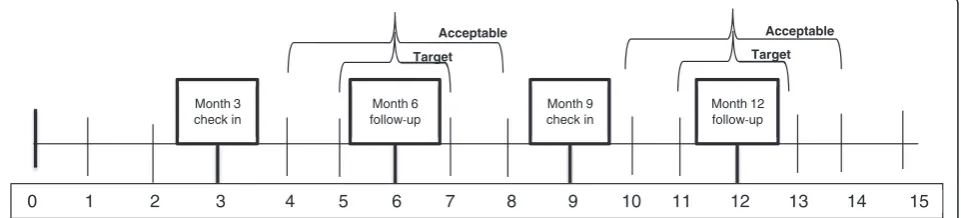
Follow-up study visits occur at a community-based re-search site rather than in the same building as the clinic in order for the study to avoid influencing attendance at clinic visits. Both intervention and control arm partici-pants are asked to complete 6 and 12 month study visits, at which time participants complete a self-administered questionnaire that collects secondary outcomes. If no viral load is resulted or pending in the EMR from the past 28 days then phlebotomy is performed for viral load assessment. Participants receive check-in phone calls at 3 and 9 months to remind them of the upcoming study visit and confirm that the participant’s contact informa-tion remains up to date (Figure 2).
Follow-up study visits are scheduled to occur in two-month windows around the 6 and 12 two-month mark [15]. However, we acknowledge the many challenges inherent in working with a marginalized urban population in a year-long study. If we are unable to contact participants but they present to the clinical research site for follow-up, we will perform data collection as outlined in Figure 2.
Statistical methods
Sample size
Based on clinic data [43], we designed the trial assuming a rate of virologic suppression of 60% at 12 months in the control arm. To detect an improvement of 15% in the intervention arm with 80% power and a two-sidedα= 0.05, we calculated that we would need 152 participants per arm
(or, 167 participants per arm assuming 90% 12-month study retention, based on the experience of other studies using the same population). Clinic data from 2013 demon-strated that at least 552 unique patients would be eligible for the study by viral load and primary care visit criteria. This calculation underestimates the actual pool of eligible patients because it excludes those who lack a viral load measurement within 28 days prior to a primary care visit. Based on trial experience during the first nine months of recruitment, we expect that approximately 10% of patients will be ineligible due to cell phone criteria and another 10% will decline participation. Given a planned accrual period of 21 months, we anticipate that the pool of eligible patients is sufficient to satisfy the target of sample size of 304.
Analysis plan
Summary statistics will be used to compare study arms descriptively with respect to baseline socio-demographic characteristics and risk factors for the outcome (e.g. new to clinic vs. poorly retained; newly diagnosed vs. not). In addition, mean duration of study follow-up will be com-pared by arm, and process measures (e.g. rate of response to Type 2 and 3 messages, self-reported interruptions in cell phone service) will be described.
Following the intention to treat principle, participants will be analyzed in the arms to which they were randomly allocated. Virologic suppression will be analyzed using gen-eralized estimating equation log-binomial models [44,45] to estimate 12 month mean (95% CI) prevalence by arm and relative risk between arms, adjusted for the stratifica-tion factor (newly diagnosed in past 12 months vs. earlier), while accounting for correlation among clustered binary responses at 6 and 12 month follow up. As described in Table 2, virologic suppression status will be missing only if the participant is both lost to the clinic and to the study during the specified data collection window. Model exten-sions will determine the explanatory effects on virologic suppression of 1) retention in care as a mediator of effect, and 2) intensity of SMS exposure (per protocol analysis).
A log-binomial model will also be used to estimate 12-month mean (95% CI) visit adherence rate by arm
0 1 2 3 4 5 6 7 8 9 10 11 12 13 14 15
Month 3 check in
Month 6 follow up
Month 9 check in
Month 12 follow up Target
Acceptable Acceptable
[image:7.595.59.540.605.714.2]Target
and the relative rate between arms, adjusted for the stratification factor and correlation among responses per participant. Like the virologic suppression outcome, the ordinal retention in care outcome will be evaluated for each 6-month study period. For each participant, two indicators per period will be calculated: all scheduled primary care appointments were kept (true/false) and some scheduled primary care appointments were kept (true/false). At the end of the trial, the data will be further reduced to two indicators: all scheduled primary care appointments kept in both periods or some sche-duled primary care appointments kept in both periods. Trial-level outcomes will be analyzed using an ordinal logistic regression model to estimate threshold-specific mean (95% CI) odds of retention in HIV care by arm and odds ratios between arms, adjusted for the stratifica-tion factor and number of scheduled study visits. If model diagnostics indicate that the proportional odds assumption does not hold, each threshold (all kept vs. fewer than all kept; some/all kept vs. none kept) will be modeled via a logistic regression model. A model exten-sion will analyze study period-level outcomes.
Additional analyses
Cost and cost-effectiveness evaluation
In an era of limited health care resources, a key focus of intervention evaluation is whether the intervention is resource-efficient, thus we plan to investigate the societal economic value of the SMS intervention as well as the economic effect of SMS on the current system of care. Our economic evaluations will test whether the cost of the SMS platform minus any associated savings in down-stream costs results in outcomes that are worth this cost. We will conduct two main analyses using welfarist and extra-welfarist approaches: 1) a cost-effective analysis (CEA) of the SMS intervention compared with SMS re-minders alone, and; 2) a cost-benefit analysis (CBA) of the intervention with a return on investment (ROI) analysis to the clinic implementing the intervention [46].
CEA determines how to maximize health care ef-fects given the resources available or the health benefit per dollar spent. We will report the incremental cost-effectiveness ratio (ICER) for the SMS intervention compared with SMS appointment reminders alone. Our main outcome will be cost/quality-adjusted life years (QALYs), estimating survival based on patients’ viral load. However, we will also look at differences in cost per differences in meaningful change in virologic suppression. We will use EMR, laboratory, and patient-reported health care utilization data, as well as interviews with the de-velopers and implementers of the SMS intervention and national cost estimates to determine costs. A discount rate of 3% will account for time preference. One-way and probabilistic sensitivity analyses using Monte Carlo
simulations will determine the effect of different assump-tions on the outcomes of the analysis [47,48].
Our second economic analysis will be a CBA, which will allow us to determine the economic value of the SMS intervention and SMS appointment reminders alone to the health care system. Cost-benefit analysis determines the intervention with the highest net benefit. Net benefit results can also be ranked for decision-making purposes within a fixed budget [48]. Willingness to pay (WTP) questions will measure benefit. In addition, we will meas-ure the costs of the intervention, any increased or savings in health care expenditures resulting from the interven-tion and calculate the return on investment of the health care system…This analysis will use the perspective of the health care system and allow intersectoral costs and ef-fects, including non-health related costs.
Qualitative sub-study
In order to better understand the experience of the inter-vention, we will recruit participants for a qualitative sub-study as they finish the 12-month intervention period. We will use one-on-one semi-structured interviews to assess satisfaction with and perceived benefits of the text mes-sages and explore issues related to: 1) barriers to and fa-cilitators of responding to intervention text messages, including access to and comfort with text messaging; 2) frequency and content of text messages, and; 3) privacy and confidentiality. We will also explore the acceptability of other technologies for future interventions.
Ancillary studies
We will perform a descriptive analysis of text message communication, including rates of response and reasons for non-response, rates of self-reported cell phone ser-vice interruption and reasons for serser-vice interruptions, and satisfaction with the amount and content of text messages.
Potential harms and human subjects protection
receive training to address such risks and carefully review them with participants. Participants are invited to able to ask questions before, during, and following the informed consent process. Adverse events are reported to the study principal investigators and the UCSF CHR using standard protocols.
Discussion
This study protocol describes a randomized controlled trial designed to improve retention in care and virologic suppression among patients in a U.S. safety-net HIV clinic through an informational, motivational, and sup-portive text messaging intervention. There are several unique features of the trial that are worth highlighting. First, we sought to develop a text message intervention that could easily be replicated and deployed in a clinic setting without requiring additional staffing, as opposed to other SMS interventions that require in-person follow up of text communication. Second, to increase gene-ralizability, the intervention is clinic-wide, rather than focused on a specific demographic or risk factor sub-group. As such, one of the challenges in designing the intervention was creating text messages that appealed to the clinic population at large. For example, in our for-mative focus groups, participants who used illicit sub-stances wanted messages about substance use while those who did not use substances or who had been sober for long periods of time did not want any substance use messages. A similar phenomenon was observed with regard to spiritual and religious content. This finding helped us focus the content domains. A third unique feature of the study is that it does not provide cell phones or airtime. While this aspect of the study also increases its generalizability, we acknowledge that cell phone service interruption is common and can reduce intervention exposure. Accordingly, we will supplement the primary intent to treat analysis with per protocol analyses that adjust for intervention exposure. These trial features enable the opportunity to study interven-tion delivery, as well as associated barriers and costs, in a“real world”context.
One of the key elements in the success of any text messaging trial is partnering with a vendor who can ac-commodate control and intervention assignments, im-mediately troubleshoot technical glitches, and securely manage the relationship between phone numbers and de-identified study IDs. The use of pilot participants to test our text messaging protocols allowed us to realize early on that our first vendor did not have the capacity to execute the study as envisioned and to contract with a new vendor.
With regard to study recruitment, it is worth noting that the eligibility criterion of a detectable HIV viral load within 28 days of screening constitutes a rigorous
definition of viremia, but that it frequently requires phlebotomy to determine eligibility, posing a potential challenge to recruitment. In addition, recruitment hap-pens in the clinic while enrollment occurs at a geographi-cally distinct research site. Though research assistants offer facilitators such as bus tokens and same-day baseline appointments, inevitably some potential participants fail to present to the research site, even despite reminders. However, we believe that a real strength of our trial lies in this geographic separation, in that it minimizes the possi-bility that attending study visits will affect the study out-come of clinic appointment attendance.
In sum, we anticipate that findings from our study will provide valuable information about the use of theory-based text messaging to promote retention in HIV care and virologic suppression, further elucidate the challenges of using texting technology with marginalized urban populations, and help inform the development of new mobile health strategies to improve HIV care cascade outcomes.
Competing interests
The authors declare that they have no competing interests.
Author contributions
KC participated in the design of the study and drafted the manuscript. ER, AC, and JM participated in the design of the study. LW participated in the design of the study and helped draft the manuscript. LC, VF, JA, and JT helped create the recruitment and texting protocols. JH participated in the design of the study, performed the sample size calculation, and helped draft the manuscript. All authors read and approved the final manuscript.
Acknowledgments
We thank Mitch Roberts and Samantha Dilworth for technical assistance and data management. This study is funded under the National Institute on Drug Abuse RFA on Seek, Test, Treat, Retain as R01 DA 032057“Seek, Test, Treat and Retain Through Leveraging Mobile Health Technologies.”Additional support has been provided by K23MH 092220 (KAC) and by NIH/NCRR UCSF-CTSI UL1TR000004 and the UCSF-Gladstone Virology & Immunology Center for AIDS Research (NIH/NIAID P30 AI027763). The contents of this publication are solely the responsibility of the authors and do not necessarily represent the official views of the NIH. Connect4Care is registered at clinicaltrials.gov NCT01917994.
Author details
1HIV/AIDS Division, San Francisco General Hospital, University of California
San Francisco, 995 Potrero Avenue, 4th Floor, San Francisco, CA 94110, USA.
2
School of Nursing, University of California San Francisco, San Francisco, CA, USA.3Medical Social Sciences, Feinberg School of Medicine, Northwestern
University, Chicago, IL, USA.4School of Pharmacy, University of California San
Francisco, San Francisco, CA, USA.5Global Health Sciences, University of
California San Francisco, San Francisco, CA, USA.6HIV Services, The Shanti Project, San Francisco, CA, USA.7Department of Epidemiology and
Biostatistics, University of California San Francisco, San Francisco, CA, USA.
Received: 11 December 2014 Accepted: 15 December 2014
References
1. Gardner EM, McLees MP, Steiner JF, Del Rio C, Burman WJ. The spectrum of engagement in HIV care and its relevance to test-and-treat strategies for prevention of HIV infection. Clin Infect Dis. 2011;52(6):793–800. 2. Mugavero MJ, Lin HY, Willig JH, Westfall AO, Ulett KB, Routman JS, et al.
3. Ulett KB, Willig JH, Lin HY, Routman JS, Abroms S, Allison J, et al. The therapeutic implications of timely linkage and early retention in HIV care. AIDS Patient Care STDS. 2009;23(1):41–9.
4. Giordano TP, Gifford AL, White Jr AC, Suarez-Almazor ME, Rabeneck L, Hartman C, et al. Retention in care: a challenge to survival with HIV infection. Clin Infect Dis. 2007;44(11):1493–9.
5. Cavaleri MA, Kalogerogiannis K, McKay MM, Vitale L, Levi E, Jones S, et al. Barriers to HIV care: an exploration of the complexities that influence engagement in and utilization of treatment. Soc Work Health Care. 2010;49(10):934–45. 6. Metsch LR, Pereyra M, Messinger S, Del Rio C, Strathdee SA, Anderson-Mahoney
P, et al. HIV transmission risk behaviors among HIV-infected persons who are successfully linked to care. Clin Infect Dis. 2008;47(4):577–84.
7. Centers for Disease Control and Prevention (CDC). Vital signs: HIV prevention through care and treatment–United States. MMWR Morbidity and mortality weekly report. 2011;60(47):1618–23.
8. Mugavero MJ, Amico KR, Horn T, Thompson MA. The State of Engagement in HIV Care in the United States: From Cascade to Continuum to Control. Clin Infect Dis. 2013;57(8):1164–71.
9. Higa DH, Marks G, Crepaz N, Liau A, Lyles CM. Interventions to improve retention in HIV primary care: a systematic review of U.S. studies. Curr HIV/AIDS Rep. 2012;9(4):313–25.
10. Simoni JM, Chen WT, Huh D, Fredriksen-Goldsen KI, Pearson C, Zhao H, et al. A preliminary randomized controlled trial of a nurse-delivered medication adherence intervention among HIV-positive outpatients initiating antiretroviral therapy in Beijing, China. AIDS Behav. 2011;15(5):919–29.
11. Perron NJ, Dao MD, Kossovsky MP, Miserez V, Chuard C, Calmy A, et al. Reduction of missed appointments at an urban primary care clinic: a randomised controlled study. BMC Fam Pract. 2010;11:79. 12. Henry SR, Goetz MB, Asch SM. The effect of automated telephone
appointment reminders on HIV primary care no-shows by veterans. J Assoc Nurses AIDS Care. 2012;23(5):409–18.
13. Gardner LI, Giordano TP, Marks G, Wilson TE, Craw JA, Drainoni ML, et al. Enhanced personal contact with HIV patients improves retention in primary care: a randomized trial in six U.S. HIV clinics. Clin Infect Dis. 2014;59(5):725–34.
14. Pop-Eleches C, Thirumurthy H, Habyarimana JP, Zivin JG, Goldstein MP, de Walque D, et al. Mobile phone technologies improve adherence to antiretroviral treatment in a resource-limited setting: a randomized controlled trial of text message reminders. AIDS. 2011;25(6):825–34. 15. van der Kop ML, Ojakaa DI, Patel A, Thabane L, Kinagwi K, Ekström AM, et al.
The effect of weekly short message service communication on patient retention in care in the first year after HIV diagnosis: study protocol for a randomised controlled trial (WelTel Retain). BMJ Open. 2013;3(6):e003155. 16. Lester RT, Ritvo P, Mills EJ, Kariri A, Karanja S, Chung MH, et al. Effects of a
mobile phone short message service on antiretroviral treatment adherence in Kenya (WelTel Kenya1): a randomised trial. Lancet. 2010;376(9755):1838–45. 17. Dowshen N, Kuhns LM, Johnson A, Holoyda BJ, Garofalo R. Improving
adherence to antiretroviral therapy for youth living with HIV/AIDS: a pilot study using personalized, interactive, daily text message reminders. J Med Internet Res. 2012;14(2):e51.
18. Harris JL, Furberg R, Martin N, Kuhns L, Lewis MA, Coomes C, et al. Implementing an SMS-based intervention for persons living with human immunodeficiency virus. J Public Health Manag Pract. 2013;19(2):E9–16.
19. Ingersoll K, Dillingham R, Reynolds G, Hettema J, Freeman J, Hosseinbor S, et al. Development of a personalized bidirectional text messaging tool for HIV adherence assessment and intervention among substance abusers. J Subst Abus Treat. 2014;46(1):66–73.
20. Uhrig JD, Lewis MA, Bann CM, Harris JL, Furberg RD, Coomes CM, et al. Addressing HIV knowledge, risk reduction, social support, and patient involvement using SMS: results of a proof-of-concept study. J Health Commun. 2012;17 Suppl 1:128–45.
21. Norton BL, Person AK, Castillo C, Pastrana C, Subramanian M, Stout JE. Barriers to using text message appointment reminders in an HIV clinic. Telemed J E Health. 2014;20(1):86–9.
22. Gelberg L, Andersen RM, Leake BD. The Behavioral Model for Vulnerable Populations: application to medical care use and outcomes for homeless people. Health Serv Res. 2000;34(6):1273–302.
23. Christopoulos KA, Das M, Colfax GN, Christopoulos KA, Das M, Colfax GN. Linkage and retention in HIV care among men who have sex with men in the United States. Clin Infect Dis. 2011;52 Suppl 2:S214–222.
24. Smith LR, Fisher JD, Cunningham CO, Amico KR. Understanding the behavioral determinants of retention in HIV care: a qualitative evaluation of a situated information, motivation, behavioral skills model of care initiation and maintenance. AIDS patient care and STDs. 2012;26(6):344–55.
25. Johnson MO, Rose CD, Dilworth SE, Neilands TB. Advances in the conceptualization and measurement of Health Care Empowerment: development and validation of the Health Care Empowerment inventory. PLoS One. 2012;7(9):e45692.
26. Folkman S. The case for positive emotions in the stress process. Anxiety Stress Coping. 2008;21(1):3–14.
27. Coomes CM, Lewis MA, Uhrig JD, Furberg RD, Harris JL, Bann CM. Beyond reminders: a conceptual framework for using short message service to promote prevention and improve healthcare quality and clinical outcomes for people living with HIV. AIDS Care. 2012;24(3):348–57.
28. Panel on Antiretroviral Guidelines for Adults and Adolescents. Guidelines for the use of antiretroviral agents in HIV-1-infected adults and adolescents. Department of Health and Human Services. Available at http://aidsinfo.nih.gov/ContentFiles/AdultandAdolescentGL.pdf. Accessed on December 7, 2014.
29. Finitsis DJ, Pellowski JA, Johnson BT. Text Message Intervention Designs to Promote Adherence to Antiretroviral Therapy (ART): A Meta-Analysis of Randomized Controlled Trials. PLoS One. 2014;9(2):e88166.
30. Amico KR, Barta W, Konkle-Parker DJ, Fisher JD, Cornman DH, Shuper PA, et al. The information-motivation-behavioral skills model of ART adherence in a Deep South HIV+ clinic sample. AIDS Behav. 2009;13(1):66–75.
31. Radloff LS. The CES-D Scale: a self-report depression scale for research in the general population. Appl Psychol Meas. 1977;1:385–401.
32. Fredrickson BL, Cohn MA, Coffey KA, Pek J, Finkel SM. Open hearts build lives: positive emotions, induced through loving-kindness meditation, build consequential personal resources. J Pers Soc Psychol. 2008;95(5):1045–62. 33. Cutrona CE. Ratings of social support by adolescents and adult informants:
degree of correspondence and prediction of depressive symptoms. J Pers Soc Psychol. 1989;57(4):723–30.
34. Hays RD, Morales LS. The RAND-36 measure of health-related quality of life. Ann Med. 2001;33(5):350–7.
35. Johnson MO, Sevelius JM, Dilworth SE, Saberi P, Neilands TB. Preliminary support for the construct of health care empowerment in the context of treatment for human immunodeficiency virus. Patient Prefer Adherence. 2012;6:395–404. 36. Mugavero MJ, Westfall AO, Zinski A, Davila J, Drainoni ML, Gardner LI, et al.
Measuring retention in HIV care: the elusive gold standard. J Acquir Immune Defic Syndr. 2012;61(5):574–80.
37. Gartlehner G, Hansen RA, Nisssman D, et al. Technical Reviews, No. 12. Criteria for Distinguishing Effectiveness from Efficacy Trials in Systematic Reviews. Rockville, MD: Agency for Healthcare Research and Quality; 2006. 38. Godwin M, Ruhland L, Casson I, MacDonald S, Delva D, Birtwhistle R, et al. Pragmatic controlled clinical trials in primary care: the struggle between external and internal validity. BMC Med Res Methodol. 2003;3:28. 39. Boutron I, Moher D, Altman DG, Schulz KF, Ravaud P. Extending the
CONSORT statement to randomized trials of nonpharmacologic treatment: explanation and elaboration. Ann Intern Med. 2008;148(4):295–309. 40. Irvine L, Falconer DW, Jones C, Ricketts IW, Williams B, Crombie IK. Can text
messages reach the parts other process measures cannot reach: an evaluation of a behavior change intervention delivered by mobile phone? PLoS One. 2012;7(12):e52621.
41. Chandler R, Kahana SY, Aklin W, Fletcher B, Jones D, Webb C, et al. Enhancing Seek, Test, Treat and Retain Research Through Data Harmonization. Washington, D. C: International AIDS Society. International AIDS Conference; 2012.
42. San Francisco Department of Public Health. HIV/AIDS Epidemiology Annual Report. 2012. Available at: http://www.sfdph.org/dph/comupg/oprograms/ hivepisec/default.asp. Accessed on December 7, 2014.
43. Geng EH, Hare CB, Kahn JO, Jain V, Van Nunnery T, Christopoulos KA, et al. The effect of a "universal antiretroviral therapy" recommendation on HIV RNA levels among HIV-infected patients entering care with a CD4 count greater than 500/muL in a public health setting. Clin Infect Dis. 2012;55(12):1690–7. 44. Spiegelman D, Hertzmark E. Easy SAS calculations for risk or prevalence
ratios and differences. Am J Epidemiol. 2005;162(3):199–200.
46. Robinson LA, Hammitt JK. Behavioral Economics and the Conduct of Benefit-Cost Analysis: Towards Principles and Standards. J Benefit-Cost Anal. 2011;2(2):Article 5.
47. Gold MR, Siegel JE, Russell LB, Weinstein MC. Cost-Effectiveness in Health and Medicine. New York: Oxford University Press; 1996.
48. Drummond M, O'Brien B, Stoddart GL, Torrance GW. Methods for the Economic Evaluation of Helath Care Programs. 2nd ed. New York: Oxford University Press; 1996.
Submit your next manuscript to BioMed Central and take full advantage of:
• Convenient online submission
• Thorough peer review
• No space constraints or color figure charges
• Immediate publication on acceptance
• Inclusion in PubMed, CAS, Scopus and Google Scholar
• Research which is freely available for redistribution