
The 2007-13 operational programmes: a preliminary assessment: Spring – Autumn 2005
115
0
0
Full text
(2) European Policies Research Centre University of Strathclyde Graham Hills Building 40 George Street Glasgow G1 1QE United Kingdom Tel: +44 (0) 141 548 3339 Fax: +44 (0) 141 548 4898 E-mail: [email protected] http://www.eprc.strath.ac.uk/eprc/default.htm http://www.eprc.strath.ac.uk/iqnet/iq-net/index.html. December 2006.
(3) The 2007-13 Operational Programmes: A Preliminary Assessment. PREFACE The research for this paper was undertaken in preparation for the 21st IQ-Net meeting which took place in Antwerp, Flanders, Belgium, from 15-17 January 2007. The paper has been written by Professor John Bachtler, Dr Martin Ferry, Carlos Méndez and Dr Irene McMaster. This paper is the product of desk research and fieldwork visits among national and regional authorities in Member States (notably among partners in the IQ-Net Consortium) and in DG REGIO during autumn 2006. The field research team comprised: •. Tobias Gross (Austria). •. Frederike Gross (Belgium, France). •. Prof. Henrik Halkier (Denmark). •. Rona Michie (United Kingdom). •. Dr. Sara Davies (Germany). •. Laura Polverari (Italy). •. Carlos Méndez (Portugal, European Commission). Spain,. •. Heidi Vironen (Finland, Sweden). •. Dr. Martin Poland). Kingdom,. •. Maria-Amalia Vergoula (Greece). •. Prof. John Commission). Ferry. (United. Bachtler. (European. Many thanks to all those who participated in the research. EPRC also gratefully acknowledges the financial support provided by participating national and regional authorities, whose contributions are co-financed by technical assistance from the European Regional Development Fund. The report is, however, the responsibility of the authors alone. A current list of IQ-Net Partners and their relevant organisations is as follows: Austria. •. State Government of Niederösterreich (Economic and Tourism Department). •. State Government of Steiermark (Economic Policy Department). Belgium • Denmark •. Finland. Agency for the Economy of Vlaanderen (Europe Economy) Nordjylland County Council (Industrial Policy Division). •. National Agency for Enterprise and Housing. •. Western Finland Alliance. •. Ministry of the Interior. IQ-Net Thematic Paper 19(2). i. European Policies Research Centre.
(4) The 2007-13 Operational Programmes: A Preliminary Assessment. France. •. Germany • •. Délégation interministérielle à l’amenagement et à la compétitivité des territories (DIACT) Ministry of Economics and Labour (EU Affairs Unit), Nordrhein Westfalen Ministry of Economics, Sachsen-Anhalt. Greece. Italy. •. Ministry of Economy and Finance (General Secretariat for Investment and Development, through the CSF Management Organisation Unit). • •. Lombardia Region, Presidency, Central Directorate for Integrated Programming Ministry of Economic Development and the Institute for Industrial Promotion (IPI/MAP). •. Śląskie Voivodeship (Marshal’s Office). Poland. Portugal •. Regional Ministry for Environment, Spatial Planning and Regional Development, Department of Regional Development. Spain • Sweden • •. Department of Economics and Finance (País Vasco) County Administrative Board for Gävle County Administrative Board for Norrbotten. UK • • • •. Government Office North East England Department for Communities and Local Government Strathclyde European Partnership Ltd Welsh European Funding Office. For further information about IQ-Net, and access to the full series of IQ-Net Papers, please visit the IQ-Net website at: http://www.eprc.strath.ac.uk/iqnet/default.cfm. Disclaimer: It should be noted that the content and conclusions of this paper do not necessarily represent the views of individual members of the IQ-Net Consortium.. IQ-Net Thematic Paper 19(2). ii. European Policies Research Centre.
(5) The 2007-13 Operational Programmes: A Preliminary Assessment. THE 2007-13 OPERATIONAL PROGRAMMES: A PRELIMINARY ASSESSMENT TABLE OF CONTENTS 1.. INTRODUCTION .......................................................................................................1. 2.. NATIONAL STRATEGIC REFERENCE FRAMEWORKS.............................................................3 2.1. NSRF progress update ................................................................................................... 3. 2.2. Interactions with the Commission on the NSRF ..................................................................... 4. 3.1. Timetables .............................................................................................................. 11. 3.2. Interaction with the Commission.................................................................................... 20. 3.. THE PREPARATION OF OPERATIONAL PROGRAMMES ....................................................... 11. 4.. OVERVIEW OF THE NEW OPERATIONAL PROGRAMMES ..................................................... 25 4.1. EU10 Member States (with mainly Convergence OPs)............................................................ 25. 4.2. Italy, Greece, Portugal and Spain ................................................................................... 29. 4.3. Other EU15 Member States (with mainly Regional Competitiveness OPs) .................................... 32. 5.1. Earmarking.............................................................................................................. 43. 5.2. CSG Guidelines ......................................................................................................... 47. 5.3. Territorial dimensions................................................................................................. 56. 6.1. Changes to the implementation structures ........................................................................ 63. 6.2. Programme Management ............................................................................................. 68. 6.3. Synthesis ................................................................................................................ 75. 5.. INFLUENCE OF THE COMMUNITY STRATEGIC GUIDELINES ................................................. 43. 6.. OP MANAGEMENT AND IMPLEMENTATION..................................................................... 63. ANNEX – PRGRAMME FICHES OF IQ-NET PARTNERS .......................................................................... 79 Austria – Niederösterreich ERDF (NÖ)......................................................................................... 80 Austria – Steiermark ERDF ...................................................................................................... 81 Belgium – Vlaanderen ERDF .................................................................................................... 82 Denmark - ERDF .................................................................................................................. 83 Finland – Länsi-Suomi ERDF..................................................................................................... 84 France – Aquitaine ERDF ........................................................................................................ 85 Germany - Nordrhein-Westfalen Regional Competitiveness ERDF ........................................................ 86 Germany - Sachsen-Anhalt Convergence ERDF .............................................................................. 87 Germany - Sachsen-Anhalt Convergence ESF ................................................................................ 88 Greece - NSRF .................................................................................................................... 89 Italy – Lombardia ERDF.......................................................................................................... 90 Italy - Lombardia ESF............................................................................................................ 91 Italy - Competitiveness NOP.................................................................................................... 92 Poland – Śląskie ERDF ........................................................................................................... 93 Portugal – NSRF................................................................................................................... 94 Portugal – National thematic OP Competitiveness Factors ERDF ......................................................... 95 Spain – País Vasco ERDF ......................................................................................................... 96 Sweden - Övre Norrland ERDF (previously Objective 1 Norra Norrland)................................................. 97 Sweden - Norra Mellansverige ERDF (previously Objective 2 Norra) ..................................................... 98 UK - North East England ERDF.................................................................................................. 99 UK - Lowlands and Uplands Scotland ERDF.................................................................................. 100 UK - Lowlands and Uplands Scotland ESF ................................................................................... 101 UK - Wales Convergence ERDF ................................................................................................ 102 UK - Wales Competitiveness ERDF............................................................................................ 103. IQ-Net Thematic Paper 19(2). iii. European Policies Research Centre.
(6) The 2007-13 Operational Programmes: A Preliminary Assessment. IQ-Net Thematic Paper 19(2). iv. European Policies Research Centre.
(7) The 2007-13 Operational Programmes: A Preliminary Assessment. THE 2007-13 OPERATIONAL PROGRAMMES: A PRELIMINARY ASSESSMENT EXECUTIVE SUMMARY INTRODUCTION Over the latter half of 2006, the legal framework for the preparation and delivery of EU Cohesion policy programmes over the 2007-13 period was finalised. In the Member States, national and regional authorities have been finalising their National Strategic Reference Frameworks (NSRFs), drafting the Operational Programmes (OPs) and in some cases submitting both of these – at least in draft form – to the European Commission. On the basis of the information available in late autumn 2006, the aim of this paper is to undertake a preliminary assessment of the preparation and content of the OPs.. NATIONAL STRATEGIC REFEERENCE FRAMEWORKS The formulation of the NSRFs has progressed at differing speeds in different countries. The first Member States to formally submit their programming documents to the Commission were Austria and Latvia, followed by Malta, Hungary and Denmark. Most of the remaining Member States have completed the internal preparation process and anticipate formal submission by the end of December 2006. The key developments over the last six months in IQ-Net partner countries include the conclusion of formal consultations on NSRF drafts, the completion of Strategic Environmental Assessments and/or Ex-Ante Evaluations, the adoption of final decisions on the allocation of funding across Funds or OPs, particularly the regional distribution of funding, and parliamentary debate or committee scrutiny of the frameworks. Member States are required to prepare their NSRFs in dialogue with the Commission. The dialogue process can be broken down into three chronological phases: a preparatory phase (prior to the submission of draft NSRF documents); an informal negotiating phase (once an NSRF draft is submitted); and the formal negotiations (after the final official NSRF submission). The starting point for the preparatory phase can be traced back as far as the beginning of 2005. In the context of the development of the EU regulatory framework, the Commission held bilateral meetings with the Member States over the January-April 2005 period to discuss its proposals for the Community Strategic Guidelines (CSG). The meetings also provided an opportunity for an exchange of views on the targeting of EU priorities according to national and regional development needs in each Member State. The informal negotiation phase began with the submission of draft NSRFs by the Member States. Most of the official drafts were submitted during the first half of 2006, although some Member States had already submitted them by the end of 2005, and two Member States had yet to do so by mid-October 2006. The Commission’s core objectives at this informal stage were to ensure that the Lisbon strategy was fully accounted for during the drafting process, particularly in terms of the consistency with the National Reform Programme, and that. IQ-Net Thematic Paper 19(2). v. European Policies Research Centre.
(8) The 2007-13 Operational Programmes: A Preliminary Assessment. appropriate attention was given to the Community Strategic Guidelines. It also sought to resolve key issues of concern before the formal NSRF submission. The last stage of the dialogue between the Member States and the Commission is the formal negotiations. This begins once the final official NSRF has been electronically submitted through the so-called SFC2007 computerised data exchange system. The Commission has made detailed comments and observations on all aspects of the Member States’ successive draft NSRFs. These have been transmitted through letters, position papers, regular informal contacts and bilateral meetings. The Commission’s assessments have followed a standard structure covering: the preparation of the NSRF; analysis of the socio-economic situation; the strategy; operational programmes and financial tables; additionality and administrative efficiency; implementation; and an overall assessment.. THE PREPARATION OF THE OPERATIONAL PROGRAMMES Current estimates suggest that the OPs will be finalised and agreed over the JanuarySeptember 2007 period, with the majority decided before the end of June 2007. Among IQNet partner countries and regions, there is considerable variation in the timing and organisation of the OP development process. As a result, only a limited number of IQ-Net partners have entered into formal negotiations with the Commission, although informal dialogue is widespread. The process of formulating OPs is generally complex and interactive involving a wide array of actors at different vertical and horizontal levels. The degree of influence and control exercised by national and regional authorities in the formulation of the OPs varies between, and within, countries. As with the development of the previous round of OPs and the current NSRFs, three organisational approaches to programme development can be identified: regionalised (with high regional autonomous policy development capacity in the formulation of OPs); regional drafting with central coordination (involving varying degrees of regional involvement, but with central coordination of the process); and a top-down model (with a far greater role for central government in both general coordination and the development of OPs). The degree of interaction with the Commission on the OPs varies across countries, reflecting the differing levels of progress and approaches adopted for developing the programmes. Some IQ-Net partners have already had detailed discussions on the content of their OPs, and others have had ongoing informal contacts with the Commission on the future OPs. However, in the majority of IQ-Net partner countries/regions, the level of contact with the Commission has been very limited and general, or non-existent.. OVERVIEW OF THE NEW OPERATIONAL PROGRAMMES In the EU10 (new Member States), OPs are being designed to facilitate the spending of a massive inflow of funds. Much of the funding is being allocated to national programmes for infrastructure, environmental improvement, human resources and business support. As elsewhere in the EU25, however, expenditure on innovation, research and development and ICT is expected to increase significantly over the 2007-13 programming period. Some of the. IQ-Net Thematic Paper 19(2). vi. European Policies Research Centre.
(9) The 2007-13 Operational Programmes: A Preliminary Assessment. EU10 will be delivering substantial funding through regional OPs for the first time, notably Poland, Hungary, the Czech Republic and Slovakia. The smaller EU10 Member States face a particular challenge in preparing a larger number of OPs than in the past, when only a Single Programming Document had to be adopted. A number of countries also have to prepare Regional Competitiveness & Employment OPs for capital cities. Italy, Greece, Portugal and Spain are all Member States receiving substantial funding under both the Convergence and Regional Competitiveness & Employment objectives and facing major challenges in dealing with the transition in eligibility affecting regions. The content of their OPs shows a marked shift towards Lisbon-type policy areas such as knowledge, science, technology and innovation. However, reflecting the continued need to address infrastructure deficits, investment in transport and other physical infrastructure and environmental improvement will continue to receive substantial allocations of funding. Further, the strategic approach to funding in these four countries is driven by the recognition that some challenges are national and nationwide and require strong central government intervention. Notwithstanding the continued need for national EU programmes, a feature of these four Member States is the reorganization of OPs. Another factor driving expenditure shifts is domestic policy. In many other EU15 Member States, Cohesion policy funding is being derived mainly under the Regional Competitiveness & Employment objective. The OPs (as foreshadowed by the NSRFs) are characterized by several broad trends. First, the structure of some programmes is being rationalised. Several of the draft programmes have been drawn up with a simplified structure, often with only two priorities. Second, there is a strong focus on Lisbon objectives and interventions; indeed, in some cases the OPs have been designed around the main Lisbon priorities. Third, notwithstanding the overall Lisbon focus, there are clearly tensions between the growth-oriented requirements of the CSG and the traditional equity objective of some Structural Funds programmes. Fourth, in some programmes, resources are being targeted on ‘strategic priorities’. Lastly, there is a stronger alignment of Structural Funds programmes with domestic regional policy goals and strategies, which themselves have become more focused on growth and competitiveness issues over the past decade.. THE INFLUENCE OF THE COMMUNITY STRATEGIC GUIDELINES The evidence from the fieldwork is that the CSG have had a powerful influence on the format and content of some, though not all, programmes. First, with respect to earmarking, for many of the EU15 Member States receiving funding under the Regional Competitiveness & Employment objective, the obligation to earmark at least 75 percent of expenditure has not been a problem (several IQ-Net partner programmes will substantially exceed the target). For some programmes, the earmarking requirement involves a significant shift in expenditure priorities from the 2000-06 to the 2007-13 period. In many cases, trade-offs between Funds and expenditure categories have had to be made. For the new Member States, earmarking is not obligatory, but many of the EU10 countries (plus Bulgaria and Romania) anticipate voluntary compliance with the 60 percent target. Lastly, in many programme areas it is as yet unclear how the earmarking monitoring will be operationalised. IQ-Net Thematic Paper 19(2). vii. European Policies Research Centre.
(10) The 2007-13 Operational Programmes: A Preliminary Assessment. A second question is how the programmes have responded to the specific priorities set out in the CSG. The most obvious impact of the CSG is the importance accorded to innovation, knowledge and entrepreneurship in virtually all programmes. Innovation is universally represented among the main themes set out for the next period and, in the case of Regional Competitiveness strategies, innovation is generally the first priority. Insofar as the OP documents are a reliable guide to planned interventions, the programmes plan to provide support across the range of interventions anticipated by the CSG - better targeted RTD investment, support for innovation and entrepreneurship, access to finance, information society, and human capital – and broadly substantiate the Commission’s assessment of the NSRFs. There are clearly differences in approach to innovation, notably between Convergence and Regional Competitiveness programmes, the latter placing more emphasis on ‘softer’ and systemic interventions. There appears to be less consistency in the way that Member States are responding to the guideline relating to regional attractiveness. Several of the interventions under this heading were already an important feature of programmes, notably measures to strengthen the economic environment through investment in infrastructure and environmental improvement. In the NSRFs and draft OPs for 2007-13, the key distinction is between the Convergence or Phasing-out programmes, where investment in major and strategic infrastructure is still eligible and affordable, and the Regional Competitiveness programmes where this is largely ineligible and too costly for programme resources. In the latter case, there is a shift to transport investment in logistics hubs and platforms, travel centres, traffic management systems and transport chains. In the field of ICT, standard interventions are designed to improve broadband connectivity, improve the quality and reduce cost of connections and accessibility, as well as the use of electronic services (egovernment, e-commerce, e-learning). Support is also planned to strengthen synergies between environmental protection and growth. A distinctive characteristic of some draft OPs is the greater emphasis placed on investment in environmental technologies and renewable energy sources. Under the mono-Fund approach to programming for 2007-13, many IQ-Net partners – most of which are responsible for ERDF - are providing little direct support under the guideline to create more and better jobs. Where partners are responsible for ESF, the Convergence programmes are making (to varying degrees) major investment in educational, healthcare and cultural infrastructure, as well as interventions to promote the adaptability of workforce and businesses, investing in human capital, improving labour market opportunities, and integrating disadvantaged people. In a few of the RCE regions, support is being provided for counselling services for potential entrepreneurs and minor training and qualification measures. With respect to the territorial dimension of programmes, the most wide-ranging responses feature in the larger programmes, particularly those receiving Convergence funding, where the new period will see a restructuring of the territorial basis for implementing some or all of the funding. At a different scale, several regions have structured their programmes to incorporate a territorial priority. Some programmes have also ring-fenced funding or specified expenditure targets for certain types of territories. Special support for urban areas is included in many programmes, notably interventions for community development; IQ-Net Thematic Paper 19(2). viii. European Policies Research Centre.
(11) The 2007-13 Operational Programmes: A Preliminary Assessment. there is also an explicit or implicit urban dimension to programme strategies for innovation, entrepreneurship and the knowledge economy. The support for urban areas is sometimes part of a broader strategic approach to territorial development. Some investment is also being made in territorial governance and capacity-building. While the focus on urban areas has been emphasised in the preparation of programme documents, other types of areas are also targeted – peripheral areas, islands and rural areas – and there are broader commitments to the reduction of regional disparities. Lastly, interregional cooperation will be strengthened by the Commission’s plans to strengthen exchange of best practices in innovation and boost partnership among European regional and urban networks through the initiative Regions for Economic Change.. MANAGEMENT AND IMPLEMENTATION OF THE OPs Member States are reviewing management and implementation systems in preparation for the new programming period, addressing their suitability in the new financial and regulatory environment and, in some cases, also taking into account changes in the domestic context. In most Member States, this process will produce some changes, in terms of formal management and implementation structures or the approach taken to different aspects of the implementation process. Regarding plans for implementation structures, Member States can be grouped under four categories. First, some Member States will retain current implementation structures based on centralised, regionalised or mixed centralregional approaches. Elsewhere, some responsibilities are moving from central to regional levels, for instance through the introduction of regional OPs or the increased involvement of sub-national tiers in the implementation of priorities or measures. In newer Member States, this is being driven by prospective increases in funding, the experience accumulated in the current programming period, and processes of domestic administrative reform. It should be noted that concerns over variation in administrative capacity and expertise at sub-national level mean that central implementation structures will continue to play dominant roles. The evolving thematic orientation of programmes, for instance towards more differentiated support to business, is prompting the regionalisation of some implementation responsibilities. In some Member States, a rationalisation of implementation structures is underway. This may involve rationalisation at the central or regional level or some reorganisation of responsibilities between tiers. Rationalisation at the central level is taking place where the shortage of funding results in a reduced number of OPs and central or regional management and implementation bodies. However, the prospect of increased funding and expanding programmes is also necessitating coordination of ministries and departments. Rationalisation between regional and central levels is being driven by efforts to: align domestic and EU programmes; improve efficiency and flexibility in a context of reduced funding; and, improve coordination and harmonisation between different EU funds and programmes. Elsewhere, rationalisation involves a review of the range and/or functions of regional or sub-regional implementing bodies. This refers mainly to programmes under the Regional Competitiveness objective in a context of reduced funding and can involve a shift from ‘differentiated’ to ‘subsumed’ approaches.. IQ-Net Thematic Paper 19(2). ix. European Policies Research Centre.
(12) The 2007-13 Operational Programmes: A Preliminary Assessment. Though still largely at the planning stage, more detail is emerging on how Member States will approach the implementation process in the new period. Arrangements for project generation and selection are seeking to concentrate funding on larger ‘key’ projects or integrated groups of smaller projects that could strengthen strategic impact. In several Member States, this will involve aligning projects with existing, selective domestic schemes. This is creating new demands for policy-makers and implies a close relationship between projects and implementing bodies. The changing levels of funding available and shifts in eligibility criteria have prompted some (re)consideration of co-financing arrangements. A greater use of co-financing systems is as an option to secure better value for money, allow limited funds to be targeted on strategic priorities using existing delivery mechanisms and increase alignment with domestic strategies. Some programmes are reviewing co-financing arrangements as part of an effort to draw in more funding from other sources, notably the private sector. Partnership remains a fundamental principle for programmes. However, changes to levels of funding available, new Commission guidelines, the territorial coverage and thematic focus of programmes and domestic administrative reforms are set to influence partnership arrangements in the new programmes. Where funding is declining, programmes are seeking more efficient ways to manage partner contributions and streamline structures. Partnerships can also play a part in maintaining the participation of sub-national actors while other aspects of the programming process are rationalised and/or centralised. Emerging challenges to partnership-working refer to coordination of different levels of public administration and to the incorporation of new partners from different sectors or territories. Shifting levels of funds are having an impact on the anticipated range and number of beneficiaries. It may be unrealistic for some programmes to fund the range of organisations supported in the current period, prompting consideration of what support can be provided to organisations prevented from participating. Funding restrictions aside, the potential range of beneficiaries is being affected by: broadened territorial eligibility; the use of new instruments; the concentration on integrated, larger projects; and a strategic reorientation on ‘stronger areas’. Some of these factors will require some rationalisation of the structure and number of beneficiaries.. IQ-Net Thematic Paper 19(2). x. European Policies Research Centre.
(13) The 2007-13 Operational Programmes: A Preliminary Assessment. THE 2007-13 OPERATIONAL PROGRAMMES: A PRELIMINARY ASSESSMENT 1.. INTRODUCTION. Over the latter half of 2006, the legal framework for the preparation and delivery of EU Cohesion policy programmes over the 2007-13 period was finalised. The package of five regulations was approved by the Council on 11 July 2006, 1 following the European Parliament’s approval a week earlier. Also in July, the Commission published its proposals for the Community Strategic Guidelines, subsequently approved by the Council on 6 October 2006. 2 A series of six decisions confirmed for each Member State the eligibility of their regions and the total and annual financial allocations for 2007-2013 at the beginning of August, while the final decision on the eligibility of regions and areas for funding from the ERDF under the cross-border and trans-national strands of the European territorial cooperation objective was adopted at the end of October. 3 Lastly, the implementing regulation was adopted by the Commission on 8 December 2006, setting out detailed implementation rules for the general and ERDF regulations on a range of issues such as information and publicity, management and control systems, financial engineering instruments and eligibility of OPs for the European territorial cooperation objective. In the Member States, national and regional authorities have been finalising their national Strategic Reference Frameworks (NSRFs), drafting the Operational Programmes (OPs) and in some cases submitting both of these – at least in draft form – to the European Commission. Through these documents, more detail is becoming available on the strategic choices being made by Member States for the use of Structural Funds in the 2007-13 period, although the requirement to produce only priority-level information in the OPs still makes it difficult to establish exactly how the funding will be spent. On the basis of the information available in late autumn 2006, the aim of this paper is to undertake a preliminary assessment of the preparation and content of the OPs. The paper begins with an update on the finalisation of the NSRFs and the process of preparing the OPs. It then reviews the main features of the OPs under the Convergence and the Regional Competitiveness & Employment objectives, summarising the principal changes compared to the 2000-06 period. The paper also considers the influence of the Community Strategic. 1 Regulation (EC) No 1080/2006 of the European Parliament and of the Council of 5 July 2006 on the European Regional Development Fund and repealing Regulation (EC) No 1783/1999; Regulation (EC) No 1081/2006 of the European Parliament and of the Council of 5 July 2006 on the European Social Fund and repealing Regulation (EC) No 1784/1999; Regulation (EC) No 1082/2006 of the European Parliament and of the Council of 5 July 2006 on a European grouping of territorial cooperation (EGTC); Council Regulation (EC) No 1083/2006 of 11 July 2006 laying down general provisions on the European Regional Development Fund, the European Social Fund and the Cohesion Fund and repealing Regulation (EC) No 1260/1999; Council Regulation (EC) No 1084/2006 of 11 July 2006 establishing a Cohesion Fund and repealing Regulation (EC) No 1164/94. 2 Council Decision of 6 October 2006 on Community strategic guidelines on cohesion, 2006/702/EC, Official Journal of the European Union L 291/11, 21.10.2006 3 Commission Decision of 31 October 2006 drawing up the list of regions and areas eligible for funding from the European Regional Development Fund under the cross-border and transnational strands of the European territorial cooperation objective for the period 2007 to 2013, 2006/770/EC, Official Journal of the European Union L 312/47, 11.11.2006. IQ-Net Thematic Paper 19(2). 1. European Policies Research Centre.
(14) The 2007-13 Operational Programmes: A Preliminary Assessment. Guidelines on the OPs with respect to their thematic and territorial dimensions. Lastly, it assesses how Member States foresee the management and implementation of the 2007-13 programmes, again highlighting the main differences with the previous period. Two final points should be born in mind. First, the focus of the paper is predominantly on the IQ-Net partner countries and regions, although material relating to other countries is included where available from EPRC research. Second, the information for individual countries/regions varies according to the current state of programming, which limits the amount of comparative assessment that is possible.. IQ-Net Thematic Paper 19(2). 2. European Policies Research Centre.
(15) The 2007-13 Operational Programmes: A Preliminary Assessment. 2.. NATIONAL STRATEGIC REFERENCE FRAMEWORKS. Previous IQ-Net papers have provided a detailed review of the NSRF development process in the Member States highlighting the varied approaches across the EU, which in turn reflected differing national institutional arrangements, previous Structural Funds programming practices, and the existence of national or regional strategies. 4 This section provides an overview of Member States’ experiences of dialogue with the European Commission in the development of the NSRFs, preceded by an update on the current state of play of the frameworks in IQ-Net partner countries.. 2.1. NSRF progress update. As noted previously, the formulation of the NSRFs has progressed at differing speeds in different countries. While some Member States had already submitted draft documents to the Commission by the end of 2005 (Austria, Denmark, Slovakia), a number of Member States had yet to submit an official draft by the summer (Belgium, Greece, Cyprus, Ireland, Portugal and Spain). Since then, there has been significant progress in all Member States, with some having already formally submitted their NSRFs, and the vast majority of Member States being close to completion. The first Member States to formally submit their programming documents to the Commission were Austria and Latvia (announced on 10 November 2006), both of which submitted their draft OPs at the same time (nine for Austria and two for Latvia). 5 By 8 December 2006, the Commission had formally received official NSRFs from a further three Member States (Malta, Hungary and Denmark). 6 Practically all other Member States have completed internal preparations and anticipate formal submission by the end of December 2006. The key developments over the last six months in IQ-Net partner countries include the conclusion of formal consultations on NSRF drafts (e.g. Vlaanderen, UK), the completion of Strategic Environmental Assessments and/or Ex-Ante Evaluations (e.g. Poland), the adoption of final (often, intensely political) decisions on the allocation of funding across funds or OPs, particularly the regional distribution of funding (e.g. Belgium, Germany, Italy, Portugal, Spain and the UK) and parliamentary debate or committee scrutiny of the frameworks (e.g. Denmark, Poland, Portugal). In some cases, national or local elections have interrupted the planning process (e.g. Italy, Slovakia, Sweden, Vlaanderen), while others have pointed to delays in the approval of the regulatory framework at the EU level as the cause for slippage in the planned timetable (e.g. Portugal); the deadline for formal NSRF submission is five months after the adoption. 4 Polverari, L. et al. (2006) Strategic Planning For Structural Funds In 2007-2013: A Review Of Strategies And Programmes IQ-Net Thematic Paper No. 18(2), European Policies Research Centre, University of Strathclyde, Glasgow. 5 New Cohesion policy on track to modernise European regions: Austria and Latvia are the first to send their plans to the Commission, IP/06/1545, 10/11/2006 6 Danuta Hübner presents implementing rules for Cohesion Policy 2007-2013 and asks Member States to push forward, IP/06/1712, 08/12/2006. IQ-Net Thematic Paper 19(2). 3. European Policies Research Centre.
(16) The 2007-13 Operational Programmes: A Preliminary Assessment. of the Community Strategic Guidelines (i.e. March 2007) which form the basis for the drafting of the programming documents. On the other hand, there may also be tactical dividends from not being within the first wave of Member State submissions, e.g. as suggested by the Secretary of State for Regional Development in Portugal, there may be an opportunity to learn from the experiences of others. The experience of negotiation with the Commission in the previous programming periods suggests that the first submissions serve as a testing ground to fine-tune the interpretation of the new regulatory principles. Nonetheless, all IQ-Net partner countries anticipate formal submission before the end of the year, as outlined in the review of recent developments in partner countries in Table 1.. 2.2. Interactions with the Commission on the NSRF. 2.2.1 The process Member States are required to prepare their NSRFs in dialogue with the Commission. The dialogue process can be broken down into three chronological phases: a preparatory phase (prior to the submission of draft NSRF documents); an informal negotiating phase (once an NSRF draft is submitted); and formal negotiations (after official NSRF submission). The starting point for the preparatory phase can be traced back as far as the beginning of 2005. In the context of the development of the EU regulatory framework, the Commission held bilateral meetings with the Member States over the January-April 2005 period in order to discuss its proposals for the Community Strategic Guidelines. This provided an opportunity for an exchange of views on the targeting of EU priorities according to national and regional development needs in each Member State. The future general plans for Cohesion policy in the Member States were also discussed throughout 2005 during monitoring committee meetings and annual meetings with the Commission. However, the first official round of formal bilateral meetings between the Commission and each Member State specifically dedicated to the NSRFs took place over the September-December 2005 period. The Commission’s main intention at this stage was to gather information on the future plans and preparations in the Member States in order to facilitate the development of an initial Commission position and to provide a foundation for the more detailed discussions in 2006. The preparedness of the Member States varied at this stage, with a limited number of countries having reached a relatively advanced stage in the planning process. The Commission’s initial position on what each Member State’s prospective NSRF should contain, in terms of strategic priorities and objectives, was outlined in a working paper by DG REGIO and DG EMPLOI submitted to each country between January and May 2006. DGs REGIO and EMPLOI also prepared an aide-mémoire in early 2006 to provide practical guidance to Commission desk-officers during the negotiations in order to “facilitate consistent implementation of the regulations” with a chapter specifically on the NSRF. 7 The document was also supplied to the Member States “in the interests of transparency”, as well as to ensure that the Member States were fully informed of the Commission’s expectations regarding the strategic consistency of the NSRFs.. 7. European Commission (2006) Programming Period 2007-2013: Aide-Mémoire for the Desk Officers.. IQ-Net Thematic Paper 19(2). 4. European Policies Research Centre.
(17) The 2007-13 Operational Programmes: A Preliminary Assessment. The informal negotiation phase begins with the submission of draft NSRFs by the Member States. Most of the official drafts were sent to the Commission during the first half of 2006, although some Member States had submitted them by the end of 2005, and two Member States had yet to do so by mid-October 2006. Once a draft NSRF has been received, the Commission’s internal decision-making procedure provides for the development of a position paper, prepared jointly between DG REGIO and DG EMPLOI. This assessment is then subject to an inter-service consultation with other relevant Directorates-General, complemented with comments from the ‘Lisbon steering group’ (including the specific country team). Appraisals of draft NSRFs follow a standard structure, including a summary and Commission comments on: the preparation of the NSRF; the analysis of the socio-economic situation; the strategy; the OPs and financial tables; additionality and administrative efficiency; key elements of implementation; and an overall assessment. This is sent to the Member States as input to the drafting process, while ongoing discussions are held with the national authorities to clarify the Commission’s appraisal and to provide input for a further Commission assessment on the basis of the latest available draft of the NSRF. If it is found that there are still missing elements, the Commission writes to the Member States to request the additional information before it adopts a final assessment. The Commission’s core objectives at this informal stage have been to ensure that the Lisbon strategy is fully accounted for during the drafting process, particularly in terms of the consistency with the National Reform Programme and that appropriate attention is given to the Community Strategic Guidelines. It also sought to resolve key issues of concern before the formal NSRF submission. However, the comments and observations made by the Commission do not pre-empt or restrict its formal appraisal of the NSRF once it has been officially submitted.. IQ-Net Thematic Paper 19(2). 5. European Policies Research Centre.
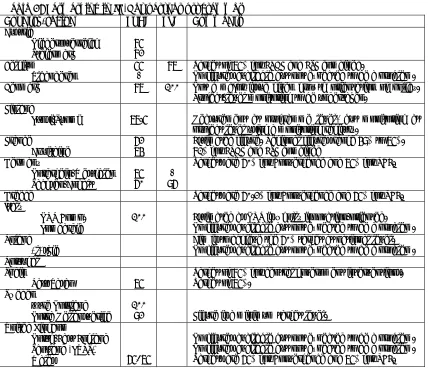
(18) The 2007-13 Operational Programmes: A Preliminary Assessment. Table 1: State-of-play of NSRFs in IQ-Net partner countries Austria: The NSRF was approved on 28 September 2006 by the ÖROK, which brings together the main regional policy actors. Political approval was subsequently given on 27 October 2006. As noted, Austria was one of the first two Member States to formally submit its NSRF in November 2006. Belgium (Vlaanderen): The NSRF draft was approved by the Flemish government in June 2006 and was then subject to a consultation process with key actors (notably, the Union of Flemish Provinces, the Union of Cities and Municipalities, the cities of Antwerp and Gent, the Flemish Environmental Council, the Socio-Economic Advisory Council and sub-regional socio-economic advisory committees). After a decision on budgetary allocation in October 2006, and following the Belgian municipal elections, the NSRF and OP are now in their final stages. The NSRF is planned to be approved by the Flemish government in December to allow for a Belgian submission by the end of the year. Denmark: Since Spring 2006, the internal preparatory process on the Danish NSRF was completed, including consultations with regional and other partners, an ex-ante appraisal undertaken by consultants, and the political process within government and parliament. Formal submission of the NSRF and OPs was in November 2006. Finland: The NSRF was finalised in a strategic working group which was also co-ordinating the preparations of the draft OPs. At the time of the fieldwork, the main outstanding issues related to the management system, which required approval of the new Structural Funds Act in Finland. The NSRF was submitted together with the OPs to the Government on 14 December 2006, but is still pending an approval, which is required before a formal submission to the Commission. France: A final draft of the NSRF was submitted to the Commission on 31 October 2006. Formal submission is expected during December 2006. Germany: During the late spring and summer of 2006 there were ongoing discussions with socio-economic partners at federal level (notably organisations representing local authorities, employers, trade unions, farmers, women’s groups and environmental bodies). These made particular input into the horizontal themes of the environment, equal opportunities and sustainable urban development. The Federal and Land authorities reached agreement on the division of funds between OPs towards the end of September 2006 and issued a press release with the division of funds between OPs on 29 September 2006. Final submission is expected before the end of the year. Greece: The last draft of the NSRF was finalised and submitted to the Commission on 25 October 2006. After further interaction with Commission services, formal submission is anticipated for mid December, along with as many OPs as possible. Italy: A meeting was held on 9 November 2006 to seek feedback on the chapters on strategic priorities and implementation involving all regional governments, national Ministries and the main socio-economic partners (e.g. Confindustria, the association of Italian industrials; ANCI, the Association of Italian Municipalities; the main trade unions and other private sector interest groups). While the aim is to submit the NSRF by the end of the year, the achievement of this target will depend on the approval of the document by the ‘Conference of the Presidents of the Regions.’ Poland: The NSRF was reviewed by the Ministry of Regional Development during the summer, based on comments on the previous draft from the Commission and further consultation with regional and sectoral partners. The current NSRF was adopted by the Council of Ministers on 1 August 2006. Details of the Strategic Environmental Assessment and Ex-ante Evaluation have been incorporated, and this draft is currently being put before parliament before it is submitted to the Commission. Portugal: The Council of Ministers approved a deliberation on the core strategic directions for the NSRF and related budgetary allocations on 31 August 2006. Following consultations with key actors (e.g. central government ministries, regional actors, the social and economic council and the association of local authorities), a first draft was presented to the Commission in September 2006. It is anticipated that the Council of Ministers will approve a final version in mid-December and formal submission to take place before the end of the year, although the OPs are likely to be submitted in the New Year. Spain: The distribution of financial allocations across regional programmes was formally announced to the regions at the end of May 2006. An unofficial draft of the NSRF was submitted to the Commission in July, followed by two official drafts in October and then November 2006, as the basis for discussions with the Commission. The formal submission is expected by the end of the year, while the OPs will follow in early 2007. Sweden: The elections of September resulted in a change of government. Although the NSRF was principally approved prior to the elections, the new Government was keen to review the document and some changes are expected. The new government aims to have the NSRF and the OPs submitted at the same time during December. United Kingdom: Public consultation on the UK’s NSRF ran from February to May 2006. The Government response to the consultation and the final version of the NSRF itself were launched publicly in October 2006. Formal submission is expected in December 2006.. IQ-Net Thematic Paper 19(2). 6. European Policies Research Centre.
(19) The 2007-13 Operational Programmes: A Preliminary Assessment. The last stage of the process of dialogue between Member States and the Commission is the formal negotiations, which begin once the final official NSRF has been electronically submitted through the so-called SFC2007 computerised data exchange system. As noted, the deadline for submission is five months after the adoption of the Community Strategic Guidelines (i.e. March 2007), although five Member States had already submitted their frameworks by the first week of December 2006, and most others were planning to do so by the end of 2006. On receiving an official NSRF, the Commission undertakes an admissibility check to ensure compliance with the regulatory requirements. This covers the socioeconomic situation, the strategy, earmarking, the implementing arrangements, the elements subject to a Commission decision, and, for Cohesion countries, the coordination arrangements between OPs, Funds, EIB interventions and other financial instruments. If the document is considered to be admissible, a quality check is undertaken to ensure that it follows a logical structure (e.g. with strategic priorities determined on the basis of a sound socio-economic analysis and followed through with a coherent and balanced choice of OPs). If this second check is passed, and within three months of receiving the formal submission, the Commission will proceed to take note of the strategy and the priority themes, along with a decision on the list of OPs, the corresponding indicative financial allocations by OP and year, and, for the Convergence Objective only, compliance with the additionality principle and actions for improving administrative efficiency. The Commission anticipates that most of the NSRFs will be decided before the end of March 2007.. 2.2.2 Assessments of the informal discussions IQ-Net partner assessments of the informal discussions have been mixed. Some have described the process as “laborious and political”, as in France, where the main concerns have been over the scale of Commission commentary and the level of additional detail required in the document which is felt could detract from the strategic nature of the exercise and politicise the process, particularly in the latter stages. This is especially so if the information requests require further consultation with the regions and/or introduce greater restrictions on their strategic and policy choices. Other partners have described the process as having been generally satisfactory so far (e.g. the UK, Vlaanderen), although they have not necessarily agreed with some of the Commission’s key observations. Some countries have provided more positive overall assessments of the informal discussions. In Finland, it is generally felt that the Commission’s comments regarding focusing and strategic orientation have been beneficial as they have prompted review and further national discussion. As a result, more emphasis has been placed on the strategic direction, both at the national and regional levels. Furthermore, the discussions with the Commission have helped to resolve important issues such as questions concerning the management system. In Hungary, the exercise has been termed as “useful” by Commission officials, with both sides actively and freely engaging in the process. With respect to Slovenia, the Commission considers that many of their suggestions were taken on board and that the Member State has moved in the ‘right direction’, although the first draft proposals by the Slovenian authorities were also considered to be of high quality. In Poland, as a result of the main Commission observations, the latest version of the NSRF, published in August 2006, contains some changes, mostly clarifying linkages between the SWOT analysis and the main objectives and activities planned. In Vlaanderen, a significant amount of IQ-Net Thematic Paper 19(2). 7. European Policies Research Centre.
(20) The 2007-13 Operational Programmes: A Preliminary Assessment. additional detail, most of which had not been anticipated, was integrated into the NSRF as a result of discussions with the Commission. Commission officials responsible for Spain have commented that the process was “highly cooperative” and that many of their suggestions have been incorporated into the two successive drafts. The Commission has expressed particular satisfaction with three important developments foreseen in the NSRF, which - although not necessarily driven by the Commission - are certainly welcomed. The first is the doubling of the financial allocation for innovation relative to the current period, mainly reflecting a domestic political priority in recent years. This represents the top end of the Commission’s initial negotiating position which recommended an allocation of between €6-8 billion. A second positive aspect, welcomed by the Commission services, is the decision to mainstream the Urban Community Initiative for cities on a nationwide basis, operating through a competitive tendering process. A third aspect supported by the Commission is the decision to set up five thematic networks for the exchange of good practice between the regions with national participation. The aim is to institutionalise an instrument that animates the strategic content of national and regional development policies in the areas of innovation, R&D, environment, urban policy and equal opportunities. Similarly, with regard to Portugal, the Commission has welcomed the inclusion in the NSRF draft of key issues that it had raised in its initial position paper, notably in terms of the focus on Lisbon, the importance of interventions targeting competitiveness, internationalisation and human resources, and the increased concentration and selectivity in the use of the Structural Funds. Some partner countries needed to make only limited changes regarding their major strategic choices. For example, while some changes have been made on the socio-economic analysis in response to the Commission’s observations in Vlaanderen, the key aspects of policy content have not been altered. In Sweden, the Commission’s main observations regarding the justification for the changes to the number of OPs and the new management and implementation structure required very limited or no changes to be made as part of the dialogue. With regard to Hungary, Commission officials noted that there are always political “red lines” which are difficult to cross, but that this is part of the nature of any dialogue or negotiation. Similarly, in France, a number of formal requests made by the Commission were integrated into the NSRF by some redrafting and the provision of further detail in certain areas. However, a number of demands were also rejected (such as those regarding the quantification of objectives and the capping of expenditure).. 2.2.3 Key NSRF discussion issues Over the course of the last year the Commission has made very detailed comments and observations on all aspects of the Member States’ successive draft NSRFs. These have been transmitted through letters, position papers, regular informal contacts and bilateral meetings. As noted, the Commission’s assessments have followed a standard structure covering the preparation of the NSRF covering: analysis of the socio-economic situation; the strategy; Operational Programmes and financial tables; additionality and administrative efficiency; implementation; and an overall assessment. In terms of the preparation of the NSRF, the Commission’s principal concern is to ensure that the partnership principle is fully respected. The main comments have been requests IQ-Net Thematic Paper 19(2). 8. European Policies Research Centre.
(21) The 2007-13 Operational Programmes: A Preliminary Assessment. for additional information on the responsibility and involvement of the different partners (France, Hungary), identification of which concrete partners were involved (Czech Republic), indications of the outcomes and feedback received from consultations (Slovenia), and how the partnership principle will be extended to the implementation phase (Estonia). In other cases, the Commission has expressed satisfaction with the significant level of detail that has been provided on the partnership process (Poland). IQ-net partners have not reported any particular issues with the Commission over the NSRFs’ analysis of the socio-economic situation. In Portugal, the analysis in the first NSRF draft is considered to be of good quality providing a sound basis for its inclusion in the final draft, although further comments were requested on the lessons learned in relation to the current round of interventions (as in Slovenia). Also in Slovenia, the Commission has requested a greater focus on areas where a Structural Funds’ contribution can be made, and the need to disaggregate statistics by gender. It appears that far more attention has been given to the strategy section of the NSRF in the dialogue with the Commission. The key issue has been to ensure consistency between the diagnosis, SWOT, challenges and description of objectives by improving the logic of the SWOT (e.g. ensuring consistency with revised versions of the socio-economic analysis in Estonia) or ensuring that it is more firmly grounded in the statistical analysis of global challenges (UK); proving further explanation or justification on the reasoning behind the choices of strategic actions (Greece); delineating more clearly the overarching regional policy strategy for the whole country (Germany, UK); clarifying the priorities and their link to the diagnosis section (Poland, France); and providing a clearer hierarchy of priorities linked to a more concrete definition of objectives and indicators (Vlaanderen). Other key discussion issues have related to the clarity of the linkages between NSRF objectives and NRP measures (France, UK) and between the objectives of the NSRF and the Community Strategic Guidelines, as well as requesting further information on the quantification of objectives (Vlaanderen). A further issue of debate in the dialogue with the Commission concerns the structure of Operational Programmes and financial tables. One of the main Commission requests has been to clarify the delimitation of the scope of interventions of different OPs and the elimination of overlaps between them, for instance seeking clearly articulated differences between national and regional OPs (Hungary), recommending a reduction in the number of OPs and the joining of priorities from separate OPs (e.g. R&D and business priorities together in Estonia), recommending the splitting of the national ESF into two OPs (Poland). For other countries, the Commission has expressed concerns over the number of OPs (Sweden, Slovakia). The Commission has also sought clarification on the strategic articulation between different Funds (Finland, France), particularly activities funded under the ERDF and ESF (Finland, UK); greater precision in the interpretation of the cross-financing flexibility facility (Austria); raising the proportion of ESF allocations (Hungary); and ensuring allocations in line with the socio-economic analysis (Latvia);. IQ-Net Thematic Paper 19(2). 9. European Policies Research Centre.
(22) The 2007-13 Operational Programmes: A Preliminary Assessment. In many cases, the Commission has been pushing for a clearer focus on regional development. Examples include: a stronger articulation between the priority axes of the regional development OP and clarification on how national OPs will contribute to regional development (Slovakia); recommendations on the split of resources between national and regional administrations for Convergence Objective OPs (Italy); a focus of urban interventions on fewer, larger cities (Latvia); more involvement of municipalities on a pilot/experimental basis (Estonia); and earmarking part of the funding for groupings of municipalities involved in Lisbon-oriented activities, in order to increase the discipline in local authorities’ usage of Structural Funds (Slovenia). With respect to types of expenditure, the Commission has argued for: caps on rail and urban development; a greater focus on public transport instead of roads (Latvia) or greater selectivity in the roads funded (Estonia); tightening the scope of funded activities in specific OPs (e.g. the heath OP in Slovakia); more strategic environmental infrastructure projects (e.g. by focussing on delivery at the local level and not just on the large primarylevel networks in Portugal); a more forward-looking human resources policy (Slovenia); more support for building civil society through ESF (Estonia); and a greater emphasis on coordination between public, academic and business sectors in R&D (Portugal and Estonia). Information has also been requested on the integration of horizontal themes such as equal opportunities (e.g. Vlaanderen). Concerns have also been expressed over the level of Lisbon-oriented activities in the regional OPs and/or the excessive concentration of such activities in national OPs (Hungary, Spain). In more general terms, the Commission has been seeking more concrete information on the types of interventions and activities to be funded in most Member States (e.g. Finland, Vlaanderen, Greece, Portugal). With respect to the financial tables, a general Commission request has been that the figures should be provided at current prices. The issue of additionality and administrative efficiency has not been raised as a major concern by IQ-Net partners in their discussions with the Commission. A methodological issue that has arisen in Germany is how to make an adequate additionality comparison between the 2000-06 and 2007-13 periods given that the amount of EU receipts to the new Länder will fall in absolute terms in 2007-13. Similarly, in Latvia, there has been some discussion of additionality issues arising from a cut-back in funding for active labour market policies. With regard to administrative efficiency, specific comments raised include the need to address more fully capacity-building and partnership arrangements (Poland), and to provide evidence of managing the absorption capacity of structures, particularly at the sub-national level (Estonia). Finally, discussions on the implementation system have centred on: clarifications to the rationale underpinning changes to the management system (e.g. Sweden); the need to provide greater operational detail of the changes; and to improve coordination at the implementation stage so that it is not too driven by ministerial sectoral interests (Estonia); and to allow flexibility in the reallocation of resources (Portugal).. IQ-Net Thematic Paper 19(2). 10. European Policies Research Centre.
(23) The 2007-13 Operational Programmes: A Preliminary Assessment. 3.. THE PREPARATION OF OPERATIONAL PROGRAMMES. It is expected that 400 to 500 Operational Programmes will be approved for the 2007-13 period, covering 268 regions across the EU27. The Commission is required to adopt the OPs no later than four months after formal submission, and not before 1 January 2007. Current estimates suggest that the OPs will be finalised and agreed over the January-September 2007 period, with the majority decided before the end of June 2007. 8 Among IQ-Net partner countries and regions, there is considerable variation in the timing and organisation of the OP development process. As a result, only a limited number of IQ-Net partners have entered into formal negotiations with the Commission, although informal dialogue is more widespread.. 3.1. Timetables. The development of the OPs has progressed at different speeds across the Member States reflecting a range of EU and domestic institutional and policy factors. As already noted, the most advanced IQ-net partner countries are Austria and Denmark having already formally submitted all OPs alongside their respective NSRFs. In Austria, the preparations for the OPs had already begun in autumn 2004 and were finalised before the 2006 summer break, allowing for an early submission (including the OPs of the two IQ-Net partner regions Niederösterreich and Steiermark). Similarly, in Denmark, the internal process of OP preparations was completed over the summer-autumn period, including consultations with regional and other partners, an ex-ante appraisal undertaken by external consultants, and the political process with government and parliamentary committees. Formal submission of the documents was undertaken in late November 2006, in parallel with the NSRF, as both submissions are seen as being intimately linked. In most other IQ-Net partner countries, the OPs have been drafted and, in some cases, opened for formal consultation (England, Scotland, Wales, Finland, Vlaanderen Portugal/Spain, for interregional cooperation only). At the time of writing, a number of these countries expected to be able to submit their OPs alongside the NSRF before the end of 2006. For example, in Finland, the OPs and the NSRF were submitted to the Government for approval on 14 December 2006, but are still pending an approval, which is required before their submission to the Commission. In Germany, it has also been planned to submit the OPs formally with the NSRF. With respect to the IQ-Net partners, Nordrhein-Westfalen has reached domestic agreement on the broad content of the OP in terms of priorities (including financial allocations), measures, spatial orientation and strategic focus, and anticipated submission before the end of 2006. In Sachsen-Anhalt, the authorities have also reached domestic agreement on the division of funding and have produced more-or-less final versions of the new ERDF and ESF programmes (i.e. apart from minor wording changes). The major outstanding issue is that the Strategic Environmental Assessment has not yet been fully completed.. 8 Danuta Hübner presents implementing rules for Cohesion Policy 2007-2013 and asks Member States to push forward, IP/06/1712, 08/12/2006. IQ-Net Thematic Paper 19(2). 11. European Policies Research Centre.
(24) The 2007-13 Operational Programmes: A Preliminary Assessment. In France, draft ERDF OPs were initially expected by the end of October 2006, while the national ESF OP was to follow in December. By the end of 2006, 14 regions will have completed consultation exercises on their ERDF regional programmes. The ex-ante evaluations have all begun and are proceeding well, with most regions having finished the diagnosis part and currently focussing on aspects of internal coherence. All eight ERDFfunded OPs in Sweden had been submitted to the central government by the end of October 2006. However, with the review of the new Government on the NSRF, there is a possibility that the OPs could be sent back to the regions for modification. In any case, the government expected to submit the OPs in December 2006 together with the finalised version of the NSRF. In another group of countries and regions, the formal submission of OPs is planned for the first quarter of 2007 (e.g. Portugal, Spain, Vlaanderen, UK). In Vlaanderen, the ERDF and ESF budgetary allocations were not decided until mid-October 2006. While the content of the OPs was decided promptly afterwards, some issues on the organisational structure had still to be resolved at the time of the IQ-Net fieldwork. This has slightly delayed the consultation exercise. Informal draft OPs are likely to be submitted before the end of the year with formal submission following at the start of 2007. The first ex-ante and Strategic Environmental Assessment reports have been received, but further work was still required on the indicators and monitoring system. In Spain, the regional ERDF OPs were to be submitted to the national Ministry of Economy and Finance by mid-December 2006. The central government will integrate its own interventions into the programming documents before final submission with the national OPs in the New Year, following public consultations. In Greece, it is likely that a number of OPs will be submitted in the first quarter of 2007, although those that are ready before the end of 2006 will be submitted alongside the NSRF. Progress with the Greek regional OPs varies, although the IQ-Net partner of Kentriki Makedonia was most advanced and anticipated an informal submission in November/December, followed by discussions with the Commission and final submission before the end of 2006. Progress in the development of the Italian OPs also varies significantly. At the time of the fieldwork, it was difficult to anticipate the timetable for submission for the OP LED, as uncertainty remained about the future content of the OP (for example on whether it will be a joint Competitiveness and Research OP, or whether there will be two separate OPs for these themes). For the ERDF OP of Lombardia, on the other hand, the planning is far more advanced. In Poland, the October 2006 draft of the Śląskie regional OP was likely to be the final version. The ex-ante evaluation of the OP has been completed, and its conclusions will be incorporated before discussions with the central ministries. The programme was drafted in parallel to the ex-ante evaluation, and any final revisions will be minor. Currently, the plan is to make the formal submission at the end of January 2007. In Portugal, the OPs have been drafted in parallel with the NSRF, although they will not be submitted together as initially planned. While the plan was to formally submit the NSRF towards the end of December, it was expected that the OPs would not be sent until mid February (although no formal timetable has been set).. IQ-Net Thematic Paper 19(2). 12. European Policies Research Centre.
(25) The 2007-13 Operational Programmes: A Preliminary Assessment. In the UK, the English OPs are at varying stages of preparedness. The South West and North West England OPs have just launched their consultation processes, and the majority of the rest will do so later in December. Under this timetable, it is likely that OPs will be submitted to the Commission in April/May 2007. The delay in deciding the financial allocations for Competitiveness regions has impacted on the initially planned submission timetable (March 2007). In Wales, WEFO are hoping to submit the Convergence Programme to the Commission in December 2006, while the Competitiveness Programme will not be submitted until March 2007 following public consultation. Box 1: Launching OP consultations in the UK In NE England, the draft OP was expected to be launched for consultation during late December, for a 12-week consultation process ending in late March 2007. It is not yet known to what extent the programme may need redrafting after the consultation, but any redrafting will also have implications for the ex ante evaluators and the Strategic Environmental Assessment. The current ‘best guess’ for a submission date to the Commission is April/May 2007, with approval hoped for in Autumn 2007. In Scotland, consultation on the new programmes closes on 8 January 2007, and the Scottish Executive hopes to summarise the consultation responses and devise the government response, as well as to revise the OPs, by the end of January, to submit the programmes to the Commission by the end of February. Negotiations may be protracted, delaying the programme start. The Executive is planning to launch a round of ‘shadow funding’ for ESF, in effect making funding available before formal approval of the 200713 programme. Although the Executive is committed to making the first awards by Easter 2007, criteria for the shadow round cannot be announced until the consultation period for the new programmes is over. In Wales, the Welsh Assembly Government launched the consultation on the Convergence programmes for West Wales and the Valleys on 28 July 2006. The 10-week consultation closed on 6 October 2006. WEFO were hoping to submit the Convergence Programme to the Commission in December, and then, depending on negotiations, are hoping to finalise the programme by March 2007. Public consultation on the Competitiveness Programme was launched on 1 December, to run for eight weeks until the end of January 2007 – with an aim of submitting it to the Commission by the 5 March deadline.. 3.1.1 Organisation The degree of influence and control exercised by national and regional authorities in the formulation of the OPs varies between and within countries. As with the development of the previous round of OPs and the current NSRFs, three organisational approaches to programme development can be identified: regionalised (with very high regional autonomous policy development capacity in the formulation of OPs); regional drafting with central coordination (involving varying degrees of regional involvement, but with central coordination of the process); and a top-down model (with a far greater role for central government in both general coordination and the development of OPs). IQ-Net Thematic Paper 19(2). 13. European Policies Research Centre.
Figure

+7

Related documents