In their own words:
Experiences of first-time distance learners
M. Brown, M. Keppell, H. Hughes, N. Hard, S. Shillington and L. Smith
dehub Innovation in distance education
University of New England NSW 2351
Australia
Email: [email protected]
Worldwide web: http://dehub.edu.au/publications/reports/
First Edition 2013.
National Library of Australia in Publication Data
A catalogue record of this monograph series is available from the National Library of Australia
ISBN: 978-1-921597-44-2 ISSN:
Series editor: Dr Rosalind James (Director DEHub) Edition copyeditor: Dr Miriam Verbeek
Copyright © dehub, University of New England, 2013
With the exception of the Commonwealth Coat of Arms, all logos, any material owned by a third party, protected by a trademark or where otherwise noted, all material presented in this document is published under the terms of the Creative Commons Attribution- NonCommercial-ShareAlike 3.0 Australia (CC BY-NC-SA 3.0 AU) License (http://creativecommons.org/licenses/by-nc-sa/3.0/au/). Excluded material owned by third parties may include, for example, design and layout, images or video that we have obtained under license from third parties, or where we link via URL to material on external, third-party sites. We have made all reasonable efforts to identify and label material owned by third parties.
Under this license, you are free to share (to copy, distribute and transmit the work), to remix (to adapt the work) and build upon the work non-commercially, under the following conditions:
You must attribute the dehub, University of New England, as the copyright holder of the work in compliance with our attribution policy outlined below.
You use this work with the understanding that:
• Waiver—Any of the above conditions can be waived if you get permission from the copyright holder.
• Public Domain—Where the work or any of its elements is in the public domain under applicable law, that status is in no way affected by the license.
• Other Rights—In no way are any of the following rights affected by the license:
— Your fair dealing or fair use rights, or other applicable copyright exceptions and limitations;
— The author’s moral rights;
— Rights other persons may have either in the work itself or in how the work is used, such as publicity or privacy rights.
• Notice—For any reuse or distribution, you must make clear to others the license terms of this work. The best way to do this is with a link to the following web page: http://creativecommons.org/ licenses/by-nc-sa/3.0/au/
To view a copy of the legal code for this license, visit http://creativecommons.org/licenses/by-nc-sa/3.0/ au/legalcode or send a letter to: Creative Commons, 171 Second St, Suite 300, San Francisco, CA 94105,
USA.
ATTRIBUTION POLICY
Under the terms of this license, you are required to attribute the dehub, University of New England in a form specified by this policy. However, you may not attribute the dehub, University of New England in a way that would create an impression that the dehub, University of New England endorses you, your organisation, your work or your use of this work.
Unmodified material
Where you are distributing or using material ‘as is’ and have not modified the material in any way, shape or form, you must attribute the dehub, University of New England by citing this publication in the following
way:
Source: Brown, M., Keppell, M., Hughes, H., Hard, N., Shillington, S., and Smith, L. (2013). In their
own words: Learning from the experiences of first time distance students. Final Report 2012.
dehub Report Series 2013, Armidale NSW, Australia: University of New England, dehub.
Available from http://dehub.edu.au/publications/reports/
You must also include the following statement/acknowledgement: Support for the original work was
provided by the Australian Government Department of Industry, Innovation, Science, Research and Tertiary Education (DIISRTE) through the dehub Project.
Modified material
Where you have modified, transformed or created derivative works based upon the dehub, University of New England material (such as, for example, creating graphs or charts or presentations based on data/text from this publication) you must attribute the dehub, University of New England by citing this publication
in the following way:
Based on material from Brown, M., Keppell, M., Hughes, H., Hard, N., Shillington, S., and Smith, L. (2013). In their own words: Learning from the experiences of first time distance students. Final
Report 2012. dehub Report Series 2013, Armidale NSW, Australia: University of New England, dehub.
Available from http://dehub.edu.au/publications/reports/
You must also include the following statement/acknowledgement: Support for the original work was
provided by the Australian Government Department of Industry, Innovation, Science, Research and Tertiary Education (DIISRTE) through the dehub Project.
Acknowledgements
We are grateful to the 160 students from Massey University who volunteered to participate in this research. We would particularly like to acknowledge the 20 students who committed to making video diaries throughout their first semester as a distance learner. Their experiences, recorded in their own words, have provided unique insights into the world of distance learning.
We also thank the staff from Charles Sturt University and Massey University who participated in the audit of initiatives designed to support the success of distance learners. Particular thanks go to the ‘Bridging the Distance’ project team at Massey University whose thinking and conceptual framework helped to shape the current study. In addition, the study would not have been possible without the support provided by both institutions throughout the research process.
We are grateful to the members of the External Advisory Group for being ‘critical friends’ throughout the life of the project from design to delivery. We would particularly like to acknowledge the contribution of Dr Kirsty Weir in her role as evaluator and the valuable insight she brings as Research Manager for Ako Aotearoa (New Zealand’s National Centre for Tertiary Teaching Excellence).
List of acronyms
APA – American Psychological Association
ASSIST - Approaches and Study Skills Inventory for Students
AUSSE - Australian University Survey of Student Engagement
DEHub – Distance Education Hub
DEEWR - Department of Education, Employment and Workplace Relations
EXMSS - Extramural Students’ Society
EAFI - Elite Athlete Friendly Institutions
EARS – Extramural Area Representatives
ESOL – English for Speakers of Other Languages
DELFA - Distance Education and Learning Futures Alliance
FLI – Flexible Learning Institute
HEFCE – Higher Education Funding Council of England
ICT – Information and Communication Technology
JISC - Joint Information Steering Committee
LMS – Learning Management System
NCEA - National Certificate of Educational Attainment
OECD – Organisation for Economic and Cooperative Development
Executive summary
This study took place set against a backdrop of significant challenges facing traditional distance education. The conventional ‘pack and post’ or correspondence model of distance education was being threatened by the growth of new technology and increasing concerns about poor retention (attrition), progression and completion rates. In this context, the performance of distance education providers, is increasingly under scrutiny from governments and funding bodies.
Research objective
The research objective for this study was to contribute to the enhancement of services and resources available for first-time distance learners. More specifically:
• To develop a conceptual framework for identifying the most effective use of various intervention tools, supports and resources at early stages of the study lifecycle;
• To investigate the experiences of being a first-time distance learner from a student’s perspective ‘in their own words’; and
• To produce a set of overarching principles to help institutions enhance distance learner engagement and success.
Research design
The study was framed around Design-based Research involving a mixed method approach over three phases.
• Phase One involved an audit of current institutional services and resources supporting distance learners at Charles Sturt University (Australia) and Massey University (New Zealand).
• Phase Two involved the recruitment of a sample of first-time distance learners at Massey University and a pre and post semester survey to establish their goals, intentions and backgrounds.
Research findings
In Phase One, the findings show that a comprehensive suite of institutional services and resources are available at the two participating institutions to support the diverse needs of distance learners. In the early stages of the study lifecycle, both Charles Sturt University and Massey University have a number of particularly innovative and defining initiatives that are likely to be of interest to other distance education providers.
In Phase Two, a pre- and post-semester survey confirmed that many first-time distance learners are in paid employment and that distance study is directly related to their career goals. In terms of seeking support, the most important people are partners, family/whānau and lecturers. Participants report a mix of excitement and apprehension before commencing study, and there was considerable variability in the relationships they developed with staff and fellow students. Notably, the online learning environment was perceived as the most valuable academic resource in supporting study, although this was primarily used for obtaining information as opposed to fostering a stronger sense of belonging. By the end of semester, a higher proportion of students report they succeeded by ‘doing what they needed to’; however, the majority of first-time distance learners claim their major achievement was gaining deeper knowledge rather than merely passing.
In Phase Three, the video diaries reveal a rich diversity of participants in terms of demographics, background, study choices and so on. A thematic analysis of over 22 hours of participants’ video diaries provided valuable insights into the lived experiences of first-time distance learners in terms of motivations, inhibiting factors, learner support, study approaches, retrospective thoughts and value of reflection. Albeit a small sample, the voices of these 20 students are likely to resonate with many other distance learners.
Seven key takeaways
The report identifies seven key takeaways:
1. Learner stories add flesh to the ‘soft factors’ of what it means to be a distance learner. Reflections, recorded in student’s own words, provide unique insight into the complexity of studying from a distance.
2. Adopting a conceptual framework that maps services and resources across different phases of the study lifecycle can help institutions to better design and coordinate supports which meet the diverse needs of distance learners.
3. Distance learning was perceived to enable tertiary study to fit around other life, work and family commitments. However, first-time distance students have relatively little conception of the actual demands of studying by distance.
5. Although learner stories affirm the importance of the first few weeks of study, there are ebbs and flows in the life of a distance student over the semester, and a second critical ‘at risk’ period was identified in later weeks.
6. Digital literacy is variable among first-time distance learners; age and gender are not strong indicators. Irrespective of the level of digital literacy, insights gained from learner stories reveal that few students know how to be effective online learners.
7. Video diaries coupled with the researcher’s role influenced student engagement by providing different learning environments; metaphorically a cave, campfire, watering hole and mountain top for active learning and reflection. Learner stories highlighted the value of institutions supporting opportunities for first-time distance learners to engage in regular interaction and reflection over the initial stages of their study.
Seven lessons learned for institutions
The lessons for distance education providers are encapsulated in seven guiding principles proposed for enhancing the success of distance learners. The following principles recognise the complexity and multifaceted nature of student engagement:
1. Shared goals
2. Personal agency
3. Adaptive empathy
4. Personalisation
5. Transactional engagement
6. Networked learning
7. Spaces for knowledge generation
Seven insights for distance learners
Deliverables
The following deliverables were achieved:
A full report of the study
Brown, M., Keppell, M., Hughes, H., Hard, N., Shillington, S., & Smith, L. (2012). In their own words: Experiences of first-time distance learners. Armidale, NSW, Australia: DeHub, University of New England, ISBN, xxx
A short progress report
Brown, M., Hughes, H., Hard, N., Keppell, M., & Smith. E. (2011). Enhancing the supports and services for first-time distance learners. DE Quarterly, 9, Retrieved from <http:// issuu.com/dehub/docs/v_3__dehub_newsletter_no_9__spring_2011-summer_201/7>
Brown, M. (2011). Innovative new research underway at Massey University. DEANZ Magazine, May, p. 9. Available from <http://www.deanz.org.nz/home>
Conference papers
Brown, M., Keppell, M., Hughes, H., Hard, N., Shillington, S., & Smith, L. (2012). Living the new normal: Reflection on the experiences of first-time distance learners. Paper presented at the Ascilite Conference. In M. Brown, M. Hartnett & T. Stewart (Eds)., Future Challenges | Sustainable Futures. Proceedings 25-28 November, Wellington (pp. 159-163).
Brown, M., Keppell, M., Hughes, H., Hard, N., & Smith, L. (2012, June). Superficial social inclusion: Reflections from first-time distance learners. Paper presented at the International Higher Education First Year Experience conference, Brisbane.
Brown, M., Hughes, H., Hard, N., Keppell, M., & Smith, L. (2012, June). The challenges for mature life-long learners: Insights from video dairies of first-time distance students. Paper presented at the European Distance and eLearning Network (EDEN) conference, Porto,9th June.
Brown, M., Hughes, H., Shillington, S., Hard, N., Keppell, M., & Smith, L. (2012, April). Life happens: Experiences of first-time distance learners. Paper presented at Distance Education Association of New Zealand (DEANZ) Conference, Wellington.
Brown, M., Hughes, H., Hard, N., Keppell, M., Shillington, S., & Smith. E. (2011, December). Lights, camera, action: Gathering experiences of first-time distance learners.Paper presented at the Ascilite Conference. In G. Williams, N. Brown, M. Pittard, B. Cleland (Eds.) Changing Demands, Changing Directions. Proceedings, 4-7 December, Hobart. (pp.194-199), Hobart.
Distance learner colloquium
Journal article
Brown, M., Keppell, M., Hughes, H., Hard, N., & Smith, L. (2012). The challenges of social inclusion: Reflections from first-time distance learners. Manuscript accepted for publication in the International Journal of the First Year Experience, 3(2), pp. 73–80.
Student guide
Brown, M., Keppell, M., Hughes, H., Hard, N., Shillington, S., & Smith, L. (2012). Student guide: Seven habits of highly effective distance learners. Massey University, Palmerston North.
WikiResearcher
Table of Contents
Acknowledgements ... 5
List of acronyms used.. ... 6
Executive summary ... 7
Seven key takeaways ... 8
Seven major lessons and insights ... 9
Deliverables ... 10
Table of Contents ... 12
Tables and Figures ... 15
Chapter 1: About the study ... 16
1.1. Administration ... 16
1.2. Context of the study ... 16
1.3. Significance of the research ... 17
1.4. Research objective ... 18
1.5. Structure of the report ... 18
Chapter 2: Synthesis of the literature ... 20
2.1. Evolution of distance education ... 20
2.2. The problem of retention ... 22
2.3. Promoting student retention ... 24
2.4. Importance of the first year experience... 26
2.5. Engagement of first year distance students ... 27
2.6. Listening to first-time distance learners ... 29
2.7. Summary ... 30
Chapter 3: Methodology ... 31
3.1. Research design ... 31
3.2. Phase one ... 31
3.3. Phase two ... 33
3.4. Phase three ... 34
3.5. Trustworthiness of the study ... 39
Chapter 4: Findings – Phase one ... 41
4.1. Background context ... 41
4.2. Services and resources for distance learners ... 42
4.3. Summary ... 53
Chapter 5: Findings —Phase two ... 55
5.1. Pre-semester survey ... 55
5.2. Post-semester survey ... 58
5.3. Summary ... 61
Chapter 6: Findings – Phase three ... 62
6.1. Overview of sample ... 62
6.2. Participant introductions ... 62
6.3. Summary ... 71
Chapter 7: Thematic analysis ... 72
7.1 Motivating factors ... 72
7.2. Inhibiting ‘soft factors’ ... 73
7.3. Making use of support ... 77
7.4. Study approaches ... 80
7.5. Retrospective thoughts ... 84
7.6. Value of reflection ... 85
7.7. Summary ... 86
Chapter 8: Discussion ... 88
8.1. Takeaway 1 ... 88
8.2. Takeaway 2 ... 88
8.3. Takeaway 3 ... 90
8.4. Takeaway 4 ... 90
8.5. Takeaway 5 ... 92
8.6. Takeaway 6 ... 93
8.7. Takeaway 7 ... 94
8.8. Summary ... 96
Chapter 9: Lessons learned for institutions ... 97
9.1. Principle 1: Shared goals ... 97
9.2. Principle 2: Personal agency ... 97
9.3. Principle 3: Adaptive empathy ... 98
9.5. Principle 5: Transactional engagement ... 98
9.6. Principle 6: Networked learning ... 98
9.7. Principle 7: Spaces for knowledge generation ... 99
9.9. Summary ... 99
Chapter 10: Insights for distance students ... 100
10.1. Habit 1: Be proactive ... 100
10.2. Habit 2: Begin with the end in mind ... 100
10.3. Habit 3: Put first things first ... 101
10.4. Habit 4: Think win-win... 101
10.5. Habit 5: Seek first to understand ... 101
10.6. Habit 6: Collaborate ... 101
10.7. Habit 7: Sharpen the saw ... 102
10.8. Summary ... 102
Chapter 11: Conclusions ... 103
11.1. Reflecting on the objective ... 103
11.2. Methodological reflections ... 104
11.3. Dissemination ... 105
11.4. Linkages ... 105
11.5. Evaluation ... 106
11.6. Final thoughts ... 107
References ... 108
Appendix A: External evaluator’s report ... 115
Appendix B – Post-Semester Survey ... 120
Tables and Figures
Tables
Table 1: OECD comparison of completion rates in tertiary-type A education ... 23
Table 2: Profile of demographic diversity of first-time distance learners ... 35
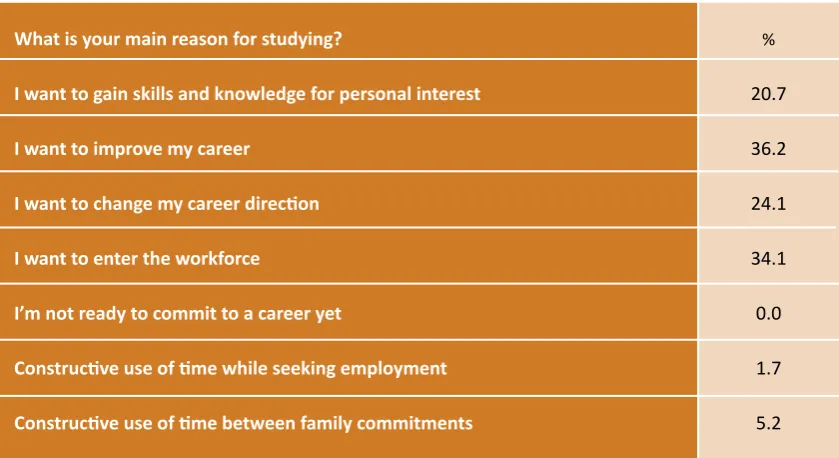
Table 3: Main reasons given for studying ... 56
Table 4: Main reasons given for studying ... 56
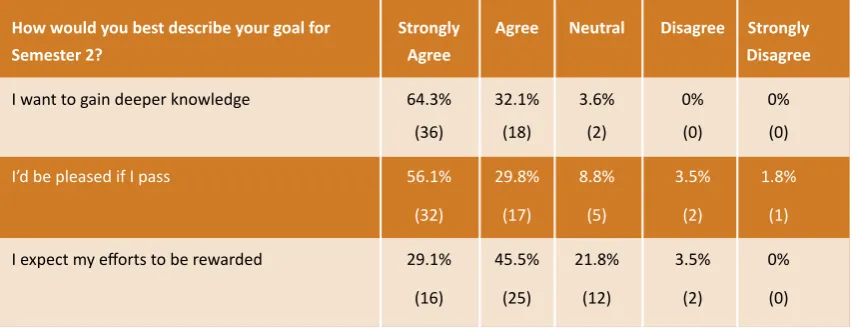
Table 5: Indication of deep, surface and strategic learning approach ... 58
Table 6: Groups who supported the decision to study by distance education ... 59
Table 7: Main achievement perceived over the course of semester ... 61
Table 8: Summary of participant sample ... 62
Figures
Figure 1: Conceptual framework for student interventions across the study lifecycle ... 32Figure 2: Information about distance learning on Massey University’s website ... 43
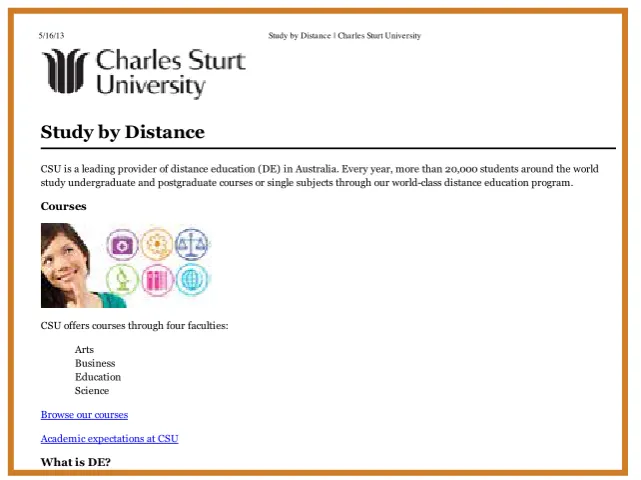
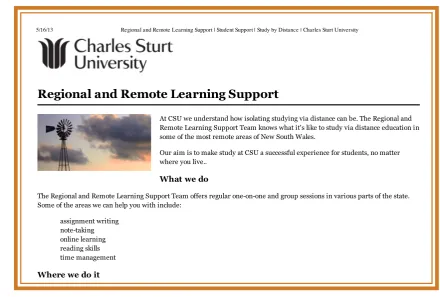
Figure 3: Information about distance learning on the Charles Sturt University’s website ... 44
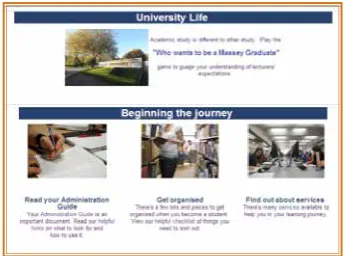
Figure 4: Massey University’s online welcome and orientation program ... 45
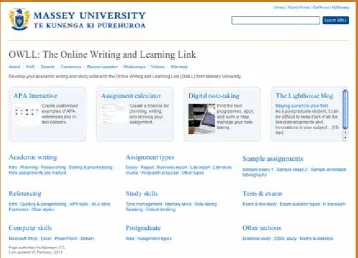
Figure 5: Massey University’s Online Writing and Learning Link (OWLL) website ... 49
Figure 6: Charles Sturt University’s regional and remote learning support ... 50
Chapter 1
About the Study
1.1. Administration
This research was led by Massey University in New Zealand and supported by Charles Sturt University in Australia. The research leader was Professor Mark Brown, who is Massey University’s Director of the National Centre for Teaching and Learning; and the Distance Education and Learning Futures Alliance. Research Team members included Professor Mike Keppell (Charles Sturt University), Helen Hughes (Massey University), Natasha Hard (Charles Sturt University), Dr Sandi Shillington (Massey University) and Liz Smith (Charles Sturt University).
The research was evaluated by Dr Kirsty Weir, Research Manager for Ako Aotearoa (New Zealand’s National Centre for Tertiary Teaching Excellence). The research was also guided by an external advisory group whose members included Dr Andrea Crampton (Sub-Dean Learning and Teaching, Faculty of Science, Charles Sturt University), Dr Linda Leach (Senior Lecturer, College of Education, Massey University), Dr Zeffie Nicholas (Charles Sturt University), Ormond Simpson (Fellow of the Centre for Distance Education, University of London), Ralph Springett (President, Massey University Extramural Students’ Society), and Associate Professor Marian Tulloch (Executive Director, Division of Learning and Teaching Services, Charles Sturt University).
The research commenced in April 2011 and concluded in June 2012.
1.2. Context of the study
This research is set against the backdrop of significant challenges facing traditional distance education providers in which issues of recruitment, retention (attrition), progression and completion have come into sharp relief. In the context of global economic uncertainty and growing demand for tertiary education in the developing world, governments are increasingly questioning the potential value and return on investment of publically funded distance education.
The study also takes place at a time when new and emerging models of online and blended learning are challenging traditional conceptions of distance education. New digital technologies are opening up new possibilities for teaching and learning beyond the boundaries of the traditional campus. There is increasing recognition that online learning now provides an exciting opportunity for tertiary education to come to students, rather than having to come to universities (Online Learning Task Force, 2011). In many respects, digitally mediated forms of online, blended and distance education have become the ‘new normal’ as students increasingly expect the flexibility and convenience now possible through new technologies.
populations at different stages of the learning pathway. Importantly, both institutions are at the forefront of new developments in the design and delivery of distance education to meet changing student expectations and the rapidly evolving global tertiary environment.
1.3. Significance of the research
The research reported in this report addresses a significant gap in the literature by investigating the experiences of first-time distance learners. The study builds on an extensive body of literature on retention, completion and student engagement in the context of higher education, distance provision and the first year experience. It also takes place in the context of another major externally funded initiative undertaken at Massey University known as ‘Bridging the Distance’ (Shillington, Brown, Mackay, Paewai, Suddaby & White, 2012), which was aimed to enhance the services and resources provided to distance learners over the initial stages of the study lifestyle.
Both partner institutions have an explicit commitment to distance education over a longstanding history. Amongst other things, the reputation of both institutions has been built on the quality of distance education and strong provision of learner support and development services. However, the performance of traditional distance providers has come under closer attention as concerns mount in both Australia and New Zealand regarding poor retention and completion rates. In the case of New Zealand, completion rates in ‘tertiary-type A’ study are near the bottom of OECD comparison tables (Scott, 2009). Both institutions involved in this research have national and regional responsibilities to provide quality higher education for diverse and geographically dispersed learners. The research will enable the partner institutions to engage in a comparative process of institutional reflection and action to ensure the best possible intervention strategies are in place for enhancing distance learner success.
The research has wider significance for the tertiary sector and other distance education providers. All institutions have an ethical responsibility to support learners to the best of their capability, and the findings may help to inform the design and delivery of effective distance education and learning development services across the spectrum of provision. While expanding research into an area that has not been well explored, the research also builds on significant closely related work. In particular, it seeks to add more ‘flesh’ to Simpson’s (2000) seminal work on supporting distance students and to build a stronger link and interface with parallel initiatives. For example, it draws on and extends the work of Krause, Hartley, James and McInnis (2005, p. 8.8.6), who conclude:
First year support efforts have tended to be piecemeal in the main, developed and sustained by individuals or small groups who champion the cause of first year transition. We have now reached the stage where universities must recognize the need for institution-wide approaches to enhancing the first year experience).
cohort at high risk of non-completion, where the problem may be exacerbated with respect to retention and continuance with the rapid emergence of new models of online, blended and distance education.
Finally, the literature is clear that the issue of completion in distance education is an international one. As Zepke and Leach (2007, p.237) observe, ‘[i]mproving retention rates in post-school education has become a focus for policy-makers and researchers throughout the western world’. There is a wealth of literature exploring the individual, social and organisational factors that impact on student recruitment, retention and completion rates in tertiary education (Adams, Banks, Davis & Dickson, 2010; Tinto, 2006-2007). However, there is a dearth of research investigating the relationship between (a) interventions targeted at distance learners and (b) the experiences of distance students, especially from a student’s perspective. Thus, the current research explores a strategically important issue for both students and institutions and aims to make a valuable contribution to the international distance education community.
1.4. Research objective
The study was framed around the sub-theme of ‘learner support and development’ and the following guiding research question identified from a recent Delphi analysis of the field of Distance Education (Zawacki-Richter, 2009):
• What skills, supports and processes are required by learners in the new ICT distance learning environments to ensure successful learner outcomes?
In addressing this broad question, the research objective was to contribute to the enhancement of services and resources available for first-time distance learners. More specifically:
• To develop a conceptual framework for identifying the most effective use of various intervention tools, supports and resources at early stages of the study lifecycle;
• To investigate the experiences of being a first-time distance learner from a student’s perspective ‘in their own words’;
• To produce a set of overarching principles that will help institutions to enhance distance learner engagement and success.
1.5. Structure of the report
Chapter 2
Synthesis of the Literature
This chapter presents a synthesis of the literature. It describes the evolution of distance education and seminal literature on the problem of student retention. The importance of the first year experience is then considered along with literature on student engagement in the context of distance education. Finally, the dearth of literature exploring the experiences of first-year distance learners is established, and the chapter concludes with the case for more research from a student’s perspective of the ‘soft factors’ that influence distance learner engagement and success. For the purpose of this study, ‘soft factors’ are understood to be factors that go beyond traditional measures of success; particularly according to learners’ own perceptions of progress towards their own and programme goals (Zepke & Leach, 2010).
2.1. Evolution of distance education
The basic assumption in which distance education is grounded is that teaching and learning without student and teacher meeting face-to-face is possible and can be effective (Bernath, Busch, Garz, Hanft, Hulsmann, Moschner, Scholz & Zawacki-Richter, 2008). This assumption has stood the test of time throughout the evolution of thinking about the potential of distance education. Battenberg (1971, as cited in Bernath et al., 2008, p. 44) reports:
The first explicit mention of organised distance education so far known is an advertisement in the Boston Gazette of 20th March 1728, in which ‘Caleb Phillips, Teacher of the new method of Short Hand’ claims that ‘Persons in the Country desirous to Learn this Art, may by having the several Lessons sent Weekly to them, be as perfectly instructed as those that live in Boston’.
Distance education is historically deeply rooted in the goals of increasing educational access and promoting lifelong learning and development. Simonson, Schlosser and Orellana (2011) describe four characteristics that distinguish distance education: (a) it is carried out through institutions and is not self-study in a nonacademic learning environment; (b) geographic separation is inherent and time might also separate students and teachers; (c) it is interactive with telecommunications usually connecting the learning group with each other and with the teacher; and (d) it establishes a learning group, sometimes called a learning community, which is composed of students, a teacher, and instructional resources. During the 20th century, several generations of distance education (Taylor, 1995) have evolved with these distinguishing features to provide opportunities for study and life-long learning for mature and second chance learners, geographically isolated people and those from minority and lower socio-economic groups, as well as for students with disabilities (Daniel, 2011; Thompson, 1998).
groups to enter tertiary education (Thompson, 2008). In this sense, distance education has the potential to address social inclusion by enabling people from diverse backgrounds to participate in continuing and further education.
More recently, anecdotal evidence from distance providers in developed countries shows a shifting profile from undergraduate to postgraduate study as the population ages and mid-career professionals strive to advance their careers. There is also evidence of increasing demand from younger students for the flexibility and convenience that distance education provides through the use of digital technologies (Krause et al., 2005). Since the advent of the World-Wide Web, a dazzling array of new possibilities has emerged, and a new generation of digitally mediated distance education has fundamentally changed the tertiary education landscape (McKee, 2010). Arguably, new and emerging models of online, blended and distance education have become the ‘new normal’ in today’s socially wired and globally connected world.
In contrast to the traditional first generation correspondence model of distance education (Taylor, 1995), or the ‘lone wolf’ approach to distance learning, Tennant, McMullen and Kaczynski (2009) report that online learning is the fastest growing sector of tertiary education. This growth has been driven in part by conventional institutions increasingly adopting new online and blended models of distance education as a ‘sunrise industry’ with many having established subdivisions to develop it (Simpson, 2000, p. 1). In particular, the enterprise-wide adoption of Learning Management Systems (LMS) in the last decade has helped many institutions to expand into the foray of distance education. As Sir John Daniel (2011) observes, the digital revolution has the potential to transform the ‘iron triangle’ of distance education ‘to achieve wider access, higher quality and lower cost all at the same time’.
Currently, around 26 per cent of students at the tertiary level In New Zealand study by distance education (Ministry of Education, 2010). In 2010, Ministry of Education statistics show that universities account for 25 per cent of total Equivalent Full-time Students (EFTS) studying by distance with 16 per cent of undergraduate degrees being undertaken by distance learners. Australia has been a pioneer in this field. Over the last decade, it is estimated that, each year, 15 per cent of Australian university students have studied by distance education (Nunan, 2005).
By comparison, in the United States, the latest annual survey of online learning claims the number of students taking at least one online course has surpassed six million (Allen & Seaman, 2011). Based on these figures, Allen and Seaman (2011) estimate that 31 per cent of higher education students in the United States now take at least one course online. This claim is further evidence of what is described as ‘convergence’—that is, the gradual blurring of the boundaries of the distinction between ‘campus-bound’ and ‘distance learning’ paradigms (OECD, 1996).
Online learning–however blended with on- or off-campus interactions, whether delivered in the UK or overseas – provides real opportunity for UK institutions to develop responsive, engaging and interactive provision which, if offered at scale, can deliver quality and cost-effectiveness and meet student demands for flexible learning (Online Learning Task Force, 2011, p. 3).
2.2. The problem of retention
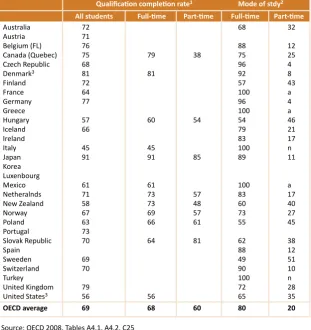
Improving retention rates in tertiary education has become a focus for policy-makers throughout the world (Zepke & Leach, 2007); and this is the case for both campus-based and distance modes of education. The Organisation for Economic Co-Operation and Development (OECD) (2008) calculate completion (survival) rates as the ratio of the number of students who graduate from a degree programme against the number of students who entered the programme. Historically, it is important to note that institutions offering distance education report lower retention and completion rates than traditional face-to-face tertiary providers (Simpson, 2004). Bourke and Simpson (2011) claim that, at lower qualification levels and in particular disciplines, it can be difficult for distance education programmes to achieve 50 per cent retention. In agreement, Simpson (2010) reports that international distance education graduation rates are very low compared with conventional face-to-face higher education; they are sometimes in single figure percentages. For example, at the Open University in the United Kingdom, a report on part-time first year students reveals that only 22 per cent of distance learners who enter an undergraduate degree actually complete their study within 11 academic years (HEFCE, 2009). Notably, 75 per cent of part-time distance learners commencing a degree through the Open University are no longer active in their study after 11 years (HEFCE, 2009).
Similar figures released in New Zealand rank Massey University, the country’s largest university-level distance education provider, at the bottom of the league table in terms of key performance measures including successful course completion and students retained in study. For example, in 2010, around 22 per cent of students (23 per cent in 2009) failed to complete their course of study and 67 per cent were retained in study (69 per cent in 2009) by re-enrolling at Massey University (Tertiary Education Commission, 2011). These figures compare to a national median for universities of 16 per cent for unsuccessful course completion and 83 per cent for students retained in study at the same institution. Like Australian data, the performance measures in New Zealand fail to disaggregate distance learners from campus-based students. Massey University is a dual mode provider with approximately half of its 34,000 students studying by distance.
[image:23.595.132.444.79.410.2]The key point is that it is problematic to make direct comparisons with traditional universities, as distance learners are known to take longer to complete due to managing other work, life and family commitments. Also, what these data do not show is that anecdotal evidence indicates that the success rates for students with declared disabilities are much higher amongst distance providers. Distance providers typically enrol a larger proportion of these students; evidence from the United Kingdom reports they are ‘more likely to continue than those without a declared disability when all other factors are held constant’ (National Audit
Table 3. Completion rates in tertiary-type A education.
Qualification completion rate1
All students Full-time Part-time Full-time Part-time Mode of stdy2
Australia 72 68 32
Austria 71
Belgium (FL) 76 88 12
Canada (Quebec) 75 79 38 75 25
Czech Republic 68 96 4
Denmark3 81 81 92 8
Finland 72 57 43
France 64 100 a
Germany 77 96 4
Greece 100 a
Hungary 57 60 54 54 46
Iceland 66 79 21
Ireland 83 17
Italy 45 45 100 n
Japan 91 91 85 89 11
Korea Luxenbourg
Mexico 61 61 100 a
Netheralnds 71 73 57 83 17
New Zealand 58 73 48 60 40
Norway 67 69 57 73 27
Poland 63 66 61 55 45
Portugal 73
Slovak Republic 70 64 81 62 38
Spain 88 12
Sweeden 69 49 51
Switzerland 70 90 10
Turkey 100 n
United Kingdom 79 72 28
United States3 56 56 65 35
OECD average 69 68 60 80 20
Source: OECD 2008, Tables A4.1, A4.2, C25
1. Completion rates in tertiary-type A education represent the proportion of those who enter a tertiary-type A programme who go on to graduate from at least a first tertiary-type A programme. Tertiary-type A study is study equivalent to bachelor’s level and above, excluding PhD’s and other advanced research programmes.
Office, 2007, p. 20). Another problem in drawing accurate comparisons and establishing an international performance benchmark for effective distance education is that definitions of retention, progression and completion vary between countries. As Nichols (2011, p. 6) observes, ‘student retention in tertiary education is universally regarded as a knotty activity’. That said, the problem of retention is real and, in the current financial climate and rapidly changing global higher education environment, distance providers world-wide are likely to come under increasing pressure to enhance distance learner success.
2.3. Promoting student retention
Student retention is one of the most widely studied areas in higher education, the result of which has been an ever more sophisticated understanding of the complex web of events and interactions that shape student learning and persistence (Tinto, 2006-7). Tinto is recognised as the early pioneer in the study of retention, and his work is frequently quoted because of its central notion of integration. Tinto (2009) identifies five conditions supportive of retention: expectations, support, feedback, involvement and relevant learning in settings that are conducive to learning.
The concept of student engagement is a more contemporary proxy for retention and student success. In a recent literature review, Trowler (2010, p. 4) reports that the concept of learner engagement is commonly defined as ‘participation in educationally effective practices, both inside and outside the classroom’, which leads to a range of measurable outcomes (Kuh, Kinzie, Cruce, Shoup & Gonyea, 2007), and as ‘the extent to which students are engaging in activities’ that higher education research has shown to be linked with high-quality learning outcomes (Krause and Coates, 2008).
Importantly, student engagement in educationally purposeful activities has been positively related to academic outcomes, including retention (Kuh, 2007). Fredricks, Blumenfeld and Paris (2004) describe three dimensions of engagement that can exist in combination: behavioural, cognitive and emotional. Students who are involved and participating demonstrate behavioural engagement and are likely to be on task and following instructions. Cognitive engagement manifests at a surface level through a student’s ability to describe what they have learned or to complete a task accurately and, also, at a deeper level, when a cognitively engaged student initiates self-directed investigation and solving related challenges. Emotional engagement manifests as signs of enjoyment and means that students find learning sufficiently worthwhile to give it their attention.
mission, holding high academic expectations of students, aiming for continuous improvement, investing money in student support services, valuing diversity and effectively preparing students for learning (Kuh, Kinzie, Schuh, Whitt & Associates, 2005).
A major study in the United Kingdom of ‘what works’ in promoting student engagement puts this more succinctly by concluding, ‘[a]t the heart of successful retention and success is a strong sense of belonging’ (Thomas, 2012, p. 6). In short, the lesson is that institutional learning environments matter.
Traditionally, at the centre of the learning environment is the teacher whose qualities, attitudes and behaviours have a direct and significant effect on students’ engagement with learning (Kuh et al., 2007; Parkinson, Hughes, Gardner, Suddaby, Gilling & MacIntyre, 2011) and achievement (Hattie, 2003). Umbach and Wawrzynski (2005, p. 176) go so far as to say that teachers ‘play the single-most important role’. Consequently, positive levels of student engagement have been attributed to active, student-centred interactions as opposed to the simple transmission of content from teacher to student (Trigwell, Prosser & Waterhouse, 1999; Zepke, Leach & Prebble, 2006). In addition to the teacher, student engagement has been seen to benefit when students work meaningfully with peers in groups on collaborative tasks (Krause, 2005). Moran and Gonyea (2003) actually found, albeit from a study of campus-based learners, that peer interactions had the strongest predictive capacity for engagement; even more so than interactions with staff.
However, a number of other factors need to be considered, both in the context of engagement and distance education, as distance learners typically manage competing demands on their time due to other work, life and family commitments. Arguably, distance learners have unique and particular needs that require institutions to promote engagement through a range of targeted services. Simpson (2003), a leading international scholar in the context of distance learner retention, argues that distance education providers need to analyse their own retention characteristics and ‘spot the leaks’. He claims there are many possible services and interventions available that have been known to successfully support the engagement of distance learners, but these are often applied in a seemingly ‘ad hoc’ manner. Simpson (2009) describes this problem as a ‘goulash approach’ to promoting distance learner retention. The lesson here is that student engagement is also influenced by the type and quality of interactions with support staff and learning development services available to distance learners.
helps to weave together the different strands of student engagement, Kahu (2011, p. 12) acknowledges that ‘no single research project can possibly examine all facets of this complex construct’.
The key point is that concerns about retention need to be framed in a complex web of interactions; or as Zepke (2011, as cited in Kahu, 2011, p. 11) proposes, in a ‘dynamic and non-hierarchical network’ in which the factors influencing student engagement are distinct and yet inherently connected.
2.4. Importance of the first year experience
The first year learning experience is very important from a retention and engagement perspective. In Australia and New Zealand, more first-year than returning students withdraw from study (James, Krause & Jennings, 2009; Kift, 2009). From an institutional perspective, the first year is claimed to be the time when the patterns of engagement are set (Pittaway & Moss, 2006) and, therefore, the provision of appropriate supports and interventions in the first year of study have been found to have a positive and sustainable effect on student success (Kift, 2009).
Kift (2009, p. 9) describes an engaging first year curriculum in terms of a ‘transition pedagogy that seeks to mediate the diversity in preparedness and cultural capital of entering students, now so endemic in our mass system’. Kift goes on to promote a ‘third generation’ approach to the first-year experience that moves beyond co-curricular activities to a collaborative and strategic whole-of-institution transformation along six scales:
• Academic challenge
• Active learning
• Student and staff interactions
• Enriching educational experiences
• Supportive learning environment
• Work integrated learning
A major outcome of Kift’s (2009) work I was the identification of six generic First Year Curriculum Principles which aim to provide a set of principles that work together across all disciplines to support learning engagement and, ultimately, retention across disciplines’ (Kift, 2009, p. 9). In framing these, Kift’s (2009) principles were informed by existing research and particularly inspired by the following observation from Nichols (2007, as cited in Kift, 2009, p. 11):
overlap across them – as far as possible they should be defined independently. Fourthly, the effectiveness of the principles should be higher when more principles are operationalised in the same learning design. Fifthly, good principles should also help those wishing to evaluate their assessment designs or their implementations in practice.
With the above indicia in mind, Kift (2009) proposed the following six First Year Curriculum Principles:
• Transition
• Diversity
• Design
• Engagement
• Assessment
• Evaluation and Monitoring
However, in contrast to campus-based students, there has been minimal focus on how to apply these principles to first year distance learners. To date, strategies and interventions designed to support distance learners have not been as solidly research-informed or robustly grounded in a set of overarching principles. Simpson (2009) confirms that services tend to be ‘thrown’ at distance learners, after which it is assumed that they will find the appropriate support from the available institutional toolbox.
2.5. Engagement of first year distance students
An increasing number of students are studying via distance, but little is known about the differences in how these students learn due to their different mode and location of attendance (AUSSE, 2010). Bourke and Simpson (2011) agree that there is currently a low level of understanding about the motivations for distance learning. Put simply, there is a dearth of literature of what actually happens to first time distance students once they have enrolled in tertiary institutions (Basit & Tomlinson, 2012).
The foundation of what is known is largely based on the learning approaches of distance students. The two main forms of learning approach—deep and surface—were first conceptualised by Marton and Säljö’s (1976) and, later, widened to incorporate the notion of a strategic approach to studying (Entwistle & Ramsden, 1983). Entwistle and McCune (2004, pp. 8-9) define these dimensions as follows: (a) a deep approach reflects an intention to seek understanding and meaning through relating ideas and using evidence; (b) a strategic approach is characterised by a focus on studying effectively in order to achieve good grades; and (c) a surface approach appears where the learner focuses on getting through the course, reproducing content by memorising and learning isolated facts.
United Kingdom. They concluded that distance students’ approaches were more aligned with the mission of higher education and were affected by background variables such as gender, age, academic discipline and prior education. However, even with variability is taken into account, pass rates and final grades were related to the way distance learners approached study. In particular, there was a strong negative association between ‘reproducing (surface) orientation’ and academic outcomes (Richardson et al., 1999).
Carnwell (2000) conducted interviews on 20 female distance learners from community nursing disciplines to explore relationships between approaches to study, learning styles and strategies and materials design, and how these impact on the need for support and guidance in distance learning. Although the study was influenced by the literature on learning styles, which attracts considerable debate, the outcome of this research was the identification of three approaches to study, labelled: Systematic Wading, Speedy-focusing, and Global Dipping. The suggestion is that ‘Systematic Waders’ progress through learning material in a sequential and rigorous manner. Meanwhile, ‘Speedy-focusers’ adopt a strategic approach, which involves focussing on what is required, thereby limiting deep learning opportunities. In contrast, ‘Global Dippers’ are disorganised, and their study is characterised by passive engagement with materials, which results in surface learning. While these three approaches are somewhat simplistic in light of the complexity of the factors that influence student engagement, they closely align with the aforementioned deep, strategic and surface approaches respectively (Anderson, Lee, Simpson and Stein, 2011).
Extending this line of research and building on the wealth of literature on study orchestrations (Meyer, 1991), Anderson et al. (2011) explored learning approaches among 176 distance learners in New Zealand. The sample was drawn from the entire population of distance students enrolled during the first semester of an academic year (N = 1609) and ranged from first-year students to those undertaking doctoral coursework, with over two-thirds studying for a postgraduate qualification. The research methodology was quantitative and used a modified version of the ASSIST questionnaire (Approaches and Study Skills Inventory for Students) (Entwistle, Tait & McCune, 2000), which is grounded in the concept of deep, strategic and surface dimensions to learning. Although the study did not exclusively focus on first-time distance learners and, therefore, does little to address a significant gap in the literature, Anderson et al. (2011) explore a fourth dimension referred to as a ‘Dissonant Study Orchestration’, which was found among approximately one-fifth of the sample. The researchers highlight that a dissonant orchestration is linked with poor achievement and suggest that ‘in conjunction with appropriate curriculum and teaching approaches, metacognitive skill development may work to engender study orchestrations consonant with successful learning in distance education contexts’ (Anderson et al., 2011, p. 12).
(2010) claim that over 16 hours of paid work per week can be linked to disengagement. Other external factors placing distance learners under pressure are family commitments with 61 per cent spending at least one hour per week caring for dependents, compared to 37 per cent of campus-based students (Poskitt et al., 2011).
As already discussed, retention and engagement among distance students has previously been attributed from a socio-cultural perspective to these kinds of external pressures (Burtenshaw, Ross, Bathurst, Hoy-Mack & Zajkowski, 2006). For example, according to Kember (as cited in Tyler-Smith, 2006) family circumstances, including the number and age of dependents, housing conditions and the pressures of responsibilities, such as earning an income to support the family, can all have a significant impact on a distance learner’s decision to continue or to drop out from their program of study. The key point is that distance learners are likely to study under conditions that are far less common among first year campus-based undergraduates. As Poskitt et al. (2011, p. 70) observe:
Because of the very different learning environment extramural students are exposed to, and the differences in extramural students’ demographics, backgrounds and commitments to work and family, it could be argued that external students have a very different student experience, and engage with their study differently.
That said, there remains a dearth of research literature that reports the circumstances under which today’s first-time distance learners study. It is important to acknowledge that much of the literature that does exist and anecdotal evidence about the profile of and challenges that distance learners face predates the emergence of new models of online, blended and distance education. Tyler-Smith (2006) makes the point that today’s first-time e-learner is confronted with a number of multi-dimensional learning tasks, including (a) negotiating the technology; (b) negotiating the course website; (c) negotiating the course content; (d) becoming an elearner; and (e) negotiating new forms of online interaction. Therefore, it would be particularly valuable to better understand the experiences of being a first-time distance learner while they study through a modern digital-era distance education provider.
2.6. Listening to first-time distance learners
The chapter has shown that the experiences of first-time distance learners are largely unexplored, especially in the context of a new generation of digitally mediated distance education. However, it is worth noting that this gap in the literature may not solely be related to distance learners. Sharpe, Benfield, Lessner and De Cicco (2005) argue that, more generally speaking, there is a scarcity of research that can be characterised as expressing a ‘learner voice’ in which the learners’ own expressions of their experiences are central to the study Zepke and Leach (2010) assert that more research is required which takes greater account of the ‘soft factors’ that influence learner success. The present study is grounded on the premise that new insights are likely to emerge from a line of inquiry that listens to what students have to say.
the ‘imperfectly understood world of the learner in a digital age’ (JISC, 2007, p. 3). The first phase of the JISC funded research involved an online survey and the second invited a sub-sample of learners to record their impressions of technology-based learning activities in audio logs. The audio logs were followed by interviews to clarify interpretations and allow learners to describe in more detail the nature of their e-learning activities. Although focused on campus-based students, the findings point to a profound shift in the way in which students are working and suggest a rich and complex inter-relationship between students and the new tools they routinely use to support their learning. The study concludes:
It is only by establishing a culture of listening to learners–including those that represent more individual experiences as well as the general trends–that the full range of possible responses will be recognised. Without this understanding, institutions, practitioners and e-learning developers could fail to help learners achieve their full potential (JISC, 2007, p. 24).
2.7. Summary
Chapter 3
Methodology
This chapter describes the research methodology. The study was framed around Design-Based Research involving a mixed method approach over three phases. Phase One involved an audit of current institutional services designed for distance learners at the two participating institutions. Phase Two involved the recruitment of first-time distance learners at Massey University and a pre- and post-semester survey. Phase Three was the major component of the study, which involved gathering the experiences of first-time distance learners from their own point of view using video diaries for data collection. The chapter concludes with consideration of the trustworthiness of the research and a brief outline of relevant ethical considerations.
3.1. Research design
In terms of methodological approach, Design-based research has increasingly received attention from researchers in education as an emerging framework that can guide the development of enhanced educational outcomes. This is because design-based research aims to make a grounded connection between educational research and real-world contexts. It is an iterative process that does not just evaluate an innovative product or intervention, but systematically attempts to refine the innovation while also producing design principles that can guide similar research and development endeavours (Wang & Hannafin, 2005). Reeves (2006) emphasises the interactive and integrative qualities of this research methodology in his definition of design-based research:
... complex problems in real contexts in collaboration with practitioners; integrating known and hypothetical design principles with technological advances to render plausible solutions to these complex problems; and conducting rigorous and reflective inquiry to test and refine innovative learning environments as well as to define new design principles.
3.2. Phase one
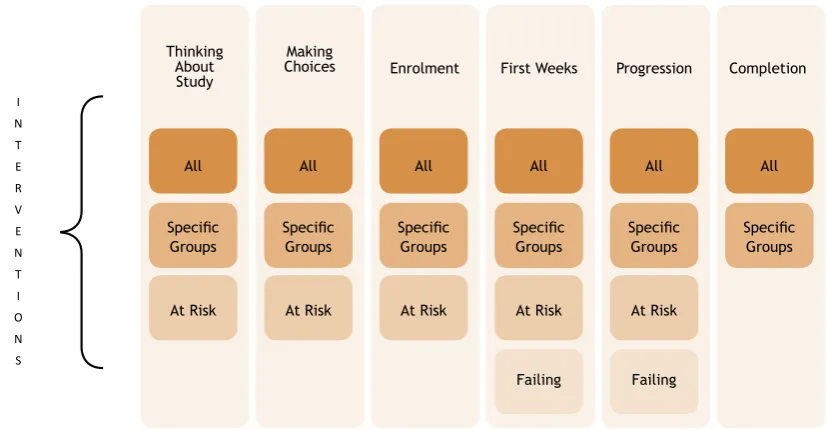
The first phase involved an audit of initiatives designed to enhance the success of distance learners. The audit took place in May 2011 at Charles Sturt University and in June 2011 at Massey University. The primary data collection technique was document analysis. Informal meetings with staff involved in leading the initiatives at both institutions also helped to clarify questions related to specific services and resources. Initiatives were mapped against the conceptual framework developed by MacKay, Shillington, Paewai, Brown, Suddaby and White (2010) to support different interventions across the study lifecycle.
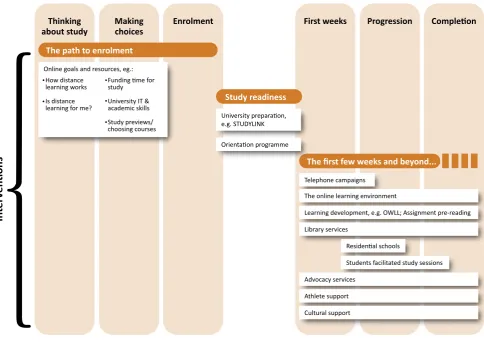
for specific cohorts such as Gifted, Māori, Pasifika, and people with disclosed disabilities, (c) at-risk students—refers to interventions for students who are at risk of failure, and (d) failing students—refers to interventions for students who have been identified as failing. Figure 1 illustrates how Wilson’s intervention pyramid is combined with the key stages of the study lifecycle proposed by the HEFCE (2001).
• ‘Thinking about study’ includes initiatives that encourage a variety of people to participate in tertiary education by raising their aspirations, while helping them begin to understand the learning and teaching methods used;
• ‘Making choices’ includes tools that assist potential students to actively gather information that may help them self-assess their readiness, suitability and capacity for study via distance;
• ‘Enrolment’ includes a well-designed admissions process that can not only help to reduce the maze of paperwork, but also contribute to retention, as the student is better informed and more aware of the expectations of tertiary-level study;
• ‘First weeks’ includes orientation initiatives, as well as retention and engagement strategies relating to the first six to eight weeks of study via distance;
• ‘Progression’ includes initiatives that provide ongoing support for student success and review of the appropriateness of teaching and learning approaches during and beyond the first semester;
[image:32.595.97.511.162.377.2]• ‘Completion’ includes interventions that prepare students for life after their current distance study, which may include strategies to support students as they make the transition to the working environment.
Figure 1: Conceptual framework for student interventions across the study lifecycle
All Specific Groups At Risk All Specific Groups At Risk All Specific Groups At Risk All Specific Groups At Risk Failing All Specific Groups At Risk Failing All Specific Groups Thinking About Study Making
Choices Enrolment First Weeks Progression Completion
3.3. Phase two
Phase Two was undertaken at Massey University. It involved the recruitment of first-time distance learners, followed by a baseline survey leading up to and during Semester 2, 2011. Originally, the plan was to also include a sample of students from Charles Sturt University in this phase, but this was problematic due to the tight timeframe of the study and feasibility of managing a sample across two institutions. There was, also, a decision of whether greater insights from first-time distance learners would be gained by selecting a larger sample from just one university, as opposed to a smaller sample from both institutions. The original intention was to recruit a sample from which just 10 participants would then be invited to participate in phase three. At the time of this decision, the option was left open to repeat phases two and three at Charles Sturt University at the start of Session 1 in 2012, subject to timing and resourcing.
3.3.1. Recruitment
The recruitment of first-time distance learners was undertaken with the written permission of Massey University. Permission was granted to access enrolment data for students studying via distance for the first time in Semester 2, 2011. Although a larger number of first-time distance learners enrol for study at Massey University in the first semester, the research timeframe meant there was no other option but to recruit those commencing in Semester 2. After securing full ethics approval, the primary method of recruitment was by email invitation from the Project Leader to all potential participants at the point when their enrolment had been approved. The initial invitation included a ‘Participant Information Sheet’ along with a link to a participant-facing website which included video introductions from the lead researchers using the same Sony Bloggie™ Touch video cameras that were later provided to participants.
The Information Sheet explained that the greatest benefit of participation for the student was likely to be the activity of self-reflection, which is an important factor in supporting student success. In addition, it was highlighted that participant data would be disseminated across the distance education community to help improve the learning experience for future students. To compensate participants for their time, the Information Sheet explained that a token of our appreciation would be provided upon receipt of participants’ final diary episodes. This token was permission for students to retain the Sony Bloggie™ cameras used for data collection.
3.3.2. Baseline and follow up survey
The recruitment campaign reached more than 750 potential participants, resulting in 160 first-time distance learner volunteers. Because more students volunteered than anticipated, for both ethical and methodological reasons, all volunteers were invited to complete an anonymous online survey.
The survey opened in the week before the official start of semester and remained open for one week. For administrative purposes, it was not possible to make the survey available before this date as not all students had received confirmation of their enrolment, and the University’s database of confirmed students was still dynamic. During the period in which the survey was open, the sample of initial volunteers was sent one reminder email message from the Project Manager.
The survey comprised two sections: a reflective section followed by a demographic section (See Appendix A). The reflective section was structured to gather student perceptions of reasons for undertaking distance study and to explore their perceived approach to study drawing on the concept of deep, strategic and surface study orchestrations taken from the Approaches and Study Skills Inventory for Students (ASSIST) used by Anderson et al. (2011). It was also designed around the Equivalency of Interaction Theory of student interaction with other students, staff and content (Anderson, 2003). The intention of the survey was to gather basic demographic data along with insights and perceived tendencies towards deep, strategic and surface learning, and student preferences in terms of the way they might interact over the program of their study.
A follow-up survey was sent to the same group of 160 volunteers at the end of Semester 2, 2011 (See Appendix B). The survey comprised the same structure as the pre-semester survey and sought to explore respondents’ perceptions of their actual approach to study throughout the preceding semester. It was similarly structured to encompass the concept of deep, strategic and surface study orchestrations (Anderson et al., 2011) alongside the theory of student interaction with other students, staff and content (Anderson, 2003). The objective of the survey was to enable the research team to compare and contrast the pre-semester and post-semester perceptions of respondents. In addition, the post-semester survey also sought to distinguish between respondents who completed their papers and those who withdrew from one or more distance papers. In the New Zealand context, the term ‘paper’ refers to the individual unit of study, which may, in other countries, be known as unit, module or subject.
3.4. Phase three
Phase Three was the major component of the study. This phase drew on the phenomenological research methods literature to document the lived experiences or stories of first-time distance learners from their own point of view using video diaries for data collection. In essence, a phenomenological approach is concerned with understanding particular phenomena from the perspectives of people involved; or stated more simply, the lived experiences of people (van Manen, 1990). Although this approach is often criticised because researchers can end up retelling other peoples’ stories through their own theoretical lens (Casey, 1995), the lifeworld and anti-reductionist principles of phenomenology were applicable to helping to address the gap in the literature from the learner’s voice.
3.4.1. Sampling
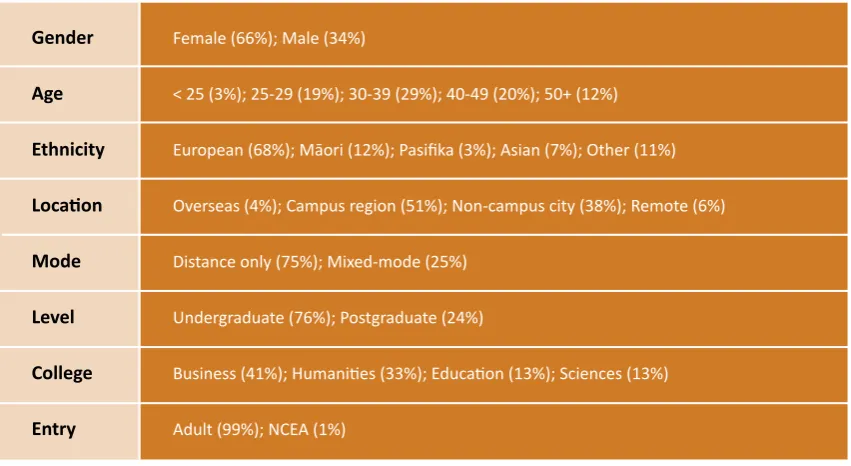
Table 2: Profile of demographic diversity of first-time distance learners
Gender Female (66%); Male (34%)
Age < 25 (3%); 25-29 (19%); 30-39 (29%); 40-49 (20%); 50+ (12%)
Ethnicity European (68%); Māori (12%); Pasifika (3%); Asian (7%); Other (11%)
Location Overseas (4%); Campus region (51%); Non-campus city (38%); Remote (6%)
Mode Distance only (75%); Mixed-mode (25%)
Level Undergraduate (76%); Postgraduate (24%)
College Business (41%); Humanities (33%); Education (13%); Sciences (13%)
Entry Adult (99%); NCEA (1%)
The sampling process was based on selection of those who broadly represented the demographic and geographic diversity of first-time distance learners. The profile of diversity shown in Table 2 was informed by a demographic analysis of the University’s distance students during the 2010 academic year.
Importantly, the sample is not fully representative and was purposively selected to ensure a diversity of first-time distance learners. After careful analysis of the sample of volunteers and background data collected through the baseline survey, 20 participants from phase two received an email request with an attached ‘Participant Information Sheet’ and ‘Consent Form’ to confirm their willingness to participate in the video diary phase.
3.4.2. Data collection
Upon receipt of signed Consent Forms, participants were sent a Sony Bloggie™ Touch video camera via courier to their home address. The Bloggie™ cameras were selected for ease of use and so participants did not have to rely on using their own equipment. Moreover, the cameras ensured that participants were all using the same equipment, which made it easier to start from similar baseline knowledge and to provide relevant training and technical support.
Participants received an orientation document via email, which was designed to support each student in becoming sufficiently confident with the camera to participate effectively (i.e. operating the camera, uploading and submitting data files, etc.). Those students who required additional assistance were contacted by the Project Manager who then helped them to overcome any technical difficulties. As part of the orientation process, participants were asked to record a practice diary within a week of receiving the camera in response to some initial reflective questions.
They required participants to record written answers to specific questions sent at irregular intervals (between 30 and 90 minutes) between 8 am and 10 pm on three separate days. By contrast, Cashmore, Green and Scott (2010) adopted a free-form approach to video diaries in a longitudinal study with undergraduate students at the University of Leicester. In light of the experiences of these studies and the desire to explore particular themes related to being a first-time distance learner, the research adopted methods that struck a balance between a structured and free-form approach.
The initial expectation was that students would provide around five minutes worth of video footage per week; although this expectation gradually changed given that the greater issue was not one of duration, but rather the ‘relevance’ and ‘forthcomingness’ of information. Of the 20 participants, six were less comfortable or forthcoming in their willingness to reflect deeply on their distance learning experience. However, it needs to be noted that some of these students may not have been as skilled at self-reflection. Conversely, three participants were capable of speaking at length (>10 minutes per week) which presented a challenge due to the unstructured nature of their responses. The research team faced the decision of how to accommodate such diversity whi