promoting access to White Rose research papers
White Rose Research Online [email protected]
Universities of Leeds, Sheffield and York
http://eprints.whiterose.ac.uk/
This is an author produced version of a paper published in Library Trends.
White Rose Research Online URL for this paper: http://eprints.whiterose.ac.uk/78128
Published paper
The provision of distance learner support services at UK
Universities: identification of best practice and institutional case
study
Authors
Ms Charlotte Brooke: [email protected] , (44) 7808 295240, , Ryecroft,,
Bessie Lane, The Hills Bradwell, S33 9HZ
Charlotte Brooke completed her Master in Librarianship in 2011 at the University of
Sheffield after having completed a one-year traineeship at the Sainsbury Library, Said
Business School at the University of Oxford. Whilst at the University of Sheffield she was
awarded the Ann Percy award for thebest dissertation in the field of library/information
service management and organization. She is currently preparing to apply for a Phd in
Library and Information Science.
Ms Pamela McKinney: [email protected] (44) 114 2222650, University of
Sheffield, Regent Court, 211 Portobello Street, Sheffield, S1 4DP
Pamela McKinney is a lecturer in Business Intelligence at the University of Sheffield
Information School. Her main research interests are in the pedagogy for Information
Literacy in general and more specifically in the relationship between inquiry-based
learning and Information Literacy. She has presented a number of workshops and
papers at the Librarian’s Information Literacy Annual Conference (LILAC) on this
theme.
Ms Angie Donoghue: [email protected] (44) 114 225 4700, Adsetts Centre,
Sheffield Hallam University, Howard Street, Sheffield, S1 1WB
Angie Donoghue is a Senior Information Adviser in Learning and Information Services at
also part of the Virtual Learning Centre team which supports students who are studying
off-campus.
Abstract
The research was commissioned and conducted in partnership with the Distance Learning
Support Service (DLSS) at Sheffield Hallam University (SHU). It aimed to collect evidence
of best practice at UK university libraries, and developing a better understanding of the needs
and expectations of distance learners at SHU. The research used a mixed methods research
strategy. A review of the literature established key themes and informed the design of the data
collection tools. Librarians from two different institutions were interviewed and two separate
self-completion questionnaires were distributed, one to librarians at UK Universities and the
other to distance learners (DLs) at SHU. Sixty-six librarians responded to the questionnaire
(41 completed) and one hundred and twelve DLs at SHU (109 completed, a 14% response
rate). Results showed limited use of synchronous virtual reference and user education tools.
The biggest challenge faced by librarians is collaborating with course tutors. A marked
difference exists between what librarians believe are the most significant challenges faced by
DLs, and the DLs themselves. Librarians need to experiment with technological innovations,
such as synchronous virtual referencing tools, to increase the effectiveness and efficiency of
future service provision.
Acknowledgements
We would like to sincerely thank Angie Donoghue and the Distance Learner Support
Service at Sheffield Hallam University for agreeing to support this research and for
facilitating access to the students who participated in the study. We would also like to
thank the librarians and students who participated in the interviews and completed the
Introduction
Advances in technology have given university libraries the ability to radically change
the way they provide distance learning support services (Robertson, Sayed & Roussel
2008), with massive potential to continue to do so in the future. Some believe
technology has “effectively eliminated any distinction between ‘around the corner’
and ‘around the world’” Robertson et al. (2008, p. 267). Others think it does not
remove the fact that “distance still rules the experience” (Brahme & Walters, 2010, p.
484).
Distance learners (DLs) can be defined as “those who are separated by distance or by
available time from the institution at which they are registered for a course of study”
(Heaps, 2001, p. 2). DLs face significant barriers to gaining the same benefits from
library services as traditional, on-campus students. Academic libraries have a
responsibility to meet the needs of all students and should aim towards an ‘equality of
provision’ (Heaps, 2001; ACRL, 2008). However, learning at a distance results in
inequalities that cannot be entirely overcome. Instead these must be compensated for
to ensure “effective and appropriate” library provision for distance learners (ACRL,
2008).
Universities are expecting to see a rise in numbers of distance learning students. The
current economic downturn has resulted in the newly unemployed looking to gain
Mulvihill, 2010). Additionally, the impact of increased student tuition fees in the UK
could cause a considerable expansion in the number of students studying at a
distance, with distance learning moving further into the mainstream provision of
universities and their libraries (Heaps, 2001). This comes at a time of reduced library
budgets and an increasing demand for an anytime, anywhere library service (Jagger,
2007).
An increase in purely online distance learning courses has led to the adoption of the
term ‘e-learning’ to describe the use of information communication technologies for
learning and delivery of instructional materials (Rudestam & Schoenholtz, 2010). The
growth of e-learning will present new challenges for libraries in developing,
managing and delivering services and resources (Yen, 2009).
Librarians have had to embrace technology to enable and enhance service provision
(Jagger, 2007). Adoption of new technology by distance learning support services has
altered methods of provision considerably in recent times, enabling libraries to reach
out to the distance learner community in increasingly diverse ways (Casey, 2009).
Librarians will also need to consider learners and the learning process when adopting
new e-learning technologies (Yen, 2009). Innovative use of technology is essential to
supporting distance learners at the point of need (Draper & Turnage, 2007). Together
with a greater understanding of the concerns, needs and information behaviors of
distance learners (Byrne & Bates, 2009), this will enable the provision of a higher
However the learning process is described, for participants their central concern is
gaining “timely access to information …and help in a manner that matches their
needs” (Heaps, 2001, p. 4). The main goals for distance learning librarians should be
to drastically reduce barriers to accessing resources and services, combined with
enabling distance learners to become information literate and independent learners
(Jagger, 2007).
Much of the previous research has centered on specific areas of library support,
students on particular courses, or has not been carried out in the UK (Bryne & Bates,
2009; Ralph & Stahr, 2010; Parsons, 2010; Thompson, 2010; Batson-George, 2007).
Whilst more general surveys in the UK have been carried out, the speed of
technological innovation means they quickly become dated (Hitchen, 2005; Lock &
Norden, 1998).
The current study, conducted as a research component of a MA in Librarianship, and
in partnership with the Distance Learner Support Service (DLSS) at Sheffield Hallam
University (SHU), aimed to fill this gap by collecting current evidence of best
practice, establishing the needs and expectations of DLs, and comparing the views of
academic librarians and DLs. From this investigation recommendations for change
can made to enable a higher quality of service provision within DL support services
now and in the future. The study was conducted in spring and summer 2011, with
The DLSS has been running at SHU for nearly twenty years. Consequently it was
thought the study would provide a great opportunity to review the service offered in
the light of a sector comparison and feedback from SHU students.
In initial meetings between the researcher and the Manager of the DLSS at SHU, the
background and rationale of the service was discussed. As a victim of its own
success, more and more course leaders are requesting DLSS support for their
students. The range of resources available to students at their fingertips has developed
beyond recognition during the existence of the DLSS. The software now used for
resource discovery and retrieval has given opportunities to distance learning students
that were unknown when the service began. The DLSS at SHU is constantly seeking
new ways to help students access and understand resources and information skills
teaching has changed considerably over this time. As a result of these developments
it is now able to support far more distance learning students than previously.
However, the DLSS realizes that students who never come to the university do have
specific needs and is keen to identify what they are and see if they can meet them.
With this in mind four key objectives were set for the study:
i. To identify the methods used by UK university libraries to support distance
learners.
ii. To identify challenges faced by librarians within distance learner support
services when supporting distance learners, and determine where opportunities
iii. To identify the current needs, expectations and perceptions of distance
learning students at SHU
iv. To identify similarities and differences between the opinions of distance
learners at SHU and librarians within distance learners support services at UK
Universities, in terms of perceived needs and challenges faced by distance
learners.
In this study the term ‘distance learner’ is used interchangeably with ‘off-campus’
and ‘non-distance learners’ with ‘on-campus’ students. The next section reviews
previous literature on the way in which academic libraries support DLs. Further
sections look at the methods used and the key findings, which are subsequently
discussed in relation to the academic literature before drawing conclusions from the
research together with recommendations for change. This paper is based on an
unpublished Masters dissertation (Brooke, 2011), which provides further details of
the study including copies of the data collections tools.
Literature Review
Awareness of the need to increase the adoption of distance learning as a method of
delivering further and higher education courses has risen in recent years. Rudestam &
Schoenhltz-Read (2010) describes how the adoption of “the online environment as the
teaching vehicle of the future” requires us to re-access long held views on “pedagogy
addressed include how best to use innovations in technology to enhance learning.
Together with the need to recognize the “nuances & implications” of computer based
distance learning to better meet its potential, whilst being aware of the realities faced
by all stakeholders (Rudestam & Schoenhltz-Read, 2010). The term ‘blended
learning’ is seen by some in the literature as the most accurate term to describe the
current trend of incorporating distance learning technology and the Web into the
educational process.
Social interaction during the learning process is a key element in the learning process
(Allen,2002). Communication with students is essential, the adoption of social
networking tools enables students to become actively involved in the learning
community (La Pointe & Linder- Vanberschot, 2012). A key element of distance
learning is ‘educational freedom’ which has been revived through the use of mobile
technologies, which empowers students by allowing them to access course material
anywhere and at any time (Parson, 2010).
It is important that the underlying principle of distance education is not simply to
increase student numbers but to continually improve the services provided to
students. The existence of online courses has resulted in the increasing access by
non-traditional students with the removal of non-traditional intuitional boundaries to expertise
and knowledge. Institutions will not be able to simply move a traditional classroom
approach to learning into an online environment. Instead they will have to be a move
towards a ‘pull’ rather than a ‘push’ of information to DLs, which is highly
of the creation and dissemination of knowledge with the use of Web 2.0 tools
(Rudestam & Schoenhltz-Read, 2010).
Library Resources
Increased availability of e-resources has not completely removed the need for
physical access via postal loan services (Bower & Mee, 2010). Difficulties with its
provision are mainly due to budgetary concerns, meaning it is often only available to
students living a designated distance from the institution (Long, 2009), resulting in a
lack of provision to overseas students (Hitchen, 2005).
Increasing availability of library resources within virtual learning environments
(VLEs, also known as learning or course management systems) is common practice
across higher education (Keates, 2008), indicating the blurred line between on and
off-campus students (Bower & Mee, 2010). However, intellectual property and
copyright law impacts heavily on the digitization and distribution of material within
VLEs (Alsaffer, 2007). One solution is the expansion of e-book collections with
advantages escalating as greater standardization of formats occurs (Kramer, 2010).
The potential of mobile learning to enable increased flexibility and seamless
incorporation of libraries into DLs’ daily lives, has been recognized by libraries as the
next step for distance learning support services. However, there are barriers to be
User Support
Central to meeting DLs’ expectations is providing timely access to library support
(Heaps, 2001; Secker, 2008). DLs should be taught to use the library in an
independent and effective manner, so complexities are overcome not removed for
them (Kramer, 2010). User education should be available at the “point of need”
(Gruca, 2010), ensuring it is immediately relevant (Dieterle , Dipert & Jarzemsky ,
2007; Lamond & White, 2008), and targeted at DLs using appropriate and diverse
communication strategies (Henning, 2010; Hemmig & Montet, 2010).
Librarians should be proactive in maintaining a ubiquitous presence within the virtual
classroom using Library 2.0 technologies (Newton, 2007; Primus, 2009). This should
include embedding information literacy tutorials (Black & Blankenship, 2010;
Hensley & Miller, 2010) and designing web-based learning modules to replace the
loss of physical interaction with librarians. (Figa, Bone & MacPherson., 2009;
Dieterle, 2007).
It is beneficial to fully integrate information literacy skills as core competencies into
the curriculum (Newton, 2007; Robertson et al, 2008; Primus, 2008); and this requires
collaboration of librarians with tutors during course development committee meetings
to create close links with individual courses (Heap, 2001; Whitehair, 2010; Hensley
& Miller, 2010). Librarians could ensure the library is viewed as a valuable resource
if invited to engage as mainstream distance learning course development committee
By gathering DLs’ opinions and recognizing the diversity of students, instruction can
be adapted appropriately (Brahme & Walters, 2010; Hensley & Miller, 2010; Gruca,
2010). Using tailor-made software allows DLs to complete sessions at their own pace
in a non-linear manner (Kramer, 2010). Web-based training can provide 24/7 access
(Whitehurst & Willis, 2009; Kramer, 2010; Hensley & Miller, 2010).
DLs’ inability to interact directly with librarians should be addressed (Whitehair,
2010), and potentially this could be through the use of virtual reference (VR) tools to
improve service provision (Rao, 2007).VR services are “initiated electronically, often
in real-time, where patrons employ computer …. technology to communicate with
reference staff, without being physically present” (Kern, 2009, p. 1). VR services can
be provided using either synchronous or asynchronous methods (Rudestam &
Schoenholtz, 2010; Robertson et al., 2008).
Asynchronous methods, i.e. communication from one person received at a later time
(Kern, 2010), such as tutorials, can be made accessible on library webpages or VLEs
(Kramer, 2010; Dieterle et al, 2007; Draper & Turnage, 2007). Tutorials, using for
example Adobe Connect or Blackboard Collaborate, can be created so students can
learn basic concepts. The advantage of such forms of instruction are that students can
access them at any convenient time, enabling them to assimilate advice and try things
out in their own time, before returning to ask further questions (Koury, Francis, Gray,
Jardine & Guo., 2010; Kramer, 2010).
Synchronous instruction, where communication happens in real-time (Kern, 2010),
ability to mimic face-to-face contact with librarians provides a stronger sense of
learning community (Kramer, 2010; Barnhart & Stanfield, 2011). This can take the
form of co-browsing, videoconferencing or screen sharing, as well as the use of
virtual worlds such as Second Life (Kramer, 2010). Second Life is being used to
create virtual reference desks (Ralph & Stahr, 2010), but there are issues surround
staffing levels needed to provide a continuous service.
According to Barnhart and Stanfield (2011), the use of live and interactive tools is
crucial to successful information literacy training. Librarians should constantly
experiment with new technologies, mediated by an awareness of the potential
challenges they and DLs face (Whitehurst & Willis, 2009). User education should be
highly accessible to fit in with DLs’ busy lives and should aim to facilitate life long
learning (Gruca, 2010; Cooke, 2010; Barnhart & Stanfield, 2011).
Librarians can offer the same level of service traditionally provided to on-campus
students in “untraditional ways” (Cohen & Burkhardt, 2010, p. 267). Relationships
can be developed with distance learners by providing a highly personalized service
(Cohen & Burkhardt, 2010). A sense of community can be established by increasing
communications channels using library related discussion forums, moderated by
librarians, to enable peer-to-peer support (Figa et al., 2009). It is recommended that
VR tools should be embedded within the virtual classroom in order to fully mitigate
against the inequalities experienced by DLs (Figa et al., 2009).
VR methods can also be synchronous or asynchronous (Bower & Mee, 2010), for
make answering in-depth enquiries difficult, prevent support at the point of need and
result in drawn out reference interviews (Meulemans, Carr & Ly, 2010; Figa et al.,
2009), causing frustration for DLs and librarians (Glassman, Habousha, Minuti,
Scwartz & Sorensen, 2009).
E-mail does have advantages, including the ability to access content at any time.
Librarians can make more considered and detailed responses without the pressure of
answering multiple questions at once. DLs can digest answers before using the
strategies suggested, and asking further questions (Kramer, 2010).
Whilst some believe Instant Messaging (IM) software provides a “more robust way to
support distance learners” (Meulemans et al., 2010, p. 4), contradictory evidence
exists. Others have experienced low usage levels, perhaps due to technological
problems and the perception that IM is not for formal use. Clarification is also needed
to determine whether access to and utilization of library assistance is increased
(Meulemans et al., 2010).
Screen sharing, co-browsing and web conferencing software enables efficient
synchronous help at the point of need, whilst accommodating different learning styles
(Glassman et al., 2009; Meulemans et al., 2010). Despite the increased potential of
technical problems arising and movement away from the intended discussion topic,
this is mitigated by the ability to clarify or refine questions (Glassman et al, 2009;
Kramer, 2010).
resulted in the need to provide a diverse range of library services that enable the
effective use of information resources vital to the support of successful distance
learning courses (Johnson et al., 2011).
Despite this, there appears to be no widely known or available set of guidelines within
the UK for the provision of Distance Learning Support Services (DLSS). Johnson et
al. (2011) does however set out detailed guidelines for electronic reference services
for Distance Learners (DLs), which cover areas such as policy statements and
planning, e-resources, IL skills training, e-reference services and staff training.
By collecting evidence of best practice and comparing the views of academic
librarians and DLs, it was hoped to fill this gap and establish where changes should
be made to provide high quality DLSS, now and in the future.
The literature reveals a multitude of ways to use technology to provide library
resources, user education and information enquiry services for distance learners, who
may feel isolated from peer-to-peer and library support (Kramer, 2010). However
there is seemingly no established ‘best practice’ for providing electronic resources
and support for students, and disagreement exists over the most suitable methods to
provide virtual reference services to DL students. Essentially librarians are not sure
which innovative technologies should be used generally, and more specifically which
should be used to provide synchronous user education and virtual reference. This
study aims to provide a body of evidence in the rapidly changing area of distance
learning support services in the UK to give librarians an insight into which
Much of the literature reviewed has focused on defining DL support from the point of
view of librarians, and it is vital to also consider the views of DL students themselves.
Distance learning librarians must ensure that DLs are aware of the services and
resources they provide (Hensley & Miller, 2010), complimenting this with an
awareness of the expectations and needs of DLs so relevant and targeted services are
provided (Hensley & Miller, 2010). An awareness of the diverse nature of the
distance learner community is essential (Nickel & Mulvihill, 2010). This will
ultimately come from surveying DLs and environmental scanning to identify best
practice within UK academic libraries.
This study surveys a small population of DL students at a typical post-1992
University in an attempt to understand the actual needs of DLs. These are compared
with what distance learning librarians at UK universities perceive DL needs to be,
with the aim of establishing any discrepancies between the views of the two
populations.
Methodology
A mixed-methods approach was taken to find “practical solutions to real world
problems” (Denscombe, 2007, p. 108). Literature searches were conducted and used
to directly inform the content of questions used in all research instruments. The
majority of data collected was quantitative, using closed questions within one
questionnaire sent to DLs and one to librarians. The qualitative data were collected
through interviews with DL support librarians from two different institutions and with
To establish the opinions of DLs, students currently taking courses at UK universities
were selected as the target population. A convenience sample (Bryman, 2008) of DLs
at SHU was used, taken from a database managed by the DLSS to avoid data
protection issues. Although generalization was not possible it was hoped an
informative “snapshot” could be taken to improve future practice (Denscombe, 2007).
The second target population was DL support librarians at UK universities. The
study attempted to survey the entire population since the assumption was made that it
was sufficiently small enough in size to do so. Questionnaire participants were
recruited in two main ways: firstly through direct e-mails to twenty-three librarians
identified through analysis of University web sites as having responsibility for
distance learner services at nineteen different institutions; and secondly via general
advertisement on relevant national listservs. The research was focused on gathering
views and opinions of individual librarians and data regarding institutional affiliation
was not gathered. However it was possible to confirm from the results that at least
three responses were received from librarians at the Open University, which uniquely
in the UK offers exclusively distance learning courses. By focusing on the opinions of
individual librarians the research was able to collect data from libraries where no
dedicated DL support service exists and practice may differ depending on which team
supports DLs.
Semi-structured interviews with three DL librarians were conducted. Answers given
facilitated the generation of fixed-choice questions (Bryman, 2008) and enabled the
conducted to ensure that “the research instrument as a whole functions well”
(Bryman, 2008, p. 247). As a result of the pilot questionnaires, several changes were
made to the wording and questions asked.
The Survey Monkey tool was used to create self-completion Internet questionnaires
so the two population groups could be surveyed within the time constraints. The
questions asked in both questionnaires were targeted at meeting each of the research
objectives. Specific questions were asked that would enable a direct comparison
between the views of librarians and DLs to be made. The content of both question and
answer categories were drawn from three main sources: current literature, interview
responses and SHU’s DLSS.
SPSS software was used to analyze quantitative data using descriptive statistics to
interpret patterns. Open questions were coded and categorized so that themes within
the qualitative data (Creswell, 2009) could be identified and analyzed (Denscombe,
2007).
The study was approved by the University of Sheffield Information School’s
Research Committee and complied with the University’s research ethics policy,
ensuring it was conducted in a valid manner and followed the specific code of
Results
The results from the two separate questionnaires in the study1, one distributed to UK
university DLSS librarians (sixty-six respondents, forty one complete) and the other
to distance learning students at SHU (112 respondents,109 complete), are presented
thematically below, to enable comparison of the views of DLs and librarians in key
areas highlighted through the literature review. Librarian (L) and distance learner
(DL) respondents are identified by alphanumeric codes to facilitate comparisons.
Organization and Management of Distance Learner Support Services
Rather than having a single dedicated team, it is more common (46.3 percent of
librarian respondents) for the responsibility of providing distance learning support
services to be split between separate teams within the library, depending on what is
most relevant to their role, e.g. subject librarians support DLs with subject specific
enquiries. 70.7 percent of librarians surveyed stated that their library had dedicated
distance learning library webpages, and these most often contain information about
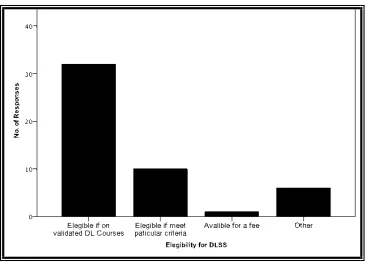
the services provided and links to information literacy support. 78 percent of librarian
respondents stated that students must be on validated distance-learning courses to be
eligible to use distance learner support services.
1 Copies of the original questionnaires are available from:
Figure 1 How is the provision of support services to DLs with in the library organised.
The use of a specific patron code within the library management system (LMS) was
the most frequently (36.6 percent) used method to identify DLs. 83.3 percent of
librarians did not currently allow other library users to access the DLSS for a fee.
[image:20.595.90.457.457.719.2]Despite 95 percent of librarian respondents stating that it is important to collaborate
with faculty to support DLs, many librarians do not attend course committees or
course planning meetings.
Provision of Library Resources
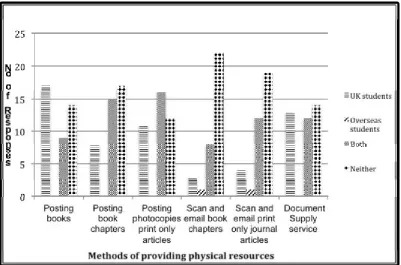
The results revealed disparities between the services found most valuable by distance
learning students and the service most often provided by DL support services (see
Figure 3). Whilst 88.5 percent of DLs find receiving scanned resources by e-mail
very useful, only 40 percent of the surveyed librarians provided this service to either
UK or overseas students. Similarly, the service most often used by DLs is receiving
books by post (62 percent of respondents), with 91.4 percent finding this service
extremely useful/useful, but 35 percent of librarians surveyed do not provide this
[image:21.595.91.492.457.722.2]service.
Importance was placed on ensuring more mobile-compatible e-resources are made
available to ensure libraries meet the predicted increase in demand (L1, L21). DLs
stated difficulties accessing resources arose due to “not enough availability of
electronic books” (DL9) together with compatibility issues with some e-readers.
When asked why they had not made use of the DLSS, 77.8 percent of students
responded that they found information resources elsewhere, and 80 percent stated that
they lacked awareness of the service. When using libraries other than at SHU, DLs
used work place libraries most frequently (32 percent). The location “closer to
work/home” was the main reason for using a library other than at SHU (56 percent).
User Support
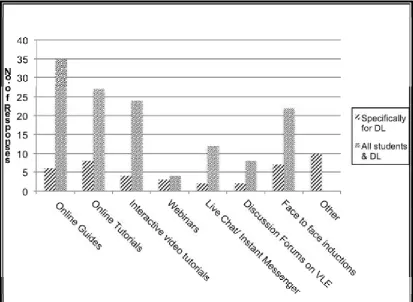
The methods most often chosen by librarians to provide user education is through
online guides (53 percent) and tutorials (41 percent), with no distinction made
between on and off-campus students. DLs most frequently stated that online guides
(67 percent) and tutorials (62.5 percent), compared to other methods, are a useful
method for learning library related skills. Figure 1 shows the different methods
Figure 4. Methods of User Education
Librarians recognized that information literacy training should be “embedded in
courses” (L13) to improve accessibility and skill levels.
When providing information enquiry services to DLs the two most frequently used
methods were telephone (27.7 percent) and email (29.1 percent). DLs most frequently
preferred and were satisfied with using e-mail to contact the library (53.5 percent).
Despite the desire for easier ways of contacting the library, the majority of distance
learners surveyed did not use the IM service provided at SHU (53 percent). IM is the
third most common method of providing an information enquiry service reported by
Enhanced methods of electronic communication seem to have value for both
librarians and DLs. Librarians supporting DLs on graduate taught programs were
frequent users of Facebook, Twitter and videoconferencing software, and in libraries
where DL support service provision is shared across teams it was common to use IM
and discussion forums to support distance learning students. There is demand from
DLs at SHU for contact via discussion forums on the VLE to be made available, with
40 percent of DLs stating it would be very useful/useful.
Course tutors were the first port of call for 47.7 percent of distance learners when
they needed help with finding information for assignments. Overseas students were
more likely to use librarians at local libraries compared to UK students (54.4 percent
vs. 45.5 percent). DLs aged thirty-one to forty were most likely to seek help from
people other than librarians at SHU, including people on the course (66.7 percent) and
Main challenges faced by librarians and distance learners
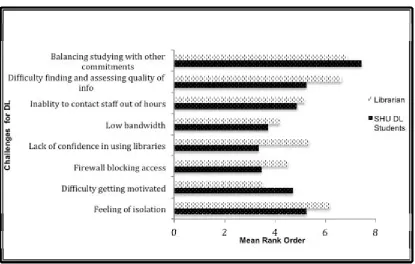
Figure 5. Librarians’ and students’ views of challenges for distance learners
The challenges the librarians face when supporting distance learners fall into three
main categories: a lack of resources, diversity of student background, and difficulties
establishing collaborative relationships with course tutors. Librarians believed that
there was a lack of “engagement” (L9), “information sharing (L11) and
“understanding/appreciation” (L40) with course tutors. Poor communication
prevented them knowing “exactly what distance learners require” (L1) and “which
students are registered as distance learners” (L5).
Similarities and some disparity exists between what librarians think DLs find
challenging and the reality reported by DLs. In their respective surveys librarians and
DLs were asked to rank the challenges faced by distance learning students. Figure 2
compares the rankings of the two groups. Librarians and students agreed that the most
However, librarians ranked students’ difficulty with finding and assessing the quality
of information ( Seven vs. five) and lack of confidence with using libraries (Five vs.
three) much higher than the DLs.
In fact a lack of confidence is seen by DLs as the least challenging factor, with 69.4
percent of respondents perceiving themselves to be very confident in using library
services. To ensure high levels of confidence exist DLs felt it was important to “make
contact .... at the beginning of their program”(DL58) “ with clear instructions on how
to use it!” (DL18). There is also “no substitute for face-to-face contact” (DL12)
Librarians responded that the challenges faced by DLs might be reduced or changed
in the future due to further “improvement [s] in technology” (L5) helping to “bridge
the gap” between traditional students and DLs’ learning experience (L18), using
“more varied methods of communication” (L5) to ensure distance learners have the
“same level of access to resources” (L18).
The future of Distance Learning Support Services
Eighty-one percent of librarians thought that the number of DLs would increase due
to increased tuition fees. Potentially this could cause increased expectations and
changing “demands of distance learners” including wanting “more for their money”
and “increased pressure for library staff/support to be accessible 24 hours” (L1), with
librarians having to “be more responsive and efficient” (L6), offering a more
The results show that sixty-six DLs learners think it is unlikely that in the future they
will have to charge some students to use DL support services. In comparison 60
percent of librarian respondents with only a minority (less than 40 percent) of DLs on
undergraduate courses think that charging a fee in the future is very likely/likely.
One librarian stated that in the future DL support services would be “moving further
and further away from the sort of very personal service… offer[ing] a ‘personalized’
service but it would be personalization on more of a mass scale” (L1). The other
librarians surveyed contradicted this, most commonly (29 percent) seeing the
continued importance of personal interaction with DLs. Instead they believed it was
more likely that they would have to become increasingly flexible (45.5 percent).
Opportunities for improvements to DL support services include increased usage of
“virtual reference service[s]” (L1). Librarians surveyed most frequently strongly
agree/agree that increased integration into the VLE presents a significant opportunity
for improving distance learner support services (59 percent). DLs agreed, with 46.1
percent wanting to see the introduction of discussion forums within the VLE. DLs
wanted to see a change in the “point of contact” and an “increased presence on each
module space on Blackboard” (DL13) ensuring “timeliness of help” (DL99). In
addition, DLs wanted to see the introduction of a facility to make “postal service
Discussion
The results revealed a great deal of noteworthy points for discussion. The focus of
what follows is on key themes deemed most relevant to DL support service librarians.
Provision of Library Resources
Findings from the current research support the views found in the literature that
provision of physical library resources via postal loans is a valued service for all
students, but in UK universities is usually only made available to UK students due to
issues of cost, despite the continued need of overseas students (Bower & Mee, 2010).
Overseas students are frustrated by lack of access to book-based material when this is
combined with insufficient access to e-books. As mentioned by Nie, Armellini,
Witthaus & Barklamb (2011, p. 35) e-books make studying easier for DLs who
“value flexibility and learning on the move” as when downloaded onto e-readers they
enable portable access.
Increasing access to e-books is not without difficulties, including issues of copyright
mentioned both in the literature (Nie et al., 2011) and by librarians surveyed in this
study, preventing access to core texts on e-readers. A solution may be to encourage
DLs to access e-material via personal e-readers, smart phones and other mobile
reading devices. However, as mentioned by a distance learner at SHU, a barrier can
be created due to a lack of compatibility between publisher-provided content and
individual devices.
User education
Evidence from the current study shows that online guides and tutorials are the most
popular methods of providing user education to DLs. This is at odds with the
literature, which centers on synchronous methods of provision such as IM,
discussions forums and Second Life (Kramer, 2010; Ralph & Stahr, 2010;
Meulemans et al., 2010). Hensley and Miller (2010, p.679) explain the importance of
connecting with DLs personally in the “curricular environment” and becoming aware
of how DLs perceive their own information literacy skills. Further, it appears from the
results that little differentiation occurs between on and off-campus students, with a
‘macro approach’ taken (Black and Blakenship, 2010) to user education. Greater
differentiation of the needs of could increase the adoption of synchronous tools.
Gruca (2010) believes that computer-based tutorials do not reduce library anxiety,
and that blended learning is optimal. Despite this, DLs at SHU seem satisfied with
them, perhaps because of their accessibility at the point of need, identified by
previous research as important (Gruca, 2010; Figa et al., 2009; Bower & Mee, 2010;
Kramer, 2010). Therefore the current practice of ensuring guides and tutorials are
integrated into the library website should continue.
Information Enquiries
The majority of librarians surveyed use e-mail and telephone to provide virtual
information enquiry services rather than synchronous methods of communication.
However, the literature places importance on using both asynchronous and
synchronous tools (Virkus, 2008; Henning, 2010; Barnhart & Stanfield, 2011). Web
instruction through live, interactive demonstrations and two-way communication. The
study recognizes that to overcome challenges faced by DLs changes to current
practice at UK university libraries are needed.
Feelings of frustration, on the part of both DLs and librarians, with using e-mail to
support information enquires are expressed in the literature (Glassman et al., 2009;
Figa et al., 2009). However these are not mirrored in the findings of this research. A
reason for this could be that e-mail has advantages over real time VR tools, such as
accessibility of replies at anytime (Kramer, 2010).
Evidence from previous research and the DLs surveyed shows the majority have not
used IM (Cummings et al., 2007; Chapman & Del Bosque, 2004; Wan et al. cited by
Meulemans et al., 2010), which is contradicted by Meulemans et al. (2010).
Main challenges faced by librarians and distance learners
Librarians Librarians recognize the importance of collaboration with course
tutors, but often found this problematic and difficult to achieve. This prevents a full
understanding of the support offered by the library, together with a lack of
“engagement” (L9), “information sharing” (L11) and “appreciation” (L40) by course
tutors. It is clear that continuing efforts to collaborate with faculty are essential to
increasing awareness of the library’s value, services and resources for distance
Every opportunity should be taken to build relationships and work alongside faculty
to make links that benefit DLs (Owens & Bozeman, 2009),including involvement in
curriculum planning and course meetings. Invaluable outcomes from such
collaboration include an awareness the percentage of DLs within the student
population, further integration of librarians into course modules and recognition of
information literacy as a core competency (Hitchen, 2005; Robertson et al., 2008).
Another challenge faced by the librarians surveyed is meeting the needs of DLs with
increasingly diverse backgrounds, previous educational experience and levels of
information literacy. This challenge partially results from an upsurge in continued
professional development courses and globalization of the market place (Heaps,
2001).
Distance learners The evidence shows there are similarities, and also marked
differences, between what DLs actually find most challenging and what the librarians
surveyed perceive as DLs’ greatest challenge. There is agreement that, on average,
balancing studying with other commitments is the biggest challenge for DLs. This
results in difficulties for students in fully benefiting from libraries and consequently
the provision of convenient support is essential (Whitehair, 2010; Barnhart &
Stanfield, 2011). Technology has a crucial role to play in this (Bryne & Bates, 2009)
and in enabling the provision of comparable levels of access to resources, services
and support as on-campus students.
The literature reflects responses made by librarians in the current study, that one of
the greatest challenges DLs face is difficulty finding and assessing information
of confidence with using libraries. Needham & Whitsed (2009) highlight this
disparity between the perception of DLs and evidence indicating a lack of information
literacy skills necessary for academic study.
The future of Distance Learner Support Services
Changes to DL support services requested by DLs clearly indicate that wider
availability of support is needed, including multiple contact points and access to
support outside library opening times. Importance should be placed on providing
proactive, targeted and regular support at the point of need for DLs (Lamound &
White, 2008; Byrne & Bates, 2009; Gruca, 2010). Disagreement exists between
librarian respondents on whether this should be achieved by entirely or only partially
moving away from a very personal service towards “personalization” on a mass scale,
similar to the Amazon model (Secker, 2008).
The findings of this research indicated the desire of DLs for more dedicated online
“hands on help and guidance” (DL107). Hensley & Miller’s (2010) survey of DLs
reflects this need for more instruction and communication with designated DL
librarians. Librarians recognized the significant opportunity for doing so created by
embedding librarians within the VLE. Allowing direct access to library resources
from the VLE enables their assimilation into the student’s workflow.
The research of Figa et al. (2010, p. 73) and the current study reveal how embedded
librarians can facilitate peer-to-peer support by providing a “collaborative forum”,
significantly enriching students’ educational experience and leading to increased
Henning (2010, p. 442) describes moving from “fourth generation: flexible learning”
to “fifth generation: intelligent flexible learning” where “technologies to facilitate
interactive responses and immediate automated responses are included”. This might
be achieved through the adoption of mobile learning technologies, integrating the
library into DLs’ daily lives (Parsons, 2010). Librarian respondents recognized the
significant opportunities arising from the adoption of innovative technology.
However, this did not include use of VR services, which were not seen by librarians
as a significant way to develop the provision of support. Previous research discusses
how technological innovations such as Second Life and videoconferencing can
improve the provision of user education (Ralph & Stahr, 2010; Barnhart & Stanfield,
2011).
Putting the results into practice at Sheffield Hallam University
Something that came out very strongly from the research was that distance-learning
students needed more support in accessing resources off-campus. It was found that
students were not getting enough information about the service or how to use it. The
study also indicated that more and better use of new technology would be beneficial
to some students.
As well as continuing efforts to improve these areas, many of the points made in the
research would also be helped by improved working partnership relationships with
the academic staff who design and deliver the courses, usually via the VLE. By
working more effectively with academic staff librarians might avoid some of the
As a direct result of the findings of the research, the DLSS has improved the
information available to distance learning students within their e-learning modules.
Information about the DLSS has always been available within the student portal but
now it can be specifically included within the courses that are supported. The service
has produced a screen-cast detailing the services offered by the DLSS and how to
access them. This is available in YouTube, within the student portal, in individual
courses, and from a link on the DLSS email signature. Some library staff have also
delivered virtual information skills sessions synchronously using Adobe Connect.
There is an IM option for students, but this has not been widely used. Many of the
services currently offered to distance learning students by the DLSS are being
automated and provided to all students by other parts of Learning and Information
Services at SHU, for example 24/7 IT Help, a virtual enquiry service, an automated
document supply system.
A review of the DLSS has now been incorporated into next year's annual plan for
Library and Information Services at SHU and both the student views and the
benchmarking research will certainly be a valuable contribution to this. The service
manager also hopes that following the review there will still be a way for distance
learning students to receive the holistic support and attention they currently value, as
Conclusions
The research gives a wide-ranging overview of how libraries at UK universities are
currently supporting DLs. Although a clear picture is established of where initial
changes are needed to DL support services, a deeper understanding of individual
elements is required to provide a stronger foundation for more radical alterations.
The study indicates that the DLs’ needs and expectations are likely to be affected by
the rise in tuition fees, however the exact detail of the impact on DL support services
is not yet clear. Nevertheless it is increasingly likely that access will have to be
widened to include the growing number of non-distance learning students who are
studying at a distance. This will cause additional pressure to be put on libraries at a
time when extra resources are scarce.
Evidence from the research shows that services will have to become more flexible to
accommodate any expansion in the number of DLs. This will include innovative use
of technology to ensure more efficient access to user education that also
accommodates diverse learning styles. Despite contradictory evidence within the
study, personalization of services on a mass scale may also be needed.
The literature shows that greater collaboration with faculty is essential to successfully
embed librarians within VLEs. Whilst librarians surveyed recognized its importance
they often experience difficulty establishing the desired relationships with faculty.
The benefits to distance learners of closer relationships between libraries, course
tutors and themselves include an increased awareness of the library’s value and the
One way to improve relationships would be to provide convenient and efficient
channels of communication. Although the results showed that e-mail and telephone
continue to be used by the majority of DLSS librarians the literature indicates the
need to experiment with the inclusion of other virtual reference services. It is clear
that adoption of these will not be possible for all DL support services and their merits
should be evaluated on case-by-case basis. However the clear advantage of the
inclusion of both synchronous and asynchronous channels of communication and
support means it is important that they are included to some degree.
One of the most surprising aspects revealed by the research was the disparity between
how challenging librarians believed some factors were for DLs compared to the views
of the DLs themselves. It is important to recognize how this may affect decisions
librarians make about changes to support services. In particular a greater
understanding is needed of why librarians perceive DLs as less confident, and with
poorer information literacy skills, than the students themselves, in order to add value
to DL support services.
From the research the following recommendation for changes were made
o It is essential that efforts be made to ensure closer collaboration with course
tutors so that for example librarians can become further embedded within the
o Services offered should become increasingly flexible and methods of
personalizing them on a mass scale, similar to Amazon, should be investigated.
o Ensure strategies are used by the library service to support DLs balancing
studying with other commitments.
References
Alsaffar, J. (2007). Understanding copyright & distance education. In S. Clayton, (Ed.) Going the distance: library instruction for remote learners (pp. 59-72). London: Facet.
Association of College and Research Libraries. (2008). Standards for Distance
Learning Library Services. Retrieved September 25, 2012 from Association of
College and Research Libraries
http:www.ala.org/ala/mgrps/divs/acrl/standards/guidelinesdistancelearning.cfm
Barnhart, A., & Stanfield, A. (2011). When coming to campus is not an option: Using web conferencing to deliver library instruction. Reference Services Review, 39(1) 58-65.
Batson-George, A. (2007). An overview of distance library services at Nova Southeastern University’s Main Library. Distance Learning, 4(3), 55-59
Black, E., & Blankenship, B. (2010). Linking students to library resources through the learning management system. Journal of Library Administration, 50(5/6), 458 – 467
Bower, S., & Mee, S. (2010). Virtual delivery of e-resources and services to off-campus users: A multi-faceted approach. Journal of Library Administration, 50 (5/6), 468-483
Brahme, M., & Walters, L. (2010). While technology poses as the great equalizer, distance still rules the experience. Journal of Library Administration, 50(5-6), 484-514
Brooke, C. (2011). An investigation into the provision of library support services for Distance Learners at UK universities: Analyzing current practice to inform future best
practice at Sheffield Hallam University. Unpublished Masters dissertation, University of
Sheffield
Byrne, S., & Bates, J. (2009). Use of the University Library, Elibrary, VLE, and other information sources by distance learning students in University College Dublin: Implications for academic librarianship. New Review of Academic Librarianship,
15(1) 120–141.
Casey, A-M. (2009). Distance learning librarians: Their shared vision. Journal of
library and information services in distance learning, 3(1), 3- 22.
Cohen, S., & Burkhardt, A. (2010). Even an ocean away: Developing Skype-based reference for students studying abroad. Reference Services Review, 38, 264-273.
Cooke, N. (2010). Becoming an androgogical librarian: Using library instruction as a tool to combat library anxiety & empower adult learners. New Review of Academic
Librarianship, 16, 208-227
Creswell, J. (2009). Research design: Qualitative, quantitative, and mixed methods
approaches (3rd ed.). London: Sage
Denscombe,M. (2007). The good research guide: for small-scale social research
projects (3rd ed.). Maidenhead : Open University Press.
Draper, L., & Turnage, M. (2007). Utilizing technology. In S. Clayton (Ed.). Going
the distance: Library instruction for remote learners (pp. 83 – 92). London: Facet
Dieterle, R., Dipert, D. & Jarzemsky, P. (2007). Designing & implementing web-based learning modules: a case study from the health sciences. In S. Clayton (Ed.).
Going the distance: Library instruction for remote learners (pp 83 – 92). London:
Facet
Figa, E., Bone, T. & Macpherson, J. (2009). Faculty-librarian collaboration for library services in the online classroom: Student evaluation results and recommended
practices for implementation. Journal of Library and Information Services in
Distance Learning, 3 (2), 67-102.
Glassman, N., Habousha, R., Minuti, A., Schwartz, R. & Sorensen, K. (2009). Let me show you how it’s done: Desktop sharing for distance learning from D. Samuel Gottesman Library. Medical Reference Services Quarterly, 28 (4), 297-308.
Gruca, A. (2010) E-Learning in Academic Libraries. New Review of Information
Networking, 15 (1), 16 — 28.
Heaps, E. (2001). Distance learners: Information resource issues for policymakers.
Retrieved September 25 2012 from
Hemmig, W., & Montet, M. (2010). The ‘just for me’ virtual library: Enhancing an embedded ‘eBrarian’ program. Journal of Library Administration, 50 (5/6), 657-669.
Henning, J. (2010). Management of open distance libraries with reference to learner support. Library Management , 31, 440 – 450.
Hensley, M., & Miller, R. (2010). Listening from a distance: A survey of University of Illinois distance learners and its implication from meaningful instruction. Journal
of Library Administration. 50 (5/6)
Hitchen, J. (2005). Supporting distance learners at the University of Central Lancashire. SCONUL Focus 34, 26 – 30. Retrieved September 25, 2012 from http://www.sconul.ac.uk/publications/newsletter/34/6.pdf
Jagger, K. (2007). Learning and mastering the tools of the trade. In S. Clayton (Ed.).
Going the distance: Library instruction for remote learners (pp 19 – 26). Facet:
London
Johnson, C. et al. (2011). ―Assessing the Feasibility of Using Virtual Environments in Distance Education‖. Knowledge Management & E- Learning: An International
Journal [Online], 3 (1), 6-16. http://www.kmel-
journal.org/ojs/index.php/online-publication/article/view/68/72 [Accessed 12th July 2011]
Keates, J. (2008). An exploration into the way virtual learning environments (VLEs)
have affected the roles of subject librarians in UK academic libraries. Unpublished
Masters dissertation, University of Sheffield
Kern, M. K. (2009). Virtual referencing best practices: Tailoring services to your
library. Chicago: American Library Association.
Koury, R., Francis, M.J., Gray, C.J., Jardine, S.J. & Guo, R. (2010). Staying on top of your game and scoring big with adobe presenter multimedia tutorials. Journal of
Library & Information services in Distance Learning, 4 (4), 208-218.
Kramer, S. (2010). Virtual libraries in online learning. In K. Rudestam & J.
Schoenholtz-Read (Ed.) Handbook of online learning, (pp. 445-466) London: Sage
Lamound, H., & White, B. (2008). Issues in equivalence: Information literacy & the distance student . Proceedings of the Distance Education Association of New Zealand Conference . Wellington, New Zealand. Retrieved September 25, 2012, from
http://hdl.handle.net/10179/680
Lock, D., & Nordon, J. (1998). Designing DiLIS: A distance learners’ information service. Journal of Librarianship and Information Science, 30, 241 – 248.
Meulemans Y., Carr, A. & Ly, P. (2010). From a distance: Aa robust reference
Needham, G., & Whitsed, N. (2009). Alice in www.land: Reflections on ten years of developing library services for distance learners. In J. R. Griffiths & J. Craven (Ed.).
Access, delivery, performance: The future of libraries without walls (pp. 23- 37).
London: Facet.
Newton, R. (2007). Developing information literate off-campus learners: Pedagogical issues & current practice. Libri, 57, 140-164.
Nickel, L., & Mulvihill, R. (2010). Serving unaffiliated distance learners: Strategies that work. Journal of library and information services in distance learning, 4 (3), 87-95
Nie, M., Armellini, A., Witthaus, G. & Barklamb, K. (2011). How do e-book readers enhance learning opportunities for distance work based learners?. Research in
Learning Technology, 19 (1), 19-38. Retrieved September 25, 2012, from
http://dx.doi.org/10.1080/09687769.2010.548506
Owens, R., & Bozeman, D. (2009). Toward a faculty-librarian collaboration: enhancement of online teaching and learning. Journal of Library & Information
Services in Distance Learning, 3 (1), 31-38.
Parson, G. (2010). Information provision for HE distance learners using mobile devices. The Electronic Library, 28, 231 – 244.
Primus, S. (2009). Distance learning library services: Keeping up with the times.
Distance Learning, 6 (1), 22-27. Retrieved September 25, 2012, from
http://itde.nova.edu/Resources/uploads/app/43/files/itde/students_scholarship/DLartic les/Simone_Primis.pdf
Ralph, L., & Stahr,B. (2010). When off-campus means virtual campus: The academic library in Second Life. Journal of Library Administration, 50 (7/8), 909 – 922.
Robertson, J., Sayed, E. & Roussel, L. (2008). Librarians in the online classroom: Proactive bibliographic instruction for distance education students. In E. Connor (Ed.). An introduction to instructional services in academic libraries (pp 267-279). London: Routledge.
Rudestamd, K. E., & Schoenholtz-Read, J. (2010). The flourishing of adult online education: An overview. In K. E. Rudestamd & J. Schoenholtz-Read (Ed.).
Handbook of online learning (pp.1 – 30). London: Sage
Secker, J. (2008). The adventures of LASSIE: Libraries social software and distance learners. Serials, 21(2) 112-115
Whitehair, K. (2010). Reaching part-time distance students in diverse environments.
Journal of Library & Information Services in Distance Learning. 4 (3), 96-105.
Yen, H-L. (2009). The role and integration of digital libraries in e-learning. In Y- L Theng (Ed.). Handbook of research on digital libraries: Design, development and