Classroom.
By
Penelope Jane Ludicke,
B.A., Grad Dip Ed., PG Cert., Ed. Leadership, M.Ed.
A thesis submitted in fulfilment of the requirements for the degree of Doctor of Philosophy (Education)
by the University or any other institution, except by way of background
information and duly acknowledged in the thesis, and to the best of my knowledge
and belief it contains no material previously published or written by another
person except where due acknowledgement is made in the text or the thesis, nor
does the thesis contain any material that infringes copyright.
Signed:
This thesis may be made available for loan and limited copying and communication
in accordance with the Copyright Act 1968.
Signed:
The research associated with this thesis abides by the international and Australian
codes on human and animal experimentation, the guidelines by the Australian
Government’s Office of the Gene Technology Regulator, and the rulings of the
Safety, Ethics and Institutional Biosafety Committees of the University.
Signed:
kind and thoughtful partners, to my beautiful granddaughter Isabella, and to the students and teachers who participated in the study.
throughout the study. The list includes definitions of key terms used in the study. These terms are revisited, discussed, and clarified in further detail in Chapter 2: Review of the Literature.
Academic Underachievement
For the purposes of this study, underachievement refers specifically to academic underachievement. Academic underachievement is an operational definition that describes a specific phenomenon. It describes the achievement of students whose results in the classroom, as measured by grades, tests and assessment of academic skills and abilities, are lower than the predicted ability or expectations made by teachers, school support personnel and parents, or results predicted from
achievement on standardised tests and assessments (Griffin, 1988; McCall, 1994; Reis & McCoach, 2000). Thus, within this study, the term ‘underachievement’ is regarded as ‘academic underachievement’, which while it might be instigated by a wide range of events or causes, is a concern that is demonstrated predominantly by the student’s formal results and learning outcomes. Additionally, as Krause and Krause (1981) noted, a significant factor in the identification of academic
underachievement needs to be consistency, that is, academic underachievement must occur over an extended time-frame and under a range of conditions.
more recently updated operational definition presenting a similar concept.
ACARA
Australian Curriculum, Assessment and Reporting Authority http://www.acara.edu.au/curriculum
AITSL
Australian Institute for Teaching and School Leadership http://www.aitsl.edu.au
Disengagement
Disengagement can be viewed as a complex and many-faceted construct underpinned by a wide range of behaviours, relationships and attitudes demonstrated by students across a range of fields and activities, including emotional, behavioural and cognitive aspects (Attard, 2011; Fredericks,
Blumenfeld, & Paris, 2004; Thomas, 2013). Students who are disengaged learners may demonstrate irregular attendance, be reluctant to participate in classroom learning, complete homework or assessment and may also show increased
tendencies to demonstrate disruptive or off task behaviours while at school (Slee, 2014; Smyth & McInerney, 2007).
IEP
Independent Education Plan
http://www.dec.nsw.gov.au/detresources/about-us/statistics-and-research/key-statistics-and-reports/students_lbote.pdf
MCEETYA
Ministerial Department on Education, Employment, Training and Youth Affairs
http://www.curriculum.edu.au/verve/_resources/National_Declaration_on_the_Ed ucational_Goals_for_Young_Australians.pdf
Middle Years Education
Middle Years Education refers to a period generally understood to include young adolescents and pre-adolescents: students aged from 10 to 15 years, or Years’ 5-8 or 5-9 in formal school systems (Pendergast, 2010).
NAPLAN
National Assessment Program- Literacy and Numeracy https://www.nap.edu.au
OECD
Organisation for Economic Cooperation and Development http://www.oecd.org
PAT
Progressive Achievement Test
https://www.acer.org/pat/tests/reading
PLP
Perceptions
The term ‘perceptions’ as it is used within this study refers to teacher observations regarding young adolescent learning and behaviour in the classroom setting. The Sage Dictionary of Sociology (Bruce & Yearley, 2006) notes that perceptions can be shaped and informed by prior experiences. In the interests of clarity, a distinction has been between the term ‘perceptions’, which, in this study, refers to participant observations (Perception, 2017) and ‘perspectives’, which denotes participant beliefs, assumptions and points of view. Teacher perceptions are also used as a major theme in the study to assist with clarifying and organising key findings in the data and are discussed and elaborated on further within this study as required.
Perspectives
The term‘perspectives’emerges as another key theme used to organise and clarify findings within the data sets. Within this study this term describes individual teacher point-of-view or frame of reference (Perspective, 2017). Teachers’ perspectives encompass a combination of their perceptions, beliefs and values, including their attitudes and positions regarding academic underachievement and the influence and impact of academic underachievement on young adolescents in the classroom setting.
Practice
may also be informed and influenced by teacher perceptions, and their
perspectives as informed by their professional knowledge and understanding.
TCEO
Tasmanian Catholic Education Office http://catholic.tas.edu.au
Young Adolescence
LIST OF TABLES ... 9
ABSTRACT ... 10
CHAPTER 1: INTRODUCTION ... 12
1.1 Introduction to the Study ... 12
1.2 Background to the Study ... 13
1.3 The Classroom Teacher’s Perspective ... 15
1.4 Who is the Academic Underachiever? ... 16
1.5 Statement of the Problem ... 18
1.6 Study Claim and Purpose ... 21
1.7 Research Questions ... 23
1.8 Research Design ... 23
1.9 Theoretical Framework ... 24
1.10 Structure of the Thesis ... 24
1.11 Summary of the Chapter ... 27
CHAPTER 2: REVIEW OF THE LITERATURE ... 29
2.1 Introduction to the Chapter ... 29
2.2 Underachievement: Contexts and Complexities ... 31
2.3 Defining Underachievement ... 34
2.4 Underachievement as a Systemic Phenomenon ... 36
2.6 Factors Contributing to Underachievement ... 39
2.7 Models of Underachievement ... 40
2.7.1 Multi-modal model of underachievement ... 40
2.7.2 Metacognitive motivational model ... 42
2.7.3 Growth and fixed mindsets and implicit intelligence theories ... 42
2.7.4 Educational, psychological and social models ... 43
2.8 The Young Adolescent Learner ... 45
2.9 Middle Years Education ... 49
2.10 Disengagement from Learning during Young Adolescence ... 54
2.11 Distinctions between Disengagement and Underachievement ... 56
2.12 Academic Underachievement in Year 7 and 8 ... 58
2.13 Factors that Impact on Young Adolescent Academic Achievement ... 59
2.13.1 The influence of transition on underachievement ... 61
2.13.2 Literacy and numeracy in the middle years ... 63
2.13.3 Attendance and wellbeing factors ... 65
2.14 Middle Years Models of Practice as a Solution ... 67
2.15 Global and National Trends and Perspectives on Underachievement ... 68
2.15.1 Catholic policy and programs ... 72
2.15.2 Tasmanian policy and programs ... 75
2.16 Teacher Perspectives and Practices ... 76
2.17 Student Perceptions and Perspectives ... 80
2.18 Conclusion and Gap in the Research ... 83
2.19 Summary of the Chapter ... 84
CHAPTER 3: METHODOLOGY ... 87
3.2 Construction and Scope of the Study ... 88
3.3 Epistemology: Interpretive Social Constructionism/Constructivism ... 89
3.4 Pragmatics of Study Design ... 93
3.4.1 Hermeneutical phenomenology versus explanatory mixed methods ... 94
3.4.2 Organising paradigm: Collective case study ... 96
3.4.3 Explanatory mixed methods research in case studies ... 98
3.5 Study Setting and Context ... 99
3.6 Ethical Considerations ... 102
3.6.1 Privacy considerations ... 103
3.6.2 Challenges with data collection ... 104
3.6.3 Ethical considerations related to student participants ... 106
3.6.4 Summary of ethical processes ... 108
3.7 Participant Samples ... 109
3.7.1 Data set 1 sample: Recruitment of teacher participants. ... 109
3.7.2 Data Set 2 sample: Student reflection instrument. ... 112
3.7.3 Data Set 3 sample: Teacher interviews ... 114
3.7.4 Sample size for teacher interviews ... 116
3.8 Instruments ... 117
3.8.1 Stage 1: Questionnaire ... 117
3.8.2 Stage 2: Student reflection instrument ... 118
3.8.3 Stage 3: Teacher interviews ... 121
3.9 Data Processes and Analysis ... 121
3.9.1 Data set 1: Questionnaires ... 122
3.9.2 Data set 2: Student data processes ... 124
3.9.3 Student data procedures ... 125
3.9.5 Data set 3: Teacher interviews ... 127
3.9.6 Teacher interview procedures ... 127
3.9.7 Data analysis from data set 3 ... 128
3.10 Limitations and Reflexive Nature of the Study ... 131
3.11 Researcher’s Personal Statement ... 135
3.12 Summary of the Chapter ... 138
CHAPTER 4: DATA SET 1-TEACHER QUESTIONNAIRE ... 139
4.1 Introduction to the Chapter ... 139
4.2 Organisation and Presentation of Questionnaire Data ... 140
4.3 Questionnaire Section 1: Teaching Context and Background ... 141
4.3.1 Questionnaire section 1: Q2- Teaching Year 7 and 8 ... 143
4.3.2 Questionnaire section 1: Q3- Teacher subject expertise ... 144
4.3.3 Questionnaire section 1: Q 4- Working with Year 7/8 students in other ways 145 4.3.4 Demographic summary of teaching context and background ... 146
4.4 Questionnaire Section 2: Teacher Experiences and Beliefs. ... 146
4.4.1 Questionnaire section 2: Q 5- Teacher perceptions of young adolescents ... 147
4.4.2 Questionnaire section 2: Q 6- State schoolteacher beliefs ... 148
4.4.3 Questionnaire section 2: Q 7- Teacher educational approach ... 149
4.4.4 Questionnaire section 2: Q8 – Use of specific teaching models ... 152
4.4.5 Questionnaire section 2: Q 9-Perspectives on underachieving students ... 153
4.5 Questionnaire section 3: Identifying Academic Underachievers ... 154
4.5.1 Questionnaire section 3: Q 10- Defining and identifying underachievement . 155 4.5.2 Questionnaire section 3: Q 11-Factors used in identification ... 157
4.5.3 Questionnaire section 3: Q 12 Factors influencing identification ... 159
4.5.4 Questionnaire section 3: Q13- Additional factors ... 161
4.6.1 Questionnaire section 4: Question 14- Teacher collaboration ... 163
4.6.2 Questionnaire section 4: Question 15- Strategies ... 165
4.6.3 Questionnaire section 4: Question 16-Elaboration on strategies ... 167
4.7 Teacher Perceptions: Identifying Characteristics ... 171
4.8 Teacher Perspectives: Significant Factors ... 172
4.9 Teacher Practice: Addressing Academic Underachievement ... 174
4.10 Middle Years’ Models of Practice ... 175
4.11 Summary of the Chapter ... 176
CHAPTER 5: DATA SET 2-STUDENT PERSPECTIVES ... 180
5.1 Introduction to the Chapter ... 180
5.2 Presentation of Findings from Student Survey ... 181
5.2.1 Survey statement 1-Student concerns with schoolwork ... 182
5.2.2 Survey statement 2-Student challenges ... 187
5.2.3 Survey statement 3-Strategies identified by students ... 191
5.2.4 Survey statement 4-School supports identified by students ... 198
5.3 Student Perspectives ... 202
5.4 Factors Influencing Learning ... 204
5.5 Summary of the Chapter ... 207
CHAPTER 6: DATA SET 3-IDENTIFYING AND SUPPORTING UNDERACHIEVING STUDENTS ... 208
6.1 Introduction to the Chapter ... 208
6.1.1 Themes emerging from teacher interviews ... 209
6.2 Teacher Perceptions: Identifying Characteristics ... 211
6.2.1 Limited participation and low work output ... 212
6.2.3 Literacy and numeracy barriers or gaps ... 217
6.2.4 Irregular attendance ... 219
6.3 Teacher Perspectives: Factors that Impact on Identification ... 220
6.3.1 Differences between academic underachievers in Year 7 and 8 ... 221
6.3.2 Background factors and contexts ... 224
6.3.3 Meeting the standard ... 226
6.3.4 Problems and issues with identification ... 227
6.3.5 Formal identification procedures ... 229
6.4 Teacher Practice ... 231
6.4.1 Valuing learning ... 233
6.4.2 Connecting with learning ... 235
6.4.3 Engaging through curriculum ... 236
6.4.4 Pedagogical practices ... 237
6.4.5 Knowing and valuing the learner ... 240
6.4.6 Developing relationships ... 242
6.4.7 Feedback and monitoring ... 243
6.4.8 Collaborating ... 244
6.5 Barriers and Challenges to Effective Practice ... 248
6.5.1 Managing time ... 249
6.5.2 Managing expectations ... 251
6.5.3 Barriers to building relationships with academic underachievers ... 252
6.6 Summary of the Chapter ... 254
CHAPTER 7: PERCEPTIONS, PERSPECTIVES AND PRACTICE: YOUNG ADOLESCENT ACADEMIC UNDERACHIEVERS IN YEAR 7 AND 8. ... 257
7.1 Introduction to the Chapter ... 257
7.3 RQ1 Perceptions: Identifying Adolescent Academic Underachievers ... 261
7.3.1 Limited participation and low work output ... 262
7.3.2 Challenging or avoidant classroom behaviours ... 264
7.3.3 Literacy or numeracy barriers or gaps ... 265
7.3.4 Irregular attendance ... 268
7.4 RQ 1 & 2 Perspectives: Factors Impacting on Identification ... 269
7.4.1 Background factors ... 269
7.4.2 Meeting the standard ... 272
7.4.3 Connecting to learning ... 276
7.4.4 Barriers and challenges to participation ... 279
7.4.5 Learner confidence ... 282
7.5 RQ3 Practice: Supporting Academic Underachievers ... 286
7.5.1 Valuing the learner ... 286
7.5.2 Collaborating ... 289
7.5.3 Connecting to learning through curriculum ... 292
7.5.4 Connecting to learning through pedagogy ... 294
7.5.5 Middle years’ models of practice ... 297
7.5.6 Barriers and challenges: Managing time and meeting the standard ... 301
7.6 Summary of the Chapter ... 305
CHAPTER 8: CONCLUSION ... 311
8.1 Introduction to the Chapter ... 311
8.2 Findings: How Teacher Perceptions and Perspectives Influence Practice ... 312
8.3 Limitations of the Study ... 318
8.4 Implications of the Study ... 320
8.5 Recommendations ... 323
REFERENCES ... 328
APPENDICES ... 351
Appendix A Teacher Questionnaire Sample ... 351
Appendix B Semi-Structured Interview Schedule-Sample Questions ... 357
Appendix C Ethical Approval ... 359
Appendix D Sample Recruitment Letter ... 362
Appendix E Information & Privacy Statement Sample ... 363
Appendix F Consent Form ... 366
Appendix G Sample Permission Letter ... 367
Appendix H Literacy and Numeracy Achievement for the Cohort ... 371
Appendix I Student Workshop Materials ... 372
Appendix J Student Reflection Instrument ... 374
LIST OF TABLES
Table 2.1 Conceptual Outline of the Literature Reviewed for the Thesis... ...30
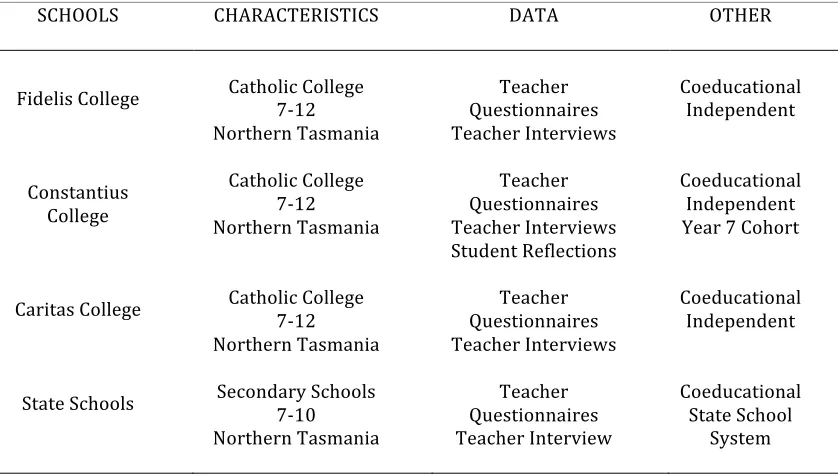
Table 3.1 School and Setting Characteristics ………...……101
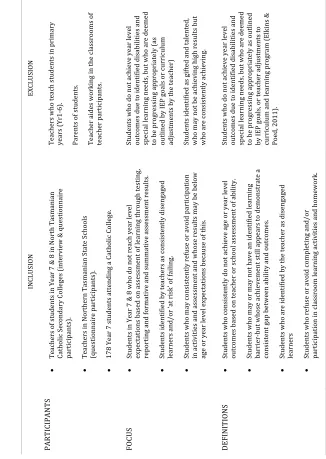
Table 3.2 Participant Groups Included and Excluded from the Study………...……111
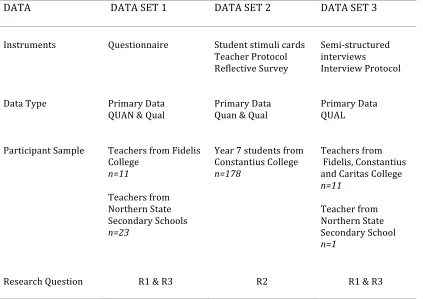
Table 3.3 Summary of Data Instruments ………...…...118
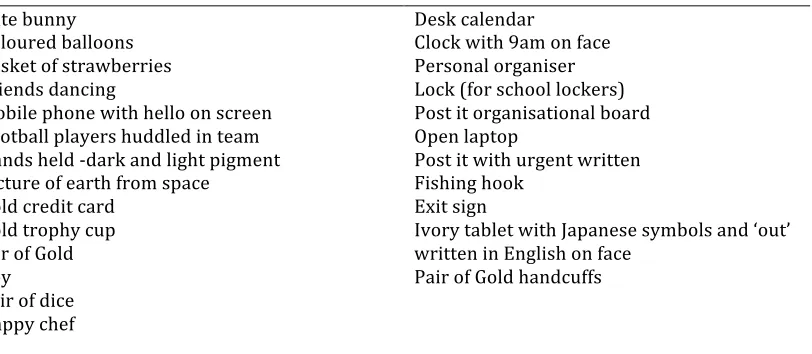
Table 3.4 List of Images used in Student Workshop ………...…....120
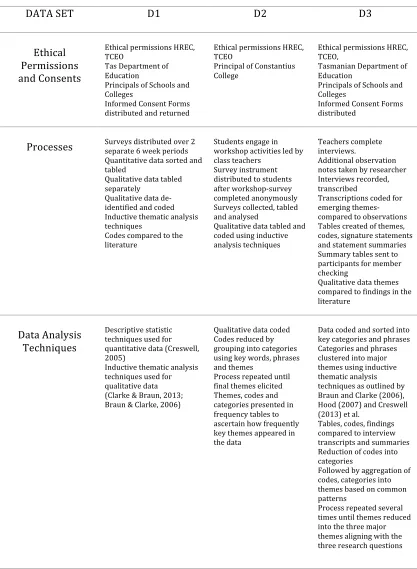
Table 3.5 Summary of Data Procedures and Analysis Techniques………...123
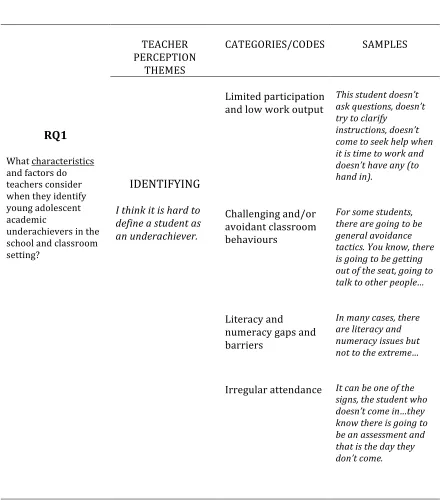
Table 3.6 RQ1 Perceptions: Themes, Categories, Codes and Samples …………...…...132
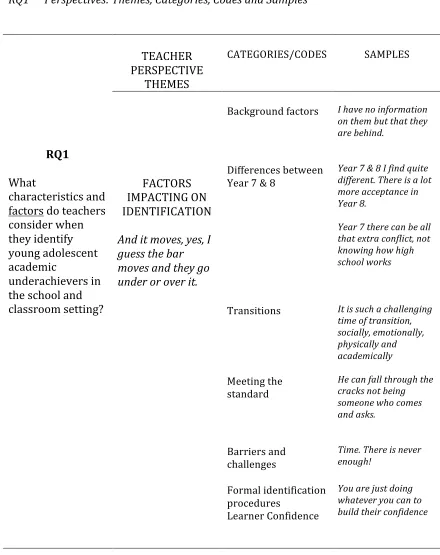
Table 3.7 RQ2 Perspectives: Themes, Categories, Codes and Samples….………...133
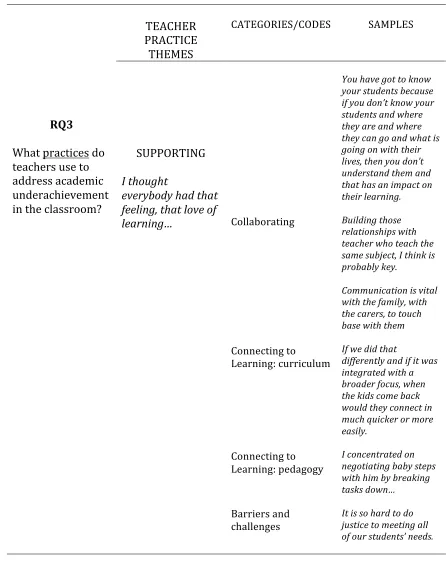
Table 3.8 RQ3 Practice: Themes, Categories, Codes and Samples ………...134
Table 4.1 Aggregated Survey Results for All Schools: Teacher Experience...142
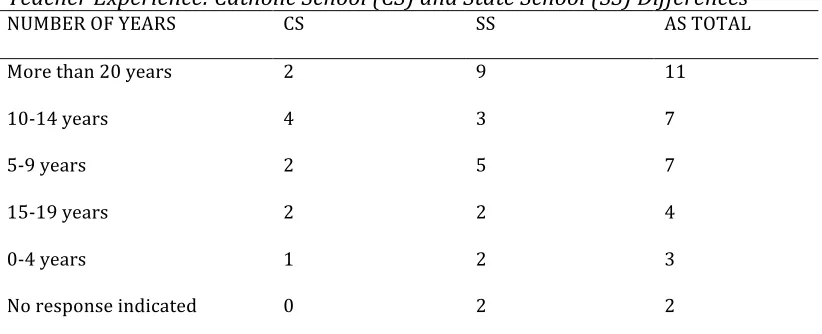
Table 4.2 Teacher Experience: Catholic School (CS) and State School (SS) …...142
Table 4.3 Distribution and Range of Experience for State School Teachers…...….142
Table 4.4 Teachers Currently Working with Year 7 and 8 Students …………...144
Table 4.5 Teacher Subject Area ………...145
Table 4.6 Teacher Perceptions when Teaching Year 7 and 8 Students …...147
Table 4.7 State School Teacher Philosophies and Beliefs …...148
Table 4.8 Use of Specific Teaching Models for Year 7 and 8 Students……...152
Table 4.9 State School Teacher Experiences with Academic Underachievers...154
Table 4.10 Factors Teachers Consider Significant in Identification …………...158
Table 4.11 Teacher Collaboration ………...………...164
Table 4.12 Teacher Practice ……….………...166
Table 4.13 State School Teacher Practice.………...………...167
Table 5.1 Student Concerns with School-work ………...………....…....183
Table 5.2 Challenges Identified by Students …………...188
Table 5.3 Strategies Identified by Students ………...………...192
Table 5.4 School Supports Identified by Students ………...………...199
Table 6.1 General Characteristics of Interview Participants....…...209
Table 6.2 Major Themes Emerging from Interviews for RQ1 and 3 ……...210
This thesis investigated ways that teachers of young adolescents identify and support academic underachievers in the classroom setting. The study commenced with a comprehensive survey of the relevant literature. It considered key issues relating to academic achievement in the first years of secondary school and discussed concerns for students, teachers, and teacher practice. The study then presented a focused look at concepts underpinning academic underachievement in Year 7 and 8, including disengagement, young adolescence and middle years’ education models. The study supported claims in the literature that these concepts describe complex and multi-faceted constructs which are often used in diverse ways by different groups in education. Three primary research questions underpinned the structure of the study:
What characteristics and factors do teachers consider when they identify young adolescent academic underachievers in the school and classroom setting? What factors do young adolescents identify as significant to their learning? and
What practices do teachers use to address academic underachievement in the classroom?
teachers. Data gathered was predominantly qualitative with some attention given to quantitative data collection methods. Primary data processing techniques included latent thematic analysis techniques and descriptive statistics. Findings revealed that teachers primarily considered four criteria when identifying academic underachievers, predominantly using Australian and Tasmanian Curriculum standards as a benchmark for measuring achievement. Teachers also considered a range of background factors when identifying students. Findings from the student cohort surveyed indicated that many of the students were aware of, and concerned about, meeting ‘the standard’ as a benchmark in Year 7. Findings from both teachers and students indicated concerns with barriers and challenges to achievement including time constraints, connecting to and participating in
Chapter 1: Introduction
What on earth would make someone a non-learner? Everyone is born with an intense drive to learn. Infants stretch their skills daily. Not just ordinary skills, but the most difficult tasks of a lifetime, like learning to walk and talk. They never decide it’s too hard or not worth the effort (Dweck, 2006, p 16).
1.1 Introduction to the Study
Many students attending the first two years of secondary school have
persistent records of low levels of attainment for their age and grade level (Dinham & Rowe, 2007). Despite a range of papers, policies, programs and reforms being introduced to enhance the education of adolescents in Australian schools
(Department of Education and Training, ACT, 2005; Luke et al., 2003; Pendergast, 2016), academic underachievement has remained a concern for teachers, parents and administrators alike (Hattie, 2012). This study has focused on investigating the factors and characteristics that teachers consider significant when identifying adolescent academic underachievers in the classroom setting. Additionally, the study has sought to clarify student perceptions on learning and teacher practice used to address academic underachievement.
used, outlining the interpretive constructionist paradigm, which underpins the study topic and methodology. The reader is then provided with an outline of the remaining chapters within the study and a summary of the study topic and chapter.
1.2 Background to the Study
The role of the classroom teacher in schools in Australia is one that is complex, multi-faceted and demanding physically, emotionally and intellectually. Australian schoolteachers work with a wide range of learners with diverse backgrounds, abilities and learning styles. They are required to teach inclusively, adapt the curriculum and develop pedagogies to meet the needs of their students as well as to be responsive to changes in policy, school and system, crafting their practices to reflect these changes and mandates (Louden et al., 2000). This context applies to most teachers, classrooms and learners in Australian schools, but it is especially pertinent when considering the needs of young adolescents. Year 71 and 8 are the years when students begin and consolidate their transition from primary to secondary schooling in Australian schools. The age of students moving from primary to secondary school generally includes students aged from 11-13 years. This is an age that encompasses the developmental stage of young adolescence (Bahr, 2010; Caskey & Anfara, 2014; Santrock, 2008), due to the onset or progression of puberty, and the range of cognitive, social and emotional
developments that the large majority of students undergo during this time. The move from primary to secondary school occurs at a time when students experience
1
significant changes biologically and socially (Bahr, 2010; Caskey & Anfara, 2014; Cobbold, 2005).
While the move can be a challenge, many secondary schools have established processes to support this transition (Evangelou et al., 2008; Towns, 2011).
Successful transition programs within schools often include specific events and activities for students and parents, including open days, information provided to parents and students about administrative processes, academic expectations, early visits and orientation days (Evangelou et al., 2008).
1.3 The Classroom Teacher’s Perspective
From the teacher’s perspective, teaching young adolescents in these year levels may also come with specific challenges. These include teaching large groups of students who are seen infrequently, who may have varying levels of ability and a disparate range of needs. Teachers also need to establish pedagogical relationships and connections across different year levels and subjects (Croswell, Bahr,
1.4 Who is the Academic Underachiever?
The definition of underachievement or the underachieving student is a complex term. Although research has certainly engaged in defining and exploring the term ‘underachiever’, often this label is explored as a subsidiary aspect of another educational field or problem that might focus on student disengagement, student gender or literacy and numeracy deficits and outcomes. Underachieving students form a disparate group, and may include clusters of diverse students from a wide range of backgrounds and abilities. Underachieving students might be gifted and talented, Second Language speakers, students from low socio-economic
backgrounds, students with low literacy and numeracy skills, Indigenous students or students with learning barriers (Garrick & Keogh, 2010; Louden et al., 2000; Luke et al., 2003). Underachievement comprises a significant component of the literature on the gifted and talented student (Van Tassel-Baska, 2005), although here the underachievement may be specifically related to high achievement as gifted and talented underachievers may still be meeting year-level benchmarks and learning outcomes in the classroom.
others, such as Reis and McCoach (2000) have excluded students with diagnosed learning disabilities from their operational definition.
Consequently, students from any of the groups above may be identified as ‘academic underachievers’, in addition to their identification as a student from a minority, ‘at risk’ or ‘disadvantaged’ education group. Academic underachievement may also form a factor in various targeted educational programs implemented to address the needs of one or other of the minority groups listed. Thus, ‘academic underachievement’ both as a research term or concept and as an actual
phenomenon within the classroom may be amorphous, disparate and relatively subjectively interpreted within systems, schools and teachers. Academic
underachievement may present many different facets and types of
underachievement. Often simply referred to as ‘underachievement’ the term can be used broadly and is open to a range of interpretations and agendas (Chukwu-Etu, 2009; Reis & McCoach, 2000).
Carr, Borkowski and Maxwell, (1991), noted that underachievement in the US had been a persistent problem for decades, under-researched “despite its
prevalence and significance for …(the) future workforce” (p. 108). The authors concluded that this might be because “underachievers are often under-identified and do not represent the most pressing problem facing classroom teachers” (p. 108).
underpin these layered terms. There are multiple factors accompanying academic underachievement that complicate its ready identification by teachers and
professionals (Chukwu-Etu, 2009; Figg et al., 2012; Reis & McCoach, 2000). This is discussed in greater depth within Chapter 2: Review of the Literature.
1.5 Statement of the Problem
The early years of secondary schooling are years where research has
highlighted decreased levels of achievement and plateauing of learning outcomes occurring particularly amongst Year 7 and 8 students (Dinham & Rowe, 2007; Dinham & Rowe, 2008; Pendergast, 2016). Teachers report more incidents of disruptive behaviour (De Jong, 2010). There are noted disconnections from learning in the classroom and increased occurrences of depression, anxiety, self-harm, eating disorders (Laurence et al., 2015), increased bullying, cyberbullying (Lacey, Cornell, & Konald, 2017; Nilan, Burgess, Hobbs, Threadgold, & Alexander, 2015) and other wellbeing concerns (Chadbourne, 2001), all of which may impact on student academic achievement. School change and transitions from primary to secondary school may increase the vulnerability and susceptibility of young adolescents to risky and negative trends of behaviour (Caskey & Anfara, 2014; Fuller, 1998). For some students, failure to adapt to secondary school learning and to achieve positive results during these formative years can have a persistent negative influence that stretches beyond secondary school (Abbott-Chapman, 2015; Dinham & Rowe, 2007; Stuart, 1989). These influences can potentially impact on the young adolescents’ long-term outcomes and life choices over decades,
years (Williams et al., 2010), and access to social and material benefits and overall wellbeing (Dinham & Rowe, 2008).
Young adolescents (and their families) commence secondary school with the hope or aspiration that they will learn and develop a sound foundation for their future education and growth within the first few years of secondary school. This foundation ideally enables them to become successful learners, not only throughout secondary school but extending well beyond it (Dinham & Rowe, 2008; Pendergast et al., 2005). Teachers, and the schools and systems they represent have similar hopes and aspirations for these students. Additionally, teachers will be aware, through systemic policies and school operational procedures, of the importance of all students achieving sound educational attainment within these years
(Pendergast et al., 2005). There is a strong impetus for teachers of young
adolescents, particularly those in Year 7, to provide learning programs that assist such students to make an effective transition and adjustment to secondary school and its programs and to achieve positive learning outcomes (Dinham & Rowe, 2007; Luke et al., 2003; Shanks & Dowden, 2015).
those students already underachieving in primary years, academic
underachievement may become entrenched, with students becoming increasingly disengaged in their first years of secondary schooling (Griffin, 1988; MCEETYA, 2008; McMahon & Zyngier, 2009; Peterson & Colangelo, 1996).
Many young adolescents attending Australian secondary schools do not achieve expected learning outcomes for their age or grade level despite the systemic policies and programs designed to address these concerns. The effect of academic underachievement for these students may extend beyond their school years and influence future employment and life choices (Dinham & Rowe, 2007; Dinham & Rowe, 2008; Stuart, 1989). Academic underachievement has an influence that extends beyond the wellbeing and attainment scores of students in Year 7 and 8. It has the potential to impact on self-esteem, relationships, future income and long term-wellbeing over a longer time-frame (Pendergast et al., 2005; Shanks & Dowden, 2015).
1.6 Study Claim and Purpose
This study claims that identifying academic underachievers in the classroom is by no means a simple or straightforward task for teachers of students in Year 7 and 8. Chapter 2: Review of the Literature establishes that academic
underachievement is a complex and multi-faceted phenomenon, which may feature in a range of current educational concerns, issues and problems (Figg et al., 2012; Reis & McCoach, 2000). Studies have also highlighted that academic
Aspland, 2010) and may or may not subscribe to middle years’ models of practice or indeed, other specific learning theories.
The study, therefore, attempts to address the gap in the literature between research that highlights the range of theory, policy and practice that exists around the identification of young adolescent academic underachievers, and the
perceptions, perspectives and practices observed by teachers in the classroom setting.This study also claims that the identifying adolescent academic
underachievers and effective practices teachers can use to support these students remains a pressing concern for many groups in Australia today. These groups include governments and educational policy makers, students and parents, the teachers who work with underachieving students and the schools and systems that educate them.
influence teacher identification of academic underachievers and inform their practice. These primary themes have been used an organising framework or model throughout the study.
1.7 Research Questions
The following research questions underpin the collection of data and provide a framework for the overall study:
1. What characteristics and factors do teachers consider when they identify young adolescent academic underachievers in the school and classroom setting?
2. What factors do young adolescents identify as significant to their learning? 3. What practices do teachers use to address academic underachievement in
the classroom?
1.8 Research Design
The study is an explanatory mixed methods study using a collective case study approach to collecting and interpreting data (Creswell, 2005; Yin, 2009). Three separate sets of data were collected for this study with three different instrument tools. The first set of data were gathered from a questionnaire
guide. Samples of questionnaires and protocols have been included in Appendix A and B. Findings from the three data sets were processed using descriptive statistics (Creswell, 2005) and inductive thematic analysis techniques (Braun & Clarke, 2006; Clarke & Braun, 2013; Thomas, 2013). Prior to collecting data, ethical permissions were obtained from the Human Research Ethics Committee of Tasmania (HREC Social Sciences), the Department of Education, Tasmania, the Tasmanian Catholic Education Office hereafter TCEO, and from all principals of schools with participating teachers and/or students (See Appendices C-G for Ethical approvals, privacy and information statements and permission letters).
1.9 Theoretical Framework
The study utilised a methodological framework or paradigm, which was underpinned by an interpretive constructionist epistemology (Berger & Luckmann, 1991; Crotty, 1998; Laverty, 2003). This paradigm presents reality as a multi-faceted construction or series of phenomena comprised of events, actions and interpretations influenced and informed by cultural, historical and social contexts. Thus, the study’s claim is underpinned by the interpretation that teacher
perceptions and beliefs are shaped and influenced by their perspectives formed from personal, professional and background contexts, understandings and interpretation of experienced phenomena. These in turn influence their practice (Berger & Luckmann, 1991; Crotty, 1998; Holroyd, 2007).
1.10 Structure of the Thesis
study. Chapters 4, 5 and 6 present the findings from the three discrete data sets and provide a preliminary discussion for each data set. Chapter 7 comprises a
discussion chapter which synthesises and analyses findings from all three data sets, addressing the research questions. Chapter 8 summarises key findings, presents the limitations of the research, opportunities for further research and provides a conclusion to the study. Contents from individual chapters are outlined below.
Chapter 2 reviews the literature in the field and establishes the context of the study. The chapter elaborates further on the definitions of academic
underachievement and presents models and theories of underachievement. The chapter then discusses contextual and background factors and concerns commonly found in the first two years of secondary school, including middle years’
educational models (Pendergast, 2010; Smyth & McInerney, 2007), transitions from primary to secondary school learning, the young adolescent learner, policies and teacher and student perspectives. The chapter discusses differing perspectives regarding academic underachievement and relationships and differences between academic underachievement and disengagement and curriculum and pedagogies.
Chapter 3 outlines the methodologies used in detail. The chapter begins by situating the study as a mixed-methods collective case study informed by an
interpretive paradigm. (Creswell, 2013; Hesse-Biber, 2010; Yin, 2009). The chapter provides a background to the epistemology underpinning the subject and
Chapter 4 presents the data gathered from a questionnaire circulated to Catholic school teachers and state-school teachers from the regional research site. Findings from responses to questions for each category are tabled and outlined in the requisite section. Chapter 4 concludes with a short summary to assist with an overall perspective on respondents and their background contexts.
Chapter 5 reports the findings from the second data set taken from
responses from a cohort of Year 7 students. The quantitative and qualitative data reported in Chapter 5 offers an alternative window or lens on findings stemming from teachers, and outlines concerns and issues for young adolescents in the Year 7 classroom setting. Ethical considerations meant that the entire cohort was
surveyed, rather than individual students or those identified as academic underachievers.
Chapter 6 reports on findings from interviews of teachers working within the secondary school sector in regional Northern Tasmania. The chapter presents the findings using a conceptual framework that emerged while using thematic analysis techniques on the data (Braun & Clarke, 2006; Clarke & Braun, 2013). The chapter presents teacher perceptions on key characteristics when identifying young adolescent academic underachievers, explores perspectives on factors that impact on academic underachievers, then outlines teacher practice when
addressing underachievement in the classroom setting.
the major themes. The discussion considers teacher perceptions when identifying academic underachievers; student and teacher perspectives regarding factors that impact on classroom achievement; and teacher practice when addressing academic underachievement.
Chapter 8 provides an overview and summary of the complete study and revises methods and paradigms, main findings and discussion points. Chapter 8 also discusses the limitations of the study and recommendations for further research before concluding and providing the reader with final closing remarks.
1.11 Summary of the Chapter
This chapter outlined the scope, context, purpose and claims of the study, introducing the topic and providing a background and a rationale. The classroom teacher’s perspective was then outlined and an exploration of the complex topic of the academic underachiever was presented, as well as a brief discussion of young adolescents and middle years’ education. The chapter then made a statement of the problem, outlined the study’s claims, highlighted gaps in the literature and
Chapter 2: Review of the Literature
As more and more students live outside of traditional narratives of childhood,
family and school, more and more are at risk of educational
underachievement, disengagement or failure (Luke et al., 2003, p 16).
2.1 Introduction to the Chapter
This chapter provides a review of the literature in the field to establish the context, purpose and scope of the study. The literature review outlines the research existing on underachieving young adolescents and examines the complexity and lack of clarity in definitions and identification of these students. The chapter discusses the groups included and excluded from the study and current models of underachievement. The review then introduces the concept of the young
adolescent learner, and explores related aspects of middle years’ education, and disengagement from learning during young adolescence. Distinctions between underachievement and disengagement and factors that impact on young adolescent academic achievement are considered, including the impacts of transition on
underachievement and the use of middle years’ education models as a potential solution to these concerns. The review then outlines global, national and local trends and perspectives on underachievement, including Catholic and state education department policies and programs. The review then concludes with teacher and student perspectives and teacher practice.
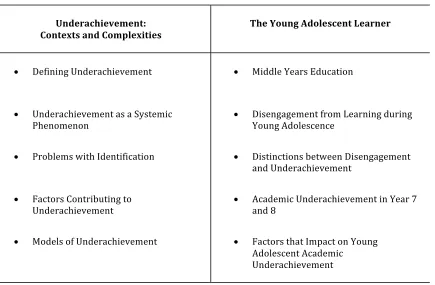
2 (see sections 2.2-2.18). Subtopics discussed in the literature review, (grouped under level 3 headings), have not been included in Table 2.1, to simplify the visual representation for the reader.
Table 2.1
Conceptual Outline of the Literature Reviewed for the Thesis
Identifying and Supporting Young Adolescent Academic Underachievers in the Year 7 and 8 Classroom.
Underachievement: Contexts and Complexities
The Young Adolescent Learner
• Defining Underachievement • Middle Years Education
• Underachievement as a Systemic
Phenomenon •
Disengagement from Learning during Young Adolescence
• Problems with Identification • Distinctions between Disengagement
and Underachievement
• Factors Contributing to
Underachievement • Academic Underachievement in Year 7 and 8
• Models of Underachievement • Factors that Impact on Young
Adolescent Academic Underachievement
Perceptions, Perspectives and Practice.
• Middle Years’ Models of Practice as a Solution
• Global and National Trends and Perspectives on Underachievement
• Teacher Perspectives and Practices
2.2 Underachievement: Contexts and Complexities
McCall (1994) has defined underachievement as follows:
Conceptually, an academic underachiever is a student who performs more poorly in school, typically as measured by grade average, than one would predict based on his or her mental or educational ability, often measured by IQ, aptitude or educational achievement tests (McCall, 1994, p. 15).
The OECD (1998) presented a different perspective on underachievement, noting that reasons behind student failure to achieve fall into three categories, psychological, social and institutional. The authors have located academic
underachievement within the territory of educational failure, extending beyond the individual student, something that may impact on or be caused by teachers, schools and systems. As such, underachievement is presented as a very complex issue as “failure at school is the product of the interaction of many variables” (OECD, 1998, p.11).
The OECD (1998) argued for a less-stigmatising term, exploring some of the complexities behind the historical concepts and policies surrounding
underachieving students and individual and institutional failure. It was highlighted that there was an increased prevalence of academic underachievement occurring in the transition from primary to the junior years of secondary school. Additionally, underachievement and low achievement were viewed as terms that apply to students “whose academic performance is significantly below the average for their age group” (OECD, 1998, p.10). A further term was identified as applying to
which subjects he or she intends to achieve within, based on interest, teacher, or a variety of other issues that stem from the individual student’s personal views and circumstances.
Historically, how underachievement has been defined and viewed tends to be dependent on the perspective of the writer or group and to reflect the purpose of the writer or group. Thus, the term has appeared student-centred, focusing on the difficulties of the individual student and their personal wellbeing (Fuller, 1998; Krause & Krause, 1981), or institutionally or group-centred, where the focus is to review or critique a system, a philosophy, a school or schooling, ineffective teachers or educational system (Gorard & Smith, 2004; OECD, 1998). McCall’s (1994)
definition does not restrict academic underachievement to failure to meet year or grade level outcomes nor is underachievement necessarily viewed as low
achievement. Within McCall’s definition, underachievement occurs when the student does not meet predicted or expected outcomes, which may be based on a variety of criteria and conditions. Common signs of underachievers listed by McCall include the following:
these students do not try, they appear lazy, they seem immature (for example, getting upset if they do not get their way), act up, appear very shy, blame others for their failure, dismiss the whole enterprise as
“stupid” or “boring”, or lack self-confidence, or are rebellious (as cited by Griffin, 1988, p.30).
appear to link underachievement to disengagement and perhaps could be
described more accurately as signs of the disengaged student in general. However, as outlined in Chapter 1, disengagement and underachievement are terms where the meaning is not synonymous. They may commonly appear together as factors in models of underachievement or of disengagement. Furthermore, the presence of one may lead to or correlate with the presence of the other (Thomas, 2013). However, there is a significant difference in meaning between these two phenomena and they are not used interchangeably within this study.
Griffin (1988), in a seminal study on underachievement, maintained that there was no consistent agreement on the definition for ‘underachievers’ in education. This claim continues to be made by many other educators, who
Underachievement has been linked with low achievement (Gorard & Smith, 2004; Smith, 2005), poor self-esteem, and psychological concerns (Krause & Krause, 1981) as well as physiological, cultural, socio-economical and learning barriers. Underachievement may be related to gifted and talented students (Van Tassel-Baska, 2005), boys in education (Jha & Kelleher, 2006), social emotional issues, social-economic or language and cultural barriers, students at risk, and learning difficulties and barriers (Louden et al., 2000). It may also include groups from different or minority cultures and Indigenous students (Colker, 2011). Underachievement may appear alongside and be equated with disengagement, an equally multi-faceted term and concept (McMahon & Zyngier, 2009; Thomas, 2013), but one with qualitative differences in what it denotes (Thomas, 2013). Furthermore, there may be confusion between the definition of low-achievement versus underachievement. As with disengagement, the terms low achievement and underachievement may also be conflated, leading to further ambiguities and complexities, especially prevalent in government policies and programs (Gorard & Smith, 2004; Moreau, 2011; Smith, 2010). Griffin (1998) highlighted the need for caution and rigour in both the identification of underachievers or low achievers. Who is deciding that the student is an underachiever? What are the criteria for underachievement? Griffin’s response was to review how we define achievement and high achievers and to keep this in mind, when looking at underachievement.
2.3 Defining Underachievement
language barrier, who nevertheless are achieving far less than expected by their teachers as predicted by test scores or demonstrated ability in specific situations. Reis and McCoach (2000) excluded discrepancies that arose in results that
stemmed from a diagnosed learning disability from their operational definition. However, as noted by Reis and McCoach (2000) and by McCall et al. (1992), the operational aspect of this definition is problematic and has been problematic for decades. This raises certain questions, for example: how is the standard for student academic achievement or underachievement determined and measured; and what are the parameters of this measurement? Is measurement based on standardised test scores and are these scores accurate assessments of student ability? How far from a standard deviation on a test score would be considered an accurate reflection of underachievement? How long a period should be considered to determine underachievement? As the authors noted, the operational definitions of underachievement can be as complex and variable as the conceptual definitions (McCall et al., 1992; Reis & McCoach, 2000).
Krause and Krause (1981), in positing their three-part model of
This definition is closely linked to their theoretical model, which is explored further in this chapter. Nevertheless, despite its dynamic nature, as with McCall’s definition, Krause and Krause’s conceptualisation tended to view academic
underachievement from an individualistic or student-centred perspective, removed from any exploration of the social context. This definition of underachievement is unrelated to any social models and does not appear to be impacted by external factors such as school or teacher failure, as discussed by Kovacs and Hasan (OECD, 1994) or alluded to by Griffin (1988).
2.4 Underachievement as a Systemic Phenomenon
A further perspective on the topic of underachievement was provided in the recently published Gonski Review of funding for Australian Schools (Gonski, 2011). While the central focus for this review was on the complexities and inequities of funding across Australian schools and its impact on schools, students and
educational outcomes, the review, nevertheless, systematically addressed gaps in achievement in student outcomes from international, national and local
perspectives. The review tables 41 separate recommendations for funding
the Gonski review, the overall findings suggested that recent Australian
performance in student educational outcomes was underpinned by a subtle theme of consistent low-level academic underachievement across the board, and
prevalent in specific groups and schools (Gonski, 2011).
2.5 Problems with Identification
Adding to the issue of complexity and limitations in past and current
definitions of ‘underachievers’, or students who are perceived as ‘low achievers’ is the conflation that may occur between students identified with learning disabilities or disorders and those who are identified as ‘academic underachievers’. In many ways, the confusion with defining the term ‘underachiever’ parallels and is entwined with the issue of establishing an agreed on and uniform definition for learning disabilities. The learning disability definition has, historically, been equally ambiguous (Elkins & Poed, 2011). Compare for example McCall’s definition for underachievers cited previously with the following recently revised definition of learning disabilities taken from the Diagnostic and Statistical Manual V (DSM V):
1. A group of disorders characterised by difficulties in learning basic academic skills (currently or by history), that are not consistent with the person’s chronological age, educational opportunities, or
2. The disturbance in criterion A, without accommodations,
significantly interferes with academic achievement or activities of daily living that require these academic skills (Colker, 2011). While the definition from the DSM V includes the necessity for a standardized assessment or test of a student’s abilities, many underachieving students might achieve poorly on such tests, especially if they disengage with the process, refuse questions or activities, or demonstrate other disengaged behaviours students may use to avoid potential failure. Additionally, their cultural backgrounds and life experiences may preclude them from achievement on a range of
standardized tests, despite the ‘culturally appropriate’ caveat above. For example, note the mixed findings from a study on responses by Australian Indigenous students to testing conducted in culturally appropriate settings (Chaffey, Bailey, & Vine, 2003). In this case, the testing, following the authors’ dynamic assessment model, was supported by the presence of an Indigenous elder, utilised an approach that included a response to intervention assessment, and was created to be
culturally appropriate. The authors, in this case, regretfully concluded “that even relatively culturally fair nonverbal standardised tests may not reveal the true academic potential of culturally different and low SES children” (Chaffey et al., 2003, p 93). The authors have labelled such students as ‘invisible’ underachievers.
identify learning disabilities in students) allows all underachievers to be classified as SLD (special learning difficulties) without requiring that the reasons underlying the achievement of each child shall be diagnosed” (Colker, 2011, p. 96).
It is by no means a straightforward process to distinguish between academic underachievement, failure to achieve due to a learning disability that has not been diagnosed, low achievement and ‘invisible’ academic underachievement that reflects a hidden barrier such as a language barrier, or low SES status or cultural minority status.
2.6 Factors Contributing to Underachievement
wellbeing (Farrell, 2009). Such students appear to be underachieving due to lack of personal effort or individual motivation whereas their real difficulties may lie in accessing an undifferentiated curriculum, disaffection or disengagement due to background factors such as parenting styles and language, social and cultural
factors (Bergin & Bergin, 2012) poor or unsuitable resources or ineffective teaching practices (Luke et al., 2003; OECD, 1998).
2.7 Models of Underachievement
A variety of models or theories behind academic underachievement have been developed that explore the complexities behind the identification of student academic underachievement, its causes and remedies. Carr et al., (1991) for example, developed a metacognitive motivational model that focused on self-esteem, beliefs and attributions. Krause and Krause (1981) posited a multi-modal theory of academic underachievement. This model allowed for underachievement to encompass a variety of groups and phenomena, while remaining a distinct phenomenon. The model formulated three main elements contributing to underachievement. These included self-control, affective and academic factors (Krause & Krause, 1981). Models such as these addressed the complexity behind the definition and identification of underachievement, as well as attempting to remediate some of the factors underlying this phenomenon.
2.7.1 Multi-modal model of underachievement
academic underachievement was often successfully assisted by remediation that addresses any one of these four factors individually. However, the literature also suggested that remediation targeting only a single factor might also be
unsuccessful. For example, the authors claimed that these findings supported the premise that many instances of student academic underachievement are comprised of more than one factor at any time. Additionally, the authors claimed that the four primary factors interacted with each other, thus remediation was complex and needed to be multipronged, addressing all identified factors for it to be successful (Krause & Krause, 1981). In advancing their theory of a multi-modal model of underachievement, the authors combined two factors, anxiety and personality dysfunction, into one. Thus, their streamlined model included three main components of underachievement: academic, affective and self-control.
underachievement may also be impacted on, influenced by, or dynamically modified by social contexts and external relationships.
2.7.2 Metacognitive motivational model
Borkowski, Carr, Rellinger and Pressley’s Metacognitive Motivational model (as cited in McCall et al., 1992) focused on motivational aspects of
underachievement (Carr et al., 1991), including low self-esteem, inaccurate
attributions and a lack of persistence; a model which the authors noted, supported Krause and Krause’s multi-dimensional model (1981). This model also placed a strong emphasis on the significance of attributions, beliefs and self-esteem in explaining underachievement. While it centred on the individual student’s
perspective and sense of agency as a strong factor in underachievement, the model also connected the attributions theory to students with learning difficulties. The authors noted that students with learning difficulties also often held similar beliefs regarding a lack of success being unrelated to effort, persistence or effective
strategy (Carr et al., 1991).
2.7.3 Growth and fixed mindsets and implicit intelligence theories
perceived teacher quality. The ‘high achieving’ students attaining strong learning outcomes independently of teacher quality, as noted by Bempechat, Li, Neier, Gillis and Holloway (2011), may be students who have learned, inherited or developed a growth oriented mindset, that assists in over-riding academic setbacks or
difficulties (Dweck, 1999; 2006; Romero, Master, Paunesku, Dweck, & Gross, 2014). These students may hold an incremental theory of intelligence which, when
combined with a goal focused orientation, may encourage the development of
learning and higher levels of academic achievement (Dupreyat & Marine, 2005;
Dweck, 1999).
2.7.4 Educational, psychological and social models
rather than underachievers. However, this argument is problematic in that it could be perceived to support the claim that different achievement levels might
acceptably be used to characterise different groups in society (Gorard & Smith, 2004; Moreau, 2011; Smith, 2005). It implies a social construction of
underachievement linked to socio-economic status or cultural groups, a
phenomenon noted by Dunne and Gazeley (2008) in a similar small-scale study of teachers’ identification of underachieving students and social class in English state secondary schools. Findings from the study suggested that class beliefs and
assumptions underpinned how teachers constructed and then supported student underachievement. Furthermore, the authors claimed that teacher constructions of underachievement were fluid and dependent on the context and background of the students they taught.
Predominantly most models and theories of underachievement fall into one of two main categories-educational and psychological. These tend to emphasise the individual underachiever and usually attempt to address and remediate causes of academic failure through programs tailored to match and support individual student needs. Within Australia, underachievement, particularly in the middle years, has been linked with students ‘at risk’ (Luke et al., 2003; Stehlik, 2013). This term describes a diverse group of students, which may include students of
introduced across the states and territories to target ‘at risk’ groups that have resulted in resources and programs designed to address disengagement and
academic underachievement (Stehlik, 2013). However, there appears to be a lesser body of research and policies which explore and link individual academic
underachievement with specific research on learning barriers, disability, motivational barriers related to mental health concerns and social economic
barriers such as poverty. The OECD (1998) highlighted the lack of a social model of underachievement. Literature that addresses school and system failure, such as the Gonski Report (Gonski, 2011) has drawn attention to the social and environmental aspects of underachievement, exploring the factors influencing student
underachievement and relating these to environment and contexts, such as inadequate schooling, poor resources and social failure (Gonski, 2011; Luke et al., 2003). Likewise, the prevalence of middle schooling philosophies and programs lend credence to an underpinning social model and theory of underachievement that shadows current educational policy.
2.8 The Young Adolescent Learner
this group are, in fact, the same for all students (Bahr, 2010; Pendergast & Main, 2013; Smyth & McInerney, 2007).
Bahr (2010) identified four major paradigms, constructions or models of adolescence that influence and inform most educational approaches for young adolescents. These include biological (Moreno, 2010), psychosocial (Santrock, 2008), social construction and cultural construction (Bahr, 2010). She argued that each of these theories, to some extent, is an incomplete picture of adolescence, including young adolescence, and represents a specific approach or lens that offers a perspective on adolescence which can be both helpful and limiting (Bahr, 2010). Her views reflect those of educators and theorists such as Chadbourne (2001), Chadbourne and Pendergast (2010), Pendergast and Main (2013), and Santrock (2008). Luke et al., (2003) wrote extensively about the complexities and varying agendas underpinning the construction of the young adolescent or middle years’ learner. These authors highlighted the need for clarification around the issues associated with the education of young adolescents. Many question the view often associated with middle years’ education that posits young adolescence as a fully defined and potentially deficit life stage (Pendergast & Main, 2013). These issues and concerns in many ways shadow and mirror the debates and multiple
definitions of underachievement and learning difficulties discussed earlier.
a ‘lock-step’ approach of development of cognition from concrete to formal
operations in thinking outlined by Piaget and of moral or ethical behaviour, such as Kohlberg’s theory of moral development (Santrock, 2008). While psychosocial theories offer useful concepts on life development, they may be limited in application. Young adolescents do not all think in a similar way, they come from different backgrounds and cultures, they mature at different rates, they have different abilities and they may vary in their ability to use higher order thinking skills or in the application of concepts to activities. Additionally, the type of thinking and the complexity of activities that students engage in may vary within different contexts, cultures and disciplines, again, both from student to student and from subject to subject or activity and area.
Social construction theory views the adolescent learner as a social being, actively constructing knowledge in a blend of environmental, social and individual influences (Jaffe, 1998; Santrock, 2008). The cultural model suggests that
adolescence itself is a cultural construction which reflects social and historical influences and types of thinking (Bahr, 2010; Chadbourne, 2001). The first two constructs of adolescence have been criticised as focusing on adolescence as a ‘deficit model’, where the teenager is viewed as an entity that is ‘becoming’ but has not yet arrived (Bahr, 2010; Luke et al., 2003). Social construction theory
path model’ as a useful model for educators. This model presents the young
adolescent as a composite of individual characteristics, wants and needs which are constantly interacting and changing with environmental, social and familial
influences. This model shares some characteristics with life course theory, argued by Benner (2011) as being particularly relevant to understanding transitions in education. Santrock (2008) argued that all models and concepts may be of some help in different circumstances and can be reliably understood to represent
statistical averages across groups and populations. He outlined his position as that of being an informed ‘eclectic’ using various models and approaches as they appear helpful and appropriate to the situation and context.
Within the literature, ‘early adolescence’ or ‘young adolescence’ sometimes appears to be used interchangeably. Early adolescence, as such, may be
characterised as part of a distinct life stage construct or model within medical, psychological and educational fields (Jaffe, 1998; Santrock, 2008). As outlined within the glossary, within this study the term ‘young adolescent’ follows the convention of Pendergast (2010), Pendergast and Main (2013), Bahr (2010), and Smyth and McInerney (2007), viewing the young adolescent as a complex and composite social construction, except when referring to early adolescence as a specific psychological stage as discussed by authors such as Moreno (2010), Santrock (2008), Jaffe (1998) and others. This perspective or construction of the young adolescent is supported by the findings of Dinham and Rowe (2007), who noted in their meta-analysis that:
school difficult, many will be ready for and will relish this change. Whereas some may benefit from an extended period of primary-like education, others will not (Dinham & Rowe, 2007, p. 13).
2.9 Middle Years Education
Research supporting middle years’ educational reforms and practices suggest that pedagogy and curriculum needs to be tailored specifically to enable young adolescents within the middle years attain optimal outcomes (Beane, 2013; Dowden, 2007, 2012b; Jacobs, 2010; Luke, et al., 2003; Pendergast, 2010). Middle years’ education refers to a period generally understood to include young
adolescents and pre-adolescents: students aged from 10 to 15 years, or Years’ 5-8 or 5-9 in formal school systems (Pendergast, 2010; Pendergast, 2016).
Alternatively known as middle schooling or the middle years (Bahr, 2010; Chadbourne, 2001; Pendergast, 2010; Williams et al., 2010) the Melbourne
Declaration on Educational Goals for Young Australians noted the significance of this period for students:
The middle years are an important period of learning, in which knowledge of fundamental disciplines is developed, yet this is also a time when students are at the greatest risk of disengagement from learning. Student motivation and engagement in these years is critical (MCEETYA, 2008, p. 12).
tackle the issues outlined, including decreased student outcomes, plateauing results and poor engagement with schooling, as well as to create a ‘seamless transition from primary to secondary’ schooling (Chadbourne & Pendergast, 2010, p. 31). Middle years’ models of practice include: advocating a reduction in the number of teachers working with students in the junior years of secondary school; providing integrated and age-relevant curriculum for young adolescents (Beane, 2013; Dowden, 2007; Jacobs, 2010); improving relationships and social well-being through a focus on a caring and smaller community; use of pedagogies and
curriculum designed to engage young adolescents (Beane, 2013; Dowden, 2007, 2012a; Pendergast, 2010; Shanks & Dowden, 2015); providing an increased ability for students to negotiate and engage with the curriculum, through constructivist learning theories (Dinham & Rowe, 2007; McMahon & Zyngier, 2009; Richardson, 2003), including practices such as learner-centred curriculum and project-based learning (Beane, 2013; Dowden, 2007). Some schools and educational systems within Australia have attempted to instigate change and reform within the middle years of schooling, aiming to improve the pastoral and academic transitions of students between primary and secondary schooling, and to ultimately improve overall learning outcomes for all students (Cobbold, 2005; Pendergast, 2010).
concerns such as increased reports of bullying (Nilan et al., 2015), increased levels of depression, eating disorders, substance abuse and self-harm (Chadbourne, 2001; Pendergast & Danby, 2011). The increase in wellbeing concerns in Year 8 students and their impact on schooling have been well-documented within Australian schools by Redmond et al., (2016) in their seminal report Are the kids alright? Young Australians in the Middle Years.
Middle years’ models of practice tend to focus on providing learner-centered curricula and pedagogies that engage young adolescents (Beane, 2013; Dowden, 2007; Luke et al., 2003), helping them form connections to the school, strong and positive relationships to their teachers and community, as well as to their learning (Beane, 2013; Dowden, 2007; Pendergast & Danby, 2011; Pendergast et al., 2005). Middle years’ models of practice emphasise constructivist pedagogies, the construction of knowledge as a shared enterprise and collaborative learning practices (Beane, 2013; Dowden, 2007; Richardson, 2003; Wiggins & McTighe, 2001). Richardson (2003) has linked five characteristics of constructivist approaches in learning including:
1. knowledge of the individual learner, or student-centred or student focused learning;
2. use of collaborative groups to construct shared understandings of concepts or knowledge;