Version: Published Version
Monograph:
Clark, James Hanley orcid.org/0000-0002-5860-2480, Farmer, Thomas James
orcid.org/0000-0002-1039-7684 and Sherwood, James Richard
orcid.org/0000-0001-5431-2032 (2014) Sample Preparation Techniques For Total Biomass
Content Determination. Research Report. KBBPPS
10.13140/2.1.1138.7205
[email protected] https://eprints.whiterose.ac.uk/ Reuse
Items deposited in White Rose Research Online are protected by copyright, with all rights reserved unless indicated otherwise. They may be downloaded and/or printed for private study, or other acts as permitted by national copyright laws. The publisher or other rights holders may allow further reproduction and re-use of the full text version. This is indicated by the licence information on the White Rose Research Online record for the item.
Takedown
If you consider content in White Rose Research Online to be in breach of UK law, please notify us by
KBBPPS
Knowledge Based Bio-based Products'
Pre-Standardization
Work package 4
Biomass Content
Deliverable N° 4.3:
Sample Preparation Techniques
For Total Biomass Content
Determination
Public
Version: 1
York, 29/01/2014
prepared by:
Green Chemistry Centre of Excellence, University of York James Clark, Thomas Farmer, James Sherwood
Green Chemistry Centre of Excellence, Department of Chemistry University of York, Heslington, York, UK, YO10 5DD
Tel.: +44 1904 322559
The research leading to these results has received funding from the European Union Sev-enth Framework Programme (FP7/2007-2013 under grant agreement n° KBBE/FP7EN/312060/”KBBPPS”.
Table of content
1 Summary ... 5
2 Introduction ... 7
3 Total biomass content determination on the basis of elemental and isotopic analysis ...10
3.1 Defining biomass in terms of elemental composition ...10
3.2 Characteristics and origins of elements within compounds ...11
3.2.1 Introduction to the elements ...11
3.2.2 Carbon isotopes and origins ...15
3.2.3 Hydrogen isotopes and origins ...17
3.2.4 Chlorine isotopes and origins ...18
3.2.5 Nitrogen isotopes and origins ...19
3.2.6 Oxygen isotopes and origins ...20
3.2.7 Silicon isotopes and origins ...21
3.2.8 Sulphur isotopes and origins ...21
3.2.9 Complete bio-based isotopic analysis ...22
3.3 Elemental and isotopic analysis techniques ...24
3.3.1 Elemental analysis ...24
3.3.2 Elemental mass spectrometry ...27
3.3.3 Isotopic mass spectrometry ...27
3.3.4 Other analysis techniques ...31
3.4 Sample preparation standards for elemental and isotopic analysis ...33
3.4.1 European standards ...33
3.4.2 Other standards ...39
3.5 Bio-based product analysis case studies: Stable isotopic ratio determination ...47
3.5.1 Multi-isotopic ratio analyses ...47
3.5.2 The impact of pre-treatment ...51
3.5.3 Test laboratory implementation of pre-treatment ...53
4 Total biomass content determination on the basis of molecular composition ...56
4.1 Defining biomass in terms of molecular composition ...56
4.2 Complementary analysis techniques ...59
4.2.1 Infra-red spectroscopy ...59
4.2.2 Nuclear magnetic resonance spectroscopy ...59
4.2.3 Electron spin resonance spectroscopy ...60
4.2.4 Mass spectrometry ...60
4.2.5 Chromatography ...61
4.2.6 Enantiomeric analysis ...62
4.3 Sample preparation and standards for compositional analysis ...63
4.3.2 European standards ...70
4.3.3 Other standards ...71
5 Conclusion ...76
6 List of standards ...79
1
Summary
As established in the KBBPPS description of work, and reiterated on the project web-site (http://www.biobasedeconomy.eu/research/kbbpps/), the project aims to increase the uptake of standard test methods and certification schemes for bio-based products. It is en-visiged that the development and application of standards for the bio-based product industry will have positive long-term effects on the development of a European bio-based economy. Higher quality and greater sustainability of bio-based products should increase the satisfac-tion of end-users at all levels, and improve the economic viability of bio-based product utilisa-tion. Finally, public acceptance of bio-based products can be increased through ensuring and verifying the sustainable sourcing of raw materials, the effective bio-content and clear indica-tion of their (comparative) funcindica-tionality in relaindica-tion to the regular products. These positive ef-fects will result in faster growth of the based product industry and increased share of bio-based in the total use of final (consumer) products and intermediates up to 2020 and beyond.
The effective determination of total bio-based content of products has been a chal-lenge for certification bodies. The ability to determine the total bio-based content of a product is an obvious prerequisite for developing the market for bio-based products. Currently, the state of the art in terms of bio-based content determination is restricted to biogenic carbon content. The methodology is typically based on accelerated mass spectrometry to resolve the relative concentrations of carbon isotopes (14C/12C) in a sample. Results based on the 14C methodology are expressed as the fraction of the bio-based carbon relative to the total
carbon content of the sample. Other elements introduce a disparity between bio-carbon con-tent and total bio-based concon-tent; some products have very few heteroatoms, such as lubri-cants, while more typically bio-based products such as PLA and starch composites have relatively high amounts of oxygen.
appa-ratus used to record these ratios, for this dictates the sample preparation required. Then standard test methods for varied chemical analyses (including stable isotope analysis) that might possess attributes of interest for new standards are reviewed.
2
Introduction
Test methods and associated calculations for bio-based carbon content are already available, but as an assessment of carbon atoms, it only accounts for a portion of the total mass of a bio-based product. To be able to measure a total bio-based content, we must be sure that the term biomass, and the products made (directly or indirectly) from it, are under-stood in a clearly defined way that translates to a robust and valid test methodology. The European technical committee devoted to bio-based product standardisation (CEN/TC 411) is developing definitions for biomass and products derived from biomass. A document has been produced, entitled Bio-based products - Vocabulary, (prEN 16575) and in this docu-ment is defined the term biomass and related prefixes. And so it comes to be that the follow-ing terms are defined thusly (reproduced here without adaptation for reference). The defini-tion of bio-based elements other than carbon can be derived from the bio-based carbon defi-nition, simply by changing carbon to the name of the required element.
Bio-based
Derived from biomass.
Bio-based carbon content
Fraction of carbon derived from biomass in a product.
Bio-based carbon
Biogenic carbon (carbon derived from biomass).
Bio-based content
Fraction of a product that is derived from biomass.
Bio-based product
Product wholly or partly composed of bio-based constituent(s).
Biomass
Material of biological origin excluding material embedded in geological for-mations and/or fossilized.
Renewable material
Material that is composed of biomass and that can be continually replenished.
the proportion of modern biological material incorporated within a bio-based product equates to the bio-based content of that article. The legacy of long deceased organisms: crude oil and inorganic fossil carbonate, do not count towards bio-based content. One extra consid-eration to note concerning these definitions is the use of ‘bio-based content’ and ‘biomass content’. These two terms have been used interchangeably, but strictly speaking the former should consider materials made from a biomass feedstock and the latter relate to unmodified biomass present in a product.
Useful resources of carbon can be divided into fossil sources (crude oil and natural gas), biomass (carbohydrate, lignin, etc.) and inorganic carbonate minerals (limestone, chalk, and others). The mineral sources of inorganic carbon make their way into bio-based products as binders and fillers, but are routinely removed by a treatment with an acidic solution. Some solid remains, which would be calcium chloride for example if limestone had been treated with hydrochloric acid. This has no bearing on bio-based carbon analysis, but would be rele-vant to total bio-based content because the original product (perhaps a complex formulation) has been changed and new atoms introduced. This would not have any bearing on the total organic bio-based content.
As described in detail in the technical specification proposal by the bio-based prod-ucts technical committee, entitled Bio-based products - Determination of the bio based car-bon content of products using the radiocarcar-bon method (FprCEN/TS 16640), the difference between carbon sourced from biomass and carbon sourced from fossil sources is the quanti-ty of the 14C isotope present. There is no need to elaborate further on the comments made in this technical specification, which states that “the 14
C present in products is originating from recent atmospheric CO2. Due to its radioactive decay, it is almost absent from fossil products older than 20 000 years to 30 000 years. The 14C content may thus be considered as a tracer of products recently synthesized from atmospheric CO2 and particularly of recently produced bio-products”. Accordingly, products made of a combination of bio-based materials and pe-troleum derived chemicals have an intermediate 14C/12C ratio indicative of the proportion of bio-based carbon in the article. The technical specification also covered sample preparation for the analysis of the 14C isotope and so this will not be covered in any great detail in the subsequent chapter on isotopic analysis, except when addressed as part of combined or hyphenated analysis with other analytical techniques.
as a proportion of the entire mass of the bio-based product sample. It could be argued that the number of atoms (bio-based versus non-bio-based) could be used as the basis of deter-mining bio-based content but mass balances are more intuitive, even if they are biased to-wards the larger elements. It is respected in this report that each atom is equally as important as any other in deciding the function of a compound, even though mass balance can be adopted as the primary metric. The difference between acetone and isopropanol is minor from a mass perspective but very different in terms of function and reactivity.
3
Total biomass content determination on the basis of elemental
and isotopic analysis
3.1 Defining biomass in terms of elemental composition
The perspective that chemicals (bio-based or otherwise) are the sum of their ele-mental parts is useful, and as subsequently described perhaps essential, because certain characteristics of elements can be analysed in ways revealing of their origin. To try and ana-lyse total bio-based content in any other way may prove unfeasible in practice. A certification scheme devised by ACDV (Association Chimie du Végétal, France) uses the direct analysis of bio-based carbon through radioisotope analysis and elemental analysis to verify the re-maining composition [ACDV 2013]. Then the correct number of hydrogen, oxygen, and nitro-gen atoms originating from biomass is decided by the supplier and a calculation of total bio-based content by mass is calculated.
3.2 Characteristics and origins of elements within compounds
3.2.1 Introduction to the elements
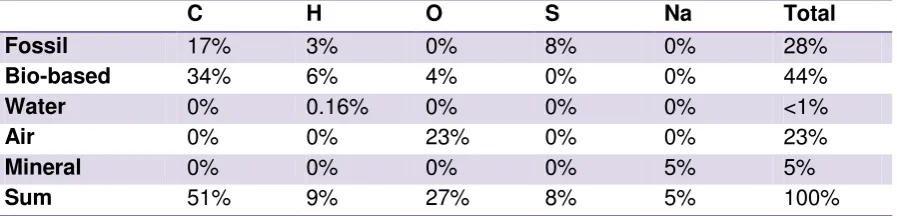
The motivation of an EU mandated drive towards a bio-based economy is the promo-tion of a sustainable basis of chemical product manufacture in Europe [EU M/429, EU M/492]. This is a concern because of the unsustainability of the rival petroleum chemical in-dustry, which is the only competitor in the production of organic compounds. Only for carbon is the distinction between bio-based carbon and fossil derived carbon made unambiguous with radioisotope analysis (14C/12C determination coupled with the ideal half-life of 14C). This exact same analysis is not applicable to any other elements, not least because non of the other elements prevalent in biomass (O, H, N, S, etc.) posess isotopes with such ideal half-lifes. Beyond carbon, the other elements used in the synthesis of commodity chemicals and speciality formulations alike come from a variety of sources, most of them absent from fossil based hydrocarbon feedstocks. Although many require consumption of fossil resources to supply the energy needed for the processing and utilisation (e.g. ammonia production from N2 and H2).
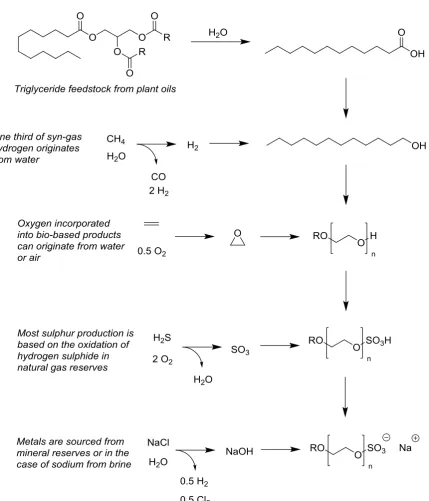
Figure 3.1 The synthesis of a surfactant from a variety of sources.
wa-ter-gas shift reaction. It should be made very clear whether it is bio-based content that is de-sirable to know, or non-fossil derived content that should be reported. Elements originating in water and air might be assumed as equivalent to biomass and incorporated into total bio-mass content values because they are relatively benign and not unsustainable as petroleum is. Mineral sources, although many are much scarcer and more vulnerable to depletion than petroleum, could be allied with based content for convenience. Alternatively total bio-based content could be decided on the basis of organic content and most of the elements ignored. This would be difficult for surfactants featuring a mineral sourced counter-ion. Re-gardless of the exact approach taken, the manner in which total bio-based content is calcu-lated should be disclosed, but first chosen with careful consideration.
Table 3.1 The origins of elements present in sodium laureth sulphate (n = 3) and their mass contribution to the molecule.
C H O S Na Total
Fossil 17% 3% 0% 8% 0% 28%
Bio-based 34% 6% 4% 0% 0% 44%
Water 0% 0.16% 0% 0% 0% <1%
Air 0% 0% 23% 0% 0% 23%
Mineral 0% 0% 0% 0% 5% 5%
Sum 51% 9% 27% 8% 5% 100%
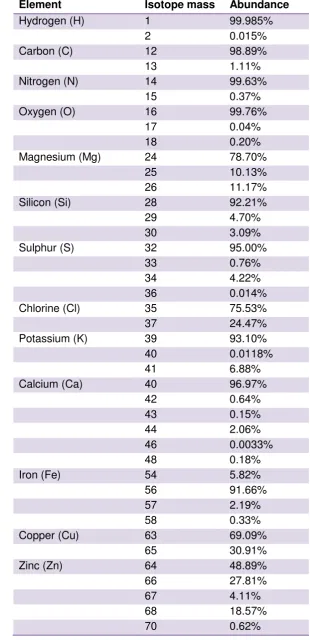
Table 3.2 Isotopic abundances of elements of ecological interest.
Element Isotope mass Abundance
Hydrogen (H) 1 99.985%
2 0.015%
Carbon (C) 12 98.89%
13 1.11%
Nitrogen (N) 14 99.63%
15 0.37%
Oxygen (O) 16 99.76%
17 0.04%
18 0.20%
Magnesium (Mg) 24 78.70%
25 10.13%
26 11.17%
Silicon (Si) 28 92.21%
29 4.70%
30 3.09%
Sulphur (S) 32 95.00%
33 0.76%
34 4.22%
36 0.014%
Chlorine (Cl) 35 75.53%
37 24.47%
Potassium (K) 39 93.10%
40 0.0118%
41 6.88%
Calcium (Ca) 40 96.97%
42 0.64%
43 0.15%
44 2.06%
46 0.0033%
48 0.18%
Iron (Fe) 54 5.82%
56 91.66%
57 2.19%
58 0.33%
Copper (Cu) 63 69.09%
65 30.91%
Zinc (Zn) 64 48.89%
66 27.81%
67 4.11%
68 18.57%
3.2.2 Carbon isotopes and origins
Even if 14C isotope analysis remains the cornerstone of analytical bio-based content determination methods, stable isotope ratios may act as at least a supplementary means of providing further information about the other elements. Because of the definitive nature of carbon radioisotope analysis, it might be perceived that 13C/12C ratios are somewhat redun-dant. It is true that, as for other elements, sometimes broad ranges of stable isotope ratios rather than precise values define the possible origin of that element. However the combina-tion of stable isotope analyses belonging to different elements (including carbon) increases the precision of this method, and is addressed accordingly in due course.
The two natural stable isotopes of carbon, 12C and 13C, have become unequally dis-tributed throughout the biosphere. The atmospheric proportion of 13C resides within a narrow range of variation (1.101% to 1.105% of total carbon atoms) [Francey 1999]. The uneven distribution has its origins in different types of plant metabolism disfavouring the heavier iso-topes of carbon to different degrees. The following equation (Equation 3.1) is necessary to calculate the isotopic composition of carbon, but is directly applicable to other elements as well:
Equation 3.1
A study on the bio-based content of plastics uses stable carbon isotopic ratio analysis [Suzuki 2010]. What the Japanese research team discovered is that the known propensity of plants to disfavour the 13C isotope depending on their carbon fixation process (C3 or C4 type metabolism) manifests itself in downstream plastic products made from sugar fermentation products and starch [Suzuki 2010]. This is of course not unexpected but a pre-requisite for any meaningful stable isotope analysis in the field of bio-based product certification.
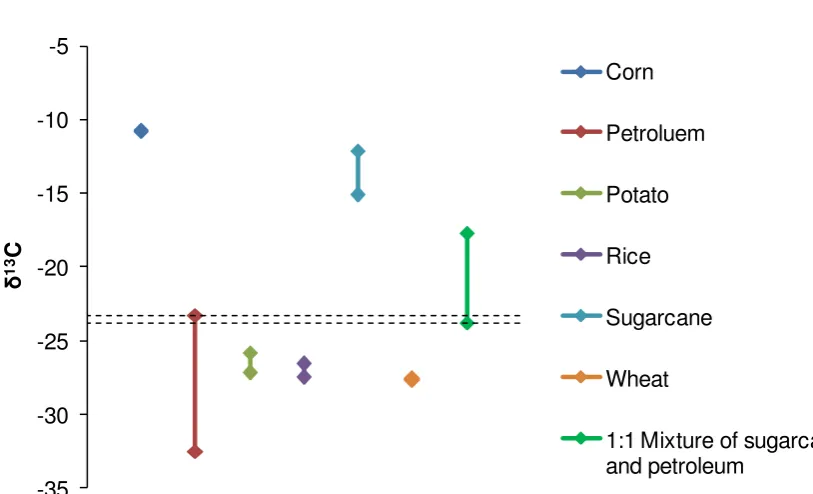
Chemicals made from a petroleum feedstock have a carbon isotopic composition equivalent to rice, wheat, and potato. Ancient plants operated the C3 carbon fixation process, which is preserved in the three aforementioned plant species. Corn and sugarcane, two pop-ular bio-chemical feedstocks, have evolved a different carbon fixation process that disfavours 13C to a greater extent (C4 metabolism). Thus corn and sugarcane carbohydrates and the
minerals. Obviously PLA made from wheat starch would not be clearly distinguishable from a petroleum derived equivalent using this method, highlighting the major limitation of this tech-nique when used in isolation.
Table 3.3 Carbon isotopic composition ranges for samples of material from different feed-stocks [Meier-Augenstein 1999, Suzuki 2010].
Feedstock Fixation mode Minimum 13C Maximum 13C
Carbonates n/a -14‰ +4‰
Corn C4 -10.8‰ -10.7‰
Petroluem n/a -32.5‰ -23.3‰
Potato C3 -27.2‰ -25.8‰
Rice C3 -27.5‰ -26.6‰
Sugarcane C4 -15.1‰ -12.1‰
Wheat C3 -27.7‰ -27.6‰
Analysis of a formulated product or composite would not be able to determine the precise ratio of plant derived to non-renewable material, even if only corn or sugarcane was used as a source of biomass, because the range of data scatter is large. The regions that C3 and C4 products occupy do not overlap with each other, but because of the possible range of 13C values attributed to each feedstock, mixed source articles cannot have a biomass
[image:17.595.105.491.203.327.2]Figure 3.2 A hypothetical sugarcane-petroleum derived composite characterised by 13C iso-topic analysis. The overlap in possible results of fossil based material and a supposedly 50% sugarcane derived material are indicated by the dashed lines.
3.2.3 Hydrogen isotopes and origins
Hydrogen is the other obvious elemental component of crude oil and natural gas re-serves in addition to carbon. For making the distinction between biomass derived products and those made from fossil based feedstocks the analysis of carbon and hydrogen is most important. Sulphur is the only other element that is acquired from fossil feedstocks, in the form of the gas hydrogen sulphide, but it is less common as an element in bio-based lubri-cant, plastic, and solvent products, each with large markets. An obvious argument against placing hydrogen on a pedestal alongside carbon is its relative atomic mass. Mass contribu-tions will be used as the basis of bio-based content, but neither is that an excuse to simply dismiss the lighter elements. Each element is equally essential to the molecular structure and function of a molecule.
There are three well known isotopes of hydrogen, so much so that each isotope has their own name: protium (1H), deuterium (2H), and tritium (3H). Tritium has a half life of a little over 12 years, but is constantly renewed in the atmosphere when a neutron interacts with a nitrogen atom, meaning that biomass contains a near maximal proportion of tritrium although this is only a tiny amount (les than 1017 protium atoms for every tritium atom in the atmos-phere) [Neary 1997]. This provides an obvious handle for the differentiation between recent biomass samples and bio-based products derived from biomass, and petroleum derived chemicals. Analysis has shown bio-based benzaldehyde can be distinguished from fossil based benzaldehyde on the basis of tritium content [Neary 1997].
-35 -30 -25 -20 -15 -10 -5
13
C
Corn
Petroluem
Potato
Rice
Sugarcane
Wheat
[image:18.595.81.488.101.348.2]More than one in every 7000 hydrogen atoms found in the oceans is deuterium, a much higher concentration than tritium enjoys amongst hydrogen atoms [Gonfiantini 1978]. Accordingly deuterium might be a better choice of nucleus to form the basis of a biogenic analysis, although we are yet to address the techniques available for doing so and the asso-ciated sample preparation. It has been found for methane samples that ancient natural gas and methane trapped in coal is differentiable from modern, naturally occurring sources of bio-gas through the abundance of deuterium observed (Figure 3.3). Methane produced from the inefficient burning of biomass shows some overlap between itself and the relative deuterium content of petroleum sources [Snover 2000]. Similarly fermentation products (demonstrated here with acetic acid in vinegar) express a range of 2H values, also overlapping with fossil based hydrogen atoms [Hattori 2010]. The difference in 2H data ranges created by different natural processes acting on biomass (anaerobic digestion, biomass burning, or fermentation) is an additional variable to consider when attempting to translate stable isotope ratios into claims of biogenic origin.
Figure 3.3 A reinterpretation of literature 2H data from different methane sources [Hattori 2010, Sowers 2006].
3.2.4 Chlorine isotopes and origins
Chlorine has two major stable isotopes, with the lighter isotope, 35Cl, present in an approximate 3:1 excess over the heavier 37Cl isotope [Ehleringer 1989]. In the absence of a significant natural isotopic fractionation process, the relative ratio of these two isotopes is constant, and therefore not of any use in biogenic analysis. Another isotope of chlorine ex-ists, but 36Cl is radioactive. So in the same way that 14C/12C isotopic ratios provide a good
-350 -325 -300 -275 -250 -225 -200 -175 -150 -125 -100
2H
Coal minining
Marine clathrates
Natural gas
Vinegars
Biomass burning
Ruminants
Landfills
[image:19.595.83.504.345.585.2]indicator of the modern bio-based content of a sample, 37Cl/36Cl may be able to do the same. The half-life of 36Cl is approximately 300,000 years [Elmore 1987]. Only the lack of chlorine atoms in biomass and petroleum feedstocks undermines the utility of this potential methodol-ogy.
The production of chlorinated compounds is dependent on the electrolysis of brine to give chlorine gas. Organohalides (chloroform, poly(vinyl chloride), etc.) are made by the re-action of chlorine gas, or sometimes bleach or hydrogen chloride, with both saturated and unsaturated hydrocarbons [Weisermel 1993]. Inorganic chlorides will have a direct mineral source in most cases. This being the case, the need for stable isotope analysis of chlorine for the purpose of bio-based content analysis may be redundant.
One application of chlorine radioisotope analysis is chlorinated solvent monitoring in groundwater. Bio-based solvents are unlikely to contain chlorine given recent legislation such as REACH [EC 1907/2006], but chlorine should be addressed more broadly because it oc-curs in cationic surfactants and the inorganic components of formulations. It has been found that 37Cl/36Cl ratios are not consistent across batches of chlorinated solvents, varying accord-ing to supplier and year of production [Beneteau 1999]. Because of this observation, and the lack of diversity in sources of chlorine, it is difficult to have confidence in this analysis as a means of establishing a measure of bio-based chlorine content.
3.2.5 Nitrogen isotopes and origins
Nitrogen is incorporated into biomass, most notably as an elemental component of proteins. Synthetic, non-biological sources of nitrogen originate exclusively from ammonia, which in turn is produced by the Haber-Bosch process that combines the gases of nitrogen and hydrogen. The dual fossil-water source of hydrogen gas was briefly addressed as part of the previous sodium laureth sulphate case study (Figure 3.1). Nitrogen is condensed from the air, a massively abundant source of nitrogen established billions of years ago, and also utilised by nitrogen fixing plants as their source of nitrogen.
3.2.6 Oxygen isotopes and origins
Oxygen is one of the three most abundant elements in biomass, evidence of which can be seen in the prevalent bio-polymers cellulose and lignin. Plants access oxygen through the process of photosynthesis, using carbon dioxide and water as their feedstocks, although the majority of the atomic oxygen content of the two reactants is ejected as waste. The car-bon cycle is completed, at least in part, by respiration of organisms that use that waste oxy-gen and replenish the carbon dioxide and water needed by the plants to produce more valu-able biomass. The death and fossilisation of organisms that in the past lead to the formation of crude oil and natural gas resulted in biomass being reduced to hydrocarbons. Oxygen makes up a tiny proportion of the mass of fossil fuel reserves, with a similarly insignificant amount associated to nitrogen and most other elements [Sergeant 1995].
As is done for nitrogen, oxygen is obtained from the air for a number of industrial chemical manufacturing processes. Direct oxidation with molecular oxygen is common; the synthesis of aldehydes from alkenes is one example. Sometimes oxygen is used to make dehydrogenation more energetically favourable without actually being incorporated into the final product, as in the synthesis of hydrogen cyanide from methane and ammonia [Weis-sermel 1993]. Water is another source of oxygen in the synthesis of compounds. Ethanol is made by the hydration of ethylene. Ethylene glycol is made from the hydration of ethylene oxide, in turn the product of the reaction between ethylene and oxygen (Figure 3.4).
Figure 3.4 The use of molecular oxygen and water as sources of oxygen in the synthesis of ethylene glycol.
The isotopic ratio of oxygen samples is not directly dependant on the age of the sam-ple as it is with 14C. Ice core samples use 18O/16O stable isotope ratios to indicate global temperatures of the past. Semi-empirical equations of the following type are used to model historical temperatures (Equation 3.2) [McCrea 1950]:
Equation 3.2
3.2.7 Silicon isotopes and origins
Plants discriminate between the stable isotopes of silicon as they do with carbon iso-topes and others. Generally 30Si/28Si ratios observed in plants favour the lighter isotope rela-tive to the neighbouring soil. The 30Si values found in the actual soil silicates vary too, and so the combination of these variables makes absolute tracing of silicon more difficult [Opfer-gelt 2008].
Recently silica has begun to be retrieved from the ashes of burnt biomass as a source of bio-based silicon [Dodson 2013]. Its origin is the minerals incorporated in soil based nutrients, but unlike phosphorus for example, which is taken up by plants in the same way as silicon, the process for reclaiming silicates is being developed for commercial pur-poses. Therefore a distinction has been established between mineral reserves of silica and plant waste sources. The actual difference between inorganic mineral silica, and silica that has resided within a plant for a short period of time, and its implications, should be consid-ered. The definitions adopted for bio-based products will direct this, and as an increased number of products containing bio-based silica are produced, more thorough analysis can be performed to resolve this issue.
3.2.8 Sulphur isotopes and origins
The sulphur cycle is complex, and involves intricacies such as volcanic eruptions, but the decomposition of biological organisms is the major force in sulphur transfer [Thode 1991]. Sulphur is produced from mineral sources, but current production trends are establish-ing a dominance of petroleum derived sulphur [Bixby 1983]. Thus sulphur is the third and final element obtained from fossil sources to consider, accompanying carbon and hydrogen. This should heighten attention on sulphur as an element of importance when determining the bio-based content of chemical products.
The hydrogen sulphide in natural gas, sometimes a considerable proportion of the re-serve, is oxidised to sulphur with the Claus process [Nehb 1985]. Usually it is oxidised further to sulphur trioxide to make sulphuric acid. Sulphur is often found in anionic surfactants but not in most other bio-based product classes. The sodium laureth sulphate example given previously is synthesised through the reaction between sulphur trioxide and an alcohol (Fig-ure 3.1). Some lubricant additives are sulphur based but these are not likely to be classifia-ble bio-based compounds.
been known to also increase 34S values [Ehleringer 1978, Winner 1978]. The natural crea-tion of crude oil is not thought to influence stable isotopes of sulphur by isotopic fraccrea-tionacrea-tion, and therefore the 34S range of plants (approximately -30‰ to + 30‰) is fairly well perse-vered in fossil based sulphur (Figure 3.5) [Ehleringer 1978, Hirner 1989]. Therefore the quite unfortunate conclusion that must be reached is that the three feasibly petroleum derivable atoms (sulphur, along with carbon and hydrogen) do not possess absolutely distinct isotopic ratios required to determine total bio-based content without ambiguity.
Figure 3.5 Sulphur isotopic abundance ranges and for food products data mean averages [Kelly 2002, Thode 1991].
3.2.9 Complete bio-based isotopic analysis
Many elements do not have more than one stable isotope and so are not compatible with this sort of analysis. Phosphorus only has one stable isotope (31P), and so inferring the origin of a phosphorus atom cannot be done by direct methods of isotope ratio analysis. However the source of phosphates can be traced using the isotopic signature of bonded ox-ygen [Paytan 2011]. Because 18O is determined by temperature and not location or age, this analysis is not precisely indicative of whether the phosphate is obtained from mineral sources or from biomass. Phosphorus is present in biomass; it is quite abundant in willow compared to most other elements [Raunemaa 1986]. In many ways phosphorus reserves should be managed with a greater cautiousness than biomass feedstocks [Cordell 2009, Vuuren 2010] However, unlike silicon for example, bio-based phosphorus is not an economi-cally viable source of phosphorus, which curtails the usefulness of a biogenic analysis on this
-40 -30 -20 -10 0 10 20 30 40
34S
Petroleum
Coal
Metabisulphate reference
Sulphate reference
Bisulphate reference
Wine (n = 17)
Cider (n = 5)
[image:23.595.75.507.245.478.2]element. Instead phosphorus is mined in the form of calcium phosphate, and usually pro-cessed via phosphoric acid into higher values chemicals.
Sodium, of which 23Na is the only stable isomer, is one of several metal elements that regularly form a component within different bio-based products. Sodium metal and its com-pounds are produced from sodium chloride [Klemm 1985]. Sodium carbonate is the only oth-er commoth-ercially attractive source of sodium, but this too is often synthesised from sodium chloride [Lemke 1983]. Its role as a counter-ion means it is not a prominent component (by function) in any material or formulation of interest, but it is present nevertheless. If the sodi-um portion of sodisodi-um laureth sulphate was to be considered as inorganic content, a process could be developed to remove it, as inorganic carbonates are, but at the expense of dramati-cally modifying the article. It is unlikely that metal elements will be considered as a contribu-tor to the total bio-based content of a bio-based product in most cases.
The discussion of stable isotope ratios (and the elements without more than one stable iso-tope) has highlighted that the definition of the term bio-based, and the initiative to enhance the bio-based economy, has established a distinction between biomass sources of chemicals and other sources of the elements, presumed to be fossil based and undesirable. Both EU mandates do not mention fossil feedstocks, but recall a statement of the EC competitiveness council, calling for the “fostering emergence of markets with high economic and societal val-ue”, and then give the rationale for a bio-based economy on the basis of jobs, sales, and monetary value [EU M/429].
3.3 Elemental and isotopic analysis techniques
3.3.1 Elemental analysis
Routine elemental analysis is of the type that returns data on the mass contribution of carbon, hydrogen and nitrogen atoms contained within the sample (CHN analysis) [University of York 2013]. Oxygen content is performed separately, for this method of CHN analysis us-es excus-ess oxygen to combust the sample. Other elements can also be detected such as sul-phur and chlorine using less conventional apparatus, but usually simultaneous detection of elements (at least carbon, hydrogen, and nitrogen) is used [Kirsten 1983].
Sample preparation for elemental analysis will be covered again in subsequent dis-cussions of isotope analysis. For here it is useful to know that the sample, perhaps only 2 mg of material, is placed in a tin vessel and sealed. The sample should be representative of the whole product being tested, adhering to proper sampling techniques described in a previous report of the KBBPPS project (KBBPPS deliverable D3.1). From this point on, the process may be automatized (including auto-sampling) so that samples can be queued on the sys-tem.
Inside the elemental analyser, temperatures exceeding 1250 K in an oxygen enriched atmosphere combusts the sample [University of York, 2013]. To ensure complete combus-tion, a tungsten oxide catalyst is present to yield carbon dioxide, water, and nitrogen oxides deriving from the sample. A reducing oven consisting of a column packed with copper at 893 K reduces nitrogen oxides to dinitrogen gas. So that only carbon dioxide, water, and nitrogen proceed onto the chromatographic stage, chemical traps that remove corrosive sulphurous oxides and HCl are required. This signals the end of sample preparation.
To obtain results corresponding to the amounts of carbon, hydrogen, and nitrogen in the sample, gas chromatography is performed on the mixture of combustion products. The detection of the gases can be performed by detecting changes in thermal conductivity com-pared to the carrier gas (helium), proportional to the amount of the component present [Kirsten 1983]. The absolute quantity of each gas is measured but not reported as such. In-stead values are calibrated against a reliable reference material. This process is not suitable for the detection of sulphur oxides, and so photoionisation is used instead. The sensitivity of the apparatus when assessing a sample of 2 mg is sufficient enough to result in an error of only 0.3 wt% in most cases.
de-pending on the composition of the sample. The separation of these two gases is important because and the consequence of not chromatographically resolving the nitrogen will lead to an over-estimation of oxygen content. Detection is once again by thermal conductivity meas-urements.
This methodology for obtaining elemental analysis is perfectly acceptable for solids, but trickier for liquids and not applicable to gases. Other issues relate to the presence of phosphorus and fluorine [University of Wien 2013]. Phosphorus inhibits the required combus-tion of the sample, forming minerals containing carbon, hydrogen, and oxygen instead. Fluo-rine will react under the conditions of the combustion oven to give hydrogen fluoride which in turn reacts with the silica packed into the columns. The analysis of oxygen is also affected by fluorine, which through the reaction of hydrogen fluoride with silica liberates water, in turn reacting with carbon to give carbon monoxide in the hot helium atmosphere of the elemental analyser. Obviously this will create a false positive error as carbon monoxide is the molecule from which the oxygen content of the original sample is calculated.
A certification scheme developed by ACDV, the French Association Chimie du Végétal, supplements direct 14C isotope measurements of bio-based carbon (ASTM D6866) in the characterisation of bio-based products with an elemental analysis [ACDV 2013]. The elemental composition of a sample does not give any direct evidence towards the origin of those elements within the sample. So for single (pure) compounds, the elemental analysis is accompanied by a declaration by the chemical supplier suggesting the origin of those ele-ments (either bio-based or fossil derived, no option for mineral, water, or air sources is per-mitted). Obviously such a declaration is wholly dependent on the interpretation of the term bio-based adopted by the supplier, and the information available to them, to compliment what information is gained from bio-based carbon content analysis and elemental analysis. If the suggested total bio-based content of the product is consistent with elemental analysis and 14C abundance then a certificate is delivered. The organisation request 100 g of sample, with
brief instructions requested to help ACDV with their sample preparation, which consists only of sample size reduction. Many standards address sample size reduction, some of which are reviewed later within this document.
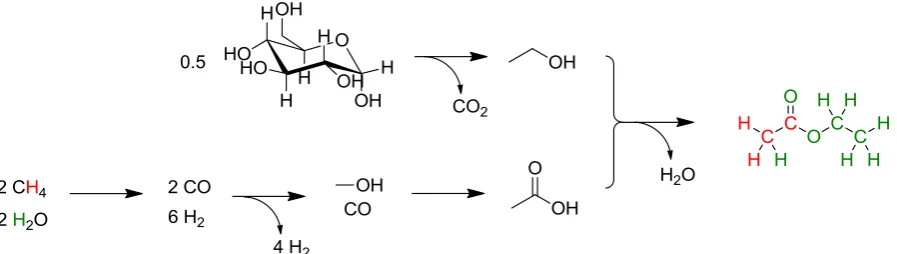
Figure 3.6 The synthesis of ethyl acetate from bio-ethanol (red atoms are assumed to origi-nate from fossil sources, green atoms are assumed to be from biomass).
Table 3.4 The ACDV allocation of atomic origins for a partially bio-based ethyl acetate mole-cule.
Source C H Other Total
Bio-based 27.3% 5.7% 18.2% 51.2%
Fossil based 27.3% 3.4% 18.2% 48.9%
Total 54.5% 9.1% 36.4% 100%
In order to keep the calculation simple some errors are introduced. For example, there is no oxygen in fossil sources of chemicals, and so regardless of whether the oxygen content is derived from biomass, water, or the atmosphere, attributing it to the fossil based content of the sample is incorrect. The question then becomes a choice between allying all non-petroleum sources of oxygen with biomass or creating a number of alternative catego-ries. This is covered in a following report (KBBPPS deliverable 4.5). Some concern should be expressed over the assignment of this ethyl acetate compound as 51% bio-based, when it could be up to 70% in real terms (Figure 3.7). Thus inferring the total bio-based content by extrapolating it from elemental analysis, justified only by an understanding of the synthesis of that molecule, may not resolve the limitations of direct bio-based carbon content determina-tion as it currently stands. It is true that the elemental analysis creates a good basis for fur-ther investigations, especially stable isotope analysis, and although this was overlooked by ACDV, it is discussed in this report.
[image:27.595.99.493.311.375.2] [image:27.595.76.525.604.731.2]Formulations are also addressed by this ACDV methodology, but unless their substit-uent parts have been certified separately as individual pure compounds the ingredients are considered to be non-renewable. The mass contributions and the total bio-based content of each ingredient (when known) are multiplied to give a value of bio-based content for the for-mulation. Carbon radioisotope analysis is equally applicable to mixtures as it is to pure com-pounds and this part of the certification process remains.
Another certification scheme, this time run by Vinçotte and entitled ‘OK-Biobased’ is also used to certify bio-based products [Vinçotte 2013]. However the procedure only requires a total organic carbon calculation and a measurement of 14Cfor bio-based carbon content, à la ASTM D6866. Although unambiguous, it is similarly limited as the US ‘BioPreferred’ pro-gramme, which labels the product and its packaging with a percentage bio-carbon content and no more [USDA 2013].
3.3.2 Elemental mass spectrometry
Mass spectrometry (MS) is often used in combination with CHN elemental analysis, or on its own in preference to elemental analysis, for the structural elucidation of organic compounds. The principle behind mass spectrometry is that the ionisation of the sample, followed by interaction with an electromagnetic field, will separate species on the basis of charge and mass. But the information gained from the mass spectrometry of molecules is exactly that, an analysis of molecules and any associated molecular fragments. The next chapter covers spectroscopy and spectrometry of bio-based molecules more broadly.
Mass spectrometry can be used as a method of detection, hyphenated to inductively coupled plasma (ICP) ionisation apparatus. Now atoms are analysed rather than their com-pounds. A sample (solids are dissolved in a solvent) is introduced to argon plasma at a local-ised temperature of 10,000 K as a nebullocal-ised aerosol mist, or by laser ablation of a solid di-rectly [Russo 2002]. The sample is atomised by ICP, and cations formed of the individual atoms. Mass spectrometry can then be conducted on the atoms for an analysis of the ele-mental composition of the sample. Most atoms can be detected by ICP-MS, but most atoms are metals not applicable to the majority of bio-based products. Because the organic matter in the sample is incinerated in the ICP process, the key elements of carbon, hydrogen, oxy-gen, nitrooxy-gen, etc. are not detectable. Atomic emission spectroscopy (AES) can also be used as a detection method. The technique of ICP-AES is usually applied to metals too, and so also has less importance with respect to bio-based products.
3.3.3 Isotopic mass spectrometry
abun-dance), and then this is only clear in larger molecules. However, the most sensitive tech-niques (four orders of magnitude more sensitive than typical MS) are able to resolve a great-er numbgreat-er of isotope ratios in simple compounds [Blessing 2008]. Accelgreat-erator mass spec-trometry (AMS) is achieved at the expense of flexibility in what can be detected [Brenna 1997, Meier-Augenstein 1999]. Suitable substrates for isotopic ratio mass spectrometry (IRMS) are typically obtained by combusting a sample to give, for example, carbon dioxide for carbon isotope analysis. The combustion can be performed by an elemental analyser (EA), where the sample is typically oxidised at temperatures of above 1000 K with chromium and cobalt oxide catalysts to give carbon dioxide and sulphur dioxide, then passed through a reductive furnace packed with copper to produce nitrogen gas from any nitrous oxides also in the sample gases. Although water is the chemical basis of hydrogen elemental analysis, hy-drogen gas is required for IRMS. Reduction of water to hyhy-drogen gas can be done with ura-nium or zinc [Preston 1992]. The different gases are separated by gas chromatography and analysed sequentially in continuous flow systems. For oxygen stable isotope ratio analysis, carbon monoxide is produced separately for testing as it is in traditional elemental analysis. With most of the procedure automatic, the sample preparation is greatly simplified. The cost of this analysis is less than €100 per element, and as little as €50 for only 13C/12C isotopic ratio analysis, depending on the service provider and the priority assigned to the sample.
The automated sample preparation widely implemented by an elemental analyser, as just described, is identical in most ways to the normal procedure of elemental analysis. How-ever the difference is in the detection of the gases. It is not the amount of each element that is of interest, but the relative abundance of the stable isotopes of each element. The isotopic ratio mass spectrometer that is able to resolve the difference in mass between isotopes and detect their low relative quantities has become the basis of an established technique in spe-cialist laboratories [Preston 1992]. Electron ionisation for the mass spectrometry is used. When considering carbon dioxide for example, the mass spectrometer must resolve the dif-ference between 12C16O2 and 13C16O2. Full combustion must be achieved, otherwise 12C16O will interfere with the 14N2 peak during nitrogen stable isotope analysis (known as isobaric interference) [Preston 1992].
Because only a small portion of the sample combustion gases are needed for IRMS, the spare carbon dioxide can be trapped and used for AMS 14C isotopic analysis. Therefore only one method of sample preparation is required to serve both stable isotope analysis and 14C radioisotope analysis. This is performed in a number of laboratories already and the need
As with ICP-MS, laser ablation can be used to prepare the sample for analysis [Ruso 2002]. A small amount of the solid sample is ejected with short bursts of a high energy laser, and the vapour of the sample combusted to give gaseous species on which IRMS can be performed [Moran 2011]. The technique is useful for historical artefacts, of which very little sample can be spared. For bio-based products this is not the case. With ACDV setting a precedent by requesting 100 g of sample for bio-based content verification, this means a great variety of analyses are possible with significant material to spare, though the cost im-plications of diverse and comprehensive analysis should be remembered. Where laser abla-tion will become useful is for large solid samples where sampling is an issue. If it is not pos-sible to homogenise a material into a powdered form, then laser ablation can be used to sample the surface of the material, and a comparison made across a number of experiments. If the problem with sampling is purely about the reduction in size of a homogenous sample, then no further considerations would need to be accounted for. For layered composite mate-rials that can be reduced in particle size, multiple experiments would serve to confirm the homogeneity of the prepared sample. Ultimately it would still be necessary to perform some sample preparation to obtain reproducible results.
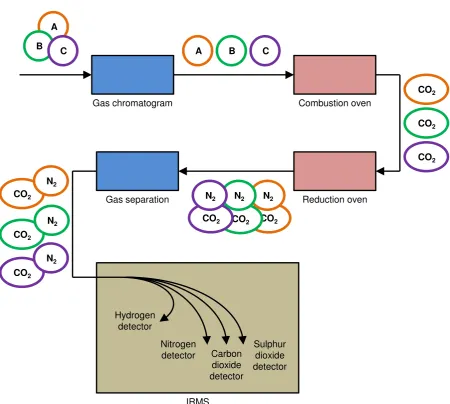
Figure 3.8 A schematic of compound specific, continuous flow isotopic ratio mass spectrom-etry, demonstrated for a three component sample.
There are disadvantages to compound specific IRMS. Firstly the components need to be volatile to be separated by the initial gas chromatography. When this is not the case, hy-phenated EA-IRMS would need to be used without a fractionation pre-treatment. For the analysis of plastics, the largest bio-based product market, GC is not applicable. Simple sol-vent and lubricant formulations however could be analysed in this way, given all the compo-nents are compatible with the analysis. Thermally sensitive compounds are not compatible, for it would be their decomposition products that would ultimately be analysed, and not the original component of the sample. An additional source of error in compound specific IRMS is the overlapping of signals, not just of the gaseous combustion products, but of the sample components as they are fractionated on the first GC column. [Blessing 2008, Yanik 2003]. Method development or simply a longer column may be required depending on the complexi-ty of the sample.
Combustion oven
Reduction oven Gas chromatogram
A
B C A B C
[image:31.595.73.524.101.505.2]3.3.4 Other analysis techniques
The stable isotope ratios of elements in water and carbon dioxide can be inferred us-ing infra-red (IR) spectroscopy [Griffith 2006, West 2010, Zhao 2011]. Usus-ing cavity rus-ing down spectroscopy, a form of laser absorption spectroscopy, the process seems to be suspectible to errors and not as reliable as other isotope ratio detection techniques [West 2010].
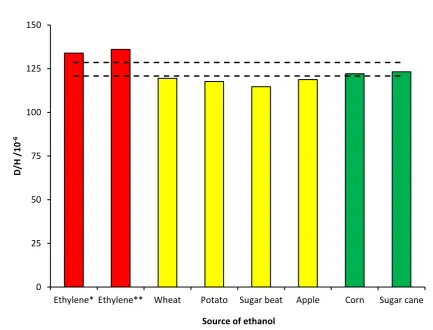
Figure 3.9 Ratios of deuterium to hydrogen in ethanol from different sources. *Production described as ‘ethylene contact’. **Ethanol by sulphuric acid hydration of ethylene.
0 25 50 75 100 125 150
Ethylene* Ethylene** Wheat Potato Sugar beat Apple Corn Sugar cane
D
/H
/
1
0
-6
[image:33.595.80.514.98.428.2]3.4 Sample preparation standards for elemental and isotopic analysis
3.4.1 European standards
There are a variety of product specific standard test methods covering sampling, sample preparation, and the determination of elemental composition and bio-based content. Of those, CEN has produced the following documentation for European needs. Relevance to sample preparation is highlighted, although the original intention of the standard is often for some type of analysis or processing unrelated to bio-based content.
An attempt has been made to tie in these standardised sample preparation protocols with the probable choice of total bio-based content determination method that will be imple-mented in the future. It is likely that stable isotope analysis (and elemental analysis) will be used for this purpose, but few standards are specifically designed to address this technique. Sample preparation standards are often non-specific and designed to be broadly applicable.
EN 14780 Solid biofuels – sample preparation
European standard EN 14780 is designated as suitable for the preparation of solid biofuels (wheat straw, wood chips, etc.) for various tests, including chemical composition. The definition of sample preparation in this document is taken as the reducing of sample size to more manageable, suitable amounts. EN 15442 covers the original sampling of the solid biofuels (not covered here).
The issue of moisture is addressed, and will be of considerable importance for most varieties of bio-based product. Oven drying at 313 K is recommended, followed by 24 hours of air drying in storage. Water content lost in the drying process should be recorded for mass balance calculations. Such mild drying conditions would fail to remove water from surfactant formulations for example, although it is only intended within this test method as a means of minimising errors when reducing sample size. The following description of moisture content determination in the European standard EN 14774-3 (as reviewed later) seems more thor-ough for pre-analysis sample preparation.
EN 15443 Solid recovered fuels – Methods for the preparation of the laboratory samples
Apparatus suitable for sample division into useful portions for analysis are set out in EN 15443, including rotary dividers for smaller particles and shovels for large biomass sam-ples. This is not relevant for bio-based products supplied as commercial consumer articles due to their manageable size (a bottle of cleaning fluid, a canister of motor oil, or some plas-tic packaging material for example). Business supplies of bio-based materials or chemical intermediates will be distributed in much larger volumes, and batches may need to be sam-pled in this way. Particle size reduction methods with cutting mills are defined, as are the sieves used to ensure the correct particle size has been achieved.
Drying of the sample prior to sample division and particle size reduction is also ad-dressed, and is conducted in an oven at 313 K. Constant weight needs to be achieved after air drying at room temperature for 24 hours, which can be performed after oven drying. The recommended drying procedure is a consequence of the nature of the materials for which this standard was developed. The preparation of surfactant samples from their aqueous solu-tions will require much more efficient drying methods.
EN 15413 Solid recovered fuels. Methods for the preparation of the test sample from the laboratory sample
The EN 15413 standard test method follows on from EN 15443 by further processing fuel samples in preparation for chemical analysis. Again the purpose is for sample size and particle reduction. The order of pre-treatment follows this order:
1. Fraction separation 2. Drying
3. Particle size reduction 4. Homogenisation 5. Sub-sampling
avoided. Freeze drying was not included as an option for drying samples, as this is only ef-fective for samples with a high water content.
Particle size reduction methods vary between product types, with freeze crushing recommended form plastic containing materials (with obvious relevance to bioplastics). In order to conduct freeze crushing the sample contained in a polyethylene container and im-mersed in liquid nitrogen for 10 minutes. The sample is then broken with a hammer, unless a more appropriate tool is recommended by the supplier. Certain plastics, especially films, may not benefit from freeze crushing and so cutting with scissors, or a cutting mill, is used in-stead. The sample can be frozen with liquid nitrogen prior to cutting.
In between processing, the sample must be stored correctly. Prior to elemental anal-ysis the sample is to be stored at 277 K in a (non-PVC) plastic container. Contamination from the air (especially dust) must be avoided, as should the loss of material by evaporation. The sample size must be at least 0.1 kg just for CHN elemental analysis, increasing to 0.8 kg for more complete analyses. Being that this case study is specific to recovered fuels, these seemingly excessive amounts may not translate to bio-based products.
EN 14774-3 Solid biofuels - Determination of moisture content - Oven dry method - Part 3: Moisture in general analysis sample
A major part of sample preparation for bio-based content analysis will be the removal of water, or at least a moisture content determination so that water can be factored into sub-sequent calculations. For solid biofuels the latter is covered by EN 14774-3. This procedure for moisture content determination is as follows:
1. A suitable vessel (including its lid) is dried at 378 K and cooled in a desiccator. 2. A minimum of 1 g of the sample is placed uniformly in the vessel.
3. The open vessel and contents (and lid separately) are heated at 378 K until constant in mass. This is defined as the point at which an additional hour of drying at 378 K does not result in more than 0.001 g of mass loss. This is expected to take no more than 3 hours.
4. The lid is replaced while still in the oven, and the sealed vessel placed in a desiccator to cool to the ambient temperature.
5. A record of the mass loss is made as soon as possible, especially for hygroscopic materials (this will be important for surfactants in broader bio-based content analysis procedures).
is suitable for eliminating variables that may affect further sample preparation, but not ensur-ing complete dryness. That may have some implications on mass balance calculations for the purpose of total bio-based content determination. Surfactants for example are very hy-groscopic, remaining as a gel even after freeze drying. Additionally, this methodologies risk errors as a result of volatile components, such as fragrances, being lost during the drying process.
EN 15104 Solid biofuels - Determination of total content of carbon, hydrogen and nitrogen – Instrumental methods
Remaining with solid biofuels, the determination of their elemental composition, lim-ited to carbon, hydrogen, and nitrogen, has been standardised as EN 15104. The procedure should now be familiar: The sample is combusted to yield carbon dioxide, water, and nitro-gen. Intermediate nitrogen oxides are reduce to elemental dinitrogen and any hydrogen sul-phide or hydrogen halide gases are fully converted to water for accurate hydrogen analysis. Certified calibration substances are required for accurate results.
Sample preparation is defined through reference to other standards. Particle size should be a maximum of 1 mm (remembering the relevance to solid biofuels) as defined in EN 14780. Moisture content must be determined with EN 14774-3 as this will create signifi-cant errors in elemental analysis if water is introduced as an unknown variable. With regards to the actual test sub-sample, all that is suggested is that the sample material is placed in a suitable capsule for the analysis. This is likely to be a crimped tin vessel.
The actual apparatus of elemental analysis is not defined, instead a list of minimum requirements is provided. These centre on assurances over complete combustion and reduc-tion where necessary to provide quantitative amounts of carbon dioxide, water, and nitrogen. Results should be reported on the basis of dry weight, and the analysis repeated so that a reliable mean average can be produced.
EN 15289 Solid biofuels — Determination of total content of sulphur and chlorine
This standard methodology reports on the analysis of chlorine and sulphur in biofuels. Manual preparation (bomb calorimeter combustion is preferred), automatic preparation (ele-mental analyser), and spectroscopic/spectrometric methods (X-ray fluorescence and ICP included) are all covered by EN 15289.
EN 15440 Solid recovered fuels – Method for the determination of biomass content
The determination of the bio-based content of solid recovered fuels has been estab-lished as EN 15440. Three methods of analysis are described: ‘selective dissolution’ of bi o-mass by sulphuric acid and hydrogen peroxide, manual separation by visual inspection, and 14C isotopic abundance. This may result in the amount of biomass being classified as a
func-tion of carbon content, as a mass balance, or by energy content depending on the analysis conducted. Of course this assessment is based on the proportion of biomass present, and not any downstream products made from renewable feedstocks of the type expected to be present in bio-based products. As such the scope and purpose of this standard is not fully appropriate, but some aspects of the sample preparation can be translated to alternative methods of bio-based content determination. Alignment as much as possible with existing protocols would be preferable of course until the point where this is detrimental to new meth-ods of total bio-based content.
The intention with selective dissolution is that any biomass will be broken down with these treatments, and then the remaining material will represent purely petroleum derived materials. Selective dissolution does not work for a variety of materials (e.g. non-biodegradable bio-based plastics and non-biodegradable fossil based plastics) and is of limited usefulness for bio-derived materials (rather than actual biomass as originally intended). Sample preparation is deferred to EN 15442 and EN 15443. Drying at 378 K is required be-fore dissolution of the biomass with sulphuric acid and then hydrogen peroxide.
Manual separation is only suitable for obviously heterogeneous samples consisting of particles of size greater than 0.01 m. Again the sample must be dried in an oven and cooled in a desiccator. The final methodology is a 14C isotopic abundance analysis. Any carbonate content is removed with sodium hydroxide solution. Combustion of the prepared sample is possible in a calorimeter, a tube furnace, or other combustion apparatus. The latter is more amenable for the additional analysis of stable isotopes, in which, post-combustion, the major-ity of the sample’s carbon dioxide can be redirected for the AMS intended of this test meth-odology. Complete combustion is required, and the carbon dioxide can be trapped cryogeni-cally. This is converted to graphite with an iron catalyst to give an analysable material. Full procedures for radiocarbon analysis are available in ASTM D6866. The chief limitations of 14C isotopic abundance analysis are described as (1) precision uncertainty created after
nu-clear bomb tests, and (2) the small number of AMS equipped labs. Error in AMS bio-based carbon content analysis is said to be ±3%, according to ASTM D6866.
CEN/TS 16137 Plastics - Determination of bio-based carbon content
accel-erator mass spectrometry (AMS). Concerns over the accuracy of the first two methods means this discussion will equate 14C content analysis with radioisotope detection by AMS. In fact PSM was dropped from ASTM D6866 for this reason, and is not present in the current verion (D6866-12). Essentially the sample preparation is the same as other methods (EN 15440 and ASTM D6866). Inorganic carbon is removed with sodium hydroxide solution be-fore combustion to carbon dioxide. Once again combustion of the prepared sample is possi-ble in a calorimeter, a tube furnace, or a combustion apparatus. Other pre-treatments such as drying are not discussed. Sampling is deferred to other unspecified standards.
Overall this technical specification just reiterates the bio-based carbon content meth-od described by ASTM D6866 and EN 15440, but limits itself to plastics. The American standard ASTM D6866 is vague in terms of sample preparation prior to the necessary car-bonate removal and combustion steps also, for this of course is the responsibility of other standards that describe general sample preparation methods for a variety of subsequent analytical methods. Instead ASTM 7026 should be referred to for this purpose (described subsequently).
ENV 12142 Method for determination of stable hydrogen isotope ratio (2H/1H) of water from fruit juices, using isotope ratio mass spectrometry
Standards specifically designated for stable isotope analysis are limited. The pre-standard ENV 12142 considers the hydrogen stable isotope ratios ( 2H) found in the water of fruit juices by IRMS. This can reveal the difference between products made from concentrate and unprocessed fruit juices. As always the difference in mass between H2 gas consisting of two protium atoms (1H2), and a protium atom and a deuterium atom (2H1H) is the basis of this analysis. Dideuterium (2H2) is sufficiently obscure to not skew the analysis.
The production of hydrogen gas from water is performed with a technique that re-quires separate sample preparation (water reduction to hydrogen gas) and a subsequent isotopic analysis (IRMS) stage, not the common EA-IRMS hyphenated technique already explained. The full sample preparation begins with the centrifugation of the sample to remove solid fruit matter, then distillation is needed for quantitative water reclamation. This separa-tion, of fruit solids and water, is not directly applicable to the analysis of bio-based products, but in cases where homogeneity of the sample cannot be assured, sampling will be biased. In this instance separate isotopic analyses of distinct formulation components may become necessary. This issue is addressed further in ASTM D7026.
several test centres that operate EA-IRMS for stable isotope analysis. It is prevalent enough to be a viable option, and seemingly reliable.
ENV 12140 Method for determination of stable carbon isotope ratio (13C/12C) of sugars from fruit juices, using isotope ratio mass spectrometry
Similar in context to ENV 12142, ENV 12140 provides a standard test method for carbon stable isotope analysis of the sugars in fruit juices. The sample is centrifuged, and addition of calcium hydroxide to the solid is used to selectively dissolve the sugar content of the sample. The sample is freeze dried to give a powder for analysis. The conditions under which the sample should be dried were not given. Unlike ENV 12142, the analysis of the prepared sample in ENV 12140 is by an online (i.e. in sequence) EA-IRMS set-up. Combus-tion to carbon dioxide allows for the determination of 13C. The reproducibility of the proce-dure is said to be high (data supplied within the standard).
ENV 13070 Fruit and vegetable juices - Determination of the stable carbon isotope ratio (13C/12C) in the pulp of fruit juices - Method using isotope ratio mass spectrometry
The principle behind ENV 12140 is used in this related pre-standard ENV 13070. It too deals with stable carbon isotope ratios, but this time of the pulp of fruit juices. A centri-fuge is used to separate the solid fruit material (pulp) from the water. Lipids are removed with acetone, otherwise a large variability in 13C values results. Combustion of the pulp is subject to the usual constraints (full combustion required and all NOx needs to be reduced) using the method in ENV 12140 with automated EA-IRMS.
3.4.2 Other standards
The closest procedure to a standardised total bio-content analysis method currently in use is the method set out in ASTM D6866, although this is limited to carbon analysis. All ex-isting bio-based product certification schemes are reliant on it. This gives a direct measure-ment of the bio-based carbon content of the sample and is covered in greater detail within other reports emerging from the KBBPPS research project (KBBPPS deliverable D3.6, due to be published in 2015). The later stages of sample preparation required for isotope analysis have been addressed in discussions presented thus far, as well as the hyphenation of accel-erated mass spectrometry (AMS) for 14C/12C ratio determination with stable isotope analysis technique. Prior to combustion ASTM D6866 gives no guidance on sample preparation. Nevertheless demonstrations of the protocol seem robust [Norton 2006, Norton 2007].
standards. The relevance of ASTM D6866 will be revisited when appropriate after an initial summary, especially when concerning discussions on the related standard, ASTM D7026.
ASTM D6866 Standard test methods for determining the biobased content of solid, liquid, and gaseous samples using radiocarbon analysis
Simply put, the outcome of ASTM D6866 is a percentage bio-based carbon content, as a portion of the total organic carbon content of the sample. This standard test method is being used for the analysis of bio-based products, and has been in operation since the im-plementation of the USA Farm Security and Rural Investment Act of 2002 [BioPreferred 2014]. In recent versions of the document, two methods (reduced from the original three) are described for measuring the proportion of 14C in a sample of graphite (for AMS) or benzene (for liquid scintillation counting, LSC). Both require the conversion of the sample to carbon dioxide. The sample preparation before combustion is covered in ASTM D7026.
Combustion of the sample is performed by the following technique provided in ASTM D6866. This procedure is the recommended methodology because of its affordability and extensive use worldwide. As little as 1 mg of carbon is needed, but must be quantitatively recovered as carbon dioxide so that the subsequent radiocarbon analysis is representative.
The sample material is transferred into an appropriately sized quartz tube. For mate-rials containing volatile components, the sample within the tube shall be frozen with liquid nitrogen prior to evacuation of the ambient atmosphere. The sample is combusted in a tem-perature controlled furnace at 1173 K for up to 4 hours under an oxygen atmosphere. After combustion, the quartz sample tube needs to be carefully broken within a flexible hose por-tion of a “tube cracker” assembly adapted to a manifold. The sample carbon dioxide is cryo-genically frozen with liquid nitrogen and transferred to another vessel. The sample is distilled to remove residual water using a dry ice/alcohol slurry maintained at about 197 K. The car-bon dioxide gas is released and immediately condensed. The recovery efficiency is deter-mined using the ideal gas law relationship. The sample shall be transferred to a borosilicate break seal tube for storage and delivered to an AMS facility for analysis of the 14C/12C isotop-ic ratio.
ASTM D7026 Standard guide for sampling and reporting of results for determination of bi-obased content of materials via carbon isotope analysis
![Table 3.3 Carbon isotopic composition ranges for samples of material from different feed-stocks [Meier-Augenstein 1999, Suzuki 2010]](https://thumb-us.123doks.com/thumbv2/123dok_us/7928624.193278/17.595.105.491.203.327/carbon-isotopic-composition-samples-material-different-augenstein-suzuki.webp)
![Figure 3.3 A reinterpretation of literature �2H data from different methane sources [Hattori 2010, Sowers 2006]](https://thumb-us.123doks.com/thumbv2/123dok_us/7928624.193278/19.595.83.504.345.585/figure-reinterpretation-literature-different-methane-sources-hattori-sowers.webp)
![Figure 3.5 Sulphur isotopic abundance ranges and for food products data mean averages [Kelly 2002, Thode 1991]](https://thumb-us.123doks.com/thumbv2/123dok_us/7928624.193278/23.595.75.507.245.478/figure-sulphur-isotopic-abundance-ranges-products-averages-kelly.webp)