S T U D Y P R O T O C O L
Open Access
Impacts of online and group perinatal
education: a mixed methods study protocol
for the optimization of perinatal health
services
Geneviève Roch
1,2,3*, Roxane Borgès Da Silva
4,5, Francine de Montigny
6, Holly O. Witteman
2,7, Tamarha Pierce
8,
Sonia Semenic
9, Julie Poissant
10, André-Anne Parent
11, Deena White
12, Nils Chaillet
4,13, Carl-Ardy Dubois
4,14,
Mathieu Ouimet
2,13, Geneviève Lapointe
1,2,3, Stéphane Turcotte
3, Alexandre Prud
’
homme
4,
Geneviève Painchaud Guérard
2and Marie-Pierre Gagnon
1,2Abstract
Background:Prenatal education is a core component of perinatal care and services provided by health institutions. Whereas group prenatal education is the most common educational model, some health institutions have opted to implement online prenatal education to address accessibility issues as well as the evolving needs of future parents. Various studies have shown that prenatal education can be effective in acquisition of knowledge on labour and delivery, reducing psychological distress and maximising father’s involvement. However, these results may depend on educational material, organization, format and content. Furthermore, the effectiveness of online prenatal education compared to group prenatal education remains unclear in the literature. This project aims to evaluate the impacts of group prenatal education and online prenatal education on health determinants and users’health status, as well as on networks of perinatal educational services maintained with community-based partners. Methods:This multipronged mixed methods study uses a collaborative research approach to integrate and mobilize knowledge throughout the process. It consists of: 1) a prospective cohort study with quantitative data collection and qualitative interviews with future and new parents; and 2) a multiple case study integrating documentary sources and interviews with stakeholders involved in the implementation of perinatal information service networks and collaborations with community partners. Perinatal health indicators and determinants will be compared between prenatal education groups (group prenatal education and online prenatal education)
and standard care without these prenatal education services (control group).
(Continued on next page)
* Correspondence:[email protected] 1
Faculty of Nursing, Université Laval, 1050 avenue de la Médecine, Québec, QC G1V 0A6, Canada
2CHU de Québec Research Centre–Université Laval, Hôpital Saint-François d’Assise, 10 rue de l’Espinay, Québec, QC G1L 3L5, Canada
Full list of author information is available at the end of the article
(Continued from previous page)
Discussion:This study will provide knowledge about the impact of online prenatal education as a new
technological service delivery model compared to traditional group prenatal education. Indicators related to the complementarity of these interventions and those available in community settings will refine our understanding of regional perinatal services networks. Results will assist decision-making regarding service organization and delivery models of prenatal education services.
Protocol version:Version 1 (February 9 2018).
Keywords:Prenatal education, Perinatal care, Pregnancy, Childbirth education, Online education, Community health networks, Community health services, Health status indicators, Mixed methods
Background
Prenatal information is a decisive determinant of health choices made by pregnant women and their partners as they move through the continuum of perinatal services [1, 2]. Considering the myriad of information sources publicly available and their variable quality [3–7], prenatal educa-tion remains a health promoeduca-tion strategy at the core of perinatal care and services provided by health and social services centers [8–10] [S-10] and is supported by public policies [10, 11]. Group prenatal education is one of the most common educational models [12]. Various studies have shown that group prenatal education can be effective in the preparation for labour and delivery, reducing anx-iety and maximising partners’ involvement. However, these results depend on the organization, format, and con-tent of the educational services [13–17]. In order to ad-dress accessibility issues as well as the evolving needs of future parents, some health and social services centers have opted to recommend or implement online prenatal education, while still offering group prenatal education. Decision makers, however, are concerned about the im-pacts of this new educational mode on the efficacy of health services networks. In a restructuring context where the deployment of online education opens the door to new complementary prenatal education to group educa-tion, it is important to understand the contribution of these two educational modes on health determinants and users’ perinatal health [18]. Because of the heterogeneity of delivery modes [9], evidence of prenatal education ef-fectiveness and impact is scarce or contradictory for group prenatal education [12, 14–17, 19] and very limited for online prenatal education [20–22], although online educa-tion may address the needs of certain users and improve accessibility [23–29]. Within a health promotion context, prenatal education delivered by health and social services centers could be improved by being integrated into a con-tinuum of perinatal information in partnership with exist-ing community services networks [30]. Several studies show that networking may contribute to health system effectiveness, but structural characteristics and collabora-tions with community partners surrounding prenatal
education and information remain unknown [31–33]. There is thus an urgent need to collect robust data on the impacts of group prenatal education and online prenatal education, and to consolidate perinatal information networks with community partners.
The aim of this project is to evaluate the impacts of group prenatal education and online prenatal education provided or recommended by health and social services centers on health determinants and users’ health status, as well as on networks of perinatal educational services maintained with community-based partners. Specific objectives are to: 1) document the characteristics of group prenatal education and online prenatal education and contribute to their optimization; 2) evaluate the impacts of group prenatal education and online prenatal education on health determinants and the perinatal health status of parents; 3) evaluate characteristics and collaborations related to perinatal educational services within which group prenatal education and online prenatal education are offered, with community-based partners.
Methods
This multipronged study uses convergent mixed methods through a collaborative research approach to integrate and mobilize knowledge [34, 35]. More pre-cisely, it will consist of 1) a prospective cohort study with quantitative data collection and qualitative inter-views with future and new parents and 2) a multiple case study integrating documentary sources and interviews with stakeholders involved in the implementation of peri-natal information service networks and collaborations with community partners. The complementarity of the quantitative and qualitative data will provide a broader perspective on perinatal information sources and net-works in order to evaluate the impacts of prenatal education.
Participating sites
located in adjacent regions in the province of Québec, Canada, with an approximate total area of 34,000 km2 and total population of 1,162,000 inhabitants. Cre-ated in 2015, these regional institutions are respon-sible for the provision of health care and services within their territories and for binding agreements with partner organizations (e.g. community organiza-tions, medical clinics, network clinics, etc.) [36]. The health and social services centers are providing simi-lar group prenatal education, with some variations related to their resources and specific population needs. Both are currently using an online prenatal education interface developed by a private provider [37]. These institutions also have access to a peri-natal information source developed by the Ministry of Health and Social Services of Québec to maintain the harmonization of content [38].
Participants
For the cohort study, women will be eligible if they: a) are at the beginning of their pregnancy (10 to 20 weeks); b) live within the targeted geographic territories; c) are fluent in French; d) have not given birth previously and e) have a valid email address and access to internet. Male and female partners of women meeting these cri-teria will be eligible as partners. Partners who already had children with another woman will also be eligible. For qualitative interviews, parents will be eligible if they: a) have a 6- to 12-week-old infant; b) attended group prenatal education or online prenatal education recom-mended by participant sites; c) live within the targeted geographic territories; d) are fluent in French. For the multiple case study, prenatal education stakeholders (managers and health professionals) will be eligible if they: a) are working within the participating sites or re-lated services networks; b) are interested in sharing their understanding of structural characteristics and determi-nants of collaboration between health and social services centers and community partners involved in group pre-natal education and online prepre-natal education offer; and c) have been in their position for at least 3 months. These stakeholders will be identified with the help of collaborators from participating sites.
Outcomes
Primary and secondary outcomes related to perinatal health and perinatal health determinants were identified from a literature review on group prenatal education effects [18, 39]. Based on studies that demonstrated significant effects of group prenatal education, the main outcome for health determinant is perinatal knowledge [13,40] and will be measured with an adapted version of the Health Pregnancies Knowledge Survey [41]. The questionnaire will be adapted in collaboration with
prenatal education trainers from the different participant training sites, in order to ensure that all knowledge items are covered in group and online prenatal education.
The main secondary outcome is psychological distress, measured with a validated French version of the 12-item General Health Questionnaire [42] and considered as the most important outcome for perinatal health mea-sures (i.e., main outcome measuring a health determin-ant). Other secondary outcomes include: breastfeeding self-efficacy, assessed with a French version of the Breastfeeding Self-Efficacy Scale Short-Form [43, 44]; anxiety, assessed with a validated French version of the State-Trait Anxiety Inventory [45]; self-efficacy in the parenting role, assessed with a French version of the Parent Expectations Survey [46,47]; depression, assessed with a validated French version of the Edinburgh Postna-tal Depression Scale [48, 49]; concern about labour and birth, assessed with a French version of the Oxford Worries about Labour Scale [50]; control during child-birth, assessed with a French version of the Labour Agentry Scale [51]; personal control in pain relief during childbirth, assessed with a French version of the Personal Control in Pain Relief Scale [52], breastfeeding status and birth weight. A back translation process [53, 54] will be used to translate English versions of the Ox-ford Worries about Labour Scale, Labour Agentry Scale and Personal Control in Pain Relief Scale to French. Data on sociodemographic characteristics, pregnancy and childbirth history, and prenatal information sources consulted during pregnancy will also be collected as po-tential confounding factors. All questionnaires will be pre-tested with a test-retest procedure in order to assess their reliability [55].
Data collection
Administrative data collection
Time measurements (cohort study)
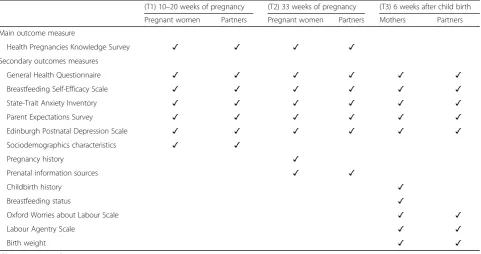
Table1presents the distribution of outcomes measurements through time for the cohort study. Time measurements are calculated according to the continuum of services of partici-pating institutions. The first questionnaire (T1) will be com-pleted between the 10th and 20th week of pregnancy, in order to reach participants before the prenatal education period. The second questionnaire (T2) will be sent at 33 weeks of pregnancy, in order to reach participants after the prenatal education period. The third and last question-naire (T3) will be sent 6 weeks after the expected date of birth. All questionnaires will be sent by email and completed online.
Qualitative interviews
Semi-structured individual qualitative interviews with parents will be based on an interview guide developed according to the Interactive Quality Health Education Outcomes Model [56]. Interviews will be conducted by phone in order to facilitate participation. Each interview will last approximately 45 min. Mothers and partners from each participating site and each prenatal education mode (group or online prenatal education) will be recruited according to a stratified sampling until data saturation is reached (expected N= 40) [57–59]. Qualitative interviews will be held simultaneously with the cohort study.
Network data collection
In order to evaluate structural characteristics of efficient networks and collaborations, individual qualitative
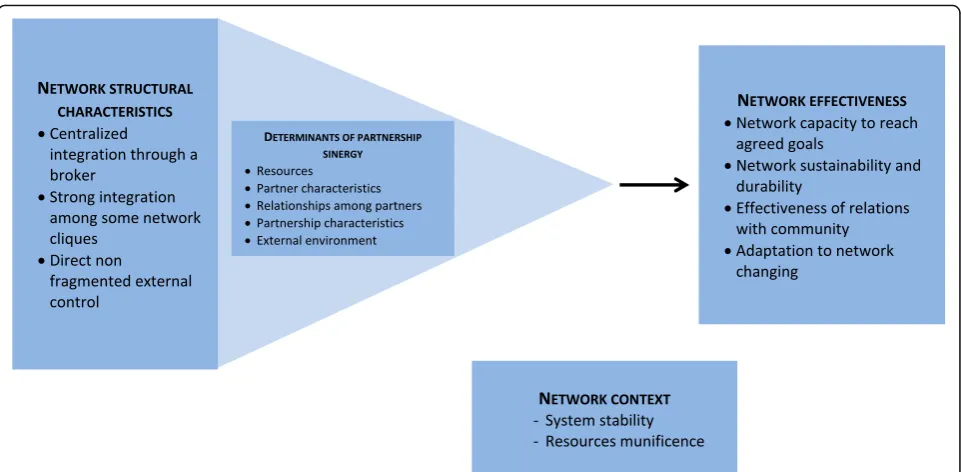
interviews with prenatal education stakeholders will be held in the two participating health and social services centers and their related community-based organizations (expected N = 45). The interview guide will be devel-oped from a reference framework inspired by the work of Turrini et al. [31] for efficient network characteristics, and Lasker et al. [60] for partnerships functioning (Fig. 1). An adaptation of the Social Network Analysis Tool [61] will also be used in order to estimate how these characteristics and determinants may consolidate group prenatal education, online prenatal education and perinatal information. Each interview will last approxi-mately 45 min. These interviews will be held simultan-eously with the cohort study and will be completed by documentary sources provided by the participating sites.
Recruitment strategies
[image:4.595.58.540.99.353.2]For the cohort study, all questionnaires will be com-pleted in electronic format and data kept on a secured server hosted by the principal investigator’s institution. Pregnant women and their partners will be recruited at their first contact point with participating sites, namely at their first ultrasound test or prenatal meeting. In ultrasound clinics, a bookmark providing connection information will be given by receptionists when parents attend the first dating ultrasound. A research assistant will then be responsible to meet potential participants in the waiting room, provide them with the necessary infor-mation and give them the opportunity to complete the consent form and start answering the questionnaire on Table 1Distribution of outcomes measures through time
(T1) 10–20 weeks of pregnancy (T2) 33 weeks of pregnancy (T3) 6 weeks after child birth
Pregnant women Partners Pregnant women Partners Mothers Partners
Main outcome measure
Health Pregnancies Knowledge Survey ✓ ✓ ✓ ✓
Secondary outcomes measures
General Health Questionnaire ✓ ✓ ✓ ✓ ✓ ✓
Breastfeeding Self-Efficacy Scale ✓ ✓ ✓ ✓ ✓ ✓
State-Trait Anxiety Inventory ✓ ✓ ✓ ✓ ✓ ✓
Parent Expectations Survey ✓ ✓ ✓ ✓ ✓ ✓
Edinburgh Postnatal Depression Scale ✓ ✓ ✓ ✓ ✓ ✓
Sociodemographics characteristics ✓ ✓
Pregnancy history ✓
Prenatal information sources ✓ ✓
Childbirth history ✓
Breastfeeding status ✓
Oxford Worries about Labour Scale ✓ ✓
Labour Agentry Scale ✓ ✓
Birth weight ✓ ✓
an iPad. Potential participants will also be free to keep the bookmark and complete the questionnaire later at home. In prenatal clinics, the bookmark and project in-formation will be given by nurses to future parents, which will then be free to complete the online consent form and questionnaire at home. Posters will also be dis-played in all participating sites, with the possibility for potential participants to contact the principal investiga-tor or project coordinainvestiga-tor directly if they want to partici-pate. Once participants are registered, follow-up will be done by email or phone.
For qualitative interviews, parents will be recruited at their first postnatal clinic encounter in participating health and social services centers (e.g. immunization clinics, breastfeeding clinics, etc.). A bookmark with the research team coordinates and project information will be given by nurses to new parents, who will be invited to contact the research team in order to verify their eligibility and participate to the project.
For the multiple case study, expert stakeholders will be recruited through a snowball sampling technique starting with the health and social services centers’ decision-makers initially involved in the study.
Incentives and retention strategies
In order to prevent loss to follow-up during the cohort study, automatic email reminders will be sent twice after the sending of T1, T2 and T3 questionnaires. If the questionnaire is not completed after that, the research coordinator or a research assistant will call the partici-pant as a last reminder or to record the reason for
abandonment. All participants will be eligible for the drawing of six iPads, with chances to win proportion-ately increasing with the number of completed question-naires (one to three).
Statistical analysis
Sample size
Assuming an effect size of 0.36 (for perinatal knowledge with or without prenatal education) and a 1:1:2 alloca-tion between groups (group prenatal educaalloca-tion: online prenatal education: without prenatal education) [13], a power of 80% and a bilateral test threshold of 0.025, a total of 445 pregnant women and 445 partners (2 groups of 111 with prenatal education and 1 group of 223 with-out prenatal education) is required at the third measure-ment time. An ongoing longitudinal study conducted by our research team with new parents in the Québec region allows us to expect a participation rate of 80% for partners and a retention rate of 70% at the end of the three measuring times. An initial sample size of 795 pregnant women and up to 795 partners is therefore anticipated. A second power calculation based on Jakubiec et al. data [40] was done for the most important secondary outcome (psychological distress) and resulted in a smaller sample size. Births by territory data suggest a sufficient pool to recruit the required sample size within 3 to 4 months.
Quantitative analysis
[image:5.595.58.539.86.322.2]difference between prenatal education groups (group prenatal education and online prenatal education) and standard care without these prenatal education services will be calculated. Bivariate linear regression models will then be used to measure the association between this difference and secondary outcomes. Bivariate linear re-gression models will be used to compare prenatal educa-tion groups (group prenatal educaeduca-tion and online prenatal education) to the absence of these prenatal edu-cation services for health determinants measured twice. Non-multicollinearity, normality of residuals and homo-geneity of variances will be verified and a variable trans-formation will be performed if these postulates are not met. Outcomes measured at the three time points will be analyzed with bivariate repeated measures models. For continuous and categorical outcomes, mixed models and generalized estimating equation models will be used respectively. For the generalized estimating equation models, binomial distribution will be used for binary outcomes and multinomial distribution for outcomes with multiple categories. Multiple imputation will be used for randomly distributed missing data. Depending on the results, sensitivity analysis may be performed for geographic regions, health establishments providing pre-natal education, group or online prepre-natal education for-mat, exposure level to online prenatal education and healthcare providers involved in pregnancy follow-up. All statistical models will be adjusted for sociodemo-graphic data, use of other information sources and preg-nancy follow-up data. Analysis will be performed with Statistical Analysis Software version 9.4 (SAS Institute, Cary, NC, USA).
Qualitative analysis
Data from semi-structured interviews will be recorded, transcribed, anonymized and analyzed with QDA Miner software version 5 (Provalis Research, Montreal, QC, Canada). Content analysis and integration of quantitative inferences will be conducted based on an adaptation of the Interactive Quality Health Education Outcomes Model [56]. Administrative data will be treated in a de-scriptive manner in order to establish the general and comparative profile of users. Quality and confidentiality of data will be rigorously ensured by the use of consoli-dated criteria and valiconsoli-dated qualitative methods [62,63].
Multiple case study analysis
Case studies will consist of perinatal information net-works of the two participating health and social services centers in which local community perinatal information networks will be embedded. For each study case, matri-ces allowing the evaluation of determinants in relation to networks success factors and collaborative actions presented in perinatal governmental programs [64–66]
will be developed alongside a content analysis [67]. UCI-NET software version 6 [68] will be used to view and compare perinatal networks structure according to the analytical approach described by Scott et al. [69], as recommended by Provan et al. for the reinforcement of efficient collaboration networks [61]. The integration of different data sources will allow a cross-sectional validation of results.
Collaboration with decision-makers
Decision-makers of the two participating health and social services centers have committed to facilitate the implementation of this project in their respective estab-lishments. Based on the administrative data collected and usability of online prenatal education, they will standardize as much as possible their offer of group prenatal education and online prenatal education be-fore the recruitment in order to optimize the results of the study. Responding to priorities in public health and clinical services organization, this engagement will facilitate a relevant follow-up of the impacts of group and online prenatal education. The study of the service delivery models for prenatal education and the associated regional networks providing these ser-vices will also promote collaboration between the pol-itical decision-makers of the Ministry of Health and Social Services of Québec, the National Public Health Institute of Québec, and the Public Health Agency of Canada who have agreed to actively participate in the interpretation of results and mobilization of knowledge strategies.
Discussion
Knowledge translation strategies
Expected outcomes
This study will be one of the first to consider the im-pacts of online prenatal education on different health determinants and perinatal health status in a Canadian context. This will allow for important knowledge acqui-sition regarding the impact of online prenatal education as a new technological service delivery model compared to an absence of group prenatal education in some health and social services centers settings. Indicators re-lated to the complementarity of group and online pre-natal education and those available in a community setting will refine our understanding of regional peri-natal services networks. As studies involving future fa-thers or partners are uncommon, although their involvement in perinatal period is strongly recom-mended [70], results will also indicate how group and online prenatal education can contribute to their well-being and that of their family. This project also has the potential to improve harmonization of group natal education and the user-friendliness of online pre-natal education. This could potentially improve nurses’ professional practices, as well as those of other health professionals and community stakeholders involved in perinatal education. The partnership approach will assist in the development of a measurement culture and sup-port decision-making regarding service organization and delivery models of prenatal education in Québec as well as other Canadian provinces where online prenatal edu-cation are provided, in order to optimize perinatal health services.
Acknowledgements
We thank the Public Health Agency of Canada, the Ministry of Health and Social Services of Québec, the participating health and social services centers and the online prenatal education private provider for their in-kind contribution to the project. We also thank all knowledge users involved in the study for their input on its relevance, their commitment to its facilitation and their support for integrated knowledge transfer strategies.
Funding
This study is funded by the Canadian Institutes of Health Research (CIHR)
and the Fonds de recherche Santé–Québec (FRSQ). Funding Reference
Number: PHE-148163. FD is Tier 2 Canada Research Chair in Family Psycho-social Health and is supported by a FRQS Research Scholar Senior Career Award. HW is supported by a FRQS Research Scholar Junior 2 Career Award. MPG is Tier 2 Canada Research Chair in Technology and Practice in Health.
Authors’contributions
GR, RBS, MPG, and FD contributed to the conception and design of the study and wrote the draft manuscript with GPG. HW, TP, SS, JP, AP, ST and GPG contributed to the design of the cohort study. AAP, DW, CAD and GL contributed to the design of the case study; MO provided expertise in knowledge transfer and network analysis. All authors reviewed, read and approved the final version of the manuscript.
Ethics approval and consent to participate
Ethics committee review approval has been obtained from the Multicenter
Ethics Committee of theCentre intégré de santé et de services sociaux de
Chaudière-Appalaches; approval number: MP-23-2017-405), with all protocol modifications being mandatory to report. All participants will provide electronic consent following a procedure approved by the ethics board.
Competing interests
The authors declare that they have no competing interests.
Publisher’s Note
Springer Nature remains neutral with regard to jurisdictional claims in published maps and institutional affiliations.
Author details 1
Faculty of Nursing, Université Laval, 1050 avenue de la Médecine, Québec, QC G1V 0A6, Canada.2CHU de Québec Research Centre–Université Laval, Hôpital Saint-François d’Assise, 10 rue de l’Espinay, Québec, QC G1L 3L5, Canada.3Centre intégré de santé et de services sociaux de
Chaudière-Appalaches, Hôtel-Dieu de Lévis, 143 rue Wolfe, Lévis, QC G6V 3Z1, Canada.4Université de Montréal Public Health Research Institute, 7101 avenue du Parc, Montréal, QC H3N 1X9, Canada.5Faculty of Nursing, Université de Montréal, 2375, chemin de la Côte-Ste-Catherine, Montréal, QC H3T 1A8, Canada.6Department of Nursing, Université du Québec en Outaouais, 283 boulevard Alexandre-Taché CP 1250, Gatineau, QC J8X 3X7, Canada.7Faculty of Medicine, Université Laval, 1050 avenue de la Médecine, Québec City, QC G1V 0A6, Canada.8School of Psychology, Université Laval, 2325 Allée des Bibliothèques, Québec City, QC G1V 0A6, Canada.9Ingram School of Nursing, McGill University, 680 Sherbrooke West, Montréal, QC H3A 2M7, Canada.10Institut national de santé publique du Québec, 945 av Wolfe, Québec City, QC G1V 5B3, Canada.11School of Social Work, Université de Montréal, 3150 rue Jean-Brillant, Montréal, QC H3T 1N8, Canada.
12Département de sociologie, Université de Montréal, 3150 rue Jean-Brillant,
Montréal, QC H3T 1N8, Canada.13Department of Political Science, Faculty of Social Sciences, Université Laval, 1030 avenue des Sciences Humaines, Québec, QC G1V 0A6, Canada.14School of Public Health, Université de Montréal, 7101 avenue du Parc, Montréal, QC H3N 1X9, Canada.
Received: 12 February 2018 Accepted: 14 May 2018
References
1. Martin CJH, Robb Y. Women’s views about the importance of education in
preparation for childbirth. Nurse Educ Pract. 2013;13(6):512–8.
2. Koehn ML. Childbirth education outcomes: an integrative review of the
literature. J Perinat Educ. 2002;11(3):10.
3. Edmonds JK, Cwiertniewicz T, Stoll K. Childbirth education prior to
pregnancy? Survey findings of childbirth preferences and attitudes among
young women. J Perinat Educ. 2015;24(2):93–101.
4. McArdle A, et al. How pregnant women learn about foetal movements:
sources and preferences for information. Women Birth. 2015;28(1):54–9.
5. Criss S, et al. The role of health information sources in decision-making
among Hispanic mothers during their Children’s first 1000 days of life.
Matern Child Health J. 2015;19(11):2536–43.
6. Grimes HA, Forster DA, Newton MS. Sources of information used by
women during pregnancy to meet their information needs. Midwifery.
2014;30(1):e26–33.
7. Buultjens M, Robinson P, Milgrom J. Online resources for new mothers:
opportunities and challenges for perinatal health professionals. J Perinat
Educ. 2012;21(2):99–111.
8. Dumas L. Focus groups to reveal parents’needs for prenatal education. J
Perinat Educ. 2002;11(3):1–9.
9. Direction régionale de santé publique. L’information en période prénatale:
Pratiques et besoins des mères, des pères et des intervenantes en santé et services sociaux de la Capitale-Nationale. Québec: Agence de la santé et des services sociaux de la Capitale-Nationale; 2014. p. 150.
10. Ministère de la Santé et des Services sociaux. Politique de périnatalité 2008–
2018. Québec: Direction des communications du ministère de la Santé et des Services sociaux du Québec; 2008. p. 174.
11. Public Health Agency of Canada. The Canada prenatal nutrition program : a
decade of promoting the health of mothers, babies and communities. Ottawa: Her Majesty the Queen in Right of Canada, represented by the Minister of Health; 2007.
12. Tu A, Poissant J. Avis Sur les effets des rencontres prénatales de groupe.
Montréal: Institut national de santé publique du Québec; 2015. p. 135.
13. Ickovics JR, et al. Group prenatal care and perinatal outcomes: a randomized
14. Brixval CS, et al. The effect of antenatal education in small classes on obstetric and psycho-social outcomes - a systematic review. Syst Rev. 2015;4:20.
15. Ferguson S, Davis D, Browne J. Does antenatal education affect labour and
birth? A structured review of the literature. Women Birth. 2013;26(1):e5–8.
16. Gagnon AJ, Sandall J. Individual or group antenatal education for childbirth
or parenthood, or both Cochrane Database of Systematic Reviews; 2007. p. (3 Art. No.: CD002869).
17. Martínez-Galiano JM, Delgado-Rodríguez M. Effectiveness of the professional
who carries out the health education program: perinatal outcomes. Int J
Womens Health. 2014;6:329–34.
18. Ministère de la Santé et des Services sociaux. La santé et ses déterminants,
mieux comprendre pour mieux agir. Québec: La Direction des communications du ministère de la Santé et des Services sociaux; 2012.
19. Centre de ressources Meilleur départ. La prestation de l’éducation prénatale
en Ontario : un résumé des conclusions de l’étude. Toronto (Ontario):
Centre de ressources Meilleur départ; 2015.
20. Salonen AH, et al. Effectiveness of an internet-based intervention enhancing
Finnish parents’parenting satisfaction and parenting self-efficacy during the
postpartum period. Midwifery. 2011;27(6):832–41.
21. Salonen AH, et al. Impact of an internet-based intervention on Finnish
mothers’perceptions of parenting satisfaction, infant centrality and depressive
symptoms during the postpartum year. Midwifery. 2014;30(1):112–22.
22. Huang MZ, et al. Evaluating effects of a prenatal web-based breastfeeding
education programme in Taiwan. J Clin Nurs. 2007;16(8):1571–9.
23. Romano AM. A changing landscape: implications of pregnant women’s
internet use for childbirth educators. J Perinat Educ. 2007;16(4):18–24.
24. Mackert M, et al. Including men in prenatal health: the potential of e-health
to improve birth outcomes. Telemed J E Health. 2015;21(3):207–12.
25. Lagan BM, Sinclair M, George Kernohan W. Internet use in pregnancy informs
Women’s decision making: a web-based survey. Birth. 2010;37(2):106–15.
26. Huberty J, et al. Describing the use of the internet for health, physical
activity, and nutrition information in pregnant women. Matern Child Health
J. 2013;17(8):1363–72.
27. Larsson M. A descriptive study of the use of the internet by women seeking
pregnancy-related information. Midwifery. 2009;25(1):14–20.
28. Niela-Vilen H, et al. Internet-based peer support for parents: a systematic
integrative review. Int J Nurs Stud. 2014;51(11):1524–37.
29. StGeorge JM, Fletcher RJ. Fathers online: learning about fatherhood through
the internet. J Perinat Educ. 2011;20(3):154–62.
30. Jones J, Barry MM. Exploring the relationship between synergy and
partnership functioning factors in health promotion partnerships. Health
Promot Int. 2011;26(4):408–20.
31. Turrini A, et al. Networking literature about determinants of network
effectiveness. Public Adm. 2010;88(2):528–50.
32. Provan KG, Milward HB. Do networks really work? A framework for
evaluating public-sector organizational networks. Public Adm Rev. 2001;
61(4):414–23.
33. Provan KG, Milward HB. Health services delivery networks: what do we
know and where should we be headed? Healthc Pap. 2006;7(2):32–6.
discussion 68-75
34. Baumbusch JL, et al. Pursuing common agendas: a collaborative model for
knowledge translation between research and practice in clinical settings.
Res Nurs Health. 2008;31(2):130–40.
35. Witteman HO, et al. User-centered design and the development of patient
decision aids: protocol for a systematic review. Syst Rev. 2015;4:11.
36. Santé et services sociaux - Québec. Network reorganization.; Available from:
http://www.msss.gouv.qc.ca/en/reseau/reorganisation/portrait. Accessed 18 Dec 2017.
37. Solviweb, Une nouvelle vie - un programme prénatal en ligne pour la
future maman, son/sa partenaire et sa famille. 2015.
38. Institut nationale de santé publique. Portail d’information périnatale. 2018
Available from:https://www.inspq.qc.ca/information-perinatale.
39. Public Health Agency of Canada. Perinatal health indicators for Canada 2013: a
report of the Canadian perinatal surveillance system. Ottawa; 2013. p. 78.http://
publications.gc.ca/collections/collection_2014/aspc-phac/HP7-1-2013-eng.pdf.
40. Jakubiec D, et al. Effect of attending childbirth education classes on
psychological distress in pregnant women measured by means of the
general health questionnaire. Adv Clin Exp Med. 2014;23(6):953–7.
41. Godin K, et al. Assessing public health prenatal education knowledge: findings
from the LDPC healthy pregnancies project. Ontario: Woodstock; 2014.
42. Salama-Younes M, et al. Factor structure and internal consistency of the
12-item general health questionnaire (GHQ-12) and the subjective vitality scale (VS), and the relationship between them: a study from France. Health Qual Life Outcomes. 2009;7:22.
43. Dennis CL. The breastfeeding self-efficacy scale: psychometric assessment of
the short form. J Obstet Gynecol Neonatal Nurs. 2003;32(6):734–44.
44. Degrange M, et al. Is self-confidence a factor for successful breastfeeding?
Arch Pediatr. 2015;22(7):708–17.
45. Gauthier J, Bouchard S. Adaptation canadienne-française de la forme révisée du
State-Trait Anxiety Inventory de Spielberger. Can J Behav Sci. 1993;25(4):559–78.
46. Reece SM. The parent expectations survey: a measure of perceived
self-efficacy. Clin Nurs Res. 1992;1(4):336–46.
47. Savard J. Efficacité parentale perçue par des mères primipares exposées ou
non aux soins d'infirmières ayant reçu la formation spécifique au programme d'aide périnatale aux parents (PAPP), in Faculty of nursing. Quebec City: Université Laval; 1997. p. 142.
48. Cox JL, Holden JM, Sagovsky R. Detection of postnatal depression.
Development of the 10-item Edinburgh postnatal depression scale. Br J
Psychiatry. 1987;150:782–6.
49. Guedeney N, Fermanian J. Validation study of the French version of the
Edinburgh postnatal depression scale (EPDS): new results about use and
psychometric properties. Eur Psychiatry. 1998;13(2):83–9.
50. Redshaw M, et al. The Oxford worries about labour scale: women's
experience and measurement characteristics of a measure of maternal
concern about labour and birth. Psychol Health Med. 2009;14(3):354–66.
51. Hodnett ED, Simmons-Tropea DA. The labour Agentry scale: psychometric
properties of an instrument measuring control during childbirth. Res Nurs
Health. 1987;10(5):301–10.
52. McCrea BH, Wright ME. Satisfaction in childbirth and perceptions of
personal control in pain relief during labour. J Adv Nurs. 1999;29(4):877–84.
53. Beaton DE, et al. Guidelines for the process of cross-cultural adaptation of
self-report measures. Spine (Phila Pa 1976). 2000;25(24):3186–91.
54. Massoubre C, et al. The translation of questionnaires and of tests:
techniques and problems. Can J Psychiatr. 2002;47(1):61–7.
55. Marx RG, et al. A comparison of two time intervals for test-retest reliability
of health status instruments. J Clin Epidemiol. 2003;56(8):730–5.
56. Humenick SS. Program evaluation. In: Childbirth education: practice,
research and theory. Philadelphia: WB Saunders Company; 2000. p. 593–608.
57. Sandelowski M. Focus on research methods combining qualitative and
quantitative sampling, data collection, and analysis techniques. Res Nurs
Health. 2000;23:246–55.
58. O'Reilly M, Parker N. Unsatisfactory saturation: a critical exploration of the notion
of saturated sample sizes in qualitative research. Qual Res. 2012;13(2):190–7.
59. Hsieh H-F, Shannon SE. Three approaches to qualitative content analysis.
Qual Health Res. 2005;15(9):1277–88.
60. Lasker RD, Weiss ES, Miller R. Partnership synergy: a practical framework for
studying and strengthening the collaborative advantage. Milbank Q. 2001; 79(2):179.
61. Provan KG, et al. The use of network analysis to strengthen community
partnerships. Public Adm Rev. 2005;65(5):603–13.
62. O'Cathain A, Murphy E, Nicholl J. The quality of mixed methods studies in
health services research. J Health Serv Res Policy. 2008;13(2):92–8.
63. Tong A, Sainsbury P, Craig J. Consolidated criteria for reporting qualitative
research (COREQ): a 32-item checklist for interviews and focus groups. Int J
Qual Health Care. 2007;19(6):349–57.
64. Gouvernement du Québec. Les services intégrés en périnatalité et pour la petite
enfance à l’intention des familles vivant en contexte de vulnérabilité–cadre de
référence. Québec: Ministère de la Santé et des Services sociaux; 2004.
65. Ministère de la Santé et des Services sociaux. Naître égaux - Grandir en
santé. Un programme intégré de promotion de la santé et de prévention en périnatalité. Québec: Ministère de la Santé et des Services sociaux; 2002.
66. Ministère de la Santé et des Services sociaux. Programme national de santé
publique 2015–2025. Québec: Gouvernement du Québec; 2015.
67. Elo S, Kyngäs H. The qualitative content analysis process. J Adv Nurs. 2008;
62(1):107–15.
68. Borgatti SP, Everett MG, Freeman LC. Ucinet for windows: software for social
network analysis. Harvard: Analytic Technologies; 2002.
69. Scott J. Social network analysis. 3rd ed. Thousand Oaks: Sage; 2013.
70. Poh HL, Koh SS, He HG. An integrative review of fathers’experiences during