This is a repository copy of
Gait modification and optimization using neural
network-genetic algorithm approach: Application to knee rehabilitation
.
White Rose Research Online URL for this paper:
http://eprints.whiterose.ac.uk/92791/
Version: Accepted Version
Article:
Ardestani, MM, Moazen, M and Jin, Z (2014) Gait modification and optimization using
neural network-genetic algorithm approach: Application to knee rehabilitation. Expert
Systems with Applications, 41 (16). pp. 7466-7477. ISSN 0957-4174
https://doi.org/10.1016/j.eswa.2014.06.034
© 2014, Elsevier. Licensed under the Creative Commons
Attribution-NonCommercial-NoDerivatives 4.0 International
http://creativecommons.org/licenses/by-nc-nd/4.0/
[email protected] https://eprints.whiterose.ac.uk/ Reuse
Unless indicated otherwise, fulltext items are protected by copyright with all rights reserved. The copyright exception in section 29 of the Copyright, Designs and Patents Act 1988 allows the making of a single copy solely for the purpose of non-commercial research or private study within the limits of fair dealing. The publisher or other rights-holder may allow further reproduction and re-use of this version - refer to the White Rose Research Online record for this item. Where records identify the publisher as the copyright holder, users can verify any specific terms of use on the publisher’s website.
Takedown
If you consider content in White Rose Research Online to be in breach of UK law, please notify us by
Gait Modification and Optimization using Neural Network-Genetic Algorithm
Approach: Application to Knee Rehabilitation
Marzieh.M.Ardestani1,*, Mehran Moazen2 and Zhongmin Jin1, 3
1 State Key Laboratory for Manufacturing System Engineering, School of Mechanical Engineering, Xi’an Jiao tong University,
710054, Xi’an, Shaanxi, China
2Medical and Biological Engineering, School of Engineering, University of Hull, Hull, UK
3 Institute of Medical and Biological Engineering, School of Mechanical Engineering, University of Leeds, Leeds, LS2 9JT, UK
*Corresponding author Tel.: +0-86-029-83395122;
E-mail: [email protected] Manuscript
Abstract
Gait modification strategies play an important role in the overall success of total knee arthroplasty. There are a
number of studies based on multi-body dynamic (MBD) analysis that have minimized knee adduction moment to
offload knee joint. Reducing the knee adduction moment, without consideration of the actual contact pressure, has its
own limitations. Moreover, MBD-based framework that mainly relies on iterative trial-and-error analysis, is fairly
time consuming. This study embedded a time-delay neural network (TDNN) in a genetic algorithm (GA) as a cost
effective computational framework to minimize contact pressure. Multi-body dynamic and finite element analyses
were performed to calculate gait kinematics/kinetics and the resultant contact pressure for a number of experimental
gait trials. A TDNN was trained to learn the nonlinear relation between gait parameters (inputs) and contact pressures
(output). The trained network was then served as a real-time cost function in a GA-based global optimization to
calculate contact pressure associated with each potential gait pattern. Two optimization problems were solved: first,
knee flexion angle was bounded within the normal patterns and second, knee flexion angle was allowed to be
increased beyond the normal walking. Designed gait patterns were evaluated through multi-body dynamic and finite
element analyses.
The TDNN-GA resulted in realistic gait patterns, compared to literature, which could effectively reduce contact
pressure at the medial tibiofemoral knee joint. The first optimized gait pattern reduced the knee contact pressure by
up to 21% through modifying the adjacent joint kinematics whilst knee flexion was preserved within normal walking.
The second optimized gait pattern achieved a more effective pressure reduction (25%) through a slight increase in the
knee flexion at the cost of considerable increase in the ankle joint forces. The proposed approach is a cost-effective
computational technique that can be used to design a variety of rehabilitation strategies for different joint replacement
with multiple objectives.
Keywords: Gait modification, Tibiofemoral knee joint, Time delay neural network, Genetic algorithm, Contact
1. Introduction:
1
2
3
4
5
6
7
8
9
10
11
12
Following total knee arthroplasty (TKA), rehabilitation strategies are of significant importance to accelerate
patient recovery(Isaac et al., 2005, Klein et al., 2008), reinforce joint functionality(Moffet et al., 2004, Rahmann et
al., 2009), decrease gait asymmetry(Zeni Jr et al., 2011), and augment the durability and life time of knee
prostheses(Fransen, 2011, Mont et al., 2006). Gait rehabilitations mainly aim to decrease knee joint loading through
minor changes in human gait patterns. However, recognizing the synergistic kinematic changes, required for joint
offloading, is a challenging task, hence; computational approaches have been used to facilitate the design procedure.
To best of our knowledge, most of the current literature on gait modification strategies have been designed through
multi-body dynamic (MBD) analysis (Barrios et al., 2010, Barrios and Davis, 2007, Fregly et al., 2009, Hunt et al.,
2008, Mündermann et al., 2008, Willson et al., 2001, Ackermann and van den Bogert, 2010, Anderson and Pandy,
2001, Fregly et al., 2007) . However, iterative “trial-and-error” MBD analysis, that has been performed in such
studies, is fairly time demanding which limits the applicability and generality of the method. Hence, a cost-effective
computational framework that minimizes the computational cost is of particular interest.
13
14
15
16
17
18
19
20
21
22
23
24
25
26
27
28
29
30
Besides the computational cost, there are a number of aspects that have not been well addressed by the
conventional MBD-based framework. First , MBD-based approach attempts to reduce the peak values of knee
adduction moment (KAM) which is not always a reliable measure since decreasing KAM may not necessarily
decrease knee joint loading (Walter et al., 2010); and the results of such approach are sensitive to the chosen
reference frame (e.g. laboratory, floating reference frames) (Lin et al., 2001, Shull et al., 2012). Second ,
joint-offloading gait patterns are likely to decrease the contact area of articulating surfaces that unfavorably may increase
the contact pressure at the knee joint (D'Lima et al., 2008). Therefore, reducing the contact pressure should be
concerned as the principal goal of rehabilitation design. Conventional computational frameworks however are
inherently unable to consider the contact pressure in the design procedure since the conventional methods require an
explicit cost function whilst the relation between gait kinematics and the resultant contact pressure has not been
stated explicitly before. Also, predicting the contact pressure requires implementing finite element analysis (FEA)
which in turn increases the computational cost (Halloran et al., 2010). A cost-effective surrogate which releases the
necessity of iterative FEA is therefore of significant advantage. Third, previous studies could not reach a general
consensus about the contribution of knee flexion to the knee joint offloading. Knee flexion is a key synergetic
parameter that is often increased within the clinical execution of the rehabilitation patterns (Barrios et al., 2010,
Fregly et al., 2007, van den Noort et al., 2013). Several studies concluded that increasing the knee flexion would
reduce KAM (Fregly et al., 2009, Fregly, 2008, Fregly et al., 2007), whilst others showed that it has no association
with KAM (Creaby et al., 2013) or may even increase contact pressure at the knee bearing surfaces (D'Lima et al.,
32
2008). A systematic investigation is required to enhance our understanding of the contribution of knee flexion tothe knee joint offloading.
33
34
35
36
37
38
39
40
41
42
43
44
45
46
Artificial neural networks (ANN) and genetic algorithm (GA) are two relatively new techniques in the field
of biomechanics. Artificial neural network (ANN) can be used as a real-time surrogate model with the ability to
learn a nonlinear relationship. Once a set of inputs and corresponding outputs are presented to the network, it will
then “learn” the causal interactions between inputs and outputs. Given a new set of inputs, the trained neural network
(surrogate model) can generalize the relationship to produce the associated outputs. The ANN surrogate therefore
can be of significant advantage especially when the original model necessitates repeating a time-consuming
computation. For example, ANN has been widely used as a surrogate of FEA (Campoli et al., 2012, Hambli, 2010,
Hambli, 2011, Naito and Torii, 2005, Lu et al., 2013, Simic et al., 2011, Zadpoor et al., 2012). Genetic algorithm is a
time-efficient global optimization technique which searches the entire data space to find the best solution(Goldberg,
1989). In each iteration, only potential candidates that better optimize the cost function will survive to the next
iteration. Thus, regardless of the initial point, the search data space is iteratively modified and GA will rapidly
converge to the global optimum solution. This in turn assures the robustness of the method and minimizes the
computational effort required to find the best solution. Moreover, GA is capable of dealing with multivariable data
space, nonlinear input-output interactions and non-explicit, non-differential cost function.
47
48
49
50
51
Therefore, the overall aim of this study was to develop a hybrid framework of time delay neural network
(TDNN) and genetic algorithm (GA) to address the aforementioned limitations of the literature. In particular this
study aimed to (1) optimize the gait pattern in order to minimize the contact pressure at the knee articulating surfaces
and (2) investigate the role of knee flexion in knee joint offloading. The advantage of the proposed approach was
also compared over the existing knee rehabilitations in the literature.
52
2. Materials and methods
53
The proposed computational approach was implemented in the following steps:
54
Step 1) Experimental gait analysis data were obtained from the literature (Section 2.1), and imported into MBD
55
analysis to calculate gait kinematics and kinetics (Section 2.2). Knee flexion angle and three dimensional knee joint
56
loadings were predicted by MBD, and then served as boundary condition and loading profiles for the finite element
57
simulation to calculate contact pressure (Section 2.3). Gait trials were then outlined via a number of kinematic
58
features and the corresponding maximum contact pressure values (CPRESS-max) (Section 2.4).
Step 2) A time-delay neural network (TDNN) was trained to learn the nonlinear relationship between kinematic
60
features as inputs and the corresponding CPRESS-max values as output (Section2.5).
61
Step 3) A genetic algorithm (GA) was implemented to search for the optimum kinematic features (optimization
62
variables) which minimized the CPRESS-max at the knee joint bearing surfaces. In this GA, the trained TDNN was
63
served as a real-time cost function to calculate the objective value (CPRESS-max) (Section 2.6).
64
2.1.Experimental gait data
65
Experimental gait analysis data of a single subject with unilateral TKA (female, height 167 cm, mass 78.4
66
kg) was obtained from the literature (https://simtk.org/home/kneeloads; accessed on June 2013). The subject walked
67
with a variety of different gait patterns including normal, medial thrust, trunk sway, walking pole, bouncy, crouch,
68
smooth and fore foot strike. Medial thrust, trunk sway and walking pole were knee rehabilitation strategies, designed
69
to decrease KAM, whilst the remaining gait trials were different walking patterns to cover the span of executable gait
70
for the subject. Compared to normal walking, the subject walked with a slightly decreased pelvis obliquity, slightly
71
increased pelvis axial rotation and leg flexion to implement medial thrust pattern. For trunk sway pattern, the subject
72
walked with an increased lateral leaning of the trunk in the frontal plane over the standing leg. In walking pole, the
73
subject used bilateral poles as walking aids. For each gait pattern, five gait trials were repeated under the same
74
walking condition at a self-selected pace. A total of two complete gait cycles were picked up from each trial, leading
75
to a total of 84 data sets. For further details, see (Fregly et al., 2012). Gait trials were recorded in terms of marker
76
trajectory data (Motion Analysis Corp., Santa Rosa, CA) and ground reaction forces (AMTI Corp., Watertown, MA).
77
2.2.Multi-body dynamic
78
Experimental ground reaction forces and marker trajectories were imported into the three-dimensional
multi-79
body dynamic simulation software, AnyBody Modelling System (version 5.2, AnyBody Technology, Aalborg,
80
Denmark). A lower extremity musculoskeletal model was used in AnyBody software based on the University of
81
Twente Lower Extremity Model (TLEM) (Klein Horsman, 2007). This model, available in the AnyBody published
82
repository, had 160 muscle units as well as foot, thigh, patella, shank, trunk and thorax segments. Hip joint was
83
modelled as a spherical joint with three degrees of freedom (DOF): flexion-extension, abduction-adduction and
84
internal-external rotation. Knee joint was modelled as a hinge joint with only one DOF for flexion-extension and
85
universal joint was considered for ankle-subtalar complex. Since the assumptions of the simplified knee joint and
86
rigid multi-bodies were made, the detailed knee implant was not considered in the MBD analysis. Knee flexion angle
87
and three dimensional knee joint loads, aligned in medial-lateral, proximal-distal and anterior-posterior directions,
88
were calculated for each complete gait cycle. A complete gait cycle was defined as the time period from heel strike of
one leg to the following heel strike of the same leg(Vaughan et al., 1992). Computations were then normalized to
90
100 samples to represent one complete gait cycle. Knee flexion and three dimensional knee joint loads then served as
91
the boundary condition and load profiles for FEA.
92
2.3.Finite element method
93
A typical tibiofemoral knee implant was modelled in the commercial finite element package;
94
ABAQUS/Explicit (version 6.12 Simulia Inc., Providence, RI) using the computer aided design (CAD) of a clinically
95
available fixed bearing knee implant. The knee implant consisted of two main parts; femoral component and tibia
96
insert. Rigid body assumptions were applied to both parts, with a simple linear elastic foundation model defined
97
between the two contacting bodies (Halloran et al., 2005). Tetrahedral (C3D10M) elements were used to mesh the
98
model in ABAQUS. Convergence was tested by decreasing the element size from 8 mm to 0.5 mm in five steps (8, 4,
99
2, 1, and 0.5 mm). The solution converged on contact pressure ( 5%) with over 86000 and 44000 elements
100
representing the femoral component and the tibia insert respectively . This was also consistent with the previous
101
mesh convergence studies for similar finite element models (Abdelgaied et al., 2011, Halloran et al., 2005). The
102
physical interaction between femoral component and tibia insert was taken into account as a surface-to-surface
103
contact (femur as the master surface and tibia as the slave surface) through a penalty-based approach with an
104
isotropic friction coefficient of 0.04 (Abdelgaied et al., 2011, Halloran et al., 2005). The tibia insert was constrained
105
in all available DOFs and the femoral component was only allowed for flexion-extension under the three dimensional
106
load which were obtained from MBD analysis. The model calculated the contact pressure at each node for each time
107
increment. An output field was created over all simulation frames to compute the maximum value of the contact
108
pressures (CPRESS_max) over the entire gait cycle. Since the medial compartment experiences the CPRESS-max
109
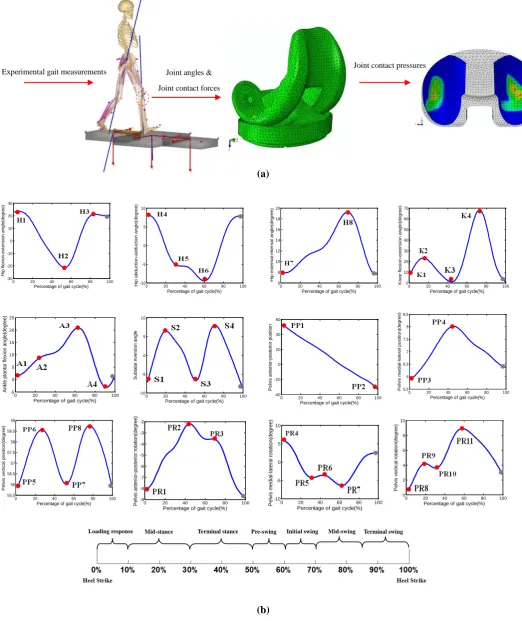
value (Schipplein and Andriacchi, 1991), this part was considered for the rest of the study (Figure 1a).
110
2.4.Feature extraction
111
During a complete gait cycle, the extent to which a joint can be moved (range of motion) and the
112
corresponding absolute values of motions directly affect the quality of human gait and joint loading. For example,
113
increasing the “maximum” value of hip adduction angle or hip internal rotation would decrease the “peak” values of
114
KAM (Barrios et al., 2010). On the other hand, to design a realistic gait modification strategy, the overall trend of
115
kinematic patterns cannot differ significantly from natural human walking habitudes; otherwise the pattern would not
116
be acceptable and executable by the patient. Thus, only the key features of kinematic waveforms are needed to be
117
modified whilst the overall trends should be preserved consistent. Gait kinematics were therefore outlined through a
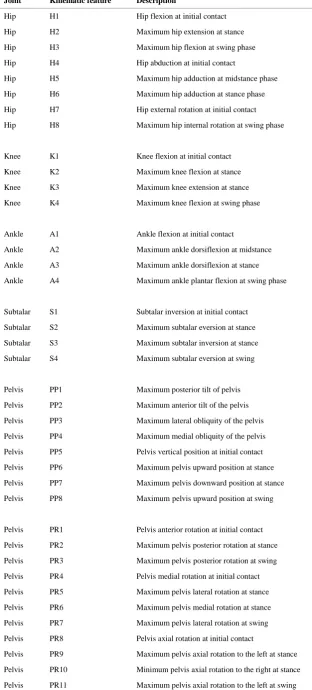
total of 39 descriptive kinematic features (Table 1 and Figure 1b). These features have been suggested in the literature
119
for a number of studies such as gait analysis (Collins et al., 2009, Gates et al., 2012a, Gates et al., 2012b), gait
120
classification (Armand et al., 2006) , evaluation of joint loading (Simonsen et al., 2010), and joint
inter-121
coordination (Wang et al., 2009). Kinematic features (optimization variables) were then allowed to vary within the
122
corresponding ranges of experimental values plus ±20% variations to cover a thorough span of executable movement
123
patterns for the subject. Contact pressure was also characterized by the maximum pressure value occurred over the
124
entire gait cycle (CPRESS-max).
125
2.5.Time-delay neural network
126
Time delay neural network (TDNN) was implemented to model the highly nonlinear relationship between
127
kinematic features (39 inputs) and CPRESS-max values (one output). The trained network was then embedded in an
128
optimization process (GA) as a real-time cost function to calculate the objective values (CPRESS-max). The TDNN
129
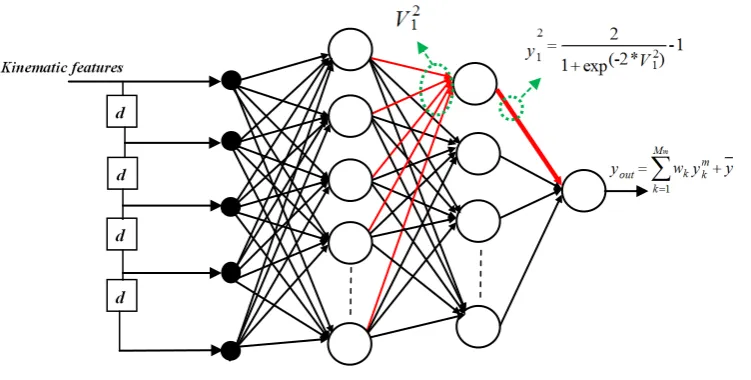
architecture consisted of a feed forward neural network in which a tapped delay line was added to the input layer
130
(Figure 2). Similar to other types of neural networks, a number of processor units (neurons) were arranged in a
131
certain configuration (layers). A weighted sum of all inputs was fed into each hidden neuron where an activation
132
function acted on this weighted sum to produce the output of the hidden neuron. All of the hidden neurons were
133
activated using “hyperbolic tangent sigmoid” function which linearly scaled its input signal to [-1, 1] interval:
134
2
-1 1, 2,..., (-2* )
1 exp m
m
j j M
y m
V j
135
Where yjm is the output of jth hidden neuron located at the mth hidden layer, Mm is the number of hidden neurons
136
at the mth hidden layer, and Vj m
(n) is the weighted sum of the signals from the previous layer which was fed to the jth
137
hidden neuron of mth hidden layer:
138
1 1
1 1 ( * ) + 1, 2,...., , 1, 2,...,
m m
M m
m m
j k yk jk j j k
V W b M M
139
Where Wjk is the weight relating the output of kth neuron located at the (m-1)th layer (ykm-1) to the jth hidden neuron at
140
the mth hidden layer with the bias value of bj, and Mm and Mm-1 are the number of neurons at the m th
and (m-1)th layers
141
respectively. A weighted sum of all hidden neurons’ outputs was also fed into the single output node which was
142
activated by a “pure line” function:
143
1 m M ut k k m o ky w y y
in whichy is the output bias .
145
TDNN was trained using the scaled conjugate gradient algorithm (SCG) (Møller, 1993). The available data
146
space, obtained from MBD and FEA, was randomly divided into three main parts: train (70%), validation (15%) and
147
test (15%) subsets. The train and validation subsets were used to train the network whilst the test subset was not
148
included in training. The network prediction error on the validation subset implied how accurate the network has
149
learned the input-output causal relationship (accuracy). On the other hand, the network prediction error on the test
150
subset indicated the extent to which the trained network could generalize this causal relationship for new inputs
151
(generality). Generally speaking, the structure of the FFANN would build a trade-off between “prediction accuracy”
152
and “generality”. Whilst increasing the number of hidden neurons/layers would increase the prediction accuracy,
153
using too many neurons would decrease the generality and increase the test error. The number of hidden layers and
154
hidden neurons were therefore determined according to the network prediction error for the test and validation
155
subsets. The input delay was also determined by trial and error.
156
2.6.Genetic algorithm
157
In the present study, gait optimization was stated as follows:
158
Y : Y=U(X)
Minimize AXb , XLXXU
159
Where Y is the CPRESS-max, X is the optimization variables (kinematic features), and U is the trained TDNN. Upper
160
and lower bounds of the optimization variables (XL and XU) were obtained from the experimental gait trials plus ±
161
20% variations. Matrix A and vector b described the linear inequality constraints in order to control the natural trends
162
of the gait kinematics (Appendix). Genetic algorithm (GA) was used to search for those kinematic features that could
163
minimize CPRESS-max. Kinematic features (optimization variables) were configured as 1*N arrays called
164
individuals (N=39). In each iteration, the GA created a population of individuals and then employed the trained
165
TDNN to calculate the resultant CPRESS-max values associated with potential individuals. Those individuals that
166
led to lower CPRESS-max values were assigned a higher survivorship probability to be selected and make the next
167
population. Each individual is indeed a potential solution and each population is a search space of solutions.
168
Accordingly, after passing several iterations, the population (solution search space) evolved toward the optimized
169
individuals.
170
The first population was initialized with random individuals in which features of gait kinematics were
171
randomly chosen due to XL and XU. The next populations were created through selected individuals by elitism,
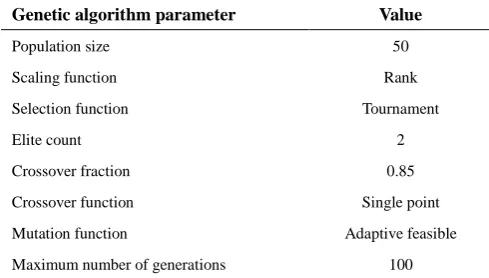
crossover and mutation operators of GA (Goldberg, 1989). Table 2 summarizes the setting of the proposed GA in
173
MATLAB (v.2009, Genetic Algorithm toolbox). In the present study, two systematic optimizations were performed:
174
first, knee flexion was bounded to vary within the normal walking. Second, the knee flexion was allowed to vary
175
beyond the normal walking up to the medial thrust pattern. Once the GA converged to the optimum kinematic
176
features, a typical normal gait cycle was adjusted to these optimum features using the curve fitting technique and the
177
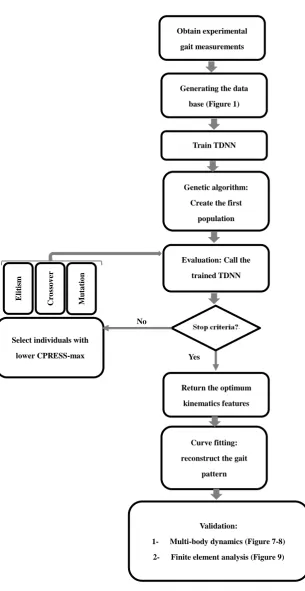
optimized gait pattern was reconstructed. Figure 3 shows schematic of the proposed combined TDNN-GA
178
methodology in this study.
179
3. Results
180
3.1.Network training
181
A four-layer TDNN with four delay units at its input layer , 20 hidden neurons at the first hidden layer and 15
182
hidden neurons at the second one, was trained using 70% of the generated data base. Then, it was validated and tested
183
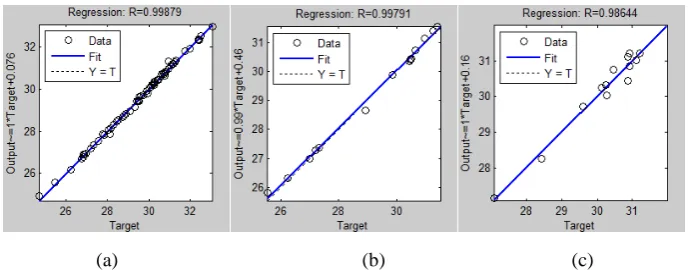
with the remaining 30%. Figure 4 shows the average performance of the proposed network over 100 training and
184
testing repetitions, each time with a random selection of subsets(Iyer and Rhinehart, 1999). According to the results,
185
the TDNN could accurately predict CPRESS-max values for the training, validation and test subsets. Pearson
186
correlation coefficients, between network predictions (Y axis) and real outputs (X axis), were all above p=0.98.
187
Figures 4a, b show that the network learned the nonlinear interaction of kinematics and contact pressure variables
188
(p=0.99). Figure 4c shows that the network could predict the CPRESS-max values corresponding to new sets of
189
kinematics which were not included in the training data space (p=0.98).
190
3.2.Optimization problem
191
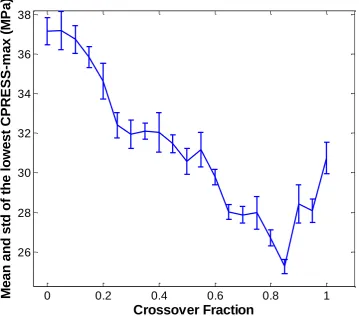
The crossover fraction substantially affects the convergence of GA. Optimization was therefore run for a
192
variety of different values of crossover fraction ranged from 0 to 1 in the step size of 0.05. The crossover fraction of
193
0.85 led to the lowest CPRESS-max value (see Figure 5). Thus, this value was adopted for the rest of this study. In
194
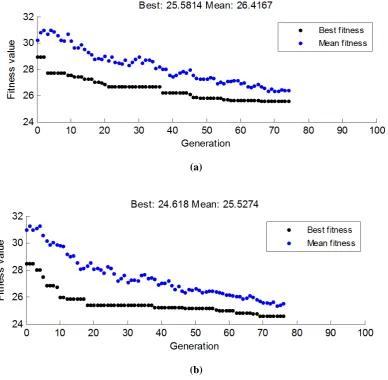
the first optimization problem, knee flexion angle was bounded within normal walking. The algorithm was
195
terminated after 75 populations due to stall generation criterion, in which the average change of the objective value
196
(CPRESS-max) was less than 10-6 (function tolerance) over 50 populations (stall generations). Figure 6a shows the
197
mean and the best CPRESS-max values associated with each population. After successful convergence of the
198
algorithm, TDNN-GA achieved the lowest CPRESS-max value of 25.58 MPa for the best individual of the last
199
population.
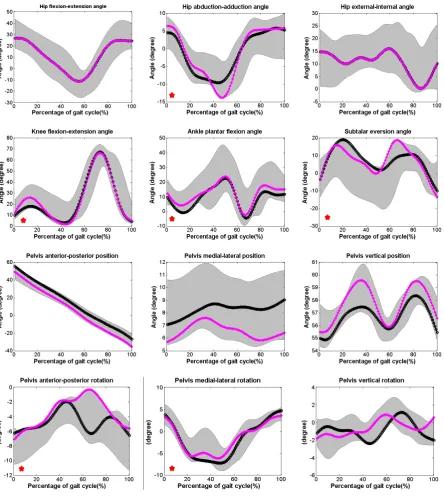
Using curve fitting technique, a typical normal gait cycle was adjusted to the obtained optimum kinematic
201
features and the optimized gait pattern was reconstructed (Figure 7). The optimized kinematics laid within the
202
experimental gait patterns suggesting that it would be feasible for the subject to execute the optimized pattern. Using
203
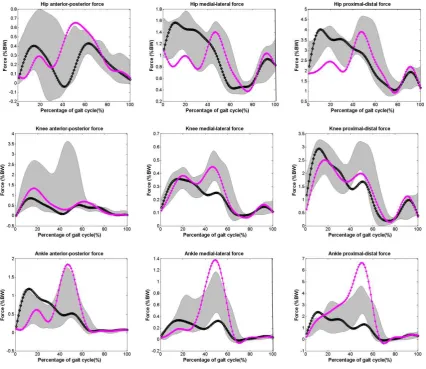
multi-body dynamic analysis, the corresponding joint loadings were computed and compared with the span of
204
experimental values (Figure 8). Results show that lower extremity joints (ankle, knee and hip) underwent realistic
205
loading conditions i.e. within and with similar pattern to the experimental gait trials. Particularly, hip joint loading
206
was generally low in the anterior-posterior direction. A general reduction at the anterior-posterior component of knee
207
joint loading and significant reduction at its medial-lateral component around 40%-60% of the gait cycle occurred.
208
Moreover, the medial-lateral component of ankle joint loading was significantly decreased accompanied with a
209
reduction at its anterior-posterior component around 40%-60% of the gait cycle. Figure 9 shows the resultant
210
distribution of the maximum contact pressure at the medial tibiofemoral joint over the entire gait cycle. The
211
maximum contact pressure was reduced by 21.8% compared to the normal walking, while previously published gait
212
modifications were fairly ineffective to decrease the contact pressure magnitudes.
213
In the second optimization problem, XL and XU were modified and the knee joint flexion was bounded
214
between normal and medial thrust patterns. The GA achieved the convergence value of 24.61 MPa after 77
215
populations (Figure 6b). Reconstructed gait kinematics and the resultant joint loading patterns are presented in
216
Figures 7 and 8 respectively. Results demonstrate that the second optimized gait pattern also laid within the span of
217
executable gait patterns. The second optimized gait modification led to a significant reduction at the three
218
dimensional hip joint loading (anterior-posterior, proximal-distal and medial-lateral) around 0-25% of the gait cycle.
219
This pattern also led to an overall reduction at anterior-posterior component of the knee joint loading.
Anterior-220
posterior and medial-lateral components of the ankle joint loading were substantially low at 0-25% of the gait cycle,
221
however ankle joint loading was slightly increased around 40%-60% of the gait cycle. By comparison, the second
222
optimization problem yielded to a more effective gait modification pattern that better reduced the magnitude of the
223
contact pressure by up to 25% (Figure 9).
224
4. Discussion
225
4. 1. Hybrid neural network-genetic algorithm
226
Neural network was employed: first, to model the highly nonlinear relationship between gait kinematics and
227
contact pressure; second, to serve as a real-time cost function that allowed the optimization algorithm to be
228
performed in a reasonable computation time. A recent study by Lu et al. (2013) demonstrated that the dynamic
structure of a time delay neural network was preferred for modelling the relation between tibiofemoral cartilage load
230
(input) and von Mises stress (output), compared to the traditional static feed forward neural network. Therefore, this
231
structure was used in this study. Moreover, neural network has been used to calculate joint loading from ground
232
reaction forces and gait kinematics (Ardestani et al., 2013, Ardestani et al., 2014) and ground reaction force from gait
233
kinematics (Oh et al., 2013, Ren et al., 2008). In this study, neural network was employed to calculate the contact
234
pressure from gait kinematics. The high correlation that was found between the target values and the network
235
predictions for validation and test subsets reassures the reliability of the proposed structure. The TDNN in turn
236
necessitated involving the GA as the optimization technique. In fact, other classical optimization approaches mainly
237
rely on iterative derivation of an explicit cost function however TDNN modelled the problem non-explicitly.
238
4. 2. Current research contribution
239
240
241
242
243
244
245
246
247
248
249
There are a number of implications on the gait modification and optimization both in terms of methodology and
findings. Major limitations of the previous studies were addressed in the present research. First, compared to
previous studies in which iterative “trial-and-error” MBD analysis has been used, this study presented a
cost-effective computational alternative. TDNN provided a real-time cost function for the GA that could rapidly evaluate
the contact pressure associated with each potential gait pattern. Moreover, GA is a stochastic direct search method in
which the search data space is modified iteratively. This in turn reduced the computational effort required to find the
optimized solution. It should be pointed out that although various gait modifications have been developed in
association with knee joint offloading, none of them have yet been accepted as a general modification strategy. In
fact, due to the large inter-patient variability, reported in gait kinematics and joint loading patterns(Kutzner et al.,
2010, Taylor et al., 2004) , gait rehabilitation strategies should be determined patient specifically. Hence, to design a
gait modification strategy, it is crucial that the proposed computational method is cost-effective and easy to recreate.
250
251
252
253
254
255
Second, unlike the previous studies in which KAM reduction has been the principal goal of gait modification,
here, contact pressure was adopted as a more accurate criterion for knee joint offloading. This in turn built more
confidence in the efficiency of the proposed gait modification. Previous gait modifications were mainly designed to
reduce knee joint moment. Although these modification patterns could decrease knee joint loading, none of them
could decrease contact pressure at the knee joint bearing surfaces whilst the proposed gait pattern in this study could
effectively decrease the contact pressure by up to 25% (see Figure 9).
256
257
258
Third, whilst previous studies have debated on the influence of increasing knee flexion, this study could
address the contribution of knee flexion angle to the knee joint offloading in a systematic manner. Two optimizations
were performed: first, knee flexion angle was kept within normal patterns to investigate whether it was possible to
260
261
262
263
264
265
266
decrease knee joint loading through adjacent joints effects. Second, knee flexion was allowed for a non-significant
increase. Results showed that in the first optimized gait, contact pressure was reduced by up to 21% whilst knee
flexion was preserved within normal walking. In the second optimized pattern, a more effective pressure reduction
(25%) was achieved with a slight increase in the knee flexion at the cost of considerable increase in the ankle joint
forces at 40-60% of the gait cycle. This observation is consistent with previous studies (Fregly et al., 2007) and
suggests that perhaps the first optimization pattern in which joint reaction forces were within the experimental range
might be more physiologically feasible. Allowing the knee flexion angle to be more increased led to higher ankle
joint loading and a gradual reduction in the contact area which in turn increased contact pressure.
267
268
269
270
271
Overall, hip adduction, ankle flexion, subtalar eversion, pelvis posterior rotation and pelvis medial-lateral
rotation were increased during the stance phase for both optimized gait patterns (see Figure 7). However it should be
noted that the exact amount of kinematic changes, compared to normal gait, was not reported in this study since
specific gait rehabilitation, designed for a particular subject, may not be equally applicable for other patients.
Therefore, the quantitative amount of kinematic variations, compared to normal gait, was not focused in this study.
272
4. 3. Limitations
273
274
275
276
277
278
279
280
281
282
283
284
285
286
287
288
There were several limitations in this study: (1) there was a lack of clinical investigation on the estimated
kinematics. Nevertheless, from a technical point of view, the predicted kinematic waveforms are expected to be
feasible since the TDNN was trained based on executable walking patterns. Once the network learns this dynamic, it
uses this dynamic as the acting function to respond to new sets of inputs. Therefore, it is unlikely that it would
generate highly aberrant kinematics. Regardless, further investigations are required to test whether the predicted
kinematics is feasible to implement for compensatory or unexpected effects on the other joints or the contra-lateral
limb; (2) rigid body constraints were applied to both the femoral and tibia components. Halloran et al.(2005) showed
that rigid body analysis of the tibiofemoral knee implant can calculate contact pressure in an acceptable consistence
with a full deformable model whilst rigid body analysis would be much more time-efficient. Therefore, in order to
produce the training data base, required to train the neural network, rigid body constraints were applied. This was
consistent with the present multi-body dynamic analysis in which no detailed modelling on the knee implant was
included; (3) a typical knee implant was adopted in the present study. Although this implant has been widely used in
literature (Clayton et al., 2006, Dalury et al., 2008, Ranawat et al., 2004, Willing and Kim, 2011) , its dimensions
were different from the original knee prosthesis by which the subject was implanted. In fact, the subject was
implanted with a custom-made sensor-based prosthesis which was specifically produced to measure in vivo knee
joint loading(Fregly et al., 2012). Accordingly, in this study , a typical commercial knee implant was preferred to test
the
efficiency of the proposed knee rehabilitation patterns. Nevertheless, the proposed methodology should be equally
290
291
292
293
applicable to other implant geometries and (4) the knee joint was modelled with only one DOF (flexion-extension).
Although six DOFs are possible for the knee joint, the dominant movement of the knee joint takes place in the
sagittal plane and knee joint has been mostly simplified as a hinge joint, especially for the knee rehabilitation design
purposes (Ackermann and van den Bogert, 2010, Anderson and Pandy, 2001, Fregly et al., 2007).
294
5. Conclusion
295
296
A time-delay neural network was embedded in a genetic algorithm to predict a gait pattern that wouldminimize the contact pressure at the knee joint bearing surfaces. The proposed algorithm suggested an optimum gait
297
pattern in which hip adduction, ankle flexion, subtalar eversion pelvis posterior rotation and pelvis medial-lateral
298
299
300
301
302
303
304
305
306
307
308
rotation were slightly increased during the stance phase.Compared to the available gait rehabilitations, the proposed
gait pattern could decrease the knee contact pressure by up to 25%. Compared to the conventional MBD-based
framework in gait rehabilitation design, the present methodology facilitated a more practical and reliable design
procedure at a lower computational cost :(1) instead of using knee adduction moment, contact pressure was
considered as a more accurate criterion which led to a more efficient gait modification, (2) using the time-delay
neural network, the proposed computational framework was considerably faster and time-efficient. The
computational framework therefore can be easily repeated for any given subject. Moreover, (3) the conflicting effect
of the knee flexion was addressed through two systematic optimization frameworks: (i) knee joint may be offloaded
without any changes in the knee flexion angle (ii) a slight increase in the knee flexion angle might better reduce
contact pressure but at the cost of ankle joint over loading and (iii) large increase in the knee flexion angle reduced
the contact area and yielded to an increase in the contact pressure.
309
310
311
312
313
314
Various future direction from this study can be considered: (1) on the methodological level, more rigorous
tribological metrics (e.g. wear), constraints (e.g. energy expenditure) or gait balance requirements can be included
into the computational framework to enhance the predications; (2) on the validation level, further clinical studies are
required to validate the finding of such studies; (3) on a wider application level, the proposed methodology in this
study has wider implications in design and development of rehabilitation protocols for broader numbers of subjects
and other joints such as hip and ankle.
Conflict of interest statement
316
The authors have no conflict of interests to be declared.
317
Acknowledgments
318
This work was supported by “the Fundamental Research Funds for the Central Universities and national
319
Natural Science Foundation of China [E050702, 51323007]”.The authors gratefully acknowledge '' Grand Challenge
320
Competition to Predict In Vivo Knee Loads'' for releasing the experimental data. The authors would like to thank
321
Shanghai Gaitech Scientific Instruments Co. Ltd for supplementing AnyBody software used in this study.
322
References
323
ABDELGAIED, A., LIU, F., BROCKETT, C., JENNINGS, L., FISHER, J. & JIN, Z. 2011. Computational
324
wear prediction of artificial knee joints based on a new wear law and formulation. Journal of
325
biomechanics, 44, 1108-1116.
326
ACKERMANN, M. & VAN DEN BOGERT, A. J. 2010. Optimality principles for model-based prediction
327
of human gait. Journal of biomechanics, 43, 1055-1060.
328
ANDERSON, F. C. & PANDY, M. G. 2001. Dynamic optimization of human walking.
TRANSACTIONS-329
AMERICAN SOCIETY OF MECHANICAL ENGINEERS JOURNAL OF BIOMECHANICAL
330
ENGINEERING, 123, 381-390.
331
ARDESTANI, M. M., CHEN, Z., WANG, L., LIAN, Q., LIU, Y., HE, J., LI, D. & JIN, Z. 2014. Feed
332
forward artificial neural network to predict contact force at medial knee joint: Application to gait
333
modification. Neurocomputing, 139, 114-129.
334
ARDESTANI, M. M., ZHANG, X., WANG, L., LIAN, Q., LIU, Y., HE, J., LI, D. & JIN, Z. 2013. Human
335
lower extremity joint moment prediction: A wavelet neural network approach. Expert Systems with
336
Applications.
337
ARMAND, S., WATELAIN, E., MERCIER, M., LENSEL, G. & LEPOUTRE, F.-X. 2006. Identification
338
and classification of toe-walkers based on ankle kinematics, using a data-mining method. Gait &
339
posture, 23, 240-248.
340
BARRIOS, J. A., CROSSLEY, K. M. & DAVIS, I. S. 2010. Gait retraining to reduce the knee adduction
341
moment through real-time visual feedback of dynamic knee alignment. Journal of biomechanics, 43,
342
2208-2213.
343
BARRIOS, J. A. & DAVIS, I. S. A gait modification to reduce the external adduction moment at the knee: a
344
case study. 31st Annual Meeting of the American Society of Biomechanics, Stanford, CA, paper,
345
2007.
346
CAMPOLI, G., WEINANS, H. & ZADPOOR, A. A. 2012. Computational load estimation of the femur.
347
Journal of the Mechanical Behavior of Biomedical Materials, 10, 108-119.
348
CLAYTON, R. A., AMIN, A. K., GASTON, M. S. & BRENKEL, I. J. 2006. Five-year results of the Sigma
349
COLLINS, T. D., GHOUSSAYNI, S. N., EWINS, D. J. & KENT, J. A. 2009. A six degrees-of-freedom
351
marker set for gait analysis: repeatability and comparison with a modified Helen Hayes set. Gait &
352
posture, 30, 173-180.
353
CREABY, M. W., HUNT, M. A., HINMAN, R. S. & BENNELL, K. L. 2013. Sagittal plane joint loading is
354
related to knee flexion in osteoarthritic gait. Clinical Biomechanics, 28, 916-920.
355
D'LIMA, D. D., STEKLOV, N., FREGLY, B. J., BANKS, S. A. & COLWELL, C. W. 2008. In vivo contact
356
stresses during activities of daily living after knee arthroplasty. Journal of Orthopaedic Research,
357
26, 1549-1555.
358
DALURY, D. F., GONZALES, R. A., ADAMS, M. J., GRUEN, T. A. & TRIER, K. 2008. Midterm results
359
with the PFC Sigma total knee arthroplasty system. The Journal of Arthroplasty, 23, 175-181.
360
FRANSEN, M. Rehabilitation after knee replacement surgery for osteoarthritis. Seminars in Arthritis and
361
Rheumatism, 2011. Elsevier, 93.
362
FREGLY, B. J. 2008. Computational assessment of combinations of gait modifications for knee
363
osteoarthritis rehabilitation. Biomedical Engineering, IEEE Transactions on, 55, 2104-2106.
364
FREGLY, B. J., BESIER, T. F., LLOYD, D. G., DELP, S. L., BANKS, S. A., PANDY, M. G. & D'LIMA, D.
365
D. 2012. Grand challenge competition to predict in vivo knee loads. Journal of Orthopaedic
366
Research, 30, 503-513.
367
FREGLY, B. J., D'LIMA, D. D. & COLWELL, C. W. 2009. Effective gait patterns for offloading the medial
368
compartment of the knee. Journal of Orthopaedic Research, 27, 1016-1021.
369
FREGLY, B. J., REINBOLT, J. A., ROONEY, K. L., MITCHELL, K. H. & CHMIELEWSKI, T. L. 2007.
370
Design of patient-specific gait modifications for knee osteoarthritis rehabilitation. Biomedical
371
Engineering, IEEE Transactions on, 54, 1687-1695.
372
GATES, D. H., DINGWELL, J. B., SCOTT, S. J., SINITSKI, E. H. & WILKEN, J. M. 2012a. Gait
373
characteristics of individuals with transtibial amputations walking on a destabilizing rock surface.
374
Gait & posture, 36, 33-39.
375
GATES, D. H., WILKEN, J. M., SCOTT, S. J., SINITSKI, E. H. & DINGWELL, J. B. 2012b. Kinematic
376
strategies for walking across a destabilizing rock surface. Gait & Posture, 35, 36-42.
377
GOLDBERG, D. 1989. Genetic Algorithms in Search, Optimization, and Machine Learning,
Addison-378
Wesley, Reading, MA, 1989.
379
HALLORAN, J. P., ACKERMANN, M., ERDEMIR, A. & VAN DEN BOGERT, A. J. 2010. Concurrent
380
musculoskeletal dynamics and finite element analysis predicts altered gait patterns to reduce foot
381
tissue loading. Journal of biomechanics, 43, 2810-2815.
382
HALLORAN, J. P., PETRELLA, A. J. & RULLKOETTER, P. J. 2005. Explicit finite element modeling of
383
total knee replacement mechanics. Journal of biomechanics, 38, 323-331.
384
HAMBLI, R. 2010. Application of neural networks and finite element computation for multiscale
385
simulation of bone remodeling. Journal of biomechanical engineering, 132, 114502.
386
HAMBLI, R. 2011. Numerical procedure for multiscale bone adaptation prediction based on neural
387
networks and finite element simulation. Finite elements in analysis and design, 47, 835-842.
388
HUNT, M., BIRMINGHAM, T., BRYANT, D., JONES, I., GIFFIN, J., JENKYN, T. & VANDERVOORT,
389
A. 2008. Lateral trunk lean explains variation in dynamic knee joint load in patients with medial
390
compartment knee osteoarthritis. Osteoarthritis and Cartilage, 16, 591-599.
391
ISAAC, D., FALODE, T., LIU, P., I'ANSON, H., DILLOW, K. & GILL, P. 2005. Accelerated rehabilitation
392
after total knee replacement. The knee, 12, 346-350.
393
IYER, M. S. & RHINEHART, R. R. 1999. A method to determine the required number of neural-network
394
training repetitions. Neural Networks, IEEE Transactions on, 10, 427-432.
395
KLEIN, G. R., LEVINE, H. B. & HARTZBAND, M. A. Pain Management and Accelerated Rehabilitation
396
KLEIN HORSMAN, M. D. 2007. The Twente lower extremity model: consistent dynamic simulation of
398
the human locomotor apparatus, University of Twente.
399
KUTZNER, I., HEINLEIN, B., GRAICHEN, F., BENDER, A., ROHLMANN, A., HALDER, A., BEIER,
400
A. & BERGMANN, G. 2010. Loading of the knee joint during activities of daily living measured< i>
401
in vivo</i> in five subjects. Journal of biomechanics, 43, 2164-2173.
402
LIN, C.-J., LAI, K.-A., CHOU, Y.-L. & HO, C.-S. 2001. The effect of changing the foot progression angle
403
on the knee adduction moment in normal teenagers. Gait & Posture, 14, 85-91.
404
LU, Y., PULASANI, P. R., DERAKHSHANI, R. & GUESS, T. M. 2013. Application of neural networks
405
for the prediction of cartilage stress in a musculoskeletal system. Biomedical Signal Processing and
406
Control, 8, 475-482.
407
M LLER, M. F. 1993. A scaled conjugate gradient algorithm for fast supervised learning. Neural networks,
408
6, 525-533.
409
M NDERMANN, A., ASAY, J. L., M NDERMANN, L. & ANDRIACCHI, T. P. 2008. Implications of
410
increased medio-lateral trunk sway for ambulatory mechanics. Journal of biomechanics, 41,
165-411
170.
412
MOFFET, H., COLLET, J.-P., SHAPIRO, S. H., PARADIS, G., MARQUIS, F. & ROY, L. 2004.
413
Effectiveness of intensive rehabilitation on functional ability and quality of life after first total knee
414
arthroplasty: a single-blind randomized controlled trial. Archives of physical medicine and
415
rehabilitation, 85, 546-556.
416
MONT, M. A., BONUTTI, P. M., SEYLER, T. M., PLATE, J. F., DELANOIS, R. E. & KESTER, M. The
417
future of high performance total hip arthroplasty. Seminars in Arthroplasty, 2006. Elsevier, 88-92.
418
NAITO, K. & TORII, S. 2005. Effects of laterally wedged insoles on knee and subtalar joint moments.
419
Arch Phys Med Rehabil, 86.
420
OH, S. E., CHOI, A. & MUN, J. H. 2013. Prediction of ground reaction forces during gait based on
421
kinematics and a neural network model. Journal of biomechanics, 46, 2372-2380.
422
RAHMANN, A. E., BRAUER, S. G. & NITZ, J. C. 2009. A specific inpatient aquatic physiotherapy
423
program improves strength after total hip or knee replacement surgery: a randomized controlled trial.
424
Archives of physical medicine and rehabilitation, 90, 745-755.
425
RANAWAT, A. S., ROSSI, R., LORETI, I., RASQUINHA, V. J., RODRIGUEZ, J. A. & RANAWAT, C. S.
426
2004. Comparison of the PFC Sigma fixed-bearing and rotating-platform total knee arthroplasty in
427
the same patient: short-term results. The Journal of arthroplasty, 19, 35-39.
428
REN, L., JONES, R. K. & HOWARD, D. 2008. Whole body inverse dynamics over a complete gait cycle
429
based only on measured kinematics. Journal of Biomechanics, 41, 2750-2759.
430
SCHIPPLEIN, O. & ANDRIACCHI, T. 1991. Interaction between active and passive knee stabilizers
431
during level walking. Journal of Orthopaedic Research, 9, 113-119.
432
SHULL, P. B., SHULTZ, R., SILDER, A., DRAGOO, J. L., BESIER, T. F., CUTKOSKY, M. R. & DELP, S.
433
L. 2012. Toe-in gait reduces the first peak knee adduction moment in patients with medial
434
compartment knee osteoarthritis. Journal of biomechanics.
435
SIMIC, M., HINMAN, R. S., WRIGLEY, T. V., BENNELL, K. L. & HUNT, M. A. 2011. Gait modification
436
strategies for altering medial knee joint load: A systematic review. Arthritis Care & Research, 63,
437
405-426.
438
SIMONSEN, E. B., MOESBY, L. M., HANSEN, L. D., COMINS, J. & ALKJAER, T. 2010. Redistribution
439
of joint moments during walking in patients with drop-foot. Clinical Biomechanics, 25, 949-952.
440
TAYLOR, W. R., HELLER, M. O., BERGMANN, G. & DUDA, G. N. 2004. Tibio femoral loading during
441
VAN DEN NOORT, J. C., SCHAFFERS, I., SNIJDERS, J. & HARLAAR, J. 2013. The effectiveness of
443
voluntary modifications of gait pattern to reduce the knee adduction moment. Human movement
444
science.
445
VAUGHAN, C. L., DAVIS, B. L. & O'CONNOR, J. C. 1992. Dynamics of human gait, Human Kinetics
446
Publishers USA.
447
WALTER, J. P., D'LIMA, D. D., COLWELL, C. W. & FREGLY, B. J. 2010. Decreased knee adduction
448
moment does not guarantee decreased medial contact force during gait. Journal of Orthopaedic
449
Research, 28, 1348-1354.
450
WANG, T.-M., YEN, H.-C., LU, T.-W., CHEN, H.-L., CHANG, C.-F., LIU, Y.-H. & TSAI, W.-C. 2009.
451
Bilateral knee osteoarthritis does not affect inter-joint coordination in older adults with gait
452
deviations during obstacle-crossing. Journal of biomechanics, 42, 2349-2356.
453
WILLING, R. & KIM, I. Y. 2011. Design optimization of a total knee replacement for improved constraint
454
and flexion kinematics. Journal of Biomechanics, 44, 1014-1020.
455
WILLSON, J., TORRY, M. R., DECKER, M. J., KERNOZEK, T. & STEADMAN, J. 2001. Effects of
456
walking poles on lower extremity gait mechanics. Medicine and science in sports and exercise, 33,
457
142-147.
458
ZADPOOR, A. A., CAMPOLI, G. & WEINANS, H. 2012. Neural network prediction of load from the
459
morphology of trabecular bone. Applied Mathematical Modelling.
460
ZENI JR, J., MCCLELLAND, J. & SNYDER-MACKLER, L. 2011. 193 A NOVEL REHABILITATION
461
PARADIGM TO IMPROVE MOVEMENT SYMMETRY AND MAXIMIZE LONG-TERM
462
OUTCOMES AFTER TOTAL KNEE ARTHROPLASTY. Osteoarthritis and Cartilage, 19,
S96-463
S97.
464
465
Table 1 Description of gait kinematic features
Joint Kinematic feature Description
Hip H1 Hip flexion at initial contact
Hip H2 Maximum hip extension at stance
Hip H3 Maximum hip flexion at swing phase
Hip H4 Hip abduction at initial contact
Hip H5 Maximum hip adduction at midstance phase
Hip H6 Maximum hip adduction at stance phase
Hip H7 Hip external rotation at initial contact
Hip H8 Maximum hip internal rotation at swing phase
Knee K1 Knee flexion at initial contact
Knee K2 Maximum knee flexion at stance
Knee K3 Maximum knee extension at stance
Knee K4 Maximum knee flexion at swing phase
Ankle A1 Ankle flexion at initial contact
Ankle A2 Maximum ankle dorsiflexion at midstance
Ankle A3 Maximum ankle dorsiflexion at stance
Ankle A4 Maximum ankle plantar flexion at swing phase
Subtalar S1 Subtalar inversion at initial contact
Subtalar S2 Maximum subtalar eversion at stance
Subtalar S3 Maximum subtalar inversion at stance
Subtalar S4 Maximum subtalar eversion at swing
Pelvis PP1 Maximum posterior tilt of pelvis
Pelvis PP2 Maximum anterior tilt of the pelvis
Pelvis PP3 Maximum lateral obliquity of the pelvis
Pelvis PP4 Maximum medial obliquity of the pelvis
Pelvis PP5 Pelvis vertical position at initial contact
Pelvis PP6 Maximum pelvis upward position at stance
Pelvis PP7 Maximumpelvis downward position at stance
Pelvis PP8 Maximumpelvis upward position at swing
Pelvis PR1 Pelvis anterior rotation at initial contact
Pelvis PR2 Maximum pelvis posterior rotation at stance
Pelvis PR3 Maximum pelvisposterior rotation at swing
Pelvis PR4 Pelvis medial rotation at initial contact
Pelvis PR5 Maximum pelvis lateral rotation at stance
Pelvis PR6 Maximum pelvis medial rotation at stance
Pelvis PR7 Maximum pelvis lateral rotation at swing
Pelvis PR8 Pelvis axial rotation at initial contact
Pelvis PR9 Maximum pelvis axial rotation to the left at stance
Pelvis PR10 Minimum pelvis axial rotation to the right at stance
Table 2 Genetic algorithm settings in MATLAB
Genetic algorithm parameter Value
Population size 50
Scaling function Rank
Selection function Tournament
Elite count 2
Crossover fraction 0.85
Crossover function Single point
Mutation function Adaptive feasible
[image:20.595.174.419.61.200.2]Maximum number of generations 100
(a)
(b)
Figure 1 (a) Experimental gait measurements were imported into multi-body dynamics analysis to calculate joint kinematics/kinetics which were then used by finite element analysis to calculate contact pressure (b) Joint angles were parameterized by extremum features (red circles). Due to
the periodicity of the gait, joint angle values at the end of the gait cycle (gray points) were equal to the initial values at 0% of the gait cycle except for pelvis anterior-posterior position.
Joint angles &
Joint contact forces
Experimental gait measurements Joint contact pressures
Initial swing Mid-swing
Loading response Mid-stance Terminal stance Pre-swing Terminal swing
0 20 40 60 80 100 -5 0 5 10 15 20 25
Percentage of gait cycle(%)
A n kl e p la n ta r fl e xi o n a n g le (d e g re e )
0 20 40 60 80 100 0 2 4 6 8 10
Percentage of gait cycle(%)
P e lvi s ve rt ica l ro ta ti o n (d e g re e )
0 20 40 60 80 100 -10
-5 0 5 10
Percentage of gait cycle(%)
P e lvi s m e d ia l-la te ra l ro ta ti o n (d e g re e )
0 20 40 60 80 100 -9 -8 -7 -6 -5 -4 -3 -2
Percentage of gait cycle(%)
P e lvi s a n te ri o r-p o st e ri o r ro ta ti o n (d e g re e )
0 20 40 60 80 100 -30 -20 -10 0 10 20 30
Percentage of gait cycle(%)
H ip f le xi o n -e xt e n si o n a n g le (d e g re e )
0 20 40 60 80 100 -10
-5 0 5 10
Percentage of gait cycle(%)
H ip a b d u ct io n -a d d u ct io n a n g le (d e g re e )
0 20 40 60 80 100 6 8 10 12 14 16 18 20
Percentage of gait cycle(%)
H ip e xt e rn a l-in te rn a l a n g le (d e g re e )
0 20 40 60 80 100 0 10 20 30 40 50 60 70
Percentage of gait cycle(%)
K n e e f le xi o n -e xt e n si o n a n g le (d e g re e )
0 20 40 60 80 100 -10
-5 0 5 10
Percentage of gait cycle(%)
S u b ta la r e ve rsi o n a n g le
0 20 40 60 80 100 -40 -20 0 20 40 60
Percentage of gait cycle(%)
P e lvi s a n te ri o r-p o st e ri o r p o si ti o n
0 20 40 60 80 100 5.5 6 6.5 7 7.5 8 8.5
Percentage of gait cycle(%)
P e lvi s m e d ia l-la te ra l p o si ti o n (d e g re e )
0 20 40 60 80 100 55.5 56 56.5 57 57.5 58 58.5 59
Percentage of gait cycle(%)
[image:21.595.34.557.42.664.2]Figure 2 A schematic diagram of a four-layer TDNN used in this study. The network calculated the maximum values of contact pressure (output) based on gait features (inputs).
Figure 3 The flowchart of the proposed TDNN-GA.
Obtain experimental
gait measurements
Generating the data
base (Figure 1)
Train TDNN
Genetic algorithm:
Create the first
population
Evaluation: Call the
trained TDNN
Return the optimum
kinematics features
Curve fitting:
reconstruct the gait
pattern
Validation:
1- Multi-body dynamics (Figure 7-8)
2- Finite element analysis (Figure 9) Select individuals with
lower CPRESS-max
E
li
ti
sm
C
ro
ss
o
v
er
M
u
ta
ti
o
n
[image:23.595.110.416.65.657.2](a) (b) (c)
[image:24.595.125.471.75.210.2]Figure 4 Network predictions versus actual CPRESS-max values for (a) train (b) validation and (c) test subsets.
Figure 5 Mean and standard deviation of the optimized CPRESS-max for different values of crossover fraction in the GA process.
0 0.2 0.4 0.6 0.8 1
26 28 30 32 34 36 38
Crossover Fraction
M
e
a
n
a
n
d
s
td
o
f
th
e
l
o
w
e
s
t
C
P
R
E
S
S
-m
a
x
(
M
P
a
[image:25.595.110.470.89.411.2](a)
(b)
Figure 6 Convergence of the GA for (a) the first optimization problem in which the knee flexion angle was bounded to normal patterns,(b) the second optimization problem in which the knee flexion angle was allowed to
[image:26.595.101.490.85.465.2]Figure 8 Resultant joint contact forces of the first optimized gait pattern (black line) and the second optimized pattern (pink line) laid within the extent of experimental gait trials (gray span).
Normal CPRESS_max: 32.40 MPa Walking pole CPRESS_max: 32.37 MPa Trunk sway CPRESS_max: 30.31 MPa
Medial thrust CPRESS_max: 30.92 MPa Optimized pattern1 CPRESS_max: 25.01 MPa Optimized pattern 2 CPRESS_max: 24.04 MPa
[image:29.595.44.538.42.449.2]
Supplementary Material