CCIVI\IISSION OF THE EUROPEAN COfJ.MUNITIES
SEC(91) 902 final
Brussels. 22 May 1991 _
- - -
-- -- -- -- -- -,
·ANNUAL REPORT
ERASMUS PROGRAlV.ME
1990/91
...---
---·---~---1. The academic year 1990/91, the fourth year of operation and the first year of Phase 2 of the ERASMUS Programme, has again witnessed a remarkable increase in the demand for grants. Since the budget for the Programme increased to a lesser extent (from 52.5 ECU mio to 60.6 ECU mio), this caused a further accentuation of the difficulties resulting from the imbalance between supply of and demand for grants. Nonetheless, the 1990/1 academic year, with its greatly enhanced numbers of students, staff members and higher education institutions participating, represents a further substantiai step towards achieving the policy objectives of the Programme.
2. Furthermore, the trend noted in previous years towards a more structured incorporation of Inter-university cooperation Into the medium- and long-term development strategies of higher education institutions, has continued and grown more marked, and ERASMUS is also beginning to provide an Important framework for Innovation in higher education, notably through such programme components as the joint development of new curricula, the pilot project for a European Community Course Credit Transfer System (ECTS) and through a multiplicity of Initiatives within Action 4 of the Programme.
3. In quantitative terms, applications for support of Inter-university Cooperation Programmes (ICPs) in 1990/91 numbered 2754 compared with 2221 In 1989/90 (
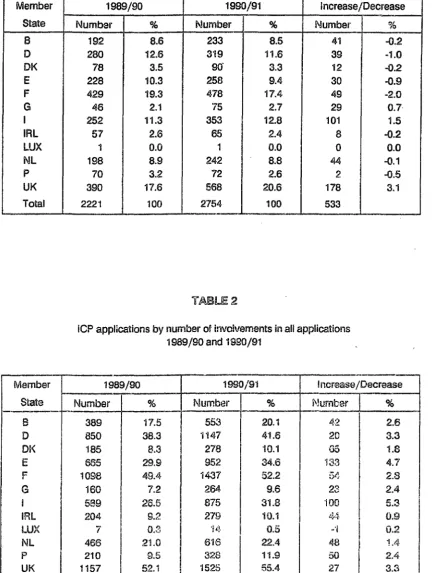
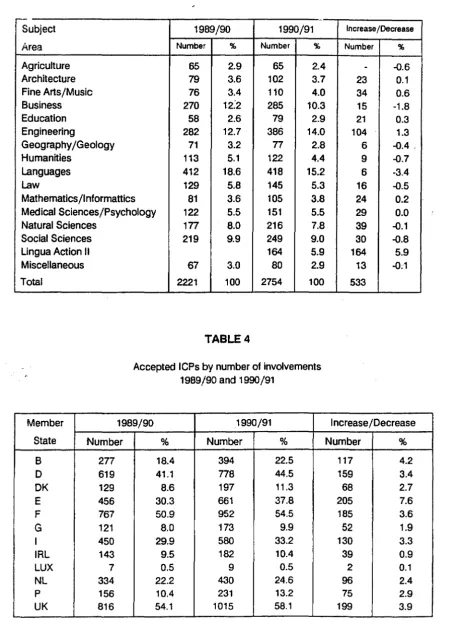
+
24%). The 84.9 ECU mio requested by universities represented over five times the amount available for ICPs under Action 1 (15.6 ECU mio). Of the 1748 ICPs selected for support, 1592 Included a student mobility programme (91%), 277 a teaching staff mobility programme, 99 a programme for the joint development of curricula and 114 an intensive programme (294 programmes Involved more than one activity). In December 1990, 93 additional awards were made to ICPs in order to fund new actions within already approved programmes or to fund new programmes from the reserve list. The overall acceptance rate of 64% was slightly lower than in 1989 (68%). The average grant per ICP fell by 15% to ECU 8947, and since the number of partners per ICP increased (from 3.22 to 3. 77), the fall in the average unit grant per participating institution was even more marked: it now stands at ECU 2.175 compared with the maximum of ECU 25,000 per participant per ICP foreseen in the Council Decision on ERASMUS. The distribution of participation across all Member States has improved significantly once more; the subject area distribution remained similar to previous years, with continuing high representation in the fields of languages, engineering, business/management and law.4. Student mobility within the ERASMUS Programme has again Increased considerably. Within the 1592 student mobility programmes selected, the number of student grants requested rose by 55% compared with last year, and the 68 ECU mio requested for student grants within ICPs was over twice the total budget of 33.5 ECU mio available for Action 2. The number of students eligible to receive a student grant in 1990/91 within the selected I CPs (44,484) was 62% higher than in the previous year (27,452). The funds available for Action 2 were divided up among the 12 Member States In accordance with the amended provisions of the December 1989 Council Decision. First experience with the new allocation system would suggest that it has had a significant impact in improving the equality of treatment of ERASMUS students across all Member States, and in particular that it has enhanced systematically the position of the smaller countries. The average duration abroad as reflected in accepted ICP applications is 6.7 months. The percentage of students moving solely between the Federal Republic of Germany, France and the UK continued to fall significantly (now 32%, compared with 42% two years ago), with correspondingly increased flows involving the other Member States.
..
.
't;
~·
,
I-_-~ _.,. -~
-j I
~. !
1
I
~ i
·----.-
--·----,---.
5. 1990 saw the Introduction of a more flexible system of management of the Visit
giants
available within ERASMUS, by which applicants may submit applications at any time. Of the 14P::l applications received (including 95 under LINGUA Action II), 961 (involving 2240 persons) were accepted. The total funding requested exceeded 4 ECU mio, a little over twice the 1.95 ECU mlo awarded (including 0.17 ECU mio for LINGUA Action II). The acceptance rate of 64% reflects a distinct improvement in the overall quality of visit proposals. Applications involving Member States or subject areas as yet underrepresented In the ICP network were again given particular encouragement.6. 1990/1 was the second operational year within the six-year pilot phase of the European Community Course Credit Transfer System (ECTS), Involving 81 higher education Institutions and 3 consortia In five subject areas (business administration, history, medicine, chemistry and mechanical engineering). The central objective of the Pilot Scheme Is to develop credit transfer as an effective currency of academic recognition by providing universities admitting students from other Member States with a straightforward and reliable means of assessing such students' previous performance in order to insert them at appropriate points in the host institution's array of courses, regardless of whether or not an integrated exchange programme exists In the areas concerned. In 1990, each institution received a grant of ECU 10,000 from the Commission to fund the additional activities necessary to implement ECTS. 810 students are participating in the 1990/1 academic year, compared with 569 last year, and mobility grants were made available from Action 2 for five students from each institution. It Is already apparent that the ECTS Pilot Scheme has had a generally very satisfactory start. With few exceptions, the procedures for allocating credit points to the various kinds of courses offered by the participating institutions have functioned well, and by and large the first cohort of ECTS students report that the credit obtained for study at institutions In other Member States has been fully transferred to their home institution upon their return.
7. The European Community Network of National Academic Recognition Information Centres (NARIC network) continued its work of providing universities; students and employers with authoritative information on the value of educational credentials from other countries, partly through the medium of two working groups established to discuss specific types of recognition problems.
8.
9:
The highlight for Action 4 of the ERASMUS Programme (Complementary Measures) in 1990, was the award of the first ERASMUS Prizes to three ICPs, 12 staff members of universities and 12 students deemed to have made a particularly exemplary contribution to the development of ERASMUS during its first three-year phase. In addition, Action 4 continued to provide support to associations or consortia of universities, and for the preparation of publications designed to enhance awareness of study and teaching opportunities in the different Member States or to draw attention -to ,important developments and innovative models for-university cooperation throughout the European Community. Of the 105 applications for financial support received (55 in respect of projects of associations and 50 relating.to mobility-oriented publications), 54 were selected for support.> Demand for funds outstripped supply by a ratio of around 6: 1~
>·Information -activities continued to be a priority for ERASMUS throughout 1990.- Particular· uttention in this regard should be drawn to the Information campaign carried out in ·Greece during the first semester of 1990, during which virtually-all Greek higher .education institutions-were visited by a specially trained group· of Greek ICP coordinators,' and to the special
:{
I
t ___ [, ___ ---
2_,
~
campaign In the five new German Lllnder, which will become eligible within ERASMUS from 1 July 1991. Both campaigns have proven highly successful. The programme of Community publications relating to higher education cooperation and mobility was continued.
10. The ERASMUS Advisory Committee (EAC) met on three occasions during 1990, and the NGAA
11.
12.
··network and· the ·NARIC network on two occasions each. The Commission continued to .be assisted In the operational management of the programme by the ERASMUS Bureau.
Considerable emphasis continued to be placed on the evaluation and monitoring of the programme's progress. In particular, arrangements were concluded for the preparation of regular surveys of students and programmes during Phase 2
of
ERASMUS. During the course of 1990, work was completed on the 1988/9 surveys and on a further study on the crucial topic of student accommodation.Negotiations were commenced during 1990 on the extension of the ERASMUS Programme to the countries of the European Free Trade Association and Liechtenstein. The negotiations are likely to give rise to an extension of the Programme In time for the academic year 1992/3.
13. The major event during 1990 in the programme of activities designed to analyse the Implications of the creation of the Single Market for higher education In the Community, was the organization of a conference on •Higher Education and 1992: planning for the year 2000• in Siena on 5-7 November 1990. Both this conference, and the informal meeting of Ministers of Education which followed It, stressed the importance of ERASMUS and the need to strengthen it further. The Commission Is currently preparing a Communication to the Council on the development of higher education post-1992.
14. Interaction with other. European Community programmes in the higher education field has continued In 1990. Particularly relevant in this context Is the LINGUA Programme, Action II of which Is managed In conjunction with the ERASMUS Programme. Experience with ERASMUS has been a vital element In the development of the Community's new TEMPUS scheme for cooperation with Central/Eastern Europe, and close collaboration has been maintained with COMETT. In order to rationalize and streamline Its activities In the higher education and advanced training sector, the Commission announced In 1990 that It Intended to propose the · amalgamation of the existing committees in the higher education field.
.t.-· · · · -
.
-"-'
..
~TABLE OF CONTENTS
I. INTRODUCTION AND GENERAL CONTEXT 1
II. REPORT ON ERASMUS ACTIVITIES IN 1990
2
Ill. MONITORING AND EVALUATION 18
IV. FUTURES PERSPECTIVES AND INTERACTION WITH OTHER COMMUNITY PROGRAMMES OR INITIATIVES IN THE HIGHER
EDUCATION FIELD
20
v.
CONCLUDING REMARKS23
•
' ~·
I. INTRODUCTION AND GENERAL CONTEXT
1.
2.
3.
The present report relates specifically to the implementation of the ERASMUS Programme in the academic year 1990/91, its fourth year of operation, as well as reviewing the general development of the Programme during the calendar year 1990. It has been prepared in accordance with Article 6 of the Council Decision of 15 June 1987 establishing the ERASMUS Programme, as amended by Article 1, para. 5 of the Council Decision of 14 December 1989 which amended the Programme in certain respects (cf. Annual Report for 1989, Paragraph 36). The academic year 1990/1 constitutes in formal ternis the first of the five years which comprise Phase II of the Programme. However, apart from the revision of the parameters for awarding student mobility grants under Action 2 of the Programme (cf. Paragraph 17 below), the modifications to the structure of the Programme adopted in the December 1989 Council Decision are not scheduled to take effect until the academic year 1991/2. In some respects, therefore, the academic year 1990/1 under review in the present report represents a transitional year between Phase I and Phase II of the Programme.
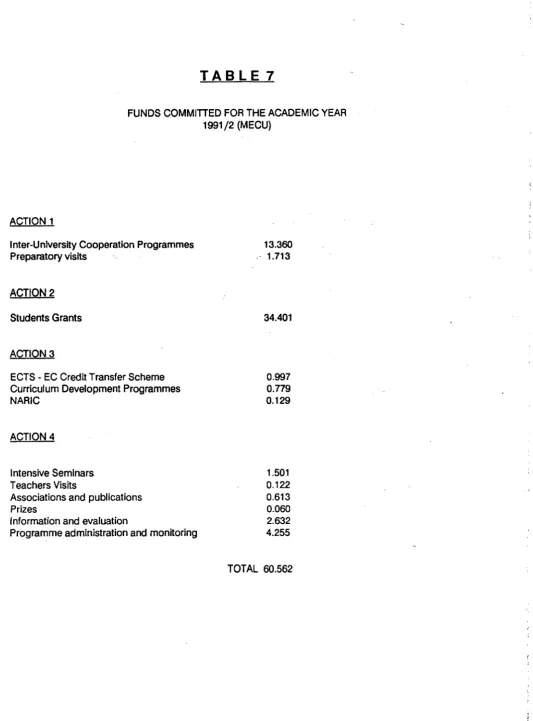
In the academic year 1990/1 the ERASMUS Programme has again been characterized by a further remarkable increase in the demand for grants, on the part of both higher education institutions and students. The demand for student grants (excluding Lingua Action II} rose by no less than 55% compared with the previous year, and applications for the support of Inter-University Cooperation Programmes by a very substantial 24%. The budget for the Programme also increased from 52.5 ECU mio to 60.6 ECU mio, but to a lesser extent than the increase In demand. This caused a further accentuation of the difficulties involved in maintaining the forward momentum of the Programme in terms of increased numbers of institutions and students participating, while at the same time preserving as far as possible the level of grants awarded. An ad hoc working group of the ERASMUS Advisory Committee was created during the year to advise the Commission on the most appropriate selection strategy to be adopted In future years if these circumstances were to continue. Despite these concerns, however, it may be said that in overall terms the 1990/1 academic year, with Its greatly enhanced numbers of students, staff members and higher education institutions participating, represents a further substantial step towards achieving the policy objectives of the Programme, thereby consolidating and further developing the successes of Phase I.
In 1990 the trend previously noted towards the incorporation of Inter-university cooperation at a European level into the medium- and long-term development strategies of the higher education sector has continued and grown more marked. It is evidentfrom the positive reaction of a large proportion of those directly involved that there Is now widespread appreciation of the role which ERASMUS can play in furthering the pursuit of quality through the development of coordinated and Integrated programmes of fully-recognized study and the exchange of teaching sw.ff across the whole range of academic disciplines. ERASMUS is also beginning to provide an important Instrument for innovation in higher education, notably through such programme components as the joint development of new curricula, the pilot project for a European Community Course Credit Transfer System (ECTS) and through a multiplicity of initiatives within Action 4 of the Programme. in all these respects,
{1}
r
ERASMUS will have a crucial role to play in helping to shape the Higher Education Community which will be needed if the potential of the Single Market from 1993
onwards Is to be fully exploited. In this perspective, ERASMUS has been closely Involved during 1990 in the. policy discussions which have been taking place during the year In this regard.
4. In administrative terms also, ERASMUS is beginning to have a significant impact on institutions. Many more institutions have now created administrative units responsible for coordinating the International -and, in particular, European - links of the institutions concerned than existed before the adoption of ERASMUS. While it is important to ensure that such coordination at central institutional level does not in any way undermine the commitment of the directors of the individual Inter-university cooperation programmes (ICPs) which form the cornerstone of ERASMUS, it is nonetheless a welcome development in that it reflects an awareness of institutions of the need for optimal management of their ICPs, many aspects of which can only be satisfactorily tackled at institutional level.
5. The present report will discuss In detail the development of the Programme during the year In question. In doing so, It will concentrate primarily on the specific Actions undertaken to Implement the Programme, as provided for in the Council Decision. At the same time, however, it· will make reference to the ongoing monitoring and evaluation of ERASMUS, to which the· Commission continues to attach the utmost Importance.
All statistics on grants to Interuniversity Cooperation Programmes (ICPs) for the academic year 1990/91 refer to applications approved In April/May 1990 at the culmination of the main evaluation round in order to provide a consistent point of comparison with other years. However, it also was possible to make a number of supplementary grant awards in December 1990 due mainly to the availability of grant monies 'recycled' from the previous years. Reference to these awards Is made at the appropriate points in the present report.
II. REPORT ON ERASMUS ACTIVITIES IN 1990
Main areas of activity
6. In 1990 action was concentrated on the following areas of activity:
.
the Implementation of ERASMUS programme operations for the academic year 1990/91, in particular the selection of Inter-university Cooperation Programmes (ICPs), Study and Teaching Visits and Action 4 projects for support during this period and the second year of the pilot phase of the European Community Course Credit Transfer System (ECTS);
arrangements for the award of the ERASMUS Prizes covering the first phase of the Programme;
, adaptation of the administrative. arrangements for the Programme in· order to take account of
the
:modWcaUons to the Programme adopted by the Council· in December 1989;monitoring and evaluation activities designed to ensure the · continuous Improvement of the Programme's design and impact;
the continuation of efforts undertaken to Inform the academic community and national authorities - about -the,· Programme, concentrating_ on particular Member States;
·the consolidation of the organizational and consultative infrastructure for the
Programme; ·
measures to prepare for the incorporation within the Programme of the higher education institutions situated in the Five New LAnder of the Federal Republic _ of Germany;
commencement of· negotiations with the European Free Trade Association (EFTA) on the extension of·the ERASMUS Programme to the EFTA countries and Liechtenstein;
steps to ensure appropriate coordination between ERASMUS and _other Community programmes, notably COMETT, UNGUA and the-newly-~reated _ TEMPUS scheme for cooperation with the countries of Central and Eastern
Europe.
The total budget available amounted to 60 ECU mio, made up of 58 ECU mio provided for by the 1987 Decision and a further 2 ECU mio voted by the European Parliament.
Activities in each of th~ areas mentioned ab_ove are summarized in the paragraphs 'flhich follow, the main emphasis being on the continuing implementation of the measures adopted within the framework of the four •Actions· of the ERASMUS Programme as described in the Annex to the Council Decision, i.e. ,
Establishment and operation of.a European university network (Action 1)
ERASMUS student grants scheme (Action 2)
Measures to promote mobility through the academic recognition of diplomas and periods of study (Action 3)·
Complementary measures to promote student mobility .In the CommunHy ,_, (Action
4).
Action 1: European University Network :·Support for- Inter-univerSity Cooperation
' >7.
Programmes (ICP) and Study Vlaits (SV) · ,
In order to Increase student-mobility, universities of different Member:. States are encouraged to establish inter-university cooperation programmes OCPs) comprising one or more of the following :
student mobility programmes; teaching staff mobility programmes;
8.
joint development of new curricula; Intensive programmes.
SJudent mobility programmes of substantial duration which In all but exceptional cases satisfy the criterion of full recognition by the home university of a period
of
training abroad regardless of field and level of study (up to and Including the Ph.D .• doctorate or equivalent), are eligible for financial support to cover the costs of the development and operation of the programme, expenditure relating to the preparation and translation of documents and teaching material, Information to students prior to departure, linguistic preparation prior to departure and after arrival, expenditure for making Information about the programme more widely available and other expenditure directly related to the programme.9. Staff mobility programmes providing an opportunity for the teaching staff of one university to teach In a partner university In order to make a substantial contribution to the latter's regular teaching programme are eligible for support to cover the costs of the development and operation of the programme, the mobility costs
of
teaching staff, and (under certain circumstances) the costsof
replacing teaching staff absent for three months or longer.10. Joint development of new curricula: universities seeking to work out jointly a substantial new curriculum or curriculum component, with a view to Its Implementation or Incorporation In all the partner Institutions universities taking part, are eligible for support. Preference Is given to projects which clearly contribute to academic recognition, make Innovative use of multi-media techniques or distance teaching, as . well as to those aimed at building the European dimension Into the content of courses.
Support is provided to offset travel and subsistence costs. of teaching or administrative· staff involved In meetings necessary'to the organization and content of courses and those of producing, translating and circulating the nec~~sary documents.
11.. Support for Intensive programmes
is.a~ailable
for universities jointly.organlzlng short Intensive full-time teaching programmes bringing together students and teaching staff · · from several countries of the European Community. Preference · is . given .. to programmes which are genuinely "multinational" In terms ·of partiCipation, which focus on a .specific theme not normally available· at any one. of the participating universities ·' alone, and which contribute to the disseminationof
knoWledge In rapidly· evOlving or · .new areas.
Support may ..
be
used to cover traw~l . and subsistence. costs for planning meetings, . expenses· Incurred In producing, translating and circulating informationand
teaching· . material, and travel and subsistence for teaching staff and studentswho
have·to gofrom one Member .State to another to attend the course.
12. The total number of ICP applications in 1990/91 was 2754 compared w!th 2221 in 1989/90
(+
24%). The 84.9 ECU mio requested by universities represented over five times the amount available for I CPs under Action 1 (15.6 ECU mlo).'· .;
ICP Applications 1989/90 and 1990/91
(each application can contain one or more differenttypes of activity)
1989/90 .. 1990/91 Increase/DecreasE
Type·of Activity Number · % Number •% ·Number·
"'
Student Mobility 1870 84 2387 87 517 +27
Staff Mobility 838 .• 38 955 35 ·117 +14
CUrriculum Dev. 431 19 510 19 79 +18
Intensive Prog. 472 21 554 '20 82 +17
.• The above overview shows that the number. of programmes involving student mobility. · · · increased sharply. The number of. applications for . support of staff mobility
programmes. curriculum development and intensive programmes also rose, though at a lower rate, which can probably be attributed to the relatively more severe selection which had had to be applied to these types of activity in preceding years.
The pattern of distribution across the 12 Member States, as regards the coordination of I CPs did not differ markedly from the previous year (cf. Annex, Table 1) and there were absolute increases ·In the . number of applications received from all Member States, most notably from Greece, Italy and the UK.
To have a clear picture of the trends, however, the absolute numbers of applications submitted by coordinating institutions in each Member State need to be set beside the indicators relating to the latter's proportional involvement in all applications. The most significant proportional Increases were. in the participation rates of Greece(+ 33 %),
Portugal ( + 26%) and Italy ( + 20%). All other countries also increased their involvement In ICP applications, though the increases for the UK (6%), France {6%), the Netherlands (7%) and Germany (9%) were modest.
Thus, though there were no really dramati.c shifts in Member State participation rates, there was nonetheless marked evidence of increased Involvement of the southern Member States in the Community. The involvement of the smaller Member States is now on the whole encouraging, and the early dominance of France and the UK has ·continued to decline. Italian Involvement In ICP applications continues to make good progress, but there remains some cause for concern in the relatively low participation of the Federal Republic of Germany, as· compared with Its counterparts of comparable size.
-ln terms of applications per academic discipline, languages/literature, business management and engtneering retained their relative strength while the IO'N percentages of· applications for teacher education and medical and para-medical disciplines, remained a cause for concern {ct. Annex, Table 3). The increase in the number of applications from Fine Arts subjects was maintained. The .Commission will continue to monitor carefully the participation rate of all subjects which are underrepresented compared with their percentage of the overall student population, and will take appropriate measures to encourage their greater participation in the Programme.
ICPs selected 1990/91
13. Applications received were referred to three Academic Advisory Groups, which play an Important part in the arrangements for quality control in the selection proceSs. The Groups' views were carefully noted by the Commission, which decided to distribute the support available among 1748 ICPs, 1592 of which Included a student mobility programme (91 %), 277 a teaching staff mobility programme, 99 a programme for the joint development of curricula and 114 an intensive programme (294 programmes involved more than one activity). In December 1990, as referred to in para.
5
above, a93 additional awards were made to ICPs, ·in order to fund new actions within already approved programmes or to fund new programmes from the reserve list.
The overall acceptance rate of 64% in 1990/91 was higher than the average of the first three years (58%) but lower than the relatively high rate for 1989/90 (68%). The following table Indicates that the impact of a lower acceptance rate was especially marked In the
case
of applications for curriculum development. The pattern, whereby the acceptance rates for student mobility applications are double those for applications for staff mobility and around three times those for curriculum development and Intensive programmes, was maintained in 1990/91.Rates for Acceptance for I CPs according to type of activity, 1989/90 and 1990/91 In%
Type of 8dMiy 1989/90 1990/91
Sludent Moblllly 72 67
Stall Mobility 33 29
CUrriculum Dellelopnalt 23 .19.
IntensiVe Programme 22 21
Total 68 84
%change
-7
-9
-17
-5
-7
Successful applicants for ICPs were awarded 37.5% of the amounts they requested In
their applications. There was some variation by type of activity; the amount awarded compared
to
the amount requested was:30% for
student
mobility programmes 3'7% for teaching staff mobility programmes- 40% far
curtlculum
dev~opment · !ft. forifltensi'le
programmes.
Because the overal tCP budget. remained
static
even
though the nUmber of approved ICPsincreased
the average grant per ICP declined 15%to
ECU 8947 in 1990/91. Th~nUmber
of
partners
·per .ICP .·apPlication also Increased (from 3.22 to 3. 77)with·
thereautt.
1hal· the impacton
the unit gram per participating institutiOnwas
even more
mart(ed. Th$ averageICP
grant per participatingtnstitution
declined last ye5r toECU .
· 2.175in
1990/91. . Thesefigures need to
be·seer,
Inthe
contextof
thetheOreticaJ
11183dmum·of ECU 25,000
per
participant per ·ICP fareseen1ft
theCouncil
Oectafon
onERASMUS. The
considerablegap
betweenwhat
the
universitiesthemselv9s
Judge-to
be neeessary and whar is made available to them by the Programme
Is
very wide andhas further increased despite the temporary improvement In. the ·situation during
1989/90.
'<
I
I ~·
The Involvement of institutions from all Member States In accepted Inter-university Cooperation Programmes continued to grow and now ranges from 10% of all I CPs supported (Greece and Ireland) to over 50% (France and the UK). The early years of ERASMUS were characterized by a very strong representation by institutions from France, the United Kingdom and Germany, but this over-representation has become a less serious problem over time and the three countries combined now account for only 49% of all involvements which is broadly in line with the size of their higher education sectors relative to the Community as a whole.
The balanced distribution of student flows by destination also continues to improve, and over 15% of all students in accepted ICPs in 1990/91 intend to study abroad in the five smallest Member States (B, OK, G. IRL, P) compared with 13% in 1989/90. The UK {23%), France (21%) and Germany (host to 15% of-all ERASMUS students) continue to be by far the most requested destination, but to a less marked extent than previously (their combined figure of 59% in 1990/91 compares with 62% in 1989/90). National Grant Awarding Authorities (NGAAs) were requested to develop grant strategies to encourage student flows to under-represented host countries to complement selection and Information measures already undertaken to ensure a more balanced participation of all Member States in student mobility and Inter-university Cooperation Programmes.
The number and quality of accepted programmes in the various subject areas, and in relation to the various activities qualifying for support, differed considerably. As In previous years, good quality applications tended to accumulate In certain subject areas, particularly in relation to student mobility, and care had to be taken to ensure that individual subjects (In particular languages and business studies) did not distort the allocation of resources. Thus, within closely drawn limits, the selection had to continue to set stricter standards for some subjects and types of cooperation activity than for others.
The subject balance In accepted ICPs in 1990/91 remained very similar to that noted last year. The nominal decline in Languages was due to the fact that already in its first year of operation, LINGUA Action II was able to support a significant number of ICPs in the languages field 4.5% of all ERASMUS and LINGUA (Action II) ICPs combined. languages excluding LINGUA (14.9%), engineering (13.7%) and business/management (8.6%) remain the most significant subject areas by ICP. These subject areas also dominate the eligible student numbers In approved I CPs. 20% of all eligible students are in business/management which is marginally higher than in 1989/90 but considerably less than the 26% of 1988/89.
In general terms, the view of the Academic Advisory Groups was that the overall quality of proposals received continues to Improve, particularly In the case of student mobility programmes. The ICPs selected continued to represent a broad spectrum of generally high-quality cooperation programmes between universities in all Member States In a very wide range of academic disciplines.
Study Visits
14. In order to strengthen and extend the European University Network, grants are · awarded to staff members of universities in the Community to enable them to go or. study or teaching visits lasting not more than four weeks to universities in one or several other Member States for the purpose of establishing or extending an inter-university cooperation programme, or contributing to the improvement of the content
of existing teaching programmes in other universities by giving regular or specialist lectures, or simply by increasing their own knowledge and experience of specific aspects of the higher education system of the Member State(s) visited.
15. 1990 represented the first year of the simplified rolling application system for visit applications. In this transitional year three selection rounds were held
On
future the normal rate will be four rounds per annum) allowing applicants to submit applications at any time with an expectation of a far quicker decision than under the old system. The total number of applications received was 1493 (including 95 under LINGUA Action II) of which 961, involving 2240 persons, were accepted. The total funding requested exceeded 4 ECU mio, although grants approved amounted to less than half this figure at 1.95 ECU mio (including 0.17 ECU mio for LINGUA Action II). These figures for 1990 represent a considerable decrease (of over 40% on an adjusted basis) compared with 1989/90, which the Commission believes to be attributable in large part to the following factors:the rolling system discourages poorly planned applications which under the previous system of annual application deadline tended to be submitted in a premature state;
many visits which were previously funded under the visit system are now taking place within approved Inter-university Cooperation Programmes;
the absence of a single deadline reduces the 'visibility' of the Visits scheme In the universities.
Despite the fall in the number of applications one should note, however, that demand for visit grants remains solid throughout the year with an acceptance rate of 64% which reflects a distinct improvement in the overall quality of visit proposals.
The primary objective of the study visit remains the preparation or extension of an ICP . (64%). A further 27% of accepted applications concern •information visits• although it is clear that many "information visits" also lay the groundwork for future ICP proposals. · 9% of applications concern short teaching visits, such visits being a complementary and alternative option to teaching staff mobility integrated within accepted Inter-university Cooperation Programmes.
As in preceding years, particular attention was paid to applications Involving Member States which were as yet underrepresented in the ICP network. Thus the four countries of the South of the Community (Portugal, Spain, Italy and Greece) received 42% of all visit grants approved - way above their current 29% involvement rate in ICPs. The number of visit grants awarded in 1990 to applicants from Denmark was lower than expected, due to a significant but as yet unexplained fall in Danish applications.
Action 2: ERASMUS Student Mobility Grants
16. Mobility grants, of a theoretical maximum of ECU 5000 per person per year, may be
awarded to students (not normally in their first year of study) who carry out a recognized part of their degree/diploma In another Member State. With effect from the
· 1990/1 academic year, non-Community nationals who are permanently resident in Member States are eligible for support for the first time.
· -. -. .• . Preference Is given to. student _mobility which Is· organized within the framework; of an ..
·ICP:.('networkstudents').'Studehts who are 'free movers' may also apply for,.a grant In ·. · certain Member States, provided they-meet all the conditions of eligibility.
17. ·
As
Indicated above, a'total. of 1592 or 91% of the 1748 ICPs being supported in1990/91 involved an exchange of students-for recognized periods of study In another Member State.
Student ·grant requests within ICPs alone amounted to approximately 68 ECU mio, over twice the available budget of 33.5 ECU mi9(*).- The number of students eligible to receive a student grant In 1990/91 within the selected:.ICP.s (44,484) was 62% higher than In the previous year (27,452). ·
. .
The funds available for Action 2 were divided up among the 12 Member States in accordance with the amended provisions of the December 1989 Council Decision, this being the only aspect of that Decision to take effect already In the academic year
1990/1. According to the new syst~m. which is designed to achieve greater equality of treatment for students in all Member States, up to 5% of the Action 2 funds may be
allocated at the discretion of the Commission to assist In achieving the state of balance desired (In 1990/1 the whole 5% was utilized In thls·.way, and was assigned across all Member States In order to encourage flows of students to less well represented host countries within the Community, namely (Italy, Germany, Greece, Portugal) and to compensate for the adverse effects of unfavourable demand/supply; ratios). Each Member State is then allocated a lump sum of ECU 200,000. The remainder of the Action 2 budget is then allocated on the basis of the number of young people aged between 18 and 25 (inclusive) in each Member State adjusted by the number of students enrolled In the higher education Institutions of each Member State, the average cost of travel and differentials in the respective cost of living between Member States. A further 0.88 ECU. mio was allocated to students participating In the ECTS Inner Circle (cf. infra). This produced the following distribution (in % of the student. grants budget including the allocation for ECTS within ERASMUS):
Belgium: 3.8 France: 15.9 Luxembourg: 0.6
Germany: 18.5 Greece: 3.6 Netherlands: 5.6
Denmark: 2.2 Italy: 15.9 PonugaJ: 3.2
Spain: 13.2 Ireland: 2.2 UK : 15.1
First experience with the new allocation system would suggest that it has had a slgnfficant impact In Improving the equality of treatment of ERASMUS across all Member States, and in particular that It has enhanced systematically the position of the smaller countries. Greece and Portugal were each assisted, from within the 5% fund
(•) InclUding a supp!rc>menla!y alloca1ion of 1.529 ECU mlo made 111 December 1990, as r;;ferred loIn para. 5 abov~.
·referred to above, with grants of ECU 50,000 in· order to take account of the special· needs of students from these countries In terms of the cost of travel involved and the higher cost of living In the host countries visited.
Analysis of the flows, between Member States, of students for whor:n a grant was requested In 1990/91 within the framework of accepted ICPs shows, In the case of 7 Member States, a reasonable balance between students '.exported' and students 'Imported', although In Greece 'exports' exceeded 'imports' by some 41%. France, Ireland and the UK were 'net importers', though only in the. case of the UK (with an 'import surplus' of 16%) was this significant.
For the fullest picture, these findings need to be set against the clear trend now emerging in the development of what might be termed "centre-periphery" patterns of student mobility. The percentage of students moving solely between the Federal Republic of Germany, France and the UK has fallen very considerably in the last 3 years (42%, 36% and 32% respectively), while the comparable flows between these Member States and those of the "periphery", and between the Member States located in the latter, have increased correspondingly. The average duration abroad as reflected In accepted ICP applications is 6.7 months, although there are notable variations by country and by subject area.
18. For the 1990/91 academic year all Member States had a •National Grant Awarding Authority" (NGAA) (cf. para. 30), designated as the central agency at national level responsible, In accordance with the arrangements chosen by the authorities of each Member State, for the award of ERASMUS grants to students of universities in that Member State wishing to spend a recognized period of study In another Member State, whether within the framework of an ICP or as a "free mover". Although NGAAs may allocate grants directly to grantholders, the most common pattern Is for Indirect awards via the sending university.
'
P..ction 3: Measures to promote mobility through the academic recognition of diplomas and periods of study
20. European Community Course Credit Transfer System (ECTS):
Action 3.1 of ERASMUS provides for the establishment of an experimental and voluntary European Community Course Credit Transfer System (ECTS) to enable students to receive credit for periods of study carried out and qualifications obtained at universities in other Member States.
After a preparatory year in 1988/89, the ECTS System was launched for a 6-year pilot phase in 1989/90. The five subject areas involved are business administration, history, medicine, chemistry and mechanical engineering, and in the coordination and animation of each subject area group the Commission is assisted by a specially appointed Subject Area Coordinator. The pilot phase currently embraces 81 individual higher education institutions (two from each of the larger Member States and one from each of the smaller Member States in each of the five groups, plus one institution from Luxembourg) and three consortia, making 84 ECTS institutions in all. In 1990, each institution received a grant of ECU 10,000 from the Commission to fund the additional activities necessary to implement ECTS, including the preparation of an information package for students, and mobility grants were also made available from Action 2 for the participating students. (fhis institutional grant was somewhat lower than in 1989, when the period which it was designed to cover was longer). In addition, each institution received a further grant of ECU 10,000 to enable approximately five of its students to participate in ECTS in the 1990/91 academic year, and a further sum of ECU 7,585 was awarded to stimulate student flows within ECTS to underrepresented host countries.
The central objective of the Pilot Scheme is to develop credit transfer as an effective currency of academic recognition by providing universities admitting students from other Member States with a straightforward and reliable means of assessing such students' previous performance in order to insert them at appropriate points in the host institution's array of courses, regardless of whether or not an integrated exchange programme exists in the areas concerned. Under the scheme, students who have studied at an ECTS partner institution abroad may return to graduate with full credit at their home institution, or go on to study at another institution within the same subject area group, or remain to graduate at the host institution if the host institution agrees.
On 19-20 February 1990, the third ECTS plenary meeting took place in Copenhagen. A total of 168 ECTS coordinators attended, one institutional coordinator and one departmental coordinator from each of the 84 participating ECTS Inner Circle institutions. The main items discussed were an initial analysis of the problems linked to the launch of the pilot scheme and the steps to be taken in order to ensure an appropriate evaluation of the scheme from the first year of implementation onwards. Most of the discussions took place in the five subject area working groups, but , national workshops facilitated the identification of problems specifically related to the situation in individual Member States, and topic-oriented sessions wer;e organized in order to enable the various subject groups to profit from each other's experience~ ..
In spring 1990, most subject area groups held meetings with the main purpose of selecting students for the second operational year of ECTS, the academic year . 1990/91. 810 students were selected for a study period in an ECTS Institution In another EC Member State. In comparison to the 553 students participating In ECTS In its first operational year, this was an Increase of 46.5 %. The Increase ranged from 19 ·
%to 82 % a·cross the subject areas. Spain is sending the largest number of students (a very marked increase frc:im third to first position since 1989), followed by France· and .
Germany. As in 1989/90, the largest number of students Is enrolled in business administration courses, followed in descending order by medicine, mechanical engineering, history and chemistry. Language remains the most influential criterion of selection on the part of the students: the United Kingdom and France remain the most attractive countries. However, the widespread endeavour within the ECTS Inner Circle to achieve more balanced student flows can be clearly observed.
Considerable attention has been devoted in 1990, commencing with the plenary meeting referred to above, to the planning of the evaluation of the ECTS pilot scheme. In summer 1990, a major paper on the assessment of the first year of implementation of ECTS was completed, providing an overview of items such as student flows, course credit allocation, information activities, linguistic Issues and the administration and organization of the pilot scheme. The assessment of the first year of Implementation was continued during autumn 1990 when six meetings were held to review the success of credit transfer in the first operational year of ECTS. Five of these meetings ~overed
the different subject areas, the sixth being devoted to a discussion with a selected group of ECTS students. An ECTS student questionnaire was specially developed at the Commission's request and tested at this meeting, and was subsequently sent to all ECTS students who participated in the pllot scheme In 1989/90. The answers to the student questionnaires, the reports of the ECTS departmental coordinators and of the. Subject Area Coordinators and the results of the different meetings are now under careful scrutiny, In order to reach firm conclusions as to how the ECTS pilot scheme has functioned during its first operational year.
Even now, however, it is apparent that the ECTS Pilot Scheme has had a generally very satisfactory start. With few exceptions, the procedures for allocating credit points to the various kinds of courses offered by the participating institutions have functioned well, and by and large the first cohort of ECTS students report that the credit obtained for study at institutions in other Member States has been fully transferred to their home institution upon their return. Most students managed to complete the package of courses which they had planned to carry out while abroad, and performed so successfully at the host institution that they received the envisaged number of credits. As far as the organizational arrangements.for ECTS are concerned, students generally reported that had received reasonable assistance with regard to preparation for study abroad and practical matters such as accommodation at the host institution. The system of providing students with information packages on the participating institutions appears to be a good one, though the information on the course offerings as such could, it is felt, be further improved. More work is also.required with regard to the modalities used for transferring not only credit points as such from one institution to another, but also the grades which students receive for their work. It is encouraging to note that a number of students (amounting to at least 5% of the total number who participated in 1989/90), opted to stay on at their chosen institution to obtain a (further) qualification there, or to move on to a third institution in another Member State even though this was only the first year of operation of ECTS. Furthermore, the credit
'
transfer procedures adopted within ECTS are already making themselves
fc\t c;.:cb<
the ECTS Pilot Scheme through being implemented within the framework of a growing number of ICPs. Other spin-off effects, such as research cooperation resulting from the personal contacts established during work on the launching of ECTS, are also reported by a number of participating institutions.
21. In addition to the pilot scheme proper, attention should also be drawn to the Outer Circle of ECTS universities which comprises all Institutions which, though not formally · part of the pilot scheme, have indicated their intention of applying credit transfer arrangements similar to those operating within the ECTS Inner Circle. The Jist of such institutions increased steadily during 1990, and will clearly be a priority group for extending the Inner Circle if such an extension should be undertaken before the end of the pilot scheme. The Outer Circle is kept fully Informed of the principles and procedures developed by the Inner Circle as a means of extending the benefit of the pilot experience as widely as possible, though Outer Circle institutions are not grant-aided by ECTS.
22. NARIC NETWORK
Action 3.2 of ERASMUS, relating to the European Community Network of National Academic Recognition Information Centres (NARIC network), is aimed at ensuring optimum cooperation between the NARIC Centres, individual universities and the Member State governments on questions concerning academic . recognition, and at integrating the NARIC network into the ERASMUS Programme .. The 13th meeting of the NARIC network took place in HeraklionjCrete from 28-30 May 1990 together with the NEIC Network (Council of Europe) and the 14th. NARIC meeting was held in Brussels on 17 December 1990. The main items discussed at these two meetings were the future role of NARICs in providing information on professional recognition matters, in resolving fundamental recognition problems. and the recognition of Central and Eastern European diplomas. Two working groups of the NARIC network were founded in 1990 to deal in depth with recognition problems which arise respectively between Northern and Southern EC Member States and between the United Kingdom and Ireland on the one hand and continental European EC Member States on the other. Grants totalling ECU 112,519 were awarded to the NARICs in the 1990/91 academic year to enable representatives of the centres to undertake study visits to other Member . States, to produce publications on academic recognition matters, and thereby to Improve arrangements for academic recognition between the Member States of the Community as a whole.
Action 4 : Complementary measures to promote mobility in the Community
23. Action 4 serves the ERASMUS Programme primarily through .support to associations or consortia of universities working on a European basis to make initiatives in specific ·mobility-related fields better known throughout the European Community. A.financial. · · contdbutiori of up to a maximum of ECU 20,000 may be awarded to facilitate the introduction or reinforcement of the European dimension within the activiti~s .of an association workin~rat national or regiqn~t. l.evel,
J()
coordinate the ~ctivity of .different national 'associationsat
.European.l~vel,. b(t<{'g;~e;a<new ~ssopiatlon
·.(it
·EurOpecin level. Support :isalso p.rOvidecL
for;Cet-t~i~ _P~~~~ati66~
..(S'tibh
''as·:
Stl:Jdy-
:g~ides,
24.
directories, information. material on national higher education systems) designed to enhance awareness of study and teaching opportunities In the different Member States or to draw attention to important developments and innovative models for university cooperation throughout the European Community. Action 4 grants are also utilized for disseminating information on solutions to problems highlighted by the Increase in student mobility, such as accommodation and academic recognition. The level of support'for these projects-Is determined by the Commission on a cost-sharing basis, In the light of information provided by the applicant. Action 4 grants are not normally provided for the ongoing support of projects, but rather to assist In facilitating their launching phase.
Due to the introduction of a rolling system for the selection of projects under Action 4 in the academic year 1990/1, akin to that referred to under Study Visits above, there have been two selection rounds prior to the preparation of the present report. For these two rounds, a total of 105 applications for financial support were received, 55 in respect of projects of "associations" and 50 relating to mobility-oriented "publicationsM. 54 of these 1 05 projects were selected for support (23 association projects, costing a total of ECU 210,800, and 31 publications costing a total of ECU 247,200 In all). The grant amounts awarded represent only 16.53% and 16.52% of the amounts requested (up by 1.5% and 3.1% respectively compared with 1989). The selected projects span a wide range of subject areas. More than 70% of the projects supported Involve at least 6 Member States each, and In the collectivity of projects supported all Member States are covered.
By supporting certain types of publications with a potentially strong multiplier effect, ERASMUS Is now providing the Community's higher education sector with a wide range of guides, directories and handbooks In fields right across the academic spectrum, from Agriculture to the Arts, from Sports Science to Political Economy, from Classical Philology to Biology and Medicine. These are having an Increasingly apparent impact in terms of the stimulation of greater mobility and inter-university cooperation, and serve as a model for other disciplines to follow.
Similarly, the impact of a relatively modest level of funding within Action 4 is also making Itself felt in the stimulation of a wide range of associations, networks and consortia which are essential multipliers for inter-university cooperation within the Community. In 1990, some of the interesting associations supported included:
the ERASMUS Student Network, which held Its inaugural conference in February in Copenhagen;
- the European Association for International Education, which provides a European-level organization for persons responsible for international cooperation at higher education institutions (second annual conference in December in Amsterdam);
· the European League of Institutes of the Arts (inaugural conference in Amsterdam, October);
the network of universities in major cities;
an EC-wide network of sports science institutions; a major network in the field of educational sciences.
-,
Mention should also be made in this conteXt of the newly created European Association for Higher Education (an assoCiation designed to represent the views ot the non-university sectors of higher education in the Community and as such a partner organization for. the more university-oriented Liaison Committee of ·Rectors Conferences in EC Member States). EURASHE, though not supported formally by ERASMUS in 1990, clearly owes its creation In no small measure to the emergence of ERASMUS and the other Community programmes in the higher education sector.
25. Action 4 also provides for ERASMUS prizes to be awarded for outstanding contributions to the development of inter-university cooperation and to furthering the general aims of ERASMUS within the Community. These prizes were awarded for the first time In 1990, and covered the entire period of Phase I of the ERASMUS programme. Prizes were awarded to 3 Inter-university Cooperation Programmes, 12 university staff members and 12 students, drawn from all Member States of the Community. The ICPs were selected as being particularly Interesting models of cooperation worthy of widespread emulation, the university staff members for their outstanding personal commitment and the exemplary character of their ERASMUS-related activities, and the students not only for particularly succesSful study abroad periods within ERASMUS but also, and more particularly, for their contribution to the Programme in assisting in the integration of ERASMUS students, either locally or through their activities at European level within ERASMUS-related student organizations. The prize-winners were selected by an eminent panel chaired by the President of the European Parliament, and were presented with their prizes by their respective ministers of education (or representatives)· at a special ceremony in December 1990 presided over by the Commissioner responsible for educational affairs, Mrs. Papandreou.
Information activities
26. Throughout 1990, information activities directed at the academic community, relevant national agencies and authorities and the media on the opportunities offered by the ERASMUS Programme continued to be a major priority. Particular attention In this regard should be drawn to the Information campaign carried out in Greece during the first semester of 1990, during the course of which virtually all Greek higher education institutions were visited by the specially trained 'flying squad' consisting of eminent Greek professors who are coordinators of ICPs. The campaign was coordinated by the Commission but carried out in close cooperation with the appropriate governmental and academic authorities in Greece, and the effects of the campaign can already be seen in the significantly increased applications for ICP support Involving Greek Institutions submitted in the autumn of 1990 In respect of the 1991 /2 academic year. It is planned to conduct similarly targeted campaigns in other areas of the programme -geographical or academic - which appear underrepresented.
During the year, some 6,000 written information requests were processed (twice the 1989 figure) and 1 ,000 visitors received by the Commission and the ERASMUS Bureau alone, not counting the multiplicity of enquiries. directed to the NGAAs. The . computerized mailing list created for the central administration and information requirements of the Programrne·now numbers some 13,000 entries (9,000 more than at the same time last year).
{15)
1o
Representatives of the ERASMUS Programme were Invited to some 300 conferences throughout the year, less than half of which could be accepted.
Of
particular Interest in this regard are the increasing number of fairs and exhibitions during the year at which ERASMUS was represented, either individually or as part of a collective stand relating to a wider range of Community programmes. The Brussels ·salon european de I'Etudi8nt" was ·visited in 1990 by ·more than 120;000 students and teachers. Thus It may be said that the Interest shown in the Programme continues to increase from year to year.Particularly important was once again the programme of Community publications emanating from the ERASMUS Programme and published as far as possible in all 9 official working languages. These Included in particular:
ERASMUS Directory 1989/90 (a 1428-page book containing Information not only on all ICPs supported but also, for the first time, on Study Visits, ECTS and Action 4 grants) for which a greatly increased demand has been generated via direct mail promotion);
European Community Student Handbook (6th edition);
the ERASMUS Newsletter, which appears three times. per year, for which the number of paying subscribers (over and above the copies distributed free of charge) rose by over 600 during the year under review;
Guidelines for ERASMUS Applicants (documentation containing detailed information on ERASMUS grants and application procedures) for the academic year 1990/91, sent to all higher education Institutions;
general information leaflet and student Information leaflet on ERASMUS;
brochure and leaflet describing ECTS;
various publications resulting from the work of the NARIC Network and relating to the academic recognition of qualifications awarded by EC Member States;
a practical guide for teachers on how to create and maintain an effective Inter-University Cooperation Programme.
Work has been completed on the manuscript for the forthcoming Directory of Higher
Education Institutions in the European Community, and the publication arrangements are currently being · made by the Office for Official Publications of the European Community. Work has continued on the preparation of the Directory of Higher
·Education Diplomas and Qualifications ·and on the preparation of ERASMUS /ECTS posters.
(
Organizational and consultative infrastructure
27. ERASMUS Advisory Committee
The Commission is assisted by the ERASMUS Advisory Committee, (EAC) in the implementation of the Programme, through consultation on the general approach to the measures provided for by the programme and the overall balance of the actions and exchanges between Member States.
The EAC met three times in 1990. The main purpose of the 30-31 January meeting was to discuss the implications of the Council Decision on Phase II ·of ERASMUS which was adopted by the Council on 14 December 1989. The meeting of 7 May was mainly concerned with a review of the profile of ICPs to be supported in 1990/91. The meeting of 24-25 September, held at the invitation of the Italian authorities at the University of Ferrara, was primarily devoted to discussion of the progress of arrangements for evaluation of ERASMUS, and the results of this evaluation so far, and to an In-depth discussion of the report of the 25 June 1990 meeting of the Working Group established by the EAC for the purpose of advising the Commission on future selection policy for ICPs. The arrangements for inclusion within ERASMUS of institutions situated in what have since become the Five New Lander of the Federal Republic of Germany were also discussed. As in previous years, the EAC has provided the Commission with invaluable advice on all these issues.
28. Academic Advisory Groups
The Commission is assisted, in carrying out its selection of ICPs, by three Academic Advisory Groups (AAGs). The role of these groups, made up of representatives of the academic world appointed by the Commission is to provide the latter with an Informal expert opinion In relation to the ICPs proposed for selection. In 1990, the three Groups met during the week of 19-23 March for this purpose. The preparatory procedures for the Group meetings were substantially streamlined and improved compared with previous years.
29. National Grant Awarding Authorities
The National Grant Awarding Authorities (NGAAs) which, under the terms of Action 2 of the Annex to the Council Decision are responsible for the. administration of ERASMUS student grants, met on two occasions for plenary meetings during 1990, on 17-18 May and 29-30 November. The second meeting was preceded by a meeting of a Working Group which was established at the joint initiative of the Commission and the NGAAs themselves, In order to discuss possible ways and means of further improving the efficiency of the NGAAs' work and certain possible enhancements of theiuole, notably in the area of information and feedback on the Programme.
30. ERASMUS Bureau
The Commission continues to be assisted in the operational. implementation of the-:· ···ERASMUS Programme by the ERASMUS Bureau, a non-profit .organization with which
Ill.
31.
32.
appropriate contractual arrangements have been made. This has proven a reliable and cost-effective means for achieving maximum efficiency and flexibility In the management of the Programme, and the contractual arrangement with the Bureau has therefore been extended to encompass the entire second phase of ERASMUS.
MONITORING AND EVALUATION
Considerable emphasis has rightly been placed from the outset on ensuring a thorough and· ongoing monitoring and evaluation
of
the ERASMUS Programme. The various evaluation activities form part of a coherent overall evaluation design developed during Phase I of the Programme for the purpose of keeping under constant review the extent to which the Programme Is meeting Its objectives and the factors which are affecting Its capacity to do so. In this overall context, the distinction is made between monitoring of the Programme which Is or could be carried out by the agencies Involved In Implementing the Programme, and evaluation work In the stricter sense, which is carried out by external bodies.Monitoring and evaluation depend on sound procedures for the collection, processing and analysis of data. For this reason, and in order to ensure optimal continuity and coherence in the monitoring and evaluation of the Programme, the Commission has awarded a contract to the Centre for Research on Higher Education and Work at the University of Kassel (Federal Republic of Germany) to carry out the task of maintaining the central data base on ERASMUS grant-holders, and in particular students, during the entire course of Phase II of the Programme. The contract was awarded following an open Invitation to Tender, which gave· rise to a large number of high quality offers. The Kassel Centre will be responsible in particular, beyond the mere maintenance of the data base as such, for the production of a regular series of statistical surveys on the Programme. These will include each year a statistical profile of all student mobility supported within ERASMUS, supported every second year by an In-depth sample-based survey focussing In greater detail on certain key topics such as accommodation problems or academic recognition arrangements with a view to assessing the overall Impact
of
study abroad on the students participating. There will also be an in-depth analysis every second year of feedback from iCP programme coordinators.33. During the course of 1990, work has been completed on the overall statistical profile of 1988/9 student grantholders and on the in-depth sample survey of this cohort. The results will be published shortly. Work is already well advanced on the statistical profile analysis of the 1989/90 cohort. A further study nearing completion, devoted to the problem· of student accommodation, consists of an overall synthesis report and national analyses relating to the individual Member States. In order to ensure that the development of ERASMUS is not regarded in isolation, flanking studies have been commissioned on topics such as access policies for students from other Member States, and student mobility taking place within the Community but outside the framework of the ERASMUS Programme as such. The latter study is expected to contribute significantly to achieving a more accurate quantitative assessment of study mobility in the Community in overall terms.