Abstract: Cloud computing is a new sort of computing over internet. It has many advantages along with several issues. These issues are related to load management, security of data in cloud. In this paper, the most important concern is to prevent bottleneck in cloud computing. The load can be (CPU load, memory capacity, delay or network-load). Load balancing is the process of distributing the load among various servers so that none of the servers is underloaded. Load-balancing also prevents the situation where some servers are heavily loaded while others are idle. This process of Load balancing ensures that load is distributed equally among the servers. In this paper, some algorithms of load balancing is discussed along with its benefits and drawbacks and also tested these algorithms on some performance parameters.
Keywords: Cloud-Computing, Load-Balancing, Performance parameters, Load-Balancing Algorithms.
I. INTRODUCTION
Cloud-computing is an internet based technology, in which sharing of data is done through internet. Cloud computing suppliers have got large data-centers at different-different locations over geographical places on the internet [1] . Nowadays this technology is rising at a fast rate and providing high performance, potency and reduces the cost. The cloud computing offers great deal of data, services and storage areas in cloud environment. Load balancing is a very important feature in cloud computing. In load balancing the method distributes the workloads and computing resources in cloud computing environment among their nodes and handles all the requests at a time [2] . This provides higher performance during heavy traffic in „cloud‟.
A. Cloud-Computing ‘Characteristics’
Service on_demand – The cloud offer services and resources to the user on demand
Rapid_elasticity – Rapid increase/decrease in resources in cloud.
Resource pooling - Resources are allocated at different locations as per user‟s demand.
Pay per use - In keeping with the customer‟s utilization of computing resources the charges need to be paid.
Revised Manuscript Received on October 05, 2019.
Shadab Siddiqui, BBD University Lucknow India. Corresponding Author:- [email protected]
Manuj Darbari, BBD University Lucknow India. Corresponding Author:- [email protected]
Diwakar Yagyasen, BBD University Lucknow India. Corresponding Author:- [email protected]
B. Services of Cloud_Computing
The services of Cloud_computing are as follows:
‘ Software-as-a-Service SAAS’ - SAAS provides services where users can access software and applications over the web. Example- (Google-docs, Google-mail, salesforce.com, face-book) etc.
‘Platform-as-a-Service PAAS’ – (PAAS) provides the platform to the users for developing the application..Example – (Google App Engine)
‘Infrastructure as-a-Service IAAS’ – (IAAS) provides hardware services and virtualization. In IAAS there is no requirement to purchase any package or hardware. Example – (Amazon EC2)
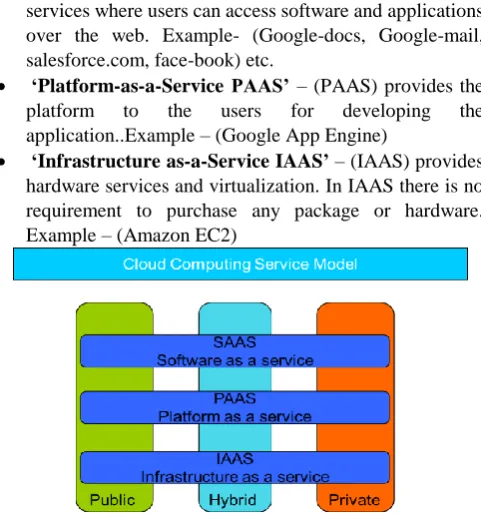
[image:1.595.306.547.215.475.2]Fig.1. Cloud Computing Service Model
Figure 1 shows the cloud computing service model. It consists of „three‟ types of cloud namely: - (public, private & hybrid cloud). The services are provided to the users in the form of (Infrastructure, Software, Platform)
C. Cloud_Deployment Models
Public_cloud- The public clouds are managed by third-party (cloud service provider), over the Internet. Example- (Drop box, Gmail, Office-365, Google, Amazon, yahoo, Microsoft).
Private_cloud- The private cloud is owned by an individual organization. Example: (Sun cloud, IBM, Window Azure).
Hybrid_Cloud - The combination of public and private cloud. Example: - (Google Compute Engine).
Shadab Siddiqui, Manuj Darbari, Diwakar Yagyasen
Evaluating Load Balancing Algorithms for
II. ‘LOAD-BALANCING’ IN CLOUD_COMPUTING
Load-balancing is the process of load distribution among various servers. This is the technique of identification and utilization of underloaded servers [3]. Load balancing is basically of two types:- When load balancing is done at runtime, it is called dynamic load balancing where as when load balancing is done by gaining the prior information of the system, it is called static load balancing [4] [5].
A. ‘Benefits’ of Load-Balancing
‘Scalability‟-Scalability is the method of load distribution among servers so as to find the right~host~solution.
‘Resources Utilization’ – Equal distribution of load among the servers imcreases the resource utilization rate in cloud_computing.
‘Increased Performance’- The load-balancing methods improves the performance as they are less „expensive‟ and easy to implement.
B. Cloud Load_Balancing ‘Metrics’
Load balancing metrics are considered in cloud computing for evaluating the general performance of an algorithm to see its effectiveness in various cloud challenges. Below are the qualitative metrics used in evaluating the performance of cloud load balancing algorithm.
Response_Time: „Response Time‟ is the time taken to generate the first response of the request. However, reduction in waiting time helps in enhancing the responsiveness of a virtual machines.
Performance: It is utilized to decide how powerful the framework while executing load balancing.
Resource_Utilization: Evaluating the usage of resources in load balancing to improve the effectiveness of load balancing algorithm.
Throughput: The throughput should be high for better execution of framework.
Cost_Overhead: It is used to calculate the measure of overhead in load balancing procedures.
III. TYPES OF LOAD_BALANCING_ALGORITHMS
IN CLOUD
A. ‘Round-Robin’ Algorithm:
The „Round-Robin‟ algorithm is called static load balancing algorithm. This algorithm works in circular motion. Round-Robin algorithm is that the simple programming algorithms that supports the principle of time slices [6] [7]. In this, the time is divided into multiple time interval and each request has to be completed within that time interval. Every task is given a time quantum and during this given quantum tasks needs to perform its operations.
B. Min-Min Algorithms
In Min-Min algorithms initially smaller tasks are executed, that makes delay for longer tasks [8] [9]. According to the time the smallest task is arranged in the queue. This algorithm works better when the number of tasks are less but the major drawback is starvation.
C. Max-Min Algorithms
In max-min algorithms larger tasks are executed first, that makes delay for smaller tasks [10]. It selects the tasks with maximum value and send it to cloud virtual machine [11].
D. Opportunistic Load Balancing (OLB)
In this algorithm tasks are appointed in random manner and every node is kept busy. In this algorithm the work of current busy node is not taken into account [12]. Here, in this algorithm resources can be used more efficiently in the system [13]. Since the running time and task completion is not taken in OLB therefore, it takes more time for completion.
E. Genetic Algorithm
In GA, there are four steps done to perform the genetic algorithm and these include selection, crossover, mutations and termination [14]. GA selects the virtual machine from random basis. We tend to crossover the processors and VM‟s chromosome with one another and establish the fitness function as an output. Offspring are created by exchanges between processors and VM at crossover methodology [15]. Then the result of offspring is allotted to the processors. Using this method, the higher priority processors are obtained with jobs to execute it.
F. The Artificial_bee_colony algorithm
It is an optimization algorithm which is based on the foraging ~behavior of honey_bee. This algorithm is inspired by the natural food gathering strategy of honey bees [16]. This algorithm contains three basic parts: - (employed_bees, unemployed_bees and food) [17]. There is a leader of employed_bees who finds the food source one by one and shares the information with the other bees
G. Ant Colony Optimization
This algorithm is inspired by the behavior of ants. The algorithm follows the pheromone based strategy of biological ants [18]. The algorithm can solve various computational problems of finding the good solution.. The ants fundamentally follows self organized learning techniques.
H. Firefly_Algorithm
Fireflies use its flashing pattern to attract other fireflies [19]. This firefly algorithm was developed by Xin-She rule assuming:
a. All fireflies are unisexual, in order to guarantee that every firefly is attracted to all the various other fireflies [20]. b. Since brightness is proportional to attractiveness, therefore the firefly with less brightness is attracted towards the brighter one and as the distance between them increases the intensity of brightness decreases.
c. When no brighter firefly exist than the current firefly, then it will move randomly.
I. Cuckoo_Search_Algorithm
The cuckoo~search~algorithm is based on the brooding behavior of cuckoo bird [21]. The cuckoo bird lay their eggs in the nest of other birds. These eggs with the best quality is carry forward to the next generation and the remaining worst nests are abandoned.
Type of Algorithm Name of Algorithms Pros Cons
Static Algorithms
Round Robin Algorithm [6]
In this method, every task get at least one chance to run using time slice/quantum.
1. This methodology is extremely slow processes, 2. If the Quantum is very long it will cause poor latent period. Min-Min Algorithm [9] No need for processor to attend for
larger tasks.
Starvation (for larger tasks).
Max-Min Algorithm [10]
No need for processor to attend for smaller tasks.
Starvation (for smaller tasks).
Opportunistic Load Balancing (OLB) [12]
In this algorithm tasks are appointed in random manner and every node is kept busy.
This algorithm doesn't give better results to load balancing.
Dynamic Algorithms
Genetic algorithm [14] Using this method, the higher priority processors are obtained with jobs to execute it.
1. Another issue in Genetic Algorithm is premature convergence.
The Artificial bee colony algorithm [16]
1. It has high robustness 2. It has high flexibility 3. It requires few setting parameters.
1. This algorithm finds the solution only in
particular~distance as it gives the solution on the smaller path. Ant Colony
optimization [18]
1. The benefit of this algorithm is that it finds the underloaded server easily in starting
2.The algorithm works in decentralized manner
1. Convergence rate is slow in ACO.
2. Network overhead also increases with increase in number of ants. Firefly Algorithm [19] 1. The Firefly algorithm can
effectively solve complex optimization problems and can combine with other optimization techniques to form hybrid techniques.
Firefly algorithm has slow convergence speed and it has the possibility of getting trapped in local optimum.
Cuckoo Search Algorithm [21]
The cuckoo search algorithm does not gets trapped in local minima.
Cuckoo Search Algorithm is not yet tested on large scale applications
Table1 gives analysis of various algorithms used for load_balancing. Each algorithm is discussed along with its benefits and drawbacks. These algorithms are classified as „static‟ & „dynamic‟ algorithms for data execution at runtime.
We can see that most of the dynamic algorithms have the problem of premature convergence. The benefit of using cuckoo search algorithm is that it does not gets trapped in local minima.
IV. PERFORMANCE~EVALUATION
Table II gives the performance evaluation of various load_balancing_algorithms on various parameters. The performance criteria for each algorithm is classified as high, medium and low representing positive and negative impact of the algorithm. In static algorithms we can say that round robin performs better than the other algorithms. In dynamic
[image:3.595.94.508.47.385.2]algorithms we can see although response time of firefly algorithm is low as it stuck in local optima, but firefly and cuckoo search algorithm of swarm intelligence outperforms other algorithms.
Table II: Performance Metrics of different algorithms of load balancing Load Balancing
Algorithms
Response Time Throughput Resource
Utilization
Cost Overhead Performance
Round-Robin [22] „High‟ „High‟ „High‟ „High‟ „High‟
Min-Min [8] „High‟ „Medium‟ „High‟ „High‟ „Medium‟
Max-Min [10] „High‟ „Medium‟ „High‟ „High‟ „High‟
Opportunistic Load Balancing (OLB) [23]
„High‟ „High‟ „High‟ „High‟ „Medium‟
Genetic algorithm [14]
„Low‟ „High‟ „„Low‟‟ „„Low‟‟ „High‟
The Artificial bee colony algorithm [17]
„„High‟‟ „High‟ „High‟ „„Low‟‟ „Medium‟
Ant Colony optimization [24]
„„High‟‟ „High‟ „High‟ „High‟ „„Low‟‟
Firefly Algorithm [20]
„„High‟‟ „High‟ „High‟ „„Low‟‟ „High‟
Cuckoo search Algorithm [21]
[image:3.595.98.498.558.736.2]V. RESULTS AND DISCUSSION
[image:4.595.119.480.109.285.2]The algorithms are run on Matlab software. Each algorithm is run multiple number of times and tested on various number of nodes/servers [25] [26].
Fig.2. Analysis of throughput of various static algorithms of load balancing
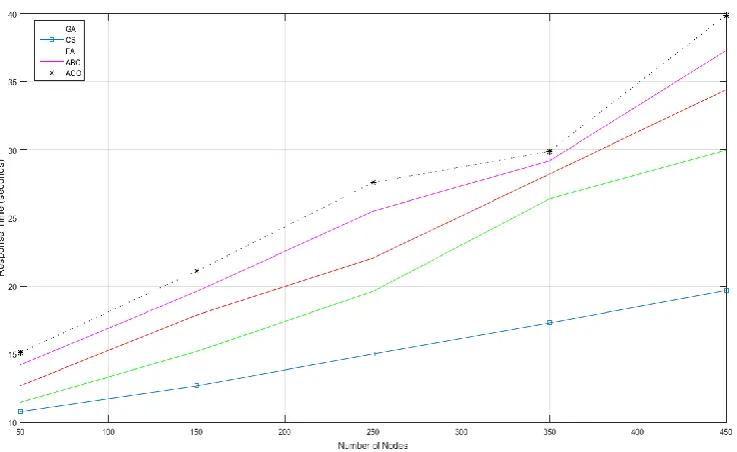
Fig.3. Analysis of response time of different dynamic algorithms of load balancing
Figure 2 represents the analysis of throughput of algorithms. Min-Min, Max-Min, OLB and RR algorithms are compared. Each algorithm is run on different no of nodes/servers ranging from 50-450. From figure 2, we can see that Round Robin algorithm has highest throughput than the other algorithms. Figure 3 represents the analysis of response time taken by different dynamic algorithms. Various algorithms like CS, FA, GA, ABC, ACO algorithms are compared. Each algorithm is run on different no of nodes/servers ranging from 50-450. We can see from figure 3, that cuckoo search algorithm performs better than other algorithms.
VI. CONCLUSION
Cloud computing is a latest buzz in IT industry. It has a vast domain and is widely used, therefore load balancing is an important issue in cloud computing to overcome. Load balancing divides the load among various servers. In this
[image:4.595.112.481.317.543.2]REFERENCES
1. P. Mell and T. Grance, “The NIST definition of cloud computing”, National Institute of Standards and Technology, Computer Security Resource Center.
2. S. Sakshi and NS. Ghumman, “Cloud computing model and its load balancing algorithms,” 2016 3rd International Conference on Computing for Sustainable Global Development (INDIACom), New Delhi, pp.2940-2943, 2016.
3. SL. Chen, YY. Chen and SH. Kuo, “CLB: A novel load balancing architecture and algorithm for cloud services”, Computers and Electrical Engineering, Issue.56, Issue.2, pp.154-160, 2016.
4. B. Patel and S. Patel, “Various Load Balancing Algorithms in cloud computing”, International Journal of Advanced Research in Computer Science and Software Engineering, Vol.1, Issue.2, pp.23-29, 2015. 5. D. Saranya and LS. Maheswar LS, “Load Balancing Algorithms in
Cloud Computing: A Review”, International Journal of Advanced Research in Computer Science and software Engineering, Vol.5, Issue.7, pp.1107-1111, 2015.
6. N. Sran and N. Kaur, “Comparative analysis of existing load balancing techniques in cloud computing,” International Journal of Engineering Science Invention, vol. 2, no. 1, pp. 60–63, 2013.
7. N. Swarnkar, “A survey of load balancing techniques in cloud computing,” International Journal of Engineering Research & Technology, vol. 2, issue 8, pp. 800–804, 2013.
8. C. T. Lin, “Comparative based analysis of scheduling algorithms for resource management in cloud computing environment,” International Journal of Computer Science International Journal of Computer Science and Engin and Engineering, “issue. 1, volume 1, pp. 17–23, 2013.
9. A. Agarwal and R. N. Milind, “Computing environment,” Parallel, Distributed and Grid Computing (PDGC), 2014 International Conference, pp. 9–13, 2014.
10. X. Ren, R. Lin, and H. Zou, “A dynamic load balancing strategy for cloud computing platform based on exponential smoothing forecast.” IEEE International Conference on Cloud Computing and Intelligence Systems, 15-17 Sept. 2011.
11. S. Ray and A. De Sarkar, “Execution analysis of load balancing algorithms in cloud computing,” International Journal on Cloud Computing: Services and Architecture (IJCCSA), vol. 2, no. 5, pp. 1–13,2012.
12. P. Samal and P. Mishra, “Analysis of variants in Round Robin Algorithms for load balancing in Cloud Computing,”(IJCSIT) International Journal of Computer Science and Information Technologies, vol. 4, no. 3, pp. 416–419, 2013.
13. D.Powar, S. Moharana and R. D. Ramesh “analysis of load balancers in cloud computing,” International Journal of Computer Science and Engineering (IJCSE), vol. 2, no. 2, pp. 101–108, 2013. 14. RR. Patel and SJ. Patel , “Improved GA using population reduction for
load balancing in cloud computing”, International Conference on Advances in Computing Communications and Informatics (ICACCI), Jaipur, pp. 2372-2374, 2016.
15. K. Dasgupta, B. Mandalb, P. Duttac, J.K. Mondald, S. Dame, A Genetic Algorithm (GA) based Load-balancing strategy for Cloud Computing, International Conference on Computational Intelligence: Modelling Techniques and Applications
(CIMTA), 10, 340-347, 2013.
16. D. Karaboga, and B. Basturk, “Artificial Bee Colony (ABC) optimization algorithm for solving constrained optimization problems,” IFSA , LNAI 4529, pp. 789–798, 2007.
17. D. Karaboga, and B. Basturk, “On the performance of artificial bee colony (ABC) algorithm,” Applied Soft Computing, pp. 687–697, 2008. 18. R.-S. Chang, J.-S. Chang, and P.-S. Lin, “An ant algorithm for balanced
job scheduling in grids,” Futur. Gener. Comput. Syst., vol. 25, no. 1, pp.20–27, Jan. 2009.
19. X. S. Yang, Firefly algorithms for multimodal optimization. International symposium on stochastic algorithms Springer, Berlin, Heidelberg, pp. 169-178. 2009.
20. S. Binitha,, and S. S. Sathya. "A survey of bio inspired optimization algorithms." International Journal of Soft Computing and Engineering 2.2, pp-137-151, 2012.
21. M. Yakhchi, S.M. Ghafari, S. Yakhchi, M. Fazeliy, A. Patooghi, “Proposing a Load Balancing Method Based on Cuckoo Optimization Algorithm for Energy Management in Cloud Computing Infrastructures”, Proceedings of the 6th International Conference on Modelling, Simulation, and Applied Optimization (ICMSAO), 2015. 22. D.Powar, S. S. Moharana, R. D. Ramesh “analysis of load
Balancer‟s in cloud computing,” International Journal of Computer
Science and Engineering (IJCSE), vol. 2, no. 2, pp. 101–108, 2013. 23. J. Uma, V. Ramasamy and A. Kaleeswaran “Load Balancing
Algorithms in Cloud Computing Environment - A Methodical Comparison” International Journal of Advanced Research in Computer Engineering & Technology (IJARCET), Volume 3, Issue 2, February 2014.
24. J. Kaur and S. Kinger, “A survey on load balancing techniques in cloud computing,” International Journal of Science and Research (IJSR), vol. 3, no. 6, pp. 2662–2665, 2014.
25. S. M. H Madni, M. S. A.Latiff, M. Abdullahi, S. M. Abdulhamid, M. J. Usman, “Performance comparison of heuristic algorithms for task scheduling in IaaS cloud computing environment, PLOS ONE, 2017. 26. M. GAMAL, R. Rizk., H. Mahdi.and B. Elhady. Bio-inspired load
balancing algorithm in cloud computing. Proc. of The International conference on Advanced Intelligent systems and Informatics (AISI), Cairo, Egypt, pp. 579-589, 2017.
AUTHORS PROFILE
Shadab Siddiqui is pursuing his Doctorate in computer science from BBD University got enrolled in 2017 session and done M. Tech in Computer Sci. & Engineering from Integral University, Lucknow India. He has done his B.Tech from Uttar Pradesh Technical University, Lucknow, India. He has been working as the Assistant professor of Computer Science at BBDNITM, Lucknow. He has total Academic teaching experience of more than 5 years and industry experience of 4 years with many publications in reputed, peer reviewed National and International Journals. His areas of interest include cloud computing, database management system, wireless networks, computer networks. He also has Data Analytics Experience in Rapid Miner and WEKA.
Prof. (Dr) Manuj Darbari is a Professor at Computer Science & Engineering Department, BBD University, Lucknow.He received Bachelor of Engineering in Electronics Engineering from Amravati University, Maharashtra, India (1993), and Master of Engineering in Digital Systems from MNNIT, Allahabad University, Allahabad, UP, India (1995). He has done his PhD in Information Science from Birla Institute of Technology, Mesra, Ranchi (2011). He has total Academic teaching experience of more than 20 years with many publications in reputed, peer reviewed National and International Journals. He has been the reviewer for IEEE, Inder scienceand many other international peer reviewed Journal and he has authored 3 books. His areas of interest include cloud computing, soft computing, software engineering.