Abstract: This study deals with the development of a polyethylene terephthalate or PET plastic shredder for Xavier University in order to reduce the transportation cost of used plastic bottles to the designated dump site some 9 kilometers uphill. The development of this 2 horsepower plastic shredder is also useful for the reduction of the volume of plastic materials in the Material Recovery Facility of the municipality of Alubijid, Misamis Oriental. Xavier University has a collection of used plastic bottles of around 365 kg per month with an aggregate volume of 17.42 m3 and until the next garbage collection services
arrive, the amount of plastic waste will occupy a considerable volume or space. This study focuses on the development and testing of the capacity of the developed plastic shredder. This study is inspired by the project of Mr. Dave Hakkens, called Precious Plastic, that aims to fight plastic pollution by developing machines that aid in recycling all sorts of plastic materials. The objective of this study is to analyze the cost of developing these machines in the Xavier University setting, their cost of operation, and effectiveness through minimizing the volume of plastic bottle. In this study, only polyethylene terephthalate (PET) plastic are being used. By consultation of local manufacturing firms in developing the machines through their specialized equipment, the authors have found that cost of development is high. However, a compromise between quality and precision has been decided to reduce the overall cost of the development of the machine. The authors were able to develop the proposed machines through the application of skills in machine workshop practices in the mechanical engineering laboratory. The XU plastic shredder has an average plastic volume reduction of 82.41%. With this volume reduction, the number of trips for the garbage truck collector is also reduced by 82.41% thereby saving delivery cost and manpower requirements. The cost of power consumption of the XU Plastic Shredder is only PhP36.52 per hour.
Keywords: plastic shredder, polyethylene terephthalate plastic, precious plastic, volume reduction, waste plastic materials
I. INTRODUCTION
This project is inspired by the efforts of people like Dave Hakkens[1], founder of Precious Plastic,
Revised Manuscript Received on October 05, 2019.
Elmer B. Dollera, professor in Mechanical Engineering Department, Xavier University, Philippines
Rogelio C. Golez, professor in Mechanical Engineering Department, Xavier University, Philippines
Steven Don Rizal C. Ty, Bachelor of Science in Mechanical Engineering(2019) in Xavier University, Philippines
Joseph Philip Fernan S. Bachelor of Science in Mechanical Engineering(2019) in Xavier University, Philippines
Jarod V. Balo, graduating student in Bachelor of Science in Mechanical Engineering in Xavier University, Philippines
a project that helps to boost plastic recycling worldwide through providing tools and knowledge to people around the world for free,
trying to give people solutions to fight plastic pollution. Solutions found by the Project were shredding, melting and forming it into different shapes through molds and extruders. These are all useful solutions but the objective of this study is to minimize the volume of plastic to be sent to the landfill or to wherever recycling facility handles the plastic.
Plastic comes in different types, shapes, and sizes. Keeping them in a landfill or storage bay/garbage bin takes a volume of space that could be utilized more effectively if the plastic were denser. By minimizing the volume of the plastic, more plastic can be stored and transported thus increasing the efficiency of the process. Shredders have been used in many parts of different industries for different purposes. But mainly its function is to reduce the size of the initial material to a smaller size.
There are 3 different ways to shred which mainly depends on what materials are to be shredded. Different types of plastic are like oil and water, they do not mix, and when they cool down, they will set in different layers called “Phase Boundaries”. The phase boundary is the source of structural failure of the material. Therefore, it is best to segregate plastic by type when melting. Most plastics can be re-melted and reused, however the purity of the material decreases every time it gets reused.
Plastic processing is the transformation of plastic mass into a desired shape. This is the main objective of three other processes that are designed for different product outputs. The extrusion process is for continuous production of the product. While the injection molding process is non-continuous as after each injection of the melted plastic, the mold is to be changed. Blow molding is the combination of the two mentioned above and is considered as continuous, this is done by extruding a tube and inserting it into a mold, and air is blown to force the material to expand to the mold.
Development of XU Plastic Shredder for Cost
Effective Means of Minimizing Polyethylene
Terephthalate Plastic Waste Volume
II. METHODOLOGY A. Fabrication of the blades
To achieve the objective which is to make the plastic waste as dense as possible through a shredder while keeping the development cost low, this study focuses on the design parameters of these devices to be able to tear and extrude the plastic waste using crude versions of the machines that are still able to do the job effectively and efficiently. The dependent variables that was gathered in order to optimize the machine capability were then modified throughout the study to improve the result for further iteration and better mechanical design.
The design of the cutting blade is very important in any design of shredder. In this study, the dimensions of Mr. Dave Hakkens is used for the fabrication process[1]. The layout of the blade design is so complex to be handled by the Xavier University Mechanical Engineering Laboratory, so that professional machinists were hired to do the layout and ultimately, cut the blades as per the designed dimensions.
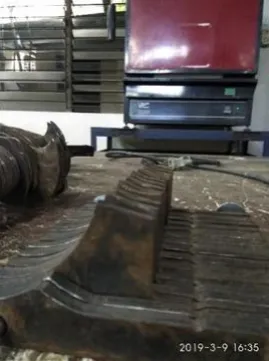
[image:2.595.359.499.174.358.2]Cutting with ordinary cutting tools will result to uneven and rugged edges. The machinist opted to use plasma cutting to produce the needed quality of the plastic shredder blades. In this manner, the result of the fabricated and cut blades is precise as to follow the exact cutting contour as drawn in the drawing board. The XU plastic shredder contains twelve(12) blades with a uniform dimension.
Fig. 1. Preparation of the XU Plastic Shredder blades
Fig. 1 shows the preparation of the different parts used in the assembly of the plastic shredder. The housing of the blades and the guide slots were meticulously prepared and fix on its individual designed positions. The design of the bearing needed and the fabrication of the rotating shaft that will hold the blades were checked for the required tolerance of the assembly.
B. Assembly of the plastic shredder
Through previous research and data gathering online for the cheapest yet effective way to shred and extrude plastic. The specific design and specification of the machines were obtained. From there, the researchers improved upon these given designs to make it cheaper while producing the same output of the proposed plastic shredder. For the shredder, the
plastic to be fed are PET bottles that are commonly used for drinking water, packaging or soft drink containers. The output size of the shredder can be varied through a screen found on the exit part of the shredder. Finer pieces can fall through, while the large ones will stay in the machine for further size reduction.
Using thermocouples and tachometers, temperature and rpm can be measured and logged for optimization of the variables, and estimation of operating cost of the machines[4].
Fig. 2. Blade assembly of the XU Plastic Shredder Fig.2 shows the assembly of the bearing, rotating cylindrical shaft and the twelve(12) cutting blades. Some required tolerance of the assembly were not satisfied initially thus further filing works were needed.
C. Materials and parts selection
Based on the conventional design in fabricating the machines for the plastic shredder, the main steel to be used for the shredding blades and frame should be AISI 304 Stainless Steel. However due to high cost and local availability of the material, the authors used mild steel that are available locally and at a reasonable cost. For driving the plastic shredder, a single phase, 2 horsepower and single phase, 1 horsepower electric motor was suggested by other researchers, though design optimization used a single phase, 1 horsepower and a 12-volt dc motor to run the machines respectively.
[image:2.595.102.237.386.567.2] [image:2.595.346.525.563.798.2]Fig. 3 shows the plastic shredder bracket bottom. This part is used to hold the assembly and secure all the moving parts not to move during the operation. With this type of plastic shredder, vibration of the machine cannot be avoided when bulk of plastic materials are dumped into the hopper.
In this study, due to some limitations of the availability of 1 horsepower motor, a 2 horsepower AC motor is used as a source of mechanical power for the rotating cylindrical shaft. This 2 horsepower motor runs at a name plate speed of 3600 rpm and with this rpm, it is more than enough to drive the plastic shredder with a design rpm of 70. The motor rpm should be reduced to a speed of 70 rpm using an assemble speed reducer.
Rugged and sturdy stand is also assembled to elevate the height of the hopper and for the convenience of the plastic shredder operator. The height of the stand is so designed as to make the elevation of the hopper made easier and accessible to the plastic shredder operator who feds the garbage plastic materials.
[image:3.595.90.244.413.597.2]Due to the lack of plasma cutting equipment in the mechanical engineering laboratory, the authors looked for plasma cutting services that provided the plasma cutting needs for the plastic shredding machine. However, the desired cutting dimensions were not followed as the described tolerances that were given to the machinists were not followed. This confusion delayed the implementation of the project due to the requirements for manual labor of filing, grinding and machining of the laser cut parts. The authors employed some assistance from the mechanical engineering laboratory for filing works and alignment of the blades until it was ready for the assembly.
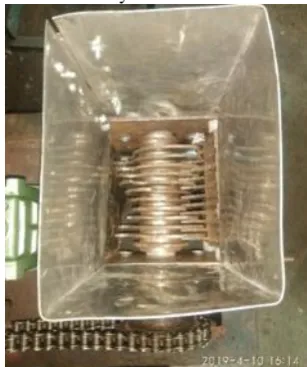
Fig. 4. Top view of the XU Plastic Shredder with the hopper
The researchers could also not find a shaft that would drive these cutting blades locally thus fabrication of this part was done using the lathe machine in the mechanical engineering laboratory.
Fig. 4 shows the top view of the plastic shredder, the housing and guide slots. Clearances between the blades and the guide slots were improved by means of additional alignment and filing works.
III. EXPERIMENTAL
Based upon the project that inspired this research, the exact size of the screen that initially reduces the plastic bottle to flakes through the shredder are not given, however a starting
point approximate is a 3 mm hole size screen is used to start an initial benchmark of shredding the plastic. The time it takes to shred one bottle to pass through the screen is then determined. Calculating the power used of shredding a volume of plastic bottles into flakes is then recorded in order to calculate the cost of running the machine. The size of the screen is optimal for melting the plastic flakes using the extruder as the next preferred process. Feeding a volume of the shredded plastic in the extruder and measuring the volume it occupies after it passes through the extruder will help determine its effectiveness.
Fig. 4 shows the top view of the plastic shredder with the mounting of the steel made hopper. At this stage of the study, the determination of the parameters and objectives of the study can smoothly be carried out. Plastic materials from the material recovery facility of the campus were collected and the specimen were fed to the plastic shredder. Recording of the input and output volume were done and so with other parameters such as the rotating shaft angular speed and the power consumption. Data were taken every thirty seconds for a duration of sixty minutes[4].
The research project will not only be limited to reducing the volume of PET Plastic, but it can be used as a means of recycling plastic through injection molding of products. This creates a demand of recycled plastic bottles thereby reducing the amount of trash in the environment.
Through proper modifications, scientific studies and experiments, the machines can also be used for different kinds of plastic materials to meet different demands.
IV. RESULT AND DISCUSSION
The main objective of this study is to determine the volume reduction of the fabricated plastic shredder. But before all other experiments can proceed, a sound design and fabrication of the plastic shredder must be done.
With the fabricated plastic shredder assembled and commissioned for shredding, the data logger is now ready for mounting and interfacing with the computer unit[6]. Energy consumption and angular speed are the main parameters to be attached into the data logger. All other data, such as the volume of the plastic materials, were measured physically by the operator.
Table 1. Percentage reduction in volume for each pass
[image:4.595.69.281.304.450.2]The shredding time is recorded for the different passes in the plastic shredder. More time is spent for the first pass because some of the plastic materials with smaller sizes will take the first entry to the cutting blades compared to the much bigger plastic materials.
Fig. 5. Volumetric reduction of shredded plastic materials
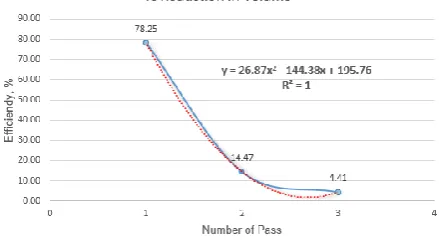
Fig. 5 shows the volumetric reduction of shredded plastic materials. The initial plastic materials from the campus recovery material facility was measured at 73.1 milliliter. On the first pass, the volume reduces to 15.9 milliliter. On the second pass, the volume reduces to 13.6 milliliter and on the third pass, the volume reduces to 13.0 milliliter.
It is observed that on the third pass, the reduction in volume is not so significant as compared to the reduction on the second pass. The reduction on the first pass is very pronounced as this reduction has an efficiency of 78.25% and much greater to the reduction efficiency on the third pass which has a value of 4.41%.
Table 2. Cost of operation of plastic shredder
Table 2 shows the cost in the operation for the plastic shredded in 30 minutes, 15 minutes and another 15 minutes on the final pass. It is observed that for an operational cost of PhP36.52 per hour, the first pass has the highest energy consumption while the succeeding passes has a lower energy consumption. The consumption in energy can also be related to the time being consumed by the plastic shredder.
There has been a high amount of energy necessary to start the shredding process because of the different sizes of the intake volume. On the first pass, the objective is to convert the plastic material to sizes ranging from 3 to 14 mm in diagonal sizes. Once the intake volume has been converted in flake sizes of 3 to14 mm diagonal sizes, then it would be easier for the plastic shredder to slice and cut the plastic materials.
The cost of the operation using the plastic shredder is cheaper compared to hiring laborers to slice and chop down the plastic materials. With an average worker salary of P365.00 per day, this machine can handle large volume of plastic materials for shredding process at a minimum cost and at a faster pace.
Fig. 6. Equation of percentage volume reduction Fig. 6 shows the equation of percentage volume reduction of the plastic materials. A second degree equation fits with the behavior of the efficiency as the number of pass is increased. It is observed in the graph that increasing the number of pass for the plastic shredder will result to a lower efficiency and which is insignificant for the process.
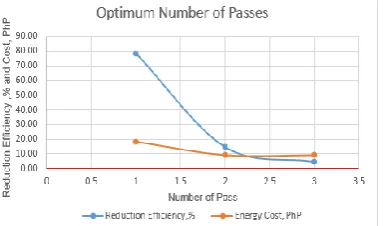
[image:4.595.318.538.450.570.2]Fig. 7. Optimum number of passes
Fig.7 shows that 2 passes of plastic materials is just enough for the process. Increasing the number of passes would not result into a better productivity. The energy consumption for the second pass and the third pass are just the same and yet the difference in shredding efficiency is quite high.
IV. CONCLUSION
This study focused in the development and testing of the plastic shredder. This plastic shredder has been operated and tested for the shredding of PET plastic materials. The developed plastic shredder is able to reduce the plastic materials effectively and with an efficiency of 78.25% for the first pass or with an overall efficiency of 82.22%. This reduction efficiency is high enough for a rugged homemade plastic shredder assembled from used and other scrap materials. It is evident in the above data that with the same energy consumption of the second pass, the third pass has a very low reduction efficiency. This data will show that adding a third pass in no longer economical for the plastic shredding process. In conclusion, this plastic shredder with an average hourly energy consumption of PhP36.52 is cheaper compared in hiring additional laborers just to chop and shred the plastic materials manually.
ACKNOWLEDGMENT
The authors would like to express their sincere gratitude to the Office of the Vice-President of the Philippines, Vice-President Maria Leonor “Leni” Gerona Robredo, for funding this research work and development project under the Angat Buhay Anti-Poverty Program.
The authors also wish to express their heartfelt gratitude to the Local Government of Alubijid, Misamis Oriental, for their valuable support of the study until the completion of this study.
To Mr. Epoi and Engr. Elson, for helping out the authors in the difficulties and confusions in the preparation of the final blueprints and for the plasma cutting of the twelve blades.
REFERENCES
1. Hakkens, D., “With These DIY Machines, Anyone Can Transform Plastic Waste into New and Useful Objects.” Retrieved on March 1, 2018 from: http://www.core77.com / posts/52155/With-These-DIY - Machines Anyone Can Transform Plastic Waste into New and Useful Objects.
2. Dollera, E.B., Villanueva, E.P., Pabillona, L. L and Golez Jr, R. C., “Lockhart-Martinelle Correlation of Refrigerant R-134a Pressure Drop in Minichannel Evaporators”, Australian Journal for Basic & Applied Sciences, 9(37), Pages 28-34, ISSN: 1991-8178, Special 2015
3. Richards, H., “Plastic Recycling: The Process, Advantages and
Disadvantages”. Retrieved on March 1, 2014 rom:
http://www.33rdsquare.com/2014/08/plastic-recycling-process-advant ages.html
4. Dollera, E.B. and Villanueva, E. P, A study of the Heat Transfer Coefficient of a Mini Channel Evaporator with R-134a as Refrigerant, IOP Conference Series: Materials Science and Engineering. Volume 88 012027, 2014.
5. The green engineers, “Calculations Required for Shredder”. Retrieved on June 29, 2018 from: https://davehakkens.nl/ community/ forums/ topic/calculations\-required-for-shredder/
6. Dollera, E.B, Golez Jr., R.C., and Ipanag, N. G., “Comparative study of pressure drop on a micro expansion device for the development of a mini vaccine carrier”, Global Scientific Journals, 7(8), Pages 613-623, ISSN: 2320-9186, 2019.
AUTHORS PROFILE
Elmer B. Dollera, is a Professional Mechanical Engineer and currently working as a professor in Mechanical Engineering Department, Xavier University, Cagayan de Oro City, Philippines. He earned his degree in Doctor of Engineering in MSU-Iligan Institute of Technology(2015) and Master of Science in Mechanical Engineering (1995) in University of the Philippines, Quezon City, Philippines. He attended a Post Masteral Program in Mechanical Engineering (1997) in University of New South Wales, Sydney, Australia.
Rogelio C. Golez, Jr., is a Professional Mechanical Engineer and currently working as a professor in Mechanical Engineering Department, Xavier University, Cagayan de Oro City, Philippines. He earned his degree in Doctor of Philosophy in Mathematical Sciences major in Applied Mathematics(2014) in Mindanao University of Science and Technology and a graduate in Master of Science in Applied Mathematical Sciences(2005) in Mindanao Polytechnic State College, Cagayan de Oro City, Philippines
Steven Don Rizal C. Ty, is a registered mechanical engineer and a graduate of Bachelor of Science in Mechanical Engineering(2019) in Xavier University, College of Engineering, Cagayan de Oro City, Philippines
Joseph Philip Fernan S. Gaston, is a graduate of Bachelor of Science in Mechanical Engineering(2019) in Xavier University, College of Engineering, Cagayan de Oro City, Philippines