Evaluation of the Work Experience
Placement Trials
Research report
October 2013
David Sims, Clare Southcott, Sarah Lynch &
Pauline Wade
2
Acknowledgements
The research team would like to express our gratitude to Jonathan Johnson at the Department of Education for his valuable advice and guidance. We also acknowledge the helpful support of the steering group throughout the project.
We are indebted to all the colleges which provided information for the evaluation, and in addition, to the colleges which hosted case-study visits. Students, staff and employers made a vital contribution to the evaluation.
3
Foreword by Alison Wolf
In today’s competitive and globalised labour market, experience of work can make a critical difference to a young person’s start in life. The value of being or having been employed is well established, at all ages. It is much
easier to get a new job if you have a job already; and we know that highly valued skills are developed in the workplace which are rewarded by employers over and above skills learned formal education. Experience of a real workplace is also the best way to
discover what you really like doing and where you want to go in life.
However, it has become increasingly difficult for young people to get this valuable experience. The youth labour market has, in many places, simply collapsed. That is why, in my 2011 review of vocational education government, I highlighted the need to develop many more substantial work placements for young people, especially those aged 16-18. And it is why I am greatly encouraged by this excellent report.
The pilot schemes reported here were carried out under the old funding regime, when 16-19 year olds’ programmes were funded on a qualification-by-qualification basis. This approach was a serious barrier to establishing the flexible, individualised but substantial work placements which both employers and young people need. The fact that colleges were able to create so many placements in these circumstances, using quite modest amounts of pump-priming, bodes well for the future. The evaluators estimate that the average cost per placement was £11.45 a day on top of normal expenditure, so this is easily affordable given the new funding flexibility introduced alongside study
programmes.
The evaluators’ recommendations all seem eminently sensible and practical. I would like , in particular, to endorse one which can all too easily slip through the cracks of college life: - namely to consider providing feedback to employers. I would say ‘Provide’ not ‘Consider providing’. The success of placements depends fundamentally on the direct, personal relationships formed, as I’m sure we all know. The trick is to build feedback and continued contact into the way placements are organised and I hope this will be one of the respects in which colleges and schools are able to share ideas and good practice.
Alison Wolf
4
Contents
Acknowledgements 2
Foreword by Alison Wolf 3
Table of figures 6
List of tables 6
Executive summary 7
1. Introduction 14
1.1 Background 14
1.2 Aims and objectives 16
1.3 Methodology 17
1.4 Structure of the report 18
2. Delivery of the work experience trial 19
2.1 Motivations for college involvement 19
2.2 Profile of the participating students 20
2.3 The nature of work experience 24
2.4 The length of placements 28
3. Models of Work Experience 31
3.1 Introduction 31
3.2 Work experience models: profile and operation/delivery 32
4. Engagement in the trial 40
4.1 Staff engagement 40
4.2 Employer engagement 41
4.3 Student engagement 46
4.3.1 How students engaged in the trial 46
4.3.2 Employer views on student engagement 47
5
4.3.4 Student views on employability skills 48
5. Impact of the trial 50
5.1 Monitoring impact 50
5.2 Impact on providers 51
5.3 Perceived impact on students 52
5.4 Perceived impact on employers 55
6. Value for money 57
6.1 Economy 58
6.2 Efficiency 60
7. The future of work experience 63
7.1 What contributes to successful work experience? 63
7.2 Future employer involvement 64
7.3 Sustainability of the work experience programme 65
8. Conclusions and recommendations 67
8.1 Conclusions 67
8.2 Recommendations 68
Messages for the DfE 68
Messages for colleges, schools and work-based providers 68
References 71
Appendix A 73
6
Table of figures
Figure 1: Eligibility for free school meals (percentage of placements) 22 Figure 2: Special Educational Needs (percentage of placements) 23 Figure 3: Students with Learning difficulties and Disabilities post-16 (percentage of
placements) 23
Figure 4: Participating students’ level of course, Year 2 (percentage of placements) 24 Figure 5: Length of placement, Year 2 (percentage of placements) 29 Figure 6: How work experience was provided, Year 2 (percentage of placements) 29
Figure 7: Work experience models implemented by colleges 32
Figure 8: Number of work experience models implemented by colleges 32
Figure 9: Size of employer (percentage of placements) 43
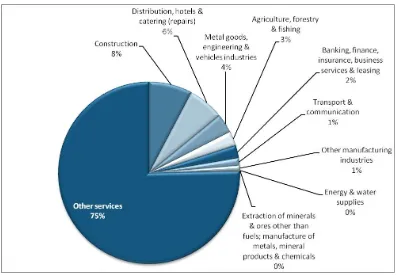
Figure 10: Employment sector (percentage of placements) 43
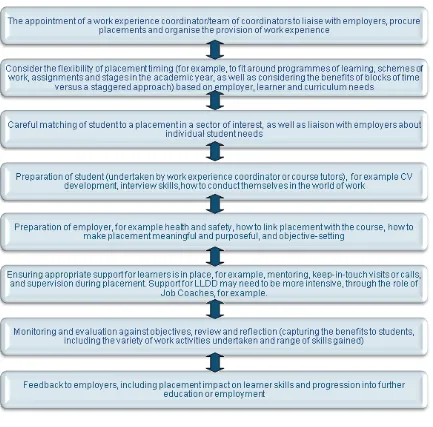
Figure 11: Steps to providing quality work experience 70
List of tables
Table 1: Numbers of placements 21
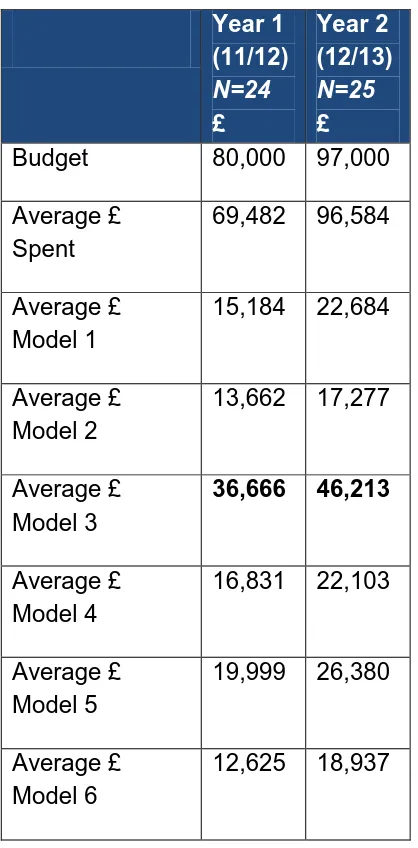
Table 2: Average expenditure, overall and by model 59
Table 3: Average over- and under-spend 60
Table 4: Number of placements (in ascending order), at college-level, and proportion of
LLDD (Years 1 and 2 combined) 73
7
Executive summary
Introduction
This summary presents the findings, conclusions and recommendations from an
independent evaluation by the National Foundation for Educational Research (NFER) of the Department for Education (DfE) Work Experience Placement Trials. The trials
aimed to test different work experience placement models for 16 to 19 year olds. The models were as follows:
Model 1: Removing cost barriers for employers (for example, by providing materials or financial incentives).
Model 2: Investigating specific challenges faced by small to medium-sized employers (SMEs) when offering work placements.
Model 3: Providing extra resources to colleges (for example, to employ staff to organise work placements and liaise with employers).
Model 4: Exploring the timing of placements for students (for example, investigating whether a block of time or individual days throughout a course is most effective and why).
Model 5: Supporting students with learning difficulties and disabilities (LLDD) or vulnerable/disadvantaged students (for example, considering support employers need to employ young people with specific needs).
Twenty-five colleges tested one or more of the models and each of the colleges was allocated a sum of £80,000 in 2011-2012 and £97,000 in 2012-2013 for this purpose. The colleges were located in specified areas with high levels of young people who are not in education, employment or training (NEET) and high proportions of students at level 2 or below.
This summary sets out the key findings of an analysis of management information (MI) data provided by the 25 colleges, case studies of ten colleges and a value-for-money (VfM) assessment. The MI data provided information on the number of work experience placements provided by the trial, the number and size of employers who had
8
Key findings
The key findings are drawn from the evaluation evidence base comprising MI, case-study data and VfM information.
Delivery of the work experience trial
At least 9,725 placements were provided during the two-year trial. The number provided across the colleges ranged from 40-1,742 (with an average of 389). Although it is unclear how many placements would have been provided without the trial, case-study evidence suggests that work experience had expanded in trial colleges and therefore this number is likely to have been much lower.
Numbers involved depended greatly on the approach adopted in the college and the students being targeted.
All ten case-study colleges offered students external placements with an employer, while nine colleges also placed students in internal commercial enterprises which colleges felt constituted genuine work experience.
Case-study evidence suggests that work placements were predominately
vocational (focussing on a particular vocational area to contribute to a study programme) and aimed to give a ‘real world’ experience.
There were examples of ‘extended’ external placements for LLDD, following the ‘Supported Internship’ model, whereby they are supported during their placement by a Job Coach or Learning Support Assistant employed by the college.
Models of work experience
Individual colleges trialled a combination of work experience placement models. On average, three models were piloted by each college.
Providing extra resources to colleges, for example to employ staff to organise placements and liaise with employers (Model 3) and supporting LLDD (Model 5), were the two most prevalent models.
Work experience coordinators funded by the trial played a significant cross-college role in managing the placement process and developing a more structured and systematic approach to the organisation of work experience.
Flexibility in the timing of placements was important in meeting the needs of students’ course requirements and employers’ capacity to provide work experience.
Engagement in the trial
The students who participated in the trial were very positive about the benefits and particularly valued experiencing a real working environment and gaining skills and confidence.
9
There was a perception amongst all colleges that employer engagement had improved considerably as a result of the trial, but this had required much time and effort on the part of coordinators. Financial incentives for employers were unnecessary as employers did not want them.
Colleges were pleased with the level of student engagement and thought there was increased understanding of the advantages of undertaking a placement.
The employers interviewed felt that offering work experience was part of their ‘corporate social responsibility’ and saw it as contributing to their local
community.
Impact of the trial
The key benefit of additional funding was widely perceived to be enabling colleges to employ work experience coordinators who were instrumental in establishing and developing relationships with employers and in coordinating placements. In turn, this helped work experience become more holistic and centralised and changed the college’s work experience ethos. The funding also provided the opportunity to extend placements to more students.
Colleges considered it important to capture the benefits of work experience. They were developing and applying monitoring methods and tools including collating feedback from students and employers, placement visits by staff to carry out assessments to gather evidence for student portfolios and the use of individual learning plans.
The work experience trial was widely perceived by students, colleges and
employers to have helped develop the skills necessary for employment, including team work, communication and interpersonal skills, enabling students to be more work-ready.
Some students gained or were in the process of securing employment or apprenticeships following their work experience, including opportunities associated with the placements they undertook.
The trial had helped to maintain and develop colleges’ relationships with employers.
Employer benefits from providing work experience included increased capacity, staff development and recruitment of apprentices.
Value for money
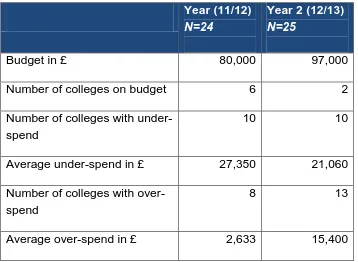
Eight colleges in Year 1 and 13 colleges in Year 2 reported spending over the budget allocated to them by DfE, an additional £2,633 and £15,400 on average respectively.
Some colleges had not spent all of the funds during the trial period, although evidence from progress reports and case studies suggests that some colleges had spent considerable time planning for the provision of work experience which would gradually be expanded.
10
actual additional expenditure. This equates to £11.45 per day. Set-up costs are likely to have inflated the average cost of a placement in Year 1. However, the context of work experience is important when calculating costs; the average cost varied across colleges, depending on the number of students placed, their
characteristics and level of support needs, and the length of placements.
College staff thought that particular elements of the trial were essential for success, namely the role of the coordinator, support for students (particularly more intensive support for LLDD), and investment in pre-placement preparation. Although some elements might be considered expensive, they are likely to achieve efficiencies through centralising management and organisation functions.
The future of work experience
The principal factors contributing to successful work experience placements were: effective coordination, good matching of students to placements, ensuring students were well-prepared for placements and flexibility in timing of
placements.
All the employers who were interviewed, including those who had not offered work experience before or to students across the FE sector, planned to offer placements in future.
Staff in all the case-study colleges were committed to making their work experience provision sustainable but most had concerns about the long-term financial implications of resourcing this.
Conclusions and recommendations
Conclusions
The main conclusion from this evaluation of the Work Experience Placement Trial is that it supported the development of a more systematic and structured approach to the planning and delivery of work experience for 16 to 19 year old students. The ten case-study colleges participating in the trial valued the additional funding which enabled them to test different placement models, innovate and assure the quality of the work
experience they offered. As a result, work experience was gaining a more strategic focus and a higher status in colleges. There was seen to be a positive impact on students, who developed employability skills including teamwork, communication and interpersonal skills.
Investment in a work experience coordinator is key to making work experience a more centrally managed and coordinated college-wide process. Providing extra resources to colleges was the most prevalent work experience placement model trialled and funding the recruitment of a coordinator accounted for most of this investment. College senior managers highlighted the additional capacity work experience coordinators gave them to manage the cross-college procurement and organisation of work placements.
11
secure placements; they worked with heads of departments and programme teams to help integrate work experience with the curriculum; they coordinated the preparation of students for going on placements; and they visited students on placement.
Flexibility is instrumental in managing the demand and supply of work experience placements. College senior managers and coordinators valued the opportunities the trial gave them to innovate and try out different ways of organising placements. They used a variety of placement timings as appropriate to balance the requirements of students and their courses on the one hand and the capacity of employers on the other. The feedback from students and employers was equally positive regardless of the approach.
Support for students undertaking placements can make a useful contribution in enabling them to benefit from work experience. Colleges were supporting students in several ways including briefing and preparation, one-to-one advice, visiting students on placement and in some cases paying for travel and work clothes. They provided enhanced support for LLDD which was the second most prevalent work experience model trialled. Coordinators, mentors, coaches and support assistants worked with these students to support them through the placement process and assist them in maximising the benefit from work experience.
Providing placements that expose students to a real work environment with an external employer is of key importance. The experience had helped them to develop
employability skills such as technical, social and communication skills.
Recommendations
The evaluation findings suggest the following points for consideration by policymakers:
DfE should continue to help employers to understand that work experience placement health and safety and Disclosure and Barring Service (formerly CRB checks) requirements are not bureaucratic processes. This would help to support the procurement and provision of placements. In readiness for the introduction of study programmes and the greater demand on employers to offer work
experience placements, DfE have been committed to reducing the bureaucracy around work experience and simplifying the guidance. For more details:
https://education.gov.uk/schools/teachingandlearning/qualifications/b00223495/p ost-16-work-exp-enterprise-educ/creating-work-exp-opp-young-people.
DfE should disseminate good practice examples of internship-type models of work experience for LLDD. This would help to address employers’ apprehension by showing that with the right support LLDD can flourish in the workplace.1
1
12
DfE should advise colleges, schools and work-based learning providers on what counts as success in work experience. For example, if a student is offered and takes up a job or apprenticeship as a result of doing work experience and does not complete their course, should this be recorded as a success rather than being counted as course drop-out?
The evaluation findings suggest the following points for consideration by colleges, schools and work-based providers who should:
Consider appointing a work experience coordinator. This is a cost-effective way of driving forward work experience and centralising the management and
organisation of placements. A coordinator is an important part of the college structure for effective work experience delivery.
Explore what they need to put in place to scale up work experience provision for their students including sourcing enough placements of the right type and
integrating work experience in study programmes.
Think about how best to share their work experience ‘story’ across their
institutions to maximise student and staff engagement by explaining the benefits with real life examples and illustrations. This could be included in continuing professional development for heads of faculty/department and tutors. Students who have completed work experience can be used as ambassadors to describe their placement ‘journey’ and explain the benefits gained.
Examine how effectively they are monitoring the quality of work experience placements including evaluating and reviewing the outcomes. For example, are learning objectives agreed at the beginning of the placement and is progress towards the objectives reviewed at the end? Are employers as well as students and college staff involved in this process? How consistent is this process across the institution?
Consider what follow-up contact and communication is required for employers who have offered placements. This could include providing feedback on the post-placement progress made by students including qualifications achieved and their progress to higher education, employment and apprenticeships. Employers appreciate finding out about what students go on to achieve.
Background
The Wolf Review of Vocational Education (2011) made a strong case for reforming the vocational education system in order to equip young people with the knowledge and skills that will enable them to prosper and progress in their working lives. The
government accepted the review’s recommendation that 16 to 19 study programmes be introduced to offer students breadth and depth without limiting their options for future study or work. Reflecting Wolf’s suggestion that work experience ‘should be one of the highest priorities for 16-18 education policy in the next few years’ (p.130), work
13
full-time students, not apprentices, and for reimbursing local employers in a flexible way, using core funds’ (Recommendation 21, p.131). The Department launched the Work Experience Placement Trials in response to this, allocating funding to 25
institutions across 2011-12 and 2012-13 to test models for providing placements for 16 to 19 year olds.
Methodology
The DfE commissioned the NFER to undertake an independent evaluation of the Work Experience Placement Trials between May 2012 and July 2013.
The evaluation methodology comprised the following activities:
A scoping study: carried out June-November 2012, including analysis of pilot colleges’ action plans and progress reports, an email survey of colleges, and MI submitted by colleges.
Case studies: in-depth investigations carried out in January-March 2013 with staff, students and employers linked to ten colleges offering varied approaches to work experience. Interviews were undertaken with 49 staff across 10 FE
colleges, including senior leaders, work experience coordinators and teaching and learning support staff. In addition, 14 employer interviews were undertaken. We conducted focus groups with 59 students participating in work experience placements and 33 students not participating in work experience. Students undertaking work experience were also asked to complete a survey about the employability skills they felt they needed to develop and their perceptions of the skills valued most by employers. A total of 35 students completed the survey.
Analysis of MI collected from pilot colleges: explored, for example, the
number of placements provided overall, the number and size of employers who had participated, the length of placements (for example, the number of
hours/days), total expenditure, and the cost of placements.
14
1. Introduction
1.1 Background
Skills are essential to the UK’s prosperity, employers’ business competitiveness,
individuals’ labour market prospects, lifetime earning capacity and wellbeing. However, the government’s Plan for Growth (2011) notes that ‘… the education system is not giving young people the skills that businesses need’ (p.36). This issue was also identified by the Heseltine Report (2012) which observes that: ‘Employers complain regularly about the shortcomings in the employability of young people leaving school and college’ (p.161). The report advocates increasing the employability of young people by ‘educating and enthusing them about the world of work, and demonstrating to them the applicability of what they learn in the classroom’ (p.162). Equally, the report
maintains that employer involvement in education ‘can also increase understanding of career opportunities and ensure better and higher-quality work experience’ (p.162). Recent skills surveys point to the value of work experience in helping to enhance young people’s employability skills. The CBI/Pearson education and skills survey (2013) found that employers considered that too few young people leave school with work experience or having developed personal attributes such as self-management and attitude to work. The report underlined the importance of work experience: ‘For the 14-19 age group, employers believe schools and colleges should be developing work awareness and relevant skills, with more opportunities to acquire work experience identified as the main priority’ (p.7). The UKCES Employer Skills Survey 2011 (2012) reported that most employers considered education leavers to be well prepared for work. Where leavers were considered to be poorly prepared, this was attributed to ‘a lack of experience (of the world of work or, more generally, life experience or maturity), or to personality (poor attitude, or lack of motivation). This suggests that young people would benefit from increased work experience opportunities offered by employers (p.iv). Another employer survey, reported by the British Chambers of Commerce (Reid, 2011), revealed that businesses were keen that young people were supported to develop employability skills as well as to gain qualifications. These findings are reflected in the views expressed by young people aged 13-25 in a survey by the Young Foundation (Kahn et al., 2011): only about half (51 per cent) thought that their education and experience at school prepared them, or is preparing them, for the world of work and more than a quarter (28 per cent) identified lack of work experience as a major barrier to employment for them.
The value of work experience is endorsed by the Education and Employers Taskforce’s Expert Working Group on Work Experience which considered a range of evidence. Its report (Mann (2012) stated that: ‘… work experience is overwhelmingly relevant to the vast majority of students. As an activity, it is perhaps best understood, and
15
clear …’ (p.35). The role of work experience in young people’s transitions was also identified by recent research on the mismatch between jobs and young people conducted by the Chartered Institute of Personnel and Development (Rudiger, 2013) which concluded that: ‘Employers find it difficult to assess young people with limited work experience and young people find it difficult to ‘market’ themselves to employers’ (p.4).
The Wolf Review of Vocational Education (2011) highlighted the importance of work experience for helping young people to develop the skills required for employment: ‘Helping young people to obtain genuine work experience – and, therefore, what the CBI calls ‘employability skills’ – should be one of the highest priorities for 16-18 education policy in the next few years. It is far more important than even a few years ago, because of labour market trends; and is made critical by the impact on youth unemployment of the most recent recession’. (p.130). Wolf made a strong case for reforming the education system in order to equip young people with the knowledge and skills that will enable them to prosper and progress in their working lives. The government accepted the review’s recommendation that 16 to 19 study programmes be introduced to offer students breadth and depth and without limiting their options for future study or work. Reflecting Wolf’s suggestion that work experience ‘should be one of the highest priorities for 16-18 education policy in the next few years’ (p.130), work experience will be an integral part of the 16 to 19 study
programmes introduced in September 2013. Wolf recommended that ‘DfE should evaluate models for supplying genuine work experience to 16-18 year olds who are enrolled as full-time students, not apprentices, and for reimbursing local employers in a flexible way, using core funds’ (Recommendation 21, p. 131).
The post-16 funding reforms being introduced to support raising of the participation age (institutions will attract a standard rate of funding for each student weighted for
necessary course costs, retention and with additional funding for those at a disadvantage) will allow schools and colleges more autonomy to expand work
experience as part of their post-16 provision. All schools and colleges will be expected to offer their students high-quality and meaningful work experience as part of their 16-19 study programme to give the student a valuable experience of the work environment, help focus their career aspiration and develop their employability skills.
The work experience offered can be:
16
Vocational – work experience focused on a particular vocational area to
contribute directly to a study programme. The target audience for this is likely to be students taking larger vocational qualifications.
Extended – work experience focused on developing employability skills, with English and mathematics covering the majority of the study programme time. The target audience is likely to be students not taking a larger vocational qualification or studying below level 2.
The Department for Education (DfE) funded an initiative that aims to support young people to participate in high-quality work experience placements as part of the implementation of Wolf’s recommendation on post-16 work experience. Sums of £80,000 per institution in 2011-2012 and £97,000 in 2012-2013 were allocated to 25 colleges to test work experience placement models for 16-19 year olds. The colleges were located in specified areas with high levels of young people who are not in
education, employment or training (NEET) and high proportions of level 2 or below students.
The DfE commissioned the National Foundation for Educational Research (NFER) to carry out an evaluation of this initiative to test work experience placement models
between May 2012 and July 2013. The aims and objectives of the evaluation are set out below.
1.2 Aims and objectives
The overarching aim of the study was to evaluate different models of work experience placements for post-16 students, exploring the impact on students and employers and identifying lessons learned. Five work experience placement models were being tested (see executive summary for details) and colleges could apply for funding to pilot one or more of them.
The specific research objectives were to explore:
1. The extent to which, and how, the different approaches adopted by providers enabled young people, particularly those from vulnerable/disadvantaged backgrounds, to access high-quality work experience (including the facilitators and barriers to access).
2. The impact the different approaches had on young people, particularly those from vulnerable/disadvantaged backgrounds, with regards to the development of relevant workplace skills and their intended post-16, post-17 or/or post-18
destinations.
3. How, if at all, relationships between providers and employers had been
17
4. The impact of the provision of work experience on employers’ practices and attitudes to work experience placements.
5. Lessons learned, including challenges and success, of designing and delivering high-quality work experience placements.
6. The numbers of students participating in the different approaches and an exploration of their characteristics, including, for example, level of deprivation, LLDD and level of learning.
7. The numbers of employers providing placements to students through the different approaches and their characteristics, in terms of, for example, size of employer and sector.
It should be noted that colleges often offered both external work-based placements and internal college-based placements and tended not to differentiate their experiences and views of each type of work experience.
The research methodology used to conduct the evaluation is outlined below.
1.3 Methodology
This section provides details of the methodological approach which was used to assess if, how and why different aspects of work experience placements have had an impact on young people’s decision making about post-16 destinations. The methodology comprised:
A scoping study: carried out June-November 2012, including analysis of college action plans and progress reports, an email survey of colleges, and Management Information (MI) submitted by the 25 colleges.
Case studies: in-depth investigations carried out in January-March 2013 with staff, students and employers2 linked to ten colleges offering varied approaches to work experience. The sample was informed by the data analysed during the scoping study. Colleges were selected using region, the index of multiple
deprivation, size of college, approach to delivery, target number of placements, number of employers involved and types of students targeted (for example, LLDD or those at risk of becoming NEET). Coverage of the different work experience models and activities delivered were also considered.
In total, interviews were undertaken with 49 staff across 10 FE colleges, including:
nine members of the senior management team (SMT)
seven work experience managers
2
18
ten work experience coordinators
one head of skills and enterprise
one head of business development team
one job coach
one work experience case leader
19 teaching and learning support staff.
In addition, 14 employer interviews were undertaken. We conducted focus groups with 59 students participating in work experience placements and 33 students3 not participating in work experience. Students undertaking work experience were also asked to complete a survey about the employability skills they felt they needed to develop and their perceptions of the skills valued most by employers4.
Analysis of MI collected from colleges: exploring, for example, the number of placements provided overall5, the number and size of employers who had participated, the length of placements (for example, the number of hours/days), total expenditure, and the additional cost of placements.
Assessment of Value for Money (VfM):including a descriptive analysis of financial data, alongside qualitative assessments of value for money from case studies.
1.4 Structure of the report
Chapter 2 explores the delivery of the work experience trial including motivations for college involvement and curriculum areas targeted. Chapter 3 describes the models of work experience used. Chapter 4 explores staff, student and employer engagement in the trial and reports on student views on employability skills. Chapter 5 examines the perceived impact of the trial on students and the extent to which the funding has helped to support work experience. Value for money, including the expenditure by college, is discussed in Chapter 6. Chapter 7 outlines plans for the future of work experience, including how provision can be scaled up and sustained. Finally, Chapter 8 presents the conclusions of the evaluation and recommendations for policymakers and colleges.
3
Interviews were undertaken in nine of the ten colleges with young people participating in work experience. In the remaining college, students were unavailable during the case study visit and their support needs meant that it was not appropriate to carry out interviews over the phone at a later date. In addition, we conducted interviews in seven out of ten colleges with young people not participating in work experience. Where students were not interviewed, reasons related to adopting a whole college approach to work experience and availability of students.
4
In total, the survey was completed by 35 students (a response rate of 59%).
5
19
2. Delivery of the work experience trial
Key findings
Across the 25 colleges, at least 9,725 placements were provided during the two-year trial. The number provided across the colleges ranged from 40-1,742 (with an average of 389). Numbers involved depended greatly on the approach adopted in the college and the students being targeted.
Case-study colleges wanted to broaden access to work experience across departments and to extend its reach to students who would have not previously benefited. For example, around a quarter of placements were undertaken by students categorised as ‘Special Educational Needs School Action Plus’ and a similar proportion were LLDD post-16.
Case-study colleges saw the trial as a way of ‘testing’ new approaches to work experience, particularly in preparation for 16 to 19 study programmes.
Colleges hoped the trial would help to create a more centralised and holistic approach to the provision of work experience in their institutions.
All ten case-study colleges offered students external placements with an employer, while in nine colleges, students were also involved in internal commercial enterprises which colleges felt constituted work experience.
Case-study evidence suggests that work placements were predominately
vocational (focussing on a particular vocational area to contribute to a study programme) and aimed to give a ‘real world’ experience.
There were examples of ‘extended’ external placements for LLDD, following the ‘Supported Internship’ model, whereby they are supported during their placement by a Job Coach or Learning Support Assistant employed by the college.
This chapter reports on college motivations for involvement in the trial. It also explores the profile of the participating students and the nature of the work experience they have participated in.
2.1 Motivations for college involvement
Across the ten case-study colleges, most hoped the trial would help them to ‘broaden’ access to work experience to all departments, so there was a universal offer. By doing so, they hoped they would extend their reach to departments where work experience was not compulsory and to students who might not have previously benefited (including LLDD), seeing it as an opportunity to upgrade their offer. Staff in two colleges
20
Colleges saw the trial as an opportunity to innovate, take some risks and find out what works: as one work experience coordinator said, ‘it gave us the chance to try something new’. They wanted to ‘test’ models and to understand any issues or barriers, to prepare them for 16 to19 study programmes from September 2013. In preparation, they hoped the trial would assist work experience in becoming more embedded and integrated across departments. As one senior manager commented, ‘we have worked through the faculties, towards work experience being embedded in schemes of work’. They hoped for a more ‘holistic’ and ‘centralised’ approach. As one senior manager commented, ‘it [the trial] gave us the strategic focus that we needed’, while another said, ‘it was about bringing together careers advice, employment and work placement support in a one stop shop’. Colleges wanted to expand and diversify types of work experience on offer, including placements in different sectors, with different sizes of employers.
Staff in five colleges hoped the trial would help students gain employability skills, to combat what one staff member described as the local ‘NEET epidemic’. As one senior manager said, ‘employability skills are so important with the introduction of the Wolf report and the Government’s aims…work experience is one way of building
employability skills’.
2.2 Profile of the participating students
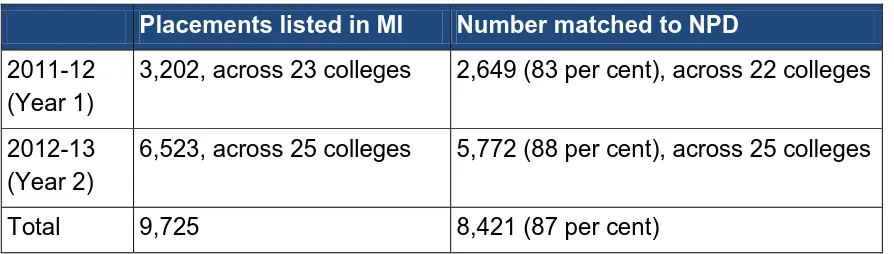
The MI submitted by colleges has been matched to the National Pupil Database (NPD), to explore the characteristics of students participating in work experience across the two years of the trial. Table 1 below shows the number of placements provided in both years and the number successfully matched to the NPD to explore student
characteristics. The table shows that at least 9,725 placements had been provided6 across the two years (two colleges did not submit MI data in Year 1 in time to be included in the analysis, so this figure is likely to be an under-estimate). Although quantitative baseline data on the number of students who would have been placed without the trial funding was not collected, qualitative case-study evidence suggests that the trial had helped to expand work experience to greater numbers of students and thus this figure is likely to have been lower without the trial.7 For example, as noted in
Section 2.1, colleges were using trial funds to broaden access to work experience to all
departments, including those where work experience would not have been traditionally offered.
6
It should be noted that some students could be listed more than once in the MI, if they participated in more than one placement. As the entries were anonymised, excluding student Unique Learner Number (ULN), we were not able to ascertain to what extent this was the case. Therefore, we refer to number of
placements, rather than number of students.
7
21
The number of placements across the colleges ranged from 40-1,742 (with an average of 389). Note that the college with the smallest number of placements had focused on ‘work pairings’, which was a model offering 16-18 year olds who were at risk of
becoming NEET (not in education, employment or training) an intensive period of work experience and mentoring with a small business, aiming to help them move on into an Apprenticeship. Other colleges with a small number of placements had focused on provision for LLDD8. Other colleges with much greater numbers were expanding work experience across departments as a universal offer. Therefore, numbers involved depended greatly on the approach adopted in the college and the students being targeted.
[image:21.595.56.503.344.471.2]Students participating in 8,421 placements (across Years 1 and 2) were successfully matched to the NPD by the DfE and so we are able to comment on their characteristics. Students participating in 8,739 placements (90 per cent) were matched to the Individual Student Record (ILR), which includes information on whether participating students were LLDD.
Table 1: Numbers of placements
Placements listed in MI Number matched to NPD
2011-12 (Year 1)
3,202, across 23 colleges 2,649 (83 per cent), across 22 colleges
2012-13 (Year 2)
6,523, across 25 colleges 5,772 (88 per cent), across 25 colleges
Total 9,725 8,421 (87 per cent)
From those matched to the NPD, their characteristics are described below.9,10
Achievement: A total of 59 per cent of placements were undertaken by students who had achieved the level 2 threshold (five or more A*-C GCSEs or equivalents overall), with a range of 0-84 per cent across colleges. The national average for 2011-12 was 84 per cent, suggesting that participating students were below national average achievement.
Age: Students had an average age of 17 (32 per cent of placements were
undertaken by students aged 16; 24 per cent were 17; 11 per cent were 18; four per cent were 19; five per cent fell outside the target 16-19 age range11; and age information was missing for 24 per cent).
8
See Appendix A, which shows the number of placements in each college and the proportion which were undertaken by LLDD (although note that not all students were matched to the Individual Student
Record/ILR to be able to explore their characteristics).
9
Note that some of the ranges quoted, which refer to percentages within a college, might be based on small numbers of participating students.
10
Note that these characteristics are of participating students for whom data was available via matching with NPD/ILR.
11
22
Gender: Just over half (58 per cent of placements) were undertaken by females,
while 41 per cent were by males (data for those remaining was missing).
Ethnic group: 82 per cent of placements were undertaken by students who were white British/white other (this ranged from 13 per cent to 100 per cent across colleges). Exploring the profile of all students across colleges, not just those participating in the trial, an average of 77 per cent of students were White (which ranged from 26-98 per cent across colleges).
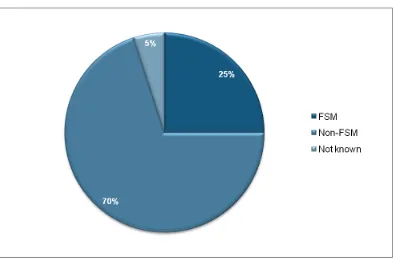
Socio-economic status: A quarter (25 per cent) of placements were undertaken by students who were eligible for free school meals (FSM) when at school
(Figure 1 below). This ranged from 13-47 per cent across colleges, which compared to the national average of 16 per cent for age 11-15 year olds across all schools12 suggests that participating students were above the national
[image:22.595.60.460.297.557.2]average proportion of students receiving FSM.
Figure 1: Eligibility for free school meals (percentage of placements)
Source: National Pupil Database, N=8421
Special educational needs: A quarter (26 per cent) of placements were undertaken by students categorised as SEN School Action Plus, while 13 per cent had an SEN statement (Figure 2 below). These figures ranged across colleges from 18-52 per cent and 2-71 per cent respectively.
12
23
Figure 2: Special Educational Needs (percentage of placements)
Source: National Pupil Database, N=8421
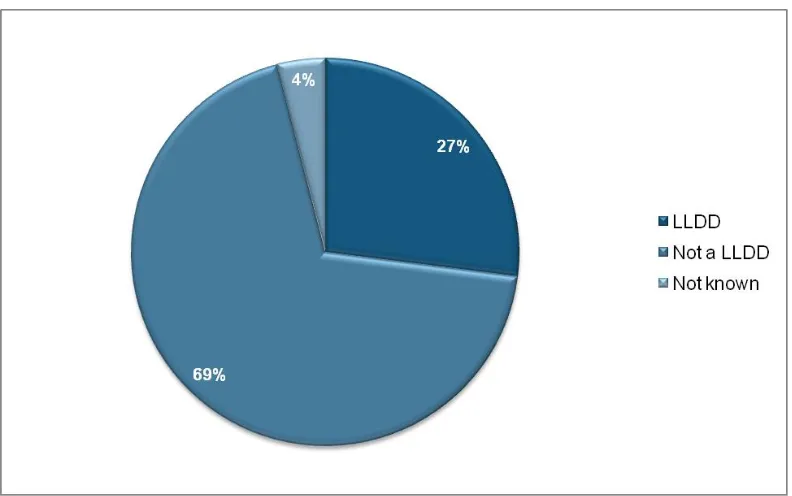
LLDD: Over a quarter (27 per cent) of placements were carried out by students who had identified that they had a LDD post-16 (Figure 3 below), which ranged from 9-100 per cent across colleges. Exploring the profile of all students across colleges, not just those participating in the trial, an average of 15 per cent were LLDD (which ranged from 9-23 per cent across colleges), suggesting that LLDD were a particular target across some colleges.
Figure 3: Students with Learning difficulties and Disabilities post-16 (percentage of placements)
[image:23.595.59.455.502.750.2]24
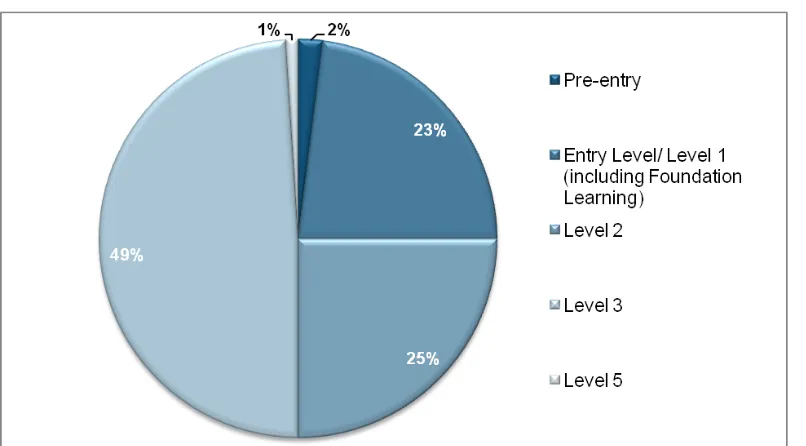
MI for Year 2 showed that just under half of the placements were carried out by students who were studying for level 3 courses (see Figure 4 below). Case-study evidence from ten colleges suggests that work placements were predominately
vocational (focussing on a particular vocational area to contribute to a study
[image:24.595.59.462.222.445.2]programme); therefore the level 3 students were likely to be mainly studying for Applied General qualifications or a combination of Applied General and A levels. A quarter of placements (25 per cent) were carried out by students studying for level 2 courses and just under a quarter (23 per cent) were entry level or level 1 students.
Figure 4: Participating students’ level of course, Year 2 (percentage of placements)
Source: Management Information for 25 colleges, Year 2 (September 2012-March 2013), N=6523
2.3 The nature of work experience
Preparation prior to work experience was considered important for success by case-study staff and employers. This included drafting students’ CVs, developing their interview skills, matching students with employers, and carrying out health and safety and Disclosure and Barring Service (DBS) checks (formerly CRB checks). It also
involved helping students to understand protocols, such as turning up for the placement on time and communicating appropriately with staff at the placement company.
Preparation was most often carried out by college work experience coordinators, so as not to over-burden employers (further discussed in Chapter 4). Although considered important, preparation was ‘informal’ and there was no evidence of any formal learning or of students doing qualifications in work preparation.
All ten case-study colleges offered students external placements at an employer site (see section 4.2 for details on types of employers involved). Across students
interviewed, placements related to their course subject (predominately vocational). As one coordinator commented, ‘vocational studies are a driver for the placement’.
25
Examples included Animal Care students working at a country park or vets, Health and Social Care students working with speech therapists at a care home or working at a nursery school, Engineering students putting their learning into practice at an
engineering company, and Creative Arts students helping to edit a local radio
programme (case-study examples are illustrated below). Careful matching of student to an employer in a sector of interest was considered important. As one employer said, for example, ‘it is important that the work experience is in an area that interests them because if they’re not interested then they wouldn’t stay’. Coordinators had spent time working with students and employers to match-up interests with organisation-type. Where students had specific needs, such as LDD or if they were lower achievers (such as Foundation students), coordinators had spent time communicating with employers about their needs in order for an appropriate match to be made.
Work experience at a country park
A country park, with a small farm as a visitor attraction, has 23 full-time staff and relies on additional volunteers. The park has a ‘culture of work experience’, linking with ten secondary schools and a number of departments at the local FE college (including Animal Care, Construction, and Information Technology). At any one time, they can have up to 50 volunteers and work placement students, some of whom are LLDD (although not those with severe needs). The park has an Education and Community manager, who felt that work experience at the college had become more centralised since the appointment of a coordinator. The manager commented, ‘it’s part of our community role [to offer work experience]’. Students go for a two-week block and they have a structured programme of work experience, at first shadowing staff or volunteers and then progressing to ‘hands on’ work themselves. They also offer two extended placements, whereby two students are placed for two days a week for a whole year. This particular employer preferred ‘significant’ blocks of time ‘as we give a lot of investment as an employer and it wouldn’t be worth it for one week’. As the employer provided work experience for many students, they felt it was important that the college carried out any preparation prior to placements, including interviewing/matching
students to employer and briefing them about how to conduct themselves on site: ‘colleges need to support the employer as much as possible, by doing much of the preparation’. However, the employer did a general induction on arrival. Anecdotal feedback from students suggested their work experience was having a positive impact, although this was not formally evaluated: ‘they encounter the public and learn how to conduct themselves in a real job’. Some students go back as volunteers in their own time. The manager felt that the park gained from the experience too, not only by having ‘extra volunteers’ to help out, but also by helping their own staff to develop their
26
Level 3 Childcare Diploma student
This student had a pattern of spending one week in college, then the following week on a placement, as a rolling programme. They had been placed in a nursery, a primary school, a special unit for babies in a hospital, a special needs centre, and in someone’s home to work alongside a child’s mother. The student enjoyed ‘the variety…having the difference between being in a family home where the mum is your supervisor, then being in a primary school where the teacher or senior staff are your supervisor and you’re working in a big team’. They commented that going into different settings had helped them to decide whether it was the right career: ‘I went to a nursery and ruled it out that I didn’t want to be a nursery nurse. It finalised my decision on not taking that step’.
A Business Studies student at a recruitment agency
This student spent one day a week at a recruitment agency working as an
administrator, typing CVs, answering the telephone, and communicating with people registering for work. The student enjoyed ‘meeting new people, working in a real world environment, and working with the other people in the office…it is an opportunity to develop new skills’. They said, ‘I’m more confident, it shows that I can work with lots of different people, turn up on time, be reliable and trustworthy’. It had helped them
develop generic employability skills, and to see what they need to do to be a manager: ‘I’d like to be in management’.
There were case-study examples of ‘extended’ external placements for LLDD, following the ‘Supported Internship’ model13
, whereby they are supported during their placement by a Job Coach or Learning Support Assistant employed by the college (often paid for with trial funding, as discussed in Chapter 3). See details of impact and a case-study example in Chapter 5.
Overall, students interviewed reported participating in ‘real world’ activities and were ‘treated like employees’, experiencing ‘real pressures to deliver’. Note that students interviewed were participating in placements external to the college, and there is no evidence from students about the type of activities undertaken if they were placed on the college site (see below). There were examples of external employers who tried to link explicitly with students’ college courses. For example, ‘we tried to give them exercises based on their college work…use of lathes when they were covering that at college’. A major national supermarket was providing work experience to students in
13
27
one college and, when interviewed, the development manager commented that they looked at how the activities in store could complement the college courses (see case-study below).
Work experience with a major national supermarket
This supermarket had supported local careers events before, but their experience of work placements had not always been positive. In the past, schools had sent students who did not really want a career in retail, so they were not appropriately matched to the placements, which had limited their success. Nevertheless, the HR manager met with the local college to see how they could support their new Food Retail course, as those students were felt to be better matched. In the company, they have a ‘You Can’ agenda, part of which is to ‘make a difference to the community’. They felt they could be involved in supporting the whole college course and curriculum delivery. The manager said, ‘we would be able to show them how [the theory] works in practice’. For them, it was
broader than providing a two-week block of work experience, rather ‘it’s been about building a relationship with the students over the whole year’. Students are placed for two days a week for four weeks. The manager liaises with the course tutor, who
suggests activities that students could do in store, which have included merchandising, displays, customer services, and organising a fashion show. Each student has a store ‘buddy’. Supermarket managers also deliver the customer services training to students in college. The supermarket is now mentioned in the college prospectus for its retail course. The manager felt ‘we have opened their [students’] eyes to the career
opportunities available…supervisors, managers, etc. They’ve learned a bit about the real world, and we’ve given them a lot of feedback on what they need to do in a
successful interview’. They went on to say that, ‘providing real work experience ….will be invaluable for employers because these students are our employees of the future’. Some students were interviewed for jobs in the supermarket after their placement. Overall, ‘involvement in the trial has had a huge impact. It has increased relationships with the college, it is a great PR opportunity for the company as well, [and] we feel like we’ve made a real difference….we were mentioned in the Ofsted report. It’s a great sense of achievement…it’s just been brilliant’.
Nine case-study colleges also offered internal placements within the college and considered this to be a ‘creative way of providing work experience’, as students were involved in commercial enterprises, some for external clients. Colleges reported that they were offering internal placements as a way of providing what they considered to be real ‘work experience’ across their cohort of students, at the same time as not over-burdening external employers. They were in the process of ‘scaling-up’ provision to larger numbers of students and felt unable to provide external placements to all
28
Internal learning companies
In one college, a senior manager described ‘learning companies’ (internal commercial enterprises) as providing ‘excellent work experience for larger numbers of students’ (hence she thought it was a cost effective approach). For example, some students were involved in media/marketing projects for the National Trust, others did projects for the local council and some did product design/screen printing for an external client. The senior manager had used part of the trial funding to pay for screen printing equipment to support some of the commercial activities.
Other than the learning companies explained in the example above, other internal placements included working in the college restaurant or hairdressers. It was also the case that some colleges placed LLDD in placements in-house, as they felt some ‘aren’t ready to go out’. However, there were a number of examples of LLDD in external
placements, supported by job coaches or learning assistants. It should be noted that the DfE question whether internal placements provide a full exposure to real work
experience, and is publishing policy advice for providers on what will count for funding purposes i.e. external work experience only.
A minority of colleges also defined taster days, employer visits and talks as work experience, and one college was considering running an ‘internal work shadowing project’ as work experience in the future. In the light of this evidence, the DfE will be publishing the advice on what counts as work experience.
2.4 The length of placements
29
Figure 5: Length of placement, Year 2 (percentage of placements)
Source: Management Information for 25 colleges, Year 2 (September 2012-March 2013), N=6523
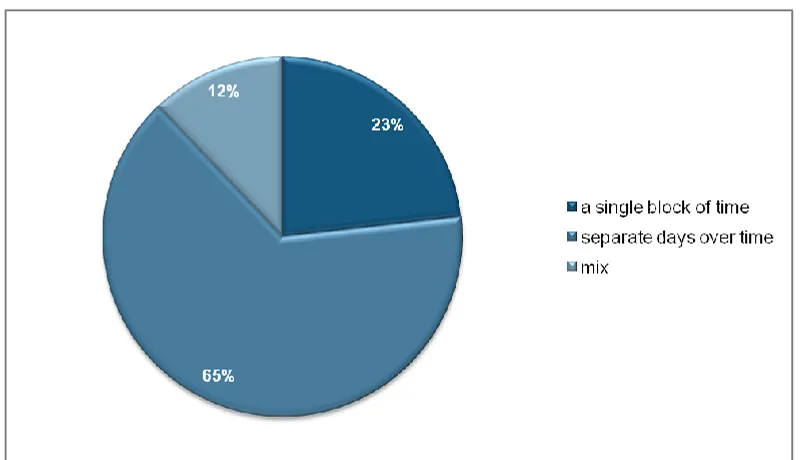
It was most commonplace (64 per cent) for placements to be provided over separate days, over a course of weeks, rather than as a block of time (23 per cent), although some (12 per cent) were a mix of both (see figure 6). Case-study evidence revealed that some students had placements in different locations, rather than with only one employer (for example, see Childcare Diploma student case study above).
Figure 6: How work experience was provided, Year 2 (percentage of placements)
[image:29.595.57.458.494.724.2]30
As is discussed in more detail in Chapter 3, case-study colleges took a ‘flexible’
approach to providing either separate days or blocks of work experience. As one senior manager commented, ‘flexibility of timing is very important, so we vary the approach to suit employers and students’.
31
3. Models of Work Experience
Key findings
Individual colleges trialled a combination of work experience placement models. On average, colleges piloted three models.
Providing extra resources to colleges to fund dedicated staff and supporting LLDD were the two most prevalent models.
Work experience coordinators funded by the trial played a significant cross-college role in managing the placement process and developing a more structured and systematic approach to the organisation of work experience.
The provision of one-to-one support by tutors, mentors, coaches and support assistants made a useful contribution in enabling students to benefit from work experience.
Cost was not a barrier to employers offering work experience. Employers did not want financial incentives. They considered providing placements a contribution to the community and good publicity for their company or organisation.
Flexibility in the timing of placements was important in meeting the needs of students’ course requirements and employers’ capacity to provide work experience.
3.1 Introduction
This chapter presents research findings on the models of work experience being piloted and tested in the Work Experience Placement Trials. Drawing on MI data, the chapter presents the overall picture and pattern across the 25 colleges participating in the trials in addition to an in-depth examination of the models based on the evidence from the ten case studies.
The Work Experience Placement Trials piloted and tested the five models of work experience. Colleges could apply for funding to pilot one or more of the following models:
Model 1: Removing cost barriers for employers (for example, by providing materials or financial incentives).
Model 2: Investigating specific challenges faced by small to medium-sized enterprises (SMEs) when offering work placements.
Model 3: Providing extra resources to colleges (for example, to employ staff to organise work placements and liaise with employers).
32
Model 5: Supporting students with learning difficulties and disabilities (LLDD) or vulnerable/disadvantaged students (for example, considering support employers need to employ young people with specific needs).
In addition, colleges could trial other approaches to delivering work experience referred to here as model 6.
3.2 Work experience models: profile and operation/delivery
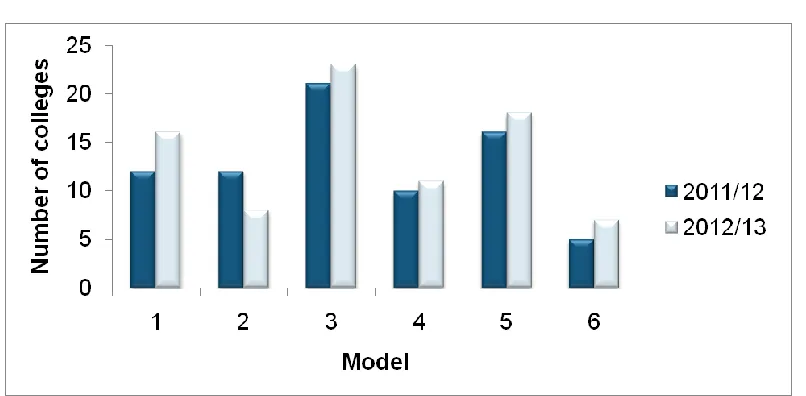
[image:32.595.57.460.255.453.2]The analysis of financial data provided by colleges revealed that models 3 and 5 were most prevalent as indicated in Figure 7.
Figure 7: Work experience models implemented by colleges
Source: Work Experience Placement Trial MI data, submitted September 2012 and March 2013
[image:32.595.58.456.564.756.2]Figure 8 shows that it was common for colleges to adopt a combination of models. This is not surprising, as the above models are unlikely to be mutually exclusive. The mean number of models piloted by colleges was three.
Figure 8: Number of work experience models implemented by colleges
33
The distribution pattern of work experience models presented in the figures above was reflected in the ten case studies. One college was piloting another model (6): its
creative arts faculty was using some resources to devise a framework for evidencing skills that students were developing through their practical activities.
Details of the models in practice are presented below. Model 1 Removing cost barriers for employers
Five of the ten case-study colleges were using trial funding to explore removing cost barriers for employers (model 1). College staff found that in their experience cost was not a barrier to employers providing work experience. Colleges did not offer financial incentives to employers for two reasons: first, they believed that employers should offer work experience in the right spirit, that is, for the benefit of young people; and second, employers did not want inducements or subsidies because they see providing
placements as a contribution to the community and good publicity for their company or organisation. Employers finding capacity and time to provide a placement was
sometimes a challenge, and ‘offering £250 to offset this is not going to make much difference’, as one college manager remarked. Employers’ fear of bureaucracy and form filling was identified as another challenge, though college managers said that it had not significantly inhibited employers providing placements because they had made the process as streamlined and employer-friendly as possible. Colleges’ work
experience coordinators (funded by the trials) and their colleagues were developing productive working relationships with employers which in some cases included inviting employers to college-based work experience events or providing training for their staff, for example in customer service or mentoring. More evidence of employer engagement is provided in section 4.2.
Model 2 Investigating specific challenges faced by Small and Medium-sized Enterprises (SMEs) when offering work placements
Three case-study colleges were using trial funding to investigate the specific challenges faced by SMEs when offering work placements (model 2). They reported that they were not experiencing major difficulties in engaging SMEs, noting that these companies liked work experience because it acts as a ‘try before you buy’ or pre-apprenticeship trial. One of the colleges explained that the local economy was not conducive to SMEs taking on additional staff and pointed out that market stall holders, who used to provide a lot of placements, now offered far fewer. The college said that some small IT
companies found data protection issues a challenge in offering placements. Another college said that it had worked with the local chamber of commerce to contact
34
training courses and use of college premises. Some SMEs, which are community-based organisations, rely on volunteers and placement students help to support their
workforce. In one of the case studies students’ placements contributed to the running of a community farm.
Model 3 Providing extra resources to colleges
All of the case-study colleges used trial funding to provide additional resources to manage and support the delivery of work experience placements (model 3). Nine
colleges had used trial funding to recruit one or more work experience coordinators who played a cross-college role in liaising with employers, procuring placements and
organising the provision of work experience. In one case, the posts were allocated to the college’s business development team which sourced work experience placements and apprenticeships. Following a review, another case-study college was moving towards centrally coordinated work experience and was going to appoint a work placement manager.
College senior managers valued the work of the coordinators who they said had extended the college’s reach into the business community, enhanced employer engagement, expanded the employer base and improved the organisation and management of work experience by developing a more centralised cross-faculty and cross-departmental placement process. Coordinators helped to match students to placements and prepare students for their work experience. Some senior managers noted that the work experience coordinators played a valuable associated liaison role internally with college staff to ensure that placements had appropriate links to the curriculum and apprenticeships. Another benefit from appointing work experience coordinators reported by one of the case-study colleges was that it freed up existing college staff from organising placements which enabled them to concentrate on developing and embedding work experience opportunities in their curriculum areas to support the teaching and achievement of vocational qualifications.
Work experience coordinators organised one-to-one support for some or all students to prepare them for their placements. This was provided by staff including tutors, mentors, coaches and support assistants. Some coordinators also provided support for students during their placements to help them maximise the learning and development gained from the experience. This was particularly the case for LLDD and detail on support for these students is presented later in this chapter. A college reported that the
appointment of a work placement case worker for foundation learning students has been effective in ensuring these students have been able to engage successfully with their work experience opportunities. The colleges were using trial resources to support students by subsidising their travel costs to their placements and, where necessary, to pay for uniforms or clothing. Other examples of support were funding a preparation booklet for students, a student’s food hygiene qualification and providing deaf interpreters.
35
employability events for students
events for employers and training providers
an online tool for employers to advertise work placements and for students to apply for them and upload CVs
a bespoke pre-apprenticeship programme in IT
DBS checks
training for college staff in supporting work experience
training for employers in mentoring, customer services and deaf awareness. An interesting example was the college which used some of the trial funding to pay for a screen printing machine for one of the businesses run by students. The college’s
departments run companies linked to external business where, for example, students design and produce a product for an external client. The staff said that this provided excellent cost-effective work experience for large numbers of students (see Chapter 2 for a discussion of the nature of work experience).
36
Additional resources
This college was trialling all five work placement models. The focus was on putting in place central coordination of work experience and to embed work experience in the curriculum. A senior leader explained the benefit of the trial to the college: They [DfE] wanted us to do for that money what we were already trying to do in lunchtimes and after the day job. We were trying to map work experience across the college. This gave us the strategic focus that we needed’. These gains were further articulated by a
manager who noted that ‘before this trial we were approaching work experience with a silo approach, i.e. each faculty doing their own thing. We wanted a holistic approach across the college to making young people work-ready. We are aspiring to be
‘outstanding’ with Ofsted and believe that the world of work and work-relatedness is key’. The college used some of the trial funding to appoint a cross-college work
experience coordinator whose role included liaising with employers and with all faculty heads about the internal organisation of placements and the coordination of work experience for LLDD who had their own key workers. The college was positive about what the trial had enabled them to achieve as the following staff observations illustrate: ‘Work experience has been transformed as a result of the trial’ and ‘work experience in the college has changed dramatically. It has given us the chance to focus on how things work best and to enable more students to take part. The way we work with employers is more innovative, i.e. building and nurturing relationships. We have also managed to raise the perception of work experience with students and those who have undertaken work experience have become ambassadors and helped to raise aspirations’. The role of the coordinator was considered instrumental in improving the management and organisation of work experience as summarised by this senior leader: ‘Having a work experience coordinator has proved to very effective. She has played a blinder as she has facilitated work experience to flourish’.
Model 4 Exploring the timing of placements of students
Eight of the ten case-study colleges used trial funding to explore the timings of
placements (model 4). Staff emphasised the importance of the flexibility of placement timing to suit the needs of students and their course requirements as well as employers. For example, a work experience coordinator reported that his college organised
placements to fit around the terms of programmes of learning, schemes of work,
assignments and stages in the academic year. Another coordinator said that flexibility is essential as placements have to be tailored to students’ requirements: some need a long period of time with one day a week (see case-study example below), others need a consolidated period where they go every day. Flexibility also meant that the
organisation was less of a concentrated operation for colleges as this work experience coordinator remarked: ‘The new variety, modes and times etc. have allowed us to stagger the placements’.
37
indicated that it used a range of placements: some one or two days a week over a period, some six-week blocks, some undertaken in vacation time. Another college reported that placements are easier to manage if they are organised into blocks of time: the academic year has been split into three ten-week blocks and studen