THR SELP•PICTURS OP SCW2 ORIMISIN IN =CATION/ TRANS ITION
An =Arida of the self—pieturet attitidee,en4 interpersonal relationship* of a group of Tassanlen children in the last year of prinaey and the first year of secondary adman=
D. Do Cooper, S.A.
Being a report of on Inveetleation eutsitted in fulfillment of the requirements
for the Degree of Defter of Phileso*,
some aspects of the cognised and the ideal selfvletures of some children in their last year of primary end first year of secondary eohoole Three measures 4* a Check List,
a*
Test of i.rson4Lr Adjustment, sad the MichlounPicture Stow Test I. emeidered to differ clearly In the degree of their directness of approach, *ere used to obtain data. about their self-pictures from 34 Wye and 36 girle fulfilling certain criteria of selection. The data are analysed in relation to wallabies such as sum and educational level. The findings are 4/mussed in relation primarily to pommel edequacy, coolal attitudes
• and
Meow,
and interpersonal relationship** 14110****es in problem areas, attitudes to authority and peers, and between the pictures of the ideal self, the cognised self and the "projected" seat were found associated withACIM011 3itaTS
In presentins this thesis I *Leh to make special mentien of the followins for their assistant* sad co-operations
Ito Director or Hi
I Reasons for the study
II A review of the concept of the telt a defining the 7 self
III A review of the concept of the self * the development 12
Of the sat-picture
IV The child to transition 31
Transition anoi changes in the self.picture The self-picture and the leerning situation Attitudes of the teacher and the child's *elf picture
Parental attitudes and their influence an the self picture
Rypotheses and aims 71
VI The subjects and their backgrounds 74
The subj.'s%) The background
VII The materials 108
Selection of the tests
The test chosen a discussion administration Outline of malyels
The Chia List
The Rome' Test of Personality Adjubtmant The agave, Picture Story Test
Statistical techniques
VIII The Pmoblea Chook List * the self-picture 186 Review of relevant studies
Analysis of the TOMMUlan group
IX itie wok's& Check List (cont.) 245 The hypotheses discussed
General note
The problems in relation to oduoational level The problems in relation to school
The problems in relation to sem
CRAPTat RAGS
X Roger.' Test of Personality Adjusimmat 313 Review of relevant studies
Analysis of the Taamaniam MAP
XI Rogers' Teat of Personality A44ustammt (cont.) 411 The bypath.*** discussed
General not.
Self.ppioture in relation to educational level solf6ploture in relation to sex
"Shift" in the self=pioturep submietu47 based om eeotiom Four of the test
Comparison of findings with those of other *tidies
XII Elohigan Picture Story Test, Analysis Part X 440
Personal adeausoy
Social and family relatiowdlips
XIII Mohican Pioture Story Test, Analysis Part XI 59 Horos.effort and success
Peeling* Relationship.
Comparisons according to sex and eduoational level
XIV The idea self-picture 601
A review of the literature
Analysis of the ideal sOLO■pimtarie
Comparison of the =anima oftlf6Ploturit and the ideal self-picture
XV Summary 636
Appendices 61b
sall-offraP177
744-
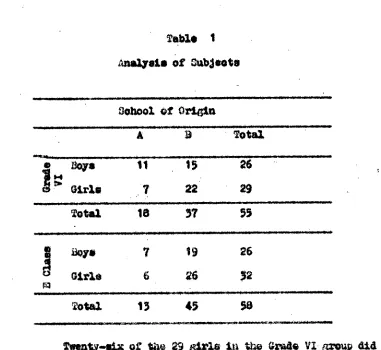
Anaiy of Study Population
1. By sobool
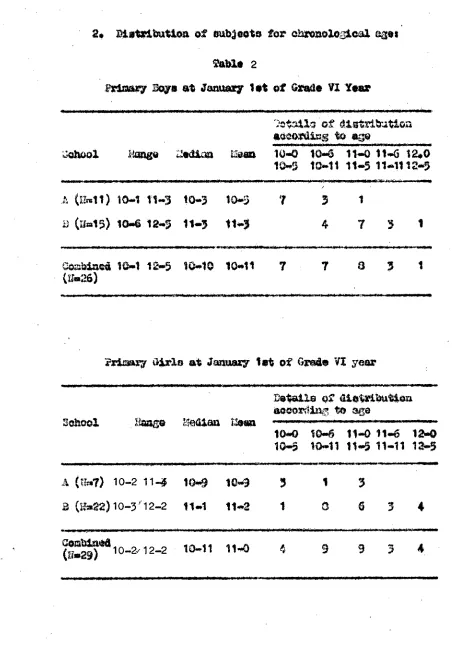
2. 41 chronological aga
3 By intelligence quotient
4,
By
maul age5+ By father's occupational status
6
By
father's oocuIelional elassitioattonea
ea
84
66 69 11o)4gan Picture Story Test
7. Story oituations 159
66 Comparison of situations 165
9, situation identifications 166
°beak List
10, Moen scores per area 191
11. Cheeks per area s cirle,Orade VI 198 12. Item froquenotes s gixts,Grade VI 200 13. Meeks distributions per school 201 14+ Distributions 47 Cat Mat 74 II gbeillfGradevi 203
15. Cbsok* per oonstalation $ girl/ Arad* VI 206 16. Cheeks
per
area; boirs/Grefle VI 210 17, It frequensies 8 Ur/si fted, VI 21118, Distributions by spohool, CA, MAI IQ s boy., Credo VI 213
19. Cheeks per constellation $ boys,Orads VI 217 20. Item frequenoles ,44s,8 olase 220 21. Comparison of frequsnoies s girls 221 22. Distributions kr school, CA, mA, IQ t girls,2 class 227 23, Checks per oonstellation $ girls, le asims 226 24. Semis .0 youngsrimbrighter 41 olgoriNbrig*ter girls 230
25. Checks per arse : boye,S (Plass 233 26. Itma frequencies $ buy0,2 $4444 234 27. Cogparieon ot froquanoie* 1 We 236 28, Distributions
by school, CA, DA, IQ s
boys, B SiMS 240 29. Macke per constollation s boysI E class 24130. Comparison
or
data; girls 249T,AELL'i PAGE 32. 33. 34. 33. 36.
Constellations compared $ boys Cbief 1;;;;P problems s boys
Coapsrison of data $ boys largo and small group data ilierarohies of reoonoes
rtogersy Siest of roroonality Adjustment
262 264 269
305 306
n
e
It
distribution a girle,Grade VI 32230. Psreast-Zavoured stereotypes * gizbls, Grads VI 336
39.
asthma differences on parent fsvoursd stereotypes $girlarGrads VI
337
40. Charm Ashes a girls, Grade
VI
339
41. Item distributions : boys,Grade VI
347
42. Paront..brioured stereotypes s boys,Grade VI
358
43. Eating differences on parent-favoured stereotyper 8
boys 'Grade VI 360
44. Qom wishats I boysyGrads VI 362
45. Item distributicas a glxls,B class 370 46. Panant..favoured sterriotypas agirls F. elas-a 'au
47. RatinG
difZercases on parinto-fiervounk stereotypes $girls,E oleos 300
49. Chosen wishes $ str1e,2 class
382
49.
Item distributions : boys t i4 class 391 50. Parent.fesoured stereotypeo a bo,yo,j class 399 51. Eating differences on parent4avoured stereotypes s%ME °lass 400
52. chosen wish**, $ boysA *lass 402
53.
n'eamo wad
distributions a boys 4). girls, Grads VI 417 54 Uereas and distributions a boys & girls, 1: class 416Elobigaa Picture Story Test
55. Conflict and co-operation $ bop 472
56. Conflict situations s boys, Grade VI 475
57. Conflict situation* $ boys ,B class 476
50. Confliot situations 1 girls p Grade VI 482
59. Conflict situations $ girls, U sloes 483
60. Conflict reactions t boys 487
61. Co-oporation situations s boysI Grado VI 501
62. Distribution of themes 512
63. Authority
veradm
non-authoritt flux= 51267. Ps r relationships s girls 563
60. Pstrr relationships : boys 575
69, Relationship ratics s girls, boy!: 583
70. Relationahlp ration : Grade VI, .1 class 586
71, Thom frequesole* $95
72• Compszison of responses $ bust 596
Rogers/ 'boat of iMrsonality Ad tiustsiat
73. Ratings .• cognised. aad 141%11 oaf s &iris, largo g7'4, 609 74. Ratings cognised sad ideal self $ girls, small
apr,
610Rating shifts $ girl*
75. 616
76. Rstings =vista and ideala1 s boys, lease ge. 621 77. 1:atin o co4nised uad ideal self ; boys, small a't'. 622
78. Rating shifts $ boys 627
79. Signifloant slifftronces hotness acznizod and
ideal sae wo.
TABLE
Appeaumus
Appendix I
a9. 11b4ects of the otudy 611:
90. Olatteliloation a occupations Algendix II
67q,
91, Check List it constellations 675
92. Cheek Iiot - sex different*. 616
93, Check List - sex differences 011B,
94. Check Idst - saboolo compared Oa
Apmdix III
55. Zocere' Test -rating ahitte $ ciao 6fli 96. Hose& Toot ...retina shifts ; boys 682
Auendix IV
97. Analycio o2 D1=32 citations t boys 683
98, Ano-yoia of i.Z.IT situations : fAv.la Ari.AT
99. Analysis of 11.F4 themes s boye7 - (47 100.Analycia of L,-7,0V themes : girls 695f 101. Pereonal adequacy thecae ; boys, Grade VI 643 102. toroona adequacy theme : bays, E olaos 6q5 103. Personal adequacy thomes : girls, Grade VI 676 104. Personal adequacy themes * (Sias, E class 00
105.DepTivatica eituatione 1 atria, Grade VI 6174 106.Deprivatica situations t girls, E clam; QM
107. Adult reactions to conflict : boys, Orode VI %06
100, Adult reactions to confliotf boys E Plana
val
109.Adult reactiono to conflict t girls, OradO "VI IQ 110. Adult reactiona to confliot I Girls, B c3.a00 gal111. Hero reactions to conflict 1 boys, Grade Vi ih2 112.Dar° reactions to conflict : Wye, E oleos 116 113.Miro reactions to conflict : girls, Grade VI III 114.Hero reactions to conflict $ girls, 23 Una; q13
115.Hero reactions to conflict ; ciao, Grade VI 114
116.Bare rotations to conflict t ciao, 11 apse 4115
117.00-operation themes : bop, Grade VI 1,6
1186 0o-operation themes : boys, E class elll 119. Co-oporatIon thanes t Girl°. Grads VI MO 120. do-oporation taenes t tArlot 3 class (W.
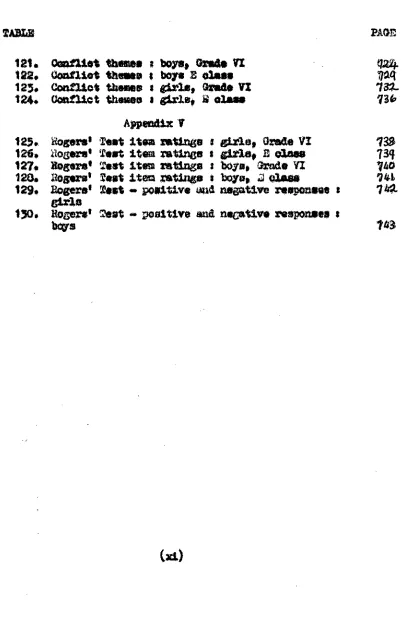
[image:10.551.65.518.29.701.2]122.Conflict themes $ boys B Class lact
125. Conflict themes $ girls, Grade VI 13..
124, Conflict theme $ girls, S oleos
Appendix V
136
125.Vogersl Test item ratings 1 girls, Orsde VI 139 126.itosers' Test item ratings 1 airlat
n
01000 73q 127. Bogus' Test item ratings 1 boys. Grade VI 740120. Bowe' Test it ratings I boys, LI class 74t 129, Boars' Test -, positive and negative responses 1
girls
74
150. Rogers' Teat — positive and necative responses $
bOls /43
[image:11.551.97.500.66.684.2]What 10 beet for a child remains 4
constant sours. Of enquiry
argumonts Demos• the child le young and inexpo 'need he ke an adoquato baokground agminet *high to maks certain choices leerily. He lobo foresight and the adults, feeling of the =sant neooesity to acquire certain habits, attitudes, skills, endinformation if he is to taae confidently and preparedly the demands and competition of adult life. So it fells to the lot of the adult to mako oertain *haloes for WA. Some of those choices relate to matter. of 'Auntie% curricula, types of sohool f Standards of aohievoment in sohool wort4
Over the past 20 years in Tasmsnia there has been a history of experimentation in ettmaote to match education end socic.soonomio demands. Sohoole havo *hanged externally and, one hopes,
intornollyp especially if this cm* there has cos* a better under*
standing of children and an increased capaolty to use the ohiles crannied. and motivations in the process of structured (education* ihmalnation oystems have come in for much criticism, he policy
hie oscillated betwein m4horonce to an atmosphore ()frigid, fOrmalleed,
relative pernicetVet peXt*p oven relatively teacher-detached, toospheres. Maybe the atmosphere has been not oververmiosive
e in an island geoirraphically remote frma the LAU centres of western thought and educational Wimp in Damp* and Atomics, (Extremes in feshions of education tend to lose their edge and flomboyaney by the time they attest the local eulture. Out of the intonation of overseas influence end local need hes some rather a diversity of Neneeere* the Area Scheel, the modern 00boolt the *nietetot.typs esoondary school. the Tesbnical Cehool, the Matriculation Oollegee the coeVreheeette 3ehteeli Uoms of these boo semi their pnrpose mad passed outer fashion and uses or been part otaunion from which has sPritagagiaaa with a different chareeler if not a different moss And experimentation oontinues though one exeders bow eccurately the totem materials at the heart of the experiments • teachers end children -"understand one another.
tØ matter what pattern the aOhool takes or Whet ts the content of the ourrioulum. the Mmosphere of the cohool and the peyehologioal developneet of the children depend • . considerahlY On the
human *lemmata in the eituation tao teacher and the child, and the relationships between theft,
.14t ø ii 4 to to ten tiy lord,
tiumbor of quay one, tame of whioh it in pe wUi WI tad,
te net sal:qua, by thio AU*.
Aida* 0. do sow $1,
1420or IgtUAt 11111 SO *Wain ation5o
ti%o obild fl*wove ANA& beiog aeoncat the bigicest 4itiitar04 j.
eatilas tO fa446114tb. 141143,04% IA tit0 Oalaboli :Ma
havINn eotab1iemwW1 piano tonoweat * Moab group of wohooleatoe,
cAlftAtkai. 404 U
W m.
W MWV41145 WWWWWAAMOWW 11WWWW 4/. 9ir ,41.0 It sitg. I avonwil ttv ITAtirstisi grow of, sohoolzataa■
unotler patter% from
porNanent toother to betog
of *dttuutiet to
class wiVs on*
120;0v:coal or 4 414444. 4■403t 03.4411
wove. :row
a he
wt 2; a Iwo =oberat teantara Wee are w000linlistes eaims
from holzo a &AU with whoa the tohaher ia 11/1614Y to bo
0444th:rod, to belxic a oblid who :Ay ealape the Ce of al
over: talobort because o telabor Does 14vi f4;2rV2V 944 or it, *
persamently atteohed way. In particular, 4242 far ae worse tug
eueordant atteodthi trar the obildrart in Ude study, he novo*
frog a rather *s4**tax Litc oZ iiiittioe en day ion; la - OW CLIMS.
roOM, to a fairly olobila life eontainiml within a largo :whoa of
aeeendary 000014 Ile
ammo
fron a school which its awe* entirely urban in population, er elternatively, :roma schoolwith a strong rural component, to a 'reboot with *mixed though dominantly urban population. (2he *heap is probably more markvad for the rural ohild l eince, although the sesondory onbool Population in nixed, the urban element still prodoninstoo.) Ho /AY b.
required to travel filithor and longer, and by buses whidh leave
at only one strietly appointed tine. Ile °lunges from being nne
of a peer group all doing the sane course, to Wing ono ng OM where tbs members of his sub...group do the sans course but different
tram the courses *their purr submgruopo 40, though taco hoW mot
occur so mob in his first year** thereafter. He moves
&Oa
being one of a soNcalled homogeneous grmap in that thy are all in the one classroom and, rogordleas of level of ability, are
following the sane curriculum at the sane prosoribod Wed, to being one of a probably mare homogeneous group Am that the usmbers are et more equal ability, but his group is now separated out and
disiinguisithed
or
a label or by the mutant of its °cures fromother peer groups; tram being one of au uadiglirentiated group he becomes differentiated by his group membership frac other groups. Ho coves from a whoa which was potentially comprehensive but
5.
la$e administered thet le, be is required to recosnise dieerepeneise between Woolf end others$
as, the adults, suddenly pee his anew la this; dUf.IIOM contexts It is oberwAteristie of the imondary *Choi teacher to oonseat on the mallow and inseturiti Q each =wiser's inteke, whereas the yrisery school teseher is aeoustomed to refer to the abildren of the smolor primary °lames ...and to ace them as °big boye und °big Orlon aad to expect then to sot responsibly as the moot "extown•np" of the school population., 2he attitudem
or
the teaohers of the two types of schools are different beoausotheir frames of reference axe different: the context of the child to different before and atter the Uhristmes holideys. Does the child ewe hiaselT an different? And If **, la It bemmo his frame of re.4rence, too, has altered wish his obange of sehool or becauto it is the natural autooes of his physical end payeh..
olol mataration? It Seems probebls (and in fact studies
have shown it to to that the way in tlieh the chdld ases
hiamelf, and the layin uhien the teacher sees May aey not alwAVm be the same. The tem4mw guy easily displace on to the Ohild his owa concepts and emotielos, for example, seeing the "good" confOrninG child au happy vi thou0 he ney not he too obeoauee it ashes the tesolmm ham to have such conforming behavior in the child,
thrust the child into U4 now tram) of reformats which may well
out= hia to become uncertain of hio payobolozica 14=tity and lead him to =vim nail =vino hip oonoopt oC
thca to tho con +vita how to it dovelcsA aea
influenocaT
CHAIM
a
Pevie of the Concept of the lelf tDefininj the Self
"Au a theoretical oonstract the aclf i1440, obbed ond 1:lewed with the currents of pbilceoydool woholoGicai pondering sinee the 17th century when Deseartes firet diseumsed the 'coat** or pelf, an a thinking substance (Uamechtek, p. v). awe the
1940's or taoreabouts, however, sepsychological thinking haa ere4 11,,,,m the 4nrAnnAtein of bahavlatui 4114 3Nal the
handling of 4Wficulties experte4oed by the intrespectioniste (al,Sardt 1349), the ealZ 1140 beeoLle el Seeal interest in
persor2e1ity Ileory mad the explanation and predlotiou of auman behaviour. 4ad "since the self-eoneeA wee accepted by the behavioural ocie4cee ao ocaetruet worthy ef
Aore than a thoum=nd oties have been publichod in vihich thifl
was a :Cactor Rug. curprleingly few of %nese deal witn caldron"
(Layer, 19674.2491). •
;ho self* according to 411lata Ja4aeo (1890) and LvAish. and
Alf41ieh . (1958), Z:al be viewe4 in tw* Cletinet ways the self as the subject or procer.io or QbDcz'ver tie self M&J. the obSect,
a,
(2urphy, 190, p. 996), .0 that is, the self concept.
The otlf-ias-subject has _maw aspects: the bodily pelf,
tho "eosial oaf" (ea, 1934, p. WI), the plen ty "ozpirical selves"
coabincd, coactituto an ego or total cognitive strulature
as postulated by farbill (1)52) &Id by . 4oterif, M, 4nd Uentril, Q.
(1947).
:jr pgycholoniste strolls tht concept of the nelf tie the
process. ,4o Bert000t (1945) tt is "a totea unitary aetivitY0"
"a psycholosical self," which in divorimineting aldi selecting
roc tho motel and pbyvical environment with which it interescts.
develops 4 pereonallty and tp. For WADI:states (1996) it is am
"esplorine,epontionsously expressing 8014 finding =natation in peraoma being"; it is "the °antral being of the individual"
cot defimble in words* not truly divisible into ouch parte am
self concept" and oideal-"self" : "behaviour .le self."
The self-es-sobject alto has been categorized in many wAys anti abstraotad into mem aspects. There is the "actual self" of Horny (1945), a psytho-phyaioal being bath consciously and unconsciously motivated, Cattail (1990, p. 696) presents 4
"real self," the self stiohl at his mast rational, the indlvidual admits himself to be. or Cattail, self is the cornerstone of personality LInd has three aspects, the felt self, the ocntemplative
self, end the structural self. 3ymonds (1951) sees the self as
am ebjeet taa4 to 4hgra eertala olouoaW au4 zaw *ma ratilwx
E.4.3 tua a a ailag4W acastraat, Util the COLT 1011U4s0:1nt
.24
a,
object in rtlie ladlvidual subject riwealed to W.° c-4a oheerVatien .as the 1.dentica1 L44 persiateat ceAtrs a pwatalloGloal precoosee
(J-71-1,31.10h E74.1.0b4 05), Ltr Jung the realitlea
O tIle ooli iotQcArll tuaarda Aintoinalvtannl otrlimo
(coparn Carl 1or3, se117-actml1ization 1), t;'ut tt 11 alc0 the
aolat or proneol ealblestholadivldulal to riccoreloo
him9o10 an mique 11& ;40 43171C a unique mlaticAohip to all life
(Jm7o41, 1942). To aaing (1948)0 "the uolf6a0aqopt $41 tl-a rasp
wItich each or= rutic in oraor to nn8erot=4 Wce114
eclyAlally durtml rzoc_Alto og criao 020i.W C:rVItto 19591P.44,
Levta (1935) tabao a phylarlezeloolcal appronch to the coil?; the
if is a perceptual oblect In kield orcated by tbe oaf in
:io ;Anieoption a hio mad; the self lo elm OltaeoPtata tntitt•
Sywac ank Ccobe3 (1949) also reLfard, a pcnonsnolozlcal self as tho evolve o0 hoblviour. Tito phoner.nnolosal solf la constituted of all the parte of tho penencaal field whioh the In.dividn51
ezporioncoo ao part c4 or oharaeteriatio of hirosolf. Tao
coif tu contiaually rodainiurl itsolf 0. that los it is beth
proeoes cw1 ebjcot thruAlt exporisnee whish enables "mere
sioquato 42,Vgarentiatioa t4o phenokaal sol2 and it roiotioni.
505) denoribes the *Volution Of the phenomenal self as leading to an "organised configuration oi perception* of the salt wach
aro -odzie3lb1e to asereness," eh* phesomsnolOgical belt hAus
ttr6 aspect*, (a) the oosnised e*lf whICA contains the
"perosptiole of one's oharesterietice and abilities," (b) the °then-self which, like Jtranee "eccial self," result* from
improicns ear.vi*cd&jothe4c, Lad (c) t:no Lival &1 ii
coposed of the coalo c.mi lacele 7440,1 are perive d 40
L1Viz:3 po(gtivo or racative valcxoc."
1:o the self*o.aobjcot ..Ay be roL:araed by the
nalt.ac-oa400t Dereeptaally0 erraluntivaly an aa ooji:ct a setiteal• or
as aa object to be defo=ded or aahaacea (.4zoads, 1051; liewors0 1951).
Atrter, the cognised self or the salf..3ietare z4Ay be
distorted conzeicauly (Roaers0 19510 .0. ;05)0 or by uncovaclons
factorn0 in. GA. OtteMpt
to
*WV* UTZiety, IiiVOSOZVV telf...011te0114und prevent iseenaletenties int self victurt (..!olfito 1)45);
co tn3t between ornesious tad uncenceious ovalaatio2 of t14 self,
ore iu diovrearest. (2.he individual adopts a "self-ojateor of defoTioivo acueurs and control:3 (.:LtIlivan, 1953) ‘illich prevents
him Ai= Qa'Aitr realistic objective 3udi-fments an:,2 fiva seeing
the contradict& etvreen *tat !ao rea11i ie and Ivhat }ii
Ogitit= IWO 110 104
It 10 the study' of tho phonomenolojoal coif aud the
CHAP= XII
Thu Devolopaent of the Uelf....Acture
The oaf, whether the concept io that of the eelfhlass.
subject or the self-asoobjeot, develops and changes,' aid as
the self chwagee iuteraotion with the enviroment (the life•
*pace) also ohances. Boanuee this is eo, understanding atd
prediction of behaviour end, even more, the establiohing of a
olipatc Walsh foetere appro2;riate developmmt of the oaf,
Wray* havint: a knowledge of the subject's ooneolous perceptions
and /ale rAationnhipe with hi, environment (flocerw. l et al s1 1940).
The theorist, eddcator, or therapiet of the phenomenological
personality cohool has to "assume, ineofar as he le able, the
internal frame of reference of [the subjessil. to perceive the
world no he subjec sews it, to peroeive (ibe sab3e013
himself as he is aeon by bluetit" (ashlers, 1951, p. 2)).
Zn endeavouriN7 to enter the cubjeet'a frame of refemee, his
*ttmtion to focuesea larzely on the subject's self-lieture
which to the eelf.ao.mobterved, a subjective phenomenal construct
(Zmith, i. 30, 1950)4 The self ictUre is the self of "Alreet
awareness" °ince it iv the subject's own view of hie own
13.
conoeptual pattern of pereeptiOna of ohareoteriestices and
relationshipe of the "I" or "Ue". together with Values atts0he1 to these concept*" (Iager*, 195111 p. 49a):
There arep however, certain perSeptione which sr o denied &serene** because they are unacceptable to the individual ag
part of as 401.1614(Am,', but ifeiCh caw, eoVerthelesol Do
perceived by the-ealocker aetkert4nt in the enWoctle U.,14.1vieur
and as vart of tho onloOkerto yieture of th cubject'o nolt* The subject aew accept that tex' o wAy, thol,u4x ot acceptin3 that he le like thief *owl claracteristico aro not
IntroJected but aro vart oZ tho "other" nolfe Under ocrtalu
oirounetancee, or throuTa ohonges in tho Pheoe=enacical acid, the aubjeot.nv CODO to eocept into awareness 3ue4 provicaelg
denied zzateriali Oonelftration of ti developaent of to sole..
pioture choula, therefore, include conidc ation of the=
potentisliticm of, and unconecioue infltuncoo en, the phcnemaal self.
Th-J followins- theordea Of develexent of the self derived front ob3ervationt mvprirlzento intervitne, and therveutic 3ractice
ahoe . that fram a 'ow:Platy of eor1mmtal back:m:11n1° fatallar ideas
of developnent of the self havo oVOlvodd
1 OW' O ill, .0 t U1.73-11-11.7-1co of
del! of. aNro:Aratelg
=port (194,1,Acoutminr. the "total e0119so -of tho coul
trj
44
0
c.„.
4
54
0
aro,
,
a
tzs
•
••11
9
0
rd
2•••
tg
-1
io L-.-zattiiatela
tie1laZe3 ttl
41
,
0
gm.
0
43
CI
0
5
esnelfpXO =avow oisuslup Sq 30 TutAideusyp at tutoadd,
onotp samOv aqs au Tint 4 iociir Rotuan000 yo est00
odoTaAop otgotwoo YJUTAIT$uolD uT eg000no xo qon so moons
ova =V
%vow; ovorso lantana aw Apmpto o$ 40pao uT
0400Tatuntt Ivnt ;KT traelot000p xo atilt
rtilleAp..014 qtrA V/ MAC ' $ V4
sowoTtrammo 01; ;DIVA
rtIm
T1370 u0 *Pagods9
cm stop tq qprIffi Amu ac000r0 ott! •opeovr Jo uoTtoolme/2
00 Ift001, TztozwooTp 00 PnT0t10x
Tram feUX00U00
oT pp '
%sow:coon pug 4soxaoo 'coo oe4 emoun q110:mmT Puna *gil
t
*nee ,To zuveltorpasp 00 uT uoIltoTurrroo TwaessodailtuT
uo
0Wrriartla.
00
000nd 011 4vm um pease
VV427
ex0mTp upt/ir
trATTrur, 4ovu tssup 'Mum xo *No; 0TA RuTdeast
UT
ATTIE zo 0140,4 warm odoTa00O tarc AN.T.ToTs0tivo arm. sox Soo uso ow uTooATsul
Imo ilapotoTs0elc0 4:01031
4MTP Imr ImIPTATPuT
LX0A0 olour (Turco au taamooldioq alo74 7o oontoom noupTaTpuT
ut
PO
T03 totatpuuT :To ItTsoTsoxal om so3 ototustd000
0; JO
4,
4T*TvWdro Wolugt 0$ 2uTAT1 t et I3TA$14 tonoad vut mom os
1**ATAa at uom ca vau oZ,
art
soul en
AVIA;
egl$ 'MU&
umotwors, VuTloTo uT nand oiTIMPIATMT era
X0
grrelveis rue
#
tITmiX natio ous
;0
sOrottsoamT 00 imams* #ndkatne sox'snOv ooseqoano owoolsoluT 00 pond orom nottotrotyq044 asum) Nosimiattaxd
Tou000dwo$4,tr; loot TtoTraoTcw itupgs sooTougoo ortee
voodolaurp o0 30 40sopiall doucooe sonaS5 •10,0 0 Top
sdoTomp or 00 $irpliTit Tos; *eve lingsS4oTlyaoo era pus
his needs, ao 001003 to attach a, aellnz of "ilood" to rood-
eatlareation and to those aotivities Which hang approval, and
a fee11ng et "bad" to activities obich result in a lose of senae
of well...being and security ani are assooiated with fliespprovel,
Both the notber and the self are alit into good and bad feelings,
a "goodume" who is rewarded, and a "badges" who is diewroved.
Co ear4 self-awareneas axiom from, and in eawolated with aaxicty. Thereafter it is charesteristio of th4 self that "it tondo to
maintala its own fora anti direction as a aye= Whose bailie 2unotion it is to ViDia ankle ...at Any experieoe whlo4 treat*na to disrupt or conflict with its organisation provokes auxioty and
ieade to behaviour cal ltd to sialigy Ito 41 ,0114440 0"
(Brom, 1 961 , IN 166). here le, therefore. a eplit between whe
"aelf6a7etem" w1104 in the observable 'wart o:Z the ;= ./ersonraitzr
and the "true self" silioh is "the core of potoatialitice exiotino
from the beginnine whether or not thvi hove been developed.
"Whether or not the individual in able to aovelop truo pelf depends to oonniderable measure upon cultural fat:stomp aim) nau
le moulded by bin culture, and all attavto to bmakwith it
produce, waxiety" (Brown, 1961, p. 168). ale self of:v:110i one is aware is the OW4 of "reflected appraisals" derived from what the Individual thinks others think of bia in the fonutive years.
Lrikaon sees the aelf-pioturc as the outoonak of rcycZlo»
17,
the aelf-pieture .jr0000do through a series of oiaat iloy41w-savial
stages tm the course of "devolopiag into a defined ego Taithiii a
20014'1 reality" (1)50, p* 203)*
Mese stages ran3c from trust versus basic mis,.4rust9 thavaSti
autonomy versa* shams And doubt to, oventua1ly9 Genorativity versos
station at adulthood, and finally to ego intccrity vorous despair
in old age, 2hea,.! steps are "preJetermined in the ban organises
reodineso to be driven toward, to be aware of9 ohil to interact with
a widening social radius" Viamacheek9 19659 p,
An csoentiol hypotihesis in pweho,ionalytio theow aad approach
is the existence of the Vnoonscious Qhich varies ia 15ca21in,l; awangst
the various poicheaoalytio thaoriee9 but which, for 411 of them,
vakos an important contribution to the develop=nt of the sole
and the self..inage• Zor Vreud the Zacor..abious any bo ovated
with the "unvorbalicable or "unizzarinable" (ao(mn 4.slory9
19659 p• 5.9). Zo Adler toe Uiloonsoiouo is not a different
inetinctual energy ayeto4 but zay be unawareness of activations
and of tho moaning and significance of behaviour. To ;luilivon
it may be on inability to understand the full twantaz of tho
situations or it mad' be a disregarding of a situation b7 the proems
of "maleotive inottontion" and wilful 21ounderstsading or disassociation,
tuning no# to the lose analytical, incliaed theorists
*motel Sottinc c Itixotc'a ocva-macaticp, with °trier?, cAnee pothAmme ocattitutil. c.2.717 ;you.!) tiv:ro mot 0.avo1vi.):=y "cOlven." These many sevez aro craa%Afly ,..':ynt:xml_E:ed into 2 'immoral ()thee shiah is the child' , trzn Gazio2o1 ralJ ctt ioco7=ption
of hie self. ho self in both thottae ”I" 171e is the actor
in this deVelorinzato aTld the "It" 'N.19 lo tho re3oltini; intocration or the roles, aroort (1:43, 1953), states' that conecitmaneatt
of Oa self in ta di -acat ocUovowito :arliest oonnoioummees
.10 devoid of celf re,for&rloc tho yo afent seeas not to be aware of binwelg taf; a sail ho lacl;s a c7bodi1y" or "nociol" aelf. Zhc pelt derelopo t7,111.4kah ricar/J5ijcollations, throuzh the repotitlaa o? on:7cricmcee, i throttc,h ancrkle point° such as having a nw.. vLt c; a nocial contribution to the establishuwat
of identity. bt=14;: o.,7.nro T:414.1 :wro ntratv.71e 4:4n1; of oontsst ocoif =4 enter vorld. t leads to "position within a mcial :aicrarclv4" '212 1E tare e diffieult to raint.iin t lot alOno to ezlhazi4N. Inc=petibilifty within the eelf.plotaro v.:741 ta ttc) rolationthip ractmen the self and the eavircnmft in painZal aad rot1oe iu1rewtrioturing
of the
•eiroturri.
tall experiences of t,aini fruntr,s4on, eopeolaW of social ricaloule# alu:aler aWate state; 02 eclf.0 consciousness tit leave per-lIaraat 0 2e0t3 on tt10 404 Allyort19.
perso3311ty ead inolu)o Uonly oencet tell' identity" aoif-e3teextv
solf-oztoviont rtin1 clf imfres J.lad the fuaction
of
(1(,'Act) I ca ovolvin3 into
a cl:-.L,...o:■,..;..leatory the ,i1r,t1 ,.,:ry Licoo 7rtyr.timt in
the [,;roaoa. 11V:Itifieation %vita the ,a.,-rouD
icy stronfJor LIOtivat6r. , then self azsertion.
'.ick-;et (19409 11)31), vontulateo developLeat of a
"p.:;r3or.a1 n_yatez."r coaâitf ineorperotes the self.
5.1hc "persanal :qcter" le rather SiTA Z'ritr.sonts Lotion of
LIfilrloprqc.:A of' 'the the first otsoc in
nroceir."; of; ::"Lreei,41ity i':ovelopr.tent, eet.:..leto lifierzr.ULiting
the tx4ily ec:1:? a er.:.--tfttsien of objects, ona
oontrootin.',;; oAvtIva un.ivnroti with "the intornal low..dised
tIe 'AlbjeCti C.Z.1 4:14. Initicaly tilore in 1-'1c ‘-neo.e of
''4'.4:41 as a source (3.4' ocnoor.t-'-LLotor
"over:it:1.r t it lo centred. OJ he
L'ubjectio on activity" (1)40. In V11,-;-,3 soo the1..%!&L',.; io
atpdoriltria. rir:1 tic raali %-w uor.).1utoo aintorted to
Lit in !!i,t iii iiia,Jtivitip 'art idtzi t of 1.1.-Ics
una lucre:ALA Ozill inconnunietion :Le beoomee ',AU- tooeLf-
ev,:.1w--t1o= i u li11.1t, of tee .sueet.q)ses !=nti r■Ii1,:tres •Q:2
gotivltl. 2omaa1ity results fro. 3. "to LIAO -AoTlio“, or rath.or the
reality, the self becomes decenered and co.ordinated with other
factors, mach as values and rules, into 01 "personal system" or
personality. In the mature adult reason maintates a balance between the intellectual and the affective oomponents of the personality. However, when disequilibrium Demure, as in
adolescent», the self again becomes the centre of its own attention. "The development of the self system reveals the seas progressive objectification which occurs with respect to 031yettool realite On'indt 1967a P. xv).
34Vgg end Oonbe (1949) see the self as the phenomenal self
constituted of all the partsof the phenomenal field which the individual experiences as part or charsoteristic of himself. It includes the moraundifferentiatod parts, those Perts each are seldom in figure but are part of the ground of the phenomemologioal field, The self Is both object and process, and is a learned
perceptual system. The parts of the phenomenological field tsPortant in determining behaviour are those pereeived to be ohareaterietio of the self for example the physical self, the mantel self. Development withia the phenomenological field occurs as new facto are discovered and answer to the strength and awareness of the individuals need. The individual has many
21*
tifferently, &JLt.lo too he. utlil °hal:7o hic calf.opiotare. 20t
etr2-Arontentra ot therotbro, Itixe
equal t.vortarloe or ferwe t evolcznmt tIze
ocitle• 'ato YWCA I.L.S;Ort:rlt :7„L.-.:«t`;017. here Vier° 19 ao
need, iao at • fotlation ,•,11.11 WAlef
cauttatilcirt 0:Atuno the rielf, '7:he irrilv-icit1, ti'lereforc:,
tide to ilevelel, echot ,.-:uet vr:"Lich bec37o etaiAlizc -j ona te-DAracter.•
istie of hie; behaviour vaa ato Lir,d to e.1.6tavo
aocordaUce with tic oonaeot tInt the V.:enonaaolc:;1031
coil givos oonsiotermy to %la beInvio•ar, Tho e1lo
organination hunt up .!,'"x`0,-.1 ti-V1 e7leeltaicao c.ni at
atv titio 410 a cortain Itradlity u to-,Tioaej to roniot Char;°.
rcallt4r roluiren certaln rolog o7 the oid these
rolou ti tirn co= to cAt ce.to.nocac bu iIuUE.K1
Whavicar 3n:1 in 07,1f-roo4cout, iZTLFM t.11„
between the individUalen co1f—IL:1*j°, col;?-cralmttiort Vito
cultural °valuation (rival iti lie Trill tend 'i•;€ r-.1° to
• . confore to the 011,/lifg1 tint others !Two (i_9:1 no reach
towards tt, atzto of bllannor o:: the self.
D. (1 954) ) e i CCM With ntj ui Combson
the contentioa bot.,:ntiour icinteaded t it4I.aitt
the oelfe warko tram thi ;Taint t'ia t }z.e..y.11 car: ic too
bread a tnot, Vtat "trolf:' akiaaLi :ccatriatc. to a IAQI-4•.:.c,w41,
ocsetruCt referrim t , the observintl: ilia:leas of the individual.
theu conton0 tITA hobilvitur oe total organism may be
seen as ega-defesive but not secenzar117 an salf-leeensivet
that ie. the !aldividwl lc cezecrucft wimintsisin7 and
enhanotna the e!lo rather thm tbr coif, since in togs beha7iour
ouch as refrrestve b(thaviolcr 'on c can sirspor:e that tio
eolf is enb,aaced L. av way. „Itanzes in the salt sten irosa
the fortunca 0Z tho e30.. .3s1th a:molders thrA a ptmoly
#henoacmcloItcal ls ilalequato to aceount for all behaviour,
"eines neither., all t7t. er?ectiv.e threats to tho ego nor all 'ishe
degeneva aGatnet thozi arc re,7isterld scwrately in conscious
MWS41140WW1
USSere l (19511 1951) acncept of it nolf le that o2 a
phensmoaolo3la:0, ackl with 3 covrovw.1 "pattern of coacalraone
of CCtriJC9aad relationellipo o2 the "I" or tae
together with vulues attached to tIzess concente." It
dual course - (1) ,aireot n=yeri#noct (ii) iRt;ro3catica & values
as if they wore eAricces. lo, tuurefores doident
O1 luteraotioat tht,. e.-TirczrIt'ht JLI,..artleally on iaicractica
with others. ',ale k,rocc:7o of davolozvat bezla, oven ia the pre-
verbal period f.md v;.?ailc r000 concepts two "aon-ver?..!al" and max
not be present V.a corr.‘.;31.=nnr,ln, is no barritx o thAr'I'aitot- ioning as guidist rTlaalples (1951, p. 490. ,easory pepoeptiono
23.
initially appear to dominate in the formation of phenomenal
*elf but social evaluation 0 , that is, evaluation by other significant
people much as the parents - soon assumes great laportanoe and
11447 cam into conflict with positive sensory values, so that the
individual discovers and experiences inconsisteneiss in the
pelf-picture, and eonsequently feels threatened and suffers
paychological discomfort. Such threats to the us structure
are dealt with by denying or distorting perceptions end values.
Ultimately the selfulicture is an organised configuration of
perceptiois of the self admioeiblo to awareness and consisting
of perceptions of one/a characteristics and abilities,
relationships with others, value systems, and vas and ideals
Anderson (1952) also stresses the importanoe of social
information and evaluations in the establishment of the **Um
picture. Th. self-pioture is never complete and never more
than roughly accurate. It is composed of many parts including
body image and peyohologioal images Early in the indtvidualos
developnent there is a continuing process of according different
values to the various parts of the eelt4mage. These values are
"determined by the attitudes of signifioant people towards the
ohl14." "Significant people" are those who can enhance or
diminish the security and wellsPbeing of the child, for example
Parents end temahere. lAoh trait or characteristic of the HU.-
in the selZoptoture.
So peers and teacher, are less Important than parents, as "significant people" in their affect on the self tinge because their influence comes later and at a less potent time in the child's development.
Jerollgls (19,2, 1960) theory of the development of the self has something in common with that of Sullivan, Proms and Homey, but also something In common with that Of the Phone' omenologials Rogers, Snygg and Combs. The develOyMent
of the oalf is a process of differentiation. The self is both constant and *hanging so that in its effort to maintatm itaalf it is, while changing, geared to resist change (1952, p. 19). It is individual in charaeter but largely sooial in origin; IV
is
ariets; from social experiences) an4 influenced by relationship', with other people. It arises by a process of differentiation. It is also associated with the development of imagination
25.
and his evaluations of bio own worth, and has perceOial,
coneeptual, and attitulinal compeneats, dersild, like asset, believes that (mum oxpartemeas probably Latta', the individual00 awarenese of Aaaelf as beina ix but eeparate
from
the outsideworld. Thereafter maturina pk111 end interaction with both physioal and epelal environmaat lead to increasine identification and differentiation and, at the sera Use, to a striving "in the prolong' of °there and in his own arm to be himself
and to be consistent with himself" (1960). These oharacrteriatios which a persam is clearly able to &wan as part of his
make■up, constitute the phenomena of self. "There are other
faults of a porcomle ksoup wraich tni'ltaenoe his ideas and attitudes vrtatning to himself but which are smealeitin
— the eons* that
he
40eo not coneatous17 receppise thee" (1960, p.125). one of these unconfloioue influenoes is the Idomaismd inaae"which nerney deccribes .ua a "pseudo identity." 2ho idealised selfionet the ideal melf is part of the "real" self end
frontline veneers, defences, and distortion. which the individual Me assumed — tut hal forgotten that they are summed .0, because of the inconoistenciee in hit phentILlenal self.
tames (1954) presents the self 410 PriMIX117, a learned perceptual system erisina and developing in response to
structure Ihich can be analysed into throe aspects (i) the
cognised or known sel4 (Li) the other self, (ill) the idea
self all *fib/eh the individual is constantly endeavouring to maintain and enhance. The individualte self-picture is unique and there are differenoes between individuals in the 406rmi of mavens** of the self-picture, the ammo* and areas of differentiation within the self6vieture* integration* self*. sooeptanos* &dowse'', ability* etc.
Moustakes (1956) draws on the n Freudiens (tram Harney) and the existentialists finds the notion of a self.ocondept as a construct or entity limiting and obseuring. To lain the self
AI
the individual or that "central core within each individual which is the deep ecuroe of growth" (Horner). The self le the "exploring* sponteneously expressingf iieraan) finding satiefaotien in personal being*" sad in intim*, contact With, andundivided from the world of nature and Shesocial world. All experience contributes to the growth of
27.
and conoistent value an individual has is naintenance and
enhancement of the self. Uoustelam *mesa Imes &taus
"that the duty to be alive is the same as the duty to Woes.
=War - gOel which is never full y attained. The self erOwe by expressing its own intrinsic mature and experiencing its on uniquenese. This results in "will creativity and
Crowth which in turn *moorage end free the individual to further
aelt-exprecAon and diecovory."
r.*slow (1965) pate up acme basic, propositions of a growth sad a self•aotualteation psychology. The oath** am oppreciably hereditary determinant. It is the inner core of linatinotoid" nature which grows into adulthood only partly by discovery, and partly also by the erection of the individual himself as $ result of oontional *holes* made because the
Individual ie who and what he lek Frustration and denial of the inner aora lead, to gemaralmIllnese of the personality, and
to guilt. Acceptance and expression of the Inner ears lee& to
°Isotualleation," "WI functioning** ma inAlso selnisal Premiume of ill health*" The normal child, in the °aurae at nerilla
tlileard (1949) postulates O lao
(1) the directiy observe:I ear or Vie stsifAuKkofroz-tout c.nd
(a) the inferred self. Ulu scilf••litonaarenecQ nac aD
inseourste pereeption of.? stp32 otz.let4e., viol ("lined, by latro..
ozreatiOn. is distorted.by fcioo seotaniecut rzai 4.-at leception.
'Ito observed selfss itlfmtity lo bouiadeC 6=4 mant3ined by
aenory .4id is a ima1uoloollos4 ale infervAl ocif io the sett
oip oozlotruoted by tite oboorvor frozi "data two to Ju external,
obseroacci Afil vomit) "u coluirent oactmt o tivatel behaviour.
It frailties zefoh t",24.4 /4413en tra2 too aelf-fp,.tciiversuess.
"Zik $elf Lø s product a 44teriersou4 1:01104.-Ctos" eld *rah
is not the unfol,414; of an inevitabla pattera bat tu
undeitton. ica 604' Zulu 1‘12.1 uetriina on3,y ettou it is
fugetioning in oia settize, algard supiva2...--os the part
palwod by society, Lo in the fa= of pozerits ona medal ettreotopes.
la *laying on indiviCilfillo waft and oeas Jreutits (fiqino of sex
Al itto totivettus or fu behirriour 40 too oilo•oe of the 0114)
organic need avaioa iraeritabl.7 Intenersoual." alesz
Zose of the kafteiples oT devolotaaut 441a 4/aintoo of Qui
sol-T4PoonooPt 6ler-44347 W41wened lost two or Ur** deoadoso are as ,Tollowso• (1) Tha self cudtt self "lotus*
I
I
" I
;
g
Uf
MTh
I :101
tk
4
•
0
E
3
I
8
r
i
g
lEllE
2
ti
s
t:
otgri Pas
I
:
4 1
0•0 Pb a§
g•
V
Cd
tf
p
to,7
2
E
P
. 4ftIl
l
z
o
FEe
I
i
f
g
!F
AA-
qa
e
E
!
4.to • sA
1/4 :
•
g
a
1 ts
3
e
I, 1
:01
.31
111
a
• t&I
I
OHM= IT
The Child In Trona:Mon
tolinatticitimd cfbalgee In the self-plature The self.pioture end the leeming situatica
CILUTIM XV
(a) rnition td Ohancto in the 3olfwvicturo
T,he aubleots of V4 ,3 PtT Oro in tIle course of aoviR4
fron prinary to secondary eehoola Zt le aT1 eduzatioaal
trAuoition. Does it Aarl: Ax.I) a noticeable eiLla:;o la t4e
inazo th3 se12, mil do boys :,Lnd ciris cuter and a.4orge
traasition dt corzsarable self—imagce
nn inCivitlu:d. is 1y31ntrcoitto. Traracition
s.
involve° t inin;-1
a now
ineits, percaivii7z rie;;uad thcreby ne%in3 adaytatioao to now situatio:ts. It 0,..unt,
aal ezs.J.M. F4 tc ttollaht of ['Gray ao intellootual e4anses
-.atliree the individuAl is mdaired to establintaalf
in now enviro=ente, to attoLvt new t=ks,wi
to
incoroz-irate,therefore, new concepts of. hil2se34' and hie relationehlEislato
r,Lto co1i iivo.
e
has to eotablish new refere!we points, andth referenee points he establia4ea on enterinz into the
sneoattlry eir likely to dirsot his behavionrfor the "
next few yearn.
Qmr,, wolld exgeot that Girle, bees= of taoir earlier
aataraAoA,1111 be, at entry to tbc m:conder, =4001, at a
serinat different,sta:0 of 4evelov:ent fro It iz
reasonable to nomuss that the two sexes sill already be aware
32.
and that therefore their attitude* to the seoondary schcol
and the features to 'Mich they most readily attend, will differ.
nohow and qastjen (1966) suggest that sobool m7ste= reheTdes
that individuals ditto** in their needs, and their abilitioa l
and their desires to learn sub3ect *atter, but simultaneously
*some that boys and girls learn in the seas way; hence the
existence in the secondary school of duo..0ex *Iacono= with
identical progImummisan4 teaching methods for both VMS,
exsept for speoialist activities, suoh as physical !wattling,
home arts and crafts, 'trades, etc.
Sot only sex differences are important in oc-educatione
classes at this stage. One of the most striking features of
the final elapses of the primary and the initial classes of the
secondary school is the mixture of psychological stegve they
contain. iattenburg (1957), using physical etatue ac mtkgh
index, calculated that a typical sixth grade of 20 boys and 20
girls was camper's& of 2 fully-adolescent girls, 8 pre*adoloacent
girls, 10 chilftshiarls4 4 pro-adolescent boys and 16 childish
boys.
There are not many studios of the self-ooncept for this
particular period of development, that is, the period from late
childhood through pro-adolc000noo into mil adolozternoe.
eoes az fret to nay, "Mere staalo to be, no at all of
pre-Wolecoont children's *its vorcetions o;.7 thenstilvei."
Z;Ueh stalics oz thia doveloptiestal ss acre neenfible
in4icate *Usages in to dfamic qunlitioscS childrest-e
images, possibilitiol of diffem.lcee bettieen aimsi the self ,-
picture, ard of consequent different attitAdeo to ram situations',
and noticeable dicomponoles between the Ohildts feelf.4ame and the 'Washer's picture of the child. The finiins of these studive are now reviewed.
Girls aled 10 to 15 were studied by . Eandel (1963) to
discover the influence of identifications and self.crozleept on
their attitudes and valws.. he 13-and 15-yenr-ol4 girl* proved
to be more unsure of tlicir selfoolotures aad to haw less
favourable eelf..picture than 10 year old girls. 'kw shwod
more incentietency La their mates on selfw.rating questionnaires; they were sore telf.00nsoicus, or envious of boys, sore coofUsed in their attitudes, and :Acre variable in their adzirations.
Both 10 year old and 13 year old Girla iaentified uare strongly
with authority figures then with friends. Tea-yeer•old girls anA 13 year-old girlo both preferred airle am their beet Mandel
for alt1ou5h 13 year.eld 4:ir1s were =re-J interested ia boy*,
they were prevented by telf•.eoLusolouszess and ehysees frals
chooeing boys at their Monis. Tan year-,old 3irle szOrePsed
*sup OoTwom& pnwT00****xes twpa SOTywop uT pop*Wa OT
4wq% 30Tsrom5T wmova agave% mmt0 1uTIX0m ot4; Paramo pulp
iToottow Tuspon Ammo*, *man la r; *to aavoA t
OS
it w0.4
po2u crtiV si:oq waotrator 0ez ;o Spuza u tIT 4960 uwatiwl
**TzTJ wq$tqnnovm.;/00 avoql o4 luvlAoamT
4400
iv e4s•$ suozatoTtioo rue aoto:3TTTowT QuA, 44 peanweew sw **mug" puts
enpual. psnoao oq
•0Soci og4. uwq4 may4p*.;Tes
sovzolD wrm aTaV oql, % !IUT4a0:
7
0 Wog aql umica seq*Tq AvrouTtCTia p0aGoo alzow,V ctoq uT wiww •oexcasmo0 40 OWIT
-1/4100=40
tou
40 OTSCT.TOSOW%0
eu 4404qus oqq, mooq0
4 ***44014pri
,
oATIATappop a ;',0 loTt Rosqot o ZuTpTuuoo *twos 4doovo.rio:: * peer eti toria ocopsaL) omq. alwe uT orroli *0 ;(:#
*1cr,4 u3am4o* „Tau
4
t4 put AT coprao ul iaoq ;o oulfoottoo.;1*6 *0
uoamvaq aouvanzTp elquTcaaddr ou punoj
(L6t)
omparc
.;Tos TcopT 4Te 4.
ty70
oaT4*Td.;Tas sloql uao4oci ATawTTET*
*ago w
Oft
eamz eTwAkad4UTp 4o TvAva4Vv ,To **Nli•p et= cm% 0T*. ;I** eq4 ;:4) wzoodaw znu 0E100 ;0 qou* piwROA
4.
00
PIP VA %modelsço ;o Vfoolloo e4T1T;op w 'Rum *.veti
peawsidu Sew, •sylow 30 T0T000
I rmr4•0 14 = 0 1 W 11 40aTIWIT ftwovatid wads*, ano; 30 O. Fav4T41* aTat4 uT cAlousa*;;Tp
vnioltsTuZ
,
10 towett0 (094) tli•W 4ua3uotopw *
4 44Tqwg e gaallSOI44TOtrl OS 4ur4r0T(111 awwia*stul irs4anq gpoaadt7;3.pliki , otquIpaun 4 routao 4 z7poetat
oqO mvorro
PU 4 2uTroaopur ImEoColno •4.(3ouott 0q 04, paiat torsT pt0.
,
40at
u
sex differences are sometimes so large that one cannot
defend mixing the sexes in soltftoonospt studies." The girls did
better then the boy* an certain variables in the selfrncencept; for swoop).., girls were higher than bays on some intelleotual Ysvishlest 00hool eraluation4 sociel display. and Oontal adaptation; bore were better than girls an self ,.00nfidence, esit•eaffieieney. self aeourity, and ege-streneth, independence and emotional stability.
There is some degree of apparent contradiction between the findings of Kostik (1945) and those of Fithwr end Waetjen
( 1 966) twm4gh *hie mey be relate-4 to wrioh factor* uu the diff-ering. in secondary school experience of the students of the two studies or to the timaudifference between the two studies. Zest* found that, on admission to High achool, both sex.* appeared to have the woe range of mental ability but the boys appeared to be superior to the girls in adapting to the new situation. Unworn* Fisher and Weelkierew loge stab4.0t* In
the second year of secondary school were receiving Weer grades, oontributtog a higher proportion of disciplinary
with teachers vitiate rose to a peek in the early high school
pare end thtn tapered oft. Eatever. when trat in segregated
edam, there was no evidonoe that "th6 *elf eoneept Df pupils
in the segregated elaasters3 were eaa.teed over those of pupils,
in the Mood *Wes**, ti (sci,649, pAttal
(A similar distinction between the prom** of toy* wad
ciao appears to hold or the children of the secondary
school in this miteret stu4y. gelorkrod over erreral easiessive
Yetirsto the girls ...ikeve cou4steney tended to maintain or
improve the aohievesient rating taw had on adreisaion to the
secondary *whoa whereas Vato boya haVe conaistently tended to
show a drop frau teitahera ratings of aonx—evirsiont at ran."11' to
the ageocaulary sohoolt Mad. to **main for the next too or three
years at this lower level of achievement. drop-out
fur toys dose not apply to this group wince the l'astaniest
*shoe' leaving age usually neesusitates all children staying
at sehool until the second-last or last fern of the sclool.)
Alum% Iith (1955) hold° that the self‘vieturee of the
preosedoleecent *bows narked differwlsea Ilion that of the
cliddleoprinsrpieshool child, he feels that the differs*,
between the two sexes la their behaviour and their goals
sakes general description of "how thieve ere" with the children
point of view mho describes them as Showing intensified sosial sensitivity* a thrust for independenoe, compelitivo, uriwtulng
to cononnicate with adults, defensive of Voir own iadividuality, aatagonistio to the oppoeite semi 52 in ir.e4 or also guidaaoe"
In a study of 50 boys and 50 girls aged 915 years, Amatora (1957), usir.g the Child isrsonality 0eale, *hogged a pattern of 'change for both swop, as might be sklooted slum children
of this age are in their formative years with polo changing as they move through the brief stage of palm and sktuillbriun
Of late childhood into the turbulence of adolestenou The
Change') may indicste a growing awareness of
realty.
Jeth some in anatorale group aaoredited *namely** let* uigillyon intelligence, generosity, es,m0Poratioat aad =re agati
on energy and "pelP as talky became older" hore w4a, too,
for both sexes a downward trend in soolability aud popularity until about the ago of 11 (the approximate age of the eubjects at the tine of first tinning in the Zeounian study) possibly expressive of the sonsitiv4ty_ , and the untagoninato the Opposite sex found in preioadolesoeuee. with emergence into
adolescence and the focussing (4 *Metal= on walla approval and social skills, it night be *vetted that both *ems
50.
of Carla= (1965) and apal4ts (1965) suggest that there
is a split in the attitudes of the eaves at about this time
in reltition to motel coals.
Carleon found no sex diffSrencee in eoeial and personal
orientation at pre-adoleseenoe, that is with a croup of 33
girls and 16 boy3 at Grade VI level, but found that as
tI5? proceeded through eccondary eehool the girl* became
irorowlinA7 socially orientated and croneerned with social
Wale, f.nd the boys showed inereasing coaseru with personal
success and the establishment of status. Carlson classified
her =Meets according to their dominant orientation in
Grade VI and again in Grade XII, and founds-
let testing 2n4 testing
02,4e VI Grade LII
Orientation 3coial Personal Wolel 2ersonal p sq.
Girls
;1.oi&
U095
16
9
7
24
9
18
2
14
14
4.26 .05
blame- .07 is]
Within the Oil: ysare approxinateki
45
Per *eat of eachsat group had shifted, the girls chenG1100 to that a elSainaaatlir
larger annap was socially oriented, the boys tending to novo
in the opposite direction. 4aisht's studu of 00 Grade VII
also found "sli3htly different scolal orientations" for boys
and girls. Carlson concluded that sex 41M:went:me must be
considered is coLuloptualiting the development sad draamico
of the self image.
:Adzes (1954), Senett (1959), cad talkie (1962),
soolated differences in the self-picture with both sex
and level of intelligence. Staineea ln a study of PrUsal7
school children, concluded that "differentiation grueVn"
was nor, =eked with boys than with cirle, that is, that
there was more change in the self (*wept between younger
and older boa than between younger end older girls; and
that bright children showed acre differentiation in
picture than than dull children. According to Unnett (1959),
different age groups eapheeised different aspects of the self,
so younger children aspired to a letnt sense of "doing right,"
whereas older children showed more differentiation and
evaluated
sseeAfio
deeds, for example, rightness and wrOnclessof cheating. There were also differences between brighter and duller ohilaren, duller children shmximg less sensitivity
to sooial attitudes and atteohins less importance to goals
and enbitions, end having sore uncertainty in their self
concept, than the brighter ohildren. EInnett'e subjeots in