Dental Resin Monomer Enables Unique
NbO2/Carbon Lithium-Ion Battery Negative
Electrode with Exceptional Performance
Qing Ji, Xiangwen Gao, Qiuju Zhang, Liyu Jin, Da Wang, Yonggao Xia, Shanshan
Yin, Senlin Xia, Nuri Hohn, Xiuxia Zuo, Xiaoyan Wang, Shuang Xie, Zhuijun Xu,
Department of Chemical and Environment Engineering, Faculty of
Science and Engineering, The University of Nottingham Ningbo
China, 199 Taikang East Road, Ningbo, 315100, China
First published 2019
Copyright 2019 Qing Ji, Xiangwen Gao, Qiuju Zhang, Liyu Jin, Da
Wang, Yonggao Xia, Shanshan Yin, Senlin Xia, Nuri Hohn, Xiuxia
Zuo, Xiaoyan Wang, Shuang Xie, Zhuijun Xu, Liujia Ma, Liang Chen,
George Chen, Jin Zhu, Binjie Hu, Peter Müller-Buschbaum, Peter G
Bruce, Ya-Jun Cheng
This work is made available under the terms of the Creative
Commons Attribution 4.0 International License:
http://creativecommons.org/licenses/by/4.0
The work is licenced to the University of Nottingham Ningbo China
under the Global University Publication Licence:
Dental Resin Monomer Enables Unique NbO
2/Carbon
Lithium-Ion Battery Negative Electrode with Exceptional
Performance
Qing Ji, Xiangwen Gao, Qiuju Zhang, Liyu Jin, Da Wang, Yonggao Xia,* Shanshan Yin, Senlin Xia, Nuri Hohn, Xiuxia Zuo, Xiaoyan Wang, Shuang Xie, Zhuijun Xu, Liujia Ma, Liang Chen, George Chen, Jin Zhu,* Binjie Hu,* Peter Müller-Buschbaum, Peter G Bruce, Ya-Jun Cheng*
Qing Ji, Dr. Qiuju Zhang, Prof. Yonggao Xia, Dr. Xiuxia Zuo, Xiaoyan Wang, Shuang Xie, Zhuijun
Xu, Liujia Ma, Prof. Liang Chen, Prof. Jin Zhu and Prof. Ya-Jun Cheng
Ningbo Institute of Materials Technology and Engineering, Chinese Academy of Sciences, 1219
Zhongguan West Road, Zhenhai District
Ningbo 315201, People’s Republic of China
Email: [email protected], [email protected], [email protected]
Qing Ji, Prof. George Chen and Dr. Binjie Hu
The University of Nottingham Ningbo China, 199 Taikang East Road
Ningbo 315100, People’s Republic of China
Email: [email protected]
Dr. Xiangwen Gao, Dr. Liyu Jin, Dr. Da Wang, Prof. Peter G Bruce and Prof. Ya-Jun Cheng
Department of Materials, University of Oxford, Parks Rd
Prof. Yonggao Xia
Center of Materials Science and Optoelectronics Engineering,University of Chinese Academy of
Sciences, 19A Yuquan Rd, Shijingshan District
Beijing 100049, P. R. China
Shanshan Yin, Dr. Senlin Xia, Dr. Nuri Hohn and Prof. Peter Müller-Buschbaum
Physik-Department, Lehrstuhl für Funktionelle Materialien, Technische Universität München,
James-Franck-Str. 1
Garching 85748, Germany
Dr. Xiaoyan Wang, Shuang Xie and Zhuijun Xu
University of Chinese Academy of Sciences, 19A Yuquan Rd, Shijingshan District Beijing 100049,
People’s Republic of China
Liujia Ma
State Key Laboratory of Separation Membranes and Membrane Processes, Tianjin Polytechnic
University
Tianjin 300387, People’s Republic of China
Prof. George Chen
University of Nottingham, University Park
Prof. Peter Müller-Buschbaum
Heinz Maier-Leibnitz Zentrum (MLZ), Technische Universität München, Lichtenbergstr. 1,
Garching 85748, Germany
Qing Ji, Dr. Xiangwen Gao, Dr. Qiuju Zhang, and Dr. Liyu Jin contribute equally to this work.
Abstract
Niobium dioxide (NbO2) features a high theoretical capacity and an outstanding electron
conductivity, which makes it a promising alternative to the commercial graphite negative electrode.
However, studies on NbO2 based lithium-ion battery negative electrodes have been rarely reported.
In the present work, NbO2 nanoparticles homogeneously embedded in carbon matrix are synthesized
using a dental resin monomer (bisphenol A glycidyl dimethacrylate, Bis-GMA) as solvent and carbon
source and niobium ethoxide (NbETO) as the precursor. Thermal polymerization and calcination
under Ar/H2 atmosphere at 900 C are applied, to synthesize the NbO2/carbon nanohybrid in a facile
scalable way. It is revealed that a low Bis-GMA/NbETO mass ratio (from 1:1 to 1:2) enables the
conversion of Nb (V) to Nb (IV) due to increased porosity induced by alcoholysis reaction between
the NbETO and Bis-GMA. The fundamental mechanisms responsible for the formation of NbO2 are
elaborated, which involve the reduction of Nb (V) by in situ generated carbon monoxide. The as-prepared NbO2/carbon nanohybrid delivers a reversible capacity of 225 mA h g-1 after 500 cycles
at 1 C rate with the Coulombic efficiency of more than 99.4 % in the cycles. Various experimental
mass spectrometry, and density functional theory (DFT) are utilized to understand the fundamental
lithiation/delithiation mechanisms of the NbO2/carbon nanohybrid. The results suggest that the
NbO2/carbon nanohybrid bearing high capacity, long cycle life and low gas-evolution is promising
for lithium storage applications.
Keywords: lithium-ion negative electrodes; niobium dioxide/carbon nanohybrids; nanoparticles;
thermal polymerization; methacrylate
1.
Introduction
Intercalation type lithium-ion battery negative electrodes hold a great promise to be an alternative to
the commercial graphite negative electrode, primarily because of their proper voltage profile and
outstanding operation safety.[1] Compared to the typical intercalation negative electrodes such as
TiO2, Li4Ti5O12, and Nb2O5, in particular NbO2 bears a few distinct advantages.[2] It features a higher
theoretical capacity (429 mAh g-1), a lower lithiation/delithiation potential (around 1.3 V/1.4 V), and
a superior electron conductivity (two magnitudes higher than that of Nb2O5 and nine magnitudes
higher than that of Li4Ti5O12).[3] Thus, exploring the capability of NbO2 based lithium-ion battery
negative electrodes is of fundamental importance as well as of practical relevance.
Despite the clear intrinsic advantages of NbO2, only a very few studies about NbO2 have been
reported so far.[3-4] Anyhow, it will be essential to develop a facile scalable synthesis method, to
investigate the intercalation behavior and to reveal the fundamental mechanisms of NbO2 based
lithium-ion battery negative electrodes. A size reduction to the nanoscale range is identified of being
sub-micrometer sized particles only possess very limited actual capacities.[2e] The deposition of
nano-sized Nb2O5 particles onto a carbon foam followed by high temperature annealing in a reducing
atmosphere proved to be an effective way to synthesize NbO2 nanoparticles bearing a reasonable
electrochemical performance in lithium microbatteries.[4b] Nevertheless, the limited amount of NbO 2
nanoparticles within the carbon foam resulted in a low total energy output, which made it only
suitable for microbatteries. Hydrothermal reaction was applied to synthesize NbO2/carbon core shell
nanocomposites, which showed a good electrochemical performance in super capacitors.[4a] However,
an application as lithium-ion battery negative electrode was not addressed. Besides, the suggested
synthetic method will be difficult to scale up, which renders this approach from the literature to be
non-feasible for practical applications.
In our previous work, a new concept was developed to synthesize intercalation negative
electrode in a facile scalable way. TiO2/C and Li4Ti5O12/C nanohybrid particles with super-small
sized TiO2 or Li4Ti5O12 nanoparticles were in situ formed and homogeneously embedded in a carbon
matrix.[5] The dental resin monomers of Bis-GMA and triethylene glycol dimethacrylate (TEGDMA)
were used as solvent and carbon source, coupled with photo polymerization. Liquid metal oxide
precursors such as titanium tetra isopropoxide were dissolved in the resin monomer solution, which
were incorporated into the cross-link polymer network upon polymerization. Due to a limited
melting process of the cross-linking network during calcination, particle growth and agglomeration
of TiO2 were significantly inhibited, leading to in situ formation of super-small sized TiO2
nanoparticles (less than 10 nm) which are homogeneously embedded inside the micrometer-sized in
situ formed carbon matrix. The composition of super-small TiO2 nanoparticles and carbon matrix
drawbacks related to nanostructured materials such as a low tap density, while side reactions induced
by high chemical reactivity were effectively suppressed by the nanohybrid structure feature.[5b, 6]
Based on the pioneering work of our group, here, we report a new facile scalable way to
synthesize NbO2/carbon nanohybrids with super-small sized NbO2 nanoparticles homogeneously
embedded in the carbon matrix. The niobium oxide precursor (niobium (V) ethoxide, NbETO) is
dissolved in a resin monomer solution of bisphenol A glycerolate methacrylate (B resin), which is
cured via thermally induced polymerization. The Nb (V) species is reduced to Nb (IV) to form NbO2
nanoparticles within the carbon matrix during a one-step heat treatment at 900 C in argon/hydrogen
atmosphere. Comprehensive studies are performed to understand the formation mechanisms of the
NbO2 nanoparticles, the intercalation behavior and the electrochemical mechanism when being used
as lithium-ion battery negative electrodes.
2.
Results and Discussion
2.1 Synthesis and structure characterization of NbO2/carbon nanohybrids
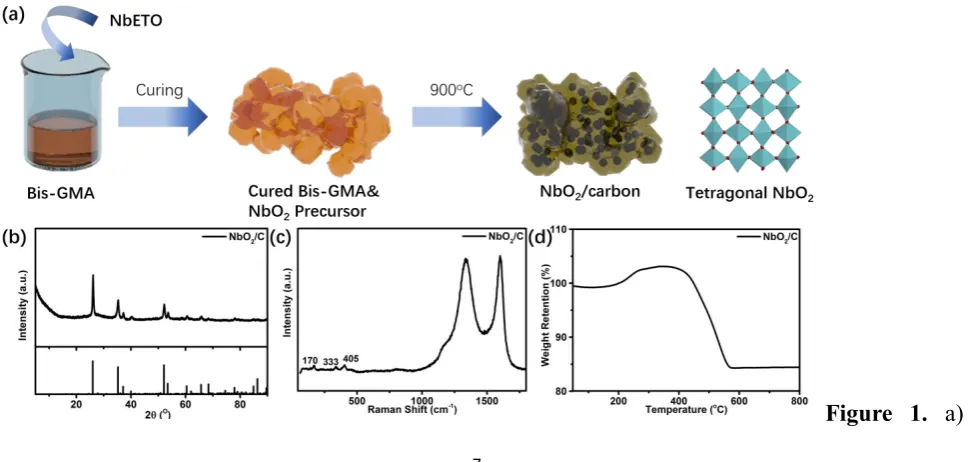
Figure 1a illustrates the synthetic process of the NbO2/carbon nanohybrids. NbETO is firstly
dissolved in Bis-GMA to obtain a clear mixture of the resin and the niobium oxide precursor.
Niobium species are incorporated into the Bis-GMA cross-linking network via an alcoholysis
reaction between niobium ethoxide and hydroxyl groups. During calcination, NbO2 nanoparticles are
in situ generated and uniformly dispersed in the carbon matrix. The formation of the NbO2
nanoparticles is confirmed by the XRD analysis (Figure 1b). Bragg peaks at 26.0, 35.2, 37.1, 40.0,
52.1 and 53.5 indicate the existence of a pure tetragonal phase of NbO2 (JCPDS No.43-1043).
nanohybrids. Typical peaks of disordered carbon (D-band) and graphitic carbon (G-band) are
observed at 1360 cm-1 and 1599 cm-1.[7] Besides, small peaks are seen at 170 cm-1, 333 cm-1 and 405
cm-1, referring to the fingerprint bands of NbO
2.[8] Moreover, TGA measurements of the
NbO2/carbon samples (Figure 1d) reveal a mass loss of 15.6 %. It is noted that the TGA curves
exhibit a small mass increase between 200 C and 500 C, which is assigned to the oxidation from
NbO2 to Nb2O5. By assuming that NbO2 is fully converted to Nb2O5, from the TGA measurement,
the actual NbO2 mass content is calculated to be 79 %. In addition, surface valence states of the
NbO2/carbon nanohybrids are investigated by XPS. The XPS survey spectra (Figure S1a) confirm
the existence of carbon, oxygen and niobium. However, according to the high resolution Nb-3d XPS
spectra (Figure S1b) only Nb5+ is detected for the samples, where the bonding energy peaks are
located at 207 eV and 210 eV, respectively. Considering that the XPS technique is mainly sensitive to
the surface element species, it is reasonable to conclude that the surface of the NbO2/carbon
nanohybrids is likely to be oxidized to Nb2O5.[4b, 9] It is worth noting that the extent of the surface
oxidation seems quite limited as the Nb2O5 species are barely detected with XRD in the NbO2/carbon
samples (Figure 1b).
[image:9.595.59.544.544.775.2]Schematic representation of the synthetic process, b) XRD data and expected peak positions, c)
Raman spectra, and d) thermogravimetric profiles of NbO2/carbon nanohybrids.
Morphologies and microstructures of the NbO2/carbon nanohybrids are investigated with SEM
and TEM. Figure 2a presents a rough surface built by loosely packed particles, which are regarded
as individual NbO2/carbon nanohybrid particles. The inset of the SEM images shows a size
distribution of 5 μm - 10 μm for the micrometer sized aggregated particles. The PSD profiles (Figure
S2) reveal that the individual nanohybrids having sizes in the range between 300 nm and 600 nm
dominate the samples. Due to the presence of a nanohybrid structure, the tap density (1.79 ± 0.03 g
cm3) is higher than in conventional nanostructured materials.[10] TEM images (Figure 2b) depict that
the NbO2 nanoparticles with a size of 20 nm - 30 nm are well embedded in the carbon matrix.
High-resolution transmission electron microscopy (HRTEM) images (Figure 2c) display a set of
fringes with a spacing of 0.34 nm, which refers to the (400) planes of the tetragonal NbO2 phase.
Selected area electron diffraction (SAED) patterns (Figure 2d) also confirm the existence of the
(400), (222) and (262) planes of the tetragonal NbO2 phase. In addition, scanning transmission
electron microscopy (STEM) (Figure S3) confirms the homogenous embedding of the NbO2
Figure 2. a) SEM, b) TEM, c) HRTEM, and d) SAED measurements of the NbO2/carbon
nanohybrids.
The good control over the particle size and dispersion originates from the particular structure
feature of the Bis-GMA resin and the strong interaction between the niobium ethoxide and the
Bis-GMA monomer. Firstly, the niobium species are homogeneously incorporated into the Bis-GMA
cross-linking network at a molecular level with strong coordination bonding via an alcoholysis
process. Secondly, the thermosetting poly (Bis-GMA) cross-linking network undergoes a very
limited melting process during the carbonization at high temperatures. As a result, the nucleation,
growth, and agglomeration of the NbO2 particles are significantly inhibited. Thus, a homogenous
distribution of the niobium dioxide nanoparticles in the carbon matrix is achieved.
[image:11.595.119.419.81.381.2]the NbO2 phase during the calcination process. Figure S4a shows that the samples with a
Bis-GMA/NbETO mass ratio of 4:1, 2:1 and 1:1 present a hexagonal Nb2O5 phase (JCPDS No.
32-0710) after calcination at identical conditions. While with a mass ratio of 1:1.5, both hexagonal
Nb2O5 and tetragonal NbO2 phases are observed with XRD. This observation suggests that the NbO2
phase is only formed with a low Bis-GMA/NbETO mass ratio, leading to a low carbon content in the
NbO2/carbon nanohybrids. In addition, according to Figure S4b, NbO2 is still formed when the
atmosphere is switched to argon while the calcination temperature and time are kept identical (900
C for four hours). These results suggest that the hydrogen gas is not crucial for the reduction of
Nb2O5 to NbO2. Furthermore, when the calcination temperature is lowered down from 900 C to 800
C, only Nb2O5 is observed by XRD after calcination under the Ar/H2 atmosphere for four hours
(Figure S4b). Thus, the calcination temperature is crucial for the phase transition process, even
though low temperature reduction of Nb2O5 into NbO2 has been reported in the literature.[3c] To
understand the mechanisms governing the phase transition from Nb2O5 to NbO2, a systematic
structure characterization is applied on the niobium oxide/carbon samples prepared with different
Bis-GMA/NbETO mass ratios. The porosity evolution along with decreasing Bis-GMA/NbETO
mass ratios is investigated by BET measurements (Figure 3a and S5) and SAXS analysis (Figure S6
and Table S2). Based on the Barret-Joyner-Halenda (BJH) method, the Nb2O5/carbon samples
(Bis-GMA/NbETO mass ratios of 4:1, 2:1 and 1:1) present average pore sizes of less than 2 nm,
indicating a microporous structure. The pore size shifts to 3 nm for the NbO2/carbon samples
prepared with the Bis-GMA/NbETO mass ratios of 1:1.5 and 1:2, referring to a transition to
mesoporous structures[11]. Moreover, another pore size of 6.4 nm is presented regarding the
m2g-1, with increasing NbETO content, which is consistent with the pore size evolution trend (Table
S1). A similar structure evolution is revealed by SAXS (Figure S6). It is reported that an internal
condensation takes place through dehydration between the Bis-GMA polymer chains during the heat
treatment, which induces the formation of glassy carbon featured with a low specific surface area
(Figure S7a).[12] The addition of the NbETO precursor suppresses the internal condensation reaction
due to the alcoholysis process between NbETO and Bis-GMA molecules (Figure S7b). NMR and
FT-IR results confirm the elimination of hydroxyl groups in Bis-GMA after the mixture of two
reactants (Figure S8). With low NbETO contents (Bis-GMA/NbETO mass ratios of 4:1, 2:1, and
1:1), the internal condensation process of Bis-GMA is not significantly interfered by the NbETO
species, where a dense carbon matrix with a low specific surface area is still formed after calcination.
However, with a Bis-GMA/NbETO mass ratio of 1:1.5 and 1:2, the incorporation of NbETO into the
Bis-GMA polymer matrix drastically destroys the internal condensation process by forming
coordination bonding with the hydroxyl functional groups within the polymer chains. As a result, the
formation of the dense carbon matrix is significantly inhibited and porous structures are generated, as
evidenced by the nitrogen adsorption/desorption measurements and SAXS data.[12d]
Based on the comprehensive structure characterization of the niobium oxide/carbon
nanohybrids prepared with systematically tuned Bis-GMA/NbETO mass ratios, the mechanism for
the formation of NbO2 is proposed (Figure 3c). The major experimental results of the phase
transition of the niobium oxide can be summarized as follows:
1. The formation of NbO2 starts with a Bis-GMA/NbETO mass ratio of 1:1.5 and a pure NbO2 phase
is obtained in case of a mass ratio of 1:2;
transition occurs at 800 C;
3. The phase transition takes place under the calcination atmosphere of either argon or
argon/hydrogen mixture.
It is worth pointing out that Nb2O5 is not reduced to NbO2 when the carbon content is high,
where the Nb2O5 nanoparticles are well embedded in a dense carbon matrix with a very low specific
surface area. It is reasonable to speculate that the typical solid-solid-interphase based carbothermal
reduction is unlikely involved. A solid-gas phase reaction mechanism is proposed governing the
reduction of the Nb2O5 nanoparticles.[13] As shown by the chemical reaction Equation 1-a and 2-a,
the carbon matrix initially reacts with the residual amount of CO2 in the tube furnace to generate
CO.[14] The reduction process is triggered via the reaction between CO and Nb
2O5. The generated
CO2 further reacts with the carbon matrix to release CO, which reduces Nb2O5 to NbO2 and produces
CO2. According to Equation 1-a, each CO2 molecule reacting with carbon generates two CO
molecules. As a result, the reduction process features a self-amplification, where trace amounts of
CO2 trigger the reduction process and reduce the entire Nb2O5 nanoparticles embedded within the
carbon matrix. Nevertheless, apart from the existence of CO2, the porosity and reduction temperature
are both crucially influencing the reduction process. With a low specific surface area, the gas
penetration into the Nb2O5/C nanohybrid to initiate reduction at the solid-gas interface is inhibited
and consequently the reduction process is suppressed. As a result, no detectable Nb2O5 is reduced to
NbO2 with Bis-GMA/NbETO mass ratios of 1:0, 4:1, 2:1, and 1:1. When the Bis-GMA/NbETO
mass ratios reach 1:1.5 and 1:2, a reduction of Nb2O5 is observed, which indicates that a high
specific area is essential for the phase transition from Nb2O5 to NbO2. Regarding the impact of the
than 900 C, while no reduction product is observed with the temperature of 800 C. However,
previous work shows that carbon can react with CO2 at 800 C to generate CO.[15] Thus, the
reduction reaction between Nb2O5 and CO has a temperature threshold. The estimated Gibbs free
energy values of the reduction process at 800 C and 900 C are all negative (Equation 2-b),
indicating that the reduction is thermodynamically possible at both temperatures.[16] This suggests
that kinetics plays a role in the reduction process. It is reported that the chemical equilibrium
constant of equation 1-a at 900 C is 10 times higher than that at 800 C (800 oC K
p=7.1, 900oC
Kp=75.4), which makes it possible to estimate the CO2 content generated by the reaction cycle at
different temperatures (Equation 1, and 2).[17] Figure 3b shows that the CO
2 amount difference
between 900 C and 800 C is increased constantly along with increased reaction extent. As a result,
the reduction extent is significantly enhanced if the temperature is increased from 800 C to 900 C,
leading to a full phase transition from Nb2O5 to NbO2.
CO2+ C → 2CO (1 − a)
ΔG = −38 kJ mol−1 1200 K (1 − b)
Nb2O5+ CO → 2NbO2+ CO2 (2 − a)
Figure 3. a) N2 adsorption/desorption isotherms of NbO2/carbon nanohybrids. Inset a: corresponding
BJH pores size distribution curves; b) estimation of CO2 evolution under 800 C and 900 C; c)
schematic illustration of the phase transition for niobium oxide in the niobium oxide/carbon
nanohybrids prepared with the Bis-GMA/NbETO mass ratio of 1:2 and d) mass ratios of 4:1, 2:1 and
1:1; light-blue and dark-blue box: alcoholysis site between NbETO and Bis-GMA; light green and
2.2 Electrochemical performance of NbO2/carbon nanohybrids
The electrochemical performance of the NbO2/carbon nanohybrids is investigated as coin type
half-cells. Figure 4a displays the CV curves of the NbO2/carbon nanohybrids at a scanning rate of
0.2 mV s-1 and in a voltage window of 0.001 V - 3 V. A reductive peak at 1.5-1.75 V and two broad
oxidative peaks at 1.0-1.2 V/1.8 V are observed in the CV profiles, which are assigned to the
delithiation/lithiation processes of NbO2. Besides, a broad reductive peak appears at 1.2 V in the
initial cycle, referring to the formation of a solid electrolyte interphase (SEI) from the carbon
matrix.[18] Small peaks at around 0.5V could be assigned to the lithiation into the resin-derived hard
carbon.[19] Furthermore, the carbon component contributes to the lithiation peaks below 1.0 V as well.
A similar delithiation/lithiation behavior is seen from the charge/discharge profiles of the
NbO2/carbon nanohybrids with a voltage range of 0.01 V - 3 V at a current density of 40 mA h g-1
(Figure 4b). In the first lithiation cycle, a plateau with a sloping voltage profile between 1-1.5 V
appears, which is ascribed to the formation of the SEI layer. Corresponding with the CV curves, a
plateau between 1.5 V and 2 V is observed for the NbO2/carbon samples, which indicates that NbO2
is involved in the lithiation process.
The cyclic performance of the NbO2/carbon nanohybrids is evaluated at a current density of 40
mA h g-1 as shown in Figure 4c. First charge and discharge capacities are presented as 711 mAh g-1
and 360 mAh g-1, referring to a Coulombic efficiency of 50.6 %. The irreversible capacity in the first
cycle is related to the formation of the SEI, an irreversible lithium storage in mesoporous structures,
and possible side reactions between surface functional groups and lithium.[18, 20] After the first few
cycles, the capacities start to stabilize with the Coulombic efficiency of more than 99.4 % because of
which enhances the structure stability of the electrode. The fluctuations of the cycle curves likely
originate from the temperature change of the ambient measurement environment. After 200 cycles, a
reversible capacity of 235 mAh g-1 is maintained. According to previously reported work, the
capacity contribution of the carbon component within the NbO2/carbon is estimated to be around 40
mAh g-1.[5b] Figure 4d displays the rate performance of the NbO
2/carbon nanohybrids. Reversible
capacities of 410 mA h g-1, 269 mA h g-1, 212 mA h g-1, 172 mA h g-1, 127 mA h g-1 and 82 mA h g-1
at current densities of 20 mA g-1, 40 mA g-1, 100 mA g-1, 200 mA g-1, 400 mA g-1, 1000 mA g-1and
20 mA g-1 are delivered, respectively. When the current density is recovered to 0.02 A g-1, a capacity
of 279 mAh g-1 is still remaining.
In order to further investigate the cyclic stability of NbO2/carbon nanohybrids, long cycling
tests are carried out for the NbO2/carbon nanohybrids at a current density of 200 mA g-1. As shown in
Figure 4e, in order to fully activate the electrodes, a lithiation/delithiation process for 5 cycles at a
low current density of 40 mA h g-1 is performed before the long cyclic performance test. A stable
reversible capacity of 225 mA h g-1 is retained after 500 cycles, where the slight fluctuation is caused
by the temperature variation during the long-term tests. It confirms that the NbO2/carbon nanohybrid
exhibits an excellent cyclic performance at a relative high current density, where both the
outstanding cyclic stability and good reversible capacity are displayed. The capacity retention after
500 cycles is 74.8 % calculated against the capacity of the 5th cycle, which corresponds to an average
decay rate of 0.05 % per cycle. Figure S9 and Table S3 present a capacity comparison of this work
and reported NbO2 based negative electrodes. It is noted that, to best of our knowledge, our work
shows the best cyclability and highest retained capacity after cycling. In addition, the NbO2/carbon
method. The excellent cyclic stability originates from the unique structure featured by the
NbO2/carbon nanohybrid, where the in situ formed NbO2 nanoparticles are homogeneously
embedded in the in situ formed carbon matrix. Figure S10 indicates that the capacitance process only contributes around 30 % of the capacities, which proves that the diffusion-controlled capacities
dominate the lithium storage capability. The mechanical stress of each nanoparticle during lithiation
is partially mitigated due to super-small size feature of the NbO2 nanoparticles.[21] The homogeneous
embedding of the NbO2 nanoparticles within the carbon matrix is also helpful to release mechanical
stress. Furthermore, the combination of nanoparticles and carbon matrix shortens the lithium
diffusion length and improves the charge carrier conductivity simultaneously, leading to an enhanced
electrochemical performance at higher current densities.[10b, 22] The EIS results confirm the improved
Figure 4. Electrochemical performance of the NbO2/carbon nanohybrids. a) CV curves, b)
charge-discharge profiles, c) cycling performances at 0.04 A·g-1, d) rate performances and e) long
cycling performances at 0.2 A·g-1.
2.3 Fundamental lithiation mechanism of NbO2/carbon
It is well accepted that gassing process takes place during discharge/charge processes of the
intercalation negative electrode, which is detrimental for practical applications.[23] However, to our
best knowledge, no studies have been reported about the gassing behavior of NbO2 negative
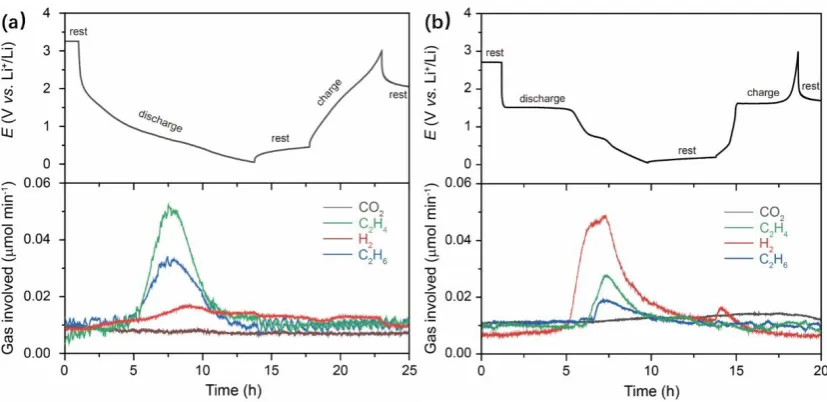
[image:20.595.112.512.77.481.2]of NbO2/carbon electrodes (Figure 5a), where commercial lithium titanate (LTO) is adopted as a
reference sample (Figure 5b) for the first discharge/charge cycle. C2H4 (green lines) and C2H6 (blue
lines) originate from similar voltage window during the discharge cycle, which are attributed to the
reduction of EC and DMC.[23b, 24] H
2 gas (red lines) is observed for both discharge/charge cycles, due
to reduction of trace amount of water.[25] However, the evolution of CO
2 (brown red lines), the
typical gassing product of LTO, is not observed during the discharge/charge process of NbO2. It is
reported that the CO2 evolution arises from a catalytic reduction of EC and DMC by Ti3+ during
charging process.[23b] The absence of CO
2 suggests that the niobium ions do not exercise catalytic
effects to reduce EC and DMC. In addition, the aggregate amount of the generated gas is integrated,
referring to 21.5 μmol for NbO2/carbon and 7.3 μmol for LTO. Note, that the relevant capacities of
the measured cells are 9.0 mAh and 2.4 mAh, respectively for the NbO2/carbon and LTO electrodes.
Thus, the specific gas amount is 2.39 μmol mAh-1 and 3.00 μmol mAh-1, which indicates that the
Figure 5. DEMS patterns with initial discharge/charge cycles of a) NbO2/carbon and b) commercial
LTO electrodes.
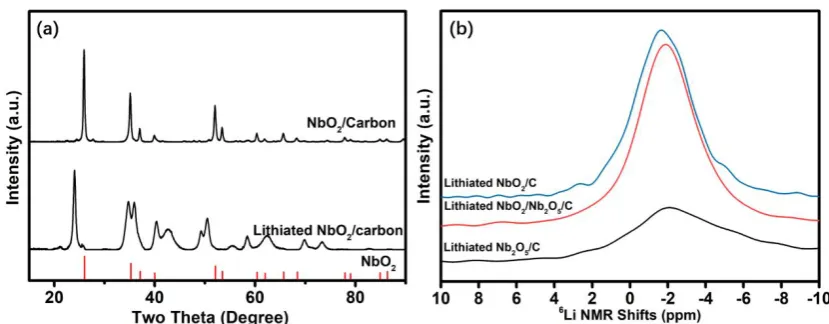
Ex situ XRD (Figure 6a) and 6Li solid-state MAS NMR (Figure 6b) are carried out on the
lithiated NbO2/carbon nanohybrids to elucidate the lithiation mechanisms. The structures of lithiated
Nb2O5/C (with Bis-GMA: NbETO feeding ratio of 1:1) and NbO2/Nb2O5/C (with Bis-GMA: NbETO
feeding ratio of 1:1.5) are studied by ex situ XRD (Figure S12) and 6Li solid state MAS NMR as
well. 6Li NMR is used instead of 7Li NMR because 6Li has a much smaller quadrupole than 7Li,
which leads to a small quadrupolar coupling and paramagnetic interactions with he Nb ions. These
interactions tend to significantly broaden the NMR peaks. Therefore, 6Li is adopted to achieve a
better spectral resolution[26]. To avoid lithiation of the carbon phase, the samples for 6Li NMR are
discharged to 1 V at a current rate of 20 mAh g-1. The lithiated XRD profiles of the three samples
both show a small Bragg peak position shift towards smaller two-theta angles as compared to the
pristine sample, which indicates the existence of new crystalline phases. In addition, the lithiated
NbO2/Nb2O/C nanohybrids present two sets of diffraction patterns, corresponding to lithiated Nb2O5
Nb2O5/carbon and NbO2/Nb2O5/carbon nanohybrids are identical before and after lithiation. It
suggests that the lithiation process does not change the crystallographic phases inherited from the
pristine counterparts. Based on the XRD analysis, the strong 6Li NMR peaks of the NbO
2/carbon and
NbO2/Nb2O5/C nanohybrids located at about -1.6 ppm are assigned to lithiated LixNbO2 (Figure 6b).
This suggests that the larger capacities above 1V of these two samples can be explained by lithiation
of LixNbO2. While the corresponding NMR spectra of the Nb2O5/C and NbO2/Nb2O5/C show Li sites
(broad weak peak around -1.9 ppm), which are assigned to the Li sites in crystalline Nb2O5 despite
overlapping due to an insufficient resolution.[2e]
The lithium reaction of NbO2 and Nb2O5 could be illustrated as follows:[4a]
xLi++ xe−+ NbO
2 ↔ LixNbO2 (3)
xLi++ xe−+ Nb
2O5 ↔ LixNb2O5 (4)
From the chemical reaction equation, it can be seen that the lithiation of niobium oxide is
featured with an intercalation process, while NbO2 shows a different lithiation behavior as compared
[image:23.595.124.539.545.707.2]to Nb2O5.
Figure 6. a) Ex situ XRD patterns and b) 6Li MAS spectra of the pristine and lithiated NbO
2/carbon
To further identify the structure of lithiated LixNbO2, theoretical x-ray diffraction patterns of
NbO2 and LixNbO2 are simulated to compare with the experimentally measured X-ray data. The
simulated XRD patterns show a small peak shift and slightly decreased intensities after Li insertion
(Figure 7a). The main diffraction peaks in the experimental XRD are obviously present in the
simulated XRD curves, so that the remaining peaks are assigned to the NbO2 structure. After lithium
intercalation, the lattice parameters are slightly modified (from original a=13.74 Å, b=13.74 Å, and
c=6.09 Å to a=13.76 Å, b=13.77 Å, and c=6.09 Å). The calculated volume change based on these
lattice parameters is less than 0.36% after lithiation, which is consistent with the results from the
ex-situ XRD (0.32%) data. The results indicate that the NbO2 has a smaller volume expansion than
both Nb2O5 (0.69 %) and TiO2 (4 %).[2d, 27]
It has been reported that two possible lithium insertion sites are involved in the lithiated of rutile
TiO2, which are center and off-center positions with lithium ion coordinated to different neighboring
oxygen atoms.[28] Because of the identical crystallographic phase of rutile TiO
2 and tetragonal NbO2,
similar positions are also considered in the Li-NbO2 system as described in Figure 7c and 7d. The
Li-insertion into center or off-center positions exhibits similar stabilities with the formation energy of
0.45 eV/Li ion, which is lower than the calculated value (0.70 eV/Li ion) in the Li-TiO2.[28]
Regarding the Li-center structure of Li-NbO2, Li is located in the pore center from both planes ab
and bc, which is coordinated with six neighboring oxygen atoms to form an octahedron configuration
(Figure 7c). The lengths of the newly-formed four Li-O bonds in plane range from 2.03 Å to 2.28 Å,
while the two Li-O bonds on vertex are shortened to 1.85 Å. The off-center Li-NbO2 refers to Li
deviates pore center viewed from axis b and c (Figure 7d), which is coordinated with only four
to 1.93 Å. The simulation results suggest that the lithium ion is inserted into the pore center position
from both planes of ab and bc of the tetragonal NbO2 (Figure 7b).
Figure 7. a) Simulated XRD patterns of NbO2 and lithiated NbO2. Crystal structure model of b)
optimized pristine NbO2 and Li position at Li-NbO2 involving c) Li-center and d) Li-off-center
positions. All structures are shown from ab planes and bc planes (lithium: green balls, niobium: blue
[image:25.595.60.471.134.445.2]3.
Conclusions
In summary, NbO2/carbon nanohybrids are successfully synthesized using the dental resin monomer
of Bis-GMA as solvent and carbon source and NbETO as the precursor. The alcoholysis reaction
between Bis-GMA and NbETO suppresses the formation of low specific surface area glassy carbon,
which facilitates the reduction of Nb (V) into Nb (IV) by in situ generated carbon monoxide. Good size control and spatial distribution of the NbO2 nanoparticles are achieved because of a limited
melting process of the cross-linked polymerized Bis-GMA as confirmed by both imaging and
scattering techniques. A reversible capacity of 225 mA h g-1 remains after 500 cycles at 0.2 A g-1 for
NbO2/carbon nanohybrids with Coulombic efficiencies of more than 99.4 %. The lithiation
mechanism of the NbO2/carbon nanohybrid is investigated by solid-state NMR, ex-situ XRD, DEMS,
and DFT calculations. A low volume expansion (0.3 %) upon lithiation and the possible lithium-ion
storage site are derived by combing the experimental and simulation results. The DEMS results
confirm that the NbO2 exhibits a limited gas-evolution behavior as compared to commercial lithium
titanate negative electrodes. Thus, our work suggests that NbO2/carbon nanohybrids are promising
lithium-ion battery negative electrodes with good reversible capacities, long cycling life, and a
4.
Experimental Section
Chemicals: All chemicals were used as received without further purification. NbETO was bought from Alfa Aesar Co., Ltd, UK. Bis-GMA and tert-butyl peroxy benzoate (TBPB) were purchased
from Sigma-Aldrich. Poly (vinylidene fluoride) (PVDF) was donated by Solvay. Conductive carbon
black (Super P) was acquired from SCM Chem. Shanghai, China. N-methyl pyrrolidone (NMP) was
obtained from Aladdin Reagent Co., Ltd, China.
Sample Preparation:Typical samples were prepared with the following procedures. Bis-GMA and NbETO were mixed with a mass ratio of 1:2 by stirring (ca. 800 rpm) and heating at around 100 °C until a clear solution was observed. TBPB (2 %, mass fraction) was then dropped into the
solution mixture as curing agent and homogenized by a Fisherbrand analog vortex mixer at 1500 rpm
for 30 seconds. The as-prepared solution was cured under 150 °C for 2 h. The calcination process
was applied on the polymerized samples at 900 °C under argon/hydrogen flow (volume ratio: 95:5)
for 4 hours in a tube furnace with a ramp rate of 5 °C min-1 from room temperature. After calcination,
the samples were cooled down to room temperature with the same ramp rate. The calcined
NbO2/carbon nanohybrid powder was then ball-milled in agate jar with a speed of 550 rpm for 30
min (Retsch, PM 100). Control samples with different feeding ratio of Bis-GMA and NbETO were
prepared as described in the supporting information.
Material Characterization:The crystallographic phases of the NbO2/carbon powders were
investigated with an X-ray diffraction (XRD; Bruker AXS D8 Advance, λ=1.5406 Å, 2.2 kW) in a 2θ
range from 5 ° to 90 °. Ex-situ XRD patterns of the lithiated electrodes were measured with a Rigaku
x-ray diffractometer (9 kW). The morphology of the NbO2/carbon nanohybrids was characterized by
Tecnai F20, FEI). Platinum coating was applied before the SEM measurements. The carbon content
was determined by thermo-gravimetric analysis (TGA; Mettler Toledo) with a temperature range
from 50 °C to 800 °C at a ramp rate of 20 C min-1 in air. Composition of the carbon matrix was
characterized by Raman spectroscopy (Renishaw, in Via-reflex). Particle size distribution (PSD) was
determined by dynamic light scattering measurement (Zetasizer Nano ZS; Malvern). The
Brunauer-Emmett-Teller (BET) surface area and pore size distribution analysis were carried out by
Micromeritics ASAP2020 with N2 adsorption isotherms at 77 K. Small-angle X-ray scattering
(SAXS) measurements were performed using a Ganesha 300XL SAXS−WAXS system (SAXS LAB
ApS, Copenhagen/Denmark) with an x-ray wavelength of 1.54 Å and a sample-to-detector distance
of 406 mm. Glass capillaries were used as sample containers for the SAXS measurements. X-ray
photoelectron spectroscopy (XPS) measurements were performed with an ESCALAB 250Xi
spectrometer, using focused monochromatized Al K radiation (h = 1486.6 eV) at room
temperature. Solid-state nuclear magnetic resonance (NMR) experiments were performed in a 3.2
mm probe-head on a 400 MHz Bruker Advance III spectrometer at the 6Li Larmor frequency of 58.9
MHz. Magic angle spinning (MAS) of 20 kHz was applied. The spectra were recorded with zg30
pulse-acquire sequence (flip angle of π/6); the π/2 pulse length was 2.5 μs. The recycle delay was 5 s.
The 6Li spectra were referenced by 1.0M LiCl (aq) at 0.0 ppm.
Electrochemical Measurement: CR 2032-type coin cells were assembled as following to evaluate the electrochemical performance of the NbO2/carbon nanohybrids. The active materials
(NbO2/carbon nanohybrid powder), super P, and PVDF were mixed with NMP in a mortar with a
mass ratio of 8:1:1. The as-prepared slurry was then cast on copper foil and then dried at 80 °C
typical electrode was controlled to be between at 1.5 mg cm-2 and 2 mg cm-2. Lithium metal foil
(Dongguan Shanshan Battery Materials Co., LTD) and Celgard 2400 microporous polypropylene
membrane were adopted as counter electrode and separator, respectively. Electrolyte were employed
from Zhangjiagang Guotai-Huarong Commercial New Material Co., LTD, with 1.0 M LiPF6
dissolved in a mixture solution of ethylene carbonate (EC), dimethyl carbonate (DMC) and
fluoroethylene (FEC) (EC: DMC: FEC=1:1:0.5 by volume). Galvanostatic cycling and rate tests
were conducted at a voltage range from 0.01 V to 3.00 V (versus Li+/Li) on a Neware Battery Test
System. Cyclic voltammetry (CV, 0.001 V - 3.00 V, 0.2 mV s-1) and electrochemical impedance
spectroscopy (EIS, 0.001 Hz - 1 MHz, 10 mV) measurements were performed on electrochemical
workstation (Solartron Analytical.). The lithiated NbO2/C was prepared through discharging to 0.01
V at a rate of 20 mAh g-1. The electrode was then washed by DMC and dried overnight in a glove
box before measurements.
Differential electrochemical mass spectrometry (DEMS) Measurements: DEMS was carried out as described previously.[23b, 29] Swagelok cells were assembled with active materials as positive
electrode and lithium foil as counter electrode. The generated gas was flushed out from the cell by
argon with a flow rate of 0.5 ml min-1. Gas species with molecular weight of 44, 30, 28 and 2 were
anticipated to be monitored, referring to CO2, C2H6, C2H4 or CO and H2.
Density Functional Theory (DFT) Calculations: All calculations were based on density functional theory (DFT) to optimize geometry structures, which was performed using the Vienna
ab-initio Simulation Package (VASP).[30] The exchange–correlation interactions of the generalized
gradient approximation (GGA) in the scheme proposed by Perdew–Burke–Ernzerhof functional
Augmented Wave (PAW) method.[32] The cut-off kinetic energies for the plane waves were set to 500
eV for all calculations.The convergence tolerance of energy and force on each atom during structure
relaxation were less than 10-4 eV and 0.02 eV/Å.The Brillouin zone was sampled by 3×3×5 k-points
using the Monkhorst-Pack scheme for geometry optimization and electronic structural calculations,
respectively.[33]
Supporting Information
Synthetic process of niobium oxide/carbon control samples prepared with different
Bis-GMA/NbETO mass ratios; XPS spectra, particle size distribution, STEM, and EDX of the
NbO2/carbon nanohybrids; XRD, nitrogen adsorption/desorption isotherms, pore size distribution
profiles, BET surface areas, experimental and fitted SAXS data of the niobium oxide/carbon
nanohybrids prepared with different Bis-GMA/NbETO mass ratios; XRD patterns of the niobium
oxide/carbon nanohybrids prepared with different calcination protocols; schematic Figure for glassy
carbon formation; 1H NMR and FT-IR spectra of Bis-GMA and Bis-GMA/NbETO mixture; cycling
performance comparison of niobium oxides/carbon nanohybrid prepared in different ways; kinetic
analysis of lithium ion storage mechanism in the NbO2/carbon nanohybrid; capacity comparison of
the NbO2 based negative electrodes to the literature; electrochemical impedance spectra profiles;
Ex-situ XRD patterns of pristine and lithiated of Nb2O5/C and NbO2/Nb2O5/C nanohybrids.
Acknowledgement
The authors would like to thank Prof. Dr. Junliang Sun from Peking University for discussions about
No. 2016YFB0100100), the National Natural Science Foundation of China (51702335, 21773279),
the Zhejiang Non-profit Technology Applied Research Program (LGG19B010001), Ningbo
Municipal Natural Science Foundation (2018A610084), the CAS-EU S&T cooperation partner
program (174433KYSB20150013), and Key Laboratory of Bio-based Polymeric Materials of
Zhejiang Province. Y.-J. Cheng acknowledges funding by the Marie Sklodowska-Curie Fellowship
from EU. S. Yin appreciates the funding support from China Scholarship Council. P.M-B
acknowledges funding by the International Research Training Group 2022 Alberta/Technical
University of Munich International Graduate School for Environmentally Responsible Functional
Hybrid Materials (ATUMS).
References
[1] a) M. S. Whittingham, Science 1976, 192, 1126; b) M. Winter, J. O. Besenhard, M. E. Spahr, P. Novák, Adv. Mater.
1998, 10, 725; c) M. Reddy, G. Subba Rao, B. Chowdari, Chem. Rev. (Washington, DC, U. S.) 2013, 113, 5364.
[2] a) W. J. H. Borghols, M. Wagemaker, U. Lafont, E. M. Kelder, F. M. Mulder, J. Am. Chem. Soc. 2009, 131, 17786; b) T. Yuan, Z. Tan, C. Ma, J. Yang, Z.-F. Ma, S. Zheng, Adv. Energy Mater. 2017, 7, 1601625; c) N. Kumagai, Y.
Koishikawa, S. Komaba, N. Koshiba, J. Electrochem. Soc. 1999, 146, 3203; d) R. Kodama, Y. Terada, I. Nakai, S. Komaba, N. Kumagai, J. Electrochem. Soc. 2006, 153, A583; e) K. J. Griffith, A. C. Forse, J. M. Griffin, C. P. Grey, J.
Am. Chem. Soc. 2016, 138, 8888; f) Z. Yang, D. Choi, S. Kerisit, K. M. Rosso, D. Wang, J. Zhang, G. Graff, J. Liu, J. Power Sources 2009, 192, 588; g) J. W. Kim, V. Augustyn, B. Dunn, Adv. Energy Mater. 2012, 2, 141.
[3] a) Y. H. Cho, S. K. Jeong, Y. S. Kim, Adv. Mater. Res. 2015, 1120-1121, 115; b) C. S. Kim, Y. H. Cho, K. S. Park, S. K. Jeong, Y. S. Kim, presented at Key Eng. Mater. 2017; c) H. Park, D. Lee, T. Song, J. Power Sources 2019, 414, 377. [4] a) L. Kong, C. Zhang, J. Wang, W. Qiao, L. Ling, D. Long, Sci. Rep. 2016, 6, 21177; b) H. D. Asfaw, C.-W. Tai, L.
Nyholm, K. Edström, ChemNanoMat 2017, 3, 646.
[5] a) Y. Xiao, X. Wang, Y. Xia, Y. Yao, E. Metwalli, Q. Zhang, R. Liu, B. Qiu, M. Rasool, Z. Liu, J.-Q. Meng, L.-D. Sun, C.-H. Yan, P. Müller-Buschbaum, Y.-J. Cheng, ACS Appl. Mater. Interfaces 2014, 6, 18461; b) X. Wang, J.-Q. Meng, M. Wang, Y. Xiao, R. Liu, Y. Xia, Y. Yao, E. Metwalli, Q. Zhang, B. Qiu, Z. Liu, J. Pan, L.-D. Sun, C.-H. Yan, P.
Müller-Buschbaum, Y.-J. Cheng, ACS Appl. Mater. Interfaces 2015, 7, 24247; c) L. Zheng, X. Wang, Y. Xia, S. Xia, E. Metwalli, B. Qiu, Q. Ji, S. Yin, S. Xie, K. Fang, S. Liang, M. Wang, X. Zuo, Y. Xiao, Z. Liu, J. Zhu, P.
Müller-Buschbaum, Y.-J. Cheng, ACS Appl. Mater. Interfaces 2018, 10, 2591.
[6] a) X. Wang, J. Q. Meng, M. Wang, Y. Xiao, R. Liu, Y. Xia, Y. Yao, E. Metwalli, Q. Zhang, B. Qiu, Z. Liu, J. Pan, L. D. Sun, C. H. Yan, P. Muller-Buschbaum, Y. J. Cheng, ACS Appl. Mater. Interfaces 2015, 7, 24247; b) L. Zheng, X. Wang, Y. Xia, S. Xia, E. Metwalli, B. Qiu, Q. Ji, S. Yin, S. Xie, K. Fang, S. Liang, M. Wang, X. Zuo, Y. Xiao, Z. Liu, J. Zhu, P. Muller-Buschbaum, Y. J. Cheng, ACS Appl. Mater. Interfaces 2018, 10, 2591.
[7] F. Tuinstra, J. L. Koenig, J. Chem. Phys. 1970, 53, 1126.
[9] a) M. K. Bahl, J. Phys. Chem. Solids 1975, 36, 485; b) Z. Weibin, W. Weidong, W. Xueming, C. Xinlu, Y. Dawei, S. Changle, P. Liping, W. Yuying, B. Li, Surf. Interface Anal. 2013, 45, 1206.
[10] a) Y. Gao, C. Cheng, J. An, H. Liu, D. Zhang, G. Chen, L. Shi, ChemistrySelect 2018, 3, 348; b) Q. Xu, J.-Y. Li, J.-K. Sun, Y.-X. Yin, L.-J. Wan, Y.-G. Guo, Adv. Energy Mater. 2017, 7, 1601481; c) M. G. Choi, Y.-G. Lee, S.-W. Song, K. M. Kim, J. Power Sources 2010, 195, 8289.
[11] K. Zhang, L. Zhang, X. Chen, X. He, X. Wang, S. Dong, P. Han, C. Zhang, S. Wang, L. Gu, G. Cui, J. Phys. Chem. C
2013, 117, 858.
[12] a) N. Tokiti, I. Michio, Bull. Chem. Soc. Jpn. 1964, 37, 1534; b) T. Noda, M. Inagaki, S. Yamada, J. Non-Cryst.
Solids 1969, 1, 285; c) G. M. Jenkins, K. Kawamura, Nature 1971, 231, 175; d) P. J. F. Harris, Philos. Mag. 2004,
84, 3159.
[13] a) B. V. L’vov, Thermochim. Acta 2000, 360, 109; b) W. Gruner, S. Stolle, K. Wetzig, Int. J. Refract. Met. Hard
Mater. 2000, 18, 137.
[14] a) S. C. Mitchell, A. Cias, 2004; b) J. Moon, V. Sahajwalla, Metall. Mater. Trans. B 2006, 37, 215.
[15] a) J. Fang, B. Gao, A. R. Zimmerman, K. S. Ro, J. Chen, RSC Adv. 2016, 6, 24906; b) K. Xia, Q. Gao, S. Song, C. Wu, J. Jiang, J. Hu, L. Gao, Int. J. Hydrogen Energy 2008, 33, 116.
[16] M. Chase, C. Davies, J. Downey, D. Frurip, R. Mcdonald, A. Syverud, J. Phys. Chem. Ref. Data Monograph 1998, 9.
[17] Z. L. Min, Shen, Chem. Ind. Eng. Prog 2013, 32, 2846. [18] S. Flandrois, B. Simon, Carbon 1999, 37, 165.
[19] a) E. Buiel, J. R. Dahn, Electrochim. Acta 1999, 45, 121; b) H. Fujimoto, K. Tokumitsu, A. Mabuchi, N. Chinnasamy, T. Kasuh, J. Power Sources 2010, 195, 7452.
[20] a) K. Zaghib, G. Nadeau, K. Kinoshita, J. Electrochem. Soc. 2000, 147, 2110; b) S.-Z. Liang, X.-Y. Wang, Y.-G. Xia, S.-L. Xia, E. Metwalli, B. Qiu, Q. Ji, S.-S. Yin, S. Xie, K. Fang, L.-Y. Zheng, M.-M. Wang, X.-X. Zuo, R.-J. Li, Z.-P. Liu, J. Zhu, P. Müller-Buschbaum, Y.-J. Cheng, Acta Metall. Sin. (Engl. Lett.) 2018, 31, 910; c) C. Zhang, L. Gu, N. Kaskhedikar, G. Cui, J. Maier, ACS Appl. Mater. Interfaces 2013, 5, 12340.
[21] H. Kim, M. Seo, M.-H. Park, J. Cho, Angew. Chem., Int. Ed. 2010, 49, 2146.
[22] a) S.-H. Ng, J. Wang, D. Wexler, K. Konstantinov, Z.-P. Guo, H.-K. Liu, Angew. Chem., Int. Ed. 2006, 45, 6896; b) Y. Xu, G. Yin, Y. Ma, P. Zuo, X. Cheng, J. Mater. Chem. 2010, 20, 3216.
[23] a) M. Lanz, P. Novák, J. Power Sources 2001, 102, 277; b) M. He, E. Castel, A. Laumann, G. Nuspl, P. Novák, E. J. Berg, J. Electrochem. Soc. 2015, 162, A870.
[24] a) M. Onuki, S. Kinoshita, Y. Sakata, M. Yanagidate, Y. Otake, M. Ue, M. Deguchi, J. Electrochem. Soc. 2008, 155, A794; b) Y.-B. He, B. Li, M. Liu, C. Zhang, W. Lv, C. Yang, J. Li, H. Du, B. Zhang, Q.-H. Yang, J.-K. Kim, F. Kang, Sci.
Rep. 2012, 2, 913.
[25] R. Bernhard, S. Meini, H. A. Gasteiger, J. Electrochem. Soc. 2014, 161, A497. [26] Y. J. Lee, F. Wang, C. P. Grey, J. Am. Chem. Soc. 1998, 120, 12601.
[27] M. Wagemaker, G. J. Kearley, A. A. van Well, H. Mutka, F. M. Mulder, J. Am. Chem. Soc. 2003, 125, 840. [28] M. V. Koudriachova, N. M. Harrison, S. W. de Leeuw, Physical Review B 2002, 65, 235423.
[29] a) Y. Chen, S. A. Freunberger, Z. Peng, F. Bardé, P. G. Bruce, J. Am. Chem. Soc. 2012, 134, 7952; b) X. Gao, Y. Chen, L. Johnson, P. G. Bruce, Nat. Mater. 2016, 15, 882.
[30] a) S. Grimme, J. Comput. Chem. Mater. 2006, 27, 1787; b) G. Kresse, J. Furthmuller, Phys. Rev. B 1996, 54, 11169.
[31] a) J. P. Perdew, K. Burke, M. Ernzerhof, Physical Review Letters 1996, 77, 3865; b) J. P. Perdew, Y. Wang,
Phys. Rev. B: Condens. Matter 1992, 46, 12947.
Table of Content
Keyword: Batteries
Qing Ji, Xiangwen Gao, Qiuju Zhang, Liyu Jin, Da Wang, Yonggao Xia,* Shanshan Yin, Senlin Xia, Nuri Hohn, Xiuxia Zuo, Xiaoyan Wang, Shuang Xie, Zhuijun Xu, Liujia Ma, Liang Chen, George Chen, Jin Zhu,* Binjie Hu,* Peter Müller-Buschbaum, Peter G Bruce, Ya-Jun Cheng*
Dental Resin Monomer Enables Unique NbO
2/Carbon
Lithium-Ion Battery Negative Electrode with Exceptional
Performance
Using a dental resin monomer as solvent and carbon source enables formation of unique NbO2
nanoparticles homogeneously embedded in the carbon matrix, where an excellent electrochemical
performance in terms of reversible capacities, long cycling life, and limited gassing evolution is