ALL ROADS LEAD TO ROME: CHANNELLING INTER-CAMPUS, INTERLIBRARY, AND
OFF-CAMPUS REQUESTS THROUGH A SINGLE USER INTERFACE
E. Firman & K. Moore
Paper Presented at neXt 2005: ALIA National Library & Information Technicians Conference
Abstract
The message from remote library clients is clear and unequivocal – they want material quickly and easily. They would prefer not to have to differentiate between the three library services of intercampus, interlibrary, or off-campus requests – they just want a particular document or book forwarded to them as soon as possible.
At the University of Southern Queensland Library, VDX software has been utilised to provide a single search and request interface for library material. Differentiating between individual clients, it displays and activates only those services for which a particular client is eligible. Remote undergraduates for example, have the ability to search and request from USQ catalogue only, while those students eligible for interlibrary loans can search and initiate requests across a range of catalogues.
Whilst simplifying processes for clients, the challenge to Library staff has been to successfully manipulate the software and work processes to handle this complex arrangement.
This paper will discuss the introduction of this new initiative focusing on the following issues:
• Background • Client view
• Dual services and associated challenges • Impact on staff
• Improvements planned in the next six months • Marketing
Introduction
Life is complicated. We who work with information services know how hard it is to keep on top of the dynamic range of information resources available - and how much more daunting it is for our clients. Anything that can make life simpler is warmly received.
It was with this in mind that we tackled using the one software interface for a number of our library services.
Our clients will soon be able to use this one web interface to:
a) search our catalogue - often simultaneously with other library catalogues b) place their off-campus/inter-campus requests
c) place their interlibrary loan requests d) monitor the status of their requests
e) retrieve documents which have been scanned to them upon their request f) access the Library’s e-reserve system
g) run a federated search via a pre-selected list of the most useful full-text journal databases in their broad subject areas – and link to the full-text. (Federated searching is a process that allows clients to search across a number of journal databases simultaneously using a single interface – in this case DocEx.)
All functionality is being used currently apart from the federated searching feature which is in pilot mode and the e-reserve access, which should be available next year.
Background
The software chosen by the University of Southern Queensland (USQ) was VDX which is produced by the UK-based Fretwell-Downing Inc. At USQ, VDX is used in conjunction with its associated Zportal web product which provides the “front-end” that is used by clients. VDX was developed as an interlibrary loan system but the potential was there to also use this system to manage off-campus and inter-campus requests, which was its attraction for USQ.
The University of Southern Queensland is a smaller, regional university with almost 80% of its 26,000 students enrolled in external mode. Of these, more than 50% live in rural or geographically isolated areas whilst 30% study offshore. The University has one campus in Hervey Bay, with a new Springfield campus due to open in 2006 on the western outskirts of Brisbane. With such a high proportion of our students never likely to visit the Library in person, we were looking for a system that would make the Library’s resources – both physical and online – more accessible to our remote students.
USQ went live with VDX for off-campus and inter-campus library services in March 2004 and implemented it for our interlibrary loan service in March 2005. VDX and the Zportal product have been introduced to clients under the local name of “DocEx”, short for Document Express.
Client view
To explain how the system operates, we will briefly outline a standard off-campus student’s use of DocEx.
1. Sign-In
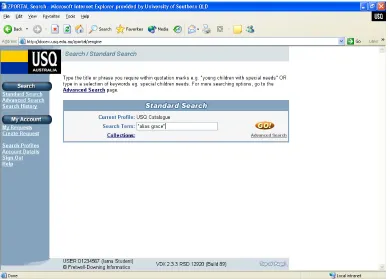
[image:3.612.71.461.221.500.2]When the client first accesses the DocEx web interface, they sign in using their standard University username and password and are verified against both the University’s LDAP authentication system and DocEx itself. User records for all eligible clients have been previously loaded onto DocEx, and each individual has been assigned specific categories, user groups and locations that control what they are able to access and request.
Figure 1: Standard Search screen within DocEx 2. Search function
The initial screen that displays in the web interface offers a searching option. A student who is only eligible for off-campus services will be able to search the USQ catalogue; a client who uses the interlibrary loan services will have options to also search catalogues such as National Library of Australia and Library of Congress.
3. Request function
Once a search is done, and the required item identified, the client clicks on a “Request” link to create a request form with all the relevant details already populated. Additional information such as whether a loan or photocopy is required, what section is to be copied, and to which account the request is to be charged can then be completed by the client before they “submit” their request. Lastly if preferred, they also have the option to forgo the searching step and just fill in a blank request form.
At any stage, a client can check on the status of their requests to find out whether an item has been “shipped” to them yet. They also have a record of all items requested over a period of a couple of years. If they have requested that a document be scanned for them, they access that .pdf file via the DocEx system. This ability to provide access to scanned documents has dramatically shortened document delivery times – particularly to off-shore students.
To date, the main advantages of DocEx for our clients have been the:
• single search and request interface. Clients appreciate being able to simply press a request button once they have completed a catalogue search and found the item they want.
• electronic access to their requested .pdf documents
• ability to maintain a record of their requests and monitor their status
• no requirement to pre-register before being able to place photocopy requests (as was necessary with our previous web-based request forms)
• students at our campus in Hervey Bay can place intercampus requests directly from their desktops rather than placing all requests via the Library staff
• faster notification of any problems or potential delays with their requests.
Dual service and associated challenges
We have so far kept off-campus, inter-campus and interlibrary loan services separate on DocEx. Currently clients are able to use DocEx for one service or another – but not more than one. This is not a major issue as the bulk of our clients (80%) are only eligible for one DocEx service.
We are about to improve our DocEx service to allow eligible clients to get dual services e.g. an off-campus postgraduate student will be able to use the DocEx system to place both off-campus requests for material held by USQ, as well as interlibrary loan requests. This has involved a number of challenges.
1. One issue will be whether the attempt to channel multiple services through the one interface in itself could be confusing to our clients. As discussed by Barsun (2004) numerous studies have shown that reliance on technology, and the need to learn how to use library systems can result in a “heightened degree of library anxiety” especially for distance students. Our goal is to make life easier not more complicated.
We hope that a combination of the following will help to reduce the challenge to our clients: • the fact that the system is tailored to only display those features for which each client is
eligible
• online tutorials based on Macromedia Breeze software and incorporating audio • help screens
• information sessions for on-campus clients, and
• the fact that they are using the one system for a number of different uses – reducing the number of different systems to understand.
off-campus student was received for an item that was not held by USQ, was that just bad luck or was the student really wanting an interlibrary loan? USQ charges for interlibrary loans - either to a quota or a monetary cost – and we did not want the client to incur a cost when that was never their intention.
We have therefore decided that the requests will be separated on the basis of the account associated with the request. Clients eligible for both interlibrary loans and off-campus service will have a choice of accounts displayed on the request form. Interlibrary loan users usually have a choice of charging their request to a quota, a nominated University research account, or may choose to pay for it as an individual at a cost of A$16.50. If they select one of these interlibrary loan accounts, rather than the “No charge – Off-campus request” option, then the request will be deemed to be an interlibrary loan request and the student will be responsible for any associated costs. Notices warning clients of this will be displayed prominently on the website, and obviously if the item is found to be held by USQ the item will be supplied without charge to any interlibrary loan account.
Requests will be channeled to different staff members on the basis of the account selected so that they can be processed as efficiently as possible. If the client mistakenly selects the wrong account, it will be possible for staff to alter the account on the request so that it displays for the appropriate staff member.
Channeling requests to different staff who specialize in the particular service works best for us currently. We will be conducting a workflow review before the end of the year where we will look at whether there are more efficient ways to group and process requests without losing any quality of service.
3. Clients eligible for more than one service who do not select an account will be given a default account eg. as there are costs associated with interlibrary loans, we will assume that off-campus students eligible for dual service were wanting to place an off-campus request if they leave this field blank. If not held at USQ, the client will receive the standard “not held” email notification and the request will be placed at a status of “Not supplied”. This could be frustrating for a client unfamiliar with the system who had really wanted to place an interlibrary loan – but it will be possible to reactivate the request if necessary. It will be important that relevant web screens and user education sessions emphasise the importance of selecting the appropriate account.
4. Leading on from this, another issue is the use of one web interface for multiple uses. Whilst features like the catalogues and accounts that display differ for differing categories of clients, we have had to be careful that all other terminology and instructions on our DocEx screens are relevant to all the different services. This is occasionally limiting but thankfully has not turned out to be as big a problem as we initially feared. Clients approach DocEx via separate web pages on the USQ Library website that explain the different services in some detail. Any information unique to a particular service is included in these introductory pages or in the associated “help” screens within DocEx. One challenge yet to be faced is to provide more effective help screens than are currently available so that help and information about each of the functions are available and clearly delineated.
taken from the Student Administration’s PeopleSoft system and uploaded into our DocEx system. As you can imagine the specifications we have developed for the patron loads are very detailed and fine tuning is ongoing. Exceptions to the standard enrolments can also play havoc requiring the user record to be manually updated on DocEx.
Impact on staff
It would appear that there are a number of benefits for our clients in using DocEx, but it has also had an impact on staff.
From our staff point of view, the advantages include:
• Sending email notifications to clients is now quick and easy. Email templates have been established to cover many different scenarios. Comprehensive emails are generated with a couple of mouse clicks, whilst emails advising clients that a .pdf document is available are sent automatically.
• DocEx has had a major impact in interlibrary loans where the Kinetica searching and rotas are often created by the VDX software – based on pre-configured criteria. The result is that straightforward requests require minimal staff intervention apart from a final check before the request leaves USQ.
• Staff are able to quickly track the requests placed by clients – rather than sorting through piles of paper requests. A reduction in paperwork generally has been well received. • Timeconsuming, manual statistics need no longer be kept as all statistics required can be
retrieved from DocEx via SQL reports.
• Knowledge that clients really appreciate the new functionality has been personally satisfying to the staff.
Overall, there has not been any noticeable saving of staff time within Off-Campus Services as the improvements brought by DocEx have been balanced by the extra time required for scanning and updating of request statuses. The use of DocEx for interlibrary loans is still new but we are expecting that there will be staff time savings to be had in this area, once all the fine-tuning has been done.
Lastly how did staff cope with this sophisticated technology? A number of staff in Off-Campus Services were on staffing levels of HEW 2 and 3. With the introduction of this automated system, they needed to become adept at both the client and staff interface to DocEx, as well as scanning technologies, so it was a steep learning curve. In recognition of these increased demands on staff, a reclassification project to upgrade the HEW 2 staff is currently underway.
Improvements planned for the next six months.
Figure 2: Standard search screen for a federated search of education resources
Figure 3: Results screen from a federated search on Education resources in DocEx
So a common scenario may be that when an off-campus client signs-in and get the initial DocEx search screen, their first choice will be either to search just the USQ Library catalogue, or search the business journal databases – or some may prefer to search them both simultaneously. In any search results that display, direct links will be present for any full-text online item and if not available online, the client then has the option of clicking on the “request” button to create an off-campus or interlibrary loan request.
Finally the other improvement planned is to introduce access to the Library’s newly developed eReserve system – with either direct access or via Library catalogue links. This too will help fill the clients’ needs by restricting the number of different access points they need to use to obtain Library resources.
Marketing
With both the off-campus and interlibrary loans service, we took a “soft launch” approach to the introduction of DocEx. We chose to do this primarily to ensure that the technology was robust and the configurations correct before increasing the numbers of clients using the system. This allowed staff time for “tweaking” and improvements.
• All enrolling off-campus students will receive a Library flyer focusing on DocEx as part of their study packages
• In addition, a variety of information leaflets will be included in all postal packages going out from Off-Campus Library Services
• It is hoped that each course’s “Introductory Book” will also include information about DocEx.
• Lunchtime sessions will be run for on-campus academics and postgraduate students interested in the interlibrary loan features
• Regional Liaison Officers working in the field supporting external students will be targeted for an education campaign to ensure they are aware of the DocEx services.
Further student surveys planned for 2006 will help to provide necessary feedback on how the students perceive the DocEx service so we can look at ways to develop improvements. In a Rodski Customer Satisfaction Survey run by USQ Library in September 2004, no negative comments relating to DocEx were received. Some of the positive comments included:
“The DocEx system works fabulously for all my needs” “DocEx Library Services are fast and efficient”
“I found the DocEx facility excellent and received all materials promptly. I liked being able to check the status of my loans too”.
The goal for the Library now is to increase the number of students using the service – perhaps by surveying those students who do not use DocEx to find out why.
Conclusions
When USQ first committed to using the VDX software, it was the request management aspects of the software that most appealed. With later releases of the software and the development of the Zportal web product, the initial concept of how VDX would be used has been expanded to include dual service provision and federated searching.
DocEx has worked well for the single service approach that we have taken so far. Dual service brings a degree of complexity for staff to correctly determine the students’ intentions and for clients to select the right accounts when creating their requests but both should be manageable.
The next level of sophistication is to move away from just using DocEx as a requesting service and utilize more of the Zportal searching functionality to search groups of journal databases. We are quite excited at how our clients will receive this new feature and hope since they are already using DocEx for catalogue searching, they will not have too much difficulty using the software for federated searching. This was seen as a major advantage of using the same interface for federated searching – just a simple progression from what they already know and use regularly. We are hoping that having a number of services available through the same system will allow clients to build up the necessary expertise in that interface.
We approached this project with good intentions to make life better and easier for our clients. To ensure that it is indeed easier and that clients are not too challenged by the technology, our goal is now to follow through with a mixture of high quality online tutorials and help screens, unambiguous wording, good user education classes, and regular evaluation to ensure our clients get the maximum benefit from this system.
References
Barsun, R The Walden University Library: reaching out and touching students. Internet Reference Services Quarterly, Vol.9 (1/2) 2004 pp 93-109