1
CHAPTER
–
1
INTRODUCTION
Stroke or brain attack is the sudden loss of neurological function caused by
an interruption of the blood flow to the brain. Ischemic stroke is the most common
type affecting about 80 percent of individuals with stroke and results when a clot
blocks blood flow depriving the brain of essential oxygen and nutrients. Hemorrhagic
stroke occurs when blood vessels rupture,causing leakage of blood in or around the
brain. (Susan B. O Sullivan, Schmitz 2007 ).
At younger ages, men are more likely than women to have strokes.
However, women are more likely to die from strokes. Women who take birth control
pills also are at slightly higher risk of stroke. ( Scott E Kasner 2014 ).
The incidence of stroke increase exponentially from 30 years of age and
etiology varies by age 95% of stroke occurs to people aged 45 and older according to
the world health organization, 15 million people suffer with stroke worldwide each
year,of these 5 million will die and another 5 millions are disabled. (Aho et al.,2003).
The symptoms of a stroke may begin suddenly or develop over hours or
days, depending upon the type of stroke. In stroke, one or more areas of the brain can
be damaged. Depending upon the area affected, a person may lose the ability to move
one side of the body, the ability to speak, or a number of other functions.The damage
from a stroke may be temporary or permanent. A person's long term outcome depends
upon brain damage, the way quickly treatment begins, and several other
2
Anterior cerebral artery (ACA) territory infarcts are much less common
than middle or posterior cerebral artery territory infarcts, Embolic strokes are the
most common cause.Rarely,they are also seen as a complication of severe midline
shift,it is occluded by mass effect or vasospasm.( elisa et al.. 2007 )
Middle cerebral artery stroke is an interruption of blood flow to the areas of
the brain that receive blood through the middle cerebral artery.If the whole entire
middle cerebral artery is blocked, then that is a large vessel stroke that affects the
whole entire middle cerebral artery territory which is every region of the brain that
receives blood through the middle cerebral artery. A middle cerebral artery stroke
causes a language deficit, weakness on the opposite side of the body, a sensory deficit
on the opposite side of the body and vision defects.the most common characteristics
of MCA are upper extremities is involved than lower extremities. (Heidi moawad,
2009)
In the majority of stroke patients, the upper limb is more severely involved
than the lower limb, as most strokes occur in the territory of the middle cerebral
artery. From an initial state of flaccid weakness after stroke, some patients regain
varying degrees of isolated upper limb movements, some recover only mass
flexion-extension synergistic movements, and some do not recover any significant voluntary
upper limb movements.The sparing of specific brain regions must occur to allow for
recovery of synergistic or isolated voluntary upper limb movements. It is generally
assumed that those recovering isolated upper limb movements have small, incomplete
lesions affecting the corticospinal tract. Those who recover only synergistic upper
limb movements are assumed to have relatively complete lesions affecting the
corticospinal tract but have preservation of efferents to reticulospinal, rubrospinal,
3
motor recovery presumably have lost primary motor, premotor, and supplementary
motor control of lower motor neuron groups.(Fatima .D.N 2009).
Rehabilitation is probably one of the most important phases of recovery for many stroke survivors. Stroke rehabilitation helps to return independent living. Its
goals are to build your strength, capability and confidence to continue our daily
activities despite the effects of Physiotherapists should be involved early, and should
make their own assessment of how much can work with a patient. Early mobilisation
is associated with better outcomes even after taking account of the potential
confounding influence of disease severity. If rehabilitation is to take place on a
different ward from acute care, the care received should be made as seamless as
possible. Type and intensity of therapy should be determined by the patient's.
The presence of excessive trunk movement in hemiparetic individuals while
reaching may limit the potential recovery of normal arm movement patterns .
However, limiting trunk motion in patients after stroke has been shown to encourage
more normal elbow and shoulder motion during reach to grasp objects
(salah.A.sawan 2012).
Reaching movements made with the affected arm in hemiparetic patients are
often accompanied by compensatory trunk or shoulder girdle movements,which
extend the reach of the arm.Restriction of compensatory trunk movements may
encourage recovery of normal reaching patterns in the hemiparetic arm when reaching
for objects placed within arm’s length (Michaelsen & Levin 2004).
Physiotherapy interventions for stroke consist of conventional
therapies,proprioceptive neuromuscular facilitation, motor relearning
4
The Motor Relearning Programme (MRP) is a task-oriented approach to
improving motor control, focusing on the relearning of daily activities. It is strongly
based on theories in kinesiology that emphasize a distributed motor control model.
(Janet Carr and Roberta ,2011)
The purpose of the application of trunk restraint during the practice of upper
limb tasks is to improve arm motor function by providing more appropriate afferent
information to the central nervous system from the affected arm to facilitate the
reappearance of more efficient premorbid movement pattern.(Levin et al., 2002)
There are various scales used to measure upper arm function for stroke which
includes action research arm test,barthel index,berg balance scale, box and block test,
functional ambulation categories, functional independence measure,motor assessment
scale, nine hole peg test.In this present study, explained about chedoke mc master
scale.
The Chedoke Arm and Hand Activity Inventory (CAHAI) measure was developed
to provide a valid, clinically relevant means of assessment for the recovering paretic
limb. The 5 main objectives of the test are: 1) to discriminate between different
categories of upper limb dysfunction; 2) to predict anticipated functional recovery in
the paretic upper limb; 3) to quantify the amount of change in upper limb function; 4)
to determine the importance of that change to stroke survivors; and 5) to serve as a
guide to treatment.(Barreca et al. 2004)
5
1.1statement of the study
A comparative study on the the effectiveness of motor relearning programme
with runk restraint and without trunk restraint on improving upper limb functional
activities among stroke patients.
1.2 Objectives of the study
To evaluate the effectiveness of motor relearning programme with trunk
restraint in the management of upper limb functional activities among stroke patients.
To evaluate the effectiveness of motor relearning programme without trunk
restraint in the management of upper limb functional activities among stroke patients
To compare the effectiveness of motor relearning programme with trunk restraint
and without trunk restraint in the management of upper limb functional activities
among stroke patients
1.3 Hypothesis
The following hypothesis is framed for the study,
It is hypothesized that there is no significant difference in motor relearning
programme with trunk restraint in the management of upper limb functional activities
among stroke patients
It is hypothesized that there is no significant difference in motor relearning
programme in the management of upper limb functional activities among stroke
patients.
It is hypothesized that there is significant difference between motor
relearning programme with trunk restraint and without trunk restraint on improving of
6 1.4 OPERATIONAL DEFINITIONS
Stroke :
A stroke is defined as the interruption of the blood supply to the brain,
usually because a blood vessel bursts or is blocked by a clot. This cuts off the supply
of oxygen and nutrients, causing damage to the brain tissue. ( Evi sideri 2015)
Motor relearning programme:
It is a task-oriented approach to improving motor control, focusing on
the relearning of daily activities. It is strongly based on theories in kinesiology that
emphasize a distributed motor control model ( Janet Carr and Roberta Shepherd).
Trunk restraint:
The movements of the trunk are limited by strapping the trunk to the back of
a chair. The trunk restraint limits forward and lateral trunk displacement and rotation
but allows scapular movement.( Mindy F. Levin 2009)
ADL (activities of daily living):
The things we normally do in daily living including any daily activity we
perform for self-care such as feeding ourselves, bathing, dressing, grooming, work,
homemaking, and leisure. The ability or inability to perform ADLs can be used as a
very practical measure of ability/disability in many disorders.(warren 2002)
Chedoke mc master scale:
The scale used to evaluate the functional ability of hemiplegic arm and
7
CHAPTER - 2
REVIEW OF LITERATURESection A :Study on the effect of motor relearning programme in stroke
patients
Section:B Study on the effect of chedoke mc master scale inventory
Section : C study on the effects of trunk restraint for stroke conditions
Section A: Study on the effect of motor relearning programme in stroke
patients
Jibi paul et al… (2015) Modulates that stroke is one of the most common
neurological diseases that lead to disability in elderly population. Functional
impairment of upper limb affects performance of activities in daily life. Theprimary
objective of this study was to investigate and compare the effect of motor relearning
programand thermal effect to improve upper limb motor function among stroke
subjects. andom sampling method was used to select subjects with right middle
cerebral artery stroke.Twenty subjects were included and randomly divided into three
groups by using lottery method, ten in each group A and B. Group A trained with
MRP and group B with thermal stimulation. The outcomes were measured by the
MMAS, and STREAM scale. The present study concluded that physiotherapy
treatment by the use of motor relearning program and thermal stimulation are
effective technique in improvement of upper limb motor function among Stroke
subjects. It has also proved that motor relearning program was more effective on
8
Chen jc et al.,(2015) Study about the recent progress in physical therapy of the
upper-limb rehabilitation after stroke Poor recovery of arm function after stroke can
often have a negative impact on the patient and his/her family. These patients often
need assistance from the society and may need to rely on government resources.
Numerous therapeutic treatments are currently available for stroke rehabilitation.
Traditional rehabilitation strategies (Bobath, Brunnstrom, proprioception
neuromuscular facilitation, and motor relearning) have been used for many years to
improve function. Recently, we demonstrated that a novel intervention, with trunk
restraint facilitated upper-limb functional recovery after stroke. We found that
thermal stimulation in combination with motor relearning program was of great
benefit to stroke patients. Development of a better rehabilitation paradigm that
maximizes rapid recovery of arm function is a priority to help stroke patients and
society.
Martin B warner et al.,(2013) Study on 46 patients,60 years of age after cerebral
infarction.patients were randomized to receive 15 sessions (1h/d for 5 week).patients
were given 15 trained and 5 untrained task including household,cooking and shopping
task .patients were engaged in motor relearning programme showed better relearning
of both trained and untrained task compared with control group. They concluded that
motor relearning programme is to be effective to promote the relearning of daily
activities for people after stroke.
Pandian.s et al.,(2010) Study about the hand therapy protocols based on brunnstorm
approach and motor relearning program in rehabilitation of the hand of chronic stroke
9
relearning programme was found to be more effective than BHM, in rehabilitation of
the hand in chronic post stroke patients
Fu quio et al., (2009) Study about the effects of motor relearning programme on
upper limb motor function and activity of daily living (ADL) were investigated in
hemiplegic stroke patients in China. 39 patients with hemiplegic stroke were
randomly subdivided into 2 groups: A control group (n=20) and an experimental
group (n=21). All patients were treated with routine rehabilitation training. In the
experimental group patients were treated with motor relearning programme. All
patients were assessed with Fugl-Meyer assessment (FMA) and Modified Bathel
Index (MBI) 8 weeks before and after treatment. The scores of FMA and MBI 8
weeks after treatment significantly increased in both groups compared with before
treatment (P<0.01). The scores of FMA and MBI in the experimental group
significantly increased 8 week after treatment compared with the control group
(P<0.01). It is concluded that motor relearning programme significantly improves the
upper limb motor function and ADL in patients with hemiplegic stroke
Langhammer B and Stanghelle JK (2008): Study about the Bobath approach or
Motor Relearning Program (MRP) in rehabilitation of acute stroke cause any
difference in motor function, activity of daily living (ADL) or quality of life. The two
physiotherapy programs were standardised according to background literature.
Workshops and discussions were organised with the physiotherapists to co-ordinate
treatment according to the two different approaches. The patients in both groups
received physiotherapy five days a week for a minimum of 40 minutes while
hospitalised. Besides physiotherapy, all patients received the same multidisciplinary
treatment according to recommendations for stroke units. After discharge, the aim
10
small short term benefits in motor function compared with the Bobath approach, and
shortens hospital stay.
Gajanan bhalerao et al.,(2007) Conducted the study to find efficacy of the motor
relearning approach in promoting physical function and task performance for patients
after a stroke. Fifty-two outpatients with either a thrombotic or haemorrhagic stroke
who completed either the study or control group.The patients received 18 2-h sessions
in six weeks of either the motor relearning programme or a conventional therapy
programme. Patients in the motor relearning group showed significantly better
performance on all but the Timed Up and Go Test when compared with the control
group. The motor relearning programme was found to be effective for enhancing
functional recovery of patients who had a stroke. Both'sequential' and'function-based'
concepts are important in applying the motor relearning approach to the rehabilitation
of stroke patients.
Tam Dickson et al., (2003) Modulated the study about the efficacy of the motor
relearning approach in promoting upper limb function for patients after a stroke. The
patients received six weeks of either the motor relearning programme or a
conventional therapy programme. The Berg Balance Scale, the Timed Up and Go
Test, the Functional Independence Measure (FIM), the modified Lawton Instrumental
Activities of Daily Living (IADL) test, and the Community Integration measures.
Patients in the motor relearning group showed significantly better performance on all .
The motor relearning programme was found to be effective for enhancing functional
11
Yun.et al,. (2002) Study to observe the effect of motor relearning program (MRP) on
balance function of stroke patients.Methods Sixty stroke patients were randomly
divided into the MRP group and control group with 30 cases in each group. The
patients of the control group were trained with proprioceptive neuromuscular
facilitation (PNF) therapy; those of the MRP group were trained with the MRP
therapy. The balance function of all patients was assessed with the Fugl-Meyer
Balance Function Assessment before and after training. After training, the scores of
Fugl-Meyer Assessment of all patients increased ( P0.05), but scores of the patients of
the MRP group were significantly higher than that of the control group ( P0.05).The
MRP training can improve the recovery of balance function of stroke patients
Zhongtang feng et al.,(2000) Study about the motor relearning program was
conducted for 60 days from the third day after model establishment.
Immunohistochemistry and single-photon emission CT showed that the numbers of
glial fibrillary acidic protein-, neurofilament protein-, vascular endothelial growth
factor-and basic fibroblast growth factor-positive cells were significantly increased in
the infarcted side compared with the contralateral hemisphere following the motor
relearning program. Moreover, cerebral blood flow in the infarcted side was
significantly improved. The clinical rating scale for stroke was used to assess
neurological function changes in the rhesus macaque following the motor relearning
program. Results showed that motor function was improved, and problems with
consciousness, self-care ability and balance function were significantly ameliorated.
These findings indicate that the motor relearning program significantly promoted
neuronal regeneration, repair and angiogenesis in the surroundings of the infarcted
hemisphere, and improve neurological function in the rhesus macaque following brain
12
Section:B Study on the effect of chedoke mc master scale inventory
Divya midha (2015) Study about Chedoke arm and hand activity inventory (CAHAI)
with time Frame of 4 WEEKS . CAHAI scale is designed to encourage the bilateral
hand to complete the task. Patient was made to seat in chair without arm rest and
encouraging erect posture with elbows at the edge of the table and hands resting on
the table. Each task was demonstrated once before performance, and then the Score
was evaluated of the affected upper extremity using the 7 point activity scale from
total assistance (1) to complete independence.
Lam et al.,(2014) Study to compare the sensitivity of FTHUE-HK and chedoke arm
and hand activity inventory on function of hemiplegic upper extremity resulting from
stroke.7 subjects suffered from stroke were recruited. All subjects underwent 3-4
weeks standard multidisciplinary stroke rehabilitation in rehabilitation block of
tuenmun hospital in hong kong.pre and post assessment were conducted to each
subject.This preliminary study echoes the postulates of literature review that chedoke
arm and hand activity inventory provides a larger scoring scale.
Turpin .m et al.,(2011) Study about the Chedoke Arm and Hand Activity Inventory-9
(CAHAI-9) is an activity-based assessment developed to include relevant functional
tasks and to be sensitive to clinically important changes in upper limb function. The
aim of this study was to explore both therapists' and clients' views on the clinical
utility of CAHAI-9 within 14 days of stroke.Twenty-one therapists actively working
in stroke settings were recruited by convenience sampling from 8 hospitals and
participated in semi structured focus groups. Five clients within 14 days of stroke
were recruited by consecutive sampling from 1 metropolitan hospital and participated
13
findings indicate that CAHAI-9 shows promise as an upper limb ability assessment
for clients within 14 days of stroke.
Melissae street.,(2011) Study to estimate the predictive accuracy and clinical
usefulness of the Chedoke–McMaster Stroke Assessment (CMSA) predictive
equations. A longitudinal prognostic study using historical data obtained from 104
patients admitted post cerebrovascular accident was undertaken. Complete data were
available for 74 patients with a mean age of 65.3±12.4 years. The shrinkage values for
the six Impairment Inventory (II) dimensions varied from −0.05 to 0.09; the shrinkage
value for the Activity Inventory (AI) was 0.21. The error associated with predictive
values was greater than ±1.5 stages for the II dimensions and greater than ±24 points
for the AI.This study shows that the large error associated with the predictions (as
defined by the confidence band) for the CMSA II and AI limits their clinical
usefulness as a predictive measure.
Lauren sacks et al., (2010) study to evaluate the construct validity of the Activity
Inventory of the Chedoke-McMaster Stroke Assessment and the Clinical Outcome
Variables Scale (COVS), 2 measures of functional mobility. A retrospective
longitudinal study of 24 inpatients (mean age 83 years (standard deviation 7)) on a
geriatric rehabilitation unit. The primary reasons for admission were deconditioning
(n=9) and hip fracture (n=7). We tested hypotheses that Activity Inventory and
COVS scores at admission and discharge, and change scores during hospital stay
would correlate. Longitudinal construct validity was also estimated using effect size
and standardized response mean.Correlations between scores on each measure ranged
from r=0.59–0.93 across subscales and total scales . Although findings support the
validity of both measures, the COVS appears more efficient and sensitive than the
14
Gail A.cox steck et al.,(2008) Study about Promoting `Force to use it`- Strategies of
the Hemiplegic Limbs of a Patient with Severely Impaired Motor Control Following
Stroke Improvements occurred in motor recovery, reaching and grasping,standing
balance, and gait at both discharge and 9 months post-stroke, evidenced by improved
scores on the Chedoke McMasterStroke Assessment (impairments), Tinetti Balance
and Mobility Scale, the 3 Minute Walk Test (Olsson) and the Berg Balance Test.
These training set-ups can be organised to promote the quality and quantity of
functional movements of the hemiparetic limbs while preventing detrimental
movement compensations. This poster presents a case report to illustrate how
inflatable air splints and supportive positioning can be used to promote autonomous
practice and `force to use it`- training for functional rehabilitation of a patient with
stroke.
Gowland et al.,(2008) Study about the Chedoke-McMaster Stroke Assessment
measures the physical impairments and disabilities that impact on the lives of
individuals with stroke, to evaluate the ability of this measure to yield reliable and
valid results. Thirty-two subjects from a stroke rehabilitation treatment unit were
assessed by research and treating physical therapists using multiple measures on
multiple occasions. The measure's three purposes dictated the study objectives and
design. This study confirms that the Chedoke-McMaster Stroke Assessment yields
both reliable and valid results. With the evaluation study now completed, the
Chedoke-McMaster Stroke Assessment can be used with confidence as both a clinical
and a research tool that can discriminate among subjects and evaluate patient
15
Stratford PW et al., (2005) Study to estimate the test-retest reliability and validity of
the Chedoke Arm and Hand Activity Inventory (CAHAI) and to test whether the
CAHAI was more sensitive to change in upper-limb function than the Impairment
Inventory of the Chedoke-McMaster Stroke Assessment (CMSA) and the Action
Research Arm Test (ARAT). High interrater reliability was established with an ICC
of .98 Stratified sample of 39 survivors of stroke: 24 early and 15 chronic. The
minimal detectable change score was 6.3 CAHAI points. Higher correlations were
obtained between the CAHAI and the ARAT and CMSA scores compared with the
CMSA shoulder pain scores.High interrater reliability and convergent and
discriminant cross-sectional validity were established for the CAHAI. The CAHAI is
more sensitive to clinically important change than the ARAT
Dunkley et al., (2004) Study was conducted on the effectiveness of Motor Relearning
Programme and Mirror Therapy along with Conventional Physiotherapy treatment for
improving Hand Function In Patients with stroke. study was an experimental study
conducted on 12 stroke patients using convenient sampling method .Subjects were
divided into two equal groups (n=6). Group A was given conventional physiotherapy
and Motor Relearning Programme exercises for the affected hand and Group B
received conventional physiotherapy for the affected hand and mirror therapy for the
unaffected hand. Chedoke arm and hand inventory (CAHAI) was used as primary
outcome measure for evaluation of hand function before and after application of
therapeutic Intervention
Foley N et al., (2002) Study to determine the incidence of falls on a stroke
rehabilitation unit; to assess the frequency and nature of injuries; and to identify risk
factors predictive of falls, functional outcomes, impairments. An inpatient stroke
16
admissions. Incident reports completed on patients who experienced a fall while on
the unit were reviewed and resultant injuries categories.Stroke impairments and
admission functional assessments, FIM instrument, Berg Balance Scale (BBS), and
Chedoke-McMaster (CM) Stroke Impairment Inventory of fallers were compared
with nonfallers. Patients who fell were also more likely to be apraxic (P <.014) and
suffer from cognitive deficits (P <.01). Repeat fallers had lower admission FIM scores
(P <.01) when compared with nonfallers Although patients undergoing stroke
rehabilitation experienced a significant number of falls, the incidence of serious injury
was small. Patients who experienced at least 1 fall had significantly lower BBS, FIM,
and CM arm, leg, and foot scores compared with nonfallers. These data suggest that
groups of stroke patients who are at risk for falls within the rehabilitation setting can
be identified by using a variety of impairment and functional assessments. This
information may be potentially useful for designing interventions directed at reducing
fall frequency among stroke survivors.
Charles benaim et al., (1999) Study about the few clinical tools available for
assessment functional abilities are specifically designed for stroke patients. Most have
major floor or ceiling effects, and their metrological properties are not always
completely known.Normative data obtained in 30 age-matched healthy subjects are
presented. The chedoke mc master scale meets the following requirements: (1) good
construct validity: high correlation with concomitant Functional Independence
Measure (FIM) scores (r50.73, P51026 ), with upper-limb motricity scores (r50.78,
P,1026 ), and with an instrumental measure of stabilization (r50.48, P,1022 ); (2)
excellent predictive validity: high correlation between chedoke scores on the 30th day
and FIM scores on the 90th day (r50.75, P,1026 ); (3) high internal consistency
17
(average k50.88 and 0.72).Our results confirm that thechedoke is one of the most
valid and reliable clinical assessments in stroke patients .
Section : C study on the effects of trunk restraint for stroke conditions
Roberta de olivieria et al., (2015) Study was to evaluate the long-term effects of the
task-specific training with trunk restraint comparing to the free one in post-stroke
reaching movements. Twenty hemiparetic chronic stroke patients were selected and
randomized into two training groups: Trunk restraint group - TRG (reaching training
with trunk restraint) and Trunk free group - TFG (unrestraint reaching). Twenty
sessions with forty-five minutes of training were accomplished. The subjects were
evaluated in pre-treatment (PRE), post-treatment (POST) and three months after the
completed training (RET). The measures administered were the Modified Ashworth
Scale, Barthel Index, Fugl-Meyer Scale and kinematic analysis (movement trajectory,
velocity, angles). The targets that were ordered in a way that stimulated the complete
range of motion of shoulder and elbow, had pictures, colors, letters and numbers on
them yielding variability and feedback to the performing tasks. significant difference in the mean values of trunk displacement and elbow extension ROM between GI and GII pre treatment (p=0.4967 and p=0.2223 respectively). There were a statistically very highly significant difference in the mean values of trunk displacement and elbow extension ROM between GI and GII post treatment (p=0.0001 and p=0.0002 respectively) (Table
Seng kwee wee et al., (2014) Study about the trunk Restraint to Promote
UpperExtremity Recovery in Stroke Patients. A search was conducted through
electronic databases from January1980 to June 2013. Only randomized controlled
trials (RCTs) comparing upper extremity training with and without trunkrestraint were
selected for review. Three review authors independently assessed the methodological
18
was sufficient homogenous data. Six RCTs involving187 chronic stroke patients were
identified. Meta-analysis of key outcome measures showed that trunk restraint has a
moderate statistically significant effect on improving Fugl-Meyer Upper Extremity
(FMA-UE) score, active shoulder flexion,and reduction in trunk displacement during
reaching.
Guilherme borges et al., (2014) Study about the training based in the motor learning
concepts including repetitive and task-specific practice.The selected patients were:
Trunk restraint group - TRG (n = 10): reaching training with trunk restraint by a
harness that limited the trunk movements.Trunk free group - TFG (n = 10):
unrestraint reaching training, only with verbal feedback to maintain the trunk right
position.Forty-five training minutes, twice a week, totaling twenty sessions, were
performed (The participants will be trained for 10 weeks, and with 3 months of
follow-up) Twenty stroke subjects were recruited from the Physiotherapy and
Occupational Therapy Outpatient Unit of the University Hospital at Campinas -
UNICAMP and all of them signed informed consent forms previously approved by
the Research Ethics Committee of the University . Ten healthy subjects were also
selected to obtain normal reference parameters of kinematic assessment. Patients had
sustained a single and chronic (>6 months post-event) unilateral stroke of
non-traumatic origin, with hemiparetic sequel in the upper limb, could understand simple
instructions, perform community gait, and had a good sitting balance.They concluded
that reaching training with trunk restraint by a harness that limited the trunk
19
Ana maria lutta et al.,(2013) Study about the effect of trunk restraint on recovery of
stroke.Reaching movements made with the affected arm in hemiparetic patients are
often accompanied by compensatory trunk or shoulder girdle movements, which
extend the reach of the arm. We investigated the effects of the suppression of these
compensatory movements on reaching ability in hemiparetic individuals. Reaching
movements made with the affected arm in hemiparetic patients are often accompanied
by compensatory trunk or shoulder girdle movements, which extend the reach of the
arm. We investigated the effects of the suppression of these compensatory movements
on reaching ability in hemiparetic individuals. Appropriate treatments, such as trunk
restraint, may be effective in uncovering latent movement patterns to maximize arm
recovery in hemiparetic patients.
Michaelsen et al.,(2011) Study about the short-Term Effects of Practice With Trunk
Restraint on Reaching Movements in Patients With Chronic Stroke. A total of 28
patients with hemiparesis were assigned to 2 groups: 1 group practiced reach-to-grasp
movements during which compensatory movement of the trunk was prevented by a
harness (trunk restraint), and the second group practiced the same task while verbally
instructed not to move the trunk (control). Kinematics of reaching and grasping an
object placed within arm’s length were recorded before, immediately after, and 24
hours after training. The trunk restraint group used more elbow extension, less
anterior trunk displacement, and had better interjoint coordination than the control
group after training, and range of motion was maintained 24 hours later in only the
20
CHAPTER - 3
METHODOLOGY
3.1 Study design :
Experimental study , Comparative in nature.
3.2 Study setting:
This study was conducted at Outpatient department, Leonard hospital,
batlagundu.
3.3 Sample Size:
Twenty subjects who fulfilled inclusion and exclusion criteria were selected
and randomly divided into two groups,group A and group B.
Group A consisted of 10 subjects who received motor relearning programme
with trunk restraint .
Group B consisted of 10 subjets who received motor relearning programme
without trunk restraint .
3.4 Criteria for selection
3.4.1 Inclusion Criteria:
Brunnstorm stage 4
Age between 45 to 65 years.
Both males and females.
Patients who can attain shoulder flexion minimum 90 degree
21 3.4.2 Exclusion Criteria:
cerebellar lesions
Bony restrictions of the affected upper limb
patients with epilepsy
psychiatric patients
shoulder hand syndrome
perceptual / cognitive deficit.
3.5 Study duration:
Three months
3.6 Variables:
Independent Variables:
Motor relearning programme with trunk restraint
Motor relearning programme without trunk restraint
Dependent Variables:
Activities of daily living
22
Chedoke arm and hand activity inventory scale
The chedoke arm and hand activity inventory scale was taken toevaluate
the functional ability of the hemiplegic arm and hand to perform tasks that have been
identified as important by stroke survivors. It is not designed to measure the client’s
ability to complete the task using only their unaffected hand, but rather to encourage
bilateral function. When attempting each task, always consider safety,( Ms. Barreca )
Reliability
Reproducibility of the CMSA has been established, however, reliability of
and intrarater reliability, as appropriate, in regards to administration and scoring
guidelines and clinical application. Following testing, intrarater reliability was
0.93-0.98 and interrater reliability was 0.85-0.96 for Impairment Inventory and 0.93-0.98 for
Activity Inventory. Test-retest reliability for the total scores ranged from 0.97 to 0.99.
Validity
The CMSA has not been validated for use on patients who are less than one
week post-stroke. Construct and concurrent validities were studied and confirmed that
the Impairment Inventory total score was found to correlate with the Fugl-Meyer Test
(r = 0.95, p < 0.001) and the Activity Inventory with the Functional Independence
Measure (r = 0.79, p < 0.05).
The minimal clinically important difference (MCID) of the CMSA for neurological
patients, including those with stroke, is 7 points when determined by a physiotherapist
23
Overall, studies confirm that the CMSA yields both reliable and valid results. The
CMSA can be used with confidence as both a clinical and a research tool that can
discriminate among subjects and evaluate patient outcomes.
3.8. Test administration
Upper extremity function assessment by chedoke mc master scale
The chedoke mc master scale was taken to assess the upper extremity function
before and after treatment. The seven point activity scale is used to measure the
impairments of the upper extremity with grades ranging from 7-complete
independence to 1- total assistance.
3.9 Treatment procedure
The study was carried out in 4 steps.
STEP 1 ; pre test of all participants regarding the dependent variables
STEP 2 : divide the subject randomly into two groups.
STEP 3: treatment interventions
STEP 4 : post test of all participants regarding the dependent variables.
The subject was given a detailed explanation of the procedure orally followed by
the demonstration. The subject was asked to perform the technique and if any
correction was made by thorough observation
.
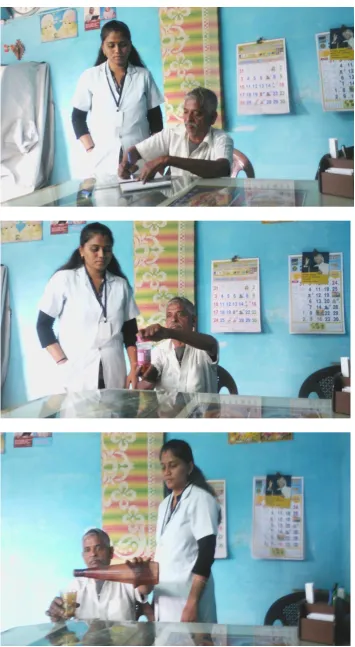
The treatment program was given for a24 The task which includes was;
1. Open jar of bottle
2. To dial a phone
3. Draw a line with a ruler
4. Pour a glass of water
5. Do up five buttons
6. Wring out washcloth
7. Dry back with towel
8. put toothpaste on brush
9. Clean a pair of eyeglasses
10.Place container on table
Group A- Motor relearning programme with trunk restraint
Patient position: sitting on a chair with backrest with the hands placed on the
table with elbow flexed 90 degree, trunk movement were prevented by body and
shoulder belts are attached to the chair back.
Therapist position: stand lateral to the patient
procedure
During Motor relearning program with trunk restraint, subjects were seated in a chair close to a table.
The compensatory trunk movements was restricted by using belt attached
to the chair back.
subjects were instructed to draw a straight line by the scale using both of
their hands. The pencil, scale are set at top edge of paper. Paper placed at the
25
The subject could reach and picks up the pencil,maintain the grip on the
pencil and instructed to draw a line on the paper.
The practice consisted of shoulder movements, elbow flexion, wristmovements followed by finger movements on non- paretic hands.
The effect of motor relearning programme with trunk restraint,limiting trunk
motion in patients after stroke has been to encourage more normal elbow and shoulder motion during the activities
During an 6 week training program, patients were asked to try the
activites, with the restriction of compensatory movement.
26
27
Group B - Motor relearning programme without trunk restraint
Patient position: sitting on a chair with back rest in elbow flexed 90 degree .
Therapist position: stand lateral to the patient.
Procedure:
The subject was made to sit comfortably with back support.
The subject was instructed to darw a line with scale using both hands
and they were instructed not to rest forearms on the table.
The pencil and scale were set at top edge of paper,it was placed at the
corner of the table.
The arm mobility and stabilization was assessed by the therapist,the
subject pick and grip of the ruler are analyzed.
In this technique, motor relearning programme the patient would use the trick
movement with the help of trunk to complete the task.
To compensate the upper limb impairment, participants with hemiparesis can use
alternative strategies to improve functional arm and hand use. when the active range
of arm motion is decreased, individuals can transport the hand to the object by using
the trunk. This increased trunk recruitment is a compensatory mechanism by which
the central nervous system may extend the reach of the arm when the control of the
active range of the arm joints is limited
28
29 3.10 Collection of data
The selected 20 stroke subjects were divided into 2 groups
Group A– Motor relearning programme with trunk restraint
Group B– Motor relearning programme without trunk restraint
Both the experimental groups were given treatment for continues of 6 week.
Before and after the completion of 6 week treatment intervention,upper extremity
function was evaluated by chedoke mc master scale.
3.11 Statistical technique
The collected data were analysed by paired‘t’ test to find out significance difference between pre and post test values of experimental groups and
further unpaired ‘t’ test was applied to find out the difference between groups
30
CHAPTER IV
DATA ANALYSIS AND RESULTS
4.1. Data analysisThis chapter deals with the systematic presentation of the analyzed
data followed by the interpretation of the data
a) Paired ‘t’ test
t =
Where,
d– Difference between pre test and post test values
Mean of difference between pre test and post test values
n – Total number of subjects
s– Standard deviation
b ) Un paired t’ test
31 Where,
S = Standard deviation
n1 = Number of subjects in Group A = Number of subjects in Group B
= Mean of the difference in values between pre-test and post-test in Group- A
= Mean of the difference in values between pre-test and post-test in Group- B
32 Table 1
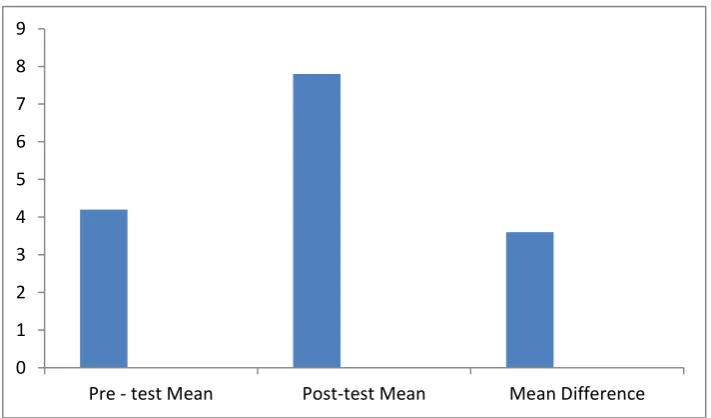
The table shows mean value, mean difference, standard deviation and paired
‘t’ value between pre test mean, post test scores of frequency of upper limb
movement for group A.
Measurement Mean Mean
Difference
Standard
Deviation
Paired’t’
value
Pre – test
Post test
4.2
7.8
3.6 0.547 14.7 *
* 0.005 level of significance
In Group A for frequency of upper limb movement the calculated paired‘t’ value is 14.7 and‘t’ table value is 2.132at 0.005 level. Since the calculated‘t’ value is more than ‘t’ table value above value shows that there is significant frequency of upper limb movement following motor relearning programme with trunk restraint among stroke subjects.
Figure: 3 - Shows the pre test mean, post test mean and mean difference of
frequency of upper limb movement for group A.
0 1 2 3 4 5 6 7 8 9
[image:32.595.86.513.181.326.2] [image:32.595.120.476.485.694.2]33 Table 2
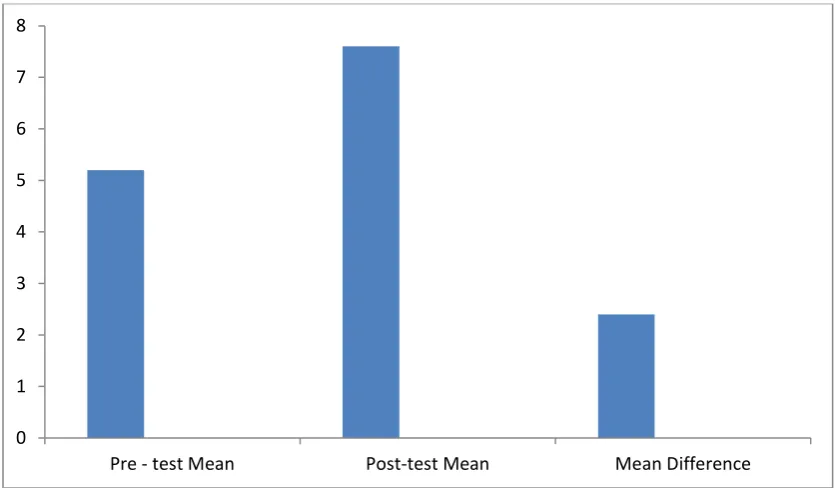
The table shows mean value, mean difference, standard deviation and
paired‘t’ value pre test and post test score of frequency of upper limb movement
for group B.
* 0.005 level of significance
In Group B for frequency of upper limb movement the calculated paired‘t’ value is 6.01 and table value is 2.132 at 0.005 level. Since the calculated‘t’ value is more than ‘t’ table value above value shows that there is significant difference in frequency of upper limb movement following motor relearning programme without trunk restraint among stroke subjects.
Figure: 4 – Shows the pre test mean, post test mean and mean difference of
frequency of upper limb movement for group B.
0 1 2 3 4 5 6 7 8
Pre - test Mean Post-test Mean Mean Difference
Measurement Mean Mean
Difference
Standard Deviation
Paired ‘t’ value
Pre – test
Post – test
5.2
7.6
[image:33.595.86.514.204.300.2] [image:33.595.90.508.438.682.2]34 Table 3
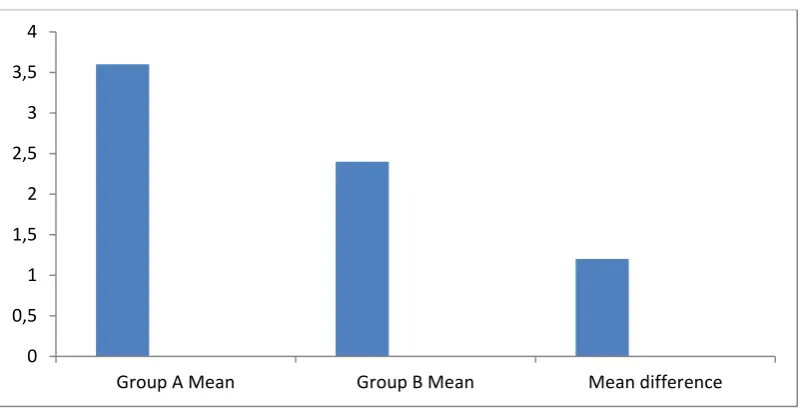
The table shows group A mean, group B mean, standard deviation and
unpaired‘t’ value for frequency of upper limb movement .
* 0.005 level of significance
In Group A and B for frequency of upper limb movement the calculated
unpaired‘t’ value is 2.453 at 0.005 level. Since the calculated‘t’ value is more than ‘t’
table value above value shows that there is significant difference between motor
relearning program with trunk restraint and motor relearning program without trunk
restraint in the management of upper limb function among stroke patients.
Figure: 5 – Shows the group A mean, group B mean and mean difference for
frequency of upper limb movement .
0 0,5 1 1,5 2 2,5 3 3,5 4
Group A Mean Group B Mean Mean difference
Sl. No Variable Mean
Difference
Standard
Deviation
Unpaired ‘t’
value 1. 2. Group A Group B 3.6
[image:34.595.92.494.504.708.2]35 4.2 Results:
20 stroke patients was treated for one session a day like that 6 weeks. Before
starting the treatment, upper extremity function was graded by chedoke mc master
scale. The measurement was repeated at the end of the study duration.
Analysis of Dependent Variable of upper extremity function in Group A:
The calculated paired‘t’ value is 3.87 and the‘t’ table value is 3.250 at 0.005 level of
significance. Hence, the calculated‘t’ value is greater than the table ‘t’ value there is
significant difference in functional activities of upper limb following motor relearning
programme with trunk restraint among stroke subjects.
Analysis of Dependent variable of upper extremity function in Group B:
The calculated paired‘t’ value is 12.85 and the table‘t’ value is 3.250 at 0.005 level
of significant. Hence, the calculated‘t’ value is greater than the table ‘t’ value there is
significant difference in functional activities of upper limb following motor relearning
program without trunk restraint in stroke subjects.
Analysis of Dependent variable of upper extremity function between
Group A and Group B:
The calculated unpaired‘t’ value is 4.09 and table ‘t’ value is 2.878 at 0.05
level of significance. Hence, the calculated‘t’ value is greater than table ‘t’ value there
is significant difference between motor relearning programme with trunk restraint and
motor relearning programme without trunk restraint in stroke subjects.
When comparing the mean values of Group A and B, Group A subjects treated
with motor relearning programme with trunk restraint showed more difference than
Group B. Hence it is concluded motor relearning programme with trunk restraint is
more effective than motor relearning programme in improving functional activities of
36
CHAPTER V
DISCUSSION
The study was conducted on 20 subjects. The subjects were divided into
two groups, Group A and Group B.Group A received motor relearning programme
with trunk restraint.Group B received motor relearning programme without trunk
restraint. The study was conducted to compare effectiveness of motor relearning
programme with trunk restraint and without trunk restraint in the management of
upper limb functional activities among stroke patients.
Carr et al., 1987; Johanne et al., 2006 Concluded that MRP is more
effective in early enhancement of activities of daily living and ambulation starting at 2
weeks of treatment. Task specific training of MRP in initial phase of rehab helped in
learning of the motor control and pattern of movement for specific activity. This early
improvement in MRP can be due to early intervention and introducing normal routine
of daily life. This active participation and self reliance helped in motor learning of the
pattern of movement, in a given context and task. Successful performance of
functional activities requires interaction between person’s abilities and environmental
demands. MRP focuses on training task performance in an environmental context.
Motor Relearning Program is based on task specific training which
involves assessment and training in seven different task of daily life. There analysis of
abnormal pattern movement in these task, correction of these abnormal patterns and
repetitive practice of a task which can facilitate the development of new motor
programs or the refinement of existing programs in order to improve performance of
the task. It involves training & practice of these tasks in different environment and
daily life situations .Present study shows that motor relearning program having
37
Richardson et al,.(2015), Hussein et al.,(2013) Concluded that task-specific
training with trunk restraint can be suggested as an effective method in improving
reaching kinematics and arm movement quality in patients among stroke
patients.Trunk-restraint group showed a statistically very high significant decrease in
trunk displacement and increase in elbow extension voluntary range of motion.The
unre-stricted and unguided repetition of a motor task may reinforce compensatory
movements. Trunk restraint allowed the patients to use joint ranges that were present
but not recruited during unrestrained reaching.
Trunk restraint is a simple, cost-effective technique that may help to reduce
compensatory trunk/shoulder/elbow movements in the post-stroke adult
population.The ability to use the shoulder and elbow to perform functional reach is a
primary goal in post-stroke recovery.Trunk restraint enables functional reach practice,
while limiting compensatory strategies in the moderately to severely impaired stroke
population. The purpose of the application of trunk restraint during the practice of
upper limb tasks is to improve arm motor function by providing more appropriate
afferent information to the central nervous system from the affected arm to facilitate
the reappearance of more efficient movement pattern. Present study shows that motor
relearning programme with trunk restraint having significant different in upper
extremity function among stroke patients . So,this technique is very useful in the
38
CHAPTER VI
CONCLUSION
An experimental study was conducted to investigate the effectiveness of motor
realearning programme with trunk restraint and motor relearning programme without
trunk restraint in the management of stroke.
20 patients with stroke were included in this study and randomly divided into
two groups A and B each group consist of 10 subjects. Group A was treated motor
relearning programme with trunk restraint. Group B was treated with motor relearning
programme without trunk restraint.Upper limb movement were assessed before and
after intervention by chedoke mc master scale.
The statistical result shows that there is improvement in both the groups.
But when comparing both it was found that motor relearning programme with trunk
restraint is more effective than motor relearning programme without trunk restraint
among stroke patients.
6.1Limitations
This study was limited to age group between45 - 65 yrs only. The study sample size was small.
The duration of treatment can be increased.
This study was limited only to the MCA artery involvement.
Only upper limb activities are involved.
39 6.2 Recommendation
A study can also be done for the other age groups.
A study can also be done using large population.
A study can also be done with other form of exercise combination to know the
effect of combined treatment.
A study can be done with different variables.
40
CHAPTER VII
BIBLIOGRAPHY
Books Allan H. ropper martin A . samuels 2012 – adams and victors principles of
neurology 9th edition
Andrews (2003) - Short-Term recovery of limb muscle strength after acute
stroke. Arch physic med rehabilitation,3rd edition
Glen gillen and burkhardt (1998)stroke rehabilitation a function based
approach 2nd edition.
Lieper (2009) - Physical fitness training for stroke patient (Review) Cochrane
Library .
Mangold (2009) - Motor training of upper extremity in early stroke
rehabilitation. Neuro rehabilitation and neural repair, VOL 23.
Morris et al., (1997)- chedoke mc master scale for motor recovery after
stroke. Neuro rehabilitation. 8th edition
Oujamaa (!995) - Annals of Physical and Rehabilitation Medicine 3rd edition
Patricia - Cash textbook of neurology for physiotherapist,4th edition 1993
Saunders (2006) - Physical fitness training for stroke patients, 3rd edition,
Susan B O’ Sullivan, et al ., (2007) – Physical Rehabilitation,1st edition. New
Delhi: Jaypee Brothers Medical Publishers Ltd, page no-381 to 1077.
41 Journals
Bastian A.J. et al.,: “How do strength, sensation, spasticity and joint
individuation relate to the reaching deficits of people with chronic
hemiparesis?” Brain, (5): 1035-1046, 2004.
Dunkley et al., (2004) -The indian journal of stroke rehabilitation therapy,
regarding chedoke scale in the assessment of stroke patients volume – 12,
Gowland et al.,(2001) - Reliability of the chedoke mc master scale for
Measurement of quantity and quality of upper limb function among strong
patients , Vol-5.
Lam m c et al., (2005) Acceptability, reliability, validity and responsiveness
of chedoke scale.
Linda warner et al., (2003) – evaluation of functional motor performance in
subacute stroke,
Magdalena et al., (2011) Indian journal of physiotherapy for stroke patients,
volume – 5.
Manjusha Vagal et al.,(2001) functional arm reaching pattern with trunk
restraint to overcome the disability of stroke patients
Massie et al.,.: Elbow extension predicts motor impairment and performance
after stroke. Rehabil. Res. Pract., pp. 1-7, 2011.
Qiang wang et al., (2006 ) - Strengthening inter-ventions increase strength
and improve activitiy after stroke; a systematic review. Australian Journal of
Physiotherapy.
Roby et al., “Motor compensation and recovery for reaching in stroke
42
Reijman et al., (2001) Indian journal of physiotherapy, volume-2.
Sashford et al., (1999) Effect of motor relearning program techniques on
motor function of patients with stroke. Journal of physiotherapy, Nov-29,
page no-661.
Stella M michelsen et al., (2014) short term effects of trunk restraint to
recover reach grasp movement for stroke rehabilition , volume 8.
Stratford et al., (2005) Reliability and validity of the chedoke scale for
disability in patient with stroke . Internation al journal of Rehabilitation
Research.2008, Jun-31.
Tam Dickson et al ., (2007)Effectiveness of motor relearning programme
following stroke – Indian Journal of Physiotherapy and Occupational
Therapy. Vol.1. 2007.
Winsterin et al.,(2004) - A randomized controlled comparison of Upper
Extremity Rehabilitation strategies in acute stroke: A pilot study of imitate
and long-term outcome.
Websites
www.google scholar.com
www.pubmed.com
www.physiopedia.com
www.SCIRUS.com
43
CHAPTER VIII
ANNEXURES
ANNEUXURE - 1ASSESSMENT CHART
Physical Therapy assessment chart
Subjective assessment:
Name
Age
Sex
Occupation
Chief Complaints
Medical history
a)Past medical history:
b)Present illness:
Family/Social Therapy
Associated problems
Vital signs
44 Objective assessment
On observation
Built
Posture
Attitude of limbs
Muscle wasting
Edema
Involuntary movement
Gait
Deformity
On Palpation
Tenderness
Swelling
Muscle tightness
Warmth
Other if any
Pain assessment
Side
Site
Duration
Nature
Aggravation factor
Relieving factor
45 On examination
Higher function
• Conciousness
• Cognition
• Orientation
• Attention span
• Memory
• Abstract thinking
• Insight, judgement, planning
• Spatial
• Perception.
Speech
• Sound production
• Articulation
• Understanding & expressing words
Hearing
Cranial nerves
• Olfactory
• Optic
46
• Trigeminal
• Facial nrve
• Vestibule cochlear
• Glossophayngeal
• Vagus
• Accessory
• Hypoglossal
Musculoskeletal system
• Fracture
• Muscle contracture
• Joint stiffness
• Joint subluxation
• osteoporosis
Reflexes
• Superfacial
• Deep
• Primitive
47 Co ordination
• Equilibrium assessment
• Non equilibrium assessment
Balance
• Static
• Sitting
• Standing
• Balance reaction
Hand function
• Power and precision grip
• Reaching
• Grasping
• Releasing
Functional Assessment
• ADL
• Functional status ( Disease specific scales)
Diagnosis
Problem list
48 ANNEXURE – 2
DESCRIPTION OF THE LEVELS OF FUNCTION FOR THE CHEDOKE
ACTIVITY SCALE
7 COMPLETE INDEPENDENCE - All of the tasks are performed safely,
without modification, assistive devices or aids, and within reasonable
time.
6 MODIFIED INDEPENDENCE - Activity requires any one or more of the
following: an assistive device, more than reasonable time, or there are
safety (risk) considerations.
5 SUPERVISION - The client requires no more help than standby, cueing or
coaxing, without physical contact. A helper sets up needed items or
applies orthoses.
4 MINIMAL ASSISTANCE - With physical contact the client requires no more
than touching, and client expends 75% or more of the effort.
3 MODERATE ASSISTANCE - Weak limb manipulates and stabilizes during
the task. The client requires more help than touching, or expends
2 MAXIMAL ASSISTANCE - Weak limb stabilizes during task. The client
expends less than 50% of the effort, but at least 25%.
49 ANNEXURE - 3
EQUIPMENT REQUIRED :
height adjustable table
chair/wheelchair belt to restraint trunk
200g jar of an container
push-button telephone
12”/30cm ruler
8.5” x 11” paper
pencil
250 ml plastic cup
wash cloth
50 ANNEXURE -4
The 6 stages of brunnstorm approach:
Stage Description
1 Immediately following a stroke there is a period of flaccidity whereby no movement of the limbs on the affected side occurs.
2
Recovery begins with developing spasticity, increased reflexes and synergic movement patterns termed obligatory synergies. These obligatorysynergies may manifest with the inclusion of all or only part of the synergic movement pattern and they occur as a result of reactions to stimuli or minimal movement responses.
3
Spasticity becomes more pronounced and obligatory synergies become strong. The patient gains voluntary control through the synergy pattern, but may have a limited range within it.
4
Spasticity and the influence of synergy begins to decline and the patient is able to move with less restrictions. The ease of these movements progresses from difficult to easy within this stage.
5
Spasticity continues to decline, and there is a greater ability for the patient to move freely from the synergy pattern. Here the patient is also able to demonstrate isolated joint movements, and more complex movement combinations.
51 ANNEXURE - 5
PATIENT CONSENT FORM
I . . . Voluntarily consent to
participate in the research named on “A COMPARATIVE STUDY ON THE
EFFECTIVENESS OF MOTOR RELEARNING PROGRAMME WITH
TRUNK RESTRAINT AND WITHOUT TRUNK RESTRAINT IN THE
MANAGEMENT OF UPPER LIMB FUNCTIONAL ACTIVITIES AMONG
STROKE PATIENTS ”.
The researcher has explained me the treatment approach in brief, risk of
participation and has answered the questions related to the study to my satisfaction.
Signature of patient Signature of researcher
Signature of witness
Date :