EFFECTIVENESS OF STRUCTURED TEACHING PROGRAMME
ON EXPRESSED EMOTIONS AND KNOWLEDGE REGARDING
RELAPSE PREVENTION AMONG CAREGIVERS OF
PATIENTS WITH SCHIZOPHRENIA IN
A SELECTED HOSPITAL, SALEM.
By
Reg. No: 301231403
A DISSERTATION SUBMITTED TO
THE TAMILNADU DR. M.G.R. MEDICAL UNIVERSITY, CHENNAI. IN PARTIAL FULFILLMENT OF THE REQUIREMENT FOR THE
DEGREE OF MASTER OF SCIENCE IN NURSING
PSYCHIATRIC (MENTAL HEALTH) NURSING
CERTIFICATE
Certified that this is the bonafide work of Ms. A.SAHAYA VIVITHA, Final year M.Sc.(Nursing) student of Sri Gokulam College of Nursing, Salem, submitted in partial fulfillment of the requirement for the Degree of Master of Science in Nursing to The Tamil Nadu Dr. M.G.R. Medical University, Chennai under the Registration
No.301231403.
College Seal:
Signature: ………..……….
Prof. Dr. K. TAMIZHARASI, Ph.D (N).,
PRINCIPAL,
SRI GOKULAM COLLEGE OF NURSING,
3/836, PERIYAKALAM,
NEIKKARAPATTI ,
EFFECTIVENESS OF STRUCTURED TEACHING PROGRAMME
ON EXPRESSED EMOTIONS AND KNOWLEDGE REGARDING
RELAPSE PREVENTION AMONG CAREGIVERS OF
PATIENTS WITH SCHIZOPHRENIA IN
A SELECTED HOSPITAL, SALEM.
Approved by the Dissertation committee on: 26. 11. 2013
Signature of the Clinical Specialty Guide: ………..
Mrs.S.VANITHA, M.Sc (N),
ProfessorandHead of the department, Mental Health Nursing,
Sri Gokulam College of Nursing, Salem – 636 010
Signature of Medical Expert ……….
Dr.C.BABU, M.D.,
Consultant Psychiatrist,
Child, Adolescent & De-addiction specialist, Sri Gokulam Hospital,
Salem – 636 004.
--- ---
Signature of the Internal Examiner Signature of the External Examiner
ACKNOWLEDGEMENT
“Gratitude is not only the greatest of virtues but the parent of all others.”
- Cicero
I wish to express my humble and sincere gratitude to God Almighty for bestowing his beautiful grace, wisdom, courage for the successful completion of this study in an efficient manner.
I am indebted to many persons, and would like to express my gratitude to all who guided, advised and moulded this piece of work and provided information, without which I would never have completed this endeavour. Their precious time, energy, experience and suggestions were a source of inspiration and sustenance.
I am substantially thankful to Dr.K.Arthanari, M.S., Managing Trustee of Sri Gokulam College of Nursing for all his blessings, encouragement and dedication for academic excellence and giving formidable opportunity to finish my project peacefully.
It’s my privilege to express the deepest sense of gratitude to acknowledge our Principal Prof.Dr.K.Tamizharasi, Ph.D. (N). , Principal, Sri Gokulam College of Nursing for her enduring catalytic encouragement and without her guidance and support this work would have been impossible.
A sincere deepest gratitude is expressed to Prof.Kamini Charles, M.Sc(N).,
Vice principal and research coordinator, Sri Gokulam College of Nursing for her valuable suggestions, valuable guidance and support to carry out my Research work completely with enthusiasm.
It is my privilege to express the deepest gratitude to my research guide and class coordinator Mrs.S.Vanitha, M.Sc(N)., Head of the Psychiatric Nursing Department for her immense support and guidance throughout the work. I am indebted to her for constant interest, untiring guidance, valuable suggestions, continuous support and encouragement to complete this research work.
My special thanks extended to Dr.C.Babu, M.D, Consultant Psychiatrist, Child and Adolescent and Deaddiction specialist, Sri Gokulam Hospital,Salem, who provided me with very valuable guidance and support throughout my study.
I extend my great jubilation thanks to Mrs.J.Devikanna, M.Sc(N), Reader, for her guidance, suggestions, support and motivation to bring this study as a successful one.
I also extend my thanks to Mrs.D.Shoba Selvi, M.Sc(N),
Mr.S.Nandakumar, M.Sc(N), Mrs.Samayarani M.Sc(N)., Lecturers, Department
of Psychiatric Nursing, for their motivation to bring this study as a successful one. My sincere thanks to Co-Coordinator Mrs.Nagalakshmi, M.Sc(N), HOD & Associate Professor, Child Health Nursing Department for their timely help and guidance.
A special note of thanks to the All M.Sc(N), Faculties of Sri Gokulam College of Nursing who gave timely help and support to complete the study.
I am obliged to the Medical and Nursing Experts for validating the tool and content used in my study.
I widen my genuine gratitude to the Dissertation Committee for offering constructive criticism and due sanction for carrying out this research study.
I am thankful to Mrs.A.Mary Manjula Rose, M.A,, M.Ed, M.Phil., Dr.N.Krishnan, M.A., Ph.D., whose editing suggestions and precise sense of language were decisive towards the completion of this research study.
I extend my sincere thanks to all samples who participated in the study whole-heartedly without their cooperation this study would have been impossible.
I also wish to take the opportunity to express my thanks to
Mr.Jayaseelan.P,M.Sc., Librarian Sri Gokulam College of Nursing, Salem and other librarians of The Tamilnadu Dr. MGR Medical University Chennai, Apollo College of Nursing, Chennai, and NIMHANS, Bangalore and CMC, Vellore for their help and assistance offered in obtaining the literature.
I pay my honest thanks to Mr.V. Murugesan, Shri Krishna Computers and Printers for their excellent and untiring effort in materializing my dissertation work.
I would like to express my deep sincere thanks with love to my wonderful and lovable parents Mr.S.Antony Pitchai, Mrs.A.Angela and My Brothers
Mr.A.George Agnel Vishanth, Mr.A.Arockia Deepak Vinoth and My Sisters
Ms.A.Siluvai Joe Sheeba, MS.A.Deepa Arul Sheela for their fruitful prayers, endless patience, inspiration and support throughout this endeavour.
I express heartfelt gratitude and thanks to all my Titans and especially to
Ms.Anfy Maria A.T, Ms.Linsa Baby, Mr.Loganathan N and Ms.N.Ramya,
Mr.Sanjai Kumar A.
TABLE OF CONTENTS
CHAPTER
NO CONTENT
PAGE NO
I INTRODUCTION 1-13
Need for the study 4
Statement of the problem 6
Objectives 6
Operational definitions 7
Assumptions 8
Hypotheses 8
Delimitations 9
Projected Outcome 9
Conceptual Framework 9
II REVIEW OF LITERATURE 14-26
Literature related to Expressed Emotions and relapse on schizophrenia
Literature related to Expressed Emotions among caregivers of patients with schizophrenia.
Literature related to structured teaching programme on Expressed Emotions and relapse prevention on schizophrenia among care givers of patients with schizophrenia.
14
17
21
III METHODOLOGY 27-34
Research approach 27
Research design 27
Population 29
Description of settings 29
Variables 29
Sampling 29
Description of the tools 30
Validity and Reliability 32
Pilot study 33
Method of Data Collection 33
Plan for Data Analysis 34
IV DATA ANALYSIS AND INTERPRETATION 35-57
V DISCUSSION 58-62
VI SUMMARY, CONCLUSION, IMPLICATIONS
AND RECOMMENDATIONS
63-67
BIBLIOGRAPHY 68-73
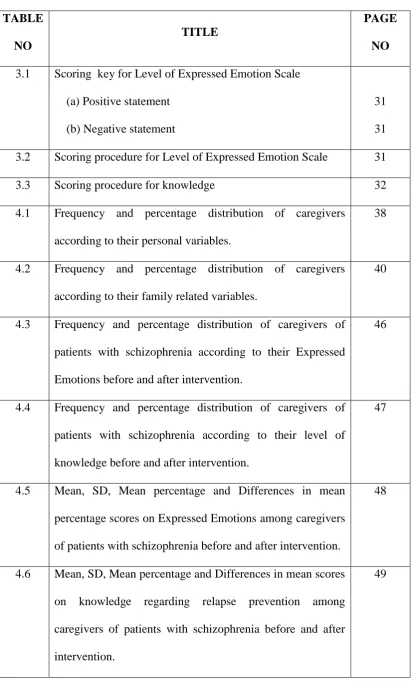
LIST OF TABLES
TABLE
NO
TITLE
PAGE
NO
3.1 Scoring key for Level of Expressed Emotion Scale (a) Positive statement
(b) Negative statement
31 31 3.2 Scoring procedure for Level of Expressed Emotion Scale 31 3.3 Scoring procedure for knowledge 32 4.1 Frequency and percentage distribution of caregivers
according to their personal variables.
38
4.2 Frequency and percentage distribution of caregivers according to their family related variables.
40
4.3 Frequency and percentage distribution of caregivers of patients with schizophrenia according to their Expressed
Emotions before and after intervention. 46
4.4 Frequency and percentage distribution of caregivers of patients with schizophrenia according to their level of knowledge before and after intervention.
47
4.5 Mean, SD, Mean percentage and Differences in mean percentage scores on Expressed Emotions among caregivers of patients with schizophrenia before and after intervention.
48
4.6 Mean, SD, Mean percentage and Differences in mean scores on knowledge regarding relapse prevention among caregivers of patients with schizophrenia before and after intervention.
[image:8.595.111.525.89.773.2]4.7 Area wise Mean, SD, Mean percentage and Differences in Mean percentage among caregivers of patients with schizophrenia according to the pre test and post test scores on knowledge regarding expressed emotions
50
4.8 Mean, Standard deviation, Paired ‘t’ test value among caregivers of patients with schizophrenia according to their pre test and post test scores on knowledge regarding relapse prevention.
52
4.9 Chi- square test on expressed emotions among caregivers and their demographic variables.
55
4.10 Chi- square test on knowledge among caregivers and their personal variables.
56
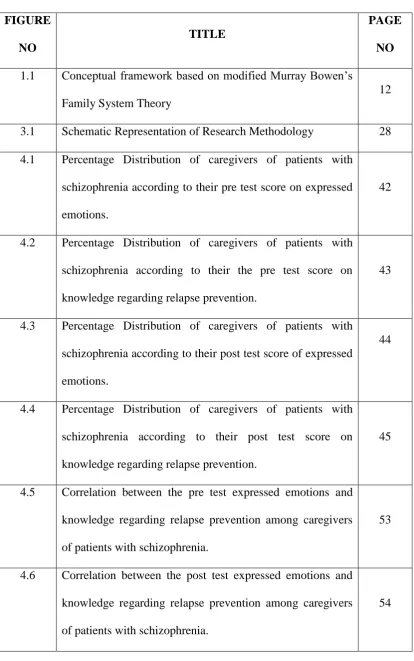
LIST OF FIGURES
FIGURE
NO
TITLE
PAGE
NO
1.1 Conceptual framework based on modified Murray Bowen’s Family System Theory
12
3.1 Schematic Representation of Research Methodology 28 4.1 Percentage Distribution of caregivers of patients with
schizophrenia according to their pre test score on expressed emotions.
42
4.2 Percentage Distribution of caregivers of patients with schizophrenia according to their the pre test score on knowledge regarding relapse prevention.
43
4.3 Percentage Distribution of caregivers of patients with schizophrenia according to their post test score of expressed emotions.
44
4.4 Percentage Distribution of caregivers of patients with schizophrenia according to their post test score on knowledge regarding relapse prevention.
45
4.5 Correlation between the pre test expressed emotions and knowledge regarding relapse prevention among caregivers of patients with schizophrenia.
53
4.6 Correlation between the post test expressed emotions and knowledge regarding relapse prevention among caregivers of patients with schizophrenia.
54
LIST OF ANNEXURES
ANNEXURE TITLE
PAGE
NO
A.
Letter seeking permission to conduct a research study
i
B.
Letter granting permission to conduct a research study
ii
C.
Letter requesting opinion and suggestion of experts for content validity of the research tool
v
D Tool for Data Collection vi
E. Lesson plan xxx
F. Certificate of Validation lxii
G. List of Experts lxiii
H. Certificate of Editing lxxi
I. Photos lxxiii
ABSTRACT
This study was conducted to evaluate the effectiveness of structured teaching programme on expressed emotions and knowledge regarding relapse prevention among caregivers of patients with schizophrenia in a selected hospital, Salem. The design adopted was pre experimental one group pre test post test design. The non probability purposive sampling technique was used to select the 30 caregivers from Sri Gokulam Hospital. Expressed Emotions was assessed by using Level of Expressed Emotions Scale (LEE) and knowledge regarding relapse prevention was assessed by using structured self reporting questionnaire. Data were analyzed by using both descriptive and inferential statistical methods. The study finding revealed that during pre test, 12(40%) had low Expressed Emotions and 18(60%) had high Expressed Emotions. Whereas during post test, 23(76.67%) had low Expressed Emotions and 7(23.33%) had high Expressed Emotions. During pre test, 23(76.67%) had inadequate knowledge and 7(23.33%) had moderately adequate knowledge regarding relapse prevention. During post test, 23(76.67%) had adequate knowledge and 7(23.33%) had moderately adequate knowledge regarding relapse prevention. The pre test mean score on Expressed Emotions was 23.43±11.20 and knowledge regarding relapse prevention was 11.23±2.13. The post test mean score on Expressed Emotion was 14.33±8.20 and knowledge was 18.97±1.94.
The obtained paired ‘t’ test value was 31.13 which was significant at p ≤ 0.05 (table value 2.05) level. This indicates that the structured teaching programme was effective in improving the level of knowledge regarding relapse prevention among caregivers of patients with schizophrenia. Hence the hypothesis H1 was retained. The
correlation between the Expressed Emotions and knowledge in pre test score was 0.15 and the post test score was 0.12. This revealed that there was a positive correlation. Hence the hypothesis H2 was retained at p≤0.05 level. There was a significant
association found between the Expressed Emotions, knowledge regarding relapse prevention with relationship to the client (χ2
=13.18 at p≤0.01 and χ2 =8.4 at p≤ 0.05 level respectively) Hence H3 was retained. This study concluded that structured
1 CHAPTER -I
INTRODUCTION
“Perhaps it is good to have a beautiful mind, But an even greater gift is to discover
a beautiful heart.”
- John Nash
Schizophrenia is a severe mental disorder that has been recognized and described throughout the history (Stone, 2006). Eugen Bleuler (1857-1939) suggested the term “schizophrenia” emphasizing the “splitting of the mind (Niraj Ahuja, 2011).
Schizophrenia affects around 0.3 – 0.7% of people at some period in their life or 24 million people worldwide as of 2011 (about one of every 285). Each year, one in 10,000 people at the age group of 12 to 60 develops schizophrenia. It is diagnosed 1.4 times more frequently in males than females and typically appears earlier in men and the peak ages of onset are 20–28 years for males and 26–32 years for females. Onset in childhood is much rarer because most of the time the onset is middle or old age
(WHO, 2011).
Risk factor for developing schizophrenia are gene variations, maternal infections and flu during pregnancy, baby delivery complications, birth of the baby during winter season, older age of father, poor mother and child relationship, social isolation during childhood, child abuse (physical, sexual and emotional abuse, and emotional neglect), head injury, broken homes, social stress associated with immigrants with black skin colour, low social economic status, lower educational achievement and higher rates of unemployment (Alan S. Brown, 2004).
2
harm them, “lose touch” with reality, hallucinations are things a person sees, hears, smells, or feels that no one else can see, hear, smell, or feel, delusions are fixed, false beliefs that are not part of the person’s culture and do not change, agitated body movements, unusual or dysfunctional ways of thinking, flatten affect, emotional withdrawal, poverty of speech and difficulty in abstract thinking, asociality, avoliation, apathy, attentional impairment, not able to understand information and use it to make decisions, trouble focusing or paying attention, problems with ability to use information immediately after learning it (Lindenmayer& Khan, 2006).
Healthy family social environment may reduce schizophrenia risk by 86% in high risk groups. Pharmacological therapies and psychosocial interventions play a role in the prognosis of schizophrenia as an essential component of a comprehensive schizophrenia treatment. The Schizophrenia can be controlled but not curable. Rehabilitation emphasizes social and vocational training to help people with schizophrenia function better in their communities (William M,et.al, 2006).
3
involvement from family members, low expressed emotions include positive regard and warmth (Kissling 2005).
Expressed Emotions (EE) are adverse family environment, which includes the quality of interaction patterns and nature of family relationships among the family caregivers and patients of schizophrenia and other psychiatric illness. Expressed Emotion is divided into high and low. There are five components of Expressed Emotions, which are critical comments, hostility, emotional over involvement, positive regard, and warmth. Research has demonstrated that individuals from families with high "Expressed Emotion" are 3.7 times more likely to relapse than in families from low Expressed Emotion families (William M, et.al, 2004). The importance of Expressed Emotion depends on persons with mental illness, such as schizophrenia, who live with close relatives and who have negative attitudes and social withdrawal by the patient are significantly more likely to relapse. The amount of face to face contact the patient has with his or her relative is also an important indicator in the prognosis of schizophrenia together with high expressed emotion in home environment (Sullivan, 2006).
4
expressed emotions family members) are found to be factors related to a better course in schizophrenia (Eaton, 2006).
Main goal of psychosocial interventions are primarily aimed at reducing from high to low expressed emotions. Psychosocial interventions are psycho education, communication skills, problem-solving skills, social skills and occupational training, crisis management, and healthy coping strategies with the continuous medicines proved to be effective in reducing the high Expressed Emotions [EE] and improving treatment outcome (Anekal C, et .al, 2012).
Need for the Study:
The Prevalence rate of schizophrenia is approximately 1.1% of the population over the age of 18 or one in life time 51 million people worldwide suffer from schizophrenia. It includes 6 to 12 million people in China , 4.3 to 8.7 million people in India, 2.2 million people in USA ,285,000 people in Australia, Over 280,000 people in Canada and over 250,000 diagnosed cases in Britain. Schizophrenia ranks among the top 10 causes of disability in developed countries worldwide. The prevalence for the 2014 year is about one in 4,000. So about 1.5 million people will be diagnosed with schizophrenia in worldwide. In the United States 100,000 will be diagnosed with schizophrenia (US NIMH 2012).
5
longitudinal study in urban Chennai, found an incidence rate of 2.1 per 10,000 by the community survey (Parmanand Kulhara, 2010).
A study was conducted in Tamil Brahmin caste. The result revealed that (499/504) individuals having schizophrenia Most affected individuals exhibited negative symptoms (>90%) and a severe, chronic course. All participants lived in the same geographic and climatic region and most affected individuals resided with close family members, increasing uniformity of the socio cultural environment (Thara R, et. al, 2009).
Another contemporary study done in Finland revealed that in the healthy family only 13% of the children developed schizophrenia, whereas around 87% of the children of dysfunctional families developed schizophrenia (Pekka Tienari, et.al, 2004).
In Australia, the findings of a research which was designed to investigate the relapse rates in schizophrenia showed that high contact with high expressed emotions relatives (more than 35 hours per week) was more likely to increase relapse 87% as compared to only 13 % in low expressed emotion relatives (Muazzaz, 2009). A study was conducted in German. Relapse was expected in 70% patients after first episode, 70% of patients show an incomplete remission after first episode. This includes cognitive decline (57%), persistence of negative symptoms (43%), often associated with Social disabilities, Social decline and a worsened quality of life. Risk of relapse after an episode remained increased throughout the life (Muller N, 2004).
6
and followed up. Nine months after discharge the relapse rate of the experimental group (16%) was lower than that of the control group (37%) (Li,et.al, 2005).
People with schizophrenia have 50 times higher risk of attempting suicide than the general population, it is the number one cause of death among people with schizophrenia, with an estimated 10 percent to 13 % and approximately 40% attempting suicide at least once (and as much as 60% of males attempting suicide). While comparing with the general population is around 0.01% (US, NIMH, 2012).
Researcher believes that this study is not only designed to reduce harmful family interactions, such as reducing criticism, hostility and emotional over involvement but also aimed to achieve certain objectives including helping the family to accept that their patient suffers from a mental illness, diminish felt responsibility for the illness by providing structured teaching programme on Expressed Emotions and knowledge regarding relapse prevention on schizophrenia which may lead to increase in knowledge on relapse prevention and decrease Expressed Emotions among caregivers. Hence the researcher selected this topic for the research study.
Statement of the Problem:
A Study to Evaluate the Effectiveness of Structured Teaching Programme on Expressed Emotions and Knowledge regarding Relapse Prevention among Caregivers of Patients with Schizophrenia in a Selected Hospital, Salem.
Objectives:
1. To assess the expressed emotions among caregivers of patients with schizophrenia.
7
3. To find out the effectiveness of structured teaching programme on expressed emotions and knowledge regarding relapse prevention among caregivers of patients with schizophrenia.
4. To correlate the expressed emotions and knowledge regarding relapse prevention among caregivers of patients with schizophrenia.
5. To associate the pre test expressed emotions with the selected demographic variables.
6. To associate the pre test knowledge regarding relapse prevention with the selected demographic variables.
Operational Definitions:
Effectiveness:
It refers to increase in post test scores after administering structured teaching programme on Expressed Emotions and knowledge regarding relapse prevention. This will be assessed by using structured self reporting questionnaire.
Structured Teaching Programme:
It is a well planned teaching programme which includes components like schizophrenia, relapse, Expressed Emotions and treatment for relapse and expressed emotions.
Expressed Emotions:
It refers to the undesirable emotions (high Expressed Emotions) of caregivers expressed towards the patient which is measured through Level of Expressed Emotions Scale (LEE).
Knowledge:
8 Relapse prevention:
It is the knowledge given to the caregivers pertained to definition of relapse, risk factors for relapse, early warning signs of relapse, relapse prevention strategies to decrease the Expressed Emotions of caregivers.
Caregivers:
It refers to whom ever being with the patient for minimum of three months and involved in caring the patient with schizophrenia.
Schizophrenia:
Any clients who come to hospital with major mental disorder diagnosed to have schizophrenia with second episode of illness.
Assumptions:
1. Level of knowledge regarding relapse prevention varies from individual to individual.
2. Caregivers of patients with schizophrenia may have high expressed emotions. 3. Structured teaching programme on expressed emotions and knowledge
regarding relapse prevention among caregivers may help them to reduce their expressed emotions.
Hypotheses:
H1: There will be a significant difference in the pre and post test knowledge
among care givers of patients with schizophrenia after structured teaching programme at p≤0.05 level.
H2: There will be a significant correlation between the Expressed Emotions and
9
H3: There will be a significant association between the pre test Expressed Emotions and with the selected demographic variables among care givers of patients with schizophrenia at p ≤ 0 .05 level.
H4: There will be a significant association between the pre test knowledge
regarding relapse prevention with the selected demographic variables among care givers of patients with schizophrenia at p ≤ 0 .05 level.
Delimitations:
The study was limited to
1. Clients who are diagnosed to have schizophrenia coming to hospital with the second episode of illness.
2. Relatives being with the patient minimum of three months to take care of the patient.
3. The data collection period was limited to 4 weeks.
Projected outcome:
1. This study would reveal the existing Expressed Emotions and knowledge on relapse prevention among caregivers of patients with schizophrenia.
2. This study would motivate the caregivers of patients with schizophrenia to update their knowledge regarding relapse prevention and Expressed Emotions. 3. This study would evaluate the effectiveness of structured teaching programme on Expressed Emotions and knowledge regarding relapse prevention among caregivers of patients with schizophrenia.
10 Conceptual Frame Work:
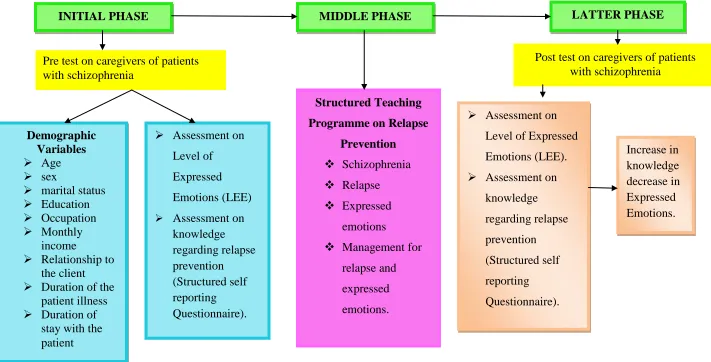
This research study is conducted to evaluate the effectiveness of structured teaching programme on Expressed Emotions and knowledge regarding relapse prevention among caregivers of patients with schizophrenia. The conceptual frame work for this study is based on modified Murray Bowen Family system theory (1966). According to Bowen, individuals cannot be understood in isolation from one another but rather as a part of their family, as the family is an emotional unit. Families are systems of interconnected individuals. Within the boundaries of the system, pattern develops as certain family member's behaviour is caused by and causes other family member's behaviours in predictable ways. Maintaining the same pattern of behaviours within a system may lead to balance in the family system.
Initiative phase:
According to Bowen the initiative phase focuses on information gathering in order to form ideas about the families’ emotional process. The presenting problem is followed through the history of the family and into the extended family system.
In this study initiative phase proceeded with gathering demographic information of caregivers of patients with schizophrenia, assessment of Expressed Emotions of caregivers by using Level of Expressed Emotions Scale (LEE) and assessment of knowledge regarding relapse prevention by using structured self reporting questionnaire.
Middle phase:
According to Bowen in the middle phase the therapist takes on the flavour of teaching, as clients learn about the predicable patterns of triangles.
11
risk factors for relapse, early warning signs of relapse and relapse prevention strategies.
Latter phase:
According to theorist, Clients practises measures control which could their emotional reactivity in their family and report their struggles and progresses into following sessions. In this theory there was no feedback provided to the clients.
In current study the changes expected as increase in knowledge regarding relapse prevention and decrease in Expressed Emotions.
12
Figure -1.1: Conceptual framework based on modified Murray Bowen’s Family System Theory (1966) on Effectiveness of Structured Teaching
Programmed on Expressed Emotions and Knowledge regarding Relapse Prevention among Caregivers of Patients with schizophrenia. INITIAL PHASE
Demographic Variables
Age
sex
marital status
Education
Occupation
Monthly income
Relationship to the client
Duration of the patient illness
Duration of stay with the patient
MIDDLE PHASE LATTER PHASE
Pre test on caregivers of patients with schizophrenia
Post test on caregivers of patients with schizophrenia
Assessment on Level of Expressed Emotions (LEE).
Assessment on knowledge regarding relapse prevention (Structured self reporting Questionnaire). Increase in knowledge decrease in Expressed Emotions. Structured Teaching
Programme on Relapse
Prevention Schizophrenia
Relapse
Expressed emotions
Management for relapse and expressed emotions.
Assessment on Level of
Expressed Emotions (LEE)
13 Summary:
14
CHAPTER - II
REVIEW OF LITERATURE
Review of literature is an essential step in the development of a research project. This helps the researcher to design the proposed study in a scientific manner so as to achieve the desired outcome as result. It also helps to determine the gaps, consistencies and inconsistencies in the available literature about particular subject under the study.
Review of literature for the present study was classified under the following headings,
1. Literature related to Expressed Emotions and relapse on schizophrenia.
2. Literature related to Expressed Emotions among caregivers of patient with schizophrenia.
3. Literature related to structured teaching programme on Expressed Emotions and relapse prevention on schizophrenia among care givers of patients with schizophrenia.
I. Literature related to Expressed Emotions and relapse on schizophrenia.
15
use of the quality of life in psychiatry. The researcher concluded that the findings may support the development and monitoring of complementary therapeutic approaches, such as recovery oriented combined with traditional mental health care’s to prevent relapse in psychiatric disease.
Gleeson J.F, et.al, (2010) done a longitudinal study on family outcomes of relapse prevention therapy in first episode of psychosis. The study subjects were selected by randomized control trial, Patients from the Early Psychosis Prevention and Intervention Centre (EPPIC) in Melbourne and from JIGSAW, Barwon Health in Geelong, Victoria, Australia, were selected between November 2003 and May 2005. The total numbers of sample were 63. Family members were assessed by The Family Questionnaire care giving, Expressed Emotion, General Health Questionnaire of 28 Items and Brief Psychiatric Rating scale. Relapse prevention therapy was provided to 32 caregivers, and 31 families received treatment as usual. At 12 months follow up, the relapse rate was significantly lower in the therapy condition compared with treatment as usual (P =.039). The relatives of patients who received relapse prevention therapy perceived less stress related to their relative's negative symptoms and an increase in perceived opportunities to make a positive contribution to the care of their relative compared to carers in the treatment as usual condition. The researcher concluded that relapse prevention therapy for relapse prevention showed promise in improving the experience of care giving for family members of first episode psychosis patients over 2 years follow up period.
16
with random control trial design. The samples were assessed by Camberwell Family Interview scale, Brief Psychiatric Rating Scale. The patients and caregivers were followed up for 9 months after their discharge. The study results showed that the relapse rate in the high expressed emotion group was 88.6% (p < 0.01) and that in the low expressed emotion group was 11.4% (p < 0.01). The researcher concluded that relapse did not seem to be significantly correlated with high emotional over involvement in this study.
Robinson D, et.al, (2009) done a longitudinal study in USA on predictors of relapse prevention following response from a first episode of schizophrenia or schizoaffective disorder. The study subjects were 104 patients. The objective of the study was to find out the relapse after response to a first episode of schizophrenia. The study results showed that five years after initial recovery, first relapse rate was 81.9%, second relapse rate was 78.0%, and third relapse rate was 86.2%. Discontinuing antipsychotic drug therapy increased the risk of relapse by almost 5 times. Subsequent analyses controlling for antipsychotic drug use showed that patients with poor premorbid adaptation to school and premorbid social withdrawal relapsed earlier. The researcher concluded that there is a high rate of relapse within 5 years of recovery from a first episode of schizophrenia. This risk was diminished by maintenance antipsychotic drug treatment.
17
treatment as usual (control group, n = 41) and were followed up for an 18 months. The tool used was baseline Global Assessment Scale, Positive and Negative Syndrome Scale scores .Patients in both groups were prescribed standard doses of maintenance antipsychotic medication. Treatment with programme for relapse prevention consisted of a combination of psycho education, active monitoring for prodromal symptoms with clinical intervention when such symptoms occurred, and weekly group therapy for patients, and multifamily groups. The Treatment as usual consisted of biweekly individual supportive therapy and medication management. Study results showed in experimental group over 18 months were 47% for relapse and 53% for rehospitalisation, whereas in control group 48% for relapse, 52% for rehospitalisation. The study concluded that the Programme for relapse prevention was effective in detecting prodromal symptoms of relapse early in an episode. Crisis intervention including increased antipsychotic medication use during the prodromal phase reduced relapse and rehospitalisation rates.
II. Literature related to Expressed Emotions among caregivers of patient with
schizophrenia:
18
Scale. The study result showed that caregivers from low expressed emotions households were younger than caregivers from high expressed emotions households (32.9±9.4 and 38.1±11.7, t = 2.55, p < 0.05). The study concluded that differences between patients’ ages did not seem to significantly affect the impact of familial expressed emotions on the outcome.
Onwumere J, et.al., (2009) had done a cross sectional study in London on patient perceptions of caregiver criticism in psychosis. The objective of the study was to assess the patient perceptions of relative criticism. The sample size was 67 relatives of schizophrenics. The study examined the association of patient ratings of carer criticism with patient and carer characteristics. Patient ratings of carer criticism were also compared with the ratings of the carer done by Camberwell Family Interview. Perceptions of carer criticism were associated with Camberwell Family Interview ratings of carer criticism, hostility, and high expressed emotions independently of emotional over involvement, and poorer functioning. The study results showed that the high expressed emotion was a significant predictor of perceived carer criticism. This research supports the validity of using feedback from patients to assess the emotional climate of the family environment.
19
caregivers received the information about patients' social role performance and social and behaviour problems. The study result showed that high expressed emotions relatives had considerably higher mean scores for burden of care then low expressed emotions relatives (12.5 and 6.8, respectively, P = 0.002), and perceived more deficits in patients' social functioning than low expressed emotions relatives (means: 16.2 and 6.9, respectively, P = 0.004). The researcher concluded that that burden of care and expressed emotions are related. Expressed emotions and burden of care are more dependent on caregiver’s evaluation of the patient condition than on client actual deficits.
Kavangh D. J, (2006) done a longitudinal study between the year of 2002 to 2004 in Spain on recent developments in expressed emotion and schizophrenia. The objective of this research was to find out the association between the expressed emotions and schizophrenia. The study subjects were selected by random control trial design. The total number of study subjects was 69. The samples were assessed by level of expressed emotion scale and Brief Psychiatric Rating Scale (BPRS). The median relapse rate in a high expressed emotions environment is 64%, compared with 36% in a low expressed emotions environment. Expressed emotions probably determines relapse through its effect on emotions and symptom control. The study results showed that families have made positive achievements, including the provision of non-invasive support.
20
discomfort, control of symptom behaviours by the patient, and attributions on development of the illness on two components of expressed emotions (criticism and emotional over involvement). The sample was selected with random control trial. Sample sizes were 72 caregivers of schizophrenia. The study subjects were assessed by Expressed Emotion Scale (Camberwell family interview), socio demographic and illness, the family questionnaire, distress and discomfort, coping and control of symptom behaviours, causal attributions for illness and in the hospital setting. The mean, SD score for pre test 47.61±14.06 and post test mean score was 6.42±4.61. The researcher concluded that perceptions of coping with symptom behaviours and reported distress as well as discomfort about symptom behaviours were significant predictors.
21
III. Literature related to structured teaching programme on expressed emotions
and relapse prevention on schizophrenia among care givers of patients with
schizophrenia.
Chien W.T, et.al, (2013) done a longitudinal study on effectiveness of mutual support group intervention for Chinese families of people with schizophrenia. The objective was to assess the effectiveness of mutual support group intervention among schizophrenia caregivers. The sample size was 135 caregivers and their patients with schizophrenia were randomly recruited, of whom 45 family dyads received family led mutual support group, a psycho education group, or standard care. The tool used to assess the samples was Brief Psychiatric Rating Scale (BPRS). The mutual support and psycho education groups comprised 14 two hours group sessions, with patients participating in at least 5 sessions. Those in standard care received routine psychiatric care. Multiple patient and family-related psychosocial outcomes were compared at recruitment and at one week, 12 months, and 24 months following interventions. One hundred and twenty-six of 135 family dyads completed the three post-tests and 43 (95.6%) attended at least nine group sessions (60%) of the mutual support group programme. The study result showed that pre test score on knowledge was 31.2 ±7.0 and post test score was 42.7 ±7.6. The researcher concluded that psycho education for caregivers will reduce the hospitalization of patients.
22
were attending the day care centre in NIMHANS. Family emotional involvement and criticism scale and the burden assessment schedule were administered to assess the expressed emotions and caregivers’ burden. The study result showed that the mean total score of Family emotional involvement was 55.6±5.5 and burden assessment schedule was 42.1±6.9. The mean scores of both the Family emotional involvement and burden assessment schedule revealed high level of expressed emotions by caregivers toward patients and high level of subjective burden among the caregivers. The researcher concluded that the need for addressing expressed emotion in comprehensive psychosocial intervention plan and more attention should be paid to the needs of the caregivers in order to alleviate their burden in managing schizophrenia clients.
23
Among the psychosocial interventions, the psycho education was found to be more effective for the past 30 years. The intervention consists of simple, correct and complete information about the disorder and its possible treatment methods. The result showed that in experimental group the mean score was 11± 3.1, whereas in control group the score was 32.24±5.42.The researcher concluded that even short term educational-informative contents were able to improve the patients' and their family members' attitude toward the disorder.
24
investigator concluded that Informal educational sessions may be very much effective and practical in the Indian setting.
Dorian M, et.al, (2008) done a longitudinal study on acceptance and Expressed Emotion in Mexican American caregivers of relatives with schizophrenia. The objective of the study was to assess the level of expressed emotions among schizophrenia caregivers. The study subjects were selected with random control design. The study sample size was 31 family caregivers. The samples were assessed by Brief Psychiatric Rating Scale Expanded Version (BPRS), Camberwell family interview. The intervention used as video-recorded interactions between the client and the relatives. The result showed that moderate to high degree of acceptance was observed, overall acceptance was 3.78±1.1, aversive response was 2.0±1.1and unified detachment was 3.1±1. The three acceptance scales were significantly correlated with each other, overall acceptance with unified detachment (r = 71, P < 0.01) and with aversive responses (r = -0.60, P < 0.01). Unified detachment was correlated with aversive responses (r = -0.55, P< 0.01). The investigator concluded that relative to low expressed emotions caregivers, high expressed emotions caregivers were consistently more accepting of their ill relatives across the three measures of acceptance.
25
DSM-III-R (Revision) or ICD-9 schizophrenia randomly selected. During the admission, 24 patients of the intervention group and their relatives each received a separate psycho education. The rate of re-hospitalisation per patient was 1.5 in the intervention group and 2.9 in the control group (p < 0.05). In the intervening period, the mean number of hospital days spent in a psychiatric hospital was 75 in the intervention group and 225 days in the control group (P < 0.05). The investigator concluded that seven years after psycho education, significant effects on the long term course of the schizophrenia can be found. So psycho education into standard therapy for schizophrenia is accepted.
Mino Y, et.al, (2005) done a longitudinal study in Japan to find out the technique and evaluation used in family intervention for schizophrenia caregivers based on expressed emotion. The study objective was to assess the technique and evaluation used in family intervention on expressed emotions among caregivers of patients with schizophrenia. All study samples were selected through randomized controlled trials. The samples were assessed by Camberwell Family interview, Brief psychiatric Rating Scale. The present study shows eight series of trials on psycho-social family intervention for schizophrenia based on Expressed Emotion. The relapse risk ratios for both intervention and control group was for 9-12 months after discharge were 0.73% and for 24 months were 0.57%. The researcher concluded that the psycho-social family intervention based on expressed emotions is effective in preventing schizophrenic relapse.
26
investigated family intervention programs to educate relatives and help them to cope up with the patient's illness. The patient's relapse rate, measured by either a significant worsening of symptoms or rehospitalisation in the first years after hospitalization, served as the main study criterion. The study result showed that relapse rate was reduced by 20 percent if relatives of schizophrenia patients are included in the treatment. The researcher concluded that effects of family interventions and comprehensive patient interventions were comparable. This meta-analysis indicates that psycho educational interventions are essential to schizophrenia treatment.
Summary:
27
CHAPTER - III
RESEARCH METHODOLOGY
The methodology of research indicates general pattern of organizing the procedure for gathering valid and reliable data for the purpose of investigation. (Polit D. F Hungler, 2003)
This chapter deals with a brief description of different steps which was taken by the investigator for the study. It includes the research approach, research design, variables, settings, population, and sample size, sampling techniques, tool validity, and reliability, description of tool, data collection procedure and plan for data analysis.
Research Approach:
The research approach adopted for this study was quantitative evaluative approach.
Research Design:
Research design refers to overall plan for obtaining answers to research questions and it spells out the strategies that the research adopts to develop information that is adequate, accurate, objective and interpretable. (Polit D.F Hungler, 2003)
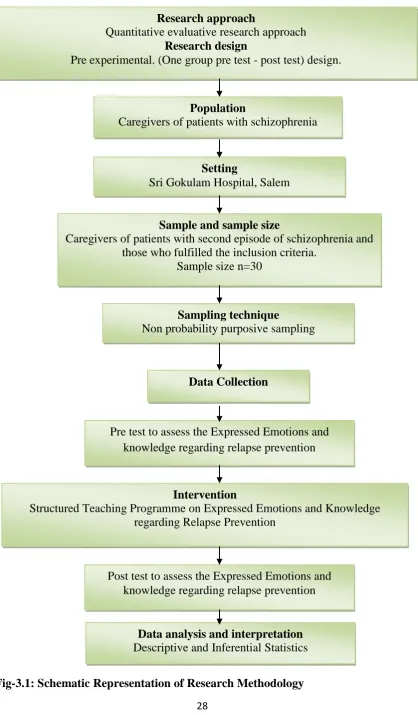
The research design chosen for this study was pre experimental design. [One group pre test - post test design]. The design was represented as,
O1: Pre test on Expressed Emotions and knowledge regarding relapse prevention.
X: Structured teaching programme on expressed emotions and knowledge regarding relapse prevention.
O2: Post test on Expressed Emotions and knowledge regarding relapse prevention .
28
Fig-3.1: Schematic Representation of Research Methodology Research approach
Quantitative evaluative research approach
Research design
Pre experimental. (One group pre test - post test) design.
Population
Caregivers of patients with schizophrenia
Setting
Sri Gokulam Hospital, Salem
Sample and sample size
Caregivers of patients with second episode of schizophrenia and those who fulfilled the inclusion criteria.
Sample size n=30
Data Collection
Pre test to assess the Expressed Emotions and knowledge regarding relapse prevention
Intervention
Structured Teaching Programme on Expressed Emotions and Knowledge regarding Relapse Prevention
Post test to assess the Expressed Emotions and knowledge regarding relapse prevention
Data analysis and interpretation
Descriptive and Inferential Statistics
Sampling technique
29 Population:
The study population comprises of caregivers of patients with schizophrenia.
Description of Setting:
The study was carried out in psychiatric inpatient and outpatient department of the Sri Gokulam Hospital, which is a 350 bedded multi specialty high technology hospital. The hospital is about 8km away from Sri Gokulam College of Nursing, Salem. The setting is situated in the middle of the city.
Variables:
Independent variable:
Structured teaching programme.
Dependent variable:
Expressed Emotions and knowledge on relapse prevention.
Extraneous variables:
Age, sex, marital status, education, occupation, monthly income, relationship to the client, and duration of illness, duration of stay with the patient, type of family, religion and residence.
Sampling:
Sample:
The sample comprised of caregivers of patients with second episode of schizophrenia and those who fulfilled the inclusion criteria
Sample size:
The sample size was 30.
Sampling Technique:
30 Criteria for sample selection:
Inclusion criteria:
Care givers of Patients with second episode of schizophrenia attending both inpatient department and outpatient department.
Those who are willing to participate in the study.
Both male and female caregivers.
Those who can read and write Tamil and English.
Those who are present during the study period.
Exclusion criteria
Caregivers with chronic physical illness.
Caregivers with cognitive dysfunction.
Description of the Tool:
It consists of three sections.
Section-A: Demographic variables
Demographic variables of the samples. It includes age, sex, marital status, education, occupation, monthly income, relationship to the client, and duration of illness, duration of stay with the patient, type of family, religion and residence.
Section -B: Level of Expressed Emotion Scale (LEE)
Level of Expressed Emotion scale (LEE) was used to measure the emotions of caregivers of patients with schizophrenia. It is a standardized scale. The scale was introduced by John D.Cole and Kazarina S.Shahe in the year 1990 at London.
31
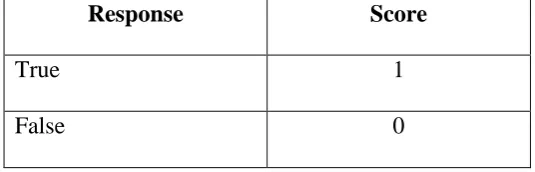
[image:43.595.106.374.128.214.2]Scoring key for Level of Expressed Emotion Scale
Table – 3.1 (a): positive statement
Response Score
True 1
False 0
Table -3.1 (b): negative statement (Reverse score)
Response Score
True 0
False 1
The scores were divided into the following categories,
Table – 3.2: scoring procedure for Level of Expressed Emotions
Category Score
Low Expressed Emotions (Desired Emotions)
1-20
High Expressed Emotions (Undesired Emotions)
21-60
Section-C: Structured self reporting questionnaire was used to assess the
knowledge regarding relapse prevention among caregivers of patients with
schizophrenia.
[image:43.595.107.373.267.354.2] [image:43.595.107.372.435.578.2]32
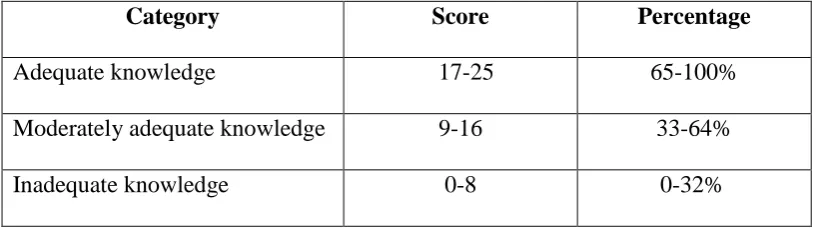
[image:44.595.107.516.182.297.2]There were 25 statements. The desirable responses of subjects were given the score of 1 and all the undesirable responses were given the score of 0. Here the knowledge of subjects was categorized as below.
Table-3.3: Scoring procedure for knowledge regarding relapse prevention
Category Score Percentage
Adequate knowledge 17-25 65-100% Moderately adequate knowledge 9-16 33-64% Inadequate knowledge 0-8 0-32%
Validity and Reliability:
Validity:
Validity of an instrument refers to the degree to which an instrument measures what it is supposed to measuring (Sharma Suresh K, 2012).
Validity of the tool was obtained on the basis of opinion of Medical Experts one in the field of Psychiatry, one Clinical Psychologist and four nursing experts in the field of Mental Health Nursing. Based on the expert’s suggestions and recommendation the tool was finalized. The tool was found appropriate and translated in to Tamil.
Reliability:
Reliability is the degree of consistency and accuracy with which an instrument measures the attribute for which it is designed to measure (Sharma Suresh K, 2012).
33 Pilot Study:
After the formal permission obtained from the Managing Director of the hospital, the pilot study was conducted in Vinayaka Missions Kirupanadha Variyar hospital, Salem. The pilot study was conducted from 22.7.2013 to 28.7.2013. Four samples were selected with the help of non probability purposive sampling technique. Pre test was conducted on 22.07.2013. There were two scales had been used.1. Level of Expressed Emotion (LEE) scale and structured self reporting questionnaire on knowledge regarding relapse prevention. Followed with the structured teaching programme was provided and the post test was conducted for the same samples on 28.7.2013(that is after a week period).Through the pilot study the investigator found that the study is feasible and applicable to conduct the main study.
Method of Data Collection:
Ethical consideration:
Written permission was obtained from the Managing Director of Sri Gokulam Hospital, Salem, oral consent was taken from the study samples to participate in the study and then the main study was conducted.
Data collection procedure:
34 Plan for Data Analysis:
In this study both descriptive and inferential statistics were used to analyze the data.
Demographic variables were calculated by using frequency percentage and mean.
The effectiveness of structured teaching programme on Expressed Emotions and knowledge regarding relapse prevention was calculated by using
inferential statistics [t-test].
To find out the correlation between Expressed Emotions and knowledge regarding relapse prevention the correlation coefficient test was used.
Association between the pre test Expressed Emotions, knowledge and their selected demographic variables was tested by using chi-square analysis.
Summary:
35 CHAPTER IV
DATA ANALYSIS AND INTERPRETATION
Analysis is the process of the organizing and synthesizing data in such a way that questions can be answered and hypothesis tested. (Polit, D.F., and Hungler, 2003)
This chapter deals with analysis and interpretation of data collected to evaluate the effectiveness of structured teaching programme on Expressed Emotions and knowledge regarding relapse prevention among caregivers of patients with schizophrenia in a selected hospital, Salem.
The collected data was tabulated, organized and analyzed by using descriptive &
inferential statistics as follows,
Section-A:
Distribution of caregivers of patients with schizophrenia according to their demographic variables.
Section-B:
a) Distribution of caregivers of patients with schizophrenia according to the pre test score on Expressed Emotions.
b) Distribution of caregivers of patients with schizophrenia according to the pre test score on knowledge regarding relapse prevention.
Section-C:
a) Distribution of caregivers of patients with schizophrenia according to the post test score on Expressed Emotions.
36
c) Comparison between the percentage of pre test and post test scores on Expressed Emotions among caregivers of patients with schizophrenia. d) Comparison between the percentage of pre test and post test scores on
knowledge regarding relapse prevention among caregivers of patients with schizophrenia.
e) Comparison of Mean, SD, Mean percentage and Differences in Mean percentage according to their pre test and post test scores on Expressed Emotions among caregivers of patients with schizophrenia.
f) Comparison of Mean, SD, Mean percentage and Differences in Mean percentage according to their pre test and post test scores on knowledge regarding relapse prevention among caregivers of patients with schizophrenia.
g) Area wise Mean, SD, Mean percentage and Differences in Mean percentage among caregivers of patients with schizophrenia according to the pre test and post test scores on knowledge regarding relapse prevention.
Section-D: Hypotheses testing
a) Effectiveness of structured teaching program on expressed emotions and knowledge regarding relapse prevention among caregivers of patients with schizophrenia.
37
c) Correlation between the post test expressed emotions and knowledge regarding relapse prevention among caregivers of patients with schizophrenia.
d) Association between the pre test expressed emotions among caregivers of patients with schizophrenia with their selected demographic variables. e) Association between the pre test knowledge regarding relapse prevention
among caregivers of patients with schizophrenia with their selected demographic variables.
38 Section -A
Distribution of caregivers of patients with schizophrenia according to their
[image:50.595.108.524.212.754.2]demographic variables.
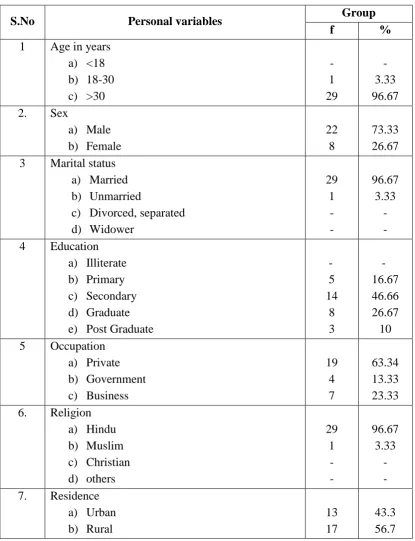
Table 4-1:
Frequency and percentage distribution of caregivers according to their personal
variables.
n=30
S.No Personal variables Group
f %
1 Age in years a) <18 b) 18-30 c) >30 - 1 29 - 3.33 96.67 2. Sex
a) Male b) Female 22 8 73.33 26.67 3 Marital status
a) Married b) Unmarried
c) Divorced, separated d) Widower 29 1 - - 96.67 3.33 - - 4 Education
a) Illiterate b) Primary c) Secondary d) Graduate e) Post Graduate
- 5 14 8 3 - 16.67 46.66 26.67 10 5 Occupation
a) Private b) Government c) Business 19 4 7 63.34 13.33 23.33 6. Religion
a) Hindu b) Muslim c) Christian d) others 29 1 - - 96.67 3.33 - - 7. Residence
39
Table 4.1shows that, the majority of caregivers of patients with schizophrenia i.e. 29(96.67%) belongs to >30 years of age group, 1(3.33%) caregivers belongs to 18-30 years of age and none of the caregivers belong to <18 years.
Majority of the caregivers i.e. 22(73.33%) are males and the remaining 8(26.67%) are females. Majority of the caregivers that is 29(96.67%) are married and the remaining 1(3.33%) is unmarried and none of the caregivers divorced/ separated or widower. Most of the caregivers 14 (46.66%) are secondary educated, 8(26.67%) are graduated, 5(16.67%) are primary educated and 3(10%) are post graduate and none of the caregivers are illiterates.
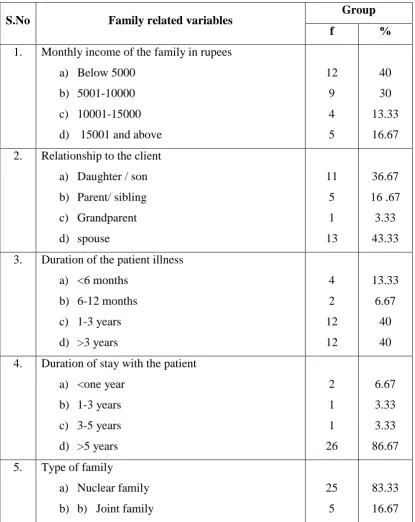
40 Table 4.2:
Frequency and percentage distribution of caregivers according to their family
related variables. .
n=30
S.No Family related variables Group
f %
1. Monthly income of the family in rupees a) Below 5000
b) 5001-10000 c) 10001-15000 d) 15001 and above
12 9 4 5 40 30 13.33 16.67 2. Relationship to the client
a) Daughter / son b) Parent/ sibling c) Grandparent d) spouse 11 5 1 13 36.67 16 .67 3.33 43.33 3. Duration of the patient illness
a) <6 months b) 6-12 months c) 1-3 years d) >3 years
4 2 12 12 13.33 6.67 40 40 4. Duration of stay with the patient
a) <one year b) 1-3 years c) 3-5 years d) >5 years
2 1 1 26 6.67 3.33 3.33 86.67 5. Type of family
a) Nuclear family b) b) Joint family
25 5
41
The table describes that, 12 (40%) caregivers have their family monthly income of below Rs.5000, 9(30%) samples have their family monthly income between Rs 5001-10000, 5 (16.67%) caregivers have their family monthly income above Rs 15000 and 4(13.33%) study subjects have their family monthly income between 10001-15000.
In total caregivers, 13(43.33%) caregivers are spouse, 11(36.67%) caregivers are daughter / son, 5(16.67%) samples are parents / sibling and 1(3.33%) caregiver is grandparent.
Among the total caregivers 12(40%) patients have duration of illness above 3 years, 12(40%) patients have duration of illness between 1-3 years, 4(13.33%) patients have duration of illness below 6 months and 2(6.67%) patients have duration of illness between 6-12 months.
In total caregivers majority of the samples that is 26(86.67%) caregivers duration of stay with the patient is above 5 years, 2(6.67%) caregivers duration of stay with the patient is below 1 year, 1(3.33%) caregiver’s duration of stay with the patient is between 1-3 years and 1(3.33%) caregivers duration of stay with the patient is between 3-5 years. Among the total caregivers 25 (83.33%) caregivers are belongs to nuclear family and 5(16.67%) caregivers are from joint family.
42 Section- B
(a) Distribution of caregivers of patients with schizophrenia according to the pre
test score on expressed emotions.
[image:54.595.115.545.147.507.2]EXPRESSED EMOTIONS
Fig 4.1: Percentage Distribution of caregivers according to their pre test score on
expressed emotions
The above figure 4.1 shows that during pre test 18 (60%) caregivers have high Expressed Emotions and 12 (40%) caregivers have low Expressed Emotions.
0 10 20 30 40 50 60 70 80 90 100
Low expressed emotions
High expressed emotions 40%
60 %
P
er
ce
ntage
of
sam
ple
43
(b) Distribution of caregivers of patients with schizophrenia according to the pre
test score on knowledge regarding relapse prevention
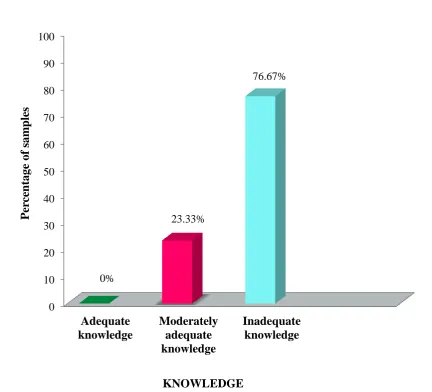
KNOWLEDGE
Fig 4.2: Percentage Distribution of caregivers of patients with schizophrenia
according to their pre test score on knowledge regarding relapse prevention
The above figure 4.2 shows that during pre test 23 (76.67%) caregivers have inadequate knowledge and 7(23.33%) caregivers have moderately adequate knowledge and none of the samples have adequate knowledge regarding relapse prevention on schizophrenia.
[image:55.595.112.545.119.511.2]44 Section -C
(a) Distribution of caregivers of patients with schizophrenia according to the post
test score on expressed emotions
EXPRESSED EMOTIONS
Fig 4.3: Percentage Distribution of caregivers of patients with schizophrenia
according to their post test score of expressed emotions
The above figure 4.3 shows that in post test 23 (76.67%) caregivers have low Expressed Emotions and 7 (23.33%) caregivers have high Expressed Emotions.
0 10 20 30 40 50 60 70 80 90 100
Low expressed emotions High expressed emotions
p
er
ce
n
tage
of
sam
p
les
76.67%
[image:56.595.112.539.150.515.2]45
(b) Distribution of caregivers of patients with schizophrenia according to the
post test score on knowledge regarding relapse prevention.
KNOWLEDGE
Fig 4.4: Percentage Distribution of caregivers of patients with schizophrenia
according to their post test score on knowledge regarding relapse prevention.
The above figure 4.4 shows that during post test 23 (76.67%) caregivers have adequate knowledge and 7 (23.33%) caregivers have moderately adequate knowledge and none of the samples have inadequate knowledge regarding relapse prevention on schizophrenia.
0 10 20 30 40 50 60 70 80 90 100
Adequate knowledge
Moderately adequate knowledge
Inadequate knowledge 76.67%
23.33%
0%
P
er
ce
ntage
of
sam
ple
[image:57.595.109.549.120.472.2]46
(c) Comparison between the percentage of pre test and post test scores on
[image:58.595.105.525.264.382.2]Expressed Emotions among caregivers of patients with schizophrenia.
Table-4.3:
Frequency and percentage distribution of caregivers of patients with
schizophrenia according to their Expressed Emotions before and after
intervention.
n = 30
Level of Expressed
Emotions
Pre test Post test
f % f %
Low Expressed Emotions 12 40 23 76.67 High Expressed Emotions 18 60 7 23.33
47
(d) Comparison between the percentage of pre test and post test scores on
knowledge regarding relapse prevention among caregivers of patients with
[image:59.595.108.521.263.411.2]schizophrenia.
Table -4.4:
Frequency and percentage distribution of caregivers of patients with
schizophrenia according to their knowledge before and after intervention.
n=30
Level of knowledge
Pre test Post test
f % f %
Adequate knowledge - - 23 76.67 Moderately adequate knowledge 7 23.33 7 23.33 Inadequate knowledge 23 76.67 - -
The above table shows that during pre test, 7(23.33%) have moderately adequate knowledge and 23(76.67%) have inadequate knowledge and none of the samples have adequate knowledge regarding relapse prevention.
During post test, 23(76.67%) have adequate knowledge and 7(23.33%) have moderately adequate knowledge and none of the samples have inadequate knowledge regarding relapse prevention.