Developing and testing an integrative model of binge drinking behaviour in a student population
Laura Bettney
Supervised by:
Dr Joanne Dickson
Dr Peter Taylor
Dr Mani Mehdikhani
Contents
1. Introductory chapter: Thesis overview 1
2. Chapter 1 (Literature Review)
Binge drinking behaviour in university students: A narrative review 3
Introduction 4
Methodology 5
Nature and prevalence of BD 10
Theoretical perspectives on BD 11
Insecure attachment: Theoretical background 11
Research evidence for the link between insecure attachment and BD behaviour 13 Affect regulation and dispositional mindfulness (DM): Theoretical background 17 Research evidence for the link between DM and BD behaviour 20
Alcohol expectancies: Theoretical background 24
Research evidence for the link between alcohol expectancies and BD behaviour 28 Approach/avoidance motivations: Theoretical background 33 Research evidence for the link between approach/avoidance motivations
and BD behaviour 37
Summary 40
Methodological considerations and directions for future research 42
Potential clinical relevance 43
Conclusion 45
References 46
3. Chapter 2 (Empirical manuscript)
Developing and testing an integrative model of binge drinking behaviour in a student
population 61
Abstract 62
Method 67
Participants 67
Measures 68
Procedure 71
Analysis 72
Results 73
Descriptive Statistics 73
Correlations 74
SEM analysis 77
Indirect effects 81
Discussion 82
Methodological considerations 84
Future research and clinical implications 86
Conclusion 88
References 89
List of tables
Chapter 1 and 2
Table 1: Summary of key studies included in the review 6
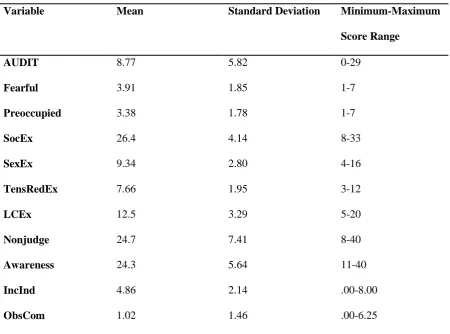
Table 2: Descriptive Statistics 74
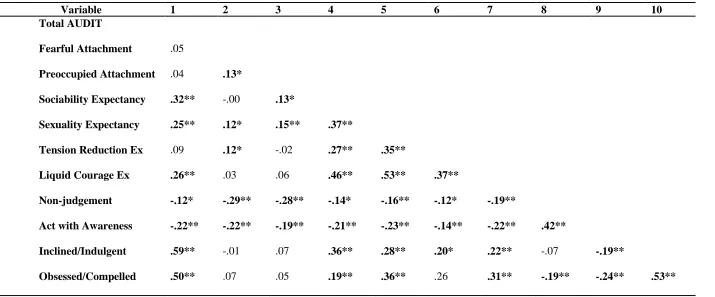
Table 3 Correlation Matrix of Study Variables 75
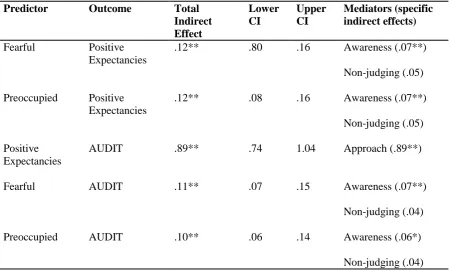
Table 4: Unstandardised indirect effects for the final model 82
List of figures
Chapter 2
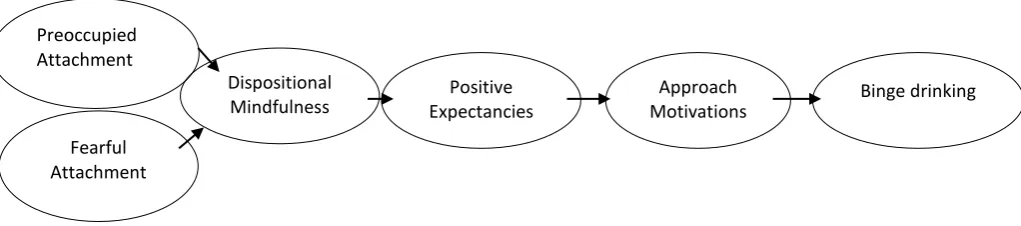
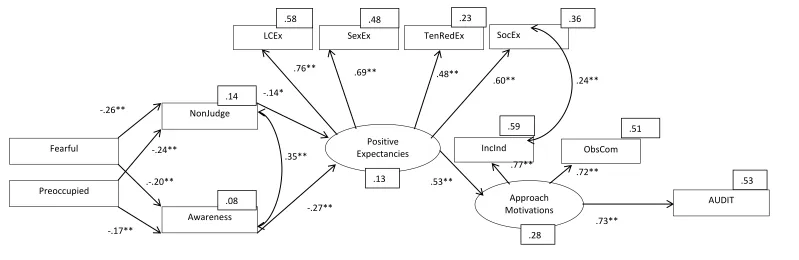
Figure 1: Visual representation of the proposed relationships between the psychological
processes of interest 67
List of appendices
Introductory Chapter: Thesis Overview
Binge drinking (BD) is a pressing social and public health concern in the United Kingdom (UK), particularly among university students. This thesis aims to better understand the psychological processes that may maintain and exacerbate BD behaviour in student
populations. To address this broad aim, the thesis comprises a literature review (Chapter 1), and an empirical manuscript (Chapter 2). The thesis also includes appendices, which contain additional information pertinent to the two main chapters.
Chapter 1
Chapter 2
Chapter 2 contains the empirical paper. The empirical paper proposes and tests a theoretically integrated model of BD behaviour in students, which incorporates the key psychological processes examined in the narrative review. Specifically, the study investigates whether insecure attachment styles may give rise to ineffective internal emotion regulation strategies, leaving people seeking out external means of managing their emotions, which may include alcohol use. It is hypothesised that a positive expectancy that alcohol may help with the regulation of emotions may also be accompanied by more positive alcohol expectancies generally, which may in turn give rise to strong approach motivational tendencies towards alcohol. Three hundred and twenty two university students completed an online study to assess drinking behaviour and the key study variables. The results indicate that a large proportion of the sample displayed drinking behaviour that could be described as BD. SEM analysis provided some support for a more integrated model of BD. The study extends our understanding of the psychological processes that may be involved in BD behaviour in students, and tentatively lends support to the idea that there may be a psychosocial pathway from insecure attachment styles through various cognitive and motivational processes to increased BD. A theoretically integrated understanding of the relationships between these key processes may allow interventions or harm-reduction strategies aimed at reducing BD and its potential consequences to be targeted carefully in the areas they are likely to be most
Chapter 1:
Binge drinking behaviour in university students: A narrative review
Introduction
relevance of this review for clinical practice is discussed, in particular regarding the development of harm-reduction strategies and interventions designed to combat BD behaviour in non-clinical student samples, before any long-term consequences related to this pattern of drinking can occur.
Methodology
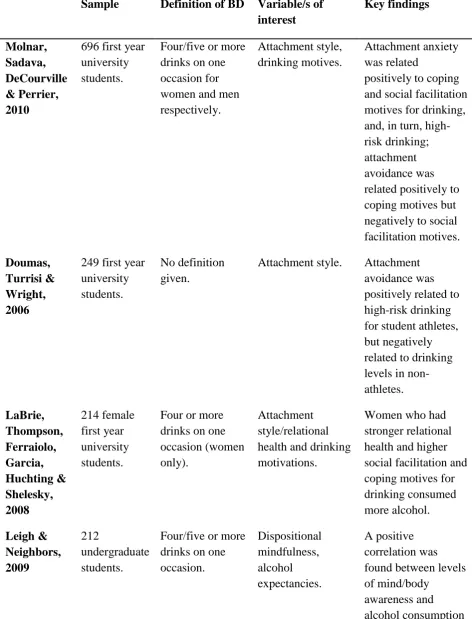
Table 1: Summary of key studies included in the review.
Sample Definition of BD Variable/s of interest Key findings Molnar, Sadava, DeCourville & Perrier, 2010
696 first year university students.
Four/five or more drinks on one occasion for women and men respectively.
Attachment style, drinking motives.
Attachment anxiety was related
positively to coping and social facilitation motives for drinking, and, in turn, high-risk drinking; attachment avoidance was related positively to coping motives but negatively to social facilitation motives. Doumas,
Turrisi & Wright, 2006
249 first year university students.
No definition given.
Attachment style. Attachment avoidance was positively related to high-risk drinking for student athletes, but negatively related to drinking levels in non-athletes. LaBrie, Thompson, Ferraiolo, Garcia, Huchting & Shelesky, 2008 214 female first year university students.
Four or more drinks on one occasion (women only).
Attachment style/relational health and drinking motivations.
Women who had stronger relational health and higher social facilitation and coping motives for drinking consumed more alcohol. Leigh & Neighbors, 2009 212 undergraduate students.
Four/five or more drinks on one occasion. Dispositional mindfulness, alcohol expectancies. A positive correlation was found between levels of mind/body
Non-attachment to thoughts was related to less drinking in men. Beliefs about using alcohol for social enhancement or coping purposes mediated these relationships. Fernandez, Wood, Stein & Rossi, 2010 316 university students.
Four/five or more drinks on one occasion. Dispositional mindfulness (FFMQ). Significant negative correlations were found between alcohol use and a person’s ability to ‘act with awareness’ and ‘describe’ (or identify and label) their experiences. Eisenlohr-Moul, Walsh, Charnigo, Lynam & Baer, 2012 296 university students. No definition given. Dispositional mindfulness (FFMQ). Findings supported the hypothesis that students scoring higher on the ability to ‘observe’ their experiences would consume more alcohol, unless they were also able to be ‘non-judging’ and ‘non-reactive’ to these observed experiences. Vinci, Peltier, Shah, Kinsaul, Waldo, McVay & Copeland, 2014 207 university students, defined as ‘at-risk’ drinkers.
More than five drinks on one occasion.
Dispositional mindfulness.
A mindfulness intervention
Holt, Armeli, Tennen, Austad, Raskin, Fallahi et al, 2013
844 first year undergraduate students. No definition given. Alcohol expectancies and drinking motivations. Discovered five ‘classes’ of drinkers. The class with the highest drinking levels expected drinking to result in positive outcomes, reported lower levels of social support, greater levels of negative affect, and higher levels of social enhancement and coping motivations. Bitarello do Amaral, Lourenco & Ronzani, 2006 255 university students. No definition given. Alcohol expectancies. Endorsement of positive alcohol expectancies was linked to higher levels of alcohol consumption in both first- and final-year students. Zamboanga, Horton, Leitkowski & Wang, 2006 85 female university students.
No definition of BD given, though >8 on the AUDIT indicated hazardous drinking. Alcohol expectancies. Positive alcohol expectancies predicted increased likelihood of hazardous drinking at baseline, and one year later after baseline drinking levels were accounted for. McEvoy, Stritzke, French, Lang & Ketterman, 2004 589 Australian university students (study 1), 523 American university
No definition given, although participants were asked to indicate the number of standard drinks they consumed Explicit approach/avoidance motivations (AAAQ).
students (study 2).
per drinking occasion.
lower on avoidance inclinations than on mild approach inclinations, and this difference increased at riskier levels of drinking. Ostafin, Palfai & Wechsler, 2003 61 undergraduate students.
4/5 or more drinks on one occasion. Implicit approach/avoidance motivations. College students with problematic drinking patterns displayed weak associations between alcohol-related cues and avoidance motivation. Lower implicit avoidance motivation was related to more frequent BD
behaviour and more alcohol-related consequences. O’Connor & Colder, 2005 533 first-year undergraduate students. No definition given. Explicit approach/avoidance motivations, alcohol expectancies and drinking motivations. Approach motivations predicted heavy occasional drinking or very heavy occasional drinking. Weak avoidance motivations were not predictive of
Nature and prevalence of BD
Historically, there has been a lack of consensus on how many drinks constitutes BD and so a variety of ‘cut-offs’ have been used in research. For example, some descriptions state that a binge is a pattern of drinking that brings blood alcohol content to .08g or above, while others state that a binge is more than six or eight units on one occasion in the past week for women and men respectively (Courtney & Polich, 2009). The majority of research on BD behaviour has been conducted in the United States, where the definition generally used is drinking five or more drinks in a row for men and four or more in a row for women. This is thought of as the threshold at which people are susceptible to alcohol-related social consequences (Wechsler et al, 1995). Men and women with a drinking pattern fitting this description consume above the UK government recommendations for safe alcohol intake of no more than three-four units of alcohol for men on any day and no more than two-three units of alcohol for women on any day (Department of Health, 2013).
this population. University students, as opposed to young adults who do not attend university, may be more vulnerable to this pattern of drinking and subsequent negative consequences due to the socially acceptable, normative nature of heavy drinking on campuses (Taylor & Nestel, 2014), heavy workloads, financial difficulties and debt related to attending university, and potentially leaving home for the first time, away from their usual support mechanisms.
Theoretical perspectives on binge drinking
A range of theoretical perspectives have been used to explain BD behaviour, including attachment-related, cognitive, and motivational perspectives. This section reviews the theoretical background underpinning the key variables of interest: insecure attachment; dispositional mindfulness (DM), seen as an affect-regulation strategy; alcohol expectancies; and approach/avoidance motivational tendencies. Each of these psychological constructs has been found to be an explanatory factor of BD behaviour. The study of these factors and the relationships between them may identify avenues for the implementation of harm-reduction strategies or intervention.
Insecure attachment: Theoretical background
insecure attachment style, which can lead to vulnerabilities in the IWM of self and others. Ainsworth and Bell (1970) expanded on Bowlby’s theory and delineated four attachment-types: secure, insecure-avoidant, insecure-ambivalent/anxious, and insecure-disorganised. Bartholomew and Horowitz (1991) also described four attachment types, including the ‘preoccupied’ dimension, which corresponds to a description of anxious attachment, characterised by a negative view of the self as unworthy and unlovable, a positive view of others, and an overwhelming fear of rejection or abandonment. The ‘fearful’ dimension can be seen as a form of avoidant attachment characterised by negative views of the self as unworthy and unlovable, and of others as untrustworthy and likely to abandon or reject the person (Bartholomew & Horowitz, 1991).
BD in student populations has been found to occur most frequently in social situations (often in groups prior to going to bars or clubs, known as drinking’, partying’, or ‘pre-loading’; see Foster & Ferguson, 2013). It can be hypothesised that these are the types of situations that could trigger aspects of the negative IWM in students with an insecure attachment style. So, for people with a ‘preoccupied’ attachment it may be any perceived social rejection that triggers the IWM whereas for those with a ‘fearful’ attachment social intimacy itself may act as a trigger. Additionally, when in distress, insecurely attached adults are unlikely to rely on the support of people around them, and are likely to have a reduced ability to regulate their own emotions, meaning that they may seek out other external means of doing so, potentially including the use of substances (Thorberg & Lyvers, 2010).
style may feel uncomfortable in social situations, for different reasons depending on the type of attachment insecurity, leading to negative affect. Due to difficulties in affect-regulation this may be managed using external sources, such as BD behaviour.
Research evidence for the link between insecure attachment and BD behaviour
There is an existing body of literature exploring the association between insecure attachment styles and BD behaviour in student populations. Generally, students with an insecure attachment, both anxious/preoccupied and avoidant/fearful styles, tend to consume alcohol more frequently and heavily than their securely attached counterparts (Doumas, Turrisi, & Wright, 2006; Kassel, Wardle & Roberts, 2007). This effect may be mediated by the presence of particular motivations or expectancies related to alcohol use (McNally, Palfai, Levine, & Moore, 2003; Molnar, Sadava, DeCourville, & Perrier, 2010; Backer-Fulgham, Patock-Peckham, King, Roufa, & Hagen, 2012).
to intoxication. However, if they do hold such expectations, the likelihood that they will engage in high-risk drinking behaviour increases.
The use of structural equation modelling here allowed Molnar et al (2010) to test a hypothesised pathway linking attachment style, positive alcohol expectancies, and drinking behaviour. However, the sample only included first-year students, which is problematic since events in the university calendar or experiences particular to this group might have impacted on alcohol use (e.g. Fresher’s Week, first-year exams, first time living away from home), which was not accounted for in the model.
While this adds further support to the idea that insecure attachment styles are related to BD behaviour in students, there are a number of problems. Firstly, the sample was relatively homogenous (70% female, 90% Caucasian), which may mean it lacks generalisability to other student populations. Again, the data collection took place at one time-point in the university calendar, meaning that particular events might have contributed to the results. Additionally, given the focus on student athletes, university sporting events occurring at that time may have temporarily changed these participants’ drinking patterns, creating an artificial distinction between athletes and non-athletes. Finally, an assumption is made that avoidant attachment gives rise to expectancies that alcohol will help to regulate negative or difficult affect, without actually testing this. Although other studies, including the Molnar et al, (2010) study reported above, do lend support to this hypothesis, further investigation of this relationship is required (McNally et al, 2003).
Although one’s relational health would seem to be linked to one’s attachment style, this study used a questionnaire that was not specifically measuring adult attachment style. The questionnaire used measured how connected participants felt to 1) peers, 2) a mentor, and 3) the community in general. It may be that this measure of relational health and measures of attachment style are looking at subtly different concepts, which might explain the contradictory results. Secondly, although the conclusion was that students with stronger relational health drink more, it should be noted that the average number of drinks consumed per drinking occasion in this sample was M = 3.37, SD=1.48, which would place most of the sample under the expected cut-offs indicative of BD. Given the high numbers of students generally found to engage in BD, it is questionable as to how representative this sample is of the wider student population. Since this sample actually seemed to consist of generally light drinkers, it is possible that a strong feeling of connection to the people around us may lead to a pattern of light social drinking marked by less frequent social consequences. Lastly, the sample was made up of entirely female, first-year students, who completed the study at a very early time point in their university careers, perhaps influencing the results and making them less generalisable to other samples of students.
There is some evidence for a direct relationship between anxious/preoccupied insecure attachment style and drinking; with fears of being judged harshly by others due to intoxication leading to lower levels of alcohol use (Molnar et al, 2010), and further research is needed to elucidate this link more clearly. However, the majority of research reviewed in this area suggests that the relationship between insecure adult attachment styles and drinking is mediated by cognitive factors such as motivations and expectancies that alcohol might enhance social functioning and help a person to cope with difficult experiences (e.g. Kassel et al, 2007, LaBrie
which suggests that a person’s attachment style leads to the development of IWMs which consist of cognitive, affective, and behavioural responses to self and others. Insecurely attached students may be more likely to feel uncomfortable in social situations, either due to perceived rejection by peers or through a dislike of social intimacy, which may trigger negative emotional states. In turn, insecurely attached adults tend to show lower ability to independently regulate negative affect, and it is possible that this may subsequently lead to a search for external methods of regulation, including alcohol, with the concomitant expectation that alcohol may help them to cope with difficult emotions and also feel more comfortable in social situations. Further study of the relationship between insecure attachment styles, affect regulation strategies, and alcohol expectancies, and the pathway through which these may be related to BD behaviour would be useful.
Affect regulation and dispositional mindfulness (DM): Theoretical background
Mindfulness is often defined as a way of paying attention to experiences in the present moment in a non-judgemental and accepting way (Kabat-Zinn, 1994). One’s ability to be mindful can be trained through the use of meditation techniques (Bowen, Witkiewitz, Dillworth, & Marlatt, , 2009), but mindfulness can also be viewed as a dispositional trait, with individual’s who possess higher DM presenting with greater levels of awareness and attention to experiences in the present moment (Brown & Ryan, 2003). DM can be seen as a non-evaluative affect-regulation strategy which differs from traditional cognitive strategies, which require an ability to reappraise difficult emotions or events (Goldin, McCrae, Ramel, & Gross, 2008).
difficulties with substance use (Zgierska et al, 2009). This provides some evidence for the important role of affect- regulation abilities in the form of DM in ameliorating problematic drinking behaviour.
As mentioned in the previous section, insecure attachment styles are thought to lead to difficulties in the development of healthy affect-regulation strategies. Securely-attached adults generally have positive beliefs about their own ability to alleviate distress, more positive views of the self and others, and adaptive strategies of maintaining mental health in difficult circumstances, such as seeking support from others (Mikulincer, Shaver & Pereg, 2003). Conversely, adults with negative attachment experiences tend not to see support-seeking as a viable or effective way of alleviating their distress and thus have to rely on ‘secondary strategies’ to manage these feelings (Mikulincer & Shaver, 2005). These secondary strategies are expressed in one of two ways: 1) in anxious/preoccupied attachment styles, very intense and insistent attempts to gain proximity to others (sometimes called ‘hyperactivating strategies’); or 2) in avoidant/fearful attachment styles, inhibition of any form of proximity-seeking behaviour, and attempts to handle distress and negative affect independently (or ‘deactivating strategies’) (Mikulincer & Shaver, 2005). Hyperactivating strategies are characterised by affect-regulation techniques that rely on rumination about potential threats to significant relationships and focus attention on negative emotions (Caldwell & Shaver, 2012). Deactivating strategies conversely are characterised by
The cognitive and emotional patterns that form through consistent use of either hyperactivating or deactivating strategies will perhaps diminish a person’s ability to respond to their internal and external experiences in an open, attentive, accepting, and non-judgemental way, meaning that they will have lower levels of DM (Caldwell & Shaver, 2013). People who show higher levels of DM also tend to show lower stress levels in reaction to difficulties, less reaction to perceived threats against the self, better ability to regulate their emotions and behaviours without resort to external methods, and greater relationship satisfaction (Shaver, Lavy, Saron, & Mikulincer, 2007). The same correlations have also been found in people with secure attachment styles (Mikulincer & Shaver, 2007), perhaps suggesting that the typical pattern of affect regulation shown by securely attached adults most closely resembles the non-judgemental, accepting responses related to higher levels of DM.
In summary, research has suggested that insecure attachment styles are related to particular patterns of affect-regulation characterised by either high levels of rumination and proximity seeking (anxious attachment) or emotional inhibition and thought suppression (avoidant attachment) and, as a consequence of these strategies, lower levels of DM, which can be seen as an affect-regulation strategy antithetical to both.
Research evidence for the link between DM and BD behaviour
expectancies that alcohol will enhance pleasant feelings/sensations and make it easier to cope with distress, act as mediators between mindfulness and alcohol consumption in university students. A positive correlation was found between levels of mind/body awareness and alcohol consumption in men, and non-attachment to thoughts was related to less drinking in men. Moreover, beliefs about using alcohol for social enhancement or coping purposes mediated these relationships in male participants. The positive relationship between mind/body awareness and increased alcohol consumption is an unexpected result, since an ability to be aware of one’s mind and body is thought to be an ability associated with higher DM, which has been linked to lower drinking levels in clinical samples (Garland, Boettiger, Gaylord, Chanon, & Howard, 2012).
they are not able to bring awareness to the subtle shifts in bodily sensations that result from drinking.
Fernandez et al (2010) used the Five Facet Mindfulness Questionnaire (FFMQ; Baer, Smith, Hopkins, Krietemeyer, & Toney, 2006) to examine the relationship of these factors of mindfulness to alcohol consumption and alcohol-related consequences in students. The five factors measured are: 1) an ability ‘to observe’, 2) ‘to describe’ one’s internal and external experiences, 3) in a ‘non-judging’ and 4) ‘non-reactive’ manner, and to 5) ‘act with awareness’. The mean maximum number of drinks consumed by males in this sample on one occasion was
these measures, we do not know whether they are actually measuring the same concepts. Additionally, because some of the measures were developed using experienced meditators we do not know how valid or reliable these measures are when applied to non-meditating student samples. Secondly, this highlights that DM may not be a unitary construct, instead representing a number of different dimensions, all of which may relate differently to drinking behaviour in students. Further research is needed to elucidate these relationships.
Eisenlohr-Moul et al. (2012) also looked at the relationship of the five factors of the FFMQ to alcohol use in students. They predicted that students scoring higher on the ability to ‘observe’ their internal and external experiences would tend to consume more alcohol, unless they were also able to be ‘non-judging’ and ‘non-reactive’ to these observed experiences. Their findings supported this hypothesis. Much like the finding that greater ‘mind/body awareness’ increased drinking in male students (Leighand Neighbors, 2009), it seems that simply being able to focus on one’s internal and external experiences may actually lead to increased drinking behaviour. It is possible that, as in the Leigh and Neighbors (2009) study, an observation of pleasant sensations following alcohol consumption leads to further drinking behaviour. It may also be the case that an enhanced ability to observe negative sensations or experiences leads to alcohol consumption in an attempt to cope with these observations. Unless one’s abilities to observe experiences are combined with an ability to be accepting of those experiences, whether they are positive or negative, and an ability not to react to passing positive or negative sensations or affective states, alcohol may form part of the response to what is observed.
displayed BD behaviour). Students completed an online questionnaire and were invited to take part in the experimental phase of the study. In this phase, they were randomly assigned to one of six experimental groups: one group received a 10-minute mindfulness intervention, another received a 10-minute relaxation intervention, and the control group completed crossword puzzles for 10 minutes. All participants then completed measures of DM, negative affect, and urge to drink again. Following this, participants either received a negative or neutral affect manipulation involving viewing images; participants in the mindfulness intervention group were asked to use their newly acquired skills when looking at the images. Lastly, participants completed the measures again. It was found that the mindfulness intervention did increase scores on a mindfulness measure and reduced negative affect, but did not reduce the urge to drink. Previous studies have found that brief mindfulness interventions decrease the urge to drink in healthy undergraduates who are not considered to be displaying at-risk drinking behaviour (Arch & Craske, 2006). It is possible that such a brief intervention is not sufficient for students who like the Vinci et al (2014) sample, display heavier drinking patterns.
and attempts at thought suppression. Again, higher DM abilities to ‘observe’ and ‘describe’ experiences may make it difficult for a person to suppress negative thoughts and emotions, leading to an increase in negative affect and higher alcohol use. It is proposed that both of these strategies and profiles of DM may be linked to greater likelihood of BD behaviour in students. Further exploration of the relationship between insecure attachment styles and affect-regulation strategies, and their link to BD behaviour is required to gain a better understanding of the psychological processes involved.
Alcohol expectancies: Theoretical background
However, the relationship between alcohol expectancies and actual alcohol intake may be more dynamic (Jones et al, 2001). In line with social learning theory, alcohol expectancies impact on drinking behaviour, but may also be reciprocally influenced by a person’s experiences with alcohol. For example, a person who holds the expectancy that alcohol will make them more confident and effective in social situations might be more likely to show a consumption pattern in line with this expectation. Additionally, if they drink and do experience the feelings of greater confidence and affiliation to others that they expect, this could strengthen their previously-held alcohol expectancy. Conversely, someone holding the same expectation but who experiences rejection from others or feelings of low mood and loneliness after drinking alcohol may revise their alcohol expectancies over time to more closely mirror their actual experience. Individual differences in alcohol expectations and experiences with alcohol could explain a range of different patterns of alcohol consumption.
with the quantity (e.g. the amount consumed in one sitting) rather than the frequency of drinking (Lee, Greely, & Oei, 1999). Conceivably then, BD behaviour, which is typified by the consumption of high quantities of alcohol in a single session, but not necessarily by a high frequency or number of drinking episodes, can be related to a particular pattern of alcohol expectancies in line with this behaviour.
quantities of alcohol at each BD session (e.g. well above the four or five drink cut-off) and be more likely to develop future dependency symptoms, whereas those with a range of positive and negative expectancies might consume less alcohol (while still within the range classified as a binge) and be protected from future difficulties. Conversely, holding both positive and negative expectancies about alcohol may actually indicate ambivalence about alcohol use, which is a common feature in alcohol dependence in clinical samples (see Dickson, Gately, & Field, 2013).
Overall, the evidence in this area suggests that alcohol expectancies may play a substantial role in describing and explaining different types of drinking behaviour.
Research evidence for the link between alcohol expectancies and BD behaviour
There is a great deal of existing research exploring the link between alcohol expectancies and drinking behaviour specifically in students (for example, Bitarello do Amaral, Lourenco, & Ronzani, 2006; Zamboanga, Horton, Leitkowski, & Wang, 2006; Holt, Armeli, Tennen, Austad, Raskin, Fallahi, et al, 2013). Generally, this body of research indicates that students who report the heaviest drinking behaviour also tend to report stronger positive alcohol expectancies and weaker negative alcohol expectancies. Alcohol expectancies frequently found to be positively correlated with heavier drinking have included expectations of increased social and sexual enhancement and tension reduction.
enhancement, and conformity motives for drinking. Class three(M = 14.93, SD = 10.20 drinks per week) displayed relatively high drinking levels, high social enhancement motives, high social support, and higher positive expectancies. It can be hypothesised that those students displaying the most problematic drinking (class five) are using alcohol as an external means of coping with negative affect due to a perceived lack of social support. Indeed, the light drinking group in class one reported high levels of social support and reduced positive expectancies and motivations for drinking. However, for those in class three, high levels of social support were linked to high positive expectancies, and social enhancement motivations for drinking. Conceivably, this second group of heavy-drinking students may have been using alcohol solely as a means of facilitating a sense of social connectedness to their peers, rather than to cope with negative affect.
Bitarello do Amaral et al (2006), studied the relationship between alcohol expectancies and consumption in a sample of students in their first and final years on various courses of study. Fifty-nine percent of the total sample was drinking at a ‘risky’ level, but only 8.2% reported a BD episode in the last month. There were no differences found between drinking levels in different courses or years of study. The authors found that higher endorsement of positive expectancies is linked to higher levels of alcohol consumption in both first- and final-year students. The proportion of student participants reporting binge episodes was very low in this study, perhaps suggesting that alcohol use levels were being minimised, thus impacting on the extent to which this data is generalisable. This student sample was taken from a Brazilian university; cultural differences may exist in terms of alcohol use and acceptability of certain patterns of drinking, which might also account for the low levels of BD behaviour reported. Again, this sample may not be generalisable to a UK sample.
These findings suggest that over a one-year period positive alcohol expectancies may lead to hazardous alcohol use and that this relationship tends to stay consistent. It also gives us some evidence to suggest that the relationship between expectancies and alcohol use may be unidirectional, rather than reciprocal, at least over a one-year period. However, although this is a longitudinal study, further research over longer time periods is needed to be confident about these conclusions. Additionally, the student sample used here consisted of female athletes, and the generalisability of such a sample to all students is dubious. Lastly, although it is commonly found that negative alcohol expectancies do not influence drinking behaviour, the measure used here only looked at proximal or immediate negative effects of alcohol (e.g. slurred speech, short-term memory loss, and lack of co-ordination). Research looking at distal negative consequences of drinking such as ‘hangover’ or impact on job/educational performance has found a link between negative expectancies and drinking behaviour in social drinkers (e.g. McMahon, Jones, & O’Donnell, 1994). This suggests that future research assessing alcohol expectancies needs to use measures that look at both positive and negative expectancies, including the full range of short- and long-term negative consequences.
suggested that BD behaviour may be influenced by both high tension reduction/coping expectancies and high social enhancement expectancies. The study also suggested that these expectancies may lead to drinking behaviour for different reasons. For example, students high in the expectancy that alcohol will help them to cope with stress and tension may be using alcohol as an external coping strategy in the absence of or under-utilisation of suitable social support mechanisms whereas students high in social facilitation expectancies may display drinking behaviour to bring them closer to their peers.
Additionally, although there is little longitudinal research looking at the bi-directional relationship between expectancies and alcohol use in students, Zamboanga et al (2006) found support for a unidirectional relationship between positive expectancies and greater alcohol use over a one-year period. Previous research on adolescent drinking patterns, expectancy, and alcohol use has also found a linear relationship, with positive alcohol expectancies tending to predict higher alcohol use (Christiansen, Smith, Roehling, & Goldman, 1989). It is generally thought that in adolescence and early adulthood people have not had enough experience with the effects of alcohol for their drinking experiences to impact on or change their alcohol expectancies, and as such the relationship appears to be unidirectional at this early stage, but possibly reciprocal later on as they gain more drinking experience. In line with research and theory, it is conceivable that in university students, still at a relatively early stage in their use of alcohol, the relationship between expectancies and alcohol use is likely to be linear, with higher positive expectancies leading to greater alcohol use. If this is the case then there is the potential that attempts to adjust alcohol expectancies in students displaying BD behaviour may be a useful harm-reduction strategy that could be employed prior to the formation of a potentially problematic, entrenched drinking pattern later in adulthood.
Approach/avoidance motivations: Theoretical background
Recent research describes motivational processes in relation to alcohol as involving two distinct and competing inclinations, one to approach and one to avoid the desired substance (Breiner, Stritzke, & Lang, 1999). Thus, a person can have a combination of high and low approach and avoidance motivational tendencies toward alcohol. The development and validation of measures such as the Approach and Avoidance of Alcohol Questionnaire (AAAQ; McEvoy, Stritzke, French, Lang & Ketterman, 2004) in different groups has provided evidence of a distinction between approach and avoidance systems in alcohol-dependent (Klein, Stasiewicz, Koutsky, Bradizza, & Coffey, 2007) and non-dependent (including student) samples (McEvoy et al, 2004).
The concept of two distinct and potentially competing motivational systems is described by Gray (1975), who developed a model which emphasises two systems: the behavioural approach/activation system (BAS) and the behavioural inhibition system (BIS). The BAS is involved in the pursuit of reward and positive reinforcement from behaviour, whereas the BIS is implicated in the inhibition of particular behaviours as a response to punishment or lack of reward. The BAS and BIS constructs are conceptually similar to the approach and avoidance motivations measured by the AAAQ described above. The BAS has been linked to disinhibited behaviour with regards to alcohol use (e.g., Katz, Fromme, & D’Amico, 2000; O’Connor & Colder, 2005), indicating that for people with a particularly strong BAS the effects of alcohol will be perceived as rewarding and this in turn will lead to appetitive behaviours and increased drinking.
levels of each inclination might predict different motivational states, and thus distinct patterns of drinking (Breiner et al, 1999; Barkby, Dickson, Roper, & Field, 2011). Conceivably, those with low motivations to avoid and approach alcohol may be indifferent to the expected positive or negative effects of drinking, resulting in lighter consumption. People with high approach and low avoidance motivations are likely to value the positive outcomes expected when alcohol is consumed, and be less concerned by any adverse consequences; people with such a profile are likely to fall into a heavy drinking category (Schoenmakers, Wiers, & Field, 2008). The reverse pattern, low approach and high avoidance motivations, may suggest that a person will consider the possible adverse consequences of drinking, such as impact on physical health or detrimental impact on relationships, and may choose to abstain. Finally, an ‘ambivalent’ profile has been identified, that of high approach and high avoidance motivations, which is a pattern more often seen in dependent clinical samples (see, Greeley, Swift, & Heather, 1993).
increase social functioning and produce a reduction in tension or stress, is at highest risk of engaging in problematic drinking.
More recently it has been suggested that these processes and evaluations about whether to drink or not drink can occur at different levels of awareness, so a person can have explicit and implicit approach and avoidance inclinations (e.g. inclinations of which they are aware and have some control over and of which they are unaware because they occur quickly and automatically; Cox, Fadardi, & Klinger, 2006; Barkby et al, 2011). Self-report measures, such as the AAAQ, are designed to assess explicit approach and avoidance inclinations. Endorsement of statements about wanting to drink and not wanting to drink can occur simultaneously at different levels on such measures in both clinical, alcohol-dependent (who often show high approach and high avoidance motivations) and non-clinical populations, including students (who more often show a high approach and low avoidance pattern) (McEvoy et al, 2004; Klein et al, 2007), which supports the distinction between the two systems.
to move the manikin towards alcohol-related images (approach) and one where they are asked to move the manikin away (avoid). Participants who complete the task faster during the ‘approach’ section of the task are thought to have strong approach motivations towards alcohol. Heavy drinkers have been found to categorise images faster during the approach block than the avoidance block (e.g. Field, Kiernan, Eastwood, & Child, 2008). Similarly, the alcohol approach/avoidance task (AAAT) requires participants to make an approach movement (pulling a joystick) or an avoidance movement (pushing a joystick) in response to alcohol-related or neutral pictures. Again, heavier drinkers have been found to show an approach bias to pictures of alcohol (e.g. Wiers, Rinck, Dictus & Van den Wildenburg, 2009).
Taken together, the models discussed suggest that heavier student drinkers may have alcohol expectancies that increase the amount of positive reinforcement they expect from drinking, and therefore they are also likely to have stronger approach tendencies overall and perhaps much weaker avoidance inclinations. This is in contrast to dependent clinical samples, where a pattern of simultaneous high approach and high avoidance motivations has been seen, suggesting a marked ambivalence in relation to alcohol.
Research evidence for the link between approach/avoidance motivations and BD behaviour
McEvoy et al (2004) used two student samples, one from Australia and one from the USA, to validate the AAAQ. The two groups completed the AAAQ, as well as measures assessing their quantity and frequency of alcohol use and their experience of alcohol-related consequences. A three-factor model fitted the data best: one factor related to avoidance motivations, one related to mild approach inclinations, and another related to more intense, compulsive approach motivations. AAAQ scales account for 41-53% of the variance in drinking frequency, and 49-60% of the variance in drinking quantity. The mild and intense approach inclinations account for 43% of the variance in alcohol-related consequences, but avoidance inclinations do not significantly account for variance on alcohol-related consequences. Scores on the AAAQ subscales predicted different drinking patterns. Non-drinkers scored significantly higher on avoidance inclinations, and drinkers scored lower on avoidance inclinations than on mild approach inclinations, and this difference increased at riskier levels of drinking. In summary, the authors found support for the suggestion that approach and avoidance inclinations toward alcohol are separate constructs and, moreover, there seems to be a continuum of approach inclinations from mild to more intense. In addition, these separate constructs predict distinct patterns of drinking.
practices. The authors also suggest that the relationship of approach and avoidance motivations to other variables implicated in drinking behaviour, such as alcohol expectancies, need to be assessed in order to understand this behaviour fully, in line with the motivational model of drinking described above (Cox & Klinger, 1988).
Ostafin et al (2003) studied whether alcohol-related cues automatically activate implicit approach or avoidance motivational tendencies in a binge-drinking student sample. They assessed drinking behaviour and drinking-related consequences using self-report measures. A computerised motivational tendency task was then used to assess implicit approach and avoidance motivations. They found that college students with more problematic drinking patterns displayed weak associations between alcohol-related cues and avoidance motivation. Lower implicit avoidance motivation was specifically related to more frequent BD behaviour and more alcohol-related consequences. The accessibility of implicit approach motivations do not predict at-risk drinking in this sample. The authors attribute this to the possibility that the priming task they use accessed only intense, obsessive positive valences about ‘wanting’ alcohol, rather than positive valences about simply ‘liking’ it, which they thought were more likely to be associated with drinking behaviour in a non-clinical sample. This study suggests that students who exhibit frequent BD behaviour might do so because of a weak relationship between alcohol-related cues and implicit avoidance tendencies and suggests that automatic motivational processes play a role in at-risk drinking.
drinking, with impairment (possibly BD behaviour); very heavy occasional drinkers with impairment (average of 10 drinks per occasion; heavy BD behaviour); and heavy frequent drinkers with impairment (which appear distinct from BD behaviour). Results showed that only the BAS/approach motivations predicted these problematic patterns of alcohol use. Specifically, strong approach motivations predicted falling into either the heavy occasional drinking or very heavy occasional drinking groups. Strong approach motivations did not predict belonging to either the light drinking or abstaining groups, or a group of heavy drinkers who did not experience impairment. Weak avoidance motivations were not predictive of drinking patterns in this sample, which is contradictory to the findings of Ostafin et al (2003) above. Lastly, O’Connor and Colder (2005) found that alcohol expectancies partially mediate the link between approach motivations and drinking behaviour. In particular, individuals with strong approach motivations were more likely to drink for enhancement reasons (e.g. to enhance positive affect), social reasons (e.g. to facilitate better social functioning) and coping reasons (e.g. to cope with negative affect). However, it should be noted that this is cross-sectional data and as such the direction of this relationship could be different.
In summary, there is evidence of separate explicit avoidance and approach motivations in student samples in relation to drinking behaviour, including a continuum of approach inclinations from mild to more intense. In general, self-reported weak avoidance motivations and strong approach motivations have been linked to heavier drinking, including BD behaviour, in student populations and this relationship may be mediated by the alcohol expectancies a person holds.
Summary
This review has indicated that a range of psychological processes are implicated in the explanation of BD behaviour in students. Key findings in relation to insecure adult attachment and BD suggested that this relationship is probably mediated by positive alcohol expectancies and motivations for drinking (McNally et al, 2003; Molnar et al, 2010; Backer-Fulgham, et al, 2012). In particular, an anxious/preoccupied attachment style has been related to expectancies that alcohol will improve social effectiveness and help to manage stress, whereas avoidant/fearful attachment style has generally only been associated with the latter (Molnar et al, 2010). More research is needed to elucidate the association between attachment style and BD behaviour, in particular with regards to whether there is any direct relationship between the two, as evidence is mixed on this issue (e.g. LaBrie et al, 2008, Molnar et al, 2010).
2009). The hyperactivating and deactivating affect-regulation strategies found in those with insecure attachment styles may be associated with a DM profile characterised by high levels of the abilities to ‘observe’ and ‘describe’ experiences, but lower abilities to remain ‘non-judgmental’ and to ‘act with awareness’ in relation to difficulties. This DM profile has been linked to higher levels of drinking in students (Eisenlohr-Moul et al, 2012). Similarly, there is evidence for a mediating relationship between DM and BD by positive alcohol expectancies and this requires further study (Leigh & Neighbors, 2009).
Positive alcohol expectancies have been related to BD in student populations, in particular expectancies about improved social and sexual effectiveness and tension reduction (e.g. Holt
et al, 2013). The suggestion that positive expectancies act as a mediator in the relationship between attachment style and DM, and BD behaviour has been supported by previous research (Leigh & Neighbors, 2009; Molnar et al, 2010) and further research of the relationship between all three and motivational tendencies is warranted.
Finally, research has suggested that students tend to display strong approach motivations towards alcohol, and possibly weak avoidance motivations (e.g. McEvoy, 2004). This is in comparison to dependent samples that tend to display simultaneous approach and avoidance motivations towards alcohol (Greeley et al, 1993). This pattern of strong approach and weak avoidance is likely to lead students towards a heavy drinking pattern (Barkby et al, 2011). The motivational model of drinking (Cox & Klinger, 1988) suggested that whether approach or avoidance tendencies are activated is likely to be associated with one’s beliefs and expectations about the consequences of drinking. Further research is required to elucidate this association.
There are a number of methodological considerations pertinent to each area reviewed. In particular, research designs have tended to be cross-sectional, often using only students in their first year of undergraduate studies and sometimes focusing on either males or females or particular groups, such as student athletes. This potentially limits generalisability to the student population as a whole. In general, the majority of studies on BD in students have been conducted in the US, and the few studies using other samples (e.g. a Brazilian sample (Bitarello do Amaral et al, 2006) and an Australian sample (McEvoy et al, 2004) suggest that there may be considerable differences in drinking behaviour and attitudes towards drinking in other cultural groups. Therefore it may not be appropriate to generalise data from US student samples to UK student samples.
A major consideration is that each of the processes reviewed has a body of literature which constitutes a relatively separate area of investigation. As highlighted above there has been some attempt to look at mediated relationships between these variables and initial efforts to integrate these different processes. However, it is clear that further integration and exploration of the relationships between these variables in relation to BD warrants further theoretical development and investigation. Further study of these relationships may enable the development of a more explanatory model of how BD behaviour develops in some students, particularly those who may be most at risk for future alcohol-related problems.
Potential clinical relevance
of the long-term risks. A number of the variables reviewed here, in particular alcohol expectancies (see Wood, Capone, Laforge, Erickson, & Brand, 2007; Lau-Barraco & Dunn, 2008; Scott-Sheldon et al, 2012), have been targeted in interventions aimed at reducing alcohol consumption in student populations, with positive results. Scott-Sheldon et al (2012) in a meta-analytic review of alcohol interventions for first-year college students in the USA, conclude that the most effective interventions in terms of reducing consumption levels and alcohol-related problems are those combining several different components, including personalised feedback (e.g. about drinking behaviour and the consequences) and moderation strategies (e.g. interventions focused on bringing about change in drinking behaviour). They propose that more research is needed in this area to assess which intervention components are most useful. In order to clarify where interventions would most usefully be targeted in this population, we need to understand the interrelationships between the key psychological processes implicated in BD behaviour; attachment style, DM, alcohol expectancies, and motivational tendencies, as outlined in this review.
drinkers, additional research is needed into how avoidance motivations can be activated, particularly in an environment/culture where drinking heavily may be viewed as an intrinsic part of any social activity or as a ‘rite of passage’ (Robinson, Jones, Christiansen, & Field, 2014).
Although access to intervention on an individual level is likely to be rare in a non-clinical, student sample, the association between BD behaviour and other acute physical and mental health difficulties mean that at-risk students may present to student health or other support services. Further knowledge about how the variables covered in this review relate to each other, and the potential pathway/s leading to the development of problematic BD behaviour, may give clinicians important information about where best to target interventions for such individuals. For example, during assessment of alcohol use in students, eliciting a person’s attachment style and IWM of self and others may give clinicians key insight about a person’s likely affect-regulation strategies, beliefs, and attitudes about alcohol, and motivational tendencies towards drinking. Each of these aspects can be targeted as part of a formulation-driven intervention aimed at reducing BD behaviour.
Conclusion
References
Ainsworth, M. D. S., & Bell, S. M. (1970). Attachment, exploration, and separation:
Illustrated by the behavior of one-year-olds in a strange situation. Child Development, 41, 49-67. doi:10.1111/j.1467-8624.1970.tb00975.x.
Arch, J. J., & Craske, M. G. (2006). Mechanisms of mindfulness: Emotion regulation following a focused breathing induction. Behaviour Research and Therapy, 44, 1849-1858. doi:10.1016/j.brat.2005.12.007.
Backer-Fulgham, L. M., Patock-Peckham, J. A, King, K. M., Roufa, L., & Hagen, L. (2012). The stress-response dampening hypothesis: How self-esteem and stress act as
mechanisms between negative parental bonds and alcohol-related problems in emerging adulthood. Addictive Behaviors, 37, 477–84.
doi:10.1016/j.addbeh.2011.12.012.
Baer, R.A., Smith, G.T., & Allen, K.B. (2004). Assessment of mindfulness by self-report: The Kentucky Inventory of Mindfulness Skills. Assessment, 11, 191-206. doi: 10.1177/1073191104268029.
Baer, R.A., Smith, G.T., Hopkins, J., Krietemeyer, J., & Toney, L. (2006). Using self-report assessment methods to explore facets of mindfulness. Assessment, 13, 27-45.
Barkby, H., Dickson, J.M., Roper, L., & Field, M. (2011). To approach or avoid alcohol? Automatic and self-reported motivational tendencies in alcohol dependence.
Alcoholism: Clinical and Experimental Research, 36, 361-368.doi:10.1111/j.1530-0277.2011.01620.x.
Bartholomew, K. & Horowitz, L. M. (1991). Attachment styles among young adults: A test of a four category model. Journal of Personality and Social Psychology, 61, 226-244. doi: 10.1037/0022-3514.61.2.226.
Berridge, V., Herring, R., & Thom, B. (2009). Binge Drinking: A Confused Concept and its Contemporary History. Social History of Medicine, October 2009, pp.1-11. doi: 10.1093/shm/hkp053.
Bitarello do Amaral, M., Lourenço, L. M., & Ronzani, T. M. (2006). Beliefs about alcohol use among university students. Journal of Substance Abuse Treatment, 31, 181–185. doi:10.1016/j.jsat.2006.04.004.
Bowen, S., Witkiewitz, K., Dillworth, T.M., & Marlatt, G.A. (2009). The role of thought suppression in the relationship between mindfulness mediation and alcohol use.
Addictive Behaviors, 32, 2324-2328. doi:10.1016/j.addbeh.2007.01.025.
Bowlby, J. (1969). Attachment and loss, Vol. 1: Attachment. New York: Basic Books.
Brown, K.W., & Ryan, R.M. (2003). The benefits of being present: Mindfulness and its role in psychological well-being. Journal of Personality and Social Psychology, 84, 822-848. doi: 10.1037/0022-3514.84.4.822.
Caldwell, J.G., & Shaver, P.R. (2012). Exploring the cognitive-emotional pathways between adult attachment and ego-resiliency. Individual Differences Research, 10, 141-152.
Caldwell, J. G., & Shaver, P. R. (2013). Mediators of the Link between Adult Attachment and Mindfulness. Interpersona: An International Journal on Personal Relationships,
7, 299–310. doi:10.5964/ijpr.v7i2.133.
Carter, J.A., McNair, L.D., Corbin, W.R., & Black, D.H. (1998). Effects of priming positive and negative outcomes on drinking responses. Experimental and Clinical
Psychopharmacology, 6, 399-405. doi:10.1037/1064-1297.6.4.399.
Chiesa, A., & Serretti, A. (2013). Are mindfulness-based interventions effective for substance use disorders? A systematic review of the evidence. Substance Use and Misuse, 49, 492-512. doi:10.3109/10826084.2013.770027.
Courtney, K.E., & Polich, J. (2009). Binge drinking in young adults: Data, definitions and determinants. Psychological Bulletin, 135, 142-156. doi:10.1037/a0014414.
Cox, W.M., & Klinger, E. (1988). A motivational model of alcohol use. Journal of Abnormal Psychology, 97, 168-180. doi:10.1037/0021-843x.97.2.168.
Cox, W.M., Fadardi, J.S., & Klinger, E. (2006). Motivational Processes Underlying Implicit Cognition in Addiction. In R.W Wiers and A.W Stacy (Eds.) Handbook of implicit cognition and addiction (pp. 253-266). California: Sage Publications.
Department of Health (2013). 2010-2015 government policy: harmful drinking. [ONLINE] Available at:
https://www.gov.uk/government/publications/2010-to-2015-government-policy-harmful-drinking (last accessed 17th May, 2015).
Dickson, J.M., Gately, C., & Field, M. (2013). Alcohol dependent patients have weak negative rather than strong positive implicit alcohol associations.
Psychopharmacology, 228, 603-610. doi: 10.1007/s00213-013-3066-0.
Doumas, D.M., Turrisi, R., & Wright, D.A. (2006). Risk factors for heavy drinking in college freshmen: Athletic status and adult attachment. Sport Psychologist, 20, 419-434.
El-Ansari, W., Sebena, R., & Stock, C. (2013). Socio-demographic correlates of six indicators of alcohol consumption: Survey findings of students across seven
universities in England, Wales and Northern Ireland. Archives of Public Health, 71. doi:10.1186/2049-3258-71-29.
Elliott, M.A., & Ainsworth, K. (2012). Predicting university undergraduates' binge-drinking behavior: A comparative test of the one- and two-component theories of planned behaviour. Addictive Behaviors, 37, 92-101. doi:10.1016/j.addbeh.2011.09.005.
Feldman, G., Hayes, A., Kumar, S., Greeson, J., & Laurenceau, J. (2007). Mindfulness and emotion regulation: The development and initial validation of the Cognitive and Affective Mindfulness Scale-Revised (CAMS-R). Journal of Psychopathology and Behavioral Assessment, 29, 177-190. doi:10.1007/s10862-006-9035-8.
Fernandez, A. C., Wood, M. D., Stein, L.A. R., & Rossi, J. S. (2010). Measuring mindfulness and examining its relationship with alcohol use and negative consequences.
Psychology of Addictive Behaviors : Journal of the Society of Psychologists in
Addictive Behaviors,24, 608–616. doi:10.1037/a0021742.
Field, M., Mogg, K., Zetteler, J., & Bradley, B.P. (2004) Attentional biases for alcohol cues in heavy and light social drinkers: the roles of initial orienting and maintained
Field, M., & Cox, W.M. (2008) Attentional bias in addictive behaviors: a review of its development, causes, and consequences. Drug and Alcohol Dependence, 97, 1–20. doi: 10.1016/j.drugalcdep.2008.03.030.
Field, M., Kiernan, A., Eastwood, B., & Child, R. (2008). Rapid approach responses to alcohol cues in heavy drinkers. Journal of Behavior Therapy and Experimental Psychiatry, 39, 209-218.
Flores, P.J. (2004) Addiction as an Attachment Disorder. Jason Aronson: Maryland.
Foster, J.H., & Ferguson, C. (2013). Alcohol ‘pre-loading’: A review of the literature.
Alcohol and Alcoholism, 49, 213-226. doi: 10.1093/alcalc/agt135.
Francesconi, M., & James, J. (2015). The Cost of Binge Drinking. [ONLINE] Available at: http://www.bath.ac.uk/economics/research/working-papers/2015-papers/cost-binge-drinking.pdf. [Last Accessed 26th April 2015].
Fromme, K., Stroot, E.A., & Kaplan, D. (1993). Comprehensive effects of alcohol: Development and psychometric assessment of a new expectancy questionnaire.
Psychological Assessment, 5, 19-26. doi:10.1037/1040-3590.5.1.19.
Gill, J.S. (2002). Reported levels of alcohol consumption and binge drinking within the UK undergraduate student population over the last 25 years. Alcohol and Alcoholism, 37, 109-120. doi:10.1093/alcalc/37.2.109.
Goldin, P. R., McRae, K., Ramel, W., & Gross, J. J. (2008). The neural bases of emotion regulation: Reappraisal and suppression of negative emotion. Biological Psychiatry,
63, 577–586. doi: 10.1016/j.biopsych.2007.05.031.
Gray, J. A. (1975). Elements of a two-process theory of learning. London: Academic Press.
Greeley, J.D., Swift, W., & Heather, N. (1993). To drink or not to drink? Assessing
conflicting desires in dependent drinkers in treatment. Drug and Alcohol Dependence,
32, 169-179. doi:10.1016/0376-8716(93)80010-C.
Hingson, R., & Howland, J. (1993). Alcohol and non-traffic unintended injuries. Addiction,
88, 877-883. doi:10.1111/j.1360-0443.1993.tb02105.x.
Holt, L. J., Armeli, S., Tennen, H., Austad, C. S., Raskin, S. A., Fallahi, C. R., … Pearlson, G. D. (2013). A person-centered approach to understanding negative reinforcement drinking among first year college students. Addictive Behaviors, 38, 2937–2944. doi:10.1016/j.addbeh.2013.08.015.
post-treatment abstinence survivorship. Addiction, 91, 89-99. doi: 10.1046/j.1360-0443.1996.9118911.x.
Jones, B.T., Corbin, W., & Fromme, K. (2001). A review of expectancy theory and alcohol consumption. Addiction, 96, 57-72. doi: 10.1046/j.1360-0443.2001.961575.x.
Kabat-Zinn, J. (1994). Wherever you go, there you are: Mindfulness meditation in everyday life. Hyperion.
Kassel, J. D., Wardle, M., & Roberts, J. E. (2007). Adult attachment security and college student substance use. Addictive Behaviors, 32, 1164–76.
doi:10.1016/j.addbeh.2006.08.005.
Katz, E.C., Fromme, K., & D’Amico, E.J. (2000). Effects of outcome expectancies and personality on young adults' illicit drug use, heavy drinking, and risky sexual
behavior. Cognitive Therapy and Research, 24, 1-22. doi: 10.1023/A:1005460107337.
Kilbey, M.M., Downey, K., & Breslau, N. (1998). Predicting the emergence and persistence of alcohol dependence in young adults: The role of expectancy and other risk factors.
Experimental and Clinical Psychopharmacology, 6, 149-156. doi:10.1037/1064-1297.6.2.149.
(AAAQ) in alcohol dependent outpatients. Journal of Psychopathology and Behavioral Assessment, 29, 231-240. doi:10.1007/s10862-007-9044-2.
LaBrie, J. W., Thompson, A. D., Ferraiolo, P., Garcia, J. A., Huchting, K., & Shelesky, K. (2008). The differential impact of relational health on alcohol consumption and consequences in first year college women. Addictive Behaviors, 33, 266–78. doi:10.1016/j.addbeh.2007.09.010.
Larimer, M.E., & Cronce, J.M. (2007). Identification, prevention, and treatment revisited: Individual-focused college drinking prevention strategies 1999–2006. Addictive Behaviors, 32, 2439–2468. doi:10.1016/j.addbeh.2007.05.006.
Lau-Barraco, C., & Dunn, M.E. (2008). Evaluation of a single-session expectancy challenge intervention to reduce alcohol use among college students. Psychology of Addictive Behaviors, 22, 168-175. doi:10.1037/0893-164x.22.2.168.
Lee, N.K., Greely, J., & Oei, T.P.S. (1999). The relationship of positive and negative alcohol expectancies to patterns of consumption of alcohol in social drinkers. Addictive Behaviors, 24, 359-369. doi:10.1016/S0306-4603(98)00091-4.
Leeman, R.F., Toll, B.A., Taylor, L.A., & Volpicelli, J.R. (2009). Alcohol-induced
disinhibition expectancies and impaired control as prospective predictors of problem drinking in undergraduates. Psychology of Addictive Behaviors, 23, 553-563.
doi:10.1037/a0017129.
Leigh, B.C., & Stacy, A.W. (2004). Alcohol expectancies and drinking in different age groups. Addiction, 99, 215-227. doi: 10.1111/j.1360-0443.2003.00641.x.
Leigh, J., & Neighbors, C. (2009). Enhancement motives mediate the positive association between mind/body awareness and college student drinking. Journal of Social and Clinical Psychology, 28, 650–669. doi:10.1521/jscp.2009.28.5.650.
McEvoy, P.M., Stritzke, W.G.K., French, D.J., Lang, A.R., & Ketterman, R. (2004). Comparison of three models of alcohol craving in young adults: a cross-validation.
Addiction, 99, 482-497. doi: 10.1111/j.1360-0443.2004.00714.x.
McNally, A.M., Palfai, T.P., Levine, R.V., & Moore, B.M. (2003). Attachment dimensions and drinking-related problems among young adults: The mediational role of coping motives. Addictive Behaviors, 28, 1115-1127. doi:10.1016/S0306-4603(02)00224-1.
Mikulincer, M., Shaver, P.R., & Pereg, D. (2003). Attachment theory and affect regulation: The dynamic, development, and cognitive consequences of attachment-related strategies. Motivation and Emotion, 27, 77-102. doi 10.1023/A:1024515519160.
Mikulincer, M., & Shaver, P.R. (2005). Attachment theory and emotions in close
relationships: Exploring the attachment-related dynamics of emotional reactions to relational events. Personal Relationships, 12, 149-168. doi:
10.1111/j.1350-4126.2005.00108.x.
Mikulincer, M., & Shaver, P.R. (2007). Boosting attachment security to promote mental health, prosocial values, and inter-group tolerance. Psychological Inquiry: An International Journal for the Advancement of Psychological Theory, 18, 139-156. doi:10.1080/10478400701512646.
Molnar, D.S., Sadava, S.W., DeCourville, N.H., & Perrier, C.P.K. (2010). Attachment, motivations, and alcohol: Testing a dual-path model of high-risk drinking and adverse consequences in transitional clinical and student samples. Canadian Journal of Behavioural Science, 42, 1-13. doi: 10.1037/a0016759.
NHS Choices (2011). What’s your poison? A sober analysis of alcohol and health in the media. [ONLINE] Available at: